Introduction
In Italy, with the gradual closure of all mental hospitals (as established by the Reform Law no. 180, enacted in 1978), the care for people diagnosed with a mental disorder has been organized to a large extent through a network of community-based mental health services. These services are organized into 211 Departments of Mental Health (DMHs) and are entirely funded by the National Health Service (NHS). DMHs deliver the full array of mental health care mainly through community-oriented services, including community mental health centres, day-hospitals and day-centres. Other facilities targeted to patients needing acute care or long-term support are acute in-patient facilities and residential facilities. The latter are intended for long-stay patients who need intensive rehabilitation interventions or just long-term support.
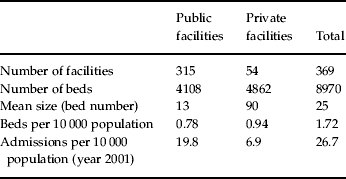
Acute in-patient care is provided by a network of public and private facilities, including 262 General Hospital Psychiatric Units (GHPUs), 23 University Psychiatric Clinics (UPCs), 16 Community Mental Health Centres operating 24 hoursa day (24-h CMHCs) and 14 Crisis Centres. Overall, the 315 public facilities have a total of 4046 beds (mean size 12.8±5.3 beds), with 0.78 beds per 10 000 inhabitants (de Girolamo et al. Reference de Girolamo, Barbato, Bracco, Gaddini, Miglio, Morosini, Norcio, Picardi, Rossi, Rucci, Santone and Dell'Acqua2007). The 54-private in-patient facilities have a total of 4862 in-patient beds (mean size 90±48.2 beds), corresponding to 0.94 beds per 10 000 inhabitants, and are not allowed to admit compulsorily (see Table 1). Patient stay in these facilities is also fully covered by the NHS.
Characteristics of public and private acute in-patient facilities

In most regions patients can choose between public and private in-patient units (and no authority exists to coordinate public and private facilities' activity), although acute admissions generally occur through referral by a psychiatrist operating at the DMH located in the patient's catchment area. In this sense, the Italian psychiatric system of in-patient care can be characterized as a mixed, competitive system.
Rates of psychiatric admissions and admitted patients per 10 000 inhabitants for the year 2001 were 26.7 and 17.8 respectively. Emergency psychiatric care is usually provided by CMHCs, whereas in most general hospital emergency wards a consultant psychiatrist is always available on call.
Although in-patient care remains the mainstream of intensive treatment for most severe patients, and although it represents an essential component of any well-integrated system of psychiatric care, Italian general hospital in-patient care has been studied mostly at the local level (De Salvia & Barbato, Reference De Salvia and Barbato1993; Fioritti et al. Reference Fioritti, Lo Russo and Melega1997). Moreover, no information is available about the characteristics of admissions to Italian private in-patient facilities, and only a few studies have investigated the variables affecting the likelihood of hospital admission (Mattioni et al. Reference Mattioni, Di Lallo, Roberti, Miceli, Stefani, Maci and Perucci1999; Amaddeo et al. Reference Amaddeo, Zambello, Tansella and Thronicroft2001; Hogson et al. Reference Hogson, Lewis and Boardman2001; Magliano et al. Reference Magliano, Fiorillo, De Rosa, Malangone and Maj2004).
The present study reports data from the second phase of ‘PROGRES-Acute’ (PROGetto RESidenze, i.e. Residential Care Project for Acute Patients), a national survey aimed at obtaining comprehensive data about public and private in-patient facilities and their functioning in Italy. The primary aim of this study was to compare patterns of admission between public and private facilities in terms of gender and age, diagnosis, severity of symptoms and functional impairment. Because admissions to private facilities are only voluntary, we expected that patients in these facilities would be older, with less severe symptoms and with a different diagnostic case mix compared to patients admitted to public facilities (i.e. more patients with substance abuse, depression, anxiety and organic mental disorders, and less patients with schizophrenia and related disorders, than in public facilities). Secondary aims were to explore the symptom patterns and concurrent problems in the week preceding admission and to analyse the determinants of compulsory admissions, to extract information useful for the planning and organization of services.
Method
Data collection
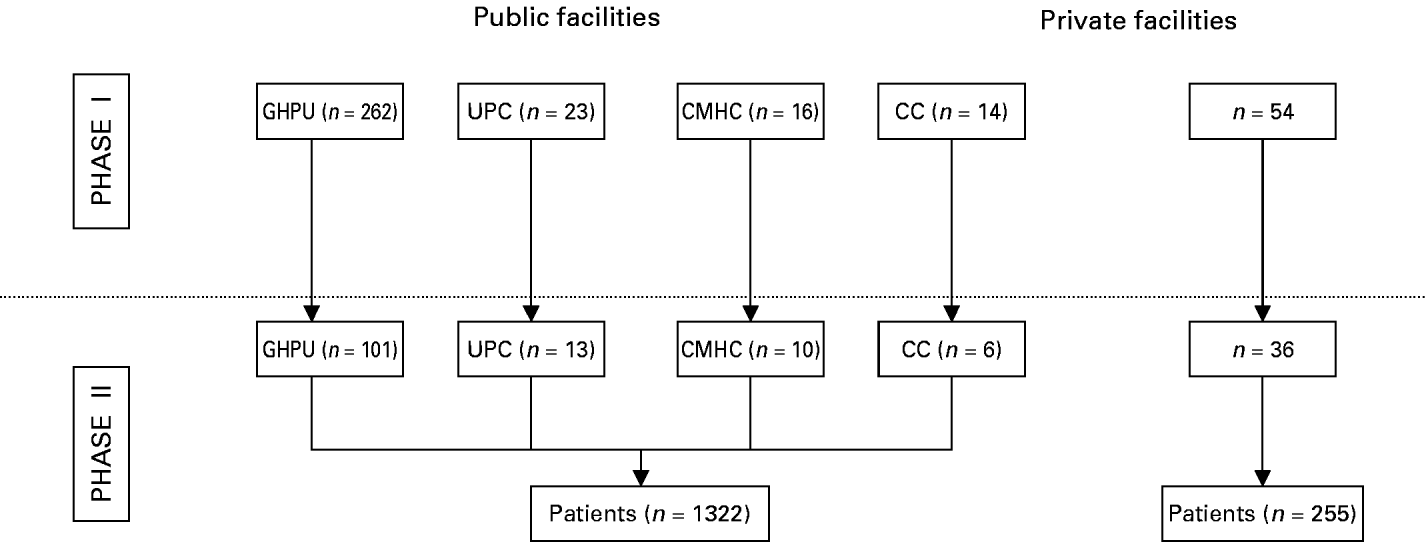
The PROGRES study consists of two phases (see Fig. 1), the first exploring the features of all Italian in-patient facilities and reporting the number and characteristics of all in-patients counted on a specific census day (de Girolamo et al. Reference de Girolamo, Barbato, Bracco, Gaddini, Miglio, Morosini, Norcio, Picardi, Rossi, Rucci, Santone and Dell'Acqua2007; Gaddini et al. 2008, in press). In the second phase, conducted on a stratified random sample of 130 public and 36 private in-patient facilities, the characteristics of three cohorts of patients (admitted, discharged, long-stay) were assessed in detail. Of the 21 Italian regions, all agreed to participate in the study except for Sicily. Each region appointed a coordinator who organized and supervised data collection. The project began in 2001 and was completed in 2005.
In each public facility participating in phase 2, all patients admitted for any reason during a full 12-day index period (on a 24-h basis) were enrolled and assessed by research assistants within 3 days of admission. The index period in private facilities was shorter (3 days) because the National Association of Private Hospitals allowed patient recruitment and evaluation for only a limited number of days, on account of time and work constraints in these facilities.
The PROGRES-Acute study design, showing the number of facilities participating in the two phases and the number of admitted patients who were assessed during the index period. GHPU, General Hospital Psychiatric Unit; UPC, University Psychiatric Clinic; CMHC, Community Mental Health Centre; CC, Crisis Centre.

Information about treatment and sociodemographic and clinical characteristics were gathered from patient records or obtained from the treating physician using a form specifically designed for the PROGRES study. All regional coordinators were centrally trained to administer and rate the study instruments; they then trained research assistants to administer the instruments in their own regions.
Assessment included two standardized instruments: the 24-item Brief Psychiatric Rating Scale (BPRS; de Girolamo et al. Reference de Girolamo, Bellini, Bocchia and Ruggeri1995) and the Personal and Social Performance (PSP) Scale. The latter interview-based scale is designed to evaluate functioning on a 0–100 scale in the week preceding the index assessment. Ratings are based on the assessment of patient's functioning in four main areas: (1) socially useful activities; (2) personal and social relationships; (3) self-care; and (4) disturbing and aggressive behaviours. Operational criteria to rate the levels of disabilities are defined for these areas, with detailed scoring instructions. The PSP has been shown to have high reliability (Morosini et al. Reference Morosini, Magliano, Brambilla, Ugolini and Pioli2000).
BPRS item scores range from 1 to 7 and the total score ranges from 24 to 168. PSP scores range from 1 to 100, with 100 indicating excellent functioning.
Quality control of data was first conducted locally and then centrally. Admissions included: episodes of care when patients were directly admitted to a psychiatric facility and episodes of care for patients initially admitted to another specialty ward and then transferred (i.e. from a medical ward after a self-harm episode). Primary diagnosis was assigned by the treating physician, according to ICD-10 criteria.
Statistical analysis
Categorical data were analysed with between-group comparisons using the χ2 test or Fisher's exact test, when appropriate. In contingency tables with n×2 cells, adjusted standardized residuals were calculated to identify cells for which the discrepancy between the observed and the expected frequency exceeded 1.96 and was therefore significant at p<0.05. The t test for independent samples was used to compare BPRS and PSP scores between facility types and between diagnoses. The p level was set at 0.005 to control for type I error associated with multiple comparisons.
Logistic regression with a backward stepwise procedure was used to analyse the association of demographic and clinical variables with type of admission (voluntary/compulsory). All analyses were conducted using SPSS version 14.0 (SPSS Inc., Chicago, IL, USA).
Results
The sample included a total of 1577 patients admitted to 130 public and 36 private in-patient facilities in Italy during an index period in the year 2004; public facilities included 101 GHPUs, 13 UPCs, 10 24-h CMHCs, and six crisis centres. Patients' ages ranged from 15 to 91 years, with an average of 42.2 years (s.d.=17.6, median=40). Schizophrenia and related psychoses represented the most common diagnosis (36%), followed by depressive disorders (21.4%), bipolar disorder (18.5%), substance abuse (8.7%), and personality disorders (10.4%).
Demographic characteristics by type of facility
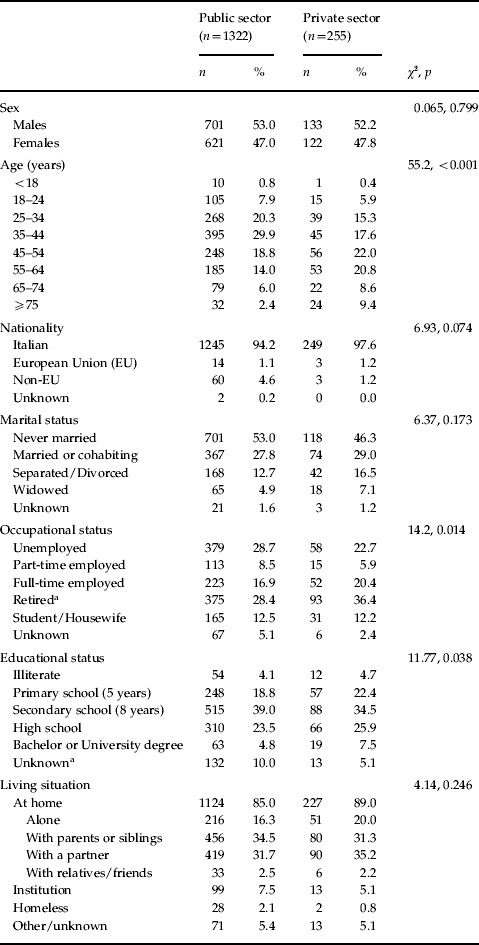
Table 2 shows the sociodemographic characteristics of the sample. In both public and private facilities, men were admitted slightly more frequently than women. Age had a normal (Gaussian) distribution, with the modal value at 35–44 years for public facilities and 45–54 years for private facilities (Table 2).
Sociodemographic characteristics of the sample (n=1577)

a Adjusted standardized residual significant at p<0.05.
Although most patients had Italian citizenship, non-Italian patients were more likely to be admitted to public than to private facilities. Approximately one-half of admitted patients had never been married. Patients admitted to the public sector did not differ from patients admitted to private facilities in terms of marital status and education (with the exception of a slightly greater proportion of participants with ‘unknown’ educational status in the public sector). In-patients of public facilities were less likely to be retired (Table 2).
Approximately one-third of patients at both types of facilities were living with their original family and a similar proportion lived with a partner; the remaining proportion lived alone.
Patients' clinical characteristics by type of facility
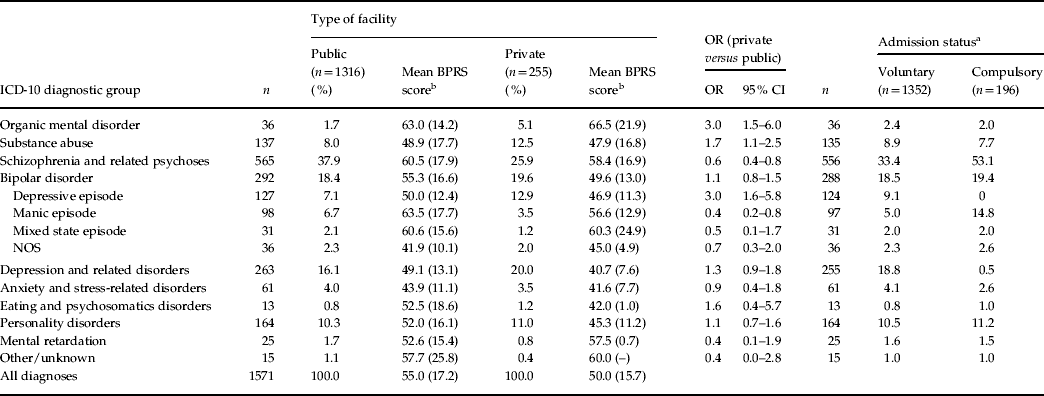
The distribution of admissions by diagnostic group differed for public and private facilities (Table 3). Private facilities were more likely to admit patients with organic mental disorders [5.1% v. 1.7%, odds ratio (OR) 3.0, 95% confidence interval (CI) 1.5–6.0], patients with bipolar disorder with an index episode of depression (12.9% v. 7.1%, OR 3.0, 95% CI 1.6–5.8) and patients with substance abuse/dependence (12.5% v. 8.0%, OR 1.7, 95% CI 1.1–2.5), and were less likely to admit patients with schizophrenia and related disorders (25.9% v. 37.9%, OR 0.6, 95% CI 0.4–0.8) and bipolar patients with an index episode of mania (3.5% v. 6.7%, OR 0.4, 95% CI 0.2–0.8). No other differences by diagnostic groups were observed. In public facilities, 14.8% of patients were admitted compulsorily.
Psychiatric admissions by diagnostic group, type of facility, BPRS score and admission status

BPRS, Brief Psychiatric Rating Scale; OR, odds ratio; CI, confidence interval; NOS, not otherwise specified.
a Column percentages within facility types.
b Data available for 1369 out of 1577 patients.
Compared to patients admitted to public facilities [BPRS, n=1137, 55.03±17.20; PSP, n=1183, 44.77±18.65), those admitted to private facilities were less severe (BPRS, n=238, 50.04±15.70), although differences between types of facility reached just borderline significance (F=3.2, p=0.074) and had a significantly better functioning (PSP, n=235, 49.92±16.39, F=4.7, p=0.03).
Diagnosis and type of admission
Men were more likely than women to be admitted for schizophrenia (57.3% v. 42.7%) and personality disorders and/or substance abuse problems (66.1% v. 33.9%), but more women had a diagnosis of bipolar disorder (58.2% v. 41.8%) or depression/anxiety (61.7% v. 38.3%) disorders (χ2=71.8, p<0.001).
Psychotic disorders accounted for the majority of compulsory admissions (which take place only in public facilities), more than half of which (53.1%) were represented by schizophrenia and related disorders. Bipolar disorder accounted for about 1/5 (19.4%) of compulsory admissions and personality disorders ranked third (11.2%), followed by patients with substance abuse (7.7%). Depression and related disorders represented a very small percentage (4.1%) of all compulsory admissions.
Patterns of care, symptom patterns and reasons for admission
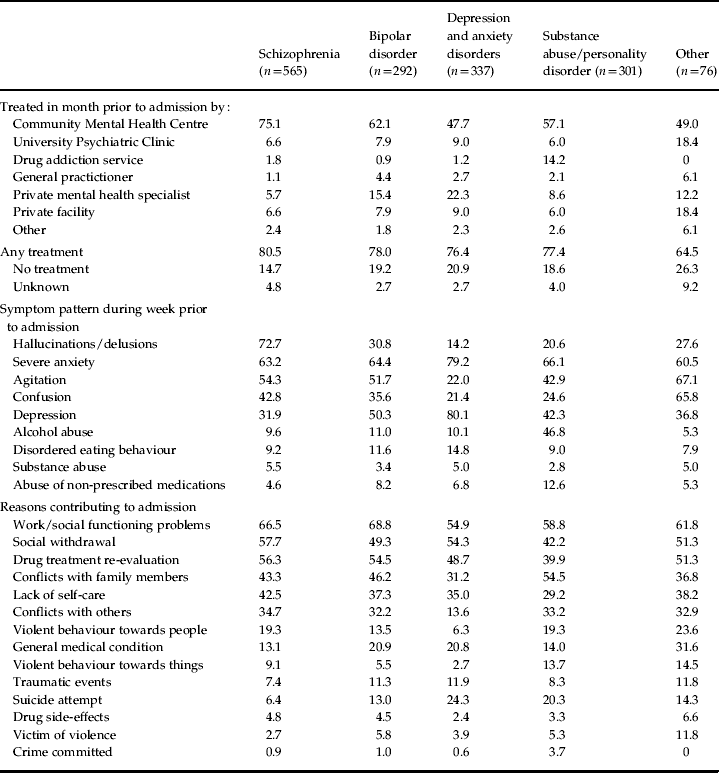
Table 4 shows the patterns of care, with the percentages of patients who were in treatment with different agencies and providers prior to admission. It also shows the symptom pattern in the week prior to admission, and the reasons contributing to admission. As all these variables seem to be reasonably related to patients' diagnostic status, this table is not split between public and private sectors, but the breakdown is by diagnostic status; information about patterns of care of patients admitted to public and private facilities is given below.
Patterns of care: reasons contributing to admission

Overall, 81% of participants for whom information on patterns of care was available (1218/1503) had been in treatment with a mental health professional during the month prior to admission, with no differences between the public and the private sector (χ2=2.7, p=0.10) (Table 4). Patients with depression (OR 0.67, 95% CI 0.47–0.95) and other diagnoses (OR 0.45, 95% CI 0.25–0.79) were less likely than patients with schizophrenia to have been in treatment with a mental health professional during the month prior to admission. All other diagnoses did not differ from the pattern observed for schizophrenia. Among patients in treatment in the month prior to admission, those with schizophrenia were more likely to be admitted to public than to private facilities (OR 1.8, 95% CI 1.3–2.5), whereas the reverse was true for patients with organic mental disorder (OR 4.2, 95% CI 1.8–9.5) or substance use disorder (OR 1.7, 95% CI 1.1–2.8). Moreover, in this group already in treatment, the index admission was the first ever for 14.7% for patients, with no differences between public and private facilities.
In approximately one in 10 patients (11.3%) in the entire sample, admission procedures involved law enforcement officials or judiciary authorities: in this subgroup, patients with schizophrenia (75.6%) and bipolar disorder (66.7%) were significantly more likely to be admitted compulsorily, and patients with depression and anxiety disorders were more likely to be admitted voluntarily (83.3% of cases/admissions).
In approximately one-half of participants, family members or relatives solicited the admission (54.9%) or accompanied the patient (56.4%). This situation was more likely, however, for patients admitted to private than to public facilities (solicited admission: 62.5 v. 53.3%, χ2=7.2, p<0.01; accompanied patient: 75.4 v. 53.2, χ2=41.0, p<0.001).
Symptom pattern for the week prior to admission most frequently included delusions and hallucinations or severe anxiety symptoms in patients with schizophrenia. Agitation was the third most common symptom in the week prior to admission for all diagnoses.
In the overall sample, the median number of reasons that led to admission was three: the most frequent were impairment in work and/or social functioning, social withdrawal, and conflict with family members. In patients with schizophrenia, lack of self-care was another variable frequently found prior to admission.
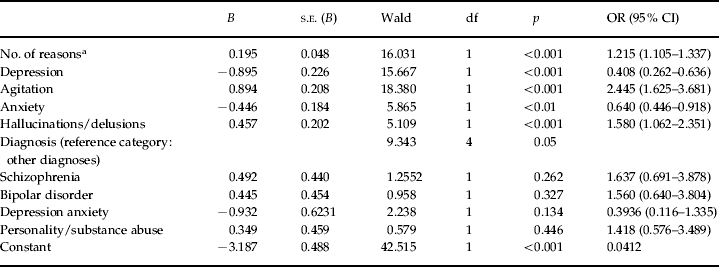
Predictors of compulsory admission were examined in a logistic regression model (Table 5). Predictors were selected a priori, based on our clinical experience and the existing literature, and included age, diagnostic group (coded as dummy variables), symptom patterns (e.g. depression, anxiety, hallucinations/delusions, confusion, agitation, eating disorders, suicidality), alcohol abuse, substance abuse, and non-prescribed drug abuse, living alone, and number of concurrent reasons contributing to admission (e.g. lack of self-care, work/social functioning problems, social withdrawal, conflict with family members or with others, violence, traumatic events, general medical illness, side-effects of medications, drug treatment re-evaluation). A backward stepwise procedure was used, and only variables significant at p=0.10 were retained in the model. Our results (Table 5) indicate that agitation, hallucinations/delusions and number of concurrent reasons all contributed significantly to the decision to admit a patient compulsorily. On the contrary, depression and anxiety symptoms were associated with voluntary admission. Diagnosis was retained in the model but none of the individual diagnoses contributed to increase the likelihood of compulsory admission compared to the reference category ‘other diagnoses’.
Predictors of compulsory admission: logistic regression model, with backward stepwise procedure

s.e., Standard error; df, degrees of freedom; OR, odds ratio; CI, confidence interval.
a See text for list of reasons.
Discussion
Achieving a better understanding of patterns of care represents a crucial first step towards improving clinical decision making and enhancing service provision (Amaddeo et al. Reference Amaddeo, Zambello, Tansella and Thronicroft2001; Singh & Grange, Reference Singh and Grange2006). The few studies that have addressed this topic did not have a sound methodology because they were designed primarily to explore the effectiveness of early intervention programmes and not patterns of care (Rittmannsberger et al. Reference Rittmannsberger, Sartorius, Brad, Burtea, Capraru, Cernak, Dernovçek, Dobrin, Frater, Hasto, Hategan, Haushofer, Kafka, Kasper, Macrea, Nabelek, Nawka, Novotny, Platz, Pojar, Silberbauer, Fekete, Wancata, Windhager, Zapotoczky and Zöchling2004; Thompson et al. Reference Thompson, Shaw, Harrison, Verne, Ho and Gunnell2004; Baruch et al. Reference Baruch, Kotler, Lerner, Benatov and Strous2005; Singh & Grange, Reference Singh and Grange2006).
The present study is the first national survey that can contribute to elucidating patterns of admission to acute in-patient facilities of the Italian public–private community-based care system. It is also the first study in Italy to have ever assessed patients admitted to private in-patient facilities in Italy, which represent more than half of the total of acute beds available (de Girolamo et al. Reference de Girolamo, Barbato, Bracco, Gaddini, Miglio, Morosini, Norcio, Picardi, Rossi, Rucci, Santone and Dell'Acqua2007).
As in other areas of Europe (Rittmannsberger et al. Reference Rittmannsberger, Sartorius, Brad, Burtea, Capraru, Cernak, Dernovçek, Dobrin, Frater, Hasto, Hategan, Haushofer, Kafka, Kasper, Macrea, Nabelek, Nawka, Novotny, Platz, Pojar, Silberbauer, Fekete, Wancata, Windhager, Zapotoczky and Zöchling2004), but not England (Thompson et al. Reference Thompson, Shaw, Harrison, Verne, Ho and Gunnell2004), non-affective psychoses prevail among the diagnoses of admitted patients, although with a different proportion in the public and in the private system (more than one-third in the former, just one-quarter of admitted patients in the latter); they also represent a large majority of the compulsory admissions (Kjellin et al. Reference Kjellin, Høyer, Engberg, Kaltiala-Heino and Sigurjónsdóttir2006). Admissions peaked at around 40 years old, and a large percentage of patients were not in paid employment (whether unemployed or retired).
Our results indicate that severe symptoms (including psychotic symptoms, agitation, and severe anxiety) preceded the admission. Hallucinations/delusions were observed in approximately one-fifth of patients with substance abuse or personality disorder, although the most frequent symptom pattern observed at admission was linked to depressive and anxiety symptoms, in line with the findings of Burge et al. (Reference Burge, Ouellette-Kuntz, Saeed, McCreary, Paquette and Sim2002). Bipolar patients presented in many cases with depressive symptoms, confirming the difficulty of treating depressive episodes in bipolar disorders (also due to the high risk of suicide in these patients) (Mitchell & Malhi, Reference Mitchell and Malhi2004).
Overall, our findings provide helpful cues to most frequent symptom patterns prior to admission, to be considered carefully for both diagnostic and therapeutic aims. Work and social functioning problems, social withdrawal, and lack of self-care were common in our sample, indicating that bizarre and/or disruptive behaviour is not the sole determinant for intervention and that clinicians are also concerned about any behaviour representing a risk for a patient's health status, or possibly heralding a breakdown (Abas et al. Reference Abas, Vanderyl, Le Prou, Kydd, Emery and Foliaki2003). A large proportion of patients presented multiple problems, including both positive (e.g. hallucinations/delusions, agitation, aggression towards people) and negative symptoms (e.g. social withdrawal, lack of self-care). In fact, the presence of complex needs also represents a frequent antecedent of admission (Abas et al. Reference Abas, Vanderyl, Le Prou, Kydd, Emery and Foliaki2003).
Individually tailored intervention may be beneficial, particularly for patients who can be diverted from GHPUs and admitted to more appropriate facilities. Our data show that a high proportion of admissions were motivated by the need to re-evaluate drug therapy, a need that might not necessarily lead to hospital admission.
Public versus private facilities
In Italy, slightly more than one-half of psychiatric beds for acute patients are in private facilities (54%; de Girolamo et al. Reference de Girolamo, Barbato, Bracco, Gaddini, Miglio, Morosini, Norcio, Picardi, Rossi, Rucci, Santone and Dell'Acqua2007), which play a competitive role with public facilities; as a comparison, in England and Wales the proportion of all in-patients cared for by independent providers (corresponding to the private sector in Italy) was just 14% in 2007 (Commission for Healthcare Audit and Inspection, 2007). In Italy there is no regulatory authority coordinating action between the public and private sector, and patients can choose freely where to be cared for their mental problems if they are in need of a hospital admission. The only limitation for private facilities is that they cannot admit patients compulsorily.
As expected, relevant clinical differences were found between patients admitted to public or private facilities. Patients admitted to public facilities were more severely ill (e.g. with higher BPRS and PSP scores) and more frequently diagnosed with non-affective psychoses or manic episodes. The presence of less severe (and probably less disturbing) patients in private facilities can lead some patients to choose these facilities in consideration of less stigma and of a more quiet milieu, but there may also be a selection bias because professionals working in the private sector perceive themselves as having greater expertise in treating disorders other than psychoses (Yung et al. Reference Yung, Gill, Sommerville, Dowling, Simon, Pirkis, Livingston, Schweitzer, Tanaghow, Hermann, Trauer, Grigg and Burgess2006).
Patients cared for in the public facilities are younger, and this underscores the need for acute in-patients facilities to provide intensive psychosocial and rehabilitative interventions; disappointingly, data from the first phase of the PROGRES project have shown that such interventions are often lacking in public facilities, and pharmacological care is the mainstream of acute treatment (Gigantesco et al. Reference Gigantesco, Miglio, Santone, de Girolamo, Bracco, Morosini, Norcio and Picardi2007).
As expected, health professionals represent the first point of contact for most individuals requiring in-patient treatment for mental disorders. Moreover, in the month prior to admission, most patients were being cared for by mental health professionals and mostly in the public sector (CMHCs, UPCs and drug addiction services); this phenomenon was more frequent for participants with psychotic disorders, indicating that pathways to admission for more severe, disabling disorders are generally preceded by consultation with a mental health professional (Amaddeo et al. Reference Amaddeo, Zambello, Tansella and Thronicroft2001; Issakidis & Andrews, Reference Issakidis and Andrews2006). However, contacts with non-professional healers, such as psychics or clairvoyants, were uncommon, in line with the findings of Steel et al. (Reference Steel, McDonald, Silove, Bauman, Sandford, Herron and Minas2006).
Pattern of admission
Although the public and the private sectors show some overlap in terms of the clinical populations they care for, they are very different with regard to in-patients with more severe disorders, those more likely to present with agitation/psychosis or requiring long-term treatment and/or housing and integrative support. Public facilities, also because of the possibility to admit compulsory patients, largely care for psychotic patients with acute breakdown, in need of urgent and intensive care. Private facilities, however, are better tailored to patients requiring long-term, supportive treatment, such as patients with organic brain disorders and those with substance abuse. In this respect, the public and private sectors function partially as a mixed-balanced and complementary system.
Overall, acute in-patient facilities in Italy serve a wide range of patients, providing care that encompasses all major mental disorders requiring treatment in a hospital setting. Moreover, the sample's age distribution was normal, going from the very young (18 years) to the elderly, providing further evidence of the national network of community-based mental health services' capacity to serve the full age range of patients in need of treatment. In any event, nearly 1/3 of patients admitted to public facilities and 1/5 of those admitted to private facilities were under the age of 35 years, although the age of onset for most severe mental disorders occurs typically before this threshold. This finding therefore indicates that the bulk of psychiatric admissions is made up of patients with established illness histories, frequently with repeated admissions.
A large proportion of the workload, in both public and private facilities, was represented by patients with schizophrenia and related disorders or bipolar disorder. This diagnostic pattern may account for the large percentage of unemployed patients admitted. In fact, unemployment and low educational status represent key conditions for social disadvantage and are associated with a higher likelihood of admission for psychiatric patients. They also serve as indicators of poor personal and/or social resources and of residence in areas poorly served by mental health community services (Bindman et al. Reference Bindman, Tighe, Thornicroft and Leese2002).
In addition to symptom severity, pathways to care are affected by the nature and extent of social support, the burden of which, in Italy, lies principally on patients' families (Magliano et al. Reference Magliano, Marasco, Fiorillo, Malangone, Guameri and Maj2002). Family members mediated a large proportion of admission requests and frequently accompanied patients to services. Previous studies have found that families and/or caregivers play an essential role in obtaining help for patients (Mattioni et al. Reference Mattioni, Di Lallo, Roberti, Miceli, Stefani, Maci and Perucci1999; Singh & Grange, Reference Singh and Grange2006), and this finding highlights the importance of social support as a therapeutic resource for severely ill individuals (Webber & Huxley, Reference Webber and Huxley2004). In approximately 11% of cases, however, the admission request was made by law enforcement officials or by judiciary authorities, which suggests that these patients were not linked up with the treatment network. Moreover, in these instances contact with services often ended up in a compulsory admission, a result reflecting both symptom severity and the probable consequence of a poorly developed patient–treatment team therapeutic alliance. Similar to our results, previous studies have emphasized the higher likelihood of admission for patients accompanied by law enforcement officials, independently of symptom severity (Mattioni et al. Reference Mattioni, Di Lallo, Roberti, Miceli, Stefani, Maci and Perucci1999).
Determinants of compulsory admissions
According to the Italian law, compulsory admission is possible only if: (i) the patient requires urgent psychiatric care due to his/her mental condition, (ii) the patient refuses to comply with any psychiatric treatment, and (iii) effective, focused, therapeutic interventions are possible only in a psychiatric in-patient facility. Compulsory admission must be proposed by a first physician, and must be agreed upon by a second physician working in a public facility. Private facilities are not allowed to admit compulsorily.
Symptom severity, and diagnosis as a proxy for it, represents a major determinant of admission (Mattioni et al. Reference Mattioni, Di Lallo, Roberti, Miceli, Stefani, Maci and Perucci1999; Hogson et al. Reference Hogson, Lewis and Boardman2001; George et al. Reference George, Durbin, Sheldon and Goering2002). In our study, the presence of hallucinations or delusions was a significant determinant for compulsory admissions, most probably because patients with these symptoms show poor insight and compliance; that is, two other factors linked to a higher risk of compulsory admission (Schuepbach et al. Reference Schuepbach, Goetz, Boeker and Hell2006). Another significant determinant for compulsory admission was the presence of agitation; this type of disruptive behaviour is frequently associated with danger to self and others (Way & Banks, Reference Way and Banks2001; Oluwatayo & Gater, Reference Oluwatayo and Gater2004; Steinert et al. Reference Steinert, Lepping, Barananyai, Hoffmann and Leherr2005). A common finding in admitted patients (Abas et al. Reference Abas, Vanderyl, Le Prou, Kydd, Emery and Foliaki2003) is the presence of multiple problems, which often represents a proxy for a more severe clinical condition associated with severe disability and impairments in daily living skills. This is an interesting phenomenon showing that compulsory admission is predicted not only by specific symptom patterns (considered more important by clinicians) but also by a patient's overall condition. Diagnosis per se was not found to be a key determinant of compulsory admission, which suggests that specific symptom patterns are a stronger predictor of compulsory admission than is diagnostic status. Other authors have found that the probability of admission, outcomes, and costs of a single care episode are better predicted by illness severity and sociodemographic factors than by diagnosis (Kisely et al. Reference Kisely, Preston and Rooney2000; Wade et al. Reference Wade, Harrigan, Harris, Edwards and McGorry2006).
Depressive or anxiety symptoms decreased the probability of compulsory admission, a finding that might be due to a higher level of insight and medication adherence in patients with severe depression and/or anxiety (Cougnard et al. Reference Cougnard, Kalmi, Desage, Misdrahi, Abalan, Brun-Russeau, Salmi and Verdoux2004), although very severe depression can predict admission (Way & Banks, Reference Way and Banks2001).
Limitations
Some limitations must be considered when drawing inferences from the present data. Diagnoses were based on treating clinicians' judgements and not on structured clinical interviews. At the same time, however, the risk of drawing inferences on misdiagnosed participants can be considered minimal, given that broad diagnostic categories were used. It must also be acknowledged that the sample size for some diagnoses was too small to allow for meaningful comparisons.
Conclusions
Despite its limitations, this study provides important information on a public–private mental health network based to a large extent in the community. The information provided here might be relevant for those countries that are now undertaking the process of downsizing of mental health centres and the growth in community-based models of care. Although the system has several shortcomings, it is able to serve a large number of patients in need of treatment, whether suffering from psychotic or non-psychotic conditions. All age groups are represented in the system, and both genders are present equally in terms of diagnostic case-mix.
In a large number of patients diagnosed with schizophrenia, mental retardation and affective disorders, the index admission was not the first psychiatric admission. Although repeated admissions of patients with these conditions may, at times, indicate an unsatisfactory treatment regime, these severe disorders may frequently relapse even when adequate treatment is provided.
In Italy, family support represents a crucial resource for most patients. Intervention specifically addressed to family members and relatives may play a key role in improving the course of patients with severe disorders.
Appendix
The PROGRES-Acute group includes national and regional coordinators, and scientific consultants: F. Amaddeo, A. Barbato, G. Borgherini, G. Borsetti, R. Bracco, R. Canosa, M. Casacchia, I. Casula, P. Ciliberti, A. Colotto, A. D'Aloise, G. de Girolamo, G. Dell'Acqua, M. De Palma, W. Di Munzio, A. Gaddini, G. Grassi, N. Longhin, M. Miceli, R. Miglio, P. Morosini, M. Nicotera, M. Percudani, B. Norcio, A. Picardi, R. Potzolu, E. Rossi, P. Rucci, G. Santone, S. Schiaffino, F. Scotti, R. Tomasi, G. Turrini, E. Zanalda. Researchers: G. Agostani, F. Basile, F. Basilico, N. Battino, L. Bavero, G. Bazzacco, L. Biscaglia, R. Borio, S. Buttacavoli, B. Caporali, F. Cappelletti, L. Caserta, L. Cifarelli, P. Congia, M. Dazzi, L. Elia, E. Fantini, A. Galli, R. Gangi, P. Ghirardo, L. Giordano, S. Goldoni, A. Guidoni, S. Marchegiani, G. Morelli, M. Nassisi, E. Paltrinieri, K. Pesaresi, A. Pettolino, L. Pinciaroli, G. Pitzalis, M. Severini, C. Sighinolfi, G. Spinetti, A. Trequattrini, U. Unterfrauner, K. Wolf and L. Zecca.
Acknowledgements
Dr Giorgio Bignami provided continuous support over the entire course of the National Mental Health Project, during which this study was conceived. The study was funded by a grant from the Italian Ministry of Health.
Declaration of Interest
None.