Between the seventh and tenth centuries, the Asian continent witnessed the concurrent rise and decline of two world empires: the Islamic caliphate, led by the Umayyad (661–750) then Abbasid (750–1258) dynasties, in the West; and the Tang empire (618–907) in the East.Footnote 1 Contacts between their respective parts of the world had existed for centuries, but in this period they were reshaped and expanded. A central aspect of this transformation was the growth of direct sea trade driven by merchants from the Arab-Persian Gulf serving the markets of Iraq, who settled in substantial numbers on the South China coast. Taking this phenomenon as its primary focus, the present study seeks to bring together a range of material and textual evidence unearthed over the years in different fields, from art history through socio-political history to the history of science. This evidence has hitherto been studied mostly within discrete disciplinary boundaries, themselves undergirded by the broader divide between Islamic and Chinese studies. An enlarged perspective will make it possible to shed new light on the breadth and depth of this phenomenon, as well as its enabling factors.
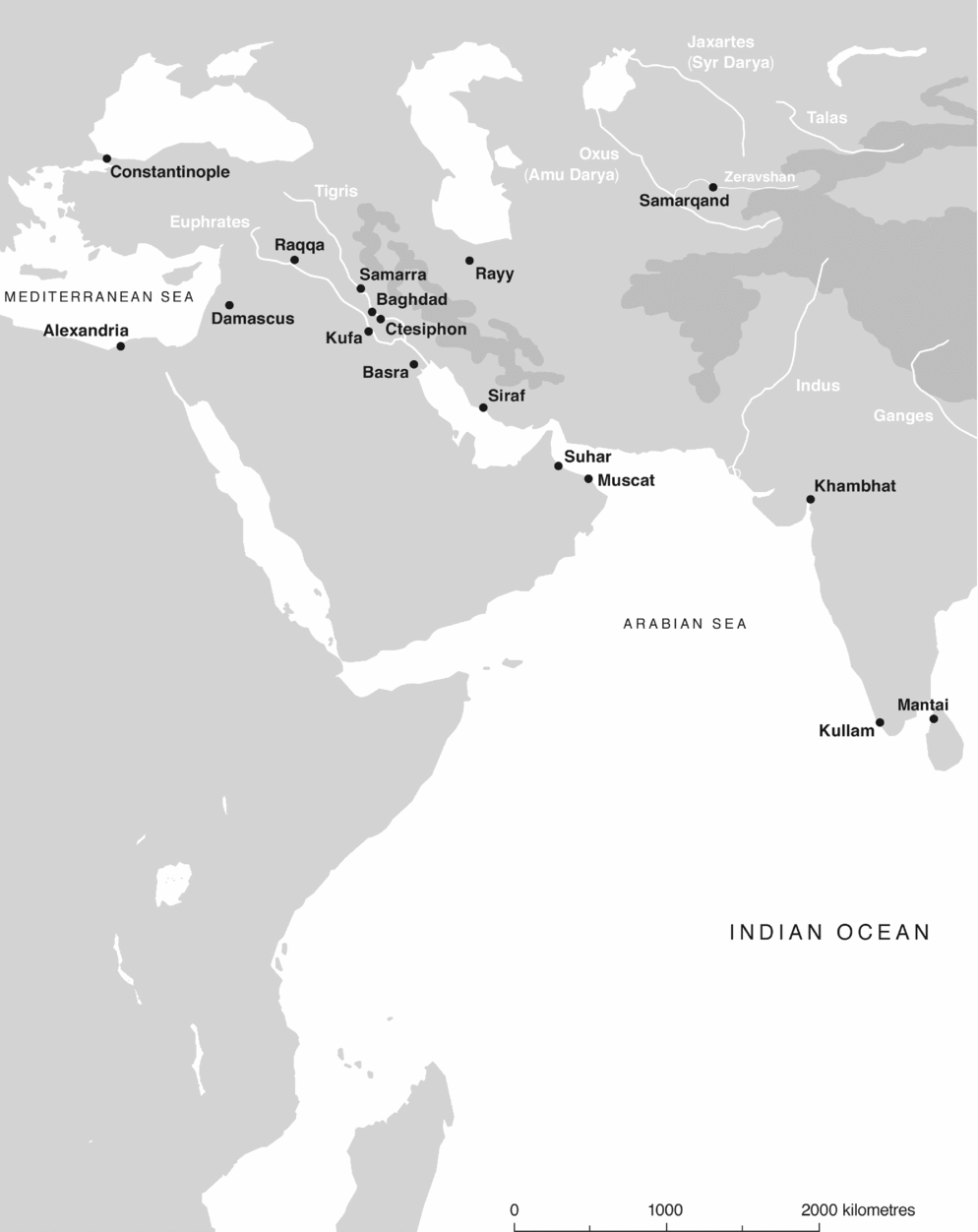
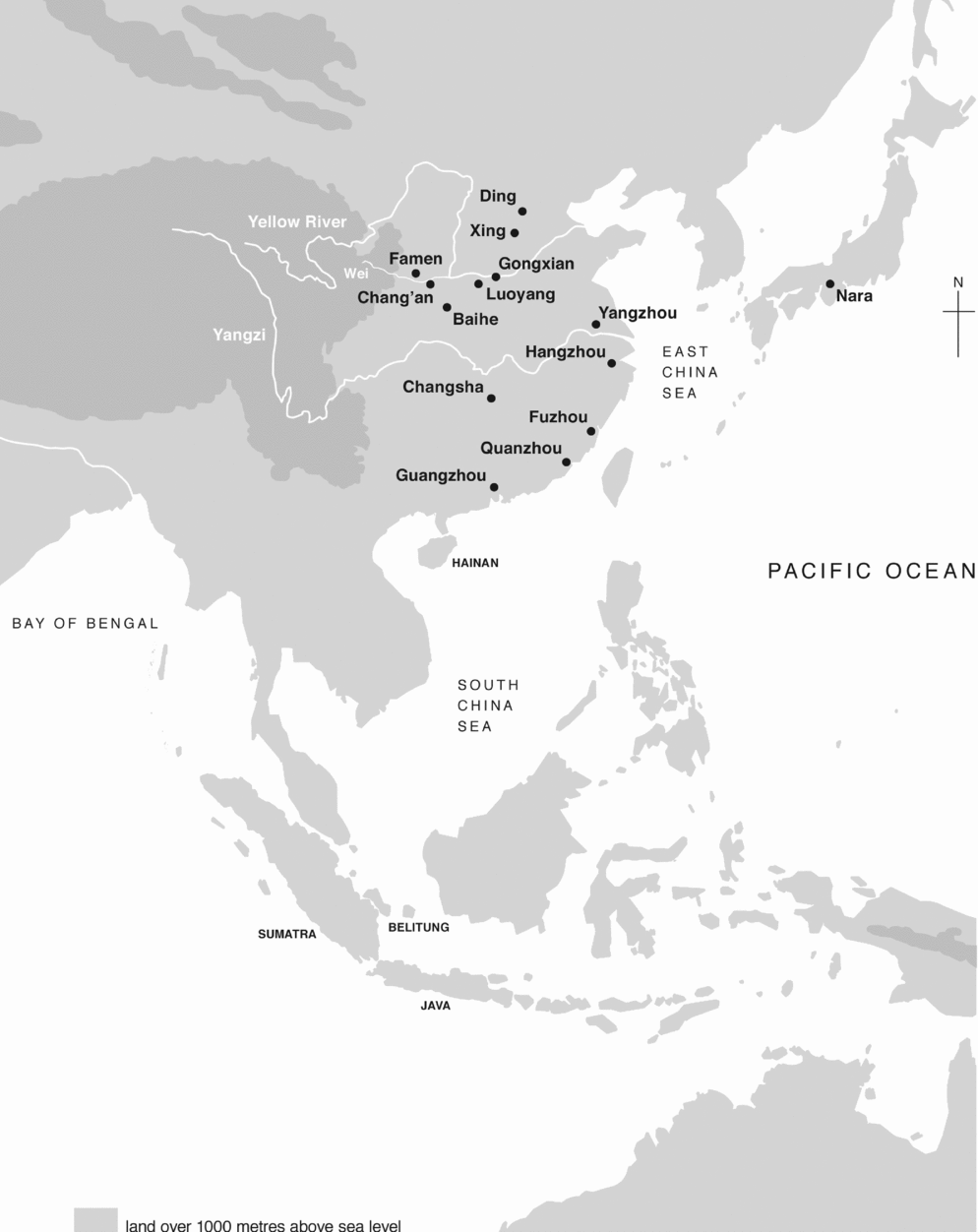
Map of Asia with main sites and cities cited in the text.
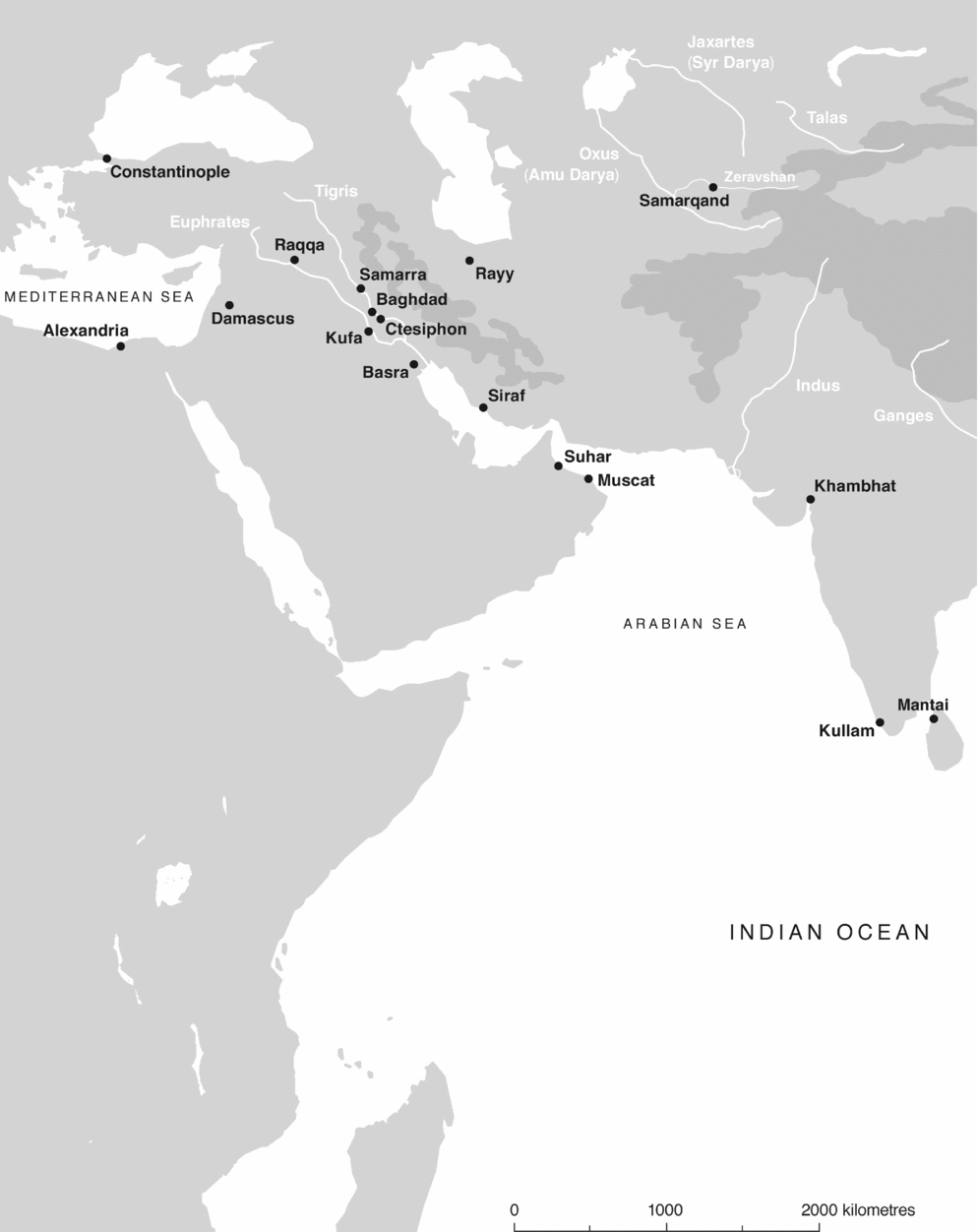
(drawn by Christina Unwin, copyright Alain George).
The Belitung shipwreck, which sank in the ninth century with its full cargo near Sumatra, will serve as our starting point, as it vividly encapsulates major dimensions of this trade. This will open onto questions about historical context, and notably the economic pull exerted by Iraq following the rise of Islam. A set of favourable circumstances emerged in this period, and these were seized upon chiefly by West Asian merchants who had begun to settle in Chinese ports, especially Guangzhou, by the Umayyad period. Their interactions with Chinese society were close, but also constrained by barriers of language and by Tang regulations. They generated a movement of goods which, in turn, triggered artistic emulations at both ends of the sea routes, as well as some transfers of technologies, notably in the realm of ceramics. Another item of trade, plants and spices, created the impetus for transmissions of knowledge about their medicinal properties, especially into China; and a further circulation of ideas can be discerned in the cognate sphere of alchemy. In many of these fields, merchants from the Arab-Persian Gulf played a key role not only as facilitators, but also as direct actors.
These merchants, it should be noted at the outset, were only one of several social networks that spanned the breadth of Asia in this period: both ends of the continent were also linked, to name but some prominent actors, by Sogdian and Bactrian merchants from Central Asia, and their Indian counterparts to the south; by Uighur and other Turkish soldiers and mercenaries, again from Central Asia; and by Christian missionaries of the Church of the East, who actively sought (and eventually failed) to root their religion in China between the seventh and ninth centuries. Diplomacy also created more sporadic contacts between Tang and Umayyad, then Abbasid political élites, as recorded in Chinese court annals.Footnote 2 Their respective activities and areas of overlap—the overall pattern of relations between East and West Asia in this period—fall beyond the scope of the present article, and will only be considered as required by the discussion.
Before we go farther, a note on terminology is also in order: given the subject matter, the region between the eastern Mediterranean and Iran will be referred to, in the following pages, as “West Asia”, rather than the more conventional “Middle East”, which reflects a Eurocentric worldview. References to the same region as “the West” or “Western lands” will also be avoided because of their Sinocentric perspective, except where they reflect original Chinese sources. West Asians were designated, in these sources, by three main terms: dashi, which usually stands for “Arab Muslim”; bosi, “Persian” (and also, in later texts, “Malayan”); and the more generic hu, “foreigner”, usually from Central or West Asia.Footnote 3 These terms, especially dashi and bosi, could be used interchangeably, and might not always reliably indicate the background of the people in question.
The Belitung shipwreck
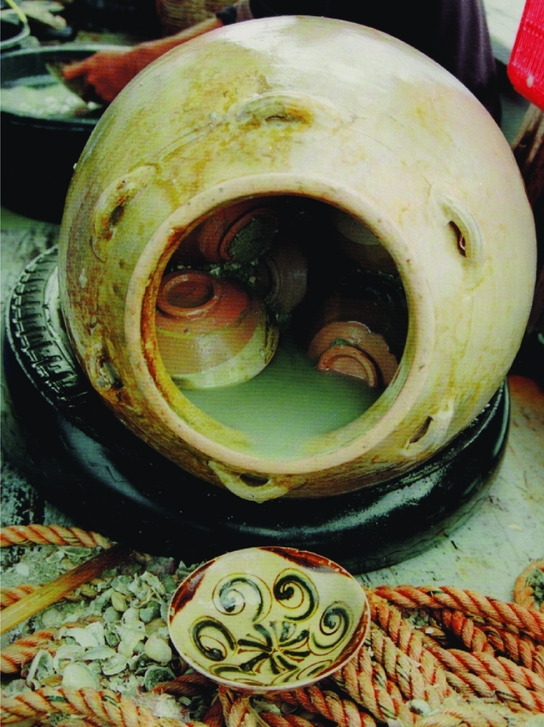
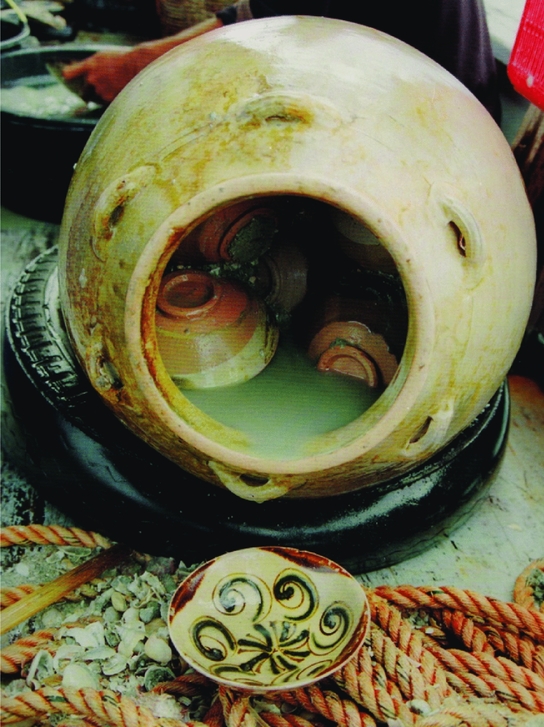
In 1998, Indonesian villagers accidentally discovered, in shallow waters off the island of Belitung, near Sumatra, the remains of a ship that had lain on the seabed for over a millennium.Footnote 4 Two seasons of underwater archaeology revealed its astonishing treasure: a tightly-packed cargo of some 60,000 Chinese ceramics (Figure 1); about ten tons of lead ingots, used as ballast and probably also as a commodity; metalwork, mirrors and other precious objects; aromatics; and some personal belongings. The ship, having been loaded with these objects in China, appears to have set sail for a port in the kingdom of Srivijaya, perhaps in Java or Sumatra, and sunk before it could head back to the Gulf. The time frame for this short-lived journey can be circumscribed, on the basis of dated and datable objects found on board, to the first half of the ninth century, most probably the 820s to 840s.Footnote 5
Dusun-type jar recovered in the Belitung wreck with its load of Changsha bowls. Source: Krahl et al. (eds.), Shipwrecked, Fig. 47.
The existence of sea contacts between China and the early Islamic world had long been known from texts and archaeological finds across the Indian Ocean,Footnote 6 but this was the first time that such a concentration of evidence came to light. The intended route of the Belitung ship was, in all likelihood, a variant on the ones described by writers of the period: in Chinese, Jia Dan (729–805), a high-ranking Tang official who seems to have obtained information from West Asians; and in Arabic, the Abbasid court official Ibn Khurdādhbih (also Khurradhābih, ca. 825–911) and the anonymous compiler of the Akhbār al-ṣīn wa’l-hind (ca. 851).Footnote 7 While some place names remain difficult to identify, these writers are in agreement over the main elements of the itinerary. In West Asia, major cities in Iraq, especially Baghdad from the time of its foundation, in 762, were the main markets of this trade. Baghdad was connected to the Gulf by the Tigris and Euphrates leading to Basra, the primary port of Iraq, and Ubulla (the ancient Apologos).Footnote 8
The waters at these two ports were too shallow for the largest sea-going ships, and Siraf, on the Iranian coast, emerged as the major storehouse at which goods were unloaded and brought onto smaller vessels or despatched overland.Footnote 9 From the Gulf, eastbound ships would sail to Suhar or Muscat, in Oman, then either follow the coast of Sindh or use the monsoon winds to sail across the Arabian sea to Khambhat, in Gujarat, followed by southern India and Sri Lanka (Mantai), before crossing the Gulf of Bengal to reach Thailand, the straits of Malacca and head north towards Guangzhou (Canton, Ar. Khānfū), the main port for this trade in China. Some ships pushed further north towards Hangzhou or Yangzhou, at the mouth of the Yangzi River, which was connected to Chang’an, the Tang capital, through a network of rivers and the Grand Canal.
According to the indications given in the Akhbār al-ṣīn wa’l-hind, by departing in October in order to take advantage of monsoon winds, the trip from Muscat to Guangzhou took around five months of sailing, not counting stops and the initial leg of the journey from Siraf or Basra.Footnote 10 This time scale has found confirmation in the five months it took the Jewel of Muscat, a modern ship built on the basis of the Belitung wreck using traditional methods, to sail from Oman to Singapore in 2010.Footnote 11 If distances remained unchanged, the time it took to link Basra to Guangzhou had shrunk to less than a year, bringing people at both ends of the continent into ever closer contact.
These direct links did not preclude the continuation of more segmented trade along the sea routes. The presence of Iranian and Arab merchants in coastal cities of India and Sri Lanka is attested long before the rise of Islam; it persisted during and after the period under study.Footnote 12 Throughout the first millennium, ports such as Kullam and Mantai served as emporia where goods from China and the Islamic world were traded by Indian and foreign middlemen.Footnote 13 West Asian traders who had settled in these regions, if they ever became involved in the China trade, would still have been recognized as dashi and bosi in Chinese sources. A further pattern of trade is reflected by the mention by al-Masʿūdī (ca. 893–956) of a Sogdian merchant boarding an Arab ship from Oman to Kalah before 878, then completing his journey to Guangzhou on what is explicitly called a “ship of the Chinese” (markab al-ṣīnīyyīn): his goods were presumably trans-shipped across the Kra isthmus, thereby avoiding the Malacca straits.Footnote 14 Chinese ships, in other words, may sometimes have assumed the final leg of the journey in the South China Sea. These nuances reflect the complexities of trading diasporas: the relative weight of each mode of exchange may hardly be known, beyond the fact that direct seafaring increased significantly in this period.
The physical structure of the Belitung ship provides a unique piece of material evidence in this respect. The ship was built using glue and ropes, but no nails: this technique, like the shape of the hull, points to an origin in South or West Asia, rather than East Asia.Footnote 15 Furthermore, the scientific analysis of timbers used in its construction has shown that several of these were African. Trees native to the Arab-Persian Gulf were inadequate for shipbuilding, which led to the regular import of timbers for this and other purposes, whereas India was home to numerous suitable species. In all likelihood, the ship was thus built in the Gulf or the Arabian peninsula from imported East African wood.
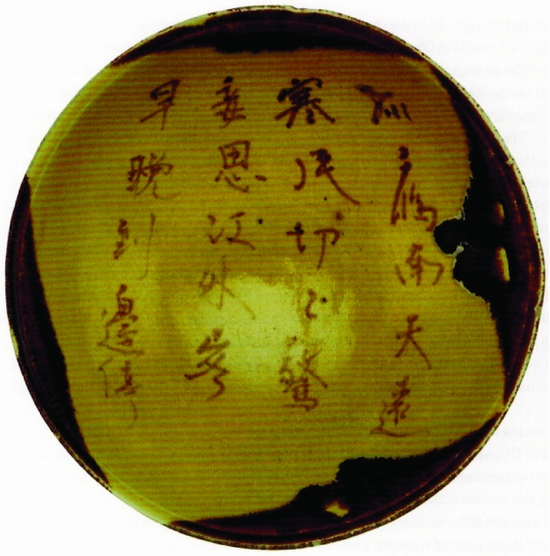
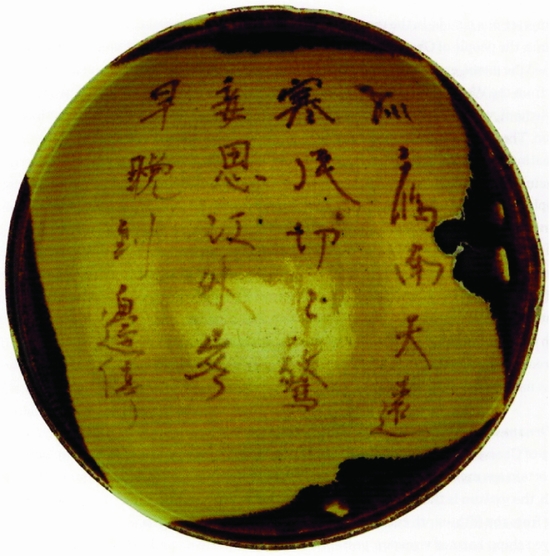
The bulk of the cargo consisted of Changsha wares of different forms, including some 55,000 bowls and 1,500 ewers carrying a variety of motifs in underglaze painting, from ships and monsters to calligraphy (Figure 2). These were mass-produced for export by the Changsha kilns of Hunan province.Footnote 16 Other ceramics found in the ship responded primarily to Islamic tastes: green earthenwares, some probably from Gongxian, with painted and moulded decoration, as well as incised motifs inspired by Islamic pottery;Footnote 17 and three blue-and-white stonewares from Baihe in Gongyi county (Henan) echoing Islamic blue-and-white ceramics, but with an unmistakably Chinese approach to the painted line.Footnote 18
Changsha bowl with poetic inscription, from the Belitung shipwreck. Diameter 15 cm. Source: Krahl et al. (eds.), Shipwrecked, Fig. 106.
Finer pieces of stoneware were also recovered, but in their hundreds rather than their thousands, somewhat expectedly given that their production in China was more limited. These include Yue wares produced near Hangzhou, with their typical green glaze;Footnote 19 high-fired white stoneware from the Xing and Ding kilns of Hebei;Footnote 20 and imitations of these two types produced respectively in Guangdong in the south of China and Gongxian (Henan) in the north.Footnote 21 The appreciation of fine stoneware was just developing in China itself during the Tang era, alongside the art of tea drinking. The Chajing (Classic of Tea) by Lu Yu (730s-ca. 804), the first great classic on the subject, discusses high quality bowls and utensils alongside the beverage itself. Local kiln names, such as Yue, Xing, Ding and Gongxian, became akin to brand names recognised—or avoided—by connoisseurs.Footnote 22 Hence the contents of the ship suggest that alongside dominant wares of lesser workmanship, ceramics highly valued in the Chinese market were sent to West Asia in more limited but still significant quantities. This conclusion is echoed by archaeological finds in Iraq and the Gulf,Footnote 23 where these goods must have changed hands at high prices.
Smaller numbers of luxury objects in other media were discovered on board the shipwreck. Among them are 28 bronze mirrors of round, polylobed or square shape, some finely ornate, others of lesser quality. These were probably made in Yangzhou, the most renowned centre for this craft, in the eighth and ninth centuries. The only dated specimen was made in that city in 759; its metal, asserts the Chinese inscription, was “smelted a hundred times”—a claim often made by foundries, and taken with a pinch of salt by some contemporary Chinese writers.Footnote 24 One additional mirror found in the wreck was made in the Han era (206 bce -220 ce): astonishingly, it would have already been an antiquity of about a thousand years when it was taken on board the ship.
The cargo also contained over thirty fine gold and silver objects, including cups, dishes, bowls, a flask, a golden bracelet, and silver boxes for herbs, medicines and other substances. These are typical of Chinese luxury metalware of the early ninth century, when such objects were mainly produced around the mouth of the Yangzi River, in the modern provinces of Jiangsu and Zhejiang, and again in Yangzhou.Footnote 25 The finest Yangzhou mirrors were regularly presented as tribute gifts to the imperial court; likewise, high-quality metalwork of the kind found on the ship was a highly prized status symbol amongst the Tang ruling élite, as notably revealed by its presence at burial sites.Footnote 26
Some of the most precious cargo may have been intended as tribute. In the course of their travels, merchants had to engage in gift giving in order to retain the favour of local authorities.Footnote 27 The remarkable quality of some luxury objects in the ship could alternatively suggest the presence of a Chinese embassy headed for an unknown destination to the south or west, or of a foreign delegation returning from Chang’an with imperial presents. “Rewards” were commonly given in return for “gifts” in the course of diplomatic exchange, in a tacit form of trade between ruling élites.Footnote 28 The iconography of the gold and silver vessels, with its tied knots, paired animals, auspicious symbols and exotic beasts could arguably be related to such a context. Indeed, two of the green-painted wares found in the ship carry Chinese inscriptions that identify them as tribute to the Tang imperial treasury.Footnote 29
At one level, the ship thus provides a vivid illustration of the goods carried in this trade. While their bulk consisted of mass-produced export ceramics, the range of luxury objects reflecting the highest standards of Chinese production might reflect the activities not only of merchants, but also of political élites. The range of cargo also attests to the extensive supply networks garnered by West Asian merchants. These reached deep into China, from Hebei in the north through Henan and Hunan in the centre to the mouth of the Yangzi river and Guangdong in the south. The goods were probably sourced through Chinese middlemen and gathered in port cities: the mirrors and metalwork, together with the ceramics from Hebei, Henan, Yue and possibly Hunan, point to Yangzhou or Hangzhou, whence they would have been shipped to Guangzhou. Whether or not the Belitung ship began its journey in that region, its cargo must have been consolidated at Guangzhou, as suggested by the presence of ceramics from Guangdong, and most of all by the position of that city as the main Chinese hub of this trade, at the south-western edge of the Chinese coast.
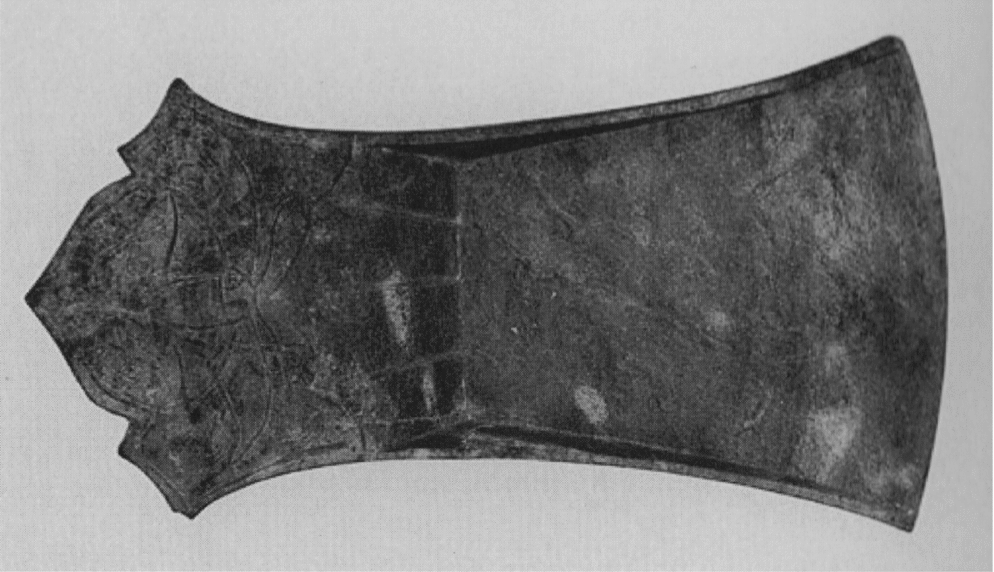
Unusually for this period, the goods recovered within the Belitung ship also offer a glimpse of everyday life below the level of court and beyond the strict interests of commerce: among them were cooking utensils; a bone dice and ivory pieces from a board game; a Chinese lantern and oil lamp; a tiny glass bottle from West Asia, with unidentified organic content; Chinese tweezers, a Chinese needle, and a cymbal.Footnote 30 A few objects could arguably reflect the imprint of Chinese travellers: a ceramic tea grinder; Chinese spoons; and a Chinese inkstone with an engraved insect at one end (Figure 3).Footnote 31 These eclectic finds point to the obvious: people lived in close contact and spoke to each other on board these ships. The Belitung wreck thus exposes with unprecedented immediacy some key aspects of this trade, whilst raising questions about its nature. Who were the merchants involved? How and why did they come to source such a wide range of goods in China? What other social groups may have been seen on board their ships? What information can be retrieved, more than a millennium after the fact, about the human interactions behind the transportation of goods?
Chinese inkstone with engraved insect, from the Belitung shipwreck. Length 10 cm. Source: Krahl et al. (eds.), Shipwrecked, Cat. 14.

Baghdad, Chang’an, and the market for luxury goods
In this period, northern China and Iraq were amongst the richest regions in the world, their wealth driven by the combination of imperial revenue, commerce and agricultural expansion in both the Yangzi basin and the Sawād, the fertile area south of Baghdad, between the Tigris and Euphrates.Footnote 32 The tax income of these two immensely rich empires spurred the rapid growth of their capital cities, which soon outstripped this economic base. Based on Chinese imperial records, Chang’an must have reached at least a million inhabitants during the Tang period. This figure could almost be doubled if one counted the suburban counties, but the population also periodically dropped due to political unrest, notably the An Lushan and Huang Chao rebellions.Footnote 33 One estimate also put the population of Luoyang, the “Eastern capital” of the Tang, at 500,000 inhabitants.Footnote 34
Comparable levels of urban concentration were only reached, outside China, in Iraq. Basra probably had more than 250,000 inhabitants within a few decades of its foundation in 636.Footnote 35 Baghdad, the new Abbasid capital founded by the caliph al-Manṣūr in 762, soon grew into a city of enormous proportions. In the absence of reliable data, its population is notoriously difficult to assess, with estimates ranging from 280,000 to 2,000,000 inhabitants, though most writers agree to place it above 500,000.Footnote 36 By all accounts, it far outgrew the largest cities of the Mediterranean world, Constantinople and Cordoba. Samarra, the second Abbasid capital, founded in 836, must also have reached a population of several hundred thousands, though it remained largely dependent on imperial revenue and quickly declined after the return of the caliphal seat to Baghdad in 892.Footnote 37
These figures take on their full weight when considered in relation to world population, which stood around 200 million at the time.Footnote 38 Between them, the five cities mentioned above—Chang’an, Luoyang, Baghdad, Basra and Samarra—would therefore have been home to well over one percent of mankind, the equivalent of 100 million people in today's world. These numbers, being based on more or less reliable estimates, only provide a rough order of scale, but they suffice to underline the pulling power of these centres in the Old World's economy.
Baghdad and Chang’an were the two great cosmopolitan cities of the age. The constant flow of foreign embassies into the Tang capital brought into its walls people and luxury goods from the breadth of Asia.Footnote 39 Chang’an housed sizeable communities of merchants, being located at the eastern end of the land routes linking China to Central and West Asia, with further connections to the South China Sea through the Grand Canal. The city housed several East Syrian (“Nestorian”) churches, as well as Zoroastrian and Manichaean temples.Footnote 40 Given its geographical location, the foreign population of Chang’an was mostly Japanese, Korean, Turkish, Uighur and Sogdian, whereas cities to the south, especially Guangzhou, received larger numbers of West Asians, Indians and Southeast Asians.
Baghdad, as a new foundation, drew its initial population entirely from outside its walls. The original city plan was round, with the mosque-palace complex at its centre. There has been an ongoing debate, which this is not the place to revisit, as to whether this form was based on Central Asian and Sasanian models or stemmed from functional imperatives.Footnote 41 The Church of the East relocated its seat to Baghdad from Ctesiphon, the former Sasanian capital, under the patriarchate of Timothy I (780–823), as did the Manichaeans until increased persecutions drove the latter away in the early tenth century. The city also housed the heads of the two Babylonian yeshivot, the foremost centres of Jewish learning. Soldiers, political élites and merchants from the lands between North Africa and Central Asia were attracted to the possibilities offered by the Abbasid capital; other populations, notably slaves of African, Turkish and Slav origin, were relocated there by force.Footnote 42 The city's higher classes were consumers of foreign and exotic objects, such as Indian and East African sandals, sari-like garments,Footnote 43 and Chinese goods.
Upon founding the city, al-Manṣūr would have declared: “Here is the Tigris with nothing between us and China, and on it arrives everything that the sea can bring”.Footnote 44 Whether or not the saying is apocryphal, it does reflect an economic reality: a century later, al-Yaʿqūbī (d. 897) noted that the Sūq Khuḍayr at Baghdad was “the treasure-trove of Chinese rarities” (maʿdan ṭarāʾif al-ṣīn).Footnote 45 In this period, Chinese goods, and especially ceramics, were esteemed amongst urban élites of the Islamic world, to such an extent that any fine bowl or plate came to be generically called ṣīnīyya (“Chinese,” used as a substantive) in Arabic. As noted by al-Thaʿālibī (961–1038):
The Arabs used to call every delicate or curiously-made vessel (kull ṭurfa min al-awānī) and such like, whatever its real origin, ‘Chinese’, because finely-made things are a specialty of China. The designation ‘china’ has remained in use till this day for the celebrated type of dishes.Footnote 46
This propensity makes it difficult to single out references to actual Chinese wares in Arabic sources, although in some instances they are more explicitly identified.Footnote 47 The appreciation of things Chinese was noted emphatically by al-Sīrāfī (early tenth century):
The Chinese are the most skilful of God's entire creation in designing, crafting and every type of work. They are not surpassed in this by any other nation. A Chinese man can craft with his hand what others would seem incapable of.Footnote 48
The Arabic word translated here as “designing” (naqsh) can indicate, depending on the context, painting, sculpture or engraving. The presence in the Belitung wreck, among thousands of Changsha bowls, of a few examples with poems painted on their surface (Figure 2) could suggest that some in their intended clientèle, probably in Iraq, developed an aesthetic appreciation for Chinese calligraphy.Footnote 49 But this idea remains speculative, and buyers at either end of the continent were animated by fundamentally different tastes: the purity of naked forms sought by the Chinese was to some extent echoed by an admiration for the material qualities of Chinese ceramics in the Islamic world; but a strong appetite for decorative motifs, especially geometrical, prevailed in these regions (as indeed in the Mediterranean world)—a demand partly met by Chinese export wares and, as we shall see, by new types of Iraqi wares. The growing taste for this particular range of goods must have contributed to the expansion of sea routes, for—unlike overland caravans—ships could hold large amounts of cargo packed in heavy jars, with less risk of breakage.Footnote 50 The quantities of ceramics stacked into such jars and fitted within the relatively small space of the Belitung shipwreck (Figure 1) attest to this factor; by contrast, finds of imported ceramics are extremely rare in Central Asia prior to the fourteenth century.Footnote 51
Triggering factors in the Islamic world
These dynamics ought to be replaced within a larger framework, to which further elements will be added as the discussion progresses. The Muslim conquests of the seventh century led to the growth in Iraq of substantial urban populations with disposable monetised income, an unusual phenomenon in the pre-modern era.Footnote 52 The first Muslim armies were mostly drawn from the ranks of Arab nomadic pastoralists who, having abandoned their traditional means of subsistence, were paid pensions (Ar. ʿaṭāʾ), and eventually regular salaries, in money by the state, as well as allowances for their families. In the Abbasid period, the social constituency of the military gradually shifted towards Turks and other Central Asians. Throughout the period under study, these expenses mobilised the bulk of the Umayyad and Abbasid state budget—over 80 percent, according to two quantified examples in textual sources.Footnote 53 New Islamic cities such as Basra, Baghdad and Samarra were initially sustained by this continuous influx of money, which prompted the establishment of merchant communities to supply them. It is probably not a coincidence that direct sea trade with China witnessed its first great surge just as the first of these cities were founded in Iraq, in the seventh century.
The imperial courts at Baghdad and Samarra may have indirectly contributed to the inception of these trends. The Persian historian Bayhaqī (995–1077), in an account based on unnamed written sources, mentions 20 pieces of imperial China-ware (chīnī faghfūrī) and 2,000 other Chinese ceramic pieces offered to the caliph Hārūn al-Rashīd (r. 786–809) by the governor of Khurasan, ʿAlī ibn ʿIsā ibn Māhān. These are said to have included platters, cups, beakers, wine jars, “and various other kinds”.Footnote 54 The anonymous author of the Book of Gifts and Rarities (Kitāb al-hadāya wa’l-tuḥaf, eleventh century) also asserts that coloured Chinese pottery was presented by a Christian secretary to al-Mutawakkil (r. 847–861), and 20 Chinese saddles were offered to the same caliph by a concubine.Footnote 55 These anecdotes pose the problem, common in sources of the period, of the time lag between the reported facts and their record in writing; the Kitāb al-hadāya, in addition, has legendary overtones in many of its other accounts.Footnote 56 But the pattern of gift-giving that they suggest is plausible and finds a confirmation in the archaeological finds of Chinese ceramics at Samarra. Tang court annals also mention, between the mid-seventh and late ninth centuries, numerous dashi embassies stemming from caliphal circles that left Chang’an loaded with luxury presents.Footnote 57 The presence of these objects at the court would, in turn, have triggered an emulative demand amongst élite circles, and thenceforth into broader segments of society.Footnote 58
The unification under Islamic rule of the former Sasanian empire with a large part of the Roman empire also created an enormous and relatively secure market for the onward dispatch of goods, from the southwest Mediterranean to Sind and western Central Asia, with Baghdad and Samarra as major sources of artistic tastes and trends. Likewise in China, the Tang empire was expanding economically and demographically from its traditional centres in the North towards the Yangzi basin and frontier zones of the southern coast, including Guangdong.
The makeup of trading networks from the Arab-Persian Gulf
The main actors of this trade were merchants from the Arab-Persian Gulf who started settling on the south China coast early on in the Tang period. These merchants tend to be called “Persian” or simply “Muslim” in modern scholarship, yet they must have been of diverse origins. Iranian Zoroastrians, Christians and Muslims would have naturally been among their ranks, since early Islamic trade with China was built upon Sasanian foundations, though Sasanian sea trade may not have reached beyond the western half of the Indian Ocean, at least on a regular basis.Footnote 59 The South and East of the Arabian Peninsula had also been engaged in commerce with India and Sri Lanka since Antiquity; both diasporas, Arab and Iranian, were established in Indian ports before Islam.Footnote 60 They may have increasingly intermingled in the sea trade from the third century onwards, as a result of Sasanian dominion over East Arabia.
After the rise of Islam, the main western termini of the China trade were, first, Islamic foundations, notably Basra and Baghdad; second, cities owing their growth to this trade, like Siraf; and third, ports on the east Arabian coast, such as Suhar. Thus they would all have shared a predominantly Muslim population, with a major Arab Muslim component, at a time when the rest of West Asia remained overwhelmingly Christian, and to a lesser extent Zoroastrian. The main socio-linguistic groups in the Gulf were Arabic-speaking Muslims, some of them with an Aramaic or Persian linguistic background; Arabic-speaking Christians (especially in southern Iraq and East Arabia); Persian-speaking Zoroastrians, Muslims and Christians; and Aramaic-speaking Christians and Jews (the latter mostly in Iraq).
The subtleties of West Asian identity were of little interest to Chinese writers, who referred to the merchants in question as dashi and bosi, if not simply hu; and little more can be derived from Arabic sources. Ibn Khurdādhbih and Ibn al-Faqīh (wr. ca. 903) do explicitly mention the sea trade of Jewish merchants between Baghdad, Ubulla, India and China; their name, the Radhanites (al-rādhānīyya), probably reflects an origin in the Sawād of Iraq.Footnote 61 The Church of the East is also known, from inscribed copper plates issued in 849 by the governor of Kullam, in modern Kerala, under the rule of the Chola king Sthāṇu Ravi (r. ca. 844–885), to have been granted some rights of jurisdiction over its community, tax exemptions and permission to levy custom duties from merchant ships.Footnote 62 This commercial involvement in India could conceivably have extended, within different parameters, to China, although evidence of this is lacking so far.
In practice, members of these communities would often have been multilingual and have spoken different combinations of Arabic, Persian, Aramaic and Hebrew. The Sthāṇu Ravi plates, reflecting the activities of overlapping merchant diasporas, attest to such diversity: written in Tamil, they bear signatures of witnesses in Arabic, Pahlavi (Middle Persian) and Hebrew script.Footnote 63 Most Muslims, regardless of their linguistic background, tended to identify with the shared culture of Arab Muslim civilisation. Thus the informants of the anonymous Akhbār al-ṣīn wa’l-hind (ca. 851) repeatedly refer to themselves as “Arab” and “Muslim”, even though Persian loan words appear in their vocabulary.Footnote 64 These communities were, in sum, probably as variegated in China as in their regions of origin. For practical purposes, unless specific information is provided, they will be referred to as West Asian in what follows.
West Asian merchants on the South China coast in the Umayyad period
Guangzhou was the first Chinese terminal reached by West Asian ships, and the most important Chinese hub of this trade, “the meeting point of merchants,” as the Akhbār al-ṣīn wa’l-hind call it.Footnote 65 As early as 671, at the beginning of the Umayyad period, the Chinese Buddhist pilgrim Yijing (635–713) had embarked on a bosi ship in this port to head south, probably to Sumatra.Footnote 66 In 714, a Christian priest known in Chinese as Jilie came to the court of Chang’an with Guangzhou's superintendent of merchant shipping, which suggests that he reached China through that port. The literatus Liu Zongyuan (773–819) wrote that the holder of this office in Guangzhou, “every year, conducted the sending of tributes”, and for this purpose he may sometimes have been accompanied to the capital by recently-arrived foreigners.Footnote 67
In the same years that brought Jilie to Chang’an, the Umayyad court poet al-Farazdaq, who lived in Basra, wrote in a panegyric to the caliph Sulaymān (r. 715–717):
Proclaim on my behalf to those who are in China, or whom frail planks [of wood] with their sails toss at [the coast of] India: “Come to Islam, justice is among us, the disease of Iraq is dead!”Footnote 68
The “disease” in question was al-Ḥajjāj ibn Yūsuf al-Thaqafī, the Umayyad governor of Iraq and the eastern provinces, who died in 714. The poet implies that distant exile was no longer necessary to escape his fearsome grip: in so doing, he alludes to Muslims reaching India and China, presumably in this case from Iraq. The Korean pilgrim Huichao (Kor. Hyecho) incidentally confirms this, writing from hearsay about the land of bosi, around 727:
The people speak various languages and are naturally bent on commerce. They are accustomed to set sail into the western sea [i.e. the Indian Ocean]. They enter the south sea aiming at the country of shizi [Sri Lanka] to obtain all sorts of precious objects. They also head for the kunlun country [the Malay peninsula] to get gold. Furthermore, they sail in big craft to the land of the han [China] and directly to Guangzhou, where they get various kinds of silk. The country produces fine textiles.Footnote 69
The description could imply that certain bosi ships only went as far as Sri Lanka and the Malay peninsula, or that they stopped there as part of a longer journey; in either case, it explicitly states that some of them did sail all the way to Guangzhou. In 750, a disciple of the Buddhist master Jianzhen (Ganjin) also related about this city:
There were three poluomen [Brahman] monasteries, where Brahmans resided. . . On the river, there were merchants ships of the poluomen [Brahmans, i.e. Indians], bosi, kunlun [dark-skinned people, probably Malays], and others, in numbers that are hard to determine. All of them were loaded with incense, herbs, jewels, and other precious goods. Their merchandise was piled up like a hill. These ships were 60 or 70 feet deep. White, red and other barbarians coming from the land of the lion [Sri Lanka], from the land of dashi, and the land of gutang [?] used to come, go or stop there. A great variety of races were to be encountered there.Footnote 70
These sources converge to show that West Asian sea traders were active at Guangzhou throughout the Umayyad period (661–750), and that at least some of them sailed directly from the Arab-Persian Gulf. The arrival of Jilie through Guangzhou in 714 could also suggest that the sea trade had already gained practical advantages over land routes, since the Church of the East had an extensive presence in Central Asia.Footnote 71
The growth of West Asian communities at Guangzhou and Yangzhou
This initial momentum was amplified after the Abbasid revolution (750 ce), which marked a shift in the centre of gravity of the Islamic empire from Syria to Iraq. In 758, according to the Jiu Tangshu (“Old Book of Tang”, 945 ce) and Xin Tangshu (“New Book of Tang”, compiled 1044–1060 ce): “dashi and bosi together ravaged Guangzhou, attacking warehouses and burning storehouses, and fled away to sea. The governor Wei Lijian escaped”.Footnote 72 The explicit mention of both dashi and bosi points to a range of West Asians, possibly Arab and Iranian. The text implies that they had grown numerous enough, by that time, to openly defy Chinese authorities.
The attack may have been an act of piracy, since pirates based in Hainan regularly attacked foreign ships: upon visiting the island in 749, Jianzhen had found it filled with bosi slaves captured by Feng Ruofang, a local chieftain. In a conspicuous show of wealth, the latter would provide lighting to guests by burning frankincense, a luxury commodity imported from Arabia and East Africa.Footnote 73 Yet the context of Guangzhou and the mention of foreign assailants alone make another motive possible: reprisal against official corruption, a problem endemic to the city. Already in 684, its governor Lu Yuanrui had been assassinated by a kunlun (black, i.e. probably Malay) merchant after abusing his position in office; the perpetrators had then fled to sea. The events of 758 might represent the repetition of a similar pattern on a larger scale. At any rate, the sea routes appear to have remained open, since Du You states in his Tongdian (“Comprehensive Institutions”, 801 ce) about his relative Du Huan in 762: “he returned [from Iraq] via Guangzhou by means of a merchant boat”.Footnote 74
Merchants suffering tax predation, in a city like Guangzhou, were a potential threat to public order, but the Chinese treasury was also set to gain from their activities, if suitably protected. The wealth brought to the southern region by this activity and by a growing agriculture became proverbial. As the Jiu Tangshu put it in relation to the eighth century, “its produce, together with the wealth brought by the sea route, was mountainous”.Footnote 75 The efforts of some governors to re-establish equitable trade conditions are recorded in Chinese sources.Footnote 76 An imperial edict of 829 (or possibly 834) also stated:
The foreign merchants of the South Seas [who come to our land] are seeking virtuous enlightenment; they should be accorded generous treatment while here. In order to promote proper respect toward the imperial commissioners among the foreigners in Lingnan, Fujian, and Yangzhou, except for the collection of anchorage fees, the court purchase and regular presents, we must allow them to come and go freely and to trade, and we must not impose heavy taxes.Footnote 77
The edict identifies different types of tax imposed on merchants: anchorage duties and tribute to local governors, alongside official purchases. The Akhbār al-ṣīn wa’l-hind mirror this statement when they record about Guangzhou:
When sailors arrive from the sea, the Chinese seize their merchandise, and store it in warehouses, safekeeping it for six months until the last sailor arrives. Then they take three out of ten and deliver the rest to the merchants. What the authorities (al-sulṭān) need, they take at the highest price, pay immediately and do not cause injustice.Footnote 78
The text gives the example of camphor (Ar. al-kāfūr, a resin harvested in Southeast Asia but traded by West Asians in China),Footnote 79 which was purchased by the government at twice the market price. Thirty per cent of the incoming merchandise was thus set aside for the state; the Arabic formulation leaves some ambiguity as to whether this was levied as tax, with subsequent purchases being made at a fair price, or bought upfront by the authorities. Common sense might suggest the former reading,Footnote 80 yet the latter finds support in the edict of 829, which mentions court purchases but no import duties.Footnote 81 If this interpretation is correct, the only direct “taxes” officially imposed on merchants would have been tribute and anchorage fees, thereby providing a strong incentive for this trade. In either case, officials could extort further income through forced gift-giving.Footnote 82 The regulated release of foreign goods into the market at a given point of the year may have been meant to maximize competition and lower prices.
The edict of 829 again confirms the presence of foreign merchants in Lingnan, the area “south of the mountains” which comprised Guangzhou and coastal regions extending into modern Vietnam, and adds the important mention of Fujian and Yangzhou. The region name “Fujian”, in this context, probably refers to Fuzhou or Quanzhou, trading ports about which relatively little is known for this period.Footnote 83 Further to the north, Yangzhou, by virtue of its location near the mouth of the Yangzi river and Grand Canal, was the main access point for international sea trade to Chang’an.Footnote 84 Other evidence does confirm the presence of West Asian merchants there. The biography of the rebel commander Tian Shengong (d. 776) in the Jiu Tangshu and Xin Tangshu mentions that “several thousands of bosi and dashi merchants were killed” in 760 at Yangzhou, which suggests the existence of a sizeable community.Footnote 85 Excavations at Yangzhou have revealed building remains with ceramic sherds and glass fragments that probably reflect the activities of their shops.Footnote 86 Ibn Khurdādhbih also reports:
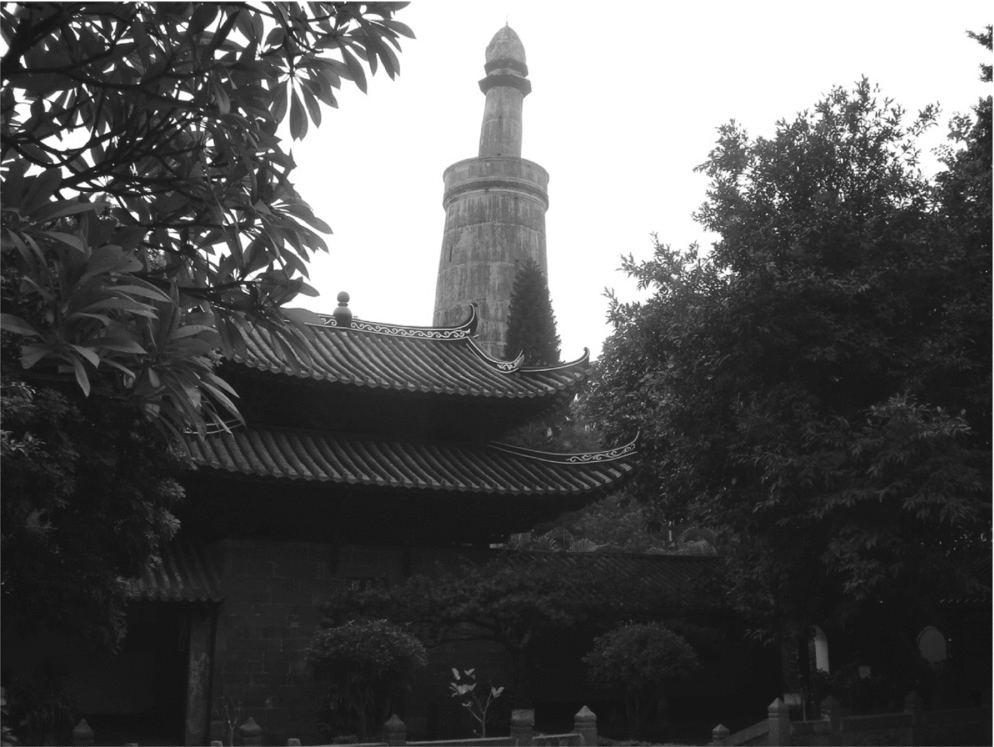
The Huaisheng mosque and minaret, Guangzhou (Public domain image, author unknown).
Islamic glass dish from a crypt of Famen temple sealed in 874 ce. Famensi Museum. Diameter 20.2 cm, height 2.2–2.6 cm. Source: Rastelli (ed.), China at the Court of the Emperors, Cat. 69.

At the confines of China, facing Qānṣū, are numerous mountains and kings. This is the land of Shīlā, which is rich in gold. The Muslims who went [to this land] have settled there because of its pleasantness. It is unknown what lies beyond.Footnote 87
“Qānṣū” could be Hangzhou or Yangzhou: the text is too vague to allow the distinction.Footnote 88 It suggests, in either case, an awareness of the region surrounding the mouth of the Yangzi and of Korea, which was united until 892 under the kingdom of Silla. The latter was indeed famed as a source of raw gold and finished gold objects.Footnote 89 Ibn Khurdādhbih suggests that Muslims had settled there, a plausible but otherwise unconfirmed assertion. The Akhbār al-ṣīn wa’l-hind do mention that “there lie beyond the sea the islands of al-Sīlā”, but add that “none of our companions (aṣḥāb) have reached there to tell us about them”; while al-Nadīm (wr. 987) simply lists al-Sīlā as a region of China, “one of the most pleasant and greatest lands, and one of the richest in gold”.Footnote 90
West Asian merchants, whilst most significantly established at Guangzhou, were thus also present at Yangzhou, and probably in small numbers in some other ports of the South China Sea. To the first major factor contributing to the growth of this trade—the proximity of the Gulf to the major markets of Basra and Baghdad—a second may now be added: the official organisation of Chinese ports, which must have created a sufficient level of certainty in order for West Asians merchants to engage in the venture. Despite natural hazards and the risks of piracy, the sea routes appear to have been safer and faster than overland routes, which tended to remain more segmented.Footnote 91 Between the 760s and 840s, Tibetan expansion into northwest China would have further complicated and lengthened land travel from Chang’an.Footnote 92 In a sign of the times, several Arabic and Persian sources mention Sogdian merchants who sailed to China on ships from the Gulf in the eighth to ninth centuries. This account by al-Masʿūdī, for example, is about the period before 878:
It is said that a merchant from Samarqand, in Transoxiana, left his country with numerous goods. He came to Iraq, where he acquired more merchandise, and went down to Basra, where he embarked for Oman. From there he embarked for Kalah [in the Malay peninsula]. . . Then this merchant embarked from the city of Kalah on a ship of the Chinese to the city of Khānfū [Guangzhou], the anchorage point of ships.Footnote 93
This seems to reflect a world turned upside down, in which the patrons of age-old overland routes board ships thousands of kilometres south of their homeland, the traditional centre of this trade, to reach China. The importance of Iraq as a market, again underlined in the text, must also hold part of the explanation for this long détour.
The reconfiguration of sea trade in the late ninth century
The favourable conditions that prevailed in China for most of the eighth and ninth centuries were dealt a severe blow by the rebellion of Huang Chao (Ar. Bānshuwā), which massacred foreign merchants after besieging Guangzhou in 878. Abū Zayd al-Sīrāfī, who wrote a Supplement to the Akhbār al-ṣīn wa’l-hind in the early tenth century, noted:
Those who know about these things say that he [Bānshuwā] killed, in addition to Chinese people, 120,000 Muslims, Jews, Christians and Zoroastrians who had been informedFootnote 94 about this city [Khānfū] and had become merchants [there]. The size of these four communities (milal) is known through Chinese records of their number.Footnote 95
The date and events mentioned here are accurate, but the figure of 120,000 Muslims, Jews, Christians and Zoroastrians should be treated with caution, despite the assertion that it is based on Chinese official records. Abū Zayd is a second-hand informer who, unlike the compiler of the Akhbār, relays a varied mix of reliable and less reliable information on China. Since some members of the above four communities presumably survived, the account would imply that the West Asian population of Guangzhou was well over half that of the entire Basra. This passage is best taken, then, as conveying large-scale implantation.
Regardless of exact numbers, the events reported do seem to have inaugurated a phase of decline at Guangzhou, which was superseded by Quanzhou (Ar. Zaytūn) as an international trading port from the tenth century onwards.Footnote 96 In West Asia, Basra was likewise weakened by major sacks during the revolt of the Zanj, the African slaves, in the late ninth century, and again at the hands of the Qarmatian religious movement in the tenth century. The fortunes of Siraf also began to shift in the same period, in part due to less stable political conditions.Footnote 97 Middlemen in India and Sri Lanka concurrently appear to have regained some of their former importance. Prevailing patterns of trade thus transformed at the close of the Tang era, as they had done at its beginning, although it remains to be seen whether direct sea trade between China and the central Islamic lands ceased altogether; but this later phase of evolution falls beyond the scope of the present study.
The Akhbār al-ṣīn wa’l-hind and Muslim perceptions of China
Among extant textual sources, the Akhbār al-ṣīn wa’l-hind (“Accounts of China and India”) stand out as a unique repository of information about Arab Muslim perceptions of China in this period. They were composed by an anonymous author around 851, which makes them the earliest extant Arabic work devoted to China, or indeed to any foreign land.Footnote 98 A focus on matters of trade, business and administration shows that the contents were harvested directly from several merchants, whose vocabulary suggests an origin in Iraq or the Arab-Persian Gulf; at one point, the text explicitly calls them “Iraqi merchants”.Footnote 99 These informants unequivocally regarded themselves as “Arabs” from the “Arab lands” who spoke “the language of the Arabs”; their remarks on ritual cleanliness, contract and Chinese religion make it clear that they were Muslim.Footnote 100
Most other Arabic writings of the period that deal with the subject belong either to the genres of geography and topography, as with Ibn Khurdādhbih, or to literature and storytelling.Footnote 101 The relatively unpolished style of the Akhbār, which ignores established historiographical rules of transmission (isnād), would have been looked down upon by more established writers, yet it is a rare testimony stemming directly from the primary actors of this trade. As has already become apparent, a perception of fairness towards Chinese administration dominates among the informants of the Akhbār, who notably assert:
The Chinese are just in handling transactions and debt. . . They are fair in their dealings with each other; no one is deprived of their right, even though they do not use witnesses or oaths.Footnote 102
A certain respect and esteem for the Chinese social system transpire, as when the informants report that “poor and rich, large and small, all Chinese people learn calligraphy and writing (al-khaṭṭ wa’l-kitāba)”, and that public schooling is funded by the treasury. These remarks reflect the educational system instituted by the Tang in the seventh century and expanded in 738 by an edict of Xuanzong.Footnote 103 Both the Akhbār and al-Sīrāfī's Supplement assert, after duly acknowledging that the Muslim ruler is foremost among the rulers of the earth, that the Chinese emperor is only second to him: as al-Sīrāfī puts it, “no king has more firmly established the foundations of peace and better maintained order” than him.Footnote 104 Reading between the lines, this conveys the notion that China is better governed than the Islamic world.
The informants are familiar with the system of government, justice, taxation and commerce in China. They report about manners of being granted audiences at the court of Tang governors and about the protocol observed there. They show a close acquaintance with Chinese social life, as when they discuss funerary and wedding customs, as well as the culinary habits of the Chinese and their predilection for rice, out of which they make wine, vinegar, sweets and “other such things”.Footnote 105 The Chinese, they add, “are not clean: they do not wash themselves with water when they have been, but wipe it with Chinese paper (al-qarāṭīs al-ṣīnīyya)”.Footnote 106 Toilet paper had indeed appeared in China at least three centuries earlier, when the scholar Yan Zhitui (531–591) remarked: “Paper on which there are quotations or commentaries from the Five Classics or the names of sages, I dare not use for toilet purposes”.Footnote 107 Muslim ritual purity, by contrast, required the use of water. We also learn in the Akhbār:
The emperor has a monopoly over salt and a herb called sākh which the Chinese drink in hot water and which is sold in all cities for considerable amounts. This herb has more leaves than trefoil, is a little more fragrant, and bitter. The water is boiled and poured over this herb. The Chinese use it for everything.Footnote 108
This is probably the first mention of tea recorded this far west—and what is more, by people who had tasted it.Footnote 109 The observation must date to the 830s, when the state briefly attempted to impose a monopoly on tea production.Footnote 110
The tone of the Akhbār is, on the whole, overwhelmingly appreciative of China. The country, our Arabic informants assert, is more pleasant and beautiful than India: it is healthier, less plagued with disease, and has better air; it has fewer blind and handicapped people, the likes of whom are very numerous in India; there are impressive rivers, and the land is fertile. The Chinese are more beautiful than the Indians, and more like the Arabs from the perspective of dress, mount and beasts of burden.Footnote 111 Their women do not cover their heads, but their men do so with hats—which must have seemed incongruous from a Muslim perspective. Chinese women put combs in their hair, or let it float.Footnote 112 Here we see the premises of a fascination with things Chinese that would eventually grow into the stuff of legend in Arabic literature, as epitomised by the Chinese cities, kings and princesses of the Thousand and One Nights.
The “quarter of tributaries” (fanfang) and the outside world
The Akhbār al-ṣīn wa’l-hind also betray limitations of this acquaintance with China. By contrast with more down-to-earth matters, the understanding of Chinese religious beliefs shown by these merchants remains somewhat superficial, and again based on the normative framework of Islam: “The Chinese worship statues to which they pray and which they implore; they have religious books”.Footnote 113 They do show a distant awareness of Buddhism and its links with India:
The Chinese do not have [divine] knowledge (ʿilm). The origin of their religion is [in] India: they consider that India brought them the Buddha (al-bud-da) and that [the Indians] are the people of religion (ahl al-dīn). Both countries believe in reincarnation (al-tanāsukh), but they diverge in the branches of their religion (furūʿ dīnihim).Footnote 114
These contrasting levels of knowledge may be related to the natural interests of merchant communities, but also to their social organisation. As the only named informant of the Akhbār, the “merchant Sulaymān” (sulaymān al-tājir), reports, Chinese authorities had granted the Muslim community at Guangzhou permission to arbitrate legal disputes under the authority of a Muslim judge. This amounted to a measure of extra-territoriality, perhaps for purposes of expediency, which echoes the situation of the Church of the East at Kullam.Footnote 115 Chinese sources indicate that foreign merchants, in Guangzhou and other cities, lived in a special “quarter of tributaries” (fanfang).Footnote 116 They might have been officially confined to it, since we read in the Akhbār:
He who wants to travel from one part [of China] to another needs two letters, [one] from the ruler (al-malik) and [another] from the eunuch (al-khaṣī).Footnote 117 The ruler's letter is for the road. It carries the name of the man, and of those who are with him, his age, and the age of those who are with him, as well as his tribe (qabīla): all those who are in China, be they Chinese, Arab or other, must link their genealogy to some [group] by which they are known. The eunuch's letter mentions the money and merchandise [that the traveller has] with him, because there are military posts on the way that look at both letters. When someone reaches them they write: “So-so, son of so-and-so, from [the tribe of] such-and-such, has reached us on this day of that month of that year, and was carrying this”. In this way, nothing is lost of the man's money and merchandise, and if he loses something or comes to die, it can be established how this happened or who inherits.”Footnote 118
This passport system for the internal travel of foreigners is known from the Tang Code, completed in 653 ce; the description given here also reflects an emphasis on genealogy and ethnic origin, the building blocks of the Tang social order.Footnote 119 Such rules restricted the movement and activities of merchants, but along with port regulations, they contributed to establish a relatively predictable framework for their trade within China, a benefit emphasised in the Akhbār.
Some West Asians who resided in China, whether for a period of months or years, must have learned at least the rudiments of the spoken language. This is the limited level of linguistic competency suggested by the Akhbār: their reports presuppose some social communication with Chinese people, and they contain the transliteration of half a dozen Chinese words, notably in relation to government hierarchies.Footnote 120 Writing in the late eighth to early ninth century, Liu Zongyuan also noted that the superintendent of merchant shipping in Lingnan “dealt with the translation of languages”,Footnote 121 which hints at the existence of interpreters for official dealings, presumably with further linguistic proficiency.
The institution of the fanfang formalised the establishment of self-contained foreign communities living within a designated urban space. This, together with the restrictions on their inland travel, suggests official attempts to circumscribe the activities of these merchants. But these efforts were not necessarily successful. In the Jiu Tangshu, one thus reads about complaints from Guangzhou's superintendent of merchant shipping about their increasing intermarriage with local women, which the authorities were trying to curb.Footnote 122 This social reality is again indirectly reflected in the Tang Code, which states that marriage with foreigners is punishable by life in exile, but also adds:
If a foreigner enters China, is allowed to live here, takes a wife or concubine, and then takes her upon return to his foreign country, the punishment is for violating an imperial edict.”Footnote 123
As the years went by, such unions, whether officially sanctioned or not, would have produced children of mixed race, naturally conversant in Chinese and one or more West Asian languages.
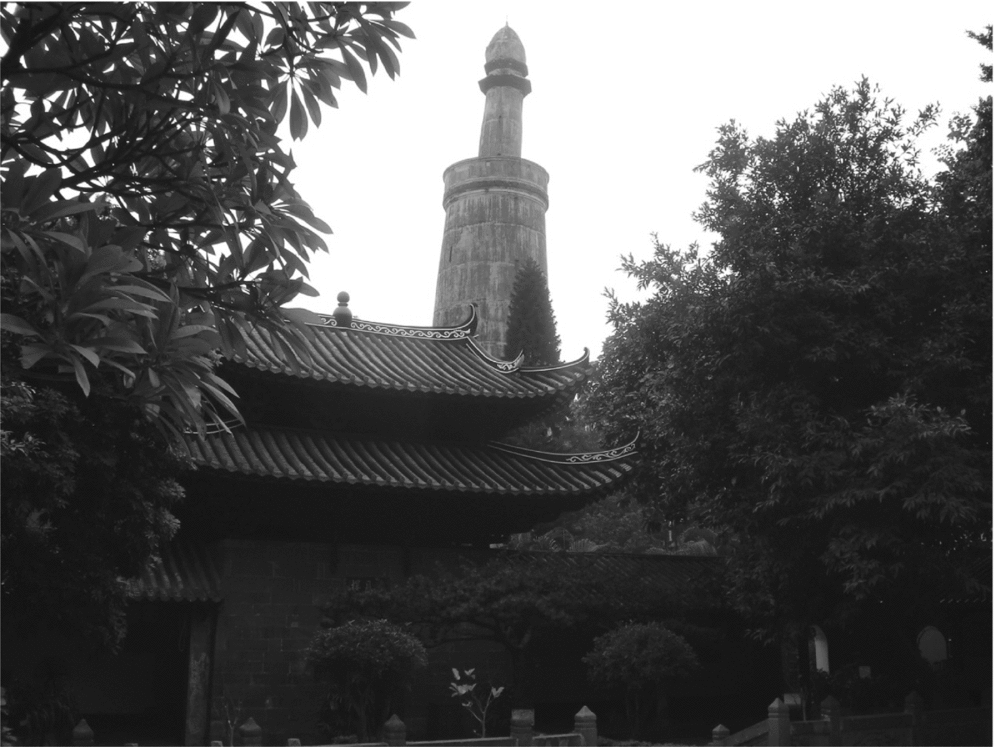
According to the above-cited account of the merchant Sulaymān, the Muslim judge of Khānfū used to lead prayer during Muslim festivals and to pronounce the khuṭba (Friday sermon) in the name of Muslim authorities (sulṭān al-muslimīn).Footnote 124 The khuṭba would have been delivered at congregational prayer, whether in a rudimentary public space or a permanent mosque building. One architectural monument, the Huaisheng mosque in Guangzhou, resonates with this context (Figure 4). Its prayer hall has been repeatedly rebuilt over the centuries, most recently in 1935. The minaret, articulated on two levels, is the oldest extant part of the building. Its date has not been precisely established, with estimates ranging from the tenth to the thirteenth century.Footnote 125 It has the particularity of being built of plastered brick, and in a tapering cylindrical form that is unusual for China, but naturally brings to mind models in the Islamic world.Footnote 126 A more precise dating will have to await a full documentation of its decoration, type of brickwork, and phases of construction. Local tradition ascribes the foundation of this mosque to Saʿd ibn Abī Waqqās, the companion of the Prophet said in later Chinese Muslim lore to have brought Islam to China.Footnote 127 Without going this far back, a mosque could conceivably have stood on this site in the Tang era, as asserted by Fang Xinru in his description of the building (ca. 1206).Footnote 128
Likewise the Shengyou mosque in Quanzhou was built in 1009/10 and restored in 1310 by a patron probably from Shiraz, in southern Iran.Footnote 129 Other mosques in Hangzhou and Chang’an are said in local tradition to have originally been built in the Tang period, but the extant structures are later than the thirteenth century. This group of monuments remains to be fully investigated, but its very existence points to the continuous presence of Muslim communities in these port cities since at least the Song era, and probably under the Tang, when the socio-economic conditions for their existence were already in place.
Chinese ceramics and Iraqi potters
By creating regular direct links with Iraq and establishing a small-scale social infrastructure of their own in China, West Asian merchants opened the way for intensified cultural exchange, from the imitation of goods spawned by local demand, through transfers of technologies largely based on oral communication, to translations and the written record of ideas. These will now be studied in a sequence that broadly reflects this gradation of knowledge, starting with the most extensively documented items of this trade: ceramics.
As they reached the markets of Iraq, Chinese ceramics provided a crucial impetus for the growth of a distinctive Islamic pottery industry. As al-Jāḥiẓ, the famous littérateur (ca. 776–869) from Basra, noted with a characteristic hint of irony:
Were the ceramics of China (ghuḍār al-ṣīn) not on the face of the earth, you would not have known ceramics. What you appear to have created is below the perfection of Chinese.Footnote 130
Up until the Abbasid era, the ceramics produced in Syria, Iraq and Iran were broadly akin to those of pre-Islamic times: they mainly consisted of unglazed vessels, some with appliqué decoration inspired by metalwork. The growing appeal of Chinese monochrome ceramics triggered creative responses from local potters, notably in Basra and Siraf.Footnote 131 The imitation of Tang white wares, and particularly of the widely imported Gongxian types, presented obstacles: the clays available in Iraq were different to those of China, and tended to have a buff yellow colour. The firing temperatures that could be achieved at local kilns were also lower than in China, particularly for white stonewares.Footnote 132 This challenge was addressed through a technical innovation: the addition of an opaque tin oxide glaze diffused light on the surface of the object, which produced an impression of whiteness.Footnote 133 Vessel shapes were also imitated. The occurrence of Arabic signatures implies that the finished products were not necessarily sold as forgeries.
Tin oxide was not mined in West Asia, and had to be imported from Burma or the Malay Peninsula. The standard manner of creating bowls in China involves throwing the clay on the wheel, then moulding the interior and trimming the exterior to the desired thickness. The same method has been identified by scientific analysis of Basran production of this period. The agency of merchants might be invoked in both cases: their role extended beyond the transport of goods to the supply of raw materials and probably to the transmission of technologies, whether by bringing Chinese potters to Iraq or observing them at work in China. Merchants thus stand out not only as the backbone of the physical links between China and the Islamic world, but also as agents facilitating innovations from which they were ideally placed to benefit, and for which they might also have provided capital.Footnote 134
Muslim potters, having created these new white wares, treated their surface as a blank canvas onto which they started adding painted motifs that responded to local taste for decoration. Islamic ceramic production had been thrown on a course of evolution that would be pursued into the modern era. The new types included semi-abstract foliate designs arranged symmetrically, in the typical manner of Islamic surface ornament of the period, and executed in cobalt blue. They elicited further responses in Chinese export wares. For example, three Chinese blue-and-white bowls discovered on the Belitung wreck appear to imitate corresponding West Asian wares. Their small number could suggest a test sample being dispatched to patrons in the Arab-Persian Gulf before starting production in China.Footnote 135 Furthermore, the cobalt blue used in this category of Chinese wares may have been imported from West Asia, although this issue remains debated.Footnote 136 In either case, the colour seems to have been applied to the wet glaze using the same method as in Abbasid Iraq, thereby pointing to a reverse transfer of techniques.Footnote 137 Even in this most admired of Chinese crafts, the pattern of exchange was not entirely one-directional.
Glass, Textiles and the Diffusion of Styles
A range of other goods were also carried in this trade, a fact reflected by the metalwork, mirrors and aromatics found in the Belitung shipwreck and, for the route into China, by official dispositions for their storage and release at Guangzhou. Glass, being relatively heavy and fragile, was inherently suited to transport by sea rather than by land, like ceramics. The technology of glassmaking was more fully mastered in West Asia than in China, and this led to an eastwards movement of objects evidenced by the fragments found at Yangzhou, along with ceramic sherds, in what were probably West Asian shops.Footnote 138 A few complete objects have also been preserved in stupas and burial sites from Tang and Liao China, as well as in Japan, so that today, these two countries hold some of the best-preserved specimens of early Islamic glass in existence.
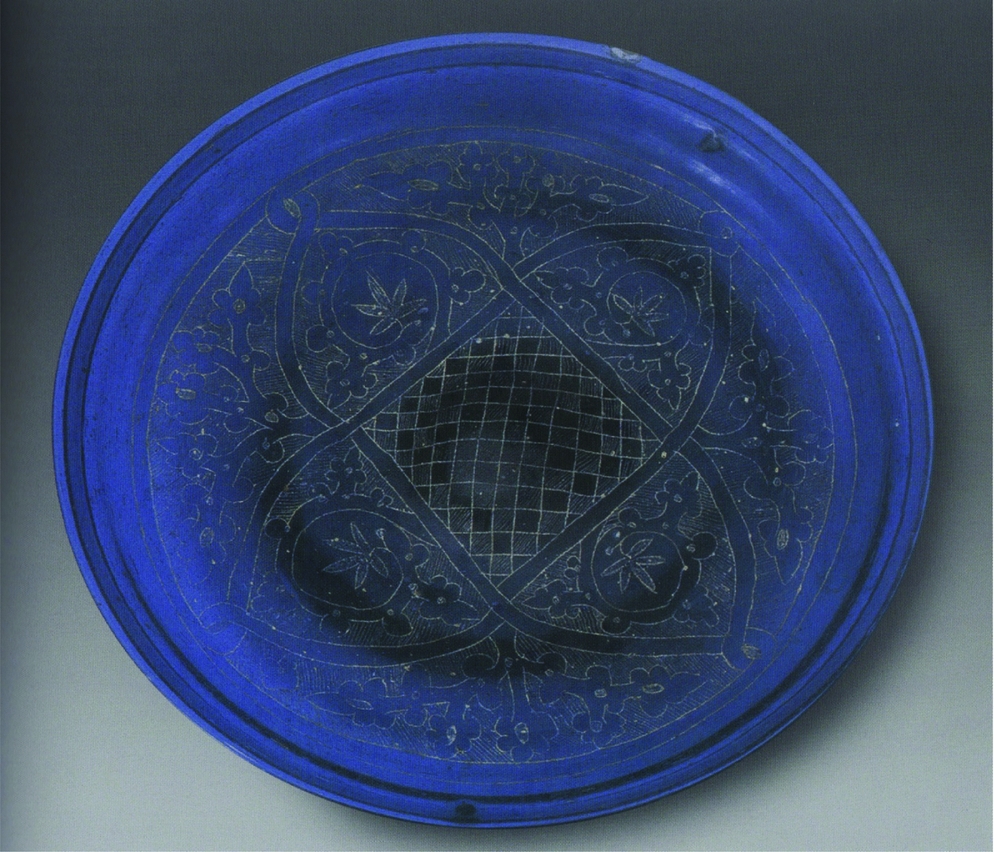
The Shosoin repository in Nara (Japan), a building initially attached to the Tōdai-ji Buddhist temple complex, was endowed with the treasury of emperor Shōmu (701–756) by his widow Kōmyo (701–760) after his death. Amongst its contents are several examples of glasswork, from goblets through beakers and ewers to dishes. Their attributions are disputed, and sometimes range from West through Central to East Asia for the same objects.Footnote 139 A crypt built to house a Buddhist relic at Famen temple, 120 km north of Chang’an, and sealed in 874 has also yielded, among other precious objects donated by emperor Xizong, an Islamic glass vase and drinking cup, as well as several glass plates with incised geometric and semi-abstract vegetal ornament typical of the Abbasid era (Figure 5).Footnote 140 The imperial level of patronage, in both repositories, suggests that these were prized luxury commodities in China and Japan. Glass objects and fragments resembling Sasanian or early Islamic production have also been unearthed at Silla burial sites and temples in Korea, though again some of them may have been local products based on West Asian prototypes.Footnote 141
Textiles were another important commodity primarily exported from China, and this long before the rise of Islam. Starting in the fifth and sixth centuries, decorative motifs of West and Central Asian origin were making their way onto Chinese silks, presumably through land routes (likewise, Sasanian and Central Asian metalwork were sources of inspiration for Chinese silverwares and moulded-relief ceramics).Footnote 142 Silk had also started being produced in West Asia in the sixth century, and isolated specimens of this production appear to have reached China. Thus in 716, an embassy of the Umayyad caliph Sulaymān brought to the Tang court “a robe of golden thread”: this must have been an imperial embroidered fabric (Ar. ṭirāz), typically made of silk with Arabic inscriptions woven in gold thread.Footnote 143 In broader terms, as noted earlier in this study, diplomatic activity was consistently accompanied by the circulation on a small scale, through gifting, of luxury objects.
The main movement of textile products, however, was from China towards West Asian markets. Their lightness and suppleness made them prone to transport by land, yet it is clear that by the 720s, they were also being carried on merchant ships, as attested by Huichao's mention of bosi sailing directly to Guangzhou and acquiring silk there.Footnote 144 Silk is also the first in a list of Chinese products given by Ibn Khurdādhbih, whose focus is on the sea trade. Likewise in the Akhbār al-ṣīn wa’l-hind, one informant notes that the Chinese have gold, silver, pearls, silk brocade (dībāj) and silk (ḥarīr) in abundance, and use them as commodities (rather than currency).Footnote 145 The Tang Code includes a statute forbidding the export of silk products and precious metals through the western and northern frontiers, which suggests an effort to channel their export to the sea routes.Footnote 146
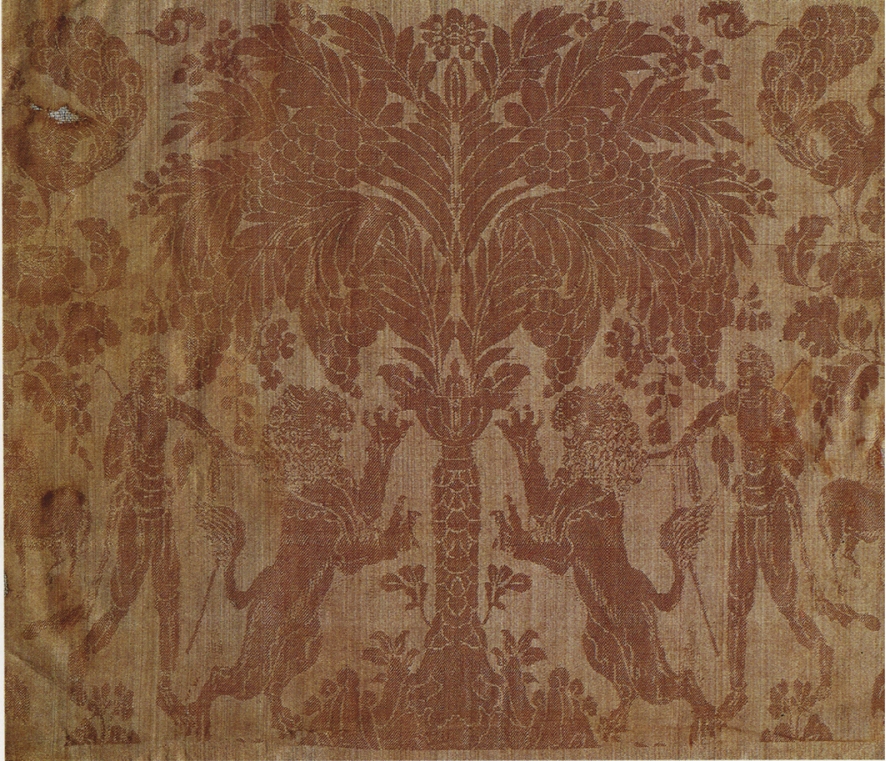
Survivals of textiles over such long periods of time are rare. Some silks from the Shosoin display motifs and compositions with strong Iranian or West Asian resonances, but as with glass, it is often unclear whether they were made in West, Central or East Asia, let alone how they were transported. In the example shown here (Figure 6), the symmetrical composition of the date tree with its flanking lions and attendants is typical of Sasanian and early Islamic designs; yet the treatment of the tree base, claws, mane and cloud scrolls seem to betray East Asian craftsmanship. To complicate matters further, the weaving technique is unconventional, and thus not easily localised.Footnote 147 In this realm where goods, techniques and motifs had begun to be exchanged before Islam, it is particularly difficult to assert whether any specific objects, not to mention broader evolutions, may be tied to sea trade between Tang China and the early Islamic world.
Detail of textile stored at the Shosoin imperial repository in the mid-eighth century. Nara, Shosoin, South Section. Total dimensions 99 × 52.2 cm.

By their very uncertainty, the debates about the origins of glasswork and textiles from this period, together with the better-understood dynamics at play in ceramics, also underline the spread of shared artistic vocabularies across West, Central and East Asia – what one might call international Asian styles – for certain media and designs, partly diffused through sea trade, but also through other channels.
Plants, materia medica and alchemy
Foodstuffs and medicinal substances, which require either cultivation or proper administration as medicines, bring us one step closer to the transmission of ideas. Their material remains are unsurprisingly rare: the Belitung shipwreck is a remarkable exception, having yielded small quantities of spice, amber, nuts and aromatic resin as well as whole jars of star anise from Southeast Asia or southern China.Footnote 148 Numerous fragments of Chinese utilitarian jars have also been excavated at Siraf and in the Gulf; these were probably used to carry consumable goods, like the turquoise jars from the Islamic world discovered at several sites along the South China coast, including hundreds of sherds and one complete vessel at Yangzhou.Footnote 149
Textual sources also suggest that a wide range of plant products travelled between East and West Asia, although their interpretation requires caution. Most Arabic treatises on materia medica from the period, such as those by al-Kindī (ninth century) and Ibn Waḥshīyya (wr. 904), commonly list “Chinese” ingredients in their recipes: in the latter two works, for example, Chinese ginger (zanjabīl ṣīnī), as distinct from ginger (zanjabīl) and wild ginger (āsārūn), as well as Chinese rhubarb (rāwand ṣīnī).Footnote 150 It is difficult to assert, on the basis of these texts, whether the plants were indeed Chinese: they may have been brought from China, from another part of the Indian Ocean, or have been acclimated in the Islamic world. Chinese cinnamon (dār ṣīnī) stands as a relative exception, since it is explicitly distinguished from common cinnamon (qirfa) by Ibn Waḥshīyya, is listed as an import from China by Ibn Khurdādhbih, and may be identified as cassia (Lat. cinnamomun aromaticum), the bark of a plant native to southern China.Footnote 151
Conversely, Chinese sources such as the Youyang zazu (“Miscellaneous Offerings of Youyang”) of Duan Chengshi (ca. 800–863) list numerous herbs, spices and aromatics from West Asia; these include dates, frankincense, oak galls, ambergris, and myrrh, to name but a few.Footnote 152 The date tree was the archetypal plant associated with Arabia and West Asia in China. It thus occurs on textile designs from the Shosoin illustrated above (Figure 6), in a representational mode of Sasanian or early Islamic origin. The informants of the Akhbār al-ṣīn wa’l-hind and its Supplement assert that the date tree did not exist in China, but Liu Xun (ninth century) provides an accurate description of specimens he had seen in the suburbs of Guangzhou, where they may have been acclimated of recent date. The date fruit must, in any case, have been imported from West Asia, since Liu asserts: “the foreign as well as the domestic kind is consumed in our country”.Footnote 153
Alongside the plants themselves, knowledge about their medicinal uses made its way into Chinese pharmacological treatises of the early Tang period onwards; a few books were even devoted entirely to the subject.Footnote 154 One of these, the Haiyao bencao (“Overseas Materia Medica”, early tenth century) by Li Xun, has been largely preserved through citations in later texts. Its author was born into a bosi family in China, possibly at Guangzhou, before making a career in the official administration of Sichuan and becoming a Chinese poet of note. According to Huang Xiufu (fl. early eleventh century), Li Xun's younger brother Li Xuan “made a living by selling fragrant herbs”, which suggests direct links with merchant communities. The very title Haiyao bencao implies transport by sea, an idea confirmed by the mention in the text of five maritime products, among dozens of foreign herbs, trees, fruits, animals, insects and jades.Footnote 155
Alchemy is another field in which hints at these patterns of exchange can be gleaned. The Arabic alchemical corpus attributed to Jābir ibn Ḥayyān represents the production of a school active between the eighth and tenth centuries, probably in Iraq. In the Book of Properties (Kitāb al-khawāṣṣ), chapters 28 to 31 list recipes attributed to China and India, which explain in detail the fabrication of various Chinese oils (duhn ṣīnī) for belts, clothes, metals, swords, glass and marble; black Chinese glue; Chinese saddles, inks, and a Chinese cream for polishing mirrors.Footnote 156 As with medicinal products, these beg the question of how Chinese the techniques really were. In order to start assessing this question, let us briefly examine a recipe from an unpublished manuscript in the British Library (Ms. Or. 4041, ff. 56r-v). The soot of pine wood rich in resin, says the recipe, was consummated in a stove (kānūn) covered with an [inverted] recipient (inā). The soot was then mixed with fish oil in a vessel (hāwūn), beaten for an hour, flattened with water, and rubbed until it thickened, becoming soft as a cream (marham). This substance was made into loaves that were hung on a string and left to dry.
This procedure corresponds to Chinese ink-making techniques, as recorded in manuals of the Song period onwards. These were based on pinewood that had to be rich in resin (after the Tang period, oil soots were gradually introduced instead as pine forests were being depleted). The soot was collected on a hood covering the fire and mixed with glue that could be made, among other ingredients, from fish, then beaten and spread by hand, before drying; the latter phase could be prolonged for years in order to remove any moisture from the ink bricks, which were given different shapes and moulded decorations.Footnote 157
This recipe attests to a technological transfer occurring outside the realm of ceramics. The “Chinese” oils and glues in the Jābirian corpus also bring to mind the maintenance of ships in the Indian Ocean trade; whilst the polishing cream resonates with the mirrors recovered on the Belitung wreck; and the saddles echo the gift to al-Mutawakkil mentioned in the Kitāb al-hadāya wa’l-tuḥaf.Footnote 158 These possible connections remain to be investigated in light of this text, which would deserve to be fully edited.
At the other end of Asia, Li Xuan, the above-cited plant trader of Iranian origin, was also an alchemist, and his brother Li Xun repeatedly cites alchemical remedies with Daoist affinities in Haiyao bencao.Footnote 159 The (distorted) image of such figures emerges amongst the hu, bosi and dashi merchants of Tang-era tales: these characters, usually depicted as grotesque, are associated with alchemical and pharmaceutical pursuits, and sometimes turned into magicians with wonderworking precious stones.Footnote 160 Although further study is still required, it seems that the milieu and mindset of alchemy and materia medica—semi-popular rather than courtly or religious, lying at the crossroads of craft and science, and requiring the acquisition of substances—were ideally placed to channel an exchange of ideas. Once again, West Asians emerge as its main driving force, along with Chinese people of West Asian origin, who were innately conversant with both cultures.
Chinese craftsmen, books and objects in Abbasid Iraq
Scattered fragments of evidence do also suggest that Chinese people, some of them skilled at a craft or literate, resided in Iraq during those years. This is most clearly shown by the case of Du Huan, an officer probably taken prisoner in the aftermath of the Talas battle (751), which saw Muslim forces led by Ziyād ibn Ṣāliḥ al-Khuzāʿī inflict a resounding defeat on the Tang armies of general Gao Xianzhi and his Turkish allies, thereby establishing a firm Muslim presence at the heart of Central Asia.Footnote 161 Du Huan spent the next decade in Iraq before returning to China on a merchant ship around 762. His original text has not survived, but his relative Du You recorded some sections in Tongdian, notably:
The weavers of silk gauze, silver- and goldsmiths, and painters [in dashi] all learn from [or have begun from] Chinese craftsmen. There are painters from the [Chinese] capital: Fan Shu and Liu Ci; and weavers from the Hedong region [of Shanxi province]: Le Huan and Lu Li.Footnote 162
This direct testimony attests to the presence, in the 750s in Iraq, of weavers, metalworkers and painters, some of them from Chang’an and its broad region. The passage begins by stating: “Dashi is also called Ajuluo; its Arab king is styled mu-men [Ar. amīr al-muʾminīn, the main Arabic title of the caliph]. This [Ajuluo] is the place of their capital”.Footnote 163 As suggested by modern commentators, “Ajuluo” might be a phonetic rendering of ʿAqūla, the East Syriac name of Kufa (or the more cognate West Syriac pronunciation, ʿAqūlo).Footnote 164 But the text continues with a generic description of Iraq, making it unclear whether the craftsmen were active in this city or in another part of the land: Baghdad during its construction, which began between 758 and 762, comes to mind as another possibility.Footnote 165 Whether this episode was isolated or part of a broader circulation of craftsmen remains an open question, given the lack of evidence.
In the Fihrist, written in 987, al-Nadīm also mentions Chinese objects he had seen in Baghdad. He writes:
“[The Chinese] write the books of their religion and sciences in fans (marāwiḥ). I have seen a number of them”.Footnote 166
This allusion calls to mind the so-called “butterfly” codices consisting of single or double folios glued together at the fold and kept together between the two halves of a wooden stick: their shape would indeed have made them resemble fans of the kind used in the Islamic world.Footnote 167 The production of these codices may have begun in China as early as the eighth century, but it peaked at the time of al-Nadīm, under the early Song (tenth century).
“The Chinese”, al-Nadīm notes, “write with hairs which they fit into the top of stems (ruʾūs al-anābīb), like painters (al-muṣawwirūn) do”, thereby drawing an implicit contrast between Chinese brushes and the reed pens of Arabic scribes.Footnote 168 He also writes:
China has an ink (midād) made from mixtures, which resembles Chinese oil (dahn). I have seen some of it in the form of tablets (alwāḥ), with the portrait of the king stamped on it. One piece is enough for a long time and the writing is lasting.Footnote 169
This description reflects the reality of Chinese inks, sold as solid loaves onto which designs were stamped;Footnote 170 the figure construed by al-Nadīm as the emperor may simply have been a man in Chinese dress. His use of the word midād accurately refers to soot ink, as opposed to the gallic ink (ḥibr) employed in Qur’ans of the same period. Interestingly, these observations represent the kind of second-hand information that could be gleaned by an inhabitant of Baghdad with no particular connection to China (al-Nadīm was a bookseller), be it in houses, shops or markets.
The range of Chinese goods that al-Nadīm saw at Baghdad raises the possibility that literate Chinese people lived there, without providing solid evidence that they did. The presence of books suggests that there were people to read them, yet one cannot rule out that they were sold as curiosities; and so it is with Chinese inks and brushes, which could readily be used by local buyers (indeed, some of them may have been produced locally, as suggested by Jābir's ink recipe). Likewise the inkstone from the Belitung wreck (Figure 3) may have belonged to a literate Chinese person headed for West Asia, but the owner could equally have been travelling elsewhere in the Indian Ocean, or the object may have been intended as a gift or a rare commodity. The footprint of Chinese people in Iraq, direct or indirect, is ultimately faint: it evokes an anecdotal presence based on individual trajectories, rather than an established and socially structured settlement.
Al-Rāzī and the Chinese scholar
A story recorded by al-Nadīm about the philosopher, medical writer and alchemist al-Rāzī (known in Latin as Rhazes, 854–925 or 935) adds a final piece of evidence to this puzzle, and is thus worth quoting at length:
Muḥammad ibn Zakarīyya al-Rāzī said: a man from China came to stay with me for about a year. During that time he learned spoken and written Arabic in five months, until he became well versed, skilled, and fast at writing. A month before leaving for his country, he told me: “I have decided to leave, and I wish to receive the sixteen books of Galen in dictation so I can write them down”. I said: “Time is running short, and you will not be able to copy [even] a small portion of these during the period that remains”. The man said: “I ask you to grant me your presence during the remainder of my stay; dictate to me as fast as you can, and I will outpace you in writing”. I invited some of my students to join us in this task. We dictated to him as fast as we could, and he outpaced us. We did not believe it until the collation (muʿāraḍa), when he collated all that he had written [correctly]. I asked him about this, so he said: “We have a [type of] writing called majmūʿ, which is what you have seen. When we wish to write something lengthy in a short time, we use this calligraphy. Then if we want, we can transcribe it into the usual detailed script”. He asserted that a sharp, intelligent person cannot learn this in less than twenty years.Footnote 171
This anecdote about the feats of a Chinese scholar may, at first, be received with a hint of scepticism. It does contain a description of shorthand that echoes Chinese “grass script” (caoshu).Footnote 172 The Arabic name, majmūʿ (literally “assembled”), is meaningless in this context, and may arguably be a phonetic transposition of caoshu. At any rate, the Chinese technique, which involved abbreviated and connecting strokes, had no known equivalent in the Islamic world. The central element of the story is therefore authentic, showing at least an awareness of this aspect of Chinese writing in tenth-century Baghdad. It is possible that the broader narrative was woven around this factual core by an oral tradition, but closer scrutiny tends to lend it some credibility.
Al-Rāzī was active at Rayy and Baghdad, two cities located at the western end of both the sea and land routes to China, and which might thus have been reached by Chinese travellers (Rayy is explicitly cited by Ibn al-Faqīh as an extension of Radhanite sea trade to China).Footnote 173 Al-Rāzī was among the foremost medical writers and practitioners of his time; like several of his predecessors, he included Chinese drugs in his materia medica, as preserved through al-Bīrūnī's citations.Footnote 174 The Sixteen Books mentioned in the anecdote were an abridged selection of Galen's medical works compiled at Alexandria between the sixth and seventh centuries, and which came to form the basis of Islamic medical education. They are cited repeatedly in Rāzī's own medical summa, the Kitāb al-ḥāwī.Footnote 175 The Sixteen Books would thus have been extensively taught to students in his circle, whom al-Rāzī advised to “collect books on medicine” and to “compile books for [themselves]” to assist their practice.Footnote 176
The translation procedure described in the text differs from what is known about Arabic and Syriac techniques, which involved a single translator carrying out his work in writing, though collation was sometimes carried out orally with a second person.Footnote 177 It does, on the other hand, resonate with Chinese techniques originally established for the transmission of Buddhist texts: a committee of scholars would assemble, with some having at least spoken knowledge of both the source and target language—like al-Rāzī's Chinese student. The text was read out in the source language (usually Sanskrit), translated orally and simultaneously written down in Chinese. This raw output was checked for accuracy by scholars familiar with the source language, then for linguistic soundness by Chinese literati. The technique is brought to life by the colophon dated 286 ce of a Chinese version of the Lotus Sutra:
Dharmarakṣa [the translator], holding the foreign [hu] scripture in his hand, orally delivered and issued the twenty-seven chapters of the Zhengfahua jing [the Chinese name of the work], conferring it upon the upasaka [devout lay practitioners] Nie Chengyuan, Zhang Shiming, and Zhang Zhongzheng, who together received it with the brush [bishou, i.e. wrote it down].Footnote 178
Here again we find a gathering of scholars—in this case, Chinese, Indian, Tokharian and Yuezhi—carrying out the translation orally and noting it down, then collating it, a technique which had been expanded and refined by the Tang period. Thus a colophon of 703 records an instance in which the Buddhist Sutra of Golden Light was translated into Chinese by a committee of 16 Chinese and Indian scholars. The Indians read the text in Sanskrit to Yijing, the pilgrim already mentioned above, who translated it orally into Chinese. This version was again “received with the brush” by two scholars before other members of the committee controlled its contents.Footnote 179
A Chinese scholar steeped in this translation culture might naturally have replicated it in a foreign context, which could represent the background to the al-Rāzī anecdote. In comparison with Islamic techniques, this collegial procedure relying on orality had the notable advantage of speed. Seen in this light, the month it took the Chinese scholar to copy the Galenic compendium is not unrealistic: the colophon of the Lotus Sutra translation of 286 ce. states that it was completed in three weeks.Footnote 180 The Buddhist work is of the same order of length as the Sixteen Books, which are extant across several fragmentary Arabic manuscripts.Footnote 181
One can only speculate as to whether the end result was a finished translation or simply a personal record of the Sixteen Books: the important point is that the anecdote is likely to be authentic. The story of this lone scholar, like that of Du Huan, does also comfort the idea of Chinese travellers reaching the Islamic world as a thin trickle, through individual circumstances – but nevertheless adding significant points of contact to the overall pattern of exchange.
Conclusion
The recently discovered Belitung shipwreck offers rare material evidence of what had long been known from texts and partly confirmed by earlier archaeological finds: the development of direct sea trade between Tang China and the early Islamic world, at a time when both empires were at the peak of their political, cultural and economic power. Its cargo provides an incomplete cross-section of the range of goods exported from China to markets in West Asia, whilst pointing to the presence on board of passengers not limited to merchants. This partial picture can be completed by written accounts of Buddhist pilgrims headed for Indonesia or India on such merchant ships, of East Syrian clergy reaching China by sea, and of Chinese craftsmen in Iraq. Goods, furthermore, were consistently exchanged in a two-way traffic: in ceramics, textiles, glass and metalwork respectively, one can discern the emergence of certain styles that spanned the breadth of the continent. For some of these media, the process had already been set in motion before Islam, chiefly through land routes.
Among the primary factors that prompted the intensification of these links after the rise of Islam were the emergence of major monetised markets in Iraq; the appreciation of Chinese products in the Islamic world; and the relatively stable trade conditions within both China and the Islamic empire for much of the seventh to ninth centuries. Early on in this period, West Asian trading communities grew in Chinese ports, especially Guangzhou: amongst their ranks were Muslims, but also Jews, Christians and Zoroastrians speaking Arabic, Persian and Aramaic, with an important Arab-Muslim component. These foreigners lived under a discrete administrative régime in designated quarters of these Chinese cities. A glimpse of their – largely admiring – perception of China can be gleaned from the Akhbār al-ṣīn wa’l-hind.
Most of these merchants may have been content with a limited degree of oral communication with the local population, but some appear to have gained further acquaintance with Chinese language and customs in order to build up links with government officials, middlemen and craftsmen. This phenomenon gained in depth with Chinese-born offspring, who naturally straddled the cultural divide between East and West Asia. Conversely, a faint footprint of Chinese persons, some literate, in Iraq can be detected, although their number must have remained very small. Taken as a whole, this human infrastructure enabled a limited amount of technological and scientific exchange, which can notably be traced in the fields of materia medica and alchemy. The formidable barrier of language was thus being eroded ever so slightly, along with that of distance, in this period.
The mechanisms of these diffusion patterns, their scope and their eventual legacy await to be investigated further. So do the distinctions between different West Asian social groups within China, and their mutual interactions: the Church of the East in particular had its patriarchate in Iraq and developed a remarkable acculturation to the Chinese context, including textual translations from Syriac into Chinese; but the nature of its relation to merchant diasporas in China, if any, remains to be understood. For the time being, it seems beyond doubt that the movement of people and objects between Iraq and China substantially intensified during those years, and carried in its wake transmissions not only of designs, but also of ideas.
Character index
Ajuluo 亜倶羅
An Lushan 安禄山
bishou 筆受
Bosi 波斯
Caoshu 草書
Cefu yuangui 冊府元龜
Chajing 茶經
Dashi 大食
Duan Chengshi 段成式
Du Huan 杜環
Du You 杜佑
fanfang 蕃房
Fang Xinru 方信孺
Fan Shu 樊淑
Feng Ruofang 馮若芳
Fujian 福建
Gao Xianzhi 高仙芝
Gutang guo骨唐國
Haiyao bencao 海藥本草
Han 漢
Hu 胡
Huaisheng si 懷聖寺
Huang Chao 黄巢
Huichao 慧超 (also 惠超, Korean reading)
Jia Dan 賈耽
Jianzhen 鑒真
Jilie 及烈
Jiu Tangshu 舊唐書
Kunlun 崑崙
Lingnan 嶺南
Liu Ci 劉泚
Liu Xun 劉恂
Liu Zongyuan 柳宗元
Li Xun 李珣
Li Xuan 李玹
Lu Yu 陸羽
Lu Yuanrui 路元叡
Poluomen 婆羅門
Quan Tangwen 全唐文
shizi 獅子
Tang dazhaoling ii 唐大詔令集
Tian Shengong 田神功
Tongdian 通典
Wei Lijian 韋利見
Xin Tangshu 新唐書
Xizong 僖宗
Xuanzong 宣宗
Yan Zhitui 顏之推
Yijing 義浄
Youyang zazu 酉陽雜俎
Yue Ke 岳珂
Zheng Fahuajing 正法華經