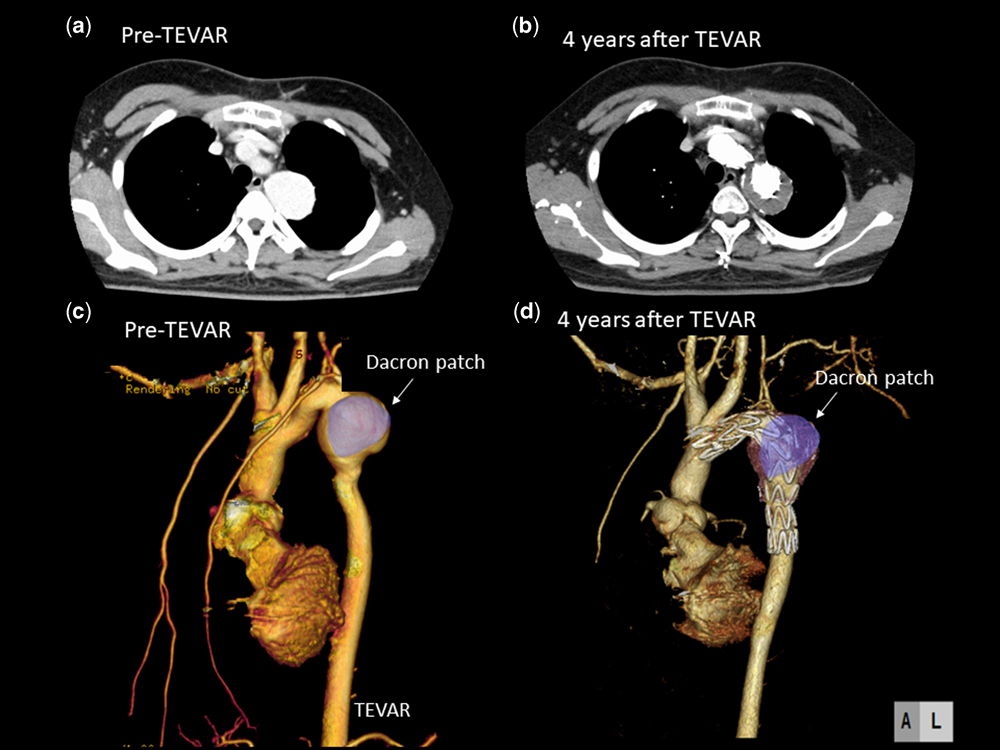
A 25-year-old man with an interrupted aortic arch and ventricular septal defect underwent thoracic endovascular aortic repair for a post-repair aneurysm. He had undergone pulmonary artery banding and Blalock–Park repair at the age of 1 month, ventricular septal defect closure and pulmonary artery debanding at the age of 2 years, aortic-arch repair using a Dacron patch at the age of 9 years, and pacemaker implantation for atrioventricular block at the age of 22 years. The true aneurysm that included a Dacron patch area at the site of the repaired lesion was discovered on CT when he was 18 years old, and its maximum diameter grew from 32 to 46 mm (Fig 1a and c). Thoracic endovascular aortic repair using a Valiant thoracic endograft (Medtronic Inc., Minneapolis, Minnesota, United States of America) was performed through the femoral artery to prevent aortic events without symptoms. During the 4-year follow-up after thoracic endovascular aortic repair, the extra-graft cavity rapidly thrombosed without late rupture, endoleaks, migration, and stenosis (Fig 1b and d). An aortic aneurysm is a serious complication of coarctation repair and is associated with aortic dissection and sudden cardiac death in 9% of the patients.Reference von Kodolitsch, Aydin and Koschyk 1 As surgical repair of late aneurysms is associated with high mortality and morbidity, recent advances in thoracic endovascular aortic repair for aortic aneurysms are becoming alternative options.
CT image (a and c) before and (b and d) after thoracic endovascular aortic repair (TVAR) for a post-repair aneurysm.

Acknowledgement
The authors thank all medical staffs for their cooperation.
Financial support
This research received no specific grant from any funding agency or from commercial or not-for-profit sectors.
Conflicts of Interest
None.