Introduction
The effects of saprophytic soil fungi on longevity of buried seeds have been investigated for many different plant species from a wide range of different ecosystems, with experiments involving the simultaneous burial of untreated seeds and of seeds treated with fungicides (Fellows and Roeth, Reference Fellows and Roeth1992; Lonsdale, Reference Lonsdale1993; Dalling et al., Reference Dalling, Swaine and Garwood1998; Leishman et al., Reference Leishman, Masters, Clarke and Brown2000; Gallandt et al., Reference Gallandt, Fuerst and Kennedy2004). The results underline that fungal-induced seed mortality can greatly affect seed demography.
However, methodological aspects are usually given little consideration in such seed burial studies. One notable exception is the study by Van Mourik et al. (Reference Van Mourik, Stomph and Murdoch2005) which demonstrated that the density of seeds buried in seed bags can markedly affect rates of fungal-induced seed mortality. However, there are at least three other methodological aspects that, in our opinion, would also merit methodological consideration. First, it is known that fungicides can affect live plants directly, even in the absence of the targeted fungi (Paul et al., Reference Paul, Ayres and Wyness1989; Laird and Addicott, Reference Laird and Addicott2008), and, as outlined further below, the same may also apply to the seed stage of plants. Second, fungicide efficacy can crucially depend on soil characteristics such as soil organic matter content (Goring, Reference Goring1967), although individual fungicides will be affected differently by such characteristics (Lopes et al., Reference Lopes, de Queiroz, Neves and Zambolim2002; Andrades et al., Reference Andrades, Rodríguez-Cruz, Sánchez-Martín and Sánchez-Camazano2004). Finally, different fungicides, due to their different modes of action, tend to have specific effects on particular fungal taxonomic groups (Paul et al., Reference Paul, Ayres and Wyness1989), and are therefore often combined to protect live plants against a wider range of fungal pathogens (Gisi, Reference Gisi1996). Such a combination of fungicides can sometimes also result in unexpected synergistic or antagonistic effects on fungal pathogens (Scardavi, Reference Scardavi1966; Gisi, Reference Gisi1996), and there is also the possibility of unexpected changes in phytotoxicity (Backman, Reference Backman1978). This third aspect may also deserve more consideration in the context of seed burial studies. Several fungal phyla contain saprophytic genera with the potential to harm seeds (Schafer and Kotanen, Reference Schafer and Kotanen2004), and this provides a motivation for combining several of these fungicides to achieve protection of seeds against a wider range of fungi (Leishman et al., Reference Leishman, Masters, Clarke and Brown2000). This assumption of a combination of fungicides providing a more comprehensive protection against fungal-induced seed decay has, however, not yet been experimentally verified. On the contrary, it also seems possible that different fungicides used together in a mixture may interact chemically with each other in a way that could negatively affect their efficacy as seed protectants. Combining different fungicides may even result in toxic effects on seeds similar to those observed for particular fungicide–insecticide combinations (Gange et al., Reference Gange, Brown and Farmer1992).
In addition to the known direct effects on live plants, fungicides can also have direct effects on seeds. It is known from in vitro experiments using crop seeds that fungicide treatment can affect germination rates, either by inhibiting or by promoting seed germination (Clark and Scott, Reference Clark and Scott1982; Hartz and Caprile, Reference Hartz and Caprile1995; Simmen and Gisi, Reference Simmen and Gisi1995). The same mechanisms can also affect the timing of crop seedling emergence in the field (Smiley et al., Reference Smiley, Patterson and Rhinhart1996).
To explore these various methodological aspects in a full factorial randomized block experiment, we treated the seeds of three grassland plant species with up to three different fungicidal compounds alone and in combination, and buried them in three different substrates representing a gradient in soil organic matter content. The following three main questions were addressed: (1) Do treatments that combine more than one fungicide result in a greater reduction in seed mortality, compared to treatments that use just one fungicidal compound? (2) Do fungicides, alone or in combination with each other, have an influence on the readiness of seeds to germinate when exposed to conditions that are favourable to germination, i.e. are dormancy levels influenced by the fungicide treatments? (3) Do these fungicide effects on readiness to germinate and on seed mortality depend on soil organic matter content?
Materials and methods
Field site
The burial experiment was carried out in unmanaged ruderal grassland adjacent to the Centre for Environmental Research and Technology (UFT) of University of Bremen, Germany (53° 05′N, 8°48′E). The topsoil at this site consists of almost pure sand, with an average pH of 5.2 and an organic matter content of 1.1% (Mitschunas et al., Reference Mitschunas, Wagner and Filser2008). Mean annual temperature and total precipitation, based on the period 1991–2005, are 9.5°C and 713 mm (Deutscher Wetterdienst, 2008).
Materials
We used seeds of Anthriscus sylvestris (L.) Hoffm., Centaurea nigra L. and Daucus carota L. (nomenclature follows Jäger and Werner, Reference Jäger and Werner2002), three grassland species characterized by short-term seed-bank persistence of between 1 and 5 years (Thompson et al., Reference Thompson, Bakker and Bekker1997).
We used three different fungicidal compounds in our experiment. Two of these compounds, captan and iprodione, have been used previously in ecological seed burial experiments, with captan being very regularly employed in such experiments (Wagner and Mitschunas, Reference Wagner and Mitschunas2008). The third compound, mancozeb, has been recommended for seed treatment (Sinha et al., Reference Sinha, Singh and Mukhopadhyay1988), although it has not been used previously in the context of ecological seed burial studies. Both captan and iprodione are dicarboximide fungicides, whereas mancozeb is a dithiocarbamate fungicide. Captan is considered very effective against seed-rotting fungi (Neergaard, Reference Neergaard1979), and in an agricultural context it is mainly used against pathogens from the phylum Ascomycota (Whitehead, Reference Whitehead1998). By contrast, both iprodione and mancozeb are more widely used not only against Ascomycota but also against a wide range of pathogenic Basidiomycota and Oomycetes (Whitehead, Reference Whitehead1998), the latter group now being recognized as being taxonomically distinct from the true fungi (Deacon, Reference Deacon2006).
As in many previous studies (e.g. Blaney and Kotanen, Reference Blaney and Kotanen2001; O'Hanlon-Manners and Kotanen, Reference O'Hanlon-Manners and Kotanen2004; Orrock and Damschen, Reference Orrock and Damschen2005; Van Mourik et al., Reference Van Mourik, Stomph and Murdoch2005), seed bags filled with a mixture of soil and seeds were buried. Our seed bags were made of 7 cm × 7 cm pieces cut from nylon stockings. To establish a gradient of soil organic matter content in the seed environment, we used the local topsoil and a green waste compost (pH 5.7) from a local supplier (Kübel-und Pflanzerde; Kompostierung Nord GmbH, Bremen, Germany) as base materials to create three different substrates. These were pure topsoil, pure green waste compost, and a 1:1 volume-ratio mixture of both materials.
Experimental set-up
Prior to the experiment, all three substrates were passed through a sieve of 5.0 mm mesh width. To control for known effects of soil fauna on fungal-induced seed mortality, a subsample of each substrate, used for filling the seed bags, was subsequently passed through a 1.0 mm sieve and then defaunated by freezing for 24 h at − 20°C, followed by 24 h at room temperature and another 48 h at − 20°C (Mitschunas et al., Reference Mitschunas, Wagner and Filser2006).
Each seed bag was filled with 4 ml of respective defaunated substrate and a total of 75 seeds ( = 25 seeds per species), and then tied up with sewing thread. To ensure recognition of individual treatments at the end of the experiment, each bag was marked using colour-coded pieces of cord. Prior to burial at the field site, the mesh bags from the fungicide treatments were immersed in fungicide solutions prepared from three different fungicidal compounds on their own or in combination.
These fungicide solutions were prepared on 20 December 2006 by dissolving specific quantities of each fungicide at 20°C in 1000 ml of distilled water. We used 10 g of Merpan 80 WDG (active compound: captan 80% w/w; Feinchemie Schwebda GmbH, Eschwege, Germany) for the captan solution, 0.8 g of Rovral 75WG (active compound: iprodione 75% w/w; BASF AG, Ludwigshafen, Germany) for the iprodione solution, and 2 g of Dithane NeoTec (active compound: mancozeb 75% w/w; Spiess-Urania Chemicals GmbH, Hamburg, Germany) for the mancozeb solution. For iprodione and mancozeb, these concentrations corresponded with the recommendations made by the manufacturers for soil application. The concentration of captan was the same as in previous seed burial experiments (Blaney and Kotanen, Reference Blaney and Kotanen2001; O'Hanlon-Manners and Kotanen, Reference O'Hanlon-Manners and Kotanen2004; Kotanen, Reference Kotanen2007).
We did not reduce the concentrations of individual fungicidal compounds when preparing the mixtures, as there was no indication for such a course of action from previous seed burial experiments employing mixtures of different fungicides. Instead, we dissolved the same quantity of each individual fungicide compound when preparing 1000 ml of mixture solutions as was used for preparing single-compound solutions. We also included a control treatment in which mesh bags were immersed in water prior to burial, and thus all eight possible different fungicide combinations were used, ranging from no fungicide at all to the combination of all three fungicides. In combination with the three levels of soil organic matter content, this resulted in 24 different treatments. We immersed six replicate seed bags per treatment, i.e. a total of 144 seed bags, in the respective solutions on the same day as the fungicide solutions were prepared. Bags were immersed for 15 min to ensure complete saturation. After immersion, the bags were stored overnight in plastic trays at 13°C in the dark, still separated by fungicide treatment. The following day, on 21 December 2006, we established three experimental blocks at our grassland site for seed burial. These blocks were placed in the corners of an equi-angular triangle with a side length of c. 7 m between blocks. Per block, we excavated 48 cylindrical holes of 7 cm diameter and 6 cm depth in a regular grid of 6 × 8 across an area of 0.6 m × 0.8 m, allowing for two replicate seed bags of each treatment to be buried in the same block. Individual replicates were assigned at random to positions within the grid. Prior to placing each seed bag in its hole, we filled half of the hole with the same substrate that was used to fill the bag, but after it was passed through a 5.0 mm sieve only and not defaunated. After placement of the seed bags, the holes were filled to surface level with the same substrate, thus ensuring that the substrate around the bags was of the same composition as the substrate in the bags. After 6 months, the seed bags were recovered from the field on 20 June 2007.
Seed viability testing
Immediately after recovery, the contents of the seed bags were surface-sterilized by soaking the bags in 70% ethanol for 2 min, followed by soaking in 1.25% sodium hypochlorite solution for 4 min. Finally, each seed bag was rinsed twice for a 2-min period with distilled water. After that, each seed bag was opened and germinated seedlings were counted and removed. Across the whole experiment, a total of four Centaurea seeds and five Daucus seeds had germinated during burial, and their occurrence was seemingly unrelated to experimental treatments. We found more germinated Anthriscus seeds, but the fraction of germinated seeds of this species never exceeded 12% ( = 3 seeds) in a single seed bag, and a three-factorial analysis of variance on arcsine-transformed data, using fungicide combination and substrate as fixed factors and block identity as random factor (results not shown) did not provide any evidence for an influence by the experimental factors. The soil, containing the remaining seeds, was transferred into 9-cm Petri dishes containing a double layer of filter paper (Whatman No. 1, Whatman International Ltd., Maidstone, Kent, UK) moistened with 5 ml of distilled water. The Petri dishes were sealed with Parafilm ‘M’ (Pechiney Plastic Packaging, Chicago, Illinois, USA) and placed in a climate chamber (Sanyo MLR-350H), at constant humidity of 80% and exposed to a diurnal cycle (16 h of light at 25°C, 8 h of darkness at 15°C) known to promote germination (Thompson and Grime, Reference Thompson and Grime1983). Every other day, the Petri dishes were randomized. Seeds showing a visible protrusion of the radicle from the seed coat were considered to have germinated (Kitajima and Fenner, Reference Kitajima, Fenner and Fenner2000) and were counted and removed at weekly intervals. Between counts, the Petri dishes were re-sealed. This germination test was run for a total of 3 weeks. During this period, only about 2% of Anthriscus seeds germinated. By contrast, c. 98% of the Centaurea seeds and c. 27% of the Daucus seeds had germinated by that time, most of them in weeks 1 and 2. To establish the exact status of seeds still ungerminated after 3 weeks, these were checked for viability under a microscope. Soft seeds were considered dead, as well as seeds containing a blackened embryo when dissected. The remaining seeds were stained after dissection with a 0.1% solution of 2,3,5-triphenyl tetrazolium chloride (Cottrell, Reference Cottrell1947). After 12 h in an incubator at 30°C, seeds were classified into dead or viable on the basis of embryo and endosperm colouration.
Data analysis
We carried out factorial analyses of variance based on Type III sums of squares using SPSS 14.0 (SPSS Inc., Chicago, Illinois, USA). Prior to statistical analyses, all data were arcsine-transformed to meet distributional requirements (Sokal and Rohlf, Reference Sokal and Rohlf1995).
To allow investigation of treatment effects on seed mortality, we calculated for each species in each seed bag the overall proportion of ungerminated dead seeds at the end of the burial period by summing the proportions of seeds determined as dead by visual inspection and of seeds determined dead as a result of tetrazolium testing.
To allow testing of treatment effects on the readiness of seeds to germinate, we also calculated for each seed bag the proportion of Centaurea and Daucus seeds that germinated up to a specific point in time, based on the overall number of seeds that were still viable and ungerminated after the burial period (i.e. seeds germinated in the Petri dishes over the whole 3-week period plus seeds that remained ungerminated but viable according to the tetrazolium test). Being interested in both the short-term effects and the longer-term effects on the germinability of viable seeds, we calculated this ratio both based on germination in the first week of the Petri dish trial, and also based on the germination occurring throughout the 3-week trial. No similar data analyses were performed for ratios based on an intermediate germination period of 2 weeks, as these were virtually identical to ratios based on the whole 3-week period. Nor did we analyse Anthriscus seed germination, as germination was very low across all treatments, averaging only about 2% of seeds during the whole 3-week germination period.
Initial analyses included both substrate type and fungicide combination as fixed factors and block identity as random factor. As the experiment included within-block replication of individual treatments, we were able to follow the recommendation by Quinn and Keough (Reference Quinn and Keough2002) to also test for treatment × block interactions. Results from these initial analyses indicated that the influence of substrate type on both mortality and readiness of seeds to germinate was negligible and mostly not significant. Therefore, we re-analysed the data for the three soil types combined, dropping the factor ‘substrate type’ from the analysis. Here, we report only the results of this latter set of analyses.
In the case of significant fungicide treatment effects, we carried out post hoc comparisons between treatments. For post hoc comparisons related to seed mortality, we used the Tukey HSD procedure that evaluates any differences in means among all possible pairs of treatments. For post hoc comparisons related to the readiness of seeds to germinate we used a two-sided Dunnett test procedure instead of the Tukey HSD procedure, as we were only interested in which fungicide combinations significantly affected the readiness of seeds to germinate compared to the untreated control treatment. This procedure is more powerful because pairwise comparisons are restricted to comparing the control treatment with the other treatments, whereas no comparisons are made among the latter (Quinn and Keough, Reference Quinn and Keough2002).
Results
Effects on seed mortality
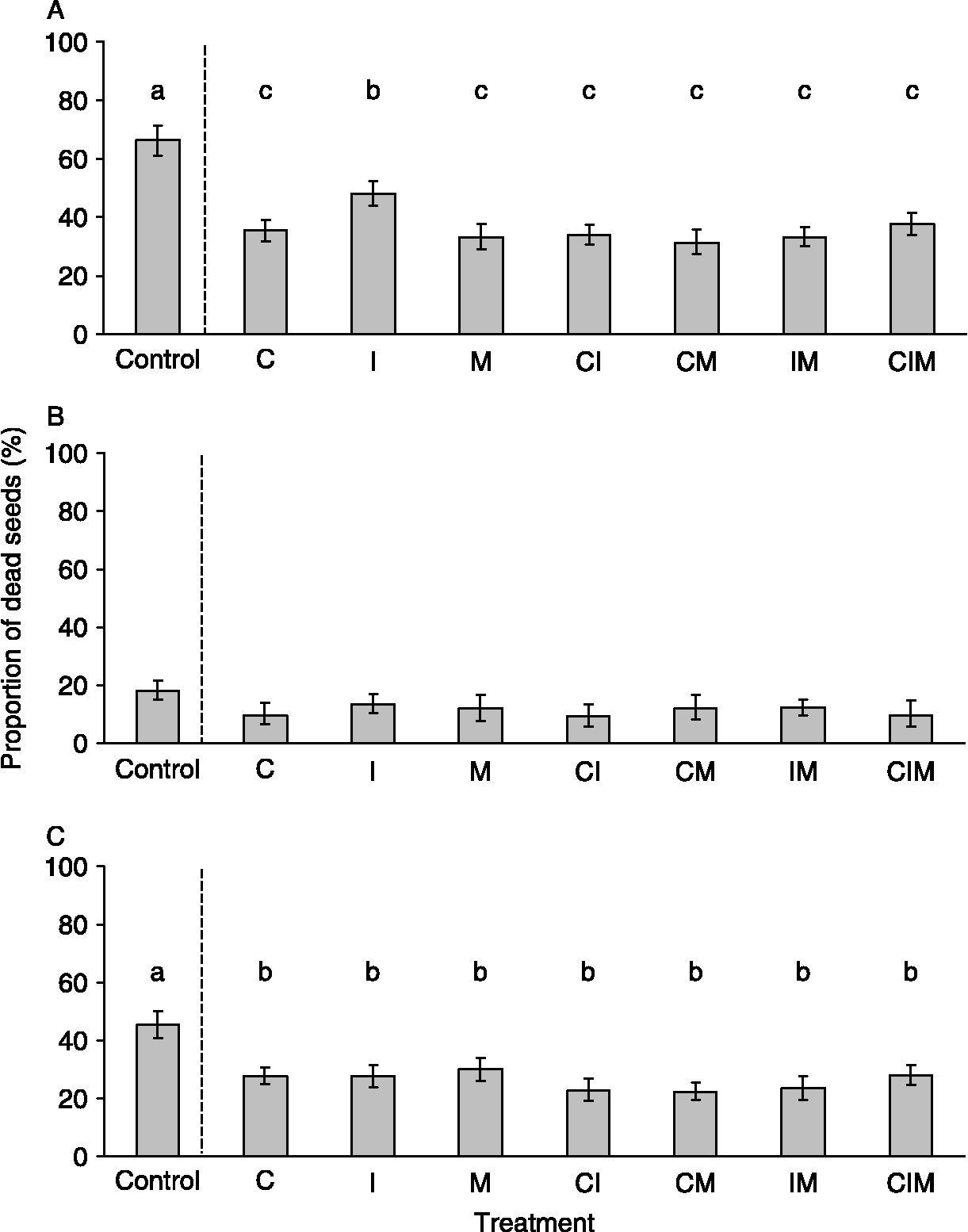
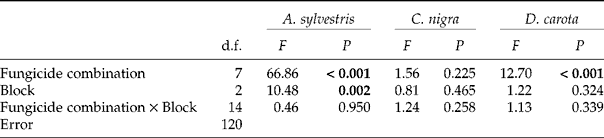
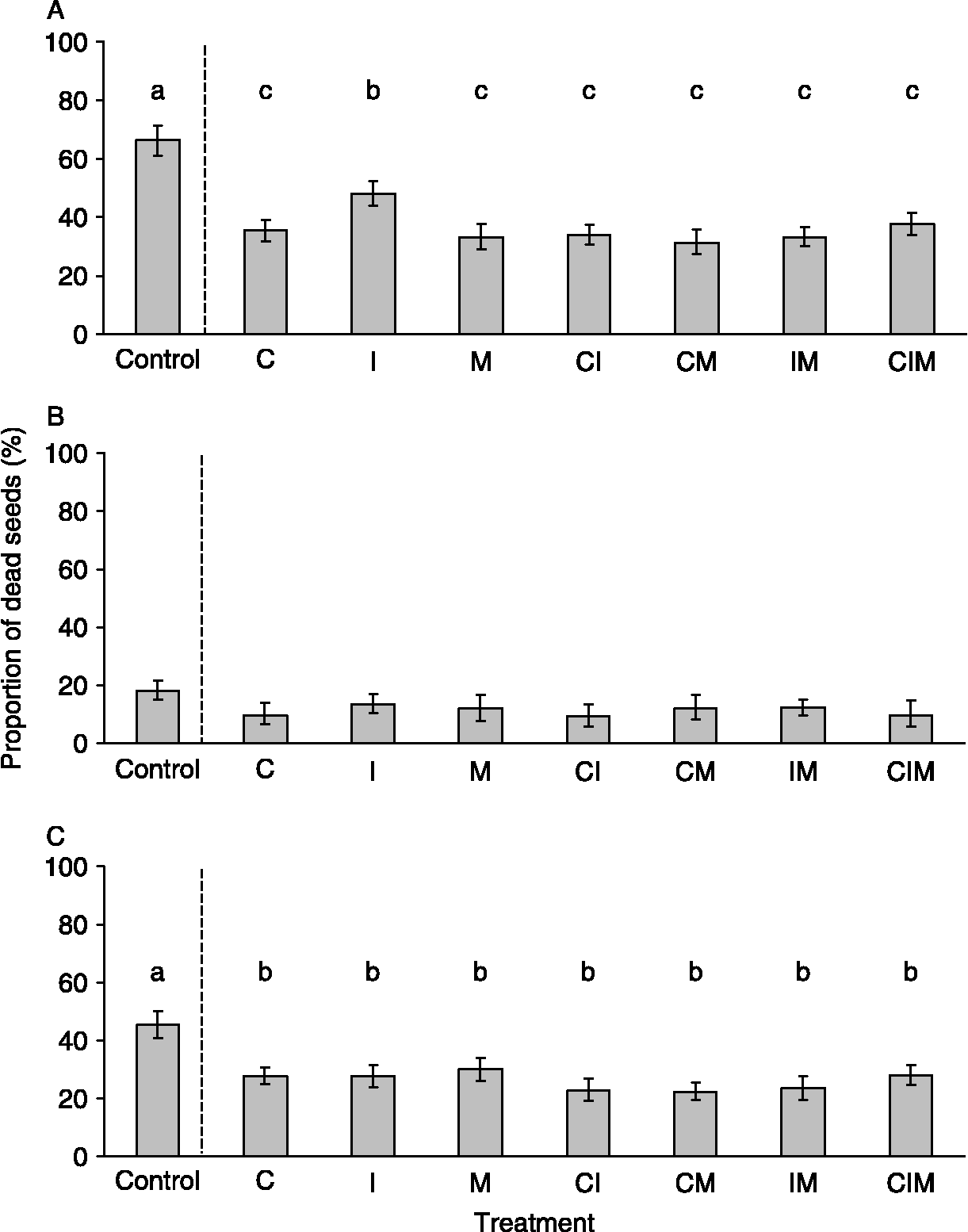
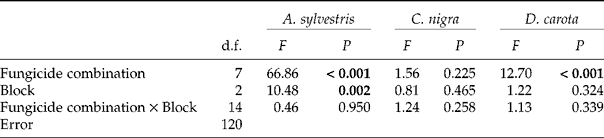
A. sylvestris was characterized by a particularly high proportion of dead seeds at the end of the 6-month burial period, with dead seeds making up between 31% and 48% in the different fungicide treatments, and 66% in the untreated control (Fig. 1A). By contrast, in C. nigra the proportion of dead seeds never exceeded 20% even in the untreated control (Fig. 1B), and D. carota was characterized by intermediate proportions of dead seeds (Fig. 1C). As indicated by ANOVA, there were highly significant (P < 0.001) fungicide effects on seed mortality both in Anthriscus and in Daucus, whereas there were no such effects in Centaurea (Table 1). As indicated by Tukey HSD tests, seed mortality in Anthriscus was significantly lowered by all fungicide treatments compared to the untreated control, but was significantly higher in the iprodione-only treatment than in the other six fungicide treatments (Fig. 1A). Similarly, all fungicide treatments significantly reduced seed mortality in Daucus, but in this species there were no significant differences among individual fungicide treatments (Fig. 1C).
Percentage of seeds that were dead at the end of a 6-month burial period, in relation to particular combinations of captan, mancozeb and iprodione used alone or in combination: (A) Anthriscus sylvestris; (B) Centaurea nigra; (C) Daucus carota. Fungicide treatments: control, untreated control; C, captan; I, iprodione; M, mancozeb. Bars and error bars indicate back-transformed mean values and 95% confidence intervals. In the case of ANOVA significance (P < 0.05), differences between different compound combinations are indicated by lower-case characters.
Effects of fungicide combination (=fixed factor) and of experimental block identity (=random factor) on the proportion of ungerminated dead seeds of Anthriscus sylvestris, Centaurea nigra and Daucus carota at the end of a 6-month burial period. Analyses are based on arcsine-transformed data. Significant effects (P<0.05) in bold
Effects on dormancy levels
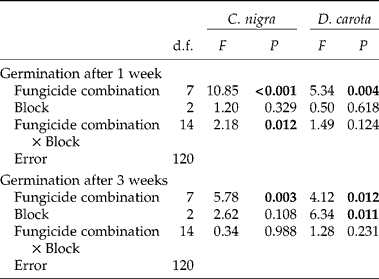
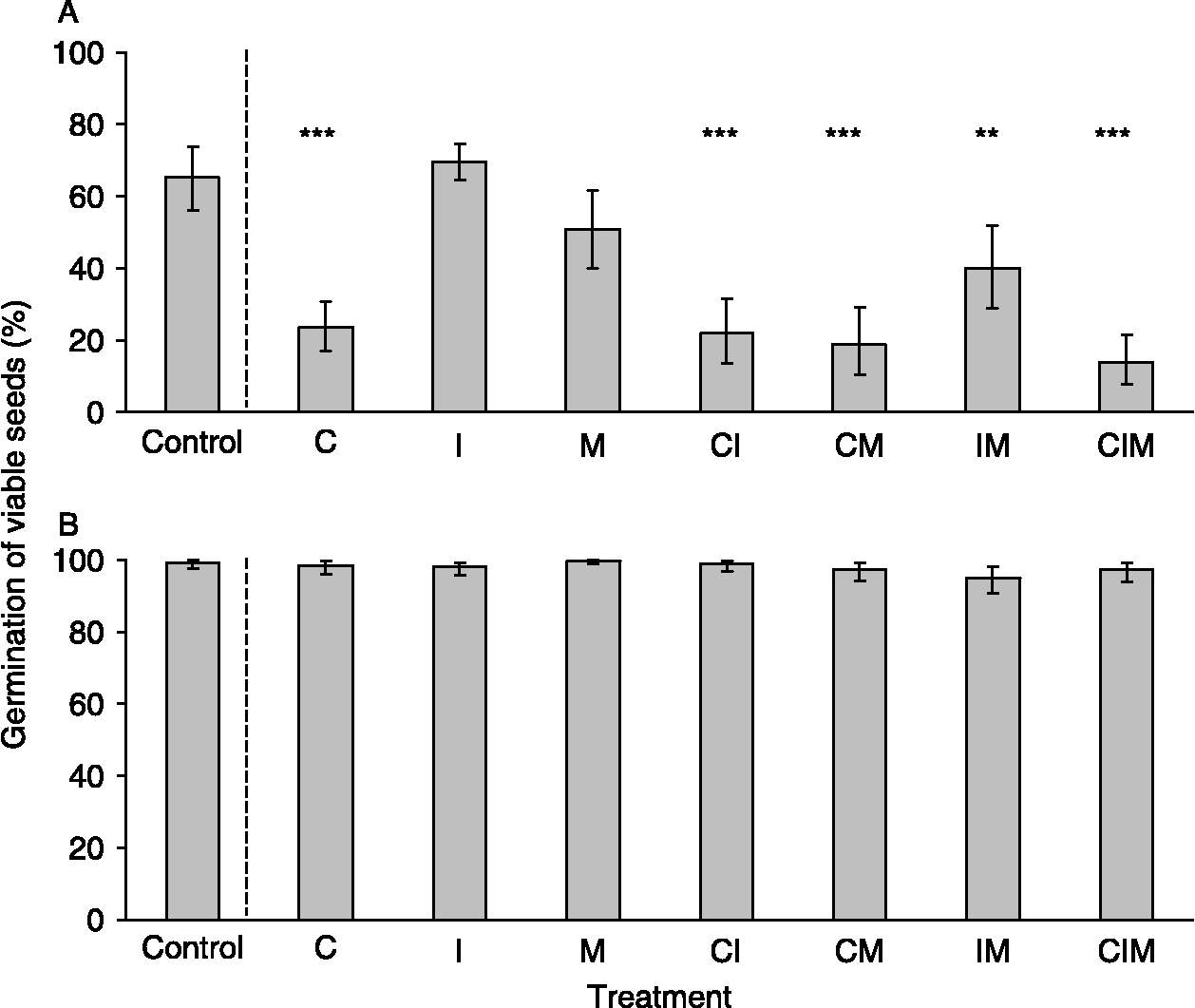
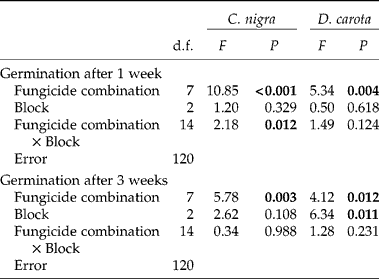
Almost none of the A. sylvestris seeds that remained ungerminated but viable throughout the 6-month burial period germinated in the Petri dish trial. For this reason, data analyses on the influence of fungicide treatments on readiness of seeds to germinate were carried out only for the other two species, C. nigra and D. carota. As indicated by ANOVA, the use of different fungicides had a significant impact on the proportion of viable seeds germinating within 1 week in both species (Table 2). In each of these two species, particular fungicide combinations were associated with a reduction of the proportion of viable seeds germinating in the first week after seed bag recovery. In C. nigra, this effect was highly significant in all treatments involving captan (Dunnett test: P < 0.001 in all cases), irrespective of whether this compound was used on its own or in combination with iprodione and/or mancozeb (Fig. 2A). A two-way combination of iprodione and mancozeb also resulted in a reduced readiness of Centaurea seeds to germinate immediately (Dunnett test: P = 0.002). However, at the end of the 3-week germination test, germination was close to 100% across treatments (Fig. 2B). Although the overall ANOVA test based on this data indicated a significant fungicide effect (Table 2), according to the Dunnett test procedure, this was not due to any significant pairwise differences between fungicide treatments and the untreated control (Dunnett test P>0.44 for all pairwise comparisons with the untreated control apart from the combination of iprodione and mancozeb, for which P = 0.054).
Effects of fungicide combination (=fixed factor) and of experimental block identity (=random factor) on the proportion of viable seeds of Centaurea nigra and Daucus carota readily germinating within 1 week and 3 weeks after retrieval from the field. Analyses are based on arcsine-transformed data. Significant effects (P<0.05) are in bold. Due to insufficient germination, Anthriscus sylvestris was not analysed
Percentage of viable Centaurea nigra seeds that germinated in the Petri-dish test following the 6-month burial period, depending on particular combinations of captan, mancozeb and iprodione alone or in combination: (A) after 1 week; (B) after 3 weeks. Fungicide treatments: control, untreated control; C, captan; I, iprodione; M, mancozeb. Bars and error bars indicate back-transformed mean values and 95% confidence intervals. Particular fungicide combinations that differ significantly from the untreated control as indicated by two-sided Dunnett tests are indicated by asterisks (**P < 0.01; ***P < 0.001).

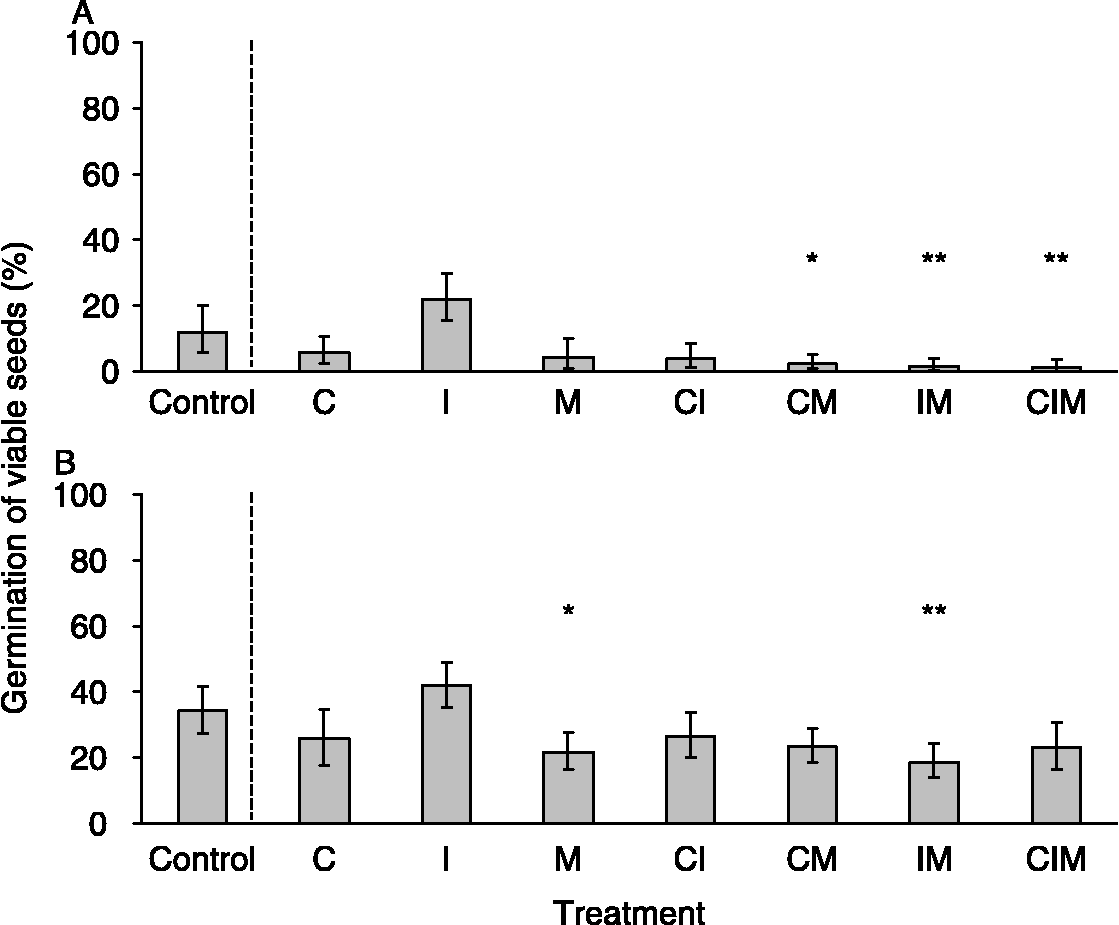
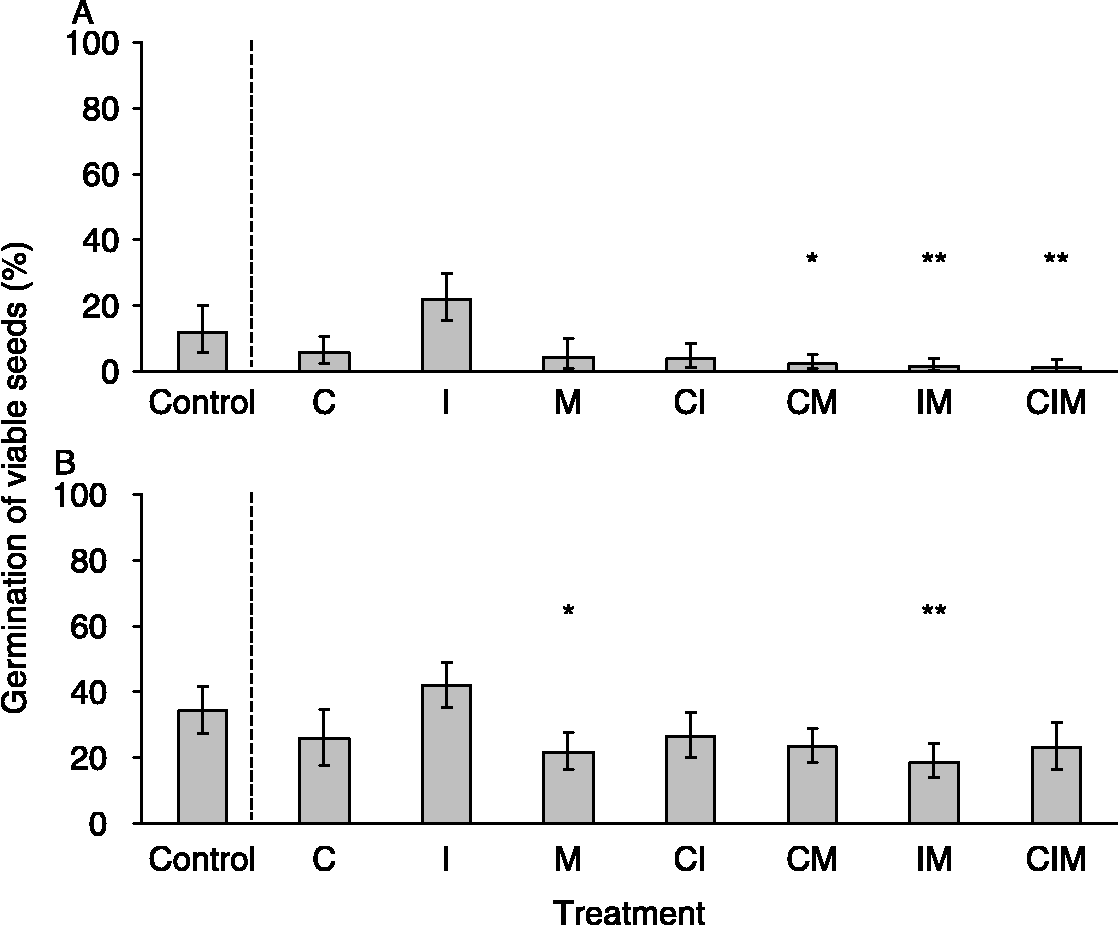
In Daucus, a significant reduction of the proportion of viable seeds germinating within 1 week after seed recovery was found in all treatments combining mancozeb with one or both of the other two fungicides (Table 2, Fig. 3A; Dunnett test: P < 0.02 in all cases). At the end of the 3-week Petri dish trial, only about 27% of all viable Daucus seeds, as averaged across treatments, had germinated, and c. 97% of these had done so in the first 2 weeks, indicating that in spite of favourable conditions for germination, most of the remaining seeds would likely have not germinated in following weeks, if the Petri dish trial had been continued for a longer period. Final counts after 3 weeks indicated that the fungicide effects in Daucus observed after 1 week had persisted throughout the whole 3-week period, with final proportions of germinated viable seeds still being significantly lower in two of the treatments involving mancozeb (Table 2, Fig. 3B), both on its own (Dunnett test: P = 0.042) and in combination with iprodione (Dunnett test: P = 0.005).
Percentage of viable Daucus carota seeds that germinated in the Petri-dish test following the 6-month burial period, depending on particular combinations of captan, mancozeb and iprodione alone or in combination: (A) after 1 week; (B) after 3 weeks. Fungicide treatments: control, untreated control; C, captan; I, iprodione; M, mancozeb. Bars and error bars indicate back-transformed mean values and 95% confidence intervals. Particular fungicide combinations that differ significantly from the untreated control as indicated by two-sided Dunnett tests are indicated by asterisks (*P < 0.05; **P < 0.01).
Discussion
The combination of several fungicidal compounds generally did not result in any clear further reduction of seed mortality compared to using just one fungicide at its recommended dosage. On the other hand, we could show that individual fungicides can affect the proportion of viable seeds germinating under conditions known to promote germination, and that such effects can be prolonged. However, we found no clear evidence for soil organic matter effects.
Treatment of seeds with fungicides generally increased the survival of buried seeds, although in one of the three test species, C. nigra, overall mortality over the 6-month burial period was too low to allow any accumulation of significant differences between the untreated control and the fungicide treatments. In another species, A. sylvestris, we found a large proportion of non-viable seeds not only in the control but also in all the fungicide treatments. This suggests that viability may already have been low at the beginning of the experiment, and would be in agreement with the observation that seeds of Anthriscus and many other umbelliferous species frequently lack embryos and are thus not capable of germination (Flemion and Henrickson, Reference Flemion and Henrickson1949). With the exception of the iprodione-only treatment in Anthriscus being slightly less effective than the other fungicide combinations, there were no significant differences among individual fungicide treatments. The visual inspection of the results seems to suggest that in the case of Daucus, the combination of two fungicidal compounds may tend to provide a slightly better protection against fungal decay than the use of a single compound only, although the observed differences were too small to be significant when comparing individual fungicide treatments pairwise.
Specific plant species–fungicide combinations did result in pronounced effects on the readiness of viable seeds to germinate after retrieval, compared to seeds from an untreated control. In Centaurea, in the first week of the Petri-dish trial an average of 65% of viable seeds germinated from the control treatment. By contrast, this percentage was only 14–23% in the four fungicide treatments containing captan. After 3 weeks, Centaurea seed germination was close to 100% in all treatments, indicating that captan did not induce any longer-lasting dormancy. Similar short-term effects of captan on seed germination were previously observed in wheat seeds (Clark and Scott, Reference Clark and Scott1982).
Fungicide effects on germination were also found in Daucus seeds, where an already low readiness of seeds to germinate after retrieval was particularly low in fungicide combinations involving mancozeb. However, in this case, observed fungicide effects were more persistent. After 3 weeks, when germination of Daucus seeds had largely ceased, significant differences still existed between two of the treatments involving mancozeb and the untreated control. This may be interpreted as a more persistent induction of secondary dormancy in Daucus seeds by mancozeb. A similarly persistent, but opposite, effect on dormancy levels of seeds has been documented previously for wheat seeds stimulated to germinate by the systemic fungicide benomyl (Clark and Scott, Reference Clark and Scott1982).
Our results extend the findings of previous studies from crops seeds that tend to germinate readily (Baskin and Baskin, Reference Baskin and Baskin1998) to non-crop species. Extent and duration of effects on dormancy were both fungicide-specific and species-specific in our study. The strong contrast with the treatment effects on seed mortality not being fungicide-specific underlines that the effects on the readiness of seeds to germinate are genuine, and not an artefact resulting from a potential confounding of mortality and germination.
As outlined in the Materials and methods section, substrate organic matter content, manipulated by using different substrates based on local topsoil and/or green waste compost, only marginally influenced our results.
Several conclusions can be drawn regarding the methodology used in ecological seed burial studies. Our results suggest that, compared to using a single compound at the recommended dosage, a combination of two different fungicidal compounds may often provide only a marginally better protection of seeds from fungal-induced seed mortality, but that such a combination may nevertheless serve as an insurance against unintentionally using a single compound at a dosage too low to provide full protection, as may have been the case in our study for the seeds of Anthriscus when treated with iprodione. The benefits of combining a very large number of fungicidal compounds, as advocated by Leishman et al. (Reference Leishman, Masters, Clarke and Brown2000), may thus be negligible and may not justify the additional effort involved. While we also did not find any evidence for negative effects resulting from the combination of different fungicidal compounds, our results do not preclude the potential occurrence of such effects when fungicidal compounds other than the ones tested in our study are involved. In the absence of further research on this subject, it may thus be safest to use individual compounds at a sufficiently high dosage, or tried and tested combinations of two fungicides that are known not to chemically interact with each other.
There were pronounced effects of individual fungicidal compounds on seed dormancy. Mancozeb had a lasting effect on seed dormancy in Daucus, and captan initially repressed seed germination in Centaurea, although this latter effect was only transient. Captan was the sole fungicidal compound used in many published studies, but in the absence of proof of more persistent effects, it seems unlikely that the results of these studies have been compromised by unexpected side-effects on seed dormancy. Nevertheless, given the evidence for the widespread existence of species-specific seasonal germination windows (e.g. Milberg and Andersson, Reference Milberg and Andersson1997; Vleeshouwers and Bouwmeester, Reference Vleeshouwers and Bouwmeester2001; Schütz, Reference Schütz2002; Baskin and Baskin, Reference Baskin and Baskin2006), increased levels of seed dormancy, as observed in our study of Daucus seeds treated with mancozeb, have the potential to prevent a sizeable proportion of seeds from germinating in a particular year. This may be an important consideration when planning a study that attempts to assess the effects of fungal exclusion on the in situ emergence of seedlings. Such studies are, however, rare, and in the only study of that kind we know of (Blaney and Kotanen, Reference Blaney and Kotanen2002), captan was used, for which we found only evidence for short-term effects on seed dormancy.
Overall, our results underline the validity of previous seed burial studies using only a single fungicidal compound. Moreover, in our study the differences in mortality between different fungicide treatments were generally only small. It thus seems likely that the basic conclusions from most seed burial studies are unaffected by their choice of fungicide and that reliable conclusions can be drawn from these studies regarding the relative amount of buried seed mortality attributed to fungal attack as opposed to mortality that can be attributed to other causes. However, as the rate of fungal-induced seed mortality in such experiments seems to depend crucially on the density of buried seeds (Van Mourik et al., Reference Van Mourik, Stomph and Murdoch2005), we advise caution when using data generated from such studies in seed demographic models.
Acknowledgements
John Sloggett provided useful comments and checked the English of the manuscript. Further, the manuscript benefited from the comments of two anonymous referees and of the handling editor. We also thank BASF AG, Ludwigshafen, Germany, and Feinchemie Schwebda, Eschwege, Germany, for providing fungicide samples free of charge.