Introduction
Antidepressant medications are used by up to 13% of pregnant women,Reference Cooper, Willy, Pont and Ray 1 , Reference Andrade, Raebel and Brown 2 with the trend suggesting a steady increase in their use during pregnancy.Reference Cooper, Willy, Pont and Ray 1 To date, most of the research evaluating antidepressant use during pregnancy has concentrated on outcomes of the fetus, but recent research has begun to focus on the impact they may have on maternal health. Preeclampsia is one specific outcome that has garnered attention, given the increased risk noted among women with depression.Reference Kurki, Hiilesmaa, Raitasalo, Mattila and Ylikorkala 3 – Reference Reis and Kallen 8 Preeclampsia is the most severe form of hypertensive disorders during pregnancy, affects 2–5% of pregnant women,Reference Hernandez-Diaz, Toh and Cnattingius 9 – Reference Saftlas, Olson, Franks, Atrash and Pokras 13 and it can have serious consequences on maternal and fetal health.
Toh et al Reference Toh, Mitchell, Louik, Werler, Chambers and Hernandez-Diaz 5 were one of the first investigators to explore the association of antidepressants with preeclampsia; they documented a nearly 400% increase in the risk of preeclampsia for women continuing selective serotonin reuptake inhibitors (SSRIs) after their first trimester. Since this study, 3 others have reported an elevated risk of preeclampsia associated with antidepressant medications, although of a much smaller magnitude of risk (adjusted relative risks ranging between 1.2 and 3.4).Reference Palmsten, Setoguchi, Margulis, Patrick and Hernandez-Diaz 6 – Reference Reis and Kallen 8 Two of these 4 investigations reported a significant increase in the risk of preeclampsia with serotonin-norepinephrine reuptake inhibitors (SNRIs) and tricyclic antidepressants (TCAs), but not with SSRIs.Reference Palmsten, Setoguchi, Margulis, Patrick and Hernandez-Diaz 6 , Reference Palmsten, Huybrechts and Michels 7
However, some of the studies were limited in their generalizability (eg, a lack of diversityReference Palmsten, Setoguchi, Margulis, Patrick and Hernandez-Diaz 6 , Reference Reis and Kallen 8 and a special population, ie, Medicaid recipientsReference Palmsten, Huybrechts and Michels 7 ). One study relied on self-reported depression and antidepressant medication use, which are subject to recall error or bias.Reference Toh, Mitchell, Louik, Werler, Chambers and Hernandez-Diaz 5 Most did not take into account potential confounding factors, such as pre-pregnancy body mass index (BMI),Reference Palmsten, Huybrechts and Michels 7 smoking,Reference Palmsten, Setoguchi, Margulis, Patrick and Hernandez-Diaz 6 , Reference Palmsten, Huybrechts and Michels 7 diabetes,Reference Reis and Kallen 8 chronic hypertension,Reference Reis and Kallen 8 other mental health conditions,Reference Toh, Mitchell, Louik, Werler, Chambers and Hernandez-Diaz 5 , Reference Reis and Kallen 8 or other indications for antidepressant medication use.Reference Toh, Mitchell, Louik, Werler, Chambers and Hernandez-Diaz 5 , Reference Reis and Kallen 8 The sample sizes of one study limited the ability to assess exposure to non-SSRI antidepressant medications.Reference Toh, Mitchell, Louik, Werler, Chambers and Hernandez-Diaz 5 Finally, others failed to control for confounding by depression severity.Reference Toh, Mitchell, Louik, Werler, Chambers and Hernandez-Diaz 5 , Reference Reis and Kallen 8
To further examine the effect of depression and antidepressant use on the risk of preeclampsia, we conducted a large, population-based, retrospective cohort study based on information from a racially/ethnically diverse population of 21,589 pregnant Kaiser Permanente Northern California members between 2010 and 2012. We build on previous research by including 2 additional cohorts of women to address the issue of confounding: (1) women without depression but taking antidepressant medications for another indication and (2) women with depression and receiving psychotherapy. The inclusion of this second cohort attempts to address the issue of confounding by severity (ie, depression severity), with the assumption that women who chose psychotherapy have a similar disease severity to those treated with antidepressants.
Methods
Data sources
This study was conducted among the Kaiser Permanente Northern California (KPNC) member population of pregnant women. In 2009, KPNC implemented a universal peripartum depression screening program. Pregnant women entering prenatal care are screened for depression at their first prenatal visit using the Patient Health Questionnaire (PHQ-9). These data, along with diagnoses of depression and preeclampsia, health services utilization such as psychotherapy, dispenses of prescription drugs, and birth delivery data, are available through KPNC’s well-established automated clinical and pharmacy databases. This study was approved by the Kaiser Permanente Northern California Institutional Review Board.
Study population
We conducted a population-based, retrospective cohort study of pregnant KPNC women aged 18 or older who gave birth between January 1, 2010, and December 31, 2012. Women who were screened for depression in early pregnancy, had a depression diagnosis, or were taking antidepressant medications during early pregnancy were included. We excluded women with multifetal gestations. Women with a history of hypertension were also excluded, as they were considered to have chronic hypertension. To avoid non-independent observations, only the first pregnancy was included for women with more than one pregnancy during the time period.
Exposure
Depression
Depression during pregnancy was defined as either (1) a clinical depression diagnosis between 6 months prior to the woman’s last menstrual period (LMP) and 20 completed weeks of gestation or (2) a PHQ-9 score ≥10 in the first 20 weeks of pregnancy. The PHQ-9 has been validated as an instrument for screening for depression in obstetric patients with high sensitivity (>88%) and specificity (>88%) for scores ≥10.Reference Kroenke, Spitzer and Williams 14 – Reference Wittkampf, Naeije, Schene, Huyser and van Weert 18 It has been adopted by clinicians and researchers for screening in populations including pregnant and postpartum women,Reference Desai, Rosenheck and Craig 19 – Reference Sederer, Silver, McVeigh and Levy 24 and is considered the dimensional depression measure in the Diagnostic and Statistical Manual of Mental Disorders, Fifth Edition (DSM-V) classification manual.Reference Andrews, Anderson, Slade and Sunderland 25
The first date of the LMP was determined based on gestational age recorded in the KPNC clinical databases in combination with the calendar date at delivery (last menstrual period=date at delivery − gestational age at delivery). To avoid potential reverse causation, we set the exposure window to end immediately before preeclampsia can be diagnosed (20 weeks gestation). Depression diagnoses were defined as International Classification of Diseases, Ninth Revision (ICD-9) codes 296.20–296.25, 296.30–296.35, 298.0, 300.4, 309.0, 309.1, 311, 648.4x.
Antidepressant medication exposure
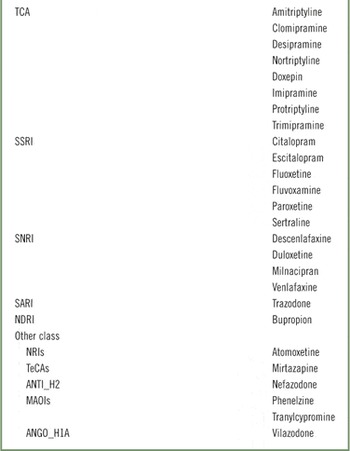
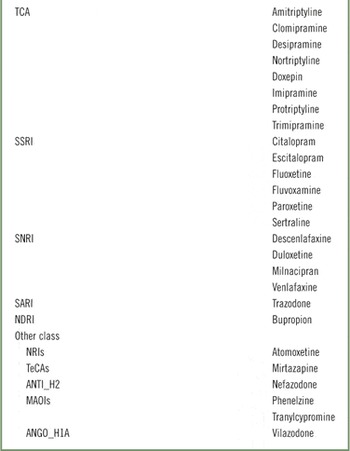
Women exposed to antidepressant medications during pregnancy were identified through linkage to information on dates of drug dispensation and days of supply from the pharmacy database. Please see the Appendix for a list of antidepressant medications identified. Antidepressant use during pregnancy was defined as having at least one pharmacy dispensing record for the time period between the first day of the woman’s last menstrual period (LMP) and 20 completed weeks of gestation.
The timing of antidepressant medication exposure was categorized as (1) first trimester only exposure or (2) any second trimester exposure. First trimester only exposure included exposure to antidepressant medications in the first trimester (LMP through 12 weeks gestation) but not during the second trimester (13–20 weeks gestation). Any second trimester exposure was defined as antidepressant medication exposure between 13 weeks and 20 weeks gestation.
Duration of antidepressant use was categorized into three categories (1–60 days, 61–120 days, or 121–140 days) and started from either the first day of their LMP (if they started prior to pregnancy) or the actual start date (if after the LMP) and ending at 20 completed weeks of gestation or the actual end date (if before 20 weeks of gestation). The total duration of exposure could not exceed 140 days (20 weeks of gestation).
The class of antidepressant medication was categorized in 2 ways for each class of medication: (1) any use or (2) use of only that class. Six classes of antidepressants were assessed: tricyclic antidepressants (TCAs), selective serotonin reuptake inhibitors (SSRIs), serotonin-norepinephrine reuptake inhibitors (SNRIs), norepinephrine-dopamine reuptake inhibitors (NDRIs), serotonin antagonist and reuptake inhibitors (SARIs), and any other classes of antidepressant medications (other class).
Psychotherapy
Psychotherapy visits between LMP and 20 weeks gestation were ascertained from utilization databases.
Exposure cohorts
Five cohorts were established based on a combination of depression, antidepressant medication use, and psychotherapy. The first 2 cohorts included women exposed to antidepressant medications during pregnancy: (1) antidepressant use with a depression diagnosis or positive PHQ-9 score and (2) antidepressant use without depression or positive PHQ-9 score. Two additional cohorts included women with depression not treated pharmacologically: (1) depression and psychotherapy and (2) untreated depression. The final cohort consisted of women without depression, or not having used any antidepressant medications or received psychotherapy (between LMP and delivery).
Preeclampsia outcome
Preeclampsia was defined as any of the following ICD-9 codes occurring after 20 weeks gestation: 642.4, 642.5, 642.6, or 642.7.
Covariates
The following potential confounders were considered: maternal age, race/ethnicity, marital status, parity, alcohol use and smoking (between LMP and 20 weeks gestation), pre-pregnancy body mass index (BMI) (underweight, normal, overweight/obese), pre-existing or gestational diabetes, a dichotomous variable for other indications for antidepressant medication use for six months prior to LMP through 20 weeks gestation (anxiety, migraines, sleep disorders, chronic musculoskeletal pain, peripheral neuropathic pain, fibromyalgia, rheumatoid arthritis, inflammatory bowel disease, or gastrointestinal ulcers),Reference Arnow, Hunkeler and Blasey 21 and a dichotomous variable for other mental health disorders (6 months prior to LMP to 20 weeks gestation).
Data analysis
Characteristics of the 5 exposure cohorts were compared using χ2 tests. Logistic regression models were conducted comparing the 5 exposure cohorts to assess the risk of preeclampsia associated with antidepressant medication use and depression during pregnancy. Additional logistic regression models were conducted to assess the impact of timing of antidepressant medication exposure, duration of use, and class of antidepressant.
Logistic regression produces an adjusted odds ratio that approximates the relative risk when the disease outcome is rare. Given that the prevalence of preeclampsia is less than 10%, we report the odds ratios as relative risks in this study.
Results
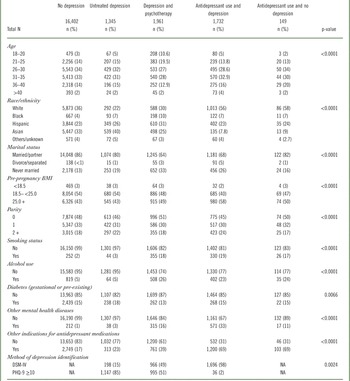
Overall the study included 21,589 women. Of these women, 1,732 (8%) had depression and were treated with antidepressant medications; 149 (<1%) did not have depression but took antidepressant medications during pregnancy; 1,961 (9%) had depression and received psychotherapy; 1,345 (6%) had untreated depression, and 16,402 (76%) did not have depression and did not take any antidepressant medications or receive psychotherapy for depression. Women taking antidepressant medications who had depression were more likely to be identified by a Diagnostic and Statistical Manual of Mental Disorders, Fourth Edition (DSM-IV) diagnosis (n=1696, 98%) compared to women with depression who received psychotherapy (n=49, 49%) and untreated depression (n=198, 15%). Of the 149 women taking antidepressants without depression, 32 (21%) had an anxiety diagnosis, 71 (48%) had another non-mental health indication, and 46 (31%) did not have any indication listed. Comparisons of the characteristics of the five cohorts are listed in Table 1.
Demographic characteristics, behavioral factors, health, and mental health diagnoses by exposure cohort for 21,598 pregnant women in Kaiser Permanente Northern California 2010–2012

The numbers in each individual category may not sum to the total number because of missing data.
The overall risk of preeclampsia in our study was 4.5%, and ranged from 2.7% for women taking antidepressant medications without depression to 6.9% for women taking antidepressant medications who did have depression.
Exposure to antidepressant medication during pregnancy and the risk of preeclampsia
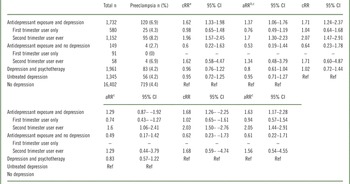
After adjusting for all covariates, compared to women without depression, women who took antidepressant medications and had depression had nearly a 40% increase in the risk of preeclampsia (95% CI: 1.06, 1.76) (Table 2), while women who took antidepressant medications and did not have depression had a nonsignificant decreased risk of preeclampsia (aRR: 0.5, 95% CI: 0.19, 1.44). When the timing of antidepressant medication exposure was considered, the results for the 2 antidepressant cohorts mirrored each other. Among antidepressant users with depression, antidepressant medication exposure in the second trimester was significantly associated with a 70% increase in the risk of preeclampsia compared to women without depression. There were no significant differences in the risk of preeclampsia associated with first trimester only exposure when compared to women without depression. Among the antidepressant users without depression, a nonsignificant increased risk of preeclampsia emerged for second trimester exposure when compared to women without depression (aRR: 1.34, 95% CI: 0.5, 3.8). None of the women in this cohort who were exposed to antidepressant medications during the first trimester only had preeclampsia.
The relative risk of preelampsia for women with untreated depression, depression, and receiving psychotherapy; antidepressant exposure and no depression; antidepressant exposure and depression; and timing of antidepressant exposure, among 21,589 pregnant women in Kaiser Permanente Northern California, 2010–2012

a cRR=crude relative risk.
b aRR=adjusted relative risk.
c Adjusted for pre-pregnancy BMI, maternal age, race/ethnicity, marital status, parity, alcohol use, smoking, diabetes, other indications for antidepressant medications, other mental health diagnoses.
Similar patterns to those described above emerged when the women in the 2 antidepressant medication cohorts were compared to women with depression who received psychotherapy and women with untreated depression.
Depression with psychotherapy and the risk of preeclampsia
There was no increased risk of preeclampsia for women with depression receiving psychotherapy compared to women without depression (aRR: 0.8: 95% CI: 0.6, 1.04) or women with untreated depression (aRR: 0.8, 95% CI: 0.6, 1.2).
Untreated depression and the risk of preeclampsia
The risk of preeclampsia for women with untreated depression did not differ from women without depression (aRR: 0.95, 95% CI: 0.7, 1.3) (Table 2).
Sensitivity analyses
We assessed the sensitivity of our results to our definition of depression by replicating all analyses in Table 2 and excluding all women identified with depression using the PHQ-9. Similar trends appeared for all relationships (results not shown). Additionally, we assessed the prevalence of preeclampsia by indication for antidepressant medication use in the cohort without depression: 3% (n=1) for women with an anxiety diagnosis, 1% (n=1) for women with another indication, and 4% (n=2) for women without an indication.
Duration of exposure to antidepressant medications
We found a significant relationship with duration of use (test for trend p=0.01); increased duration of use appeared to be associated with a greater risk of preeclampsia (Table 3).
The relative risk of preeclampsia by the duration of antidepressant medication exposure during pregnancy (for all women exposed to antidepressant medication regardless of depression status) compared to women without depression

Test of trend: p-value=0.0114.
a cRR=crude relative risk.
b aRR=adjusted relative risk.
c Adjusted for pre-pregnancy BMI, maternal age, race/ethnicity, marital status, parity, alcohol use, smoking, diabetes, other indications for antidepressant medications, other mental health diagnoses.
Class of antidepressant medication
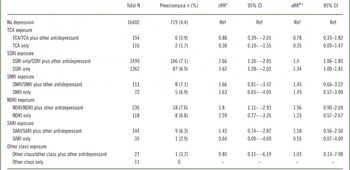
SSRIs (n=1,499, 80% of the women who took antidepressant medications) were the most prevalent antidepressant medication used in our population (Table 4). NDRIs were the second most prevalent (n=236, 13%) followed by TCAs (n=154, 8%). When compared to women without depression, the adjusted relative risk of preeclampsia for exposure to SSRI medications was 1.3 (95% CI: 1.0, 1.8 for exposure to only SSRIs), suggesting a borderline increased risk. We found a 40% increase in the risk of preeclampsia related to any exposure to SSRI medications (95% CI: 1.06–1.85). There also may be an increased risk of preeclampsia associated with use of other antidepressants, but the statistical significance of our findings was limited by small sample sizes and the low frequency of our primary outcome (ie, preeclampsia).
The relative risk of preeclampsia for women taking antidepressants during pregnancy, by class of antidepressant medication

a cRR=crude relative risk.
b aRR=adjusted relative risk.
c Adjusted for pre-pregnancy BMI, maternal age, race/ethnicity, marital status, parity, alcohol use, smoking, diabetes, other indications for antidepressant medications, other mental health diagnoses.
Discussion
Our findings suggest that antidepressant medication use during the second trimester (13 to 20 weeks) may increase the risk of preeclampsia. Timing of exposure emerged as an important factor in the relationship between antidepressant medication use and preeclampsia. We acknowledge that the results were not statistically significant for women without depression exposed to antidepressants during the second trimester. These findings were based on small numbers but nonetheless highlight a similar trend.
The class of antidepressant medication use may also be important. In our investigation, SSRIs were the only class of antidepressant medication in which a statistically significant relationship emerged, but other classes, specifically SNRIs and NDRIs, should be further examined for a possible increased risk of preeclampsia as well.
The relationship between duration of antidepressant exposure and preeclampsia that we report here supports findings from other studies which have found a greater risk of preeclampsia among women who took antidepressant medications for a longer duration.Reference Toh, Mitchell, Louik, Werler, Chambers and Hernandez-Diaz 5 – Reference Palmsten, Huybrechts and Michels 7 In addition, other studies have also documented that timing of antidepressant exposure may be an important factor, with second trimester exposure resulting in the highest risk of preeclampsia.Reference Toh, Mitchell, Louik, Werler, Chambers and Hernandez-Diaz 5 , Reference Palmsten, Setoguchi, Margulis, Patrick and Hernandez-Diaz 6
From a biological perspective, it is plausible that there would be a relationship between antidepressant medications and preeclampsia. SSRIs, SNRIs, and TCAs are the 3 main classes of antidepressants prescribed to treat depression. They are also known as monoamine neurotransmitter reuptake inhibitors, as they are designed to target the pathways of the 3 main neurotransmitters involved in depression (serotonin, norepinephrine, and dopamine). Monoamine neurotransmitter reuptake inhibitors constrain the reuptake of serotonin, norepinephrine, and dopamine, and thus may change the extracellular concentrations of these 3 neurotransmitters. One potential mechanism through which antidepressants may impact the risk of preeclampsia may be through the type and amount of monoamine neurotransmitter reuptake inhibition.Reference Toh, Mitchell, Louik, Werler, Chambers and Hernandez-Diaz 5 , Reference Palmsten, Setoguchi, Margulis, Patrick and Hernandez-Diaz 6 , Reference Bolte, van Geijn and Dekker 27 Research from both human in vitro models and animal models suggests that extracellular levels of serotonin and norepinephrine in the placenta may be involved in inducing vasoconstriction.Reference Bjoro and Stray-Pedersen 28 – Reference Morrison, Chien, Riggs, Gruber and Rurak 31 In in vitro human models, serotonin has been documented to increase placental chorionic vein and umbilical artery vasoconstriction.Reference Bjoro and Stray-Pedersen 28 , Reference Gonzalez, Cruz, Sepulveda and Rudolph 29 Rat models have identified norepinephrine as a vasoconstrictor in uterine vascular beds.Reference Yousif, Chandrasekhar, Kadavil and Oriowo 30 In addition, a decrease in uterine artery blood flow and fetal oxygenation has been found in pregnant sheep infused with fluoxetine, an SSRI.Reference Morrison, Chien, Riggs, Gruber and Rurak 31 SSRIs have also been noted to inhibit synthesis of nitric oxide, a vasodilator that may play a role in vascular tone and reactivity.Reference Abman 32 – Reference Finkel, Laghrissi-Thode, Pollock and Rong 34 Likely due to their noradrenergic effects, SNRIs can cause elevated diastolic blood pressure.Reference Thase 35 Further supporting a biological mechanism for the relationship between antidepressant medication exposure and preeclampsia, increased serum levels of both serotonin and norepinephrine have been found in women with preeclampsia.Reference Manyonda, Slater, Fenske, Hole, Choy and Wilson 36 – Reference Middelkoop, Dekker, Kraayenbrink and Popp-Snijders 38
We attempted to control for confounding by depression severity or indication. First, we included a comparison group of women with depression in psychotherapy as a cohort of women who may have a similar level of depression severity to those taking antidepressant medications. Psychotherapy is a safe alternative to antidepressant medications that pregnant women may be more likely to utilize, given the potential adverse fetal and neonatal outcomes associated with antidepressant medications.Reference Wisner, Sit and Hanusa 39 – Reference Oberlander, Warburton, Misri, Aghajanian and Hertzman 41 In our study, women with depression receiving psychotherapy did not have an increased risk of preeclampsia compared to either women with untreated depression or women without depression. Yet, women exposed to antidepressant medications in the second trimester had an increased risk of preeclampsia when compared to women with depression receiving psychotherapy, though no difference was found with first trimester antidepressant exposure. It could be argued that women who receive antidepressant medications during pregnancy may have more severe illness than women receiving psychotherapy. This is a possibility that we cannot assess in this study. An additional limitation found with this particular comparison may be the relatively liberal definition of receiving psychotherapy, namely, that subjects needed only 1 visit (or more) to qualify.
We attempted to address the issue of confounding by indication by including a cohort of women without depression who were taking antidepressant medications for various indications. There are several indications listed by the FDA 26 for which antidepressant medications may be prescribed. We did not find the risk of preeclampsia for this cohort of women to be statistically significantly increased compared to women without depression and not taking antidepressants. Thus, we cannot rule out the possibility that the increased risk of preeclampsia that emerged in our study was due to the underlying depression.
Misclassification of depression is a possibility, as our definition included women with a positive PHQ-9 screen or a depression diagnosis. However, our results were replicated when we included women identified with depression only by DSM-IV diagnoses. Misclassification of exposure to antidepressant medication is also possible. We ascertained data on antidepressant prescriptions and dispensing; however, we are limited in our ability to assess actual use. Any misclassification of antidepressant medication use would likely be non-differential and would bias the results toward the null.
Women who remain on antidepressant medications during pregnancy may have other risk factors that would increase their risk for preeclampsia. Attempts were made to address many of these potential factors in both our study design and analyses. First, we restricted the sample to women without pre-existing hypertension or multifetal gestations. Second, we controlled for several factors known to be associated with both antidepressant use and preeclampsia, such as pre-pregnancy body mass index (BMI), diabetes, race/ethnicity, and smoking. Our findings persisted despite these restrictions and adjustments. For any other potential unmeasured confounder to influence our results, it would have to be prevalent in our study population and strongly associated with both antidepressant medication exposure and preeclampsia.42
We did not control for multiple comparisons. However, given that the findings that emerged for the various comparisons related to depression, antidepressant exposure, and preeclampsia were all in the same direction and of similar magnitude, these results are not likely due to chance.
Conclusion
In conclusion, an increased risk of preeclampsia was associated with antidepressant use during the second trimester (13 to 20 weeks) of gestation in comparison to women who were not depressed or receiving medication. We did not find a significantly increased risk for preeclampsia among women who received antidepressants without a depression diagnosis, or those who received psychotherapy for their depression. The results of this study suggest that clinicians may wish to consider increased monitoring for preeclampsia of women taking antidepressant medications in the second trimester.
Disclosures
Lyndsay Avalos has received research support from NIMH, NICHD, Kaiser Permanente Community Benefits, and paid travel expenses from the EPA, for expert consult. Hong Chen and De-Kun Li do not have anything to disclose.
Appendix
Antidepressant medications by class