

1. Introduction
After almost a decade of protracted negotiations in the European Union (EU), the Council of Ministers eventually adopted the tobacco advertising Directive (TAD1) 43/98/EC (European Commission) in 1998. The ban on tobacco advertising, prohibiting any form of communication, printed, written, oral, by radio, television and cinema, was without doubt highly contentious (Mossialos and Permanand, Reference Mossialos and Permanand2000: 66–68). The proposal, initiated in 1989, resulted in strong counter-lobbying by the tobacco industry and its so-called third alliances (Bitton et al., Reference Bitton, Neuman and Glantz2002). A number of member states, including the most powerful, strongly opposed the proposal. In 2000, the European Court of Justice (ECJ) annulled the directive after an appeal of the German government, arguing that there was no legal basis for it in the treaties. A new directive regulating tobacco advertising (TAD2), albeit one with a more limited scope, was adopted in 2003 (Directive 2003/33/EC). Despite its restricted scope, Germany asked the ECJ to review its validity again. However, in December 2006 this appeal was dismissed.
The vague language of the treaties to guide legal activities in the area of public health (Boessen and Maarse, Reference Boessen and Maarse2008), combined with the fact that Commission intervention in this area raises questions of paternalism and morality, turned out to be a perfect recipe for conflict motivated by ideological and pragmatic concerns (Duina and Kurzer, Reference Duina and Kurzer2004).
In EU policymaking member states prima-facie economic interests are important in explaining outcomes. Though, to fully understand the policymaking process, insight in creative use of institutions and informal strategies is important (see Héritier, Reference Héritier1999). This analysis therefore seeks to identify and explain so-called escape routes, also referred to as ‘subterfuge’ (Héritier, Reference Héritier1999). Having become the most intensively lobbied dossier in the history of EU health policymaking, the tobacco advertising case provides a perfect vehicle to gain insight into escape routes.
We use primary and secondary sources, including policy documents, communications and press releases. We also conducted nine semi-structured interviews (see Annex).
In the following pages, we first outline the analytical framework in more detail (section 2). Next, we briefly trace the development of the TAD (section 3). In order to explain the deadlock, as well as its eventual breakthrough, we analyse the institutional roles and strategic behaviour of the political actors, including the EC, the Council of Ministers, the European Parliament (EP) as well as interest representation in conflict resolution (section 4). Finally, we draw some conclusions on the role of actors in overcoming deadlock situations and the importance of subterfuge (section 5).
2. What makes Europe work? The importance of escape routes
The underlying logic of our analysis is that European policymaking can be understood as the interaction of public and private actors in an area of common policy interest (Héritier, Reference Héritier1999: 13). Following an actor-centred institutionalist approach (Mayntz and Scharpf, Reference Mayntz and Scharpf1995; Scharpf, Reference Scharpf1997), we assume that the outcome of public policymaking is not only shaped by the preferences of the actors involved, but also depends upon their strategies. Both preferences and strategies are influenced by the institutional setting in which policymaking takes place (Mayntz and Scharpf, Reference Mayntz and Scharpf1995).
Actors are characterised by their capabilities and preferences (Scharpf, Reference Scharpf1997), the latter being based on normative notions and calculated reasoning in relation to particular policy predicaments and to the cost and benefits of the available courses of action. Capabilities include ‘all action resources that allow an actor to influence an outcome in certain respects and to a certain degree’ (Scharpf, Reference Scharpf1997: 43), such as physical endowments, human and social capital, informational access, technological know-how, and political power as defined by the institutional structure (Schmidt, Reference Schmidt2003). These resources are exchanged and bargained for in a particular institutional context so as to reach a policy decision (Lauman and Knoke, 1987 in Héritier, Reference Héritier1999).
Actors’ strategy options vary according to the institutional characteristics of the EU. Scharpf (Reference Scharpf1997: 38) describes the institutional setting as the set of formal and informal rules that structures the course of action actors may choose. Neither the Council, nor the EP, nor the Commission enjoys full control over the process. At the heart of EU policymaking, several rules regulate the interplay between the Commission, the EP and the Council (for a detailed description of the functioning of the EU see Peterson and Bomberg, Reference Peterson and Bomberg1999; Nugent, Reference Nugent2003). These rules enable some policy options while barring others (Wallace, Reference Wallace2000).
Policymaking on the TAD took place under the co-decision procedure. This means that a change of the policy status quo depends on the (divergence of) preferences among the member states as well as on resources and strategies of supranational actors. Both public and private actors are likely to object to a policy measure, which will oblige them to adjust to new regulatory requirements.
Generally, member states search for consensus and try to avoid decisions that violate vital interests of one of them (Scharpf, Reference Scharpf2006). Whatever the formal institutional rule, there exists a strong tendency towards decision-making by unanimity (Wallace, Reference Wallace2000). A proposal without a broad consensus can therefore ‘still be blocked by intergovernmental haggling over the precise content’ (Scharpf, Reference Scharpf2000: 18–19). According to Héritier (Reference Héritier1999), because of this consensus-forcing nature, combined with the diversity of actors’ interests and the redistributive elements of many EU policy decisions, most policy processes would indeed result in deadlock, were it not for the creative use of institutions and informal strategies to overcome structural inertia and to facilitate the dynamics needed to accelerate integration (Héritier, Reference Héritier1999; Hedetoft, Reference Hedetoft2003). Political impasses can thus be circumvented through various escape routes ‘that make Europe work’ (Héritier, Reference Héritier1999: 1). The EU is vitally dependent on such mechanisms.
This article addresses the question as to how political actors and interest groups used escape routes to foster or block political decision-making on the tobacco advertising ban. Following Héritier, there are several ways in which rules can be used creatively, ‘circumventing, re-interpreting or combining them in such a way as to accommodate diversity’ (Héritier, Reference Héritier1999: 97). Decisions are often attributed to package deals, issue linking, mutual exchanges or framework decisions using vague language to allow opponents to interpret legislation according to their individual preferences (Kingdon, Reference Kingdon1984; Peters, Reference Peters1997; Héritier, Reference Héritier1999; Peterson and Bomberg, Reference Peterson and Bomberg1999; Nugent, Reference Nugent2003). Specific institutional roles may also help to overcome deadlock, including incremental negotiation techniques in the Council working group, the role of a member state during its presidency and the Commission’s can act as a policy entrepreneur given its central position in the policy process (Cram, Reference Cram1997; Peters, Reference Peters1997; Eising, Reference Eising2000). Furthermore, the development of supporting policy networks may create legitimacy for public action (Bouwen, Reference Bouwen2002). It is these escape routes that smooth the way for advancement of policymaking.
Before analysing how escape routes were used by actors in the tobacco advertising process, we first outline the steps of the EU policy cycle, namely the initiative(s) of the Commission, the first and second reading of the EP and the common position of the Council, as well as the annulment by the ECJ.
3. Banning tobacco advertising: steps of the policy cycle
In 1984, the European Council asked the Commission to develop a new policy area closer to the concerns of European citizens. The Commission suggested the fight against cancer as such an area and in 1985, the European Council requested to launch such a programme. ‘To get involved in an issue with which most Europeans at an individual level could identify, there was that potential political bonus (…), it was Europe doing something for European citizens and frankly it was the first time that happened’ (5, PH lobbyist).
One of the central elements of the Europe Against Cancer programme (EACP) was the fight against tobacco. The Council adopted several directives and non-binding resolutions on tobacco between 1989 and 1993 (Lesny, Reference Lesny1993), but the path to legislative enactment concerning the ban on tobacco advertising turned out more problematic.
3.1 The development of TAD1
The first Commission initiative in 1989 on tobacco advertising was a proposal to restrict advertising. Although it was clearly motivated by the ambitious goals of the EACP, the Commission’s principal argument was that the removal of all obstacles to trade by 1992 required the harmonisation of national regulations at European level, including those on tobacco advertising. It was modest in its aims and scope, prescribing only partial harmonisation, prohibiting indirect advertising and advertising in publications intended for people aged under 18 years. Advertising in press and by means of posters and bills should carry health warnings. Given the state of legislation in the majority of the member states, the Commission reasoned it was impossible to propose a ban. Only Italy and Portugal already banned tobacco advertising, whereas Belgium, Ireland and Luxembourg prohibited advertising in publications directed at young people. Spain, Denmark, the UK and the Netherlands had opted for partial restrictions based on legislation or voluntary agreements with the tobacco industry (Commission of the European Communities, 1989).
After the Commission had tabled its proposal, the EP gave its opinion during first reading. The parliamentary Committee on the Environment, Public Health and Consumer Protection (ENVI) advised the plenary to amend the proposal by asking for a ban instead of mere restrictions (23 votes to 3, with 6 abstentions). In March 1990, during the plenary meeting, most members of the Parliament (MEPs) considered a total ban an improvement for public health (170 votes to 111 with 17 abstentions).
Meanwhile, developments in France greatly influenced the debate at European level. In 1990, the French government announced its plan for a ban on tobacco advertising – the so called Évin Law was passed in January 1991 (Duina and Kurzer, Reference Duina and Kurzer2004). In addition, Belgium and Greece enacted stricter legislation. In response to the EP’s encouragement and these national developments, the Commission proposed a tobacco advertising ban in May 1991 (Commission of the European Communities, 1991).
The amended proposal prohibited all forms of direct advertising, with the exception of shops specialised in the sale of tobacco, as well as indirect advertising, that is the advertising of non-tobacco products using a tobacco brand name. The Commission stipulated that the main goal of this proposal was to reinforce the functioning of the internal market (explaining the use of article 100a (now article 95), arguing that its aim was to ensure the free movement of newspapers, magazines and other publications that were hindered by differences in national regulatory regimes on tobacco advertising. However, it was clear right from the beginning that the proposal (mainly) served a public health purpose.
In December 1991, the parliamentary ENVI Committee reasoned that the amended proposal largely met the wishes of the EP. The committee (14 votes to 4, with 5 abstentions), suggested to include a ban on sponsorship by the tobacco industry. During the plenary vote in February 1992, all amendments as proposed by the parliamentary committee, were adopted (150 votes to 123, with 12 abstentions).
In the Council, Germany, the United Kingdom (UK), the Netherlands and, to a lesser degree, Greece and Denmark renounced the ban for several reasons. In line with arguments from the industry, they argued against the proposal referring to the right to freedom of speech, because of a domino effect towards further advertising restrictions for products the Commission deemed harmful, the lack of a relationship between advertising and tobacco consumption and the effectiveness of voluntary agreements. They also claimed that advertising did not recruit new smokers. Furthermore, they questioned the legal basis of the proposal, arguing that the Commission had misused article 100a and a decision had to be made by unanimity under article 235 (now article 308) (Lesny, Reference Lesny1993). The qualified majority voting (QMV) rule enabled the opposing countries to block a decision for several years. However, in December 1997, the Council managed to reach a common position, which, as we will demonstrate in the next section, was only possible because of several last-minute moves and package deals.
The Council accepted the ban on tobacco advertising as well as on sponsorship, in line with the 1992 amendment from the EP. In addition, there were some specifications with regard to its scope. Indirect advertising was not forbidden for brands that existed before this directive and were used for both tobacco and other products. The ban did not apply to publications published and printed in third countries not principally intended for the Community market. Finally, Greek kiosks were exempted from the ban on tobacco advertising. Implementation was postponed for one year in respect to the press and two years in respect to sports sponsorship. Sponsorship organised at world level could continue until October 2006, provided that countries voluntarily reduced the visibility of advertising and decreased the sums devoted to such sponsorship.
The Commission considered the Council text an acceptable compromise. In April 1998, during the second reading of the EP, the ENVI committee delivered its opinion in favour of the common position without amendments (36 votes to 7, one abstention), which was accepted in May 1998 by the plenary.
3.2 Annulment and the development of TAD2
Once the directive had been passed, Germany asked the ECJ to annul it (Case C-376/98). Previously, the ECJ had been receptive to public health arguments in favour of smoking prevention, given that it improved the functioning of the internal market. However, the German government stated that the tobacco advertising ban was not based on appropriate constitutional grounds. It argued that the directive exceeded its legal basis as an internal market measure. Following that cinema advertising, billboards, ashtrays and other merchandising could not cross borders, it represented a barrier to trade instead of facilitating it. The German government claimed that public health was the primary goal of the directive (Boessen and Maarse, Reference Boessen and Maarse2008). Germany also enquired as to whether the fundamental right to freedom of expression, the principle of proportionality and the principle of subsidiarity had been infringed.
In its ruling, the Court agreed with the German government that the measure did not improve the functioning of the internal market and therefore annulled the directive in October 2000 (for an analysis of this case see Tridimas and Tridimas, Reference Tridimas and Tridimas2002; Boessen and Maarse, Reference Boessen and Maarse2008). Remarkably, however, the Court also formulated guidelines for a legally acceptable policy. It stated that the EU could legitimately introduce a more limited ban on tobacco advertising and sponsorship with the same legal basis. This resulted in a new Commission proposal in 2001. The Council and the EP adopted the directive in 2003, which adhered strictly to the limits laid down by the Court in its judgement.
The scope of TAD2 is limited to advertising with a cross-bordering dimension in print media, on radio and via Internet and sponsorship. Advertising in cinemas and on billboards, or using merchandising (e.g. ash trays or parasols) therefore falls outside its scope as well as sponsorship of events which are purely local, with participants coming from only one member state.
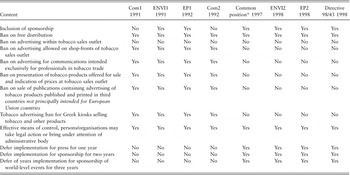
Table 1 presents an overview of the content of TAD1. It clearly highlights the impact of the final round of negotiations in the Council. Several compromises were necessary to reach a common position during that specific meeting. However, the spirit and structure of the proposal had generally been maintained. It also demonstrates that the EP did not introduce any amendments during the second reading and accepted the common position as such. The deadlock situation was circumvented after a common position was reached.Footnote 1 Therefore our analysis in the next part concentrates on the policymaking process of TAD1.
Development of the directive 98/43/European Commission (based on Golub, Reference Golub1996).

*Vote against: Germany and Austria; abstention: Spain and Denmark.
Com1 = Commission proposal banning tobacco advertising; Com2 = revised Commission proposal.
ENVI1 = first report Parliamentary Committee; ENVI2 = second report Parliamentary Committee;
EP1 = European Parliament first reading; EP2 = European Parliament second reading.
4. Actors’ behaviour within an institutional setting
In this section we analyse the strategic behaviour of actors in the process on tobacco advertising within a given institutional structure. The specific question of this analysis is which escape routes were used to circumvent deadlock. We concentrate our analysis on the main formal and informal institutions related to the Commission, the EP and the Council of Ministers: the right of initiative and policy-brokering role of the Commission; the EP under the co-decision procedure and conciliation; and QMV and the role of the presidency within the Council.
Political actors always operate in a context in which interest groups try to influence the choice of policy solutions in ‘Brussels’ and their behaviour in the policymaking process (Van Schendelen, Reference Van Schendelen2002). By facilitating some courses of action while excluding others, institutions define opportunities and constraints within which interest groups operate and assert their interests. It is within this context that the role of interest representation will be assessed as well.
4.1 The Commission’s right of initiative and role as a policy broker
In the European context, with its complex institutional setting, particularly the Commission has frequently applied entrepreneurial strategies to get beyond a political impasse. As the central node in numerous interactions between all kind of actors and policy areas, it is the sole actor that has an overview of all ongoing policy developments (Cram, Reference Cram1997; Héritier, Reference Héritier1998).
The set up of the EACP can be considered a soft institution to introduce in a low-profile and subtle way a new policy area that previously was predominantly left to member states (see Héritier, Reference Héritier1999). The EAC group was a relatively independent unit with a strong staffing base, reporting directly to Directorate General (DG) Social Affairs (Gilmore and McKee, Reference Gilmore and McKee2004: 225). The enthusiasm and dedication of these civil servants together with the cancer expert committee resulted in an ambitious first action plan with a legislative approach (Aspect Consortium, 2004). Given expected opposition from the tobacco industryFootnote 2, they decided to table a series of different proposals concerning tobacco control, instead of a ‘single all-embracing directive’ (Gilmore and McKee, Reference Gilmore and McKee2004: 226). To make legislation possible, the Commission had to interpret exiting rules in a way that best fit its own agenda.
The vague language of the 1987 Single European Act (SEA) made it possible ‘to piggy-back health considerations onto the development of the single market’ (Randall, Reference Randall2001: 96), recognising health as a dimension of economic integration. According to the newly introduced article 100a(3), the Commission should take a high level of health protection as a basis for its proposals concerning the establishment and functioning of the internal market. This article had already been used in EU tobacco control policies adopted between 1989 and 1992. The Commission played the treaty-base game as a creative response to the absence of any real alternatives (Héritier, Reference Héritier2000; Aspect Consortium, 2004).
Before the Treaty on European Union (TEU), the Community lacked any authority to develop policies that had public health protection as their ‘principal or sole justification’. Article 129 (now article 152) of the TEU gave the EU a narrow public health mandate, however, excluding the option of harmonisation. Therefore it could never provide a legal basis for the tobacco advertising ban. The only alternative was article 235 (now article 308), offering room to act in circumstances where action by the Community was necessary, but no legal basis existed. However, the use of this article would diminish the role of the EP to consultation and require unanimity in the Council. By linking its proposal to the single market programme, the Commission created a situation in which the Council could decide by qualified majority (Héritier, Reference Héritier1999). It reflected the Commission’s assessment that the ‘article 235 route’ was likely to fail, because of the impossibility of reaching political consensus on a ban (Lesny, Reference Lesny1993). So despite consistent ruling of the ECJ that the choice of a legal basis should always be a matter of legal principle (Hervey, Reference Hervey2001a), the strategy of the Commission reflected a high degree of political pragmatism.
Another subterfuge strategy was the creation of a supportive network. The EACP provoked an immediate reaction from the tobacco industry, which started to set up offices in Brussels. ‘It was quite clear that if you really want to deal with cancer, tobacco-related cancer is the biggest topic area that you could target. That meant inevitably you were going to attack the tobacco industry’ (5, lobbyist). Still, it took the industry quite some time to develop a fully functioning lobbying machine (Gilmore and McKee, Reference Gilmore and McKee2004).
Meanwhile, contacts with like-minded interest groups could strengthen the Commission’s position ‘in relation to national governments and opposing interest groups’ (Fairbrass and Jordan, Reference Fairbrass and Jordan2003: 109–110). One of the measures of the first EAC action plan concerned ‘information exchange in the struggle against smoking’ (Aspect Consortium, 2004: 109). However, the European health lobby still had to develop. ‘The Community actors were making proposals, the industry was lining itself up to oppose them, but there was no one who was going to give the health arguments in response to the industry’s arguments’ (5, lobbyist). Furthermore, in the early 1990s, medical and health communities at national level were rather inactive in their opposition against smoking (Bouma, Reference Bouma2001; Duina and Kurzer, Reference Duina and Kurzer2004). Therefore the EAC group tried to influence the landscape of pro-European health interest representation by providing resources to establish and sustain interest groups and asking them to undertake functions on behalf of the Commission (Greenwood, 2003).
The European Bureau for Action on Smoking Prevention (BASP) was provided with financial support and assisted advocates of the ban with quarterly newsletter and thematic reports on tobacco control policy. Within a few years, it evolved as the number one target of the tobacco industry (Neuman et al., Reference Neuman, Bitton and Glantz2002).
The EAC group also subsidised national cancer leagues and tobacco control organisations, involving them in spreading the message of the EACP (2, PH lobbyist). Funded through the EACP, cancer and tobacco control organisations held meetings every six months. As a result ‘the individuals concerned got to know one another quite well, sharing good and bad practice, learning from one another. So gradually what was building was a sense of identity within the health community across the member states’ (5, PH lobbyist).
In 1994, the Commission evaluated these semi-annual meetings. This resulted in the creation of two pan-European networks: the European Network for Smoking Prevention and the European Network on Young People and Tobacco. Another consequence of the evaluation was to cease the funding of BASP (Bitton et al., Reference Bitton, Neuman and Glantz2002). Different explanations exist for these changes. First, Germany, the UK and the Netherlands as well as DG AgricultureFootnote 3 pressured the EAC group within the Commission to stop financing the leading anti-tobacco lobby in Europe. Another reason mentioned was that the head of the public health unit of DG Social Affairs wanted to weaken the EACP, which had gained too much attention and was considered too independent.Footnote 4 One way was to weaken the role of BASP (2, PH lobbyist; Doyle, Reference Doyle1995; Gilmore and McKee, Reference Gilmore and McKee2004).
However, whilst the EACP ‘set the scene, it was the partnership with voluntary organisations that offered the delivery mechanism at grass-root level’ (Aspect Consortium, 2004: 109). Through letters, resolutions, position papers, press releases and conferences, they managed to influence the debate at national level (Khanna, Reference Khanna2001), resulting in an evolution towards more restrictions (4, Dutch civil servant). In a tobacco industry document it was mentioned that ‘the degree to which the ‘antis’ have penetrated the fabric of the European Community and the major international non-governmental organisations is quite remarkable. (…) The relationships between individuals and organisations are almost incestuous, but serve to consolidate a common view and strategy for smoking control throughout the region’ (Philip Morris, Reference Philip1993b).
4.2 The Council of Ministers: the role of the presidency and the QMV rule
Within the Council, the problem of collective action together with negotiations being linked and continuous forms a very complex environment in which to circumvent a deadlock. Under such circumstances, the presidency can play an important role. As the chair, it has considerable control over the number of meetings and the agenda (Nugent, Reference Nugent2003) and can actively try and find escape routes. As our case shows, however, in highly controversial policy areas the presidency can use its central position to the opposite result as well: obstruction of the process.
One important argument for opposing member states was controversy over the legal basis. In 1993, the Council’s Legal Service in its opinion claimed that the ban could not ‘be regarded as having the effect of harmonising national provisions relating to the establishment and functioning of the internal market. The provision covers purely domestic situations and is designed to protect public health’ (Council of the European Union, 1993). This was obviously good news for the opponents of the ban, who used it to renounce the ban and obstruct the policymaking process.
For example, the Belgian Minister of Health exploited the conclusions of the Council’s Legal Service to distort the Health Council meeting – undermining her role as president to facilitate the negotiating process during the second half of 1993. In fact, the Belgian government was in favour of the proposal, but the Belgian Health Minister personally did not show any commitment (2, PH lobbyist). The discussion in the health working group was based on an informal paper, which proposed a ban, but delayed its implementation until 1998. The Belgian Minister had not approved the paper and had no intention of pursuing the dossier. However, the Commission decided to reinstate the item on the Council’s agenda (Philip Morris, Reference Philip1993a). During the following Council meeting, the Belgian Minister cited the opinion of the Legal Service and returned the proposal to the working group without even a ‘tour de table’ (Girod and Greenberg, Reference Girod and Greenberg1993).
When negotiations are not progressing, the president might put forward a ‘compromise from the chair’ (Hayes-Renshaw, Reference Hayes-Renshaw2002; Matilla, Reference Matilla2004). In such a context, presidencies are expected to act as honest mediators, subject to the impartiality norm (Metcalfe, Reference Metcalfe1998: 414). However, the compromise proposal suggested by Germany during its presidency in 1994 was in fact drafted by the tobacco industry, as appeared afterwards. The tobacco industry tried to make optimal use of the German presidency, which indeed dared to come up with a so-called compromise based upon minimal harmonisation as an alternative to the existing Commission proposal for a ban (see Neuman et al., Reference Neuman, Bitton and Glantz2002).
When it comes to negotiations in the Council, package deals, issue linking and other ways to get all the member states on board are often necessary. However, in this case the whole policy game was played out at different tiers. ‘You had ‘the small administrators’ level trying to get a government view with the different administrations’ (1, German civil servant). Civil servants from national Ministries of Health discussed the tobacco advertising ban in the health working group of the Council. Negotiations in this group were ‘(…) incremental, mainly based on common interest. The informal atmosphere, agreeing behind the scenes normally plays quite a big role. In this case it did not have a chance. (…) The second layer was the layer of highest political people saying what they wanted’ (1, German civil servant).
In fact, it was the tobacco industry that had concentrated on forging alliances with national policymakers (Bitton et al., Reference Bitton, Neuman and Glantz2002). In particular, it sought contact with political actors outside national Health Ministries, since they supported a tobacco advertising ban (Hayes, Reference Hayes1993). Several governments opposed the ban despite the directives of their own Health Ministries (1, German civil servant). The German Chancellor Kohl and former Prime Ministers Thatcher and Major as well as the Health and later Finance Minister Clarke from the UK supported the tobacco industry’s opposition (see for example Philip Morris, Reference Philip1992).Footnote 5 In the Netherlands, the industry tried to preserve Dutch opposition through its contacts within the Ministry of Economic Affairs (Philip Morris, Reference Philip1993b). Officials from Finance and Economics ministries were caught repeatedly trying to silence reports which could have influenced public opinion (Bouma, Reference Bouma2001). Furthermore, there were contacts with high ranking officials in the Greek government (Bitton et al., Reference Bitton, Neuman and Glantz2002; Aspect Consortium, 2004). This was quite remarkable. A respondent explained: ‘It is very seldom that a Prime Minister mixes into a case like this. (…) However, Prime Ministers of several member states said ‘no’ to the tobacco advertising ban’ (1, German civil servant). According to one public health lobbyist, interest representation at Council level was difficult: ‘That is, I think where we did not do as well as the tobacco industry did. I mean, the industry quite clearly had in its fingers several key governments, Germany and the UK in particular’ (5, lobbyist).
It was not until an important change took place in 1997, that a concrete step towards overcoming the deadlock could be made. Whereas five member states had formed a blocking minority for a long time, elections in the UK in May 1997 resulted in a Labour government which, contrary to the position of its predecessor, supported the ban on tobacco advertising. In 1993, the Dutch government had decided to reconsider its position in the event that its vote became decisive, which after the policy change by the UK was indeed the case (Agence Europe, 1997a).
The day before the final Health Council meeting in December 1997, the British and Dutch government officially changed their position. Furthermore, Greece declared it would abstain from voting. During the Council meeting, the Spanish delegation suddenly also announced its intention to abstain. This turnaround would have left those ‘in favour’ a few votes short of the 62 needed for a qualified majority (Agence Europe, 1997b). The new Spanish position was remarkable, since, in the past Spain had always been in favour. It clearly suggested a political trade-off. There were rumours that Germany had tried to prevent a decision by linking tobacco advertising to Structural Funds. By threatening Spain with discontinuation of these funds, Germany hoped that Spain would join the opposition (interviews 1, 2, 5, 7 and 9).Footnote 6
The Luxembourg presidency played a major role in circumventing a deadlock caused by this last-minute turnaround of Spain. The change in the British and Dutch attitudes encouraged the Luxembourg presidency to propose a new compromise. It maintained the initial proposal in many ways, but allowed a two-year transition period for the phasing out of indirect advertising and sponsorship. A further extension could be granted in areas of worldwide sponsorship. In addition, advertising at the point of sale and in tobacco trade publications was permitted (Agence Europe, 1997c).
When a Council meeting is fully deadlocked, it may help to reduce the size of the delegation, since ‘it is best not to have too many people around when a Minister has to make concessions’ (9, Dutch civil servant). In this case, the Luxembourg president first sent out all the lower level civil servants. At a later stage, only ministers and ambassadors were allowed to remain. Several respondents claimed that the role of the Luxembourg presidency was pivotal: ‘A small country can attain more than a large country in such a difficult situation (…). In small countries, it is less about prestige’ (9, Dutch civil servant). Luxembourg is known for its successful presidencies (Metcalfe, Reference Metcalfe1998: 421). ‘There is a culture of negotiating, because of the small size of the country, which means it is used to dealing with its neighbours’ (5, PH lobbyist).
The deal was struck around the Greek tobacco kiosks. In Greece, kiosks are surrounded by tobacco advertisements. The Greek government agreed with the tobacco advertising ban, providing there was derogation for its kiosks. The Council reached a common position, with Germany and Austria voting against and Denmark and Spain abstaining. The Luxembourg president was ‘very satisfied’, as was Commissioner Flynn, for whom it was ‘tonight or never’ (Agence Europe, 1997c).
4.3 The EP: co-decision and conciliation
With the introduction of the co-decision procedure in the TEU in 1993, the power and status of the EP increased significantly. In theory, the EP can play an important role, with the possibility to amend or reject the Council’s common position. However, in this case the EP accepted the common position with its derogations for the Greek kiosks and prolonged timetables for implementation. Had the EP amended the common position, this would have resulted in a longer-lasting deadlock situation, which would then needed to be solved via conciliation. Aware that the narrow qualified majority (62 out of 87 votes) in the Council made agreement under the informal conciliation procedure not very likely, the public health lobby tried to convince the EP to accept the common position, whereas the tobacco industry tried to convince the EP to amend it.
For instance, the Cancer Association of European Leagues (ECL) published five newsletters from March 1998 to May 1998: ‘Any attempt to amend the directive will inevitably invoke the conciliation procedure. The German government has made quite clear that it will take the opportunity of conciliation to wreck the directive’ (ECL, 1998a). The tobacco industry tried to convince MEPs to propose improvements to the common position. This led to ‘the situation where people pretending they were in favour of health, ran around in Parliament saying vote for amendments, and the health lobby ran around saying do not vote for the amendments. (…) The industry managed to lobby MEPs who normally were totally against a ban on tobacco advertising, who then started suggesting amendments proposing improvements to the directive’ (5, PH lobbyist).
The French rapporteur of the ENVI Committee (Cabrol, Union for Europe (UPE), France) also felt the common position had to be improved. He could not be convinced by ‘Brussels-based’ public health interest groups. Therefore these interest groups urged French public health organisations to convince him not to propose amendments. The pressure from French cancer leagues as well as high-level policymakers eventually resulted in the recommendation to accept the common position as it was (5, PH lobbyist).
Another element of discussion in the EP concerned the legal basis of the ban. Many documents on the legal basis circulated in the EP. The International Union Against Cancer and the ECL crafted a memorandum on the legality of the ban. In its newsletters, the ECL claimed that the ban had a valid legal basis (ECL, 1998b). In April 1998, the tobacco industry published a report called ‘A step too far: a call to the EP to protect the integrity of the EC Treaty’. The main goal of this report was to convince the EP to reject the common position since a tobacco advertising ban had no legal basis (Khanna, Reference Khanna2001). Furthermore, copies of the Council’s Legal Service opinion of December 1993 against the legal basis circulated in the EP to create confusion (ECL, 1998b).
Nonetheless, in May 1998 the EP voted in favour of the common position. Even though the ENVI committee was not satisfied with the common position, it did not suggest amendments for improvement. The EP was afraid that an agreement was not possible under conciliation and accepted the compromise decision of the Council over the possibility of not reaching any decision at all.
5. Conclusion
EU policymaking on tobacco advertising is a prime example of a pure conflict between health and industrial interests and, on a deeper level, between moral (paternalistic) and economic considerations. Given the purity of the conflict and the many interests involved, it is no surprise that finding an agreement backed by a qualified majority in the Council (unanimity appeared a mission impossible from the very beginning) was indeed very difficult.
While others already highlighted the importance of intergovernmental bargaining between member states to explain the outcome of the TAD case (Duina and Kurzer, Reference Duina and Kurzer2004), the main aim of this article is to identify the use of escape routes by the EC, the EP, the Council of Ministers and interest groups that played an important role in overcoming the deadlock in this case. The institutional setting provided actors with strategic options and constraints, although institutions did not have a determinative impact upon their behaviour. This case shows how actors’ strategies depend upon their preferences with regard to a tobacco advertising ban.
When looking at the different institutions that structure policymaking, we argue that indeed focusing on escape routes provides a clear insight in the process and in what strategies were necessary to ‘make Europe work’. In the end it appears to be a combination of escape routes that resulted in the final decision.
The Commission used several entrepreneurial strategies related to its right of initiative: the treaty-base game and the introduction of a range of measures each of limited scope. This way, the Commission became an important player and ‘was able to expand the EU’s agenda’ (Princen and Rhinard, Reference Princen and Rhinard2006: 1125) in the field of tobacco control. Its helping hand during the first years of the EACP to create a policy network was also important. At the same time, the case clearly shows the limitations of these strategies. Though a qualified majority in the Council reached a decision, the annulment by the ECJ shows the boundaries of the treaty base game. The experience with BASP also suggests limitations to the informal network-building rule. It may be one step too far when an organisation subsidised by the Commission, develops into an activist agency in a highly contentious EU policy arena.
However, we maintain that by keeping the issue on the agenda, by generating debate on tobacco control and finally by adopting tobacco advertising legislation, the EU has shaped domestic agenda’s (Princen, Reference Princen2007). Even though in the end, the ECJ ruled that the directive had no legal basis and annulled it, most member states had already transposed the directive and decided to maintain the measure. In other words, the annulment did not cause a new deadlock situation on this topic. The already established consensus allowed for a relatively smooth adoption of Directive 2003/33/EC.
In the Council, a change in the policy status quo was only possible after a shift in preferences in the UK and the Netherlands. Nevertheless, escape routes, both to block and to foster agreement, played a major role in the process of negotiations in the Council. As we demonstrated, the role of a member state during its presidency may help to overcome deadlock or, despite the informal rule of impartiality, to stall the discussion as was the case during the Belgian and German presidencies in 1993 and 1994. The role of Luxembourg in 1997 during the final round of negotiations illustrates the importance of a package deal including all interests as a final escape route to overcome deadlock.
Public health and industrial lobbyists were also well aware of the formal and informal institutions. Both sought to use these rules to promote their interests. However, given the cost of lobbying, the financial resources an interest group has at its disposal, determines to what extent it is able to creatively use these institutions. Whereas the Commission offered financial means and access to public health interest groups (thus reducing the cost of lobbying), these organisations had more difficulties in carrying out their message at member state level.
The tobacco industry focused on forging alliances with national policymakers and managed to delay the process for several years (Neuman et al., Reference Neuman, Bitton and Glantz2002; Boessen and Maarse, Reference Boessen and Maarse2009). Public health interest groups neither had the number of people nor the financial resources to counterbalance industry tactics, which reduced their opportunities to use the QMV rule and the role of presidencies to their advantage.
The EP is more open to all kinds of interests and access strategies were possible for both industry and public health lobbyists. They both succeeded in using the EP’s rules of the game. In this context, it is remarkable that the public health lobby was able to persuade MEPs not to improve the common position as a final escape route.
This study highlights that despite the absence of substantial competencies, tobacco control policy has emerged as a European policy field through many creative avenues. Our analysis demonstrates that the formal institutional setting allows for considerable latitude, enabling both political actors as well as interest groups to apply various escape routes, which are indeed a key for decision-making in the EU.
In conclusion, the development of European tobacco control policy reflects what is politically possible, not necessarily what is wishful from a normative perspective. The political context, conflicting value judgements about evidence and a myriad of competing pressures exerted by stakeholders, pose limits to how this policy is formulated.
Annex: Interviews April 2005–March 2006
1. Former German civil servant, 26 April 2005
2. Lobbyist public health organisation, 18 May 2005
3. Dutch civil servant, 1 June 2005
4. Dutch civil servant, 22 June 2005
5. Lobbyist public health organisation, 19 July 2005
6. Dutch member of the European Parliament, 3 November 2005
7. Former French civil servant, 23 August 2005
8. Former British employee of the ENVI Committee, 4 November 2005
9. Dutch civil servant, 8 March 2006