




No CrossRef data available.
Article contents
Molecular ecology of Schistosoma mansoni transmission inferred from the genetic composition of larval and adult infrapopulations within intermediate and definitive hosts
Published online by Cambridge University Press: 05 October 2004
Abstract
We investigated the genotypic composition of the digenetic parasite Schistosoma mansoni for its adult stages within the definitive host (the wild rat, Rattus rattus) and for the larval stages within the intermediate host (the snail, Biomphalaria glabrata) both collected at the same transmission site. Our analyses are based upon the recognition and distribution of 200 different multilocus genotypes generated by RAPD markers. While intramolluscan larval infrapopulations are characterized by a low infection rate (0·6% on average) and low intra-host genetic diversity (1·1 genotype on average per infected snail), adult infrapopulations within rats showed a high infection rate (94%) and a substantial intra-host genetic diversity (34 genotypes on average) linked to high intensities (160 worms per host on average). A single definitive host bearing 105 different genotypes harboured 52% of the total genetic diversity detected within the whole parasite population. Analysis of the genetic data allowed the identification of various ecological, behavioural and immunological factors which are likely to enhance transmission of multiple parasite genotypes towards the vertebrate hosts. From the distribution of repeated identical multilocus genotypes within the parasite population and among the hosts, we have inferred different parameters of the cercarial transmission efficiency as well as patterns and processes by which vertebrate hosts acquire infection in the field.
Keywords
Information
- Type
- Research Article
- Information
- Copyright
- © 2004 Cambridge University Press
INTRODUCTION
Patterns of fine-scale genetic population structure of parasites within their hosts may provide useful information on transmission and recruitment processes in the field (Anderson, Romero-Abal & Jaenike, 1995; Nadler, 1995; Anderson, Blouin & Beech, 1998; Curtis & Minchella, 2000). As an example, Paterson, Fisher & Viney (2000) were able to conclude from genetic diversity analyses and distribution of the nematode Strongyloides ratti in rats that the source of new infections was mostly by immigration rather than by self-reinfection. For the trematode Fascioloides magna, Mulvey et al. (1991) showed that reduced genetic variation of the parasite observed within individual deer resulted mainly from the tendency of the hosts to be infected with aggregated metacercariae of identical multilocus genotypes.
Schistosomes exhibit direct transmission from the snail intermediate host to the vertebrate definitive host through the free-living cercarial infective stages. Such a life-cycle pattern suggests that the distribution of parasite genetic diversity within intermediate snail hosts may have more marked consequences on the genetic composition of adult schistosomes within the definitive host than for other digenetic species with a 3-host life-cycle. As emphasized by Minchella, Sollenberger & Pereira de Sousa (1995), the degree of overdispersion combined with multiple infections within snail intermediate hosts will facilitate multi-genotype transmission to the vertebrate host and the maintenance of parasite genetic diversity. The distribution of larval genetic diversity of schistosomes within and between snail hosts is now well documented for Schistosoma mansoni and Schistosoma haematobium in different ecological and epidemiological transmission sites (Minchella et al. 1995; Dabo et al. 1997; Davies et al. 1999; Sire et al. 1999; Eppert et al. 2002). Results from these studies showed contrasting situations, ranging from substantial within host genetic diversity (6·2 larval genotypes per snail on average in the case of S. haematobium within Bulinus globosus; Davies et al. 1999) to moderate (between 3·3 and 1·8 genotypes on average per Biomphalaria glabrata in the case of S. mansoni from a human focus; Minchella et al. 1995; Eppert et al. 2002) and low diversity (1·1 genotype of S. mansoni on average per infected B. glabrata snail from a murine focus; Sire et al. 1999). Concerning adult schistosomes within definitive hosts, recent studies using molecular markers revealed a substantial amount of genetic diversity in populations of these parasites (Brouwer et al. 2001; Sire et al. 2001a,b; Curtis, Sorensen & Minchella, 2002).
In this paper we analyse the genetic composition of both larval and adult infrapopulations of S. mansoni within their intermediate snail host (B. glabrata) and within the definitive murine host (Rattus rattus), simultaneously. By assessing the distribution of genotype diversity (parasites bearing identical RAPD multilocus genotypes are considered a single genotype) among individual worms within neighbouring intermediate and definitive hosts at a particular transmission site, we can indirectly trace patterns and processes by which vertebrate hosts acquire schistosome infection. For the first time we are able to estimate some parameters of the cercarial transmission efficiency between snail intermediate hosts and vertebrate definitive hosts in the field, as well as the impact of the larval asexual multiplication within snails on the genetic diversity and differentiation between adult infrapopulations within definitive hosts.
MATERIALS AND METHODS
Transmission site, host sampling and parasite recovery
The study was performed at the locality of Dans Fond (Fig. 1) which constitutes one of the numerous transmission sites located all along the marshy forest focus of murine schistosomiasis at Grande-Terre Island of Guadeloupe, West Indies (Théron & Pointier, 1995). Detailed geographical and ecological descriptions of this approximately 300×60 m transmission site are available in Sire et al. (1999, 2001a).

Fig. 1. The murine focus of Schistosoma mansoni in Guadeloupe (West Indies). (A) Localization of the marshy forest of Grande Terre. (B) Transmission sites at the endemic area and the sampled locality of Dans Fond. (C) Ecological feature of the transmission site of Dans Fond with the spatial distribution of traps for rats and sampling sectors for snails.
Biomphalaria glabrata were collected from the three vegetal zones of the transmission site (wet grazing area, cultivated patches and marshy forest zone) among 20 previously defined sectors (Fig. 1). Three samplings of snails were carried out, in December 1995, December 1996 (rainy seasons) and June 1997 (dry season). Snails were brought to the laboratory and individually tested for cercarial shedding to estimate S. mansoni patent infection rates. Spatial location of infected snails collected at the site was noted on a map (Fig. 2A). Genetic characterization with RAPD markers and sex determination of S. mansoni cercariae produced by naturally infected snails was carried out on their corresponding adult stages after infection and development of the cercariae within mice (see Sire et al. 1999 for details of the method).

Fig. 2. Spatial distribution of infected hosts and number of parasites per host at the transmission site: (A) for the snail intermediate host Biomphalaria glabrata infected by miracidia and (B) for the vertebrate definitive host Rattus rattus infected by adult schistosomes. The circle surfaces are proportional to the size (intensities) of each larval and adult infrapopulation within the snail and rodent hosts, respectively.
Concurrently with the last snail survey (June 1997), rats were captured using 162 traps positioned a few metres from each other all over the transmission area during 5 consecutive nights (Fig. 1). The exact location where infected rats were trapped in the site was noted on a map (Fig. 2B). Schistosomes were recovered in totality from each infected host by hepatic perfusion (Duvall & Dewitt, 1967) for sex ratio and intensity determination; liver and lungs were also examined and parasites stored in 70% ethanol for genetic studies.
Genotyping with RAPD markers
Schistosome DNA extraction from individual adult worms and PCR amplification of random DNA markers using 27 oligonucleotides (from kits A, B and G; Operon Technologies Inc. USA) were carried out following the RAPD protocol previously described by Sire et al. 2001a). For each primer used a tube containing all the components except for the template DNA was included as a control to detect potential contamination. Controls were always negative. Controls with host DNA gave a pattern completely different of those detected between individual worms. The major criteria for taking a fragment into account are reproducibility and intensity of the fragments.
Out of 27 oligonucleotides assayed generating 320 fragments, 5 primers (Table 1) revealed an unambigous genetic polymorphism between individuals and were retained for this study for both larval and adult schistosomes.

A total of 43 naturally infected snails were used for the genetic study of the cercariae they produced. A total of 1268 male and female schistosomes from 17 infected rats trapped were used for the genetic study of the adult worms. For 10 infected rats with load burden of between 9 and 127 schistosomes, all of the parasites they harboured were genotyped (details in Fig. 3). For the 7 remaining hosts, harbouring between 86 and 1109 parasites, a minimum of 58 and maximum of 254 parasites were randomly sampled and genotyped (details in Fig. 3).

Fig. 3. Genotypic composition of the adult Schistosoma mansoni infrapopulations sampled from the 17 infected definitive hosts (Rattus rattus) and number of copies for each of the 200 RAPD multilocus genotypes identified within each host and within the whole parasite population.
Data analysis
RAPD patterns generated by discriminate primers were scored using (1) presence or (0) absence of bands at polymorphic loci. The technique provides a minimum estimate of the number of multilocus genotypes that have become established within a host and then may underestimate the overall genetic diversity. This results from the 2 main limitations of the RAPD technique that tend to provide only dominant markers (e.g. heterozygotes and homozygotes cannot be directly discriminated). Also, one can not know that the variation seen is indicative of genetic variation across all genomic loci (e.g. some of the identical multilocus genotypes may be identical by chance alone). Nevertheless, the use of a substantial number of polymorphic markers is likely to minimise this limitation. From the 8 markers used in this study (7 RAPD markers+worm gender) and taking into account the frequency of each marker in the population, the mean probability of finding identical genotypes by chance was estimated at 0·01.
To evaluate the consequences of larval asexual multiplication on the genetic differentiation between adult infrapopulations, analysis of molecular variance (AMOVA) and canonical correspondence analyses (CCA) have been carried out, firstly with all genotyped schistosomes within rats (n=1232) including repeated genotypes, secondly with only one individual worm from each different multilocus genotype identified per host (n=469), excluding the direct effect of clonality on each infrapopulation.
The AMOVA was conducted using the software ARLEQUIN (Schneider, Roessli and Excoffier, Arlequin ver. 2000; software for population genetics data analysis; Genetics and Biometry Laboratory, University of Geneva, Switzerland) and significance levels of the variance components were based on 5000 permutations.
The CCA were carried out using individual data of presence/absence of RAPD markers for estimating differentiation among parasite infrapopulations (see Sire et al. 2001b). Permutation tests helped to determine whether the groups actually exist or not, and which were the axes that discriminate between groups. The ratio between the sum of all canonical eigenvalues (given by the canonical analysis) and the sum of all unconstrained eigenvalues (given by the correspondence analysis) represented the part of the variance due to groups. The software CANOCO (Version 3.11, Ter Braak, 1990; a FORTRAN program for canonical community ordination by [partial] [detrended] [canonical] correspondence analysis, principal components analysis and redundancy analysis; Microcomputer Power, Ithaca, New York) was used to perform canonical analyses and permutation tests.
RESULTS
Genotypic composition of larval schistosome infrapopulations within intermediate snail hosts
Of the 6972 B. glabrata collected in the site during the 3 periods, 43 (0·62%) harboured a patent infection with S. mansoni. Location of infected snails within and among sampling sectors (Fig. 2A) showed a clear spatial aggregation, with the majority of infected snails found within a particular sampling sector but at a different place each year. From these 43 field infected snails we detected a total of 46 different parasite RAPD multilocus genotypes. Thirty eight of the infected snails (88·4%) each harboured a single parasite genotype indicative of a monomiracidial infection, 4 snails harboured two genotypes and one a 3 schistosome genotype infection (Fig. 2A). On average, one infected snail harbours a mean number ±S.E. of 1·14±0·11 parasite genotypes. We note that identification of larval genotypes was carried out after transformation of cercaria to adult worms within mice. Such laboratory host infection may introduce a sieve, removing some genetic variation and giving an underestimate of the number of larval genotypes within a snail host. However, experimental individual exposure of snails from this locality to sympatric miracidia of S. mansoni and direct count of mother sporocysts after infection showed that, even for high doses of miracidia, only a low number of them developed in the snails (e.g. 2·63±0·35 mother sporocysts, on average, for an exposure of 50 miracidia/snail, see Théron, Pagès & Rognon, 1997). Probably, the low intra-snail parasite genetic diversity we observed in the field is likely to be the result of a large polymorphism of host/parasite compatibility rather than an underestimate due to the method (see also discussion).
Genetic composition of adult schistosome infrapopulations within murine definitive hosts
Seventeen of the 18 rats trapped at the site were infected with S. mansoni (prevalence, 94·5%). Spatial locations of the captures at the site are shown in Fig. 2B. A total of 2722 schistosomes was collected (1474 males and 1248 females; sex ratio: 1·18) with a mean intensity of 160 worms per host (S.E.=64) of which 1247 worms were successfully genotyped (Fig. 3). Infrapopulation sizes of adult parasites ranged from 9 to 1109 worms per host (Fig. 3).
The 7 polymorphic bands generated by the 5 primers used allowed the recognition of a total of 200 different multilocus genotypes when considering male and female worms (Fig. 3; Appendix I). All rats harboured multiple parasite genotypes with a mean number±S.E. of 34·11±31·91 genotypes per host (variance, s2=808). Even hosts with low worm burden were infected with distinct genotypes (e.g. R11 bears 7 genotypes among 9 schistosomes, Fig. 3). A maximum of 105 different genotypes (52% of the total genetic diversity, Fig. 4A) was detected within an individual host (R8, Fig. 3) from which 193 worms have been analysed. Each host bore a number of individual genotypes (i.e. unique genotype within a single host) ranging between 1 and 26. Distribution of genotypes amongst the parasite population and host population was aggregated with a discrepancy index (D) (see Poulin, 1993) measuring a disparity between observed and uniform distribution of 0·55 and 0·41, respectively.

Fig. 4. Distribution of the Schistosoma mansoni genotypes within Rattus rattus. (A) Part of the total genotype diversity within each S. mansoni infrapopulation from individual hosts. (B) Distribution of the S. mansoni genotypes relative to the number of copies they represent.
Genetic differentiation between adult infrapopulations with and without repeated genotypes
When considering all the genotypes identified among adult infrapopulations, including copies of identical multilocus genotypes, analysis of molecular variance (Table 3) as well as canonical analysis (Fig. 5A) showed significant genetic differentiation (P<0·001) between infrapopulations of schistosomes from rats of this transmission site. Thus, 7·3% (AMOVA) and 6·1% (CCA) of the genetic variation occurs among hosts. These results confirm those obtained previously using fewer RAPD markers (Sire et al. 2001b).

Fig. 5. Impact of the asexual larval multiplication on the genetic structure and differentiation of Schistosoma mansoni adult infrapopulations at the transmission site. Canonical analysis (A) with all genotyped schistosomes within rats including repeated genotypes, (B) with only one individual worm from each multilocus genotype identified per host. Infrapopulations have been projected on the first 2 axes of the canonical analysis. Centroids of groups (=infrapopulations) and ellipses, which represent 95% confidence intervals, are marked on the ordination diagram. (C) Location and identification of the infected definitive hosts at the transmission site.


When considering only one individual parasite genotype per host from each of the 200 multilocus genotypes identified, the inter-host genetic differentiation became sharply reduced from 7·3% to 1·9% but still significant by AMOVA (Table 3), and from 6·1% to 1·2% with CCA (Fig. 5B) and not significant (P=0·18) after permutation tests (CANOCO).
Corresponding parasite genotypes within intermediate and definitive hosts
Of the 46 larval genotypes identified within the infected snails collected during the 3 sampling periods, 40 were recovered among the adult worms collected from rats trapped 18 and 6 months later and concurrently in June 1997 (see Appendix I). Eleven of the 13 larval genotypes identified within the 11 infected snails collected in December 1995 were recovered among 71 adults worms from 14 rats trapped in June 1997. Of the 15 genotypes identified within the 12 infected snails collected in December 1996, 14 were recovered from 17 rats trapped in June 1997, representing 197 worms. Of the 21 genotypes identified within the 20 snails collected in June 1997, 17 were recovered among 137 adult schistosomes from 15 rats trapped at the same period.
Cercarial transmission efficiency
Considering the mean number of parasite genotypes per snail (1·14) and that the cercariae asexually produced from a monomiracidial infection are genetically identical, we can infer that each different genotype within an infrapopulation of adult schistosomes in the definitive hosts came from cercariae produced by 0·88 infected snails (1/1·14). Then, taking into account the average of 34 different genotypes per rat, we can estimate that a definitive host recruits cercariae originating from an average of 30 infected snails.
Distribution and frequencies of unique and repeated genotypes of adult parasites within and among definitive hosts (Table 2; Fig. 4B) can be used to make inferences about the success of transmission between intermediate and definitive hosts by estimating some parameters of the cercarial transmission efficiency.
Of the 200 multilocus genotypes determined, 63 of them (31·5%) were found within a single host (individual genotypes), 51 (25·5%) within two hosts, etc. (see Table 2). On average, a genotype was present within 2·91±0·32 hosts. At the maximum one genotype was distributed among 12 of the 17 infected rats (Table 2). This means that, of the total infected snails whose cercariae have succeeded in infecting a definitive host (the minimum estimate in our study would be of 200 genotypes×0·88=176 infected snails), 31·5% of them produced cercariae that will infect only one definitive host, 25·5% of the infected snails transmitted their cercariae into 2 definitive hosts, 15·5% into 3 hosts, etc. (see Table 2). On average, the cercariae from an infected snail (all having the same genotype) succeed in infecting 3 different definitive hosts.
Of all the schistosome genotypes identified within rats, 23·5% were present in a single copy, 15·5% were present in 2 copies (see Fig. 4B). The genotype the most repeated (49 individuals) represents 3·9% of the total schistosomes sampled and was shared by 8 different hosts. From these data we can estimate that 23·5% of the infected snails have ‘placed’ only one cercaria into definitive hosts, 43·5% between 2 and 5 cercariae, 18·5% between 6 and 10 cercariae, 14·5% more than 10 cercariae and 6·5% more than 20 cercariae.
At the level of the whole schistosome population sampled the mean repetition of a genotype was of 6·27±1·16 individuals (s2=64·40). This means that, on average, 6 cercariae produced by an individual snail succeed in infecting a definitive host.
Within individual hosts, a genotype was on average repeated 2·15±0·21 times (s2=6·08) with a maximum of 35 repetitions within one host (R10, Fig. 3) harbouring 388 parasites. This means that, on average, two cercariae from an infected snail succeed in infecting the same definitive host.
DISCUSSION
The previously reported population genetic structures of S. mansoni from wild rats in Guadeloupe island were concerned with the hierarchical distribution of the genetic variation of these parasites within and among different localities of the endemic area (regional scale, see Sire et al. 2001b) as well as within and among different hosts from the same transmission site (local scale, see Sire et al. 2001a). Both studies showed a significant genetic differentiation between parasite subpopulations, higher at the regional level (15% of the total variation occuring between hosts from different localities) than at the local one (7% of the diversity partitioned between hosts from the same locality). Additionally, a sex-specific genetic structure resulting in genetic differentiation between male and female worms within and between each infrapopulation was also observed (Prugnolle et al. 2002). In the present work, the comparative analysis we performed at a local scale of a standing water transmission site clearly demonstrated the discrepancy between the genetic composition and distribution of larval infrapopulations of S. mansoni within snail intermediate hosts (B. glabrata) and that of adult infrapopulations within murine definitive hosts (R. rattus).
Larval infrapopulations of parasites were characterized by strong spatial aggregation of infected snails at different places in the site depending on the sampling period, low infection rate (0·62% on average) and low intra-host genetic diversity directly linked with the limited number of miracidia (1·14 on average) the infected snails harbour. Some factors, such as (i) a substantial level of resistance towards the parasite infection (Théron et al. 1997), (ii) the existence of a recruitment regulatory process limiting the number of miracidia establishing within snails (Théron et al. 1997), (iii) a concomitant acquired resistance preventing delayed reinfection of snails (Sire, Rognon & Théron, 1998) and (iv) a rapid turnover of the infected snails due to parasite-induced host mortality during the pre-patent period (Pointier & Théron, 1979), may explain in part the low prevalence, low intensity and reduced genetic diversity observed among larval schistosomes within intermediate snail hosts (see Sire et al. 1999 for detailed discussion of parasite recruitment by snail hosts). Interestingly, most of the larval parasite genotypes characterized (40/46) within infected snails collected 18 and 6 months before, or concomitant with, adult worm recovery have been identified among the adult schistosome genotypes within the definitive hosts (405 worms concerned).
In contrast, infrapopulations of adult schistosomes within rats were characterized by very high prevalence (94% of hosts infected), large infrapopulation sizes (160 parasites per host on average) and a substantial intra-host genetic diversity with an average of 34 different mutilocus genotypes per host. A single host can carry 52% (e.g. 105 different multilocus genotypes in R-8) of the total genetic diversity detected within the whole population of parasites sampled (i.e., 200 different multilocus genotypes). As snail host populations are lightly infected (0·6% on average) and carry only a small fraction of the genetic variability present at the site (1·14 genotype per snail), the transmission of multiple parasite genotypes towards the vertebrate host requires recruitment of infective stages originating from numerous infected intermediate hosts (34/host on average). The definitive host with the highest intensity and harbouring 105 parasite genotypes recruited cercariae from a minimum of 92 infected snails.
Several factors may favour the substantial parasite genetic diversity observed within definitive hosts despite the low infection rate and low genetic diversity at larval stages within the snails: (i) the rapid turnover of the infected snails (see above) induces a temporal succession and renewal of different larval genotypes within the site; (ii) spatial aggregation of infected snails concentrates cercariae with different genotypes within a limited standing water area favouring multigenotype infections of rats at the same time; (iii) a weak concomitant immunity within the rat (Barral et al. 1996) allows successive phases of infection and accumulation of different genotypes throughout the life-time of the vertebrate host (i.e. 2 years on average, Delattre & Le Louarn, 1981); (iv) finally, the mobility of vertebrate hosts appears essential in the acquisition of diversified parasite genotypes.
Low levels of intra-host genetic variation were expected in parasites including an asexual multiplication in intermediate hosts (Poulin, 1998). This was verified for the digenean Fascioloides magna by the study of Mulvey et al. (1991) who showed that, as a direct consequence of the presence of identical multilocus genotypes within a host, 99% of the parasite genetic diversity was partitioned among, rather than within, definitive hosts. The pattern we observe for S. mansoni amongst wild rats is different since, within a location, most of the genetic variation occured within (93%) rather than among hosts (7%). Such a difference may be explained by the persistence for F. magna, of aggregated infective larval stages (encysted metacercariae of the same clone) in the environment, while for S. mansoni the cercariae infective for the vertebrate host are free and short living stages with dispersal capacity. Asexual multiplication of S. mansoni within snails does not play an important role in the total genetic diversity of the adult stages. The intra-host genetic diversity appears little affected, due to the relative low level of genotype repetitions (on average a genotype was present in 2 copies within a host) compared to the large size of the parasite infrapopulation (160 worms per host on average). However, as we demonstrated by comparison of data with and without repeated genotypes, the larval clonality slightly increases the genetic differentiation between infrapopulations from different definitive hosts. The few hosts which harboured a substantial number of identical genotypes probably resulted from stochastic events favouring such a pattern (e.g. cercarial concentration in residual puddles during the dry season).
In conclusion, our study demonstrates that, in spite of a low level of snail infection, a limited number of larval parasite genotypes within snail hosts and a clonal multiplication of infective stages, various ecological, behavioural and immunological factors may enhance genetic diversity among adult parasites within the vertebrate host, giving good opportunities for cross-genotype matings and parasite adaptation to host and/or environmental changes. However, as emphasized by Nadler (1995), the diversity of life-cycles (number and nature of hosts), life-history traits (mating systems) of macroparasites coupled with the ecological diversity of transmission sites (running/standing waters) are likely to promote a broad spectrum of genetic architectures within and among parasite populations. Coupling genetic structure information and knowledge of the processes by which hosts become infected in nature are likely to improve our understanding of helminth epidemiology. More comparative studies on different host–parasite–environment systems are needed to explore the implication of parasite genetic diversity on many biological parameters (intraspecific competition, compatibility with hosts, immune evasion, pathology) with considerable effects on transmission.
We thank Hervé Mauleon (INRA, Domaine Duclos) for logistic support in Guadeloupe, Jean-Pierre Pointier for his help in field samples. This work received financial support from the CNRS (PNDBE), and the Ministère de l'Ecologie et du Développement Durable (Ecosystèmes Tropicaux n° 752600).
APPENDIX I
Number and distribution of the 200 schistosome multilocus genotypes identified among the definitive hosts (Rn). The 8 digits of the genotype identification correspond to worm gender (1 for male, 0 for female) and the presence (1) or absence (0) of the polymorphic bands for primers (A9), (A10-1), (A10-2), (G13), (A13-1), (A13-2) and (B6), respectively. Genotypes in bold are those that were also identified among the larval parasite stages within snail intermediate hosts.

References
REFERENCES
ANDERSON, T. J. C., ROMERO-ABAL, M. E. &
JAENIKE, J. (
1995).
Mitochondrial DNA and Ascaris microepidemiology: the composition of parasite populations from individual hosts, families and villages.
Parasitology
110, 221–229.CrossRefGoogle Scholar
ANDERSON, T. J. C., BLOUIN, M. S. &
BEECH, R. N. (
1998).
Population biology of parasitic nematodes: application of genetic markers.
Advances in Parasitology
41, 219–283.CrossRefGoogle Scholar
BARRAL, V., MORAND, S., POINTIER, J. P. &
THÉRON, A. (
1996).
Distribution of schistosome genetic diversity within naturally infected Rattus rattus detected by RAPD markers.
Parasitology
113, 511–517.CrossRefGoogle Scholar
BROUWER, K. C., NDHLOVU, P., MUNATSI, A. &
SHIFF, C. J. (
2001).
Genetic diversity of a population of Schistosoma haematobium derived from school children in East Central Zimbabwe.
Journal of Parasitology
84, 762–769.CrossRefGoogle Scholar
CURTIS, J. &
MINCHELLA, D. J. (
2000).
Schistosome population genetic structure: When clumping worms is not just splitting hairs.
Parasitology Today
16, 70–73.CrossRefGoogle Scholar
CURTIS, J., SORENSEN, R. E. &
MINCHELLA, D. J. (
2002).
Schistosome genetic diversity: the implications of population structure as detected with microsatellite markers.
Parasitology
125, S51–S59.CrossRefGoogle Scholar
DABO, A., DURAND, P., MORAND, S., LANGAND, J., IMBERT-ESTABLET, D., DOUMBO, O. &
JOURDANE, J. (
1997).
Dispersion and genetic diversity of Schistosoma haematobium within its Bulinid intermediate hosts in Mali.
Acta Tropica
66, 15–26.CrossRefGoogle Scholar
DAVIES, C. M., WEBSTER, J. P., KRÜGER, O., MUNATSI, A., NDAMBA, J. &
WOOLHOUSE, M. E. J. (
1999).
Host–parasite population genetics, a cross-sectional comparison of Bulinus globosus and Schistosoma haematobium.
Parasitology
119, 295–302.CrossRefGoogle Scholar
DELATTRE, P. &
LE LOUARN, H. (
1981).
Dynamique des populations du rat noir, Rattus rattus, en mangrove lacustre.
Mammalia
45, 275–288.CrossRefGoogle Scholar
DUVALL, R. H. &
DEWITT, W. B. (
1967).
An improved perfusion technique for recovering adult schistosomes from laboratory animals.
American Journal of Tropical Medicine and Hygiene
16, 483–486.CrossRefGoogle Scholar
EPPERT, A., LEWIS, F. A., GRZYWACZ, C., COURA-FILHO, P., CALDAS, I. &
MINCHELLA, D. J. (
2002).
Distribution of schistosome infections in molluscan hosts at different levels of parasite prevalence.
Journal of Parasitology
88, 232–236.CrossRefGoogle Scholar
MINCHELLA, D. J., SOLLENBERGER, K. M. &
PEREIRA DE SOUZA, C. (
1995).
Distribution of schistosome genetic diversity within molluscan intermediate hosts.
Parasitology
111, 217–220.CrossRefGoogle Scholar
MULVEY, M., AHO, J. M., LYDEARD, C., LEBERG, P. L. &
SMITH, M. H. (
1991).
Comparative population genetic structure of a parasite (Fascioloides magna) and its definitive host.
Evolution
45, 1628–1640.Google Scholar
NADLER, S. A. (
1995).
Microevolution and the genetic structure of parasite populations.
Journal of Parasitology
81, 395–403.CrossRefGoogle Scholar
PATERSON, S., FISHER, M. C. &
VINEY, M. E. (
2000).
Inferring infection processes of a parasitic nematode using population genetics.
Parasitology
120, 185–194.CrossRefGoogle Scholar
POINTIER, J.-P. &
THERON, A. (
1979).
La schistosomose intestinale dans les forêts marécageuses à Pterocarpus de Guadeloupe: Ecologie du mollusque vecteur Biomphalaria glabrata et de son parasite Schistosoma mansoni.
Annales de Parasitologie
54, 43–56.CrossRefGoogle Scholar
POULIN, R. (
1993).
The disparity between observed and uniform distributions: a new look at parasite aggregation.
International Journal for Parasitology
23, 937–944.CrossRefGoogle Scholar
POULIN, R. (
1998).
Evolutionary Ecology of Parasites.
Chapman and Hall, London.
PRUGNOLLE, F., DE MEEUS, T., DURAND, P., SIRE, C. &
THÉRON, A. (
2002).
Sex-specific structure in Schistosoma mansoni: evolutionary and epidemiological implications.
Molecular Ecology
11, 1231–1238.CrossRefGoogle Scholar
SIRE, C., ROGNON, A. &
THERON, A. (
1998).
Failure of Schistosoma mansoni to reinfect Biomphalaria glabrata snails: acquired humoral resistance or intra-specific larval antagonism?
Parasitology
117, 117–122.Google Scholar
SIRE, C., DURAND, P., POINTIER, J. P. &
THÉRON, A. (
1999).
Genetic diversity and recruitment pattern of Schistosoma mansoni in a Biomphalaria glabrata snail population: a field study using random-amplified polymorphic DNA markers.
Journal of Parasitology
85, 436–441.CrossRefGoogle Scholar
SIRE, C., DURAND, P., POINTIER, J.-P. &
THÉRON, A. (
2001 a).
Genetic diversity of Schistosoma mansoni within and between individual hosts (Rattus rattus): infrapopulation differentiation at microspatial scale.
International Journal for Parasitology
31, 1609–1616.Google Scholar
SIRE, C., LANGAND, J., BARRAL, V. &
THÉRON, A. (
2001 b).
Parasite (Schistosoma mansoni) and host (Biomphalaria glabrata) genetic diversity: population structure in a fragmented landscape.
Parasitology
122, 545–554.Google Scholar
THÉRON, A., PAGÈS, J. R. &
ROGNON, A. (
1997).
Schistosoma mansoni: distribution patterns of miracidia among Biomphalaria glabrata snail hosts as related to host susceptibility and sporocyst regulation process.
Experimental Parasitology
85, 1–9.Google Scholar
THÉRON, A. &
POINTIER, J.-P. (
1995).
Ecology, dynamics, genetics and divergence of trematode populations in heterogenous environments: the model of Schistosoma mansoni in the insular focus of Guadeloupe.
Research and Review in Parasitology
55, 49–64.Google Scholar

Fig. 1. The murine focus of Schistosoma mansoni in Guadeloupe (West Indies). (A) Localization of the marshy forest of Grande Terre. (B) Transmission sites at the endemic area and the sampled locality of Dans Fond. (C) Ecological feature of the transmission site of Dans Fond with the spatial distribution of traps for rats and sampling sectors for snails.
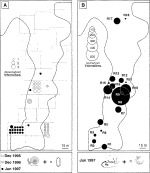
Fig. 2. Spatial distribution of infected hosts and number of parasites per host at the transmission site: (A) for the snail intermediate host Biomphalaria glabrata infected by miracidia and (B) for the vertebrate definitive host Rattus rattus infected by adult schistosomes. The circle surfaces are proportional to the size (intensities) of each larval and adult infrapopulation within the snail and rodent hosts, respectively.

Table 1. Oligonucleotide sequences (5′ to 3′) of the primers used to reveal polymorphism in Schistosoma mansoni
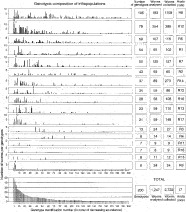
Fig. 3. Genotypic composition of the adult Schistosoma mansoni infrapopulations sampled from the 17 infected definitive hosts (Rattus rattus) and number of copies for each of the 200 RAPD multilocus genotypes identified within each host and within the whole parasite population.
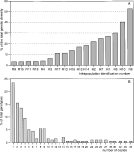
Fig. 4. Distribution of the Schistosoma mansoni genotypes within Rattus rattus. (A) Part of the total genotype diversity within each S. mansoni infrapopulation from individual hosts. (B) Distribution of the S. mansoni genotypes relative to the number of copies they represent.
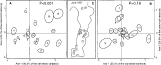
Fig. 5. Impact of the asexual larval multiplication on the genetic structure and differentiation of Schistosoma mansoni adult infrapopulations at the transmission site. Canonical analysis (A) with all genotyped schistosomes within rats including repeated genotypes, (B) with only one individual worm from each multilocus genotype identified per host. Infrapopulations have been projected on the first 2 axes of the canonical analysis. Centroids of groups (=infrapopulations) and ellipses, which represent 95% confidence intervals, are marked on the ordination diagram. (C) Location and identification of the infected definitive hosts at the transmission site.

Table 2. Distribution of the 200 multilocus genotypes of Schistosoma mansoni among rats showing the number and frequency of genotypes shared by various numbers of hosts
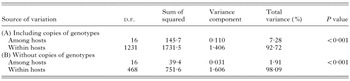
Table 3. AMOVA results for Schistosoma mansoni infrapopulations within Rattus rattus when considering (A) all genotyped individual parasites (including copies of identical genotypes within a host) and (B) only one individual for each parasite genotype within a host (excluding copies of identical genotypes)
 You have
Access
- 78
- Cited by