Introduction
Gymnema sylvestre (Retz.) R. Br. ex Schult. commonly known as ‘Gudmar’ belonging to the family Apocynaceae is an antidiabetic medicinal herb native to India. In India, G. sylvestre is distributed in various states including Uttar Pradesh, Madhya Pradesh, Maharashtra, Punjab, Haryana, Tamil Nadu, Andhra Pradesh, Kerala, Karnataka, Bihar and West Bengal (Malhotra, Reference Malhotra2019). The herb exhibits a broad range of therapeutic effects as an effective natural remedy for diabetes, besides being used for arthritis, diuretic, anaemia, osteoporosis, hypercholesterolemia, cardiopathy, asthma, constipation, microbial infections, indigestion and anti-inflammatory (Tiwari et al., Reference Tiwari, Mishra and Sangwan2014). The plant's anti-diabetic properties are attributed to the presence of triterpenes and saponins in the leaves (Farooqi and Sreeramu, Reference Farooqi and Sreeramu2001). Gymnemagenin, the aglycone of gymnemic acids, the primary saponin glycosides discovered in the leaves, are accountable for the antidiabetic effect and are considered as the major active component. Gymnemagenin cannot be found in its free form but can be extracted through acidic and basic hydrolysis (Nikhat et al., Reference Nikhat, Nath and Babu2017).
The estimated annual demand for the raw material of this crop is 2700 MT/year by the Indian herbal industry but the present availability is only 200–500 MT/year (Ved and Goraya, Reference Ved and Goraya2017). As there is no systematic cultivation of this plant, about 85% of the demand is primarily met with material collected from natural resources thus mounting enormous pressure on the wild stock making the plant vulnerable. Moreover, materials collected from the natural sources are not stable with respect to the metabolite content (0.03–3% gymnemagenin) thus adversely affecting the product stability (Tiwari et al., Reference Tiwari, Mishra and Sangwan2014). This situation provokes an urgent need for the collection and conservation of available diversity with the development of population for selection of genotype with specific traits of interest (Chinapolaiah et al., Reference Chinapolaiah, Chand, Thondaiman, Mittal, Parthvee, Manivel and Kumar2019). Hence, there is a need to utilize the variability in crop improvement programmes to develop an elite genotype suitable for commercial cultivation. This will serve the purpose of conservation of this species in natural habitats and provide quality raw material to the industries for utilization. Variability offers breeders a greater opportunity to select desired characteristics. The extent of variability in a plant species is also determined by other factors: adaption factor, evolution, method of breeding, mode and method of reproduction, ecological and geographical factors (Bharathi et al., Reference Bharathi, Nalina, Rajamani and Ramakrishnan2018). Gymnema sylvestre is a highly heterozyogous and heterogenous crop owing to its cross-pollinating nature. It is prominently pollinated by small bees (Melipona sp.), bumble bees (Xylocopa sp.), wasps (Vespa sp.) and honey bees (Apis dorsata) because of the presence of bright yellow flowers producing a large quantity of nectar. Assessment of genetic variability and understanding the relationship between traits and yield is crucial for the exploitation of this crop in crop improvement programmes. Assessment of genetic variability using appropriate tools such as genetic coefficient of variation, heritability estimates, and genetic advance is important to boost yield as well as the quality of any crop in any breeding programme (Alemu et al., Reference Alemu, Tesfaye, Haileselassie and Lule2017). Correlation analysis allows us to identify the linkage between traits, enabling the improvement of two desirable traits through a common selection programme (Kumar et al., Reference Kumar, Singh and Pal2007). Genotypic and phenotypic coefficients of variation (GCV & PCV) serve as valuable parameters for assessing the level of variability in the existing genotypes. Heritability and genetic advance aid in determining the influence of the environment on trait expression and the extent to which improvement is possible through selection. Path coefficient analysis helps evaluate the relative contributions of each trait, both directly and indirectly to the overall yield (Meena et al., Reference Meena, Kumar, Kumar, Yadav and Kumar2010). Many studies by previous workers have attempted to dissect the genetic nature of various traits in this crop, but from the pharmaceutical point of view, understanding the genetic control of bioactive component is the priority for improving the content or quality of the raw material. Present work is novel in terms of understanding not only the genetics of important yield traits (leaf traits) but also its correlation with bioactive content, the co-segregation of which will prove essential for crop improvement activities in this crop. Being a native medicinal herb with the greatest stretch of natural population present along the Western Ghats region of Tamil Nadu, Kerala and Karnataka, this study was conducted to investigate the variability present in 35 accessions of G. sylvestre collected from different parts of South Peninsular region to examine the genetic variability and associations of growth and yield trait together with its bioactive content. The results arising out will help in identifying the promising traits which can serve as selection criteria in the future crop improvement programmes.
Materials and methods
Plant material
The present investigation was carried out at ICAR-Indian Institute of Horticultural Research (ICAR - IIHR), Hesaraghatta, Bengaluru during the year 2021–22 and 2022–23. The experimental material comprised of 35 accessions of G. sylvestre collected from southern peninsular states of India (Karnataka, Tamil Nadu, Andhra Pradesh, Telengana and Kerala) (Fig. 1, online Supplementary Table S1). To maintain the genetic uniformity with the source material, vegetative two noded hardwood cutting was used as propagating material for the establishment of germplasm field. These accessions were planted in a four-block Augmented Block Design (ABD) with three replicated checks (IIHR-GS-12, IIHR-GS-18 and IIHR-GS-19) in each block at a spacing of 2.5 × 2.5 m and regular cultural operations were carried out to maintain the crop in good condition, following recommended agronomical practices (Meena et al., Reference Meena, Kuldip and Parmeshwar2022).
Geographical map showing the collection sites of G. sylvestre accessions (constructed using DIVA-GIS software).

Analysis of quantitative and bioactive traits
Ten quantitative traits such as leaf length (cm), leaf breadth (cm), petiole length (cm), internodal length (cm), leaf thickness (cm), leaf area (cm2), leaf area index, chlorophyll content (SPAD units), fresh leaf yield per plant (kg) and dry leaf yield per plant (kg) were recorded as per the minimal descriptors developed by Pandey et al. (Reference Pandey, Kuldeep, Pradheep, Rajkumar and Gupta2019). Ten mature leaves per plant was taken for recording leaf traits and averaged for each accession. Fresh leaf yield per plant (kg) was calculated by stripping off the mature leaves and leaving behind the immature flushes. The fresh leaves were cleaned and shade dried for 10 days with intermittent turning to bring down the moisture content to less than 10%. The dried leaves were again weighed to calculate the dry weight of leaves per plant (kg).
The biochemical analysis involved quantifying the gymnemagenin content using High Performance Liquid Chromatography (HPLC) following the modified method developed by Dhanani et al. (Reference Dhanani, Singh, Waman, Patel, Manivel and Kumar2015). The bioactive analysis was carried out in the Medicinal crop laboratory facility at ICAR-IIHR, Bengaluru using the Shimadzu LC model Nexera X2 HPLC/UPLC system equipped with LC-30 AD pump with SPD- M20A photodiode array detector (PDA) in combination with Lab solutions chromatography software version 5.54 SP 5.
Sample extraction using the acid–base hydrolysis method
The shade-dried leaf samples (approximately 10 g) from each accession were thoroughly ground using a matrix mixer. Later, 1 g of finely powdered and sieved leaf sample was taken in a 50 ml round-bottomed flask to which 25 ml of aqueous alcoholic solution (50% methanol) was added and kept at room temperature for 15 h. Later, 3 ml of KOH (11%) was added to the flask and refluxed in a Soxhlet apparatus for 1 h at 60°C. The refluxed sample was cooled, and 6 ml concentrated HCl (11N) was added to the cooled mixture. Thereafter, the contents were further refluxed for 1 h, cooled, and the pH was adjusted to 7.5–8.5 using saturated KOH solution. The final sample volume in the flask was made up to 50 ml using aqueous alcoholic solution (50% methanol). The sample was then centrifuged at 10,000 rpm for 10 min, the supernatant was collected separately, and then filtered through a 0.2-μm, 13-mm nylon membrane before being injected into the HPLC column.
Preparation of standard gymnemagenin solution
The stock solution of the standard was prepared by weighing and transferring 5.0 mg of standard gymnemagenin (procured from Natural Remedies Ltd.) to a dry 10-ml volumetric flask and then dissolving it in 5 ml of HPLC-grade methanol by sonicating for 5 min. The final volume of the stock solution was made up to 10 ml with HPLC-grade methanol and mixed well. From the stock solution, different dilutions, such as 25, 50 and 100%, were prepared and injected using an auto sampler into the HPLC unit. A sequence of injections was made from lower to higher concentrations of the standards. For calibration, peaks with a retention time of14.026 min were identified as the standard concentration peaks for gymnemagenin. The peak at the specific retention time was obtained by repeated injections of the standard.
Chromatographic conditions
The mobile phase was a mixture of acetonitrile (solvent A) and potassium dihydrogen orthophosphate (10 mM, solvent B), both of which contained orthophosphoric acid (0.05%, v/v). Chromatographic separation was achieved on a CAPCELL PAK C18 (SHISEIDO) column, 250 mm in length × 4.6 mm I.D, with a 5-μm particle size column at 40°C
Calculations
Gymnemagenin content in the given sample can be calculated using the following formula as below:

Statistical analysis
Analysis of variance (ANOVA) was performed according to the augmented design suggested by Federer (Reference Federer1961). The phenotypic and genotypic components of variance in the G. sylvestre accessions for each trait were computed using the method proposed by Weber and Moorthy (Reference Weber and Moorthy1952) and Dabholkar (Reference Dabholkar1992). Phenotypic coefficient of variation (PCV) and genotypic coefficient of variation (GCV) were calculated for all the traits following the method suggested by Burton and De Vane (Reference Burton and De Vane1953). PCV and GCV values were classified as Low (0–10%), Moderate (10–20%) and High (>20%), based on the method suggested by Robinson et al. (Reference Robinson, Comstock and Harvey1949). Heritability (h 2bs) (broad sense) was estimated for all the traits following the method of Johnson et al. (Reference Johnson, Robinson and Comstock1955), and the heritability percentage was categorized as low (0–30%), moderate (30–60%), and high (>60%), as suggested by Robinson et al., Reference Robinson, Comstock and Harvey1949. The extent of genetic advance expected for each trait was estimated, and Genetic advance as a percentage of mean was classified as low (0–10%), moderate (10–20%) and high (>20%) (Johnson et al., Reference Johnson, Robinson and Comstock1955). To determine the degree of association between leaf yield, gymnemagenin content and their contributing traits, as well as among the yield attributing traits themselves, correlation coefficients were calculated (Al-Jibourie et al., Reference Al-Jibourie, Miller and Robinson1958). Path coefficient analysis was carried out among the accessions using the simple correlation coefficient to understand the direct and indirect effects of the yield components, following the method suggested by Wright (Reference Wright1921) and illustrated by Dewey and Lu (Reference Dewey and Lu1959). Path coefficients were obtained by solving simultaneous equations that express the fundamental relationship between correlations and path coefficients, as described by Goulden (Reference Goulden1959). The analysis was performed with the help of Grapes Agri 1. Software (Gopinath et al., Reference Gopinath, Parsad, Joseph and Adarsh2021).
Results
The analysis of ten important morphological, yield and bioactive traits signified the presence of sufficient amount of variability within the G. sylvestre accessions studied as per the ANOVA (online Supplementary Table S2). It was found that the effect of blocks in the experimental design was significant for the variabilities in leaf length, leaf breadth, petiole length, internodal length, leaf area, leaf area index, fresh leaf yield per plant, dry leaf yield per plant and gymnemagenin content. However, it was non-significant for leaf thickness and chlorophyll content. Similarly, the effect of treatments (accessions) excluding blocks was significant for all the traits except petiole length and leaf thickness. On the other hand, the variability due to blocks, eliminating the check and treatments (accessions) was significant only for fresh leaf yield per plant and dry leaf yield per plant. The variability due to checks showed significance for all traits. Petiole length and leaf thickness were the only traits that were non-significant for treatment and checks vs treatment (accessions), while all other traits exhibited significant variation.
For all the studied characters, PCV was slightly higher than the GCV, suggesting minimal environmental influence (PCV) on the studied traits (online Supplementary Table S4). High PCV and GCV values were found for leaf breadth, leaf area, leaf area index, fresh leaf yield per plant, dry leaf yield per plant and gymnemagenin content, suggesting minimal environmental influence and broader variability among the accessions. Petiole length showed high PCV (20.24%) and moderate GCV (19.92%) indicating the influence of the environment on these traits, whereas leaf length, leaf thickness, internodal length and chlorophyll content exhibited moderate PCV and GCV, again indicating the potential for improvement through selection. Variability, heritability and genetic advance as a percentage of the mean for growth, yield and quality parameters in G. sylvestre accessions are briefly discussed in Fig. 2 and online Supplementary Table S4. (Per se performance of individual accessions with respect to various growth, yield and quality traits during two different years (2021–22 and 2022–23) is given in online Supplementary Tables S3 and S4)
Estimates of genetic variability for growth, yield and quality parameters in G. sylvestre accessions.

High heritability coupled with high genetic advance as a percentage of the mean was calculated for leaf length, leaf breadth, petiole length, internodal length, leaf area, leaf area index, chlorophyll content, dry leaf yield per plant and gymnemagenin content. All the studied traits showed high broad-sense heritability (> 60%), with the highest heritability exhibited by traits like leaf area (99.82%), leaf area index (99.78%), leaf length (98.25%), petiole length (96.89%) followed by leaf breadth and internodal length. Heritability for the yield and bioactive characters: fresh leaf yield, dry leaf yield and gymnemagenin content was found to be 60.96%, 60.11% and 96.73% respectively. High genetic advance as per cent of mean (>20%) was observed for all the traits except leaf thickness. Fresh leaf yield per plant (82.68%), dry leaf yield per plant (72.56%) and gymnemagenin content (68.83%) showed the highest genetic advance among all traits suggesting the possibilities of phenotype-based selection for the improvement of those traits. The above results interpret that the expected gain from selection would be high if any of the observed traits except leaf thickness is used as selection criteria in G. sylvestre breeding.
In the current study, character associations were evaluated at both genotypic and phenotypic levels among all traits linked to yield in G. sylvestre accessions (online Supplementary Table S5). It was found that, in most cases, genotypic correlation was higher than phenotypic correlation, indicating that the traits are more under the genetic control and are heritable. Among the studied accessions, leaf length and leaf area exhibited a significant positive correlation with fresh leaf yield and dry leaf yield both at genotypic and phenotypic level. Dry leaf yield per plant exhibited a highly significant and positive correlation with fresh leaf yield per plant, leaf length, leaf breadth, and gymnemagenin content both at genotypic and phenotypic levels. Significant negative correlation was observed between fresh leaf yield per plant and gymnemagenin content (−0.928, −0.954) and between dry leaf yield per plant and gymnemagenin content (−0.620, −0.505). These correlations can be of particular interest in future breeding programmes, as they provide potential targets for indirect selection to enhance overall plant productivity.
In the present study, the genotypic and phenotypic path coefficient analysis for dry leaf yield per plant (online Supplementary Table S6) is briefly discussed. The genotypic path coefficient analysis among the accessions revealed that leaf length, leaf breadth, leaf area index, leaf thickness and fresh leaf yield per plant had the maximum positive direct effect. The higher magnitude of the positive association of these traits explains their stronger relationship with dry leaf yield per plant. Additionally, it was observed that fresh leaf yield per plant was the most important attribute contributing to dry leaf yield per plant. Thus, direct selection for these traits would lead to improvements in dry leaf yield. On the other hand, petiole length, internodal length, leaf area, chlorophyll content and gymnemagenin content had a negative contribution to dry leaf yield per plant. In fact, a residual effect of 0.228 indicates that the causative parameters accounted for approximately 77.20% of the variation in dry leaf yield per plant, with 22.80% of the variation remaining unexplained. Similarly, the phenotypic path coefficient analysis in G. sylvestre accessions indicated that leaf length, leaf breadth, leaf area index, leaf thickness, fresh leaf yield per plant and gymnemagenin content had the maximum positive direct effect. Conversely, petiole length, internodal length, leaf area and chlorophyll content had a negative contribution towards dry leaf yield per plant. The higher magnitude of the positive direct effect of these traits explains their stronger association with dry leaf yield per plant. Once again, it was observed that fresh leaf yield per plant was the most important attribute contributing to dry leaf yield per plant. Direct selection for these traits would be beneficial for improving leaf yield. In reality, a residual effect of 0.252 reveals that the causative features explained about 74.80% of the variability in pod yield, leaving 25.20% of the variability unexplored
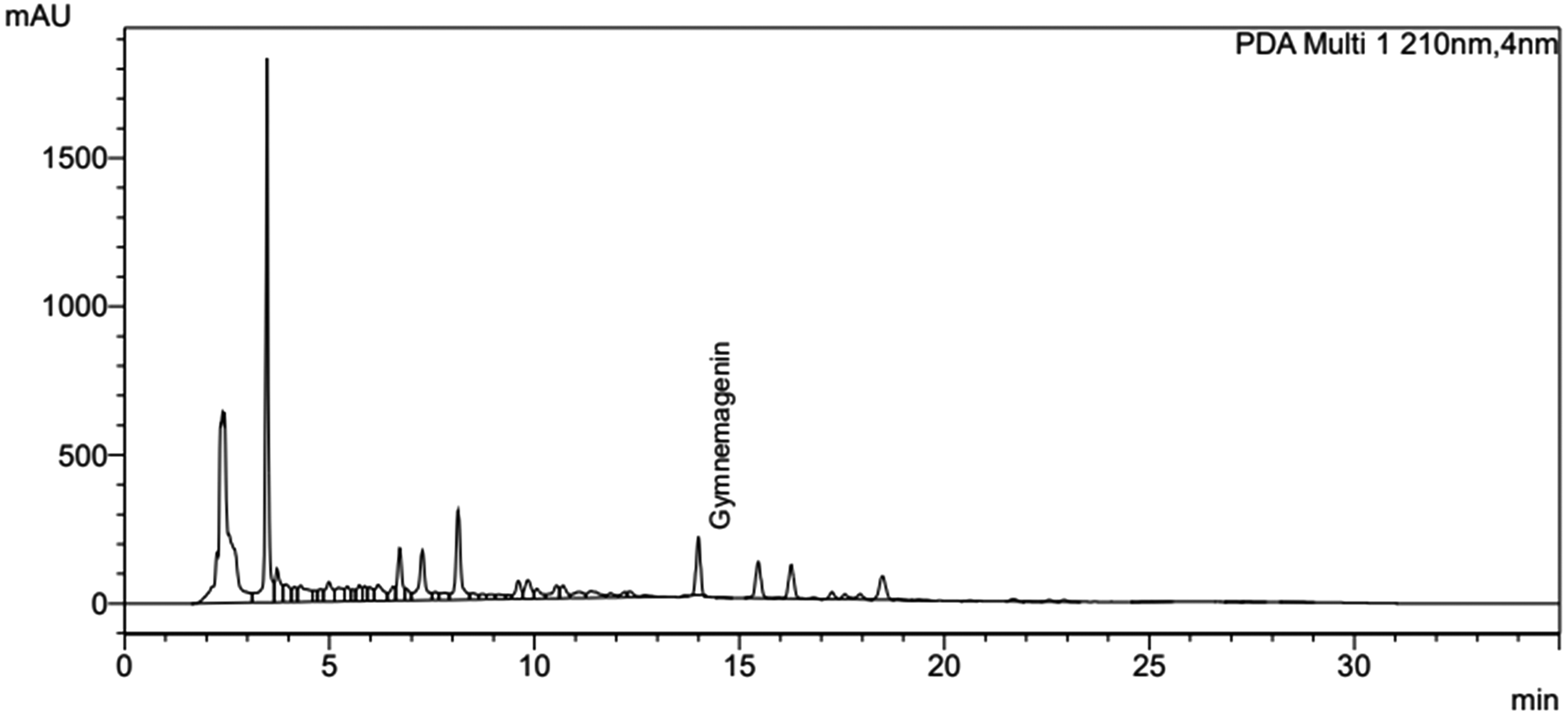
Variability analysis for morphological, yield and bioactive traits in 35 accessions of G. sylvestre also identified few promising morphotypes and chemotypes in the collection (online Supplementary Table S7, Fig. 3) which can be utilized for the commercial exploitation or can serve as pre-breeding materials in the future crop improvement programmes. The leaf, being the economic part of the plant, showed significant variability in terms of length, breadth, thickness, area, chlorophyll content, petiole length, and internodal length. IIHR-GS-18 depicted the highest leaf length (6.26 cm), leaf breadth (4.63 cm) and leaf area (25.85 cm2) among all other genotypes. Broadest leaves coupled with hairy leaf surface makes this genotype a unique morphotype for further studies. The fresh-leaf yield per plant varied significantly between the accessions and ranged from 0.09 kg to 1.76 kg, with a grand mean of 0.96 kg. IIHR-GS-27 recorded the maximum yield (1.76 kg) followed by IIHR-GS-9 (1.74 kg), and the minimum yield was recorded in IIHR-GS-2 (0.09 kg). Gymnemagenin being the important bioactive contributing to the antidiabetic property showed immense variability between the accessions. Maximum gymnemagenin content was observed in IIHR-GS-44 (1.954% [w/w]) (Fig. 4) and minimum in IIHR-GS-18 (0.005% [w/w]), with a grand mean of 1.21% (w/w).
Promising morphotype and chemotype of G. sylvestre identified in the study.

Chromatogram of Gymnemagenin content in IIHR-GS-44 (highest).

Discussion
Significant values of the mean sum of squares for all sources of variation obtained in this study indicated the presence of significant variability among the studied accessions of G. sylvestre. The wide variability observed could be attributed to the indigenous nature of the crop, with the diversity hotspot spread across the southern peninsular region (Padmapriya et al., Reference Padmapriya, Kumanan and Rajamani2010; Dash et al., Reference Dash, Sikta, Mambub, Shermin and Islam2018), where it originated and developed its diverse forms during the process of evolution. Existence of significant variability in the germplasm collection provides ample opportunities for utilizing it in the crop improvement programmes. The ANOVA alone is insufficient to fully and definitively explain all the inherent genotypic divergences in the sample. This is because phenotypic measures can vary under fluctuating environments and having limited knowledge of variability for different traits may not reveal which specific character exhibits the highest degree of variability (Zannat et al., Reference Zannat, Hussain, Abdullah, Hossain, Saifullah, Safhi, Alshallash, Mansour, ElSayed and Hossain2023). Hence, once the presence of genetic variability is confirmed, it is important to partition the heritable variation and non-heritable variation to plan for the proper breeding programme. High PCV and GCV values observed for traits like leaf breadth, leaf area, leaf area index, fresh leaf yield per plant, dry leaf yield per plant and gymnemagenin content in this study suggest that these traits embody variability due to genotype, environment, and their interaction and have the potential for improvement through selection (Alemu and Demelash, Reference Alemu and Demelash2022). PCV values were higher than their corresponding GCV values for all the traits studied which indicated that the apparent variation is not only due to the genotypes but also due to the influence of the environment (Kishore et al., Reference Kishore, Katna and Sharma2023).
High broad-sense heritability obtained for majority of the studied traits indicated that genetic differences among individuals accounted for a large proportion of the total variation observed in these traits. This is advantageous for breeding programmes as it suggests that genetic selection will be effective in improving the trait. It also implies that the trait is less influenced by environmental factors, leading to more predictable and stable expression of the trait across different environments (Bhanu et al., Reference Bhanu, Singh, Tharu and Saroj2017). In this study, high heritability coupled with high genetic gain expressed by traits like fresh and dry leaf yield and gymnemagenin content can result in a better genetic gain through selection since the variation that prevails in such a trait is due to additive gene action (Johnson et al., Reference Johnson, Robinson and Comstock1955; Vimal and Vishwakarma, Reference Vimal and Vishwakarma1998; Noor et al., Reference Noor, Ashaf and Ghafoor2003). High heritability of gymnemagenin content shows that selection methods can aid in the development of higher gymnemagenin containing lines. Similar results were recorded by Bharathi et al. (Reference Bharathi, Nalina, Rajamani and Ramakrishnan2018) in G. sylvestre; Sangwan et al. (Reference Sangwan, Avtar and Singh2013) and Kumar et al. (Reference Kumar, Patel, Chauhan, Tank, Solanki and Gami2021), Kujur et al. (Reference Kujur, Tirkey and Ekka2021) and Venugopal et al. (Reference Venugopal, Padma, Rajkumar, Seenivasan, Saidaiah and Sathish2021) in ashwagandha; Lal et al. (Reference Lal, Gupta and Dubey2017), Singh (Reference Singh2017) and Ravi et al. (Reference Ravi, Umesha, Himabindu, Shetty and Kumar2019) in Centella asiatica; Mastiholi (Reference Mastiholi2017) in Salacia chinensis; Patel et al. (Reference Patel, Singh, Lal, Gupta, Kesarwani and Goyal2018) in Ocimum spp.
The relationships between plant characteristics are complex, often exhibiting correlations due to pleiotropy or genetic linkage (Harland, Reference Harland1939). Phenotypic, genotypic and environmental correlations are intertwined (Falconer, Reference Falconer1989). Significant positive correlation observed between leaf length and leaf area with fresh leaf yield and dry leaf yield both at genotypic and phenotypic level allow for the simultaneous improvement of both traits (Falconer, Reference Falconer1981). These results agree with the reports of Bharathi et al. (Reference Bharathi, Nalina, Rajamani and Ramakrishnan2018) in G. sylvestre; Lal et al. (Reference Lal, Gupta and Dubey2017) and Ravi et al. (Reference Ravi, Umesha, Himabindu, Shetty and Kumar2019) in C. asiatica; Mehta et al. (Reference Mehta, Behera, Dholariya, Tandel and Jadeja2019) in Safed musli; Seemanthini et al. (Reference Seemanthini, Kulkarni, Kumar, Priya, Krishna and Amreen Taj2022) in Hibiscus. In any biological organism, different traits are correlated with each other in a simple or complex manner and it is the responsibility of the breeder to understand the genetic nature and relationship between traits which may directly or indirectly influence the yield in a crop (Tadesse et al., Reference Tadesse, Fikre, Eshete, Girma, Korbu, Mohamed, Bekele, Funga and Ojiewo2016). Negative correlation observed between fresh leaf yield per plant and gymnemagenin content and between dry leaf yield per plant and gymnemagenin content interpret that genotypes with less leaf yield have a higher content and vice versa depicting indirectly that small leaf size possesses higher bioactive content. This is a first-time report in G. sylvestre which provides clue to the breeders to select or target small leaved genotypes for improving the bioactive content. Similar results were also obtained by Voninavoko et al. (Reference Voninavoko, Soaharin, Edmond, Harena, Sarah, Marie and Pascal2012) in C. asiatica accessions of Madagascar, where they found that small sized morphotype produced twice the asiaticoside yield compared to broad morphotype. Rohini and Smitha (Reference Rohini and Smitha2022) also reported similar results in C. asiatica where they concluded to select small leaved morphotypes to get higher active-principle content as compared to the broad-leaved accessions.
The correlation and path analysis studies highlighted the importance of selecting leaf length, leaf breadth, leaf area index, fresh leaf yield and gymnemagenin content for improving dry leaf yield of G. sylvestre. These findings align with previous studies conducted by Bharathi et al. (Reference Bharathi, Nalina, Rajamani and Ramakrishnan2018) in G. sylvestre; Lal et al. (Reference Lal, Gupta and Dubey2017) in C. asiatica; Singh et al. (Reference Singh, Toshi Dubey and Tiwari2003) in senna; Mahalakshmi (2006) in Phyllanthus amarus; Kumar et al. (2012) in Ocimum spp; Ravi et al. (Reference Ravi, Sreeramu, Gowda and Smitha2013) in makoi; Palanikumar et al. (Reference Palanikumar, Rajamani and Muthaiah2012) in coriander. This study has further identified promising genotypes, namely, IIHR-GS-27, IIHR-GS-9 and IIHR-GS-44 which exhibited good yield, and quality traits which can be utilized for direct commercial exploitation. Alternatively, other potential genotypes like IIHR-GS-18 with promising leaf traits can be used as per-breeding material for future crop improvement programmes aiming to improve the yield and quality. The crop is amenable for vegetative and seed propagation enabling the use of an array of breeding methods like clonal selection, hybridization etc. for utilizing the existing variability.
Lack of improved varieties and availability of quality planting material is the main limitation for the commercial cultivation of any medicinal crop. Because of this underlying constraint, G. sylvestre is still harvested from the natural habitats threatening its survival. Our findings provide a foundational framework for future genetic studies, positioning G. sylvestre as a promising candidate for enhanced cultivation practices. The comprehensive analysis of genetic variability, heritability and trait correlations reveals previously undocumented levels of variability, suggesting that selective breeding could be employed to optimize both agronomic and therapeutic qualities. Overall, this study has provided the clues for selecting traits that needs to be targeted for breeding programmes underscoring the importance of conserving and utilizing genetic diversity and has also identified promising morphotypes and chemotypes that paves the way for innovative approaches to harness its full potential as a sustainable medicinal herb.
Conclusion
This study has successfully dissected the amount of genetic variability present in the genetic resources of G. sylvestre accessions collected from southern peninsular region of India. The existence of significant amount of morphological and bioactive variations offers ample scope for crop improvement activities in the crop. High levels of GCV and PCV together with high heritability and genetic advance as per cent of mean observed for most of the growth, yield and bioactive traits suggest that the traits are genetically heritable and hence amenable for phenotype-based selection in future crop improvement programmes.
Supplementary material
The supplementary material for this article can be found at https://doi.org/10.1017/S1479262124000613
Acknowledgements
Authors are thankful to Director, ICAR-Indian Institute of Horticultural Research, Bengaluru for providing the fund and facilities for this research work.
Competing interests
The authors have no competing interests to declare that are relevant to the content of this article.