Implications
Reproductive efficiency is key to the biological and economic sustainability of suckled calf enterprises. A thorough understanding of the many interacting factors, including genetics, nutrition, body energy reserves, health and semen/bull fertility is required to optimise overall cow productivity. The lifetime productivity of the beef bred female commences from the onset of puberty and is dictated by subsequent critical events including age at first calving, duration of the postpartum interval for each successive calving and ultimately length of intercalving intervals. Optimum nutritional management is required at all stages of the production cycle to ensure the timeliness of these events together with vigilance for adequate male fertility and, or appropriate heat detection and insemination technique.
Introduction
Across the world beef cows are an important source of cattle for the beef industry and frequently serve a unique role in converting low quality forage to high-quality protein for human consumption. Additionally, the land type typically used to maintain beef cow herds is not suitable to support intensive dairy or crop production. Beef cow systems vary enormously across countries in terms of herd size, stocking density and level of output. Irrespective of the system of production, herd reproductive performance is a key driver of efficiency and profitability. Unlike dairy production systems, where cows frequently have less well-defined calving patterns, the vast majority of beef cowherds tend to be based on seasonal calving with calving occurring at, or around, the time of onset of pasture growth. As the calf is largely the sole output in beef cow enterprises, reproductive efficiency is a key determinant of profitability, irrespective of the system of production employed. The objective of this paper is to review the main management factors affecting reproductive efficiency of beef cow herds.
Attainment of reproductive targets for a beef cow herd
The following are the generally agreed reproductive targets for a beef cow herd: (1) 365 days – calving-to-calving interval, (2) <5% cows culled annually as barren, (3) >95% of cows calving to wean a calf, (4) Heifers calving at 24 months of age, (5) Compact calving with 80% of cows calved in 42 days, (6) Replacement rate 16% to 18%, (7) Sustained genetic improvement of the cow herd for economically important traits relating to reproduction, calving ability and calf weaning weight, (8) Close alignment of calving date with onset of pasture availability in the spring.
There are four key benchmarks that must be achieved in a timely fashion in order to meet the above targets. These are: (1) occurrence and timing of puberty in heifers, (2) resumption of oestrous cycles post-calving, (3) Expression and detection of oestrus if artificial insemination (AI) is used; and (4) Breeding and the establishment of pregnancy.
Occurrence and timing of puberty in replacement heifers
Replacement heifers represent the next generation of cows in a herd and ideally each year’s cohort of heifers should be genetically superior for commercially important traits compared with their predecessors. Significant costs are incurred during the rearing of replacement heifers and it is imperative that they become pregnant early in their first breeding season, encounter minimal dystocia, are successfully rebred to calve again within 365 days and ultimately have long (>8 lactations) and productive lives within the herd. Because of the seasonal calving pattern within beef cow herds, heifers invariably are either 2 or 3 years at time of first calving.
In their recent review of the published literature Day and Nogueira (Reference Day and Nogueira2013) concluded that beef heifers that conceived early during their initial breeding season and calved as 2-year-old females had a greater probability of becoming pregnant as primiparous cows, have greater lifetime production reflected in greater weaning weights, and tended to calve earlier in subsequent years compared with females that conceived later in their first breeding season. Hence, age at which puberty occurs and timing of this event relative to the breeding season will impact the time of conception in the first breeding season, lifetime productivity, and economic efficiency of beef production. Additionally, conception rates are typically lower at the pubertal compared with subsequent oestrous events. For example, Byerley et al. (Reference Byerley, Staigmiller, Beradinelli and Short1987) recorded a 21 percentage point improvement in conception rate when beef heifers were bred at their third compared with first oestrus, further highlighting the importance of early attainment of puberty in replacement heifers. In agreement, Perry et al. (Reference Perry, Corah, Cochran, Brethour, Olson and Higgins1991) observed that the conception rate of heifers bred at the first observed post-pubertal oestrus was 36 percentage points lowered than their counterparts bred at later oestrus events. Thus, the timing of puberty and the proportion of heifers that are pubertal before the planned onset of their first breeding season is critically important to overall herd reproductive efficiency (Perry, Reference Perry2012).
Puberty in the heifer can be defined as the developmental stage that supports normal ovarian cyclicity combined with the ability to become pregnant. A prerequisite for puberty and the initiation of oestrous cycles is the secretion of gonadotropin-releasing hormone (GnRH) from the hypothalamus, at an adequate pulse frequency and amplitude, to stimulate sufficient LH pulsatility from the anterior pituitary. This stimulates the final stages of follicular development and ovarian oestradiol secretion, induces the pre-ovulatory LH surge and ultimately ovulation (see reviews by Williams and Amstalden, Reference Williams and Amstalden2010; Ahmadzadeh et al., Reference Ahmadzadeh, Carnahan and Autran2011). The secretory control of GnRH and LH involve very complex neural pathways involving neurohormones, peptides (e.g. neuropeptide Y; NPY) agouti-related peptides dopamine, opioid peptides, RF amides (kisspeptin and its receptors; see recent reviews by Williams and Amstalden, Reference Williams and Amstalden2010; Ahmadzadeh et al., Reference Ahmadzadeh, Carnahan and Autran2011). As heifers grow, these factors interact with various metabolic signals such as glucose, leptin, ghrelin, IGF-1, insulin and other transport proteins ultimately leading to increased GnRH and LH pulsatility leading to ovulation and the commencement of oestrous cycles (see recent review by Whittier et al., 2005). Timing of puberty is highly variable even within breed and is dependent on a number of significant genetic and environmental factors and these are discussed below.
Genetic effects
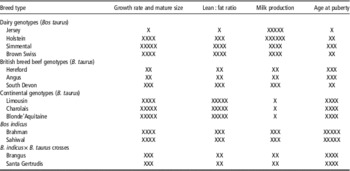
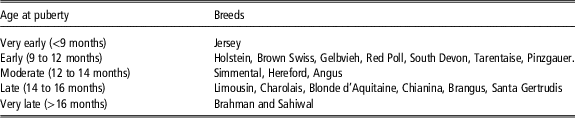
Heritability estimates (h 2) for age at puberty range from 0.07 to 0.67 and average 0.4 (see review by Martin et al., Reference Martin, Larson, Stroh, Cupp and Funston1992). Heterosis, by definition is the difference between the mean for reciprocal F1 crosses and the mean of the respective parental purebreds and is caused by non-additive genetic effects. Crossbred heifers reach puberty at a younger age than the average of their parental breeds (Wiltbank et al., Reference Wiltbank, Gregory, Swiger, Ingalls, Rothlisberger and Koch1966; Gregory et al., Reference Gregory, Lunstra, Cundiff and Koch1991). Estimates of the effect of heterosis on age of onset of puberty vary from about 9 days (Gregory et al., Reference Gregory, Lunstra, Cundiff and Koch1991) to up to 41 days (Wiltbank et al., Reference Wiltbank, Gregory, Swiger, Ingalls, Rothlisberger and Koch1966) with evidence that heterotic effects begin to decrease with increasing age (Martin et al., Reference Martin, Larson, Stroh, Cupp and Funston1992). There are a number studies that have reported both between and within breed effects on age at puberty (see Martin et al., Reference Martin, Larson, Stroh, Cupp and Funston1992) and breed crosses grouped into biological types are summarised in Table 1. Larger European continental breeds of cattle are older at puberty than traditional British beef breeds or dairy breeds. Gregory et al. (Reference Gregory, Lunstra, Cundiff and Koch1991) reported that breeds historically selected for milk production such as Braunvieh, Gelbvieh, Red Poll, Pinzgauer and Simmental, reached puberty at significantly younger ages (see Table 2) than breeds that had not been selected for milk production such as the Charolais, Limousin or Hereford. Indeed a correlation, for Bos taurus breeds, between milk production and age at puberty of −0.87 has been reported (Martin et al., Reference Martin, Larson, Stroh, Cupp and Funston1992). Breed and heterotic effects on age at puberty should be exploited to identify genotypes best suited to particular nutritional and management environments to ensure early onset of puberty. However, producers should always also take cognisance of breed complementarity (matching breeds to the prevailing environment) when making breeding decisions.
Effect of breed type and/or cross on animal performance for four 4 major production traits

X=lowest; XXXXXX=highest influence. Adapted from Martin et al. (Reference Martin, Larson, Stroh, Cupp and Funston1992).
Summary of the relative age at puberty of cattle breeds

(adapted from Hall, Reference Hall2004)
Live weight effects
There is some variation in the published literature on the proportion of mature BW which heifers must attain before undergoing puberty. Despite this it is clear that differences exist between breeds and breed types values of 60% typical for European-derived beef breeds, 55% for dual purpose beef/dairy breeds and 65% for Bos indicus cattle (Larson, 2007). Traditionally the recommended target weights for beef heifers at puberty (pre-breeding) was 0.60 to 0.65 (Whittier et al., Reference Whittier, Lardy and Johnson2005; Engelken, Reference Engelken2008), and at first breeding, 0.65 to 0.70 (Whittier et al., Reference Whittier, Lardy and Johnson2005; Perry, Reference Perry2012) of estimated mature weight. These target weights, though frequently challenging to attain in practice, ensure that a very high proportion of heifers are post-pubertal at the onset of the breeding season, can easily attain 85% of mature weight at time of first calving and are sufficiently physically well developed to minimise dystocia, thus facilitating earlier recommencement of cyclicity post-calving and successful rebreeding. A number of recent reports have suggested that this threshold weight may be lowered to 0.50 to 0.57 of mature BW (Funston et al., Reference Funston, Martin, Larson and Roberts2012; Endecott et al., Reference Endecott, Funston, Mulliniks and Roberts2013). However, in these instances the proportion of heifers pubertal before the start of the breeding season and the percentage of heifers pregnant early in the breeding season was generally worse for lower compared with higher threshold weights (Perry et al., Reference Perry, Larimore, Bridges and Cushman2012; Gasser, Reference Gasser2013). Further studies, including a full economic appraisal of the cost of rearing heifers to different target weight at first breeding, are required before lower target weights could be given a widespread endorsement. Therefore, consideration should be made for heifers to reach circa 0.65 of mature BW at the start of the breeding period in order to conceive early in the breeding season with a target of 60% to 70% pregnant after 3 weeks of the breeding season.
A frequently asked question is does differing nutrient intake patterns from birth until first breeding affect live weight gain, age at puberty and subsequent reproductive performance and longevity as cows. The available evidence would suggest that there is no impairment of reproductive performance by development programmes that use differing rates of gain, as long as heifers reach about 65% of their expected mature BW by breeding (Patterson et al., Reference Patterson, Perry, Kiracofe, Bellows, Staigmiller and Corah1992; Grings et al., Reference Grings, Geary, Short and MacNeil2007).
Breeding of heifers before mature cows
It has frequently been suggested that heifers should be bred up to 1 month in advance of the cow herd, allowing these young animals more time to recover between first calving and second breeding. While this in theory is commendable, it does extend the calving season and requires that heifers have reached puberty at ~12.5 months and are undergoing regular ovarian cyclicity at 14 months of age, where the objective is first calving at 23 months of age. The attainment of a target 65% of their expected mature BW at 14 months of age may be too difficult or costly to achieve particularly with sexually late maturing genotypes. An alternative strategy might be to commence the breeding of replacement heifers coincident with the breeding of mature cows and use hormonal regimens to advance breeding dates and to restrict the breeding period for heifers to 6 weeks.
Bull exposure and induction of puberty
Biostimulation (male or bull effect) can be defined as the stimulus provoked by the presence of males, which induce oestrus and ovulation through genital stimulation, pheromones, or other external cues (Chenoweth, Reference Chenoweth1983). Reports of the effect of exposing pre-pubertal heifers to a mature bull on the onset of puberty have been inconsistent. In some studies neither short (Berardinelli et al., Reference Berardinelli, Fogwell and Inskeep1978) or long-term (Roberson et al., Reference Roberson, Ansotegui, Berardinelli, Whitman and McInerney1987) exposure affected the age and/or weight of onset of puberty in beef heifers. In contrast, bull exposure reduced age at puberty in both years of a 2-year study (Pennel et al,. Reference Pennel, Zalesky, Day, Wolfe, Stumpf and Azzam1986) and in 3 of 4 years of a multiple year study (Roberson et al., Reference Roberson, Wolfe, Stumpf, Werth, Cupp, Kojima, Wolfe, Kittok and Kinder1991). In the latter study there was some evidence of an interaction between nutritional status and bio-stimulatory challenge with heifers on the higher plane of nutrition responding more strongly to the presence of a bull than heifers on the more moderate plane of nutrition. This might indicate that the presence of a bull may be able to hasten the onset of puberty in heifers but only those on an adequate plane of nutrition and having attained a minimum threshold BW. Reasons for the reported inconsistent effects of bull exposure on onset of puberty may be attributed to breed, nutritional status, body condition score (BCS), duration of exposure and the temporal proximity to spontaneous puberty at the onset of exposure. The exact mechanism(s) by which exposure to a bull might accelerate onset of puberty in heifers is not well elucidated but is believed to involve pheromones (Izard and Vandenbergh, Reference Izard and Vandenbergh1982). One possible mechanism by which the pheromones might act is by the reduction in the negative feedback sensitivity of oestradiol on hypothalamic–pituitary function involving the release of GnRH and LH (Wani et al., Reference Wani, Dhindsa, Shafi, Chowdhary and Kumar2013). Based on the foregoing it is not possible to definitively argue that the exposure of pre-pubertal heifers to a bull(s) will consistently advance age at puberty, and, while there is no evidence that exposure will result in delayed onset of puberty, it may be advisable to pen pre-pubertal heifers adjacent to bulls or to run vasectomised teaser bulls with pre-pubertal heifers.
Resumption of oestrous cycles post-calving
Following an uncomplicated calving, about 30 days are required for completion of uterine involution in beef cows. Resumption of normal ovarian cycles and oestrus is dependent on the recovery of the hypothalamic–anterior pituitary–ovarian axis and in particular attainment of a GnRH/LH pulse frequency of 4 to 5 pulses per 10 h period (see review by Crowe et al., Reference Crowe, Diskin and Williams2014). Data from this laboratory (Mackey et al., Reference Mackey, Wylie, Sreenan, Roche and Diskin2000) indicate that the hypothalamic–anterior pituitary–ovarian axis has potentially recovered in terms of the ability of the anterior pituitary to synthesise LH and the ovaries to respond to the increased LH pulse frequency by day 30 post-calving in the majority of suckled beef cows. However, the synthesised LH is largely sequestered in the anterior pituitary and normal resumption of ovulation is thus prevented by inadequate LH pulse frequency as a result of the suckling–maternal bond that exists between the cow and her calf and/or by her nutritional status also affecting GnRH/LH pulse frequency. Therefore, the major factors affecting the duration of the postpartum interval (PPI) in suckled beef cows are maternal bond, nutrition, parity and season. (Crowe et al., Reference Crowe, Diskin and Williams2014).
Suckling–maternal bond
It is now well established that neither chronic sensory stimulation of the teat nor indeed the sensory pathways within the teat and udder are necessary for the suppression of LH pulse frequency in the suckled beef cow. Indeed, neither surgical denervation of the udder (Williams et al., Reference Williams, McVey and Hunter1993) nor mastectomy (Viker et al., Reference Viker, Larson, Kiracofe, Stewart and Stevenson1993) shortened the postpartum anoestrous interval where calves remained with their dams. This confirms that factors other than direct suckling are responsible for the longer duration of the postpartum anoestrous interval in beef cows nursing calves compared with milked dairy cows.
Use of calf separation/isolation to stimulate recommencement of oestrous cycles
The studies of Stagg et al. (Reference Stagg, Spicer, Sreenan, Roche and Diskin1998) and Sinclair et al. (Reference Sinclair, Molle, Revilla, Roche, Quintans, Marongiu, Sanz, Mackey and Diskin2002) clearly show that the use of calf separation/isolation, commencing at around day 30 postpartum, results in an immediate (within 2 to 5 days) increase in LH pulse frequency with about 85% of cows responding by ovulating the first dominant follicle that develops and is exposed to this increased LH pulse frequency. For optimal effect, the data of Stagg et al. (Reference Stagg, Spicer, Sreenan, Roche and Diskin1998) would clearly imply that calves must be isolated from their dams with no tactile contact permitted between them. In the study of Stagg et al., (Reference Stagg, Spicer, Sreenan, Roche and Diskin1998) a total of 43%, 65% and 90% of cows had ovulated by 80 days postpartum for cows with ad libitum calf access, suckled once daily suckling with calves penned adjacent to their dams and suckled once daily suckling with calves isolated from their dams, respectively. Interestingly, in both of the studies of Stagg et al. (Reference Stagg, Spicer, Sreenan, Roche and Diskin1998) and Sinclair et al. (Reference Sinclair, Molle, Revilla, Roche, Quintans, Marongiu, Sanz, Mackey and Diskin2002) a small proportion (circa 15%) of cows failed to respond to the removal of the suckling/maternal calf bond and showed no increase in LH pulse frequency and no evidence of an increase in the circulating concentrations of oestradiol. These ‘non-responders’ typically had prolonged postpartum anoestrous intervals and could be described as being in ‘deep anovulatory anoestrus’ (Sinclair et al., Reference Sinclair, Molle, Revilla, Roche, Quintans, Marongiu, Sanz, Mackey and Diskin2002). In the latter study there was evidence of an association between low circulating concentrations of insulin, during the early postpartum period, and the failure to record an ovulatory response to calf separation/isolation thus emphasising the importance of nutrition as a regulator of PPI. The importance of nutrition is also clear from the study of Bishop et al. (Reference Bishop, Wettemann and Spicer1994), where the authors reported that all (100%) cows in a BCS of greater or equal to 5 (scale 1 to 9) at calving had ovulated by day 60 days following weaning at day 35 day post-calving. In contrast, only 40% of cows in a BCS of less than five had ovulated at the same time. Therefore, the available evidence suggests that calf isolation and restricted suckling might be a management option to shorten the postpartum anoestrous interval in beef cows but with lower and more variable response expected in cows that are in a low BCS at calving.
Nutrition and PPI in beef cows
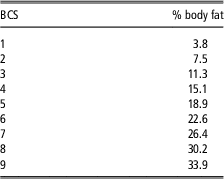
Nutrient intake, before and after calving, is a major factor affecting the duration of the postpartum anoestrous interval and subsequent calving-to-conception interval and overall pregnancy rate. If nutrient intake is inadequate, cows body reserves become depleted and body condition declines. Cow body reserves and/or BCS at any one time is a reflection of previous nutrient intake and is a more reliable indicator of cow nutritional status than cow BW which is affected by cow frame size and products of conception, which vary with gestational age. BCS of beef cows is considered an objective, repeatable and easily applied measure of a cow’s fat reserves and is frequently advocated as a practical tool for the nutritional management of beef cows and to level out peaks and troughs in seasonal feed supply, as well as the overall nutritional status of a herd at a given time point. In Britain and Ireland a scale of 0 to 5 (Lowman et al., Reference Lowman, Scott and Somerville1976) is used while in most other countries a scale of 1 to 9 (Richards et al., Reference Richards, Spitzer and Warner1986) is used. The amount of body fat associated with each unit of BCS, as a per cent of BW, is summarised in Table 3.
Per cent of body fat associated with each BCS (Nutrient Requirements of Beef Cattle, 1996)

BCS=body condition score.
In a recent review including a statistical re-evaluation of published literature, Hess et al. (Reference Hess, Lake, Scholljegerdes, Weston, Nayigihugu, Molle and Moss2005) found that the length of the PPI was negatively correlated with BCS at calving (r=0.75;) and prepartum energy balance estimated from changes in prepartum BCS (r=0.52) but not with prepartum change in BCS (r=0.35). Results of a multivariate stepwise regression demonstrated that BCS at calving was the only variable to consider for estimating effects of prepartum plane of nutrition on PPI (R 2=0.57). Interestingly, in the transnational study of Sinclair et al. (Reference Sinclair, Molle, Revilla, Roche, Quintans, Marongiu, Sanz, Mackey and Diskin2002) which employed very divergent beef genotypes, it was clearly shown that both BCS at calving (2 v. 3; scale 0 to 5) significantly affected LH pulse frequency (1.64 v. 3.2 pulses/10 h) and mean concentrations of insulin (6.3 v. 8.5 mIU/l) at about 27 days postpartum, both of which are key drivers of onset of ovulation post-calving.
From the analysis of published data Hess et al. (Reference Hess, Lake, Scholljegerdes, Weston, Nayigihugu, Molle and Moss2005) concluded that ‘(1) prepartum nutrition is more important than postpartum nutrition in determining the duration of postpartum anestrus; (2) energy is the primary nutrient regulating reproduction in female beef cattle and inadequate dietary energy during late pregnancy lowers reproduction even when dietary energy is sufficient during lactation; (3) a BCS ⩾5 (scale 1–9) will ensure that body reserves are adequate for postpartum reproduction; (4) severity and duration of negative energy balance during the early postpartum extends the postpartum anestrous period and negatively affects reproductive performance’.
Postpartum nutrition and duration of the anoestrous interval
The reported effects of increased nutrient intake after calving on PPI are inconsistent with positive effects (Stagg et al., Reference Stagg, Diskin, Sreenan and Roche1995; Vizcarra et al., Reference Vizcarra, Wettemann, Spitzer and Morrison1998) or no effect (Whittier et al., Reference Whittier, Clanton and Deutscher1988; Stagg et al., Reference Stagg, Spicer, Sreenan, Roche and Diskin1998) on duration of the postpartum anovulatory interval. This lack of consistency among studies may reflect variation around dietary energy intake, duration of the feeding period, BCS at calving, age of cows, etc. Similar to their review and statistical re-evaluations of published literature, Hess et al. (Reference Hess, Lake, Scholljegerdes, Weston, Nayigihugu, Molle and Moss2005) found that BCS at breeding (r=0.41; P<0.001), but not BCS at calving (r=0.10; P=0.41), was correlated with PPI. Both BCS change (r=0.47; P<0.001) and energy balance estimated from BCS change (r=0.43; P<0.001) were also correlated with PPI. Results of a stepwise regression analysis, however, indicated that BCS at breeding was the only predictor of PPI. A large portion (47%) of the variation in BCS at breeding was, however, explained by BCS at calving.
There is evidence that thin cows at calving and particularly primiparous cows respond to increased postpartum nutrient intake with enhanced reproductive performance (Richards et al., Reference Richards, Spitzer and Warner1986; Spitzer et al., Reference Spitzer, Morrison, Wettemann and Faulkner1995; Ciccioli et al., Reference Ciccioli, Wettemann, Spicer, Lents, White and Keisler2003), although reproductive performance may still be less than adequate. In the study of Ciccioli et al. (Reference Ciccioli, Wettemann, Spicer, Lents, White and Keisler2003), primiparous cows that calved in a BCS of 4 or 5 (scale 1 to 9) had similar endocrine function and reproductive performance at the first postpartum oestrus. However, increased nutrient intake for a period of 71 days post-calving shortened the interval from calving to first ovulation followed by a normal luteal phase from 120 to 100 days indicating earlier resumption of cyclicity postpartum. Increasing feed intake promotes fat deposition which may be a prerequisite to re-establish ovarian function in postpartum cows. Increased BCS is required for the resumption of oestrous cycles in nutritionally induced anoestrous cows (Richards et al., Reference Richards, Wettemann and Schoenemann1989) and heifers (Bossis et al., Reference Bossis, Wettemann, Welty, Vizcarra and Spicer2000), and body energy reserves influence the interval to ovulation after early weaning of beef cows (Bishop et al., Reference Bishop, Wettemann and Spicer1994). This suggests that adiposity, or at least the achievement of a certain threshold level of adiposity may be a prerequisite for occurrence of puberty and resumption of postpartum ovarian cyclicity. Although the precise chemical or hormonal signals that link BW and adiposity to pubertal onset have not been clearly defined, an increase in circulating concentrations of leptin, an adipose-derived hormone that regulates a wide variety of physiological processes, has been shown to precede the onset of puberty in several species, including cattle (Perry, Reference Perry2012) leading to postulation that leptin acts as a permissive signal to the occurrence of puberty. Furthermore, administration of recombinant ovine leptin stimulated secretion of GnRH and LH in undernourished heifers, but was not capable of accelerating puberty onset in well-nourished heifers (Maciel et al., Reference Maciel, Zieba, Amstalden, Keisler, Neves and Williams2004; Zieba et al., Reference Zieba, Amstalden, Morton, Maciel, Keisler and Williams2004). However recent findings show that although exogenous administration of leptin temporarily enhanced the rate of follicular growth, it does not accelerate puberty (Carvalho et al., Reference Carvalho, Diniz-Magalhães, Pereira, Santos and Silva2013). Collectively these data indicate that while leptin plays an important role as a signal linking nutritional status to the central reproductive axis in cattle, other factors are also involved.
Use of BCS
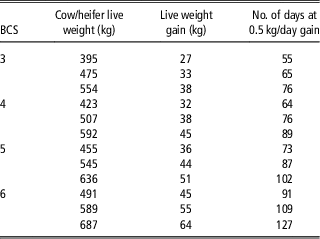
BCS has been frequently advocated as a practical tool for the nutritional management of beef cows. From the foregoing and from published literature it is clear that the critical time to achieve a minimum target BCS is at calving (Hess et al., Reference Hess, Lake, Scholljegerdes, Weston, Nayigihugu, Molle and Moss2005). The recommended BCS at calving for mature cows and first and second caving cows heifers are 5 and 6 (scale 1 to 9), respectively or score 2.5 and 3.0 on a scale of 0 to 5 (Lowman et al., Reference Lowman, Scott and Somerville1976). A somewhat higher BCS (+1 unit; scale 1 to 9) is warranted for younger cows and heifers because, after calving, they have an additional feed requirement for growth together with their requirement for maintenance and lactation. Excessive adiposity at time of calving, however, is not recommended and is associated with greater dystocia and may contribute to lower feed intake postpartum. It is difficult, unless there is an abundance of cheap high-quality feed, to economically improve the BCS of cows during early lactation. Similarly, waiting until calving to commence improvement in BCS is not recommended and will generally be difficult to achieve, particularly in a cost effective manner and without resorting to concentrate/energy supplementation. Equally and from a practical perspective, BCS at breeding is less useful as a management tool than BCS at calving because it is very difficult, if not impossible, to sufficiently improve BCS after the onset of the breeding period. Furthermore, as the reproductive response to improving nutrition is not immediate, the commencement of enhanced feeding only during the breeding period will not immediately induce oestrous cyclicity in anoestrous cows though may improve conception and final pregnancy rate. It is also clear that improvements of one unit BCS (scale 1 to 9) requires an improvement in live weight (independent of changes in the products of conception or gut fill) which, will depend on current cow/heifer weight and BCS (see Table 4). Where the 0 to 5 scale is used to measure BCS, a one unit increase in BCS equates to about 70 kg increase in BW (Wright and Russell, Reference Wright and Russell1984). Therefore, for cows in a low BCS, adequate time must be allowed for BCS to improve. It is frequently recommended to BCS cows during the late summer to early autumn period, particularly young cows and if feed supply is becoming scare or deteriorating in nutritive value. This would allow the identification and selection of cows in low BCS for either early weaning or supplementation to improve BCS. Typically, cows should be approaching mid gestation at this time and their feed requirements are low compared with early lactation and it is therefore, more economical to improve BCS through grazing. Once the target BCS is achieved the objective should be to maintain it to calving. Attempting to improve BCS in late gestation can frequently be difficult because the nutrient demands of the rapidly growing foetus are increasing at this time as well as the increased nutrient demands for mammary regeneration and colostrogenesis in preparation for lactation. Frequently, in harsher climates, weather conditions and feed supply can be additional challenges. For cows in very good BCS (score ⩾7; scale 1 to 9) there is evidence that tissue reserves can be utilised during late gestation without compromising subsequent reproductive function.
Weight changes and time needed to increase one unit of BCS (scale 1 to 9) in cows of different live weights and BCS

BCS=body condition score.
Adapted from Nutrient Requirements of Beef Cattle, 1996.
Bull exposure and induction of postpartum cyclicity in cows
Similar to pre-pubertal heifers, there is evidence that the exposure of anoestrous postpartum cows to bulls hastens the onset of recommencement of oestrous cycles though the effects have not been consistent across all studies (see review by Fiol and Ungerfeld, Reference Fiol and Ungerfeld2012). It would also appear that a continuous stimulus from the male is necessary to obtain a positive response on induction of cyclic activity. Based on the published evidence it may be advisable to accommodate postpartum cows’ adjacent to bulls or run teaser bulls with them (before the onset of the breeding season or where AI is being used). If this is to be practiced, it should commence shortly after calving. However, it is highly unlikely that the stimulatory effects of bull exposure will overcome low BCS at calving and/or nutritional anoestrous.
Nutritional effects on conception and pregnancy rate
Energy
While prepartum nutrition plays a key role in regulating the interval to resumption of postpartum ovulation, mainly through its modulating effects on BCS, both concurrent plane of nutrition as well as dietary chemical composition during the breeding season, has been shown to affect conception and pregnancy rates. Some studies have also reported latent effects of early postpartum plane of nutrition on subsequent fertility during the breeding season. For example, Ciccioli et al. (Reference Ciccioli, Wettemann, Spicer, Lents, White and Keisler2003) recorded improved pregnancy rate in beef cows maintained on a moderate, compared with a low plane of nutrition for 10 weeks postpartum. The authors suggested that the overall improved metabolic status of the cows, which was associated with increased systemic concentrations of IGF-1 and leptin underpinned the improved fertility recorded. In a study with beef heifers maintained on a high plane of nutrition at pasture, and subsequently offered either a high or sub maintenance plane of nutrition immediately post-AI, Dunne et al. (Reference Dunne, Diskin, Boland, O’ Farrell and Sreenan1999) reported a close to 50% reduction in conception rate of the heifers offered the low post-AI diet. Additionally, there was no evidence in that study that systemic concentrations of progesterone were implicated in the conception rates recorded.
There has been much interest over the past decade in the potential of dietary fat supplementation to improved reproductive performance of cattle. Strategies have included the use of fat supplements to augment energy intake but mainly to examine effects of their constituent fatty acids, on various aspects of the reproductive performance (Santos et al., Reference Santos, Bilby, Thatcher, Staples and Silvestre2008). Inconsistencies in fertility outcomes have often been suggested as being the result of differences in the fatty acid composition of the supplement (i.e. n-3 v. n-6 fatty acids) or status of the animals employed (heifers v. cows). While many studies have examined the effects of various fatty acid-based supplements on aspects of the reproductive process in dairy cows, there have been few reports for beef cows. Scholljegerdes et al. (Reference Scholljegerdes, Hess, Grant, Lake, Alexander, Weston, Hixon, Van Kirk and Moss2009) recorded lower tissue concentrations of LH and IGF-1, follicle numbers, systemic oestradiol and overall conception rate in beef cows supplemented with high-linoleate safflower seeds compared with unsupplemented controls. SimiIarly, Martin et al. (Reference Martin, Brinks, Bourdon and Cundiff2010) observed no advantage of supplementing heifers with soya beans in either productive or reproductive efficiency. In a series of experiments conducted with beef heifers, Childs et al. (Reference Childs, Lynch, Hennessy, Stanton, Wathes, Sreenan, Diskin and Kenny2008a, Reference Childs, Hennessy, Sreenan, Wathes, Cheng, Stanton, Diskin and Kenny2008b and Reference Childs, Carter, Lynch, Sreenan, Lonergan, Hennessy and Kenny2008c) failed to establish any positive effects of enriching diets with rumen bypass n-3 fatty acids on a range of reproductive variables including steroid concentrations, follicle size and on the quantity or quality of embryos, following superovulation. The lack of a positive effect of fat supplementation on beef females may be due, in part, to their overall general positive metabolic energy status in comparison to their dairy counterparts.
Protein
In general, the protein requirements of beef cows for maintenance, milk production and reproduction can be met from good quality forage alone and thus protein deficiencies should not be a major issue. Some authors have raised concern in the past over possible deleterious effects of high-protein diets on reproductive efficiency of dairy cows and heifers in particular (Butler, Reference Butler2000). While beef cows or heifers are generally not exposed to excessively high dietary levels of protein, or indeed its systemic metabolites, ammonia and urea, cows managed under temperate pasture-based systems, may be grazing herbage with a high rumen degradable protein (RDP) content leading to elevated concentrations of rumen ammonia and systemic ammonia and urea. In a series of experiments Kenny et al. (Reference Kenny, Boland, Diskin and Sreenan2001 and Reference Kenny, Boland, Diskin and Sreenan2002) conducted with beef heifers, examined the effect of artificially elevating the RDP content of forage diets both indoors and on pasture. Despite raising systemic concentrations of ammonia and urea beyond that previously reported to be associated with reduced fertility (Butler, Reference Butler2000), no effect of diet was observed on conception rate in those studies. Similarly, Gath et al. (Reference Gath, Crowe, O’Callaghan, Boland, Duffy, Lonergan and Mulligan2012) recently reported no evidence of high CP or systemic ammonia/urea promoting diets on embryo development or survival in beef heifers offered high or low RDP diets. It is unlikely, therefore, that the range in protein intake typically experienced by beef females maintained on forage-based production systems will appreciably affect reproductive efficiency.
Breeding and the establishment of pregnancy
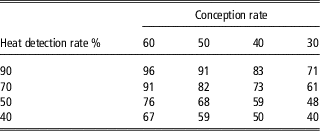
Once oestrous cycles have commenced it is the combined effect of heat detection efficiency (submission rate) and conception rate that determines and compactness of calving and ultimately the pregnancy rates after a short defined breeding period (see Table 5) (Diskin and Sreenan, Reference Diskin and Sreenan2000). Where an active, fertile bull(s) is used it is expected that all cows and heifers in heat should be mated and, therefore, under such circumstances, compactness of calving and pregnancy rate will be solely the function of bull fertility. While it is acknowledged that the vast majority of beef cows throughout the world are bred by natural mating, nevertheless, AI is used in many small herds and in herds where planned mating is the objective. For such herds, accurate detection of oestrus combined with the detection of a high proportion of cows that express oestrus is of paramount importance.
The effect of different heat detection and conception rates on % of herd pregnant at 90 days after the onset of the breeding season (Diskin and Sreenan, Reference Diskin and Sreenan2000)

Oestrous behaviour
Currently, detection of standing oestrus is the best indicator of ovulation in cattle and is the best predictor of when to inseminate an animal. In cattle the duration of the oestrous cycle normally varies from 18 to 24 days with some evidence of the cycle being, on average, 1 day shorter in heifers (Sartori et al., Reference Sartori, Haughian, Shaver, Rosa and Wiltbank2004). For heifers it would appear that the duration of standing oestrus varies from 12 to 14 h (Diskin, Reference Diskin2008). For beef cows, managed under confined conditions, indoors, the average duration of standing oestrus has been reported to be <8.5 h but with significant variation around this mean (O’Connor and Senger, Reference O’Connor and Senger1997) which would appear to be largely dependent on the size of the sexually active group and underfoot surface conditions (Diskin, Reference Diskin2008). In the absence of a bull or other aids to assist with detection, detection of oestrous requires the cow or heifer to express behavioural oestrus and second for the herdsperson to detect it. There is no evidence for beef cows or heifers (Diskin, Reference Diskin2008) that either the onset of standing oestrus or end of oestrus follows any distinct diurnal pattern. Both the duration of standing oestrus and intensity of oestrous expression are affected by a range of environmental factors including under foot surface type, size of the sexually active group and the presence of a bull (Diskin, Reference Diskin2008) and the more important factors (see review by Diskin and Sreenan, Reference Diskin and Sreenan2000) are briefly discussed.
Housing arrangement
For satisfactory expression of heat, cows must have adequate space to allow cow-to-cow interaction. If the stocking density indoors is too high the expression of the signs of oestrus are reduced, consequently making detection more difficult. Also, under high stocking density, it is likely that there will be an increase in the erroneous identification of cows that are not in oestrous as being in oestrous (Diskin, Reference Diskin2008).
Floor surface
Cows dislike being mounted while standing on concrete and have a preference for softer underfoot surfaces such as grass, dirt, woodchip or straw bedded yards. Mounting activity is reduced by almost 50% when cows are on concrete as opposed to softer underfoot conditions while the duration of oestrous activity is reduced by about 25% (Diskin, Reference Diskin2008). Cows distinctly dislike being mounted by herd mates if the floor surface is either slippery or very coarse.
Status of herd mates
The number of beef cows or heifers in heat simultaneously has a major impact on overall heat activity and on the average number of mounts received per cow (Diskin, Reference Diskin2008). The number of mounts received per cow increases with the number of cows that are in heat simultaneously (up to about three to four cows being in heat). In smaller and even in larger herds, as more cows become pregnant, the likelihood of more than one cow being on heat on any given day is less, thus, making heat detection more difficult as the breeding season progresses.
In order to be detected in standing heat and in the absence of a bull, a cow must engage the attention of a herd mate willing to mount her. Generally cows that are themselves either in heat, coming into heat or were recently in heat are most likely to mount a cow that is in heat. Cows that are at the mid-stages of their cycles (day 5 to about day 16) are least likely to mount a cow that is in heat and consequently could be termed ‘poor heat detectors’. Similarly, cows that are pregnant show less interest in mounting other cows that are in heat. Consequently, as more cows in a herd become pregnant it becomes increasingly difficult to identify the remaining open cyclic and repeating cows. It is suggested that about 10% of the reasons for failure to detect heats are attributable to ‘cow’ problems and 90% to ‘management’ problems. The latter includes too few observations per day for checking for heat activity; too little time spent observing the cows or observing the cows at the wrong times such as at feeding time. A major reason for failure to detect heat is that those involved in heat detection do not adequately understand the signs of heat. To optimise heat detection both the primary and secondary signs, must be clearly understood.
B. indicus cattle
There is significant circumstantial data to suggest that oestrous behaviour in B. indicus cattle is either of reduced intensity, shorter duration, occurs more frequently during the night and that these animals have a high proportion of ovulations that are not preceded by overt signs of oestrus (silent heats), compared with B. taurus breeds. This is supported by one study (Sartori and Barros, Reference Sartori and Barros2011) that directly compared oestrous behaviour of Nellore cows to Angus cows. Using a radiotelemetric oestrous detection system (Heat-Watch), this study verified that average oestrus duration in Nellore was shorter than in Angus cows (12.9±2.9 v. 16.3±4.8 h). Interestingly, the interval from the onset of oestrus to ovulation did not differ between Nellore (27.1±3.3 h) and Angus (26.1±6.3 h) cows. The above characteristic of oestrus in B. indicus cattle makes it difficult to detect animals in oestrus and, consequently, impairs the use of AI in such breeds. However, this problem can be significantly reduced by the use of oestrous synchronisation and fixed-time AI (FTAI) without the need of oestrous detection. Several hormonal treatments have been developed to allow FTAI in B. indicus cattle ( Bó et al., Reference Bó, Cutaia, Peres, Pincinato, Maraña and Baruselli2007).
Maximising heat detection rates
To maximise heat detection rates it is important to visually observe the cows/heifers on a frequent basis with particular emphasis on early morning and late evening observations combined with a further observation during the middle of the day. It is also important that the duration of the observation period is sufficiently long. It is well accepted that the longer the period spent with the herd during each observation period the more cows that are detected in oestrus. The widely accepted laborious, repetitive nature of heat detection, having to be carried out a minimum of three times per day for as long a AI is used, has focused research efforts on developing technologies to improve detection rates and/or reduce the labour and commitment involved in observation.
The success of any AI programme demands detecting the animals that are ready to be bred and inseminating these at the correct time. Two types of problems with detection of oestrus can occur: (a) problems with efficiency or (b) problems with accuracy. Problems with efficiency are generally due to not spending sufficient time observing the cows/heifers or not paying close attention to signs of oestrus. Problems with accuracy occur because the herdsperson doing the observing is not looking for the correct sign (standing to be mounted) that a cow is in oestrous. Accurate detection of oestrus can be a difficult and time-consuming activity considering the relatively short but often variable duration of standing oestrus and the frequently low number of mounts received per cow per hour (Diskin, Reference Diskin2008). Therefore, the reliance on an observed standing to be mounted as the sole criterion for selecting animals for insemination is likely to result in disappointing efficiency of oestrous detection and submission rates.
Aids to heat detection
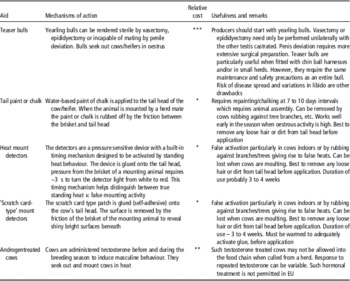
Detection of standing oestrus is one of the most time-consuming chores related to the use of AI and must be carried out at a minimum of three times daily, each day that it is planned to use AI. Consequently, it is strongly advised that one or more of the aids to oestrous be adopted for as long as AI is being used. Some of the more common aids with direct application to beef cows are summarised in Table 6. Perry (Reference Perry2005), in a study with beef cows and heifers, recorded no difference in the accuracy of three oestrous detection methods (eight times daily observation, oestrous alert scratch card-type patches and teaser bull with a deviated penis) and all were >90%.
Different oestrus detection aids for use in beef cows/heifers; mechanisms of action, relative cost and usefulness

*lowest cost; **intermediate cost; ***highest cost option.
Timing of ovulation and time of insemination
For beef cows the average interval from the onset of oestrus to ovulation would appear to be very consistent at about 31 h (30.8 h; Yelich et al., Reference Yelich, Barnett, Fullenwider, Kempfer, W Lemaster and Chase1999, 31.1 h; White et al., Reference White, Wettemann, Looper, Prado and Morgan2002) and somewhat shorter for beef heifers (27.4 h; Lynch et al., Reference Lynch, Kenny, Childs and Diskin2010). In all of these studies there was significant variation around these means. In the study of White et al. (Reference White, Wettemann, Looper, Prado and Morgan2002) time of ovulation after the onset of oestrus ranged from 21.5 to 42.8 h with 64% of cows ovulating between 28 and 33 h after the onset of oestrus. In the study of Lynch et al. (Reference Lynch, Kenny, Childs and Diskin2010) the range in time of ovulation relative to oestrous onset was 16.4 and 46.4 h. While these differences might suggest that the optimal time of insemination may be earlier for beef cows compared with either dairy cows or beef heifers. However, in practice rarely is the exact time of oestrous onset determined and combined with the variation in timing of ovulation among animals it is not practical to recommend an exact timing for insemination. Consequently, the well-established and recommended ‘am-pm’ rule still stands.
Bull fertility
Across the world the vast majority of beef cows are managed under extensive rangeland conditions and bred by natural service. In such situations, and particularly when a single sire mating is used in a herd of cows the fertility of the bull is of major importance. In a recent analysis, using fertility estimates for entire herds/flocks and individual males across beef and dairy cattle, sheep and pigs herds, Flowers (Reference Flowers2013) concluded that for beef herds, bulls contribute significantly more to fertility failures because their minimum values extend significantly below those for the herd. In contrast with dairy cattle the opposite seems to be true with the maximum values for dairy bulls exceeding that of the entire dairy herd. This is a reflection of the greater use of AI in dairy herds and the attendant better screening of such bulls for fertility and the avoidance of using low fertility bulls in AI. This supports the contention that dairy cows currently play a greater role in reproductive failure compared with dairy bulls with the opposite being true for beef herds and beef bulls.
There is little doubt that there are significant differences in fertility among individual bulls (see recent reviews (Flowers, Reference Flowers2013; Kastelic Reference Kastelic2013). While the reported incidence of sterility is generally low (<4%), subfertility, at a consistent level of 20% to 25%, is much more common in breeding bulls (Carroll et al., Reference Carroll, Ball and Scott1963; Kennedy et al., Reference Kennedy, Spitzer, Hopkins, Higdon and Bridges2002). Subfertility may be caused by low libido, sperm quality/quantity defects or physical factors affecting bull mobility or mating ability. While a subfertile bull is capable of getting some cows pregnant it will result in low pregnancy rates, an extended calving interval, reduced calf weaning weights and higher involuntary culling for barrenness, unless the bull is operating within a herd with a very low cow:bull ratio. Frequently, subfertile bulls go undetected and the suspicion of subfertility does not become apparent until much of the breeding season has elapsed or until such time that cows are checked for pregnancy. Furthermore, there is no guarantee that a bull will retain his fertility from season to season or even within a season. It is well established that for the production of fertile spermatozoa that the temperature of the testes must be 2oC to 6oC lower than core body temperature. Increased testicular temperature, irrespective of the cause, reduces semen quality and is a common cause of infertility in bulls (Kastelic, Reference Kastelic2013). The duration of the decrease in semen quality, following a thermal insult, would appear to be related to the severity and duration of the thermal insult, with sperm morphology returning to normal within 6 weeks of the end of the thermal insult though resumption of normal fertility may take somewhat longer.
Because of the serious implications of an infertile or subfertile bull on herd productivity, a Bull Breeding Soundness Evaluation, or pre-breeding examination has been put forward by a number of groups to identify such bulls before the onset of the breeding season. Chenoweth et al. (Reference Chenoweth, Spitzer and Hopkins1992) reviewed and up-dated an existing system which aimed to be a quick, repeatable and cost effective screening procedure for bulls before sale or introduction to a herd. The British Cattle Veterinary Association (BCVA) recently introduced a certification protocol for evaluating bulls for breeding purposes (Penny, Reference Penny2010). The BCVA protocol (Penny, Reference Penny2010) involves four main steps:
(i) Physical examination, (ii) semen examination, (iii) assessment of mating ability (not generally performed) and (iv) classification or overall prognosis. For each of the above examinations, bulls failing to reach a certain threshold will result in the bull being classified as ‘unsatisfactory’. Bulls passing the physical and semen examination and/or assessment of mating ability examinations are classified as ‘suitable for breeding’ While this, or indeed any of the systems used, do not classify a bull as ‘fertile’ or ‘infertile’ their objective is to reduce the risk of poor fertility performance in stock bulls. Those classified as ‘satisfactory’ will have reached minimum criteria for semen motility, semen morphology, scrotal circumference and no evidence of physical abnormalities have been found. Bulls with serious semen or physical defects, or which fail to meet minimum criteria for scrotal circumference are classified as ‘unsatisfactory’ for potential stock bulls.
Observation during the breeding season
During the breeding season it is important to check a bull for locomotion, any evidence of injury or arthritic problems, and that he is physically capable of mating cows. The best check of a bull’s fertility is his ability to get cows pregnant. Therefore, it is advisable to record the identity of the first cows bred and to obtain confirmation of a bull’s fertility by ultrasonically scanning these cows for pregnancy 28 to 35 days after breeding. It is impossible to be precise regarding the exact number of cows to assign to a bull. For yearling bulls the general recommendation is 20 to 30 cows with up to 50 cows assigned to mature bulls of known high fertility.
Insemination technique and semen handling
Where AI is used, inseminator efficiency is influenced by semen handling and the ability of the technician to deposit semen in the correct location. When removing a straw from a liquid nitrogen tank it is imperative that the technician keep the canister, cane and unused semen straws as low as possible in the neck of the tank. Injury to spermatozoa occurs at temperatures as low as −79°C and injury to sperm cannot be corrected by returning semen to the liquid nitrogen (see Perry et al., Reference Perry, Larimore, Bridges and Cushman2012). Many studies have compared site of deposition on pregnancy success with some studies recording improved conception rates following deep intrauterine placement of the semen compared with deposition in the common body (see Perry et al.,Reference Perry, Larimore, Bridges and Cushman2012). Recently, studies from this laboratory (Diskin et al., Reference Diskin, Pursley, Kenny, Mee and Sreenan2004) reported an inseminator and site of semen deposition interaction, with evidence of either an increase, decrease, or no effect of uterine horn deposition on conception rate for individual inseminators. Inseminators with low conception rates following common body insemination recoded improved conception rates when half of the inseminate was deposited deep into each uterine horn. A possible explanation for the positive effect of uterine horn inseminations may be related to the elimination of cervical semen deposition by having a targeted site of deposition deep into each uterine horn. It appears that cervical insemination errors occur in about 20% of attempted uterine body depositions (Peters et al., Reference Peters, Senger, Rosenberger and O’Connor1984) with a reported 10 percentage point decrease in fertility when compared with uterine body deposition (Macpherson,Reference Macpherson1968). From the foregoing it is imperative that inseminators are sufficiently skilled to guide the AI gun through the cervix preferably deposit the semen bilaterally into each uterine horn or at least ensure that the inseminate is completely deposited in the uterine body.
Semen fertility
It is well established that there are differences among bulls in the ability to achieve a pregnancy. Semen and AI companies monitor non-return rates. Because of the relatively low cost of beef semen there is little pressure to offer below average fertility semen for widespread use. Producers should insist on obtaining information on the relative fertility of the semen before purchase and that only documented high fertility semen is purchased particularly if intended for use in oestrous synchronised cows/heifers. To further safeguard against possible individual bulls being subfertile, it is recommended to use a minimum panel of four bulls within an AI programme.
Conclusions
Compact calving before turn out to pasture in spring is an essential component of pasture-based suckled beef production systems to ensure maximum herbage utilisation and, hence, profitability. Achieving a highly concentrated period of calving in the spring requires early onset of puberty in replacement heifers, together with both high submission and high pregnancy rates in both heifers and cows, within a short period following the planned start of mating. In beef cows high submission rate in the first 6 weeks of the breeding period is highly dependent on cows having resumed oestrous cycles by 50 days post-calving. Indeed, compared with dairy cows, there is typically considerable variability in the duration of the postpartum anoestrous period in suckled beef cows with mean duration often extending to beyond 80 days even in cows of moderate to good BCS. While ovarian follicular development resumes early postpartum, the prolonged PPI of suckled beef cows is due to the failure of successive dominant follicles to ovulate. This is a consequence of inadequate frequency of LH pulses. While management practices such as restricted suckling and/or exposure to an intact male can cause an increase in the frequency of LH pulses and hasten the resumption of ovarian cyclicity in some cows, these approaches are often viewed as impractical and or labour intensive at farm level. Maximising the proportion of cows that establish pregnancy within the first 42 days of the breeding season decreases the incidence of extended calving patterns. Later-calving cows with an extended postpartum anoestrous interval can disrupt the seasonal calving pattern and result in extended duration of calving. Furthermore, in beef cows nursing their calves, the expression of overt signs of oestrus are reduced, thus further increasing the difficulty of oestrous detection which is a prerequisite for using AI. Subfertility of bulls, although often a transient condition, can have devastating effects on achieving high herd fertility and requires on-going vigilance. While, increased efforts are being made internationally to genetically identify and select for more reproductively efficient beef cows, this is a more long-term strategy and will not replace the need for a high level of technical efficiency and management practice at farm level.