Pubertal changes and aversive social encounters related to appearance are thought to be associated with an escalation in appearance anxiety symptoms across adolescence, and these anxiety symptoms, in turn, have been implicated in the development of numerous mental health disorders (Phillips, Menard, Quinn, Didie, & Stout, Reference Phillips, Menard, Quinn, Didie and Stout2013; Veale et al., Reference Veale, Eshkevari, Kanakam, Ellison, Costa and Werner2014). However, little research has addressed the developmental course of appearance anxiety. Appearance anxiety includes markers of general dissatisfaction with appearance or significant dissatisfaction with one or more body parts, but is more than, or perhaps even qualitatively different than, conceptualizations of body dissatisfaction. In particular, appearance anxiety includes an assessment of symptoms that can interfere with day-to-day functioning and tasks, such as obsessional thoughts about appearance, excessive checking of appearance, and concerns about camouflaging appearance. Understanding the course of appearance anxiety symptoms and how they may escalate over time is particularly important because these symptoms are one primary precursor of body dysmorphic disorder (BDD; Veale et al., Reference Veale, Eshkevari, Kanakam, Ellison, Costa and Werner2014). BDD is a perplexing and debilitating psychological condition that is marked by preoccupation with perceived appearance flaws. BDD is also associated with withdrawal from social interactions and relationships, school dropout or work problems, and heightened suicidality (Albertini & Phillips, 2003; Phillips, Menard, & Fay, Reference Phillips, Menard and Fay2006; Veale et al., Reference Veale, Boocock, Gournay, Dryden, Shah, Willson and Walburn1996).
Studies that have asked adults to retrospectively report their history of symptoms suggest that BDD often onsets in adolescence, with the mean age of onset at about 16 years of age (Phillips, Menard, Fay, & Pagano, Reference Phillips, Menard, Fay and Pagano2005). One suggestion is that BDD may be an outcome of earlier symptoms of appearance anxiety (Veale et al., Reference Veale, Eshkevari, Kanakam, Ellison, Costa and Werner2014) or related body image disturbances (Frisen, Lunde, & Berg, Reference Frisén, Lunde and Berg2015), which are influenced by pubertal changes, the heightened focus on appearance, and appearance-related threats that intensify during adolescence. In particular, the experience of aversive social encounters, like teasing about appearance, are thought to be associated with an escalation in appearance anxiety symptoms over time, leading to a chronic course of appearance concerns and possibly BDD (Phillips et al., Reference Phillips, Menard, Quinn, Didie and Stout2013; Veale et al., Reference Veale, Boocock, Gournay, Dryden, Shah, Willson and Walburn1996, Reference Veale, Eshkevari, Kanakam, Ellison, Costa and Werner2014). This hypothesized pattern of symptom escalation, along with evidence that physical appearance is critical to adolescents’ general self-worth (Harter, Reference Harter2012), demarcates adolescence as a time of risk for heightened appearance anxiety and the possibility of more significant mental health problems. Furthermore, the early years of adolescence provide a window to identify risk for emotional disturbances associated with appearance concerns, and potentially intervene, thereby altering the chronic course of symptoms and increasing adolescents’ well-being and chance for success in social and academic domains.
Despite the clear relevance and significance of appearance anxiety during adolescence, it is surprising that there is currently no research mapping the course of these symptoms. In particular, developmental research is needed in order to understand how appearance anxiety may progress over the early and middle adolescent years, and moreover, to investigate and isolate factors that may escalate problematic trajectories. These were the aims of the present study. Our first aim was to examine trajectories of appearance anxiety across the ages of 10 to 15 years for girls and boys. Our second aim was to test a group of individual and social factors that were expected to play significant roles in the onset and growth of appearance anxiety symptoms over time. We based our selection of individual and social factors in a model that argues for the importance of pubertal timing and physical appearance in appearance-related concerns (Rosenblum & Lewis, Reference Rosenblum and Lewis1999; Stice, Reference Stice and Hayward2003), as well as factors associated with the cognitive behavioral theory of BDD (Veale, Reference Veale2004). In particular, our investigation focused on appearance features (physical maturity and peer-rated physical attractiveness), body size (i.e., body mass index [BMI]), and peer and parent teasing about appearance as risk factors that may launch a steeper escalation of appearance anxiety symptoms over time.
Appearance Anxiety
Appearance anxiety includes elements of body dissatisfaction, but is also inclusive of thoughts and behaviors that are related to body concerns that may interfere with daily living. These symptoms include obsessional thoughts about appearance, excessive checking of appearance, and appearance camouflage. Although little research on appearance anxiety in adolescents has been conducted, studies of patterns of body dissatisfaction and body esteem are suggestive of how appearance anxiety might progress. In longitudinal research, studies have shown that girls’ body dissatisfaction tends to increase (and positive body esteem tends to deteriorate) up until middle adolescence (Clark & Tiggemann, Reference Clark and Tiggemann2008; Frisen et al., Reference Frisén, Lunde and Berg2015) or at least through early adolescence (Carlson Jones, Reference Carlson Jones2004). In boys, the pattern is less clear, with some longitudinal research describing a decline in boys’ body esteem during early and middle adolescence (Eisenberg, Neumark-Sztainer, Haines, & Wall, Reference Eisenberg, Neumark-Sztainer, Haines and Wall2006) and even up to the 20s (Frisen et al., Reference Frisén, Lunde and Berg2015), whereas other studies report improvements in boy's body esteem during (and even beyond) adolescence (Carlson Jones, Reference Carlson Jones2004; Holsen, Carlson Jones, & Skogbrott Birkeland, Reference Holsen, Carlson Jones and Skogbrott Birkeland2012; Rosenblum & Lewis, Reference Rosenblum and Lewis1999). Given that appearance anxiety reflects obsessional thoughts about and a preoccupation with appearance, as well as dysfunctional, repetitive behaviors associated with appearance distress, appearance anxiety symptoms could be a more severe form of body dissatisfaction. Another possibility, however, is that appearance anxiety might be altogether different in its presentation, and as such, may be less elevated among young adolescents relative to more general body satisfaction. However, in a way similar to body dissatisfaction, appearance anxiety is likely to increase with age among girls. For boys, it was more difficult to predict how appearance anxiety may change over time. However, based on findings for body esteem (Abbott, Barber, & Dziurawiec, Reference Abbott, Barber and Dziurawiec2012; Frisen et al., Reference Frisén, Lunde and Berg2015; Lunde, Frisen, & Hwang, Reference Lunde, Frisen and Hwang2007) and on one past study of BDD symptoms in adolescents (Mastro, Zimmer-Gembeck, Webb, Farrell, & Waters, Reference Mastro, Zimmer-Gembeck, Webb, Farrell and Waters2016), we anticipated a lower level of appearance anxiety in boys than in girls, but also expected that boys’ appearance anxiety would significantly increase with age.
Predictors of Growth in Appearance Anxiety
Models of the role of maturation and physical appearance in body-related dissatisfaction (Rosenblum & Lewis, Reference Rosenblum and Lewis1999; Stice, Reference Stice and Hayward2003), combined with cognitive behavioral models of BDD (Fang & Wilhelm, Reference Fang and Wilhelm2015; Veale, Reference Veale2004), suggest individual characteristics and social influences are likely to explain the positive trajectory of appearance anxiety symptoms we expected to find. In particular, physical maturation, physical appearance that is viewed less positively by peers, higher BMI, and more appearance-related teasing by peers and parents would each prompt a steeper escalation of appearance anxiety symptoms over time. Relevant as well may be negative self-beliefs, internalized through negative self-perceptions of physical appearance. Prominent cognitive conceptualizations of BDD argue that it is this internalization of a critical view of the self that is suspected to be a proximal risk factor for appearance anxiety (Veale, Reference Veale2004). Thus, we examined trajectories of appearance anxiety, as well as trajectories of self-perceived appearance esteem, and examined whether physical appearance and teasing about appearance by peers and parents were similarly associated with a steeper increase in appearance anxiety, as well as a steeper decline in appearance esteem over time during adolescence.
Physical maturation
It is possible that the timing of maturation compared to peers will account for some of the individual difference in trajectories of appearance anxiety symptoms over time. It is well known that during the pubertal transition, girls tend to move away from the thin ideal of the female body shape, whereas boys with earlier maturation become more similar to the muscular ideal, which has been thought to bolster their esteem to some extent compared to boys with later maturation (McCabe & Ricciardelli, Reference McCabe and Ricciardelli2004; Voelker, Reel, & Greenleaf, Reference Voelker, Reel and Greenleaf2015). Thus, supporting a “deviance hypothesis,” early maturing girls and late maturing boys, compared to their peers, have been found to be at greater risk for body-esteem problems (McCabe & Ricciardelli, Reference McCabe and Ricciardelli2004; Siegel, Yancey, Aneshensel, & Schuler, Reference Siegel, Yancey, Aneshensel and Schuler1999). Similarly, early maturing girls, or late maturing boys, relative to their typically developing peers, may be at greater risk for appearance anxiety and a steeper increase in appearance anxiety symptoms.
Although there are good reasons to expect that we would find support for the deviance hypothesis, it is equally as likely that it would be earlier maturation among both girls and boys that would be associated with the steepest escalation of appearance anxiety symptoms from early to middle adolescence. According to the stage termination hypothesis, earlier maturation poses a risk for adolescent maladjustment more broadly as it disrupts the acquisition of adaptive skills and the gradual acceptance of development (Petersen & Taylor, Reference Petersen, Taylor and Adelson1980). In particular, given that appearance anxiety is conceptualized as a nascent form of significant maladjustment because it includes a preoccupation with appearance, excessive checking of appearance, and behaviors that can interfere with day-to-day living (e.g., to camouflage appearance), it is possible that earlier maturation will result in little time for positive adaptation to change and little time to develop skills to manage one's changing appearance and how others react to it. Together, this need to adapt earlier than one's peers, often earlier than expected by parents, and with little time to develop the skills and to adjust one's own views may result in increasing thoughts and behaviors consistent with appearance anxiety symptoms.
Peer-rated physical appearance, and body size
Physical attractiveness and body size may also be related to appearance concerns, but the research findings to date have been inconsistent. For example, individuals suffering from BDD have not been found to differ from healthy peers or individuals with obsessive–compulsive disorder on observer-rated attractiveness (Buhlmann, Etcoff, & Wilhelm, Reference Buhlmann, Etcoff and Wilhelm2008). Moreover, in another study, the majority of BDD sufferers (77%) were rated by observers as having a normal appearance (i.e., score of 1 where 1 = no abnormality and 6 = major disfigurement), while the remaining participants were considered to have a minor defect that was within normal limits (i.e., score of 2; Veale et al., Reference Veale, Boocock, Gournay, Dryden, Shah, Willson and Walburn1996). At less clinically elevated levels, observer-reported attractiveness in early to middle adolescence has been found to show a weak negative association (r = –.23) with body dissatisfaction, but this association became nonsignificant in late adolescence (Rosenblum & Lewis, Reference Rosenblum and Lewis1999). A recent study of early adolescents found peer-rated attractiveness was not associated with concerns about appearance-based rejection by peers (Webb, Zimmer-Gembeck, & Mastro, Reference Webb, Zimmer-Gembeck and Mastro2016). In contrast, some studies have demonstrated positive associations between body size and appearance concerns among adolescents (Paxton, Eisenberg, & Neumark-Sztainer, Reference Paxton, Eisenberg and Neumark-Sztainer2006; Webb et al., Reference Webb, Zimmer-Gembeck, Mastro, Farrell, Waters and Lavell2015), including a study that found BMI to be significantly higher among a group of adolescents with a high level of BDD symptoms, compared to their healthier peers (Mastro et al., Reference Mastro, Zimmer-Gembeck, Webb, Farrell and Waters2016). Given the possibility that anxiety about appearance could emerge from physical differences in body size and attractiveness, we assessed observer-measured BMI and peer-reported physical attractiveness in the present study.
Peer and parent teasing about appearance
Adverse social experiences during childhood and adolescence, particularly in the form of appearance teasing, have recently emerged as key predictors of body image concerns, appearance anxiety, and BDD symptoms during adolescence (Mastro et al., Reference Mastro, Zimmer-Gembeck, Webb, Farrell and Waters2016; Voelker et al., Reference Voelker, Reel and Greenleaf2015). Specifically, young adolescents with elevated appearance anxiety symptoms reported significantly higher levels of weight-related and other appearance teasing by parents, siblings, and peers compared to their peers with few symptoms (Mastro et al., Reference Mastro, Zimmer-Gembeck, Webb, Farrell and Waters2016). Furthermore, in a study that evaluated appearance teasing by same-sex and cross-sex peers, it was teasing by peers that was uniquely associated with elevated BDD symptoms, even after controlling for social anxiety (Webb et al., Reference Webb, Zimmer-Gembeck, Mastro, Farrell, Waters and Lavell2015). In addition, relational victimization (e.g., exclusion and ostracism by peers) that was reported by peers (rather than self-reported) was found to predict adolescents’ increasing BDD symptoms over a 12-month period, suggesting that these findings of elevated teasing and victimization are not simply due to adolescents with elevated appearance anxiety experiencing heightened perceptions of victimization (Webb et al., Reference Webb, Zimmer-Gembeck and Mastro2016).
The above findings are consistent with the suggestion that, whereas parents are thought to be influential in the development of attitudes and concerns about appearance during childhood, it is appearance-focused interactions with friends and peers, rather than parents, that may be most salient and the strongest socializing forces during adolescence (e.g., Paxton et al., Reference Paxton, Eisenberg and Neumark-Sztainer2006). Nevertheless, despite this notion, a recent study of young adolescents (aged 10–14 years) found that appearance teasing by parents predicted increasing concerns about appearance-based social rejection over a 1-year period of time (Webb et al., Reference Webb, Zimmer-Gembeck, Waters, Farrell, Nesdale and Downeyin press). In that study, appearance-focused interactions with friends were not found to prospectively predict appearance concerns. As such, during the early years of adolescence, parents’ teasing about appearance appears to be an important predictor of their adolescent offspring's appearance concerns.
Summary
To date there has been no prospective study that has examined patterns of change in appearance anxiety during the earliest years of adolescence. The aim of the present study was to examine the trajectory of appearance anxiety symptoms in a community sample of Australian adolescents followed for 2.5 years with five repeated assessments. In addition, we examined three grade cohorts allowing us to map trajectories of appearance anxiety symptoms from Grade 5 (about age 10) to Grade 9 (about age 15), and examine how these trajectories differed for girls and boys, how they may have been precipitated, or “launched” (Zimmer-Gembeck, Reference Zimmer-Gembeck1998), by physical maturation, peer-rated physical appearance, BMI, and appearance teasing by parents and peers measured at the first wave of assessment for each grade cohort. We also examined trajectories of self-perceived appearance-esteem, in order to directly compare the findings for appearance anxiety to the findings for this marker of the extent of internalization of appearance concerns.
Method
Participants
The participants were 387 boys (44%) and girls (56%) in Grades 5 (26%), 6 (32%), or 7 (42%) who participated in at least one wave of a five-wave longitudinal study that spanned just over 2 years. At study entry, students ranged in age from 10 to 13 years (M = 12.0, SD = 0.89), and predominantly reported White/Caucasian (79%) or Asian (15%) background. Students attended one of three participating schools in an urban area of Australia.
Measures
Appearance anxiety
At each of the five times of assessment, the 10-item Appearance Anxiety Inventory (AAI; Veale et al., Reference Veale, Eshkevari, Kanakam, Ellison, Costa and Werner2014) was used to assess appearance anxiety symptoms. Items were reflective of obsessional thoughts and repetitive behaviors related to appearance concerns. An example item is “I check my appearance (e.g., in mirrors, with photos).” Participants indicated on a 5-point scale the frequency with which they experienced the BDD symptoms (1 = never, 5 = always or almost always). The total score was formed by summing all items. The Cronbach α values ranged from 0.89 to 0.92 across waves.
Appearance esteem
At the first four times of assessment, participants completed five items from the Self-Perception Profile for Adolescents (Harter, Reference Harter1995) to report their appearance esteem. The Self-Perception Profile for Adolescents employs an alternate choice format, where each of the five items contains two opposite descriptions (e.g., “Some people are not happy with the way they look” BUT “Other people are happy with the way they look”; “Some people wish their body was different” BUT “Other people like their body the way it is”). First, each participant was asked to decide which of the pair of statements best reflected him or her, and second, the participant decided if it is “really true” or “sort of true” of him or her. Response options were scored from 1 (low esteem) to 4 (high esteem), and averaging items formed the total score. In the present study, Cronbach α ranged from 0.84 to 0.88.
Parent-reported physical maturation
As part of the consent process, parents (n = 304, 79%) completed the Pubertal Development Scale (Petersen, Crockett, Richards, & Boxer, Reference Petersen, Crockett, Richards and Boxer1988) to rate their children's physical maturation across five characteristics, including height, body hair, skin change, breast growth (girls only)/voice change (boys only), menstruation (girls only), and facial hair (boys only). Response options for all items (except menstruation) ranged from 1 (not yet started or none) to 4 (seems complete/fully mature). Menstruation was reported as no (1) or yes (4). Items were averaged to create total scores for girls and boys. The Cronbach α was 0.76 for boys and 0.78 for girls.
Peer-reported physical attractiveness
At Time 1, students were asked to nominate up to 10 classmates who were the most “good-looking” using a supplied list of codes for all students in the same grade. To calculate a physical attractiveness score for each participant, nominations received were summed and standardized within grade to account for unequal numbers of students per grade. Higher scores indicated more nominations from peers as good-looking.
BMI
At Time 1 trained research assistants measured participant height and weight. BMI was calculated as kilograms per square meters.
Appearance teasing
At Time 1, three items derived from the weight teasing subscale of the Perceptions of Teasing Scale (Thompson, Cattarin, Fowler, & Fisher, Reference Thompson, Cattarin, Fowler and Fisher1995) were used to assess the frequency of perceived appearance teasing by peers (two items; same-sex and other-sex) and parents (one item) and the associated distress. Items were revised to focus on appearance in general, rather than only weight (“make fun of or tease you about your weight or looks”). Regarding parents, participants reported how often parent(s) “tease you about your weight or looks.” Frequency responses ranged from 1 (never) to 5 (very often). Distress ratings ranged from 1 (not at all upset) to 5 (very upset). The product of frequency and distress ratings was computed and items for peer teasing were averaged. Cronbach α was 0.82 for peer teasing.
Procedure
Study approval from the university Human Research Ethics Committee was obtained before principals were contacted for approval to conduct the study, and students were given parental consent forms to take home and return to the school. All schools contacted agreed to participate. To encourage the return of consent forms (regardless of parental consent to participate), a party was awarded to the class within each grade, at each school, that returned the most consent forms. The majority of students (58%) returned consent forms to the school, with 9% of these parents declining to participate. The return and consent rate may have been adversely affected by the requirements that parents had to complete a questionnaire (to report demographic information, and his or her child's pubertal development and temperament) to return along with the consent form. A small gift (e.g., novelty pen or sticker) was given to participating students after each survey was completed. Students were able to decline participation on the day of the survey, but no student declined.
Overview of analyses
Overall, 33 students missed one (9%), 19 students missed two (7.5%), 11 students missed three (3%), and 11 students missed four (3%) of the waves of data collection. Missing data were replaced using multiple imputation (10 imputed data sets) or full information maximum likelihood to maintain all participants in all analyses. Pooled means, standard errors, and correlations between all variables are reported (see Tables 1 and 2). Following these preliminary analyses, unconditional growth curves were estimated for appearance anxiety symptoms over time, and we tested whether there was significant interindividual variability in growth among participants. Next, we built upon the unconditional analyses and estimated growth curve models that were conditional on participant sex and grade. Finally, we examined the individual factors and socialization variables that were expected to explain differences in growth of appearance anxiety over time. These variables included mature appearance (parent report), attractiveness (peer report), BMI (researcher assessed), parent teasing about appearance, and peer teasing about appearance. All variables were assessed at the first wave (Time 0). MPlus v7 (Muthen & Muthen, Reference Muthen and Muthen1998–2015) was used to conduct latent variable growth curve analyses. Appearance-esteem was analyzed in a similar manner.
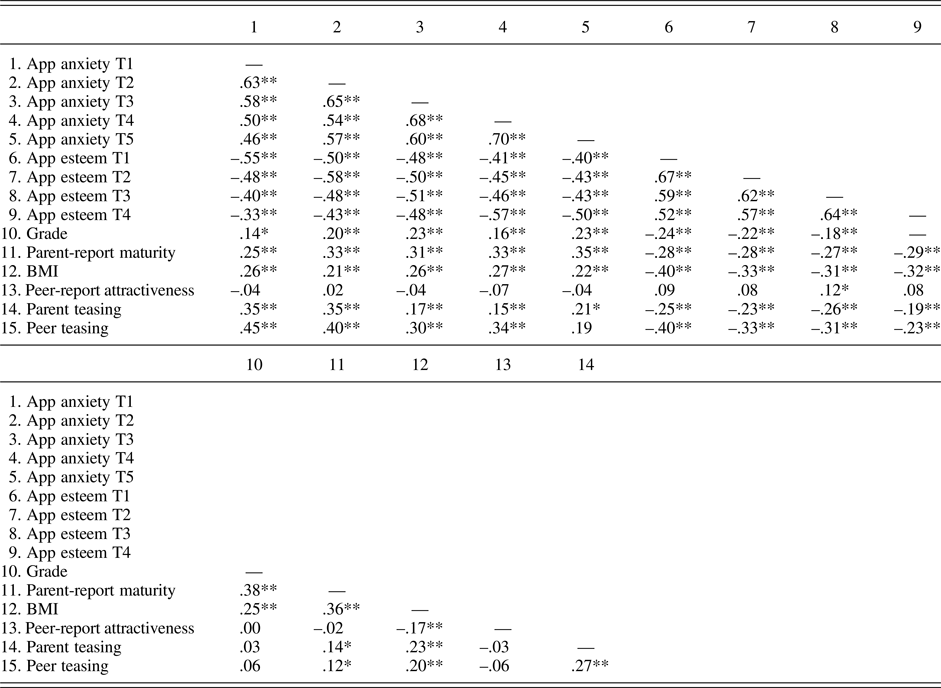
Correlations between all measures (N = 387)
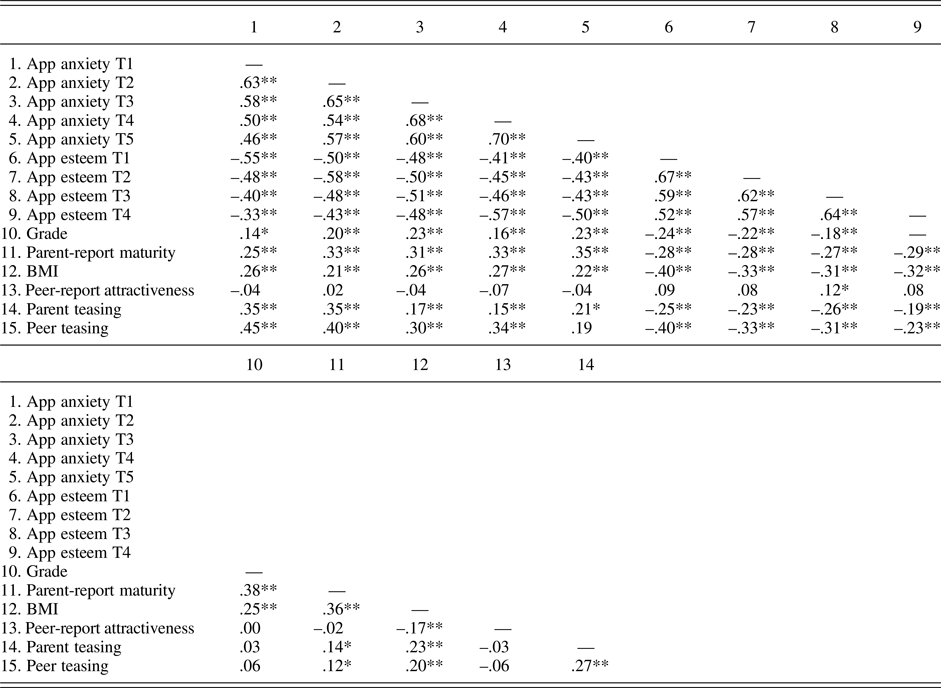
Note: App, appearance; BMI, body mass index.
*p < .05. **p < .01.
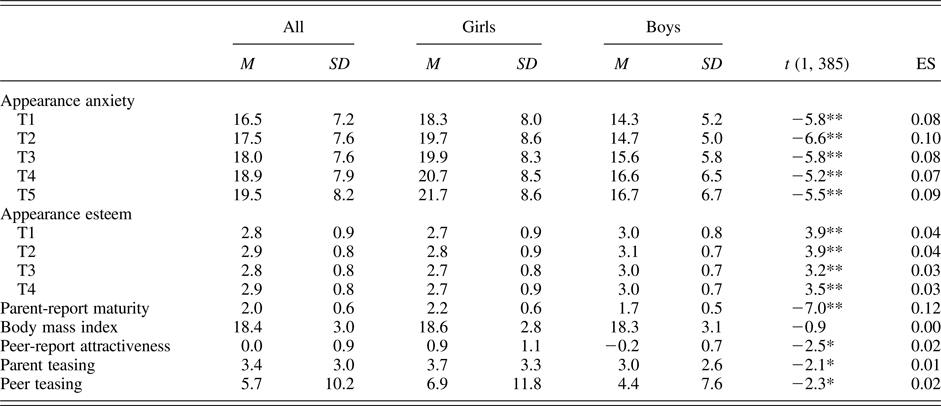
Means and standard deviations of all measures and comparisons between girls and boys
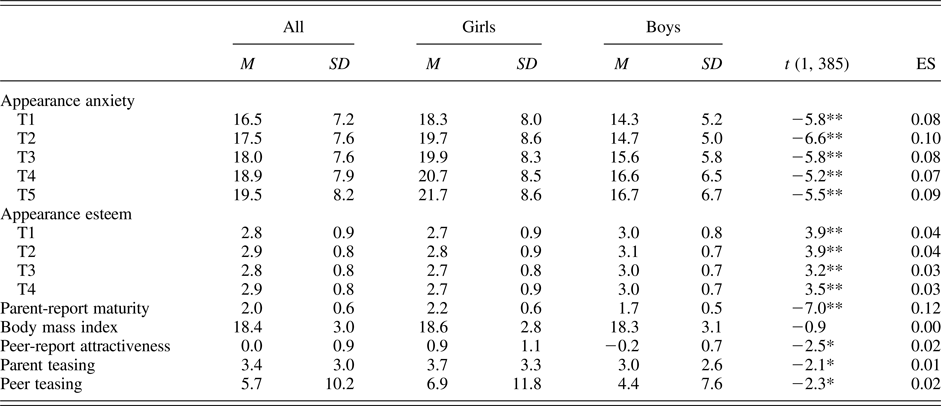
Note: N = 387: 212 girls, 175 boys. ES, effect size; T1–T4, Times 1–4.
*p < .05. **p < .01.
Model fit was assessed with commonly used indices, including the χ2 test and associated level of significance, and the comparative fit index (CFI; Bentler & Bonett, Reference Bentler and Bonett1980). The root mean square error of approximation (RMSEA; Browne & Cudeck, Reference Browne, Cudeck, Bollen and Long1993) gave an estimate of error due to approximate fit of the models. The CFI is more acceptable as the values approach 1 and values over 0.95 are considered indication of very good model fit (Hu & Bentler, Reference Hu and Bentler1999). RMSEA values below 0.05 are considered good, values between 0.05 and 0.08 indicate a fair fit, and values between 0.08 and 0.10 indicate a mediocre fit (Kaplan, Reference Kaplan2000). Critical ratios were used to determine significance of model paths (t test values above an absolute value of 1.96).
Results
Descriptive statistics and correlations between measures
Table 1 presents correlations between all continuous measures. As can be seen, appearance anxiety measures were intercorrelated across time, as were appearance-esteem measures (rs = .46–.70). In addition, appearance anxiety and appearance esteem were significantly correlated with each other (rs = –.33 to –.58). Grade, parent-reported physical maturation, BMI, and parent and peer teasing were each associated with all five repeated appearance anxiety scores and all four repeated appearance-esteem scores. Peer-reported physical attractiveness was not associated with appearance anxiety, and was only positively associated with greater appearance esteem at one time of measurement (Time 3). Of note, parent teasing about appearance and peer teasing about appearance had a small, significant positive correlation (r = .27). Thus, we examined parent and peer teasing separately in our models.
Table 2 provides means and standard deviations for all measures for all participants, as well as for girls separate from boys, and summarizes the results of t tests comparing girls to boys. Girls reported more appearance anxiety and less appearance esteem than boys at each wave of assessment, and they reported more parent and peer teasing about appearance than boys. On average, parents rated girls as more physically mature than boys, and peers rated girls as better looking than boys. There was no sex difference in BMI.
Unconditional growth models
On average, appearance anxiety linearly increased across the assessment waves (average linear slope: unstandardized = 0.70, standardized = 0.49), and there was significant interindividual variability (p < .001) in both intercepts and slopes of the growth curves of appearance anxiety. A quadratic pattern of growth was also tested, but was not significant.
In contrast, there was no significant change, on average, in appearance esteem across the first four waves of assessment (average linear slope: unstandardized = 0.00), but there was significant interindividual variability (p < .001) in both intercepts and slopes. A quadratic pattern of growth was also tested, but was not significant.
Appearance anxiety and appearance-esteem conditional on participant sex and grade
Appearance anxiety
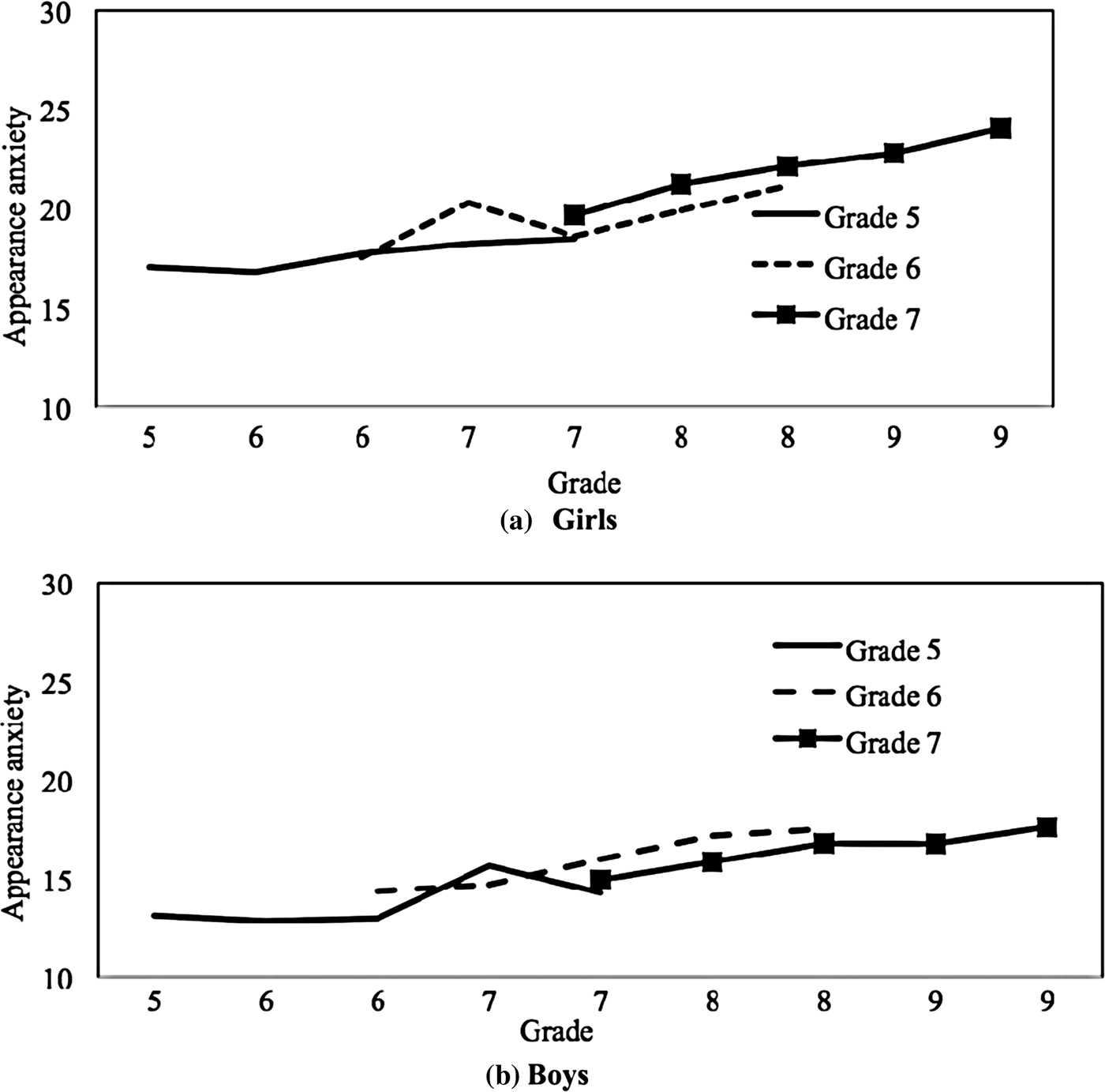
Figure 1 shows the average appearance anxiety trajectory by grade cohort, with Figure 1a showing the growth for girls and Figure 1b showing the growth for boys. Results from a latent growth curve multigroup (boy/girl) model showed that the girls’ average linear slope of appearance anxiety was positive and significant (unstandardized slope = 0.71, standardized slope = 0.41, p < .001). Boys’ average appearance anxiety linear slope was also positive and significant (unstandardized slope = 0.71, standardized slope = 0.35, p < .001). Significant variability in the intercepts and slopes remained, both p < .001. This latent growth model had an adequate fit to the data, χ2 (20) = 58.10, p < .001, CFI = 0.96, RMSEA = 0.099 (0.070–0.129), p = .004.
Average appearance anxiety symptoms across the five waves separated by grade level at the first assessment for (a) girls (n = 212) and (b) boys (n = 175). Total scores can range from 10 to 50. Grade 7 is the first year of high school.

We next added grade to this multigroup latent variable growth model, modeling it as correlated with the initial level (intercept) and linear change (slope) of appearance anxiety over time. For girls, grade was positively associated with the initial level of appearance anxiety (standardized parameter = 0.18, p < .02), and with the linear growth in appearance anxiety (0.19, p = .03). For boys, grade was positively associated with the initial level (0.29, p < .01), but not with linear growth (0.07, p = .65). Thus, girls and boys in the older grade cohorts, relative to the younger cohorts, reported higher levels of appearance anxiety at the initial assessment (Time 0). In addition, girls (but not boys) in the older grade cohorts, relative to younger cohorts, increased significantly more in appearance anxiety over the following years. Finally, although there was an interesting increase in appearance anxiety for both girls and boys at the start of high school (the first assessment in Grade 7; see Figure 1), a quadratic pattern of growth was not significant. This model had an adequate fit to the data, χ2 (26) = 70.01, p < .001, CFI = 0.95, RMSEA = 0.094 (0.067–0.120), p = .004.
Appearance esteem
The results from a latent growth curve multigroup (boy/girl) model showed that the girls’ average slope of appearance esteem was not significantly different from 0 (i.e., stable over time, unstandardized slope = –0.01). Boys’ average appearance-esteem slope was also stable and close to 0 (unstandardized slope = 0.01). Yet, significant variability in the intercept remained (p < .001), but the slopes of appearance-esteem trajectories no longer showed significant variability (p = .08). Thus, no additional possible predictors of appearance esteem were examined. This latent growth model had an excellent fit to the data, χ2 (10) = 16.97, p = .08, CFI = 0.99, RMSEA = 0.043 (0.000–0.076), p = .60.
Appearance anxiety growth conditional on appearance and teasing
Physical maturation
To first test a deviance model of maturation, we examined the associations of early and late maturational timing, relative to same-aged peers, with appearance anxiety growth patterns. To do this, we created indicators of “early” and “late” maturation. In total, 16% of boys were classified as early (in the top 25th percentile of their age group) and 18% were late (in the bottom 25th percentile of their age). Of girls, 14% were early and 9% were late. When these indicators were added to the multigroup latent variable growth model as correlates of the intercept and slope of appearance anxiety, no significant associations were found (ps = .06–.86).
To explore maturation further (and to test what has been called a “stage termination model”; Petersen & Taylor, Reference Petersen, Taylor and Adelson1980), we next considered the continuous score of pubertal maturation (i.e., higher scores indicated earlier physical maturation) as a correlate of the intercept and growth in appearance anxiety in a multigroup latent variable growth model. In this model, maturation was associated with patterns of appearance anxiety. For girls, earlier maturation was associated with a higher initial level of appearance anxiety (standardized parameter = 0.29, p < .01), but not with linear change over time (0.09, p = .56). For boys, earlier maturation was associated with a higher initial level of appearance anxiety (0.23, p < .01) and with a steeper linear increase in appearance anxiety over time (0.22, p = .03). The model had a good fit to the data, χ2 (26) = 50.3, p < .01, CFI = 0.97, RMSEA = 0.049 (0.028–0.069), p = .50.
BMI
BMI was next added as a predictor of appearance anxiety trajectories in a multigroup latent variable growth model. For girls, BMI was positively associated with their initial level of appearance anxiety (standardized parameter = 0.37, p < .001), but not with linear change over time (0.03, p = .74). For boys, BMI was not associated with the initial level (0.07, p = .50) or with linear change in appearance anxiety (–0.04, p = .65). The model had an adequate fit to the data, χ2 (26) = 109.34, p < .001, CFI = 0.92, RMSEA = 0.107 (0.085–0.130), p < .001.
Peer-reported physical attractiveness
Peer-reported physical attractiveness was not significantly associated with the intercept or the slope of appearance anxiety for either girls or boys (ps = .18–.59).
Parent teasing about appearance
When parent appearance teasing was examined, the model had an adequate fit to the data, χ2 (34) = 116.90, p < .001, CFI = 0.92, RMSEA = 0.112 (0.090–0.135), p < .001. For girls, parent teasing was positively associated with the initial level of appearance anxiety (standardized parameter = 0.46, p < .001) and was negatively associated with the appearance anxiety slope (–0.30, p < .01). For boys, parent teasing was positively associated with the initial level of appearance anxiety (0.27, p = .01), but was not associated with the slope (–0.04, p = .87). Thus, girls and boys who reported more appearance teasing by their parents at the first assessment were higher in appearance anxiety at this assessment, and those girls who reported more parent teasing did not exhibit as steep an increase in appearance anxiety over time as girls who reported less parent teasing.
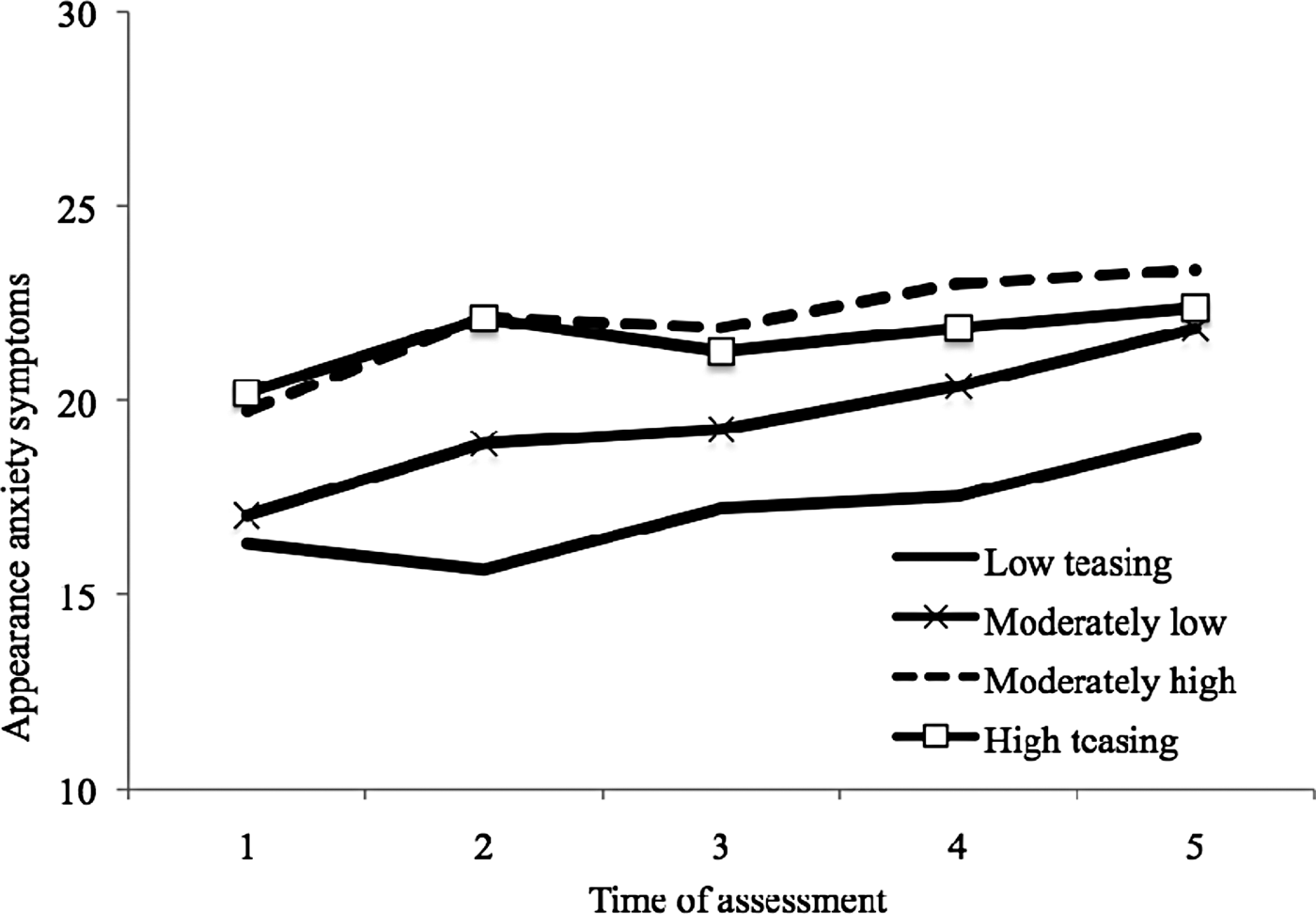
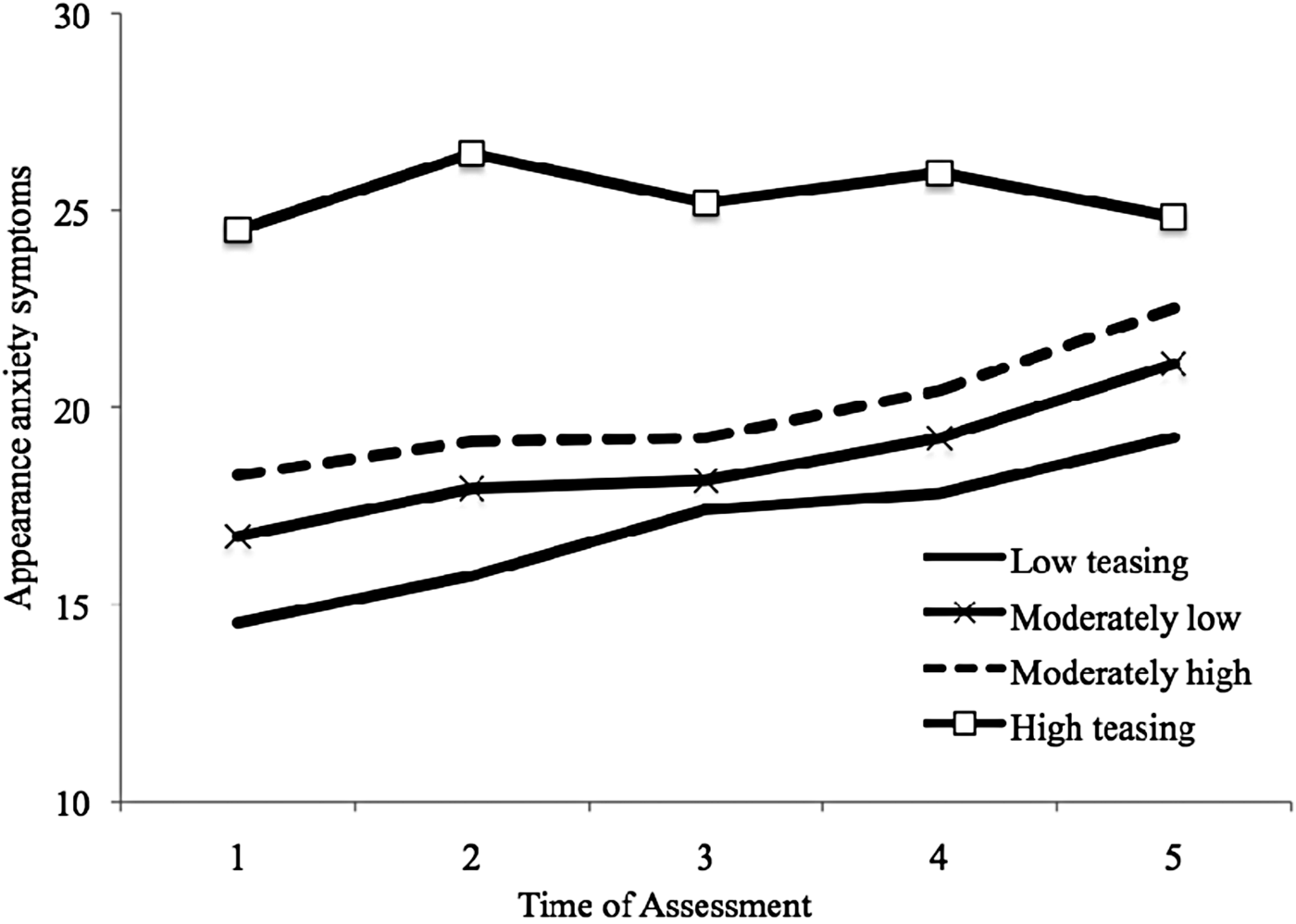
To explore this negative association of parental teasing with girls’ slope of appearance anxiety over time further, we formed four groups based on parent teasing scores: high (top quartile of scores), moderately high (third quartile), moderately low (second quartile), and low (lowest quartile). A repeated measures analysis of variance revealed a significant 5 (Time) × 4 (Parent Teasing Group) interaction effect; p = .03. The four appearance anxiety patterns found for each parent teasing group are illustrated in Figure 2. For this figure (and all remaining figures) we present findings collapsed across grade cohorts to simplify the presentation. As can be seen in Figure 2, girls who were moderately high or high in parent teasing at the initial assessment reported more appearance anxiety symptoms than girls in other groups at Time 0 (all p < .05), and all groups exhibited increases in appearance anxiety symptoms over time (p < .01). However, illustrating why parent teasing had a negative association with the slope of appearance anxiety over time, the linear increase in appearance anxiety was greater among girls who reported low or moderately low parental teasing. This was particularly the case for the low-moderate parental teasing group.
Girls’ (n = 212) average appearance anxiety symptoms across the five waves by initial level of parent teasing (low, moderately low, moderately high, or high). Total scores can range from 10 to 50.

Peer teasing about appearance
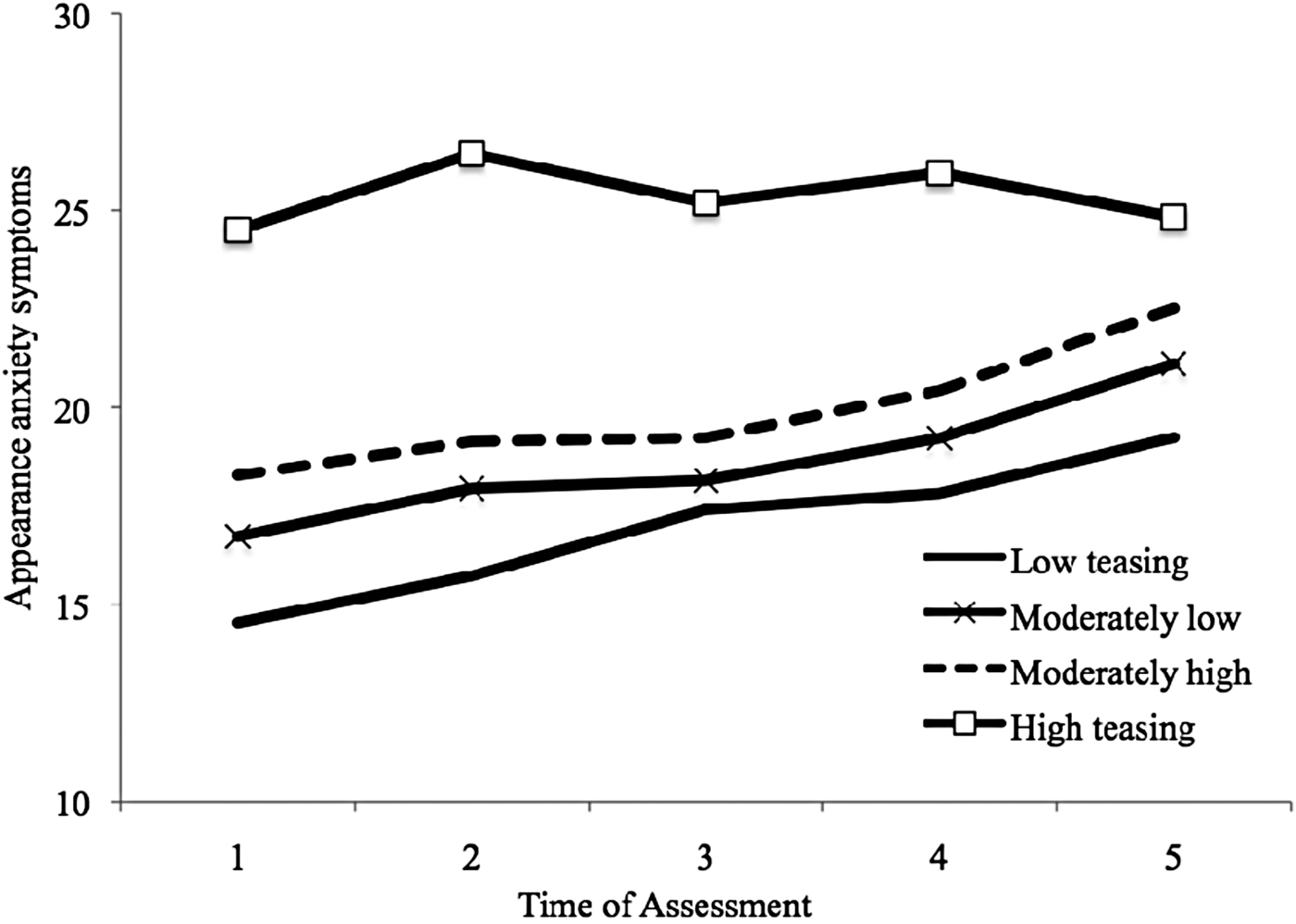
When peer appearance teasing was examined as the predictor in the multigroup latent variable growth model, the model had an adequate fit to the data, χ2 (34) = 105.58, p < .001, CFI = 0.93, RMSEA = 0.104 (0.082–0.127), p < .001, and the results had a similar pattern to those for parent teasing. For girls, peer teasing was positively associated with the initial level of appearance anxiety (standardized parameter = 0.56, p < .001), and was negatively associated with the slope (–0.36, p < .001). For boys, peer teasing was positively associated with the initial level of appearance anxiety (0.45, p < .001), but was not associated with the slope (–0.02, p = .87).
To examine the findings for girls in more detail, we formed four groups as we did for parent teasing. A repeated measures analysis of variance revealed a significant 5 (Time) × 4 (Peer Teasing Group) interaction effect (p = .02). As can be seen in Figure 3, girls who reported high peer teasing about appearance were distinct from other girls by the stability in their high appearance anxiety over time; girls high in peer teasing at the initial assessment reported a much higher level of appearance anxiety symptoms than girls in other groups at the initial assessment (all ps < .01). Moreover, all groups, with the exception of the group who was high in peer appearance teasing, increased in appearance anxiety symptoms over time (p < .01). The increase in appearance anxiety over time was greater for the low, moderately low, and moderately high teasing groups, as compared to the high teasing group, and by the final assessment, the girls in the moderately high peer teasing group were approaching the high appearance anxiety level of the girls in the high peer teasing group.
Girls’ (n = 212) average appearance anxiety symptoms across the five waves by initial level of peer teasing (low, moderately low, moderately high, or high). Total scores can range from 10 to 50.
Interactions: Physical maturation and teasing
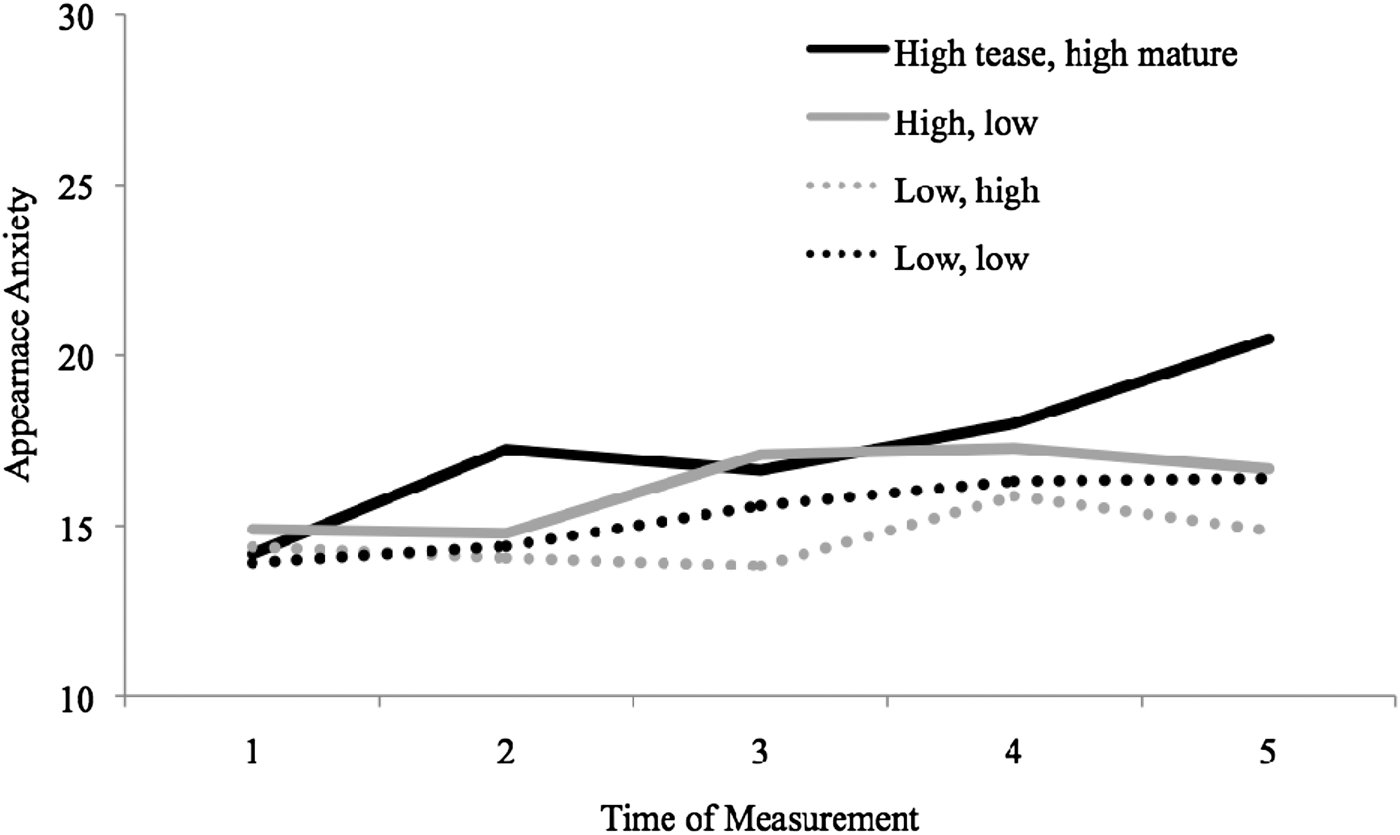
In two final models, we tested whether a combination of an earlier maturation and a higher relative level of teasing might be a particularly insidious combination for higher appearance anxiety and escalating growth of appearance anxiety over time. We tested the interaction of Maturation × Parent Teasing by examining its association with the intercept and slope of appearance anxiety in our multigroup model, while also accounting for the main effects of maturation and parent teasing. We found one significant Maturation × Parent Teasing interaction effect on boys’ slope of appearance anxiety, such that early maturing with high levels of parent teasing about appearance had an even greater increase in appearance anxiety over time than other boys (standardized parameter = 0.27, p < .05; see Figure 4). All other interactions were not significant, p ranged from .08 to .57. The model had an adequate fit to the data, χ2 (38) = 124.3, p < .01, CFI = 0.91, RMSEA = 0.077 (0.062–0.092), p < .01.
Boys’ (n = 175) average appearance anxiety symptoms across the five waves by initial level of maturation and parent teasing. Total scores can range from 10 to 50.
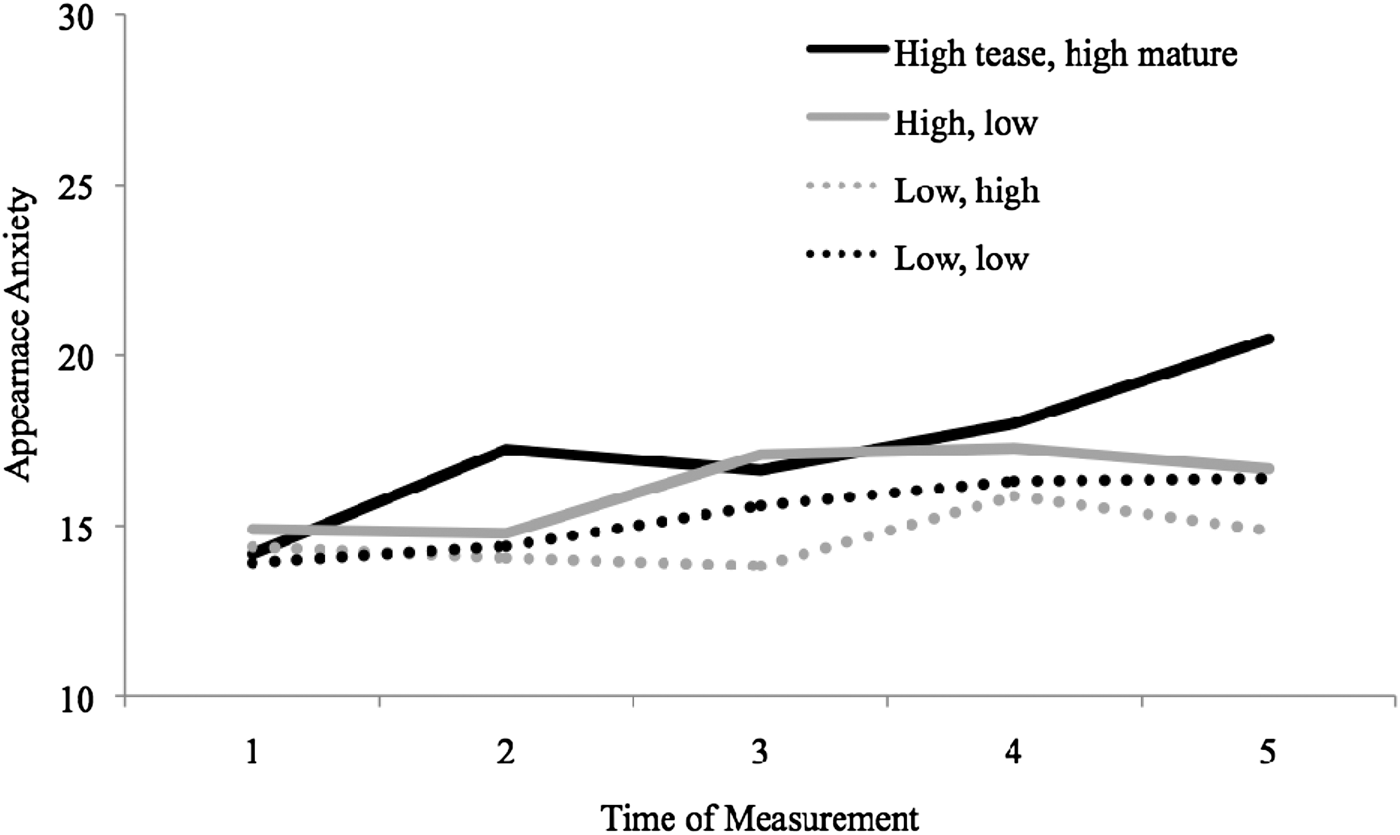
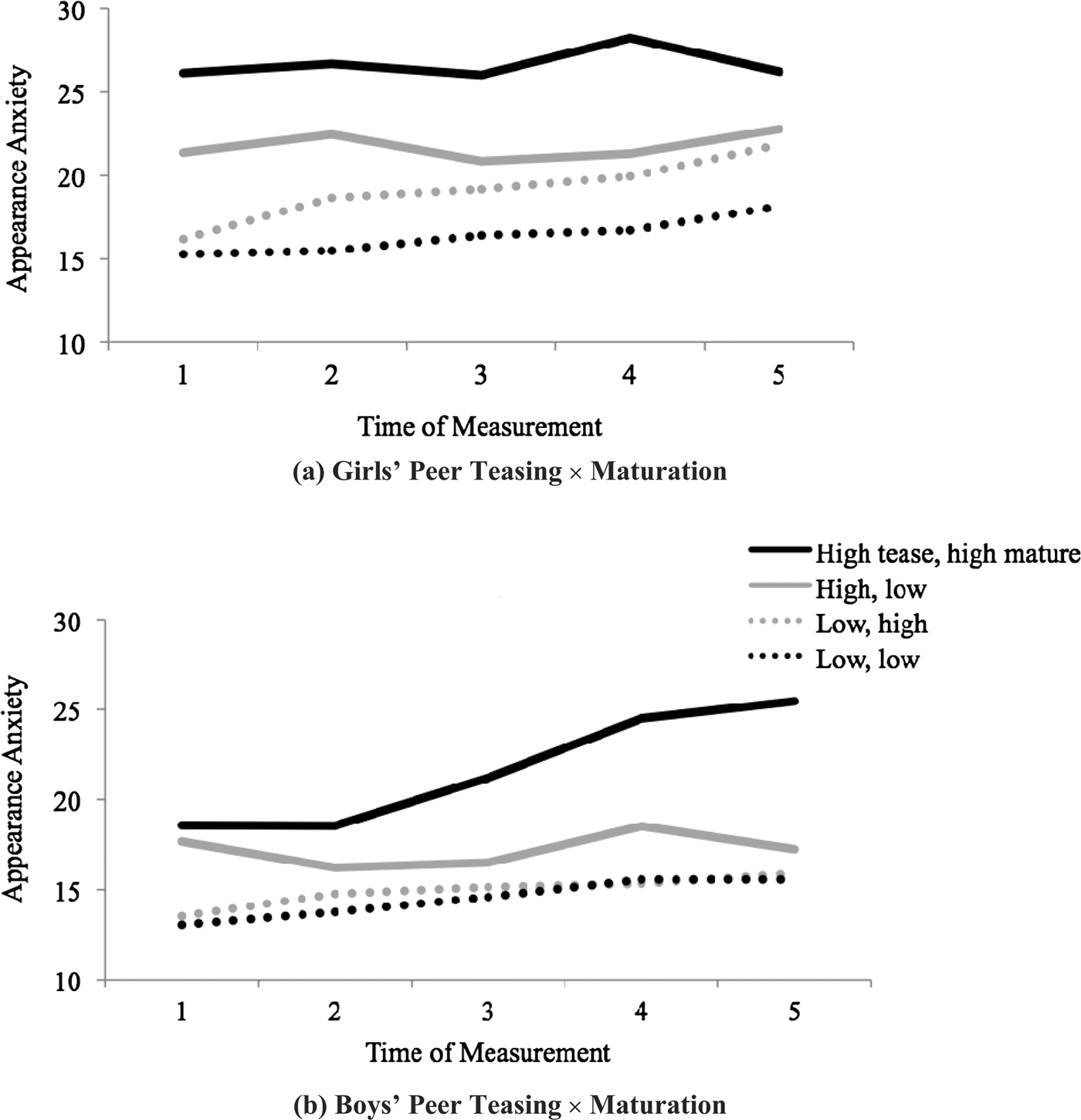
In a similar model testing the association of Early Maturation × Peer Teasing interaction, two interaction effects were significant. Similar to what was found for parent teasing, early maturing boys with high peer teasing about appearance had an even greater increase in appearance anxiety over time than other boys (standardized parameter = 0.64, p < .001; see Figure 5a). In contrast, the Maturation × Peer Teasing interaction was negatively associated with the appearance anxiety slope among girls (standardized parameter = –0.32, p = .02). As can be seen in Figure 5b, late maturing girls who were high in teasing exhibited the greatest increase in appearance anxiety over time. The interaction of Maturation × Peer Teasing was not significantly associated with the appearance anxiety intercept for either boys (p = .41) or girls (p = .29). The model had a good fit to the data, χ2 (38) = 88.6, p < .01, CFI = 0.95, RMSEA = 0.059 (0.043–0.075), p = .17.
Average appearance anxiety symptoms across the five waves by initial level of maturation and peer teasing for girls (n = 212) and boys (n = 175). Total scores can range from 10 to 50.
Discussion
In the present study, we began by describing the typical (i.e., average) trajectory of appearance anxiety across the ages of 10 to 15 years for girls and boys. Given that there was significant individual variability in these trajectories, we then moved to explaining this variability by testing the roles of individual characteristics and social problems that have been noted as relevant to understanding elevated and increasing body image and appearance concerns (Rosenblum & Lewis, Reference Rosenblum and Lewis1999; Stice, Reference Stice and Hayward2003; Webb et al., Reference Webb, Zimmer-Gembeck, Mastro, Farrell, Waters and Lavell2015), as well as those that have been associated with adolescents’ body dysmorphic symptoms (Mastro et al., Reference Mastro, Zimmer-Gembeck, Webb, Farrell and Waters2016). These factors included parent-reported pubertal maturation, peer-rated physical attractiveness, measured body size (i.e., BMI), and self-perceived peer and parent teasing about weight or other aspects of appearance.
As has been found for girls’ body image concerns (Carlson Jones, Reference Carlson Jones2004; Frisen et al., Reference Frisén, Lunde and Berg2015) and in some research on boys’ body image concerns (Eisenberg et al., Reference Eisenberg, Neumark-Sztainer, Haines and Wall2006; Frisen et al., Reference Frisén, Lunde and Berg2015), we found significant growth in appearance anxiety symptoms from the age of 10 to 15 years for girls and, somewhat more surprising, also for boys. We also contrast these analyses to youth's report of appearance competence, where we found no average change over time for either boys or girls, and no significantly variability in this pattern once gender and grade were considered.
Our findings showed that gender and grade were important to understanding growth in appearance anxiety symptoms. Girls, compared to boys, had higher levels of appearance anxiety symptoms across the entire age range in this study, which accords with the literature on body dissatisfaction (Carlson Jones et al., Reference Carlson Jones2004; Frisen et al., Reference Frisén, Lunde and Berg2015), as well as the predominance of females among adolescents with clinical BDD (e.g., Albertini & Phillips, Reference Albertini and Phillips1999). Further, older girls increased slightly more rapidly in appearance anxiety symptoms compared to younger girls. These findings, therefore, reveal quite striking increases in appearance anxiety concerns during the early adolescent years, which are not limited to one gender, and seem to be showing steeper increases as youth, especially girls, age into the middle adolescent years.
Correlates of appearance anxiety trajectories
We identified a set of individual characteristics and social pressures (and their interactions) that helped to explain which adolescents were reporting heightened appearance anxiety at their first wave of participation in this study and those who showed the steepest increases in appearance anxiety over time. Although girls tended to report more appearance anxiety symptoms than boys regardless of the presence of the individual and social factors we examined, most other findings did not differ markedly for girls compared to boys. In particular, earlier maturing girls and boys, relative to their peers, had elevated appearance anxiety symptoms at the very start of the study, which was maintained over the following 2.5 years. In addition, higher parent and peer teasing were each relevant to identifying girls and boys with more appearance anxiety symptom and helped to predict which girls and boys would increase the most over the next years. In addition, physical attractiveness as rated by peers was not associated with appearance anxiety symptoms for either girls or boys. Adding to this, early maturing girls and boys and those with high levels of parent or peer teasing about weight or other aspects of appearance were at the greatest risk for appearance anxiety symptoms at the start of the study, and a combination of physical maturation and (parent or peer) teasing also predicted the patterns of appearance anxiety symptoms over time found among both girls and boys. This identified one difference in the results for girls compared to boys. For boys, the combination of earlier maturation and teasing seemed even more damaging for appearance anxiety than it was for girls. In addition, girls with higher BMI had elevated appearance anxiety symptoms at the start of the study, but BMI was not associated with boys’ symptoms.
Parent and peer teasing about appearance
As described in the cognitive behavioral model of BDD (Veale, Reference Veale2004), social adversity in the form of teasing about appearance by parents or by peers was a correlate of heightened appearance anxiety symptoms. When adolescents reported about weight and other appearance-related teasing, those who perceived more teasing reported significantly more elevated appearance anxiety symptoms at the start of the study. These findings accord with previous studies of BDD, which have shown that BDD sufferers, compared to healthy controls, recall more experiences of appearance- and competency-related teasing by peers (Buhlmann, Cook, Fama, & Wilhelm, Reference Buhlmann, Cook, Fama and Wilhelm2007), remember appearance teasing as more vivid and traumatic (Buhlmann et al., Reference Buhlmann, Wilhelm, Glaesmer, Mewes, Brahler and Rief2011), and report higher rates of abuse (Buhlmann, Marques, & Wilhelm, Reference Buhlmann, Marques and Wilhelm2012). Moreover, although self-report of teasing was the focus in the present study, other research has found that relational victimization by peers (i.e., being excluded, ostracized, and made fun of) is associated with greater appearance anxiety among adolescents even when that victimization is reported by peers (i.e., not self-reported; Webb et al., Reference Webb, Zimmer-Gembeck and Mastro2016). Thus, evidence is beginning to accumulate that being a victim of ostracism and teasing either in general, about weight or about other aspects of appearance, are very important correlates of symptoms in early adolescence, which may eventually result in BDD, eating disorders, or other adverse mental health conditions related to body and appearance concerns.
When parent and peer teasing were examined as correlates of change in appearance anxiety symptoms over time, some complex patterns were identified for girls. As can sometimes happen in growth curve analyses, those girls who had the highest self-reported appearance anxiety at the start of the study were not the same youth who showed the greatest increases in appearance anxiety symptoms. Thus, in the analysis of parent teasing, girls who reported the highest level (and even a moderately high level) of teasing were high in appearance anxiety symptoms at the start of the study, and they had a pattern of stable and high symptoms over time. Instead, it was girls reporting low to low-moderate parent teasing who increased the most rapidly in appearance anxiety, and they reported a level of appearance anxiety by the end of the study that did not differ from the two groups of girls who reported the most teasing. Thus, it seems that even a low level of parent teasing can be problematic for girls’ appearance anxiety symptoms during early adolescence. These findings provide additional support for the view that heightened concern about appearance may be typical for all girls in this age period where pubertal changes are common, even the girls reporting the very lowest amount of parent teasing increased in symptoms over time (Klump, Reference Klump2013). The results for peer teasing about appearance were similar to this in most ways, but in this case, the group of girls who reported the most teasing by their peers continued to stand out as particularly elevated in symptoms despite increases in appearance anxiety symptoms among all other girls (i.e., those reporting moderately high, moderately low, or even low levels of peer teasing). Overall, and consistent with the broader literature showing the adverse effects of appearance teasing for body image concerns (e.g., Webb & Zimmer-Gembeck, Reference Webb and Zimmer-Gembeck2014), it appears that while high levels of this form of victimization from parents and peers are problematic for girls, even relatively lower levels of teasing can prompt increasing appearance concerns among adolescents (or even adolescents with relatively low levels of teasing experience increasing appearance concerns).
Physical attractiveness, BMI, and Pubertal Maturation × Teasing
We found little association of physical attractiveness and BMI with appearance anxiety symptoms. Physical attractiveness (rated by peers) was not associated with either the initial level or the pattern of change in appearance anxiety symptoms over time for either girls or boys. In contrast, BMI did play some role in appearance anxiety symptoms; girls, but not boys, with a higher BMI reported more appearance concerns at the initial wave of the study. Nevertheless, BMI was not associated with the slope of appearance anxiety trajectories over time for either boys or girls. This means that adolescents higher in BMI were not increasing in their symptoms over time any more rapidly than adolescents lower in BMI. Thus, it does not appear to be BMI that has the most influence on appearance anxiety increases over time; rather it is the teasing by parents or peers about weight or other aspects of appearance that is most relevant.
We tested the deviance model of puberty by contrasting groups defined as early, on time, or late in maturation, but we also tested the stage termination model of puberty by focusing on a continuous score of pubertal maturation. Overall, we found no support for the deviance model, but did find support for the stage termination model (Petersen & Taylor, Reference Petersen, Taylor and Adelson1980). In particular, for boys, those who were rated by their parents as more physically mature (i.e., earlier maturation) reported more appearance anxiety symptoms at the first wave of assessment, as well as a steeper increase in symptoms over time. Girls who were rated as more physically mature were elevated in symptoms at the start of the study, but there was no simple relation between puberty and change in appearance anxiety symptoms over time.
Nevertheless, for both girls and boys, it was parents’ report of physical maturation in combination with appearance teasing that was most consistently predictive of a steeper growth in appearance anxiety symptoms, particularly for boys but also for girls. This interaction effect and follow-up analyses revealed that it was really one subset of boys who stood out as at risk for escalating appearance anxiety symptoms: those rated by parents as the most physically mature and who reported the very highest level of teasing (either by parents or by peers). Moreover, when peer teasing was considered, the increase in symptoms was remarkably steep in this group of boys. For girls, different from boys, almost all girls were either high in symptoms at each time during the study or increased in symptoms over time. Only the group of girls who were rated by parents as low in maturation and that reported low teasing was somewhat protected from the usual “girl” pattern of high and/or increasing appearance anxiety symptoms. Furthermore, it was the girls who were more physically mature but low in appearance teasing who showed the steepest increase in appearance anxiety over time.
According to the stage termination hypothesis, early maturation poses a risk for adolescent maladjustment more broadly as it disrupts the acquisition of adaptive skills and the gradual acceptance of development (Petersen & Taylor, Reference Petersen, Taylor and Adelson1980). Moreover, maturation inherently involves changes to physical appearance, and attention from the self and others toward one's changing appearance are likely to be heightened or changed substantially at this time (Klump, Reference Klump2013; Levine & Smolak, Reference Levine, Solak, Crowther, Tennenbaum, Hobfoll and Parris Stephens1992; Smolak & Levine, Reference Smolak, Levine, Smolak and Levine2015). Given that we relied on parents’ report of maturation, these physical changes must be somewhat apparent to others. Our findings suggest that early maturation brings more discomfort and anxiety about appearance, mostly when it is combined with teasing by parents but especially by peers for boys. For girls, maturation alone or in combination with teasing (as well as teasing alone) is associated with greater discomfort and anxiety about appearance. Early maturation and teasing alone may be more challenging for girls as each may involve specific types of social attention that may be anxiety provoking and differ from what is experienced by boys (e.g., romantic attention and body objectification; Levine & Smolak, Reference Levine, Solak, Crowther, Tennenbaum, Hobfoll and Parris Stephens1992; Lindberg, Grabe, & Hyde, Reference Lindberg, Grabe and Hyde2007; Weichold, Silbereisen, & Schmitt-Rodermund, Reference Weichold, Silbereisen, Schmitt-Rodermund and Hayward2003), but also may be directly linked to estrogen changes (Klump, Reference Klump2013).
It was surprising that later maturation was not a risk for appearance anxiety in boys, but this finding is consistent with the stage termination perspective that early maturation signals the closing of childhood and the commencement of the challenges of adolescence (Petersen & Crockett, Reference Petersen and Crockett1985). One of these challenges would be attractiveness to other peers. As such, the evolving social and developmental demands associated with early maturation, especially when combined with the strain of appearance teasing by peers or parents, appears to generate heightened risk for elevated appearance anxiety during adolescence for boys, as well as for girls.
Study limitations and strengths, and future directions
There are two study limitations to raise here. First, the AAI (Veale et al., Reference Veale, Eshkevari, Kanakam, Ellison, Costa and Werner2014) was utilized to measure appearance anxiety symptoms. The AAI has not been validated as a diagnostic measure, although we anticipate that it provides a quality gauge of symptoms that may be the foundation for the development of BDD among this age group. Second, about 40% of potential participants simply did not return consent forms (and surveys) from their parents, which may adversely affect the generalizability of results. However, we did use methods to allow us to maintain all participants with consent in all analyses. In addition, we were able to collect data from parents for a very high proportion of the participants.
The use of parent report of physical maturation, although an advantage in many ways as it allows for associations that are not overly influence by adolescents’ own perceptions, may also have resulted in associations of puberty with appearance anxiety symptoms that differ from previous research. For example, in a recent US longitudinal study, adolescents’ perception of being late in their physical maturation was associated with greater body image concerns across all 4 years of high school (de Guzman & Nichina, Reference de Guzman and Nichina2014). Moreover, the use of a peer report of physical attractiveness was also an advantage by capturing an assessment that was other than self-report. However, it might also be that peer reports of attractiveness could reflect popularity or other aspects of peer status, and may not be representative of what an objective rater might report.
Despite these limitations and measurement challenges, this was the first study of appearance anxiety symptoms that has assessed a large group of community adolescents over five waves, and has included reports from adolescents themselves as well as from their parents and their peers. Thus, the findings of growth and predictors of growth in appearance anxiety symptoms are novel and should permit the identification of adolescents who are at most risk for BDD and other appearance-related disorders, and help to move us toward new early intervention programs for young adolescents. To build upon these findings, researchers should consider employing additional follow-up assessments to better understand how appearance anxiety and impairments in social functioning unfold into the later teen years and into the 20s.
Conclusion
The present findings highlight the steep growth in appearance anxiety symptoms that occur for both girls and boys over the first half of the teenage years, and identify the important influence of physical maturation and teasing about appearance by parents or peers, alone and in combination, in predicting this growth. Furthermore, a higher BMI is also a factor related to elevated symptoms among girls but not boys, and several other notable gender differences were found. In particular, earlier maturing boys who are also highly teased by parents, but even more so when teased by peers, are at utmost risk for elevated appearance anxiety symptoms and increasing symptoms over time. In contrast, all girls exhibit elevated or increasing symptoms across time, with the possible exception of girls with the latest maturation who also report little teasing about their appearance; these girls seem somewhat more protected from the elevated or increasing appearance anxiety symptoms found among most other young adolescent girls.
To conclude, it is important to underscore that it is almost impossible to avoid some feeling of body dissatisfaction in adolescence and in adulthood, given the increasing rate of overweight and obesity (TGBD Reference Ng, Fleming, Robinson, Thomson, Graetz and Pedroza2013 Obesity Collaboration et al., 2015), at the same time that ideal slim or fit bodies, and looks that are impossible for most to achieve, are repeatedly publicized and celebrated (Ricciardelli & Yager, Reference Ricciardelli and Yager2015; Webb & Zimmer-Gembeck, Reference Webb and Zimmer-Gembeck2014). Similar to body dissatisfaction, for many young people, it may be almost impossible to avoid some of the appearance-related obsessive thoughts and behaviors that are incorporated into the operationalization of appearance anxiety symptoms. The question could be asked whether focusing on appearance anxiety and labeling such symptoms as a form of (or as a risk factor for) a pathological condition is just not appropriate when they may be typical or even normative among adolescents and adults, and when they may be driven by societal (parents, peers, and media) messages and expectations. Such a view makes it particularly worthwhile to draw this concerning increase in appearance anxiety symptoms for many young adolescents to the attention of parents, educators, policymakers, and others. Future research should focus on if, how, when, or why these symptoms may continue to escalate, and if (or when) they may naturally dissipate. In addition, future research should examine if these symptoms foreshadow the development of more commonly addressed social and emotional problems, such as social anxiety and depression, or are precursors of life-threatening eating and other body-related disorders, such as anorexia or bulimia nervosa, which require intervention.