INTRODUCTION
Coastal lagoons are, in general, highly productive areas acting as transitional zones between land and sea. Nevertheless, anthropogenic pressure often tends to concentrate near coastal lagoons, thus becoming a major contributor to a decrease in water quality leading to habitat degradation (Newton et al., Reference Newton, Allran, O'Donnell, Bartsch and Richardson2003).
This is certainly the case of Oualidia, a lagoon located in the Atlantic coast of Morocco. Oualidia lagoon is a Natural Park providing a valuable refuge to a rich variety of birds, fish, plants and other wildlife, being the most important wintering area for migratory birds in Morocco. Therefore, it is one of the 24 Moroccan sites considered by the RAMSAR Convention as wetlands of international interest. Through the practices of boating, bathing, camping and traditional fisheries (including fish and molluscs), the lagoon and the surrounding area supports many aspects of the local economy, culture and community relationships and, consequently, a rapid urbanization has been generated during the recent years (Maanan et al., Reference Maanan, Ruiz-Fernández, Maanan, Fattal, Zourarah and Sahabi2014). In turn, the different land uses around the lagoon (mainly agricultural, but also industrial) and its watershed produce various kinds of pollution, all of them affecting, to some extent, the lagoon environmental conditions. Among these are heavy metals (Zourarah et al., Reference Zourarah, Maanan, Carruesco, Aajjane, Mehdi and Conceição Freitas2007; Idardare et al., Reference Idardare, Chiffoleau, Moukrim, Ait Alla, Auger, Lefrere and Rozuel2008; Maanan et al., Reference Maanan, Ruiz-Fernández, Maanan, Fattal, Zourarah and Sahabi2014) and faecal pollution (Hennani et al., Reference Hennani, Maanan, Robin, Chedad and Assobhei2012; Hassou et al., Reference Hassou, Maanan, Hennani, Zourarah and Assobhei2014).
The macrofauna is often used in coastal monitoring studies and, particularly in soft-bottoms, the polychaetes are a key group (Giangrande et al., Reference Giangrande, Licciano and Musco2005). The members of this group play an important role in the functioning of the benthic ecosystems, where they may represent up to 70% of the total abundance and biomass (Gray, Reference Gray1974). The polychaetes are widely used as a key taxon in bioenvironmental studies to assess natural and human-induced disturbances, as they contain pollution sensitive and tolerant species that show differential distributions along pollution gradients (e.g. Pocklington & Wells, Reference Pocklington and Wells1992; Gray, Reference Gray2002; Venturini et al., Reference Venturini, Tommasi, Bícego and Martins2004).
Previous studies on the lagoon functioning, including the macrofaunal component, have already been carried out in some of the few Mediterranean Moroccan lagoons. These include the deep Nador lagoon, also known as Marchica (Guelorget et al., Reference Guelorget, Perthuisot, Frisoni and Monti1987; El Kamcha et al., Reference El Kamcha, Bououarour, Boutahar, El Fatouani, El Adnani, Zourarah, Sghaier, Benhoussa and Bazairi2015) and the shallower Smir lagoon (Chaouti & Bayed, Reference Chaouti and Bayed2008). In the Atlantic coast, the macrofauna has also been studied in a few lagoons, such as Merja Zerga (Bazaïri et al., Reference Bazaïri, Bayed, Glémarec and Hily2003), Khnifiss (Bayed et al., Reference Bayed, El Agbani, Fekhaoui, Schouten, Dakki and de Ligny1988; Dakki & de Ligny, Reference Dakki and de Ligny1988; Lefrere et al., Reference Lefrere, Ouassas, Guillois, Gillet and Moukrim2015) and Oualidia. In this lagoon, however, the studies have mainly focused on macrobenthic taxa, such as molluscs, shellfish or echinoderms (Chbicheb, Reference Chbicheb1996; El Asri et al., Reference El Asri, Zidane, Maanan, Tamsouri and Errhif2015), while the polychaete diversity was analysed nearby, but in open coastal areas, Jerf Asfar and El Jadida, located at 55 and 70 km far from Oualidia (Sif et al., Reference Sif, Rouhi, Gillet and Moncef2012).
Our study is the first one focusing specifically on the biodiversity and structure of the polychaete fauna in Oualidia lagoon, both under spatial and temporal approaches. Accordingly, we analyse the composition and structure of the assemblages, as well as their relationships with the main environmental variables explaining both their spatial distribution and their temporal variability in the enclosed ecosystem of the Oualidia coastal lagoon.
MATERIALS AND METHODS
Study area
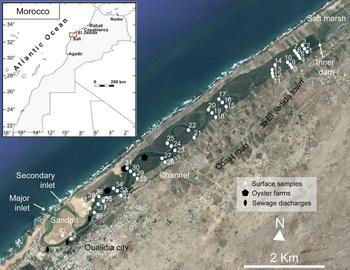
Oualidia lagoon, 34°47′N 6°13′W and 34°52′N 6°14′W, is located on the Atlantic coast of Morocco (Figure 1). The lagoon measures 7 km long and about 1 km wide. The basin occupies a north-south depression bordered by a continental cliff and a coastal consolidated dune ridge and water exchanges with the ocean occur through a major inlet about 150 m wide. During spring tides there is also a secondary, shallower inlet about 50 m wide. The lagoon morphology is characterized by lateral channels, connected to a meandering main channel, with an average depth of 2 m and a maximum depth (during flood tides) that does not exceed 5 m (Carruesco, Reference Carruesco1989). Flood tides cover more than 75% (2.25 km2) of the lagoon surface, bringing salt water up to the most confined, inner lagoon region, as well as into a saline marsh beyond the inner dam (Figure 1).
Map of the study area, showing the location of sampling sites in Oualidia lagoon.

Sampling and data analysis
Forty-three stations (Figure 1) were sampled in winter (March 2013) and summer (July 2013). All samples (two replicates) were collected using a Van Veen grab (0.0625 m2 in surface area), except at station 43, which was located in a rocky zone and was thus sampled by scraping sixteen 25 × 25 cm quadrats (until a total of 1 m2 of surface area). The samples were sieved in situ through a 1 mm pore size mesh. The material retained on the mesh was transferred to containers and fixed in a 10% formalin solution.
Each station was characterized by its distance from the lagoon opening (in km), water salinity (‰) and water temperature (°C). An additional sediment sample was collected to analyse grain size, and organic matter and chlorophyll-a (chl-a) contents. Grain size was measured with a laser granulometer (Malvern, Mastersizer) at the LETG (UMR 6554, University of Nantes) and expressed as mean grain size, in μm (to be used in the correlation analyses) and as relative proportions of sand, silt and clay, in percentages (to be used in the Canonical Correspondence Analysis, CCA). The percentage of organic matter (OM, %) was obtained as the weight losses of dried samples (24 h, 60°C) after ignition (4 h, 450°C). The chl-a content (mg m−2) was determined according to the Lorenzen method (Holm-Hansen et al., Reference Holm-Hansen, Lorenzen, Holmes and Strickland1965).
The macroinvertebrates were sorted under a binocular microscope, and the polychaetes were identified to species level, whenever possible, following Gil (Reference Gil2011). Currently accepted species names were checked at the World Polychaete Database (Read & Fauchald, Reference Read and Fauchald2017). Selected specimens of the most relevant species have been deposited in the CEAB collections (reference numbers CEAB.AP.856A and CEAB.AP.856B to CEAB.AP.868).
To analyse the structure of the assemblages, the following indices were calculated: (1) species richness (S: number of species per sample); (2) species abundance (N: individuals m−2); (3) diversity as indicated by the Shannon index (H’, log2 basis) (Shannon, Reference Shannon1948); and the evenness index (J’) (Pielou, Reference Pielou1966).
The relationships between environmental variables, species density and descriptors of the assemblage structure with the distance from the lagoon opening were analysed by Pearson correlations, which were performed with the XLSTAT software (2015.5.01.23039, copyright by Addinsoft 1995–2016).
Hierarchical Ascending Classification analyses (HAC) were done both on sampling stations and polychaete species, based on the Euclidean distance and Ward's method using log10(x + 1) to limit the influence of the most dominant taxa (Vakharia & Wemmerlöv Reference Vakharia and Wemmerlöv1995; Cao et al., Reference Cao, Bark and Williams1997). Communities were identified by the IndVal index (Dufrêne & Legendre, Reference Dufrêne and Legendre1997). Wilcoxon tests were used to determine the significance (P = 0.05) of the difference between seasons. All these analyses were carried out using the STATISTICA version 8 for Windows software.
Canonical Correspondence Analyses (CCA) were performed, using the PAST 3.0 free software package, to analyse the relationships between environmental variables and polychaete assemblages. Environmental variables and polychaete densities were log10(x + 1) transformed prior to analysis. The significance of these relationships, as well as those of the assemblage descriptors with the environmental variables was assessed by Pearson correlation (performed with the XLSTAT software).
RESULTS
Environmental parameters
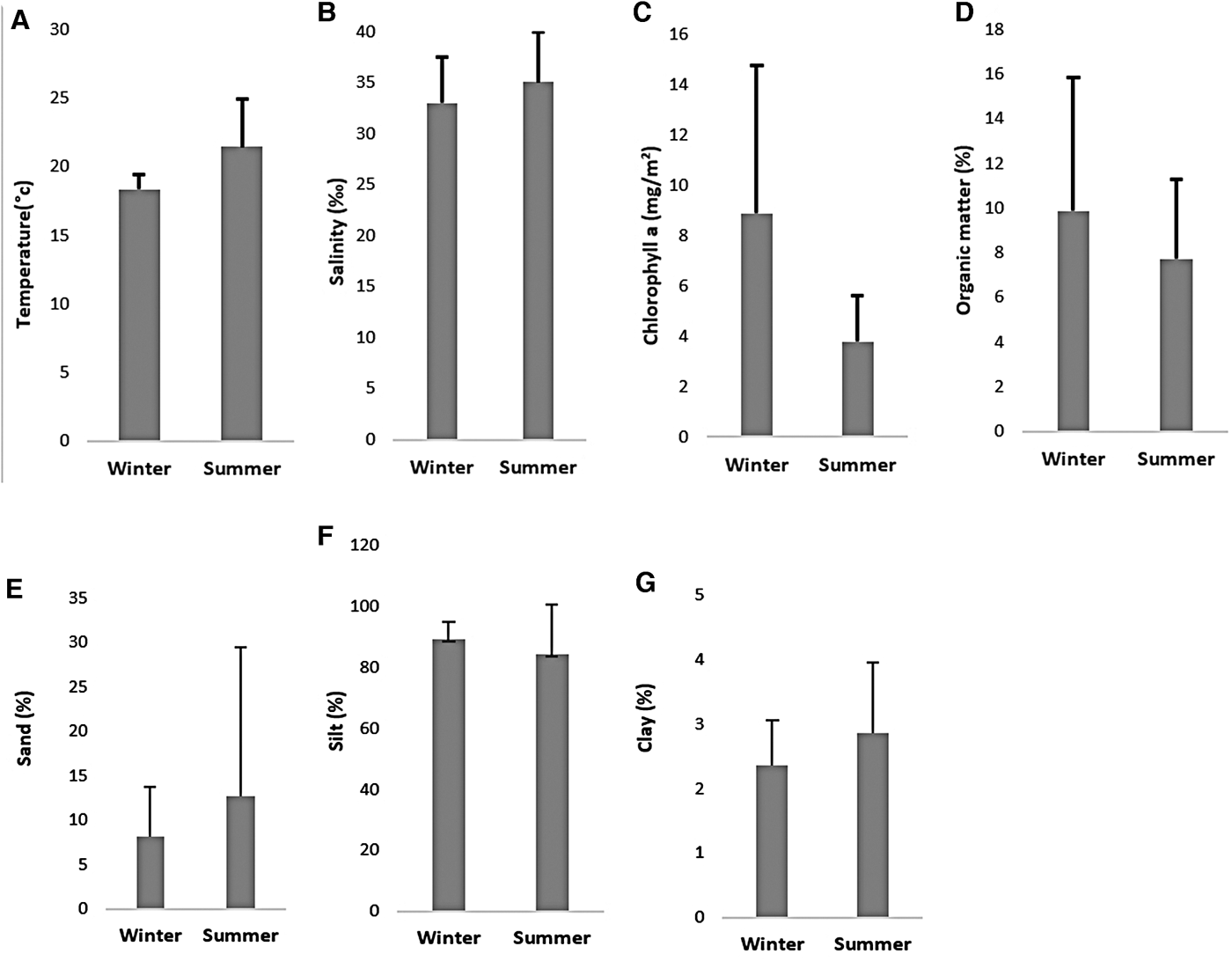
Temperature was significantly higher (r = 0.000006; P < 0.05) in summer (16.1°C and 26.3°C) than in winter (16.9 and 19.9°C) (Figure 2). Salinity was also significantly higher (r = 0.000215, P < 0.05) in summer (10.5‰ and 39.6‰) than in winter (10.1‰ and 39.5‰) (Figure 2). Chl-a showed marked changes among the studied stations. Contrary to temperature and salinity, the chl-a temporal pattern, as well as that of OM, showed significantly higher (r = 0.000008, P < 0.05 and r = 0.005282, P < 0.05) values in winter (1.19 and 23.41 mg m−2 and 1.94–31.97%) than in summer (0.85 and 8.79 mg m−2 and 1.73–15.1%) (Figure 2).
Winter and summer differences in water temperature, water salinity, organic matter, chlorophyll-a content and granulometry (Silt, Clay and Sand contents) in the sediment of Oualidia lagoon. Mean ± SD.

All environmental parameters analysed except salinity and chl-a showed significant correlations with the distance from the lagoon opening both in March and July, positive for the temperature (Pearson coeff. = 0.758, P < 0.001 and Pearson coeff. = 0.518, P < 0.001) and OM (Pearson coeff. = 0.440, P = 0.003 and Pearson coeff. = 0.471, P = 0.001) and negative for the granulometry (Pearson coeff. = −0.338; P = 0.027 and Pearson coeff. = −0.448, P = 0.003). Although non-significant, the salinity tended to decrease with the increasing distance from the opening both in March and July, while the chl-a tended to increase in March and to decrease in July.
Polychaete abundance and structure
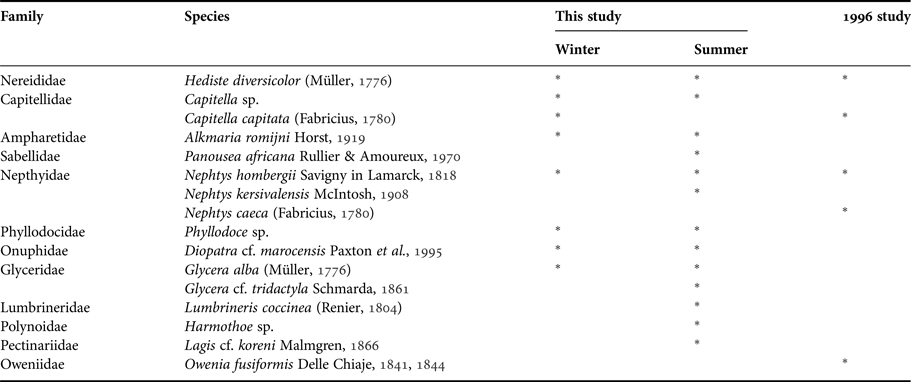
A total of 3835 polychaete specimens belonging to 13 species were collected during this study (Table 1). Among them, 1051 individuals from 7 species occurred in winter and 2784 from 13 species in summer.
Comparative analysis of the polychaetes identified in our study with those identified by Chbicheb (Reference Chbicheb1996) in Oualidia lagoon.

The three most abundant species in winter were Hediste diversicolor (72.4%), Capitella sp. (22.9%) and Nepthys hombergii (3.2%). The first two were also dominant in summer (64.7% and 17%, respectively), followed by Panousea africana (5.2%).
In winter, only H. diversicolor increased significantly its density significantly together with the increasing distance from the lagoon opening (Pearson coeff. = 0.337, P = 0.027. Conversely, in summer, there were no significant relationships with the distance from the lagoon opening, except for P. africana, which showed a negative correlation (Pearson coeff. = −0.340, P < 0.026).
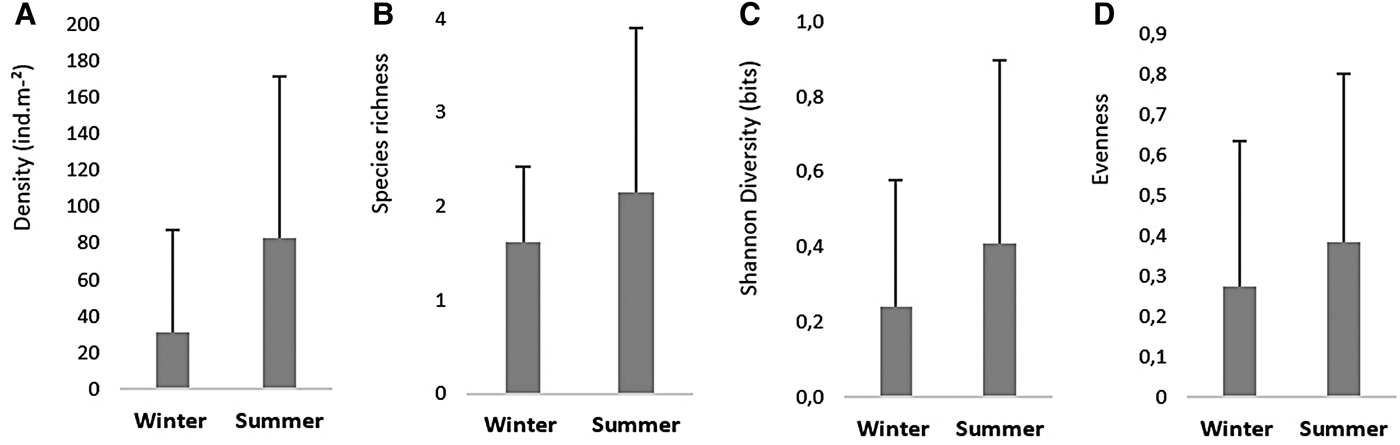
Polychaete densities were significantly higher (r = 0.0007; P < 0.05) in summer (0–392 individuals m2) than in winter (0–316 individuals m−2). The number of species ranged from 0 to 4 (winter) or 8 (summer). However, there were non-significant differences (r = 0.190; P > 0.05) (Figure 3).
Winter and summer differences in the main descriptors of the structure of the polychaete assemblages. (A) Density (ind. m−2). (B) Species richness. (C) Shannon diversity. (D) Evenness.

The Shannon diversity was similar in winter (0–1.09 bits) than in summer (0–1.57 bits) (r = 0.091; P > 0.05) and, similarly, there were non-significant differences in evenness between both seasons (r = 0.241, P > 0.05) (Figure 3).
The spatial distribution of the assemblage descriptors in winter revealed that only the polychaete densities were significantly, and positively, correlated with the distance for the lagoon opening (Pearson coeff. = 0.381, P = 0.012). The remaining descriptors (S, J, H’), although non-significant, tended to increase with the increasing distance. Conversely, in summer, all descriptors tended to decrease with the distance from the lagoon opening. However, the relationships were non-significant for N and J, while they were significant in the cases of S and H’ (Pearson coeff. = −0.397; P = 0.008 and Pearson coeff. = −0.437, P = 0.003, respectively).
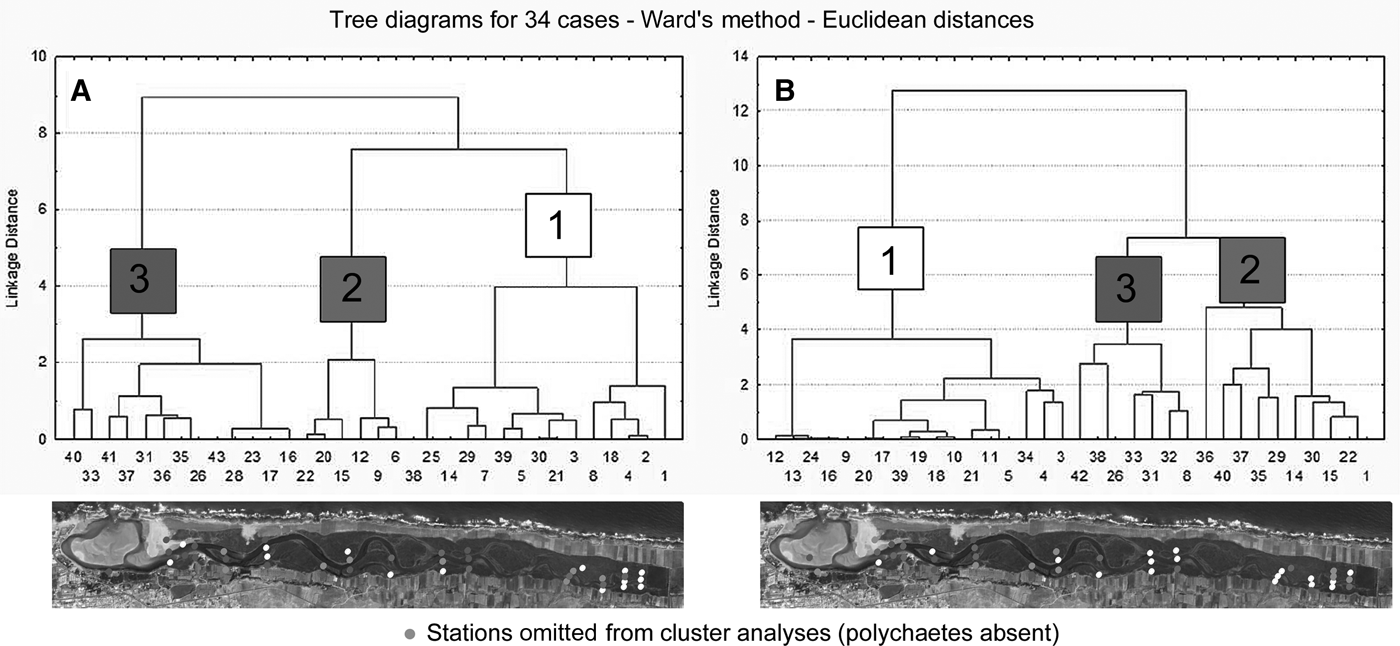
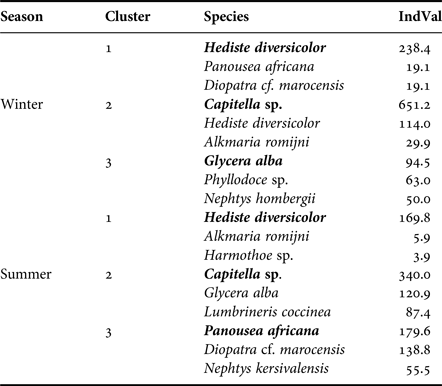
Three station clusters were obtained both during winter and summer in the HAC analyses, both for sampling stations and for polychaete species. Stations cluster 1 in winter (Figure 4A) included 15 stations mainly from the inner region of the lagoon, characterized by having sediments mainly composed by silt and clay in different proportions, high temperatures and OM and a low average polychaete density (43.4 individuals m−2). The dominant species was H. diversicolor, followed by Capitella sp. (Table 2). Stations cluster 2 consisted of six stations occupying mostly the inner-central region of the lagoon, having silty sandy and clayey sandy sediments, a moderately high OM, temperature and salinity, and a high average density (56.8 individuals m−2). The dominant species was Capitella sp., followed by H. diversicolor (Table 2). Stations cluster 3 consisted of 13 stations mainly close to the lagoon opening, with predominantly sandy sediments, low temperatures and OM, and a relatively low average density (4.5 individuals m−2). The dominant species were N. hombergii and Phyllodoce sp. (Table 2).
Winter (A) and summer (B) dendrograms showing the three station clusters obtained in the Hierarchical Ascending Classification analysis, and the location of the respective stations in the lagoon.

List of the main species of each polychaete assemblage according to the IndVal index. Assemblages are named according to the species showing the highest IndVal (in bold).

During summer (Figure 4B), stations cluster 1 was the largest one. It included 17 stations, mainly located in the inner central region of the lagoon, characterized by having relatively high temperatures, high OM, clay and silty clay sediments and a high average density (91.8 individuals m−2). The dominant species was H. diversicolor (Table 2). Stations cluster 2 included 10 stations, located all along the lagoon, but mostly in the central part, with moderately high % OM and temperature, silty sand and clayey sand sediments and a high average density (102.4 individuals m−2). As it occurred during winter, the dominant polychaetes were Capitella sp., followed by H. diversicolor. Stations cluster 3 included seven stations located mostly near the lagoon opening, characterized by having low temperatures and OM, very low chl-a, a high percentage of sand, and the lowest recorded average density (28.6 individuals m−2). The dominant species were P. africana, Diopatra cf. morocensis and Nephtys kersivalensis.
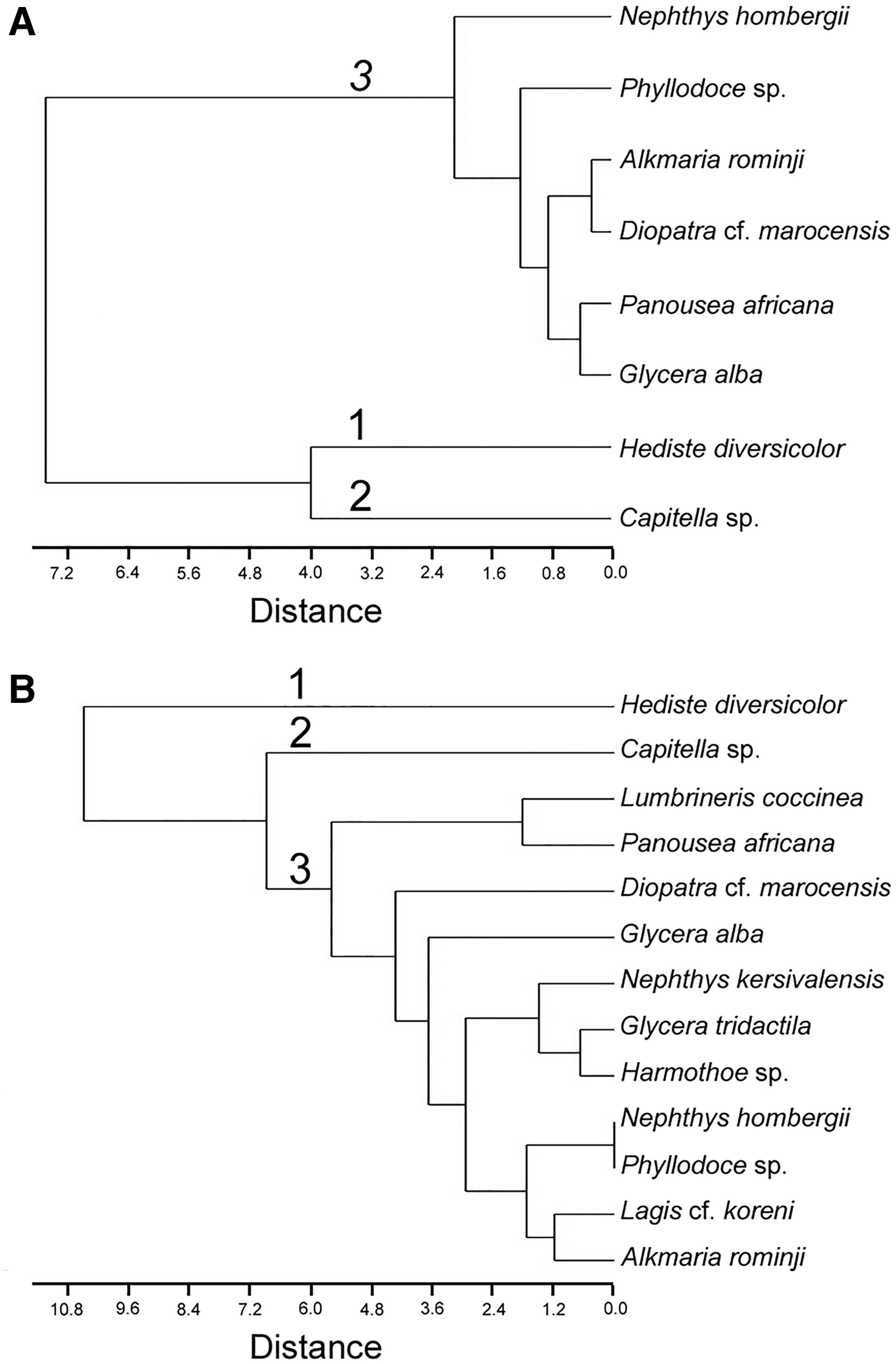
The HAC analyses based on species also revealed the presence of three clusters in winter as well as in summer (Figure 5A, B). Both seasons coincided in showing a species cluster 1 including H. diversicolor only, and a species cluster 2 including Capitella sp. only. Conversely, species cluster 3 included five species in winter and 11 in summer.
Winter (A) and summer (B) dendrograms showing the three species clusters obtained in the Hierarchical Ascending Classification analysis.

Relationships between the descriptors of the polychaetes assemblages and the environmental variables
In winter, Capitella sp. and N. hombergii were positively correlated with OM (Pearson coeff. = 0.367, P = 0.015) and chl-a (Pearson coeff. = 0.385, P = 0.011), respectively. In summer, P. africana showed a negative correlation with OM (Pearson coeff. = −0.313, P < 0.041), while H. diversicolor and N. kersivalensis were positively correlated with OM (Pearson coeff. = 0.341, P < 0.025) and the granulometry (Pearson coeff. = 0.480, P = 0.001).
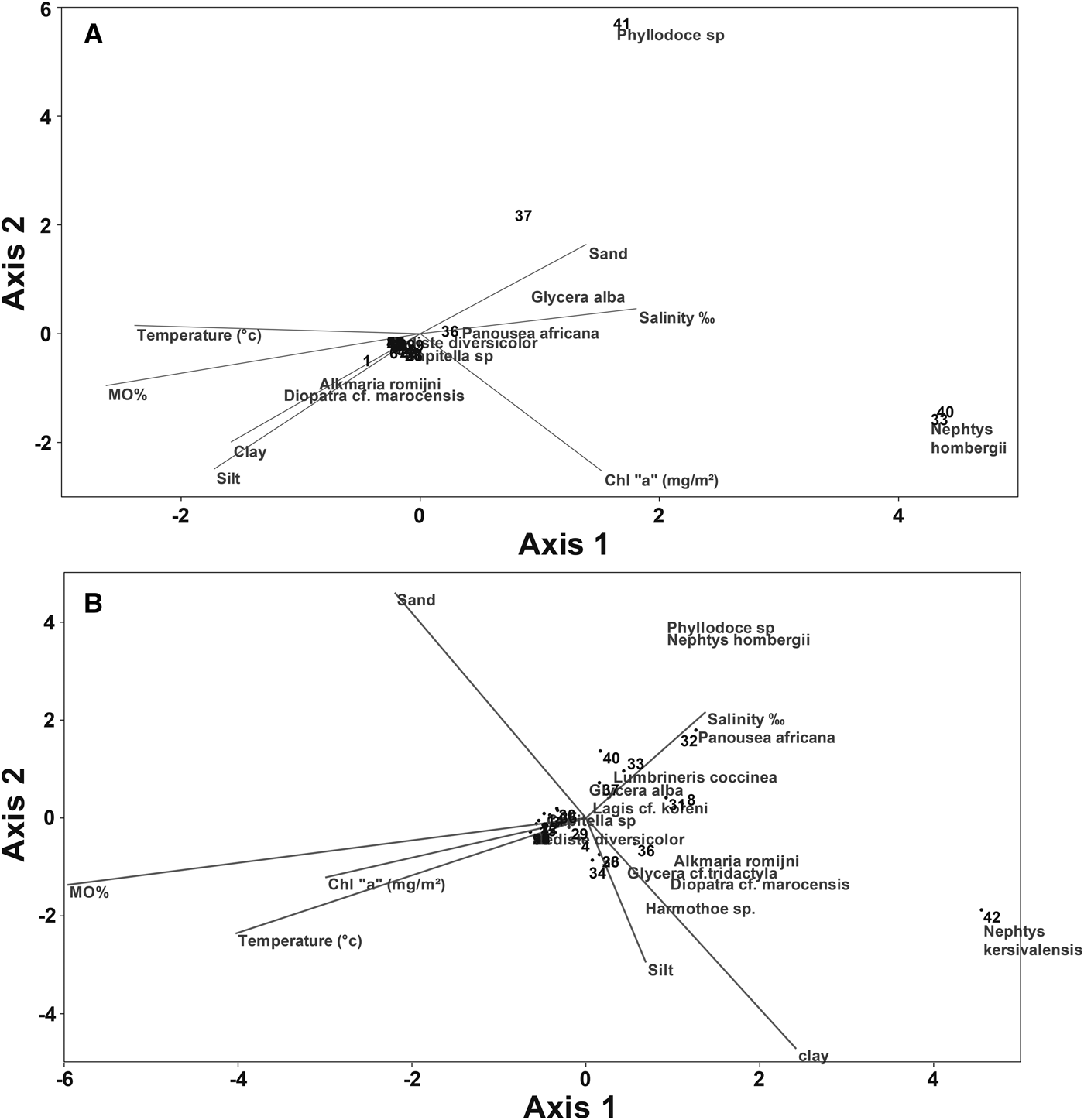
In winter the first two CCA axes accounted for 85.93% of the observed variance. The species composition was mainly related to silt, OM and chl-a contents (Figure 6A). In summer, the first two CCA axes accounted for 87.91% of the relationships, with the most influencing environmental variables being OM, clay and sand (Figure 6B).
Canonical Correspondence Analysis plots. (A) Winter. (B) Summer.

DISCUSSION
The structure of the assemblages inhabiting Oualidia largely responds to the estuarine processes and habitat mixing determined, at any given time, by the physical morphology relative to the tidal elevation inside the lagoon (El Asri et al., Reference El Asri, Zidane, Maanan, Tamsouri and Errhif2015). As with all along the Moroccan Atlantic coast, tides and wind-generated waves are the dominant (natural) processes governing the morphological developments (Kalloul et al., Reference Kalloul, Hamid, Maanan, Robin and Sayouty2012). In Oualidia, however, the combined meteorological and riverine inputs are also shaping the environmental features. The salinity tends to be lower during winter as a response to the increasing precipitation, and rises in summer due to higher evaporation rates, as well as to the lowering of the inland freshwater inputs. In addition, there was a marked upstream-downstream gradient, with the salinities being much lower upstream due to the arrival of inland freshwater (Figure 2), as previously reported (Hennani et al., Reference Hennani, Maanan, Robin, Chedad and Assobhei2012; Hassou et al., Reference Hassou, Maanan, Hennani, Zourarah and Assobhei2014).
The winter increases in organic matter are linked to the arrival of a thick layer of mud following the rainwater runoff. The organic matter levels were higher in Oualidia Lagoon than those recorded at Moroccan lagoons, either Atlantic Sidi Moussa (3.6 and 12.3%) (Maanan et al., Reference Maanan, Zourarah, Carruesco, Aajjane and Naud2004) or Mediterranean Nador (0, 1 and 6.3%) (El Alami et al., Reference El Alami, Mahjoubi, Damnati, Kamel, Icole and Taieb1998), and also higher than those in well studied European lagoons, such as the Venice lagoon (0.43 and 1.09%) (Bellucci et al., Reference Bellucci, Frignani, Paolucci and Ravanelli2002). In turn, the high concentrations of chl-a originated from the leaching of agricultural lands in the watershed, these being so rich in nutrients that the leaching into the lagoon results in a significant increase in chl-a.
Our study represents a significant contribution to the knowledge on the polychaete macrofauna living the Oualidia lagoon, as the number of species reported is almost three times greater than those reported by Chbicheb (Reference Chbicheb1996) during four seasons from December 1992 to November 1993 (Table 1). On the other hand, 11 out of the 13 species recorded in 2013 were not listed in the previous survey, while two found in 1996 appear not to be currently present (Nephtys caeca and Owenia fusiformis). These differences in the structure and diversity of the polychaete assemblages can probably be explained by the increasing levels of organic matter in the sediment, which may also be related to the changes in the hydrodynamics of the lagoon due to the construction of a pit upstream. Despite its relatively small size, Oualidia lagoon supports rather diverse polychaete assemblages, but also of molluscs (El Asri et al., Reference El Asri, Zidane, Maanan, Tamsouri and Errhif2015), when compared with other African lagoons: Aby lagoon (9 species) (Koaudio et al. Reference Koaudio, Diomandé, Ouattara, Koné and Gourène2008); Smir lagoon (12 species) (Chaouti & Bayed, Reference Chaouti and Bayed2005); Epe lagoon (10 species) (Uwadiae, Reference Uwadiae2009); and Khnifiss lagoon (17 species) (Lefrere et al., Reference Lefrere, Ouassas, Guillois, Gillet and Moukrim2015). The fact that some species could not be fully identified was due mainly to the poor preservation status of the collected materials (e.g. in the case of L. cf. koreni or G. cf. tridactila). In addition, there were only anterior fragments of D. cf. morocensis, the specimens of Phyllodoce were probably juveniles too small to distinguish the key taxonomic characters or the specimens of Harmothoe were completely lacking the elytra. Although we were certain of the specimens’ assignation to individual species, a requisite for biodiversity analyses, further effort should be made to allow more detailed taxonomic studies that would help in confirming the identity of the doubtful species. If possible these studies would include samples for molecular studies, which would be particularly helpful in identifying species such as those belonging to the Capitella sibling species complex (Tomioka et al., Reference Tomioka, Kondoh, Sato-Okoshi, Ito, Kakui and Kajihara2016). Despite their intrinsic interest, these studies are far beyond the scope of the present paper.
In the Oualidia lagoon, the three most abundant species were H. diversicolor, Capitella sp. and N. hombergii. The first two were also the most dominant in summer (64.7 and 17%, respectively), followed by P. africana (5.2%). This pattern of dominance differs completely from that reported in the Khnifess lagoon, where the most representative species were Diopatra marocensis, Terebella lapidaria and Nicomache lumbricalis (Artemis et al., Reference Artemis, Petrou, Kormas and Reizopoulou2006). Diopatra marocensis was also present in Oualidia, but its abundance was very low. In the Smir lagoon, the three most dominant species were Streblospio shrubsolii (reported as S. dekhuyzeni), H. diversicolor and Alkmaria romijni (Chaouti & Bayed, Reference Chaouti and Bayed2008). Coastal lagoons are highly variable in terms of environmental conditions, not only between their different areas, but also seasonally. This may certainly contribute to explain the reported changes in composition and dominance of the assemblages inhabiting different lagoons, but also to drastic changes in the species composition through time, particularly if there are associated changes in anthropogenic pressures (Hernández-Guevara et al., Reference Hernández-Guevara, Pech and Ardisson2008). These changes, however, are not only related to the ability of the species to respond to the environmental changes, but may also result from the existing biological interactions such as competition or predation, or may depend on intrinsic characteristics of the species, as previously discussed for similar environments (Artemis et al., Reference Artemis, Petrou, Kormas and Reizopoulou2006).
Despite the temporal environmental differences found in the lagoon, and, to some extent, the differences in composition, the structure of the assemblages was the same during the two study periods. Environmental descriptors, particularly those related to the sediment granulometry, showed a regular gradient, which was mirrored by the polychaete assemblages. In fact, the H. diversicolor assemblage found in the fine sediments of the inner lagoon were replaced by the Capitella sp. assemblage in the medium grain-sized sediment of the middle of the lagoon, and by the Glycera alba (winter) and P. africana (summer) ones in the sandy sediments closer to the inlets. The shift was, in fact, from a classical, brackish, lacunar assemblage to two different, temporal aspects of a marine assemblage (close to the inlets), with a transition assemblage in between.
In Oualidia, continental and marine environments are characteristically interwoven, as typically occurs in littoral lagoons (Amanieu et al., Reference Amanieu, Ferraris, Guélorget, Barbault, Blandin and Meyer1980), the so-called paralic environments sensu Guelorget & Perthuisot (Reference Guelorget and Perthuisot1992). Moreover, the structure of the lagoon and the associated benthic communities defined on the basis of our data agrees with the previous findings based on a physical oceanography approach that defined the lagoon as ‘an estuary without a river’ (Hilmi et al., Reference Hilmi, Koutitonsky, Orbi, Lakhdar and Chagdali2005). This structure, as well as the functioning and the influence of the nearby agricultural fields reaching the lagoon through fresh groundwater inflows, closely resembles that described for Alfacs Bay in the Ebre's Delta (Iberian Peninsula). In this lagoon, both meio- and macrofaunal organisms are overall arranged in three main assemblages (marine, transition and brackish) from the opening to the sea to the most confined part (Palacín et al., Reference Palacín, Martin and Gili1991, Reference Palacín, Gili and Martin1992). In this bay, these authors also suggested an estuarine regime in absence of a river. The main difference, from an oceanographic point of view, is that the leading force in Oualidia are tides, while in Alfacs, the main currents are wind and density generated, as Mediterranean tides are virtually negligible (Camp & Delgado, Reference Camp and Delgado1987). On the other hand, the highest surface and water volume, together with the largest area not in confined conditions, allows the maintenance of diverse assemblages in Alfacs Bay. This is particularly evident when specifically analysing the polychaetes: three assemblages in Oualidia vs six in Alfacs, 13 species and maximum densities of fewer than 200 individuals m−2 in Oualidia vs 100 species and up to 23,000 individuals m−2 in Alfacs (Martin et al., Reference Martin, Pinedo and Sardá2000).
Despite its relatively small size, Oualidia lagoon is revealed to be, in many different senses (from oceanography to benthic ecology), an interesting environment. This, combined with the numerous human activities that have developed in the surroundings, as well as in the lagoon itself, and the declaration as a Natural Park, clearly target this lagoon as an interesting monitoring objective. Future surveys will not only show the expected changes triggered by the increasing anthropogenic influence, but may also be important in assessing the health of the lagoon ecosystem, a key issue to promote initiatives allowing to maintain or even improve the added values of the lagoon both from a naturalistic point of view (e.g. as a wintering area for migratory birds) and as a service provider (e.g. sailing, bathing, birdwatching, another touristic activities).
ACKNOWLEDGEMENTS
This paper is part of a research programme on coastal resources of the LERL/DRH-Casablanca (National Fisheries Research Institute), and contribution of DM to the Consolidated Research Group on Marine Benthic Ecology of the Generalitat de Catalunya (2014SGR120). Dr Joao Gil helped us with some of the most problematic identifications. We are deeply grateful to Mr Brahim Moutaki (INRH-Oualidia) and Mr Mohamed Amine Kaddioui (PhD student) for their help during sampling.