The field of public policy is rife with theories of the policy process that are readily used by scholars. The sheer volume of theories and lack of interconnectivity among them has exasperated many within the field. Paul Sabatier persistently advocated for better theories to provide a connection between policy scholars and those in other fields such as political science.Footnote 1, Footnote 2 Kenneth Meier, one “deranged policy scholar,” made similar complaints against multiple theories of the policy process.Footnote 3 To him there is no unified or broader sense of theory building among the multiple theories presented. Moreover, there is an inherent lack of connection between the theoretical and applied sides of the policy field, a fact noted by other scholars as well.Footnote 4, Footnote 5 Meier called for “bold aggressive thinking about theory that operates across existing policy theories” to improve the field of public policy and to develop a unified approach to understanding the policy process. This article seeks to answer that call for “bold aggressive thinking” by proposing the idea of policies as species.Footnote 6 This approach assumes that previous efforts by policy scholars have created bricks in some larger theoretical construction.Footnote 7 The idea of policies as species is an effort to organize these existing bricks of policy theory into a systematic pattern of interaction.
Likening policies to species provides a conceptual base for bridging knowledge of the policy process and knowledge in the policy process, two distinct and disconnected sets of scholarship that represent the theoretical and applied sides of the policy field.Footnote 4, Footnote 5 Knowledge of the policy process is the academic perspective of knowing how policy is created and the possibilities of structure from a theoretical perspective. Knowledge in the policy process is the process of knowing how to analyze and resolve a problem given real-life conditions; this perspective is more practitioner oriented and involves expertise in one substantive area. In essence, the proposed idea of policies as species is both a classification system and a theory of the policy process, as it spans multiple policy process theories, frameworks, and concepts already present in the field. In essence, by sorting policies as different species, we are engaged in the process of classification, but through the use of work in evolutionary biology and evolutionary development biology, this approach is also theoretically oriented toward the policy process and understanding how policies emerge and change over time (i.e., a theory of policy evolution).
The duality of this idea permits scholars to be better equipped to examine the possibilities of policy emergence, change, reinvention, and death. Indeed, the idea constructs a vision for policy research that is not limited in scope or orientation, and it encapsulates what we theoretically and practically know about the policy process. Policies can be classified, exist at multiple levels of government, contain some semblance of a life cycle, and contribute to a macro-level cycle of evolutionary progression. This theoretical concept fills a gap left by existing theories that have presented excellent frameworks for understanding why policies are constructed but have not engaged with actually defining what a policy is supposed to be or how creation and modification decisions are made on a broader scale. The policy species approach can explicitly contend with the origins of policies, examine policy coevolutionary behavior, and provide a macro-level perspective on how policies behave.
This article first provides a basic definition of “policy” and summarizes three broad approaches to policy classification. Next, an overview of the biological conception of species classification is provided. This overview offers a brief history of how species classification and perceptions of evolution have evolved within biology. It is important to include this section for those unfamiliar with the basics of species classification systems. This summary is not intended to inform the reader of every nuance of species classification or evolution, but it does provide a background for understanding the third section, which focuses on conceptualizing policies as species. In the following section, the groundwork is laid for how scholars should approach the theoretical concept of policies as species. Four elemental dynamics of species classification are discussed: genetics, habitat, common ancestor, and heredity. The article concludes by outlining future research directions for using the policy as species concept and the challenges that may arise in its application. It is the intention in this article to outline the theory and propose a new direction for the study of public policy.
What is a policy? Defining and classification approaches
Despite the existence of a field of public policy and an extensive literature on policy studies, the concept of “policy” or “public policy” is difficult to singularly define. Attempts have been made to provide a concise definition, but scholars have largely struggled to identify a definition that is easily digested while simultaneously encompassing the complexity of the phenomenon. For example, Birkland outlines five definitions of public policy before concluding that “no single definition may ever be developed.”Footnote 8 Instead, only key attributes may be identified to aid scholars in identifying public policies.
Many methods have been proposed for classifying policies. They fall into three broad types of approaches: the typology approach, the taxonomy approach, and the attribute approach. The typology approach is perhaps the most widely known policy classification system, in part because of Lowi’s policy typology, which identified regulatory, distributive, redistributive, and constituent policies.Footnote 9 However, this approach has been persistently criticized, despite improvements by Spitzer,Footnote 10 for its inability to fit some policies into a singular category.Footnote 8
Taxonomical classification approaches are numerous and include substantive or procedural,Footnote 11 material or symbolic,Footnote 12 those based on cost-benefit assessments,Footnote 13 and those that employ a more taxonomic area-based classification such as morality, social, governance, or regulatory policies.Footnote 14, Footnote 15 At the heart of taxonomical approaches is a classification system based on substantive or observable elements of character.
Finally, Downs and Mohr approach the classification of organizational innovations from an attribute perspective.Footnote 16 Specifically, innovations or policies should be assessed by their primary and secondary attributes. Both primary and secondary attributes include characteristics such as cost or communicability, but the difference between the two is grounded in sensory perception. Primary attributes are embedded within the policy and may not be visible or “perceived by the senses,” like secondary attributes.Footnote 17 Downs and Mohr’s approach is similar to contemporary efforts to classify policies through attribute-based assessments such as analysis of innovations through five attributes (relative advantage, compatibility, complexity, observaility, and triability)Footnote 18 or the Institutional Grammar Tool.Footnote 19, Footnote 20 Attribute-based classifications rest on the premise that policies have observable characteristics that go beyond type or issue area.
Each classification approach has benefits and strengths in sorting public policies. However, each approach falls short in a systematic classification that scholars can agree upon.Footnote 21 Current policy classification systems operate on the assumption that we know what policy is and how to observe it. As is evident in this review, there is no singular definition or operationalization of policy. The difficulty of classifying any phenomenon boils down to the existence of different analytical lenses for observing a phenomenon that scholars have not defined with any certainty. If we are collectively interested in the study of public policy, then why have we not reconciled our ability to classify policies? Moreover, why have scholars not actively engaged with policy process theory in the development of policy classification?
If Lowi’s adage that “policy dictates politics” is true, then it is time to reconcile competing policy classification systems and create a bridge between policy process theory and application.Footnote 22 Public policies have many similarities to living organisms. Policies are observable man-made creations that serve a variety of purposes within our society. As noted previously, scholars have already presented several approaches to classification that present strengths and weaknesses in observing the policy phenomenon. Collectively, scholars also know that policies do not last forever and progress through a general life-cycle process (i.e., the stages heuristic). While most scholars tend to study specific phases of the policy process in isolation, scholars have also managed to observe policies existing and changing over both short and long periods of time. Policy drift, punctuated equilibrium, advocacy coalition, and the multiple-streams framework present opportunities to frame studies of policy change and stasis.Footnote 23, Footnote 24, Footnote 25, Footnote 26 Finally, policies exist across multiple levels of government, which may represent different or similar geographic spaces. Conceptualizing policies as species is a classification-based system that is highly dependent on understanding the process of policy creation, development, replication, and eventual demise. In essence, this approach focuses on the micro- and macro-level perspectives on the policy process and forces a connection between the mechanisms of what creates and defines a policy and the living components of the policy.
Defining species: Lessons and concepts from the life sciences
The proposed perspective of policies as species is inspired by concepts and theories in the fields of evolutionary and evolutionary developmental biology. Policy scholars have often advocated and applied theories and concepts from the life sciences to policy process research, and this endeavor continues this trend.Footnote 21, Footnote 22 Policies can be perceived as living organisms and subsequently defined as species; there are intrinsic processes of creation and change that biologists have observed and that can be transferred to the study of public policy. However, there is no singular approach to classifying living organisms in the biological and natural sciences. To date, there are more than 25 species classification systems, including those using observable characteristics (the phenetic and morphological species concept), reproductive isolation (the biological species concept), environmental interaction or geographic factors (the ecological species concept), shared common ancestors (the phylogenetic species concept), and genetics (the genetic species concept). While it is impossible to cover the details of every approach, a summary of a few key theories and concepts is warranted to develop the foundation for the policy species approach.
On the Origin of Species was Charles Darwin’s seminal work, which founded evolutionary biology as a field of studyFootnote 27 and established Darwin as the founder of evolutionary taxonomy and variational evolution.Footnote 28, Footnote 29, Footnote 30 His theory suggests that evolution is nonlinear, as is evident in isolated populations, and occurs gradually. As a result, species can be classified by morphological similarities among clusters of organisms. Darwin’s work intimately linked evolutionary discussions to the defining of species. In defining species, Darwin was notably a taxonomist who provided a vague definition of the concept, although he did engage in phylogenetic theoretical assumptions. This left many to ponder what he actually meant by the term “species,” but general conclusions among contemporary scholars point to a shared common ancestry defined by by observable characteristics.Footnote 31 Moreover, scholars have also interpreted Darwin’s definition to include notable differences in varieties within a species (e.g., differences in skin color among humans).
Darwin’s perception of species classification and definition went unchallenged until the 1930s, unlike his theory of evolution, which was challenged by those focusing on Mendelian genetics and heredity.Footnote 32 During the twentieth century, Darwin’s species concept was challenged by a series of other frameworks, including a biological concept based on reproduction, modern synthesis theory, and extended or postmodern synthesis series, which incorporated development biology and epigenetics into the classification framework. Evolutionary developmental biology only recently entered evolutionary discussions; such concepts as developmental phenotypic plasticity drastically altered the discussion of how genes influence evolution.Footnote 33, Footnote 34
For our purposes, the advancement of research on evolution and species classification outlines four notable elements in which to situate the discussion of defining policy species from a biological perspective: genetics, geographic locale, common descent, and heredity. Each element is constructively intertwined to develop a wholistic approach for classification and is historically significant to changes in species classification approaches, but mapping genetics is truly at the heart of classification. The selection of the four elements is made in light of the diverse set of classification approaches that touch on each element individually or in combination, which makes the process of species delimitation difficult and controversial among scientists.Footnote 35 In what follows, a policy classification approach is proposed that integrates each element with a discussion, where appropriate, of application. Mapping genetic code sits at the heart of the theory.
Conceptualizing policies as species
In conceptualizing policies as species, public policy is conceived of as a set of actions undertaken by a governmental entity that governs society and attempts to resolve a societal problem. Underlying this concept are two intertwined elements. The first is the process of making policy (i.e., knowledge of the policy process, or genotypes in science terminology). The second is the observed outputs that collectively constitute a policy in practice (i.e., knowledge in the policy process, or phenotypes in science terminology).
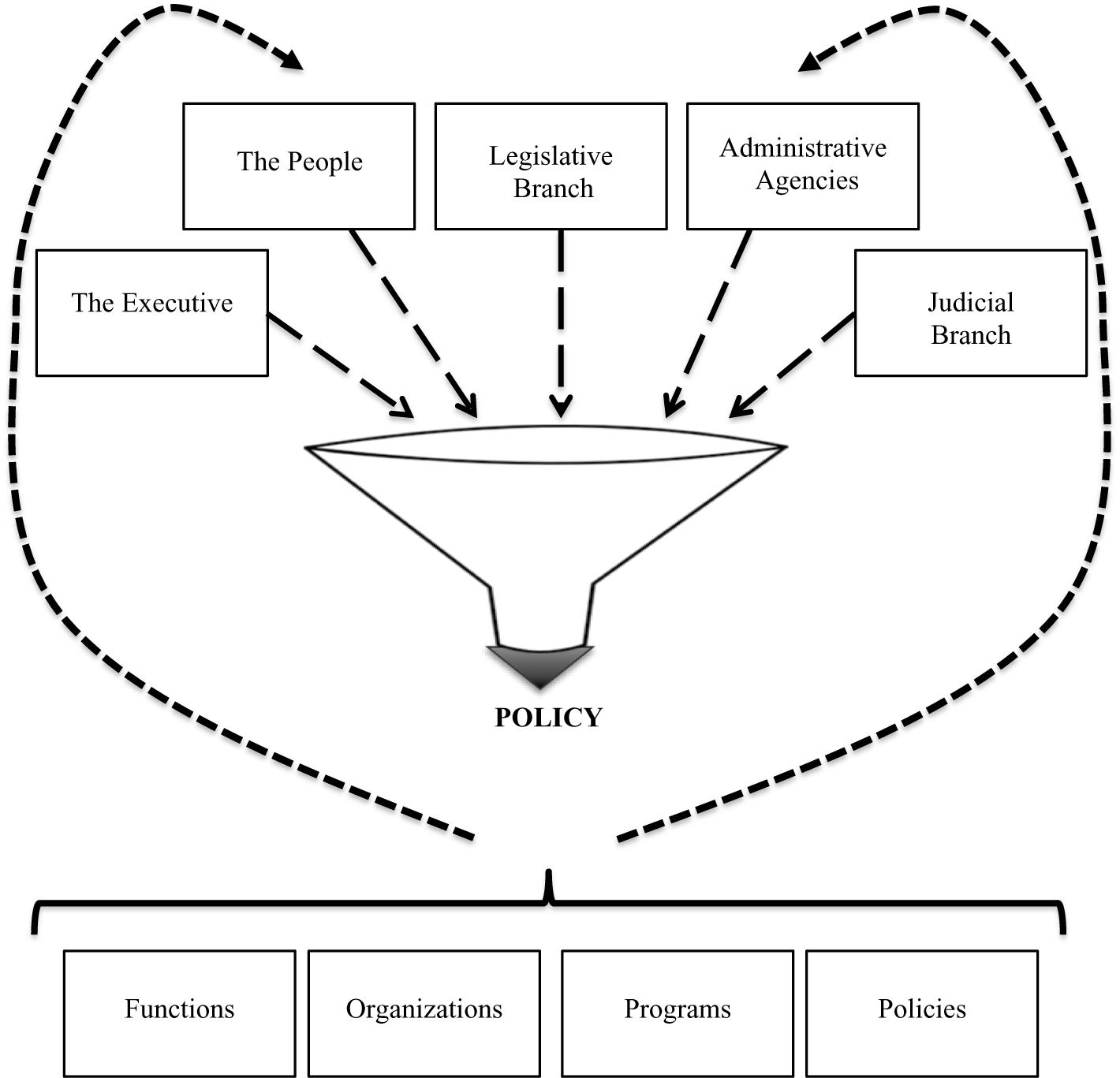
From a process perspective, policy is the result of the varying nexuses of policy creation available to a government. Indeed, Birkland’s definition of policy encompasses part of how these various nexus pathways lead to a policy. Policy, according to Birkland, is an intentional statement by government through “law, regulation, ruling, decision, order, or a combination of these.”Footnote 36 It may be easier to conceptualize statements of policy, intentional or unintentional, through the various mechanisms that constitute how policy is shaped. Specifically, there are several pathways associated with the policy process in the U.S. context, including executive-level actions, the public at-large, legislatures, administrative agencies, and the courts (see Table 1). These pathways may vary from country to country depending on the policymaking environment. Each pathway represents a separate nexus of decision-making for the creation, alteration, and termination of policy through the actions of various political actors. Collectively, each set of actors contributes to what we know as policy, since each represents an opportunity to shape the output and outcome within a singular government jurisdiction (see Figure 1). In the case of the United States, the federal structure means that each nexus potentially exists within each local, state, and federal jurisdiction. For other policymaking environments, jurisdiction designations will vary to reflect the jurisdictional structure of that habitat.
Policymaking pathways and pathway expressions.

Policy pathways and operationalized outputs.

From an output perspective, defining policy is dependent on the actual observed components that permit implementation to occur. DeLeon identifies four components constituting policy that permit implementation.Footnote 37 Functions, organizations, programs, and policies themselves are components of a policy (see Table 2). The four components are part of a larger discussion of policy termination, but each is significant for how we conceptualize a public policy. Every time a policy is created or altered, any one or a combination of the four components can be affected. The policy exists insofar as a function, organization, program, or policy is created and maintained. Even with the termination of one component, a policy can survive through the establishment of others; it may just be a weaker policy if only one component continues to exist without the others.
DeLeon’s policy components.

As a collective system, the connection of observed policy components to the creation pathways provides necessary insight for how policy, as a whole entity, can be created and manifested within a singular level of government. Policy is initiated through one of the selected pathways and is subsequently impacted by the actions that occur through feedback on how the collective outputs are perceived to perform or believed to be necessary. The funnel depicted in Figure 1 acts as a consolidating and collective factor that provides a summative effect for how each pathway contributes to a policy over time; the dotted lines demonstrate the feedback mechanisms from each observed component, indicating potential actions through the various action pathways.
For example, a citizen referendum may create a new function for a government to address, such as expanding the scope of “general welfare” to include government-operated health care. In turn, the legislative branch and administrative agencies would be tasked with filling in the details of how government policies, programs, and organizations should be established or modified to accompany the policy that was initiated through the citizen referendum. This series of events leads to one approach to how a singular government may handle the issue of health care. Other government jurisdictions, whether lower, higher, or horizontally equivalent, may create the same policy through a different series of events. Different approaches to policy creation can lead to confusion about how best to define and classify policies. For scholars, policy classification has been a pillar of public policy research and impacts how policy studies, whether applied or theoretical, are conducted.
Conceptualizing policies as species is challenging, because there is a need to balance the various methods of classification while simultaneously considering the larger implications associated with the theory and practice in the field. In essence, it is a task that is similar to the development of synthesis theories of evolution. Conceptualizing policies as species requires attention to the basics of classification before reconciling with the policy process, which requires studying policy not in isolated phases but from a comprehensive life-cycle perspective. Classifying policies begins with an evaluation of genetics first followed by a discussing of how policy habitats (which broadly refers to geographic locale), shared ancestry, and heredity influence the categorization process. Each element is a part of the evolutionary cycle for all policies that lead to particular designations.
Policy genetics
The genetics of a policy are embedded through language that is expressed in each policymaking pathway and manifested in the observable outputs of policy. It is imperative to dissect the language of legislation, administrative rules, or some other form of law. In combination, each pathway or venue outlines the direction of a policy’s genotypes, or the overall genetic code. Genotypes and phenotypes underlie our knowledge of genetics. Genotypes represent an individual’s entire genetic makeup or the genetic possibilities of an organism; phenotypes are expressed genetic characteristics, which are both visual (e.g., height, eye color) and nonvisual (e.g., general disposition; personality preferences) in observation. This serves as the basis for further dissection of a policy’s phenotypes, or expressed genes, through observable policy outputs (e.g., organizations or programs) that represent how policies are manifested within a society.
We are able to determine genotypes based on our knowledge of the policy process, and phenotypes are identified based on our knowledge in the policy process. Dissecting the genotype language and expressed phenotypes requires detailed attention to how the policy can be constructed versus its actual construction. Each policy pathway can outline particular elements of a policy that are, in fact, never executed according to plan or are altered during implementation. Policy drift could be largely to blame.Footnote 24 Delegated policymaking power to the bureaucracy, an active court system, and a larger role for executives to influence policymaking all lead to complications for how final outputs are manifested. Reading between the lines and dissecting the expressed portion of each form of policymaking requires extensive scholarly patience, but it can develop a clearer connection between the potential of policies versus actual execution. In essence, the attention to implementation of policies helps determine how the underlying genetic structure is expressed.
The idea of using language and grammar analytics to dissect a policy’s genetic code is not new. Most recently, Linder et al. proposed a method of comparing the text of policy proposals to assess similarities.Footnote 38 Focusing on text reuse among bills, the findings demonstrate the existence of network pathways for the diffusion and dissemination of state legislative ideas. Prior to Linder et al.’s study, Crawford and Ostrom proposed using grammar analytics to evaluate the genetic code of institutions.Footnote 18 The extension of their work to create the Institutional Grammar Tool offers some promise in decoding the mechanisms behind policy structures,Footnote 20, Footnote 39 but it is a restricted method geared toward regulations (specifically expressed through legislation), collective action problems, and institutional evaluation. Nevertheless, the grammar analytical tool and Linder et al.’s legislative text decoding method offer strong arguments for decoding the language of law in such a way that we can classify policies. In the case of policies as species, the decoding of genetics focuses on more than institutions, regulations, or legislative bills; decoding a policy’s genetic map is grounded in both expressed and unexpressed genes that also occur in programs, functions, and policies.
It may be considered an impossible task to dissect the genetic code of policy. However, there is one promising avenue for the dissection and mapping of policy genetics— natural language processing and computational linguistics. Computational linguistics has emerged as a field of study and an application for systematically picking apart and analyzing natural language. The benefit of this line of work is the dissection of large bodies of text to derive meaning from language. While the application of this work in political science is still relatively new and limited in application, there are strong indications that computational linguistics and natural language processing can be translated for use in dissecting policy genetics. Indeed, the use of the PULSAR method could aid in the digestion and mapping of genetics.Footnote 40 The PULSAR method goes beyond simple bag-of-words analysis to help determine the exact context based on the ordering of words within sentences. This matrix-based application was initially tested to examine human rights opinions, but the application has the potential to be extended to evaluate policy genetics.
Dissection of the genetic code is a two-step cycle for official classification, which is inspired by Downs and Mohr’s primary and secondary characteristic system for organizational innovations.Footnote 16 For both phases, natural language processing methods can be employed to digest and dissect the language used to describe the intention and design of the policy. First, a policy is initially identified by its taxonomical classification. The taxonomy indicates the general issue area or areas that the policy is meant to address. This classification progression can already be seen in most codes of law. Laws are classified by issue area first (e.g., the U.S. Code), then by specific prescription of regulatory, distributive, or redistributive assumptions related to each area.
The second step in the classification process is to analyze the attributes, highlighting how policies become reality once manifested through functions, organizations, programs, and policies. Each element serves as a mechanism for observing a policy’s phenotypes. Common attributes of interest are the design of the organization or program responsible for implementation (e.g., numberof personnel, organizational hierarchy, rules, etc.), performance metrics (e.g., outputs, outcomes, cost-efficiency, cost-effectiveness, goal achievement), personnel and human resource concerns (e.g., human capital, expertise, leadership concerns, compensation, hours worked), and financial budgetary concerns. Many of the attributes listed are generic assessment and performance metrics. Particular commonalities will exist across species. However, it is assumed that many performance metrics will be customized to the policy issue area at hand, as inherited and expressed genes will vary from policy to policy.
Policy habitats: The geographic location of policy action
Governmental jurisdictions represent policy habitats in which multiple species can exist. Policy habitats can exist at the international, supranational, national, and subnational levels, with each level present in a singular geographic location at any given time. The development of policy within each governmental setting is akin to a policy habitat, in which policies are created and exist within a confined geographic location. The overlapping nature of jurisdictions means that duplicative policies may exist in the same geographic location. This is simply the nature of defining the geographic locations of habitats.
At each level of the policy habitat, there may be extreme variations in how governments are structured and a preemptive pecking order for supremacy. For example, there are approximately 89,100 individual policy habitats in the United States, alone with approximately 89,004 stemming from subnational entities such as local governments, municipalities, and special districts.Footnote 41 This accounts for the overlap of federal, state, and local jurisdictions. The overlap, at least within the U.S. context, suggests a federalism based pecking order, where federal laws preempt state laws and states act as unitary actors in the developing the power structure for counties, parishes, municipalities, and other local government entities. A policy may span various and multiple jurisdictions, but the context of the environment matters.
Policy scholars have provided some answers about how overall environmental conditions contribute to policy adoption and implementation phases of the policy process. For example, policy diffusion, advocacy coalition, and multiple-streams research has sought to uncover how socioeconomic and political elements within an environment support the overall existence of a policy. This is particularly beneficial in understanding the habitats in which policies can exist and uncovering how adaptation and evolution is necessary for policies to survive. Across jurisdictions, the general genetic code may remain constant as the policy species moves across different policy habitats, but the expressed genes or phenotypes are likely to change and adapt to various environmental conditions. This brings the discussion to tracing shared ancestry and heredity.
Reproduction, space, and time: Shared ancestors and hereditary reasoning
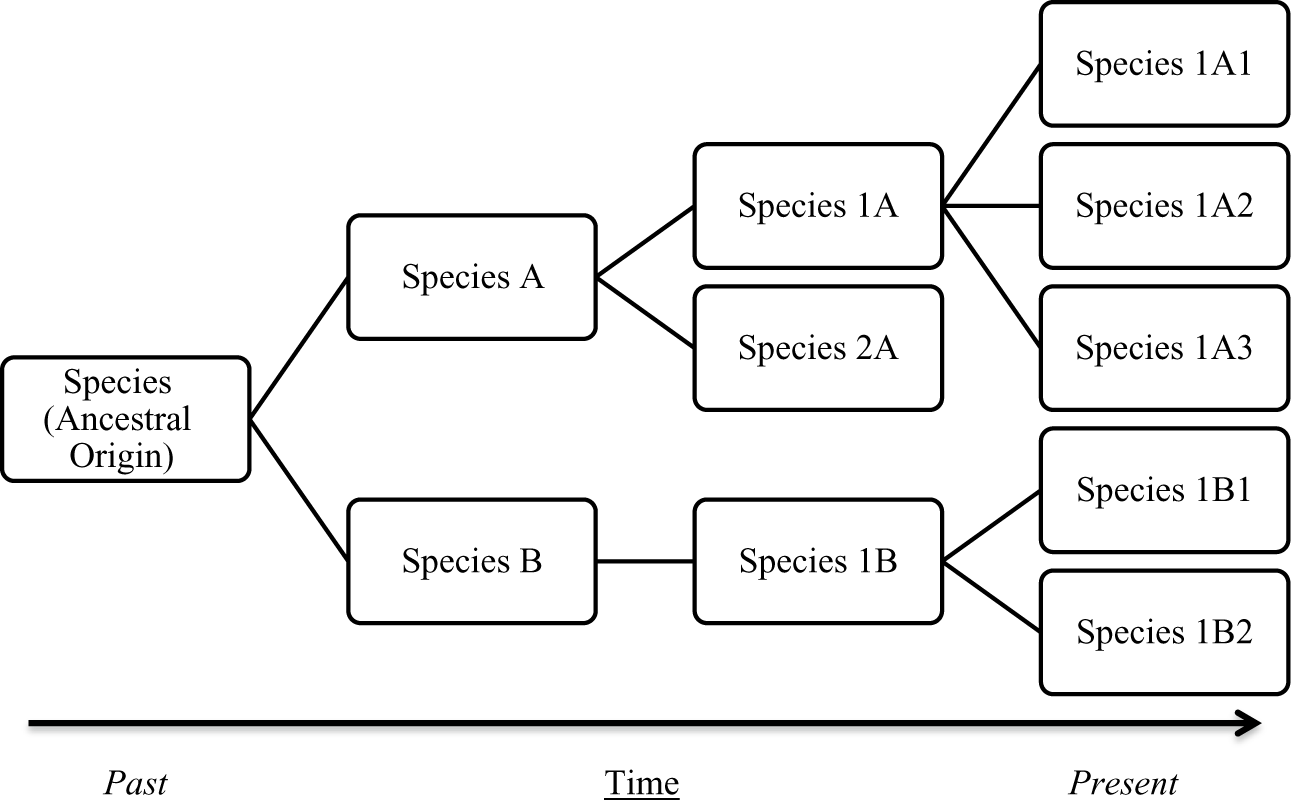
Darwin’s theory of evolution indicated that all life originated from a single life form, which likely was a simple single-cell organism. The idea of a common ancestor among all life forms has led to the study of phylogeny and the development of phylogenetic trees, or the creation of evolutionary lineage maps. An evolutionary map can trace how a species evolved over time and shared similar ancestors to other forms of life (see Figure 2). For policies, the significance of tracing shared ancestry is significant for more than just species classification; it can also help in identifying macroevolutionary processes that lead to speciation, interpreting extinction events, and denoting the difference between invention versus innovation. Nevertheless, tracing common shared ancestry for policy species classification purposes is important for identifying how similar policies cluster together and are interrelated. When balanced with the genetic code of a policy and possible geographic implications, a policy tree of life could demonstrate the similarities and differences among individual policies over time. The proposed dissection of the policy language through a two-step cycle that uses computational linguistics helps establish a policy phylogenetic tree. Yet it is important to note that phylogeny requires an understanding of reproduction first, which aids in tracing microevolutionary processes.
Evolution tree.

How exactly would a policy reproduce? For living organisms, reproduction is typically achieved through sexual or asexual reproduction. Directly transferring these concepts to public policies is difficult, but the factor of human agency tied to each policy pathway sheds light on how policies reproduce. Each policymaking nexus is one method for reproduction within a given policy habitat. The next policy generation begins each time a pathway generates a new policy expression, which essentially equates to an offspring or the next generation of a species. Each policy pathway may be dependent on other avenues for approval. In the U.S. system, check and balances may lead to a new a generation but also prevent reproduction. Policy reproduction occurs with no particular consistency. The human agency factor is significant to reproduction, as it determines which genes are carried on to the next generation. In essence, each policy pathway represents a separate nexus of decision-making for selecting genes that are pushed forward to the next iteration or generation of the policy. Collectively, each pathway contributes to the overall genetic structure (i.e., the genotypes) and the expressed characteristics (i.e., phenotypes) for a policy.
The reproduction approach is perhaps at odds with how scholars have interpreted policy change, policy termination, and the general policy life cycle. The current perception of policy termination assumes that it is very unusual and difficult to achieve. It requires the termination of all aspects of a policy.Footnote 37, Footnote 42, Footnote 43 This particular perspective may be flawed. Policy termination, within these confines, is grounded in the idea of extinction or speciation instead of the actual end stage of a life—death. Existing theories of policy termination and change could be revisited to account for the notion of reproduction among the various causes behind policy gene selection. Indeed, if we conceive of policies as species and living organisms, then we must also assume that they are born, they live, and then they die. Somewhere along that time frame, the policy reproduces. Therefore, each time a policy pathway generates a new iteration, we see the next generation of a policy and, thus, we establish the idea that policies die more frequently than expected.
This leads to the key reason why focusing on the genetic code of policy is important. We assume that change is inevitable, and policies are likely to be altered over time, permitting both a microevolutionary and a macroevolutionary perspective. From a microevolutionary perspective, change in gene frequency within a population is observed on a small scale (e.g., over short time period and within a narrowly defined population). Studies of this nature would examine how genotypes and phenotypes change over the course of few generations through the mechanisms of natural selection, artificial selection, mutation, genetic drift, and migration. Existing policy theories focused on termination and change offer a number of perspectives and insights regarding gene transfer and general microevolutionary trends. For example, the garbage can and multiple-streams models each present a framework for understanding short-term perspectives on policy adoption decisions.Footnote 44 Both frameworks allow for the specific examination of how policies are conceived and ultimately birthed at singular moments in time. A range of political and socioeconomic factors influence the processes leading to gene change and selection. Policy genes are generated and selected by actors present in each policymaking pathway, dictating which characteristics are desirable for a given policy.Footnote 25
Survival of a policy is dependent on policy actors deciding how best to craft the implementation design to survive within a policy habitat. Altering the structure of a policy or terminating it is possible if a policy is undesirable in any capacity and it is not possible to increase the fitness of the design. Changes to a policy can be driven by both genotypes and phenotypes. Until recently, biologists assumed that evolution is solely driven by genotypic change. However, phenotypes, which are influenced by environmental factors and random genetic luck, may also initiate change to genetic traits. Termed “phenotypic plasticity,” the evolutionary developmental biology theory posits that phenotypes can initiate evolutionary change.Footnote 33, Footnote 34 Phenotypes are determined by both genetics and environmental inputs. For example, this can explain differences in skin color among humans. Exposure to sunlight directly impacts the amount of melanin produced. Higher melanin levels lead to darker skin tones and act as a protection against ultraviolent light exposure. Conversely, low light exposure leads to lighter skins tones, which comes with the added benefit of aiding vitamin D production but increases the risk of skin damage from overexposure. Over time, migration and the settlement patterns of humans explain why there are such variations in perceived “races” or skin tones among humans. Phenotypes, in essence, may drive evolutionary change through adaptations to the environment and, in turn, impact the genetic code.
For policies as species, the distinction between genotypes and phenotypes is important to explaining how evolution occurs. The capability of policies to change based on phenotypic plasticity is likely, but the degree of evolution, whether by genetic or phenetic initiation, is limited in scope. At the core, policies are adopted and designed to resolve particular problems. Just as biologists understand that there are limitations to evolutionary change for a species, policy scholars also recognize the evolutionary limitations of policies. Incrementalism and bounded rationality suggest that limitations are placed on decision makers in the policy process. If a policy is designed, for example, as a command-and-control regulatory agriculture policy, it is likely that the policy will never turn into a redistributive social welfare policy offering retirement benefits. Yet, within the scope of reason, that same policy could become a coregulatory policy through incremental adjustments to the policy structure. Changes to the policy could be driven by genotypic or phenotypic changes. For example, decreases in funding, lack of political support, or changes in policy definition are environmental conditions that lead to phenotypic changes. The policy itself, the program design, or the government function may be altered.
The theories of incrementalism and bounded rationality partially explain the process of evolutionary change, but these theories do not provide evidence as to “how decision makers arrive at these adjustments.”Footnote 45 However, applied knowledge of a policy area can resolve how evolutionary adjustments are made. Knowledge in the policy process encompasses the dynamic of phenotypic plasticity. Policy evaluation and analysis incorporates a feedback mechanism whereby a policy organism is constantly assessing and reassessing its current state in response to the environmental conditions in the habitat. In turn, this may impact the underlying genetic structure over time by adjusting aspects of its functions, organization, programs, or policies in order to survive. For microevolution, the “why” is explained by the theory, but the “how” is determined by analysis. Collectively, macroevolutionary trends are plotted based on microevolutionary observation, and policy phylogenetic trees can be developed.
This perspective on policies permits classification that acutely accounts for speciation with particular attention to migration and coevolution. Speciation occurs when one species splits or transforms into a completely different species. Closely related species may be able to interact and exchange gene flows. For example, recent evidence suggests that Homo sapiens interbred with Neanderthals.Footnote 46, Footnote 47 For policy scholars, policy speciation is a particular challenge for scholars as it is unclear where one policy ends and another begins. In a singular environment, a policy may continue to live under the same operating name for decades despite significant drift from the original intent. Incremental adjustments and preconceived notions of policy death may be the confounding factors to unidentified speciation. This is problematic as scholars and practitioners may reference the longevity of a policy as a key reason for its stability and utility in addressing a problem.
There are, however, a few methods that help to identify speciation. First, to observe policy speciation is to rely on existing theories that explain major policy change, including punctuated-equilibrium theoryFootnote 23 and the advocacy coalition framework.Footnote 26 While both approaches may create difficulties in identifying speciation as a result of incrementalism, each theory posits a clear mechanism for identify a clear departure from a previous state of existence.
A second method of observing speciation is policy diffusion. The lens of policy diffusion, both vertical and horizontal, permits the view of speciation among various habitats.Footnote 48 The dynamic of space, time, and federalism presents a crucial dynamic to policy change in the United States. The migration of policies can alter the genetic code. Some of the adaptations may be phenetic in nature, while others are fundamentally drifting from the original policy design and purpose. In addition to migration, the competition or support from other policies within a habitat can impact policy survival and evolution. This is particularly true in unstable and unbalanced coevolutionary relationships. In extreme circumstances, policy extinction can occur.
Speciation is perhaps the ultimate change in policy. If a policy does not continue to evolve in response to its environment, it is likely to become extinct. Microevolutionary adjustments through policy reproduction generate the necessary gene fitness and species adaptation to fluctuating environmental conditions in a habitat. On a macroevolutionary scale, minor or major adjustments over time lead to significant policy evolution. To date, there are few longitudinal studies of policies that balance microevolutionary adjustments with macroevolutionary trends. A species-based classification system can aid in this endeavor by tracing the genetic mutations and adaptations over time and across space.
Labeling genetically modified foods: An exploratory example
The theoretical concept proposed may best be demonstrated through an applied exploratory case that can highlight the dimensions of time, space, and relative connection to other policy species. This brief analysis is not intended to cover the extreme depth necessary for a full investigation and classification, but it is presented to highlight the approach to classification based on process, observations, and data. One recent issue that can exemplify the policy species concept is the movement surrounding the labeling of food products that contain genetically modified organisms (GMOs). In general, GMO discussions make clear the differences between genetic modification and genetic engineering. For the purposes of this article, “GMO” generally refers to genetic engineering techniques that lead to creations that could not occur naturally. The issue of labeling GMO products was addressed in the United States only recently, but the policy has been pursued by a number of countries in the broader international community starting in the 1990s. Indeed, 65 countries mandate labeling of GMOs in some form, with three countries having outright bans on production of genetically engineered crops and foods that contain GMO ingredients. GMO labeling policies were adopted largely because of the unknown long-term environmental impacts with regard to biotechnology, general concerns over food safety, moral implications, and the known economic inequalities that are exacerbated by biotechnology patents and controls.Footnote 49, Footnote 50
The United States lagged other countries until 2016, when Congress adopted S.764, which permits the U.S. Department of Aguriculture to develop mandatory GMO labeling laws. Federal adoption of the policy came after several years of failed attempts to regulate the market. A number of state legislatures, including those in Alaska, Connecticut, Maine, and Vermont, pursued their own policies on GMO labeling. Vermont adopted the only noncontingent and compulsory law.
The classification of GMO labeling as a policy species is collectively based on how the policy initially emerged, diffused, and manifested within each policy habitat. The policy initiated among the international community through national-level habitats that largely reinforced and confirmed compulsory measures for labeling products containing GMOs. At the same time, related policies regulating the production and cultivation of GMOs were also established, which strengthened those particular environments to be supportive and welcoming of labeling policies. The migration to the United States was delayed but initiated in the states. The first iteration of the species was a noncompulsory and contingency-based policy adopted in Alaska, Connecticut, and Maine. It was only when the policy migrated to Vermont that it became reflective of broader international norms of labeling being compulsory and the law not being contingent on other nearby habitats adopting a similar policy. The language of the laws highlights the slight but significant variations within the policy species. This can be observed through the various iterations or generations of the policy. To date, the GMO labeling policy has replicated or reproduced at least twice at the federal level: once through the adoption of S.764 and again after the final rule (83 Fed. Reg. 65814) was issued in 2019. In Vermont, the policy reproduced three times before ceasing to exist because of federal preemption. The state legislative bill, the development of administrative rules, and a court ruling each led to a new iteration of Vermont’s policy before the species went extinct through federal preemption.
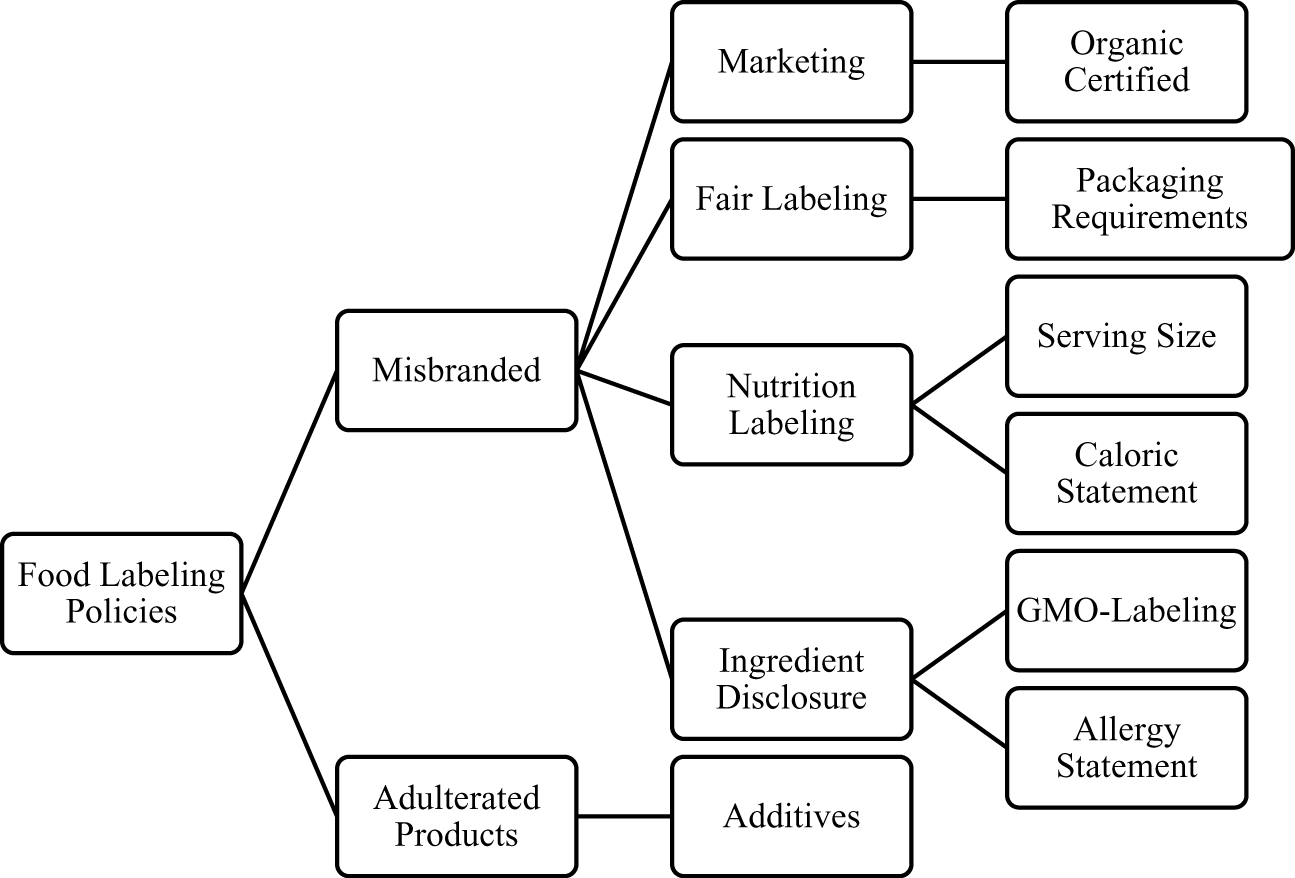
By default, classification is also based on the identification and exploration of other policies that existed previously within the habitat. GMO labeling laws should be classified within a broader taxonomy of food labeling policies, and they are in good company within the clade of misbranded and adulterated food policies (see Figure 3). Within the United States, food labeling can be traced to the Pure Food and Drug Act of 1906. Some state laws existed prior to the federal act. For example, Vermont established laws banning imitation syrup from being labeled as pure maple and paved the way for adulterated and misbranded agricultural policy to leap across the U.S. federal policy habitat.Footnote 51 Over time, this policy clade has evolved to include misbranded policies that focus on ingredient information, nutrition labeling, packing requirements as fair practices, and marketing. Several chapters within Title 7 of the U.S. Code contend with the labeling and marketing of food products. This includes 7 U.S.C. Chapter 38, which includes Subchapter V—National Bioengineered Food Disclosure, which was created after the adoption of S.764.
GMO labeling on the policy evolution tree.

GMO labeling policy shares similarities to other policies, including packaging requirements (e.g., weight and size statements), serving and caloric statements, allergy warnings, and organic products. Among all other similar policies, debates and discussions over labeling GMOs have more closely paralleled and even connected to organic labeling policy. Like organic regulations, the U.S. Department of Agriculture’s Agricultural Marketing Service has been tasked with developing GMO labeling requirements. Moreover, discussions over labeling GMOs raise some concerns regarding consumer behavior and even diversion of market activity from organic goods to products that are not labeled as containing GMOs. However, the organic food and agriculture policies are predicated on a third-party certification design and ultimately are focused on marketing products that are produced by a particular method. Moreover, the genetic design of the organic policy led to the creation of the National Organic Program. GMO labeling does convey the method of production, but the proposed policies are specifically geared toward a knowledge of ingredient rather than a marketing tool or the manifestation of its regulatory program. There is no requirement for third-party certification for GMO statements, and the regulations are more akin to disclosures about potential allergens.
Within the U.S. Code, the organic certification program and labeling requirements fall under the same title as other labeling policies but in different chapters. Moreover, the language that is used to describe the nature of the policies, as established in the U.S. Code and by the rules produced by the Agricultural Marketing Service, outlines how each policy is constructed differently despite having similar labeling outcomes. Indeed, the purposes of the policies based on the final rules make clear the key differences. The National Bioengineered Food Disclosure Standard (83 Fed. Reg. 65814) states that it is “intended to provide for disclosure of foods that are or may be bioengineered to consumers, but also seeks to minimize implementation and compliance costs for the food industry—costs that could be passed on to all consumers.” Comparatively, the National Organic Program’s final rule (65 Fed. Reg. 80547) establishes the program under the Agricultural Marketing Service, outlines the responsibility of the program to develop a list of standards for production and handling of organic products, initiates the responsibility of certifying agents and international equivalencies, and includes a brief statement that reads, “The final rule includes requirements for labeling products as organic and containing organic ingredients.” The scope of the policies, as observed through the language initiated by the legislature and administrative agency and the manifestation of the policies themselves, suggests similar but different behaviors, thereby leading to divergence within the family tree of food labeling.
The process of classification is marked by a clear need to examine how the policies came to exist and change while simultaneously assessing the language outlining the genetic structure and manifestation of the policy. In the case of GMO labeling, the policy is historically structured, the result of a century of food labeling efforts to improve knowledge and information available to consumers. GMO labeling policy, at present in the United States, is a pseudo-compulsory measure that is simply a policy and part of the broader function of food labeling. It does not involve the development of its own program or organization. This classification is made through knowledge of how the policy developed and knowledge in the policy’s construction by examining the legal language that establishes the genetic code and the manifestation of the policy in practice, thereby highlighting the phenotypic expression.
Policies as species: Challenges and opportunities
The policy species approach presents a bold avenue for the study of public policies. Indeed, it is an exercise in brick making for the purposes of building a unified policy theory. The policy species framework presents an operationalized definition of public policy and a systematic process for classification that is inspired by concepts and theories in the field of biology. The concept is capable of bridging knowledge of the policy process and knowledge in the policy process by working across multiple theories and concepts already present in the field. It does so by explicitly denoting that the process of creating and modifying policy is the process of knowing the applied aspects of how policies are classified, approached, and managed in real-world applications.
Policy process theories have presented excellent frameworks for understanding why policies are constructed, but they have not engaged with actually defining what a policy is supposed to be or how creation and modification decisions are made. The practical side of public policy research, which also includes many elements of public administration and public management, has identified what a policy is supposed to be in practice and how policy decisions are made. A policy is not just legislation, a court ruling, or an executive order. A policy is only manifested when the living components of the policy are observed. Functions, organizations, programs, and the policies themselves are those living components. Measurable attributes within each component can demonstrate whether the written laws are a reality and how policies function within an existing habitat.
Future research could expand the application and utility of the policy species concept through the evaluative lens of both microevolutionary and macroevolutionary processes. At the microevolutionary level, there is the potential to truly evaluate the conditions surrounding policy coevolution. Policies do not operate or exist in a vacuum, but our policy studies have largely isolated singular policies for evaluation. Policies may complement or compete with one another for scarce resources in the environment. Therefore, there is an opportunity to investigate the symbiotic or competitive nature of policies within a singular habitat that leads to change, forced reproduction, or termination. A secondary microevolutionary potential for the concept is to derive additional details related to policy migration patterns, which can help unpack the consequences of changing policies across habitats. Policies, like species, have the capability to change by initiating changes to either genotypes or phenotypes. Studying the phenotypic plasticity of policies may drastically aid policy studies that have largely focused on formal aspects of policy evolution (i.e., genotypes or knowledge of the policy process) rather than informal and expressed mechanisms (i.e., phenotypes or knowledge in the policy process).
At the macroevolutionary level, the policy species concept truly has the ability to shine. Macroevolution research may focus on lineage, speciation, or species comparisons. For policies, macroevolution research can focus on the origin of policies and the processes of speciation. Life has to begin somewhere. Policies emerge as problems are identified, agendas are set, and key decision makers opt to enact new laws. While empirical research on policy origins is well developed, there is limited theoretical research to identify where policy ideas originate or even how a policy may be substantially different from some past version. Innovations are not inventions or the representation of some truly novel idea. Likewise, a policy is likely to drift, either incrementally or radically, to such an extent that it no longer resembles its original purpose. Speciation is perhaps the ultimate change in policy. If a policy does not continue to evolve in response to its habit environment, it is likely to become extinct. A species-based approach to classifying and studying public policy aids in viewing the entire policy life cycle within the scope of larger processes that could prove the frequency of policy change and the mortality of a policy. This would move beyond current theories studying major change and contend with radical breaks, both incremental and sudden, in policy that lead to new eras.
The policy species concept is sure to draw its fair share of criticism and controversy. There are several difficulties and challenges associated with its construction and testing. The role of human agency is the most difficult factor to incorporate into the policy species framework. Policies are not and cannot be explained by natural forces. Unlike biological species, human behavior is at the heart of why we have public policies. Policies are a creation of the human existence and desire for a structured society. Agency not only creates the institutions and pathways for policy creation, but it also serves as the mechanism for determining the overall design of policies, reproduction, and the communication of policies across and among government jurisdictions. The policy species concept incorporates the role of human agency by largely assuming its presence in every process and conceptual construction. This is not as easily translated from biology unless one assumes an almost religious perspective that there is an all-knowing, ever-present figure responsible for life on earth.
As another concern, the policy species concept will be challenging to test empirically. The model requires extensive data collection and analysis, particularly to construct longitudinal macroevolutionary evaluations. It could take years to construct the evolutionary process of a singular species assuming that all necessary data is available. Hundreds of variables would be required just to statistically map the policy genotypes and phenotypes. Determining the causal change would require many more. To some, the question becomes, is this necessary? What is the benefit of yet another policy theory or concept that is very difficult to test? The benefit is potentially substantial. It is crucial to remember that even biologists and geneticists have only recently mapped entire genetic sequences and begun to understand the function of individual genes. If actual living organisms are so complex, why should we expect policies, the product of human agency, to be any easier? We have reached a critical juncture in public policy research where we need better theories capable of bridging divides. If a simplistic and unifying policy theory were possible, it would have been developed already. The policy species framework presents an opportunity to return to an initial area of policy research that connects with contemporary frameworks and theories. While it will not be an easy concept to empirically test, the framework may ultimately explain how policies emerge, change, and migrate by connecting knowledge of the policy process with knowledge in the policy process.