Introduction
The quality of the stimulation and support provided in the home during childhood has a major impact on child development and course of life, and growing up in a challenged or adverse home environment can contribute considerably to a child's risk of developing mental and physical health difficulties, substance and alcohol abuse and criminal offending (Berens, Jensen, & Nelson, Reference Berens, Jensen and Nelson2017; Kendler et al., Reference Kendler, Morris, Ohlsson, Lönn, Sundquist and Sundquist2016a; Kendler, Ohlsson, Sundquist, & Sundquist, Reference Kendler, Ohlsson, Sundquist and Sundquist2016b; Kendler, Ohlsson, Sundquist, & Sundquist, Reference Kendler, Ohlsson, Sundquist and Sundquist2020; Kendler, Ohlsson, Sundquist, & Sundquist, Reference Kendler, Ohlsson, Sundquist and Sundquist2021; Nelson et al., Reference Nelson, Scott, Bhutta, Harris, Danese and Samara2020; Repetti, Taylor, & Seeman, Reference Repetti, Taylor and Seeman2002). Further, it can negatively affect neural, social and psychological development (McLaughlin, Fox, Zeanah, & Nelson, Reference McLaughlin, Fox, Zeanah and Nelson2011). More than 35 million adults in the Group of Seven industrialized countries have a severe mental illness such as schizophrenia, bipolar disorder or major depression, and a total of eight to ten million children constitute their offspring (Maziade, Reference Maziade2017). These children have a 15–20 fold increased risk of having the same disorder as their parent and a 50% risk of developing a psychiatric disorder before adulthood (Maziade, Reference Maziade2017; Paccalet et al., Reference Paccalet, Gilbert, Berthelot, Marquet, Jomphe, Lussier and Maziade2016). While familial risk is well-established as the single largest risk factor for offspring severe mental illness (Mortensen et al., Reference Mortensen, Pedersen, Westergaard, Wohlfahrt, Ewald, Mors and Melbye1999), not much is known about home environmental factors which may differ between such familial high-risk children and controls, although identification of home environmental risk factors may hold a preventive potential. In families with severe parental mental illness, previous studies found that parental distress, negative communication style and interaction, mood swings and impulsivity, impaired parenting capacity, impaired level of functioning, low quality of life and family stress may affect the home environment negatively (Brockington et al., Reference Brockington, Chandra, Dubowitz, Jones, Moussa, Nakku and Ferre2011; Chernomas, Clarke, & Chisholm, Reference Chernomas, Clarke and Chisholm2000; Duncan & Reder, Reference Duncan and Reder2000; Goossens, Van Wijngaarden, Knoppert-Van Der Klein, & Van Achterberg, Reference Goossens, Van Wijngaarden, Knoppert-Van Der Klein and Van Achterberg2008; Riordan, Appleby, & Faragher, Reference Riordan, Appleby and Faragher1999; Rosa et al., Reference Rosa, Franco, Martínez-Aran, Sánchez-Moreno, Reinares, Salamero and Vieta2008; Vance, Jones, Espie, Bentall, & Tai, Reference Vance, Jones, Espie, Bentall and Tai2008; Wan, Abel, & Green, Reference Wan, Abel and Green2008). Previous studies further found that an adverse home environment is caused by many and often interrelated risk factors which accumulate the risk of negative child outcomes (Evans, Li, & Whipple, Reference Evans, Li and Whipple2013). When a genetic vulnerability is present, the home environment becomes even more crucial, as shown in a study where neither familial risk of schizophrenia nor a dysfunctional home environment alone increased the prevalence of offspring mental disorder, but combined resulted in a 33% risk of schizophrenia (Wynne et al., Reference Wynne, Tienari, Nieminen, Sorri, Lahti, Moring and Miettunen2006). Furthermore, socioeconomic disadvantages such as poverty, unemployment and lack of support are prevalent amongst individuals who develop severe mental disorders, and these disadvantages may further pose a risk to e.g. physical and social aspects of the home environment (Hakulinen et al., Reference Hakulinen, Elovainio, Arffman, Lumme, Pirkola, Keskimäki and Böckerman2019; McLoyd, Reference McLoyd1998; Östman & Hansson, Reference Östman and Hansson2002).
Few studies have assessed the quality of the home environment of children of parents with severe mental illness, and only a few of these concerned parental schizophrenia or bipolar disorder (Gantriis, Thorup, & Bliksted, Reference Gantriis, Thorup and Bliksted2019a; Gantriis et al., Reference Gantriis, Thorup, Harder, Greve, Henriksen, Zahle and Bliksted2019b). These studies found that parental mental illness posed a challenge to the home environment, and that an inadequate home environment is associated with adverse child outcomes (Goodman & Brumley, Reference Goodman and Brumley1990; Wynne et al., Reference Wynne, Tienari, Nieminen, Sorri, Lahti, Moring and Miettunen2006), something which was also found in our own cohort where a previous study of 7-year data found that the home environment and parental social functioning together explained more than 50% of the group variation on child problem behavior (Uddin et al., Reference Uddin, Ekstrøm, Hemager, Christiani, Gregersen, Ellersgaard and Nordentoft2021). Further, previous studies found that children of parents with bipolar disorder experienced greater amounts of negative communication while those of parents with schizophrenia experienced greater amounts of avoidant and insensitive interaction (Gantriis, Reference Gantriis2017). However, most previous studies were hampered by small sample sizes, large age spans and by recruitment of convenience samples from clinics (Ellersgaard, Reference Ellersgaard2018). To our knowledge, no studies have longitudinally assessed the home environment of children born to parents with schizophrenia or bipolar disorder – which are often considered as two of the most severe mental illnesses – conjointly on the basis of a nation-wide representative register-based population. These two disorders, which historically represented the psychotic illnesses and were categorized together until the dichotomization by Kraepelin, share several features such as etiology, genetics, risk factors and treatment response (Ellersgaard, Reference Ellersgaard2018), and they are therefore suitable for studies side-by-side. Assessing whether findings are stable over time, and examining differential change across risk groups, is essential to examine the need for support.
The Danish High Risk and Resilience Study is a nested case–control study consisting of 522 Danish children of parents with schizophrenia or bipolar disorder (Thorup et al., Reference Thorup, Jepsen, Ellersgaard, Burton, Christiani, Hemager and Nordentoft2015). Baseline assessments of the home environment were conducted at the children's age 7 and the children were reassessed at age 11. This allowed for the longitudinal characterization of the home environment amongst children with a predisposition of severe mental illness, compared with controls.
Objectives
We aimed to assess the home environment of children of parents with schizophrenia or bipolar disorder and controls at 11 years of age by using the semi-structured interview HOME, age-appropriate version, and through this assessment, to examine potential changes over time from age 7 to 11.
Methods
The Danish High Risk and Resilience Study – VIA 7 (the VIA 7 Study) is a cohort of 522 children of parents with schizophrenia (FHR-SZ) or bipolar disorder (FHR-BP), and population-based controls (PBCs), identified and, for FHR-SZ, matched through the Danish national registers (Mors, Perto, & Mortensen, Reference Mors, Perto and Mortensen2011; Thorup et al., Reference Thorup, Jepsen, Ellersgaard, Burton, Christiani, Hemager and Nordentoft2015). Families with at least one 7-year-old child were included if at least one biological parent had been diagnosed within the schizophrenia psychosis spectrum defined as schizophrenia, delusional disorder or schizoaffective disorder, or with bipolar disorder (online Supplementary Fig. S1). The ill parent identified through the registers, or, for controls, the matched same-sex none-ill parent, was denoted as the index parent. This cohort constituted a nationwide representative sample.
The assessors were medical doctors, psychologists and nurses. Assessments took place from January 1, 2013 until January 31, 2016 at age seven and 4 years later at age 11 (the VIA 11 Study) from March 1, 2017 until June 30, 2020 (Thorup et al., Reference Thorup, Jepsen, Ellersgaard, Burton, Christiani, Hemager and Nordentoft2015, Reference Thorup, Hemager, Søndergaard, Gregersen, Prøsch, Krantz and Nordentoft2018). A total of 465 children participated in The VIA 11 Study. Assessors received formal training in the entire assessment battery. Child assessors were blinded to risk status. The home assessments were part of a large assessment battery which also included child and caregiver level of functioning, assessed with Children's Global Assessment Scale (CGAS) and Personal and Social Performance Scale (PSP), and problem behavior, assessed with Child Behavior Checklist (CBCL) (Thorup et al., Reference Thorup, Hemager, Søndergaard, Gregersen, Prøsch, Krantz and Nordentoft2018). Background information regarding socio-economy and child or family support received from the municipality was obtained from the caregivers. The VIA 11 data were collected and managed using Research Electronic Data Capture (REDCap) (Harris et al., Reference Harris, Taylor, Minor, Elliott, Fernandez, O'Neal and Duda2019).
The home environment was measured with the Middle Childhood HOME Inventory (MC-HOME) in the VIA 7 Study, and with the Early Adolescence HOME Inventory (EA-HOME) in the VIA 11 Study (Bradley et al., Reference Bradley, Corwyn, Caldwell, Whiteside-Mansell, Wasserman and Mink2000; Elardo & Bradley, Reference Elardo and Bradley1981). The HOME Inventory is a semi-structured, one-hour interview which measures levels of stimulation and support, conducted in the home with the child and primary caregiver (defined in our study as the adult who provided the majority of care for the child – thus, it could be the index parent, the co-parent or a foster parent). The MC- and EA-versions consist of 59 and 60 binary items, respectively, and previous studies have found them to be comparable (Burston, Puckering, & Kearney, Reference Burston, Puckering and Kearney2005). The MC-HOME Inventory consists of the subscales Responsivity, Encouragement of maturity, Emotional climate, Learning materials and opportunities, Enrichment, Family companionship, Family integration and Physical environment, and the 7-year baseline data have been described extensively elsewhere (Gantriis et al., Reference Gantriis, Thorup, Harder, Greve, Henriksen, Zahle and Bliksted2019b). The EA-HOME Inventory was used at age 11 and consists of the subscales Physical environment (concerning safe and appealing physical home surroundings), Learning materials (concerning access to creative tools, books, and sports gear), Modeling (concerning parental role modeling – e.g. reading newspapers, seeing friends, exercising, not losing temper), Fostering self-sufficiency (concerning parental support e.g. to learn to cook and clean, to do homework and to be informed in current news), Regulatory activities (concerning routines and duties in the home), Family companionship (concerning family activities e.g. theater excursions, holidays, outdoor activities and having meals together), and Acceptance (concerning parent-and-child communication, and allowance for child independency) (Bradley et al., Reference Bradley, Corwyn, Caldwell, Whiteside-Mansell, Wasserman and Mink2000).
A total of 40 of the 60 items in the EA-HOME Inventory are identical or only slightly modified from the MC-HOME Inventory, while others are modified to be age-appropriate. While questions about motor skills and compliance toward the child's needs have been removed, questions about substance abuse, peer relationships, and parental modeling behavior have been added (Bradley et al., Reference Bradley, Corwyn, Caldwell, Whiteside-Mansell, Wasserman and Mink2000). Every item can be given a plus or a minus, depending on whether the criteria are fulfilled or not. Thus, high scores denote high levels of stimulation and support in the home.
Assessors underwent comprehensive training and the HOME Inventory correlation between the assessors was found to be excellent and good, respectively (ICC = 0.98, confidence interval (CI) 0.96–1.00 for the VIA 7 Study, and ICC = 0.725, CI 0.531–0.901 for the VIA 11 Study) (Cicchetti, Reference Cicchetti1994; Gantriis et al., Reference Gantriis, Thorup, Harder, Greve, Henriksen, Zahle and Bliksted2019b). In the cases of shared custody, the home where the child lived most of the time or in the cases of 50/50 custody, the address where the child is registered was assessed.
Statistical methods
One-way ANOVA was used for means (s.d.) and pairwise comparisons at age 7 and 11 regarding continuous data, and chi-square was used for N (%) and pairwise comparisons regarding categorical data. Drop-out analyses were made using Pearson Chi-square or Fischer's exact test if the sample size was small (<5 in a cell). Two total home environment scores were calculated: As a continuous measure and as a dichotomous measure. The dichotomous measure distinguished between an adequate or inadequate home environment as 2 s.d. below the mean of the control group (Gantriis et al., Reference Gantriis, Thorup, Harder, Greve, Henriksen, Zahle and Bliksted2019b). Linear mixed models were used to assess development and possible time and group interactions regarding the total scores, and mixed-effects logistic regression was used for examining the prevalence of children with inadequate home environments both at 7 and 11 years of age. The models included time, risk group, and time-risk group interaction. A generalized linear mixed model, which excluded children placed out of the home of the biological parents between age 7 and 11, was conducted. The mixed models accommodated missing data through full information maximum likelihood. To explore the effect of parental level of functioning on the home environment at age 11, an analysis of covariance (ANCOVA), using parental function as a covariate, was conducted. SPSS Statistics v. 25 was used for all analyses.
Results
Applying the cut-off definition for an inadequate home environment to the age 7 and 11 datasets, a total score of 41 and above equaled an adequate home environment while a score of 40 and below equaled an inadequate home environment (online Supplementary Table S1).
Of the 522 children in the VIA 7 Study, 508 (196 with FHR-SZ, 116 with FHR-BP and 196 PBC) children and their primary caregivers participated in the home assessment at baseline at age 7. As described in detail elsewhere, FHR group scores were significantly lower than those of PBCs (Gantriis et al., Reference Gantriis, Thorup, Harder, Greve, Henriksen, Zahle and Bliksted2019b).
Of the 465 children in the VIA 11 Study, 430 (160 with FHR-SZ, 99 with FHR-BP and 171 PBC) children and their caregivers participated in the follow-up assessment of the home environment at child's age 11. Thus, 81.6% of children in VIA 7 at FHR-SZ, 85.3% of children in VIA 7 at FHR-BP and 87.2% PBC participated again (see online Supplementary Fig. S1 for Flowchart). Dropout analyses by risk group comparing children participating at age 7 and age 11 rendered non-significant differences (p = 0.545). However, dropout analyses by sex of the child showed that significantly more boys no longer participated (p < 0.001). Further, a higher proportion of children in the FHR-SZ group who had an inadequate home environment at age 7 had dropped out at age 11 (p = 0.010) (online Supplementary Table S2).
Background characteristics at age 11
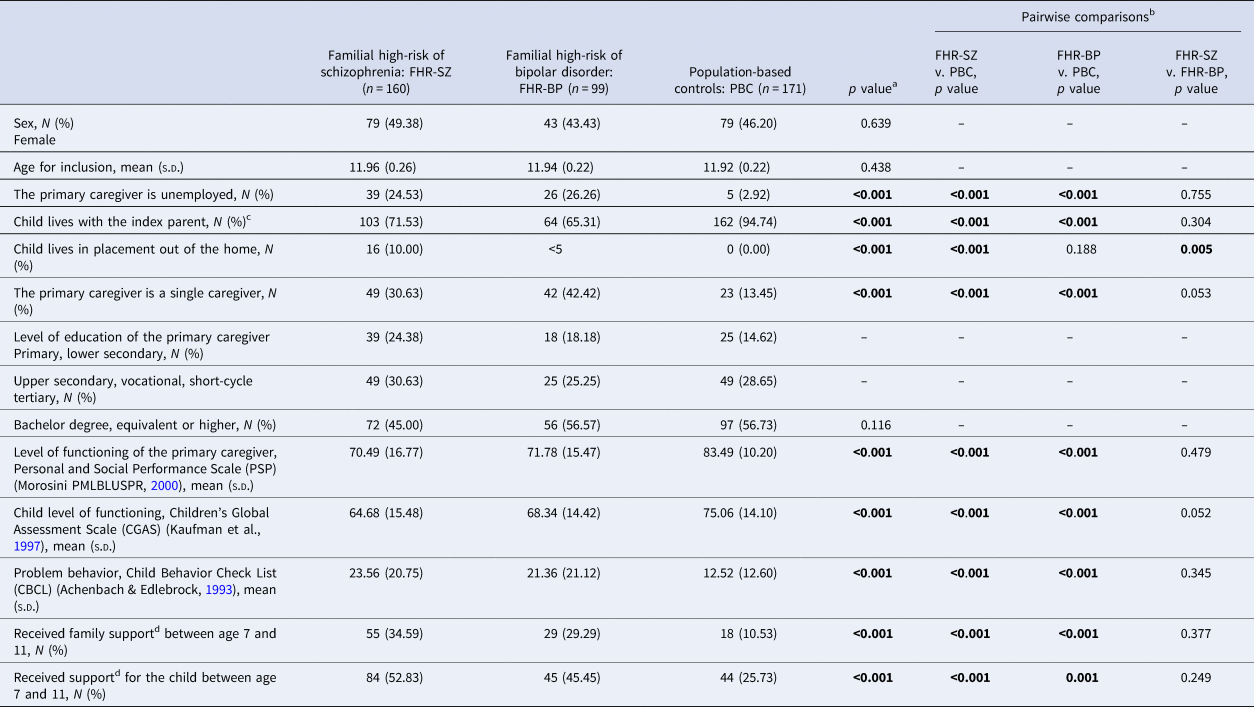
Regarding the prevalence of primary caregiver unemployment, placement away from the biological parents, problem behavior amongst the children and single caregiver status, FHR groups were disadvantaged compared to controls (p < 0.001) (Table 1). Educational levels did not differ amongst primary caregivers in the three groups (p = 0.116). The primary caregiver level of functioning was lower for FHR groups compared to controls (mean (s.d.) = 70.49 (16.77) for FHR-SZ, 71.78 (15.47) for FHR-BP and 83.49 (10.20) for PBC, p < 0.001). The child's level of functioning was also lower for both risk groups compared to controls (mean (s.d.) = 64.68 (15.48) for FHR-SZ, 68.34 (14.42) for FHR-BP and 75.06 (14.10) for PBC, p < 0.001) (Table 1). From age 7 to 11, 34.9% of those with FHR-SZ who participated in the VIA 11 Study had received family support and 52.3% had received child support (i.e. school support or social support). In the FHR-BP group, 30.5% had received family support and 45.7% had child support. 10.6% had received family support and 27.2% child support in PBC's (p < 0.001) (Table 1). Examining sex differences among index parents and caregivers, we found that 50% of index bipolar parents were female, while this was the case for nearly 60% of index schizophrenia parents. For caregivers, 78% in the schizophrenia group were female while this was the case for 82% in the bipolar group and for 87% among PBCs (data not shown).
Characteristics of 430 children with familial high-risk of schizophrenia (FHR-SZ), bipolar disorder (FHR-BP) or population-based controls (PBC) assessed with Early Adolescence-Home Observation for Measurement of the Environment Inventory (EA-HOME Inventory) in the Danish High Risk and Resilience Study VIA 11

a One-way ANOVA or Pearson chi-square as appropriate.
b Post hoc and chi-square pairwise comparisons as appropriate. Only comparisons with a significant overall p value are reported.
c In 237 cases, the primary caregiver was also an index parent.
d Support given to the family or the child could be e.g. family counseling, practical support in the home, psychological aid, school support or physiotherapy.
Bold signifies p-values which are significant at the 0.05 level.
Total and subscale HOME scores at age 11 compared to age 7
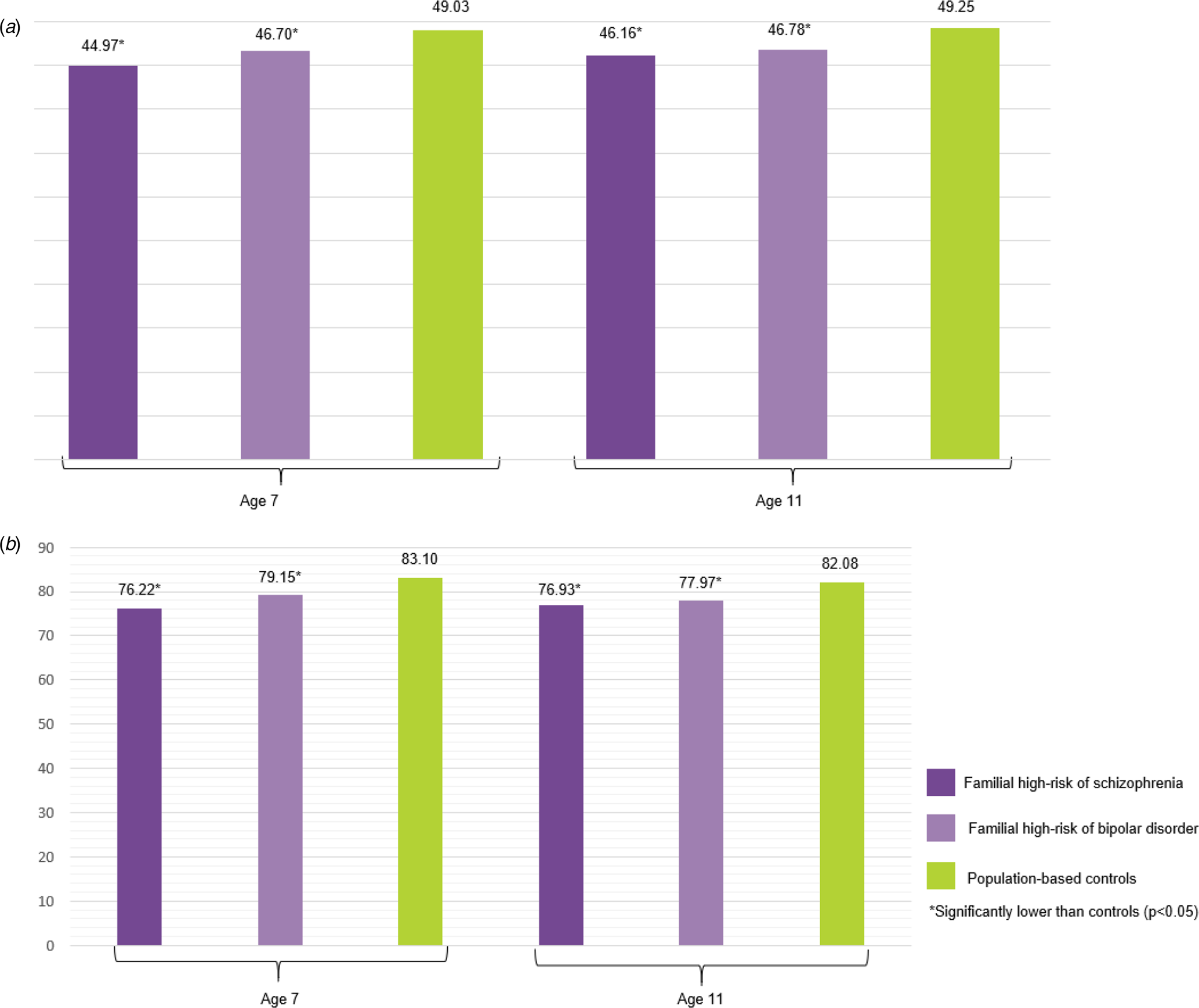
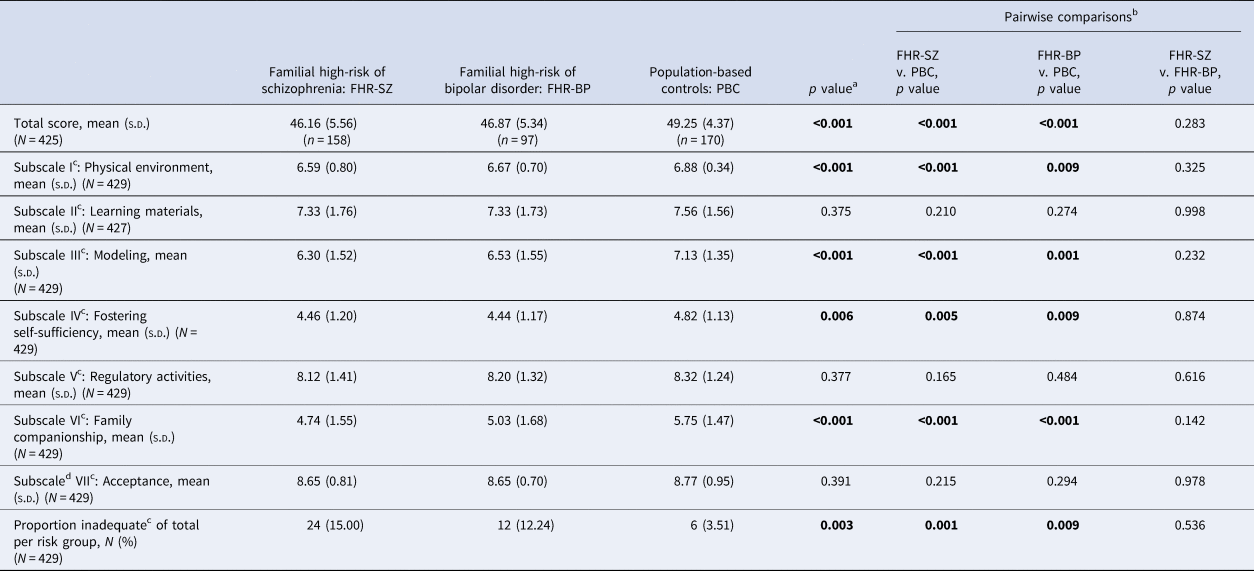
At age 11, FHR groups had lower total scores on the home environment than PBCs (mean (s.d.) = 46.16 (5.56) for FHR-SZ, 46.87 (5.34) for FHR-BP and 49.25 (4.37) for PBC, p < 0.001) (Table 2 and Fig. 1). FHR children had lower scores in four of the seven subscales in the EA-HOME Inventory. For the subscale Physical environment, both FHR groups scored lower than PBCs (mean (s.d.) = 6.59 (0.80) for FHR-SZ, 6.67 (0.70) for FHR-BP and 6.88 (0.34) for PBC, p < 0.001 for FHR-SZ v. PBC and p < 0.009 for FHR-BP v. PBC) (Table 2). This was also the case for the subscale Modeling (mean (s.d.) = 6.30 (1.52) for FHR-SZ, of 6.53 (1.55) for FHR-BP and of 7.13 (1.35) for PBC, p = 0.001 for FHR-BP v. PBC and p < 0.001 for FHR-SZ v. PBC). Both FHR groups also scored lower than PBCs in the subscale Fostering self-sufficiency (mean (s.d.) = 4.46 (1.20) for FHR-SZ, of 4.44 (1.17) for FHR-BP and 4.82 (1.13) for PBC, p = 0.009 for FHR-BP v. PBC and p = 0.005 for FHR-SZ v. PBC) and in the subscale Family companionship (mean (s.d.) = 4.74 (1.55) for FHR-SZ, 5.03 (1.68) for FHR-BP and 5.75 (1.47) for PBC, p < 0.001 for both FHR groups v. PBC). At baseline at the child's age 7, the subscales correlated to Physical environment, Fostering self-sufficiency and Family companionship also displayed lower scores when the children were assessed with the MC-HOME, while the subscale Modeling was not part of the MC-HOME (Gantriis et al., Reference Gantriis, Thorup, Harder, Greve, Henriksen, Zahle and Bliksted2019b).
Mean total score for the home environment (1a) and percent points achieved of total score possible (1b) in the Middle Childhood-Home Observation for Measurement of the Environment (MC-HOME Inventory) and the Early Adolescence-Home Observation for Measurement of the Environment Inventory (EA-HOME Inventory) among children of parents with schizophrenia, bipolar disorder or population-based controls in the Danish High Risk and Resilience Study VIA 7 (age 7) (N = 508) and 11 (age 11) (N = 425).

Total and subscale scores, and proportion inadequate as defined by 2 s.d. below the population-based control (PBC) group mean, per risk group in the Early Adolescence-Home Observation for Measurement of the Environment Inventory (EA-HOME Inventory) among 430 children with familial high-risk of schizophrenia (FHR-SZ), bipolar disorder (FHR-BP) or PBCs participating in the Danish High Risk and Resilience Study VIA 11

a One-way ANOVA or Pearson chi-square as appropriate.
b Post hoc and chi-square pairwise comparisons as appropriate.
c All subscale scores have an N between 425 and 430 as five assessments were partially completed. Of these, 4 had an adequate home environment no matter the missing score and were thus included in calculations concerning inadequate home environments.
d Maximum scores for the subscales are: I: 7, II: 10, III: 10, IV: 6, V: 10, VI: 8, VII: 9.
Bold signifies p-values which are significant at the 0.05 level.
Inadequate home environments at age 11 compared to 7
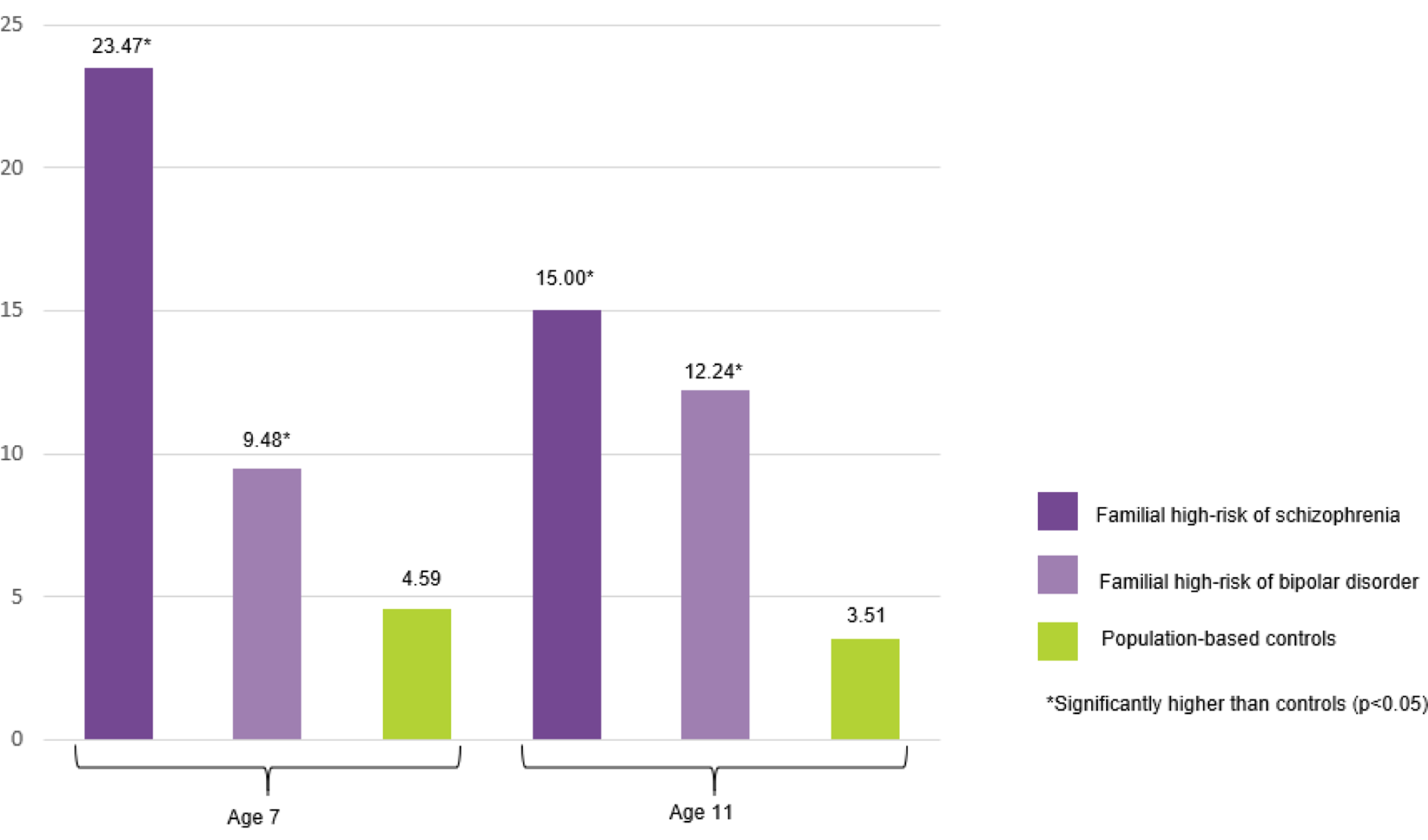
At age 11, both FHR groups had a higher prevalence of inadequate home environments than controls (N (%) = 24 (15.0) for FHR-SZ, 12 (12.2) for FHR-BP and 6 (3.5) for PBC, p = 0.001 for FHR-SZ v. PBC and p = 0.009 for FHR-BP v. PBC) (Table 2 and Fig. 2). Of those who had an inadequate home environment at age 7, 36.5% (N = 19) still had an inadequate home environment at age 11 (data not shown).
Proportion with an inadequate home environment (%) in the Early Adolescence-Home Observation for Measurement of the Environment Inventory (EA-HOME Inventory) (N = 429) and in the Middle Childhood-Home Observation for Measurement of the Environment (MC-HOME Inventory) (N = 508) among children of parents with schizophrenia, bipolar disorder or population-based controls in the Danish High Risk and Resilience Study VIA 7 (age 7) and 11 (age 11).

Examining the change in total scores and inadequate home environments from age 7 to 11
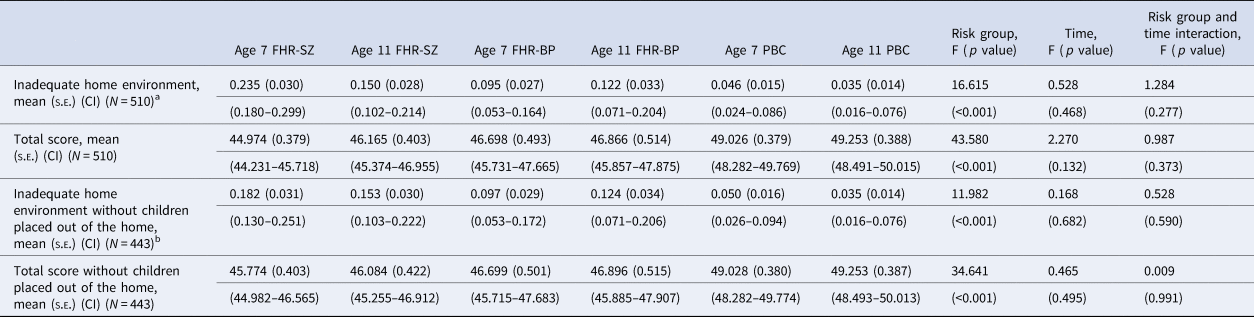
No time and group interactions were found in the binary cut-off scores (p = 0.277), nor in continuous analyses (p = 0.373) of proportions with an inadequate home environment (Table 3 and online Supplementary Fig. S2). Exploratory analyses were performed by excluding children placed outside the home (N = 16 for FHR-SZ, <5 for FHR-BP and 0 for PBC). Time and group interactions remained insignificant concerning both inadequate home environment (p = 0.590) and the total score (p = 0.991) (Table 3).
Time changes and group differences in home environment between age 7 and age 11 for children of parents with schizophrenia (FHR-SZ), bipolar disorder (FHR-BP) or population-based controls PBC in The Danish High Risk and Resilience Study. Mixed model for inadequate home environment and total score for all participants and below, with those placed out of the home excluded, from the child's age of 7 to the child's age of 11.

a A total of 510 children participated in the home environment assessment at either age 7, age 11 or at both time points.
b Excluding the children who had been subject to placement out of the home of the biological parents between age 7 and age 11, a total of 443 children participated in the home environment assessment at either age 7, age 11 or at both time points.
The effect of parental functioning on the home environment
A covariance analysis was conducted to explore the effects of the parental level of functioning on the home environment total score. When the parental function was included as a covariate, the risk groups no longer differed (p = 0.136). We found that 16.2% of the variability in the home environment across risk groups was explained by the parental level of functioning (online Supplementary Table S3).
Discussion
To the best of our knowledge, this is the first study that presents longitudinal data concerning the quality of the home environments of children at FHR-SZ or FHR-BP, compared to PBCs. Children with FHR lived in home environments with lower mean levels of stimulation and support than PBCs at age 7 and at age 11, and children at FHR-SZ and FHR-BP more often lived in inadequate home environments, compared to PBCs. Given the findings of substantial amounts of support given to FHR families compared to PBCs, we hypothesize that differences between FHR groups and PBCs would be even larger, had it not been for the extensive Danish universal welfare model (Olejaz et al., Reference Olejaz, Juul Nielsen, Rudkjøbing, Okkels Birk, Krasnik and Hernández-Quevedo2012). It is however also likely that drop-out from age 7 to 11 in the schizophrenia group amongst those who had an inadequate home environment at the first assessment has diminished differences between groups.
Examining the subscale scores, we found that the same or correlated subscales posed a challenge for the FHR groups at ages 7 and 11. At age 7, both FHR groups had lower scores in the subscales of Encouragement of maturity, Enrichment, Family companionship, Family integration and Physical environment, Responsivity (only FHR-SZ), and Learning materials and opportunities (only FHR-SZ) (Gantriis et al., Reference Gantriis, Thorup, Harder, Greve, Henriksen, Zahle and Bliksted2019b). At age 11, both FHR groups had lower scores regarding the Physical environment, Modeling, Fostering self-sufficiency (which resembles the Encouragement of maturity subscale in the MC version) and Family companionship. Concerning the physical environment, our finding is in line with a previous study where children of parents with severe mental illness were socio-economically disadvantaged (Hudson, Reference Hudson2005). Further, a study found associations between the physical home environment and prefrontal cortical thickness and this may be of relevance since decreased prefrontal cortical thickness has also been associated with schizophrenia development (Selemon & Zecevic, Reference Selemon and Zecevic2015; Uy, Goldenberg, Tashjian, Do, & Galván, Reference Uy, Goldenberg, Tashjian, Do and Galván2019). A previous study found that mothers with bipolar disorder display more negative reactions toward their children (Inoff-Germain, Nottelmann, & Radke-Yarrow, Reference Inoff-Germain, Nottelmann and Radke-Yarrow1992). This is in line with our finding that more FHR children had lower modeling scores, as this subscale includes items about the parents losing their temper toward their child. In contrast, we found no differences between the FHR-groups and PBCs on the Acceptance subscale, although this subscale also concerns negative reactions toward the child. The discrepancy may be caused by different methodologies, as this scale in the HOME inventories is based on observations as part of a semi-structured interview while assessments in the aforementioned study mentioned were based on videotaped, informal interactions with children of wider age ranges (Inoff-Germain et al., Reference Inoff-Germain, Nottelmann and Radke-Yarrow1992). Concerning Family companionship, previous studies of bipolar offspring found lower cohesion, lower adaptability and higher levels of conflict in FHR-BP families, compared to PBCs, which is also in line with our study (Shalev et al., Reference Shalev, Merranko, Goldstein, Miklowitz, Axelson, Goldstein and Birmaher2019).
Besides the Modeling scale which was added in the EA version compared to the MC version, the differences amongst FHR children compared to PBCs were present at both time points for all the subscales affected at the 11-year follow-up. These scales could represent those most affected by socioeconomic circumstances (Physical environment) and by the level of functioning of the parent (Fostering self-sufficiency and Family companionship). They also represent aspects known from previous studies to be affected amongst individuals with a severe mental illness and may be relevant for supportive strategies (Hakulinen et al., Reference Hakulinen, Elovainio, Arffman, Lumme, Pirkola, Keskimäki and Böckerman2019; Östman & Hansson, Reference Östman and Hansson2002; Repetti et al., Reference Repetti, Taylor and Seeman2002; Rosa et al., Reference Rosa, Franco, Martínez-Aran, Sánchez-Moreno, Reinares, Salamero and Vieta2008).
In our mixed models, the score changes from age 7 to 11 did not differ across groups. First, this finding could indicate that the home environment is not getting worse because initiatives taken by families, municipalities and health care workers have improved an otherwise more challenging home environment. The large numbers of FHR families who have received support from municipalities support this theory and even raise the question: Could the differences found between groups at both time points to a larger degree have been avoided, if home visits and support had been given at an earlier time point? Second, the finding could also indicate that the efforts done to support the FHR groups have not been successful – or at least, have not managed to improve the home environment to the level of PBCs. Third, our study may be underpowered to detect differential change. Fourth, the 2 age-fitted HOME Inventory versions may not have made a full comparison of data over time possible, although most items are comparable and although concordance has previously been shown across versions (Burston et al., Reference Burston, Puckering and Kearney2005).
It is worth noticing that the proportion of FHR-BP children who were evaluated as having an inadequate home environment had increased from 9.5% (0.053;0.164) to 12.2% (0.071; 0.204) from age 7 to 11. This change did not differ significantly (p = 0.277) as compared to the other groups but is however in line with a previous study which found that for bipolar parents, conflicts increased and family cohesion decreased over time (Shalev et al., Reference Shalev, Merranko, Goldstein, Miklowitz, Axelson, Goldstein and Birmaher2019).
Our study supports the conclusion that a higher proportion of children of parents with schizophrenia or bipolar disorder live in home environments with lower levels of stimulation and support than controls. Multiple factors are likely to be involved in this finding, including the parental level of education and employment, parental single caregiver status, and parental and child functioning, where FHR families are more disadvantaged, as shown in Table 1. Such factors could also include parental behavior since the HOME inventories do not cover all aspects relevant to this topic, and it could also cover the sex of the index parents and caregivers since ill index parents were more often female in the schizophrenia group, and since caregivers were less often female in the schizophrenia group, compared to the other groups. Like for parental level of functioning, other factors may thus explain parts of the home environment variability across groups. The parental function ANCOVA highlights the importance of supporting parental functioning to improve the home environment of FHR children.
A focus on the home environment for children of parents with schizophrenia or bipolar disorder is relevant for assessing needs for support and may also be relevant for preventing mental illness amongst FHR children. A previous study found that familial predisposition of schizophrenia in combination with an inadequate rearing environment composed a strong risk factor for schizophrenia, and this interaction accounted for almost twice as much of the variance as that accounted for by familial predisposition singularly (Carter, Schulsinger, Parnas, Cannon, & Mednick, Reference Carter, Schulsinger, Parnas, Cannon and Mednick2002). Parents in this study may have been more severely ill, but the role of the home environment may, however, have predictive value with regards to which FHR children are at most risk of developing severe mental illness.
We find substantial incentives for focusing on the home environment of children of parents with schizophrenia or bipolar disorder, and for supporting initiatives that can improve the quality of the home environment. One possible strategy could be to evaluate needs for support using the HOME Inventories since this has previously been shown to be effective to improve the quality of the home environment also in populations at risk of adverse child health outcomes (Kendrick et al., Reference Kendrick, Elkan, Hewitt, Dewey, Blair, Robinson and Brummell2000). Support should be multifaceted as it would need to address the factors which hamper the home environment in each individual family, e.g. low level of parental functioning due to mental illness, poor economy and limited network of family and friends. Such adaption of support to each family according to needs as assessed systematically holds the potential to increase the outcome of the support given.
Strengths and limitations
This nationwide population-based multi-site study has several strengths, including a large cohort with a narrow age range and the use of an age-appropriate, tester administered assessment battery, trained assessors with good to excellent interrater reliability, on-site examination of home environments, and follow-up data. A potential limitation of the study is that only one home was assessed in the cases of shared custody, and in 101 out of the 430 cases, this means that the home of the ill/ index parent was not assessed. This was however in line with our aim and the home environment score may still be affected since (1) some questions address both parents, and (2) reasons for not living with the ill parent are just as diverse as the functioning of the index parent, and (3) since we found in another study that coparents too had lower levels of social functioning and in nearly half of the cases fulfilled diagnostic criteria for a psychiatric diagnosis (Greve, Reference Greve2021). Further, some home interview items are sensible to subjective recollection, e.g. those concerning theater or concert excursions within the previous year. This might pose a challenge for parents affected by mental illness. Although the use of different age-appropriate versions was found suitable and necessary, changes of items and subscales pose a challenge for longitudinal comparisons. Further, although included in many items in different ways, not all aspects of parenting behavior are covered. Finally, the design of the home assessment may not be sensitive to the fact that the needs of children may vary and the relationship between the home environment score and the child may therefore be bidirectional. For instance, a parent of a child with autism may refrain from going to concerts, resulting in a ‘-’ on this item.
Interpretation
A higher proportion of children of parents with schizophrenia and bipolar disorder are disadvantaged in their home environments, compared to controls. This is the case for children aged 7, and despite the preventive interventions which were given to some FHR children, e.g. municipality support and in some cases placement, this is still the case for children aged 11. The home environment score changes from age 7 to 11 do not differ across familial high-risk groups. We thus conclude that assessed longitudinally, children of parents with schizophrenia or bipolar disorder do not on average receive the same levels of stimulation and support as controls. Disadvantages are particularly found concerning the encouragement of maturity, enrichment, family companionship, family integration, modeling and physical environment, and for the FHR-SZ group, responsivity and learning materials and opportunities. Support is needed to improve the home environment and to support the positive development of children with familial high risk of schizophrenia or bipolar disorder.
Supplementary material
The supplementary material for this article can be found at https://doi.org/10.1017/S0033291721004487.
Acknowledgements
We thank the children and parents who participated in the study for their great contribution. We also thank Marianne Giørtz Pedersen and Carsten Bøcker Pedersen for their great contribution on the extraction of data from registers, and Benthe Emke Vink and Gøcke Mine Akkas for their great contribution with the data handling. This study was supported by The Lundbeck Foundation Initiative for Integrative Psychiatric Research (iPSYCH), the Mental Health Services at the Capital Region of Denmark, Copenhagen University, Aarhus University, The Beatrice Surovell Haskell Fund and the Tryg Foundation. The funding sources had no influence on the study design or the reporting of data. All authors had full access to all the data in the study and accept responsibility for publication.
Author contributions
Study design, methodological advice, supervision of the conduct of the study: AAET, MN, OM, VB, NH. Data collection: MFK, JMB, ÅKP, SBR, MW, LV, NLS, CBK, AKA, HS, NH, MG, AS, AG, DLG, MM. Data managing: JO. Statistical plans and analysis: MFK, CH, MN, AAET. DLG performed the analyses used from the 7-year assessment. First draft: MFK, MN, AAET. All authors revised the manuscript, tables and figures and approved the final version.
Financial support
The Danish High Risk and Resilience Study has received economic support from The Lundbeck Foundation Initiative for Integrative Psychiatric Research (iPSYCH, grant number R102-A9118 and R155-2014-1724), the Mental Health Services of the Capital Region of Denmark, University of Aarhus, University of Copenhagen, The Tryg Foundation, and The Beatrice Surovell Haskell Fund for Child Mental Health Research of Copenhagen. The funding sources have not had any influence on the study design or the reporting of data.
Conflicts of interest
None.
Ethical standards
The Danish Data Protection Agency and The Danish National Committee on Health Research Ethics approved the study (Protocol number H16043682).
Trial registration
The protocol for the VIA 11 study, including this study, is described in the publication The Danish High Risk and Resilience Study – VIA 11: Study Protocol for the First Follow-Up of the VIA 7 Cohort – 522 Children Born to Parents With Schizophrenia Spectrum Disorders or Bipolar Disorder and Controls Being Re-examined for the First Time at Age 11: https://soeg.kb.dk/permalink/45KBDK_KGL/1f0go08/cdi_doaj_primary_oai_doaj_org_article_38971e9afc6d44e8833032ea6d26d6b7