INTRODUCTION
This article discusses language use in two Chinese Hakka communities in East Malaysia. Of particular interest is whether habitual use of the Hakka language is being maintained or whether it has undergone shift. While numerous studies have explored similar issues in various ethnolinguistic communities, this study aims to add to the understanding of language maintenance and language shift (hereafter LMLS) by drawing attention to the impact of religion and religious denomination in a context that is socially and linguistically unique.
Research has highlighted the complexities of language practice and LMLS. While some scholars emphasize the family factor (for example Fishman Reference Fishman1991; Pauwels Reference Pauwels2005; Smagulova Reference Smagulova2014), others argue that age (Li Reference Li1994; Cavallaro & Serwe Reference Cavallaro and Serwe2010), gender (Gal Reference Gal1978, Reference Gal1979), urbanization (Gal Reference Gal1979; Kulick Reference Kulick1992), and social separateness (Dorian Reference Dorian1981) play an important role in LMLS. Moreover, given the differing ecology of language, that is, interactions between a language and its environment (Haugen Reference Haugen and Dil1972), language choices (and LMLS) can vary depending on a number of factors such as the degree of status, prestige, legitimization, and institutionalization of the language (Darquennes Reference Darquennes2013). Though these previously identified factors would be interesting points to probe, the present study focuses on the religious element.
We perceive religion as an important factor for language use in society. In the Malaysian context, Hakka (a heritage language) is the language spoken in all but the most informal situations—the Low (L) language in Ferguson's (Reference Ferguson1959) take on diglossia—with religious practices as the only exception. While Chinese families show a tendency to shift towards nonheritage language(s) or the more dominant language(s) of the powerful, such as Mandarin (Kirkpatrick Reference Kirkpatrick2011; Ding & Goh Reference Ding and Goh2017), the question arises regarding whether religious institutions can play a role in heritage language maintenance. By extending the scholarship on the effects of religious impact, for example, Ferguson (Reference Ferguson and Cooper1982) and Spolsky (Reference Spolsky2003), we relate the notion of ‘language of religion’ (Fishman Reference Fishman2006) to language use in this study. The language practices of four main religions—Protestant, Catholic, Buddhist, and Taoist—and of different religious denominations are compared to address the dynamic nature of religious decisions on language use patterns.
This article advances an inquiry based on a mixed method design—a survey and interviews—in two communities: (a) Hakkas in Sabah, who are largely Christians, and (b) Hakkas in Sarawak, where Taoism and Buddhism are the main religions. The fieldwork was performed among three age groups spanning three to four generations. Three towns in Sabah, that is, Menggatal, Inanam, and Telipok (MIT), and Bau, a district in Sarawak, were selected. The fact that these areas consist of one primary Chinese subethnic group, that is, Hakka, makes both communities more ethnically and linguistically homogeneous than other areas. The two settlements, however, represent different periods of Hakka migration history and different religious orientations. These settlements therefore provide an excellent background for our study of religious impact on LMLS.
The study is framed to address two related questions: (i) the language use patterns among different age cohorts of different religious groups in MIT (Sabah) and Bau (Sarawak), and (ii) how and to what extent Hakka LMLS has been affected by the language used for religious purposes by various religions and religious denominations.
This article attempts to make two theoretical contributions. First, we believe that studies of religious impact on LMLS, most of which have been based on the experiences of European immigrants and Christian groups (e.g. Nahirny & Fishman Reference Nahirny and Fishman1966; Patterson Reference Patterson1991; Borbély Reference Borbély2000), have limitations in a context in which multiple religions are involved. Therefore, in our study, we include Buddhism and Taoism along with Christianity to account more comprehensively for the complex relationship between religion and language use. Second, previous research (e.g. Ding & Goh Reference Ding and Goh2017) has shown a persistent trend towards language shift in the two Hakka communities due to changes in family language use, that is, from a heritage language to other language(s). As the family is typically where children learn a heritage language, this trend will have a tremendous effect on language transmission.
In fact, as a minority language, Hakka is facing vigorous language competition from other lingua francas in society, that is, Mandarin, English, and Malay. Hakka is mostly spoken in informal situations, whereas Mandarin, English, and Malay are generally used in formal settings and in written discourse. The present study shows how the choice of language(s) by religious affiliations may provide useful clues to this seemingly inevitable tendency to shift away from Hakka. We hope that this important dimension of religious impact that we examine adds new knowledge to the scholarship in the area of LMLS and thereby enhances the development of ‘a theoretically anchored and empirically supported sociology of language and religion’ (Fishman Reference Fishman2006:24).
RELIGIOUS IMPACT: A ‘LANGUAGE OF RELIGION’ APPROACH
Following Haugen (Reference Haugen1953), Kipp (Reference Kipp1980), and Fishman (Reference Fishman1985), we expound the link between religious affiliation and LMLS and argue that instead of a mere language commitment, actual language maintenance often stems from language use imposed by other factors, for example, religion.
There is a burgeoning literature on the sociolinguistics of LMLS and religion. As early as the 1950s and 1960s, Lucas (Reference Lucas1955) asserted that Dutch Calvinists stayed together on the basis of religion. Nahirny & Fishman (Reference Nahirny and Fishman1966) viewed the linguistic decisions of churches as having a crucial influence on heritage language maintenance. Similarly, Hofman's (Reference Hofman1966) study of Catholic and Eastern Orthodox ethnic parishes indicated that church-associated retentiveness of the ethnic tongue prevails in areas where an ethnic and/or a religious group is concentrated. Kloss (Reference Kloss1966) revealed that religio-societal insulation has been the decisive factor in safeguarding language maintenance. Dorian's (Reference Dorian1981) research on the surviving East Sutherland dialect of Scottish Gaelic raised the notion of social separateness in comparison with the Old Order Amish community. As conscious ‘religious separatists’ (Dorian Reference Dorian1981:71), the latter have managed to better maintain their language (Huffines Reference Huffines1980).
Recent work has continued to relate religion to LMLS (Rajah-Carrim Reference Rajah-Carrim2003; P. Chew Reference Chew2006; Vaish Reference Vaish2008), with more studies paying attention to the role of religious affiliation, illustrating how the maintenance of a language for religious purposes favours its long-term maintenance (e.g. Borbély Reference Borbély2000; Dzialtuviate Reference Dzialtuviate2006), or vice versa (e.g. Patterson Reference Patterson1991; Hanks Reference Hanks, Boddy and Lambek2013; Musgrave Reference Musgrave, Sercombe and Tupas2014).
As such, although there is research, such as the more recent study by Kulkarni-Joshi (Reference Kulkarni-Joshi2015) in Kupwar, reporting a strong tendency for assimilation with the state language among members of all religious groups despite the continued influence of religion, studies in general have shown the importance of religious affiliations on language use and on LMLS in the long run. Nonetheless, while such literature addresses religious impact, it does not reveal how religious practices or the decisions of religious institutions actually influence believers’ use of heritage language both in religious places and in daily lives nor how and why different religions and religious denominations may have different impacts on LMLS in the way attempted by the present study, utilizing both a quantitative and a qualitative approach.
Given that language is indispensable to the expression of religion or religious ideas (Mukherjee Reference Mukherjee2013), decisions on which and how language is to be used by religious institutions are crucial. Taking sixteen ethnic churches across seven denominations in Melbourne as samples, Woods (Reference Woods2004) posited the notion of ‘language-religion ideology’, that is, the ideology regarding language used in religion, the ‘actions, attitudes, traditions and official/unofficial policies which pertain to language’ (Woods Reference Woods2004:41). Note that languages used do not necessarily fall into a neat pattern of complementary distribution across domains (Martin-Jones Reference Martin-Jones1991). More than one language might be used in a particular domain or in a code-switching mode. Unless there is functional differentiation between two languages (Fishman, Cooper, & Ma Reference Fishman, Cooper; and Ma1971), one language displaces the other as role and value distinctions blur or merge (Fishman Reference Fishman1972) over time. That is, the language of religion—the language used in relation to religious practices—may change or be replaced from time to time depending on the changing situation and the language ideology/language-religion ideology held by persons of authority. Therefore, decisions regarding the language of religion—whether ‘a change in allocation of languages/varieties to religious functions’, as Fishman (Reference Fishman2006:18) describes, or the ‘inclusive strategy’ that Woods (Reference Woods2004:18) posits—are usually based on religious ideology, which later translates into religious practices. Hence, religious languages are seen ‘interacting in complex (but orderly) ways with religions (or varieties of religions)’ (Spolsky Reference Spolsky2006:5). Eventually, decisions regarding the language of religion may give rise to a potential influence on the religious community's language use and LMLS.
This study represents our efforts to introduce this important dimension of religious impact to the existing literature on LMLS. By bringing the theoretical premises of language of religion to LMLS, we capture the complex interplay between language of religion and language use. Specifically, the different religions and denominations prevalent in the sociolinguistic spaces in MIT and Bau are reflected as influential parameters in the study of LMLS.
To understand the distinctive social history that underpins the process of LMLS in Hakka communities, some background information is needed.
A BRIEF OVERVIEW OF HAKKA COMMUNITIES IN EAST MALAYSIA
Malaysia is a multi-ethnic and multilingual society. Malaysia is geographically separated into Peninsular Malaysia and East Malaysia (Sabah and Sarawak) and comprises major ethnic groups such as Malay, Chinese, Indian, Kadazan-Dusun, and Iban. The Chinese ethnic group can be further divided into a few subethnic groups, and the Hakka represent the largest Chinese subethnic group in East Malaysia with over 310,000 speakers (Department of Statistics Malaysia 2003, 2010). The Hakkas in East Malaysia are exposed to a number of languages. Malay is the national language, the medium of instruction in national schools, and the lingua franca of the country. Mandarin is the medium of instruction in Chinese primary schools, which most Hakka children currently attend. English is also taught in all schools, as it is the official second language.
Hakka Chinese in Sabah
The Hakka population in Sabah is 148,000, or 58% of the Chinese community (Department of Statistics Malaysia 2003). A distinguishing characteristic of Sabah Chinese is the comparatively high percentage who are Christian (approximately 32.6%) (Department of Statistics Malaysia 2015); many of these are Hakkas who were brought in by the Basel Missionary Society or their descendants.
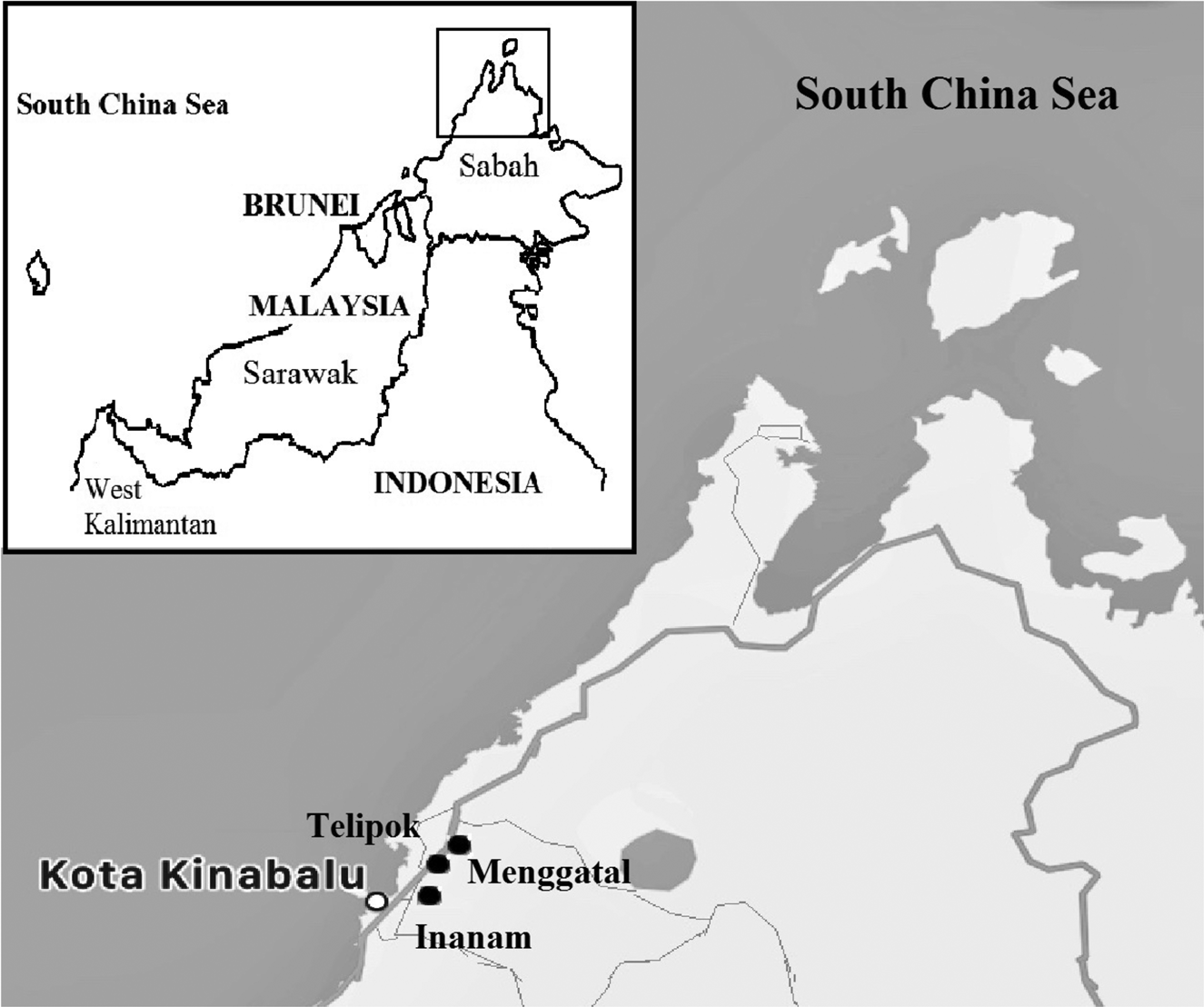
The Basel Mission was a Protestant movement in the Swiss town of Basel that sent missionaries to the rural areas of Guangdong Province, China, particularly near the Hakka counties, beginning in the early nineteenth century (Wong Reference Wong1998). The Basel Mission played an important role as one of the labour-recruiting agents for the Chartered Company, which enlisted Hakka workers and brought them to Sabah on very attractive and favourable terms (Tsang Reference Tsang1983). These workers were settled in Inanam, Menggatal, Telipok, and Kudat (see Figure 1) and formed the early nuclei of the Chinese settlements in the respective towns (Han Reference Han1975:37). One of the most important contributions of the Basel Mission and the Basel churches was in providing a social umbrella for the numerous Christian Hakkas who first arrived in the state. This phenomenon of Hakka integration under one major religious denomination, that is, the Basel Church, is very different from that of other religious communities of Chinese people in Sabah, such as Buddhist or Taoist communities, which usually comprise different subethnic groups.
Map of Menggatal, Inanam and Telipuk, Sabah.Footnote 1

Hakka Chinese in Sarawak
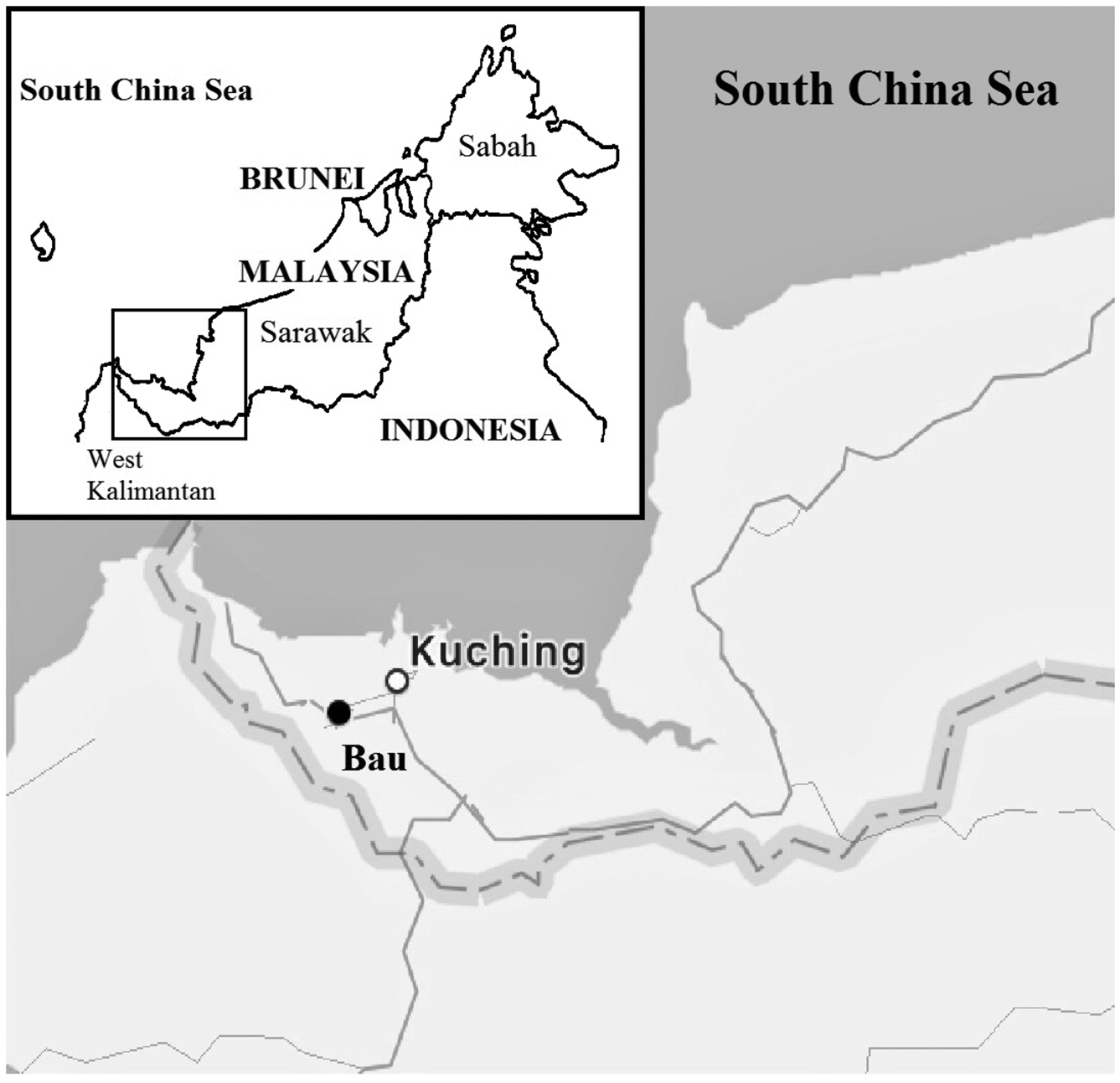
The Chinese population constitutes 24.5% of the total population of more than 2.2 million people in Sarawak. Among the Chinese population, 31.5% are of Hakka origin (Department of Statistics Malaysia 2010). The early Chinese immigrants to Sarawak mainly came from Kalimantan, and most of them were of Hakka origin (D. Chew Reference Chew1990). The Hakkas arrived in Bau (see Figure 2) in the nineteenth century after the discovery of gold and antimony in the district (Chin Reference Chin1981; Chang Reference Chang1995). The miners’ successful adaptation to their new economic and social milieu was due primarily to their frontier organization, the kongsi, that is, the association of Hakka workers who originated from South China. This association formed the basis of the early political and social organization of the immigrants (Ward Reference Ward1954; Jackson Reference Jackson1970; Chin Reference Chin1981; D. Chew Reference Chew1990).
Map of Bau, Sarawak.

In Bau, the Hakkas’ religious tradition was largely the so-called Taoism or Chinese popular religion (Yang Reference Yang1961; Feuchtwang Reference Feuchtwang1991; Shahar & Weller Reference Shahar and Weller1996; Overmyer Reference Overmyer2003), or what Tan (Reference Tan and Tan2014) referred to as the ‘Chinese Religion’. The Hakkas in Bau honoured the Tai Pek Kong and other traditional deities, for example, Bong Low Sian and Kuan Yin. Again, it was the kongsi, which also served as a religious organization, that helped to fulfil the spiritual needs of the pioneers, especially in Bau.
To conclude, the differences in the emigrant history and dominant religions in the MIT and Bau areas provide a good context for researching the impact of religion and religious denomination on LMLS.
METHODOLOGY
This study was conducted over a period of two years (2013–2015) and used both quantitative and qualitative fieldwork methods. The research tools included a questionnaire and interviews.
Questionnaire
The questionnaire was designed in two different languages: Mandarin and English. The questions were framed to obtain background information from the respondents, including year of birth, sex, place of residence, religion, and religious denomination. The respondents were asked about the language that they frequently use for primary communication and socialization with family members, relatives, and friends and acquaintances (the relevant questions are detailed in the appendix). To establish the relationship between language and religion, questions on the language used in religious practices by the respondents and their religious institution were included. The ‘snowball’ sampling (Denscombe Reference Denscombe1998) process, based on recommendations and referrals from informants and the respondents themselves, was employed to gather the data.
The survey was conducted at houses, shops, schools, restaurants, and temples. In addition, to enable wider sampling, we also administered the survey at the following five churches—Basel Christian Church Inanam, Basel Christian Church Menggatal, Basel Christian Church Telipok, Petra Methodist Church Bau, and St. Stephen's Catholic Church Bau—due to their large congregation sizes and the willingness of church leadership to administer the survey. The questionnaires were distributed during Sunday worship services and fellowship gatherings and collected immediately after they were completed.
Three age groups based on year of birth (1922–1961; 1962–1989; 1990–2001) were distinguished. The first cohort was approximately 56–95 years of age (the grandparent and great-grandparent generations); the second cohort was 28–55 years of age (parent generation); and the third cohort was approximately 16–27 years of age. The year 1990 was selected as a demarcation between the second and third cohorts, as the Malaysian government lifted all restrictions on visits to China that year following the dissolution of the Malayan Communist Party in 1989. Henceforth, Malaysia's China policy has been transformed from one of hostility during the Cold War to one of cordiality and partnership during the post-Cold War era (Kuik Reference Kuik2013).
While the respondents had the choice to complete the questionnaire in English or Mandarin, 95% chose Mandarin. A total of 947 completed questionnaires were collected, but twenty-seven were rejected as being invalid. Of the 920 remaining respondents, 334 were Protestant Christians, 287 were Buddhists, 190 were Taoists, and 109 were Catholics. However, the complexity of the Chinese popular or ‘traditional’ religion in Malaysia should be noted, as worshippers do not draw an exclusive boundary between ‘pure’ Buddhism and Chinese Religion (Tan Reference Tan and Suryadinata1995:139), although there are distinct differences between Chinese Buddhism and Chinese Religion in terms of organization and temples and historical traditions (Tan Reference Tan, Lee and Tan2000). Given the popular and common use of the term Taoism among the Chinese in general (it is also used in the National Census), we chose to use the terms Taoism and Taoists rather than Chinese Religion in this study. Taoism, in this study, refers to a complex set of beliefs and practices that combines Chinese folk religion with elements of Taoist and Buddhist traditions as well as Confucian ethics, whereas Buddhism is taken to be of the same context (e.g. Mahayana and Theravada) as that posited by Tan (Reference Tan, Lee and Tan2000).
Interview
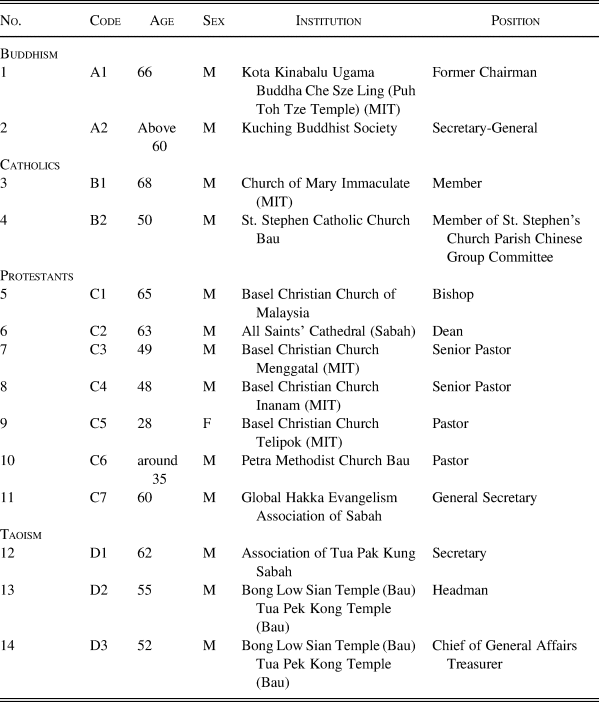
In addition to the questionnaire survey, fourteen interviews were conducted with leaders from all four religions in Sabah and Sarawak (Table 1). The semistructured interviews consisted of questions pertaining to, among other things, (i) the founding history of religious institutions; (ii) the ethnic composition of congregations; (iii) the language of religion used in religious institutions; and (iv) whether preservation of heritage language is the priority of religious institutions. Generally conducted in Mandarin, these interviews lasted between one and two hours.
List of interviewees.

RESULTS AND ANALYSIS
Language use of the Hakka communities
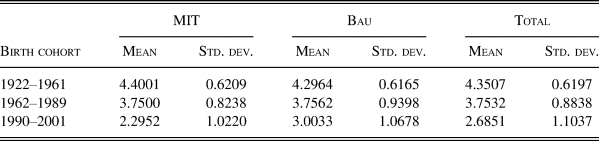
The questionnaire sought information on the frequency of Hakka use, compared to Mandarin or EnglishFootnote 2 use, with family members (grandparents, father, mother, siblings, spouses, children, grandchildren) and nonfamily members (relatives, friends, acquaintances, school mates or colleagues, and people at religious services). A score ranging from 1 to 5 was created to measure the frequency of language use (this variable is referred to as ‘Hakka use in daily life’ hereafter). A low score indicates that Hakka is seldom used compared to Mandarin/English. The overall mean score for this variable is 3.56, suggesting that Hakka is still the dominant language used. The frequency of Hakka use is marginally higher in Bau (a mean score of 3.62 versus 3.49 for MIT, p-value for the test of differences is 0.064).
Hakka use has eroded over time (Table 2). The mean score for the older generation is higher than that for the younger generation. The shift is more severe in MIT than in Bau. The evidence points not only to a tendency of displacement of Hakka use over time but also to a higher variability in language use among the younger respondents compared to the older respondents, as indicated by the standard deviation of the score.
Frequency of Hakka language use in daily life by birth cohort.Footnote 3

Language use among different religious denominations
Approximately 94% of the respondents (across all age groups) received their primary education in Chinese. Despite exposure to the same medium of instruction in school and despite originating from the same Hakka subethnic group, differences in language use still prevail in the two communities.
The survey found that Hakka is more commonly used by Taoists and Catholics (mean scores of 3.98 and 3.75, respectively) and that the incidence of use is significantly lower among Protestants and Buddhists (mean score of 3.47 and 3.31, respectively). Further variation is found among the different religious denominations within the same religion. Nine different religious denominations in the two regions were considered: Basel Christians (MIT), Roman Catholics (MIT), Puh Toh Tze Buddhists (MIT), Methodist Christians (Bau), St. Stephen's Roman Catholics (Bau), Buddhists of the Buddhist Society (Bau), Bong Low Sian Taoists (Bau), Taoists from the Water Moon and Kuan Yin Temples (Bau), and Buddhists with no fixed place of worship (MIT and Bau).
Table 3 shows the variation in Hakka use in daily life among respondents from different religious denominations and birth cohorts. The mean score becomes smaller from the older to the younger generation, suggesting a more severe problem with language shift among the younger generations, regardless of religious denomination. An overwhelming shift from Hakka to Mandarin was also highlighted by some of the interviewees, including the former President of Puh Toh Tze Temple, the Dean of All Saints’ Cathedral, the Senior Pastor of Basel Christian Church Inanam, and the Pastor of Petra Methodist Church Bau.
Mean score measuring the frequency of Hakka language use by religious denomination and birth cohort.Footnote 4

The rapidity of intergenerational language shift, however, differs by religious denomination. Despite the less serious problem of intergenerational shift among the Taoists compared to the other religions, Hakka is more frequently used among the worshippers of Bong Low Sian Temple than among those of the Water Moon and Kuan Yin Temples. Although the level of Hakka use among the older Christian generations is high, a rapid shift away from the language has occurred among the youngest cohort, and this shift is stronger for those residing in Bau. For example, the shift among St. Stephen's Catholics (Bau) is more severe than that among Catholics from MIT. Similarly, the problem is less serious among Basel Protestants (MIT) compared to Methodist Protestants (Bau). Although Puh Toh Tze Buddhists from the older birth cohort use Hakka more frequently than their counterparts from the Buddhist Society, this pattern is reversed among the younger generation, resulting in a more serious intergenerational language shift among those worshipping at Puh Toh Tze. In fact, Puh Toh Tze, the Methodist churches, and St. Stephen's Catholic Church experienced the most marked problems with intergenerational language shift compared to the others. According to the interviewees (A1, B2, and C6) from these affiliations, the association between religion and language use in daily life could be due to the predominant use of Mandarin in the religious activities of these groups. In summary, although language shift has occurred (especially among Methodist Christians and Buddhists), the problem is less serious among Taoists and MIT Christians, including those worshipping in Basel churches.
Language of religion: Its impact on language use
The results thus far show a correlation between religion and language use. This section attempts to determine how the two variables interact. Following Woods’ (2004) concept of ‘language-religion ideology’ and Fishman's (Reference Fishman2006) notion of the language of religion, the present study sheds some light on this issue based on survey responses regarding the language used in religious practices and activities.
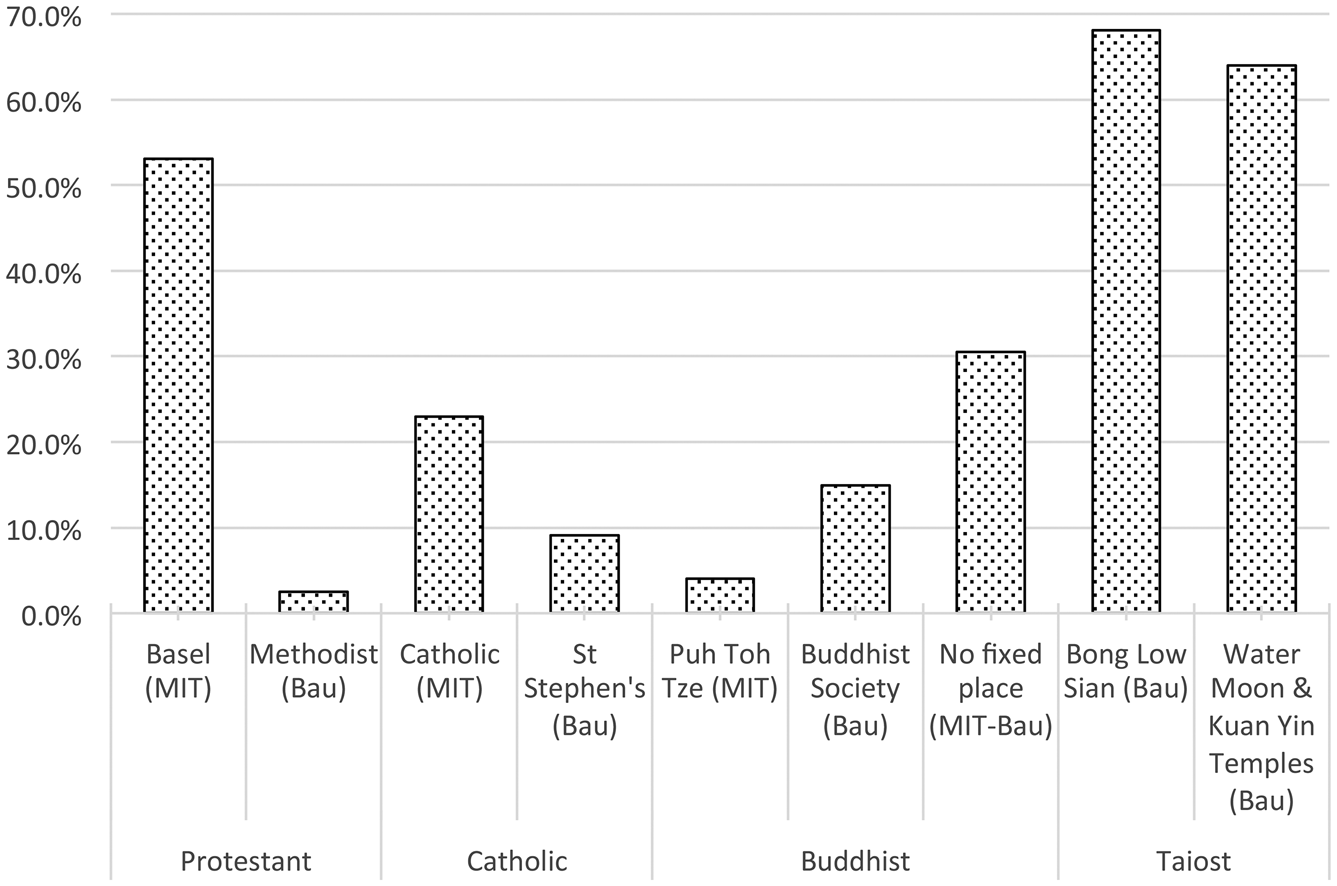
The proportion of respondents who indicated that Hakka is frequently used by their places of worship is a proxy for Hakka as the language of religion. Hakka is frequently used among Taoists for religious practices. Some 63% of the Taoist respondents reported that their religious institutions use this language often. The corresponding proportion is only approximately 40% for Protestant churches and 22% or less for Buddhist temples and Catholic churches. Figure 3 reveals that there is further variation within the same religion. Among the Taoists, the Bong Low Sian Temple uses Hakka more than the Water Moon and Kuan Yin Temples. A larger variation is observed among the Christians. Hakka is used more commonly by the Basel churches than by other Christian denominations in which the language of the church is predominantly Mandarin or English in some cases. Buddhist places of worship do not use Hakka as much as Taoists temples or Basel churches, as their religious activities are mostly Mandarin-based. In sum, the analysis reveals that Hakka is most commonly used for religious activities in Taoist and Basel Christian places of worship.
Proportion of respondents who indicated that Hakka is always used by their place of worship for religious practices and activities.

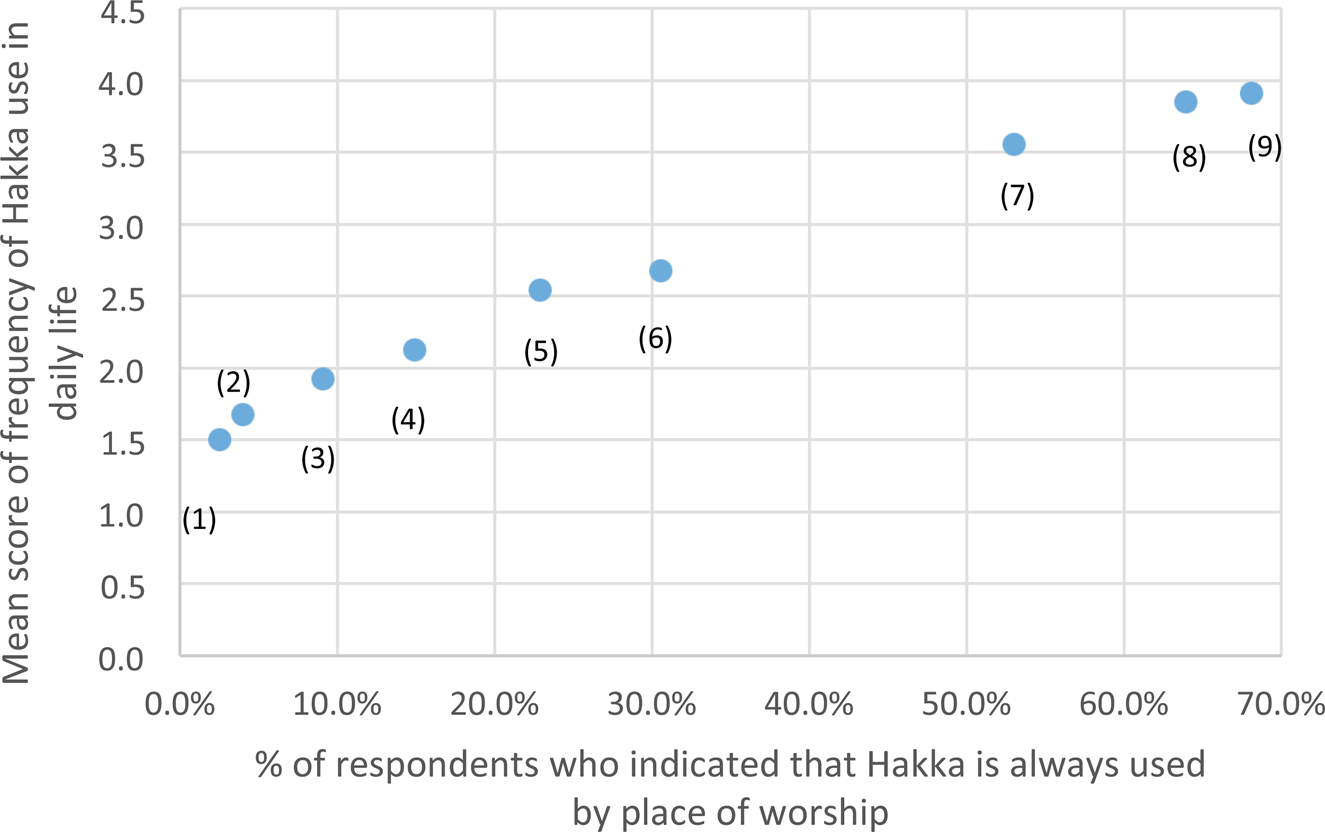
The strong positive relationship (Spearman correlation coefficient = 1.0, p-value = 0.000) in Figure 4 suggests a significant association between the use of Hakka in daily life and the language commonly used for religious activities in a place of worship. This association is particularly obvious among Taoists and Basel Christians (points (7), (8), and (9) in Figure 4).
Hakka use in daily life by place of worship and religious denomination:
(1) Methodist, (2) Puh Toh Tze, (3) St. Stephen's, (4) Buddhist Society, (5) Catholic in MIT, (6) Buddhist, no fixed place, (7) Basel, (8) Water Moon and Kuan Yin Temples, (9) Bong Low Sian.

The extent of Hakka use is expected to be influenced by an individual's language capability. To further explore the influence of language of religion on Hakka use, another analysis was conducted to compare two groups of respondents with different Hakka language capabilities, which are mostly proxied by the language they use at home, or their ‘family language’. The first group claims to communicate frequently in Hakka at home with parents, siblings, spouses, and children. The second group (Group 2) speaks Hakka less frequently at home. Henceforth, Group 1 refers to those whose family language is Hakka, and Group 2 includes those whose family language is not Hakka. It should be noted that the proportion of those in Group 1 was 100% in the grandparent cohort, 90% in the parent cohort, and 58% in the youngest generation. These differences among the cohorts are an indication of the weakened family role in intergenerational language transmission over time, corroborating findings in previous studies that showed a shift from heritage language to other languages.
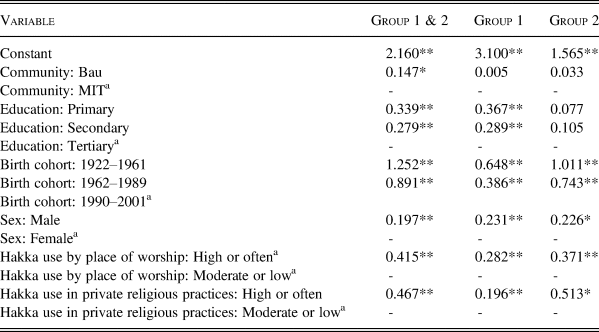
A detailed analysis was performed by estimating a Tobit regression for these two groups (see Table 4). The dependent variable was the score for Hakka use in daily life. The community variable and highest education qualification, birth cohort, and sex of the respondent were included in the regression as control variables. Hakka use by place of worship continued as the proxy for language of religion. In addition, another variable, Hakka use in private religious practices, such as prayers and reading scripture at home, was introduced as a proxy for language of religion.
Tobit regression for Hakka use in daily life (a The reference category for the variable; **,* Statistically significant at 1% and 5%, respectively).Footnote 5

Consistent with the earlier results, Hakka is more commonly used in Bau than MIT, and the younger generations are using the language less frequently. The two variables for language of religion, that is, Hakka use by place of worship and Hakka use in private religious practices, are found to be positively significant. For both groups, Hakka use for religious purposes is positively associated with the frequency of its use in daily life. The magnitude of the coefficients of these two variables is larger for Group 2 than for Group 1. This result suggests that while the language of religion plays a role in increasing Hakka use in daily life, its impact is stronger for those whose family language is not Hakka.
Language of religion: Its impact on language maintenance
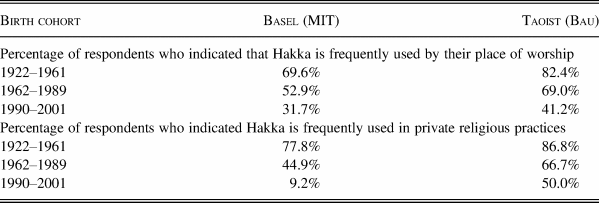
Although Hakka is the language of religion, the extent of language shift from one generation to another is more severe among Basel Christians in MIT compared to Taoists in Bau (see Table 3). What accounts for the differences between these religious denominations? The two proxy variables for language of religion are compared in Table 5.
Hakka use in religious practices among Basel Christians and Taoists.

Despite a similar language of religion, Taoist temples are more likely to use Hakka than Basel churches. The language is also more frequently used by Taoists in private religious practices. The intergenerational shift in the use of Hakka for worship is obvious. The shift is more rapid among Basel Christians, especially for private religious practices. The language is used by only a small group of young Basel Christians for religious purposes at home. These results show a decrease in the use of Hakka over time for religious purposes, even in the case of Taoists and Basel Christians, for whom Hakka is the language of religion.
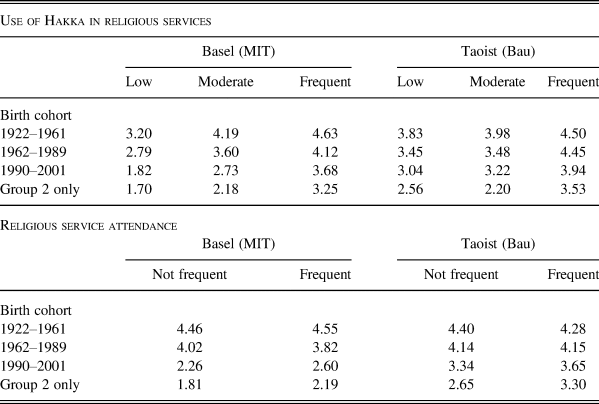
Despite its eroded role, Hakka use in religious purposes has helped to maintain the language's use. To substantiate this point, Hakka use in daily life between those who use the language frequently during religious services and those who do not was compared. A similar analysis was conducted based on religious service attendance, that is, comparing those who attended religious services frequently to those who did not. The results are reported in Table 6. Language maintenance is better among those who use Hakka frequently during religious services, and the intergenerational shift from Hakka to other languages is also slower among these individuals than among people who do not use Hakka frequently during religious services. The frequency of Hakka use in daily activities among young Basel Christians who use the language frequently during religious service is double that of those who do not. Better language maintenance is also observed among those who attend religious services frequently compared with those who do not. The impact of religious service attendance, however, is less than the impact of the use of the language during religious services.
Frequency of Hakka language use in daily life by religious practices and attendance.Footnote 6

The same analysis was performed for those whose spoken language at home is not predominantly Hakka (Group 2). Within this group, those who use Hakka frequently during religious services and attend religious services regularly also tend to use Hakka more in daily life than people who do not frequently use Hakka during religious services or attend religious services regularly. As such, Hakka use for religious purposes enhances its language maintenance role, particularly when the family language is not Hakka.
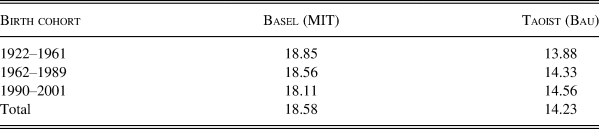
Another analysis was conducted (see Table 7) based on a religiosity score computed from the survey questions on the perception of the importance of religion in life and frequency of religious service attendance. A higher score indicates that religion is more important in life and denotes a higher frequency of religious service attendance, hence implying stronger religiosity. The score for Basel Christians is significantly higher than the score for Taoists (p-value = 0.000), suggesting stronger religiosity among Basel Christians. Despite this difference, the cross-generational changes within the Taoist and Basel denominations are not statistically significant (p-value is 0.21 for Basel and 0.65 for Taoist). Religiosity has remained stable over time for these two religious denominations.
Religiosity among Basel Christians and Taoists.Footnote 7

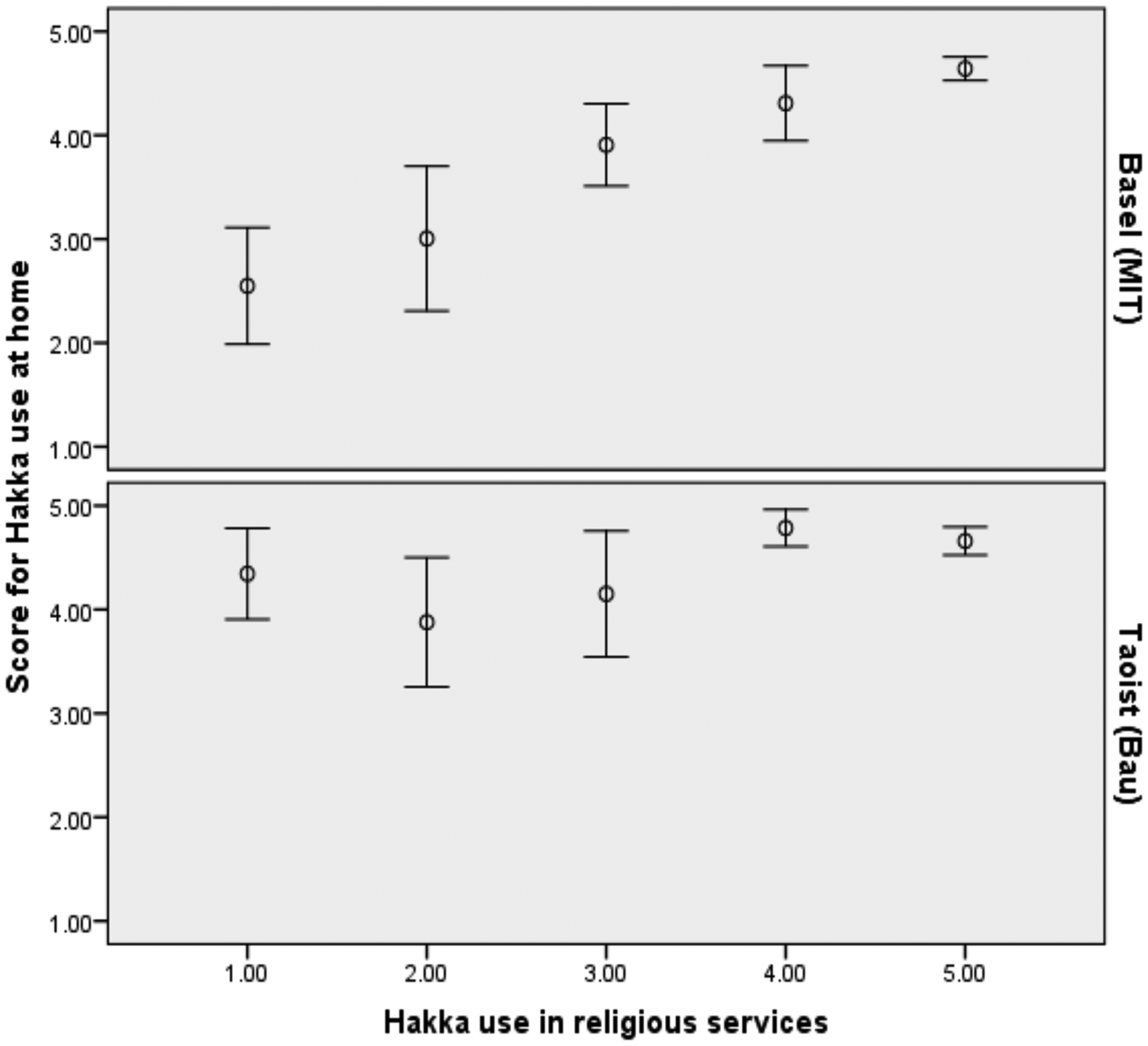
Does the role of language of religion differ between Basel Christians and Taoists given the higher religiosity of the former? To address this question, the variation in the frequency of Hakka use at home, or the proxy for the family language as discussed earlier, was examined for different levels of Hakka use in religious services. The confidence interval for the score of Hakka use as the family language plotted in Figure 5 shows a positive relationship with its use in religious services. Hakka use is not only more frequent but the variation in frequency of its use with family members is also smaller among those who use this language frequently in religious services. This positive relationship is more notable for Basel Christians than for Taoists. Hakka use at home is generally higher for Taoists and less dependent on its use in religious services compared to that for Basel Christians. In other words, the higher level of language maintenance of Taoists may be due to stronger family influence rather than religious practices.
95% confidence interval bar plot for the mean score of Hakka use at home by Hakka use in religious services.Footnote 8

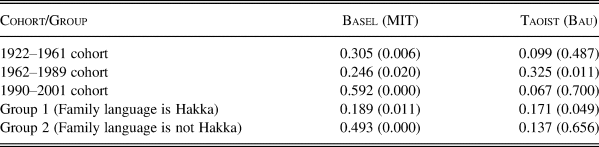
To further illustrate this point, the correlation between the frequency of Hakka use with family members (the variable used earlier as a proxy for family language) and the frequency of its use during religious services is examined for the different age cohorts (Table 8). The correlation appears to be much higher among Basel Christians than among Taoists and is mainly significant for the former. That is, there is a higher tendency for Basel Christians who use Hakka in religious services to also use Hakka at home compared to Taoists. This association is even stronger for the youngest generation of Basel Christians. This correlation is also higher and significant for Basel Christians whose family language is not Hakka (Group 2). The results suggest a stronger association between family language and language of religion for Basel Christians, while the evidence is less strong for Taoists. Religion plays a more important role for Basel Christians than for Taoists in helping to maintain Hakka as a family language, particularly among those in the younger generation and whose family language is not Hakka.
Correlation between frequency of Hakka use at home and in religious services.Footnote 9

To summarize, the quantitative analysis using the language of religion approach shows how different religious practices have impacted LMLS. To gain more insights into the contexts of these language practices, observations obtained through in-depth interviews with selected participants are provided to supplement the quantitative analysis.
Language of religion: Qualitative observations
The interview results are consistent with the quantitative findings. For example, Hakka is found to be used more frequently among Taoists from Bau than among those from MIT. According to interviewees D2 and D3, more than 90% of worshippers at Bong Low Sian Temple in Bau are Hakka, and the Temple's founders were Hakka. By contrast, according to D1, approximately 40% of the worshippers at the Taoist temple in MIT are Hakka, as the Hokkien ethnic group was the main founder and forms the majority of the congregation. From this information, we can glean that the ethnic composition of the congregation and the founding history of the religious institution will strongly affect the choice of language(s) of religion.
In a similar vein, although the majority (80%) of the congregation of Petra Methodist Church Bau is Hakka, the church was established in the 1980s as a Mandarin-speaking church because the founder of the church was of Hockchew ethnicity (according to C6). The Buddhist Puh Toh Tze congregation, also established in the 1980s, has almost equal numbers of Hakka and Hokkien followers. The language of religion used has always been Mandarin because of the congregation's composition and because the religious teacher is a Mandarin-speaking venerable from Taiwan who visits Sabah more than four times a year to preach and conduct religious ceremonies. A1, a former president of this Buddhist temple, explained that Mandarin is used not only as the language of religion but also as the lingua franca: ‘Currently, we have four full-time employees in the temple—three Hakkas and one Hokkien… But we all speak only Mandarin… Strangely enough, we have become accustomed to speaking in Mandarin… But they [the Hakkas] would probably speak in Hakka once they are back home’.Footnote 10
The Catholic churches, whether in MIT or Bau, appear to use a variety of languages in their religious practices. According to interviewees B1 and B2, the dominant languages, that is, English, Mandarin, and Malay, are used as the language(s) of religion to cater to congregants of different ethnicities, including Chinese (mainly Hakka), Indian, Bidayuh, and other indigenous groups. The concept of a global church appears to have taken hold in this setting, as B1 touched on the significance of English, Pope Francis, and Rome. Nevertheless, B2 noted that during the early days (before 1980), Hakka was used during Sunday school for the Chinese congregation in St. Stephen's Church, while mass was conducted in English by a German priest. When the German priest was replaced years later by a priest from China, the language of religion changed from Hakka and English to Mandarin.
A very different background emerges for the Basel churches in MIT. According to the church leaders (C1, C3, and C5), 90% to 95% of the congregation is of Hakka origin. Hakka was traditionally the language used for religion. One of the leaders (C4) expressed his aspiration to maintain this linguistic tradition, while another (C7) wished to use this Hakka ‘privilege’ to reach out to the global Hakka community. Similar stories regarding a strong Hakka foundation also emerged regarding the Taoist temples in Bau. According to interviewees D2 and D3, Bong Low Sian and Tua Pek Kong—‘the Hakka deities’ that were brought by the Hakka immigrants from China to Bau more than one hundred years ago—have not only ‘protected’ them but also ‘united’ them, thus helping to maintain their Hakka ethnicity in a new land.
In short, differences in LMLS among the Hakka communities and denominations may be explained in terms of different timelines of settlement and visible language-religion ideology. Interestingly, regardless of their denominations, all of the leaders who were interviewed had one common focus: the importance of religion over the Hakka language. B2 highlighted the issue of communication and understanding. C1 indicated that the focus is to understand the teachings of the Bible, while sharing the gospel, not ethnicity, was paramount according to C3. Some of the interviewees mentioned the dilemma of using Hakka as a medium for preaching (C6) and teaching (C4), especially when the target audience is youth, who typically have difficulties understanding biblical terms in Hakka. As such, pastors have been left with few choices but to accommodate young congregants by using Mandarin, as noted by C4. A Buddhist interviewee (A2) pointed out the importance of promoting Buddhism and repeatedly emphasized that one should use Mandarin rather than any heritage language, including Hakka, to achieve this mission. Regarding the Hakka language, the interviewee said, ‘[it] should be promoted at home, among our relatives and friends’. A Taoist leader (D1) talked about possible feelings of marginalization among non-Hakka members if the Hakka language were to be highlighted: ‘We transmit our religion… this is our major concern’. A similar opinion was echoed by a church leader (C2): ‘What the church can do is very limited. It is also not possible for the church to promote one particular culture. If you promote a particular culture, how about other cultures?’
DISCUSSION
Applying a language of religion perspective to LMLS research allows us to reveal the variation in patterns of language use among different religious groups. The survey data reveal that the different languages of religion used by various places of worship inform the varying results for language use and LMLS. We also argue that diverse practices in different religious denominations, even within the same religion, will lead to dissimilar results.
Hakka Taoists in the Bau area are able to uphold a higher level of language maintenance, whereas Methodist Christians and Buddhists in general face an accelerating process of language shift. The extensive use of Mandarin as the language of religion—whether in Buddhism, as shown in the case of the Puh Toh Tze, or Christianity, as in the case of the Methodist church and St. Stephen's Church—has resulted in a shift away from heritage language to a dominant language(s). The findings appear to echo a previous study from Singapore about how the loss of Chinese dialects is related to changes in religious trends in the Chinese community—mainly from Taoism to Buddhism and, secondarily, from Taoism to Christianity (P. Chew Reference Chew2006). We contend, however, that it is not religion itself but the different practices of the language of religion by various denominations that have a significant implication for LMLS. By suggesting this, we do not intend to diminish the importance of the family factor in LMLS. On the contrary, our findings indicate that while the decision for each religious denomination to use heritage or nonheritage language will affect LMLS, the family's role is not to be overlooked. Taoist families in Bau, for example, continue to take part in the preservation of heritage language and are thus less dependent on religious affiliation for the higher level of language maintenance. Nevertheless, we suggest that religious affiliation can play a more crucial role in language maintenance, especially in situations in which the family struggles with intergenerational transmission of the heritage language. At times, the religious institution's choice of language can lead to an increase in language maintenance given the high religiosity of its religious community, as in the case of Basel Christians.
Interestingly, while our findings and those of previous studies (for example, Borbély Reference Borbély2000) demonstrate how the use of different languages of religion in two different churches can lead to entirely different consequences, the tendency to use more Mandarin or English (and less Hakka) in various religions and denominations, especially among young believers, seems overwhelmingly prevalent. Taking the ecology of language into account, language competition and educational policy are unquestionably crucial, yet the quest for modernity and globalization, including the concept of the global church, may also play a role in creating a broader but completely perspective-changing view of heritage language.
For example, Basel Christians have noted a higher use of Hakka language in their places of worship and private religious practices, but they have not applied the same zeal to the preservation of their language for subsequent generations. What has happened and is continuing to happen in the Basel-Hakka community in MIT seems to resonate with Fishman's (Reference Fishman1972) notion of how functional distinctions between two languages become blurred over time. The Hakka language, which at one time was the High (H) language (Ferguson Reference Ferguson1959) used for religious and educational purposes, had been displaced by Mandarin, first in the domain of education and later in religion. Based on our observations, both Hakka and Mandarin are used in different portions of the Sunday service. Hakka is selected for both ritual (e.g. opening hymn, sermon, bible reading) and nonritual (e.g. announcements) communication, whereas Mandarin is more frequently selected for nonritual sections (songs and intercessions). For adolescent services and youth fellowship, however, Mandarin is used most of the time. A Mandarin service is also available in the Basel Menggatal church in addition to the traditional Hakka service.
Our qualitative observations indicate that what are seemingly considered to be bilingual practices (e.g. the use of Hakka and Mandarin) are very likely to result in an actual monolingual phenomenon (namely, the use of Mandarin instead of Hakka) in the religious and family contexts given the language of religion's impact on family language. The findings are a warning not only to Basel Christian churches but also to Taoist temples of what could happen if they change their language of religion or continue the ‘inclusive strategy’ (Woods Reference Woods2004:18) or ‘bilingual’ phase (Fishman Reference Fishman2006:19) that some are practising. In other words, when a new language of religion is introduced (not to mention accepted), the path of change in language use is inevitably set.
Moreover, although the family has always been considered a potentially rich and complex locus for language socialization, namely, children's mother-tongue acquisition and socialization (Morita Reference Morita2000), the findings of this study highlight the impact of religion on language socialization. That is, language socialization can be influenced not only by families but also by religious activities, including peer-group socialization. Considering that the absence of the heritage language can mean further significant social and cultural losses (Law Reference Law2015), religious leaders and parents should be made aware of how the current language practices of churches and temples will affect family language choice and socialization and the identities of future generations.
Nonetheless, it must be noted that despite the urgency for heritage language preservation, the mission to promote religion and the hope of attracting a larger flock has always been the priority of religious institutions such that it has often surpassed the importance of heritage language or traditional culture. This dilemma is faced by almost all religious institutions in our study, that is, how to maintain a balance between attracting youth (quoting Skutnabb-Kangas Reference Skutnabb-Kangas2004) and sacrificing the traditional language and between the transmission of faith using a more dominant language and heritage language maintenance. Thus, the challenge remains for these Hakka-based religious institutions to reconsider and reposition their priorities in relation to the language used in their places of worship and in relation to their (possible) role as (active) actors in the transmission of the Hakka language.
CONCLUSION
To conclude, the kernel of the argument in this article is the different impact of religion and, more specifically, of religious denomination on language use and LMLS. Our study enhances previous research by including different religions and denominations to investigate how religious institutions can participate in heritage language use—either to encourage its maintenance or to fuel the processes of shift—and how religious institutions can play an active role, however supplemental, in language maintenance, particularly when family heritage language loses ground to more dominant language(s). Moreover, sustaining or changing the language of religion may have a greater influence on individuals (as well as family and community) than anticipated, as a higher level of religiosity may well imply a stronger religious impact on heritage language preservation. Our findings therefore complement and shed additional light on LMLS scholarship. A change in the language of religion in religious places should be viewed as a complex and influential process of language socialization and identity formation rather than as a natural development of language displacement due to educational practices, socioeconomic forces, or language-religion ideology.
Although it would be ideal to consider the retention of Hakka as the language of religion in order to ensure its maintenance, given the main concern of religious institutions, it appears that most religious institutions have chosen to favour dominant language(s). Even in the case of religious institutions that have managed to maintain the heritage language tradition, their efforts have been threatened by the prevalent tendency—both within and outside the religious institutions—towards the use of Hakka-Mandarin or Hakka-English, or the ‘bi-language of religion’. While the study indicates interesting possibilities for the impact of religion on LMLS, it also shows, paradoxically, that the priority of Hakka-based religious institutions is to promote their religions, not to sustain the heritage language under threat.
Appendix