Introduction
Serious illness can produce fear, loss of function, disorientation, and disconnection from normal life, all of which may be intensified in the hospital setting. Hospitalized patients often experience a high symptom burden, including anxiety, pain, depression, and fatigue (Mitchell et al., Reference Mitchell, Chan and Bhatti2011; Nipp et al., Reference Nipp, El-Jawahri and Moran2017). Physical symptoms, psychological distress, and depression are associated with a longer length of stay, and physical symptoms and anxiety are associated with a greater likelihood of readmission (Nipp et al., Reference Nipp, El-Jawahri and Moran2017). Many inpatients also experience spiritual distress (Roze des Ordons et al., Reference Roze des Ordons, Sinuff and Stelfox2018); loneliness because of a lack of family support (Çıracı et al., Reference Çıracı, Nural and Saltürk2016) and impersonal interactions with healthcare providers (Karhe & Kaunonen, Reference Karhe and Kaunonen2015); and existential loneliness as they contemplate their illness state (Ettema et al., Reference Ettema, Derksen and van Leeuwen2010). Patients wish to be appreciated “as unique and ‘whole persons,’ not only as ‘diseases’ or cases” (Steinhauser et al., Reference Steinhauser, Clipp and McNeilly2000). Nevertheless, patients often feel their needs for emotional support, communication, personal attention, and respect are unmet by healthcare institutions (Teno et al., Reference Teno, Clarridge and Casey2004; Newell & Jordan, Reference Newell and Jordan2015; Al-Amin & Makarem, Reference Al-Amin and Makarem2016).
At a time when patients may be anxious or uncertain about their health and faced with numerous medical interventions, interdisciplinary, adjunctive therapies such as music therapy can be a “lifeline,” facilitating the expression of emotions and memories and strengthening patients’ self-awareness, social connection, and sense of personal support (O'Callaghan et al., Reference O'Callaghan, McDermott and Reid2016). Music therapy is an established healthcare profession that uses music-based interventions, delivered by board-certified music therapists, to address the physical, emotional, mental, and social needs of individuals of all ages. Working as part of the healthcare team, music therapists tailor interventions to patients’ clinical goals and presenting needs, while cultivating therapeutic relationships with patients. No background in music or musical ability is needed for patients to participate or benefit.
Music therapy has been shown to play a valuable role in the care of patients with serious illness, helping to address physical symptoms and psychological distress. A review of music therapy for the critically ill found that it reduces pain, improves sleep quality, decreases anxiety during mechanical ventilation, and induces a relaxation response without the use of medication (Mofredj et al., Reference Mofredj, Alaya and Tassaioust2016). A systematic review of music therapy in cancer care found improvements in anxiety, pain, and quality of life and small positive effects on heart rate, respiratory rate, blood pressure, and fatigue (Bradt et al., Reference Bradt, Dileo and Magill2016). Among palliative care patients, music therapy produced positive changes in pain, anxiety, physical comfort, emotional state, social interaction, and spiritual well-being (McConnell & Porter, Reference McConnell and Porter2017; Schmid et al., Reference Schmid, Rosland and von Hofacker2018). A systematic review found that music therapy lowers anxiety, the respiratory rate, and blood pressure and has a possible impact on the use of sedatives and analgesics among mechanically ventilated patients (Bradt & Dileo, Reference Bradt and Dileo2014). Music therapy also helps family members cope with their loved one's illness, improving caregivers’ mood, stress levels, and quality of life (Gallagher et al., Reference Gallagher, Lagman and Bates2017) and offering new ways for families to connect with and support patients (O'Callaghan et al., Reference O'Callaghan, McDermott and Reid2016).
Despite music therapy's demonstrated role in enhancing care, it is unavailable in the majority of healthcare organizations and frequently is accessible only to patients able to support the cost out of pocket. Low-income and minority populations often face unique challenges related to health disparities for both physical and mental health, socioeconomic and psychosocial issues, care affordability, and access to services (Baciu et al., Reference Baciu, Negussie and Geller2017; Agency for Healthcare Research and Quality, 2018). This applies to standard services and, all the more, therapeutic modalities considered adjunctive such as music therapy, which can be completely out of reach (Bezold et al., Reference Bezold, Calvo and Fritts2008). A review of literature found a deficit in knowledge for intervention planning for critically ill, hospitalized patients in the urban setting. Many studies employ lengthy written surveys, indicating subjects with higher functional status. No studies were found that focused on low-income or minority populations and their receptivity to music therapy services.
This study investigated the feasibility of introducing music therapy in a large urban hospital. Using quantitative and qualitative indicators, we evaluated the feasibility of delivering bedside music therapy on 4 specialty units; the preliminary clinical impact of a single session on patients’ pulse, respiratory rate, and self-reported anxiety and pain; and the interest and receptivity among a diverse, multiethnic patient population to a therapeutic modality that may be new and unfamiliar.
Methods
Overview and setting
Montefiore Medical Center, the university hospital for Albert Einstein College of Medicine, is a leading healthcare resource for residents of the Bronx, New York. Thirty percent of Bronx residents live in poverty (United States Census Bureau, 2016). Over one-half of the population identifies as Latino/Hispanic, and almost 44% identifies as African American (United States Census Bureau, 2016). The Bronx has disproportionately high rates of illness (NYS DOH 2012) and a high prevalence of anxiety and depression (NYAM, 2014; Tuskeviciute, Hoenig, & Norman, Reference Tuskeviciute, Hoenig and Norman2018).
Montefiore's Healing Arts Program led this study from June to December 2014 in partnership with 4 clinical areas: the Palliative Care Service, Montefiore Einstein Center for Transplantation, Division of Critical Care Medicine, and Division of Medicine. Two masters-level, board-certified music therapists (MT-BC) delivered a single bedside session to patients on the 4 participating units. The music therapists were selected based on their training, experience, musical skills, and interpersonal skills. Each unit received 4 hours of service once a week during the 6-month study period. A single session was realistic for most patients given the average length of stay. None of the units had provided music therapy prior to the study.
Study design
A mixed-methods approach was used to obtain and evaluate data in 3 areas of inquiry under IRB approval: (1) the feasibility of delivering music therapy on the units; (2) the preliminary efficacy of the intervention on patients’ pulse, respiratory rate, and self-reported anxiety and pain; and (3) patients’ interest, receptivity, and satisfaction. Robust outcomes studies have been conducted in music therapy. This study included preliminary outcomes data to assess whether patients perceived music therapy as beneficial to their pain and anxiety and worth continuing to offer at the hospital.
To address preliminary efficacy, the study employed a within-group, pretest-posttest design [Obs1 - XMT Session - Obs2], supplemented with qualitative descriptive data from the music therapists’ progress notes. Controlling for gender, age, and session length, we assessed the effects of the intervention on each primary outcome. Process evaluation was conducted to assess feasibility, including service utilization, barriers, and facilitators to implementation, as well as lessons learned. No independent comparison group was developed owing to the study's limited resources. Patients served as their own controls.
Patient referral
Referrals for the management of anxiety and/or pain were accepted from clinical providers of any profession. To generate referrals, the music therapists attended interdisciplinary team meetings, reviewed the patient census with unit charge nurses, and supplied a binder at the nurses stations for providers to leave referrals during the week. Providers could submit referrals at any time; the music therapists approached referred patients during the set times they were on the participating units each week.
Patient eligibility
Patients ages 18 years and older on the participating units were eligible for referral to music therapy provided they did not meet the following exclusion criteria: (1) active psychosis or delirium as determined by the referring provider; and (2) a highly agitated or combative state, as determined by a score of + 4 on the Richmond Agitation-Sedation Scale (RASS). Referred capacitated patients were included upon providing verbal informed consent to the music therapist directly before the session. For referred incapacitated patients, a healthcare proxy was asked to provide oral consent directly before the session, in person, or by telephone.
For the purpose of this study, capacitated refers to conscious, alert patients who are legally competent to provide informed consent. Incapacitated refers to patients whose medical state restricts the ability to make or communicate decisions (often intubated or sedated patients), requiring the advocacy of a healthcare proxy.
Description of intervention
This study employed a patient-centered approach in which the music therapists tailored interventions to patients’ individual needs in the moment. For capacitated patients, sessions included active engagement, receptive engagement, or a combination of both. Active interventions engaged patients in singing, playing instruments, or songwriting to create a positive diversion from anxiety and pain. Receptive interventions involved music-assisted relaxation (guided relaxation with gentle, live music), breath entrainment (music matched rhythmically to the rate of breathing, then gradually slowed to encourage slower, deeper breathing), and listening to familiar or preferred songs. For incapacitated patients, sessions involved receptive interventions such as gentle live music to create a soothing atmosphere and provide sensory stimulation. Familiar or preferred music was incorporated as indicated by family members.
For all sessions, family members present were invited to participate actively (e.g., singing along) or receptively (e.g., listening to guided relaxation). Family participation was aimed at reducing stress and creating a calm, supportive environment. Data were not solicited from family members, but the therapists noted comments received.
Outcome measures
The music therapists administered RASS before all sessions to ensure eligibility. For capacitated patients, pre- and post-session, the therapists recorded pulse (manually for 30 seconds) and respiratory rate (counting breaths for 30 seconds) and verbally administered the Wong-Baker FACES Pain Rating Scale (0 = no pain, 1 = hurts little bit, 2 = hurts little more, 3 = hurts even more, 4 = hurts whole lot, and 5 = hurts worst) and a 5-point Likert scale created by the study to assess anxiety (0 = very relaxed, 1 = somewhat relaxed, 2 = neutral [neither relaxed nor anxious], 3 = somewhat anxious, and 4 = very anxious). For incapacitated patients, the therapists recorded pulse and respiratory rates from the bedside monitor pre- and post-session. For all patients, the therapists kept qualitative notes on the patients’ observable states and verbal and nonverbal responses to the music and the environment in the room.
Statistical analysis
Quantitative outcome measures for anxiety, pain, pulse, and respiratory rate were assessed using a t-test for paired observations. Descriptive analysis was performed using computed estimates of central tendency (mean) and variance (standard deviation) and bi-variate correlational and subgroup analyses by patient gender, age, and session length.
Qualitative analysis
Thematic coding and analysis of qualitative data from the music therapists’ notes were conducted using NVivo software. Nodes were created in NVivo to collect relevant material in one place and, then, were observed for emerging patterns and words. This helped construct themes that led to a better understanding of the patterns in the data. Of the total 150 patients who received music therapy, 44 notes (representing 22 males and 22 females) were included in the analysis, at which point no new themes emerged, and saturation was reached.
Process evaluation and quality oversight
For each service date, the music therapists recorded unit-level information, including the number of patients on the census, number eligible for music therapy, the number who consented or declined, reasons for declining, and issues encountered. Biweekly meetings were held with the therapists and study staff to discuss matters affecting service delivery and to ensure an aligned therapeutic approach between the 2 therapists. Process logs from these meetings were analyzed to assess feasibility. In between meetings, on-going contact with the study coordinator (also a board-certified music therapist) allowed for prompt resolution of questions and discrepancies in the delivery of sessions. Both therapists also attended a clinical supervision group throughout the duration of the study in which they could share experiences and techniques related to their clinical work.
Results
Quantitative results
Service utilization
The music therapists received referrals for and approached a total of 311 patients. Patients consented to participate 60% of the time. The music therapists delivered 188 sessions, representing 150 unique patients. Further, 28% of the sessions were on the palliative care unit (n = 52, consent rate of 71%), 30% on the medical intensive care unit (n = 56, consent rate of 73%), 21% on the transplant unit (n = 40, consent rate of 51%), and 21% on the medicine unit (n = 40, consent rate of 49%). This comparable patient participation in the 4 study units indicated parallel feasibility across clinical specialty areas. Of the 40% who declined participation, common reasons were feeling too tired or awaiting discharge from the hospital. Notably, only 1 patient declined as the patient did not want to participate in a study.
Additionally, 60% of the patients who received sessions were female (n = 90), and 40% were male (n = 60). The average age was 57 years (range21–100 years). Seventy-five percent of the patients (n = 113) were capacitated, and 25% (n = 37) were incapacitated. All but 2 families consented for their incapacitated loved one to receive a session. An average of 4.25 sessions were delivered per day, with an average session length of 24 minutes (range 5–60 minutes). Seventy-seven percent of the sessions (n = 145) were delivered one-on-one with patients, and 23% (n = 43) included family members. Sixty-eight family members participated in total.
Eighty-five percent of the participants received a single session, in keeping with the study's single-session model. In some cases, longer-term patients demonstrated a need for continued support, and subsequent sessions were offered as time permitted after completing the day's referrals. Fifteen percent of the patients received 2–5 sessions. The data analysis was limited to initial sessions in keeping with the study's aims.
Effect on clinical indicators
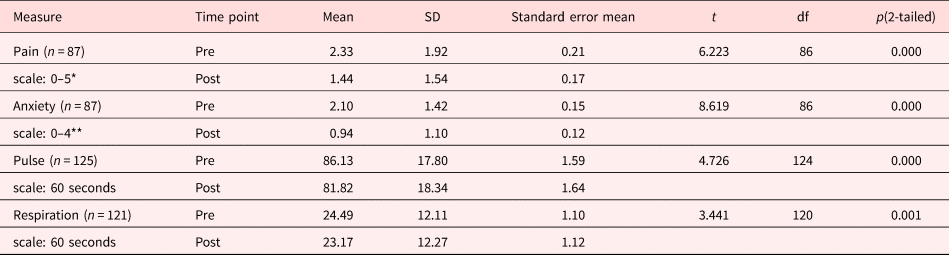
To assess quantitative clinical indicators, we first compared simple pre-post scores for participating patients’ pain, anxiety, pulse, and respiratory rate. Pre-post scores for all 4 indicators showed statistically significant reductions (Table 1). Patients reported an average pre-session pain score of M = 2.33, corresponding to “hurts little more” on the Wong-Baker FACES scale. Patients’ average post-session pain score was M = 1.44, a decrease of 1 face or “hurts little bit.” Patients reported an average pre-session anxiety score of M = 2.10 or “neutral (neither relaxed nor anxious).” Their average post-session anxiety score was M = 0.94, a decrease of 1 level, or “somewhat relaxed.” Patients’ pulse rate decreased an average of 4.31 beats/minute, and their respiratory rate decreased an average of 1.32 breaths/minute.
Pre-post mean comparisons for pain, anxiety, pulse, and respiration

* Wong-Baker FACES Pain Rating Scale (0 = no pain, 1 = hurts little bit, 2 = hurts little more, 3 = hurts even more, 4 = hurts whole lot, and 5 = hurts worst)
** 5-point Likert scale created by the study to assess anxiety (0 = very relaxed, 1 = somewhat relaxed, 2 = neutral [neither relaxed nor anxious], 3 = somewhat anxious, and 4 = very anxious)
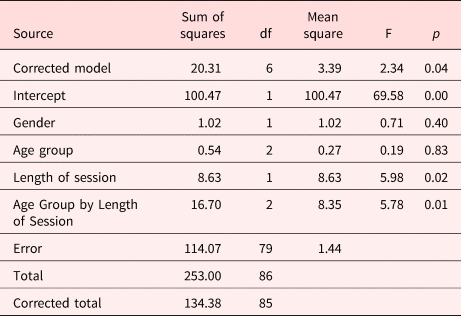
Next, multiple regression modeling was used to examine the effect of a single, initial music therapy session on 4 clinical indicators: (1) self-reported anxiety; (2) self-reported pain; (3) therapist-recorded pulse; and (4) therapist-reported respiration. Controlling for patients’ gender, age group (under 45, 45 to 65, and over 65 years), and length of the music therapy session (no longer than 20 minutes and longer than 20 minutes), only self-reported anxiety was found to be impacted. Statistically significant associations with age group and length of session, but not gender, were shown (Table 2).
Tests of between-subjects effects: anxiety reduction

Note: R squared = 0.151 (Adjusted R squared = 0.087).
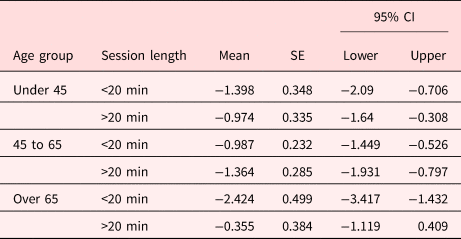
To further examine the association of the intervention on self-reported anxiety, a breakdown analysis of age group by the length of the session was conducted (Table 3). Results revealed that shorter sessions (no longer than 20 minutes) resulted in greater anxiety reduction among the youngest (under 45 years) and oldest (over 65 years) patients. By contrast, longer sessions (more than 20 minutes) showed greater reductions in anxiety for those patients in the middle age group (45–65 years).
Anxiety effect by age group and session length

Qualitative results
Musical interventions and styles
Most patients requested receptive rather than active sessions, seeking to enter a state of relaxation. Music-assisted relaxation and breath entrainment were the most frequent interventions. In many cases, the therapists played musical selections from patients’ favorite genres or culture/country of origin to establish a sense of familiarity and comfort. Patients requested a wide range of styles from jazz to salsa and modern pop. In active interventions, patients improvised using percussion and voice, accompanied by the music therapist on guitar.
Effect of intervention
Most capacitated patients appeared more relaxed during and after the session, exhibited by resting into their pillow; closing eyes; breathing more slowly; releasing clenched muscles; decreasing movements, grimacing, and wincing; and occasionally falling asleep. Patients expressed shifts from feeling anxious, agitated, restless, and in pain pre-session to feeling calm, content, and comfortable during and post-session.
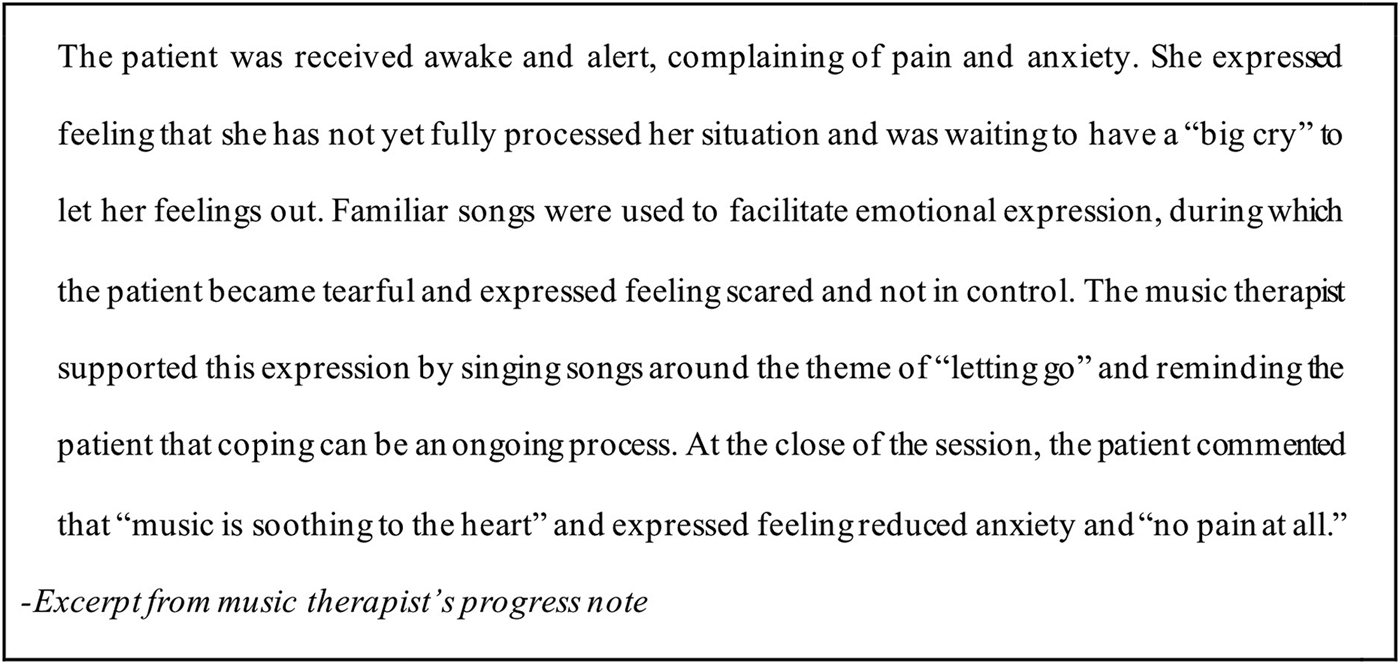
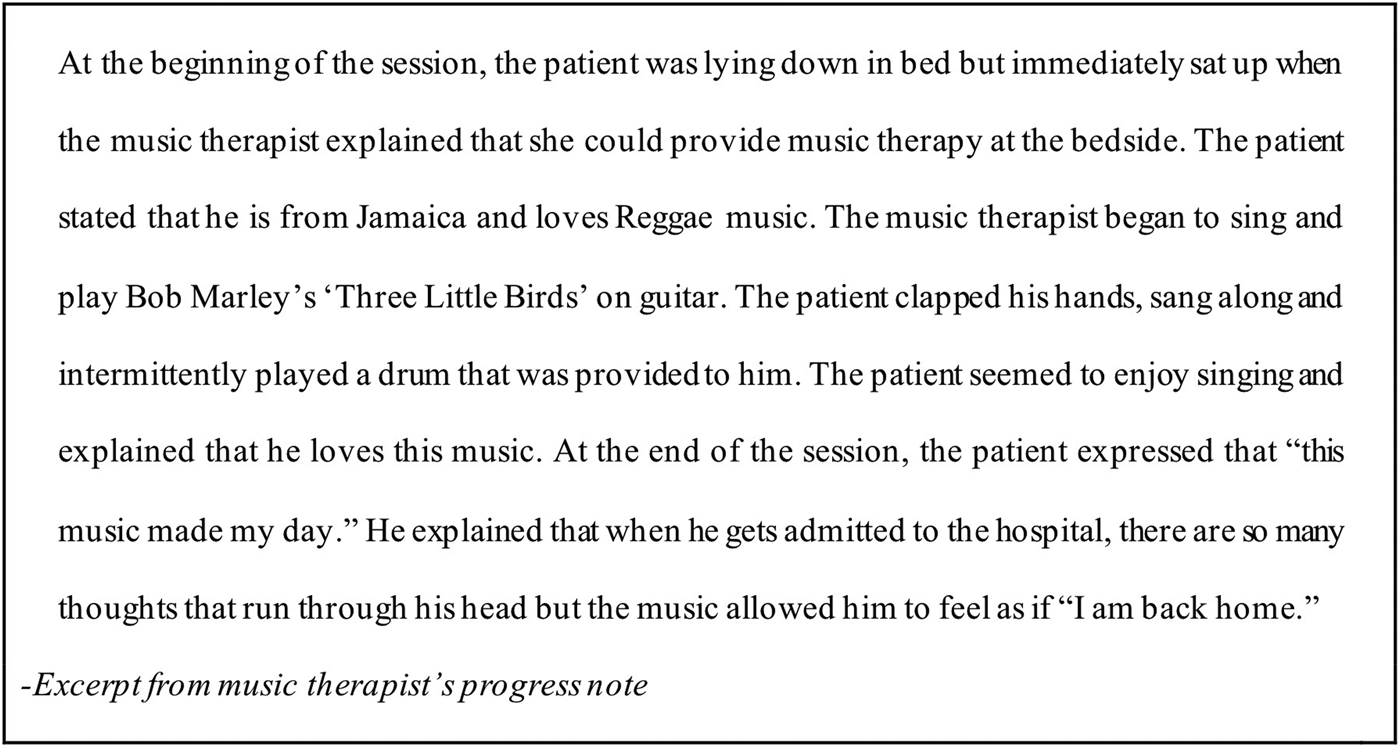
The therapists provided support and validation through attunement to patients’ emotional states, active listening, verbal acknowledgment of feelings expressed, and mirroring sentiments shared through musical lyrics and styles. While listening to music, many patients became reflective, sharing feelings, thoughts, and memories or began to cry (Figure 1). Patients expressed anxiety about hospitalization and the future, a sense of loss of self because of illness, concern about “what it means to be alive,” and the desire to return home. By the end of the session, many patients appeared soothed, displayed positive affect such as smiling and laughing, and shared appreciative comments on the session (Figure 2):
Receptive music therapy intervention with a capacitated patient.

Active music therapy intervention with a capacitated patient.

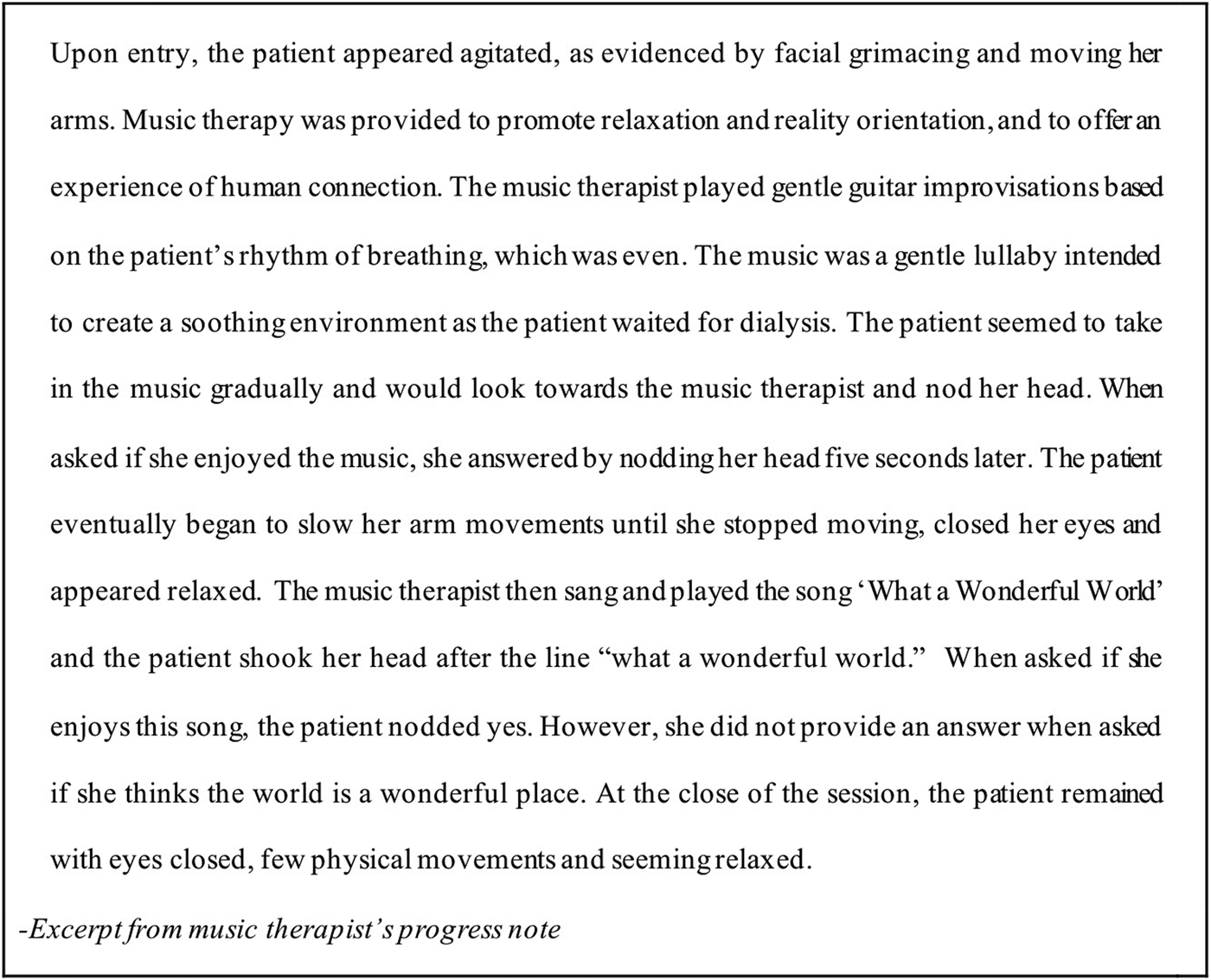
Among incapacitated patients, many exhibited signs of relaxation during and after the session, including reduced agitated movements, closing their eyes to rest, and drifting off to sleep (Figure 3). In some cases, music therapy provided procedural support, helping to relax patients being weaned from sedation or prepared for dialysis. Several intubated patients became more alert and oriented to their surroundings, exhibited by looking toward the music therapist, smiling, clapping, and giving a “thumbs-up” to express enjoyment.
Music therapy with a patient who was intubated.

Family member involvement
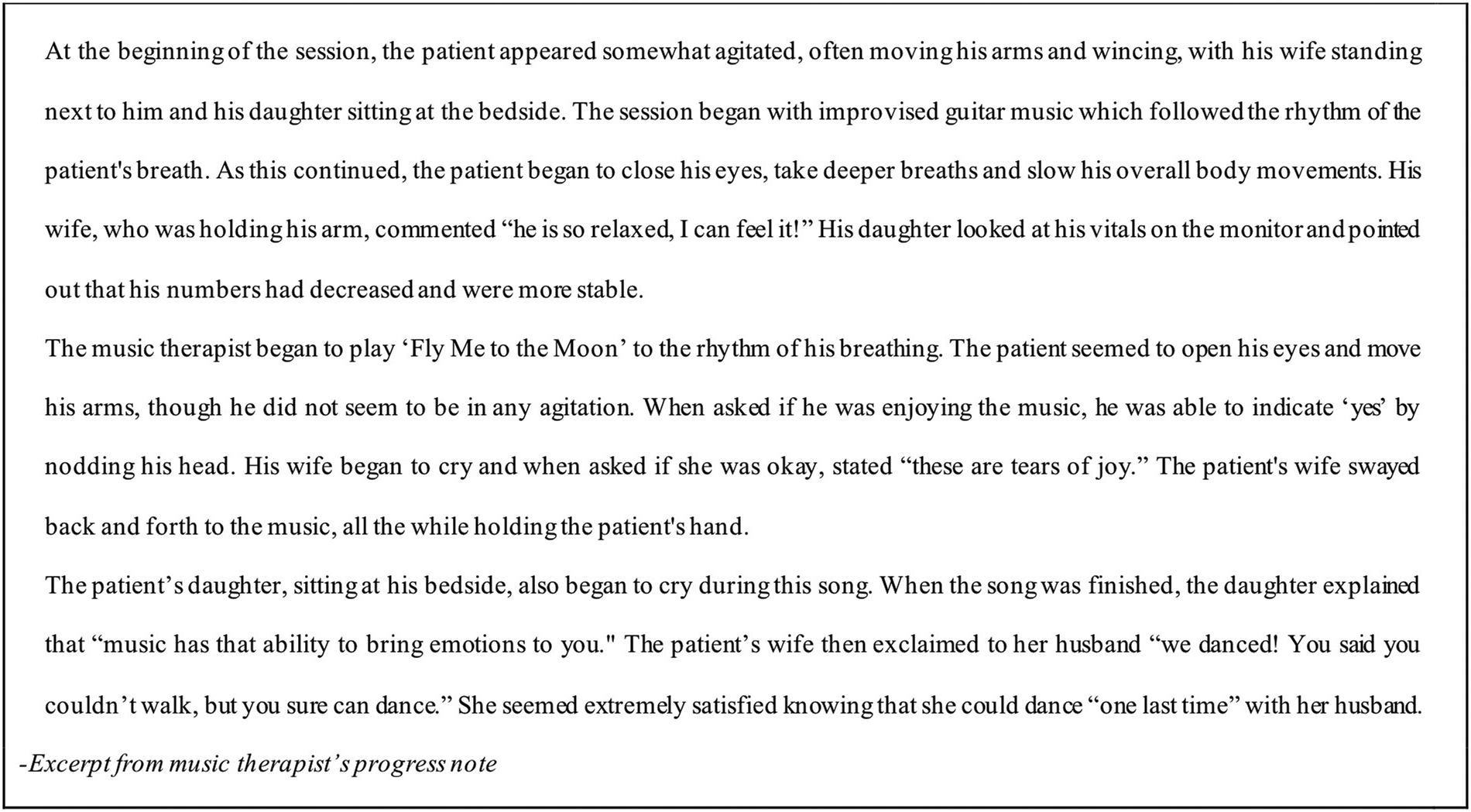
Sessions including family members were especially poignant as patients and families found a special point of connection through music (Figure 4). Families often chose to sing songs with personal meaning and had strong emotional responses as memories and feelings arose. Patients and families expressed feelings related to the hospitalization, sometimes sharing these together for the first time. Many family members held the hand of or gazed at their loved one while singing to them. Family members often noted sessions to be a source of emotional support and relaxation for the patient and themselves.
Music therapy with a patient who was intubated and family members.

Discussion
This study found it feasible to introduce bedside music therapy for critically ill patients in a large urban medical center. One objective was to investigate whether music therapy would be accepted by a culturally diverse, low-income population that tends to have little access to this modality. Music therapy proved to be an accessible and adaptable intervention. The majority of capacitated patients approached agreed to a session and engaged openly with the music therapists, indicating interest and receptivity. Family members consented and provided highly favorable feedback on sessions for incapacitated patients. Implementing the program in our urban hospital setting was significant because it brought music therapy to patients who had not experienced it before and often were unaware of music therapy as a therapeutic option. The majority of patients reported benefits from the experience and expressed interest in continued services, supporting the importance of including underserved populations in the portfolio of patients for whom music therapy programs are developed.
Previous studies have emphasized the importance of the therapeutic relationship in effective music therapy treatment (Potvin et al., Reference Potvin, Bradt and Kesslick2015; Warth et al., Reference Warth, Kessler and Hillecke2016). We believe a strength of this study was the direct interaction with music therapists rather than using recorded music alone. Many patients had complex emotional and psychosocial issues to navigate alongside their illness that occasionally surfaced in response to the music. When given the opportunity to share openly in the nurturing presence of a therapist, many patients became “flooded” with thoughts, memories, and emotions. In these cases, it was important to have the therapist's clinical skills to support and redirect the patient toward a relaxing experience. The therapists also played a vital role in delivering the interventions with awareness and sensitivity, with consideration given to health state and capacity; cultural and religious norms; and prevalent population issues such as trauma, substance abuse, and poverty. With music therapy, professional standards requiring a broad musical repertoire, and the ability to improvise, the therapists were well equipped to adjust to the wide range of patient states and musical preferences and to provide a standard style of music that even patients with different stylistic preferences found relaxing.
Clinicians representing multiple professions were enthusiastic about music therapy on their units and remarked on its relaxing effects on their patients. Anecdotally, staff shared that patient anxiety is high on the units overall—most often shown indirectly in the form of agitation, aggression, or non-compliance—and typically not addressed through standard care unless a psychological evaluation is warranted. It was noted that patients often became more able to communicate about their feelings of anxiety during and directly following music therapy sessions. One explanation is that the intervention was targeted at anxiety; the music therapists spoke about it directly and asked patients to rate how anxious they felt. Another explanation is that the close one-on-one interaction with the music therapists allowed for deeper exploration of mental, emotional, and physical states. The fact that statistically significant reductions in anxiety were found across analyses suggests that music therapy was particularly helpful for this issue, an important finding given the disproportionate risk for anxiety among low-income populations and people facing serious illness. A further observation of interest was that, despite the study's stated focus on anxiety and pain management, providers consistently added emotional distress, feelings of social isolation, and difficulty coping as reasons for referral. This suggested an understanding among providers that music therapy can address these more subtle psychosocial domains. It also underscored the significant need among patients for emotional support that was echoed in the music therapists’ progress notes.
Many lessons were learned regarding the successful implementation of music therapy in the inpatient setting. One discovery was the differing work cultures and operational processes on each unit and the need to maintain a flexible approach. The ease of obtaining referrals, medication distribution, medical rounding, hospital discharge preparation, and family visiting hours all affected the music therapists’ ability to see patients. The availability of nursing staff to assist with referrals was variable by unit and day. Private patient rooms were more common on higher-acuity units while most units had shared rooms, requiring sessions that would not disturb or could include roommates. Practical challenges arose related to instrument storage, availability of work stations for charting, and limited access to office supplies. While these challenges ultimately were manageable, they caused disruptions to workflow.
Results of this study are promising and revealed that self-reported anxiety was reduced in participating patients. It is likely that non-significant statistical tests of associations between the music therapy intervention and our other clinical indicators, namely self-reported pain and therapist-recorded pulse and respiratory rate, were because of low statistical power and a limited sample size. Future research would strive to recruit a larger sample of patients. Further, a stratified, randomized design to better assess findings associated with age and session length is warranted. Finally, measures of pain medication utilization and dosage would provide additional and, arguably, more rigorous assessments of intervention effects.
Data collection by the music therapists may have introduced bias into the findings; this protocol was adopted owing to limited personnel. Although some patients may have adjusted their responses to “please” the music therapists, the fact that effects were found for anxiety, but not for pain, when both were being asked equally suggests that patients felt comfortable reporting their actual experience rather than what they believed the therapists wished to hear. In-depth interviews with selected patients could yield useful information about preferences and perceived mechanisms of action. We opted against this owing to patients’ acute illness state. Qualitative interviews or focus groups with providers and staff could inform issues of intervention sustainability and scalability.
Upon seeing the positive feedback from patients and staff and the promising indications of clinical impact, 3 of the 4 host departments continued funding music therapy beyond completion of the study. The fourth department pursued continuation but was unable to allocate funds, raising an important feasibility issue. Owing to limited insurance reimbursement for music therapy, institutions must employ a fee-for-service model, rely on philanthropy or grants, or absorb the cost. Even with supporting clinical evidence and active stakeholder interest, many organizations are challenged to offer the service. As with other healthcare services, low-income populations are more likely to be affected, as paying out of pocket may be prohibitive, and organizations serving low-income patients may be operating under restricted budgets. Music therapy, in this study's perspective, offers universal benefits, provided people have access. With increasing evidence of the value of music therapy in the care of patients with serious illness, the inability to serve underserved patients becomes an issue of health equity.
This study provides rich preliminary data that inform the integration of music therapy into clinical practice. Hospitals and other large healthcare organizations are in a unique position to enhance patients’ care and quality of life, including addressing disparities in access to healing services such as music therapy. The positive feedback of patients and families, together with the indication of clinical impact, supports introducing music therapy into inpatient care to promote comfort and relaxation, lower anxiety, and enhance psychosocial support. In the words of one patient at the close of her session, “I had no hope. I wanted to give up. Another day; I will remember this forever. You made me feel as if I have another day.”
Disclosures
This study did not receive any specific grant from funding agencies in the public, commercial, or not-for-profit sectors. The authors have no relevant financial or other relationships to disclose.
Acknowledgments
The authors gratefully acknowledge the Administrative Nurse Managers of the 4 units in this study for their support and assistance: Doris Brown, MSN, RNC; Maggie Vigne, RN; Melba Garcia, RN; and Lisa LaFalce, RN.