

This beautiful volume presents survey and excavations at the village of Campo, on the southern coast of Cameroon in West-Central Africa. Strategic test pitting under a modern settlement has revealed a remarkable collection of metal artefacts and pottery dating from the Early Iron Age, 2000 years ago.
Unconventionally, I begin with the final chapter of the book, Chapter 10. The authors conclude on a rather forlorn note, highlighting the disinterest of many stakeholders in the work of archaeologists, and the underfunded and structurally neglected conditions in which Central African archaeologists work. The over-reliance on outside sources of funding is, quite rightly, regretted. Things are not set to improve, as the worldwide archaeological community is squeezed. Taking the example of the UK, archaeologists face the potential loss of European funding sources—which account for 38 per cent of the discipline's grant income (Nielsen et al. Reference Nielsen, Farla, Rosemberg Montes, Simmonds and Wain2017: 39) and which have recently supported major African archaeology projects. The United Nations Sustainable Development Goals do, at least, recommend strengthening the protection and safeguarding of the world's cultural heritage, and promoting appreciation of cultural diversity and its contribution to development. They also identify as priorities expanding the number of scholarships available to African nationals and enhancing scientific research and cooperation. In such a context, it is important that archaeologists fight their corner, demonstrating how their findings contribute to the overall human narrative.
The research reported in this volume forms part of the ‘Environmental and Cultural Change in West and Central Africa’ project, led by the Universities of Frankfurt and Tübingen. The work at Campo was underpinned by thematic questions, but the nature of the archaeological deposits—lying beneath the school, church and other structures of a modern settlement, and in some cases revealed by road maintenance—means that the work effectively constituted salvage archaeology. The site was first recognised in 2000 and, as it held great archaeological potential but was severely threatened, systematic excavations were implemented in 2007. These involved the excavation of features CAM 07/1–CAM 07/13; salvage excavation of specific features and various ‘sondages’ were also undertaken in 2005 and 2007 at the church site; and, finally, surface samples were taken throughout the modern settlement of Campo. Chapter 3 reports on these various strands. Although the volume includes many excellent maps and well-labelled illustrations, the sheer number of units makes it difficult to keep track of their size and nature.
The features encountered are briefly interpreted on pp. 59–60. Some are seen as pits, in keeping with the ubiquity of such features in Central Africa (for another example, see Lavachery et al. Reference Lavachery, MacEachern, Mbida Mindzie and Bouimon2010). Their function is not entirely clear. They are deep, and sometimes include entire vessels (at times in quantities), both factors inconsistent with a role for rubbish disposal. This may relate to burial customs or to ancestor worship. The rectangular layout of some features, however, points to a different purpose. These features, accompanied by very rich artefactual assemblages, seem to be burials, although no bone was recovered; this is attributed to the acidic nature of the soils.
Chapter 4 outlines chronology. Forty radiocarbon dates span from the fourth century BC to the thirteenth century AD, most falling within the first half of the first millennium AD and originating mainly from the burials in the church area and town centre. Three phases are proposed: the first is evidenced by a single pit (CAM 07/11), the second (first to fourth centuries AD) concerns the majority of the features excavated at Campo, and the third, dating to the fifth to seventh centuries AD, relates to features surveyed north of the church. (It may be worth pointing out that, despite being recovered in a churchyard, these are not Christian burials—Christianity has a much shallower time depth in this part of the world.) Chapter 4 reviews radiocarbon dates from the region and suggests two phases: Phase I, the Early Iron Age, is poorly dated but seems confined to the first millennium BC, while Phase II, the Developed Iron Age, covers roughly the first millennium AD, by which time iron had become ubiquitous.
Chapter 5 presents the ceramics. About 61 per cent of sherds recovered in the 2007 season could be refitted, to a total of 110 vessels, presenting a good overview of the corpus. Seventy-eight near complete or relatively reconstructible vessels were identified in the burials; vessels were apparently most often deposited bottom up in the grave. In the case of two burials in the modern town centre (CAM 07/1 and 07/2), however, the situation was different: here, vessels were heavily fragmented. Perhaps they were smashed in situ during a funeral ceremony, or they may have been deposited from the outset as fragments; the heavy erosion of these two graves makes it difficult to decide between these two possibilities, although it should be noted that complete ceramics were also present there.
Open bowls constitute the majority of identifiable vessels. Attention is paid to the distribution of ceramics across features, and to the differential fragmentation of ceramics between pits and burials (pits almost exclusively contained heavily fragmented pottery). Decorations are dominated by horizontal grooving, incisions in a checkerboard pattern and comb impressions; all are most commonly applied to the upper part or rim of vessels. Chapter 5 discusses, feature by feature, the ceramics recovered in the burials and in the pits and during survey. This discussion is supported by excellent line drawings. The conclusion is that the three phases identified through the radiocarbon dates (Chapter 4) are also reflected in the ceramics assemblage.
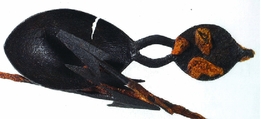
The iron objects form the subject of Chapter 6. Excavation was difficult given the hardness of the encasing sediment, and the artefacts were extracted under laboratory conditions at the Römisch-Germanisches Zentralmuseum in Mainz, Germany (an institution also known in African archaeology for its recent renovation of stunning finds from a second-millennium AD burial site in Nigeria, see Gronenborn Reference Gronenborn2011). This brought to light phenomenal artefacts, including hatchets, adzes, hoes, spearheads, arrowheads, spoons, bracelets, anklets and torcs. At least 130 pieces of leaf-shaped iron objects, roughly broken in two and recovered in two concentrations in burial CAM 07/1, may be currency. Imprints and residues of organic materials were noted, including wooden handles, fragments of matting/basketry and cord binding, some showing traces of probable resin. This is important as local soil and climatic conditions are generally unfavourable for organic preservation. A brief comparison is made to metal finds from the sites of Akonétye and Nandá (150–200km away); those from Nandá in particular show close similarities to the Campo finds. Ethnographic parallels for the spoons, hatchets and possible currency are also offered.
There follows three short chapters by the first-named editor, which aim to set the Campo finds within a broader context. Chapter 7, a single page, restates the case that most of the features constitute burials. Chapter 8 discusses the possible social and political setting, and suggests that the people of Campo formed a segmentary society with a subsistence economy. Although richly furnished, the graves are generally homogeneous, and given the lack of information on past constructions of the value of artefacts, the status and role of the deceased cannot be gauged. This said, the burials are not considered representative of the overall community and are, in fact, tentatively identified as male. The discussion in Chapter 9 is framed by Günther Tessman's definitive ethnography, Die Pangwe (1913), which presented the people living then and today in this region. The question of ethnographic analogy, which has flitted through the book under review, is now squarely addressed. The various groups known as Pangwe appear to have settled locally quite recently: in the late eighteenth century at the earliest. Yet, Tessman's work illustrates examples of ‘spear money’ that seem near identical to the items recovered at Campo from contexts 1500 years older. This puzzle is left without an answer.
These short chapters unfortunately miss an opportunity to examine the Campo findings within a wider context. The interest of the book would certainly have been enhanced if the authors had related ‘pit-based archaeology’ not just to other parts of Central Africa, but also to other parts of Africa or the world. Further instances exist where the only stratified deposits identified occur as artefact-rich pit features, and are difficult to relate to one another (Allchin et al. Reference Allchin, Allchin, Durrani and Farid Khan1986); in the northern European context, the well-theorised concept of structured deposition (see e.g. Garrow Reference Garrow2012) is relevant. This lack of a broader story, showing how findings from south Cameroon might help inform both archaeological methodologies and the overall narrative of the human past, is the only significant quibble one can raise with this book.


