Introduction
Vestibular schwannoma is the most common neoplasm in the cerebellopontine angle, representing 78 per cent of neoplasms in this area. It is a benign non-capsulated tumour that arises from Schwann cells of the vestibular nerve, with most cases originating from inferior vestibular division.Reference Khrais, Romano and Sanna1 It usually grows medially from the internal auditory meatus (IAM). In the UK, the incidence of vestibular schwannoma is 13 cases per million every year.Reference Moffat, Hardy and Baguley2
Patients with vestibular schwannoma present with slowly progressive sensorineural hearing loss (SNHL) in 90 per cent of cases. Audiograms often show high frequency hearing loss without any characteristic features. Speech discrimination is usually affected out of proportion with this hearing loss.Reference Van Dijk, Duijndam and Graamans3,Reference Bagger-Sjöbäck, Rask-Andersen and Gleeson4 Five per cent of patients may present with sudden SNHL, whereas 3 per cent will have normal hearing. Unilateral tinnitus or unsteadiness can be the presenting symptom when it is misinterpreted as vestibular neuronitis or Ménière's disease. The average growth rate of a vestibular schwannoma is 1 mm annually; however, 23 per cent grow faster than 1 mm whereas 22 per cent may regress.Reference Bagger-Sjöbäck, Rask-Andersen and Gleeson4
Fast spin-echo T2-weighted magnetic resonance imaging (MRI) using a two-dimensional slide of 2 mm thickness is the most sensitive test in the diagnosis of vestibular schwannoma. Contrast-enhanced MRI is recommended when there is radiological uncertainty.5 It has proven to be cost effective and is standard practice for screening rather than using auditory brainstem response tests or computed tomography.Reference Robson, Leighton, Anslow and Milford6 However, the variability in the presenting complaints can lead to MRI being overbooked. The consequences of this are consumption of hospital radiology resources, an increase in waiting time for any other scans and increasing patient anxiety due to waiting times. Therefore, the use of a specific protocol is helpful in minimising unnecessary referrals.Reference Daniels, Shelton and Harnsberger7
In 2018, the National Institute for Health and Care Excellence (NICE) developed draft guidelines on the management of hearing loss in adults. They considered that MRI should be used if asymmetrical SNHL of 15 dB or more was detected at any 2 adjacent test frequencies, using pure tone audiometry test frequencies of 0.5, 1, 2, 4 and 8 kHz. MRI scans had a positive rate of 1.4 per cent for finding vestibular schwannoma.8
The aim of this study was to address the implications of the MRI referral protocol for vestibular schwannoma screening on the utilisation of resources.
Materials and methods
A complete audit cycle was used to assess the impact of referral criteria and the cost reduction of using a referral protocol. In this study, the standard criteria for MRI referral were adapted from previously published guidelines. In each cycle, we compared our current practice with the standard criteria. The standard criteria used in the comparison were unilateral tinnitus, unilateral or asymmetrical hearing loss of more than 15 dB in any two frequencies, and unexplained vertiginous symptoms.
In the first audit cycle, all patients who had fast spin-echo MRI (without contrast) were identified from picture archiving and communication system software during January 2012 using the search keyword ‘internal auditory meatus’. In our unit practice, all these patients should have at least one follow-up appointment to discuss the scan result. Patients’ notes were collected and analysed using the following parameters: symptoms during referral, age, gender, hearing assessment, and waiting time between out-patient appointment and the date of the scan.
From this analysis, the data were divided into two groups. The first group consisted of patients who met the standard criteria for MRI referral (the appropriate group) whereas the second group did not meet the standard criteria (the inappropriate group). The total cost of the service of the first ENT appointment, MRI expense and the follow up was calculated for the two groups. The outcome was discussed in a clinical governance meeting. The recommendation was for the ENT team to use the protocol and to review the impact of this with a second cycle of assessment.
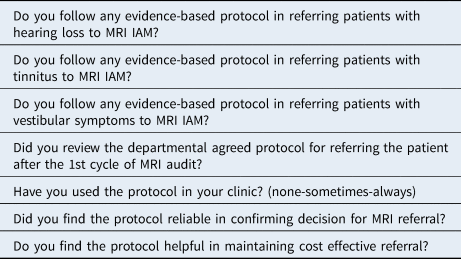
The second cycle of the audit was completed in January 2014. After the second cycle, all ENT middle-grade staff and consultants in the department were invited to complete a survey questionnaire on the impact of the protocol on their clinical practice (Table 1). The data collected in the two cycles were analysed using Microsoft Excel® spread sheet software, and SPSS® (version 22) was used to test for statistical significance. A p-value of less than 0.05 was considered significant.
Questionnaire used to evaluate the protocol used in the ENT department

MRI = magnetic resonance imaging; IAM = internal auditory meatus
Results
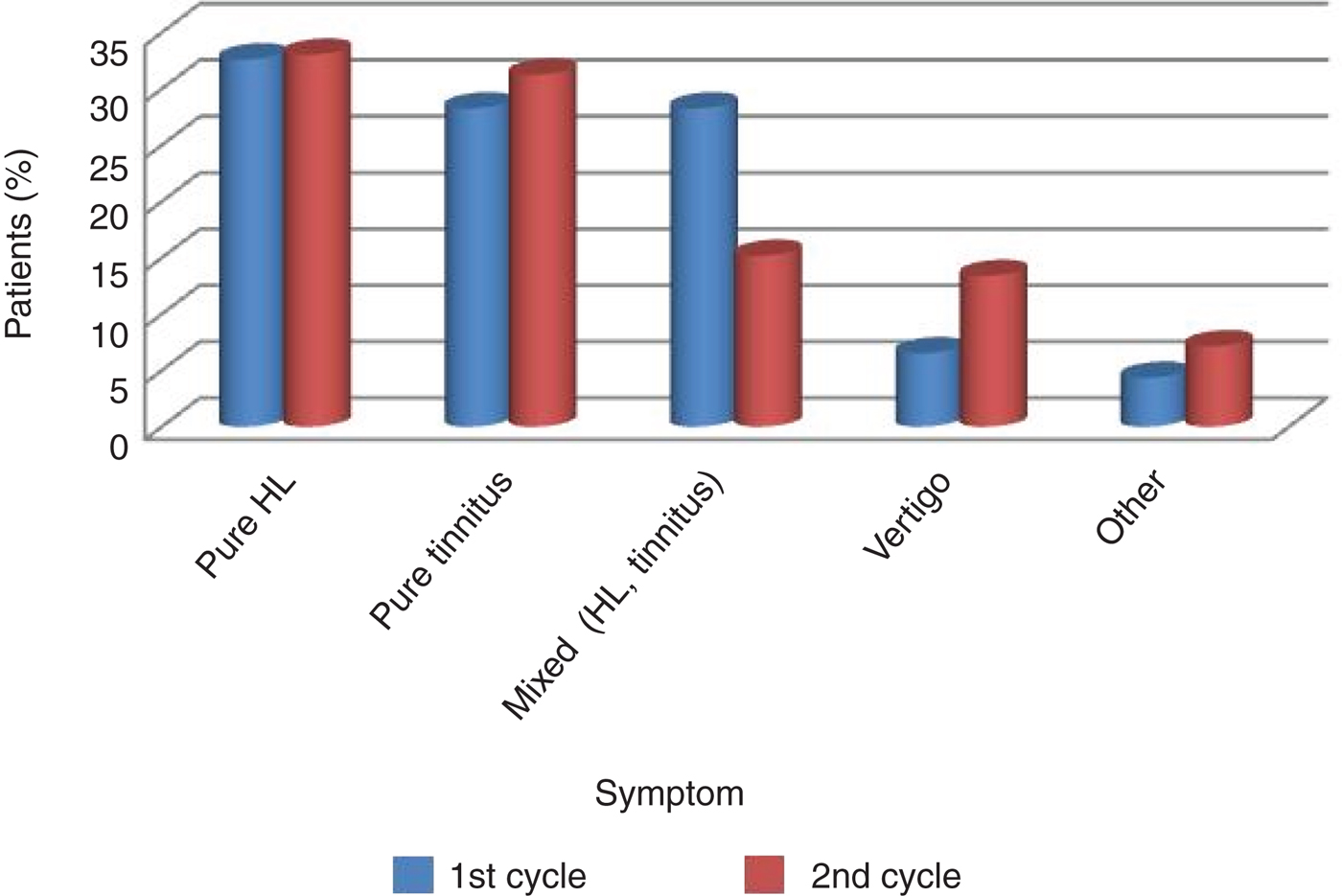
Forty-six patients had MRI referrals in January 2012. All referrals during that month came from ENT surgeons. Out of these patients, hearing loss was the main reason in 61 per cent, 57 per cent had tinnitus either as a sole presenting complaint in 28 per cent or combined with hearing loss, 7 per cent had unclear vertiginous symptoms, and 4 per cent had other non-specific symptoms such as headaches and persistent pressure symptoms in the ear.
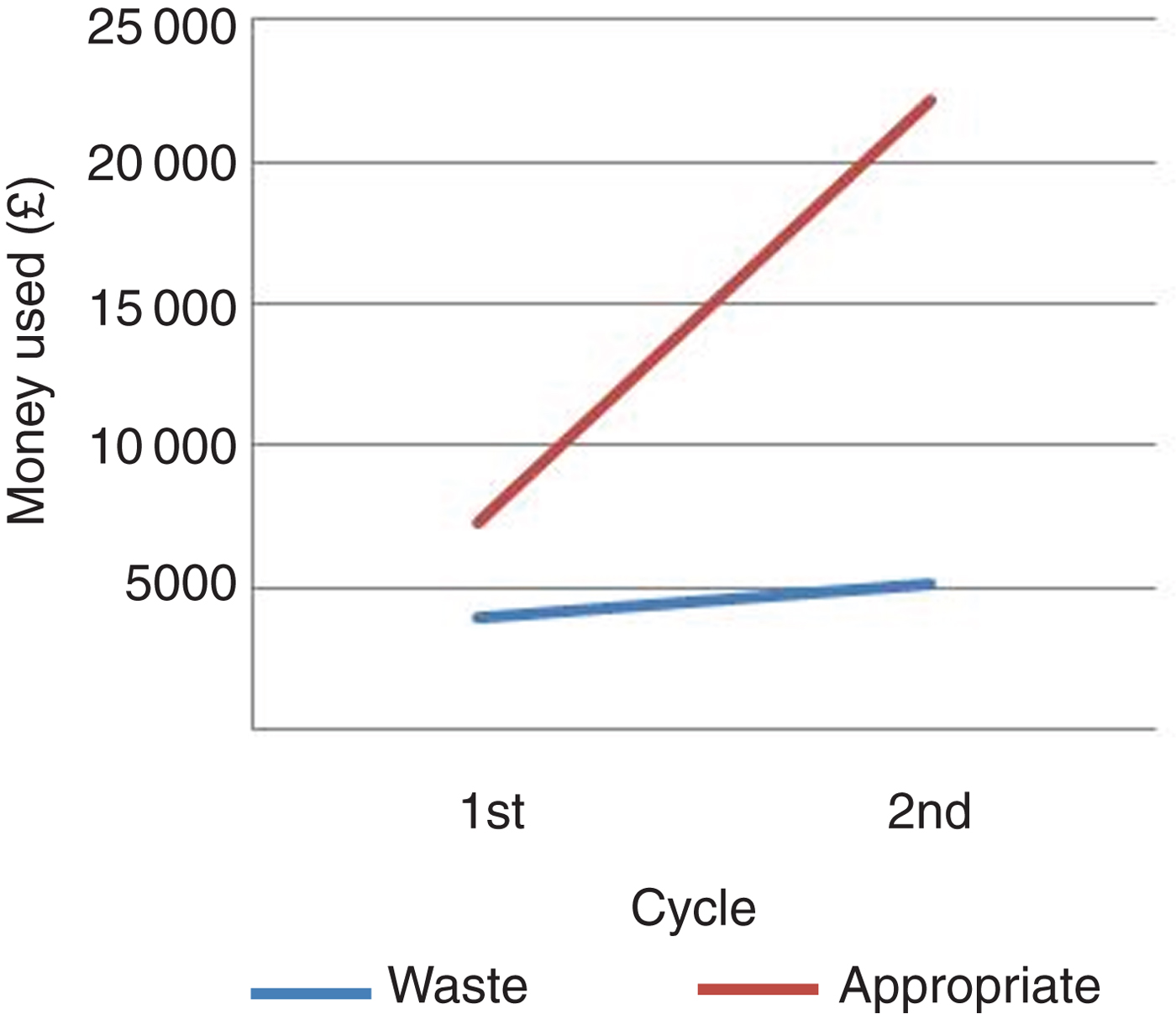
The average waiting time between ENT referral and the MRI scan was 3.5 months. Sixty-five per cent of the patients (group one) had appropriate referral with the guidelines at that time. Three patients were diagnosed with vestibular schwannoma on the MRI (two new and one at an annual surveillance for change in size of the tumour). The percentage of new cases was 6 per cent in our Trust area. At the time of the audit, the cost of MRI of the IAM and of appointment with a specialist were £174 and £70, respectively. The radiology department alone consumed £8004 in January 2012 for all MRI scans of the IAM (two groups). During January 2012, the total cost for the service in groups one and two was £7320 and £3904, respectively.
A total of 112 patients were referred for MRI in the second cycle, with 98 per cent of referrals directed from the otolaryngology department. Referrals for hearing loss dropped to 48 per cent. However, referrals for tinnitus increased to 31 per cent (Figure 1). Eighty-one per cent of referrals followed the guidelines. The MRI detected 4 patients (3.5 per cent) with vestibular schwannoma, 3 of whom were new patients.
Indications for MRI referral in the two cycles. HL = hearing loss

The comparison of the expenses in the two cycles is illustrated in (Table 2). The waiting time for MRI from the referral date dropped to 1.9 months (Table 3).
Trust expenses for MRI in January 2012 and January 2014

MRI = magnetic resonance imaging
Comparison of wasted resources and waiting time for MRI in each cycle

MRI = magnetic resonance imaging
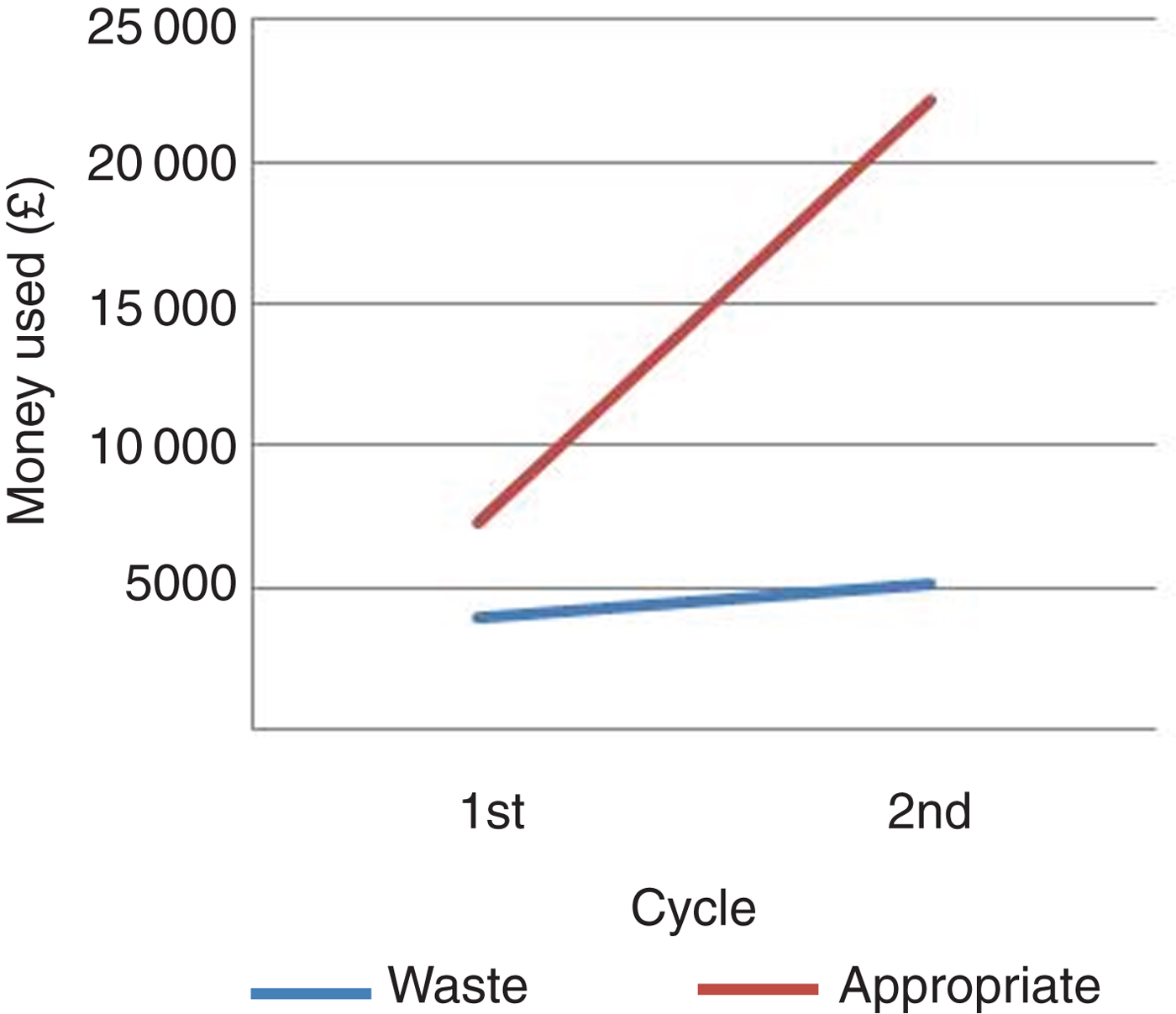
The number of MRI referrals increased 2.4-fold in second cycle. The cost for unnecessary referrals increased by only 1.3. The relative risk of waste dropped from 0.5 in the first cycle to 0.2 in the second cycle (Figure 2). The chi-square statistic was 1140.3. The p-value was not significant at less than 0.05.
Financial comparison of appropriate and wasted MRI referrals in the two cycles in the study.
The percentage of referrals from consultants, middle-grade staff and unclear grades was 12.5, 77.5 and 9.8 per cent, respectively. One hundred per cent of consultant referrals followed the recommended scheme whereas 80.5 per cent of middle-grade staff referrals followed the recommended scheme.
The waiting time for an MRI scan was 3.5 and 1.9 months in the first and second cycles, respectively. The male-to-female ratio in both cycles was 47 to 53 per cent. The average patient age was 55 years old with a standard deviation of 14 per cent.
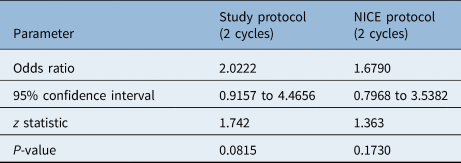
On retrospective application of the 2018 NICE guidelines to our study, the first and second cycles would have 65 per cent and 76 per cent compliance, respectively. The p-value was not statistically significant in the second cycle (Table 4)
Comparison of study protocol and NICE 2018 protocol

NICE = National Institute for Health and Care Excellence
Discussion
Vestibular schwannoma commonly presents with progressive hearing loss, with 5–10 per cent of patients presenting with sudden and usually profound hearing loss. There are different protocols to assess the hearing between the worse ear and better ear. In our study, asymmetrical hearing was expressed predominantly in the high frequencies, and several investigators have reported that 2 kHz is the frequency most closely associated with vestibular schwannoma.Reference Gimsing9
In one district general hospital ENT clinic, it was shown that 19.7 per cent of new patients attending the ENT out-patient department were potential candidates for screening for vestibular schwannoma.5
The pressure from the limited resources in the National Health Service is putting constraints on services in every hospital. The cost-effectiveness of using MRI for audiovestibular dysfunction screening is continuously criticised despite its confirmation as the ‘gold standard’ for this purpose. Al-Barki et al. emphasised the importance of a referral protocol to boost the service.Reference Al-Barki, Hudise, Malik, Junaid and Almothahbi10 Other centres in Europe and the USA have also worked on improving the cost-effectiveness of their MRI referrals.Reference Gimsing9,Reference Obholzer, Rea and Harcourt11,Reference Cueva12
In Charing Cross Hospital in London, a difference of 15 dB or more in unilateral hearing loss or more than 20 dB in asymmetrical hearing loss at two frequencies are the criteria for MRI referral. When the mean pure tone hearing loss between 0.25–8 kHz in the good ear is less than 30 dB, then the bad ear is classified as unilateral hearing loss. If the better ear hearing level is more than 30 dB, this is classified as asymmetrical hearing loss. By following this protocol, the Charing Cross Hospital had reduced the number of scans in 2000 from 392 to 168.Reference Obholzer, Rea and Harcourt11
When the better ear hearing level was 30 dB HL or less, the average audiograms (for both ears) in vestibular schwannoma and non-tumour patients were nearly the same, so that the two groups could not be distinguished from each other. When the better ear hearing level was more than 30 dB HL, the ear threshold was much poorer in vestibular schwannoma than non-tumour patients, so that the average audiograms were clearly different.Reference Gimsing9
In Southern California in the USA, the common protocol used in asymmetric SNHL was defined as 15 dB or greater in two or more frequencies or asymmetry in speech discrimination scores of 15 per cent or more.Reference Cueva12
In Denmark, Gentofte University Hospital defined unilateral hearing loss as 20 dB or more asymmetry at two adjacent frequencies, and bilateral asymmetrical hearing loss was defined as more than 15 dB asymmetry at two frequencies between 2 and 8 kHz.Reference Gimsing9
In the current study, hearing loss was the main referral criterion in the first and second cycles. The inappropriate referrals were due to different surgeon's perception of the significance of the asymmetry between both sides. It was complicated and time-consuming to first calculate the mean of pure tones to decide if there was unilateral or asymmetrical hearing loss and then to apply the 15 dB or 20 dB differences accordingly. To simplify this, the agreed standard for MRI referral was 15 dB in 2 frequencies. We succeeded in reducing MRI referrals due to hearing loss after application of this protocol in the second cycle of the audit.
The re-analysis of our study data using the 2018 NICE guidelines for hearing loss showed a slight difference in the second cycle: 6 referrals (5 per cent) were no longer indicated when using the criterion of the 15 dB difference in two adjacent frequencies whereas in our protocol we used the criterion of 15 dB difference in any two frequencies. This would have improved the cost in second cycle by a further 5 per cent.
The 2018 NICE guidelines showed a low level of evidence for pure tone threshold in screening for vestibular schwannoma. The evidence that had highest sensitivity (Nashville protocol) also had the lowest specificity. The Nashville protocol itself used a 15-dB threshold in screening.8 A meta-analysis in 2016 showed higher sensitivity with three protocols (American Academy of Otolaryngology Head and Neck Surgery (AAO-HNS), Obholzer and Sunderland) but poor specificity (i.e. missed 9 per centReference Hentschel, Scholte, Steens, Kunst and Rovers13 (false negative)). The 3 protocols used 15 dB as the threshold for asymmetrical screening. Obholzer and Sunderland used a screening range between 0.25–8 kHz whereas AAO-HNS used a screening range between 0.5–3 kHz.Reference Hentschel, Scholte, Steens, Kunst and Rovers13
The second most common referral symptom was tinnitus. Seventy per cent of patients with vestibular schwannoma present with tinnitus whether alone or associated with hearing loss.5 One protocol that was used to determine MRI screening for patients with tinnitus set an upper age limit of 70 years old.Reference Sheppard, Milford and Anslow14 We considered one-sided tinnitus of six months duration as an indication for MRI referral. It should be noted that local or general causes of tinnitus should be looked at and treated before considering any referral. In the second cycle, there was an increase in the number of MRI referrals for tinnitus. There is no specific evidence or recommendation on the character or the duration of tinnitus alone as sole presenting symptoms for vestibular schwannoma. Patients presenting with bilateral tinnitus with unequal amplitude or those with longstanding tinnitus that has changed in character or amplitude may be considered by some otologists as an indication for MRI referral.
The vestibular symptoms are less common in vestibular schwannoma. There can be rotatory vertigo in 9 per cent of patients with vestibular schwannoma, light headedness or even disequilibrium. Intrameatal tumours usually present with vertigo in the patient whereas disequilibrium commonly occurs when there is expansion into the pontine cistern.Reference Mirko and Gleeson15
Some clinicians rely on patient history and clinical balance function tests to decide whether a referral for MRI is needed or not. A recent retrospective study showed that MRI referral for abnormal electronystagmography or videonystagmography is cost effective, in particular for unilateral caloric weakness (of 20 per cent or more), abnormal ocular motor testing and nystagmus on positional testing.Reference Gandolfi, Reilly, Galatioto, Judson and Kim16
The application of this guideline did not affect the accuracy of diagnosis of vestibular schwannoma as the number was even higher in the second cycle. The bias was in the short-term screening period. A longitudinal study will be required to confirm if the protocol might miss the diagnosis in some patients.
This study aimed to implement practice changes in our hospital to achieve a more cost-effective service. The expenses did not increase linearly in the second audit cycle despite a 2.4-fold rise in MRI as a result of an increase in primary practice referrals. These referrals were inevitable from the expansion of the population in the area. We succeeded in keeping unnecessary MRI referrals for hearing loss to a minimum. The inappropriate waste of resources in referrals dropped from 34.8 per cent to 18.8 per cent.
Many otology clinics now write a letter to the patients giving the result of the MRI, particularly when there is a negative outcome in order to fully explain the reason for screening for a rare benign growth. Patients are usually satisfied when they receive a reassuring letter without the need for a follow-up appointment. We did not use this protocol during our study period but acknowledge it could contribute to better utilisation of out-patient appointments and extra saving of trust resources amounting to approximately £10500 (for the follow-up of a negative scan in the two cycles).
The feedback from junior doctors who used the protocol in the ENT department was positive. It increased their confidence and decision making in selecting appropriate patients for the screening. Proper patient selection in the second cycle also helped in shortening waiting times for MRI scans, and it allowed the radiology department to properly use their funds. Cutting inappropriate referrals and shortening scan waiting times is expected to lower patient anxiety. However, a Glasgow Benefit Inventory questionnaire for normal MRI screening showed minimal patient benefit although the authors concluded that this group of patients had low anxiety levels about their symptoms.Reference Mcllveen, Koo Ng and Murray17
• Referrals for magnetic resonance imaging (MRI) cause constant pressure on hospital resources
• A screening protocol for vestibular schwannoma can improve the number of appropriate MRI referrals for hearing loss
• Guidelines can help achieve cost-effective value for this MRI screening programme
• This study audit represents a ‘gold standard’ example for service improvement in ENT and radiology departments
Conclusion
MRI scans are the gold standard for diagnosing vestibular schwannoma. Selection criteria for MRI referrals are important to maintaining the cost-effective value of hospital resources and ensuring the confidence of doctors in decision making about referrals.
Competing interests
None declared