




No CrossRef data available.
A computational study of creativity in design: The role of society
Published online by Cambridge University Press: 02 November 2005
Abstract
Studies of creativity have tended to focus on isolated individuals, under the assumption that it can be defined as a characteristic of an extraordinary person, product, or process. Existing computational models of creative behavior have inherited this emphasis on independent generative processes. However, an increasing multidisciplinary consensus regards creativity as a systems property, and extends the focus of inquiry to include the interaction between generative individuals and evaluative social groups. To acknowledge the complementarity of evaluative processes by social groups, experts, and peers, this paper presents experimentation with a framework of design as a social activity. This model is used to inspect phenomena associated with creativity in the interaction between designers and their societies. In particular, this paper describes the strength of social ties as a mechanism of social organization, and explores its potential relation to creativity in a computational social simulation. These experiments illustrate ways in which the role of designers as change agents of their societies can be largely determined by how the evaluating group self-organizes over time. A key potential implication is that the isolated characteristics of designers may be insufficient to formulate conclusions about the nature and effects of their behavior. Instead, causality could be attributed to situational factors that define the relationship between designers and their evaluators.
Information
- Type
- Research Article
- Information
- Copyright
- © 2005 Cambridge University Press
1. INTRODUCTION
Design is considered a creative activity. It is also considered a source of innovation and a foundation for social change (Gero, 2000). However, our current understanding of creativity in general and in relation to design, innovation, and social change is rather limited. The last 50 years of research in creativity have been highly speculative with a vague level of theorizing, and inconclusive empirical evidence (Sternberg, 1999). The present challenge in the study of creativity is to use a combination of research methodologies to move from speculation to specification and explanation.
The term creativity is polysemous and ambiguous. In the literature it often refers to different ideas including aesthetic appeal, novelty, quality, unexpectedness, uncommonness, peer recognition, influence, intelligence, learning, and popularity (Runco & Pritzker, 1999). A useful and well-accepted definition is that of historical or H-creativity (Boden, 1994) or creativity with a big C (Gardner, 1993). This definition highlights the importance of social evaluation. Namely, historical creativity refers to “the generation of ideas that are both novel and valuable; and values are negotiated by social groups” (Boden, 1999). Social consensus constitutes a kind of Turing test, where creativity is determined by an evaluative group interacting with the designer over time, and is not limited to the isolated generative process or its product.
In design, creativity can be determined by the relation between the design process and a set of complementary social factors including evaluation by a target population, selection by opinion leaders, and colleague recognition. Innovation can be defined by the diffusion of design solutions across a social group (Rogers, 1995). Thus, as a precursor of innovation, creativity can be defined as a property socially ascribed to individuals that generate solutions that are considered to be novel and useful by members of their society.
The canonical approach to the study of creativity in design to date is based on an individualistic premise under which creativity is assumed to be an extraordinary capacity, trait, or generative process. However, such an approach has yet to present evidence of a single or a consistent set of individual characteristics associated with creative designers or creative design solutions. In everyday discourse, these types of explanations are often circular: people tend to attribute exceptional performance to talent and to explain talent by exceptional performance (Howe et al., 1999). An increasingly accepted approach of inquiry focuses on the relation between individual–generative and group–evaluative processes. Under this view, creativity is seen as a social construct or a communal judgment (Feldman et al. 1994), where a creative designer is necessarily defined in relation to an environment of social and epistemological dimensions.
This paper presents an experimental test bed where qualitative generalizations about the nature of creative behavior in design can be explored. This framework is based on the domain–individual–field interaction model (DIFI; Feldman et al., 1994), which locates creativity in the interrelations of three main parts of a system: domain, field, and individual. This supports a view of creativity as a systems property in the same way that other constructs such as consensus or negotiation cannot take place within a single person; they are a result of group interaction. In the DIFI model, a domain consists of the set of solutions, knowledge, techniques, and evaluation criteria shared by the members of a given community. Fields include groups of individuals who share a common domain. The key potential implication of the DIFI model is that, situated in a dynamic environment, creative designers are those who generate “the right product at the right place and at the right time,” where “rightness” is largely defined by evolving social standards.
The motivation of the research presented in this paper is to extend our understanding of how certain individual actions in design can be determined by collective conditions and, as a result, trigger social changes.
2. METHOD OF STUDY
One way to investigate creative design as a social construct is to define and implement computer simulations of the different actors and components of a system, and the rules that may determine their behavior and interaction. This enables the systematic study of characteristics, conditions, and effects of interest as the simulation unfolds. By manipulating the experimental variables of the system at initialization, the experimenter is able to extract patterns from the observed results over time and build hypotheses in relation to the target system.
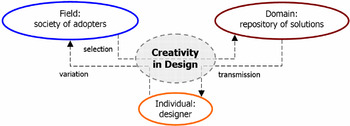
Multiagent-based simulation of social phenomena is the primary method of inquiry used with these types of systems (Gilbert & Troitzsch 1999). In this paper, we define a framework of social agency based on the DIFI model, which includes a small number of competing designer agents, a social group of clients or adopter agents, and a cumulative repository of design solutions or artifacts that represent the design domain, as shown in Figure 1. This architecture supports experimentation with the types of interactions between these system components, which have been described in general as transmission from domain to individual, variation from individual to field, and selection from field to domain, drawing from evolutionary systems (Feldman et al., 1994).

Creativity as a system's property: the DIFI map. [A color version of this figure can be viewed online at www.journals.cambridge.org]
The canonical architecture of rational agency divides a system into two explicit parts: agent and environment (Wooldridge, 2000). For that type of agent, changes in the environment reflect the impact of actions by other agents or external effects. According to the interpretation of individual autonomy in rational agency, social interaction is limited to indirect communication via an external state. However, the behavior of socially aware individuals cannot be expected to be hardwired as a reaction to environmental stimuli. In social agency, individual determinants can be expected to be complemented by interaction with a social environment (Castelfranchi, 2001).
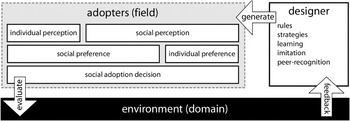
In our framework of design, social agency implies that the evaluation and adoption of design solutions by members of a social group are not entirely determined internally, but are subject to social influence. In other words, designer and adopter agents are represented as socially interdependent. Agents in this system, adapt their behavior to continuous changes triggered by the generation of new solutions and by an iterative process of social influence (Sosa & Gero, 2003). In this paper, this generative–evaluative coupling is analyzed by manipulating some of the characteristics of social interaction and observing consistent effects on design behavior and domain configurations. To support a social system of design, our agent architecture includes individual and social behaviors, as illustrated by the mechanisms of collective agency of the field, depicted in Figure 2: the architecture of a multiagent implementation based on the DIFI model of creativity.

A multiagent implementation based on the DIFI model of creativity.
The social behavior of an agent (M) in an environment (E), can be defined as the following:

where agent behavior (M) is determined by the sum of internal state components (mn) and construed situation (S). Internal state components (mn) may include goals, perceptions, preferences, skills, knowledge, and actions. Environment (E) is perceived by a bounded agent as interpreted external state (E′). Situation (S) is, in this sense, a function of the combination of internal and interpreted states.
For a social agent, an external state (E) may be, for example, a measure of group pressure to adopt an innovation. Group pressure by itself would not determine individual behavior (M) because it is a passive contextual feature. It becomes perceived group pressure (E′) when it is part of a social situation, if construed in combination with a relevant internal state (m), such as a degree of certainty, or a preference threshold to express an opinion or take an adoption decision (Asch, 1955). In this way, equivalent group pressure perceived by a group of social agents with different internal states would lead to the construction of different social situations (S), for example, compliance or assertiveness with others' decisions. Thus, the same context may generate different evaluation and adoption outcomes within different social situations. When situational factors are strong determinants, agent behavior can be expected to be normalized; in systems where personal factors dominate, behavior would be more differentiated across a population.
A situation can be defined at the individual level, and it can also be shared by a group. A shared situation is perceived by a group of agents as a result of the combination of internal states and a shared perceived state. Extending the previous example, at the individual level, a social situation could be one of compliance, while at the group level it could be one of unanimity (Asch, 1955). The latter requires, by definition, the aggregate action of a group. These two levels of social situations are corresponding effects of one common contextual structure, that is, group pressure.
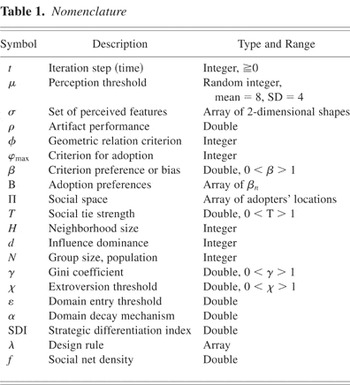
Individual behavior under this view is defined as a function of the agent and the situation (Ross & Nisbett, 1991). The main implication of this approach is that it supports equivalent agents acting differently within different situations, and different agents acting similarly within similar situations. In a system of designer and adopter agents, this implies that given a common design solution, different decisions to adopt are possible from members of a social group. Conversely, given a state of social adoption, different design decisions are possible. The multiagent system is described in detail in the next sections. A complete list of variables is given in Table 1.
Nomenclature

3. ADOPTION FRAMEWORK
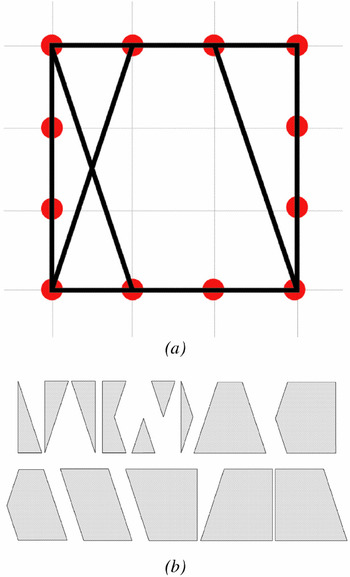
Adopter behavior consists of evaluating solutions generated by designers, and deciding to adopt or abstain. Design solutions or artifacts are described in a simple, two-dimensional linear representation, as shown in Figure 3a. This representation is chosen because it supports evaluation functions based on intuitive visual geometric features. It also supports multiple interpretations by adopters and shape emergence. As a result, it enables experimentation with some of the key aspects of design problems in multiobjective decision making. The particular mechanisms and values implemented in this system do not replicate previous findings; they are mostly hypotheses based in the literature and practice. However, this is often rather ambiguous because observations of social phenomena are usually not specific enough to be directly implemented. In such cases, we set parameters to explore a range of possible options and their effects. When these parameter ranges are set to extreme values, we do not assume them to be necessarily realistic; we are more interested in the transition values, which are more likely to capture real situations.

(a) Sample artifact representation and (b) a range of features (shapes) that adopters may perceive. [A color version of this figure can be viewed online at www.journals.cambridge.org]
Clients or adopters of design solutions in this system evaluate them according to individual thresholds of perception and preference. Variation of perception across a population is used to support different interpretations of artifacts, as shown in Figure 3b, where a number of shapes (features) can be extracted (perceived) from the sample artifact. Likewise, variation of preferences enables different adoption decisions based on shared interpretations. In other words, differences of perception support adoption decisions based on different interpretations of an artifact, while differences of preference support adoption decisions based on different evaluations of an artifact.
The process of perception by adopter agents is implemented here by a shape–recognition algorithm executed by every adopter with a side limit called perception threshold (μ). Starting from every vertex in the artifact representation, adopters conduct a search for artifact features (shapes) following all possible paths until a number (μ) of points is reached. This search produces a set (σ) of singular closed shapes of (μ) number of segments, which stands for the artifact's features as perceived by each adopter. As Figure 4 illustrates, the artifact shown in Figure 3(a) can be perceived differently when perception is based on different thresholds. The artifact perception shown in Figure 4a is conducted by adopters with a threshold μ = 10; the feature in Figure 4b is perceived by adopters with μ = 9. However, to allow for a more realistic overlap of perceptions in a society, a tolerance (μ = ±2) is defined.

Perception of features (shapes) of artifacts based on thresholds of (a) μ = 10 and (b) μ = 9.
A μ is assigned to every adopter agent from a Gaussian distribution at initial time (t0). As the process of perceiving artifacts is computationally expensive, it is scheduled at intervals of adoption. We assume that, although adopters take decisions continuously, they only update their perceptions periodically. This is consistent with the notion that social agents base their decisions on approximations that they update regularly. The perception of artifacts in our system refers to the idea that in human populations there may be a number of distinct but overlapping views of a design artifact's features, a notion illustrated by market segmentation.
Variation of μ across a population is controlled by the standard deviation of the percept distribution. Different studies may consider different percept variance assuming more subjective or more normalized interpretation across a target population.
3.1. Adoption decision
The adoption decision process consists of a multivariate evaluation function where adopters seek to maximize conflicting geometric objectives. These criteria include number of shapes, shape alignment in horizontal and vertical axes, preferred number of sides, overlapping of shapes, and shape bounds. The evaluation or performance (ρ) of a design artifact is individually estimated by adopters:

where artifact evaluation is based on an individualized set of geometric relations (φ) between pairs of perceived features (σi, σj). Evaluation ratings (ρ) of artifacts are compared by each adopter to determine an adoption decision, where the criterion for adoption (φmax), is defined by the difference between evaluations along each criterion. Namely,

where the criterion for adoption (φmax) refers to the geometric relationship with the largest difference from the mean (ρmax − ρmean) weighted by an individual preference or bias (βi) between 0.0 and 1.0 assigned to adopters at t0. This adoption decision process captures novelty preference because adopters in this system tend to choose artifacts that they perceive to have the highest differentiation from the rest. Adoption in this system is, therefore, a function of how competing features of design solutions compare at a given time. To be adopted, a design solution or artifact needs to perform better in a criterion (φ) that other artifacts do not meet; and it helps if that criterion is positively biased by adopters' preferences.
The set of adoption preferences (B) of an agent evolves over time following a mechanism of habituation where the βi for each criterion increases marginally as a function of φmax. Namely, as adopters decide to adopt artifacts, their preference for the geometric criterion best satisfied by an artifact is gradually increased. This mechanism “pulls” group preferences toward criteria that artifacts best satisfy. The set of B of an agent is defined as the set of βi for each evaluation criterion:

3.2. Adoption satisfaction
Adopter satisfaction is computed in this system, as a postadoption coefficient of quality. It indicates agreement between adopters' preferences and artifacts' features. In the adoption decision, if the choice criterion (φmax) equals the leading preference of an adopter (βmax), its satisfaction level is set to a maximum in a scale of discrete values that represents “very satisfied with the current adoption decision.” If the choice criterion is 1 standard deviation above the mean of the adopter's preferences, then the satisfaction level is set to a medium level or “satisfied with current adoption decision.” Otherwise, the adoption has been based in a criterion that is of little relevance to the adopter, and its satisfaction level is set to a minimum or “not satisfied with adoption decision.”
Finally, an adopter may abstain from adoption if no difference is perceived between artifacts, that is, if ρi−n is equal for all artifacts and φmax = 0.
3.3. Social interaction
To represent social groups, adopters are defined in a number of social spaces or configurations, that is, they form neighborhoods, or have adjacency relations to other agents in simultaneous social environments. For instance, individuals have different positions in kinship and work structures within a society. Other approaches, such as cellular automata of social influence, tend to conflate physical and social location into a notion of 2-dimensional neighborhoods. In this system, agents have n sets of neighbors in m social spaces. Such spaces are modeled with different parameters: social tie strength and number of ties are two structural properties defined in this paper.
At every iteration step (t), adopters rely on social interaction to validate their perceptions, spread their preferences, and in general to conduct their adoption decisions. To this end, different social spaces (Π) are defined where adopters interact. In this system, a social space is implemented in a social network where nodes represent adopter agents of a social group, and links represent between them (Wasserman & Faust, 1994). At t0, adopter agents are randomly assigned a location on each social net. These social spaces have different rules of interaction and development. Two aspects addressed in this paper are social tie strength (T) and neighborhood size (H). Ties are defined as interaction links between nodes in a social network and represent the relationship between adopter agents (nodes) in a social space (Wasserman & Faust, 1994).
The T is associated with the probability that connected nodes may interact over a period of time (Granovetter, 1973). Strong social ties usually exist between nodes in a kinship network, while weak ties characterize networks where casual encounters occur between strangers or acquaintances. The H is determined by the number of links from a node, also called ego-centered networks (Wasserman & Faust, 1994).
In our framework, we implement a basic notion of tie strength as a probability 0.0 ≤ T ≤ 1.0 that any possible pair of adopter agents will remain in adjacent positions at the next time step (t + 1). When a social space has a strength T ≈ 0.0, it supports higher social mobility. This means that adopter agents are shuffled more often and have more opportunity to interact with different adopters over any given period. In contrast, when strength is T ≈ 1.0, relations between adopters remain unchanged, causing a decrease in social mobility, that is, adopters interact with the same neighbors for long periods of time.
3.4. Influence dominance
A social space (Π1) is set in this framework where adopters exchange preferences (β). Within a second social space (Π2), perception thresholds (μ) are traded. A third space (Π3) is set where agents exchange φmax. The strength of social ties (T) is a property of social spaces, and it is the main control variable discussed in this paper. Neighborhood size (H) has a constant initial value of 2 at t0, and it varies during a system run according to the influence that each adopter exerts on others. In this system, more influential adopters increase the size of their neighborhoods. These assumptions can be changed by experimenters according to the hypothesis under inspection. For instance, the purchase of cars may be shaped by influence interaction in small kinship networks, while the adoption of products like mobile phones may be strongly influenced by large peer networks.
Figure 5 illustrates different structures of social influence in this system. Adopters are represented by circles and influence of preferences, percepts, or decisions by arrows. Vertical axis plots relative influence dominance; neighborhood size increases with influence. Figure 5a shows a possible influence structure where a few adopters have high influence and large neighborhoods. In Figure 5b, all adopters have similar influence and neighborhood sizes.

Influence structures in societies where (a) a few concentrate high levels of influence and (b) influence is distributed and neighborhoods are small.
The distribution of influence dominance (d) in a social space is measured in this framework by the Gini coefficient, which is a summary statistic of inequality. The Gini coefficient (γ) is used in studies of wealth distribution, where limited group resources are exchanged among members of a population. Influence can be seen here as analogous to wealth, in that it is generated by the interaction between two agents where one may increase its share at the expense of another. The Gini coefficient ranges from a minimum value of γ = 0.0, where influence between all individuals is equal, to a theoretical maximum of γ = 1.0, in a population where one individual concentrates all influence dominance. The Gini coefficient is calculated by the following:

where the average difference of every possible pair of influence values (di − dj) is divided by two times the average squared (n2) of the mean group size (N; Dorfman, 1979). The larger the coefficient is, the higher the degree of dispersion.
To determine the direction of influence between neighboring adopter agents, they are assigned random extroversion thresholds (χ) in every social space at t0. An adopter agent is assigned different χ values in different social spaces (Πn). Extroversion values are not fixed during a system run, but change as a result of exerting influence over other agents.
Exchange between any pair of adopters starts by a comparison of their χs. In the social space where βs are exchanged, the adopter agent with the higher extroversion of the pair influences the less extrovert adopter on the criterion with the highest preference. A negotiation process occurs by which the influenced adopter increases its preference by a ratio of the difference between their preferences. However, if the chosen artifact of both adopters is the same and their preferences are too similar, the more extrovert adopter changes its own focus of attention by shifting its preference to another criterion. This is a way to implement uniformity-avoidance and novelty-seeking behavior, that is, “βi is an adopter's top preference until it perceives that βi is commonplace.” Within other social spaces, different content is exchanged following a similar approach. Influence (d) between adopters i and j is of the form

where the more extrovert adopter χi influences the less extrovert χj. Negotiation occurs as the target preference β of agent j approaches agent i by a ratio of their difference, in this case 0.5. The exchange of μs and φmaxs in their corresponding social spaces takes place in the same form.
Although the details of this interaction can be fine tuned to match other assumptions, the key idea is that adopter agents exchange building blocks of their adoption process. However, even if an influential adopter is successful in spreading its preferences or percepts, the adoption decisions of a group need not converge. Namely, adopters with equal top preferences may still perceive artifacts differently and therefore reach different adoption decisions.
In ergodic systems such as 2-dimensional cellular automata, a population converges from any initial random configuration. In contrast, when exchange occurs in more than one social space, the population may not converge as t0 → t∞ due to random walks being transient (Sosa & Gero, 2003).
3.5. Opinion leadership and gatekeeping
As a result of social interaction, adopter populations form aggregate hierarchical social structures. In this framework, these structures are determined by exchanges of preferences, percepts, and adoption decisions. Opinion leaders are defined as adopter agents with high influence (d) values as a result of social interaction. At t0, the set of opinion leaders is empty. The role of opinion leader is given to adopters whose influence is greater than 1 standard deviation above the mean of group influence. The role of opinion leaders in this framework is to enable interaction between adopters and designers. First, leaders serve as adoption models providing designers with positive feedback for reinforcement learning. Second, they become gatekeepers of the field by selecting artifacts for entry into the domain or repository, that is, a collection of artifacts that defines the material culture of a population (Feldman et al., 1994).
Because the number of opinion leaders is, by definition, a small ratio of the adopter population, they are more likely to spend more real and computational resources in analyzing available artifacts. With an adopter background, leaders follow the standard adoption decision process described above, complemented by additional geometric evaluation criteria including rotation, reflection, and uniform scale.
The domain of solutions, or artifact repository, is initialized with an entry threshold (ε) of 0. During a system run, ε is increased, enabling a notion of group progress by which the entry bar is raised with every entry. Two possible entry modes are addressed in this paper. Opinion leaders in their role as gatekeepers select artifacts that either increase the population's threshold of ε or perform well in different evaluation criteria (φ) than existing entries.
The nomination of artifacts by gatekeepers occurs at a control rate specified by the experimenter. Figure 6 shows sample repository entries as selected based on their geometric relationships. Geometric relationships can be recognized within these artifact shapes including scale, rotation, and symmetry. Entry threshold (ε) to repositories has a decay mechanism (α) of the form

where ε decays marginally over time when gatekeepers fail to nominate qualified entries above ε.

Sample entries to the repository and their perceived geometric functions: (a) uniform scale, (b) rotation, (c) rotation, (d) reflection, (e) uniform scale, and reflection. [A color version of this figure can be viewed online at www.journals.cambridge.org]
The last domain mechanism described in this section is a measure of difference between artifacts as perceived by adopters. The strategic differentiation index (SDI) is an index estimated collectively by adopters that reflects the perceived differentiation across the available artifacts (Nattermann, 2000). With a design system initialized in a converged state, SDI = 0.0. As designers seek to generate artifacts that differ from other available artifacts, SDI > 0.

where SDI is the mean performance variance for all evaluation criteria as estimated by every adopter agent in the population.
Adopters and opinion leaders provide the first elements for the definition of creativity in this system. In this framework, a creative design must exhibit novelty and fitness values to a social group at a certain period of time, and be adopted as a result. Cumulative adoption of artifacts addresses a notion of popularity (Simonton, 2000). An artifact must also be selected by gatekeepers, that is, experts representative of their social group (Amabile & Hennessey, 1999). This selection is based on rules of entry that evolve as artifacts and societies change. Critics' choice addresses the idea that creativity is judged by relevant arbiters (Gardner, 1993). Adoption categories enable classification on the basis of when in the diffusion process, adopters choose an artifact (Rogers, 1995).
4. DESIGN BEHAVIOR
The size of a group of designer agents is determined by the experimenter as a ratio of the adopter population. At t0, artifacts are configured and assigned to each designer. Designer agents are given a set of standard constraints to which their artifacts must comply. Designers' knowledge and adopter bases, recognition levels, and repository entries are all set to zero at the beginning of a system run. Knowledge base refers to simple domain rules that designer agents apply during a simulation. Adopter base is defined by cumulative adoption. Recognition is given by peer designers that imitate features of an existing solution.
The role of designer agents in this system is to generate and present their artifacts for assessment by adopters and gatekeepers. The details of the design task are determined by the adopter group decisions, and by the ability of competing designers to generate solutions. The goal of designers in this system is to consistently generate artifacts that are chosen by adopters, are selected by critics, and are imitated by their peers.
In this framework, design update and adoption rates are assumed to be periodic. Design takes place in these experiments at constant intervals during which adopters execute their decisions and interact socially. Variations of these assumptions are required to model different product markets and industries, requiring particular experimentation scenarios.
Designers may engage in different types of behavior, depending on a number of internal and external factors. Contingent design strategies can be seen as the product of the confluence of these conditions. The term strategy is used as adaptation of behavior that appears to serve a function in achieving the goal of generating artifacts that are adopted, selected by experts, and influential. As determined by a strategy, design behavior seeks to increment adopters' satisfaction levels and extend adopter base by capitalizing on relative superiority (competition), or by maximizing differences to other artifacts (differentiation).
Designer agents seek a type of contingent strategy where they learn a design rule, that is, an instance of domain knowledge tied to the artifact representation. In this case, condition → action rules are made by artifact feature → target criterion. Domain rules are generated based on the designer's model of the population's adoption process, construed by retrieving preferences and choices of opinion leaders. This is a way to implement positive feedback, because otherwise, a designer would not have access to target criteria and target perception, that is, an opinion leader may be an adopter of a competing artifact or may be abstaining from adopting. A designer can emulate the collective decision process by generating hypotheses of possible alternative artifacts (i.e., informed random changes to existing solutions).
Designers formulate hypotheses in this system, by evaluating and changing the configuration of their artifacts to improve performance along the modeled adoption criteria retrieved from opinion leaders. Namely, designers sort the lines of their artifacts according to their contribution to the formation of perceived shapes (σ). Designers are able to delete or generate new lines as a function of adopter perception (μ). Hypotheses consist here of rules to change a current artifact. Features that do not contribute to good performance are replaced at random. They are then evaluated following the multicriteria adoption function of Eqs. (2) and (3) above.
A design rule (λ) consists of artifact changes that increase its performance along a target criterion.

where a hypothesized feature (φh) results in an increment of artifact performance (ρ). A positive value of Δ stands for the improvement ratio of λ.
Individual differences between competing designers are addressed as differences in processing and synthetic abilities assigned at t0. Processing refers to the capacity of designers to generate and retrieve domain rules; synthesis stands for the number of hypotheses that designers can generate before having to transform their artifacts. In this paper, designers are assigned constant abilities at t0. However, abilities gradually increase as a function of design behavior. This enables experimentation with the impact of individual factors on creativity, which is beyond the scope of this paper.
If during the design of a new artifact a designer is not able to generate new domain knowledge, it seeks a strategy to apply existing λs. Here, two assumptions can be explored: domain knowledge may have private or public access. If private, every designer agent only has access to their own rules, while in public mode all designers have access to all existing rules. In this paper, public access is constant across all experiments. Existing knowledge is applied by the following:

where an existing rule λ that improves performance (ρ) in a target criterion (φ) is applied to an artifact.
If a designer is not able to generate or apply relevant knowledge, the last option is to imitate other designers. Imitation is the simplest form of collective learning, that is, blind learning, because information about features, criteria, and perception is missing. Imitation is defined here as the transfer of random artifact features. Imitation is chosen as the last option because designers seem to be fixated to “reinvent the wheel” (Purcell & Gero, 1996). This type of imitation is rather simplistic in our model; it would be of interest to explore in the future how relaxing this assumption would change the observed effects.
Designers whose artifacts have low adoption rates imitate the features of artifacts with higher rates. This is acknowledged by a mechanism where peer recognition is given to the designer of the source artifact. Recognition from colleagues indicates the influence of a designer.
Designers may address the perceived group's choice criterion or they may determine an alternative target criterion. This choice is a function of perceived adopter preferences (β′) and estimated artifact performance (ρ′). If a designer “determines” that its artifact's performance is competitive (defined as equal or above mean adopter preference), capitalization is chosen and design rules are built or applied to improve performance on the choice criterion (exploit relative superiority). If estimated performance is instead low on perceived adopter preferences, then designers seek to differentiate their artifacts in a highly competitive industry by selecting their best performing criterion. Strategies of competition and differentiation are defined as


where ρ′ and β′ are estimated by the designer agent.
Designer agents in this system are not equipped with creative abilities per se. The aim is not to introduce special traits to assess the effects of agents' creativeness as defined by the experimenter (Heck & Ghosh, 2000). Instead, all designers are given equivalent sets of mechanisms. No extraordinary process within the individual is hardwired, but in time, agent interaction renders a social self-organized construct of how a designer may exhibit behavior considered creative within its society.
These framework mechanisms encapsulate in a simple way some of the characteristics of design problems, including poor structure and interpretation; incremental solutions, hypothesis generation, nomological constraints, no right or wrong answers, and delayed feedback (Goel, 1994).
Design behavior complements the definition of creativity in this system. Adoption rate is a trend measure used to determine what designer is imitated at a particular time step. Peer recognition is considered a key element in the creativity literature (Runco & Pritzker, 1999). The contribution of each designer to domain knowledge is interpreted as transformation of the design space (Gero, 2000), learning, and experience (Runco & Pritzker, 1999). The number of hypotheses generated resembles idea productivity. The number of entries selected by gatekeepers gives a measure of a designer's contribution to the repository or domain (Feldman et al., 1994).
Experimentation with this framework consists of exploring the effects that the described individual and situational factors have on determining the creativity of designers. A designer is considered creative by its social group in this framework when its artifacts reach large adopter groups, its artifacts are entered into the repository, other designers imitate its artifacts, it transforms the design space by formulating knowledge, and its adopters have high satisfaction levels.
The framework has been implemented in a system built in Java 1.4.2 using the following libraries: Colt 1.3 (Hoschek, 2002) for array operators and random number generators, Jxl (Khan, 2004) for output data management, and JGraph (Alder, 2004) for visualization.
5. EXPERIMENT: SOCIAL TIES
The aim of this experiment is to assess the potential effects of different types of social interaction in the definition of creativity in design. It addresses the role of social ties in the formation of influence structures and the associated effects on design behavior. Tie strength (T) is implemented as the frequency of contact between adopters (Marsden & Campbell, 1984). A series of simulations are run where the initial configuration of adopters and designers is kept constant and the strength of social ties (T) is the experimental variable. Monte Carlo runs are conducted to explore the range 0.0 ≤ T ≤ 1.0 in populations of 100 adopter agents and 3 designer agents, which represents the range where adopters remain in their social location at all times, to where they change locations on every step, respectively.
In social networks with weak ties (T ≈ 0), connections between adopters are reconfigured more often and they have the opportunity to interact with different adopters over a period of time. In contrast, in social groups where agents have strong ties (T ≈ 1), adopters are bound, causing a decrease in social mobility, that is, adopter agents interact within the same groups for longer periods.
Cases are run over 7500 iterations, as preliminary runs showed that dependent variables stabilize between around 5000 iterations in most cases. The resulting data set is filtered to exclude outliers, defined here as 1.5 standard deviations from the mean. All the following results represent means of 30 simulation runs. Each simulation run is initialized in a converged state to avoid biases in the form of random initial artifact configurations. Therefore, at t0, adopters perceive no differentiation between artifacts and all abstain from adopting. It is only after designers first modify their artifacts that adoption commences.
5.1. Influence hierarchies results
The result of varying (T) from 0.0 to 1.0 shows that influence concentration increases with social tie strength. In societies with strong ties (T ≈ 1), a few opinion leaders become dominant (higher γ). In contrast, as social ties become weaker (T ≈ 0), social mobility increases and agents have contact within a varying neighborhood causing structures of influence to be more distributed (lower γ). Figure 7 shows a scatter plot on a logarithmic scale of the relation of T and γ with fitness = 0.92. Although cases with very strong social ties yield a high γ, most strength values in the range yield comparatively low results. It is particularly interesting to obtain an exponential distribution by linear increments of an experimental variable, a type of pattern that is prevalent in biological and social phenomena (Barabasi et al., 2001).

Exponential function for tie strength (T) and the Gini coefficient (γ). [A color version of this figure can be viewed online at www.journals.cambridge.org]
This result suggests that in most cases in these types of systems, influence hierarchies can be expected to be rather flat or egalitarian, the exception being only when adopter agents tend to remain in stable social positions over long periods. In social groups with strong ties, there is lower mobility and hierarchical structures of influence exist between adopters. As a result, in such groups influence hierarchies guarantee that a few individuals become dominant in the spread of adoption opinions. In contrast, in weaker social settings, adopters can be expected to influence their peers to a lesser degree. Influence is more diffused in these groups.
Small amounts of social mobility in societies of strong ties rapidly reduce disparities. As tie strength decreases further, influence becomes more egalitarian up to a point at which even large changes in social tie strength and mobility do not have a significant impact. Figures in the following sections plot only the ends (T = 0) and (T = 1), because most (T) values yield similar results until (T ≈ 1), at which point effects vary significantly.
5.2. Gatekeeping effects results
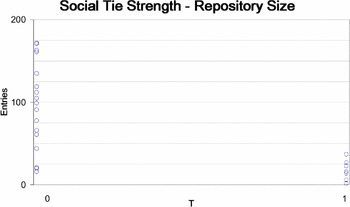
At the domain level, the formation of structures of influence has effects that may be unexpected: an inverse correlation is shown between the T and number of entries to the repository. In other words, in cases where influential opinions concentrate in a few adopters, designer agents are able to generate less creative solutions. Lower values of T are correlated with larger repositories as shown in Figure 8 (Pearson = 0.67, N = 30, p = 0.001). In societies with weak social ties (T ≈ 0), a mean of 97 artifacts with a standard deviation of 43.4 are selected by gatekeepers. In societies with strong social ties (T ≈ 1), a mean of 16 artifacts with a standard deviation of 11.7 are selected.

Social spaces with high tie strengths tend to produce smaller repositories. [A color version of this figure can be viewed online at www.journals.cambridge.org]
From the result discussed previously it can be seen that in societies with strong ties, a constant set of adopter agents tends to remain in the role of gatekeepers. Namely, gatekeeping is more stable and controlled by a small unchanging group of influential experts. Therefore, evaluation criteria remain constant over time. As a consequence, domains or repositories tend to be smaller. In contrast, in societies with lower tie strength and therefore where influence is distributed rather than concentrated, there is a higher change rate of gatekeepers. The gatekeeper group is constantly composed of different adopters. Consequently, more diverse evaluations support a larger number and a higher variety of domain artifacts.
5.3. Differentiation effects results
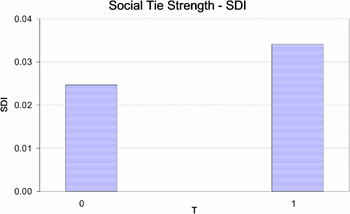
The differentiation of design artifacts is measured by the SDI as an aggregate measure of differences perceived by adopters. These experiments show that SDI is inversely correlated with the strength of T, as seen in Figure 9. Designer agents operating on strong social spaces where influence structures are stable, tend to generate more similar artifacts. The same designers operating on wider distributed influence social spaces, have a tendency toward higher differentiation (Pearson = 0.57, N = 30, p = 0.004).

The effects of the social tie strength (T) in the strategic differentiation index. [A color version of this figure can be viewed online at www.journals.cambridge.org]
This effect on design behavior can be explained by the normative nature of strong social ties. In societies where a few influential opinion leaders exist, adoption choices can be expected to be more similar. As a result, designers repeatedly engage in competition to improve their artifacts. In contrast, in societies with weaker links, adoption opinions are expected to diverge and provide designers with a wider range of preferences. In such cases, different artifacts are adopted.
5.4. Prominence effects results
Last, effects on the size and nature of adopter groups are addressed. Results show that tie strength (T) is positively correlated with adopter group size (Pearson = 0.608, N = 26, p = 0.001). The standard deviation of adoption in weak ties (1718) is also significantly higher than in strong ties (726). This illustrates that weak social ties increase abstention and make adoption less predictable. This is a consistent result with the notion that in more rigid societies there is a higher agreement of adoption opinions.
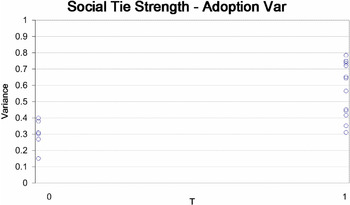
Adoption variance, on the other hand, is given by the distribution of adopters by designer agent. When adoption variance is high, most adopters choose the artifacts of one designer, whereas a low adoption variance indicates that adopters distribute their choices among all designers. The strength of social ties (T) is correlated with adoption variance as shown in Figure 10 (Pearson = 0.68, N = 26, p = 0.001). Namely, in social spaces with weak ties adoption choices tend to be more distributed across designers. In contrast, strong ties (T ≈ 1) increase total adoption and concentration of choices around a few designers.

Strong ties (T ≈ 1.0) produce higher variation of adoption between adopter groups. [A color version of this figure can be viewed online at www.journals.cambridge.org]
This result has an interesting potential implication from the designers' point of view. Designer agents with the same individual characteristics but operating in two extremes of social tie strength can expect different outcomes. When within a society with weak links (T ≈ 0), their popularity is likely to be lower and more unstable, although prominence among peers is harder to obtain. In this framework, the popularity of designers is given by the size of their adopter groups and prominence by the distribution of adoption choices. In contrast, when the same designers operate within a society with strong ties (T ≈ 1), one should expect higher and more consistent popularity levels, and a higher concentration of prominence, that is, a few designers concentrating most adoption choices.
5.5. Summary of results
According to the shape of the relationship between tie strength (T) and influence distribution (γ), lower popularity and lower concentration of prominence can be expected to be the norm in these types of generative–evaluative social systems. Under exceptional social conditions, the effects of otherwise equivalent designer agents have a sudden change, as the critical point at which influence concentrates is reached. Within such rare situational conditions, one designer agent is likely to concentrate the choices of a majority of adopters.
Within a society with strong ties, significant effects occur throughout the system. Adopters converge in their decisions, artifacts are perceived as more different, and domain sizes are smaller and more predictable.
5.6. Verification
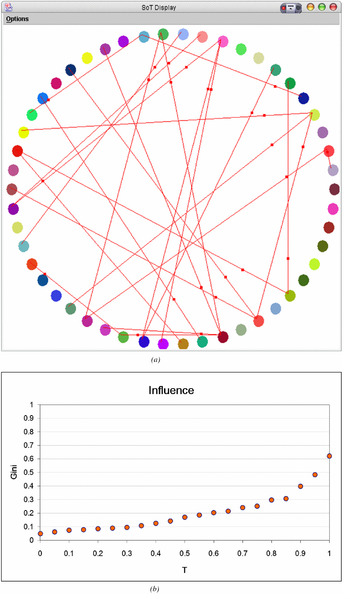
A key aspect of this experiment has been replicated using an alternative implementation, to demonstrate this framework's validity beyond a specific computational representation. This replication makes use of the social net library in a well-known multiagent simulation toolkit for Java (Collier, 2004). A social network is defined here by configurations of nodes connected by directional links. In a simple example of how the structure of a social network is created, random links or ties are added between nodes. The nodes are placed in an array, and their ties constitute the social network. Link directionality makes it possible to dispense with the extroversion threshold in the mechanism of social influence between adopters. With 1-directional link, source nodes always exert influence over destination nodes. A density parameter (f) is included where 0.0 ≤ f ≤ 1.0, which determines the ratio of connections between nodes in the social net. Figure 11a depicts a social net of 25 agents and f = 0.5 in a circular configuration (Freeman, 1998).

Replication of influence hierarchies using social nets. (a) The marker represents link directionality between nodes. (b) Most tie strength values (T) generate low Gini coefficients, except when T ≈ 1. [A color version of this figure can be viewed online at www.journals.cambridge.org]
The behavior of this social net is limited to the exchange of influence between adopter agents described in our framework. At initial time, a value of influence is given to all nodes, equal to zero. During a simulation run, source nodes increment this value by one unit as they exert influence over those nodes to which they are linked. The probability of tie replacement between a node pair in this network is a function of T, specified as an experimental condition for each case. In networks with strong ties (T ≈ 1), ties remain constant during a simulation (they change with probability = 0); in contrast, in networks with weak ties, these are changed more often until (T ≈ 0), when ties between nodes are reconfigured at random at every iteration step (with probability = 1). Monte Carlo runs are conducted to explore the range 0.0 ≤ T ≤ 1.0 in social nets of 100 agents, f = 0.5. The distribution of influence in a social net is again measured by the Gini coefficient.
Results are consistent with those shown in Figure 7: as the scope of contact between nodes extends, influence distribution rapidly decreases, up to a level after which large differences of tie strength have only marginal effects on influence distribution. As Figure 11b shows, most tie strength values generate low Gini coefficients. This reinforces the suggestion that social situations where the decisions of a few opinion leaders affects the creators' patterns are rather unlikely in systems of collective evaluation.
6. DISCUSSION
In this paper, a social framework for the study of creativity and innovation in design has been introduced and used to experiment (to a limited extent) with a specific situational factor of creativity in design. Factors that regulate aggregate behavior of a population of evaluators are shown to affect the way creators operate, and their impact as change agents of their societies.
The results presented in this paper illustrate one way in which creativity can transcend the individual domain. This is a significant contribution to the ongoing discussion on the relationship between creators and their societies. For instance, based on a biographic and historical analysis of several creative individuals, Gardner (1994) suggests that in more hierarchical fields (i.e., “where a few powerful critics render influential judgments about the quality of work”), it has been easier for a small number of creators to gain recognition and influence. These studies of creative figures suggest that social characteristics may determine who is considered creative, and when. Individuals who are characterized as extraordinary creators, may exhibit similarities of personality traits and abilities, or there may be similarities between the structures of the fields within which they operate. While in the cases analyzed by Gardner (1994) personalities vary significantly across creators, in most cases a few powerful critics rendered influential judgments about the quality of their work.
This paper has shown in a computational simulation of design as a social activity that agent societies with strong social ties are likely to develop uneven hierarchies that support powerful opinion leaders. As a result, a few prominent creators are likely to emerge in more static societies. In contrast, in social networks with weak ties, influence is distributed, expert judgments tend to vary over time, and they tend to have a lesser impact in the evaluation of new works. Likewise, creators will be less differentiated in dynamic societies where exchange of opinions is open and frequent between different members of society. These findings are limited to the assumptions and restrictions of the system implemented, but they show consistency with Gardner's (1994) observations. They reinforce the idea that social structures of evaluation can significantly affect the distribution of prominence, and therefore, how individual creators are perceived by their societies.
These experiments illustrate a key idea about the likely nature of creativity and innovation: a situational factor that regulates the way in which adopters interact may have a significant effect on how both designers and social groups operate. Nonetheless, there is an alternative interpretation of the relation between authority and creativity. Rudowicz (2003) presents a review of several empirical studies that support the idea that educational practices in hierarchically organized societies tend to promote behavior that is incompatible with creativity, that is, conformism and conventional thinking. As a number of evolutionary models have shown, novelty in a society may be facilitated by a balance between dissent or diversity, and the converging effect of imitation (Boyd & Richerson, 1995; Gabora, 1995). This discrepancy indicates that further research is necessary to fully understand the role of structures of authority in creativity and innovation.
The concept of situations seems an adequate unit of analysis to model the link between design cognition and social change. A creative situation (i.e., one within which designers with different characteristics are likely to trigger a social change), could be typified in design to complement the dominance of studies that focus on the creative personality.
The key potential implication of this research is that it may not be possible to put forward conclusions about human designers or computational design generators by limiting inquiry to their characteristics in isolation. A number of situational factors depict a close interdependence of designers with their social groups. A corollary of these types of studies is that the understanding of creativity will require the extension of the unit of study outside the cognitive realm of the design process, and into the social psychology of design. Computational simulation has a fundamental role in supporting experimentation of sociocognitive interactions. These in silico studies can provide new ways to think about the phenomenon of creativity and new ways to study it with in vitro (laboratory) and in vivo (biographic) tools of inquiry.
ACKNOWLEDGMENTS
This research is supported by an International Postgraduate Research Scholarship and a University of Sydney International Postgraduate Award. Computing resources are provided by the Key Centre of Design Computing and Cognition (www.arch.usyd.edu.au/kcdc). We thank Andy Dong, Guest Editor, for his valuable assistance.
References
REFERENCES
Alder, G.
(2004).
JGraph, open source Java Graph visualization.
Accessed on-line September 2004 at
http://www.jgraph.com
Amabile, T. &
Hennessey, B.A.
(1999).
Consensual assessment. In
Encyclopedia of Creativity
(Runco, M.A. &
Pritzer, S.R., Eds.), pp.
347–360.
San Diego, CA:
Academic.
Barabasi, A.L.,
Ravasz, E., &
Vicsek, T.
(2001).
Deterministic scale-free networks.
Physica A: Statistical Mechanics and its Applications
299(3–4),
559–564.Google Scholar
Boden, M.
(1999).
Computer models of creativity. In
Handbook of Creativity
(Sternberg, R., Ed.), pp.
351–372.
Cambridge:
Cambridge University Press.
Boden, M.A.
(1994).
Dimensions of Creativity.
Cambridge, MA:
MIT Press.
Boyd, R. &
Richerson, P.J.
(1995).
Why does culture increase human adaptability?
Ethology and Sociobiology
16(2),
125–143.Google Scholar
Castelfranchi, C.
(2001).
The theory of social functions: Challenges for computational social
science and multi-agent learning.
Cognitive Systems Research
2(1),
5–38.Google Scholar
Collier, N.
(2004).
Repast: An agent based modelling toolkit for Java.
Accessed on-line August 2004 at
http://repast.sourceforge.net
Dorfman, R.
(1979).
Formula for Gini coefficient.
Review of Economics Statistics
61(2),
146–149.Google Scholar
Feldman, D.H.,
Csikszentmihalyi, M., &
Gardner, H.
(1994).
Changing the World: A Framework for the Study of Creativity.
Westport, CT:
Praeger.
Freeman, L.C.
(1998).
Exploring social structure using dynamic three-dimensional color
images.
Social Networks
20(2),
109–118.Google Scholar
Gabora, L.
(1995).
Memes and variations: A computational model of cultural
evolution. In
1993 Lectures in Complex Systems
(Nadel, N. &
Stein, D.L., Eds.), pp.
471–486.
Reading, MA:
Addison–Wesley.
Gardner, H.
(1993).
Creating Minds: An Anatomy of Creativity Seen through the Lives of
Freud, Einstein, Picasso, Stravinsky, Eliot, Graham, and Gandhi.
New York:
Basic Books.
Gardner, H.
(1994).
The creators' patterns. In
Changing the World, A Framework for the Study of Creativity
(Feldman, D.H.,
Csikszentmihalyi, M. &
Gardner, H., Eds.), pp.
69–85.
Westport, CT:
Praeger.
Gero, J.S.
(2000).
Computational models of innovative and creative design
processes,
Technological Forecasting and Social Change
64(2–3),
183–196.Google Scholar
Gilbert, G.N. &
Troitzsch, K.G.
(1999).
Simulation for the Social Scientist.
Buckingham:
Open University Press.
Goel, V.
(1994).
A comparison of design and nondesign problem spaces.
Artificial Intelligence in Engineering
9(1),
53–72.Google Scholar
Granovetter, M.
(1973).
The strength of weak ties.
American Journal of Sociology
78(6),
1360–1380.Google Scholar
Heck, P.S. &
Ghosh, S.
(2000).
A study of synthetic creativity: behavior modeling and
simulation.
IEEE Intelligent Systems and their Applications
15(6),
58–66.Google Scholar
Hoschek, W.
(2002).
The Colt 1.0.3 distribution: open source libraries for high
performance scientific and technical computing in Java.
Accessed on-line August 2002 at
http://cern.ch/hoschek/colt
Howe, M.J.A.,
Davidson, J.W., &
Sloboda, J.A.
(1999).
Innate traits: reality or myth? In
The Nature–Nurture Debate, The Essential Readings
(Ceci, S.J. &
Williams, W.M., Eds.), pp.
258–289.
Malden:
Blackwell.
Khan, A.
(2004).
JExcel: A Java library for reading/writing Excel.
Accessed on-line August 2004 at
http://jexcelapi.sourceforge.net
Marsden, P.V. &
Campbell, K.
(1984).
Measuring tie strength.
Social Forces
63(2),
482–501.Google Scholar
Nattermann, P.M.
(2000).
Best practice does not equal best strategy.
The McKinsey Quarterly
2000(2),
38–45.Google Scholar
Purcell, A.T. &
Gero, J.S.
(1996).
Design and other types of fixation.
Design Studies
17(4),
363–383.Google Scholar
Rogers, E.M.
(1995).
Diffusion of Innovations.
New York:
Free Press.
Ross, L. &
Nisbett, R.E.
(1991).
The Person and the Situation: Perspectives of Social
Psychology.
Philadelphia, PA:
Temple University Press.
Rudowicz, E.
(2003).
Creativity and culture: a two way interaction.
Scandinavian Journal of Educational Research
47(3),
273–290.Google Scholar
Runco, M.A. &
Pritzker, S.
(1999).
Encyclopedia of Creativity.
San Diego, CA:
Academic.
Sosa, R. &
Gero, J.S.
(2003).
Social change: exploring design influence. In
Multi-Agent-Based Simulation III
(Hales, D.,
Edmonds, B.,
Norling, E., &
Rouchier, J., Eds.), pp.
106–110.
Berlin:
Springer.
Sternberg, R.J.
(1999).
Handbook of Creativity.
Cambridge:
Cambridge University Press.
Wasserman, S. &
Faust, K.
(1994).
Social Network Analysis: Methods and Applications.
New York:
Cambridge University Press.
Wooldridge, M.J.
(2000).
Reasoning about Rational Agents.
Cambridge, MA:
MIT Press.
Creativity as a system's property: the DIFI map. [A color version of this figure can be viewed online at www.journals.cambridge.org]
A multiagent implementation based on the DIFI model of creativity.
Nomenclature
(a) Sample artifact representation and (b) a range of features (shapes) that adopters may perceive. [A color version of this figure can be viewed online at www.journals.cambridge.org]
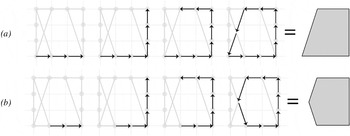
Perception of features (shapes) of artifacts based on thresholds of (a) μ = 10 and (b) μ = 9.
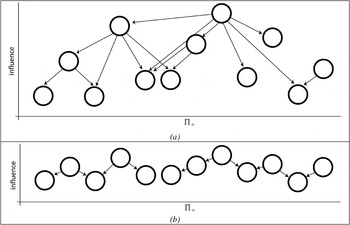
Influence structures in societies where (a) a few concentrate high levels of influence and (b) influence is distributed and neighborhoods are small.
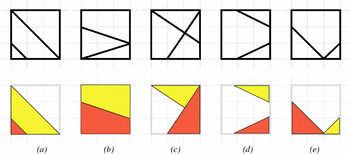
Sample entries to the repository and their perceived geometric functions: (a) uniform scale, (b) rotation, (c) rotation, (d) reflection, (e) uniform scale, and reflection. [A color version of this figure can be viewed online at www.journals.cambridge.org]
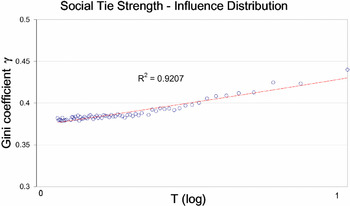
Exponential function for tie strength (T) and the Gini coefficient (γ). [A color version of this figure can be viewed online at www.journals.cambridge.org]
Social spaces with high tie strengths tend to produce smaller repositories. [A color version of this figure can be viewed online at www.journals.cambridge.org]
The effects of the social tie strength (T) in the strategic differentiation index. [A color version of this figure can be viewed online at www.journals.cambridge.org]
Strong ties (T ≈ 1.0) produce higher variation of adoption between adopter groups. [A color version of this figure can be viewed online at www.journals.cambridge.org]
Replication of influence hierarchies using social nets. (a) The marker represents link directionality between nodes. (b) Most tie strength values (T) generate low Gini coefficients, except when T ≈ 1. [A color version of this figure can be viewed online at www.journals.cambridge.org]
 You have
Access
- 21
- Cited by