Imaging and Biomarkers Workshop PCP01
Imaging is increasingly being used by clinicians to enhance accuracy of diagnosis and to give important information regarding co-morbid pathologies which have an impact on management and prognosis. Imaging changes are increasingly entering clinical diagnostic criteria, and consensus clinical criteria for all main subtypes of dementia now include information about imaging changes. In addition, many clinical guidelines for dementia emphasize the need for informed, appropriate application of different imaging modalities in varying clinical situations.
In response to the increased prominence of neuroimaging within routine psychogeriatric and neurological clinical practice, IPA is again offering this updated workshop to help enable professionals working in psychogeriatrics to understand and be able to apply and interpret imaging information to create opportunities for improved diagnosis and care.
This extremely successful workshop has been presented at IPA meetings and conferences around the world nearly every year since its first appearance in Amsterdam in November 2007. In Berlin, the workshop has been updated to include the latest technological advances and will be presented by international experts in imaging.
We are also very pleased to announce that GE Healthcare will continue to serve as sponsor of the IPA Imaging and Biomarkers workshops and we thank them for their efforts to improve care through education.
PCP01.01 Introduction, Objectives, Overview of Imaging and other biomarkers and new diagnostic criteria for dementia
John O'Brien,University of Cambridge, United Kingdom
PCP01.02 CT and MR: Basic introduction, advantages and disadvantages, how images are formed and current imaging methods
Mike Wattjes,VU University Medical Center, Amsterdam, the Netherlands
PCP01.03 Use of CT imaging in dementia
Leonardo Pantoni,University of Florence, Florence, Italy
PCP01.04 Practical use of MR imaging: How to rate medial temporal atrophy
Philip Scheltens,VU University Medical Center, Amsterdam, the Netherlands
PCP01.05 Use of perfusion SPECT and FDG PET imaging in the differential diagnosis of dementia
Klaus Ebmeier,University of Oxford, United Kingdom
PCP01.06 FP-CIT (DaTSCAN) SPECT imaging as a diagnostic tool for the assessment of DLB
Zuzana Walker,University College London, United Kingdom
PCP01.07 The role of amyloid PET for the diagnosis of dementia
Karl Herholz,University of Manchester, United Kingdom
PCP01.08 Use of CSF and blood biomarkers for diagnosis
Evelien Lemstra, VU University Alzheimer Center, Amsterdam, the Netherlands
4th IPA Long Term Care Colloquium: Cutting Edge Technologies in Care of Older People PCP02
Long Term Care Colloquium participants will be introduced to the exciting and ‘cutting edge’ world of social robots, assistive technologies and telehealth care. Under the theme, “Cutting Edge Technologies in Care of Older People,” developers, health care professionals, and ethicists will discuss their experiences of developing, using and evaluating technologies with and for older people, with topics.
PCP02.01 Telehealth and older people
David Conn,Baycrest Health Sciences and University of Toronto, Toronto, Canada
Telehealth can be defined as the use of electronic information and telecommunications technologies to support long-distance clinical health care, patient monitoring, health-related education and health administration. Technologies include videoconferencing, the internet, store-and-forward imaging, streaming media, and terrestrial and wireless communications (www.HealthIT.gov). Telehealth is different from telemedicine because it refers to a broader scope of remote healthcare services than telemedicine. This presentation will provide an overview of the development of Telehealth with a focus on applications for older people. The feasibility and benefits of Telemedicine and Telepsychiatry for older adults will be considered with examples from around the globe. Other applications, including Tele-homecare monitoring, asynchronous assessment and distance education, will also be described. Barriers to implementation and future opportunities will be considered.
PCP02.02 Enhancing social interaction and the network of care in sheltered housing through an advanced ICT system: Care Messenger
Glenda Cook,Northumbria University, Newcastle Upon-Tyne, United Kingdom
United Kingdom sheltered housing accommodates about 5% of the older population. This is a diverse community of people who are either active or older who need little support; and those who are frail and vulnerable with high levels of chronic disease and disability. A common aspiration of tenants is to be independent and remain in their home. Within the sheltered housing sector there is much interest in the role of technologies in supporting tenants to achieve these aspirations. Whilst a small proportion of tenants use computers, telecare and telehealth systems to support independent living, the majority have a television. The television is predominantly used for pleasure and information. With the advancement in technology it is feasible for the television to have greater functionality. The i-SPY Digital, Care Messenger system is a set top box with related cloud based software that has messaging capacities that are transmitted to the end-user through their television. This pilot implementation study introduced Care Messenger into a sheltered housing service to explore how this system could be used to support independent living through enhancement of the network of care. The network of care includes all support resources available to individual tenants including family/friends, sheltered housing/council services, health and social care services, and community services. This paper will report on challenges to implementation, how the system is being used by tenants and sheltered housing staff, and the potential to use the system within an integrated and interactive assistive technology platform.
PCP02.03 Integrating mobile telepresence into telehealth platforms for home care
Stephen Von Rump,Giraff Technologies, Sweden
An old trend and a new trend are combining to change the way care is delivered to elderly and the technology used to deliver it. The old trend – nearly all elderly prefer to live at home as long as possible, to maintain independent life, a social network and a familiar environment. And the emerging trend – that home is transforming from a place of basic social care to a place of health care delivery. As physiological remote monitoring devices become more affordable and easy to use, and as communication media such as smart phones, tablets and video conferencing applications also become more prevalent and easy to use, it is now possible to support independent life at home even in cases where the resident has more advanced needs such as management of chronic conditions, more intense support of Activities of Daily Life (ADL) and even post-acute care follow up.
Many so-called telecare and telehealth platforms exist in the market today, all designed to support particular care scenarios. In this presentation we examine platform requirements driven by more advanced resident needs spanning multiple care scenarios. In particular, the need for caregivers to have “instant presence” in the home in response to an event or request for help, and the need to support residents who are unable or unwilling to use a traditional communications interface drive the requirements in some care scenarios for mobile telepresence; that is, the ability for a caregiver to virtually enter the home via the Internet without requiring any action or response from the resident, and physically move about the home to deal with a care need, whether routine, urgent or in response to a resident request.
The results from 5 years of real-world experience with this technology show that such a device cannot simply be appended to an existing platform but rather must be deeply integrated into the architecture in order to meet care requirements. This presentation draws on real-life examples from trials and commercial experience in Europe.
PCP02.04 Acceptance of social-emotional robots (SER): Do elderly people like it better than caregivers?
Stefanie Baisch1, Arthur Schall2, Thorsten Kolling PhD1, Monika Knopf PhD1
1Developmental Psychology Lab, Goethe University Frankfurt am Main, Germany, 2Department of Geriatric Medicine, Goethe University Frankfurt am Main, Germany
Background: The idea of using robots to help provide social interaction and emotional well-being for frail or impaired elderly people, especially with cognitive deficits, has become more and more popular in recent years due to ongoing demographic change. Despite increasing use of emotional robots like the robot seal PARO especially with elderly people suffering from dementia, health care professionals’ and informal caregivers’ opinions on the use of these robots have not yet been considered thoroughly. More specifically, there is little knowledge on whether opinions of these secondary and tertiary users match with the opinions of elderly people. The ERimAlter project, which was funded by the Bundesministerium für Bildung und Forschung (German ministry of education and research), was intended at identifying different stakeholders’ opinions and concerns on the use of social-emotional robots.
Methods: Two different social-emotional robots, the emotional robot PARO and the telepresence robot GIRAFF, were presented in randomized order via stepwise interviews to n = 30 elderly people, n = 15 formal and n = 15 informal caregivers as well as n = 30 health care professionals (medical practionioners and occupational therapists). Both quantitative and qualitative data were gathered during the interviews. Parameters like acceptance, general and subjective usefulness, ease of use, enjoyment and general evaluation were assessed via questionnaire whereas benefits, concerns and participants’ ideas on possible applications were assessed via open-ended questions.
Results: Quantitative data shows that, depending on the robot and the acceptance parameter considered, evaluations of the robots differ with elderly people showing higher acceptance than the other user groups. Qualitative data hints at health care professionals and caregivers being more preoccupied by moral and ethical concerns than elderly people.
Discussion: The implication for the implementation of social and emotional robots in health care settings are discussed.
PCP02.05 Robotic seals – what do we know about their impact on people with dementia?
Wendy Moyle1, Elizabeth Beattie2, Brian Draper3, David Shum1, Lukman Thalib4, Cindy Jones1, Siobhan O'Dwyer1, Cindy Mervin1
1Menzies Health Institute Queensland, Griffith University, Queensland, Australia; 2Dementia Collaborative Research Centre, Brisbane, Australia; 3University of NSW, Sydney, Australia; 4Kuwait University, Kuwait City
Background: Apathy, agitated behaviours, loneliness and depression are common consequences of dementia and can make it challenging for care staff to engage people with dementia in meaningful activities. Many of the behavioural and psychological symptoms of dementia can lead to staff stress and burnout.
Objective: To reduce agitation, improve mood states, and engagement, as well as improve physical activity and sleep duration.
Method: A cluster-randomised controlled trial with three treatment groups: a robotic animal (PARO), a non-robotic animal (Plush-Toy) or usual care (control). Older people (n = 410) with a diagnosis of dementia and living in long-term care participated in the trial. The intervention consisted of three individual 15 minute non-facilitated sessions with PARO or Plush-Toy per week for a period of 10-weeks. This allowed both short term (5-weeks) and long-term follow-up (10-weeks), and long-term sustainability following withdrawal of intervention (15-weeks).
Discussion: The majority of participants enjoyed the opportunity to spend time with PARO. This presentation outlines what we have learnt to date about the impact of PARO through the secondary outcomes of interest – sleep duration and activity (step count -Sensewear).
PCP02.06 Companion robots in the healthcare sector
Barbara Klein,Frankfurt University of Applied Sciences (FRA-UAS), Frankfurt am Main, Hesse, Germany
Objective: Psycho-social care has an increasing importance in the care of elderly persons which has been underpinned by several legal changes in Germany. These changes contributed to an increase of the workforce in nursing care homes by 212% between 1999 and 2013 compared to an increase of 33% of residents in the same period (Statistisches Bundesamt 2001; 2015). Since 2005 the first companion robot, the plush seal PARO, is on the market and tested in several pilots and projects. Other companion robots followed e.g. the toy dinosaur robot PLEO. Besides these commercially available products, a range of new robots has been developed and can be utilized for research purposes. One of these robots is TELENOID which is embodied as a small humanoid resembling a foetus.
New technology-based concepts emerged such as robot-based activity and therapy (Libin & Libin 2004; Klein 2012). In teaching research projects of Frankfurt University of Applied Sciences the effects of the emotional robots PARO and PLEO were explored in nursing care homes. Whereas PARO and PLEO are robots which work autonomously and react and act on touch and voice, the social robot TELENOID is a kind of telepresence robot which is operated by a remote person who can be situated anywhere in the world as long as internet access is provided. The operator can transmit voice and mimics onto the TELENOID.
Objective of small qualitative studies at FRA-UAS was to explore and get an insight in possible effects on people cared for in nursing homes. Questions pursued were on acceptance and impact and how these new technologies can be utilized in order to contribute to well-being and quality of life.
Methods: A mixed methods approach seemed to be most suitable for research with very new technologies and vulnerable clients. From 2009–2011 students observed interactions with PARO resp. PLEO in teaching research projects and used video graphing, socio grams and questionnaires. In 2015 a prototype of the robot TELENOID was explored with four residents in a nursing care home as a kind of replication study undertaken in Japan (Yamazaki et al. 2012). In this qualitative study the interactions between residents, TELENOID and staff were observed and recorded by video and sound. Following the interventions, a structured discussion was undertaken with social care staff involved.
Results: Although these three robots have very different embodiments, they all seem to contribute to social interaction and communication. The emotional robots PARO and PLEO contributed also to reactions such as smiling, touching, stroking, cuddling and hugging the robot (Klein, Gaedt, Cook 2013). TELENOID has a very different technological and organisational concept. TELENOID can be held in the arms and hugged. The embodiment allows interpreting age, gender, feelings etc. according to the user´s imagination. In the study social care staff was talking via laptop through the TELENOID to the resident. Verbal communication is a centrepiece in the application. Residents could hold or hug TELENOID if they wished.
In general the utilization of robots requires staff training in order to exploit the psycho-social potential. From a technological point of view PARO is the easiest to handle robot. PARO needs to be switched on and off, receive regular charging and cleaning of its fur. PLEO starts as a newborn dinosaur and needs to be cared for by entertaining and feeding, charging and cleaning. PLEO can develop its functionalities and start to walk and react in different ways. The prototype TELENOID utilized in the explorative study was more complex to use. Setting up an internet or wireless connection for the laptop and TELENOID was handled by a technician. Although the software programme was easy to use, social care staff had to cope with the operation of the laptop and talking to the resident through a different embodiment.
Staff training is a key issue for PARO use. This is also emphasized through the distribution concept of PARO in Europe: PARO is only distributed with a staff/multiplier training in order to utilize the potentials of the robot. The study with TELENOID showed even more clearly that staff training will be a major issue if TELENOID is used in activity or therapeutic settings.
Conclusion: More research is needed in order to explore the effects of different embodiments of emotional and social robots as well as the impact on the suitability of robots for psychosocial interventions. Addiction research and practise show that virtual counselling and supervision through emails and apps can contribute to an improvement of compliance in aftercare (Bauer 2015). Telepresence companion robots could enable new forms of (mediated) communication – not only for staff, but also relatives and friends. More research is needed especially on the psycho-social potentials of telepresence social care.
PCP02.07.1 Risks and benefits of robots and AT
Using the example of the ACCOMPANY robot we explore the ethical challenges of using social robots to support and change the behaviours of older people. The benefits are clearer when robots support autonomous actions. Risks arise when such actions runs counter to the welfare interests of the older person, also when drawing the line between encouragement and coercion and taking privacy concerns into account.
PCP02.07.2 Older people, social robots, autonomy and privacy
Heather Draper,University of Birmingham, Birmingham, United Kingdom
Our research for ACCOMPANY suggests that older people will accept robots supporting their autonomous decisions but issues arise when robots do so in ways that, for instance, mimic forceful physiotherapy. Likewise reminders to take medications bring benefits but different ways of programming a robot to do this can bring autonomy into tension with privacy and safety.
PCP02.07.3 Robots and behavioural change
Tom Sorell,University of Warwick, Coventry, United Kingdom
The behaviour of older people sometimes creates problems for carers. Our research for ACCOMPANY explored the limits to which social robots could be used to change behaviour to promote welfare benefits, including social isolation. That robots are ‘things not persons’ limits the extent to which this application of robotics can be justified without the user's agreement.
PCP02.08 Innovative technology for people with dementia and their caregivers
Anne Margriet Pot,World Health Organisation (WHO), Switzerland
Innovative Assistive Health Technology (AHT) has the potential to improve the quality of life for people with dementia or their families. Although development is in its preliminary stages, research shows first promising results. Despite such progress we are still to observe widespread integration of technology into communities. If society is to benefit from innovative AHT to assist people with dementia and their caregivers we must deepen our understanding of the needs, barriers and enablers of innovative AHT. In March 2015, we conducted multinational focus groups to identify the barriers, enablers, stakeholder actions and a future perspective for the use of AHT in dementia. This exploratory study was carried out in preparation of the 1st WHO Ministerial Conference on the Global Action against Dementia (www.who.int/mediacentre/dementia-conference-live/2015/en). The results of this focus group study in 6 high and middle income countries will be presented. In addition, we will present the WHO online support tool for family caregivers of people with dementia, called iSupport, that is currently under development. The portal is aimed at relieving burden and improving self-efficacy and mental health by emphasizing self-help, skills training, and support for carers of people with dementia. iSupport will be available via personal computers, tablets, and smartphones, using a secured Internet connection.
PCP02.09 Technology supporting independent living elderly persons: from walking cane to robot companion
Luc de Witte,Zuyd University of Applied Sciences, Heerlen, The Netherlands
In this presentation the potential role of technology in supporting elderly persons to live independently will be discussed. Examples of research on the use of care technology will be presented and a model for stepwise use of such technologies in care practice will be discussed. Finally recommendations for research and implementation will be given.
PCP02.10 Dumb ‘Skype’ on wheels in care homes – a new design
Ray Jones, Sonam Zamir
School of Nursing and Midwifery, Plymouth University, United Kingdom
Background: Care Home residents can be lonely causing poor quality of life and increased mortality. Although face-to-face visits by relatives are best, sometimes they are not easy. Telepresence may help reduce loneliness and telepresence robots are being used by carers to contact older people in their own homes and by specialists to advise other clinicians in hospitals. Callers drive robots and videocall, saving significant travel costs. However, robots are expensive and most cannot negotiate doors or lifts. Videocall services, like Skype and Facetime, run on tablet computers. As the core function of telepresence robots is videocalls, the budget option of “videocalls on wheels” may be more cost-effective in situations such as care homes where carers are available to position devices.
Objective: To design and test a simple dumb ‘Skype on Wheels’ that would make video calls available to care home residents or community hospital patients, without them needing to understand the internet.
Method: We held extensive discussions in care homes and hospitals, built prototypes for videocalls and first trialed them in one care home and one community hospital. We negotiated the construction of a batch of 8 devices with a local engineering company and obtained funding for a PhD studentship. SZ started in April to carry out a pilot randomised controlled trial (RCT) to examine the impact of Skype on Wheels on loneliness. We will report the detailed proposal and progress.
The pilot RCT will assess the acceptability of video calls between family and residents in care homes, will develop and test feasibility of data collection methods and reduce uncertainty about required sample size needed for a full trial. A definitive trial would assess impact on quality of contacts, loneliness, and mental wellbeing for care home residents with, at most, mild levels of cognitive impairment. We will:
1. Identify which older people (in which settings, with which family support, and with which technology) are able to make use of video calls.
2. Identify barriers, facilitators, and benefits to using video calls as perceived by older people with varying degrees of cognitive impairment, and their main family contact and so map out a model for how video calls will operate in care homes.
3. Select outcome measures.
4. Assess the feasibility of collecting outcome data.
5. Make a preliminary assessment of changes in social contacts, loneliness, and mental well being in care homes to recommend whether or not a cluster RCT in care homes is feasible and needed and if so what methods are required.
6. Recommend whether or not a cluster RCT in care homes is feasible and needed and if so what methods are required.
PCP02.11 Measuring engagement in people with dementia: A new approach to measurement using video analysis
Cindy Jones, Billy Sung, Wendy Moyle
Menzies Health Institute, Griffith University, Brisbane, Australia
Dementia is a mounting worldwide epidemic with no imminent cure. For people with dementia, a prolonged lack of stimulation can increase their risk of loneliness and social isolation, as well as increase cognitive decline. In addition, limited social connection increases the risk of behavioural and psychological symptoms of dementia (BPSD) such as apathy, depression, aggression and agitation. The study of engagement in people with dementia is therefore important to determine the effectiveness of interventions that aim to promote meaningful activity. However, the assessment of engagement for people with dementia in relation to our current work that uses social robots is fraught with challenges. The Video Coding – Incorporating Observed Emotion (VC-IOE) protocol that focuses on six dimensions of engagement: emotional, verbal, visual behavioural, collective and signs of agitation was therefore developed. This paper provides an overview of the concept of engagement in dementia and outlines the development and validation of the VC-IOE to assess engagement in people with dementia when interacting with social robots.
PCP02.12 Toward usable and acceptable robot interfaces for the elderly: The robot-era project experience
Alessandro Di Nuovo1,2*, Frank Broz1, Tony Belpaeme1, Angelo Cangelosi1, Filippo Cavallo2, Raffaele Esposito2, Paolo Dario2
1Centre for Robotics and Neural Systems, Plymouth University, Plymouth, United Kingdom; 2BioRobotics Institute, Scuola Superiore Sant'Anna (SSSA), Pisa, Italy
Background: Nowadays socially assistive robotic platforms are a realistic option for the care of our ageing population, e.g. providing assistance inside the apartment or serving in shared facilities of the building or accompanying people outdoors. In this application domain, one of the current challenges is to take into account the particular needs of the specific user population in terms of physical limitations and the digital divide.
Objective: To design a Multi-Modal User Interface (MMUI) to enhance the user experience in terms of usability and to increase acceptability of assistive robot systems by elderly users.
Methods: The MMUI system is web-based and offers two main modalities to send commands: they are a GUI, usually running on the tablet attached to the robot, and a SUI, with a wearable microphone on the user. Feedback to the user is given with the same modalities, both graphic and voice (from robot or electronic device), and also using an array of LEDs placed into the domestic robot eyes (e.g. they change colour when the robot is calculating the path). In the EU FP7 Large-scale integration project Robot-Era, more than 100 elderly users were involved from the early stages of the design and development process, and they assessed the prototypes in realistic environments at two test sites in Sweden and Italy.
Discussion: The elderly testers well scored the MMUI usability on ad-hoc and established questionnaires (e.g. System Usability Scale). Further analysis suggests that the acceptability of the MMUI is influenced by the usability of the system only when the user has no or low experience with the technology (smartphones or tablets), while expert users’ perception is more related to their attitude towards the actual services offered by the robot.
Conclusion: Results suggest that future research and development of MMUI interfaces for the elderly should focus on speech, dialogue management and natural language understanding. To this end, more advanced natural language processing is required via speech recognition and dialogue management via artificial intelligence algorithms, in order to allow the software to understand not just words but also the intentions behind them.
4th IPA Long Term Care Colloquium Poster Presentations
PCPPS02.01 Working together with a robot: User experiences of elderly people
Sandra Bedaf1,2, Luc de Witte1,2
1Research Centre Technology in Care, Zuyd University of Applied Sciences, Heerlen, the Netherlands; 2School for Public Health and Primary Care (CAPHRI), Maastricht University, Maastricht, the Netherlands
Elderly wish to live at home as long as possible and/or may even be reluctant to move to an institutionalized care facility. When people age, their ability to perform daily activities diminishes. Technology, and more specific robotic solutions, have been given increasing attention as these solutions may be able to support this group to maintain their independent living.
The ACCOMPANY (Acceptable robotiCs COMPanions for AgeiNg Years) project is a three-year project that aims to further develop an existing service robot, the Care-O-bot 3®, in order to prolong independent living of elderly people. During the first stage of this project, problematic activities of elderly people were studied through focus group sessions with elderly people, informal carers and care professionals. Mobility, self-care and interpersonal interaction & relationships were found to be most threatening the independence of elderly people. Based on these results an initial scenario was developed, which has been communicated, evaluated and approved by elderly people, informal carers and care professionals in a second round of focus group sessions. This led to the final scenario. During the technical realisation of this scenario the robot, the user localisation and identification and interface (tablet) were all integrated with the action sequence described.
Participants were contacted through care organizations and were selected based on three criteria: 1) aged 60+, 2) living at home, and 3) receiving home care. Participants were asked to perform the scenario together with the robot. Afterwards a questionnaire was filled in together with the researcher concerning the different aspects of this scenario. All user test sessions were video recorded. The duration of the user tests varied between 1 and 1.5 hours. Additionally, interviews were conducted with participants within one month after the user test. All interviews were audio recorded and varied between 30 and 45 minutes.
In total 10 individual user tests were conducted with elderly participants (7 females and 3 males, mean age 79.3 years). The elderly participant had a positive attitude towards the robot. All understood how to operate the robot and were satisfied with the way the robot followed their orders as well as how the robot executed the tasks. For the future participants wished the robot would be capable of performing more (complex) tasks in order to support independent living of elderly people.
PCPPS02.02 Change in behaviors in elderly with dementia participating in paro-group activity – Ethogram based on video analysis
Nina Jøranson, Ingeborg Pedersen, Anne Marie Mork Rokstad and Camilla Ihlebæk
Norwegian University of Life Sciences, Research Group in Public Health Science.
Objective: Positive effects on behaviors, such as agitation and depression, using Paro in group activity for participants with dementia in nursing homes have been shown from psychometric measures (Jøranson et al., 2015). Investigating behaviors using video analysis can produce increased further insight in complex interventions (Chang et al., 2013; Kidd et al., 2006). The aim of this study was to describe how behaviors in group sessions with Paro developed through the course of the intervention by using ethogram based on video analysis.
Methods: 30 participants from five different nursing homes formed groups of five to six participants at each nursing home. Group sessions with Paro lasted for 30 minutes twice a week during 12 weeks of intervention. Video recordings were made from one session in week two and week ten. An ethogram was used to map the participants’ behaviors systematically (Troisi, 1999). The ethogram, based on relevant behaviors from previewing the video recordings, contained accurately defined and described behaviors. 18 behaviors, such as “observe Paro”, “conversation with Paro on the lap”, “smile/laughter towards other participants”, etc. were defined and converted into variables for use in the analysis. Observed duration of each behavior was converted to percentage of total session time. 10 variables were included and analyzed statistically with one-way ANOVA and paired t-tests. Variables with very low observational time were excluded.
Results: “Observe Paro” had the highest average occurrence of all variables and was present in about 50% of the session time in week two. This variable was observed more often in participants with mild to moderate dementia (p = 0.019). The variable “observe other things” occurred more in the group of severe dementia (p = 0.042). The variables “conversations with Paro on the lap” decreased significantly (p = 0.014) and “smile/laughter towards other participants” increased (p = 0.011) from week two to week ten.
Conclusion: The overall analysis of all participants show a tendency of a decrease in direct Paro activities replaced by increased social interactions in the group settings. Paro seem to be a mediator for increased conversation. Participants with mild/moderate dementia seemed to be most active during the sessions.
PCPPS02.03 Telecare systems for elderly in Portugal
Lia Fernandes1, Ana Rita Ferreira2, Sónia Martins3
1Center for Health Technology and Services Research/CINTESIS. Faculty of Medicine, University of Porto. CHSJ, Porto; 2PhD Program in Clinical and Health Services Research/PDICSS, Health Information and Decision Sciences Department, Faculty of Medicine, University of Porto; 3Center for Health Technology and Services Research/CINTESIS, University of Porto
Objective: As the population ages more people are suffering from chronic health conditions, particularly dementia, that increase their levels of dependency and the need for care. Answering to this challenge, new solutions with new technologies focused on elderly and caregivers, are growing all over the world, especially social robots, assistive technologies and telehealth care. Particularly, in Portugal, there is an increasing development of telecare systems, a combination of alarms, sensors and other devices and assistive technologies allowing elderly people to remain at home with support from different health assistance systems. The present work aims to describe different types of telecare devices and services available for the elderly in Portugal.
Methods: A review was conducted on the current technologies and solutions available within the telecare scope. PubMed and Google Scholar databases were used along with a search on the National Health and Governmental Association's official sites.
Results: The main types of telecare incorporate a combination of devices and sensors, namely alarm units, pendants, medication dispensers, walk, fall and bed presence detectors. The elderly assistance service offered by the Portuguese Red Cross, includes various types of these technologies, as well as domiciliary management and geo-reference services that use mobile devices connected with these call centers. Within the AAL4ALL international project, a Portuguese consortium composed of hardware and software companies and universities aims to provide technologically smart geriatric care solutions. Other projects have been developed such as the iNeigbhour system, an interactive TV with several components (medication, medical appointment, check-up management, panic button for help) and a web portal to caregivers/health professionals.
Conclusion: In an ageing society the utilization of technologies that manage risks of independent living and provide prompt emergency responses can be used to maintain independence as far as possible, contributing to well-being and quality of life of elderly and caregivers.
PCPPS02.04 Into D'mentia: Development of a mixed-reality experience of dementia
Rose-Marie Dröes, Franka Meiland, Bart Hattink, Raimond Reijmers, Ben Jansen, Jan Rietsema
VU University Medical Center, Amsterdam, the Netherlands
Objectives: Research by the Dutch Alzheimer Association showed that 82% of the informal carers of people with dementia are severely burdened or at risk of overburdening. Into D'mentia (ID) was developed to promote the understanding and awareness of the experience of people with dementia, aiming to reduce carer burden and promoting more empathetic care. The ID intervention consists of a simulator in a mobile container using virtual reality and serious gaming techniques, by means of which participants experience the impact of dementia in daily life situations. In addition to the simulator, one week later participants are offered a short group training (half a day). This method makes for a truly personal experience and understanding of dementia possible, since every carer invited into ID will cope with the disabilities they are confronted with differently, and will feel touched or stressed by different events in the simulator. ID accurately and recognizably portrays a day in the life of someone with dementia. The development of ID was based on real experiences of people with dementia as described in the literature and explored in field work. In our presentation the ID will be presented and its development will be explained and discussed.
Methods: Comprehensive research was done, first mapping experiences of people with dementia from literature, and then discussing these with people with dementia, carers, and professionals in the Netherlands to develop a fully recognizable scenario for this experience. For mapping experiences, the literature was reviewed for citations of people with dementia on how they experience their dementia. Citations were categorized in themes (adaptation aspects, problem areas, quality of life domains), which were then discussed in separate focus groups with Dutch persons with dementia and informal carers, living in different regions of the country, to determine if they recognised these experiences and how it influenced their lives. Additionally, dementia experts were asked in a survey to rate the frequency of the occurrence of the mentioned experiences as well as to appraise the impact of the inventoried problems on the daily lives of people with dementia.
Results: Ten articles were found, which stated 257 different quotes from people with dementia, from interviews, questionnaires or writing. These quotes were categorized into either an adaptive task area of the adaption-coping model; a domain of Quality of Life (QOL) or one of the problem areas mentioned by carers in the Dutch National Dementia Programme. After coding and categorizing, all relevant domains and quotes were discussed in two focus groups with people with dementia (n = 19) and two with informal carers (n = 15). The domains that were recognized most by participants in the focus groups were those in the domain of adaptive tasks, most specifically the theme ‘dealing with own disability’ and ‘maintaining a positive self-image’: many participants indicated that they recognized having to deal with disabilities in their memory, and found ways to make up for that. They also described how important it was to them to make themselves useful to others, which was the most recognized item of the Quality of Life domains. Informal carers confirmed the domains that were mentioned by people with dementia, thus emphasizing the importance of coping with disabilities as the most important area. Based on this literature survey and field work, a realistic scenario was written for ID.
Conclusion: The Into D'mentia simulator was evaluated on user friendliness and usefulness among users and rated as a highly useful and very user friendly innovation (see Hattink et al., 2015). The results of this evaluation were used to fine tune the further development of the simulator.
PCPPS02.05 An e-health solution for reviewing medication use in nursing homes
T. Ling1, P. Gee1, J. Westbury2, I. Bindoff1, G. Peterson1
1Unit for Medication Outcomes, Research and Education (UMORE), Pharmacy, School of Medicine, University of Tasmania; 2Wicking Dementia Research and Education Centre, University of Tasmania
Background: The RedUSe (Reducing Use of Sedatives) project aims to promote appropriate use of antipsychotics and benzodiazepines in nursing homes. A pilot project was successfully completed in 25 homes in Tasmania, each commencing with an audit of antipsychotic and benzodiazepine use, which was then reported to the home during an education session. To expand this project to 150 nursing homes across Australia we developed an e-health system that can automatically extract resident and medication data from various popular pharmacy packing systems, upload it to a server, and convert it to a common coding scheme that allows unique classification of medicines, their components, brands, and packaging: the Australian Medicines Terminology (AMT).
Objective: To develop and evaluate an electronic method for auditing, and providing feedback on, sedative medication use in nursing homes on a national scale.
Method: A downloadable application extracts resident details and medications from computerised medication packing systems used in the supply pharmacies of participating nursing homes, and securely uploads it to the RedUSe server. The server converts the medication data from the form used by the given packing system to the common AMT coding, and subsequently to Anatomical Therapeutic Chemical (ATC) codes for grouping purposes. Medications of interest, in this case antipsychotics and benzodiazepines, are automatically identified and quantified during the upload. This data is then verified and validated online by nursing staff of the participating home. Personalised sedative review plans are then generated for each resident, receiving input from both the home's quality use of medicines pharmacist and nursing staff before being forwarded to the resident's medication prescriber. The system also generates a customised medication usage report and educational PowerPoint presentation for each nursing home involved in the project.
Results: To date, 96% of nursing homes (110 of 115 thus far) have had resident and medication records uploaded. Facilitating an upload for one home takes the supplying pharmacists an average of 12 minutes. 10,027 resident profiles have been extracted, with 9,117 (91%) verified as valid, non-duplicates. For these, 260,121 medication records have been extracted, of which, 29,981 were identified as antipsychotics or benzodiazepines. 1,029 sedative records (3%) were modified during the validation step, while a further 1,263 (4% of total) were added. Nursing staff required a mean of 33 minutes of website interaction to verify one upload from a home; compared to 72 minutes for wholly manual data entry, when an automated upload was not possible.
Conclusion: The results show that the electronic auditing process is accurate: 96% of sedative medications being taken were identified and, of those, 97% were correct before any manual intervention. The process also worked for nearly all homes (96%). Although the pharmacy packing systems do contain some invalid patient records, and the data is sometimes incorrectly recorded, the online validation step overcomes these limitations, providing sufficiently accurate data for the purposes of reporting and medication review.
PCPPS02.06 Assistive system for keeping older player's motivation in serious game
Minh Khue Phan Tran1,2,3, Philippe Robert1, François Bremond2
1CoBTek Cognition Behaviour Technology EA 7276, Research Center Edmond and Lily Safra, University of Nice Sophia Antipolis, Nice, France; 2STARS, INRIA, Sophia Antipolis, France; 3GENIOUS Interactive, Montpellier, France

2nd International Conference on Capacity PCP03
IPA has long recognized capacity as an issue with clinical, ethical, medico-legal and human rights relevance to clinicians across a range of disciplines working in old age psychiatry. Originally championed by Sanford Finkel (IPA Past President), this issue has been garnering support through the efforts of both the IPA Capacity Shared Interest Forum and the Taskforce for Testamentary Capacity and Undue Influence. Growing interest resulted in the 1st International Conference on Capacity in Hong Kong (September 2014). Hosted by Capacity Australia in conjunction with the Hong Kong Psychogeriatric Association, the conference attracted 6o delegates from 8 countries. Building on that success, the upcoming 2nd International Conference on Capacity, convened by IPA in conjunction with Capacity Australia, promises to once again showcase novel plenaries addressing a breadth of issues. This year's theme, “the science of decision-making” includes topics ranging from will-making to awareness in dementia and supported decision-making and will be presented by leaders in this field.
PCP03.01 How to survive and thrive in large and complex will contests: Trials and tribulations
Sandford Finkel,University of Chicago, United States
As more people live longer lives, a growing percentage of them have amassed significant wealth. Some have highly profitable businesses, whereas others may have received their wealth from inheritance, farmland, insurance, investments or pensions. Further, cognitive impairment is more likely in late life, thereby increasing the possibility that a controversial will may be challenged by an unhappy family member or friend. This presentation will focus on challenges that face experts and will include discussion of the following:
1. How an expert selects an area of specialization
2. How an expert is selected for cases involving very large amounts of assets
3. How to negotiate retainer letters with attorneys
4. How does the expert review and digest massive amounts of material
5. How does the expert balance professional commitments with personal life
6. In what ways is the expert vulnerable to cross-examination
7. What are common tactics of opposing attorneys
8. How to interface with retaining attorneys
9. What are the rewards and problems that experts have in large and complex will contests
PCP03.02 Plenary tryptich: Capacity and awareness: How to include people with decision making disability
PCP03.02.1 The ethical implications of an inclusionary approach to decisional capacity
Cees M.P.M. Hertogh,Department of General Practice & Elderly Care Medicine, VU University Medical Center, the Netherlands
Shifting from the current exclusionary model to a more inclusionary approach to decision making places a huge responsibility on the shoulders of health professionals. It challenges them to truly engage in supported decision making and to attune to the level of awareness of the person with decision making disability. This entails the dual risk of – on the one hand – overestimating a person's capacity and – on the other – of underestimating a person's capacity. In practice both dilemmas most frequently arise in relation to a change of mind of the person in question, thus raising the ethical question of the authenticity of such changes. The presentation will go into both dilemmas and reflect on the concept of authenticity in relation to awareness.
PP03.02.2 Awareness in people with early-stage dementia: Implications for capacity
Linda Clare,REACH: The Centre for Research in Ageing and Cognitive Health, College of Life and Environmental Sciences – Psychology, Washington Singer Laboratories, United Kingdom
Awareness among people with early-stage dementia is a complex, multi-faceted phenomenon. The Levels of Awareness Framework distinguishes four levels of awareness: sensory registration, performance monitoring, evaluative judgement and meta-representation. Awareness implies an ‘object’, and within each level, the exact nature of the awareness phenomenon differs according to the selected object of awareness. Evidence from the MIDAS study demonstrates that people with early-stage dementia vary in degree of awareness within and between levels and in relation to different objects. For example, overestimation of memory ability is common but evaluations of ability to carry out everyday activities are more accurate. Within the MIDAS sample, participants who viewed the condition as a disease, and used a diagnostic label, tended to show more accurate awareness of their memory ability at the performance monitoring and evaluative judgement levels than those who viewed the condition as simply a part of the ageing process. However, the way in which the person speaks about, and appears to perceive, the condition at the meta-representational level is not necessarily congruent with the profile of awareness at the evaluative judgement and performance monitoring levels. Where judgements about a person's awareness have a bearing on opinions about capacity, therefore, it can be helpful to elicit the person's perception of the condition, but awareness should also be assessed specifically in relation to the appropriate level and object of awareness.
PCP03.02.3 Supported decision making
Saskia Teunisse,Department of General Practice & Elderly Care Medicine, VU University Medical Center, the Netherlands
This presentation will focus on supportive decision-making, an issue that is so clearly formulated in the UK Mental Capacity Act (2005): ‘A person is not to be treated as unable to make a decision unless all practicable steps to do so have been taken without success.’ In clinical practice, however, there is still much to be done in this area. The literature on supportive decision-making in general and in relation to dementia will be discussed, and related to clinical experience in the field of decision-making in dementia. The focus would not only be on assessing decision-making capacity in dementia, but also on how people with dementia could remain involved once they have been considered incapable. The future centre on capacity issues at the VU University Medical Centre opening in late 2015 is an initiative which will allow pursuit of some of these issues.
PCP03.03 Mock trial: International consensus on the role of expert witness & lawyer-health professional interactions
Carmelle Peisah1; Robin Jacoby2; BenjaminLiptzin3; Jay Luxenberg4; Ken Shulman5
1University of NSW, Sydney, Australia; 2University of Oxford, United Kingdom; 3Baystate Medical Center, United States; 4University of California, San Francisco, United States; 5Sunnybrook Health Sciences Centre, University of Toronto, Canada
Testamentary capacity and Undue influence have been areas of interest to IPA since the inception of the IPA Testamentary Capacity Taskforce in 2008. With the obvious demographic pressures, the high prevalence of cognitive impairment in older adults, the disproportionate wealth in the hands of the elderly coveted by complex and divided families whose economic well-being is often dependent on their ageing relatives, the demand for us as experts is increasing. That is to say, we are likely to see an increase in will challenges and a variety of health care professionals with expertise in capacity assessment and mental disorders of old age will be called upon to help lawyers and the courts in these legal disputes. Although in an ageing society, challenges are most commonly based on dementia, we are being confronted increasingly with a complex array of comorbidities amongst testators, perhaps the most controversial of which is personality disorder. To date, most of the precedent cases have focused on the interface between personality disorder and delusions, most commonly paranoid delusions, although there has been a sprinkling of discourse amongst experts on the effect of personality disorder on disordered thinking, particularly as it relates to appraisal of beneficiaries and vulnerability to undue influence. This has evoked the slippery slope argument about the denial of the autonomous right of testators to be “harsh and unreasonable” and the question whether severe personality disorder per se is “enough” to render someone unable to make a will, although realistically it is rarely the only pathology in ageing testators. In this Mock Trial we will highlight some of these issues, together with the role of the expert witness and some of the jurisdictional differences in relation to testamentary capacity and undue influence. Opportunities abound for the next generation of IPA members and for those interested in developing their expertise in this field. This session is a glimpse into their future.
PCP03.04 Professional capacity and the late career medical practitioner
Chanaka Wijeratne,University of NSW, Sydney, Australia
The concept of professional capacity or fitness to practise medicine arose from the desire to protect the public, which remains its central purpose. It has evolved, however, from the narrow criterion of adequate training and qualifications, to a broader awareness of the need for practitioners’ performance not to be affected by physical or mental illness, to communicate and collaborate with both colleagues and patients, and to act with integrity. There are a number of challenges to the contemporary late career practitioner's professional capacity, including the need to adapt to being a culturally versed physician with an appreciation for ethnic and social diversity, and working in a co-operative rather than paternalistic model of patient care. There is evidence that late career practitioner's medical knowledge and clinical outcomes may decline. In particular, the late career practitioner must contend with potential decline in physical health and cognition, especially with regard to executive function.
PCP03.05 50 shades of capacity in protective jurisdictions
Malcolm Schyvens,NSW Civil and Administrative Tribunal, Australia
• Brief overview of legal concepts of capacity in Australia (NSW) and current mechanisms for appointing substitute decision makers
• The role played by medical practitioners who are required to assess capacity for the purposes of protective jurisdictions and the challenges they face in doing so
• How has the UN Convention on the Rights of Persons with Disabilities challenged traditional legal concepts of capacity?
• Predictions for the Future:
^ Where is Australia headed in terms of defining capacity?
^ The rise of the supported decision making model over the substituted decision making model
^ The rise of “will and preferences” over “best interests”
^ How might changes in the legal framework around capacity impact upon medical professionals who assess capacity
2nd International Conference on Capacity Free Communications
PCPFC03.01 Cognitive fluctuations and the lucid interval in dementia
Kenneth Shulman2*, Ian Hull1, Sam DeKoven2, Sean Amodeo3, Brian Mainland4, Nathan Herrmann5
1Hull & Hull LLP, 2Sunnybrook HSC, 3University of Toronto, 4Ryerson University, 5Psychiatry, University of Toronto, Toronto, Canada
The ‘lucid interval’ is a long held concept widely accepted in case law as a possible means of countering a challenge to testamentary and related capacities. In parallel, the clinical phenomenon of cognitive fluctuations has been considered a common element of several dementias, especially Dementia with Lewy Bodies and Vascular Dementia. In this presentation we review the evidence for cognitive fluctuations in dementia and the implications for the validity of the legal notion of the ‘lucid interval’ cited in recent case law. The literature on cognitive fluctuations in dementia shows that such fluctuations largely affect attention and alertness rather than memory and executive brain functions relevant to the legal test for testamentary capacity. Furthernore, these fluctuations are small in magnitiude and short in duration. These clinical findings cast doubt on the validity of the ‘lucid interval’ and what caregivers refer to as ‘good days and bad days’. This invites a critical re-thinking of this legal concept as applied to Will challenges involving testators suffering from dementia.
PCPFC03.02 Have drugs will travel
Sharon Reutens, Carmelle Peisah
Specialised Mental Health Services for Older People, Northern Sydney Local Health District, Sydney, Australia
Objective: To report a novel mode of undue influence of elders, the use of cognitively impaired elderly to transport drugs.
Method: A series of case reports based on publicly available records will be presented. These include (i) an elderly man with moderate dementia used by family to transport amphetamine; (ii) an elderly man provided with free tickets and a suitcase filled with by a friend; (iii) a woman recruited via on-line dating to meet the receiver in another country.
Results: Older cognitively impaired Australians travelling overseas are being used as unwitting drug mules by family members and/or international criminal organizations by virtue of their lack of capacity to understand the nature, risk and consequences of their activities.
Conclusion: Article 16 of the Convention on the Rights of People with Disabilities mandates signatory countries to ensure that people with disabilities, including those with mental and intellectual impairments are free from exploitation, violence and abuse. Older people with such disability are vulnerable candidates for exploitation by use as drug mules across borders, a hitherto unreported type of undue influence and exploitation.
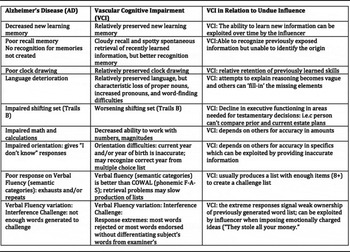
Neurocognitive differences - AD vs. VCI.

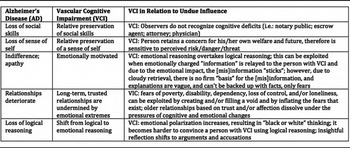
PCPFC03.03 Ability to undue influence related to vascular cognitive impairment
Gary Freedman-Harvey,Geriatric Forensics, Licensed Psychologist, Seal Beach, California, United States
Objective: The objective of this presentation is to account for clinical observations that vascular cognitive impairment (VCI) increases susceptibility to undue influence (SUI) by examining the distinct characteristics of VCI that appear to create an environment of opportunity for the undue influence process (ABA-APA, 2008). Vulnerability, in the legal arena, constitutes a compromised mental state with “relatively little literature in the mental health field about what exactly constitutes a strong mind.” (Mart, E., & Alban, A., 2011).
Methods: This presentation is based on a record study of forensic evaluations related to guardianships and consultations related to will and trust litigation. This review compared the characteristic differences in functioning and in psychometric testing between VCI and Alzheimer's disease (AD) (Tierney, M. et al., 2001).
Noting these differences, a variant on the Verbal Fluency Test has been added to evaluation protocols which asks the subject to recognize or reject items from a new challenge list based on a previously generated list in the same category (i.e. cities).
Results: Case reviews of evaluations conducted by this clinician identified a pattern of either over-endorsement or rejection of the Verbal Fluency challenge list items for people with VCI.
Conclusion: If a person over-endorses most or all of the cities on the challenge list, he/she is failing to recognize the imposition of cities not previously named, supporting the presence of suggestibility. If a person rejects most or all of the cities, he/she is failing to recognize the cities he/she previously named, supporting the conclusion that he/she appears to be unable to take ownership of his/her own work product. In either case, there appears to be a void in cognitive processing of people with VCI that can be exploited through the process of undue influence.
Functional differences - AD vs. VCI.

PCPFC03.04 Lifestyle choice or the result of cognitive dysfunction? Older adults who self-neglect
Paul Kingston2, Lesley Hayes1, Susan Mary Benbow*
1Stafford, 2University of Chester, Chester, United Kingdom
Objective: As part of a PhD on self-neglect (SN) amongst older adults, reading highlighted the issue of whether older adults who self-neglect (OAwSN) make lifestyle choices, or have cognitive difficulties which impair decision making. Professionals’ position on this affects how they understand SN, and the interventions offered to OAwSN. For staff working in older people's mental health the question of incapacity versus choice may affect whether SN falls within the remit of services. We review literature on capacity in SN.
Methods: A literature search was carried out using the terms Diogenes Syndrome, hoarding, animal hoarding, and squalor. We report the themes of capacity, cognition and choice in a subset of papers.
Results: Burnett and co-workers define SN as “the inability, due to physical or mental impairments or reduced capacity, to provide oneself with the necessary resources . . . to maintain physical health, mental health, and overall well-being” (Burnett et al., 2014). General aspects of capacity include physical capacity/health; mental health; and decision-making capacity.
Aamodt and colleagues describe the cognitive profiles of people living in squalor referred for capacity assessments (Aamodt et al., 2014). They found no significant differences in executive function or visuo-spatial ability comparing squalor-dwelling and non–squalor-dwelling older adults. This contrasts with previous work which found evidence of dysfunction in several domains of executive functioning including mental control, working memory, inhibition, and set shifting amongst older adults with hoarding disorder (Ayers et al., 2013). Hildebrand and colleagues argue that executive dysfunction/impaired frontal lobe function may inhibit decision making and problem solving in OAwSN, and note the role of physical disabilities/ functional impairments (Hildebrand et al., 2014).
Harbison and co-workers consider not only the lifestyle choices of older adults, but also the importance of the choices made by professionals in contact with them: “these choices appear in part to be based on the strength of professional, lay and cultural values that dictate that older people's rights should be recognised and their choices respected” (Harbison et al., 2005).
Conclusion: OAwSN present complex issues for services. Professionals’ understanding of what constitutes capacity and lifestyle choice; and whether OAwSN have cognitive dysfunctions will affect whether they are offered interventions/ support.
PCPFC03.05 Geriatric psychiatry and law seminar - Innovative way of teaching forensics and ethics during psychiatry residency
Tatyana Shteinlukht,Department of Psychiatry, University of Massachusetts Medical School, Worcester, United States
Geriatric Psychiatry and Law Seminar represents a unique educational experience that is offered only at University of Massachusetts Medical School among all the US Medical Schools so far. Geriatric Psychiatry and Law Seminar was developed by Dr. Tatyana Shteinlukht, M.D. as a joint effort between Geriatric Psychiatry and Law and Psychiatry programs. Psychiatry residents on geriatric psychiatry rotation play pivotal role in coordinating sessions, selecting and presenting challenging cases. The seminar educates trainees in forensic and ethical issues vital in practicing geriatric psychiatry. It also allows trainees to participate in discussions involving psychiatrists, psychologists, lawyers, judges, ethicists. Meeting every month, the seminar includes didactic sessions and case conferences. The seminar curriculum covers: 1. Standards for general and specific capacity, procedural aspects for determining competence. 2. Substitute decision makers (guardians, judges, informal decision makers, and clinical staff). Standards of decision making (best interest, substituted judgment, combined approach). Special issues in substitute decision making (incompetence to consent to admission, incompetence and hospitalization). Assessing of the patient's decision-making capacities. 3. Clinical impact of the legal findings of incompetence. 4. Clinical advantages and disadvantages of guardianship and other substitute consent. Characteristics of the ideal guardian. 5. Psychological issues for the health care proxy. 6. Ethical dilemmas in end of life issues. This unique seminar prepares residents for the challenges forensic and ethical evaluations of the everyday psychiatric practice.
PCPFC03.06 Powers of attorney - Are they worth the paper they are written on?
Sue Field,University of Western Sydney, Sydney, Australia
As we age there is a growing need to consider the appointment of substitute decision makers for both financial and personal/health matters. This presentation will focus on research conducted in New South Wales which examined the policies and practices of financial institutions in respect of powers of attorney (for financial matters) and the consumer experience. The research which was completed in December 2014, highlighted a number of issues associated with the legislation governing powers of attorney and the use of the instruments by the attorneys themselves. These findings will be presented at the 2nd International Conference on Capacity.
PCPFC03.07 Ethics of mental capacity assessment
Jochen Vollmann,Ruhr-University Bochum, Bochum, Germany
The doctrine of informed consent has become a legal and ethical standard in psychiatry. However, ethical problems arise if patients or research subjects have lost the mental capacity to give valid informed consent due to their medical conditions. The paper presents empirical data on capacity assessment in patients with mental disorders using different methods and discusses ethical implications. The choice from different standards for assessing mental capacity affects the identity and proportion of patients classified as impaired. Therefore the selection of these standards has to be discussed critically under medical and ethical issues. A sliding scale strategy, the definition of different thresholds as well as a definition of mental capacity in relation to a risk-benefit-assessment are value driven and are often not reflected influenced by normative factors. These ethical aspects are analysed and current practise of tools and policies regarding mental capacity assessment must be fashioned with caution.
PCPFC03.08 Physician's statement to the court about elderly with memory impairment in Sweden have serious short-comings
Karin Sparring Björkstén1, 2, Johanna Ulfvarson1, Kerstin Fälldin3
1NVS, Karolinska Institutet, 2Psychiatry South Stockholm, Stockholm County Council, 3Stockholm, Sweden
Objective: Few studies have addressed the physician's role when a court appoints proxies for vulnerable elderly. In Sweden, the court can appoint a custodian for persons who need a proxy. Many doctors do not know how to assess mental capacity, and lawyers and judges know little about medicine. There are no Swedish guidelines for capacity assessment in either the medical or the legal system.
Methods: Applications for a custodian for elderly citizens with memory impairment sent to the Stockholm Chief Guardian’ Office in Sweden were used. We scrutinized 260 physician's statements to the court regarding formal quality, the narrative content and the physician who wrote it.
Results: The majority of the applicants needed massive help with daily life and economy, 57% being diagnosed with dementia. Median age was 84 years of age. Only 5% were living with a spouse or a child. Most statements were written by senior family practitioners or geriatricians, and the quality of the statements varied from one sentence to excellent. In 40 % of the cases, the identity of the patient was not confirmed. In 54% of the cases, the physician stated that the patients were unable to understand the idea of getting a custodian. Out of those very vulnerable elderly, 20% had, however, signed consent and 57% were considered able to be heard in court.
Conclusions: Physicians’ statements to the court concerning the mental capacity of elderly patients with cognitive impairment frequently have serious short-comings. The system used in Sweden is not safe for our most vulnerable elderly. Guidelines and additional training for all professionals involved is needed.
PCPFC03.09 Assessing financial capacity for older adults in Hong Kong: A review and the way forward
Chi-Leung Lam1, Helen Chiu2
1The Medical Centre for Cognition and Emotion (HK), 2Department of Psychiatry, Chinese University of Hong Kong, Hong Kong, Hong Kong
Hong Kong is an international city facing the worldwide problem of ageing populations. It is estimated that older adults will constitute up to 30% of the total population by 2041. In a recent survey, 12% of the adult population are millionaires and 56,000 out of the 7.2 million Hong Kong people are multi-millionaires. Upcoming cohorts of older adults will be challenged by difficult decisions for everyday life and financial affairs because ageing, cognitive impairment and various medical and psychiatric conditions will lead to financial incapacity. As medical practitioners has de facto authority to perform capacity assessment, it is important to provide insight, guidelines and training for them to appreciate the clinical and ethical aspects, risks and problems associated with the assessment of financial capacities.
The basic principles of functional capacity assessment, namely the ability to understand, appreciate and communicate one's choice with proper documentation, are of paramount importance under common law. Besides, we need to balance the risk of undue influence on decision-making in a filial society. The warning signs of diminished financial capacity, namely memory lapses, disorganization, conceptual confusion, impaired judgment, declines in checkbook management skills and arithmetic mistakes (as suggested by Marson and colleagues) and the framework provided by the American Bar Association and American Psychological Association (2008) are useful in local clinical practice. With reference to the literature and clinical experiences, we recommend psychiatric interviews coupled with a cognitive assessment tool and a specific financial assessment scale to be the basis for financial capacity assessment for older adults in Hong Kong.
PCPFC03.10 The Adults with Incapacity (Scotland) Act 2000: Improving knowledge and compliance in acute hospitals in Tayside, Scotland
Cesar Rodriguez,NHS Tayside, United Kingdom
The Adults with Incapacity (Scotland) Act 2000 has been in use for over 14 years but working knowledge of this important piece of legislation continues to be patchy. Tayside, the 5th largest Health Board in Scotland, covers a population of over 400,000 people and has two General Teaching Hospitals in the cities of Dundee and Perth. Following recent inspections in the care of older people in acute wards, investigations and complaints, it became clear to the organisation that the knowledge and application of the requirements under the legislation was insufficient.
Taking into account the high numbers of older people in acute settings at any given time and the fact that there is a high proportion of them presenting with pathologies that can result in mental incapacity to consent to treatment (delirium, dementia and depression), improvement work is led by the NHS Tayside's Associate Medical Director for Older People and the Dementia Consultant Nurse. The areas for improvement identified were: awareness raising and training of clinical staff, nursing and medical documentation and assessment of capacity and completion of incapacity certificates (Section 47 certificates).
This presentation will explore the action plan resulting from the above areas including: creation of an on-line learning module on Capacity and Consent, inclusion of assessment of capacity and completion of Section 47 certificates and treatment plans in junior doctors’ induction, improvement in the nursing documentation to prompt and complete tasks related to this piece of legislation in acute settings and design of an audit tool to monitor improvement.