In October 1898, the Italian Vice-Consul Apollinare Burdese in Alexandria of Egypt arrested a group of Italian anarchists on the charge of having been involved in a plot against the German Emperor Wilhelm II on his tour through Egypt and Palestine. Two bombs, found in the wine-shop of one of the accused, were sequestered.Footnote 1 Although the plans of all those involved ultimately went awry, I will examine the events surrounding this episode and the multi-lingual trail of documents they left behind. My analysis will connect events, people, and ideas on different Mediterranean shores, and probe the nodes and the networks created by one particularly mobile anarchist group in late nineteenth-century Egypt. I will employ different scales of analysis to show the ways in which the Italian members of this group simultaneously moved in and between multiple contexts, constructing local and international networks and taking advantage of the somehow extra-legal conditions enjoyed by foreigners in Egypt and in the Ottoman Empire.
Given the local, regional, and global character of the nodes and the networks revealed by the events I will examine, this paper adopts multiple scales of analysis and seeks to identify the relationship between them. By following people on the move, I constantly shift my focal lens between micro- and macro-perspectives. In doing so, I make two slightly different but interrelated points: first, I argue that all of these disparate viewpoints—the micro, the macro, and everything in between—are necessary to prying open this circumscribed and seemingly insignificant event. Some objects of study, like the Italian and “trans-Mediterranean” anarchist movement I focus on here, had more continuities and organizational resources than analyses of national scope alone can reveal.Footnote 2 Moreover, as suggested by Struck, Ferris, and Revel, macro processes often play out, or are experienced, in much smaller units—within villages, institutions, or families, or on local streets.Footnote 3
My second argument is that all of these levels interacted with one another. As Werner and Zimmermann have observed, the local, the regional, the national, and the transnational are not simply layers to be stacked one upon the other. Each level exists in interaction with the others, producing its own logics with feedback effects.Footnote 4 I look beyond the micro-macro binary to emphasize the interconnections and mutual implications of these levels, and more specifically to highlight the competing, intersecting, and even contradictory trajectories of some migrants’ belonging. As the affair I will examine unfolds, all of these different, interrelated layers become visible at once.
I will also make a historiographical contribution by demonstrating how juxtaposing different but simultaneous layers of analysis can build bridges to connect the existing historiographies of different parts of the Mediterranean. The idea of this body of water itself is thus put to test: instead of a physical or methodological barrier, we must understand it as a space that enabled connectivity.Footnote 5 In demonstrating this, I join an ongoing conversation that has already tackled these issues with considerable success. Scholars have been challenging the idea that a stark border divided Europe and the Middle East up until modernity. Rather than conceiving these areas in isolation, they have instead delved deeply into their mutual influences by studying migrations, scholarly exchanges, and trade connections, as well as wars and conflicts.Footnote 6 I follow a similar approach here, focusing on the Mediterranean as a connecting space and following migrants as they traverse its multiple shores. I envision the sea not as a barrier to cultural fluidity but rather as a “contact zone” that permits and indeed encourages the convergence and mixing of populations, cultural practices, artifacts, and ideas.Footnote 7
By conceiving of the Mediterranean as a space that is both literally and metaphorically fluid, I also rethink the conventional borders of regional historical narratives. As Sugata Bose has argued, the regional entity known today as the “Middle East,” which undergirds the rubric of area studies in the Western academy, is a relatively recent construction that “arbitrarily projects certain legacies of colonial power onto the domain of knowledge in the postcolonial era.”Footnote 8 By linking the Mediterranean's Italian, Egyptian, and Tunisian shores, I show that Middle Eastern historical studies, in conceptually separating North Africa (Maghreb), Egypt, and the Eastern Mediterranean (Mashreq), have obscured fundamental webs of connection. People in motion connect and transgress boundaries of cultural areas, be they delimited by academic disciplines or state policies. If we follow them closely, we can learn much from their trespasses.Footnote 9
To make these points, which are at once methodological and historiographical, my analysis juxtaposes files of the Italian Embassy in Cairo, the International Police, and the Italian Ministry of the Interior, with Egypt-based newspapers published in Arabic and in Italian, and the memoir of the anarchist Enrico Pea. Given the informality of anarchist organization, I have paid special attention to places such as households, taverns, libraries, jails, and certain urban quarters.Footnote 10 I focus on the rank-and-file, those who fled repression and tried to carry on with their daily lives, but left fewer archival traces. This is significant for two reasons. First, I attribute historical value to more trivial or mundane details not despite their mundaneness but because of it. To understand Mediterranean circuits, this paper argues, we must take account of the materiality of the lives of those who trod them and their daily practices and experiences, and the concrete circulation of bodies, ideas, and objects that constituted such circuits. The second significance is that, by highlighting lesser-known events and individuals in my analysis, I counterbalance the overemphasis on “leaders” that has characterized some anarchist historiography. In fact, the anarchist movement's leaders were acknowledged only in a non-hierarchical and informal way.Footnote 11 As Errico Malatesta, who has been called “the principal figure in the Italian anarchist movement during its most important years,”Footnote 12 testified in his self-defense while on trial in Ancona in 1898, individual members of the movement were free to express their thoughts, and their views might differ from his. That the prosecution identified him as the anarchist party's leader showed its poor understanding of the movement: “If I styled myself as leader,” Malatesta quipped, all comrades “would rise up against me!”Footnote 13
IN ALEXANDRIA NOTHING IS FOREIGN
The casual Western and bourgeois observer who consulted a Baedeker Handbook for Travellers in 1898 found Alexandria presented as an exciting mixture of “European life” and “interesting scenes of Oriental life.”Footnote 14 According to one observer in Alexandria at that time, it “was not at all unnatural, really, to hear Christian chimes … nor yet to hear any sound, or voice, or language that the earth knows. In Alexandria nothing is foreign.”Footnote 15 In its alleys, on its docks, everybody was “babbling and Babelling in their own and everybody else's mother-tongue, buying cotton, selling grain, swapping sugar for coal … and bartering the wealth of Egypt.”Footnote 16 Subjected to contradictory pressures, nineteenth-century Alexandria simultaneously expressed the political designs of the Egyptian ruler and the power of foreign consuls, the leverage of traders, and the presence of masses of deracinated migrants both local and foreign.Footnote 17
Behind the quaint scenery and the Orientalist language used to describe it, a keener observer would have also discerned tensions in the city. By 1876, Egypt had been forced to accept European control over its treasury because of debts it had incurred. In July 1882, Alexandria was bombed, and soon after, British forces landed in the city and successfully marched against Ahmad ʿUrābī, an Egyptian military official who was leading a revolt in the name of constitutional government. British occupation of the rest of the country quickly followed.Footnote 18 However, as Juan Cole emphasizes, the British were not “drawn into” Egypt by turbulence: they invaded “in order to ensure that a process of state formation did not succeed in creating a new sort of stable order that would end European privileges and threaten the security of European property and investments.”Footnote 19 The occupation of Egypt arguably began years before 1882, at least in Alexandria. This port-city, Reimer has claimed, “was a colonial city before Egypt was a colony.” Its outward economic character, its cultural Europeanization, and its socio-spatial fragmentation, Reimer asserts, all contributed to make Alexandria “colonial.”Footnote 20
In such a city, immigrant European workers drew higher wages than local artisans for the same work, shunned Egyptian skilled labor, escaped Egyptian taxes, and flaunted Egyptian justice.Footnote 21 A European foreigner living in Alexandria in 1898, in fact, enjoyed a separate legal status. Thanks to the so-called Capitulations, the treaties signed by the “Great Powers” and the Ottoman Empire and originally designed to facilitate trade, European subjects were exempt from many taxes and were, in several cases, provided indemnity from Ottoman executive measures and judicial prosecutions. Their affairs were instead assigned to their respective consulates.Footnote 22 As argued by Will Hanley, the Capitulations’ regime embodied the extraordinary economic, political, and legal liberties that European powers had grabbed, over the course of the nineteenth century, vis-à-vis the Ottomans’ relative weakness.Footnote 23
Besides the system of separate judicial courts for non-Egyptians, there were other reasons nineteenth-century Egypt had been attracting British, French, Belgian, Italian, Greek, Armenian, Syrian (and Maltese) immigrants.Footnote 24 It offered political stability and it enjoyed a booming economy that both set people on the move within its boundariesFootnote 25 and attracted individuals from abroad.Footnote 26 For example, among those arrested in Alexandria in 1898 were cabinet-makers, tavern owners, and sensali (commercial brokersFootnote 27 ), as well as two medical doctors.Footnote 28 The policies pursued by Muḥammad ʿAlī, ruler of Egypt from 1805 to 1848, had also contributed to the remarkable foreign presence in the country. Embarking on several reforms, he had encouraged those with the necessary skills to migrate to Egypt. Under his successors Saʿīd (1854–1863) and Ismāʿīl (1863–1879), skilled as well as unskilled labor was similarly required for an impressive series of infrastructure projects:Footnote 29 a railway network, a canal system, an extensive urban building program,Footnote 30 the Aswan reservoirs,Footnote 31 and the Suez Canal.Footnote 32 Political upheaval in home countries, boom-and-bust capitalism, demographic imbalance, and environmental degradation added to the reasons for leaving home.Footnote 33 Through migration, a new mobile proletariat of laborers, transportation workers, and some skilled artisans began to disseminate a generic, international movement in which anti-militarism and industrial trade unionism were prominent.Footnote 34
Anarchists were among those who frequently crossed borders. European political dissidents of various orientations, anarchists included, over the course of the nineteenth century found in Egypt a relatively safe political haven.Footnote 35 In April 1876, a section of the International was created in Alexandria. The next year the Alexandrine circle began publishing its own paper, Il Lavoratore, which continued clandestinely even though the Italian consular authorities were asked to suppress it. In the late 1870s, it was reported that not only was a new section opened in Port Saʿīd, but a new nucleus in Ismāʿīliyya was in the works and a female section was about to be formed in Cairo. After failed attempts to stir up riots in the Italian peninsula, a new exodus of internationalists reached Egypt in the late 1870s,Footnote 36 and over time Egypt developed into a significant anarchist center at the eastern end of the Mediterranean. This center maintained close ties to Greece and the Ottoman centersFootnote 37 and regular connections with Tunis, Palestine, and Lebanon, as individual activists crisscrossed the Mediterranean, utilized a network based on personal recommendation, and shared an ideological vision. These links operated beyond the Mediterranean, extending not only to the main European centers but also across the Atlantic to the United States and South America.Footnote 38
The word “anarchist” in its technical-political sense was coined in 1877 and spread rapidly, but competing and cross-pollinating currents of thought about anarchism's aims and methods had existed before then.Footnote 39 Any neat definition of anarchism is misleading, since by its very nature it was an anti-dogmatic and complex philosophy that embraced many different currents of thought and strategy.Footnote 40 In general, anarchism can be conceived as a direct response to nineteenth-century developments: industrialization, the increasing powers of the state even in its “liberal” forms, and the escalation of the scope on which wars were fought.Footnote 41 Therefore, anarchism need not to be approached as a context-less, ahistorical study in social pathology, as it has been in the past.Footnote 42 Nor, as at times occurred in its historiography, does its study require a hagiographic or antiquarian approach.Footnote 43 Indeed, scholars have now overcome the tendency, dominant until the 1970s, to treat anarchism as a “millenarian cult” hardly deserving close scrutiny.Footnote 44
In line with previous studies, the present paper strives to illustrate the rational strategies of a movement that purposefully employed border crossing.Footnote 45 My further aim is to integrate my study with Ilham Khuri-Makdisi's study of “radical” networks in the Eastern Mediterranean. The 1898–1899 trial can add another tile to her already rich mosaic concerning anarchism, the press, and the theater in turn-of-the-century Beirut, Cairo, and Alexandria. Also, by including in my analysis actors who were working to counter anarchists, I account for the role of consuls in influencing anarchists’ behaviors and movements, in collaboration with “local” Egyptian authorities—studies of anarchism can also serve histories of the rise and development of the state.Footnote 46 In this sense, my work also complements that of Anthony Gorman, who has studied specifically the Université Populaire Libre of Alexandria in which Italian anarchists, and others, participated.Footnote 47
AN INTERNATIONAL CONFERENCE IN THE MAKING
The year 1898 was marked by the apogee of a series of assassinations by Italian anarchists directed at heads of state and crowned heads of Europe. On 24 May 1894, Sante Caserio stabbed the French President of the Republic Sadi Carnot in Lyon. On 22 April 1897, Pietro Acciarito attempted to stab the Italian King Umberto I. The following 8 August, Michele Angiolillo shot and killed the Spanish Prime Minister Cánovas del Castillo in a thermal station. Sixty-year-old Empress Elizabeth of Austria, traveling incognito, was stabbed to death on 10 September 1898, with a sharpened needle file by the Italian anarchist Luigi Luccheni in Geneva.Footnote 48 Other failed or minor attempts and dynamite attacks marked the decade, and Italian king Umberto I was killed on 29 July 1900 by Gaetano Bresci in Monza.Footnote 49
Only a tiny minority of anarchists practiced terror as a revolutionary strategy.Footnote 50 Nonetheless, in 1894 so-called “anti-anarchist” laws had been passed by the Italian government under Francesco Crispi's leadership: not only did the laws target crimes committed with explosive materials, but they also instituted harsher measures against incitement, crimes “of the press,” and “exceptional” circumstances.Footnote 51 Crispi's “anti-anarchist” laws and the jurisprudence of those years confirmed the view that anarchy and delinquency were synonymous.Footnote 52 The theses of the criminal anthropologist Cesare Lombroso, who depicted anarchists as criminals, hysterics, crazy, mad, and epileptic were widely popular. Some of the anarchists, Lombroso wrote, “present the most complete type of born-killer … in the pleasure from evil, in the total lack of ethical sense, in the hate they display for the family, in their indifference for human life.”Footnote 53 As Daniel Pick has argued, Lombroso's ideas seemed to make sense because they spoke powerfully to a particular crisis and developed new forms of political and social representation.Footnote 54 Anarchist defendants would come to be understood not as social reformers or political activists, but rather as mentally unbalanced or as common criminals.Footnote 55
A week after Luccheni assassinated Empress Elizabeth, the Austrian foreign minister proposed to his Swiss colleague the formation of an “International Police League” against anarchists. He referred to them as “wild beasts without nationality” who were a menace “not only to sovereign rulers but to everyone.”Footnote 56 The Austrian-Swiss plan was never instituted, but a few days later, on 29 September 1898, the Italian minister of foreign affairs sent out invitations for an “International Conference of Rome for the Social Defense against Anarchists,” to be held in Rome from 24 November to 21 December.Footnote 57 During this conference, all but the British and the French delegates agreed to introduce in their countries an anthropometric method of criminal identification, the portrait parlé. This was a refinement of criminologist Alphonse Bertillon's method of identification, the bertillonage, which classified the size of various parts of the head and body.Footnote 58 This system was particularly useful for apprehending criminals who operated across borders since the dozen or so pieces of information vital to a positive identification could be transmitted by telephone or telegraph.Footnote 59
These initiatives signal how government and police authorities increasingly perceived anarchism to be an essentially international problem, which provided grounds upon which to build international cooperation.Footnote 60 As one Egyptian newspaper observed, while governments had thus far confined their interest to local jurisdictions and implementing exceptional measures, they had come to realize that their individual efforts were insufficient to “root out evil.” To prevail over anarchists’ machinations to organize across many countries and metropolises, governments had to find ways to cooperate and develop a shared, detailed system of protection.Footnote 61 “The police are the same in all parts of the world,” wrote the Italian anarchist and contemporary observer Pietro Vasai. While discussing his adventures in other countries and their prisons, he added, “Laws have been fabricated by the bourgeoisie on the same model: in this, the bourgeoisie is more international than we are.”Footnote 62 As Vasai suggested, consular and police authorities would have to cooperate across borders in their efforts to control an anarchist community that was unconcerned with either man-made or physical boundaries.
A LOCAL CONSPIRACY AND INTERNATIONAL POLICING
Italian consular authorities abroad were eager to promote a sense of the threat that anarchists posed to society at large.Footnote 63 Between October 1898 and January 1899, eighteen anarchists were arrested in Alexandria on charges of conspiracy to assassinate the German Emperor Wilhelm II, who was scheduled to visit Egypt and Palestine that following fall. The local and the international press reported that they had planned “to throw a bomb of guncotton and fulminate of mercury on Emperor William's carriage in a narrow street of Cairo.”Footnote 64
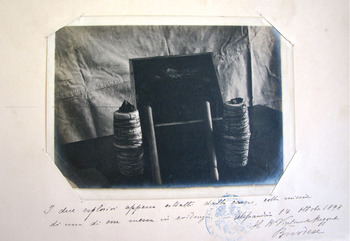
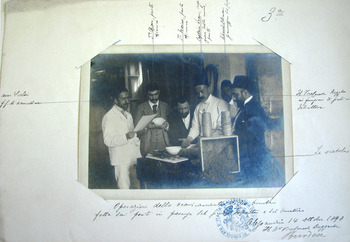
“I decided to act,” wrote the Italian Vice-Consul Apollinare Burdese in Alexandria on 14 October 1898. He suspected that “something was being plotted against the Emperor.” Having obtained the support of the governor, Burdese embarked on his mission one early evening, escorted by another official of the consulate and two plainclothes consular “janissaries,” three secret police guards, and Egyptian police.Footnote 65 According to the Egyptian newspaper Al Ahrām, two bombs were found in the neighborhood of Moharram Bey,Footnote 66 which a contemporary observer described as a “poor neighborhood of Jews, Arabs, and European workers at the outskirts of the city.”Footnote 67 Indeed, a search promptly produced the evidence that Burdese was looking for.Footnote 68 As predicted by an informant working for the consulate, two bombs were retrieved in the wine-shop of Ugo Parrini, which was known as an anarchists’ meeting point (Image 1). Parrini, originally from Leghorn, was known in town for his “advanced ideas” and philanthropic initiatives.Footnote 69 Earlier that day, “a native,” unknown to Parrini, had brought in a box that the shop owner thought contained Cognac. Parrini had put the box right where propaganda materials were, and where he kept note of the names of those who had borrowed the books of his library, which he ran from his shop. Thus the police found not only the incriminating box of explosives, but also a register with the names of comrades, all of whom they subsequently arrested (Image 2).Footnote 70
“The two explosives that have just been extracted from the box, with the fuse of one of them being displayed.” The photograph was sent by the Vice-Consul Burdese, Regio Consolato d'Italia in Alessandria d'Egitto, 14 October 1898. Archivio Storico del Ministero degli Affari Esteri (ASDMAE), Rome, Polizia Internazionale (PI), Busta (B) 25. From Ministero Interno (Ministry of the Interior), 31 Oct. 1898 to the Ministero Affari Esteri (Ministry of Foreign Affairs), “Riscontro lettera 23 ottobre. Complotto anarchico Alessandria d'Egitto.”

“Operation of discharge of the bombs, performed by the experts in the presence of the investigating judge and the chancellor.” The judge was Apolinnare Burdese himself, on the photo's far right. The photograph was sent by the Vice-Consul Burdese, Regio Consolato d'Italia in Alessandria d'Egitto, 14 October 1898. Archivio Storico del Ministero degli Affari Esteri (ASDMAE), Rome, Polizia Internazionale (PI), Busta (B) 25. From Min. Interno (Ministry of the Interior), 31 Oct. 1898 to the Ministero Affari Esteri (Ministry of Foreign Affairs), “Riscontro lettera 23 ottobre. Complotto anarchico Alessandria d'Egitto.”

Apparently, Burdese was well-informed of what was going on at this time in the cabinets of European ministries of foreign affairs, and he zealously pursued the same sorts of endeavors in his own jurisdiction. The Italian anarchists in Egypt, as Burdese wrote to the Italian Ministry of Foreign Affairs, “were particularly eager to raise their visibility.” According to the vice-consul, there were violent scenes at their meetings, which were held in Attarin Road and in the Moharram Bey area. “I visited governors and consuls of the main states of Europe; I tried to organize a kind of international police to serve the European countries,” he wrote. “I also had meetings with the high officials of the police.… I could count on the most valiant cooperation.… I even decided, in order to keep an eye on them, to organize a secret service of observation at the local post office. I could thus hold in my hands the journals, posters, notes, and appeals to the revolution. I even accessed secret affairs that shed some light on the most obscure aspects of anarchists’ lives.”Footnote 71
Burdese used language reminiscent of that employed by the criminal anthropologist Lombroso, whose volume Gli Anarchici had been published in the summer of 1894.Footnote 72 Of late, Burdese reported, “The excitement of some of these [anarchists] had reached a kind of fanaticism. Ugo Parrini, for example, a bestial anarchist who had instincts of hatred, jealousy, and revenge: it was at his place that the bombs were found. Luigi Losi, young, daring, bold, and capable of anything. Pilade Fiaschi, contemptuous of social arrangements, mocking, strong as a bull, capable of launching a bomb and then happily grinning while going to the gallows. And finally Tesi, yellow as a corpse, bilious, instinctively hateful of all mankind.”Footnote 73
Authorities had been observing presumed anarchists in Alexandria for a long time, and the Egyptian and Italian police were reportedly in constant contact.Footnote 74 The visit of Emperor Wilhelm had raised specific concerns.Footnote 75 The day before the invitations for the “anti-anarchist” conference were sent out, in late September 1898, the Italian ambassador in Cairo wrote to the Ministry of Foreign Affairs and warned the minister that the Egyptian police, although they supposedly knew all the resident Italian “affiliates of anarchy,” could not maintain surveillance on any who arrived from Italy. The Egyptian government, therefore, requested that three agents who could recognize the anarchists be sent from Italy so that, in cooperation with Egyptian authorities, they could work in Cairo, Alexandria, and Port Said.Footnote 76
Egyptian authorities were eager to collaborate. The arrest of the group of Italian anarchists in October 1898 had, in fact, stemmed from such cooperation: Burdese had acted “following the instructions provided by some sources and secret service of the police” to thwart the bombers’ deadly purpose.Footnote 77 The investigation had also been conducted jointly by the local police and the Italian consulate.Footnote 78 This collaboration continued in the wake of the foiled attentat. The Egyptian police monitored incoming mail and provided the consulate with photographs of letters written to local anarchists by presumed anarchists abroad. For example, one letter had reportedly been sent by the influential anarchist Errico Malatesta from London, where he had taken refuge. This letter was read aloud to a meeting held in the Būlāq neighborhood of Cairo. It exhorted the local anarchists to continue their propaganda, and he promised to visit them as soon as the Italian police gave up their search for him.Footnote 79
Authorities had to check not just letters moving across borders but also people crossing them. The Egyptian Ministry of the Interior promised it would alert the Italian authorities if Malatesta set foot in Egypt.Footnote 80 There was nothing to fear, assured Colonel Harvey of the Egyptian police, because their surveillance of Italian anarchists was thoroughly organized. Even those Italian workers employed in Aswan were under control.Footnote 81 Other shores and crossings were also under observation: the Italian Consulate in Malta was instructed to keep an eye out for any possible anarchists sent there.Footnote 82 The Italian ambassador in Cairo requested and obtained from Switzerland a list of all the anarchists it had expelled. “It would be excellent,” he wrote, “if we could be periodically sent also lists of all anarchists expelled from all European states.”Footnote 83
Anarchists were subjected to relentless surveillance and multiple forms of control, made possible by the cooperation among Italian, Anglo-Egyptian, and other authorities. Britain did not adhere to the “anti-anarchist” conference held in Rome, but even though Egypt was under British rule it was liable to take part in such international cooperation.Footnote 84 The seriousness ascribed to the anarchist threat revealed the state's profound insecurity in the face of subversive movements, and anarchism specifically, and the popularity of the ideas they propagated.Footnote 85 It was also clear that what was being decided in Rome or discussed by social scientists elsewhere was also circulating in Egypt and eliciting prompt local responses. By the late 1870s, when the Italian anarchist activities had fully taken off, Egyptian cities were well-connected to global information and communication networks.Footnote 86 Alexandria in 1898 could count on direct links with the Mediterranean ports of Brindisi, Naples, Venice, Genoa, Marseille, Trieste, and Constantinople, along with other international connections.Footnote 87
NODES OF SUBVERSION
Due to its being constantly forced into exile, the Italian anarchist movement was particularly internationalist in its outlook. Exile extended its horizons and created hidden or semi-concealed organizational and financial mobilization networks.Footnote 88 The Italian group arrested in Alexandria relied on several of such networks. “Their aim, for now, is to increase their number,” wrote Vice-Consul Burdese, who also observed that anarchist theories had spread almost exclusively among Italians. “They try to attract as many as they can, providing means of travel when needed. They spread subversive ideas through meetings, and they receive journals and anarchist manifestos that then they distribute. Hundreds of copies of the journal L'Agitazione, now suppressed by the Swiss police, arrive [here]. I sequestered four hundred copies.”Footnote 89 On another occasion, a postcard with regicide Bresci's portrait and a celebrative caption was also sequestered.Footnote 90
Newspapers and other materials were propagated across borders, carried by, for example, stokers working on boats.Footnote 91 Besides L'Agitazione, hundreds of copies of other newspapers were also circulating. An informer reported that subscribers were being sought for an anarchist paper titled L'Aurora, which he believed was printed in Lugano or Geneva.Footnote 92 In Cairo, funds were being collected for Il Grido della Folla, published in Milan.Footnote 93 Another newspaper circulating at the time was L'Agitatore, from the Swiss town of Neuchâtel. The bombs requisitioned in Parrini's wine-shop were wrapped in a copy of this paper, which the Italian Consulate in Alexandria described as “one of the most brutal that ever saw the light in the anarchist cycle.Footnote 94 The Egyptian newspaper Al Ahrām reported that “these visionaries” were spreading their anarchist ideas (fawḍawiyyah) thanks to the “publication of secret newspapers.” It was said that such publications were “constantly inciting to commit horrible crimes” and promoting “a total war against humanity.”Footnote 95
Contributions from abroad were crucial for the viability of any Italian anarchist periodical.Footnote 96 The anarchist Roberto D'Angiò, for example, was sending some of his articles from Egypt to Argentina for a publication that anarchists there were preparing to commemorate May 1st.Footnote 97 The omnipresent wine-shop owner Ugo Parrini was also writing internationally. He spoke Italian with a Tuscan accent, but also Greek, Spanish, Arabic, French, and a little Rumanian. His contributions appeared in San Francisco's La Protesta Umana and in L'Aurora of West Hoboken, New Jersey.Footnote 98 The Italian paper Il Libertario in La Spezia published Parrini's articles on the 1903 strike by Egyptian cigarette-makers.Footnote 99
Italian anarchists in Alexandria, in turn, were printing posters and appeals and distributing them abroad.Footnote 100 Parrini took it upon himself to introduce the anarchist paper L'Aurora to Italy via Egypt, and every week he sent a hundred copies to various addresses.Footnote 101 Pietro Vasai, a typographer and hatter from Florence, tried to organize an anarchist press in Alexandria. Some circulating posters had titles like “Oppressed Remember!” and “Shoot Strong, Target Right!” (Tirate forte mirate giusto).Footnote 102 During the 1899 trial, it was concluded of anarchists, “Believing they could find in Egypt a country favorable to their fabrication would then distribute them in the kingdom, probably using their Swiss transit in order to hide their provenance.” Vasai and another man had been working in the Penasson typographic workshop, from which, so it was insinuated, they had stolen typographic fonts. During the same trial a consultant was able to use the sequestered fonts to reconstruct a small manifesto titled “Anarchici,” printed in May 1898.Footnote 103
The Alexandrian anarchists’ correspondence stretched across the globe. Burdese charged that they exchanged correspondence “with the whole world, even with America.”Footnote 104 Parrini's letters reached Argentina, where he urged the anarchist group “L'Avvenire” in Buenos Aires to contribute books, leaflets, newspapers, and offerings to the library of a “hall of libertarian meetings” that was soon to be opened in Cairo.Footnote 105 As for the Mediterranean shores, Vasai corresponded with his comrades in Marseille.Footnote 106 In one letter, an anarchist in Trieste asked his fellow anarchists in Alexandria if he could safely sail back there. And the missive of another asked his addressee in Italy to send “three of those knives from Romagna that all anarchists have.”Footnote 107 Anarchists in Egypt even managed to receive letters from those in “forced domicile” (domicilio coatto) on Mediterranean islandsFootnote 108 such as Favignana, Lampedusa, Pantelleria, Ustica, Lipari (Sicily), Ponza, and Ventotene (Lazio).Footnote 109 It was the wife of an anarchist in “forced domicile” who informed Vasai of his mother's death back in Florence.Footnote 110
As shown by these networks spun across the Mediterranean, anarchists’ employed their multiple selves and communities as valuable resources for resisting repressive threats, whether local or global.Footnote 111 By studying practices and processes across borders, we illuminate the ways in which people positioned themselves in multiple societies, and thereby managed to pursue their everyday activities and resist repression across different contexts and scales.Footnote 112
CIRCUITS OF SOLIDARITY
Initiatives taken elsewhere had a direct impact on the southern shore of the Mediterranean. As suggested by James C. Scott, if we assume that the parameters of resistance are set, in part, by the institutions of repression, then we might posit that by studying forms of resistance we can gauge the level of repression that structures them.Footnote 113 Anarchists around the Mediterranean were not only exchanging objects and information, but also creating circuits of solidarity. Those fleeing the penal islands moved along these same circuits.
“Money was scarce,” a consulate spy reported.Footnote 114 In order to fund the travels of those who needed to move comrades had to contribute to raising the necessary sums. Pietro Vasai, for example, had no means of his own. He had traveled from Barcelona to Marseilles, and from there to Tunis, and the 60 franc cost of his ticket from Tunisia to Malta, whence he embarked for Alexandria, was probably paid by anarchists in Tunis.Footnote 115 When someone was departing to conduct the “business of the party,” many attended farewell meetings and chipped in on the cost. When a certain Ubaldo Battistoni left for Ancona, three hundred francs were gathered, with the promise that if he needed more it would be sent along.Footnote 116 Lawyers, too, were often paid with collective contributions,Footnote 117 although some, like Errico's brother Aniello Malatesta, resident in Port Said,Footnote 118 probably worked for free or for reduced fees.
Money was also raised through secret subscriptions to help the families of those in jail.Footnote 119 After Pilade Fiaschi was among those Burdese arrested in October of 1898, his wife Argia “became a shadow.” But, the self-ascribed anarchist Pea wrote in his memoir, “[She does] not complain when I go visit her to bring her that little subsidy that is possible, gathered among us workers, friends of the arrested.”Footnote 120 Things were made more difficult for Argia by the fact that she and Fiaschi had a son called Guidino. Before his birth she could have pawned their only precious belonging, a gilded bracelet, and she could have worked as a seamstress or a mattress-maker while waiting for her husband to get out of jail, but caring for a child barred such options.Footnote 121
Other forms of help came from more formal associations. On 20 July 1902, Vasai published in the Alexandrine newspaper L'Operaio an appeal for the foundation of an “Association of Urgent Help.” His appeal was well-received and the Association was indeed created, and others followed, such as the Mutual Aid Society founded in 1906.Footnote 122 The generosity of the group's members would also show in other ways: for instance, upon his arrival in Alexandria, Vasai was hosted in the house of Pietro Garzonio on Attarin Road (which was also where meetings were regularly held).Footnote 123
Mediterranean anarchist networks also facilitated escapes from the aforementioned penal islands scattered in the Mediterranean archipelagoes.Footnote 124 On 26 May 1896, a group of coatti escaped from Favignana, and a war aviso and two torpedo boats chased them without success. They disembarked on the Tunisian coast, “with the aim of contacting the anarchist group in Tunis, then one of the most active … a kind of Mediterranean Lugano.”Footnote 125 The most prominent name among the Italian-Tunisian anarchists was Niccolò Converti, who apparently managed “a center of conspiracy to organize and assist the flight of anarchists in forced domicile on the islands of Favignana and Pantelleria.”Footnote 126 Born in 1858 in Calabria, he published a bilingual journal in French and Italian in Marseille, and then went to Tunis, where, he heard, it would be easier for him to pursue the medical profession without a degree—he had fled Naples just before graduating from medical school.Footnote 127 In Tunis, he started publishing L'Operaio in 1887, subtitled Organo degli anarchici di Tunisia e di Sicilia. Footnote 128 His ties across that narrow stretch of sea apparently remained strong. Nonetheless, the runaways from Favignana were arrested in Soliman, near Tunis. The gendarmerie of the Bey delivered them a few days later to a dispatch of Carabinieri, which was anchored in the port of La Goulette.Footnote 129
There were cases of successful escape, such as Luigi Galleani's from Pantelleria and Malatesta's from Lampedusa. In Pantelleria Galleani found both a partner, Maria Rallo, and a neophyte. Probably with the financial help of Elisée Reclus, money collected among London exiles, the cooperation of Converti, and the help of the mayor of Pantelleria, he successfully fled the island with Maria in March 1900. Galleani and Rallo drifted at sea for a few days until they approached the Tunisian shore at Sousse.Footnote 130 From there they departed for Malta (he used a false passport) and from Malta they reached Alexandria, where they were apparently welcomed and cheered by the anarchist community living there. They stayed in Egypt for one year, and then left with their three children for the United States.Footnote 131
Errico Malatesta could also count on the Sicilian-Tunisian-Egyptian-Maltese connection. He had already spent a year in Egypt in 1878, where he worked as a private clerk in Alexandria.Footnote 132 After Passannante's failed attentat against Umberto I in 1878 and the patriotic rallies organized by the monarchists in the city, the anarchists staged a protest in front of the consulate. Malatesta and others were taken and put on a French steamer: he ended up in Beirut, from where he managed to reach Marseille via Izmir.Footnote 133 Parrini was sent to the Pireus in Greece, and from there he tried to return to Egypt. But he was expelled again and therefore went to Cyprus, and from that island reached Beirut. From there he traveled to “Constantinople,” working as the interpreter of a professed magician (ciarlatano magnetizzatore e prestigiatore).Footnote 134 A few years later, however, Malatesta and Parrini reunited in Egypt. Malatesta wrote that he had felt compelled to leave London to join the revolt of the Egyptian military official Ahmad ʿUrabi, which ushered in the British occupation of Egypt. “We managed to disembark in Alexandria, but not to cross the British lines that were hindering any communication between Alexandria and the interior.” Others “stayed on in Egypt (some for good) but I returned to Italy.”Footnote 135 After taking part in the 1898 bread riots in Ancona, Italy, Malatesta was once again arrested and condemned to five years of domicilio coatto on the penal island of Lampedusa.Footnote 136 Once on the island he probably thought seriously about escaping: he asked the Ministry of the Interior for a passport for the Egyptian city of Port Said, but was refused.Footnote 137 According to the governor of New Jersey, in April 1899 the Paterson anarchists contacted comrades in London to have the Tunis anarchists arrange for Malatesta's escape from Lampedusa.Footnote 138
Malatesta did indeed manage to escape from Lampedusa on the night between 25 and 26 April 1899, “amidst the most complete obscurity and with a rough sea.” For some time he had been approaching Greek captains of sponge-fishing vessels for help.Footnote 139 The escape plan was complex and relied on solid networks, and it also required help from people who knew the sea. As Pea noted, although people and goods from bigger ports reached Egypt aboard steamships, Greek seamen still relied on sail. They had mastery, familiarity, and quickness, which spoke of their confidence, and they knew the shortest routes according to seasons: “Because depending on the season, a certain wind has supremacy. And these small commanders of vessels, almost walnut shells, have been passing on their experience for generations.”Footnote 140
According to the Italian Consul in Marseille, Niccolò Converti and Nicola Ponzio paid a sum of money to the owner of the sponge-fishing vessel in Tunis. Converti later admitted to corresponding with Malatesta during the latter's sojourn in Lampedusa, but, predictably, he denied discussing any escape plan.Footnote 141 Malatesta first reached Sousse with the small fishing vessel and was hosted in Tunis by Converti.Footnote 142 On 7 May 1899, he embarked for Malta,Footnote 143 from where he traveled to London. Authorities in Egypt had been keeping an eye on his moves. As early as October 1898, six months before his flight, the Egyptian Ministry of the Interior had sequestered a letter in Alexandria, sent from Ancona, in which the author told the recipient to get ready for Malatesta and Smorti's escape from the islands and to find them asylum in Egypt.Footnote 144 By June, consular authorities knew of Malatesta's successful escape.Footnote 145
THE NATIONALIST DILEMMA
According to some scholars, anarchists came to play a central role in the development of working-class political radicalism and the militant labor movement in Egypt.Footnote 146 Yet clarifying exactly how their relationship to the local context played out remains a challenge. As Ilham Khuri-Makdisi has noted, “radicals” were circulating multilingual tracts and manifestoes promoting socialist, anarchist, or anarcho-syndicalist ideas, and the multiplicity of languages in which these were written points to their multiple audiences.Footnote 147 But how, to what extent, and to what effect they interacted with Egyptian workers are questions that remain unanswered. The only Egyptian who appears in the International Police records I have examined here had apparently been recruited by the consulate to plant the evidence that framed the anarchists. The Egyptian National Archives has yielded no further information on this topic. It appears that the indigenous Alexandrines, far from being allies, were at best collaborators.
It is also important to point out that Italian anarchists in Alexandria were not immune to nationalism. Theoretically, they questioned the legitimacy of nation-states and strongly resisted their formation, but in fact they did not ignore the strong emotional pull of patriotism.Footnote 148 That they at times made common cause with nationalists is suggested by their attempts to take part in the ʿUrabi revolt. According to Gorman, anarchism, which maintained its internationalist mission as central, might have even influenced the strategy and tactics of the nationalist movement in Egypt.Footnote 149 Furthermore, anarchists themselves expressed seemingly nationalist attachments. For Vasai, “The world had no borders,” and yet, “Florence was a republic in itself! And an Italian always counted as much and more than others.”Footnote 150 Pea, who was originally from the Tuscan countryside and landed in Egypt as a ship boy in 1897, also felt the sting of love for his country grow in intensity, although he had assumed that his nostalgia would dampen in Egypt. “While the international coexistence in this Babel of Egypt had convinced me of the uselessness and damage of homelands,” he wrote, “Italian love would come back to me.”Footnote 151 Nationalism, then, or perhaps forms of localism, remained important sources of belonging for these migrants.Footnote 152
Beyond the apparent contradictions these sentiments raise, these proclamations show the coexistence and complementarity of different forms of belonging. By revisiting Anderson's famous idea of a nation as an “imagined community,” we might hypothesize, as Glenda Sluga does, that both nationalism and internationalism could inspire a range of imagined or invented communities.Footnote 153 According to the specific local contexts in which they resided and trajectories of their displacement, Mediterranean migrants might have reimagined both the international and the national communities they belonged to. And they may have inhabited both simultaneously. As argued by Liisa Malkki, nationalism and internationalism are mutually entailed rather than antagonistic, and are in fact analytically inseparable. Internationalism need not contradict or subvert nationalism. For Malkki, “imagining the political community of the nation always necessitates—and even presupposes—the imagining of an international community,”Footnote 154 but here we can invert this statement and observe that, for Italian anarchists in late nineteenth-century Alexandria, the imagining of an international community presupposed the community of the nation. Not only were leftist and generally radical ideas compatible with nationalist ideas emerging at the time, as Khuri-Makdisi has suggested,Footnote 155 but so too were internationalist principles consistent with nationalist longings.
Nation-states, then, were circumvented but not torn down by turn-of-the-century Mediterranean mobility. They remained crucial in people's lives and in influencing their decisions to move in the modern or late modern periods.Footnote 156 Movements across national borders might have been temporary, circular, or repeated, thus defying clear-cut definitions of immigration or emigration, but nation-states remained key entities in migrants’ lives.Footnote 157 As Donna Gabaccia argues, nation-states emerged as powerful organizers of human life during an important era of transnationalism, with which they were not necessarily in contradiction.Footnote 158 Empires followed suit: the Ottoman Empire, too, regulated and monitored the economically and politically undesirable.Footnote 159 The state's presence in the modern Mediterranean manifested itself in procedures of political or police surveillance, but also in social, administrative, and judiciary practices.Footnote 160
CONCLUSION: SCALES AND POINTS
The affair of the bombs came to an end in June 1899. Most of the accused had been held for several months in the jail of Moharram Bey, though at least initially, two were held in the prison of Al Gabbari.Footnote 161 They had to be placed in local prisons due to the absence of consular jails. Their detention was not overly harsh: they could reportedly drink wine, chant anarchist anthems, and even engage in sexual encounters with the janitor's wife in the prison bathroom.Footnote 162 On 23 June 1899, they were absolved by the consular court of Alexandria chaired by the ambassador Romano. They were acquitted of criminal conspiracy, hosting subversives, illegal typography, and detention of dangerous weapons. Nonetheless, some of them still stood accused of “instigation and apology of crime via means of the press” on the basis of one of Crispi's “anti-anarchist” laws: no. 315 of July 1894. Pilade Fiaschi, Ugo Parrini, Pietro Vasai, and others were all sentenced to several months in prison, fined, and ordered to meet the trial expenses.
The responsibility for the concocted attempt on the German Emperor's life ultimately fell on Mario Bazzani, a spy-informer who had appointed “a native” to place the bombs in Parrini's wine-shop.Footnote 163 The affair had apparently been “cooked up” by an agent provocateur, perhaps with some assistance from the Italian consulate. As such, the event reflected more the concerns of the authorities than any real threat of revolutionary violence by local activists.Footnote 164 And it highlighted the interplay of forms of repression and practices of resistance. On one hand, Italian and other authorities were unrelenting in their persecution of anarchists and other “subversives,” using laws and methods devised for common criminals or the deranged, adjusted to deal with the cross-border spread of “subversive” networks. On the other hand, those being chased adjusted their tactics to fit the contexts in which they found themselves. They created nodes of subversion from which they moved and redistributed information, objects, and people, and created networks of solidarity of various kinds, for runaways and their families. By understanding the force of the repression that anarchists suffered, we can better grasp the resilience of their organizational, financial, and solidarity networks.
The argument I have presented here is two-fold, at once methodological and historiographical. Because anarchists and authorities acted on multiple fronts simultaneously, so must scholarship of this part of the world take account of several histories at once. As suggested by Malte Fuhrmann, “It is the multi-layered nature of the migrant identities and their manifestations that we should take into account when dealing with the difficult task of portraying the life-worlds of the European migrants on Ottoman soil.”Footnote 165 As shown by the records this article has drawn upon, Mediterranean port-cities such as late nineteenth-century Alexandria may indeed have fostered multi-layered identities, simultaneously local and regional, national and transnational, ethnic and racial—the cosmopolitan cohabitated with the parochial.Footnote 166
The anarchists’ plot and trial of 1898–1899 might appear insignificant, or even as “non-events” given that the attack never took place and the anarchists were eventually acquitted. Yet these occurrences did produce a significant trail of documents. In them we can glimpse some of the routes migrants followed to nineteenth-century Egypt at a time when governments were increasingly oriented toward making distinctions between their own citizens/subjects and others on the basis of documents and forms of control.Footnote 167 One could argue that the forms of mobility traced here were not new, and that they followed the patterns of the old itineraries of the refugees of the Italian Risorgimento,Footnote 168 and still others before them.Footnote 169 Migration scholars constantly debate what is “old” and “new” about various migrant practices.Footnote 170 In the present case, much remains to be studied: the relationship between Italian anarchists and Egyptians, the contacts among different migrant groups within Egypt, the role of migrant women and gender in regulating morality, and how Mediterranean trails were inserted into global circuits. (Both Galleani and Malatesta moved to North America after a period in Egypt; Argentina was also a common destination.Footnote 171 ) What I have done here is to glance at the simultaneously local, national, and international layers of belonging of a particular collection of individuals on the move. I have reiterated the idea that the notion of scale in historical studies does not necessarily refer to the micro or the macro levels, as such. Rather, I have employed the case of anarchists in late nineteenth-century Alexandria to show how we can employ the notion of scale to illuminate the interactions that made up particular processes, and the spaces in which such interactions occurred.Footnote 172