Introduction
Laryngeal biopsy is frequently performed as an integral part of the assessment of laryngeal lesions. Histopathological results obtained from laryngeal biopsies provide a good indicator of the reason for endolaryngeal surgery taking place. It is important to assess the role of laryngeal biopsy, as injudicious surgery may affect voice outcomes.
The North Glasgow population of over 500 000 people is managed by 4 head and neck surgeons and 2 pathologists, who have been in practice consistently over the last 15 years. During this period, there has been no significant mobility of the population in North Glasgow.1
During the last decade, we have noticed an increase in the number of laryngeal biopsies performed, with an apparent change in indications. With little reported on this potential change in practice, there is a need to assess this and explore the potential reasons and implications.
Materials and methods
A retrospective analysis of laryngeal biopsies performed in North Glasgow between January 2001 and December 2010 was carried out using the North Glasgow pathology database. A search of the database that included all head and neck subsites was conducted. This was then filtered and limited to laryngeal biopsies. Data pertaining to site and histopathological diagnosis were analysed for each biopsy of the larynx. The indication for biopsy was determined from the histopathological request form and final report.
The biopsy-based diagnoses were categorised according to eight classifications: malignancy; severe dysplasia and carcinoma in situ; mild and moderate dysplasia; no evidence of tumour; inflammatory changes; benign pathology; normal findings; and miscellaneous findings. A chi-square goodness of fit test was applied for laryngeal biopsies.
Ethical consideration
This study was carried out as part of a clinical practice review. Therefore, ethical approval was not required. The study was conducted in accordance with the Clinical Governance for Greater Glasgow and Clyde Health Board protocols, and satisfied the criteria laid down by ENT Scotland and the Royal Society of Medicine, London.
Results
A total of 3902 laryngeal biopsies were performed between January 2001 and December 2010.
Distribution of clinical indications
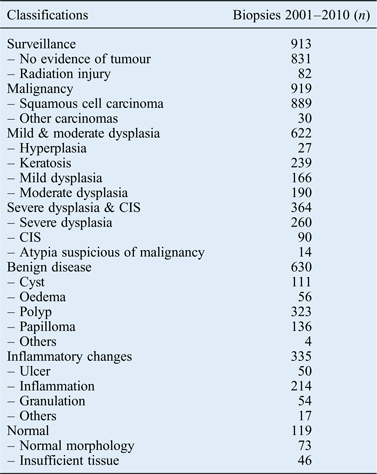
During the 10-year study period, the leading indications for laryngeal biopsy were: malignancy (919 biopsies, 23.5 per cent) and monitoring (913, 23.4 per cent), followed by benign disease (630, 16.1 per cent), mild and moderate dysplasia (622, 16 per cent), severe dysplasia and carcinoma in situ (364, 9.3 per cent), inflammatory changes (335, 8.6 per cent), and normal laryngeal tissue (119, 3.1 per cent) (Table I).
Classifications of biopsies performed from 2001 to 2010

CIS = carcinoma in situ
Annual rates of laryngeal biopsy
Between 2001 and 2003, approximately 300 laryngeal biopsies were recorded annually. From 2004, the annual rate of biopsy increased to over 400. This 25 per cent increase in the number of biopsies was statistically significant (chi-square = 115.0, p < 0.001).
Clinical indications for laryngeal biopsy
Cancer surveillance
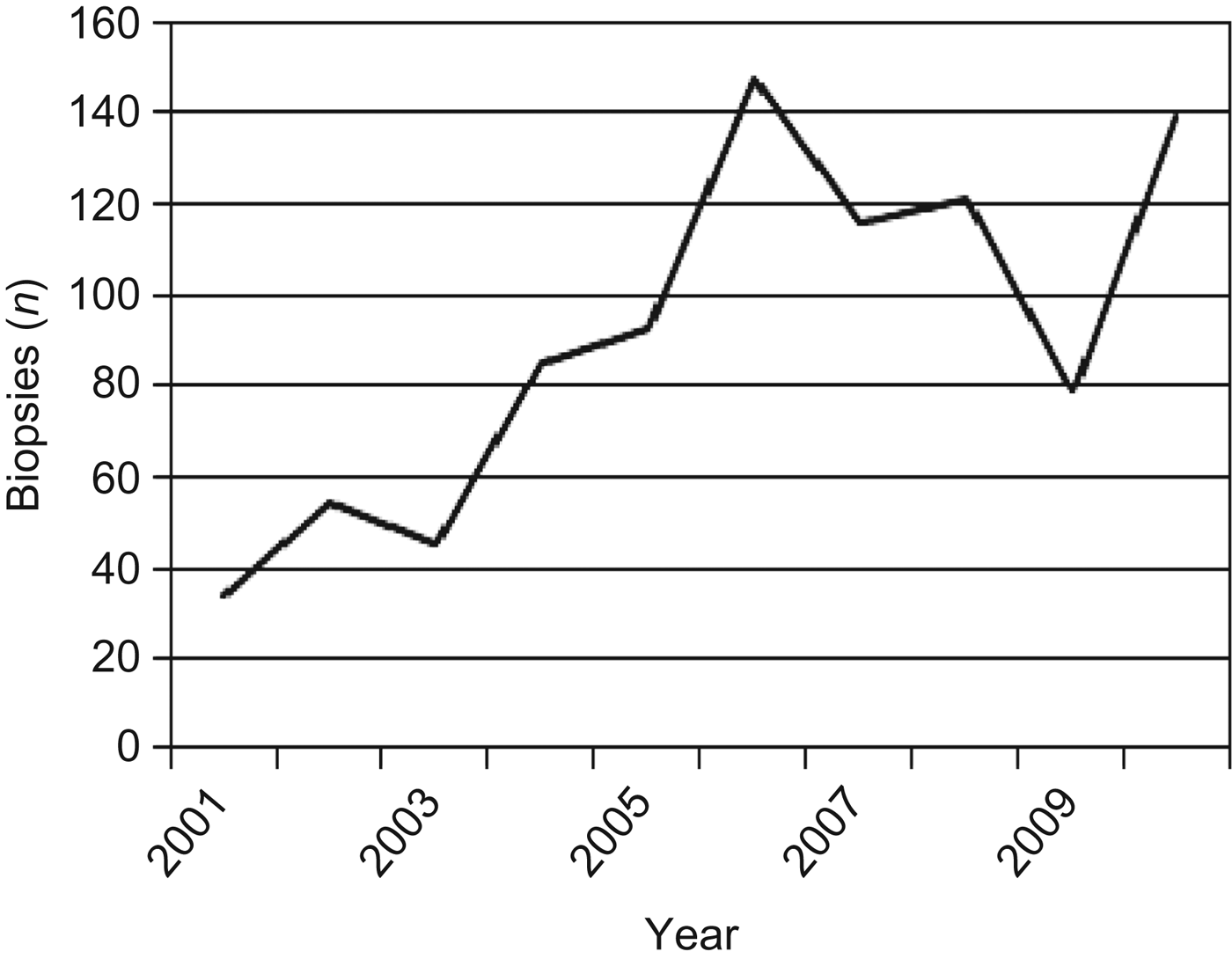
There has been a significant increase in the number of biopsies performed from 2005 to exclude recurrence of malignancy, as shown in Figure 1 (chi-square = 71.78, p < 0.001).
Surveillance biopsies performed from 2001 to 2010.
Malignancy
In conjunction with an increase in cancer surveillance biopsies, de novo or recurrence diagnosis of malignancy has also increased (chi-square = 17.8, p = 0.037), as shown in Figure 2. However, the incidence of laryngeal cancer in Scotland has remained constant.2
Dysplasia, malignancy and benign biopsies performed from 2001 to 2010.
Dysplasia
Between 2004 and 2005, the number of biopsies in the dysplasia category increased significantly, from 60 to over 80 (20 per cent), and has since remained relatively static, as shown in Figure 2 (chi-square = 16.982, p = 0.049).
An increasing number of biopsies in the severe dysplasia and carcinoma in situ category were recorded (chi-square = 34.4, p < 0.001). However, in the mild and moderate dysplasia category, there were approximately 62 (16 per cent) laryngeal biopsies recorded annually.
Benign disease
Over the past decade, benign disease has remained static, with an average of 63 (16 per cent) biopsies recorded annually (chi-square = 15.3, p = 0.083), as shown in Figure 2.
Inflammatory change and normal tissue
There were statistically significant changes over time in the number of biopsies for inflammatory change (e.g. granulation tissue, and acute or chronic inflammation), ranging from 17 to 63, and for normal laryngeal tissue, ranging from 4 to 22.
Discussion
This retrospective study showed a 25 per cent increase in biopsy rates after 2004, with a significant increase in biopsies in the surveillance, laryngeal dysplasia and malignancy categories.
It is likely that this is a real change in practice as during this period all four head and neck consultants remained constant, as did the incidence of benign and inflammatory disorders. There has been no significant migration of population during that period.
Hypothesis for change in practice
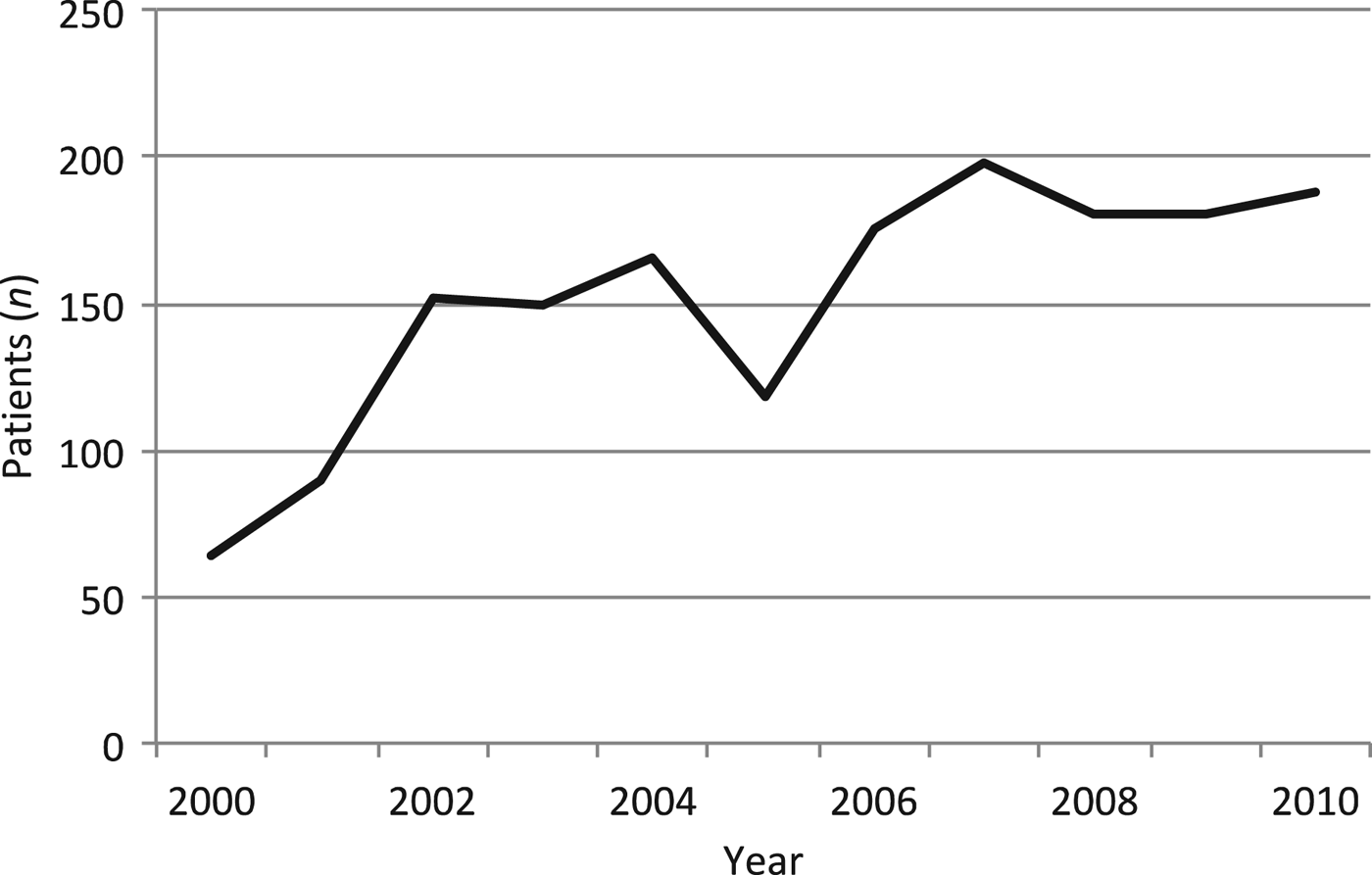
There are various potential reasons for this change in practice. A significant increase in organ preservation strategies, such as chemoradiotherapy in advanced head and neck cancerReference Forastiere, Goepfert, Maor, Pajak, Weber and Morrison3 and endoscopic resection in early stage laryngeal cancer around 2003/2004, are likely to have resulted in an increased need for re-assessment following definitive treatment. This is in keeping with the steady increase in patients undergoing radiotherapy for laryngeal cancer in the West of Scotland, as shown in Figure 3.
Radiotherapy performed for laryngeal cancer in the West of Scotland from 2001 to 2010.
Surveillance by repeat endolaryngeal surgery is much more likely following chemoradiotherapy for advanced laryngeal cancer than if the patient had undergone total laryngectomy. Similarly, in patients in whom endoscopic resection has taken place, elective re-examination is frequently performed and probably more frequently than if the patient had undergone radiotherapy for low volume disease.
Dysplasia
There has been an increase in dysplasia biopsies following re-endoscopy, where previously the patients may simply have been observed. The presence of dysplasia at the surgical margin is acceptable in laser resections but not accountable in chemoradiotherapy patients undergoing surveillance. In addition, recent guidelines recommend that repeat endoscopy and excision are performed for recurrent laryngeal dysplasia.Reference Mehanna, Paleri, Robson, Wight and Helliwell4
• There has been an increase in the number of laryngeal biopsies performed over the last decade
• Malignancy and surveillance were the leading indications for biopsy
• Biopsies performed for dysplasia and inflammatory changes have also increased; however, benign disease incidence has remained static over the last decade
• Organ preservation, endoscopic resection for early laryngeal cancer and chemoradiotherapy for advanced head and neck cancer may be responsible for the increase
• The change in practice should be considered in organ preservation strategy cost-benefit analyses and when advising patients of planned treatment implications
Clinical relevance
The relevance of the increase in laryngeal biopsies is the hidden cost of organ preservation strategies. In North Glasgow, the number of total laryngectomies performed has decreased over the last decade, as shown in Figure 4. This is in keeping with patients' desire to undergo organ preservation treatment. Although at first it would appear that there has been an overall reduction in the surgical oncological workload, this reduction has been offset by the 25 per cent increase in endolaryngeal biopsies.
Total laryngectomies performed in North Glasgow from 1999 to 2007. Sept = September; Aug = August; Jan = January; Dec = December
This observed change in practice should be taken into account when considering the resource allocation for treating laryngeal diseases and when advising patients on the implications of their planned treatment.
Acknowledgement
We would like to acknowledge Dr David Morrison, Consultant Epidemiologist, University of Glasgow, for his kind input in this project.