INTRODUCTION
Dietary reconstructions are fundamental for understanding the ecology and behaviour of animals and are essential for proper management of any species (Litvaitis et al. Reference LITVAITIS, TITUS, ANDERSON and Bookhout1994). Syntopic bat species with similar dietary preferences can have complex interactions and partition available food resources according to time or space (Bonaccorso Reference BONACCORSO1979, Fleming et al. Reference FLEMING, HOOPER and WILSON1972). Information on the type of food eaten by bats is valuable for resource managers to determine the role of species within assemblages and species coexistence (Rex et al. Reference REX, CZACZKES, MICHENER, KUNZ and VOIGT2010, Reference REX, MICHENER, KUNZ and VOIGT2011). Some researchers suggest that many species of bat are opportunistic and can make use of patchily distributed food resources, which should reduce competition (Bumrungsri et al. Reference BUMRUNGSRI, LEELAPAIBUL and RACEY2007). Overlap in dietary niche may influence the breadth of food items in the diet, the use of foraging habitats, and, in some species, the amount of food consumed due to interspecific competition (York & Billings Reference YORK and BILLINGS2009). Therefore, comparisons of diet among syntopic species can provide information about factors that influence how populations partition available resources.
Obtaining sufficient dietary protein is problematic for frugivorous and nectarivorous bats (Herbst Reference HERBST1986). Recent studies show that the nectarivorous phyllostomid, Glossophaga soricina, uses recently ingested sugars to provide about 78% of the energy required during hovering flight (Welch et al. Reference WELCH, HERRERA and SUAREZ2008). Similarly, Voigt & Speakman (Reference VOIGT and SPEAKMAN2007) found that G. soricina fuelled its metabolism with exogenous carbohydrates by 77% when fed sucrose, 82% when fed fructose, and 95% when fed glucose. Incorporation of sugars into metabolism to power flight occurs quickly in G. soricina. Nonetheless, proteins provide an essential source of nitrogen that is vital for the survival, as well as for growth and reproduction of nectarivores (Mancina & Herrera M. Reference MANCINA and HERRERA2010, White Reference WHITE1993). Nectar has low protein content and mostly consists of glucose, fructose and sucrose, although composition of sugars varies significantly (Nicolson & Thornburg Reference NICOLSON, THORNBURG, Nicolson, Nepi and Pacini2007). Many frugivorous phyllostomids can survive on a low nitrogen diet composed mainly of fruit (Delorme & Thomas Reference DELORME and THOMAS1996, Herbst Reference HERBST1986, Herrera M. et al. Reference HERRERA, HOBSON, ADRIANA MANZO ESTRADA, SANCHEZ-CORDERO and MENDEZ2001a, Reference HERRERA, GUTIERREZ, HOBSON, ALTUBE, DÍAZ and SÁNCHEZ-CORDERO2002). Insectivory in Neotropical frugivorous phyllostomids has been documented through isotopic, stomach content and faecal analyses (Giannini & Kalko Reference GIANNINI and KALKO2004, Herrera M. et al. Reference HERRERA, HOBSON, ADRIANA MANZO ESTRADA, SANCHEZ-CORDERO and MENDEZ2001a, Silva-Taboada Reference SILVA-TABOADA1979, York & Billings Reference YORK and BILLINGS2009). Similarly, some nectarivorous bats can obtain protein either by feeding on pollen or by complementing their diet with fruit or insects to meet their nutritional demands (Fleming et al. Reference FLEMING, NUÑEZ and LOBO1993, Herrera M. et al. Reference HERRERA, HOBSON, RAMÍREZ, MÉNDEZ and SÁNCHEZ-CORDERO2001b, Mancina & Herrera M. Reference MANCINA and HERRERA2010, Tschapka Reference TSCHAPKA2005, Voigt Reference VOIGT2003).
In this study, we used stable isotopes to quantify the proportion of plants and insects in the diets between species and among reproductive conditions of the brown flower bat (Erophylla bombifrons, Miller 1906) and the Greater Antillean long-tongued bat (Monophyllus redmani, Leach 1821). Our approach was based on the assimilated isotopic differences expected between diets consisting of plants and insects (Ben-David & Flaherty Reference BEN-DAVID and FLAHERTY2012, Deniro & Epstein Reference DENIRO and EPSTEIN1981). We hypothesized that both species feed on plant products (i.e. fruit or nectar/pollen), but they supplement their diets with insects. Based on the literature and our previous experience (Soto-Centeno & Kurta Reference SOTO-CENTENO and KURTA2006), we predicted that dietary resource partitioning will be observed between species, with E. bombifrons primarily relying on fruits and M. redmani primarily relying on insects and nectar. Female bats can double their daily energy requirements during lactation (Kurta et al. Reference KURTA, BELL, NAGY and KUNZ1989, Reference KURTA, KUNZ and NAGY1990), and young bats nearly reach adult size before they are weaned (Kunz Reference KUNZ, Fenton, Racey and Rayner1987). Based on this, we also hypothesized that dietary components among females in different reproductive conditions and males would contrast, as observed by the relative input of plant versus insect protein in bats with different protein requirements. We predicted that intraspecific consumption of insects varies in E. bombifrons and M. redmani, reflecting a higher demand for protein in lactating and pregnant females during reproduction.
MATERIALS AND METHODS
Study site and sampling
Erophylla bombifrons and Monophyllus redmani belong to the phyllostomid subfamily Glossophaginae (Datzmann et al. Reference DATZMANN, VON HELVERSEN and MAYER2010, Simmons Reference SIMMONS, Wilson and Reeder2005). They are cave dwelling insular endemics that commonly share roosting and foraging habitat on Puerto Rico (Gannon et al. Reference GANNON, KURTA, RODRÍGUEZ-DURÁN and WILLIG2005, Rodríguez-Durán Reference RODRÍGUEZ-DURÁN1998). Although both species are often regarded on morphological grounds as nectarivores (Freeman Reference FREEMAN1995, Gannon et al. Reference GANNON, KURTA, RODRÍGUEZ-DURÁN and WILLIG2005, Jones et al. Reference JONES, BARLOW, VAUGHAN, RODRÍGUEZ-DURÁN and GANNON2001), faecal analyses revealed consumption of insects and fruits as well (Soto-Centeno & Kurta Reference SOTO-CENTENO and KURTA2006).
Bats were captured at Culebrones Cave within Mata de Plátano (18.414º N, −66.728º W), a field station of Interamerican University, about 7 km south-west of Arecibo, Puerto Rico. Deciduous trees dominate the present vegetation in 0.53 km2 of subtropical, successional, moist forest, with average rainfall and temperature of 154 cm y−1 and 25°C, respectively. Culebrones Cave is a ‘hot cave’ (Ladle et al. Reference LADLE, FIRMINO, MALHADO and RODRÍGUEZ-DURÁN2012), with internal relative humidity exceeding 99% and ambient temperatures between 26°C and 40°C. The cave serves as a year-round shelter for E. bombifrons and M. redmani, which roost in the cooler chambers of the cave, as well as for three species of mormoopid bats, which congregate in warmer areas (Rodríguez-Durán Reference RODRÍGUEZ-DURÁN1998, Rodríguez-Durán & Soto-Centeno Reference RODRÍGUEZ-DURÁN and SOTO-CENTENO2003).
Individual E. bombifrons and M. redmani were captured from 5 May to 15 August 2002 by placing a harp trap at the entrance to the cave, beginning at 03h00 as the bats returned from foraging (Kunz & Kurta Reference KUNZ, KURTA and Kunz1988, Soto-Centeno & Kurta Reference SOTO-CENTENO and KURTA2006). This sampling season overlapped the reproductive period of both species (Gannon et al. Reference GANNON, KURTA, RODRÍGUEZ-DURÁN and WILLIG2005), and captured adults were classified into four reproductive groups: males, non-reproductive females, pregnant females and lactating females. Pregnancy was determined by palpation, and lactation was determined by condition of the nipples and the ability to express milk (Anthony Reference ANTHONY and Kunz1988, Racey Reference RACEY and Kunz1988). We collected blood samples from up to five adult males and five adult females twice per month for each species of bat. Blood was selected for isotopic sampling because it is a metabolically active product with a turnover rate between 24 and 39 d (Mirón M. et al. Reference MIRÓN, HERRERA, RAMÍREZ and HOBSON2006), which represented the isotopic composition of diet during the month previous to capture.
To obtain blood, we warmed each bat to promote blood flow to the periphery and used a sterile 16-gauge needle to puncture the antebrachial vein of the wing (Kunz & Nagy Reference KUNZ, NAGY and Kunz1988). We collected 70–100 μl of blood in heparinized capillary tubes from each animal. This blood was then transferred to vials containing 70% ethanol and stored at 10°C until analysis (Hobson et al. Reference HOBSON, GIBBS and GLOUTNEY1997). We rehydrated bats after blood collection by giving them guava nectar and marked them by trimming some dorsal hairs before the animals were released at the entrance to the cave. Capture and handling methods were approved by the Animal Care and Use Committee of Eastern Michigan University and followed guidelines of the American Society of Mammalogists for use of wild mammals in research (Sikes et al. Reference SIKES and GANNON2011).
We collected samples of seven plant species and six insect orders that were consumed by the bats throughout May to August (Soto-Centeno & Kurta Reference SOTO-CENTENO and KURTA2006) for later comparison with isotopic concentrations in blood. Fresh flower petals from Albizia lebbeck (L.) Benth. (Fabaceae), Leucaena leucocephala (Lam.) de Wit (Fabaceae), Psidium guajava L. (Myrtaceae), and Thespesia grandiflora DC. (Malvaceae) and fruits from Muntingia calabura L. (Muntingiaceae), Piper aduncum L. (Piperaceae) and Solanum torvum Sw. (Solanaceae) were obtained directly from the plants. Coleoptera, Diptera, Heteroptera (suborders Hemiptera and Homoptera), Hymenoptera and Lepidoptera were captured using a light trap placed about 1 m from the ground. All foods were collected at the field station or in adjacent areas where both bat species were observed foraging. Samples were dried in an oven at 50°C and stored in labelled vials until analysis.
Measurement of stable isotopes
The isotopic composition of different foods varies, and the relative contribution of these foods to the diet affects the final isotopic composition of the consumer. Values of δ13C and δ15N can be determined for available food types (e.g. different types of flower, fruit and insect) and consumer tissues (e.g. bat blood). If the dietary components differ in their isotopic values, one can determine how much assimilated protein comes from each, following application of appropriate diet-tissue isotopic discrimination factors and by accounting for concentrations of carbon and nitrogen in each diet component (Ben-David & Flaherty Reference BEN-DAVID and FLAHERTY2012, Herrera M. et al. Reference HERRERA, HOBSON, ADRIANA MANZO ESTRADA, SANCHEZ-CORDERO and MENDEZ2001a, Phillips Reference PHILLIPS2012).
Whole bat blood was freeze-dried and homogenized, and plants and insects were dried and then homogenized, using a mortar and pestle prior to measurements of stable isotopes. A 1-mg portion of each sample was placed into a tin cup, crushed and analysed on a Europa 20:20 continuous-flow isotope ratio mass spectrometer, interfaced with a Robo Prep elemental analyser. Stable-isotope ratios were expressed in typical delta (δ) notation as deviations from international standards in parts per thousand (‰). Standards were Vienna Pee Dee Belemnite limestone for δ13C and atmospheric nitrogen for δ15N. Laboratory standards were egg albumen for blood and insect samples and a pea grain for plant materials. Within-run replicate measurements of international standards yielded standard deviations of 0.1‰ and 0.3‰ for δ13C and δ15N measurements, respectively. We used average diet-tissue discrimination values for bat blood of +1.0‰ for δ13C and +3.5‰ for δ15N (Mirón M. et al. Reference MIRÓN, HERRERA, RAMÍREZ and HOBSON2006, Voigt & Matt Reference VOIGT and MATT2004) with a ± 1.5‰ SD to allow for isotopic enrichment variability specific to our study locality. These discrimination average values were used for both plant and insect foods, because Mancina & Herrera M. (Reference MANCINA and HERRERA2010) found similar diet-tissue differences for bats eating plant diets (laboratory) and insect diets (field).
Stable-isotope mixing model
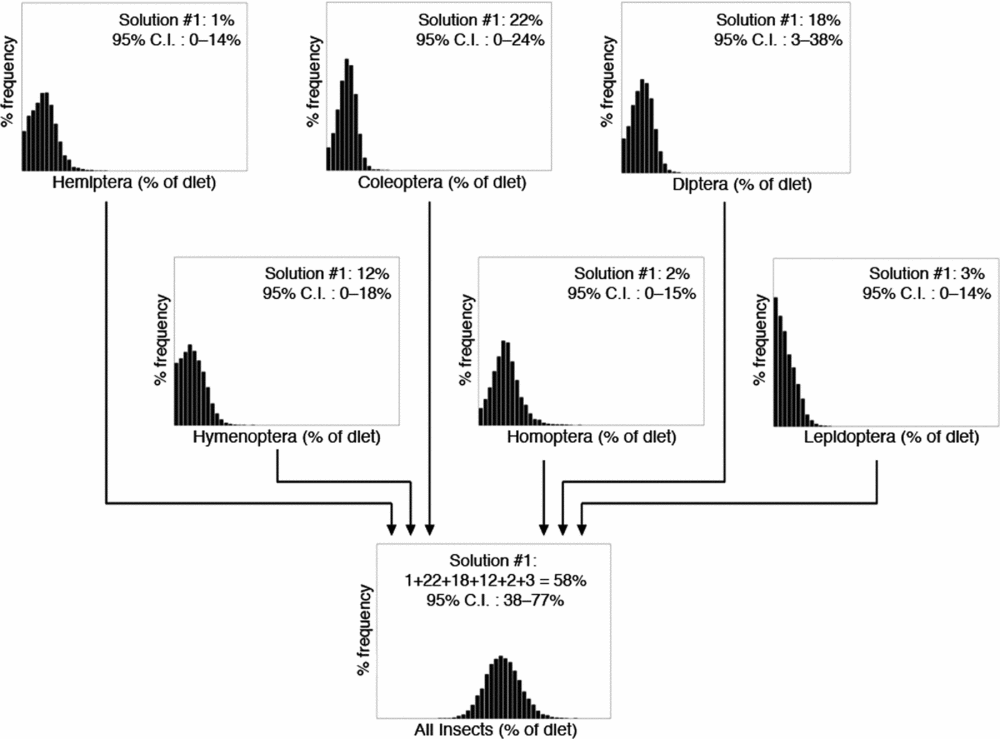
The objective of the stable isotope analyses was to determine differences in diet between species and to determine the proportion of plants versus insects in the diets of different reproductive groups within each species. However, because of the considerable range of δ13C and δ15N values among plant species and among insect orders, these values could not simply be averaged a priori to determine plant and insect dietary components in a two-source mixing model (Phillips et al. Reference PHILLIPS, NEWSOME and GREGG2005). Instead, we followed the a posteriori approach for combining sources outlined by Phillips et al. (Reference PHILLIPS, NEWSOME and GREGG2005) in which each dietary component is represented separately in the model, but the contributions of all plants and all insects are aggregated from the model results. With only two isotopic tracers (δ13C and δ15N), there is no unique solution to a mixing model with a large (>3) number of sources; many combinations of these plant and insect foods could be consistent with the isotopic values of bats (Phillips & Gregg Reference PHILLIPS and GREGG2003). We used the Bayesian mixing model Stable Isotope Analysis in R v3.0.2 (SIAR; Parnell et al. Reference PARNELL, INGER, BEARHOP and JACKSON2010; http://cran.r-project.org/web/packages/siar/index.html) to determine the distribution of feasible dietary contributions for each food source. Values for blood δ13C and δ15N were entered for each bat, and separate mixing-model analyses were performed for each species and reproductive group. We specified the probability distributions of δ13C and δ15N for each food source, using the sample means and standard errors of the insects and plants. All seven plant species and six insect orders were included in the model as potential food sources for M. redmani, but Hemiptera and Homoptera were excluded for E. bombifrons, because previous studies showed that these two insect orders were not part of the diet of this bat (Soto-Centeno & Kurta Reference SOTO-CENTENO and KURTA2006). Although prior distributions of expected contributions of food sources could be specified, we used non-informative priors that did not weight any possible contribution over others. From these probability distributions, the model simulated a posterior probability distribution of 10000 solutions for the dietary contributions of the seven plants and six (or four) insect orders. For each of these feasible solutions, the contributions of the plant species were summed (all plants) and the contributions of the insect orders (all insects) were summed (Figure 1). The 95% credible intervals (i.e. Bayesian confidence intervals) of these aggregate values represented the combined proportions of plant and insect foods in the bats’ diet that were consistent with the isotopic data (Phillips et al. Reference PHILLIPS, NEWSOME and GREGG2005).
A posteriori aggregation of % dietary contributions for individual insect taxa into per cent of diet accounted for by all insects sampled in Arecibo, Puerto Rico. Shown here are the distributions of the 10000 solutions for per cent of diet biomass attributed to each of six insect orders for Monophyllus redmani non-reproductive females. For each of these 10000 solutions, the per cent of diet values were summed for the six orders (top six graphs) to determine the total per cent of diet attributed to all insects (bottom graph). One such solution (solution 1) is shown to illustrate the summation procedure.

In most applications of multiple-isotope mixing models, the unstated assumption is that the proportional contribution of a source to the consumer is similar for each element (Phillips & Koch Reference PHILLIPS and KOCH2002). This assumption is reasonable, if the elemental concentrations of the foods are similar and if they are equally digestible. However, due to the higher protein content of insects compared with plants, bats are likely to obtain a disproportionately higher percentage of their dietary nitrogen from insects compared with the corresponding dietary biomass percentages. Consequently, we used the concentration-dependent option of SIAR that is based on the model developed by Phillips & Koch (Reference PHILLIPS and KOCH2002), which incorporates both isotopic composition and elemental concentrations to determine the proportional dietary contributions of carbon and nitrogen for each food. The proportional biomass contributions are directly related to the carbon and nitrogen contributions and the concentrations for these elements in each food. Because detailed digestibility data were not available for the plants and insects, we made the simplifying assumption that the concentrations of carbon and nitrogen assimilated from each food source were proportional to the ingested concentrations and not grossly affected by differential digestibility among foods. Although the chitinous exoskeletons of insects are poorly digestible, whole body nitrogen concentrations provide a good estimator (N content × 6.25) of crude protein in insects that is not greatly affected by chitin (Finke Reference FINKE2007). Soft tissues of animals are generally highly digestible by other animals and bats can readily absorb most material from fruit and nectar (Herrera M. et al. Reference HERRERA, HOBSON, ADRIANA MANZO ESTRADA, SANCHEZ-CORDERO and MENDEZ2001a, Soto-Centeno Reference SOTO-CENTENO2004, Thomas Reference THOMAS and Kunz1988, Whitaker Reference WHITAKER and Kunz1988).
Individual isotope analysis
Some values of δ13C and δ15N obtained for E. bombifrons and M. redmani were not normally distributed (Shapiro–Wilk normality test; δ13C M. redmani, W = 0.925, P < 0.001; δ15N; E. bombifrons, W = 0.91, P < 0.001; and M. redmani, W = 0.974, P = 0.011). Therefore, we used Wilcoxon rank-sum tests to assess dietary resource differences between E. bombifrons and M. redmani. Additionally, we performed Kruskal–Wallis rank-sum tests on δ13C and δ15N within species to determine if there were intraspecific differences in diet among reproductive conditions. Pairwise Wilcoxon rank-sum tests were then performed to determine which reproductive groups were significantly different from others. P values of pairwise Wilcoxon rank-sum tests were adjusted using Holm's correction (Holm Reference HOLM1979). All statistical analyses were performed in R v3.0.2 statistical environment.
RESULTS
Bats, flowers, fruits, and insects
Blood samples were obtained from 67 E. bombifrons and 71 M. redmani. Pregnant E. bombifrons (N = 12) and M. redmani (N = 10) were captured from early May to late June. Lactating E. bombifrons (N = 23) and M. redmani (N = 17) were captured from late May to August and early June to August, respectively. Additionally, eight non-reproductive female M. redmani were captured from early May to August. No female E. bombifrons appeared to be non-reproductive during our sampling period. Thirty-two adult male E. bombifrons and 36 adult male M. redmani were obtained throughout the sampling period. Males of both species were not in obvious reproductive condition (i.e. testes were not descended).
A total of 65 samples of foods used by E. bombifrons and M. redmani were collected. These included 29 samples of flower petals from four species (Albizia lebbeck, Leucaena leucocephala, Psidium guajava and Thespesia grandiflora), and 21 samples of fruits from three species (Muntingia calabura, Piper aduncum and Solanum torvum). We also obtained 15 samples of insects from six orders (Coleoptera, Diptera, Heteroptera: suborders Hemiptera and Homoptera, Hymenoptera and Lepidoptera).
δ13C and δ15N values
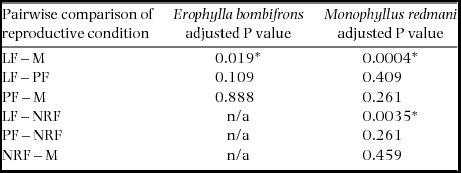
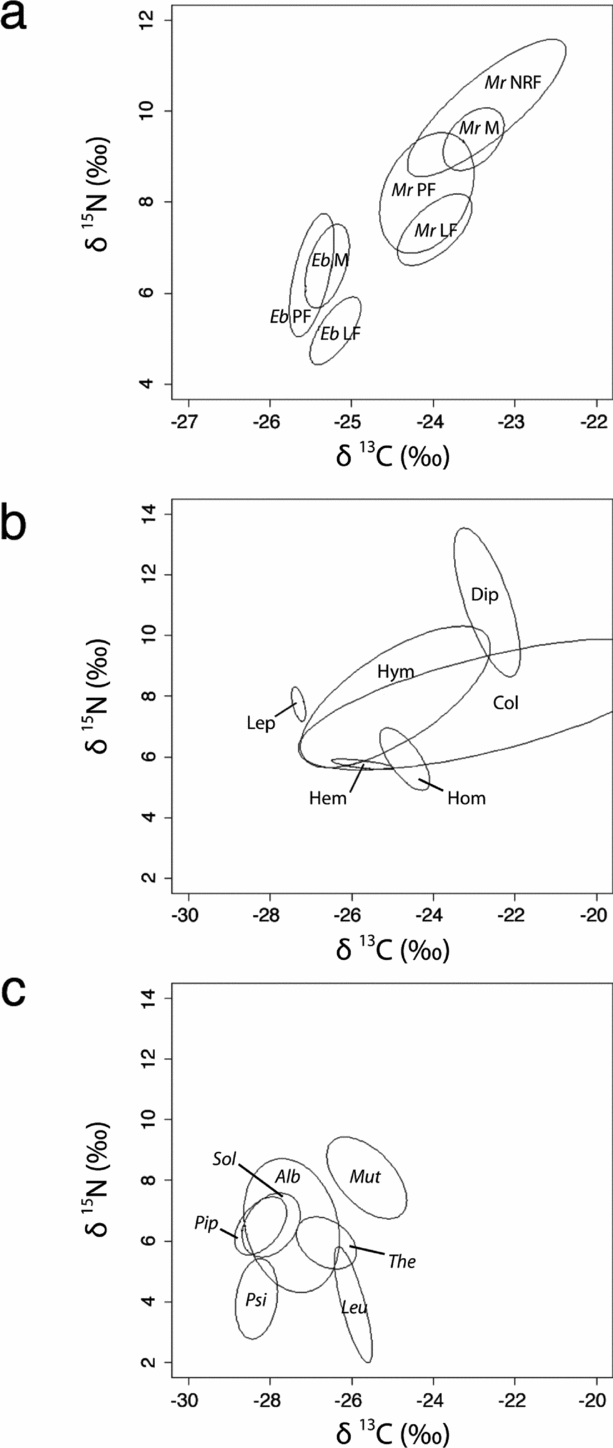
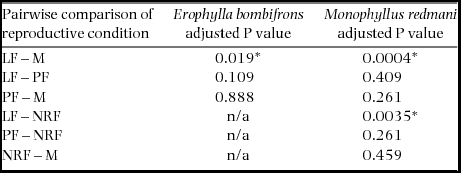
Mean (± SE) values of δ15N were significantly higher in M. redmani (8.84‰ ± 0.22‰) compared with E. bombifrons (6.06‰ ± 0.24‰; U = 658, P < 0.001). A significant difference was also observed for δ13C (M. redmani, −23.68‰ ± 0.11‰; E. bombifrons, −25.30‰ ± 0.07‰; U = 227, P < 0.001). In addition, intraspecific tests revealed significant differences in δ15N among reproductive conditions for each species (E. bombifrons, H = 8.08, df = 2, P = 0.02; M. redmani, H = 18.6, df = 3, P < 0.001; Table 1, Figure 2a). Lactating E. bombifrons showed significantly lower δ15N signatures than males but pregnant females were not significantly different from lactating females or males (Table 1, Figure 2a, Appendices 1, 2). In M. redmani, lactating females had significantly lower δ15N signatures than males and non-reproductive females, whereas all other pairwise comparisons were not significant (Table 1, Figure 2a, Appendices 1, 2). We did not find differences in δ13C among reproductive conditions for either species (E. bombifrons, H = 1.51, df = 2, P = 0.46; M. redmani, H = 5.53, df = 3, P = 0.14; Figure 2a). Mean (± SE) values of δ15N for all insects and all plants were 4.21‰ ± 0.47‰ and 2.06‰ ± 0.18‰, respectively (Appendices 1, 2). Mean values of δ13C for all insects and all plants were −25.89‰ ± 0.59‰ and −28.05‰ ± 0.79‰, respectively (Appendices 1, 2).
Pairwise comparisons of δ15N between reproductive conditions for Erophylla bombifrons and Monophyllus redmani sampled at Culebrones Cave, Arecibo, Puerto Rico. Adjustment of P-values followed Holm's method (Holm Reference HOLM1979). Lactating females (LF), males (M), pregnant females (PF), non-reproductive females (NRF). Asterisks (*) indicate significant differences.
Bayesian 95% confidence ellipses of δ13C and δ15N for reproductive condition classes within bat species (a), insect orders (b) and plant species (c). Bat species: Erophylla bombifrons (Eb), Monophyllus redmani (Mr). Reproductive conditions: males (M), non-reproductive females (NRF), pregnant females (PF) and lactating females (LF). Insect orders: Coleoptera (Col), Diptera (Dip), Hemiptera (Hem), Homoptera (Hom), Hymenoptera (Hym) and Lepidoptera (Lep). Plant species: Albizia lebbeck (Alb), Leucaena leucocephala (Leu), Muntingia calabura (Mut), Piper aduncum (Pip), Psidium guajava (Psi), Solanum torvum (Sol), Thespesia grandiflora (The). Bayesian 95% confidence ellipses that do not overlap are significantly different in their isotopic composition.
Dietary contributions
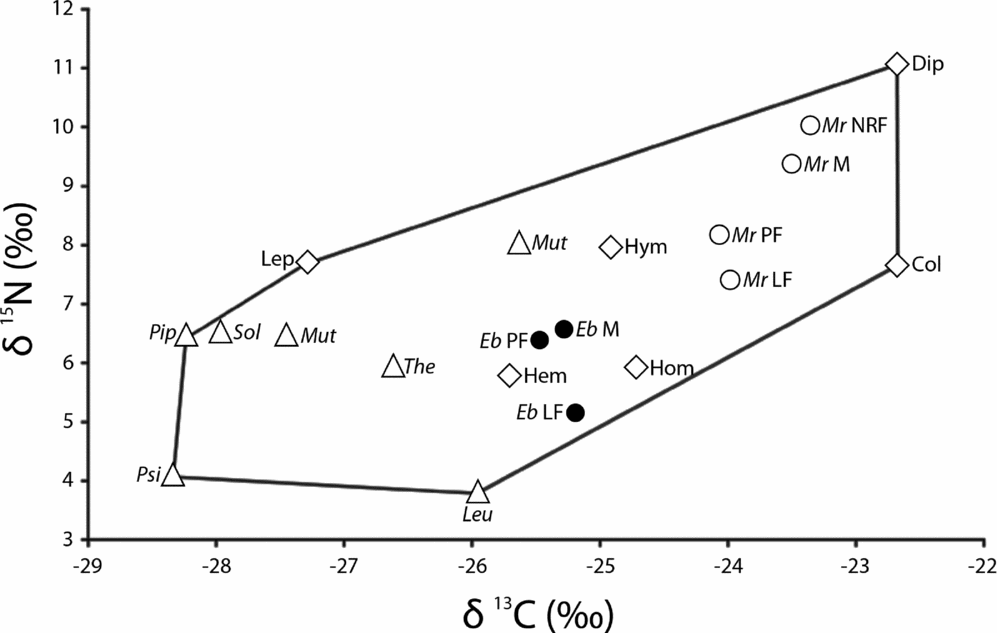
Isotopic values fell within the range of the discrimination-corrected values for the putative food sources of reproductive groups in the two bat species (Figure 3), as is necessary to obtain valid mixing-model results. In general, the seven plant species had more depleted δ13C and δ15N values (means ranging from −25.3‰ to −28.3‰ and 3.9‰ to 8.1‰, respectively) than did the six insect orders (−22.7‰ to −27.3‰ and 5.8‰ to 11.1‰, respectively; Figures 2b, 2c). Erophylla bombifrons had more depleted δ13C and δ15N values (−25.2‰ to −25.5‰ and 5.2‰ to 6.6‰, respectively) than did M. redmani (−23.4‰ to −24.1‰ and 7.4‰ to 10.1‰, respectively; Figures 2a, 3).
Stable-isotope mixing diagram for mean values of insects (diamonds) and plants (triangles) used as food by Erophylla bombifrons (Eb, closed circles) and Monophyllus redmani (Mr, open circles) sampled in Arecibo, Puerto Rico. Four reproductive conditions are depicted: males (M); non-reproductive females (NRF); pregnant females (PF) and lactating females (LF). Food sources are represented as: Coleoptera (Col); Diptera (Dip); Hemiptera (Hem); Homoptera (Hom); Hymenoptera (Hym); and Lepidoptera (Lep) for insects; and Albizia lebbeck (Alb); Leucaena leucocephala (Leu); Muntingia calabura (Mut); Piper aduncum (Pip), Psidium guajava (Psi); Solanum torvum (Sol); Thespesia grandiflora (The) for plants. Food source isotopic values were adjusted for diet-tissue fractionations (+1‰ for δ13C, and +3.5‰ for δ15N).
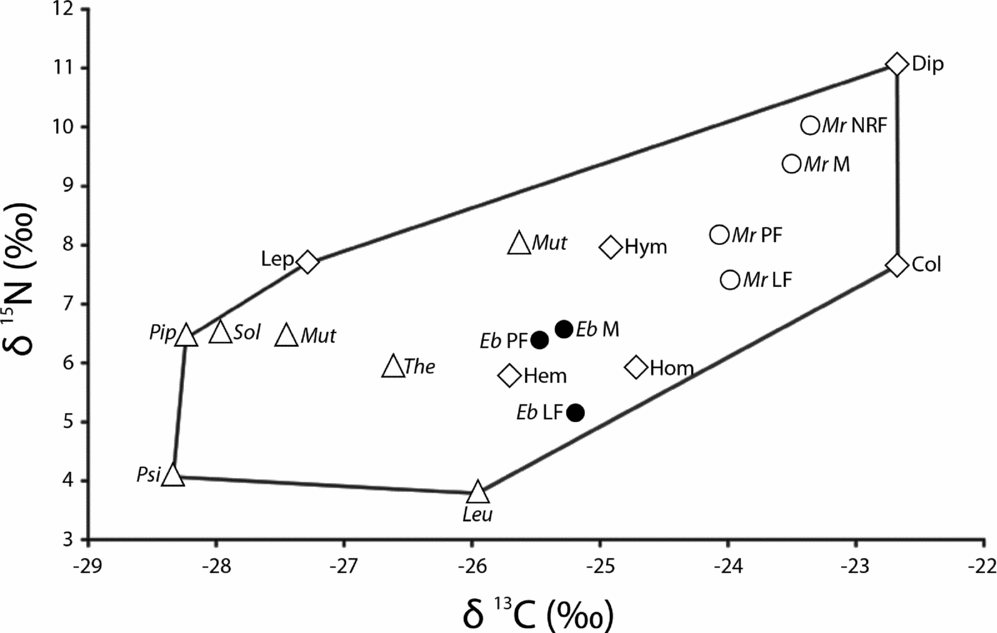
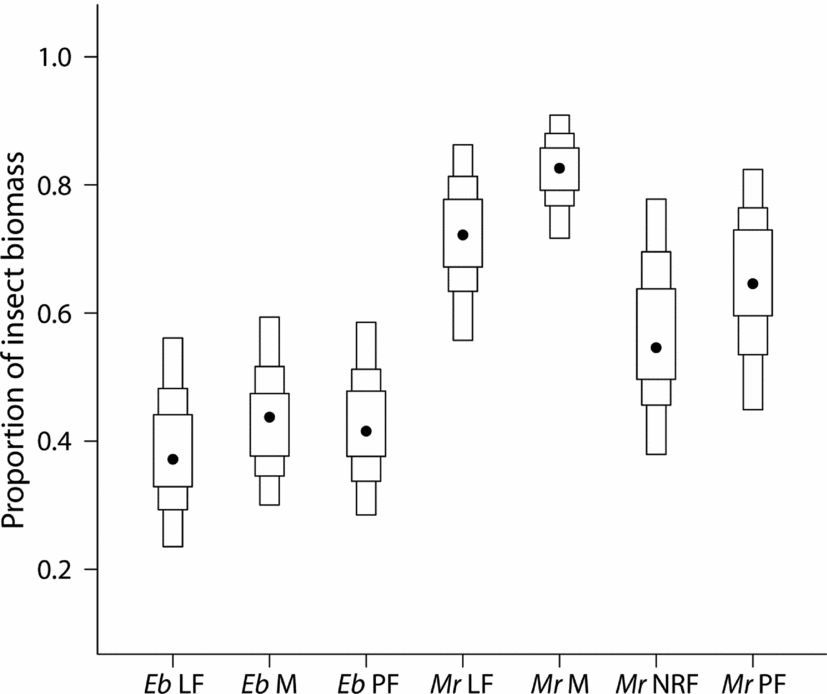
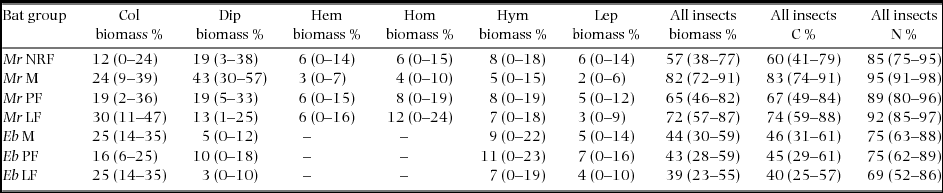
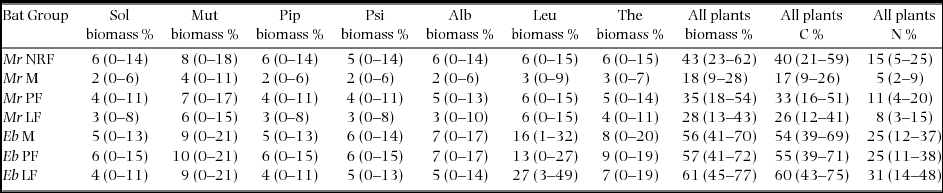
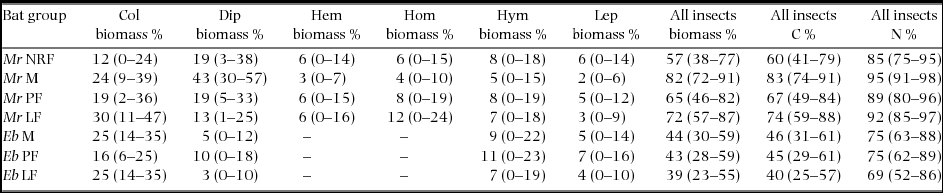
The mixing-model analysis used all 13 food sources for M. redmani and 11 for E. bombifrons (i.e. excluding Hemiptera and Homoptera). Plant dietary contributions are simply the complement of the insect contributions (i.e. 100% − insect contributions). The 95% credible intervals of feasible dietary contributions of most individual plants or insect orders for each group of bat were quite broad (Figure 2, Appendices 1, 2). For M. redmani, mean insect contributions to dietary biomass ranged from 57% (95% CI = 38–77%) for non-reproductive females to 82% (95% CI = 72–91%) for males (Figure 4, Appendices 1, 2). The importance of insects for dietary carbon (60%; 95% CI = 41–79%) was similar to that for biomass but insects contributed at least 85% (95% CI = 75–95%) of the dietary nitrogen for all four groups of M. redmani, reflecting the higher protein concentration of insects compared with plants. The potential contribution of insects to dietary biomass in E. bombifrons was consistently lower than in M. redmani. The three reproductive groups of E. bombifrons had mean insect contributions to dietary biomass ranging from 39% (95% CI = 23–55%) for lactating females to 44% (95% CI = 30–59%) for males (Figure 4, Appendices 1, 2).
Box plot of proportion of insect biomass (i.e. aggregated insect dietary contributions) for Erophylla bombifrons and Monophyllus redmani sampled at Culebrones Cave, Arecibo, Puerto Rico. Boxes represent means (dots) and 50%, 75%, and 95% Bayesian credible intervals for all reproductive groups within each species. Erophylla bombifrons (Eb); Monophyllus redmani (Mr); lactating females (LF); males (M); pregnant females (PF); non-reproductive females (NRF).
DISCUSSION
Erophylla bombifrons and M. redmani share habitats on Puerto Rico, have the same foods available, and also have similar diets. Therefore, partition of resources might occur in localities where these two species of bat are syntopic. Our results show differences in mean values of δ13C and δ15N, which suggest dietary resource partitioning between syntopic E. bombifrons and M. redmani on Puerto Rico. The significantly higher ranges in the all insects per cent biomass showed the importance of insects to the diet of M. redmani. Furthermore, a substantial fraction of the diet of M. redmani must consist of insects because its δ13C, and to some extent, δ15N values are higher than can be accounted for by any of the plant foods. The all insects values of biomass, δ13C, and δ15N for E. bombifrons were significantly lower than for M. redmani, which reflects a greater dietary role for plant foods in E. bombifrons. Mancina & Herrera M. (Reference MANCINA and HERRERA2010) showed that δ15N values of M. redmani on Cuba resembled those of the insectivorous mormoopid Pteronotus quadridens (i.e. δ15N = 7.7‰). Pteronotus quadridens often occurs syntopically with M. redmani (Gannon et al. Reference GANNON, KURTA, RODRÍGUEZ-DURÁN and WILLIG2005) and it is possible that, in addition to visiting plants, M. redmani on Puerto Rico occupies a similar insectivorous guild. The diet of E. bombifrons appears more similar to that of Brachyphylla nana (i.e. δ15N = 6.2‰), a closely related Cuban omnivorous species that is not present on Puerto Rico (Mancina & Herrera M. Reference MANCINA and HERRERA2010). Faecal analysis showed that similar proportions of E. bombifrons and M. redmani include insects in their diet (Soto-Centeno & Kurta Reference SOTO-CENTENO and KURTA2006). Our isotopic reconstruction based on nitrogen suggests that both species consume insects yet they show trophic differentiation. Due to its reduced dentition and weaker jaw musculature (e.g. compared with E. bombifrons; Freeman Reference FREEMAN1995), M. redmani primarily consumes soft-bodied prey that may have been masticated into small pieces that are difficult to identify by faecal analyses. Therefore, it is possible that the level of insectivory reported by previous faecal analyses may have underestimated the contribution of insects to the diet of this species.
Studies based on faecal analyses show that E. bombifrons visited plants for fruit and nectar with high frequency on Puerto Rico (i.e. 85% and 75%, respectively; Soto-Centeno & Kurta Reference SOTO-CENTENO and KURTA2006). The significantly greater dietary role of plant foods compared with insects in E. bombifrons revealed by our stable isotope analysis is consistent with these findings. Faecal analyses of M. redmani showed that only 22% had fruit seeds in their faeces, but 91% had consumed nectar/pollen, as indicated by presence of pollen on the fur (Soto-Centeno & Kurta Reference SOTO-CENTENO and KURTA2006). Although the results from pollen swabs and stable isotope analyses superficially appear to contrast, they do indicate different things. Monophyllus redmani apparently consumes small amounts of pollen very frequently while visiting plants for nectar and grooming, but the plant products only contribute 18–43% of the dietary biomass. The δ13C and δ15N results support the hypothesis that both putative nectarivorous species of bat supplement their diet with insects and also confirms some of the findings based on faecal analysis. However, our analysis of stable isotopes provides further evidence of resource partitioning between these species of bat as revealed by the differences in assimilated nitrogen (Table 1, Figures 2, 4) and comparisons of per cent biomass for all insects and all plants (Appendices 1, 2).
Reproductive females in some species of bat have difficulty in meeting the increased nutritional demands for calcium that accompany pregnancy and lactation (Barclay Reference BARCLAY1994). It is conceivable that demands for protein also change during reproduction in E. bombifrons and M. redmani (Jenness & Studier Reference JENNESS, STUDIER, Baker, Knox Jones and Carter1976), which could lead to intraspecific differences in dietary niche. We hypothesized that dietary components differed among female reproductive conditions and males, reflecting the increased nitrogen demands of reproduction. We did observe differences in the ranges of the dietary importance of insects among reproductive groups within E. bombifrons and M. redmani, which suggested intraspecific dietary partitioning. However, our hypothesis of increased insect consumption by reproductive females to meet a high-protein diet was not supported. Assimilated nitrogen showed that the contribution of insects was significantly lower in lactating E. bombifrons than in pregnant females or males. Similarly, for M. redmani assimilated nitrogen was significantly lower in lactating compared with non-reproductive females and males but pregnant females were not significantly different than non-reproductive, lactating females, or males. This suggests that even though daily energy requirements may have significantly increased during lactation (Kurta et al. Reference KURTA, BELL, NAGY and KUNZ1989, Reference KURTA, KUNZ and NAGY1990), lactating females were able to meet their protein demands by ingesting more plants and fewer insects than non-reproductive and pregnant females, and males in each species. Lactation is energetically expensive in all mammals (Davis & Golley Reference DAVIS, GOLLEY, Davis and Golley1963) and foraging flight may account for up to 66% of the daily metabolized energy budget in lactating bats (Kurta et al. Reference KURTA, BELL, NAGY and KUNZ1989). Therefore, energy consumption is expected to increase in lactating females. Fruit and nectar are low in fat and protein but rich in carbohydrates, which constitute a good source of energy (Voigt & Speakman Reference VOIGT and SPEAKMAN2007, Welch et al. Reference WELCH, HERRERA and SUAREZ2008). It is possible that protein consumption by lactating E. bombifrons and M. redmani is already sufficiently high. Thus, they can rely mostly on plant products, which provide a high-energy food to meet the energetic demands of lactation and flight.
Although there might be a tendency for intraspecific dietary resource partitioning within E. bombifrons and M. redmani on Puerto Rico, explaining the increased use of plants by lactating females will require larger sample sizes and additional data collected during the reproductive period. For example, variation in estimates of milk protein composition and milk output may depend on maternal body condition, weather, and may even differ among individuals in a population (Hood et al. Reference HOOD, VOLTURA, OFTEDAL, Kunz and Parsons2009). It is possible that protein content in milk of lactating female bats does not increase throughout lactation (Hood et al. Reference HOOD, OFTEDAL and KUNZ2006), which would affect overall protein requirements. Stern et al. (Reference STERN, KUNZ, STUDIER and OFTEDAL1997) showed that protein concentration of the milk of Phyllostomus hastatus, an omnivorous phyllostomid bat, did not change significantly during lactation. In contrast, milk energy output (i.e. daily milk mass × energy content) significantly increased from week 1 until weaning (Stern et al. Reference STERN, KUNZ, STUDIER and OFTEDAL1997). Kunz et al. (Reference KUNZ, OFTEDAL, ROBSON, KRETZMANN and KIRK1995) revealed low milk output due to high energy density of milk in the insectivorous bat Tadarida brasiliensis (Molossidae). A greater energy output, as in P. hastatus, suggests that the overall amount of protein would increase, even if its concentration in milk remains the same (i.e. milk output must increase). Alternatively, milk output could remain constant as in T. brasiliensis, or decrease, which may help explain the low protein requirements in lactating E. bombifrons and M. redmani. Detailed analyses of milk composition and measurements of milk output throughout the reproductive period of these species could provide additional information to understand the importance of protein for lactating female bats.
Our study revealed significant patterns that highlight differential food resource use between E. bombifrons and M. redmani, which are congruent with results based on faecal analysis. Despite their morphological adaptations (Freeman Reference FREEMAN1995) and overlapping food and habitat use (Gannon et al. Reference GANNON, KURTA, RODRÍGUEZ-DURÁN and WILLIG2005, Soto-Centeno & Kurta Reference SOTO-CENTENO and KURTA2006), dietary differences may allow these putative nectarivorous bats to coexist on Puerto Rico. We caution, however, that stable isotopes from blood underestimate the contribution of nectar to assimilated per cent biomass. If lactating E. bombifrons and M. redmani can make rapid use of sugars in nectar, like G. soricina does, then analysis of stable isotopes in blood sampled after flight will underestimate the importance of this food in their diet. Dietary estimates reflect primarily sources of proteins and not necessarily sources of carbohydrates or lipids in our study. Additional studies addressing energetic costs of hovering and carbohydrate metabolism in E. bombifrons and M. redmani are necessary to further elucidate the differential use of insects and nectar in these species. In this context, the potential use of δ13C analysis of CO2 in bat breath may provide a fruitful area for future research (Hobson et al. Reference HOBSON, STIRLING and ANDRIASHEK2009, Voigt & Speakman Reference VOIGT and SPEAKMAN2007, Voigt et al. Reference VOIGT, SÖRGEL and DECHMANN2010).
ACKNOWLEDGEMENTS
We thank A. Rodríguez-Durán, for facilitating access to Mata de Plátano, and B. Rivera-Marchand, for assisting with fieldwork. H.A. York, L.G. Herrera M. and C. C. Voigt provided constructive comments on early versions of this manuscript. Funding was provided by a Meta Hellwig Graduate Research Award to JASC and a Research Support Award to AK from the Graduate School, Eastern Michigan University. JASC thanks R. D. Barrilito for additional support. This paper has been subjected to peer and administrative review of the Environmental Protection Agency (EPA) and approved for publication as an EPA document. Mention of trade names or commercial products does not constitute endorsement or recommendation for use.
Mean contributions of insects to the diet of Erophylla bombifrons (Eb) and Monophyllus redmani (Mr) for each reproductive condition sampled at Culebrones Cave, Arecibo, Puerto Rico. Values in parentheses represent 95% Bayesian credible intervals. All values are expressed as per cent biomass except for the last two columns, which show per cent C and per cent N contribution independently. Bat group: non-reproductive females (NRF), males (M), pregnant females (PF), lactating females (LF). Insect orders: Coleoptera (Col), Diptera (Dip), Hemiptera (Hem), Homoptera (Hom), Hymenoptera (Hym) and Lepidoptera (Lep).
Mean contributions of plants to the diet of Erophylla bombifrons (Eb) and Monophyllus redmani (Mr) for each reproductive condition sampled at Culebrones Cave, Arecibo, Puerto Rico. Values in parentheses represent 95% Bayesian credible intervals. All values are expressed as per cent biomass except for the last two columns, which show per cent C and per cent N contribution independently. Bat group: non-reproductive females (NRF), males (M), pregnant females (PF), lactating females (LF). Plant genera used as fruit included Solanum (Sol), Muntingia (Mut) and Piper (Pip) (Soto-Centeno & Kurta Reference SOTO-CENTENO and KURTA2006). Plant genera used as nectar included Psidium (Psi), Albizia (Alb), Leucaena (Leu) and Thespesia (The) (Soto-Centeno & Kurta Reference SOTO-CENTENO and KURTA2006).