

Rejection sensitivity (RS) theory provides a conceptual framework that explicitly outlines responses to negative interpersonal interactions that can result in more elevated and chronic socioemotional problems (Downey & Feldman, Reference Downey and Feldman1996; Levy, Ayduk, & Downey, Reference Levy, Ayduk, Downey and Leary2001; Zimmer-Gembeck & Nesdale, Reference Zimmer-Gembeck and Nesdale2013). Drawing from attachment theory (Bowlby, Reference Bowlby1969) and research on attributions of the cause of negative social experiences (Downey & Feldman, Reference Downey and Feldman1996; Levy et al., Reference Levy, Ayduk, Downey and Leary2001), RS is believed to develop within relational contexts, whereby the human need for belongingness and acceptance is too often met with rejection, resulting in a bias toward the anticipation of rejection by others. In one of the first studies of RS, Downey and Feldman (Reference Downey and Feldman1996) found that adults appeared to have developed a heightened sensitivity to rejection based on past negative experience, which helped explain individual differences in responding to perceived or actual rejection.
RS can escalate over time with repeated experiences of rejection (perceived or actual). RS is then marked by a chronic hypersensitivity to cues that prompt extreme negative emotional reactions and problem behaviours, which may potentially elicit socioemotional problems and even more rejection from others (Levy et al., Reference Levy, Ayduk, Downey and Leary2001; Watson & Nesdale, Reference Watson and Nesdale2012; Zimmer-Gembeck, Reference Zimmer-Gembeck2015). Through this cognitive-affective filter of RS, individuals come to readily perceive and overreact to rejection from significant others’ socially ambiguous cues (as well as overt cues; Zimmer-Gembeck & Nesdale, Reference Zimmer-Gembeck and Nesdale2013), as such cues may be perceived as signs of intentional rejection even when not present, or catastrophised when present (Downey & Feldman, Reference Downey and Feldman1996; Levy et al., Reference Levy, Ayduk, Downey and Leary2001). In response to perceived rejection, feelings of hurt or anger can be quite severe, and responses can be very maladaptive, such as reacting with aggression or social withdrawal and isolation; which in turn may elicit even more interpersonal interactions that exhibit signs of rejection, future escalation of problems in social relationships, and poorer emotional functioning (Downey & Feldman, Reference Downey and Feldman1996; Levy et al., Reference Levy, Ayduk, Downey and Leary2001; Watson & Nesdale, Reference Watson and Nesdale2012; Zimmer-Gembeck, Reference Zimmer-Gembeck2015).
It appears that childhood and adolescence are periods of life that are crucial to the development of RS (and other socioemotional problems), as youth are bombarded by opportunities for acceptance and belonging, or rejection and exclusion, in many different social contexts (Marston, Hare, & Allen, Reference Marston, Hare and Allen2010; Mattanah, Lopez, & Govern, Reference Mattanah, Lopez and Govern2011). RS probably has roots in interactions with parents, as initially indicated by Downey and Feldman (Reference Downey and Feldman1996), but very little empirical research has examined the role of parents in RS beyond the middle adolescent years. Not focusing on older youth represents a significant gap in the literature, as research has shown that even into late adolescence and young adulthood, youth continue to heavily rely on their parents’ support during this period of life (McKinney & Renk, Reference McKinney and Renk2008; Nelson, Padilla-Walker, Christensen, Evans, & Carroll, Reference Nelson, Padilla-Walker, Christensen, Evans and Carroll2011). Furthermore, RS has been shown to be a potential mechanism explaining the development of socio-emotional problems among this age group (e.g., Marston et al., Reference Marston, Hare and Allen2010; Watson & Nesdale, Reference Watson and Nesdale2012).
Despite the existence of a substantial body of research literature supporting the role of parents in promoting or undermining their offspring's emotional development during this developmental period (e.g., Mattanah et al., Reference Mattanah, Lopez and Govern2011; Nelson et al., Reference Nelson, Padilla-Walker, Christensen, Evans and Carroll2011; Nelson, Padilla-Walker & Nielson, Reference Nelson, Padilla-Walker and Nielson2015), we could locate only two studies that directly examined whether RS is a correlate of young men's and women's relationships with their parents. In these studies, a more satisfactory family relationship was negatively associated with RS (Overall & Sibley, Reference Overall and Sibley2009), and parental rejection of sexual orientation was associated with heightened gay-related RS (Pachankis, Goldfried, & Ramrattan, Reference Pachankis, Goldfried and Ramrattan2008). In another study, youth were asked for retrospective reports of parenting during childhood, and results showed that fewer recalled experiences of parental acceptance were associated with greater levels of RS in participants’ current relationships with significant others (Ibrahim, Rohner, Smith, & Flannery, Reference Ibrahim, Rohner, Smith and Flannery2015). In the other study, observed maternal undermining of autonomy and relatedness during adolescence was not associated with later RS (Chango, McElhaney, Allen, Schad, & Marston, Reference Chango, McElhaney, Allen, Schad and Marston2012).
While these studies provide some preliminary evidence that adolescents and young adults’ interactions with their parents are associated with RS, the findings are quite limited by a focus on a limited set of parent-child relationships qualities focusing on a specific domain of acceptance, asking for retrospective reports of parenting during childhood, or not also assessing a more comprehensive model of RS and socioemotional problems. In the present study, we address these gaps in previous research by testing an extended model of youths’ current perceived relationships with their parents, RS, and depressive and trait-anxiety symptoms. In these models, we examined various perceived parenting practices that are relevant to adolescents and young adults as they are balancing their changing relationships outside the home and increasing autonomy from parents (Zimmer-Gembeck, Ducat, Clear, Mastro, & Van Petegem, Reference Zimmer-Gembeck, Ducat, Clear, Mastro, Van Petegem, Soenens, Vansteenkiste and Van Petegem2018), including warmth, autonomy support, rejection, coercion, and psychological control. Moreover, we expanded this model of RS to include a focus on mental health outcomes by drawing from RS and emotion regulation theories (Aldao, Noeln-Hoeksema, & Schweizer, Reference Aldao, Nolen-Hoeksema and Schweizer2010; Bowlby, Reference Bowlby1969; Mikulincer, Shaver, & Pereg, Reference Mikulincer, Shaver and Pereg2003).
The RS Model: Why Are Parental Relationships Linked to Emotional Symptoms?
Parenting practices and their associations with offspring's internalising symptoms
A range of parenting practices are important when examining their role in child, adolescent, and adulthood functioning. These include warmth, autonomy support, rejection, coercion, and psychological control. Warm parenting practices consist of expressions of kindness, affection, love, and positive regard (Nelson et al., Reference Nelson, Padilla-Walker and Nielson2015; Skinner, Johnson, & Snyder, Reference Skinner, Johnson and Snyder2005), while autonomy-supportive parenting practices involve support for offspring's personal volition and choice, communication of genuine respect for those choices, and encouragement of offspring to explore their own goals and values (Skinner et al., Reference Skinner, Johnson and Snyder2005; Zimmer-Gembeck et al., Reference Zimmer-Gembeck, Ducat, Clear, Mastro, Van Petegem, Soenens, Vansteenkiste and Van Petegem2018). Other parenting practices are more negative in tone and include rejection, coercion, and psychological control. These practices are characterised by hostility toward offspring, communication of active dislike or disapproval for their behaviour and excessively demanding offspring's obedience, and restricting attempts for autonomy using controlling, intrusive and/or manipulative behaviours (Nelson et al., Reference Nelson, Padilla-Walker, Christensen, Evans and Carroll2011; Skinner et al., Reference Skinner, Johnson and Snyder2005). The parenting literature demonstrates that all these parenting practices remain important sources of influence during adolescence and young adulthood, providing support for their wellbeing or risk of vulnerability for emotional symptoms (McKinney & Renk, Reference McKinney and Renk2008; Nelson et al., Reference Nelson, Padilla-Walker, Christensen, Evans and Carroll2011; Nelson et al., Reference Nelson, Padilla-Walker and Nielson2015).
Empirical work supports theory showing that parenting practices are a robust and direct predictor of emotional adjustment in this age group (Ibrahim et al., Reference Ibrahim, Rohner, Smith and Flannery2015; Mattanah et al., Reference Mattanah, Lopez and Govern2011; McKinney & Renk, Reference McKinney and Renk2008; Nelson et al., Reference Nelson, Padilla-Walker, Christensen, Evans and Carroll2011). For example, in one study, youth who reported greater levels of both maternal and paternal warmth were found to also report greater feelings of self-worth, with maternal warmth uniquely predicting greater school engagement and lower risky behaviours (e.g., marijuana use, shoplifting; Nelson et al., Reference Nelson, Padilla-Walker and Nielson2015). In another study, young men and women who reported more parental rejection also reported more maladaptive schemas and rumination, greater motivation for self-injury, and suicidal thoughts; while those who reported more parental warmth reported lower maladaptive schemas, motivations for self-injury, and self-injury severity (Quirk, Weir, Martin, & Christian, Reference Quirk, Weir, Martin and Christian2015). These studies help to provide empirical support that parenting practices are important to consider as correlates of mental health symptoms for young men and women, as they seem to continue to provide a source of support or problems for youth. However, given their history with these parenting practices over the course of their development, these interactions are likely to also have been internalised through various social-information processing systems (as indicated by Bowlby's work in attachment; Bowlby, Reference Bowlby1969), one of which is accounted for by the RS model. RS then may help to account for the consistent associations found between parenting practices and emotional adjustment.
RS, emotional and behavioural responses, and emotional adjustment
Empirical research on RS has also put forward several emotional and behavioural processes that are typically displayed in response to perceived rejection or high levels of RS. One such behavioural response that has received empirical support is social withdrawal. This response to rejecting experiences has consistently been a correlate of either experiences of rejection or self-reported RS (Zimmer-Gembeck & Nesdale, Reference Zimmer-Gembeck and Nesdale2013; Zimmer-Gembeck & Skinner, Reference Zimmer-Gembeck and Skinner2015), and has also been found to mediate the association of RS with symptoms of emotional problems (Kraines & Wells, Reference Kraines and Wells2017; Watson & Nesdale, Reference Watson and Nesdale2012). While excessively negative (e.g., sadness or anger) emotional responses are implicated as a central experience arising from RS (Downey & Feldman, Reference Downey and Feldman1996; Levy et al., 2011), relatively few studies have empirically examined this relationship. The few studies that have directly assessed for emotional reactions to perceived rejection have studied children and adolescents and focused on peer relationships (e.g., Zimmer-Gembeck, Reference Zimmer-Gembeck2015; Zimmer-Gembeck & Skinner, Reference Zimmer-Gembeck and Skinner2015). We could only locate one study in which, aligned with RS theory, emotional and behavioural responses were assessed in an older adolescent sample. In this study, elevated experiences of rejection significantly predicted negative emotional responses, which in turn predicted behavioural responses of avoidance, complaining, and retaliation (Jones, Barnett, Wadian, & Sonnentag, Reference Jones, Barnett, Wadian and Sonnentag2016). However, in this study, RS did not significantly predict negative emotional responses, despite being initially associated, and emotional responses were assessed as a composite of one-item responses to seven negative and positive emotions.
While previous research on child and adolescent emotional responses to rejection has demonstrated empirical support for negative mood responses, such as anger, sadness or worry, as important outcomes (Zimmer-Gembeck, Reference Zimmer-Gembeck2015; Zimmer-Gembeck & Skinner, Reference Zimmer-Gembeck and Skinner2015), rarely have studies examined whether it is the inability to regulate such emotion that in turn generates emotional maladjustment and further rejection. This therefore limits our understanding of the emotional sequalae of RS, as a negative emotional response may initially be a protective mechanism in the short term (Levy et al., Reference Levy, Ayduk, Downey and Leary2001), but the dysregulation of this emotion may be what prolongs the negative emotional reactions that follow from RS. Given the limitations of RS theory in this regard, we were guided by attachment theory (Bowlby, Reference Bowlby1969; because of its conceptual basis for RS theory) and research on emotion regulation in adolescent and adulthood populations (Aldao et al., Reference Aldao, Nolen-Hoeksema and Schweizer2010; Mikulincer et al., Reference Mikulincer, Shaver and Pereg2003) in examining whether two common emotion dysregulation strategies of suppression and dysregulation help to explain when RS is predictive of later adolescents’ elevated symptoms of emotional problems. We also focused the assessment of emotion dysregulation on two negative emotions that often occur in response to rejection — sadness and worry.
Salient Covariates of Emotional Adjustment During Emerging Adulthood
In addition to the focus on the extended-RS model, developmental and interpersonal theories indicate that peer relationships qualified by low levels of support and acceptance may place youth at greater risk for socioemotional problems during adolescence and young adulthood (Furman & Buhrmester, Reference Furman and Buhrmester2009; Levy et al., Reference Levy, Ayduk, Downey and Leary2001). Furthermore, gender and age has often been a significant predictor of emotional maladjustment, where younger women often report higher levels of depressive and anxious symptoms (Marston et al., Reference Marston, Hare and Allen2010; McKinney & Renk, Reference McKinney and Renk2008). Gender differences and moderations have also been noted in studies focusing on experience of rejection and RS (Downey & Feldman, Reference Downey and Feldman1996; Ibrahim et al., Reference Ibrahim, Rohner, Smith and Flannery2015), with consistent differences also noted by gender in emotional and behavioural responses in coping with stress (Aldo et al., Reference Aldao, Nolen-Hoeksema and Schweizer2010; Kraines & Wells, Reference Kraines and Wells2017; Zimmer-Gembeck, Reference Zimmer-Gembeck2015). Such findings may suggest that friendship quality, age, and gender are unique correlates that may significantly affect the direction or strength of the associations that will be tested in our model.
The Present Study
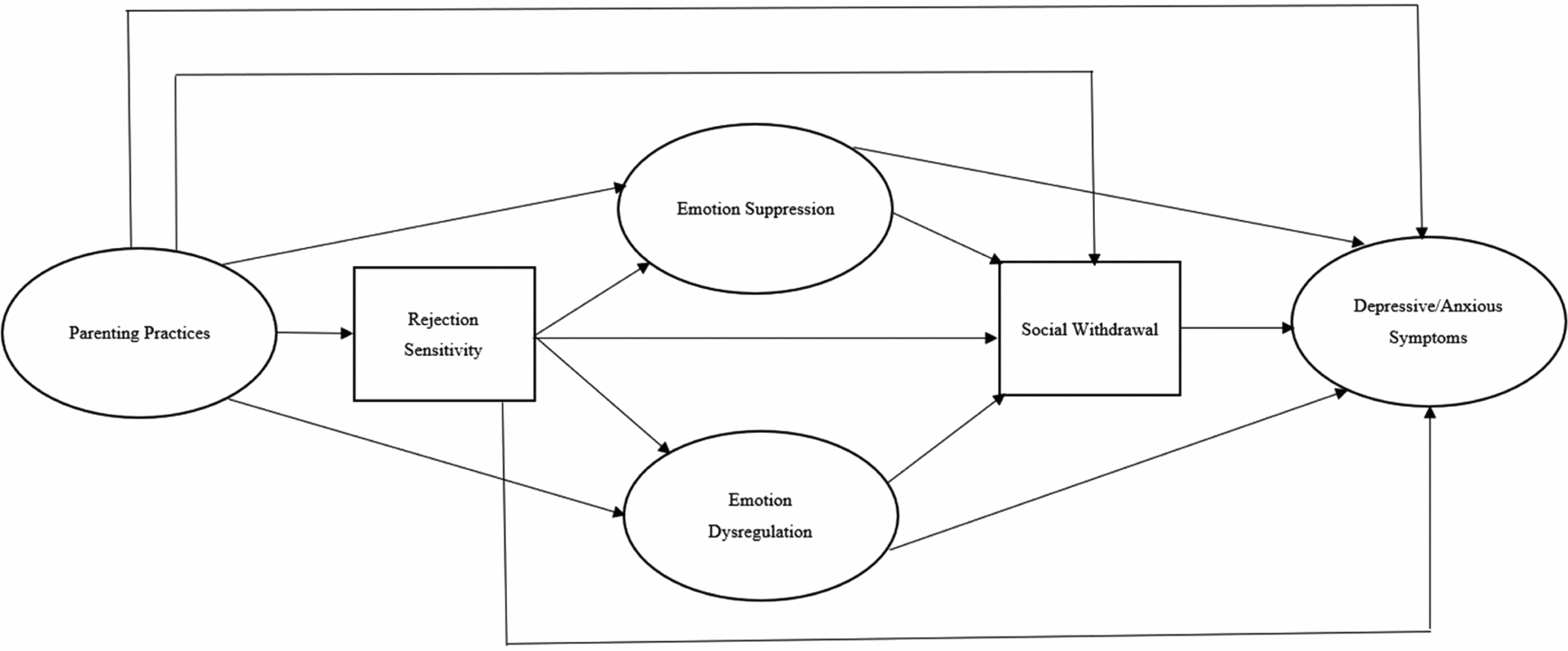
In the present study, we elaborated on RS theory to test an extended model of perceived parenting practices and self-reported depressive and trait-anxious symptoms among older adolescents and young adults. These associations are expected to be better explained because of a serial mediating pathway of RS, and emotional (sadness and worry emotion dysregulation and suppression) and behavioural (social withdrawal) regulatory responses (see Figure 1). To isolate the findings to the role of parenting practices, we controlled for the best friend relationship quality in this model, along with the associations of gender and age, as previous studies have indicated their importance in the constructs under investigation. We therefore hypothesised that:
1. Adolescents and young adults who report greater experiences of positive parenting practices (indicated by high warmth and autonomy support, and low rejection, coercion, and psychological control) will report fewer depressive and trait-anxious symptoms.
2. Positive parenting practices will also be negatively associated with rejection-sensitivity, emotion dysregulation, suppression and social withdrawal, while the opposite will be found for negative parenting practices.
3. Parenting practices will also be indirectly related to depressive and trait-anxious symptoms through RS, emotion dysregulation and suppression, while controlling for friend relationship quality.
4. Parenting practices will also be indirectly related to depressive and trait-anxious symptoms through RS and social withdrawal, while controlling for friend relationship quality.
Hypothesised model of direct and indirect effects on depressive and anxious symptoms.

Method
Participants
The participants were 628 university students aged 17 to 27 years (M = 19.8, SD = 2.6, 65.3% female). Seventy-four percent identified as Caucasian/White, while 10.7% identified as Asian, and 3.0% as Australian First Peoples or Pacific Islander. Most participants were domestic students (69.9%), with 57.1% currently living with their parents. A further 7.1% of participants reported living alone, and 2.3% reported living in a shared student accommodation. Finally, 56.9% of the participants reported their parents were married or living together, with 34.1% identifying their parents as either divorced or separated.
Procedure
Approval for the conduct of this study was received from the university Human Research Ethics Committee. Participants were recruited to participate using convenience sampling technique during the orientation week (the week before the start) of the first trimester of the school year. Students were approached by a researcher in common areas and asked to participate in the study. These participants received a chocolate bar or entered a prize draw for gift cards. The first-year psychology subject research pool was also used for recruitment where participants applied for participation in the study, and completed an online version of the survey. Upon completion of the survey, these 163 participants (23%) received partial psychology course credit (.5% credit for the course). Independent samples t tests revealed no significant differences among any of the variables of interest based on recruitment strategy (ps ranged from .06 to .99), so we analysed all data as one sample.
Overall, 707 students began the survey, but 5% (n = 36) were excluded because they completed very little of the survey. A further 1% (n = 9) of participants were excluded because they were missing more than 20% of data on at least one of the measures of interest. With the remaining 662 participants, 5% (n = 34) did not have a mother or a father (or a similar parental figure) to complete all sections of the survey. Analyses were conducted investigating maternal and paternal parenting practices separately for the primary analyses, maintaining and removing these 34 participants. We found both samples maintained similar strengths of associations across all models tested. As such, we excluded these 34 participants from the final analyses and combined maternal and paternal parenting practices, resulting in a final sample size of 628.
Measures
Depressive symptoms
The Centre for Epidemiologic Studies for Depression Scale — Short form (CESD-10; Radloff, Reference Radloff1977) was used to assess depressive symptoms. Participants rated each statement from 1 (rarely or none of the time — less than one day) to 4 (most or all of the time — 5 to 7 days). Averaging responses created composite scores, with higher scores indicating more symptoms. Cronbach's alpha was .83.
Anxiety symptoms
The trait composite of the State-Trait Anxiety Inventory (STAI; Spielberger, Gorsuch, & Lushene, Reference Speilberger, Gorsuch and Lushene1970) was used to measure trait-anxiety symptoms. Participants rated each statement from 1 (rarely or none of the time — less than one day) to 4 (most or all of the time — 5 to 7 days). Averaging responses created composite scores, with higher scores indicating more symptoms. Cronbach's alpha was.92 for anxiety symptoms.
Parenting practices
Perceived parenting practices were measured using four subscales (autonomy support, warmth, rejection, coercion) of the Parents as Social Context Questionnaire (PASCQ; Skinner, Johnson, & Snyder, Reference Skinner, Johnson and Snyder2005) and the Parental Psychological Control Scale — Youth Self Report (PCS-YSR; Barber, Reference Barber1996). Participants reported on current parenting practices of their mothers and father separately, rating each statement from 1 (not at all true of him/her) to 4 (very true of him/her). Scores from each parent were averaged to create composite scores for parenting dimensions, so that higher scores reflected more of each dimension. Cronbach's alphas for parental warmth and autonomy support were .87 and .85; while for parental rejection, coercion, and psychological control Cronbach's alphas were .81, .83, and .85 respectively.
Rejection sensitivity
RS was measured using the Rejection Sensitivity Questionnaire for University Students (RS-US; Downey & Feldman, Reference Downey and Feldman1996). The RS-US consists of eight items that assesses participants’ rejection expectations and anxiety about rejection. Each item begins with a hypothetical situation in which rejection by a significant other (i.e., parents, friends, romantic partner) is possible (e.g., ‘You ask a friend to do you a big favour’). For each situation, participants first indicated the degree of concern or anxiety about the outcome of the situation on a 6-point scale from 1 (very unconcerned) to 6 (very concerned), and then indicated the likelihood that the person would respond in an accepting manner on a 6-point scale from 1 (very unlikely) to 6 (very likely). After multiplying the level of rejection concern by the reverse-scored likelihood levels to produce a RS score for each question, scores were averaged to obtain the total RS score, where higher responses indicated greater sensitivity to rejection. Possible scores ranged from a minimum of 1 to a maximum of 36. Cronbach's alpha for RS in the current study was .73.
Emotion regulation
Emotion regulation was measured using the Emotion Regulation Inventory (ER-Inventory; Roth, Assor, Niemiec, Ryan, & Deci, Reference Roth, Assor, Niemiec, Ryan and Deci2009). The ER-Inventory measures two theoretically maladaptive patterns of emotion regulation, including sadness and worry dysregulation (e.g., ‘Usually, if I get a feeling of sadness/worry, it paralyses me’) and suppression (e.g., ‘Usually, I ignore my feelings of sadness/worry’); where response options range from 1 (strongly disagree) to 5 (strongly agree). Items were averaged to form composites, where higher scores on each represented greater use of the relevant strategy. Cronbach's alphas for dysregulation and suppression were .87 and .91 respectively.
Social withdrawal
Social withdrawal was measured using the Reactions to Implied Rejection Scale: University Student Version (Zimmer-Gembeck & Nesdale, Reference Zimmer-Gembeck and Nesdale2013) to assess withdrawal in response to potential rejection experiences. Participants were presented with three scenarios (e.g., ‘You hear that someone you know is throwing a big birthday party on the beach. Most of your group of friends expect to go. You hear that some of your friends have received their invitations and are excited about the event. You still have not received your invitation and the party is not far off. How would you feel?’), which were followed by seven items assessing three behavioural responses (one of which is social withdrawal; e.g., ‘Try to avoid situations where you have to mix with others’) along with filler items. Response options ranged from 1 (strongly disagree) to 5 (strongly agree). Averaging items across the three scenarios formed the total score, so that a higher score represented more social withdrawal. Cronbach's alpha for social withdrawal was .88.
Best friend relationship quality
Friend relationship quality was measured using the nine-item support composite of the Network of Relationships Inventory: Behavioral Systems Version (Furman & Buhrmester, Reference Furman and Buhrmester2009). Participants reported about their best same-sex friend. Examples of the items for the subscales include: (a) adolescent seeks safe haven (e.g., ‘How much do you seek out your friend when you're upset’); (b) adolescent seeks secure base (e.g., ‘How much does your friend show support for your activities?’); and (c) companionship (e.g., ‘How much do you and your friend spend free time together?’). Item response options ranged from 1 (little or none) to 5 (the most). Items were averaged to form a composite. Cronbach's alpha for friend relationship quality was .90.
Overview of the Statistical Analyses
Means, standard deviations, and correlations between all variables were calculated, and t tests were used to compare young men and women. Latent-variable structural equation models (SEMs) were then tested using full-information maximum likelihood estimation (FIML) within AMOS software (IBM Corporation). Models were tested with perceived parenting practices as predictors and depressive and trait-anxious symptoms as outcome variables. In SEMs, the five parenting practices (two positive and three negative practices) were used as indicators of a latent parenting variable. Additionally, all items were used as indicators of latent variables for all other variables, except those that were measured using vignettes (RS and social withdrawal). The error variances of some items on the same measure were free to covary when this substantially improved the fit of the model. Prior to fitting the structural paths, measurement models were fit to determine whether the loadings of latent variables on the measured indicators were acceptable. The results of these measurement models are reported prior to reporting the results of the full structural models, which were estimated to (1) test only the direct associations of all measures with either depressive symptoms or trait anxiety symptoms, and (2) add pathways to test indirect associations of parenting with symptoms via RS, emotion regulation (i.e., dysregulation and suppression), and social withdrawal. Guided by the correlations, friendship support was included as a covariate in all models, while gender was only included in the models with trait-anxiety symptoms as an outcome, and age included in only the models with depressive symptoms as an outcome. To evaluate model fit, both goodness-of-fit indices (χ2, χ2 relative to sample size, goodness of fit index [GFI], Tucker-Lewis index [TLI], comparative fit index [CFI], and root mean square error of approximation [RMSEA]) and parameter estimates for model paths were considered (Byrne, Reference Byrne2016). To test hypotheses regarding indirect pathways, bootstrapping was used to estimate standard errors and 95% confidence intervals for all direct and indirect effects.
Results
Descriptive Statistics, Gender Differences, and Correlations Between All Measures
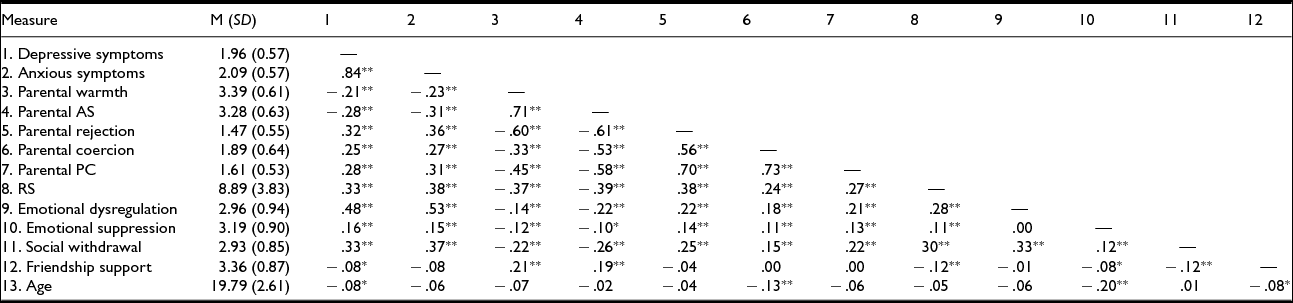
The means, standard deviations and correlations of the variables under investigation are reported in Table 1. On average, young men and women reported greater warmth and autonomy supportive relationships with their parents than relationships characterised by rejection, coercion, or psychological control. Relative to young men, young women scored significantly higher in their reports of anxiety symptoms, t(626) = −2.73, p < .05, emotion dysregulation, t(626) = −4.62, p < .01, social withdrawal (in response to implied rejection vignettes), t(626) = −3.52, p < .01, and friendship support, t(626) = −5.20, p < .01. With regard to the correlations, as hypothesised, those who reported more warmth and autonomy-supportive parenting practices reported fewer depressive and trait-anxious symptoms, lower levels of RS, less dysregulation and suppression of sadness and worry, and less social withdrawal. The opposite was revealed for those who reported greater experiences with rejecting, coercive, or psychologically controlling parents. Consistent with RS theory, those who reported greater levels of RS also reported more emotion dysregulation and suppression, social withdrawal, and depressive and trait-anxious symptoms. Friendship support was negatively associated with RS, depressive symptoms, emotion suppression, and social withdrawal; and positively with parental autonomy support and warmth. Age significantly correlated with fewer depressive symptoms, parental coercion, emotion suppression, and friendship support. Although depressive and anxious symptoms were highly correlated, the two forms of symptoms were tested in separate models to determine whether the expected pathways would be found for each form of internalising symptoms.
Means, Standard Deviations, and Correlations Between All Measures (N = 628)

Note: RS = rejection sensitivity, AS = autonomy support, PC = psychological control.
*p < .05. **p < .01.
Measurement Models
The measurement model for perceived parenting and depressive symptoms demonstrated modest fit to the data, χ2 (457) = 1471.81, p < .01, χ2/df = 3.22, GFI = .85, CFI = .88, TLI = .87, RMSEA = .06 (.056–.063), p < .01. Loadings for all measured indicators of latent variables were high and significant, |.51| to |.89|, excepting two (of the ten) indicators of depressive symptoms with loadings less than .50 (.33 and .49). For all models, the loadings of measured indicators for parenting were positive for positive parenting practices and negative for negative parenting practices. Thus, the latent measure of parenting was higher when participants reported more positive (and fewer negative) parenting practices.
The measurement model for perceived parenting and anxious symptoms also demonstrated modest fit to the data, χ2 (800) = 2493.69, p < .01, χ2/df = 3.12, GFI = .82, CFI = .87, TLI = .86, RMSEA = .06 (.056–.061), p < .01. Loadings for all measured indicators of latent variables were high and significant |.50| to |.86|, excepting three (of the 20) indicators of anxious symptoms with loadings less than .50 (.38, .48, and .35).
Parenting Practices and Depressive Symptoms
Direct effects of parenting
In the first structural model of positive parenting and depression, only the direct effects of parenting on all other variables in the model, along with the direct effects of age and friendship support on depressive symptoms, were freed. This model had adequate fit to the data, χ2(450) = 1136.11, p < .01, χ2/df = 2.53, GFI = .89, CFI = .92, TLI = .91, RMSEA = .05 (.046–.053), p = .62. Here, as hypothesised, parenting had significant direct associations with all variables in the directions expected. Regarding the control variables, neither age (β = −.08, p = .05) nor friendship support (β = −.05, p = .26) significantly associated with depressive symptoms.
The addition of the direct effects between mediators and of mediators on depressive symptoms
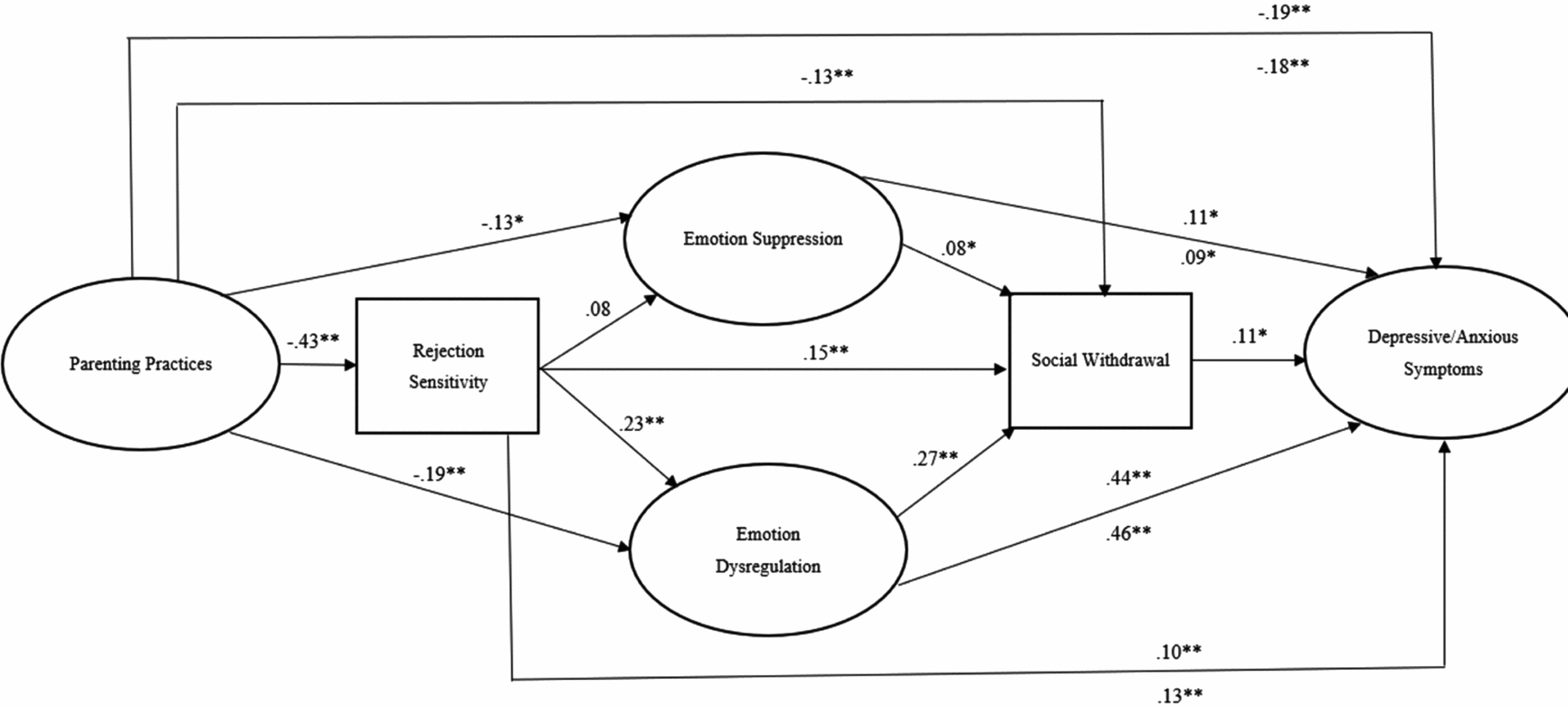
This model had good fit to the data, χ2(441) = 910.51, p < .01, χ2/df = 2.07, GFI = .91, CFI = .95, TLI = .94, RMSEA = .04 (.037–.045), p = 1.00, when other hypothesised direct pathways were freed from parenting to all intervening variables in accordance with the RS model (i.e., from RS to emotion dysregulation, suppression, social withdrawal, and depressive symptoms; from emotion dysregulation and suppression to social withdrawal and depressive symptoms; and from social withdrawal to depressive symptoms; as shown in Figure 1). As in the previous model, positive parenting was associated with less RS, emotion dysregulation, emotion suppression, social withdrawal, and depressive symptoms (see Figure 2). Regarding the added pathways, RS was significantly associated with more emotion dysregulation, social withdrawal, and depressive symptoms, but was not significantly related to suppression. Furthermore, emotion dysregulation and suppression were significantly associated with greater social withdrawal and depressive symptoms, and social withdrawal was associated with more depressive symptoms.
Path model showing direct effects of all variables on depressive and trait-anxious symptoms.

Final model of all effects
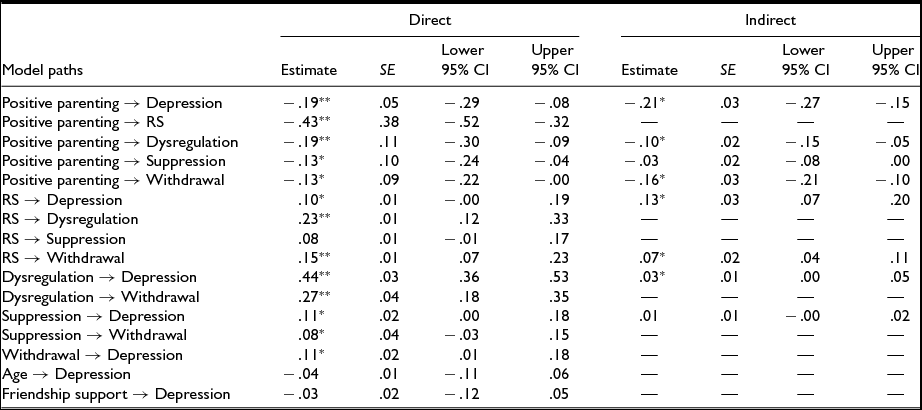
In the final model, the indirect effects of perceived parenting on depressive symptoms were tested along with the direct effects. As hypothesised, bootstrapping showed that there were significant indirect negative effects of positive parenting on depressive symptoms (see Table 2). Parenting also had indirect effects on less emotion dysregulation and less social withdrawal via mediating measures (RS for emotion dysregulation and RS and emotion dysregulation for social withdrawal), but this was not significant for emotion suppression. RS was indirectly associated with more depressive symptoms and social withdrawal. Finally, there was also a significant indirect association of emotion dysregulation with depressive symptoms through social withdrawal, but this was not evident for emotion suppression.
Associations in the RS Model of Parenting Practices and Depressive Symptoms (N = 628)

Note: RS = rejection sensitivity.
*p < .05. **p < .01.
Parenting Practices and Anxiety Symptoms
Direct effects of parenting
In the first SEMs of positive parenting and anxious symptoms, only the direct effects of parenting on all other variables in the models, along with the associations of gender and friendship support with anxiety symptoms, were freed. This model demonstrated acceptable fit to the data, χ2(793) = 2129.09, p < .01, χ2/df = 2.69, GFI = .85, CFI = .90, TLI = .89, RMSEA = .05 (.049–.055), p = .13. Here, as hypothesised, parenting had significant direct associations with all variables in the directions expected. Regarding the control variables, gender (but not friendship support) was significantly associated with anxious symptoms, with young women reporting a higher level of anxiety symptoms than young men (β = .12, p < .01).
The addition of the direct effects between mediators and of mediators on anxiety symptoms
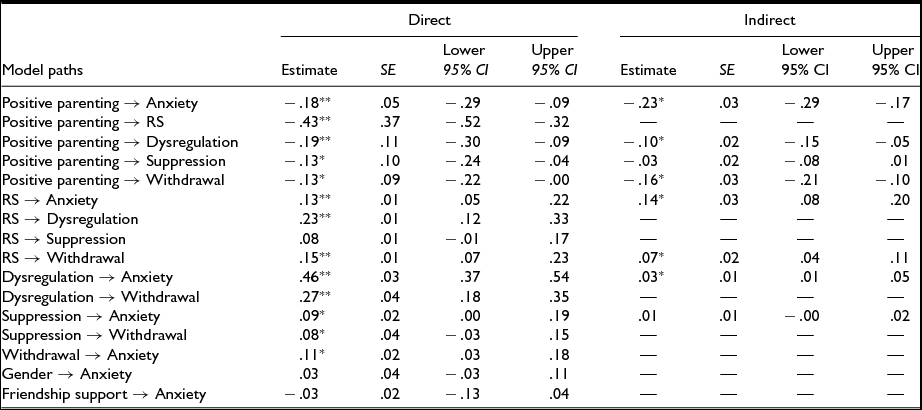
When other hypothesised direct pathways were freed, in accordance with the RS model (similar to the above model, and as shown in Figure 1), the model had good fit to the data, χ2(784) = 1865.79, p < .01, χ2/df = 2.38, GFI = .87, CFI = .92, TLI = .91, RMSEA = .05 (.044–.050), p = .97. As shown in Figure 2, perceived parenting had significant associations with all the variables of interest. Positive parenting was significantly associated with less RS, emotion dysregulation, suppression, social withdrawal, and anxious symptoms. In this model, gender failed to reach significance (β = .03, p = .43). Higher levels of RS were also significantly related to higher levels of emotion dysregulation, social withdrawal, and anxiety symptoms. However, RS was not significantly associated with emotion suppression. Higher levels of emotion dysregulation and suppression significantly related with more social withdrawal and greater anxiety symptoms; and social withdrawal was positively related to anxiety symptoms.
Final model of all effects
In the final model, the indirect effects of perceived parenting on anxious symptoms was tested along with the direct effects. As hypothesised, there were significant indirect negative effects of parenting on anxious symptoms via the hypothesised pathways (see Table 3). Parenting also had indirect effects on less emotion dysregulation and less social withdrawal, but this was not significant for emotion suppression. RS was indirectly associated with more anxious symptoms through emotion dysregulation, suppression, and social withdrawal; and with more social withdrawal through emotion dysregulation and suppression. Finally, there was also a significant indirect association revealed from emotion dysregulation to more anxious symptoms through social withdrawal, but this was non-significant for emotion suppression.
Associations in the RS Model of Parenting Practices and Anxiety Symptoms (N = 628)

Note. RS = rejection sensitivity.
*p < .05. **p < .01.
Discussion
The purpose of the current study was to test an extended RS model of perceived parenting practices and emotional maladjustment that helped to better identify several mechanisms through which interactions with parents associate with depressive and trait-anxious symptoms for youth in their late teens and early 20s. The tested models were borne out of RS theory (Downey & Feldman, Reference Downey and Feldman1996; Levy et al., Reference Levy, Ayduk, Downey and Leary2001), which suggests that overt or covert rejection within important relationships are the foundation of heightened RS. In turn, RS can compromise emotional health because it reflects a biased social processing system that includes responding to actual or perceived social problems with greater dysregulation of emotion and poorer social responses to these problems (Levy et al., Reference Levy, Ayduk, Downey and Leary2001; Marston et al., Reference Marston, Hare and Allen2010; Zimmer-Gembeck & Nesdale, Reference Zimmer-Gembeck and Nesdale2013). It is these problems with regulation of emotion and behaviour that prompt the accumulation of symptoms of emotional disorders. Thus, both direct and indirect pathways were tested from parenting to symptoms of depression and trait-anxiety via RS, emotion dysregulation, suppression, and social withdrawal in response to implied rejection vignettes.
In general, when serial mediation models of perceived parenting, and depression and trait-anxiety, were tested separately, there were three main findings. First, the findings showed that adolescents and young adults who reported more positive relationships with their parents also reported fewer depressive and trait-anxious symptoms, revealing that relationships with parents remain important during youths’ late teens and early 20s. Second, findings supported this extended RS model testing direct and indirect associations of (1) parenting with depression and trait-anxiety via RS, emotion dysregulation, suppression, and social withdrawal; and (2) RS with depression and trait anxiety via emotion dysregulation, suppression, and social withdrawal. Third, it appeared that extending the RS model to specify two forms of emotion dysregulation strategies revealed additional mechanisms that aligned well within the RS model. Overall, the findings lend further support to the view that less positive relationships with parents and greater RS may place adolescents and young adults at greater risk for emotional problems.
Salience of the Parent-Offspring Relationship
The findings from both the correlations and SEMs revealed that perceived parenting practices were consistently associated with most of the mediators and outcomes of interest. In particular, the findings indicate that adolescents and young adults’ interactions with their parents can directly facilitate or impede their emotional adjustment, as those participants who perceived more rejecting, coercive and psychologically controlling parenting reported more RS and more negative emotional and behavioural functioning. Only indirect associations in the SEMs between perceived parenting and emotional suppression (regardless of whether the model focused on depression or trait-anxiety symptoms) were an exception to this pattern. Consistent with previous studies examining the correlates of parenting practices in this aged sample (McKinney & Renk, Reference McKinney and Renk2008; Nelson et al., Reference Nelson, Padilla-Walker, Christensen, Evans and Carroll2011; Nelson et al., Reference Nelson, Padilla-Walker and Nielson2015; Quirk et al., Reference Quirk, Weir, Martin and Christian2015), positive parenting practices, even when offspring are in their late teens and early 20s, seems to be relevant for youths’ symptoms of emotional problems. This finding was noteworthy, as a large proportion of the sample (57.1%) were currently living with their parents, giving some indication that perceived interactions with parents may be quite pertinent (in both a direct and indirect manner) in their experiences with depressive and anxious symptoms.
The Extended RS Model of Depressive and Trait-Anxiety Symptoms
Second, the findings of the current study revealed that extending the RS model to identify serial mediating pathways, whereby parental relationships and expectations of rejection (i.e., RS) associated with emotion dysregulation, suppression, and social withdrawal fit well regardless of whether the model was focused on depressive or trait-anxiety symptoms. Young men and women who perceived their parents to be lower in warmth and support (and higher in coercion, rejection, and control) also reported being more likely to anxiously expect and defensively respond to rejection. Potentially, when these schemas become activated within the parent-offspring relationships, young men and women also reported greater emotion dysregulation, suppression, and social withdrawal. Heightened RS and responding in maladaptive ways seems to, in turn, place young men and women at greater risk for also experiencing symptoms of emotional problems, as is consistent with RS theory and previous empirical literature (Downey & Feldman, Reference Downey and Feldman1996; Ibrahim et al., Reference Ibrahim, Rohner, Smith and Flannery2015; Zimmer-Gembeck & Nesdale, Reference Zimmer-Gembeck and Nesdale2013; Watson & Nesdale, Reference Watson and Nesdale2012). Thus, extending the RS model helped suggest several additional mechanisms to explain why parents who are lower in warmth and support, and higher in coercion, rejection, and control have so often been found to correlate with increased depressive and anxious symptoms in offspring.
Emotion Dysregulation and Suppression as Correlates in the Extended RS Model
The final main finding revealed the robustness that emotion dysregulation, and to a lesser extent, emotion suppression, were demonstrated within the extended RS model as significant correlates of parenting practices, RS, social withdrawal, and emotional symptoms. These findings are consistent with past theoretical and empirical work showing that emotion dysregulation and suppression are correlated with parenting practices (Bowlby, Reference Bowlby1969; Roth et al., Reference Roth, Assor, Niemiec, Ryan and Deci2009) and social withdrawal, and depressive and anxious symptoms (Aldao et al., Reference Aldao, Nolen-Hoeksema and Schweizer2010; Jones et al., Reference Jones, Barnett, Wadian and Sonnentag2016; Mikulincer et al., Reference Mikulincer, Shaver and Pereg2003). However, the findings revealed moderate strengths of associations in both the correlations and the SEMs of emotion dysregulation compared to inconsistent and weaker effects of emotion suppression. It therefore appears that distinguishing between both these emotional responses were important within this extended RS model, as emotion dysregulation played a more salient role within the examined models.
Conceptualised through attachment theory (Bowlby, Reference Bowlby1969; Mikulincer et al., Reference Mikulincer, Shaver and Pereg2003), emotion dysregulation is characterised by heightened and anxious emotional processes where in response to perceived threats (such as the case of potential rejection), individuals may exaggerate or catastrophise their fears and negative emotions, ruminate on both, and experience intense distress in relation to these fears. It therefore appears that for this sample of young men and women, anxious expectations of rejection are more likely to associate with highly distressed and intense negative emotional reactions when compared to the tendency to inhibit and avoid negative emotional processes (i.e., emotion suppression). Additionally, social withdrawal was revealed through the SEMs to be a significant pathway through which emotion dysregulation (but not emotion suppression) related to depressive and trait-anxious symptoms. This finding further reiterates previous work in RS theory (Levy et al., Reference Levy, Ayduk, Downey and Leary2001; Watson & Nesdale, Reference Watson and Nesdale2012; Zimmer-Gembeck & Nesdale, Reference Zimmer-Gembeck and Nesdale2013) that individuals with greater expectations of rejection reported being more likely to distance themselves in response to interpersonal situations that may have a high potential of rejection. The findings therefore helped to better identify that both the heightened dysregulation of these emotions, as well as the social response of withdrawal to such emotions and rejection-based experiences are central to understanding the pathways through which high RS individuals report experiencing more symptoms of depression and trait-anxiety.
Friendship Quality
The quality of the best friend relationships was also included in the models to partial out any influence on symptoms. It was surprising to find that the quality of the best friend relationship was not significantly related to either depressive or trait-anxiety symptoms within the SEM analyses (or in the correlations for anxiety), despite previous literature identifying this relationship as a correlate of adolescents and young adults’ emotional functioning (Furman & Buhrmester, Reference Furman and Buhrmester2009; Mattanah et al., Reference Mattanah, Lopez and Govern2011). Some bodies of literature identify that during this developmental period, parental and romantic relationships appear to take precedence over best friends (e.g., Zimmer-Gembeck et al., Reference Zimmer-Gembeck, Ducat, Clear, Mastro, Van Petegem, Soenens, Vansteenkiste and Van Petegem2018), which could account for the lack of a significant association. However, how the quality of the best friend relationship was measured in this study could have also been a significant factor that resulted in this outcome. Future studies should consider more specific and problematic aspects of the friendship relationship (e.g., friendship conflict) that could be more relevant for these emotional symptoms.
Limitations, Future Directions, and Implications
Though there were several noteworthy findings, there were also noteworthy limitations. First, it is important to note that some of the indirect effects were revealed to be larger when compared to the direct effects within this extended RS model (e.g., parenting to trait-anxious symptoms), regardless of whether the model focused on depressive or trait-anxiety symptoms. This therefore indicates that although reports of poorer quality parenting experiences and greater expectations of rejection were associated directly with depressive and anxious symptoms, slightly stronger associations were revealed when the indirect pathways were estimated. However, because the findings are correlational in nature, these findings are tentative until longitudinal data are available to replicate these findings. Previous literature indicates that many of these associations are likely to be bidirectional in nature (Ibrahim et al., Reference Ibrahim, Rohner, Smith and Flannery2015; Nelson et al., Reference Nelson, Padilla-Walker, Christensen, Evans and Carroll2011; Zimmer-Gembeck, Reference Zimmer-Gembeck2015), and as such, future studies should move towards testing such a model using a longitudinal design to better account for these effects.
Second, all data were self-report, so that associations may possibly be inflated due to shared-method variance. Third, the findings of the current study may not be generalisable to young men and women outside of the university context, who may have very different relationships with their parents, along with different responses to rejection-based experiences. Finally, while the SEMs fit well, the strength of the associations were relatively modest, suggesting that future research can consider additional variables that could be included within this model.
Despite these limitations, there are important implications that follow from the findings of the current study. First, by expanding the range of possible mediators within this extended RS model, the findings open up a further avenue for future longitudinal research to test how parental relationships may challenge or enhance adolescents and young adults’ capacities for emotion regulation, emotional symptoms, and coping behaviour. Such research may begin to validate a specific model that can better account for responses to rejection-based experiences and how these may change over time and their impact on emotional health and wellbeing. The findings also provide clinical implications that can be used to better inform prevention and intervention work within the university context. The findings help to support the usefulness of having programs in university health settings that emphasise the importance of developing and maintaining positive relationships that can optimise social and emotional wellbeing through assisting with managing painful emotions and accessing support when experiencing emotional difficulties.
With regard to intervention work, previous work has indicated that in helping to break the RS cycle, interventions focused on attribution retraining (such as within cognitive-behavioural approaches) or those that focus on repairing problematic interpersonal relationships (such as within interpersonal approaches) may be helpful in developing more adaptive emotion-regulation and coping behaviour (Levy et al., Reference Levy, Ayduk, Downey and Leary2001; Weissman, Reference Weissman2007). Thus, either therapeutic approach could be helpful in that those who are high in RS can learn to develop flexibility in their thinking by broadening their focus on alternative appraisals that are more accurate in response to ambiguous interpersonal experiences. Such cognitive work could then assist the individual experiencing high levels of RS to be able to better access and receive support from their parents (and other interpersonal figures) during times of extreme stress (Levy et al., Reference Levy, Ayduk, Downey and Leary2001; Weissman, Reference Weissman2007). Future efforts to determine which sort of interventions would be most appropriate for RS-individuals can only be informed by longitudinal and intervention-based research to develop specific mechanisms and strategies that focus on RS and its effects.
Conclusion
Overall, the findings uniquely contribute to the parenting and developmental literature by demonstrating that RS, a cognitive-affective processing system, is a correlate of difficulties with emotional and behavioural regulation, and emotional adjustment, measured as depressive and trait-anxious symptoms. Furthermore, the findings revealed that adolescents and young adults’ relationships with their parents remain important, being correlated with their symptoms of emotional problems via their RS, emotion dysregulation, and behavioural responses to rejection. Thus, this cross-sectional study of a large number of participants suggests that RS appears to continue to be shaped within the context of such interpersonal experiences as youth move beyond adolescence. This, in turn, may have the potential to place young men and women on a negative trajectory of responding whenever the potential of rejection is perceived. Longitudinal research is warranted to further test this extended-RS model to determine the stability of these associations and to provide a more refined examination that helps to increase our understanding of the interplay that RS has with various interpersonal contexts, emotional and behavioural regulation, and emotional maladjustment over time.
Acknowledgments
To the research assistants who provided great support during the data collection phase of the project.
Disclosure Statements
We would also like to acknowledge that this manuscript will be included in the PhD dissertation of Alex Gardner.
Declaration of Conflicting Interests
None.
Financial Support
This work was supported by a Griffith University International Postgraduate Research Scholarship and a Griffith University Postgraduate Research Scholarship.