Introduction
A plethora of studies using different herbal medicinal plants and their products, either in extract or powder form, have reported positive effects on poultry performance and health (Ashour et al., Reference ASHOUR, ALAGAWANY, REDA and EL-HACK2014; Saeed et al., Reference SAEED, BALOCH, WANG, SOOMRO, BALOCH, BUX, ARIAN, FARAZ and ZAKRIYA2015; Reference SAEED, ABD EL-HACK, ALAGAWANY, ARAIN, ARIF, MIRZA, NAVEED, CHAO, SARWAR, SAYAB and DHAMA2017a; Reference SAEED, BABAZADEH, ARIF, ARAIN, BHUTTO, SHAR, KAKAR, ANZOOR and CHAO2017b; Reference SAEED, NAVEED, ARAIN, ARIF, EL-HACK, ALAGAWANY, SIYAL, SOOMRO and SUN2017c; Reference SAEED, XU, REHMAN, ARAIN, SOOMRO, ABD EL-HACK, BHUTTO, ABBASI, DHAMA, SARWAR and CHAO2017d). Nutritionists are now more focused on natural feed additives in poultry diets, such as medicinal plants to boost production (Ahossi et al., Reference AHOSSI, DOUGNON, KIKI and HOUESSIONON2016; Giannenas et al., Reference GIANNENAS, TONTIS, TSALIE, CHRONIS, DOUKAS and KYRIAZAKIS2010). Some plant derived flavonoids have anti-inflammatory, antibacterial, hypolipidemic, antioxidant, antiviral, antimicrobial, hepatoprotective, antithrombotic and immunomodulatory properties, as seen in different animal model studies (Middleton et al., Reference MIDDLETON, KANDASWAMI and THEOHARIDES2000; Kamboh et al., Reference KAMBOH, ARAIN, MUGHAL, ZAMAN, ARAIN and and SOOMRO2015). Currently, there is an interest in using flavonoids such as flavonols, flavones, isoflavones, flavanones, flavanol and anthocyanins derived from plants, due to their various beneficial properties and ready availability (Middleton et al., Reference MIDDLETON, KANDASWAMI and THEOHARIDES2000).
Hesperidin is a safe and important bioflavonoid and is found ubiquitously in citrus fruits (Mitsunaga et al., Reference MITSUNAGA, TAKANAGA, MATSUO, NAITO, TSURUO, OHTANI and SAWADA2000; Roohbakhsh et al., Reference ROOHBAKHSH, PARHIZ, SOLTANI, REZAEE and IRANSHAHI2014; Reference ROOHBAKHSH, PARHIZ, SOLTANI, REZAEE and IRANSHAHI2015). In poultry, many published studies have confirmed the effective role of flavonoids on growth performance, carcass, meat and egg quality characteristics, oxidative status and other productive performance parameters (Goliomytis et al., Reference GOLIOMYTIS, ORFANOU, PETROU, CHARISMIADOU, SIMITZIS and DELIGEORGIS2014; Reference GOLIOMYTIS, KARTSONAS, CHARISMIADOU, SYMEON, SIMITZIS and DELIGEORGIS2015). Currently, the possible pharmacological effects of hesperidin have increased interest concerning its application because of the wide range of health benefits observed in many cohorts and in vitro studies (Kamaraj et al., Reference KAMARAJ, ANANDAKUMAR, JAGAN, RAMAKRISHNAN and DEVAKI2011). Hesperidin has preventive effects against diseases, including type 2 diabetes mellitus, cerebrovascular disease, and cancer related disorders (Devi et al., Reference DEVI, RAJAVEL, NABAVI, SETZER, AHMADI, MANSOURI and NABAVI2015). Wilmsen et al. (Reference WILMSEN, SPADA and SALVADOR2005) reported that dietary supplementation with hesperidin significantly reduced (P>0.05) both catalase (CAT) and superoxide dismutase (SOD) enzymatic levels in plasma. These findings support the hypothesis that hesperidin offers antioxidant protection against the detrimental effects induced by oxygen radicals.
Ting et al. (Reference TING, YEH and LIEN2011) confirmed the ability of this flavonoid to improve health status, egg and meat quality, production indices, gut protective efficiency, attenuation of lipopolysaccharide (LPS) effects and upregulation of both acquired and innate immune responses in poultry (Kawaguchi et al., Reference KAWAGUCHI, KIKUCHI, HASUNUMA, MARUYAMA, YOSHIKAWA and KUMAZAWA2004; Orayaga et al., Reference ORAYAGA, OLUREMI and ADENKOLA2016). A diet supplemented with hesperidin may improve antioxidant status, meat composition, and microbial quality of broiler meat and it is suggested it can be used as a feed additive (Kamboh et al., Reference KAMBOH, MEMON, MUGHAL, MEMON and BAKHETGUL2017). It induces suppressive effects in the occurrence and size of spontaneous leiomyoma of the oviduct in the Japanese quail (Sahin et al., Reference SAHIN, AKDEMIR, TUZCU, SAHIN, ONDERCI, OZERCAN, ILHAN, KILIC, SEREN and KUCUK2009). It is considered to be a reactive oxygen species (ROS) scavenger and prevents oxidative spoilage of muscle membrane phospholipids in broiler chickens (Simitzis et al., Reference SIMITZIS, SYMEON, CHARISMIADOU, AYOUTANTI and DELIGEORGIS2011). In a study by Ognik et al. (Reference OGNIK, CHOLEWIŃSKA, SEMBRATOWICZ, GRELA and CZECH2016), oral administration of hesperidin appeared to be efficient against inflammation and immunosuppression and was characterised as an anti-inflammatory and immune-enhancing compound. Many researchers have reported significant benefits of supplemental hesperidin on carcass characteristics, performance parameters and meat quality attributes in commercial chickens (Peña et al., Reference PEÑA, VIEIRA, LÓPEZ, REIS, BARROS, FURTADO and SILVA2008). Scientific literature on the biological activities of flavonoids in humans and rodents are available, but their role as safe feed supplements in the poultry feed industry still needs more clarification. As a result, the aim of this review was to highlight the biological effects and health benefits of hesperidin as a potential replacer of synthetic immune boosters and growth promoters in the poultry industry.
Sources of hesperidin
The word ‘hesperidin’ comes from the word ‘hesperidium’ that translates as a fruit with a thick peel, viz. citrus. Hesperidin is found in citrus fruits including oranges, tangerines, lemons limes citrus fruit hybrids, and sundried tangerine peels (Wilmsen et al., Reference WILMSEN, SPADA and SALVADOR2005; Liu et al., Reference LIU, ZHAO, DUAN, ZHENG, GUO, YANG and LI2013) and citrus juice (Kanaze et al., Reference KANAZE, GABRIELI, KOKKALOU, GEORGARAKIS and NIOPAS2003). It has been found that the concentration of hesperidin in membranes and albedo or pith (inner part of peel) of citrus species is higher than in its seeds and juice vesicles (Lu et al., Reference LU, ZHANG, BUCHELI and WEI2006). Furthermore, the maturity stage of citrus fruits affects the concentration of hesperidin (Yoo et al., Reference YOO, LEE, PARK, LEE and HWANG2004). There is a close relationship between concentration levels of hesperidin and seed germination, a fact that indicates environmental exposure such as light, stimulates hesperidin production (Garg et al., Reference GARG, GARG, ZANEVELD and SINGLA2001).
Chemical structure and physical characteristics
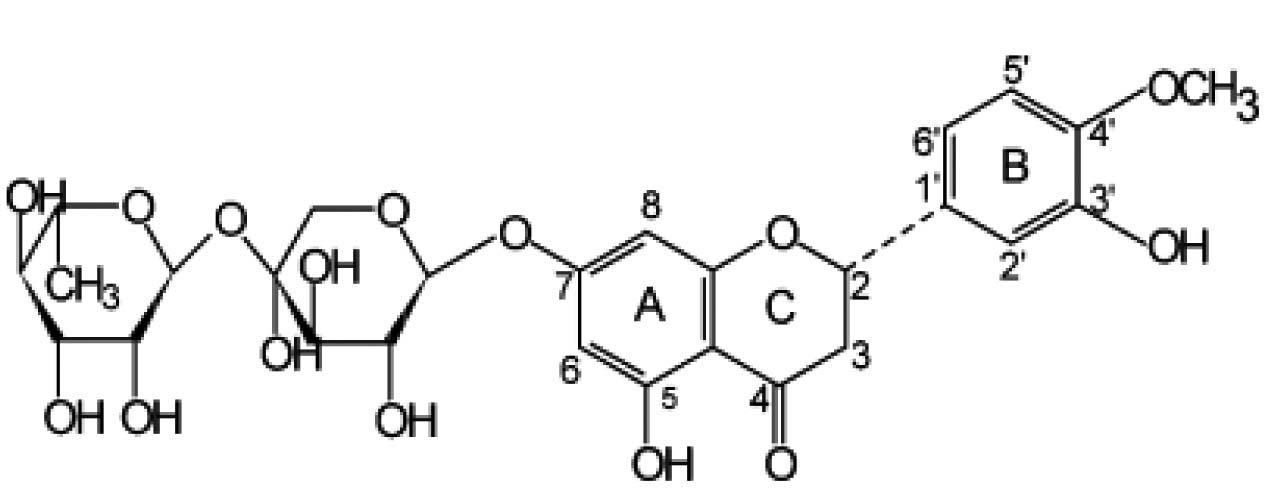
Hesperidin is an abundant and cheap by-product of the citrus industry. It is a naturally existing flavanone glycoside extensively distributed in the plant kingdom in the form of a secondary metabolite. This polyphenolic compound (hesperidin) is composed of an aglycone, hesperetin or methyl eriodictyol and the attached disaccharide rutinose, and disaccharide. The pure form of hesperidin occurs as long hair-like needles, colourless to light yellow in colour (Garg et al., Reference GARG, GARG, ZANEVELD and SINGLA2001), and is an odourless and tasteless compound. The chemical name for hesperidin is [3, 5, 7-trihydroxy-4′-methoxyflavanone-7-(6-R-L-rhamnopyranosyl)-â-D-glucopyranoside] and its structure is illustrated in Figure 1.
Chemical structure of hesperidin [3, 5, 7-trihydroxy-4′-methoxyflavanone-7-(6-R-L-rhamnopyranosyl)-â-D-glucopyranoside] (Garg et al., Reference GARG, GARG, ZANEVELD and SINGLA2001).

Absorption and metabolism of hesperidin
Absorption of flavonoids depends on its physical and chemical properties such as solubility, molecular size, configuration and lipophilicity. Hesperidin can be absorbed in whole intestinal segments, but is maximised in the ileum, and is more efficient under acid condition between pH 5.0 and 6.8 (Lei et al., Reference LEI, YANG, LEI and YANG2009). After absorption from the small intestine (mainly the jejunum and ileum segments, with less than 10% in duodenum), bioflavonoids conjugation with glucuronic acid, O-methylation or sulphate may occur. Consequently, no free flavonoid aglycones are observed in the circulation or urine, apart from flavanols. Both the unabsorbed parts of flavonoids from the small intestine, and the absorbed flavonoids secreted with bile, will pass through further degradation processes in the colon by micro-organisms, which will break down the ring structure of flavonoids (Hollman, Reference HOLLMAN2004). Two compartments participate in the metabolism of hesperidin. The first compartment includes the lower part of the gastrointestinal tract, kidneys and liver, while the second is located in the colon (Hollman, 2001).
antioxidant effect of hesperidin
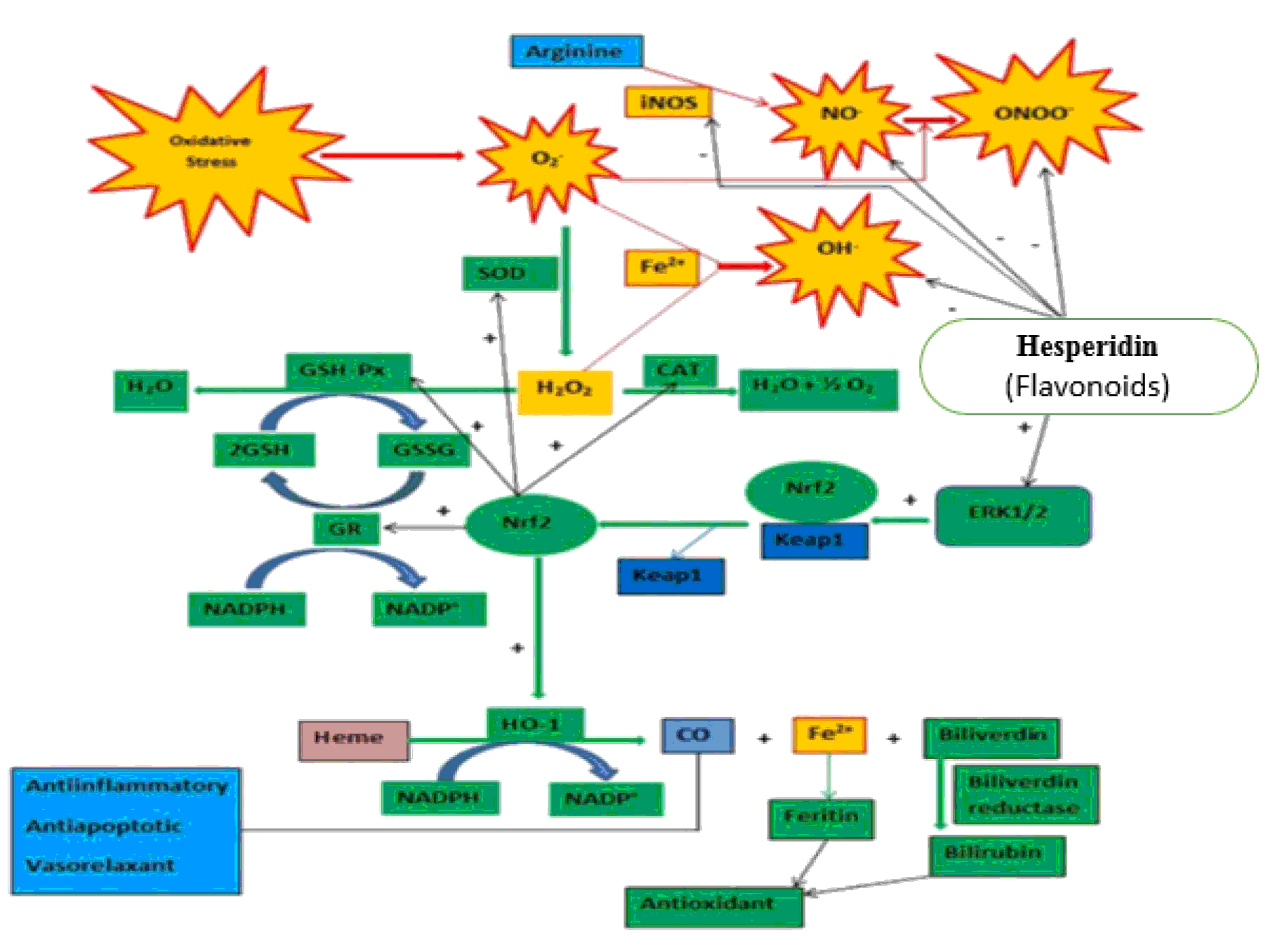
Hesperidin is an effective antioxidant, reducing oxidative stress and inhibiting lipid peroxidation (Jain et al., 2015; El-Shafey et al., 2014). Fellenberg and Speisky (Reference FELLENBERG and SPEISKY2006) reported that antioxidant mediators are critical for avian nutrition as they decrease oxidative degradation of lipids, improve the nutritional value and organoleptic characteristics of chicken meat and eggs, and can extend shelf life. Apart from their effective antioxidant properties, flavonoids possess immunomodulatory and anti-inflammatory activities (Serafini et al., Reference SERAFINI, PELUSO and RAGUZZINI2010). The potential of hesperidin to act as an antioxidant agent is mediated due to its ability to scavenge free radicals (ROS) that are associated with the occurrence of different diseases such as diabetes, cancer, and chronic inflammation. In the study of Wilmsen et al. (Reference WILMSEN, SPADA and SALVADOR2005), hesperidin significantly reduced the enzymatic levels of both catalase (CAT) and superoxide dismutase (SOD). Recent published scientific literature suggested that isoflavones and flavones could improve the plasma antioxidant status of chickens (Kamboh and Zhu, Reference KAMBOH and ZHU2013) and can modify biomarkers of heat stress positively due to their action on oxygen radicals produced by heat stress. Hesperidin and its aglycone hesperetin display their antioxidant properties via two ways, a) by direct scavenging of free radicals, or b) by fortification of cellular antioxidant defence (Parhiz et al., Reference PARHIZ, ROOHBAKHSH, SOLTANI, REZAEE and IRANSHAHI2015) as depicted in Figure 2.
Cellular mechanisms of hesperidin anti-oxidant activities (Parhiz et al., Reference PARHIZ, ROOHBAKHSH, SOLTANI, REZAEE and IRANSHAHI2015).

Many reports indicated that hesperidin neutralised ROS, including hydroxyl radicals, nitric oxide radicals, peroxynitrite and superoxide anions (Wilmsen et al., Reference WILMSEN, SPADA and SALVADOR2005). This scavenging activity plays an important role in protection of cellular proteins, vital organelles, tissues and DNA against the deleterious effects of certain intrinsic (e.g., oncogenes) and extrinsic (e.g., toxins, radiation, inflammation, etc.) factors. Furthermore, hesperidin has the ability to reduce tissue damage induced by numerous compounds, like peroxynitrite, hydrogen peroxide, CCl4, nicotine, etc. (Chen et al., Reference CHEN, GU, YE, LIN, SUN, DENG, ZHANG and LIU2010a; Kamaraj et al., Reference KAMARAJ, ANANDAKUMAR, JAGAN, RAMAKRISHNAN and DEVAKI2011; Ahmad et al., Reference AHMAD, ARJUMAND, NAFEES, SETH, ALI, RASHID and SULTANA2012). In addition, a plethora studies have shown that hesperidin attenuates cell damage by increasing indigenous cellular defences, and promoting or up-regulating the gene expression of ERK 1/2 and Nrf2 (Elavarasan et al., Reference ELAVARASAN, VELUSAMY, GANESAN, RAMAKRISHNAN, RAJASEKARAN and PERIANDAVAN2012). The activation of ERK 1/2 and Nrf2 could result in the upregulation of HO-1 expression that causes a decrease in intracellular pro-oxidants and a rise in bilirubin as an internal antioxidant. At the same time, HO-1 expression boosts the level of carbon monoxide with anti-inflammatory and anti-apoptotic activities in cells. CO increases the levels of guanylyl cyclase in cells (Chen et al., Reference CHEN, YE, JI and LIU2010b). Furthermore, the increase of Nrf2 expression elevates the level of antioxidant enzymes, such as SOD, glutathione S-transferase and CAT. Thus, hesperidin increases cellular antioxidant defence capacity through the induction of HO-1 via ERK/Nrf2 signalling. The basic cellular mechanisms of the antioxidant properties of hesperidin are shown in Figure 2.
immunomodulatory and anti-inflammatory effects
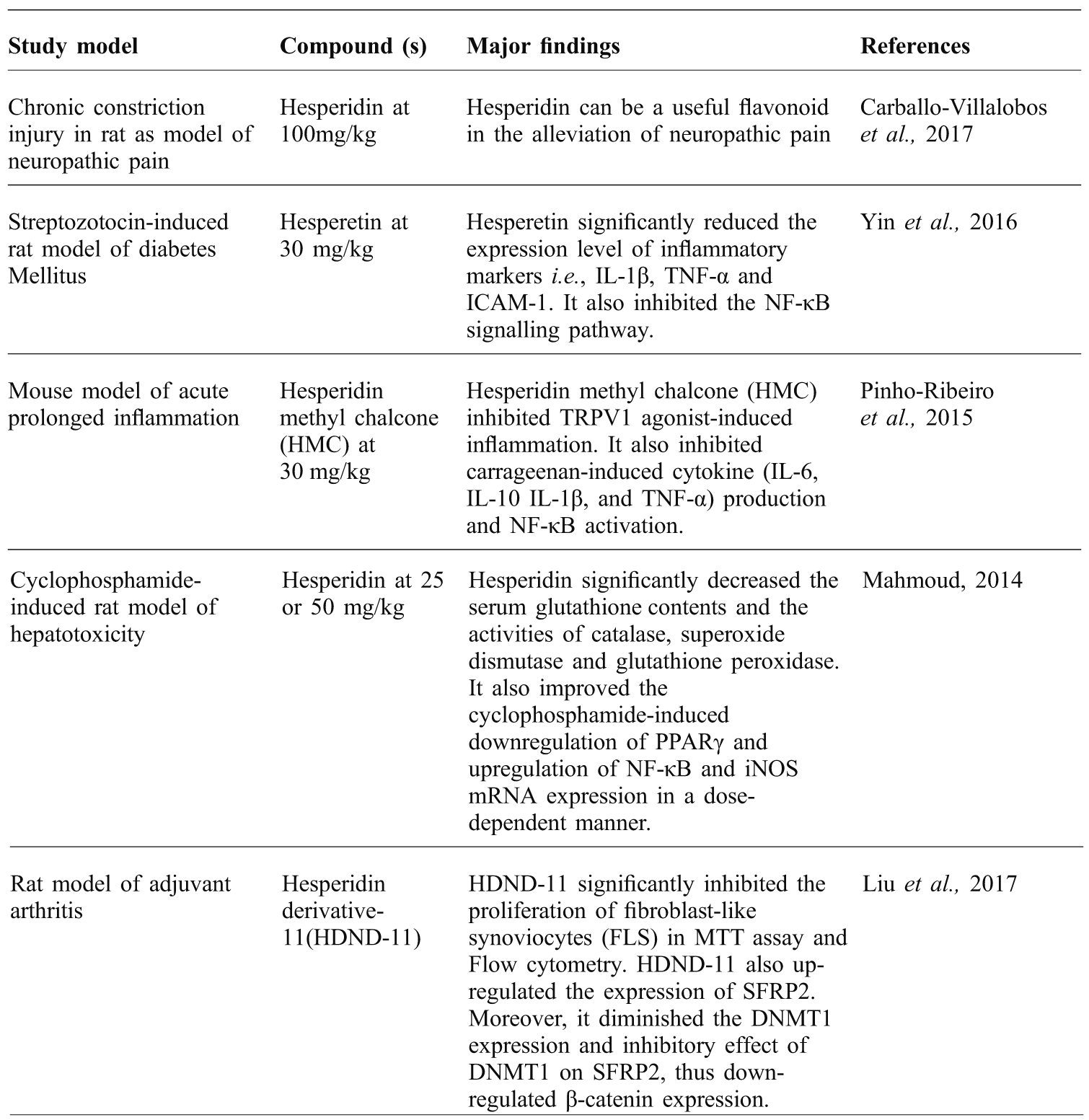
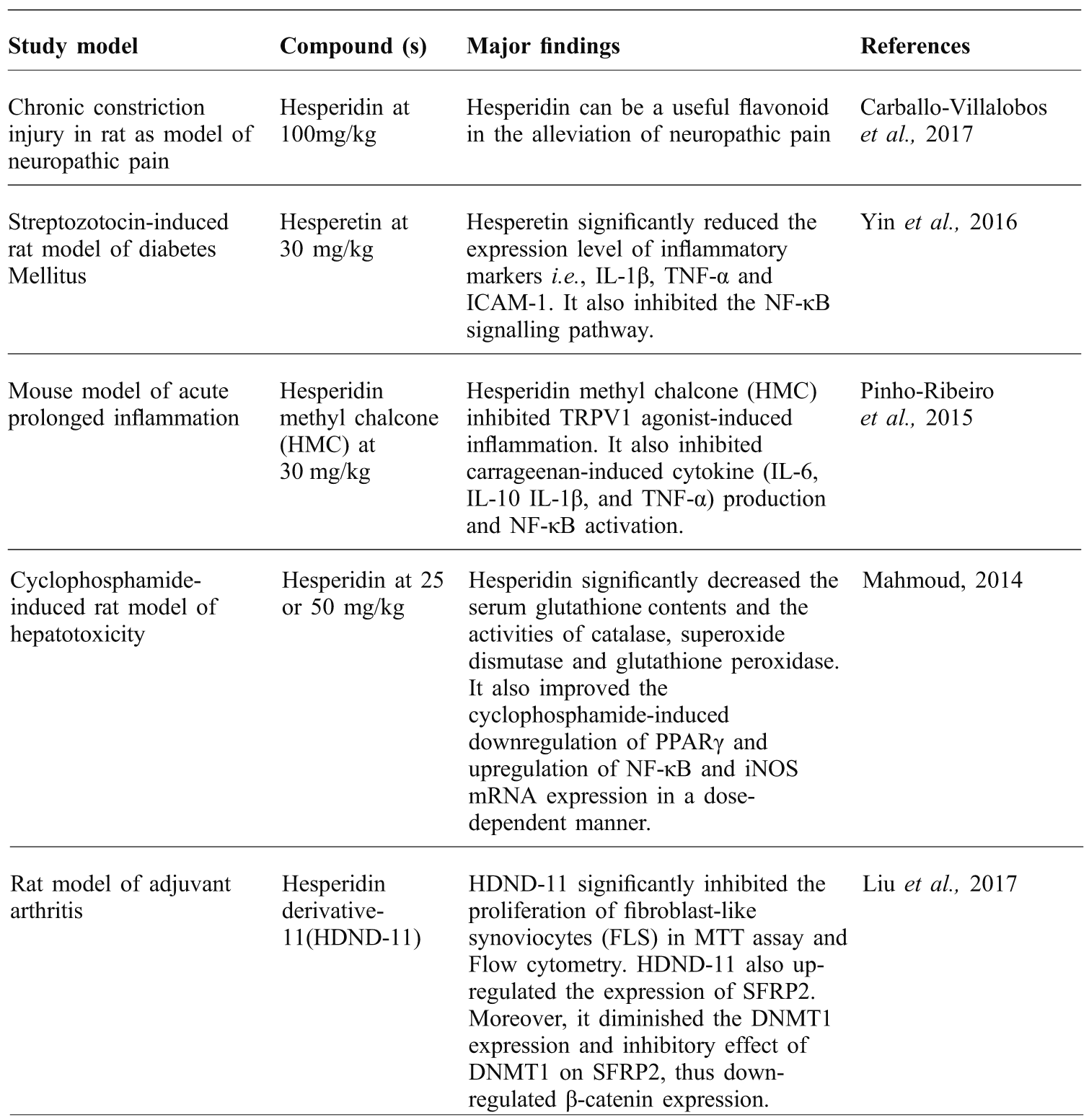
Oxidative stress and inflammation are associated with various life threatening and chronic degenerative diseases, such as cardiovascular diseases (Cottone et al., Reference COTTONE, LORITO, RICCOBENE, NARDI, MULÈ, BUSCEMI, GERACI, GUARNERI, ARSENA and CERASOLA2008) and cancer (Oztanir et al., Reference OZTANIR, CIFTCI, CETIN and ALADAG2014). Flavonoids are considered to be effective traditional remedies (Sun et al., Reference SUN, DONG, ZHANG, YANG, YAN, SAKURAI, WU, HAN and WANG2013), and, in both in vivo and in vitro studies, hesperidin administration to animals was observed to be effective against irradiation-induced inflammation, and was recognised as an anti-inflammatory and immuno-stimulatory agent (Yamada et al., Reference YAMADA, TANABE, ARAI, MITSUZUMI, MIWA, KUBOTA, CHAEN and KIBATA2006). Supplementation of hesperidin showed a significant effect on cytokine production compared to the control group, which indicates it can act as immunomodulatory agent by regulating Th1 and Th2 cells (Mizutani et al., Reference MIZUTANI, FUJIKURA, WANG, TAMECHIKA, TOKUDA, SAWADA and FUKUMOTO2002). A summary of the existing literature regarding the anti-inflammatory effects of hesperidin is shown in Table 1.
A summary of the anti-inflammatory effects of hesperidin.
regulatory effect on blood pressure and cardiovascular health
Hesperidin dietary supplementation can provide significant protection against cardiovascular disease (Mohammadi et al., Reference MOHAMMADI, SALEHI-ABARGOUEI, RAMEZANI-JOLFAIE and ZAREI2017). Hesperidin could act on endothelial function and induce modification of the expression of genes related to cardiovascular health (Milenkovic et al., Reference MILENKOVIC, DEVAL, MAZUR, SCALBERT and MORAND2009), and regulates cholesterol and blood pressure (Yamamoto et al., Reference YAMAMOTO, SUZUKI and HASE2008). As described by Miwa et al. (Reference MIWA, MITSUZUMI, SUNAYAMA, YAMADA, OKADA, KUBOTA, CHAEN, MISHIMA and KIBATA2005) hesperidin administration significantly decreased the serum triglyceride level in hyper-triglyceridemic subjects.
Hesperidin studies in poultry
Published data has indicated that hesperidin, quercetin and resveratrol exhibit immune-stimulatory and antioxidant properties in poultry (Galati et al., Reference GALATI, MONFORTE and KIRJAVAINEN1994; Ognik et al., Reference OGNIK, CHOLEWIŃSKA, SEMBRATOWICZ, GRELA and CZECH2016). There is a growing body of scientific evidence to suggest that supplementation with flavonoids improves production and meat quality of livestock animals and poultry (Kamboh et al., Reference KAMBOH, ARAIN, MUGHAL, ZAMAN, ARAIN and and SOOMRO2015). Hesperidin has been reported to improve health and egg production in hens (Ting et al., Reference TING, YEH and LIEN2011), digestion efficiency, attenuation of lipopolysaccharide (LPS) effects and upregulation of both acquired and innate immune responses in chickens (Kawaguchi et al., Reference KAWAGUCHI, KIKUCHI, HASUNUMA, MARUYAMA, YOSHIKAWA and KUMAZAWA2004). Hesperidin improved (P<0.05) broiler performance, particularly in the finisher stage. In addition, biomarkers of heat stress, e.g. lactate dehydrogenase, creatine kinase and heat shock protein 70 mRNA in breast muscle, was positively changed (P<0.01) by supplementation with hesperidin (Kamboh et al., Reference KAMBOH, HANG, BAKHETGUL and ZHU2013). Hence, it may offer a good nutritional strategy in tropical and subtropical regions to overcome the negative impacts of heat stress, and is already known to ameliorate the deleterious effects of heat stress in Japanese quail (Onderci et al., Reference ONDERCI, SAHIN, SAHIN, GURSU, DOERGE, SARKAR and KUCUK2004). Moreover, diets supplemented with hesperidin improved the lipid metabolite and fatty acid profile of chicken meat, and could provide an alternative to antioxidant herbs/plants and synthetic feed additives for the production of healthier broiler meat (Laparra and Sanz, Reference LAPARRA and SANZ2010; Kamboh and Zhu, Reference KAMBOH and ZHU2013).
Kamboh and Zhu (Reference KAMBOH and ZHU2014) reported anti-inflammatory and prebiotic-like effects of hesperidin on gut microbiota in poultry. Feeding 20 mg/kg diet, could be used as a feed additive in poultry production to improve gut health and boost immunity against infections. Supplementation with hesperidin significantly reduced both CAT and SOD enzymatic levels (Wilmsen et al., Reference WILMSEN, SPADA and SALVADOR2005) and could improve antioxidant properties, chemical composition and microbial quality of broiler meat (Kamboh et al., Reference KAMBOH, MEMON, MUGHAL, MEMON and BAKHETGUL2017).
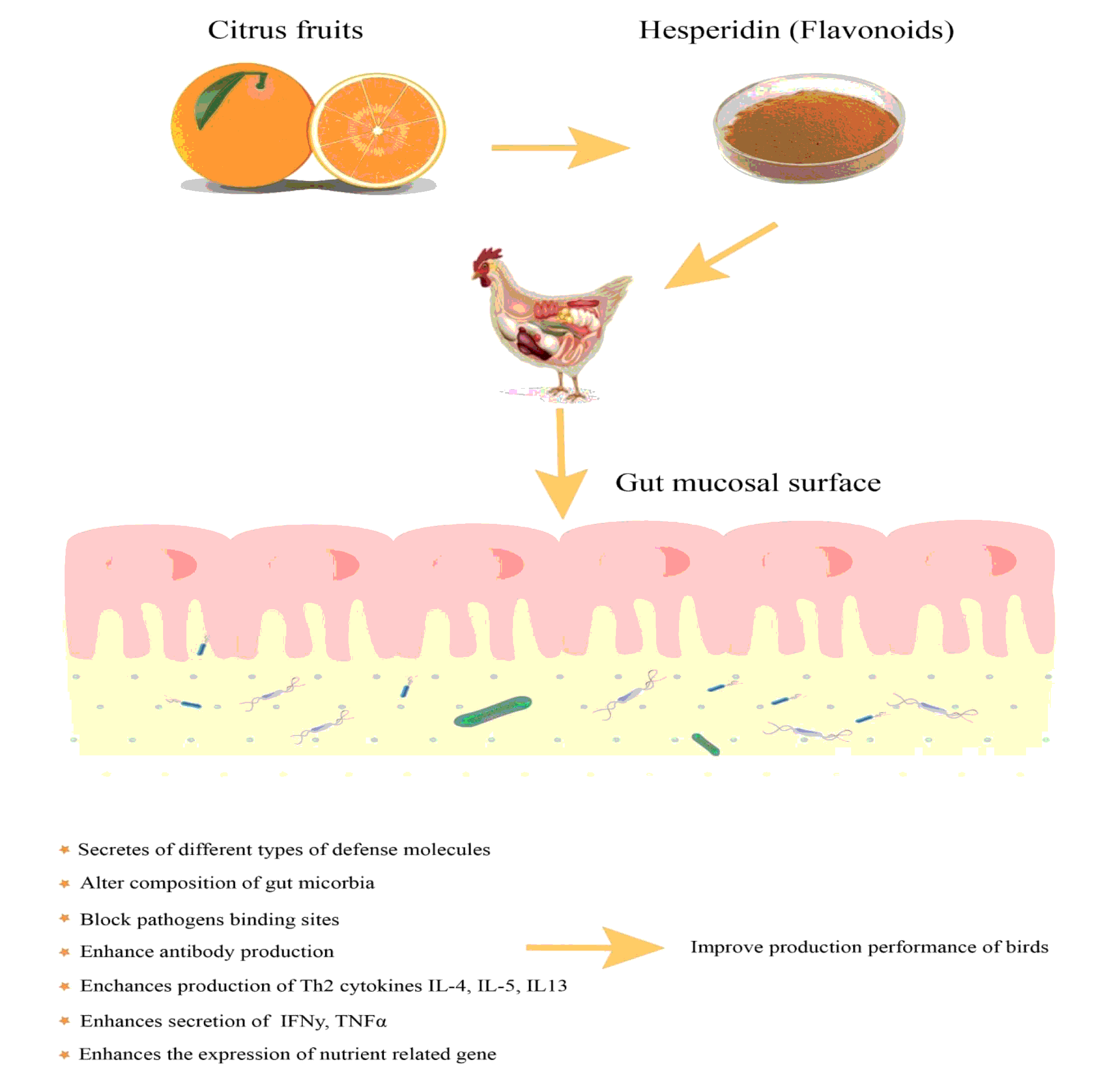
Hesperidin may have the potential to minimise the harmful effects of heat stress during summer months in tropical regions by decreasing the heterophil-to-lymphocyte ratios, and by the quenching action on oxygen radicals generated by heat stress (Kamboh and Zhu, Reference KAMBOH and ZHU2013). Although the immunomodulatory effects of hesperidin have been observed in the literature (Sezer et al., Reference SEZER, USTA, KOCAK and YAGCI2011), Ognik et al. (Reference OGNIK, CHOLEWIŃSKA and CZECH2016a) did not confirm the impact of this polyphenol in turkeys. At 12 weeks of age, a significant decrease in the monocyte percentage was observed in the blood of the turkeys receiving hesperidin compared to the unsupplemented birds. The beneficial role of hesperidin in immune modulation in poultry is presented in Figure 3.
The beneficial role of citrus hesperidin in immune modulation in poultry.

Fotakis et al. (Reference FOTAKIS, LANTZOURAKI, GOLIOMYTIS, SIMITZIS, CHARISMIADOU, DELIGEORGIS and ZOUMPOULAKIS2017) showed that the hesperidin at the levels of 0.70-1.5 g/kg diet resulted in lower total lipid content and consistently increased amino acid (AA) content in plasma and was recommended as an alternative feed additive in poultry. Flavonoids like hesperidin positively influence meat antioxidant properties without any negative consequences on productive parameters and meat quality in poultry, and hence could be used at low levels of 0.75 g/kg in the basal diet (Goliomytis et al., Reference GOLIOMYTIS, KARTSONAS, CHARISMIADOU, SYMEON, SIMITZIS and DELIGEORGIS2015). Another study indicated the significant effects of hesperidin at the concentration of 1.5 and 3 g/kg diet in improving the meat quality attributes (Simitzis et al., Reference SIMITZIS, SYMEON, CHARISMIADOU, AYOUTANTI and DELIGEORGIS2011).
For laying hens, hesperidin can be considered as an effective natural agent for enhancing the shelf-life of eggs (Goliomytis et al., Reference GOLIOMYTIS, ORFANOU, PETROU, CHARISMIADOU, SIMITZIS and DELIGEORGIS2014). Lien et al. (Reference LIEN, YEH and SU2008) stated that use of hesperidin (0.05%), naringenin (0.05%) and pectin (0.5%), derived from citrus and grapefruit peel, exhibited positive impacts on egg production, including reducing cholesterol content in yolk and serum level of cholesterol, while hesperidin resulted in higher cholesterol concentration in excreta. Hens receiving hesperidin had increased yolk weight and the ratio of yolk weight to egg weight and improved serum SOD activity (Lien et al., Reference LIEN, YEH and SU2008). Dietary inclusion of 800 mg/kg diet improved egg production, quality, yolk genistein contents and reduced yolk MDA concentration in laying quail (Akdemir and Sahin, Reference AKDEMIR and SAHIN2009). Yolk protein content increased and cholesterol content decreased in response to dietary supplementation of hesperidin (0.5 g/kg) and quercetin (0.5 g/kg) as compared to eggs from an unsupplemented group. Supplementation of hesperidin and quercetin decreased yolk and albumen indexes (Iskender et al., Reference ISKENDER, YENICE, DOKUMACIOGLU, KAYNAR, HAYIRLI and KAYA2017). Use of flavonoids (hesperidin, naringin, and quercetin at 0.5 g/kg diet) in diets of Lohmann White laying hens improved glutathione peroxidase, GR, GST and SOD activities, and GSH level as well as decreased MDA concentration (Iskender et al., Reference ISKENDER, YENICE, DOKUMACIOGLU, KAYNAR, HAYIRLI and KAYA2016).
Conclusions
Hesperidin has many promising properties for poultry production, such as anti-inflammatory, anti-stress, prebiotic and immune-regulating (both mucosal and humoral immunity) activities. In addition, hesperidin is considered a natural antioxidant agent. However, further validation of hesperidin as a phytochemical is required to ensure its practical application on a commercial level in the poultry meat industry. In addition, hesperidin could be considered to assist in preventing the symptoms of heat stress in poultry in tropical.
Acknowledgments
The author is grateful to Major National Scientific Research Projects (2015CB943102), the National Nature Science Foundation of China (31572365) and the Key Sci-tech innovation team of Shaanxi province (2017KCT-24) for financial support.