“If I only had a heart” are the famous lines of the Tin Woodman in The Wizard of Oz by L. Frank Baum. But, at that time the only heart the Tin Woodman could obtain was made of velvet filled with sawdust! With the emergence of the biological field of scientific research related to stem cells, the anticipation is greater than ever before that a heart, or components of the heart, can be constructed to provide a new therapy for children with cardiac failure. In the future, these patients may have important therapeutic options based on regenerative strategies with stem cells, through several potential mechanisms:
• through direct injection of stem cells into the myocardium
• through intravascular delivery of stem cells into the patient, or
• through tissue engineering of cardiovascular structures such as valves or myocardial tissues.
Successful management of cardiac failure has resulted in improved survival in adults and children. Important breakthroughs in therapy for cardiac failure have occurred in adults, and are being extrapolated to children. For example, placement of a ventricular assist device (VAD) was first proven effective in adults and is now used for children with severe cardiac failure. Despite these advances, half of all children with cardiac failure die or receive a transplant within two years of their diagnosis. An emerging potential treatment to improve outcomes in children with cardiac failure is regenerative cell-based therapy. Many cell-based therapies have been attempted in adults with mixed results. One of the most active areas of research is focused on determining the best type of cell for regenerative strategies. The purpose of this review is to discuss the current treatment of paediatric cardiac failure and to review how cell-based therapies may improve outcomes of these patients in the future.
Aetiology
The prevalence of adults with cardiac failure is reported to be more than 5.2 million people in the United States of America; however, the occurrence of paediatric cardiac failure remains largely unknown.Reference Rosamond, Flegal and Friday1 While adults with cardiac failure often have ischemic cardiomyopathy, the aetiology of paediatric cardiac failure is more varied including a spectrum of cardiomyopathies, congenital cardiac diseases, and arrhythmias. The most common diagnosis in children with cardiac failure is dilated cardiomyopathy. A report from the Pediatric Cardiomyopathy RegistryReference Towbin, Lowe and Colan2 showed that there are 0.57 cases of dilated cardiomyopathy per 100,000 children less than 18 years of age. Strikingly, the incidence of dilated cardiomyopathy is 12.9 fold higher in children less than 1 year of age. Only 34% of patients had an identifiable cause, of which half was myocarditis, and the other most common aetiology was musculoskeletal in origin. Thus, two out of three children with dilated cardiomyopathy have no known cause, and many progress to heart transplantation and/or death.Reference Towbin, Lowe and Colan2 Other types of cardiomyopathy in children include hypertrophic cardiomyopathy, restrictive cardiomyopathy, and mixed forms. Lastly, cardiotoxins such as anthracyclines may lead to irreversible myocardial dysfunction.Reference Ward, Binns, Chin, Webber, Canter and Pahl3
Current therapies
The final common pathway of paediatric cardiac failure is typically a combination of systolic and diastolic dysfunction.Reference Rosenthal, Chrisant and Edens4 As myocardial dysfunction progresses, compensatory mechanisms are activated in order to maintain adequate cardiac output. For example, activation of the renin-angiotensin-aldosterone system leads to vasoconstriction and increased intravascular volume, while catecholamine release leads to increases in contractility and heart rate. While these mechanisms may initially limit symptoms, long-term activation can lead to myocytic hypertrophy, fibrosis and apoptosis.
Therapy for paediatric cardiac failure is largely extrapolated from the literature about cardiac failure in adults, and is aimed at modulating, alleviating, and potentially reversing symptoms, limiting the progression of damage, and reversing the adverse effects of compensation. Published practice guidelines exist for adultsReference Hunt, Abraham and Chin5, but may or may not be applicable for children. Current paediatric guidelines are useful, but are limited by the paucity of available data.Reference Rosenthal, Chrisant and Edens4
Pharmacological treatment for paediatric cardiac failure is typically initiated with diuretics and digitalis.Reference Harmon, Sleeper and Cuniberti6 Loop diuretics are used to decrease preload and to modulate pulmonary oedema. Diuresis is often combined with the cardiac glycoside, digoxin, although data are limited. Spironolactone, while a weak diuretic, may be utilized for both its potassium sparing effects as well as for potentially reversing myocytic fibrosis.Reference Zannad, Alla, Dousset, Perez and Pitt7, Reference Pitt, Zannad and Remme8
Angiotensin blockers are a second group of medications used in paediatric cardiac failure.Reference Momma9 Angiotensin converting enzyme inhibitors and angiotensin receptor blockers reduce systemic vasoconstriction and myocardial afterload. In adults with cardiac failure, these drugs have been shown to improve both survival and symptoms.Reference Khalil, Basher, Brown and Alhaddad10 While only limited data exist within the paediatric population,Reference Lewis and Chabot11 either an angiotensin converting enzyme inhibitors or angiotensin receptor blockers are often added to diuretics and digitalis.
Beta-blockers are widely accepted as beneficial in adults with symptomatic cardiac failure, and are gaining acceptance in children. Beta-blockers decrease afterload, decrease the rate of the heart, and lower end-diastolic pressure, leading to increased cardiac output. They may also induce cardiac remodelling and interrupt apoptosis.Reference Rahko12–Reference Rossig, Haendeler and Mallat14 While the data in adults are convincing, the evidence in children is less clear. Indeed, the only randomized placebo-controlled trial in paediatric cardiac failure failed to show a benefit when carvedilol treatment was compared to placebo,Reference Shaddy, Boucek and Hsu15 although the power of the study to demonstrate a benefit may have been limited.
If a combination of the above medications fails to reverse the symptoms and progression of cardiac failure, then few options remain other than cardiac transplantation. Intravenous inotropes, such as milrinone, may be utilized while a patient is listed for transplantation.Reference Rosenthal, Chrisant and Edens4 In certain cases of refractory cardiac failure unresponsive to medical therapy, a ventricular assist device (VAD), such as the Berlin Heart, or extra-corporeal membrane oxygenation (ECMO), may be used.Reference Imamura, Dossey and Prodhan16–Reference Blume, Naftel and Bastardi18 Lastly, some paediatric patients may benefit from cardiac resynchronization and/or multisite pacing therapies.Reference Cecchin, Frangini and Brown19
The registry of The International Society for Heart Lung Transplantation (ISHLT) reports that every year over 400 cardiac transplants are performed in children less than 18 years of age.Reference Boucek, Aurora, Edwards, Taylor, Trulock, Christie, Dobbels, Rahmel, Keck and Hertz20 Infants are most often transplanted for treatment of severe congenital heart disease, whereas adolescents are most often transplanted for cardiomyopathy. Patients with complex congenital heart disease have lower rates of survival, as shown in a recent multicenter study.Reference Lamour, Kanter and Naftel21 Unfortunately, late survival remains limited due to rejection, allograft vasculopathy, infection, and post transplant lymphoproliferative disorder.Reference Boucek, Aurora, Edwards, Taylor, Trulock, Christie, Dobbels, Rahmel, Keck and Hertz20 In the future, cell-based therapies may potentially lead to recovery of ventricular function, therefore avoiding the need for cardiac transplantation.
Application of stem cells to congenital heart patients
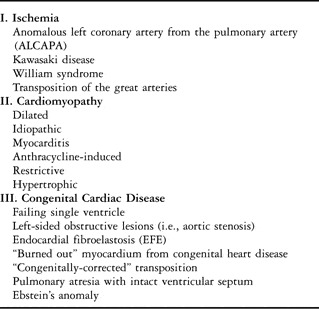
Potential broad areas of therapeutic utility for stem cell-based therapy include ischemic injuries, the cardiomyopathies, and congenital lesions (Table 1). Clearly, barriers to their application must first be overcome, such as development of systems of delivery, localization of engraftment to the appropriate area, and intercellular communication of the transplanted cells with the myocardium of the host. Herein, we will briefly discuss each of these potential uses and postulate on theoretic applications of stem cell-based therapy.
Potential Stem Cell Application in the Paediatric Cardiac Failure Patients.

Although ischemic cardiac disease is common in adults, it rarely presents in children. This broad category may include the patient with anomalous left coronary artery from the pulmonary artery (ALCAPA) who does not recover after re-implantation of the coronary artery. Other examples are post operative myocardial infarction after operations involving coronary arterial transfer, including the arterial switch repair for transposition of the great arteries, and the Ross procedure for aortic stenosis or regurgitation. Furthermore, myocardial infarction after Kawasaki disease, from acute thrombosis or progressive stenosis, may produce ischemic cardiomyopathy and necessitate transplantation. Although these instances are rare, if there is persistent left ventricular dysfunction, stem cell-based therapy may be appropriate and offer the hope of an alternative to transplantation.
A large number of disparate diagnoses are grouped under the common heading of cardiomyopathy. For myocardial injuries that are caused by an acute insult such as viral myocarditis or anthracycline exposure, autologous stem cell-based therapy has the potential to reverse myocardial damage and potentially avoid progression towards transplantation. Indeed, in patients whose oncologic therapy demands ongoing treatment with anthracyclines, utilization of stem cells might even allow ongoing delivery of necessary chemotherapy rather than switching to potentially less effective, albeit less cardiotoxic therapies. The majority of dilated cardiomyopathies are idiopathic, but in an increasing number of cases a genetic or metabolic cause has been found. In patients with these cardiomyopathies, autologous stem cells have the potential to carry the same intrinsic defect that led to the patient’s cardiomyopathy, suggesting that allogeneic therapy could be considered as an alternative to transplantation for this group.
Similarly, the rubric of congenital cardiac disease embraces a highly heterogeneous group of patients. In patients with cardiac failure due to complex congenital heart disease, stem cell-based therapy may promise an alternative to transplantation. For instance, patients with single ventricle lesions and severely depressed cardiac function have no long-term option other than transplantation. In this patient population, reversal of ventricular dysfunction with stem cell-based therapy has the potential to allow for maintenance of the Fontan circulation. Another potential application for stem cell-based therapy is in patients with severe obstructive lesions that have caused cardiomyocytic damage, such as the neonate with critical aortic stenosis and poor ventricular function that does not recover after valvuloplasty. Similarly, teenagers and young adults with systemic right ventricles, including those with discordant atrioventricular connections and ventriculo-arterial connections (congenitally corrected transposition) and those with discordant ventriculo-arterial connections previously treated with an atrial baffle operation such as a Mustard or Senning procedure, could benefit from directed therapy to improve their right ventricular function.
An intriguing possibility would be utilizing stem cells in conjunction with surgical interventions. For example, in a patient with endocardial fibroelastosis (EFE), operative resection of the endocardial fibroelastosis with simultaneous implantation of stem cells may improve outcomes. Another example would be patients with Ebstein anomaly of the tricuspid valve in whom valvar repair may be inadequate to fully reverse cardiac failure due to ongoing dysfunction of the atrialized component of the right ventricle. Simultaneous repair of the tricuspid valve, with delivery of stem cells to this portion of the right ventricle, has the potential to overcome this limitation.
What is a stem cell?
Recent advances in the field of regenerative, cell-based therapy have included the identification of a variety of stem cells with different characteristic profiles.
A stem cell is defined as a cell with the properties of being clonogenic, self-renewing, and multipotent. In response to intercellular signalling or environmental stimuli, stem cells differentiate into cells derived from any of the three primary germ layers: ectoderm, endoderm, and mesoderm, a powerful advantage for regenerative therapies. Meanwhile, a cardiac progenitor cell is a multipotent cell that can differentiate into cells of any of the cardiac lineages, including endothelial cells and cardiomyocytes.
Stem cells can be classified into three categories:
• adult stem cells,
• embryonic stem cells, and
• induced pluripotential cells.
Adult stem cells Reference Beltrami, Barlucci and Torella22–Reference Laflamme and Murry32 have been identified in numerous organs and tissues in adults, including bone-marrow, skeletal muscle, adipose tissue, and, as was recently discovered, the heart.Reference Laflamme and Murry32Embryonic stem cells are derived from the inner cell mass of the blastocyst stage of the developing embryo.Reference Yamanaka33 Finally through transcriptional reprogramming, somatic cells, such as fibroblasts, can be converted into induced pluripotential cells that resemble embryonic stem cells.Reference Sánchez, Villa and Sanz34 In animal models, these different types of stem cells have been shown to be different in their intrinsic characteristics, and in their ability to restore the myocardium after injury.Reference Laflamme and Murry32
Interestingly, despite improvements in myocardial function, treatment with stem cells has not consistently been shown to increase myocardial cell density. A normal heart contains 20 million cardiomyocytes per gram of tissue.Reference Laflamme and Murry32 A patient who has an infarct that eventually leads to cardiac failure must have killed roughly 25% of the ventricle. Thus, one would expect that one billion cardiomyocytes are needed to improve cardiac function, which is well above the number of cells that current regenerative strategies can regrow. The stem cells may be eliciting their regenerative effect through other mechanisms which include diminishing inflammation, reducing apoptosis, inducing angiogenesis, stimulating paracrine effects, or decreasing fibrosis.
In the followings sections, we have summarized and simplified the data that have shown efficacy of each stem cell type, largely excluding animal studies. Comprehensive reviews have been previously published on this topic.Reference Laflamme and Murry32–Reference Freund and Mummery37 The goal of this section is to introduce many of these cell-based therapies and their potential application for treatment of children with cardiac failure.
Evidence of cardiomyocytic repopulation in postnatal hearts
Contrary to previous assumptions, the heart is now believed to have regenerative abilities, which have been suggested from studies of chimeric cardiac transplantation. In one such study, female hearts transplanted into male recipients contained highly proliferative cells.Reference Quaini, Urbanek and Beltrami38 This study found that in the transplanted heart 9 ± 4 percent of myocytes, 10 ± 3 percent of arterioles and 7 ± 1 percent of capillaries had a Y chromosome, suggesting repopulation of the heart by cells from the male recipient.Reference Quaini, Urbanek and Beltrami38 This study also showed an increased number of cells expressing markers of stem cells within the atriums and ventricles of the grafted heart. Clinical transplantation studies strongly support the role of circulating cells repopulating the transplanted heart.
Another study, by Bergmann and colleagues, investigated the levels of carbon-14 in cardiomyocytes from tests of nuclear bombs during the cold war, to determine the age of cardiomyocytes in humans.Reference Bergmann, Bhardwaj and Bernard39 Taking advantage of an increase of atmospheric concentrations of carbon-14 during 1955 to 1963, levels of carbon-14 were assessed in humans born from 22 years before, during, and after nuclear testing. The study found that those born before the tests of nuclear bombs had higher levels of carbon-14 in their cardiomyocytic deoxyribonucleic acid (DNA) than atmospheric levels prior to the nuclear bombs, and those subjects born near or after the tests of nuclear bombs had levels that corresponded with atmospheric concentrations several years after their birth. The study also revealed that by the age of 50, 45% of cardiomyocytes had been formed after birth. This data suggests that cardiomyocytic renewal occurs at a slow continuous rate after birth from some yet undetermined population of cells.
Current Types of Cell-Based Therapies
Bone marrow-derived stem cells
Bone marrow is composed of several subsets of stem cells including hematopoietic stem cells, mesenchymal stem cells, and endothelial stem cells. The question of whether these cells can trans-differentiate into cardiomyocytes lies at the centre of the controversy of their efficacy in vivo. Most of the evidence suggests that the injected bone marrow cells rarely differentiate into a cardiomyocyte within the myocardium. Two major randomized, controlled clinical studies recently analyzed the role of bone marrow for myocardial repair. In both the REPAIR-AMI (Reinfusion of Enriched Progenitor Cells and Infarct Remodeling in Acute Myocardial Infarction) and the BOOST (Bone Marrow Transfer To Enhance ST-Elevation Infarct Regeneration) studies, autologous stem cells derived from bone marrow were injected via the coronary artery into infarcted tissue.Reference Dill, Schächinger and Rolf40–Reference Meyer, Wollert and Lotz42 One year results of the REPAIR-AMI study reported improved left ventricular function parameters and improved perfusion to damaged tissue. At 18 months, the BOOST study showed an increased rate of left ventricular functional recovery in the group infused with bone marrow over the control group. Many additional studies have been published using cells derived from bone marrow to treat patients with acute myocardial infarction, and, more recently, patients with chronic cardiac failure.
Mesenchymal cells derived from bone marrow
Located in the stroma of bone marrow, and once thought to contribute only to the maintenance of the stromal microenvironment, mesenchymal stem cells represent a subpopulation of non-hematopoietic stem cells capable of differentiating into adipocytes, chondrocytes, osteoblasts, and skeletal myocytes. Mesenchymal stem cells can be identified through their expression of markers such as CD73, CD90, and CD105, and have a useful property of potentially being allotolerant, which has important clinical implications.Reference Toma, Pittenger, Cahill, Byrne and Kessler43 These mesenchymal cells are currently being evaluated in a Phase II clinical trial administered by Osiris Therapeutics (www.Clinicaltrials.gov).
Resident cardiac stem cells or cardiac progenitor cells
One of the most promising types of stem cells is the resident cardiac stem cell. Studies from several groups have identified different types of resident cardiac stem cellsReference Beltrami, Barlucci and Torella22–Reference Laugwitz, Moretti and Lam28, defined either by their expression of markers of stem cell, which include c-kit, Sca-1, Isl1, and MDR1, or by their physical characteristics, which include the side population cells and cardiospheres.Reference Barile, Messina, Giacomello and Marban44
“The concept of ‘cardiac organo-, post-mitotic stasis’ has been revolutionized with the identification of a population of resident cells in the heart possessing cell surface antigens consistent with the phenotype of stem cells and possessing the bonafide behaviour and potential of stem cells”Reference Steele and Steele45. Resident cardiac stem cells are a self-renewing, multipotent population of cells with the capacity to differentiate into cardiomyocytes, endothelial cells, and smooth muscle cells.Reference Steele, Jones and Gok23, Reference Barile, Messina, Giacomello and Marban44
“Beltrami and colleaguesReference Beltrami, Barlucci and Torella22 identified a ‘Lin-/c-kit+ primitive cell’ derived from the heart that can be clonally expanded and that differentiates into cardiac myocytes, smooth muscle, and endothelial cells in vitro, and can reconstitute infarcted myocardium in vivo. Steele and colleaguesReference Steele, Jones and Gok23 identified a multipotent ‘c-kit+, Sca-1+ population of primitive cells’Reference Steele, Jones and Gok23 from heart which reconstituted myocardium, smooth muscle, and damaged vascular lining in vivo. Several other populations of cardiac primitive cells have been described which can differentiate into cardiomyocytes and/or regenerate infracted myocardium. Oh and colleaguesReference Oh, Bradfute and Gallardo24 identified a ‘Sca-1+, CD31+, c-kit- progenitor’Reference Oh, Bradfute and Gallardo24 while Messina and colleaguesReference Messina, De Angelis and Frati25 reported a ‘Sca-1+, c-kit+, KDR/flk-1+ and CD31+ cardiac progenitor’Reference Messina, De Angelis and Frati25. Martin and colleaguesReference Martin, Meeson and Robertson26 describe an ‘Abeg2+ expressing cardiac-derived side population’Reference Martin, Meeson and Robertson26, and Pfister and colleaguesReference Pfister, Mouquet and Jain27 describe ‘Sca-1+/CD31- cardiac primitive cells’Reference Pfister, Mouquet and Jain27 with ability to exclude Hoechst dye. Laugwitz and colleaguesReference Laugwitz, Moretti and Lam28 identified yet another primitive cell population that expressed transcription factor Isl1+ but could not exclude Hoechst dye.”Reference Steele and Steele45
As of now, all the identified resident cardiac stem cells appear different from each other. It would appear paradoxical that the heart, with such a low regenerative capacity, would harbour these diverse populations of resident cardiac stem cells or cardiac progenitor cells. “The interrelationship between the many reported cardiac primitive cells remains unclear and awaits clarification through comprehensive characterization and correlation as to derivation, maintenance, and inherent reparative potentialReference Steele and Steele45. The fact that these isolates can be biochemically invoked to demonstrate their ability to assume a mature myocytic phenotypeReference Messina, De Angelis and Frati25 is simply an indication of the physiological potential for their use in repair. UrbanekReference Urbanek, Quaini and Tasca29 and other investigatorsReference Beltrami, Barlucci and Torella22, Reference Steele, Jones and Gok23, Reference Messina, De Angelis and Frati25, Reference Quaini, Urbanek and Beltrami30, Reference Muller, Pfeiffer and Koglin31 have documented the ability of cardiac derived stem cells to form myocytes in vivo. The potential of cardiac derived stem cells is not disputed. Molecular characterizations remain variable, and the lack of insight into the implications of this variability precludes directed effort to manipulate in vivo mobilization, expansion and repair.”Reference Steele and Steele45
Nevertheless, there are two ongoing clinical trials involving resident cardiac stem cells or cardiac progenitor cells. The first trial is the Cardiosphere Derived Cells to Reverse Ventricular Dysfunction (CADUCEUS), which will investigate the intracoronary delivery into cardiac patients of cells derived from cardiospheres. In a different study, cells positive for c-kit that are harvested from right atrial appendages will be delivered after coronary arterial bypass surgery to patients undergoing treatment for ischemic cardiomyopathy (www.Clinicaltrials.gov).Reference Martin, Meeson and Robertson26
Skeletal myoblasts
Skeletal myoblasts are derived from skeletal muscle satellite cells and were the first cell based therapy used in cardiac repair. Initially, the ease of obtaining skeletal myoblasts from patients made this cell source very attractive; however, the injected skeletal myoblasts failed to electrically integrate within the myocardium and created a nidus for ventricular tachycardia.Reference Deglurkar, Mal and Mills46 A phase II randomized, double-blinded trial with skeletal muscle myoblasts termed MAGIC (Myoblast Autologous Grafting in Ischemic Cardiomyopathy) showed that patients receiving an injection of skeletal myoblasts, with concomitant coronary arterial bypass surgery, did not show improved cardiac function as assessed by echocardiography.Reference Menasche, Alferi and Janssens47 Due to these results, this trial was terminated early since no clinical benefit was observed in the group treated with skeletal myoblasts.48
Embryonic stem cells
Embryonic stem cells are derived from the inner cell mass of preimplantation human embryos.Reference Yamanaka33 These embryonic stem cells have the basic qualities of unlimited self-renewal and pluripotency, as shown by their differentiation into all three types of germ cells. Established protocols have demonstrated their cardiac potential and their successful integration into the myocardium of the host in order to improve cardiac function. Despite their promise, many problems exist with the clinical use of embryonic stem cells:
• the formation of teratomas,
• potential immunologic cellular rejection,
• low efficiency of their differentiation into cardiomyocytes, typically 1% in culture, and
• ethical and political issues.
Induced pluripotent stem cells
Induced pluripotent stem cells are generated by reprogramming somatic cells, such as fibroblasts or epithelial cells, to acquire properties similar to those of embryonic stem cells in morphology, proliferation, gene expression, and the formation of teratomas. The initial studies used retrovirally introduced genes encoding four transcriptional factors: Oct3/4, Sox2, Klf4, and c-Myc.Reference Yamanaka49 These transcriptional factors (1) trigger the down regulation of important somatic gene function within these cells, and (2) stimulate the expression of endogenous stem cell pluripotent factors, which reprogram the cell to morphologically and biochemically behave as embryonic stem cells. The technology related to induced pluripotent stem cells potentially could overcome some of the limitations of embryonic stem cells by limiting the immune rejection after transplantation and eliminating the ethical issues regarding human embryos. Despite the enormous potential of these induced pluripotent stem cells, many obstacles remain, which include low levels of cardiac differentiation, heterogeneous differentiation within the induced pluripotent stem cells, and tumorogenicity of the induced pluripotent stem cells in the treated patient.Reference Mauritz, Schwanke, Reppel, Neef, Katsirntaki, Maier, Nguemo, Menke, Haustein, Hescheler, Hasenfuss and Martin50
Routes of Delivery for Stem Cells and/or Progenitor Cells
“The issue of how to optimize delivery of cardiac reparative stem cells to site of injury is of exceptional clinical relevanceReference Steele and Steele45. Several modes of delivery have been investigated including”Reference Steele and Steele45:
• direct intramuscular injection into the heart muscle,
• intravenous administration into the vascular system,
• transendocardial and trans-epicardial injection into the endocardial or epicardial regions of the heart, as well as
• intracoronary injectionReference Wold, Dai and Sesti51.
“Direct intramuscular injection into damaged cardiac muscle has been most extensively used in the clinical setting and enables cells to be directly delivered to the damaged area. This method typically requires surgical procedures with direct visualization of the heart. By contrast, intravenous administration does not, but, is lengthy. Moreover, the undesirable delay in delivery of cells to injury has invoked dispute regarding ability of cells introduced intravascularly to “home” to damaged areas. Transendocardial and transepicardial delivery is catheter-based, requires electromechanical mapping, and may induce arrhythmias. Intra-coronary delivery involves delivery of cells via an “over-the-wire balloon-catheter” and facilitates flow of cells through the regions of the infarct and peri-infarct. This intra-coronary delivery has shown some evidence of aiding repair and has not induced arrhythmiasReference Wold, Dai and Sesti51.”Reference Steele and Steele45
“Cells for repair in human trials are currently delivered by intracoronary arterial infusion, or by injection of ventricular wall using a percutaneous endocardial or a surgical epicardial approach.Reference Dimmeler, Seiher and Schneider52 Intracoronary infusion using a balloon-catheter enables delivery of the cells into an oxygenated and nourished environment, which is conducive to cellular survival and possible subsequent engraftment. However, subsequent ‘homing’ to subjacent areas of injury becomes independent of targeted delivery, as cells must migrate out of vessels and into surrounding tissues. ‘Blind trafficking’ is not targeted delivery. Bone marrow cells may demonstrate capabilities for extravasationReference Aicher, Brenner and Zyhayra53 and migration into ischemic areas of myocardium, but skeletal myoblasts do not. In fact, the latter possess a very real potential to obstruct the microcirculation with resultant embolic myocardial damage. Alternatively, direct injection of stem cells and/or progenitor cells into scar or hibernating myocardium offers visual confirmation of gross anatomic delivery.”Reference Steele and Steele45 Still, variability in multiple domains may disrupt and preclude reparative and/or regenerative eventsReference Steele and Steele45:
• variability in delivery and/or non-delivery of cells throughout the lesion,
• variability in delivery and/or non-delivery of cell number throughout the lesion,
• the induced mechano-pressure of injection delivery into an already injured area resulting in disruption of blood vessels,
• pooling and dilution of cytokines due to cellular disruption and architectural breakdown,
• cellular short-circuitry and other molecular events conducive to induction of a post-injury pro-apoptotic potentiation.
“Electromechanical mapping of hibernating myocardium may be of assistance in developing a strategy for guiding directed injection of cells. Cardiomyopathies will pose a huge challenge for such an approach to therapy.”Reference Steele and Steele45
It is becoming obvious that the unique pathobiology of the cardiac disease of each patient will require renewed strategies for deliveryReference Steele and Steele45. Using a model of transplantation in animals, Steele and colleaguesReference Steele, Jones and Gok23 experimented with novel, rapid, and widespread modes for delivery of murine cardiac stem cells in vitro and in vivo. Initially using a tracking dye to map target delivery routes, followed by infusion of cardiac stem cells using pericardiocentesis, Steele and colleagues demonstrated efficient global infusion of cardiac stem cells into the heart. Cardiac stem cells were retained in an undifferentiated state in the interstitium, in the absence of injury, but were capable of undergoing injury-induced myocytic differentiation. In “Apo-E deficient mice” with coronary vasculopathy, differentiation of these cardiac stem cells was predominately into endothelial cells which lined the damaged blood vessels.
Research at Children’s Memorial Hospital
Studies in the Division of Cardiovascular-Thoracic Surgery at Children’s Memorial Hospital in Chicago are focused on the characterization of resident cardiac stem cells derived from the right atrium of patients with congenital cardiac disease and end-stage cardiomyopathy. These studies explore the potential ability of resident cardiac stem cells to recover myocardial function in animal models of both ischemic cardiomyopathy and doxorubicin-induced cardiomyopathy. In addition, these studies characterize the resident cardiac stem cells from patients with end-stage cardiomyopathy to determine whether their resident cardiac stem cells are truly functional cardiac stem cells or whether these cells have an intrinsic genetic or another unknown limitation in their potential ability to recover the myocardium. Along with clinical trials of cardiac stem cells in adults, these experimental studies using resident cardiac stem cells derived from the right atrial appendage will be an important first step to generate future clinical protocols to improve outcomes of children with cardiac failure.
Research at The Congenital Heart Institute of Florida (CHIF) – All Children’s Hospital
Studies in the laboratory at All Children’s Hospital have focused on determining if cells with the characteristics of stem cells similarly can be derived from the atrial appendages of humans from explanted paediatric hearts with end-stage disease, following cardiac transplantation. Profiles of phenotypic characterization have been established for these cells. Optimization of methodology for cellular derivation and expansion from diseased tissues in culture is being defined. Cytokine arrays are being used to identify simultaneously which of 120 potential factors in the “microenvironment” support the mobilization of stem cells in situ and their out-trafficking from cardiac tissue. Coincident genotypic profiles by array are being determined to track changes in expression during mobilization, out-trafficking, proliferation, and differentiation of stem cells. Two novel routes of transplantation of stem cells are being developed in the laboratory at All Children’s Hospital, designed to meet the demands of either immediate or sustained repair of myocardial tissues. These potential routes of transplantation of stem cells are being employed and tested using our models of cardiac injury in animals. Reparative success using both modes of delivery has been established. Finally, autologous and allogeneic repopulation of decellularized heart as a cardiac scaffold is underway, using derived stem cells within a defined microenvironment conducive to cellular differentiation. Data from these pre-clinical efforts may facilitate two avenues for regenerative challenge in a patient suffering from cardiomyopathy or a congenital cardiac defect:
• a cellular-based approach with transplantation, and/or
• a cytokine in-situ based directed management conducive to regeneration.
Clearly, regenerative medicine is a new frontier demanding a rewriting of current biology, yet accompanied by promise, and potential to render congenital and acquired cardiac disease amenable to management, and curable!
The Challenge of Repair and Regeneration
“Lessons from regenerative biology,Reference Poss, Wilson and Keating54 in organisms such as newts and zebrafish, signal a formidable translational challenge for human cardiac regenerationReference Steele and Steele45. Basic theoretical restorative paradigms should considerReference Steele and Steele45:
• a molecularly responsive and well-defined sub-set of cardiac stem cells and/or progenitor cells, with proliferative capacity in situ, or, alternatively,
• an appropriately derived and exogenously-expanded cell-type capable of differentiation into viable, working cardiomyocytes which possess proteins for sarcomeric contractibility and enzymes for cardiac energy production.
Such reparative cells must be amenable to integration into electromechanical syncytial circuitry and to neurological pacing. These cells must be capable of molecular interface with endogenously stimulated or derived and exogenously-expanded endothelial progenitor cells. The endothelial progenitor cells must be available to “home” to injury, or for transplantation into damaged sites, forging pathways for vital oxygenation of tissues. The differentiated endothelial cell must be capable of expression and receipt of appropriate signalling, with integrin and cytokine, to communicate and interact with the surrounding environment.”Reference Steele and Steele45
“Of great importance to repair and/or regeneration is whether the choice of the stem cells and/or progenitor cells in the “cocktail” is appropriate to the reparative demands of the pathobiology of the disease.”Reference Steele and Steele45 Multiple parameters must be consideredReference Steele and Steele45:
• “the delivery of the appropriate number of cells,
• the appropriateness of the cellular proportions within the cocktail amenable to carry out the reparative task,
• the appropriateness of the cocktail to the requirements of cellular differentiation relative to the targeted repair and/or response, and
• the optimal and targeted routes of delivery, whether intracoronary infusion, catheter-based or direct intramyocardial injection, or using strategies of in situ mobilization.”Reference Steele and Steele45
“Rates of survival of stem cells and/or progenitor cells after delivery to the target, or near the target, remain unknown. Survival in the hypoxic environment remains uncertain and speculative. The effect and importance of the adjacent normoxic environment to repair has not been described. Nothing is known concerning dose-response. Dosing frequency has not been addressed nor correlated experimentally with improved repair. The effect of stem cells delivered to the heart, but travelling intravascularly out and lodging in other organs, along with associated, if any, aberrant effects on organo-function, has not been explored. These preceding topics are but a few of the pressing considerations which could have significant impact on the success of current reparative strategies.”Reference Steele and Steele45
“It should be stressed that data derived from clinical trials in adults suggesting improvement in cardiac function following infusion of stem cells and/or progenitor cells is data derived from a functional, biologically pre-scaffolded organReference Steele and Steele45 – the heart. This concept alone should illustrate two immediate pointsReference Steele and Steele45:
• the pre-scaffolded organ – the heart – may be the most receptive to repair via therapy with stem cells given our current state of knowledge, and, on the flip-side,
• perhaps the pre-scaffolded organ – the heart – should not be allowed to degenerate significantly from disease before intercession.
Early intercession may be a key to optimal repair!”Reference Steele and Steele45
Another potential mechanism of cardiac repair and/or regeneration using stem cells will be the creation of tissue-engineered cardiovascular structures derived from stem cells. For example, Kaushal and colleagues created a biofunctional neovessel with small diameter using a unique combination of endothelial progenitor cells and a scaffolding of blood vessel.Reference Kaushal, Amiel and Guleserian55 In the future, instead of delivering stem cells into the damaged myocardium or vessels, tissue-engineered cardiovascular structures derived from stem cells will be created in vitro and then eventually placed into the heart or vessel to improve function. These tissue-engineered cardiovascular structures derived from stem cells are “ex vivo created scaffolded bioprostheses” and may be utilized to complement the infusional repair of pre-scaffolded areasReference Sutherland, Perry and Yu56, Reference Neuenschwander and Hoerstrup57, Reference Hoenig, Campbell, Rolfe and Campbell58, Reference Sales, Salacinski and Alobaid59.
Summary
Heart failure is a leading cause of death worldwide. Current therapies only delay progression of the cardiac disease or replace the diseased heart with cardiac transplantation. Stem cells represent a recently discovered novel approach to the treatment of cardiac failure that may facilitate the replacement of diseased cardiac tissue and subsequently lead to improved cardiac function and cardiac regeneration.
A stem cell is defined as a cell with the properties of being clonogenic, self-renewing, and multipotent. In response to intercellular signalling or environmental stimuli, stem cells differentiate into cells derived from any of the three primary germ layers: ectoderm, endoderm, and mesoderm, a powerful advantage for regenerative therapies. Meanwhile, a cardiac progenitor cell is a multipotent cell that can differentiate into cells of any of the cardiac lineages, including endothelial cells and cardiomyocytes.
Stem cells can be classified into three categories: (1) adult stem cells, (2) embryonic stem cells, and (3) induced pluripotential cells. Adult stem cells have been identified in numerous organs and tissues in adults, including bone-marrow, skeletal muscle, adipose tissue, and, as was recently discovered, the heart. Embryonic stem cells are derived from the inner cell mass of the blastocyst stage of the developing embryo. Finally through transcriptional reprogramming, somatic cells, such as fibroblasts, can be converted into induced pluripotential cells that resemble embryonic stem cells.
Four classes of stem cells that may lead to cardiac regeneration are:
• Embryonic stem cells
• Bone Marrow derived stem cells
• Skeletal myoblasts
• Cardiac stem cells and cardiac progenitor cells
Embryonic stem cells are problematic because of several reasons:
• the formation of teratomas,
• potential immunologic cellular rejection,
• low efficiency of their differentiation into cardiomyocytes, typically 1% in culture, and
• ethical and political issues.
As of now, bone marrow derived stem cells have not been proven to differentiate reproducibly and reliably into cardiomyocytes. Skeletal myoblasts have created in vivo myotubes but have not electrically integrated with the myocardium. Cardiac stem cells and cardiac progenitor cells represent one of the most promising types of cellular therapy for children with cardiac failure.
Conclusion
Great excitement exists related to the possibility that therapy with stem cells may soon allow for regeneration of damaged myocardium and reversal of cardiac failure. A host of unsolved questions remain to be answered before rational clinical trials are formulated to investigate treatments in children with cardiac failure. For instance, some of the basic mechanisms of how stem cells improve the function of the myocardium need further study. Other issues for the success of cell-based therapy will depend on what type of stem cell proves most capable of cell proliferation and regeneration, and how these cardiac stem cells can be delivered to the myocardium most efficiently. Despite these many unanswered questions, cell-based strategies remain a potentially fruitful therapeutic option for children with cardiac failure.
Acknowledgement
Sunjay Kaushal was supported in part by a grant from the Children’s Heart Foundation.