INTRODUCTION
Relatively few studies cover leadership and its effects on performance in small businesses (Cope, Kempster, & Parry, Reference Cope, Kempster and Parry2011). While some literature on entrepreneurial leadership focuses on identifying and exploiting opportunities for creating services and products (Cogliser & Brigham, Reference Cogliser and Brigham2004), establishing a business (Renko, Tarabishy, Carsrud, & Brännback, Reference Renko, Tarabishy, Carsrud and Brännback2014), or enhancing strategic value (Gupta, MacMillan, & Surie, Reference Gupta, MacMillan and Surie2004), little is reported on day-to-day leadership in small firms. However, researchers have found that small businesses characterized by formal structures, processes, and systems operate more effectively than their ad hoc peers (O’Gorman & Doran, Reference O’Gorman and Doran1999) and enjoy significantly higher growth (Gray & Mabey, Reference Gray and Mabey2005). Leadership or the ability to influence people and develop systems in line with organizational visions, values, and norms is one such process, and is the subject of our investigation.
The effects of different ‘styles’ of leadership on small business performance remain somewhat unclear, if not to say, confused. This is despite wide spread acceptance that leadership affects a firm’s performance (Judge, Bono, Ilies, & Gerhardt, Reference Judge, Thoresen, Bono and Patton2002; Judge & Piccolo, Reference Judge and Piccolo2004), and that different kinds of leadership can affect business performance differently (Lim & Ployhart, Reference Lim and Ployhart2004; Keller, Reference Keller2006; Wang, Oh, Courtright, & Colbert, Reference Wang, Oh, Courtright and Colbert2011). For example, Valdiserri and Wilson (Reference Valdiserri and Wilson2010) found transformational and transactional leadership more effective than laissez-faire leadership in small US construction businesses, Matzler, Schwarz, Deutinger, and Harms (Reference Matzler, Schwarz, Deutinger and Harms2008) demonstrated that transformational leadership enhanced product innovation and performance in 300 Austrian SMEs, and Vaccaro, Jansen, Van den Bosch, and Volberda (Reference Vaccaro, Jansen, Van den Bosch and Volberda2012) suggested that transactional leadership may be more effective in smaller firms than transformational leadership. Furthermore, despite wide spread positive reports on transformational leadership (Wang et al., Reference Wang, Oh, Courtright and Colbert2011), Schuh, Zhang, and Tian (Reference Schuh, Zhang and Tian2013) argue that outcomes may not be universally positive for this paradigm. Much of the work in transformational leadership has been directed toward individual-level outcomes (Lim & Ployhart, Reference Lim and Ployhart2004; Matzler et al., Reference Matzler, Schwarz, Deutinger and Harms2008) in large organizations, with very few studies addressing transformational leadership in the context of small business performance (Ensley, Hmieleski, & Pearce, Reference Ensley, Hmieleski and Pearce2006), and little attention being paid to its influence on smaller teams and business units, and the associated effects on organizational processes and outcomes (Ling, Simsek, Lubatkin, & Veiga, Reference Ling, Simsek, Lubatkin and Veiga2008).
Given the lack of clarity about leadership itself and its effects on performance in small business, in this study we investigated whether, to what extent, and how, different kinds of leadership affect a range of organizational outcomes. In doing so, we employed an expanded range of leadership paradigms; derived measures directly from diverse stakeholders; and adopted multiple performance measures. We sought to overcome methodological problems in previous studies such as common-method bias in measuring performance (Barling, Loughlin, & Kelloway, Reference Barling, Loughlin and Kelloway2002), and to advance earlier research that used a narrow range of measurements (Lim & Ployhart, Reference Lim and Ployhart2004; Hofmann & Jones, Reference Hofmann and Jones2005; Keller, Reference Keller2006). Broadening the performance measures adopted is particularly relevant to small firms where nonfinancial aspects of success can influence an owner’s motivations more than financial outcomes (Walker & Brown, Reference Walker and Brown2004; Reijonen & Komppula, Reference Reijonen and Komppula2007).
Next, we describe the leadership paradigms adopted and issues related to small business, measures used, hypotheses and methodology, and results. This is followed by discussion, limitations, and conclusions.
LEADERSHIP PARADIGMS
Avery’s (Reference Avery2004) classical, transactional, visionary, and organic leadership paradigms provided the conceptual framework, allowing for diverse kinds of leadership differentiated primarily by the extent to which (a) followers’ decisions, actions, and behaviors are determined and controlled by others rather than themselves and (b) a vision is required.
Under the classical leadership paradigm, a superior typically instructs a subordinate what to do, when and how. This paradigm is associated with hierarchical and bureaucratic structures where decisions are cascaded down a chain of command and reporting lines run bottom up. In some cases, the classical leader motivates via fear; in other cases, respect for the leader and a common purpose prevail. Since classical leadership disempowers followers, follower acceptance is likely to be highly context dependent, such as in service firms that are dominated by passionate and inspiring leaders, or where critical and risky decisions have to be made quickly by recognized experts. Under this frequently autocratic paradigm, negative relationships with performance are commonly reported (Chan, Huang, Snape, & Lam, Reference Chan, Huang, Snape and Lam2013; Chen, Eberly, Chiang, Farh, & Cheng, Reference Chen, Eberly, Chiang, Farh and Cheng2014). Classical leadership’s limitations in terms of enterprise adaptability, speed, firm-level innovativeness, and follower disempowerment (Whiting, Reference Whiting1964) led to the emergence of transactional leadership.
Under transactional leadership, instead of simply commanding others, leaders seek to motivate followers primarily through an exchange process. Followers’ actions are bounded by policies and procedures that govern what people do in return for certain negotiated outcomes. This contingent reward leadership is considered ‘reasonably effective’ in that it sets clear expectations and goals, and rewards followers for attaining goals (Avolio, Reference Avolio1999). The oversight and controlling function of the transactional paradigm, by definition, necessitates a somewhat hierarchical structure with specified work practices and clear lines of responsibility and accountability. Strict adherence to policies and procedures is required; for example, to control risk in the airline and healthcare industries. Research shows that transactional leadership’s effects are inconsistent, with contingent extrinsic rewards appearing effective for enhancing organizational performance in some meta-analyses (e.g., Judge & Piccolo, Reference Judge and Piccolo2004) but not in others (Lowe, Kroeck, & Sivasubramaniam, Reference Lowe, Kroeck and Sivasubramaniam1996).
Avery’s (Reference Avery2004) concept of visionary leadership is based on positive emotion and a shared vision, akin to ‘transformational’ leadership (Bass, Reference Bass1985). Visionary leadership permits high follower autonomy, and assumes followers are well trained and share the values and vision of the organization. Followers enjoy considerable freedom in how they achieve the vision, with a focus on teamwork and followers’ active contribution. Outcomes rather than inputs are monitored, managerial interventions occur mainly when expected outcomes are not achieved. Visionary leadership offers a positive organizational climate rich in intrinsic rewards, under which employees can work effectively. Bass’ (Reference Bass1985) original claim that transformational (visionary) leadership is more effective than transactional leadership was confirmed in a meta analysis (Wang et al., Reference Wang, Oh, Courtright and Colbert2011). Indeed, significant benefits from these kinds of emotion-based leadership have been reported on diverse measures: for financial performance (Idris & Ali, Reference Idris and Ali2008); job satisfaction (Emery & Barker, Reference Emery and Barker2007; Braun, Peus, Weisweiler, & Frey, Reference Braun, Peus, Weisweiler and Frey2013); staff tenure (Tse, Huang, & Lam, Reference Tse, Huang and Lam2013); and customer satisfaction (Chuang, Judge, & Liaw, Reference Chuang, Judge and Liaw2012); and on SME performance (Engelen, Gupta, Strenger, & Brettel, Reference Engelen, Gupta, Strenger and Brettel2015).
In the relatively new organic paradigm, leadership is distributed among the members. Here, leadership is relational rather than leader-centerd, emerging from the interactions and communications between participants in a given context (Drath, Reference Drath2001). Decision-making is shared; people enjoy considerable autonomy, typically without designated leaders exerting power to control others. Employee commitment is based on the values and vision shared by members; and a consensual approach is taken to project initiation, implementation, and evaluation (Raelin, Reference Raelin2003). Organic forms of leadership can generate high levels of performance, according to a meta-analysis examining shared leadership and team performance (Nicolaides et al., Reference Nicolaides, LaPort, Chen, Tomassetti, Weis, Zaccaro and Cortina2014). This may be partly because of the trust that develops, since trust has been empirically related to performance improvement (Drescher, Korsgaard, Welpe, Picot, & Wigand, Reference Drescher, Korsgaard, Welpe, Picot and Wigand2014). However, the paradigm has its critics. Cope, Kempster, and Parry (Reference Cope, Kempster and Parry2011) query whether a leader’s ceding power under distributed leadership benefits small business, and Corrigan (Reference Corrigan2013) regards the literature on distributed leadership as ‘conflicted’ and more about rhetoric than reality. Empirical results are mixed with some studies associating shared leadership with more effective performance (e.g., Perry, Pearce, & Sims, Reference Perry, Pearce and Sims1999; Pearce & Sims, Reference Pearce, Manz and Sims2002; Pearce, Manz, & Sims, Reference Pearce and Sims2009; Nicolaides et al., Reference Nicolaides, LaPort, Chen, Tomassetti, Weis, Zaccaro and Cortina2014) and others not (Neubert, Reference Neubert1999).
It is evident from the above that a key differentiator between the classical and transactional leadership paradigms on the one hand and the transformational and organic paradigms on the other is the use of a shared vision. The classical and transactional paradigms do not require managers to have or share a vision for the firm, whereas under visionary and organic leadership, vision plays a central role. Given the significant impact that a shared vision has on firm performance (Jing, Avery, & Bergsteiner, Reference Jing, Avery and Bergsteiner2014a), classical/transactional, and visionary/organic were treated as two sets of strongly related pairs.
SMALL BUSINESS FOCUS
Small professional service firms from the same industry constitute the unit of study, namely, retail pharmacies. Pharmacies are expected to make significant contributions to many economies, particularly given advances in healthcare and aging populations. However, little is known about the effects of leadership on performance in this sector. Currently, Australian retail pharmacies are underperforming, with profits in 2011 averaging 2.5% compared with the Australian industry average of 4.5%; and IBISWorld (2014) predicts only 1.1% annual growth in pharmacy revenue during 2015–2020. Pharmacies were chosen because their highly educated workforce was excepted to offer opportunities to uncover visionary and organic leadership paradigms in addition to the more common classical and transactional environments.
Leadership behaviors may influence small and large enterprises differently. First, smaller firms represent a simpler and more integrated social system with fewer hierarchical levels (Baum, Locke, & Kirkpatrick, Reference Baum, Locke and Kirkpatrick1998), and less physical distance between employees and managers could lower psychological distance, according to Antonakis and Atwater (Reference Antonakis and Atwater2002). Second, the effects of vision, trust/distrust, and organizational climate may operate differently in small businesses where managers can impact staff directly (e.g., Wiesner & Innes, Reference Wiesner and Innes2010), although Jing, Avery, and Bergsteiner (Reference Jing, Avery and Bergsteiner2011, Reference Jing, Avery and Bergsteiner2014a, Reference Jing, Avery and Bergsteiner2014b) reported no differences on these dimensions. Third, Miles and Petty (Reference Miles and Petty1977) found that initiating structure is more effective in smaller firms, although the effectiveness of leader consideration is independent of firm size. Fourth, on the negative side, staff in small businesses has been found to experience more abusive leadership (Eesley & Meglich, Reference Eesley and Meglich2013), with fewer options to disengage from an aversive manager or culture apart from resigning, thereby generating additional recruitment costs for the business. Similarly, managers may choose to leave more readily in small firms if they perceive fewer opportunities for internal promotion or for avoiding undesirable situations. This makes manager and staff tenure rates in small firms also of considerable interest.
MEASURES
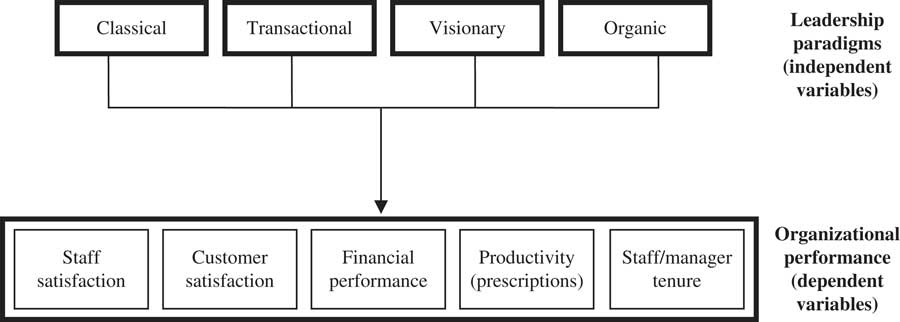
Figure 1 depicts the research framework. The measures are explained next.
Conceptual framework

Leadership paradigms were assessed using a self-completion questionnaire on staff perceptions of leadership. Collecting data on staff perceptions is important given research showing that employees’ motivation and commitment are only affected by the leadership that they notice and not by a manager’s intended leadership style (Jacobsen & Bøgh Andersen, Reference Jacobsen and Bøgh Andersen2015). The measures of leadership paradigms were based on nine of 13 characteristics that distinguish Avery’s (Reference Avery2004: 39) four leadership paradigms: decision making, range of staff power, power distance, key player(s) in the organization, source of staff commitment, staff responsibility, emphasis on management versus leadership in the organization, diversity of views, and control in the organization. The remaining four characteristics were considered irrelevant to the simple operations typical of small businesses.
In total, 20 questions were used to collect self-reported data from staff about their store manager’s leadership style, and each of the four leadership paradigms was measured by five items. Items 8.1, 8.9, 8.11, 8.14, and Q8.16 measured the classical leadership paradigm (sample items: ‘My Store Manager has all the say’ and ‘My Store Manager plans, organizes, and monitors everything in this store.’); Items 8.2, 8.5, 8.12, 8.17, and 8.18 measured the transactional leadership paradigm (sample items: ‘I do not have much power here.’ and ‘Agreements between management and me govern what I do around here.’); Items 8.3, 8.6, 8.7, 8.13, and 8.19 measured the visionary leadership paradigm (sample items: ‘My Store Manager’s vision of the future governs what I do around here.’ and ‘I am held accountable for achieving my Store Manager’s vision.’), and Items 8.4, 8.8, 8.10, 8.15, and 8.20 measured the organic leadership paradigm (sample items: ‘Staff tend to have all the say in this store.’ and ‘My Store Manager is concerned about helping me to lead and organize myself.’).
Six performance measures were adopted with the rationale that assessing multidimensional performance outcomes provides a more systemic estimate of the relationship between leadership and firm performance (De Hoogh et al., Reference De Hoogh, Den Hartog, Koopman, Berg, Van Den Berg, Van der Weide and Wilderom2004; Evaschitzky, Wangenheim, & Wünderlich, Reference Evaschitzky, Wangenheim and Wünderlich2012). The measures are:
1. Staff satisfaction has been linked to many positive outcomes in the service sector, including customer satisfaction and financial outcomes (Evanschitzky, Sharma, & Prykop, Reference Evanschitzky, Sharma and Prykop2012); job performance (Judge, Thoresen, Bono, & Patton, Reference Judge, Bono, Ilies and Gerhardt2001); and enhanced performance in small firms where managers and followers share a vision (Baum, Locke, & Kirkpatrick, Reference Baum, Locke and Kirkpatrick1998; Kantabutra & Avery, Reference Kantabutra and Avery2009), which as noted above is essential to visionary and organic leadership. Following Kantabutra and Avery (Reference Kantabutra and Avery2006), we measured staff satisfaction both as employees’ overall stated job satisfaction and specifically on pay, policies, and advancement opportunities. Measures were adapted from Slavittet, Stamps, Piedmont, and Hasse’s (Reference Slavitt, Stamps, Piedmont and Hasse1986) Index of Work Satisfaction (IWS) Questionnaire, which had been tested for reliability and validity.
2. Customer satisfaction predicts performance (Anderson, Fornell, & Mazvancheryl, Reference Anderson, Fornell and Mazvancheryl2004), including in service cultures (Schneider & Bowen, Reference Schneider and Bowen1985). We assessed each customer’s overall satisfaction with the firm’s service, together with specific aspects of satisfaction, as Evanschitzky, Iyer, and Caemmerer (Reference Evanschitzky, Iyer and Caemmerer2008) recommended, using Kantabutra and Avery’s (Reference Kantabutra and Avery2006) measures derived from Hackl, Scharitzer, and Zuba (Reference Hackl, Scharitzer and Zuba2000).
3. Financial performance was necessarily assessed indirectly given the difficulty of obtaining objective financial reports from small businesses (e.g., Perera & Baker, Reference Perera and Baker2007; Sian & Roberts, Reference Sian and Roberts2009). Following indications that indirect measures and self-reports can be reliable (De Hoogh et al., Reference De Hoogh, Den Hartog, Koopman, Berg, Van Den Berg, Van der Weide and Wilderom2004), financial performance was derived from manager reports of comparative increases and decreases in net profits, sales turnover, and controllable business costs.
4. Productivity was based on data officially tracked and reported by Australian pharmacies (Iyer & Doucette, Reference Iyer and Doucette2003), whereby managers stated the number of prescriptions filled daily.
5. Staff tenure affects performance and has been related to leadership (Cowden, Cummings, & Profetto-McGrath, Reference Cowden, Cummings and Profetto-McGrath2011; El-Nahas, Abd-El-Salam, & Shawky, Reference El-Nahas, Abd-El-Salam and Shawky2013; Tse, Huang, & Lam, Reference Tse, Huang and Lam2013), possibly working through the mediating effects of organizational commitment or employee work attitudes (Aarons & Sawitzky, Reference Aarons and Sawitzky2006). In assessing tenure, staff were asked to state the length of their tenure (in years).
6. Manager tenure remains largely unexplored despite some suggestions of an important link between leadership, manager tenure, and firm performance (Bycio, Hackett, & Allen, Reference Bycio, Hackett and Allen1985). We assessed tenure by the number of years managers said they had been at their pharmacy.
HYPOTHESES
Previous research leads to expectations that the above leadership paradigms will have differing direct effects on the performance measures, with the visionary and organic paradigms predicted to outperform classical/transactional leadership on all measures. In formulating the hypotheses below, we combined the classical with the transactional paradigm and the visionary with the organic paradigm based on similarities in follower involvement within the two sets of paradigms, particularly in decision making, focus on process versus outcomes, and reliance on a shared vision. Given the paucity of research into organic leadership (Cope, Kempster, & Parry, Reference Cope, Kempster and Parry2011), this paradigm was tested separately against all measures.
Overall, we predicted that the classical and transactional paradigms would underperform in pharmacies compared with the emotion-based paradigms. Most studies report negative relationships with performance for the classical paradigm (Chan et al., Reference Chan, Huang, Snape and Lam2013, Reference Chen, Eberly, Chiang, Farh and Cheng2014), and results for transactional leadership are variable as discussed above. One reason is that classical and transactional followers have very little autonomy or involvement in decision-making, and typically operate in highly prescriptive environments. This is problematic with highly educated pharmacy managers and employees where training reduces the need for constant leader direction and close monitoring. The small size of pharmacy stores and the lack of urgency in most situations allow for consultation, discussion, and collegial behaviors that recognize the important role that employees play. Thus, the classical/transactional paradigms are likely to be viewed as relatively unattractive by pharmacy staff, and so would undermine performance and reduce staff and manager tenure.
By contrast, employees under the visionary and organic paradigms enjoy far greater autonomy, are part of the decision-making process, and their performance is evaluated on desired outcomes and a shared vision, rather than compliance with instructions, procedures, and processes. For highly trained employees, the autonomy offered by the visionary and organic paradigms, the intrinsic rewards these paradigms typically offer, the opportunity for consensual and collegial (and in the case of organic, collective) decision-making, and the focus on outcomes rather than process are likely to generate strong commitment to organizational goals, and high levels of job satisfaction and engagement, thereby boosting organizational performance (Mehra, Smith, Dixon, & Robertson, Reference Mehra, Smith, Dixon and Robertson2006). Therefore, Hypothesis 1 was generated.
Hypothesis 1: Compared with classical and transactional leadership, pharmacies characterized by visionary and organic leadership exhibit enhanced:
Hypothesis 1a financial performance, Hypothesis 1b staff satisfaction, and Hypothesis 1c customer satisfaction.
In an extensive review, Denis, Langley, and Sergi (Reference Denis, Langley and Sergi2012) concluded that shared leadership will generate higher performance in small firms/teams, than leadership by formally appointed leaders or team members. Therefore, Hypothesis 2 plus Hypothesis 3 concerning organic leadership were generated:
Hypothesis 2: Compared with classical, transactional, and visionary leadership, pharmacies characterized by organic leadership exhibit enhanced:
Hypothesis 2a financial performance, Hypothesis 2b staff satisfaction, and Hypothesis 2c customer satisfaction.
Hypothesis 3: Pharmacies characterized by Hypothesis 3a visionary and organic leadership, and Hypothesis 3b organic leadership alone, exhibit greater productivity compared with their counterparts operating under classical and transactional leadership.
Losing staff can involve extra recruiting costs, loss of expertise, and additional pressures placed on remaining staff to do more, implying an advantage for firms that retain their staff. However, despite its significance to a business, the effects of staff tenure on performance are not clear. Two meta-analyses revealed a negative relationship between staff turnover and firm performance (Hancock, Allen, Bosco, McDaniel, & Pierce, Reference Hancock, Allen, Bosco, McDaniel and Pierce2013; Park & Shaw, Reference Park and Shaw2013). Hancock et al. (Reference Hancock, Allen, Bosco, McDaniel and Pierce2013) did not find that staff turnover was any worse in small firms, whereas Park and Shaw (Reference Park and Shaw2013) did. Little information is available about manager tenure, however longer-tenure CEOs have been associated with higher performance in SMEs (Ling et al., Reference Ling, Simsek, Lubatkin and Veiga2008). As discussed above, high-knowledge pharmacy workers may not appreciate being unable to contribute fully under the classical and transactional leadership paradigms. Furthermore, research shows that both staff and managers stay longer under a shared vision and in positive, trusting environments (Jing, Avery, & Bergsteiner, Reference Jing, Avery and Bergsteiner2011, Reference Jing, Avery and Bergsteiner2014a, Reference Jing, Avery and Bergsteiner2014b), all of which are essential characteristics of visionary and organic leadership. These considerations suggest that under visionary/organic leadership, both employees and managers will stay longer, as presented in Hypothesis 4.
Hypothesis 4: Hypothesis 4a employees and Hypothesis 4b managers stay longer (i.e., report longer tenure) in pharmacies characterized by visionary and organic leadership, compared with pharmacies operating under classical and transactional leadership. Additionally, Hypothesis 4c employees and Hypothesis 4d managers report longer tenure under organic leadership than under other leadership paradigms.
Given that Ng and Feldman (Reference Ng and Feldman2010) and others report that although generally positive, the strength of the relationship with performance decreases as organizational tenure increases, a further hypothesis was generated:
Hypothesis 4e staff tenure is correlated with performance.
METHOD
The unit of analysis was the individual level. We collected data from various sources (i.e., managers, employees, and customer) to reduce common-method biases (Podsakoff, MacKenzie, Lee, & Podsakoff, Reference Podsakoff, MacKenzie, Lee and Podsakoff2003) and improve methodological rigor in testing the causality of our research model (Wright, Gardner, Moynihan, & Allen, Reference Wright, Gardner, Moynihan and Allen2005). Managers, employees, and customers were surveyed face-to-face in 100 pharmacies in Sydney city and suburbs, chosen systematically from the phone listing. Full-time managers stationed at the pharmacy daily constituted the pharmacy managers; employees working under those managers (pharmacists, pharmacy assistants, and salespersons not classified as the manager) constituted staff respondents. To qualify, staff had to be employed by the store in an operational position, work under the manager interviewed, and be on duty when the researcher visited. Customers were purchasers of a product or service during the manager’s period of duty. One manager, up to three members of their staff, and three buying customers were surveyed per pharmacy. Separate questionnaires, with closed items measured via 5-point Likert scales, were used for each stakeholder group. Researchers ensured that managers were out of hearing range when staff and customers were surveyed.
After approaching 131 pharmacies, 100 stores participated (response rate 76.3%). As a consequence, structural equation modeling (SEM) could be applied (see Boomsma, Reference Boomsma1982, who suggests that samples sizes of around 100 are large enough to apply SEM). The 580 completed questionnaires came from 100 managers, 217 staff members, and 263 customers. Males comprised 48% of managers and 14.3% of staff. Managers were aged 20–29 (42%), 30–39 (26%), and 32% 40+ years. Staff were mostly female (86%); 66.8% aged 20–29 years and 13% over 40 years. In total, 27% of managers had managed that pharmacy for under 1 year, and 53.5% of staff had worked in there for 1–2 years.
ANALYSIS AND RESULTS
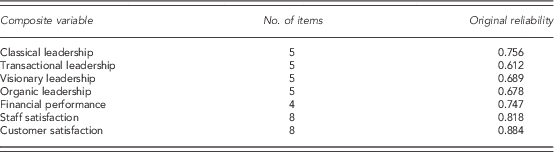
Structural equation modeling was used to test Hypothesis 1a–1c and Hypothesis 2a–2c. Five steps were followed using AMOS 22.0 (Holmes-Smith, Coote, & Cunningham, Reference Holmes-Smith, Coote and Cunningham2006) synthesized from Kline (Reference Kline1998). SEM factor loadings or standardized regression weights of all constructs were above 0.50, suggesting that these variables reflect the underlying trait of the construct. The variable reliability of all constructs was above 0.60 (see Table 1), indicating reasonably good measurement of the four leadership paradigms and financial performance, staff satisfaction, and customer satisfaction, providing evidence of internal consistency reliability. Goodness-of-fit indices also showed that the model fitted the data well within acceptable criteria levels (Holmes-Smith, Coote, & Cunningham, Reference Holmes-Smith, Coote and Cunningham2006).
Reliability of the study variables

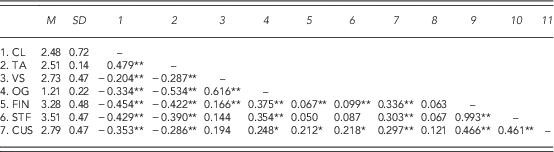
Reliability checks yielded consistent results (Malhotra, Hall, Shaw, & Oppenheim, Reference Malhotra, Hall, Shaw and Oppenheim2002). SEM and confirmatory factor analysis showed that all scales satisfied the assumption of unidimensionality, and all Cronbach’s α (Gerbing & Anderson, Reference Gerbing and Anderson1988) values exceeded 0.60 (Malhotra et al., Reference Malhotra, Hall, Shaw and Oppenheim2002). All squared multiple correlations exceeded 0.30, indicating good item reliability. Table 2 summarizes the descriptive statistics and intercorrelations of the variables. The above suggests the adequacy of these models for use in this analysis.
Correlations and descriptive statistics of the study variables

CL=classical leadership; CUS=customer satisfaction; FIN=financial performance; OG=organic leadership; STF=staff satisfaction; TA=transactional leadership; VS=visionary leadership.**p<.01.
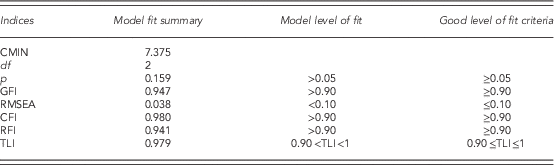
In testing Hypothesis 1a–1c, several goodness-of-fit indices were used to assess the overall SEM model fit (Jöreskog & Sörbom, Reference Jöreskog and Sörbom1993): χ2 goodness-of-fit, goodness-of-fit index, comparative fit index, Tucker–Lewis index, and root-mean-square error of approximation with confidence intervals. For goodness-of-fit index, comparative fit index, and Tucker–Lewis index, values of 0.95 or above indicate a model with acceptable fit and for root-mean-square error of approximation, values of 0.05 or less indicate a well-fitting model (Hu & Bentler, Reference Hu and Bentler1999). The measurement model fits the present data well: χ2 (2)=2.413 (p=.159), goodness-of-fit index=0.95, comparative fit index=0.98, Tucker–Lewis index=0.98 and root-mean-square error of approximation=0.038.
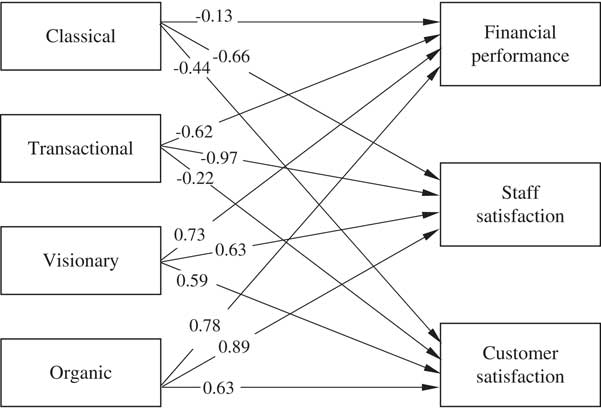
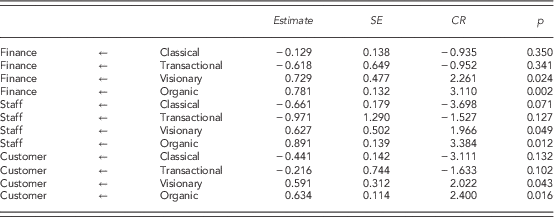
Figure 2 shows the structural effects model for the leadership paradigms and financial performance, staff satisfaction, and customer satisfaction. Table 3 shows the model fit summary for Hypothesis 1a–1c and Hypothesis 2a–2c. Regression coefficients for the paradigms were statistically significant (p=.05) for each measure. Table 4 shows significant positive relationships between the visionary paradigm and financial performance, staff satisfaction, and customer satisfaction (p<.05; critical ration>1.96), and between the organic paradigm and these three performance measures (p<.05; critical ration>1.96). However, no relationships with the three measures were significant for either the classical or transactional paradigms. Therefore, Hypothesis 1a–1c are supported.
Structural model of effects of leadership paradigms on organizational performance Note: The figures are β-weights derived from the structural equation modeling calculations

Model fit summary for Hypothesis 1a–1c and Hypothesis 2a–2c

CFI=comparative fit index; CMIN=chi-square; GFI=goodness-of-fit index; RFI=relative fit index; RMSEA=root-mean-square error of approximation; TLI=Tucker–Lewis index.
Regression weight for Hypothesis 1a–1c and Hypothesis 2a–2c

Notes: The regression weights display unstandardized regression coefficients; t-value in the ‘CR’ (critical ration) column.
One-way analysis of variance shows that organic leadership (
 $\overline{{\rm x}} $
=3.35) is associated with significantly higher financial performance than the classical (
$\overline{{\rm x}} $
=2.25), transactional (
$\overline{{\rm x}} $
=2.48), and visionary (
$\overline{{\rm x}} $
=3.16) paradigms (F
df=3=42.60). In addition, the organic paradigm (
$\overline{{\rm x}} $
=3.37) yielded significantly higher means for staff satisfaction than classical (
$\overline{{\rm x}} $
=2.26), transactional (
$\overline{{\rm x}} $
=2.48), and visionary (
$\overline{{\rm x}} $
=3.16) leadership (F
df=4=43.21). Furthermore, the organic paradigm (
$\overline{{\rm x}} $
=3.48) is associated with significantly higher customer satisfaction than classical (
$\overline{{\rm x}} $
=2.26), transactional (
$\overline{{\rm x}} $
=2.56), and visionary (
$\overline{{\rm x}} $
=3.35) leadership (F
df=5=81.61). Thus, Hypothesis 2a–Hypothesis 2c are supported.
In support of Hypothesis 3a and Hypothesis 3b, analysis of variance showed that the visionary (
$\overline{{\rm x}} $
=229.74) and organic (
$\overline{{\rm x}} $
=268.33) paradigms are associated with significantly higher prescription processing than the classical (
$\overline{{\rm x}} $
=106.43) and transactional (
$\overline{{\rm x}} $
=95.22) paradigms (F
df=3=18.64). Furthermore, the organic (
$\overline{{\rm x}} $
=268.33) paradigm yielded significantly higher productivity than the classical (
$\overline{{\rm x}} $
=106.43), transactional (
$\overline{{\rm x}} $
=95.22), and visionary (
$\overline{{\rm x}} $
=229.74) paradigms (F
df=3=18.64).
Analysis of variance tests of Hypothesis 4a and Hypothesis 4b about staff and manager tenure were significant. Staff tenure under the visionary (
$\overline{{\rm x}} $
=2.42) and organic (
$\overline{{\rm x}} $
=3.85) paradigms is higher than under classical (
$\overline{{\rm x}} $
=1.60) and transactional (
$\overline{{\rm x}} $
=1.67), supporting Hypothesis 4a (F
df=3=67.38). Similarly, manager tenure is longer under visionary (
$\overline{{\rm x}} $
=3.47) and organic (
$\overline{{\rm x}} $
=4.17) than under classical (
$\overline{{\rm x}} $
=2.24) and transactional (
$\overline{{\rm x}} $
=2.23) leadership, supporting Hypothesis 4b (F
df=3=9.13). Hypothesis 4c and Hypothesis 4d relating to organic leadership were also significant under analysis of variance. For the organic paradigm (
$\overline{{\rm x}} $
=3.85), staff tenure is significantly higher than for classical (
$\overline{{\rm x}} $
=1.60), transactional (
$\overline{{\rm x}} $
=1.67), and visionary (
$\overline{{\rm x}} $
=2.42) leadership (F
df=3=67.38). Similarly, the organic paradigm (
$\overline{{\rm x}} $
=4.17) is associated with significantly higher manager tenure than classical (
$\overline{{\rm x}} $
=2.24), transactional (
$\overline{{\rm x}} $
=2.23), and visionary (
$\overline{{\rm x}} $
=3.47) leadership (F
df=3=9.13). Furthermore, Hypothesis 4e was supported with significant Pearson’s correlations between staff tenure and all performance measures: financial (0.723), staff satisfaction (0.623), customer satisfaction (0.657), and productivity (0.914) at p<.05.
DISCUSSION
Finding support for all hypotheses implies that the prevailing leadership paradigm influences organizational performance on multiple criteria in running small professional service firms, consistent with predictions derived from other enterprises (Kang, Solomon, & Choi, Reference Kang, Solomon and Choi2015; Ng, Reference Ng2017; Montano, Reeske, Franke, & Hüffmeier, Reference Montano, Reeske, Franke and Hüffmeier2017). The more emotion-based visionary and organic paradigms are associated with significantly higher financial performance, customer and staff satisfaction, productivity, and longer manager and staff tenure than the traditional classical/transactional paradigms. Thus, the first research finding is consistent with the prevailing view in the literature. In particular, organic leadership, where control passes to staff, yields significantly higher performance across all measures than the other paradigms. This is consistent with recent meta-analyses on shared leadership, which found shared leadership to be particularly strong in complex team environments (Nicolaides et al., Reference Nicolaides, LaPort, Chen, Tomassetti, Weis, Zaccaro and Cortina2014; Wang, Waldman, & Zhang, Reference Wang, Waldman and Zhang2014).
Explanations for why visionary and organic leadership are associated with enhanced financial performance and staff and customer satisfaction are manifold. First, many reasons relate to characteristics of the paradigms themselves. Visionary and organic leadership accords followers much higher autonomy than classical/transactional leadership because visionary leaders need follower commitment to realize the organization’s goals. Such leaders employ a collaborative decision-making style; they share and discuss problems with followers and try to reach a consensus before making the final decision; and they adopt a solutions approach to problems (Lehmann-Willenbrock, Meinecke, Rowold, & Kauffeld, Reference Lehmann-Willenbrock, Meinecke, Rowold and Kauffeld2015). Doing so not only allows for multiple perspectives and skills to contribute to a quality decision, but also enables psychological ownership of decisions to develop, particularly in small groups (Bernhard & O’Driscoll, Reference Bernhard and O’Driscoll2011). Visionary leadership relies on trusting relationships between leaders and followers, and in turn high leader-follower trust enhances performance in small businesses (Jing, Avery, & Bergsteiner, Reference Jing, Avery and Bergsteiner2014b). Under the visionary and organic paradigms, followers’ commitment comes largely from the vision shared with their leaders and/or colleagues, and working with a shared vision has been shown to enhance performance in small retail stores (Kantabutra & Avery, Reference Kantabutra and Avery2009).
An alternative explanation applying at the individual, group, or enterprise level comes from Boyatzis, Rochford, and Taylor (Reference Boyatzis, Rochford and Taylor2015). They argue that neurological processes are also at work when operating under a shared vision, particularly where an employee’s sense of purpose through the vision aligns with their ideal self. Under the resulting positive emotional arousal, a ‘positive emotional attractor’ is activated. The positive emotional attractor stimulates endocrine activities in the parasympathetic and sympathetic nervous systems that reinforce positive emotions. This positivity can be spread to other employees/managers and customers, consistent with emotional contagion theory (Barsade, Reference Barsade2002).
Employee engagement is also linked to emotion and is considered a primary motivator in visionary environments. High levels of engagement are frequently linked to enhanced individual and firm performance (Alfes, Truss, Soane, Rees, & Gatenby, Reference Alfes, Truss, Soane, Rees and Gatenby2013). Zhang, Avery, Bergsteiner, and More (Reference Zhang, Avery, Bergsteiner and More2014) extended this finding to demonstrate that visionary and organic leadership paradigms are associated with enhanced employee engagement, whereas classical and transactional styles negatively affect employee engagement. Furthermore, satisfied and engaged employees positively influence customer behavior (Brown & Lam, Reference Brown and Lam2008), as noted above, possibly through emotional contagion (Barsade, Reference Barsade2002). Engagement also predicts well-being, which in turn strengthens emotional commitment and intentions to stay (Brunetto, Shacklock, Teo, & Farr-Wharton, Reference Brunetto, Shacklock, Teo and Farr-Wharton2014). Customers benefit from visionary leadership because this paradigm can amplify positive emotions, even in staff with negative affectivity, which then enhances the customer experience (Chuang, Judge, & Liaw, Reference Chuang, Judge and Liaw2012).
Another explanation is that, by communicating and sharing vision and values, visionary leaders help followers understand that individual inputs of useful knowledge and information are valuable to organizational goal accomplishment. As a result, followers are likely to feel more inclined to engage in such efforts as offering constructive suggestions and sharing unique information so as to contribute to the achievement of mutual goals (Eisenbeiss, van Knippenberg, & Boerner, Reference Eisenbeiss, van Knippenberg and Boerner2008; Dong, Bartol, Zhang, & Li, Reference Dong, Bartol, Zhang and Li2017).
Given leaders tend to be more influential in smaller entrepreneurial organizations (Waldman & Yammarino, Reference Waldman and Yammarino1999; Tarabishy, Solomon, Fernald, & Sashkin, Reference Tarabishy, Solomon, Fernald and Sashkin2005), smaller company size (e.g., the number of employees) allows leaders to be more intimately aware of the employee’s goals, obstacles and capabilities. Thus, visionary leadership in small firms (such as pharmacies) may be even more effective than in larger organizations in motivating employees to generate novel and useful ideas, implement these ideas, and redirect their employees’ activities accordingly (Jansen, Vera, & Crossan, Reference Jansen, Vera and Crossan2009; Kang, Solomon, & Choi, Reference Kang, Solomon and Choi2015).
By contrast, the finding that classical/transactional leadership paradigms are associated with lower performance is basically consistent with the literature, and again, part of the explanation may reside in the nature of these paradigms. Under classical leadership, leaders normally use an autocratic or controlling style for making decisions. By not sharing knowledge and involving followers in decision-making, these leaders miss out on potential knowledge and different perspectives that could raise firm performance (Mesmer-Magnus & DeChurch, Reference Mesmer-Magnus and DeChurch2009). Classical followers are not empowered to make decisions, and in a customer-facing services business like a pharmacy, this could discourage both customers and skilled staff. A classical or transactional leader’s ‘corrective’ interventions and management-by-exception can upset some followers and potentially reduce performance by detracting from the positive climate found in high-performing firms (Jing, Avery, & Bergsteiner, Reference Jing, Avery and Bergsteiner2011).
Prior studies have often criticized classical leadership, arguing that through its effects on power centralization in an organization, it can negatively influence both organizational climate and performance (e.g., De Cremer, Reference De Cremer2006; De Luque, Washburn, Waldman, & House, Reference De Luque, Washburn, Waldman and House2008). On the negative side, classical leadership may limit followers’ control over group decisions (De Cremer, Reference De Cremer2006; De Hoogh, Greer, & Den Hartog, Reference De Hoogh, Greer and Den Hartog2015). As a result, followers may feel undervalued and unfairly treated (Harrison & Klein, Reference Harrison and Klein2007; Anderson & Brown, Reference Anderson and Brown2010), which may at times have negative implications for organizational psychological safety (e.g., Edmondson, Reference Edmondson2003; De Cremer, Reference De Cremer2006, Reference De Cremer2007), and thereby organizational performance (e.g., Schaubroeck, Lam, & Peng, Reference Schaubroeck, Lam and Peng2011).
Despite the fact that some researchers (e.g., Ensley, Hmieleski, & Pearce, Reference Ensley, Hmieleski and Pearce2006) suggest that transactional leadership can enhance followers’ working actions when combined with appropriate use of extrinsic motivation (e.g., via monetary incentive), this is unlikely to fundamentally change the followers’ individual values underlying their behavior (Kang, Solomon, & Choi, Reference Kang, Solomon and Choi2015). Also, based on the idea that small businesses have particularly few excess resources, and that it may be difficult to give employees and ownership stake in sole proprietorships without extensive evaluation, and small firms might not have sufficient financial resources to rigorously follow a transactional paradigm (Matzler et al., Reference Matzler, Schwarz, Deutinger and Harms2008).
Taken together, both the characteristics of the classical and transactional leadership paradigms themselves and the factors discussed above help explain why these paradigms are associated with comparatively lower organizational performance across all six measures in pharmacies.
A unique contribution of this study is the finding that the organic paradigm yields higher performance than the other three leader-centered paradigms. This is in line with findings from several studies ranging from start-ups (Ensley, Hmieleski, & Pearce, Reference Ensley, Hmieleski and Pearce2006), change management teams (Pearce & Sims, Reference Pearce, Manz and Sims2002) to a laboratory study of 20 work teams (Solansky, Reference Solansky2008), which demonstrated that shared leadership adds predictive value beyond traditional hierarchical (classical) leadership (Ensley, Hmieleski, & Pearce, Reference Ensley, Hmieleski and Pearce2006; Drescher et al., Reference Drescher, Korsgaard, Welpe, Picot and Wigand2014). In addition to sharing many performance-enhancing characteristics with the visionary paradigm, organic leadership is characterized by reciprocal interactions, where team members collaborate and share rather than use position power. All members become interacting partners in determining what makes sense, how to adapt to change, and in choosing a useful direction. Members make decisions together, share values and culture, and employee commitment is based on all members holding themselves accountable for achieving a mutual vision. By enjoying the highest degree of decision-making, trust and power of any paradigm, employees who choose to work under this paradigm are likely to enjoy a higher level of satisfaction, which raises organizational performance and customer satisfaction, as already discussed. Customers may be happier when dealing with empowered employees able to make decisions at the front line in pharmacies, especially if the employees are long-term staff members or managers familiar to the customers.
The previous literature is not clear on how leadership affects tenure, but we found that both manager and follower turnover is lower under the visionary and organic paradigms, and lowest of all under organic leadership. Low staff turnover may stem from employee commitment to shared vision and values, resulting in an enhanced organizational climate, job satisfaction, and organizational commitment. Employees who fit the organic context may be attracted to stay in this team-based and high-performing leadership culture by shared vision and values (Tse, Huang, & Lam, Reference Tse, Huang and Lam2013) or positive emotional attraction as discussed above. Also, in visionary environments, employees may enjoy mental health-related outcomes such as lower levels of stress and burnout, and higher levels of well-being (Gregersen, Kuhnert, Zimber, & Nienhaus, Reference Gregersen, Kuhnert, Zimber and Nienhaus2011; Montano et al., Reference Montano, Reeske, Franke and Hüffmeier2017) and employees also tend to identify with the organization, a phenomenon linked to lower intentions to leave (Kumar & Singh, Reference Kumar and Singh2012). By contrast, transactional and classical employees’ commitment is expected to come from the negotiated rewards, agreements and expectations, plus an acceptance by followers that this leadership paradigm is appropriate under the circumstances. When this fails, followers under both these paradigms may experience low levels of job satisfaction, engagement, and commitment, all of which can be expected to contribute to short organizational tenure.
This finding is consistent with Van Vugt, Jepson, Hart, and De Cremer’s (Reference Van Vugt, Jepson, Hart and De Cremer2004) research that classical leadership followers were unhappy about the degree of control they could exercise over the decision-making process and were inclined to exit the group, and supports Dong et al.’s (Reference Dong, Bartol, Zhang and Li2017) finding that classical leadership can hurt both organizational psychological safety and organizational performance. Short tenure is likely to reduce firm performance, as our findings of positive correlations between tenure and performance suggest.
Similarly, consistent with emerging staff tenure studies, the current finding also provides evidence to support the claims of Kim, Liu, and Diefendorff (Reference Kim, Liu and Diefendorff2015) and Steffens, Shemla, Wegge, and Diestel (Reference Steffens, Shemla, Wegge and Diestel2014) that staff tenure is positively correlated with organizational performance due to the increase in the organizational experience of the employee. The most likely interpretation of this finding draws from human capital theory. With accumulating organizational tenure, employees become increasingly familiar with their role and the organizational norms, culture, and goals (Steffens et al., Reference Steffens, Shemla, Wegge and Diestel2014); gain job-related knowledge, experience, and skills (Kim, Liu, & Diefendorff, Reference Kim, Liu and Diefendorff2015); and acquire social acceptance, role clarity, and self-efficacy (Bauer, Bodner, Erdogan, Truxillo, & Tucker, Reference Bauer, Bodner, Erdogan, Truxillo and Tucker2007). These characteristics may help them enhance their insight into how to engage in taking charge and better capture the potential benefit of such behaviors, plus helping them become more skilled at dealing with potential negative reactions associated with taking charge behavior, thereby enhancing their job performance.
Hancock et al.’s (Reference Hancock, Allen, Bosco, McDaniel and Pierce2013) meta-analysis suggests that manager turnover has a relatively strong negative effect on performance in manufacturing firms. Our study shows that small business managers in visionary and organic environments stay longer than their classical and transactional counterparts, particularly under organic leadership. One explanation for this is that the visionary and organic paradigms – through a shared vision, higher autonomy, consultative decision-making, and an outcome- rather than process-focus – create a positive organizational climate (Jing, Avery, & Bergsteiner, Reference Jing, Avery and Bergsteiner2011), which is not only appreciated by the staff but also by managers, thus prolonging the latters’ tenure. Furthermore, not spending time monitoring and directing staff, makes managers available for higher-level activities such as developing staff, implementing strategy, or engaging in community relations. Given that productivity is higher in visionary and organic environments, achieving better outcomes may also motivate managers to stay.
Moreover, longer tenure is also likely to increase the extent to which managers are integrated into the networks of key stakeholders, accumulate resources, and build coalitions (Simsek, Reference Simsek2007). Indeed, this should be particularly prominent in the small business context, where organizational systems and rules are still evolving. Consequently, owing to the greater discretion and legitimacy afforded by tenure, the impact of visionary, and organic managers on firm performance should be more significant among those managers with longer tenure. Our finding supports Ling et al.’s (Reference Ling, Simsek, Lubatkin and Veiga2008) research, which suggests that manager tenure plays a moderating role by enhancing the impact of visionary leadership on firm performance.
Each of the performance criteria we studied can help raise performance, but the measures clearly interact too. For example, customer and staff satisfaction have been linked, showing that satisfied employees directly increase customer satisfaction and repurchase intentions (Evanschitzky, Sharma, & Prykop, Reference Evanschitzky, Sharma and Prykop2012; Gounaris & Boukis, Reference Gounaris and Boukis2013), which can then flow through to financial performance (Evanschitzky, Iyer, & Caemmerer, Reference Evanschitzky, Iyer and Caemmerer2008). Evanschitzky, Groening, Mittal, and Wünderlich (Reference Evanschitzky, Groening, Mittal and Wünderlich2011) found that managers in small-service settings can influence customer satisfaction and purchase intentions indirectly without any direct customer contact – via satisfied employees. These researchers reported that the link between customer satisfaction and purchase intentions becomes almost twice as strong when employees are satisfied. Satisfied employees and customers, and the associated financial benefits, are likely to create a positive environment in which managers and staff stay longer. Having fewer service interruptions and employee replacement costs then benefit a firm’s productivity and financial performance.
LIMITATIONS AND FURTHER RESEARCH
This paper provides new insights into the effects of four leadership paradigms on six performance measures in small service settings, but the findings should be viewed in the light of some limitations. First, although analysis revealed no significant method bias, financial and prescription data would be better derived from objective records than from manager reports, but objective data remain difficult to obtain in small businesses. Given the relatively small number of pharmacies adopting the organic paradigm, this study should be replicated with a greater number of instances of organic leadership. Moreover, in view of Engelen, Flatten, Thalmann, and Brettel’s (Reference Engelen, Flatten, Thalmann and Brettel2013) findings on adhocracies and cross-cultural influences on small business management, and that all organizations participating in this study were based in one large city in Australia, future researchers could extend the findings by including cross-cultural and city/rural components to enhance the generalizability of the results, as well as replicating the study in other industries (e.g., banking, manufacturing, and education). Scholars might conduct cross-cultural research to explore whether visionary and organic leadership paradigms are still effective in other cultural contexts and whether leaders within other industries display somewhat different leadership behaviors and then influence organizational performance differently. Researchers may also choose to conduct wider research investigating industry differences in the leadership-performance relationship. Furthermore, from a methodological point of view, future research might conduct longitudinal studies or in-depth case studies to explore how managers’ leadership behaviors influence organizational performance over time. Finally, future researchers could usefully adopt a phenomenological approach to obtain a deeper understanding of the effects of leadership on small firm performance, the essential components of the leadership paradigms, and the factors shaping the relationship between leadership and performance in a small firm. Notwithstanding these limitations, we hope that our findings motivate and inspire researchers to further explore the importance and distinctiveness of the leadership paradigms and, as such, enable the development of a novel theory of the different leadership paradigms and their effects on various organizational performance measures.
CONCLUSIONS
Leadership has usually been investigated as an instrument for enhancing organizational performance in adapting to changing demands in volatile and complex environments. Despite increased research into the leadership-performance relationship, leadership’s effects on performance in small professional firms have not previously been explained. Most existing research has employed restricted sets of measures and focused primarily on large firms. Significant contributions of this study include employing an extended range of leadership paradigms; adopting six multiple performance measures (financial and nonfinancial); and collecting data from multiple stakeholders (managers, employees, and customers). This study also addressed an important gap in the literature by investigating the relationship between different leadership paradigms and organizational performance in small professional service firms (i.e., retail pharmacies), for which enormous growth is predicted despite the sector’s many challenges. Results showed that staff and customer satisfaction, productivity, reported financial outcomes, and tenure for both staff and managers are significantly higher under the visionary and organic leadership paradigms, than under classical and transactional leadership. These factors operate both singly and also interact to enhance a firm’s performance. The finding of positive effects of organic (distributed) leadership across all performance measures makes a further contribution to understanding leadership in small businesses.
In terms of managerial implications, this study suggests that mangers desiring to enhance business performance should consider employing visionary or organic leadership paradigms. This involves creating a shared vision, involving employees in decision making, and engendering warm and supportive organizational climate as well as developing high levels of trust between manager and employees. In addition, as visionary and organic leadership paradigms are likely related to long staff and manager tenure, which in turn enhances performance outcomes, this suggests the need for entrepreneurs to endorse visionary and organic leadership in order to decrease staff turnover and retain valuables managers and employees to achieve high performance.
Acknowledgement
The author thanks Professor Gayle C. Avery and Dr. Harald Bergsteiner for their valuable feedback, comments and suggestions on this research. The author acknowledges the helpful comments of the two anonymous reviewers.