Introduction
Soil erosion, defined as the detachment and displacement of soil particles from the surface to another location (Flanagan, Reference Flanagan and Lal2002), is associated with about 85% of land degradation in the world, causing up to 17% reduction in crop productivity (Nyakatawa et al., Reference Nyakatawa, Jakkula, Reddy, Lemunyon and Norris2006; Ran et al., Reference Ran, Lu, Fang and Yang2018). Its impacts are more on the hilly terrains, which are very much prone to soil erosion due to steep slope, fragile geology, and intense rainfall storms. The soil erosion in hilly Himalayan regions was observed much more than the permissible limits (Mandal and Sharda, Reference Mandal and Sharda2011; Mahapatra et al., Reference Mahapatra, Obi Reddy, Nagdev, Yadav, Singh and Sharda2018). This erosion leads to a production loss of 13.3 million tonnes of food grain worth US$ 2.51 billion due to soil erosion by water in rainfed areas of India (Sharda et al., Reference Sharda, Dogra and Prakash2010). The sub-mountainous Himalayan region mostly has a small farm size, low soil fertility, and production risks associated with rainfed agriculture. Integration of legumes into maize-based cropping systems is advocated to increase crop production and improve soil fertility by reducing runoff and soil loss (Egarter-Vigl et al., Reference Egarter-Vigl, Depellegrin, Pereira, De Groot and Tappeiner2017; Sharma et al., Reference Sharma, Singh, Mandal, Kumar, Alam and Keesstra2017, Muoni et al., Reference Muoni, Koomson, Öborn, Marohn, Watson, Bergkvist, Barnes, Cadisch and Duncan2020). Intercropped legumes cause a beneficial effect to the associated crop by efficient utilization of environmental resources, decreased pest damages (Willey, Reference Willey1979; Francis et al., Reference Francis, Flor, Temple, Papendick, Sanches and Triplett1976), suppressed weeds growth (Khola et al., Reference Khola, Dube and Sharma1999; Sharma and Banik, Reference Sharma and Banik2013), enhanced microbial activity in the rhizosphere (Taschen et al., Reference Taschen, Amenc, Tournier, Deleporte, Malagoli, Fustecd, Bru, Philippot and Bernard2017), managed plant density, row arrangement and spacing (Sharma et al. Reference Sharma, Singh, Mandal, Kumar, Alam and Keesstra2017; Yang et al., Reference Yang, Liao, Wu, Gao, Fan, Raza, Wang, Yong, Liu, Liu, Du, Shu and Yang2017), and better nutrient cycling (Sharma and Behera, Reference Sharma and Behera2009).
The intercropping system can ensure continuity of protective cover and protect the soil against raindrop impact (Nyawade et al., Reference Nyawade, Karanja, Gachene, Parker and Schulte-Geldermann2018). It also provides a good canopy cover, which reduces the raindrop impacts and reduces soil erosion. At a microscale, the splash effect of raindrop causes peeling of aggregates resulting in the disproportionate distribution of soil aggregates. Thus, when runoff occurs, the finer and lighter soil materials enriched with nutrients are preferentially entrained (Lal, Reference Lal2001) and mobilized in the eroded sediment (Quinton et al., Reference Quinton, Catt and Hess2001; Six et al., Reference Six, Conant, Paul and Paustian2002). Legume also acts as a live organic mulch, which reduces evaporation (Khola et al., Reference Khola, Dube and Sharma1999) in addition to conserving soil moisture that helps in coping with dry spells. Laying of inorganic mulch like plastic between the alternate rows of maize may not only reduce the evaporation and weed growth, but also reduce soil erosion during the early growth stages where crop canopy cover remains low. Little information is available on the combined performance of plastic mulch and legume intercropping with maize and their effects on runoff, soil loss, nutrient loss, and crop yield in subtropical climatic conditions. Herein, we intercropped maize with cowpea and soybean with plastic mulch and quantified runoff and soil loss and nutrient export in eroded soil sediment. Yields expressed as maize equivalents were measured to evaluate the impacts of the intercropping system. A legume intercropping system with plastic mulch is capable of controlling soil erosion, and the associated nutrient loss with a positive effect on crop yield is an ecologically sustainable strategy necessary for restoring the low soil productivity in the Indian sub-Himalayas.
Materials and Methods
Experimental site
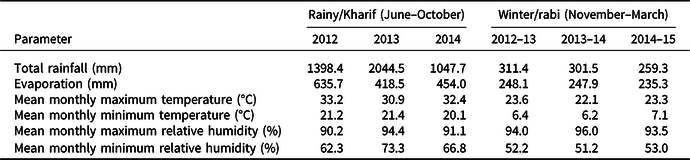
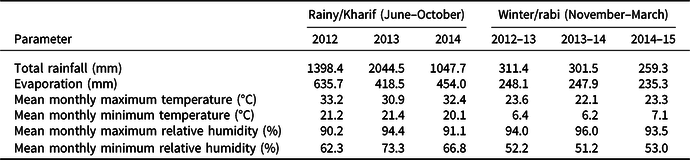
A field experiment was carried out on rainfed maize-based intercropping followed by wheat at the Research Farm of ICAR – Indian Institute of Soil and Water Conservation, Dehradun, India located in the Indian sub-Himalayas (Lat. 30°20′N, Long. 75°52′E) at 520 m above mean sea level on 2% slope during 2011–15. The climate of the study area is humid subtropical with hot summers and cold winters. May and June are the hottest months with a mean daily maximum temperature being 36ºC, while January is the coldest month with a mean daily minimum temperature of 3ºC. The mean annual rainfall is 1620 mm, of which 85% is received from June to October. Pan evaporation varied between 1.20 and 7.44 mm day−1. Summary of weather parameters during the experimental period recorded at meteorological observatory adjacent to the experimental site are given in Table 1.
Summary of weather parameters during the experimental period
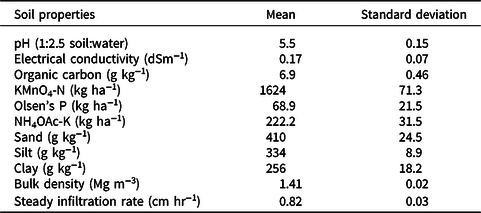
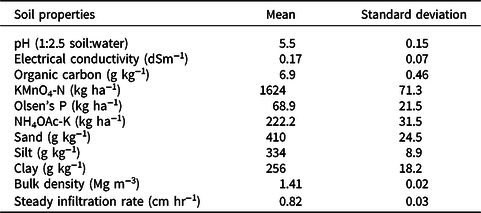
The study site soil was characterized as silty loam with hyperthermic Typic Udorthents (USDA classification). Three random soil samples were collected from each treatment plot to a depth of 0.3 m. Then, the composite soil sample was prepared by mixing all samples of a treatment plot. Standard chemical parameters of the first horizon (0–0.3 m) were measured before the experiment started. Each composite sample was air-dried, powdered, and passed through a 2 mm sieve for determination of electrical conductivity and pH in 1:2.5 soil:water suspension (Jackson, Reference Jackson1973), organic carbon by Walkley and Black method (Reference Walkley and Black1934), available nitrogen (N) by the alkaline KMnO4 method (Subbaiah and Asija, Reference Subbaiah and Asija1956), Olsen-P (Olsen et al., Reference Olsen, Cole, Watanabe and Dean1954), and NH4OAc-K (Jackson, Reference Jackson1973). Soil texture was determined using a Bouyoucos hydrometer (Bouyoucos, Reference Bouyoucos1927). Bulk density and steady infiltration rate were determined by the undisturbed core sample method (Black Reference Black1965) and the double ring infiltrometer. Measurements indicated a slightly acid pH, a normal soil organic carbon, a medium available P, and low available K. The initial soil’s physical–chemical properties of the experimental field are given in Table 2.
Initial soil properties of surface soil (0–15 cm)
Experimental details
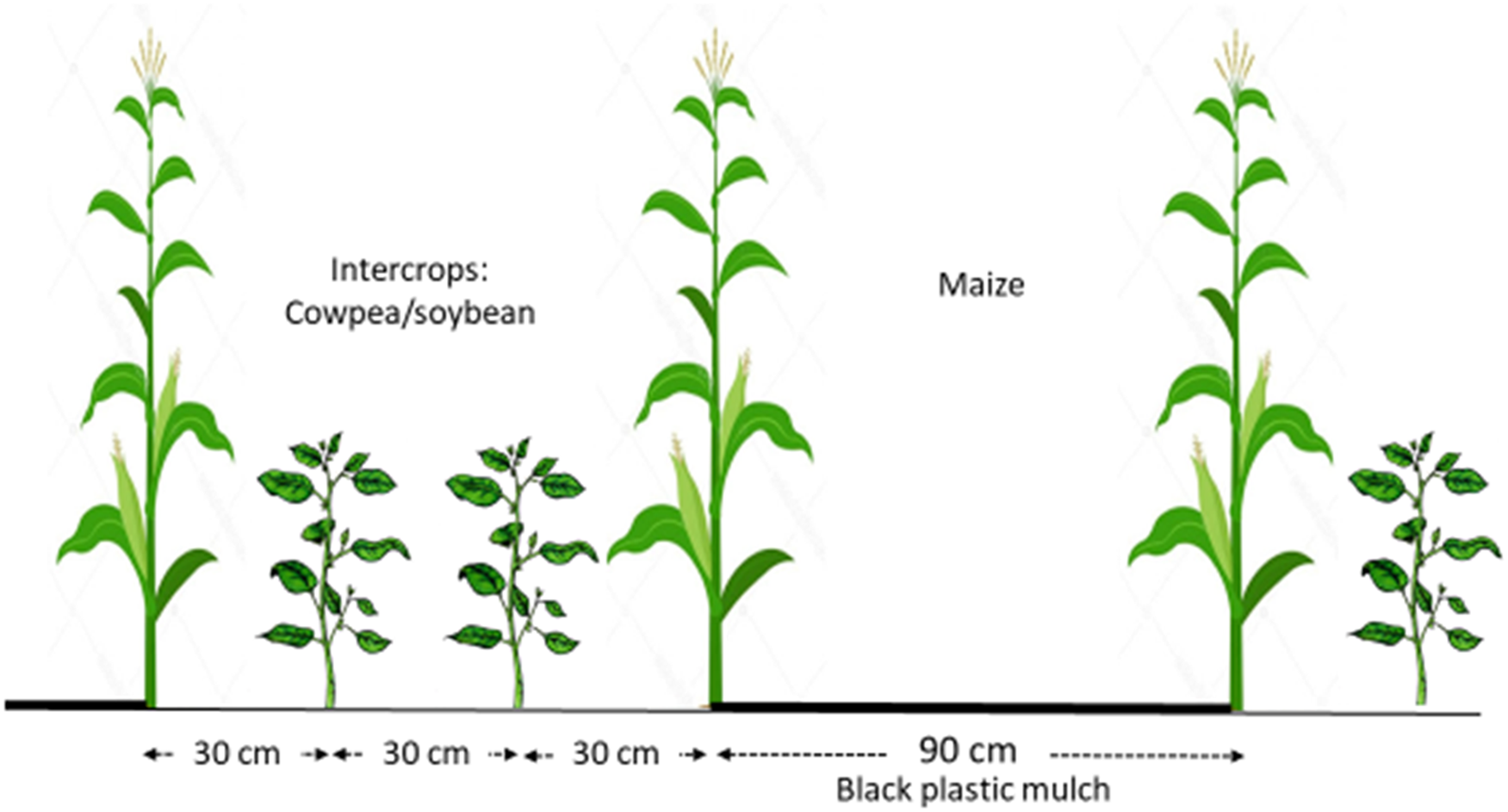
The field experiment was conducted with maize-based intercropping [cowpea (Vigna unguiculata L.) and soybean (Glycine max L.)] system followed by wheat (Triticum aestivum L.). During the Kharif (June–September), maize crop was grown in four treatments, T1 – maize (90 cm row to row and 20 cm plant-to-plant spacing or 90 × 20 cm), T2 – maize (90 × 20 cm) with plastic mulch (alternate row), T3 – maize (90 × 20 cm) + cowpea (two rows of cowpea at 30 × 30 cm spacing by leaving 30 cm spacing from adjacent maize rows) + plastic mulch (alternate row), and T4 – maize (90 × 20 cm) + soybean (two rows of soybean at 30 × 30 cm spacing by leaving 30 cm spacing from adjacent maize rows + plastic mulch (alternate row) followed by wheat (Suppl. Material Fig. S1). These systems were arranged in a randomized block design (RBD) with three replications in the plot size of 9 × 8.1 m (72.9 m2). Maize (maize composite – ‘Kanchan’) and other intercrops (cowpea – ‘Pusa Komal’, soybean – ‘PS-1359’) were sown across the field slope (2%) from the second fortnight of June to the first fortnight of July during the experimentation periods depending upon the onset of the monsoon and harvested in the second fortnight of September. Two rows of intercrops (cowpea or soybean) and black plastic mulch (100 µm thickness) were sown/applied between alternate maize rows as per the treatment (Figure 1). In maize, half of the recommended amount of N and full recommended amount of phosphorus (P) and potassium (K) were applied as basal dose in the form of urea (46% N), diammonium phosphate (18% N and 46% P2O5), and muriate of potash (60% K2O), respectively. The remaining N was applied in two equal split doses at knee height [30–35 days after sowing (DAS)] and tasselling (60 DAS) stages of crop growth. Sowing was conducted manually, two seeds per hole and thinned to one after emergence. Weeding was done when necessary after planting. After harvesting rainy season (Kharif) crops, the wheat crop was sown in all plots during the winter (rabi).
Field layout of maize-based intercrops (cowpea/soybean) and plastic mulch in alternate strips.
Measurement of runoff and soil loss
Runoff data were recorded at 8 am (local time) after each runoff producing rainfall event from 15 June to 15 September in all the years (2012–2014) using a multi-slot devisor. In multi-slot devisor, the plot runoff flowed through 11 slots, but runoff of only 1 was collected in collection chamber of dimension 1.2 × 1.2 × 1.0 m3. Thus, only one-eleventh representative runoff water was collected, and the remaining runoff was safely discharged through a drainage channel. Daily runoff depth (mm) and runoff (%) were calculated using the collected runoff water and rain gauge data recorded adjacent to the experimentation site. The addition of all runoff depths gave the seasonal runoff. The collected runoff water was thoroughly stirred, and 1 L was taken from each tank to determine the accumulated sediment in each plot’s runoff tank. The resultant suspensions were filtered using Whatman 42 filter paper with a pore size of 2.5 µm. The sediment in the filter paper was oven-dried at 105°C for 24 h and weighed to obtain soil loss data. Soil and nutrient loss was calculated as per the given Eqs. (1) and (2), respectively, (Ali et al., Reference Ali, Khan and Bhatti2007 and Meng et al., Reference Meng, Fu, Tang and Ren2008).
 $${\rm{Soil}}\;{\rm{Loss}}\;\left( {{\rm{kg}}\;{\rm{h}}{{\rm{a}}^{ - 1}}} \right) = {{{\rm{Sediment}}\;{\rm{weight}}\;\left( {{\rm{g}}\;{{\rm{l}}^{ - 1}}} \right) \times {\rm{Runoff}}\;\left( {{\rm{l}}\;{\rm{h}}{{\rm{a}}^{ - 1}}} \right)} \over {{{10}^3}}},$$
 $${\rm{Nutrient}}\,{\rm{loss}}\,({\rm{kg}}\;{\rm{h}}{{\rm{a}}^{ - 1}}) = {{{\rm{Nutrient}}\;{\rm{content}}\;\left( {m{\rm{g}}\;{\rm{k}}{{\rm{g}}^{ - 1}}} \right) \times {\rm{Soil}}\;{\rm{loss}}\;\left( {{\rm{kg}}\;{\rm{h}}{{\rm{a}}^{ - 1}}} \right)} \over {{{10}^6}}}.$$
Measurement of yield and economic analysis
The maize and wheat yields were estimated from the whole plot except a 1-meter border from all four sides, leaving the effective plot size (7 × 6.1 = 42.7 m2). At maturity, maize and wheat were manually harvested by cutting the crops from 0.05 m and 0.10 m above the ground. Pod yield of cowpea was determined by adding several pickings yield. Soybean was harvested when 80% of the pods had turned brown. The whole plant was uprooted and threshed to obtain the soybean yield.
The yield was expressed in kg ha−1 and then converted into maize equivalent yield (MEY). MEY was calculated to compare several cropping systems’ performance by altering the economic yield of each crop into maize equivalent on a price basis, using Eq. (3) (Gitari et al., Reference Gitari, Karanja, Gachene, Kamau, Sharma and Schulte-Geldermann2018).
 $${\rm{MEY}}\;\left( {{\rm{kg}}\;{\rm{h}}{{\rm{a}}^{ - 1}}} \right) = {\rm{MY}}\left( {{\rm{kg}}\;{\rm{h}}{{\rm{a}}^{ - 1}}} \right) + \;{{{\rm{LY}}\;\left( {{\rm{kg}}\;{\rm{h}}{{\rm{a}}^{ - 1}}} \right) \times {\rm{LP}}\left( {{\rm{US}}\$ \;{\rm{k}}{{\rm{g}}^{ - 1}}} \right)} \over {{\rm{MP}}\left( {{\rm{US}}\$ \;{\rm{k}}{{\rm{g}}^{ - 1}}} \right)}},$$
where, MEY = maize equivalent yield, MY = maize yield, LY = legume yield, LP = minimum support price of legume, and MP = minimum support price of maize.
The cost of inputs (seed, fertilizers, pesticides and plastic mulch, etc.) and labor charges were included in calculating the total cost of cultivation for economic analysis. The cost of inputs was estimated based on local market prices. Plastic mulch was removed carefully before the crop harvest and applied again for the next two seasons. As the same plastic mulch was used for three seasons, the plastic mulch input cost reduced to one-third. The time worked by labor for different cultural activities (land preparation, sowing, weeding, earthing up, pod picking, and harvesting) was converted into man-day (8 h duration) and paid at the rate of US$ 4.2 day−1. Gross income was taken as the total value of economic yield. The net return for each cropping system was estimated by subtracting the total cost of cultivation from the gross return. Benefit:cost (B:C) ratio was calculated as gross return divided by the cost of cultivation.
Measurement of crop water-use and rainwater-use efficiency
The amount of soil moisture within the root zone depth (0.6 m) was used to estimate rainwater-use efficiency (RWUE). The actual crop water use was calculated using the following water balance Eq. (4) (Kar and Kumar, Reference Kar and Kumar2007):
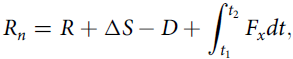 $${R_n} = R + {\Delta}S - D + \int_{{t_1}}^{{t_2}} {{F_x}dt} ,$$
where Rn = net rainwater used during the cropping season (mm), R = rainfall during the cropping season (mm), ΔS = change in soil moisture storage (mm), D = runoff (mm), Fx = vertical flux of soil water due to capillary action over time t (mm day−1), and t = time of cropping season (day).
Change in soil moisture, ΔS, in the root zone was determined using the following Eq. (5):
 $$\Delta {\rm{S}} = {{\left( {{{\rm{M}}_2} - {{\rm{M}}_1}} \right) \times {\rho _{\rm{b}}} \times {\rm{d}}} \over {100}}$$
where M1 and M2 are the gravimetric soil moisture (%) in the beginning and end of the cropping season, ρb = Bulk density (Mg m−3), and d = root zone depth (mm).
RWUE was determined by dividing the grain yield (maize equivalent in this study) (kg ha−1) by the net rainwater (mm) used in the season. Rainwater productivity was calculated and expressed in kg ha−1 mm−1.
Statistical analysis
The differences between treatments were tested by performing the analysis of variance (ANOVA) procedure (Gomez and Gomez Reference Gomez and Gomez1984) using SAS statistical software (SAS Institute Inc., 2011). Comparison of means was carried out by a Tukey’s HSD post hoc test at p ≤ 0.05.
Results
Crop production and rainwater-use efficiency
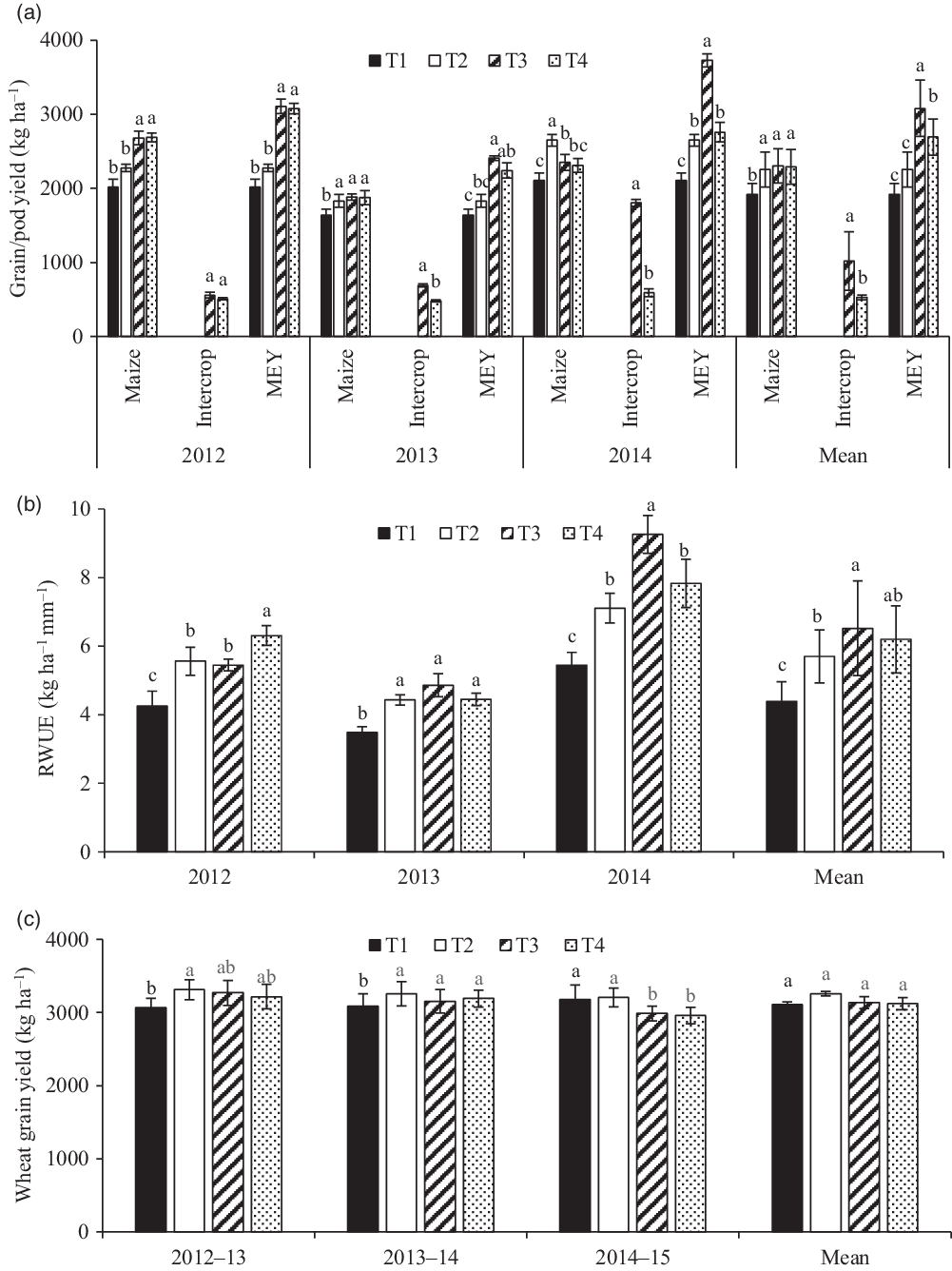
Plastic much treatment had a significant (p ≤ 0.05) effect on the maize grain yield (Figure 2). On average, maize grain yield under plastic mulch treatment (T2) was 17% higher compared to that of non-plastic mulch treatment (T1). The reduced weed infestation and improved soil moisture regime in the root zone due to plastic mulch might have increased maize grain yield. The effect of growing intercrops with maize on 3-year mean maize grain yield was observed nonsignificant. However, an increase of almost 18 and 2.5% in maize grain yield was reported in the years 2012 and 2013, respectively. Cowpea and soybean intercrops caused a 10–11% significant loss of maize grain yield in 2014. Over the 3 years of experimentation, cowpea pod yield was 93% higher than the soybean yield. MEY of T3 (cowpea) was significantly higher than the other treatments in all the years and mean (except in the year 2012, where it was statistically higher with T1 and T2 but equal with T4). Averaged across the 3 years, MEY of treatment T3 was 37%, and 14% higher than treatment T2 and T4 (soybean), respectively, (Figure 2a).
Effect of different treatments on (a) maize grain yield, intercropped cowpea/soybean pod yield and MEY, (b) RWUE, and (c) wheat grain yield grown on residual moisture after maize harvest. Bars show ± standard errors. Within a given season, different lowercase letters indicate significant differences (p ≤ 0.05) among treatments. The treatments are as sole maize (T1); sole maize with plastic mulch (T2); maize and cowpea under plastic mulching (T3); and maize and soybean under plastic mulching (T4).
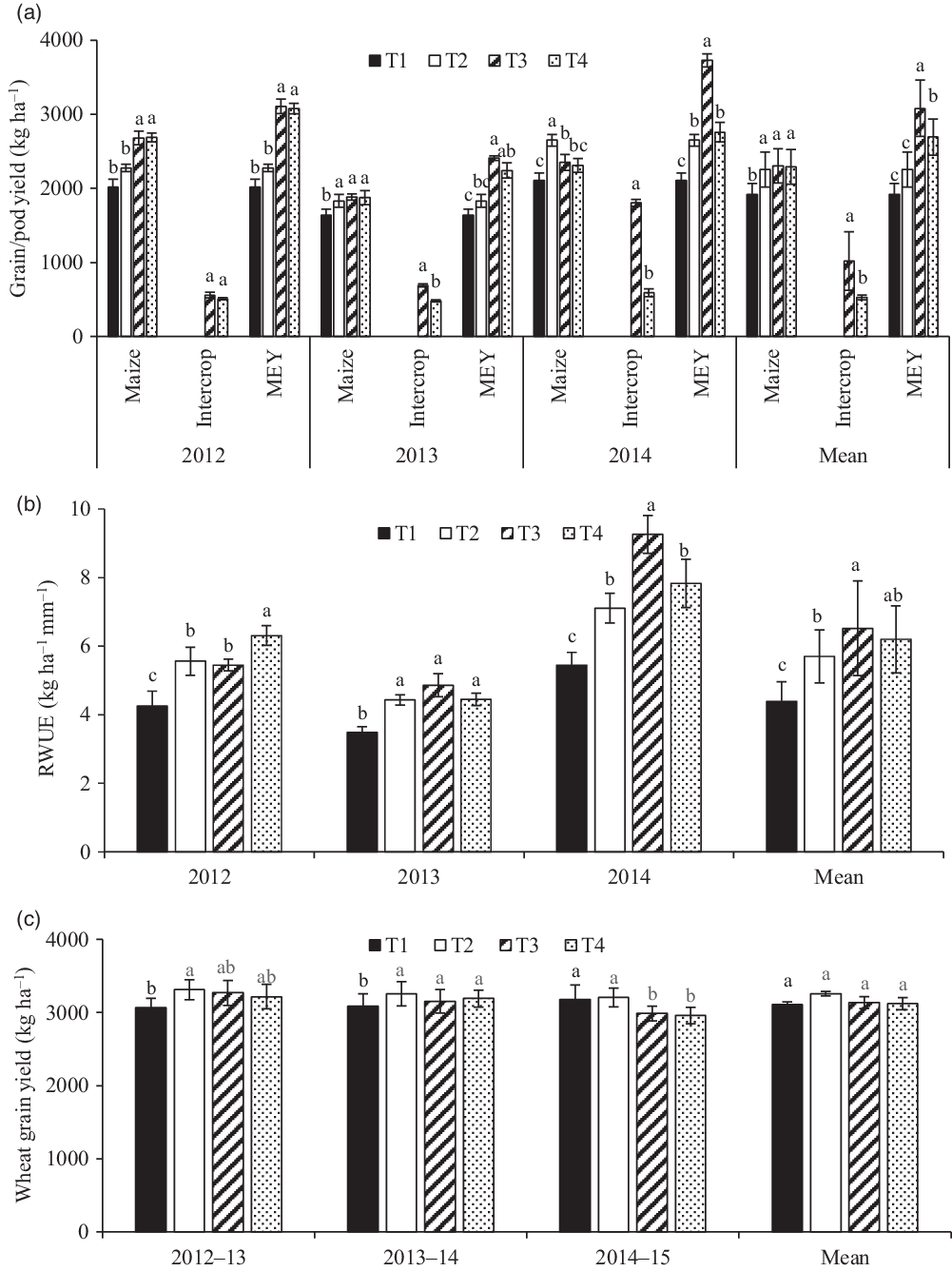
Application of plastic mulch between alternate maize rows has significantly (p ≤ 0.05) affected the RWUE over the experimental years (Figure 2b). The RWUE of maize in T2 treatment was 31, 27, 30, and 29% greater compared to T1 treatment in 2012, 2013, 2014, and 3 years’ average, respectively. The average RWUE of intercropped maize under cowpea (T3) was recorded the highest and was 14 and 5% greater compared to sole maize with plastic mulch (T2) and intercropped maize with soybean (T4), respectively. It was also found that laying of plastic mulch in maize + cowpea cropping system (T3) increased the MEY to the extent of 65 % as compared to growing maize without intercrop and plastic mulch (T1), corresponding to mean RWUE of 6.52 and 4.39 kg ha−1 mm−1, respectively.
The yields of the different crops and total straw yield are presented in Supplementary Material Table S1. Despite the lack of significant differences, the grain yield of wheat grown in the T1 field was lower than that of other fields across the seasons (Figure 2c). The wheat grain yield in cowpea and soybean intercropped (T3 and T4) fields was numerically higher than the sole maize field but indicated statistical similarities irrespective of the seasons. The superiority of T3 – wheat cropping system was observed in terms of grain and straw yield.
Profitability
The economics of various maize-based intercropping treatments is given in Table 3. The cost of cultivation of treatment maize + cowpea + plastic mulch (T3) and maize + soybean+ plastic mulch (T4) was equal and was the highest among all the treatments. This treatment had 58 and 3% higher cultivation costs than sole maize and sole maize with plastic mulch, respectively. The highest gross return (US$ 741 ha−1) and net return (US$ 346 ha−1) were observed in maize + cowpea + plastic mulch treatment (T3) with the highest B:C ratio of 1.86. The lowest gross return (US$ 437 ha−1) and B:C ratio (1.40) was estimated for sole maize (T1) and sole maize with plastic mulch (T2), respectively. The highest net return under maize + cowpea + plastic mulch treatment was observed 85 and 29% higher than sole maize and maize + soybean + plastic much treatment, respectively.
Economics of maize-based intercropping with different treatments: sole maize (T1); sole maize with plastic mulch (T2); maize and cowpea under plastic mulching (T3); and maize and soybean under plastic mulching (T4)

Runoff and soil loss
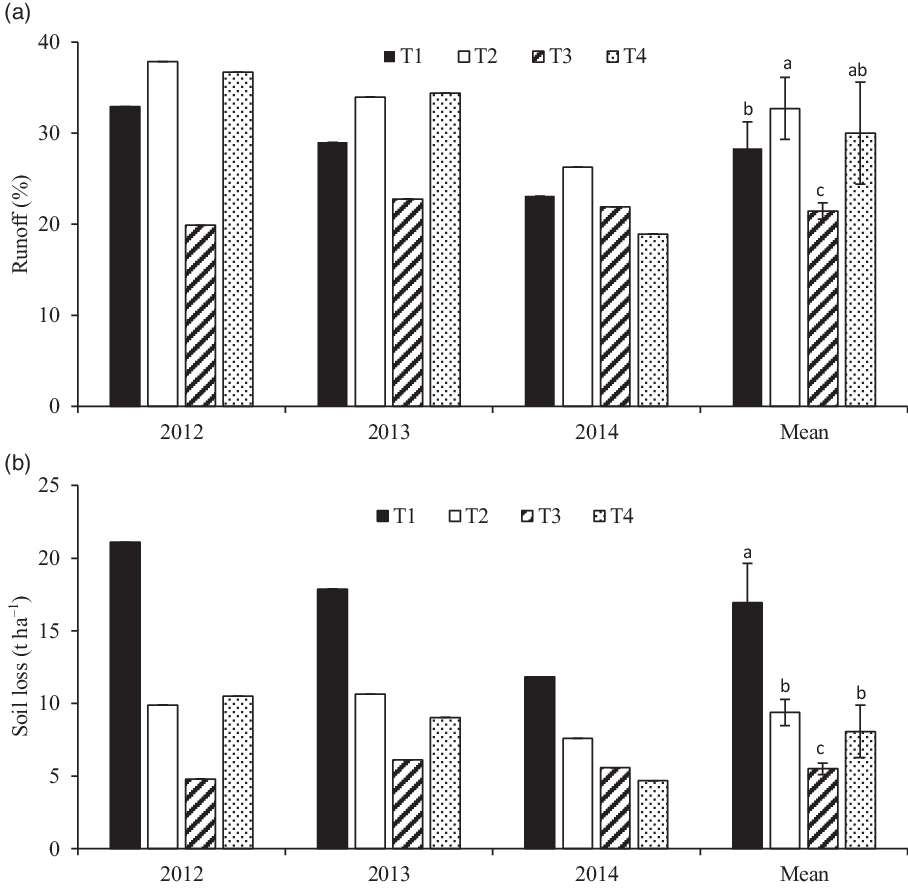
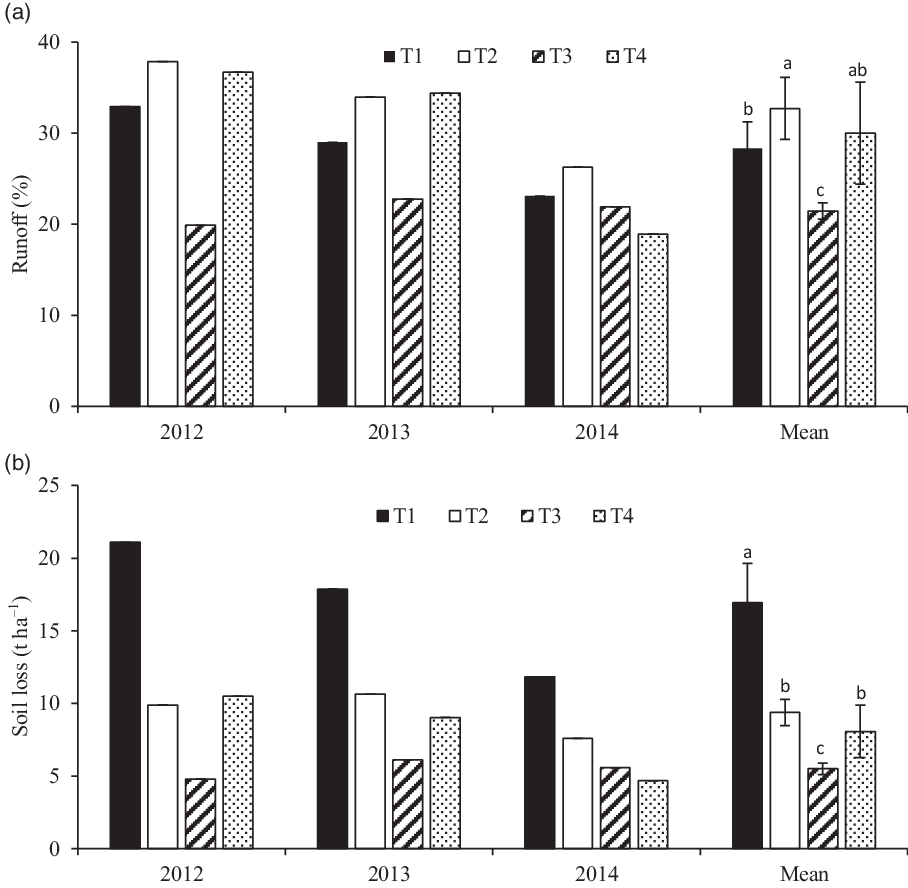
During 3 years of experimentation, total of 4489 mm rainfall with 80 runoff events (1398 mm rainfall with 27 runoff events in 2012, 1117 mm rainfall with 31 runoff events in 2013, and 1047 mm precipitation with 22 runoff events in 2014) were observed in the maize crop growing season. Among all the treatments, the highest runoff (26–38%) was recorded in treatment T2 in which maize was planted at 90 × 20 cm spacing with alternate plastic mulch application. Whereas the highest soil loss (12–21 t ha−1) was recorded in T1 in which maize was planted at 90 × 20 cm spacing without plastic mulching. The minimum runoff (20–23%) and soil loss (5–7 t ha−1) were recorded in T3 – maize + cowpea + plastic mulch (Figure 3). Three years averaged data showed that by applying plastic mulch between two alternate maize rows, which covered 50% of the cropped area, runoff increased by 15.6% (308–356 mm) (Figure 3a), and soil loss decreased by 44.4% (16.9–9.4 t ha−1). Furthermore, soil loss was reduced by 41.5% (9.4–5.5 t ha−1) and 13.8% (9.4–8.1 t ha−1) by introducing intercrops of cowpea (T3) and soybean (T4), respectively, (Figure 3b, Suppl. Material Table S2).
Effect of different treatments on (a) runoff and (b) soil loss from rainy season crops under the experimental years. Bars show ± standard errors. Within mean, different lowercase letters indicate significant differences (p ≤ 0.05) among treatments. The treatments are as sole maize (T1); sole maize with plastic mulch (T2); maize and cowpea under plastic mulching (T3); and maize and soybean under plastic mulching (T4).
Nutrient loss
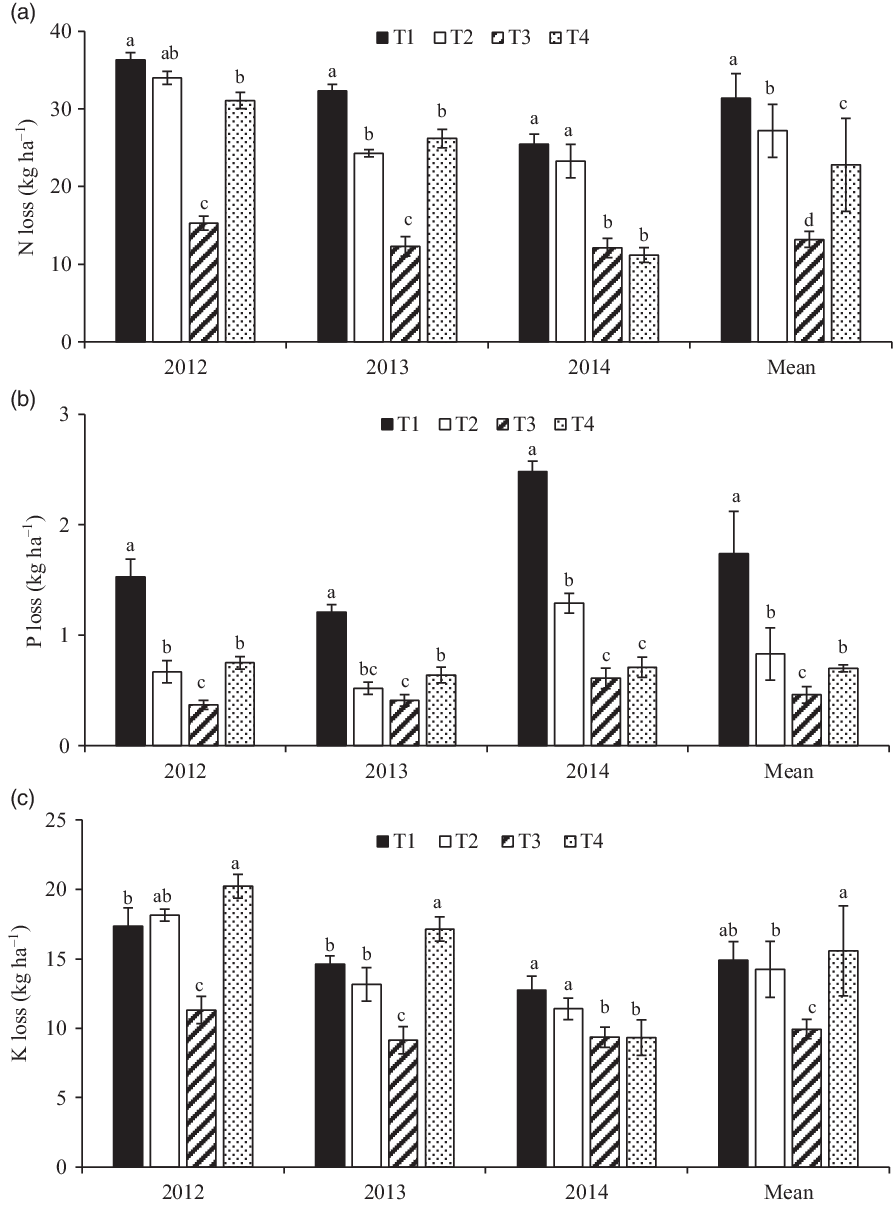
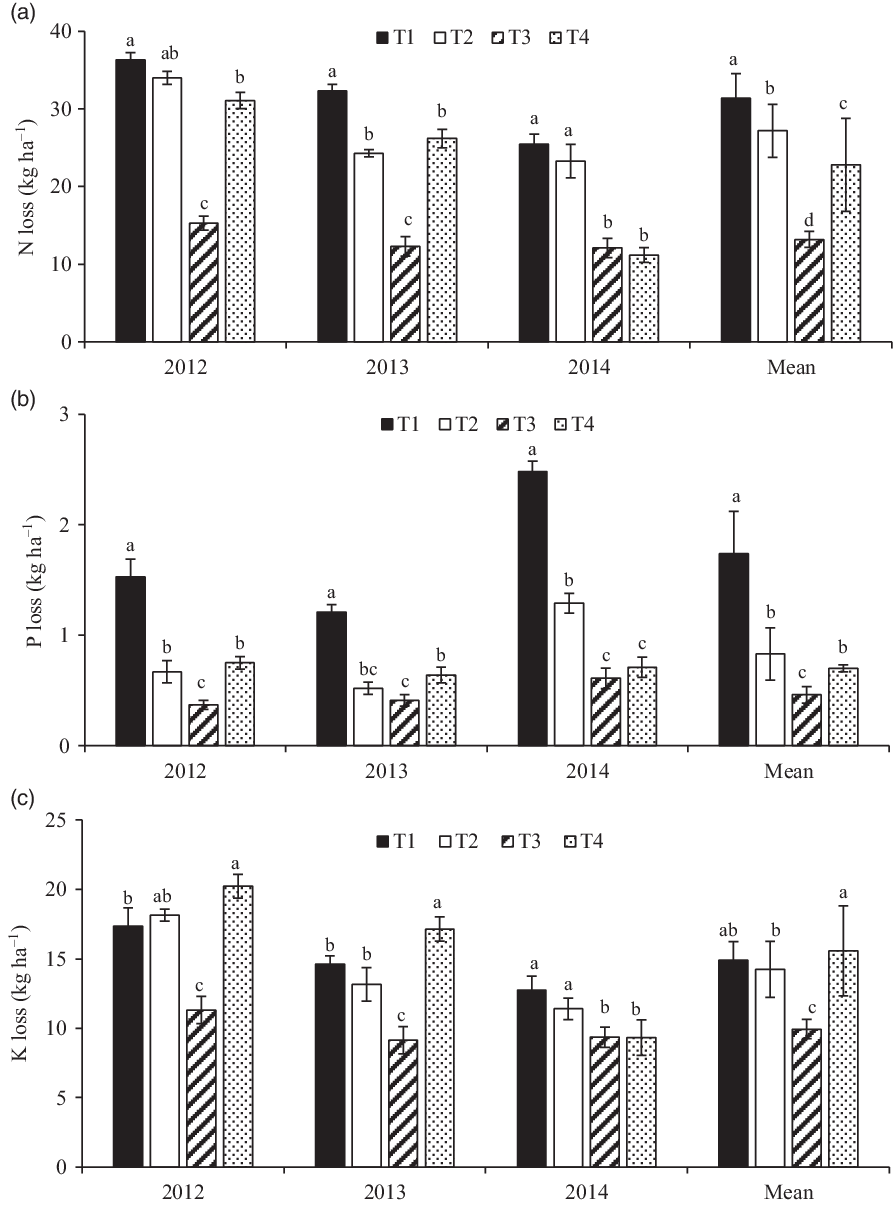
Different intercrops in maize with plastic mulch led to significant (p ≤ 0.05) differences in N, P, and K losses from the maize field (Figure 4; Suppl. Material Table S3). The highest N losses through runoff water were observed in treatment T1 – sole maize and the lowest in treatment T3 – maize (90 × 20cm) +cowpea with alternate plastic mulch during all the experimental years. By averaging 3 years of data, we observed that the N loss through runoff water varied from 13.2 to 31.4 kg ha−1 (Figure 4a). Furthermore, N loss trends under different treatments showed that plastic mulch and intercrops arrested the runoff considerably. Like N loss, the highest and the lowest P loss through runoff water was observed in treatments T1 and T3, respectively, during the 3 study years (Figure 4b). By introducing intercrops (cowpea and soybean) with plastic mulch application, the mean P loss significantly (p ≤ 0.05) reduced from 1.74 to 0.83, 0.43 and 0.70 kg ha−1 in treatment T2 – maize (90 × 20cm) with alternate plastic mulch, T3 – maize (90 × 20cm) +cowpea with alternate plastic mulch and T4 – maize (90 × 20cm) +soybean with alternate plastic mulch, respectively. Among all the experimentation years, the highest K loss through soil loss was observed in T4 – maize (90 × 20cm) +soybean with alternate plastic mulch, but it was statistically similar to K loss in treatments T1 and T2. The 3 years’ mean data showed a similar trend too. The lowest K loss was observed in tretmentatT3 – maize (90 × 20cm) +cowpea with alternate plastic (Figure 4c).
Effect of different treatments on (a) nitrogen loss, (b) phosphorus loss, and (c) potassium loss through runoff from rainy season crops. Bars show ± standard errors. Within a given season, different lowercase letters indicate significant differences (p ≤ 0.05) among treatments. The treatments are as sole maize (T1); sole maize with plastic mulch (T2); maize and cowpea under plastic mulching (T3); and maize and soybean under plastic mulching (T4).
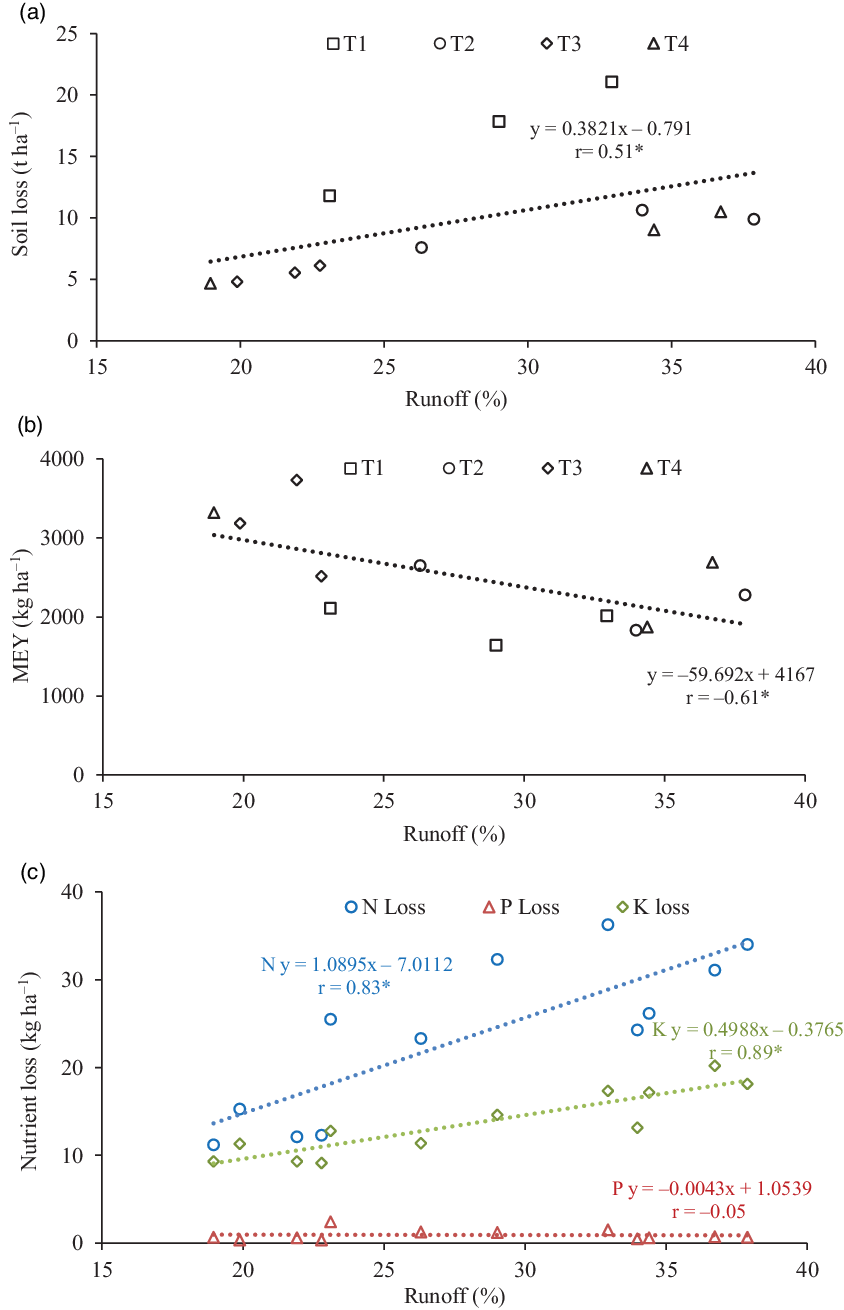
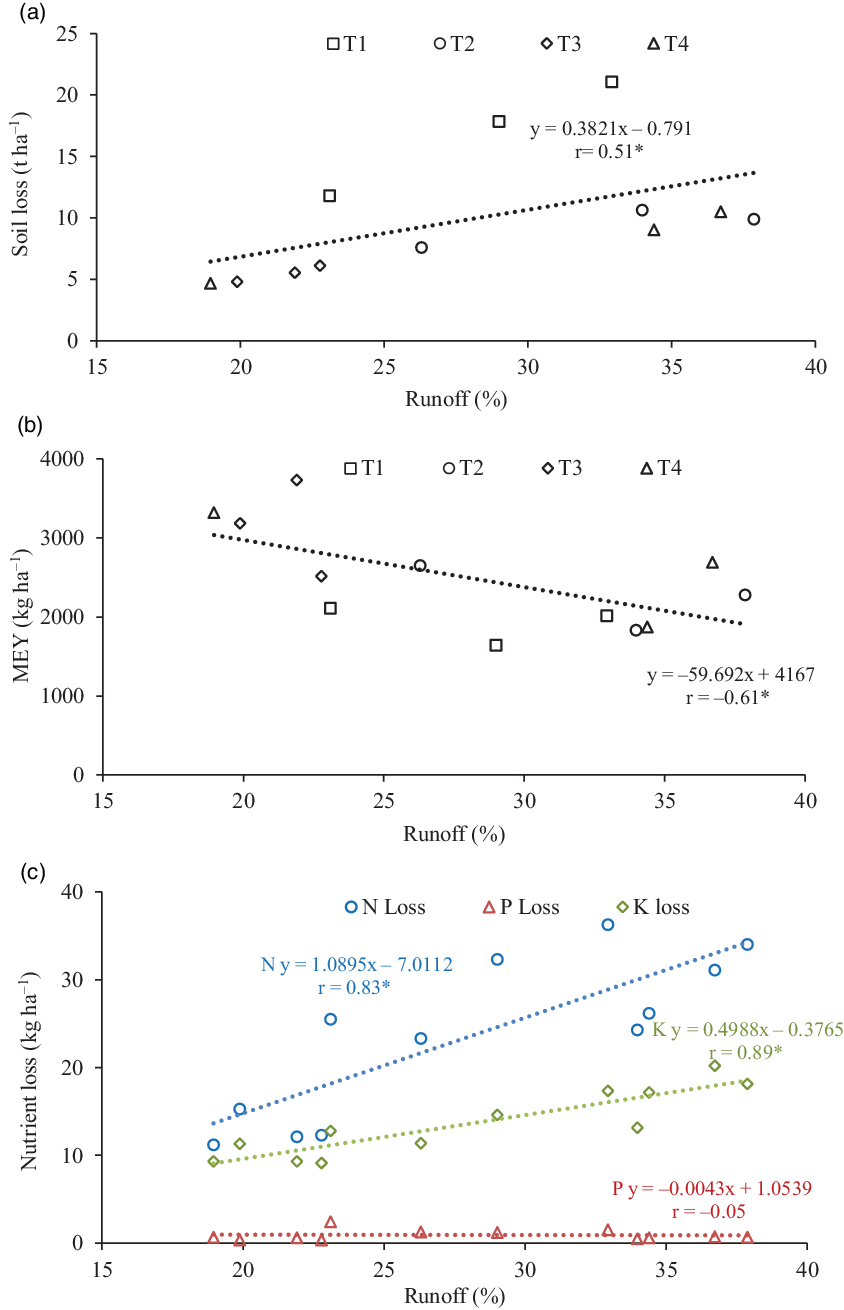
The runoff effect across the seasons and treatments was observed on soil loss, crop yield, and nutrient loss (Figure 5). A significant (p ≤ 0.05) positive correlation (r = 0.51) between soil loss and runoff in the maize crop was found for all 3 years of data. A significant (p ≤ 0.05) negative correlation (r = − 0.61) was observed between the MEY and runoff during the cropping season. N and K loss were positively correlated with the runoff, but there was no correlation between P loss with runoff.
Regression relationship of runoff during maize growing season with (a) soil loss in maize, (b) MEY, and (c) nutrient (NPK) loss in maize crop. *denotes significant at p ≤ 0.05. The treatments are as sole maize (T1); sole maize with plastic mulch (T2); maize and cowpea under plastic mulching (T3); and maize and soybean under plastic mulching (T4).
Discussion
Effect of different treatments on intercrop yields and economics
Among the experimental years, the highest MEY was observed in the first (2012) and third years (2014) probably due to optimum and well-distributed rainfall (1398 mm with 45 rainy days and 1047 mm with 42 rainy days, respectively) during the crop duration (June–September). Whereas, the lowest MEY was recorded in the second year (2013) due to excessive and incessant rainfall (2044 mm, which was 40% higher than the 40 years average with 60 rainy days with 10 days having more than 50 mm rainfall) during the crop duration.
When plastic mulch was applied between alternate rows of maize (T2), maize productivity increased significantly. This increase in yield might be because there was a reduction in weed infestation (Mohanty et al., Reference Mohanty, Sonkar and Marathe2002; Nwosisi et al., Reference Nwosisi, Nandwani and Hui2019) and improved soil moisture regime to the root zone for a long time under the inorganic mulch treatments. Our result was corroborated with the findings of Qin et al. (Reference Qin, Hu and Oenema2015), who reported that the mean effect of plastic mulching on maize yield was 60% at low water input (<370mm) and 40% at high water input (>370mm). Furthermore, when two rows of legume (cowpea in T3 and soybean in T4) were introduced between alternate rows of maize other than plastic mulched rows, the productivity of maize did not change much compared to sole maize with plastic mulch (T2). Similar types of results were also reported by several researchers worldwide (Smith et al., Reference Smith, Snapp, Dimes, Gwenambira and Chikowo2016; Sharma et al., Reference Sharma, Singh, Mandal, Kumar, Alam and Keesstra2017; Snapp et al., Reference Snapp, Grabowskia, Chikowoa, Smith, Anders, Sirrine, Chimonyo and Bekunda2018). The effect of legume on maize yield was negligible due to no competition for sunlight and resources between the companion crops in the system having different growth habits. Both the crops belong to the other plant family, different root and canopy architecture and different nutrient demands, etc., (Masvaya et al., Reference Masvaya, Nyamangara, Descheemaeker and Giller2017). After considering the intercrop yield, the calculated MEY under the intercropping system was observed significantly higher, which confirms the advantage of such a system over sole cropping with or without plastic mulch. This remarkable increase in MEY has been attributed to better light interception and transmission between relay-intercropped species in the relay intercropping system. (Li et al., Reference Li, Jiang, Wollenweber, Dai and Cao2010; Xue et al., Reference Xue, Gou, Shi, Zhao and Zhang2017; Feng et al., Reference Feng, Raza, Chen, Khalid, Meraj, Ahsan, Fan, Du, Wu, Song, Liu, Bawa, Zhang, Yuan, Yang and Yang2019). The yield advantage could be due to higher land equivalent ratio (Chen et al., Reference Chen, Chai, Huang, Yu, Feng, Mu, Kong and Huang2015), efficient utilization of environmental resources, decreased pest damages (Francis et al., Reference Francis, Flor, Temple, Papendick, Sanches and Triplett1976; Willey, Reference Willey1979), suppressed weeds growth (Khola et al., Reference Khola, Dube and Sharma1999, Sharma and Banik, Reference Sharma and Banik2013), enhanced microbial activity in the rhizosphere (Taschen et al., Reference Taschen, Amenc, Tournier, Deleporte, Malagoli, Fustecd, Bru, Philippot and Bernard2017), managed plant density, row arrangement and spacing (Sharma et al., Reference Sharma, Singh, Mandal, Kumar, Alam and Keesstra2017; Yang et al., Reference Yang, Liao, Wu, Gao, Fan, Raza, Wang, Yong, Liu, Liu, Du, Shu and Yang2017), and better nutrient cycling (Sharma and Behera, Reference Sharma and Behera2009). In this experiment, different intercropping treatments with plastic mulch exhibited a significant effect on biomass production and grain yield of maize, cowpea, and soybean. Though cowpea and soybean were both leguminous crops, weed infestation was lesser in maize–cowpea intercropping than maize–soybean intercropping. This more secondary weed infestation, less runoff, soil loss, and nutrient loss (Figures 3 and 4) led to higher cowpea grain yield, and ultimately the highest MEY in maize–cowpea intercropping (T3). A similar observation was made by Lamessa et al. (Reference Lamessa, Sharma and Tessema2016), who found cowpea more promising than soybean in suppressing weed growth in the sorghum-based cropping system. This enhanced crop production level is reflected in the form of better net profit (US$ 346 ha−1) and benefit–cost ratio (1.86) in maize–cowpea intercropping (Table 2).
Effect of intercrop and plastic mulches on runoff and soil loss
Cultivation of maize in the Indian sub-Himalayan region is unlikely to be sustainable in the long term. The runoff and soil loss varied with the soil cover and soil texture. Intense and incessant rainfall can cause a high soil erosion rate, especially during the initial 20 days of crop sowing when the canopy cover is low, even on low to moderate slope gradients. The bare ground is directly impacted by raindrop forces that deteriorated aggregate stability, leaving soil pores quickly blocked by fine particles, causing soil sealing and crusting, reducing soil infiltration, and raising soil loss (Badorreck et al., Reference Badorreck, Gerke and Hüttl2013; Lu et al., Reference Lu, Zheng, Li, Bian and An2016). The soil erosion led to depletion in the nutrient status of the arable soils. Application of organic or inorganic mulches and introduction of intercrops can reduce the erosivity of raindrop by providing obstacles between raindrop and soil and overland flow in sloping agricultural lands (Khola et al., Reference Khola, Dube and Sharma1999; Nyawade et al., Reference Nyawade, Karanja, Gachene, Parker and Schulte-Geldermann2018). The soil texture of the experimental site was silty loam (sand: 41.0%; silt: 33.4%, and clay: 25.6%). The higher content of sand and silt in the soil led to higher erosiveness than textured soil as sand and silt are the most prone to water erosion (Finch et al., Reference Finch, Samuel, Lane, Finch, Samuel and Lane2014).
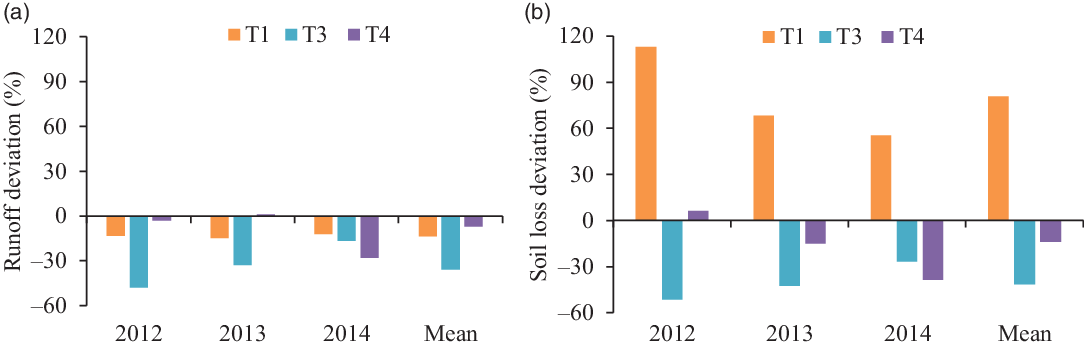
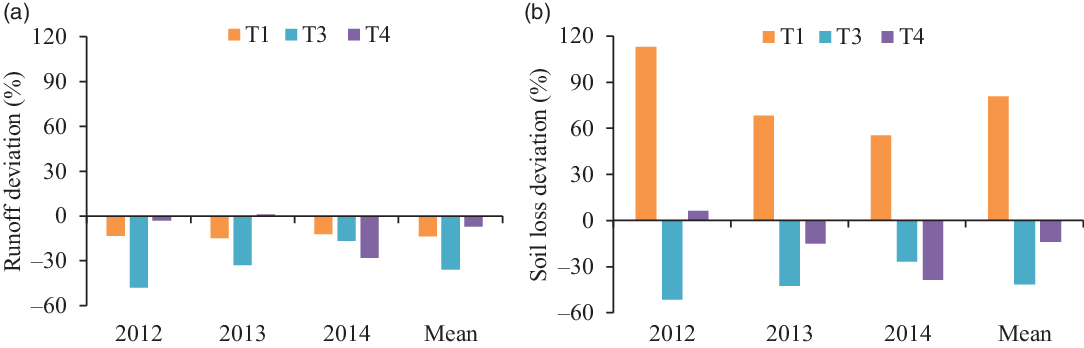
In general, runoff increased with an increase in the amount of rainfall. The average runoff of 3 years ranged from 229 to 356 mm. The average runoff was lowest in maize + cowpea + plastic mulch (T3, 229 mm, corresponding to 22%) and the highest in maize +plastic mulch (T2, 356 mm, corresponding to 33%). Runoff soil loss data revealed that application of plastic mulch in alternate maize rows increased runoff from 308 to 356 mm (Δ = +15.6%), but corresponding soil loss decreased from 16.9 to 9.4 t ha−1 (Δ = − 44.4%) (Figure 6, Suppl. Material Table S2). This change in runoff and soil loss was probably due to the impermeable nature of plastic, which acted as a soil cover and did not allow infiltration but overflowed the runoff. Since there was no direct interaction between raindrops and soil particles (of 50% area), no loosening of soil particles occurred through splash erosion, and overland flow was relatively clear from the soil. The mean data indicated that the runoff percent reduction varied from 7.0 to 35.8% compared with that under sole maize with plastic mulch (Figure 6a). The average runoff percent reduction of 3 years was higher in cowpea (−35.8%) followed by sole maize (−13.4%). Similarly, the lowest soil loss (5–7 t ha−1) was reported in T3 – maize + cowpea + plastic mulch (Figure 3), which was 41.4 % lower than that under sole maize with plastic mulch (Figure 6b). This reduction in runoff and soil loss might be due to the quick establishment of canopy cover (60–70% at 30 DAS) during the rainy season, which added in diffusing the rainfall impact, thereby resulting in lower runoff and soil loss (Sharma and Arora, Reference Sharma and Arora2012; Sharma et al., Reference Sharma, Singh, Mandal, Kumar, Alam and Keesstra2017). These results are in accord with Guo et al. (Reference Guo, Zhang, Li and Xu2019), who also reported that vegetative cover plays a significant role in reducing sediment yield and surface runoff. Our results are also per those reported by Singh et al. (Reference Singh, Chaudhary, Somasundaram, Sinha, Mohanty, Hati, Rashmi, Patra, Chaudhari and Lal2020), who found that intercropping systems, viz., soybean + maize (1:1), soybean + pigeon peas (2:1), and maize + pigeon peas (1:1) recorded 31.5–36.2% reduction in runoff and 42–51% reduction of soil loss compared with that under cultivated fallow in vertisols of central India.
Deviation percentage in (a) runoff and (b) soil loss from 2012 to 2014 under different treatments (T1 is sole maize; T3 is maize and cowpea under plastic mulching; and T4 is maize and soybean under plastic mulching) over sole maize with plastic mulch (T2).
The positive correlation coefficient (r = +0.51) between runoff soil loss indicated that runoff accelerated the soil loss from the agricultural field (Figure 5a). The topsoil loss occurred in the form of sheet, rill, and interrill erosion, which led to a reduction in the field’s fertility status. This reduction in fertility status justified the negative correlation coefficient (r = −0.61) between runoff and MEY (Figure 5b). Similar trends were also reported by Sharma et al. Reference Sharma, Singh, Mandal, Kumar, Alam and Keesstra2017 under similar climatic and geographical conditions.
Effect of intercrop and plastic mulches on nutrient loss
Nutrients losses were significantly affected by different intercropping treatments. Across treatments, the highest NPK losses were recorded in the sole maize field as maize delayed to establish a protective cover and left the soil highly exposed to erosion (Figure 4). The minimum losses of NPK were recorded in maize + cowpea + plastic as the combined effect of plastic and rapid growth of cowpea, which provided protective soil cover and significantly minimized runoff and sediment loss in case of fine-textured soil (Nyawade et al., Reference Nyawade, Gachene, Karanja, Gitari, Schulte-Geldermann and Parker2019; Singh et al., Reference Singh, Chaudhary, Somasundaram, Sinha, Mohanty, Hati, Rashmi, Patra, Chaudhari and Lal2020). Higher N loss was observed among the nutrients than P and K mostly due to initial nutrient status and water solubility nature (Bouraima et al., Reference Bouraima, He and Tian2016). The trends of P loss within the treatments showed a positive association with runoff and soil loss, but its absolute value was relatively lower (varied from 0.46 to 1.74 kg ha−1) than N (varied from 13.2 to 31.4 kg ha−1) and K losses (changed from 99 to 14.9 kg ha−1). The lower P loss from the field might be due to slightly acidic soil of the experimental area as the acidity increases the P adsorbed and fixed as iron phosphates (Quinton et al., Reference Quinton, Catt and Hess2001). This low P loss was reflected in a very poor correlation between P loss and runoff (Figure 5c). A high correlation was observed between N and K with runoff (r = 0.83 and 0.89, respectively) as N and K mobilize in runoff water due to their high solubility and mobility (Bertol et al., Reference Bertol, Engel, Mafra, Bertol and Ritter2007). Generally, variation in the nutrient loss was associated with the runoff and soil loss; higher runoff and soil loss led to higher nutrient loss with some exceptions. Our results were corroborated with the findings of other researchers under various intercropping systems (Lakaria et al., Reference Lakaria, Narayan, Katiyar and Biswas2010; Kurothe et al., Reference Kurothe, Kumar, Singh, Singh, Tiwari, Vishwakarma, Sena and Pande2014; Sahoo et al., Reference Sahoo, Madhu, Muralidharan and Sikka2015; Sharma et al., Reference Sharma, Singh, Mandal, Kumar, Alam and Keesstra2017; Bashagaluke et al., Reference Bashagaluke, Logah, Opoku, Sarkodie-Addo and Quansah2018; Singh et al., Reference Singh, Chaudhary, Somasundaram, Sinha, Mohanty, Hati, Rashmi, Patra, Chaudhari and Lal2020).
Conclusion
The results suggest that the benefit of cereal (maize) + legume (cowpea) intercrops with plastic mulch on productivity and soil erosion, and thus affirm intercropping as an alternative strategy to sustain the productivity and to control nutrients loss in smallholder maize farming systems. We concluded that maize + cowpea intercropping with plastic mulch system reduced runoff and soil loss by 36 and 41%, respectively, than sole maize crop with plastic mulch. In this system, the nutrient loss was consistently lower. The yield expressed in maize equivalents was higher in maize + cowpea intercropping with plastic mulch, indicating the need to adopt maize with alternate legume intercrops and plastic mulch. This strategy must be done to guarantee high yield stability to the smallholder farmers of foothills of the Indian sub-Himalayas. However, such intercropping systems’ compatibility and resource productivity should be examined across other world regions.
Acknowledgments
The authors are grateful to Dr P. K. Mishra, Director of ICAR-IISWC, Dehradun for their thoughtful guidance and encouragement during the study. We thank Mr Surat Singh and Dr Gambhir Singh for their technical help in conducting field and laboratory analysis.
Financial support
None.
Supplementary Material
To view supplementary material for this article, please visit https://doi.org/10.1017/S0014479721000053.