Introduction
Local or community food systems are complex networks of relationships between actors including producers, distributors, retailers and consumers grounded in a particular place. These systems are the unit of measure by which participants in local food movements are working to increase food security and ensure the economic, ecological and social sustainability of communities. We define the local food movement by the large number of actors such as locavore groups, farm-to-school programs and progressive restaurants that view eating as a political actReference Coit1. Although local food systems maintain the health of a particular place as a central value, this does not necessarily preclude trade with other communitiesReference Feenstra2. Members of a local food system may maintain relationships that extend beyond the spatial parameters of what they define as ‘local’, while creating and strengthening new relationships within their community. In examining the significance of local food systems and assessing their feasibility, it is important to look critically at each level of the food supply chain's influences and motivations. AllenReference Allen3 notes that doing so allows the members to work toward long-term individual empowerment by understanding the relationships that affect access to any part of the local food system. The food security of a community may be more effectively increased if all actors understand the relationships that shape their food system. One central element which influences these relationships is how ‘local’ is defined.
A number of different definitions for local have been used or recorded by researchers assessing local food systems—most informed by political or geographic boundariesReference Darby, Batte, Ernst and Roe4–Reference Peters, Bills, Wilkins and Fick10. Among the more widely circulated and popular defining parameters is the concept of food miles, which has been suggested for policy recommendationsReference Smith and MacKinnon11, Reference Nichol12. Born and PurcellReference Born and Purcell13, Coley et al.Reference Coley, Howard and Winter14 and Edwards-Jones et al.Reference Edwards-Jones, York, Cross, Plassmann, Hospido, Hounsome, Hounsome, Mila, Koerber and Truninger15 have found food miles to be a useful concept for garnering public attention, but recommend more nuanced case studies be used in individual local food systems when determining the relative effectiveness of different concepts of local food, given the inaccuracy of measuring sustainability with a single distanceReference Born and Purcell13.
Recent studies of local food systems have identified and described many of the key components of these systems. HinrichsReference Hinrichs16 reviewed the values that shape direct agricultural markets between producers and consumers and how these may create tension between food-related concepts of community and commodity. Zepeda and Leviten-ReidReference Zepeda and Leviten-Reid17 and Selfa and QaziReference Selfa and Qazi18 have conducted case study research analyzing the perspectives of consumers and producers in local food systems. Others have worked to test and clarify local food movement claims, as well as the definitions of ‘local’ used by participants in direct agricultural markets and other forms of local food distributionReference Born and Purcell13–Reference Edwards-Jones, York, Cross, Plassmann, Hospido, Hounsome, Hounsome, Mila, Koerber and Truninger15. These researchers have found a wide range of positive and negative associations made with local food. Differing perspectives on what constitutes local lead to the conclusion that, if local is also to reflect ideas of social justice and ecological sustainability, its definition cannot be based on scale aloneReference Winter19–Reference Sherriff21. What the body of literature on local food systems indicates is that ‘local’ holds connotations for many people beyond the geographic distance that the food has traveled. The local food system definitions and development must consider the agendas, interpersonal connections and emotional responses of participants at all levelsReference Hinrichs16, Reference Hinrichs22–Reference Feagan24. We believe that transparency in the characteristics of a local food system is important (particularly in retail marketing) as consumer demand for local food grows.
Increasingly, local foods are not only marketed through farmers' markets and community-supported agriculture (CSA) but also in large and small grocers from co-operatives to supermarketsReference Guptill and Wilkins25–Reference Blake, Mellor and Crane28. Demand for local food has driven this trend, and attitudes toward local food have been documented as positive, with the majority of consumers willing to pay a premium for it based on the proximity marketing aloneReference Darby, Batte, Ernst and Roe4, Reference Stephenson and Lev5, Reference Allen29. Despite the relatively large part that food retailers play in shaping food decisions, their perspectives have not yet been included in an analysis of local food definitions, nor has their role been studied as thoroughly as direct market interactions. This could be a product of what HinrichsReference Hinrichs22 describes as a binary of global versus local when framing food system localization. This binary excludes food retailers on the basis of a lack of interactions between consumer and producer, as well as the belief that their larger scales and global influences are intrinsically negativeReference Hinrichs16, Reference Selfa and Qazi18. We feel that understanding such retailers' perspectives on local foods is important for several reasons:
• First, most consumers will purchase a majority of their food from food retailersReference Selfa and Qazi18, Reference Hinrichs22, Reference Allen29. Learning how food retailers such as hyperstores, supermarkets and greengrocers define and market local food has great significance in terms of transaction volume, whereas direct agricultural markets are important for understanding the personal connections that exist between the producer and consumerReference Winter30, Reference Watts, Ilbery and Maye31.
• Second, the inclusion of large distributors as actors in local food movements may work to reconcile weaknesses raised by the economies of scale, particularly transportation and food availabilityReference Allen3, Reference Darby, Batte, Ernst and Roe4, Reference Born and Purcell13.
• Third, Norberg-HodgeReference Norberg-Hodge, Mander and Goldsmith32 suggests that it is helpful to consider institutions that are able to promote local food on a large scale (e.g., regional and national retailers that source locally). This is because small-scale efforts to develop local food systems can be isolated and scattered, while food retailers often have the resources necessary to promote these efforts to a broader audience and thus have a more significant impact. Food retailer perspectives on local food systems can inform consumer definitions, and guide them toward locally sourced options.
• Fourth, MaciasReference Macias20 calls for broader social inclusion in what is referred to as ‘local food projects’, something more feasible through large food retailers who sell local foods at prices accessible to a greater socio-economic range of consumers.
• Fifth, the influence that such retailers have may lessen the difficulties of realizing social justice and equity on a local scaleReference Allen, Fitz-Simmons, Goodman and Warner33 by making local food resources available to a greater number of community membersReference Sherriff21.
The perspectives of food retailers on local food systems merit further study, especially considering the relative volume of their potential contributions to local food movements.
As the aforementioned research suggests (and FeenstraReference Feenstra2 established), there is a need for local food system research that goes beyond simple spatial parameters such as scale, and provides strategies to strengthen these systems. These strategies include researching local food systems themselves and conducting studies intended to reveal the barriers and opportunities for connecting consumers with local food resources. In response to the need for research on the role of retailers in local food systems, and to examine these systems beyond scale alone, we conducted surveys with food retailers in Oregon's Willamette Valley. FeenstraReference Feenstra2 notes that marketing studies such as ours can be ‘helpful in understanding food distribution dynamics, barriers, and opportunities within a specific region’ descriptive of ‘the reality of a particular food system, its participants, the control points, and the possible changes’ (p. 33). Categorizing Feenstra'sReference Feenstra2 suggestions of the possible contributions of this type of research under four headings—realities, participants, control points and possible changes—we will discuss our results, referring to differences and similarities with previous research. Our research describes the way that food retailers—critical actors in the middle of the typical food supply chain—market relationships may shape local food systems.
Methods
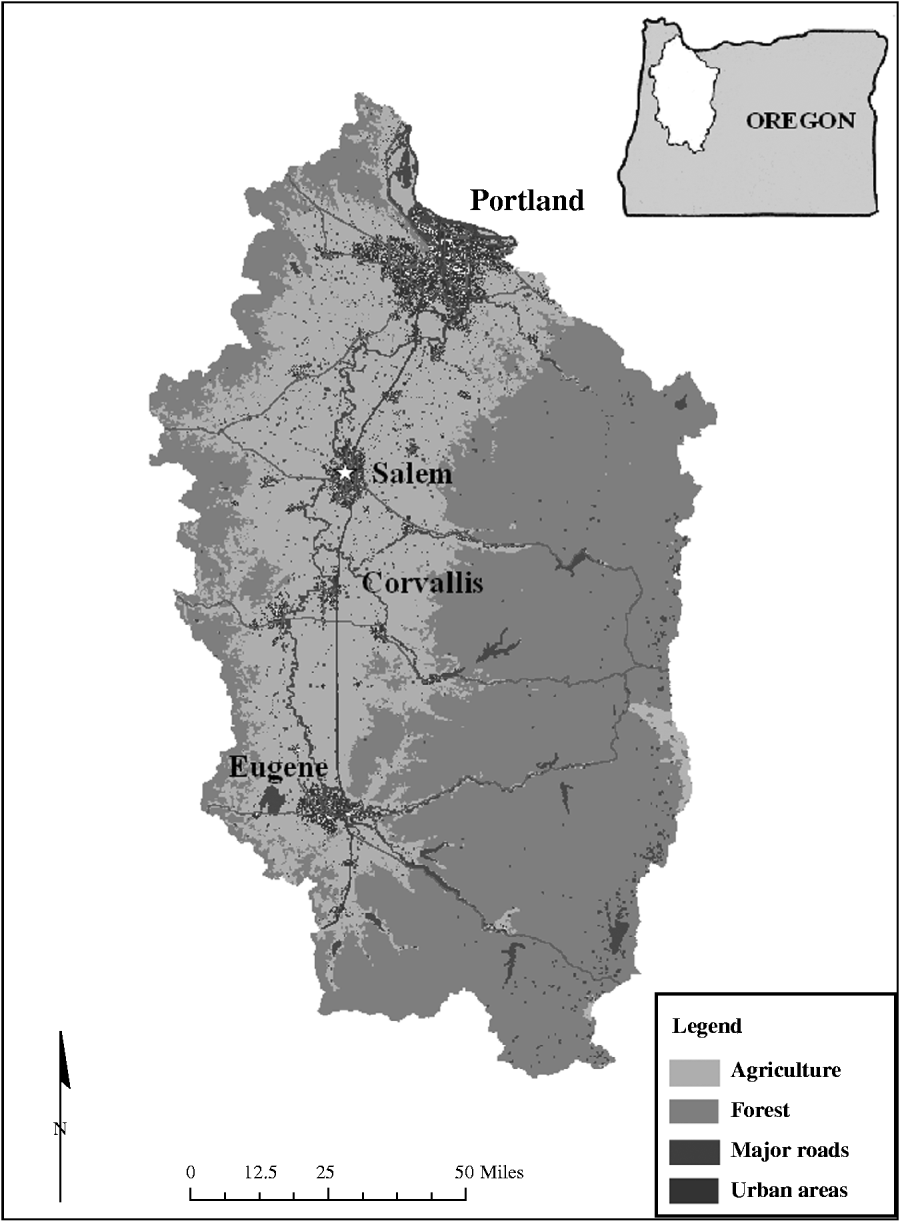
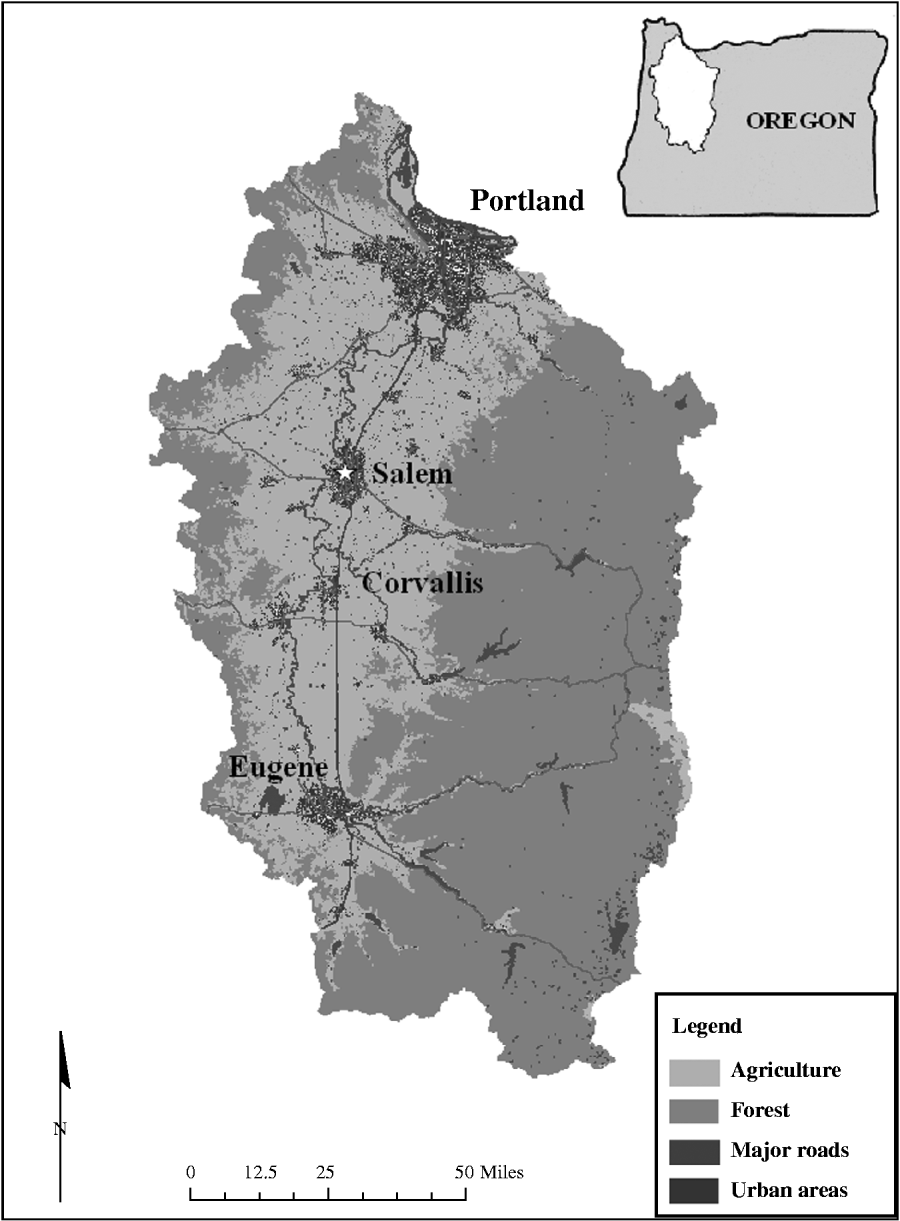
An important component of studying local food systems is establishing the geographic designation of the study area. Our research was conducted in Oregon's Willamette Valley bioregion (we use Berg and Dasmann'sReference Berg and Dasmann34 definition of a bioregion as both a geographical terrain and a terrain of consciousness). We chose the Willamette Valley (WV) bioregion, based on the Willamette River watershed (see Fig. 1), as our study area due to several complementary attributes: a rich agricultural history and continuing production, a cultural identity based on food in the region, the ability to identify it as a bioregion and the presence of local food marketing. We spatially delineated the WV local food system by watershed boundaries. Within the boundaries, we interviewed retailers that market foods as local or are known for sourcing locally (i.e., ‘local food retailers’). We conducted surveys in four major urban centers in the WV: Portland, Salem, Corvallis and Eugene. These cities are the most populous of the WV and represent relatively diverse socio-economic profiles and cultural identities35. The full range of local food retailers in the WV may not be equally presented in this research as the interviewees were all within large urban areas, and their perspectives may differ from those of rural food retailers. Although it is possible that we did not completely catalog the local food retailers, 93% of those that we did completed the majority of the interview.
Willamette Valley watershed delimitated by the Coast Range and Cascade Mountains to the west and east, respectively, the Columbia River to the north and the Umpqua watershed in the south. Map created using data from the Oregon Geospatial Data Clearinghouse36 and the Pacific Northwest Ecosystem Research Consortium37.
Using government and public Internet listings, locavore listservs, published research conducted in the WV and interviews, we compiled a list of 97 food retailer locations that source and market local foods regionally. The food retailers that we interviewed generally fell within the parameters of three of the four categories outlined by Guptill and WilkinsReference Guptill and Wilkins25:
• Hyperstore—a retailer with at least 100,000 square feet and $12 million in annual sales. Typically a retail chain selling diverse goods and services in addition to food.
• Conventional supermarket—a retailer with less than $12 million in annual sales that does not offer extensive services. Conventional supermarkets are similar to hyperstores in that they feature products from major food manufacturers.
• Green grocery store—a retailer that typically carries specialty, natural and organic food with some products from major conventional food manufacturers. These can be cooperatives, proprietorships, partnerships or corporations.
• Discount grocery store—a retailer that stocks a limited number of items featuring low prices based on offerings from overstocks and other traditionally inexpensive foods. None of the stores surveyed met the requirements of this category.
Classifying grocery stores was approximated, as some did not possess all of the defining characters.
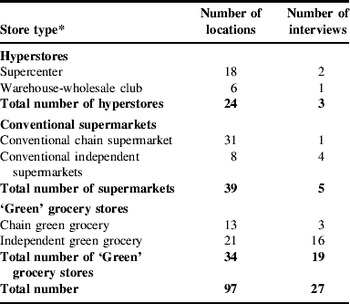
We conducted 27 interviews during June and July 2009. The number of actual interviews was lower than the total number of retailers carrying local foods in the four urban centers. This discrepancy resulted from 12 retailers having a single distribution center or adhering to a chain policy, which dictated store purchasing and labeling practices at 82 individual stores. The remaining 15 interviews represented one location each. Interviews were conducted with every representative local food retailer in each of the urban centers. Please see Table 1 for the total of individual WV grocery stores in Guptill and WilkinsReference Guptill and Wilkins25 categories and the number of interviews conducted for each.
Number of food retailers and interviews conducted in the major urban areas of the Willamette Valley (Portland, Salem, Corvallis and Eugene).

* Store classifications based on Guptill and WilkinsReference Guptill and Wilkins25.
Although we requested interviews in person with all food retailers, due to the time constraints on the part of some, we were only able to conduct 20 of the 27 interviews. The five phone interviews and two e-mail exchanges were not as effective as the in-person interviews, resulting in fewer extra comments and observations. Anecdotal contributions from some interviewees were valuable for understanding the unique perspectives of food retailers given that little prior research had been conducted with them.
We sought to interview those who were responsible for policy and purchasing decisions. A majority of the time, we were able to interview the owner or manager of single stores, or the person responsible for coordinating decisions for a chain store. The interviews were semi-structured and lasted between 30 min and 1 h. For open-ended questions, we categorized answers and recorded comments during the interviews. The survey questions were structured around three main themes: how local food is defined and marketed, motivations for carrying local food and regulating definitions for local food. During the interviews, questions regarding local food deferred to the definition of ‘local’ provided by each interviewee. Each theme included open-ended and categorical questions. Survey question development was informed by a diversity of published literature, particularly research conducted by Forsman and PaananenReference Forsman and Paananen38 on the opportunities and challenges of marketing local foods.
In order to verify and compare interview responses regarding the marketing of local foods, we studied the labeling and signage used in store promotions of these items. We recorded the types of signs present and the information displayed on them, as well as what types of foods were labeled ‘local’ and how this information was communicated. We recorded observations at each of the independent stores interviewed, and at one location each of the chain store distribution centers.
Findings
Based on estimates provided by interviewees the following results account for values that may affect more than 190,000 weekly grocery transactions in the WV. Results are derived from questions that are the key to understanding retailers' roles in local food systems: How is local defined? Why are local foods carried? What products are local? How are those products labeled?
Given the small number of hyperstores and supermarkets compared to ‘green’ grocery stores, it was difficult to make comparisons between groups; thus, the majority of the data is presented in aggregate. We have included respondent comments for perspective on the role of retailers, as well as for insights unique to particular retailers or retail categories which may foreshadow future roles of these key actors in local food systems.
How is local defined?
We found that the parameters food retailers use to define ‘local’ differ significantly from those of consumers and producers. This reflects HarperReference Harper39 who noted that despite research critical of the claims and definitions of local, local foods in supermarkets are often defined solely by scale and proximity. We also found that definitions of local vary widely between retailers and that many of the definitions used are neither strict nor tightly regulated but based on a general idea of where local food is coming from. Compounding the confusion of different stores having different geographic distances for local, only 20% publicly display their definition of local.
Retailers' stated that their definitions of local are informed by a number of sources and responded that they are strongly influenced by the availability of products and by customer values. Other retailers and distributors were described as somewhat influential. They described being influenced very little by popular literature and market research. Seven retailers had received input from consumers on how they feel local should be defined (via comment cards and conversations). Six respondents indicated that they have formed their definition of local based on what is the easiest for them to use, while six others stated that their definition was based on the evaluation of the availability of food locally. Hyperstore and conventional supermarket respondents were generally more constrained in the local definition development by their market and corporate distribution structures. Three retailers adopted definitions already in common use and easily understood by their customers.
Although food retailers ranked sources such as media coverage of the locavore movement as having little influence on their selection of a parameter for establishing what local foods are, we found their definitions to be remarkably similar. Based on popular literature (such as PollanReference Pollan40, Kingsolver et al.Reference Kingsolver, Hopp and Kingsolver41 Smith and MacKinnonReference Smith and MacKinnon11), studies of local food systemsReference Jones, Comfort and Hillier7, Reference Ilbery, Watts, Simpson, Gilg and Little8, Reference Coley, Howard and Winter14, Reference Edwards-Jones, York, Cross, Plassmann, Hospido, Hounsome, Hounsome, Mila, Koerber and Truninger15, Reference Allen29, Reference Peters, Bills, Lembo, Wilkins and Fick42 and previous studies of local food definitionsReference Futamura9, Reference Zepeda and Leviten-Reid17, Reference Selfa and Qazi18, Reference Starr, Card, Benepe, Auld, Lamm, Smith and Wilken43, we expected to find retailers marketing local food in terms of political boundaries such as county or state borders, or geometric boundaries such as driving distance or radius. We found this to be true, with variability in the scales of the parameters used.
The parameters for determining local food which WV retailers reported using included unidirectional distances, geographic regions, personal connections and political boundaries. Of the six that used distance, the radii were between 100 and 200 miles. An equal number of food retailers used regions such as the Pacific Northwest or the WV to visualize local food, usually in conjunction with another parameter such as political boundaries. Two retailers described local food in terms of the producers whom they knew personally and had built a relationship with during the history of the business, which roughly corresponded to a 100-mile radius. Political boundaries were most commonly used to delineate local, with the single most common parameter a combination of more than one state (n=11). Other political boundaries included Oregon only (n=3), counties (n=2) and city (n=1). For 42% of the retailers, however, location is not the only defining character of local food. Hyperstores and conventional stores have quality and safety requirements for all products that local food must also meet, green grocers often focus on the methods used to produce the food, as well as on farm size, local ownership and local operation. Some retailers also consider the nature of the product itself when designating foods as local.
Foods processed within the designated local area, but not necessarily grown there, were considered local by 70% of the respondents. The majority who considered these goods local stated that this was because these processing centers contributed to the local economy through job creation. Others described such an expanded definition of local as ‘a slippery slope that we don't want to get caught up in’, and expressed concern that such standards would harm their reputation. Thirty-three percent of respondents considered food produced inside their designated local boundaries, but processed outside of the area to be local food, largely on the basis of maintaining support for local producers who do not have access to local processors. Some green grocers gave additional consideration to the production methods that producers use, and in some cases will not carry a local food unless it is organic, transitioning to organic, or otherwise mindful of detrimental environmental inputs. None of the retailers considered the origins of ingredients (as is commonly done with wine labeling when the majority of the grapes must be sourced from a particular area to be identified with that region).
Why are local foods carried?
We found that in response to an open-ended query regarding the reasoning for carrying local foods, the most common response was to support the local economy. Other common responses, in order of decreasing popularity included environmental concerns, increased product quality and meeting the increasing demand for local food. There were several reasons mentioned by relatively fewer retailers that had importance in describing their role in local food systems. One retailer noted that in order to truly support the local economy, he has to consider whether or not the wealth is shared equitably between producers and distributors. For some retailers, equality is fostered through farm-direct purchasing; for example, purchasing from ‘a woman with a bumper zucchini crop from her garden down the street’, as well as from large-scale farms. Personal beliefs also motivate food retailers. Several responded that sourcing from local farms is simply the right thing to do, while others felt that eating within one's bioregion is intrinsically healthier and better for their customers.
Representatives of large- to small-sized retailers commented that sourcing locally is integral to their identity, something often visible in their mission. Many representatives of large retail stores indicated that sourcing locally also comes from national marketing initiatives that are largely consumer driven. Several small retailers stated that they were involved in regional organizations such as the Willamette Farm and Food Coalition44 (http://lanefood.org) which provide rationale for buying local food and often reference community sustainability. Respondents also frequently provided literature to accompany their responses, citing as many as 10 separate reasons for buying local foods.
Two-thirds of food retailers interviewed confirmed that their reasons for supplying local food have changed over time. The widely observed increase in demand has made carrying local food a customer-driven practice in many stores. Indirectly, consumers have changed retailers' reasons for carrying local food as they have become more aware of the environmental issues related to food production, the impacts of rising energy prices and the influence of the recent economic conditions.
In order to strengthen the previous line of open-ended questioning regarding reasons for carrying local food, we asked interviewees to rank and categorize their strategies for sourcing locally. They based their rankings on a scale of one to four with one being ‘very important’, two being ‘important’, three being ‘somewhat important’ and four being ‘not at all’. Respondents generally indicated more than one significant reason for sourcing local foods. Factors considered very important for sourcing local food included: food quality (78% of respondents); environmental concerns, social concerns and community involvement (approximately 65% of interviewees for each response); economic reasons (58% of respondents); and 35% included safety as very important.
When asked to state what the most important consideration was for sourcing local food, eight respondents stated food safety. They noted that this was largely a reaction to an increasing number of food safety scares and recalls, which requires them to always consider safety, regardless of whether the food is local or not. Food quality or economics were each selected as the most important reasons by six retailers. Four respondents ranked social reasons as their number one concern. One respondent felt environmental concern was the most important. The reported rankings of reasons for carrying local food also reflected some differences in interpretations of the broad categories. Social and economic reasons were often viewed as interchangeable, with several retailers considering themselves ‘small business incubators’, making contributions to their local economy through social relationships with small-scale producers. Smaller retailers indicated that the size of their businesses made them better suited to stocking local food produced on a small scale.
The values and reasons that motivate retailers to carry local foods are also affected by business realities. These realities include the relationships each form, as well as the costs and benefits each must weigh. Seventy-five percent of food retailers surveyed stated that their reasons for carrying local food are communicated to the customer via marketing forms including informational materials such as pamphlets and advertisements. Many invite producers to demonstrate products at their stores, providing the face-to-face relationship that is a primary driver of direct-market agriculture and discussed in Selfa and QaziReference Selfa and Qazi18 and AllenReference Allen29. Some choose not to provide informative marketing such as display signs that mention the benefits of local food, indicating they preferred customers with their own individual perceptions and definitions of local food to make purchasing decisions based on available information (e.g., product origin).
Interviewees also stated that they tap into direct-market tools in several ways to find sources for local food. Accessing local WV food resources such as directories of CSAs and geographically proximate farms, farmers' markets and the Food Innovation Center in Portland45 (http://fic.oregonstate.edu/), has allowed retailers of all types to develop relationships with farmers and pass the benefits of those relationships on to customers. This is evidenced by the fact that 92% of local food retailers described actively pursuing or encouraging local producers to sell to them. Several green grocers stated that they charge smaller margins for local products, help farmers to transition to organic methods, act to support the development of small businesses, carrying unique items on the basis of local origin and strive to develop long-standing relationships with producers. Conventional supermarkets and hyperstores similarly pursue local producers and strong mutually beneficial relationships, but their sourcing is often restricted by their volume requirement.
Once relationships have been formed between producers and retailers, contractual obligations are rarely established. Agreements are most often made with handshakes since ‘sometimes Mother Nature screws [producers]’, and neither party wants to be held liable to unpredictable yields. Interviewees stated that commodity market conditions are the biggest obstacle to contracting, as prices are increasingly volatile, causing retailers and distributors to change their sources often. Larger stores, in particular, set standards for quality, insurance, liability and price stability.
Food retailers indicated that they face a variety of challenges unique to carrying local foods. Retailers of all types have frequent difficulties with local product availability. This problem contributes to their sentiment that ‘we've spoiled the consumer’ and given consumers the expectation that most products can be locally sourced. Retailers regularly stated that despite consumer demand's role as an important reason for supplying local food, consumers often exhibit a poor understanding of their local food systems. Hyperstore managers, conventional retail buyers and green grocery owners all mentioned dilemmas such as reconciling the popularity of items such as bananas with sourcing locally and responding to customer requests for items such as local tomatoes in winter. In addition to importing produce, large food retailers expressed obstacles for working with all scales of farms, local and non-local, in order to stay well stocked with products that are in high demand. The consistency and quality of local foods are in some cases obstacles to grocers who must provide the customer with a product that meets many different expectations. Interviewees indicated that one of the most difficult expectations to meet is the cost of local food, as some customers may be less willing than others to pay a premium for it. One retailer noted that the commodity market has significantly decreased the accountability of producers and made labeling local foods difficult, as their origins may change on a weekly basis. Frequent changes in the source of a product make it difficult for retailers to maintain consistent place-based marketing. Barcodes and packaging are difficulties for some small-scale producers and processors, but many respondents indicated that they work with farmers to help them to resolve these issues.
The various changes made by different types of stores in order to carry local foods reflect the diversity of their customer bases and reasons for carrying local foods. Most commonly, sourcing and labeling local foods necessitates a greater time commitment, especially since retailers may have to place orders directly to several local farmers as opposed to placing a single order to a distributor that may or may not be sourcing locally. Some stores have sacrificed revenue or product selection due to their commitment to local foods. Hyperstores and conventional markets must cater to customers who consider price to be their top priority, especially in light of the recent economic downturn. Despite the importance of price, they have noted that customers will pay a premium for local foods even if they are of lower quality. Several of the hyperstores and some conventional markets surveyed stated that they receive the majority of their local food through existing distribution mechanisms and that their only recent change has been to promote and label the food as local. This might have been influenced by the federally mandated Country of Origin Labeling, which was put fully into effect on March 16, 2009 and requires standard labels on produce46. Now that these stores must track and label the national origin of their products, they have gone one extra step and labeled foods as local if they come from a relatively close area.
Despite the difficulties and changes necessary in order to carry and market local foods, all retailer categories indicated that they have benefited from doing so in a variety of ways. Interviewees felt that when demands for local food are met, customers are more satisfied with their products, and they have a sense of having contributed to the community. Retailers stated that the increased quality of products they offer has improved their public image and their revenue.
What products are local?
Reflecting ongoing increases in awareness of the local food movement, many retailers we interviewed only recently started local food programs (some the very week we called to schedule their interviews). As a result, their estimates for the annual volume of local foods carried are largely based on personal perceptions as opposed to records.
Although we asked interviewees to estimate their total volume of locally sourced foods throughout the year, some stores were either not tracking this information, or did not carry local foods of any type besides fruits and vegetables. We categorized answers for grains, meat and beans, dairy, fruits, vegetables, prepared foods, other products and oils as <5%, 6–25%, 26–50%, 51–75%, 76–100% or N/A. The quantities reported indicate specific difficulties that food retailers have had with local product availability and origin verification. Local grains, for example, were most often described as coming entirely from Bob's Red Mill, based in Milwaukie, OR (within the WV watershed) (median value for all grocers of 6–25%). Respondents clearly understood that the grains were milled there, while assuming that ‘… he's being pretty good about [sourcing locally]’ or ‘… running an honest operation’. Other local processors and cooperatives were recognized by name for dairy (median 51–75%) and meats (median 51–75%), but it was noted that a lack of large local processors complicates accounting for food miles since locally raised livestock may be shipped long distances for processing. On an average, interviewees responded that 26–50% of both fruits and vegetables were sourced locally, but that this amount varies significantly between seasons. A median of 6–25% of the volume of prepared foods such as deli items and packaged goods, as well as other products such as personal care or alcoholic beverages were local. Finally, less than 5% of all cooking oils were local. We also requested sales data for each of the categories of local foods carried, but only four stores were able to provide estimates.
Similar non-local products were carried alongside local products at 71% of the locations we visited. Of the retailers that did this; 13 indicated it was necessary in order to increase the selection, nine justified carrying alternatives to have a lower-priced option, and one did so if the products were significantly different. One hyperstore carried non-local products in order to prevent in-store shortages, as local foods may be from smaller producers and consumers are more likely to quickly purchase their entire stock.
How are local products labeled?
The differences that we observed in labeling of ‘local’ by food retailers may be a source of confusion for their customers. Of the retailers we interviewed (all of which are known to source locally), 87.5% label foods as local. Of those that label local foods, four simply use the word ‘local’, 16 indicate the political place of origin (i.e., Oregon), two indicate the region of origin (e.g., Pacific Northwest) and two consistently name the farm of origin. The names of the farms are in some cases accompanied by information regarding the ownership and practices of the farm. Label format was most often computer-generated signage with hand-written text notations. Several other forms of signage were used to identify local foods including maps of the local area or of local farms.
Respondents perceived labeling as being important to the customer, with 48% having received feedback with regard to their local labeling. Although the median duration of the use of labeling was less than 5 years, with many grocers having initiated a local labeling program in the past year, some stores have sourced and labeled local foods for more than 25 years. Maintaining signage for products in general, and increasingly for local foods, was identified by several grocers as a necessary but difficult task. One interviewee went so far as to complain that the goal is to ‘sell a product, not a sign’. Another complication involving the data on signage and the signs themselves was that employees who had little part in maintaining signage were sometimes responsible for providing the information. As a result, they might perceive the clarity of the labeling differently than either the customer or the sign creator (who may be able to give more accurate answers concerning the signage). Lastly, we noted discrepancies between signage for local items and the products themselves.
Defining local as a bioregion
In order to determine the feasibility of using the WV bioregion as a common delineation for local food, we asked interviewees a series of ‘yes’ or ‘no’ questions regarding local food regulation. Eighty-six percent of respondents agreed that retailers should display how they define local food to customers, with 48% indicating that retailers should have strict definitions of what constitutes local. While 57% agreed that there should be a national definition for local food, only 33% responded that all retailers in the WV should use the same specific regional definition of local food. The disparity in the percentage of respondents supporting a national definition versus a regional definition highlights operational differences between retailers that rely on central distribution centers and those that do not. For the former, a WV-specific definition of local would be problematic. In such operations, a single warehouse may be distributing identical locally designated foods to stores within the region as well as to other stores outside the labeling area. In response to questions about legislating what constitutes local, food retailers were quick to mention the challenges of using overly specific criteria for defining local food. They stated that using general guidelines to define local food is quicker and easier for them, and expressed concern that having strict criteria would necessitate more time than they have.
Retailers interviewed recognized the benefits of clear, publicly displayed definitions of local. Given the diverse decisions a consumer must make when purchasing food, a clear definition of local may be helpful. Close attention to the concept may also keep the local area from becoming too large and diluted. With regard to recent increases in the regulation of local food, respondents generally indicated that increased regulation is neither desirable nor feasible, and may dissuade smaller stores within the WV from labeling local foods with their origins. For some retailers, place of origin is not the most important factor when making choices, and so labeling local foods in this manner is not one of their main priorities. Other interviewees indicated that varying perceptions of local held by different people in different places would make using a single definition difficult. Interviewees also recognized benefits to regulating local food. Several noted that a common definition of local would generate input from all scales of the food retail industry, including those who feel that local food should not be defined solely by scale or place. One retailer observed that in order to be effective, local food regulations would also need to be federal policies applicable to large retailers that operate in more than one state.
When presented with the WV bioregion as a possible definition of local, 11 retailers felt that the WV was too restrictive; eight felt it was suitable; three felt that it was too inclusive and five felt that the WV roughly fits the definition they use already. The two most commonly expressed concerns about using a bioregion to define local were the difficulties of being situated near the border of the bioregion and the limited availability of foods within one region. Both of these concerns were felt by seven retailers each. Four retailers mentioned that the WV bioregion as a designated local food area was unclear and too small. Two observed that the region might mean different things depending on where it is used within the WV. One retailer mentioned that transportation systems should be considered when proposing a definition. Ten retailers responded that the bioregion provided a better sense of place than the definition they currently used, and six felt that it fostered a better connection with local food. Two felt that it was a clear definition, and one felt that it would make it easier to select producers. Although the relatively small area of the WV was generally perceived as a problem, one interviewee observed that emphasis on a smaller area would reduce transportation costs.
Discussion
Our finds reflect what FeenstraReference Feenstra2 suggested the contributions of marketing studies on local food systems would be. We now discuss the realities of the WV food system, its participants, control points or balances of power and changes that may be made.
Realities
Food retailer perspectives of local foods available within the WV are unique and are invaluable for understanding production and distribution within this local food system. What retailers choose and are able to stock represents a pivotal point between the supply of producers and the demand of consumers. When describing the realities of the local food system in the WV they highlight concerns with supply and fair pricing for producers and consumers, as well as the benefits of local food in terms of quality and safety.
Allen et al.Reference Allen, Fitz-Simmons, Goodman and Warner33 described short supply chains as characteristic of local food system development, and while many WV retailers are purchasing directly from producers, this is not possible in some cases. We found that large hyperstores, conventional supermarkets and some green grocers are organized around distribution centers that allow for efficient distribution of local foods. This reflects the overall trend of centralization and vertical integration that can be seen in food and beverage corporationsReference Lyson and Raymer47 and the retail sector as wellReference Hendrickson, Heffernan, Howard and Heffernan48. Despite these trends, some retailers are able to work directly with producers to show consumers the social relations and environmental practices that may be hidden in the commodity marketReference Allen, Fitz-Simmons, Goodman and Warner33. Examples include displaying information about farms, or providing opportunities for in-store demonstrations.
Within the WV local food system, social and economic equity (a component of the local food movement which transcends geographic proximity) is being addressed by retailers mainly through consumer access. One key difference between stores and other direct market elements such as CSAs or farmers' markets is access. While farmers' markets are usually open on a single day of the week on a basis which is often seasonal, and CSAs require upfront investment and are also seasonal, stores may be open up to 24 h a day, 365 days a year. Increased temporal access may not only reduce the face-to-face interactions between producers and consumers, which is an important part of local foodsReference Stephenson and Lev5, but it may also increase access to local food across socio-economic gradients, as food retailers pass savings from economies of scale directly to consumers. Interviewees indicated that prices of local foods are a particularly important consideration for increasing access to them. In Iowa, Pirog and McCannReference Pirog and McCann49 found that, for some commodities, a lack of significant differences between prices of local foods sold at farmers markets and supermarkets exists. While food retailers may believe that they are able to provide cheaper local foods, their prices may actually be comparable to other forms of direct agricultural marketing. We recommend that further research test this claim.
Although some retailers are able to provide inexpensive access to local food, others have found that their customers are willing to pay a premium for it. This is indicative of the conflict between encouraging consumers to treat food less like a commodity and pay the true price of food production, and making food such as organic or fair-trade-certified products available to consumers who must make difficult economic decisions. One retailer in a neighborhood inhabited by residents of mixed and changing socio-economic backgrounds expressed difficulties in trying to meet and resolve competing cost, quality, nutrition and cultural needs. Our results suggest that despite these challenges, making local foods available can be beneficial to all actors involved in a local food system.
A positive reality for food retailers and consumers in the WV is that the products that local producers supply are generally of higher quality. As one interviewee noted, local foods may be grown and harvested for overall quality rather than suitability for transportation. Retailers reported that customers strongly associate local foods with higher quality, an association that has been confirmed across socio-economic profilesReference Stephenson and Lev5. Definitions of quality may vary between individual stores. For some, higher quality primarily meant higher nutrition, for others freshness, and still others felt quality was connected to a particular food or variety of produce that is not grown in other locations (e.g., Walla Walla onions).
Another important reality and continuous challenge for food retailers to address is food safety. Pirog and RasmussenReference Pirog and Rasmussen50 found that consumers perceive their local or regional food systems to be safer than the US food system as a whole, presenting a marketing opportunity for food retailers to capitalize on. In our study area, one respondent noted that providing safe food is just as important as providing enough food. Most retailers expressed frustration with recalls on contaminated food, a problem that they have little control over which may personally affect a consumer. They selected safety more frequently than any other reason for providing local foods, yet safety was least commonly described as ‘very important’ (see the results above for ‘Why are local foods carried?’). Many grocers did not feel that local food was necessarily safer, but that safety is their top concern when providing any food and that they must apply such concern to local foods.
A reality relating to social equity of local food systems that was not consciously addressed by any of the respondents was that of farm labor. These findings are similar to those of MaciasReference Macias20. One interviewee questioned whether or not people really consider social issues when buying food. Hyperstore representatives agreed that price was still the primary consideration for their respective customers. This illustrates Allen'sReference Allen29 point that social issues have not typically been effectively addressed by alternative agrifood initiatives.
We found that WV retailers tend to understand the environmental impact of local food distribution, another reality of local food systems in terms of food miles. This understanding is an oversimplification of agricultural production and distribution systems. Crops are often difficult to track on the commodity market, a difficulty which is compounded when the inputs required in producing packaged foods are consideredReference Born and Purcell13–Reference Edwards-Jones, York, Cross, Plassmann, Hospido, Hounsome, Hounsome, Mila, Koerber and Truninger15. As a result, carbon footprints and food miles may not reflect the true global or local environmental impact of a food retailer carrying a certain product.
Creating a shared sense of place for local food production is an important step to developing a local food system. The reality is that whether intentional or not, for some empowered consumers retailers have to develop a sense of place for the origins of their foods. One way that this empowerment occurs is through the use of local food displays that often accompany local-labeled foods. These displays frequently include maps of the area that is considered local, and sometimes mention places of origin at different scales on the labels. Further establishment of a sense of place can come from the pictures of farmers sometimes included in the displays, as well as from farmer-run store tastings.
Participants
FeenstraReference Feenstra2 has suggested that studies like this can better connect researchers with participants in the local food system of a specific region. Where the realities and control points of a local food system describe the relationships between actors, we find insights into their identities. These insights are particularly important due to the fact that retailers provide the majority of food in the US, despite being poorly represented in the literature on local food systems. Our research suggests that their perceived roles and identities as participants indicate an increasing understanding of the importance of local food systems. This understanding is illustrated by the way food retailers define local, by the structure of the company, as well as by the values and motivations driving management decisions.
The criteria that food retailers use for defining local food, particularly geographic distances (see the results above for How is local defined?), say much about their position within the local food system. Typically WV food retailers defined local as extending not more than 400 miles from the point of purchase. This definition is similar to that used by the US Congress in the Food, Conservation, and Energy act of 200851. However, consumers in the Western US are most likely to consider local food as that which is grown 100 miles or less from the point of purchaseReference Pirog and Rasmussen50. This illustrates a contradiction in how local is viewed by different actors in local food systems. For example, a store 400 miles from a customer would not likely be considered local, but its food might be considered local by a retailer. One respondent observed that customers are increasingly becoming aware that food comes from farms as opposed to stores, but often overlook the distance food must travel to get from those farms to those stores. It is important to remember that multiple definitions were used to define local, including the WV itself. Generally speaking, smaller retailers used smaller spatial boundaries for defining local, and note this as being an advantage to their store over larger retailers when relating to customers. Food retailers need to effectively communicate demand for local food to producers and supply effectively to consumers. The latter has proven difficult when consumers do not understand their local food system's realities. Respondents described feeling responsible for supplying a complete diet to their customers, but felt that the agricultural production potential and current land-use patterns in the WV make this impossible to do by sourcing locally.
Unlike Guptill and WilkinsReference Guptill and Wilkins25, we found that different practices (e.g., definitions of local) can be correlated to store structure. Larger chains that ship products from distribution centers to several stores used broader spatial definitions of local to facilitate meeting higher demands, while smaller stores often used more proximate definitions inclusive of the producers they work with directly. This difference in operational structure was evident in the relationships that larger retailers form with producers, as they may have national guidelines that local producers must conform to. This reflects the multiplicity of ways that food retailers identify themselves as a participant in local food systems. The various perceptions of local have been difficult for retailers to reconcile when establishing their own definitions of local. As many food retailers observed, finding a definition that will satisfy all customers seems impossible. Consumers' definitions of local will certainly be informed by a different perspective than those of food retailers who have developed relationships with producers across a wide range of locations.
Understanding values and motivations for carrying local food helps to clarify the participatory role of retailers in the WV local food system. Given that their primary task is profiting from food, as opposed to producing or consuming it, retailers commonly cited supporting the local economy as a reason for carrying local foods (see above: Why are local foods carried?). In this way, they are realizing the benefits of eating local by providing monetary support to the WV local food system. As the primary source of transactions in the local food system, retailers must price fairly in order to foster the economic health of their producers and consumers. Respondents' observations of their consumers help to elucidate their roles in local food systems. Many noted that customers understand the benefits of buying local food, an indication that their marketing efforts might have been successful. An important part of food retailer identity as participants in the local food system may be their educational role.
Control points
We have interpreted the control pointsReference Feenstra2 of a local food system to be decisions that food retailers may make to exercise control over the said system. Food retailers are well suited to influence the development of local food systems given their relationships with both producers and consumers. Key control points visible from our research include local food retailers' ability to meet demand for local food, create markets for the supply and educate consumers on local food itself.
FeenstraReference Feenstra52 noted that ‘despite [community food system initiatives], a very small percentage of growers or consumers are interested in marketing or buying or growing local or organic produce. The sales volume at farmers' markets is a tiny fraction of food sales through huge retail chains like Safeway, Albertson's, or Wal-Mart’ (p. 14). While consumers do not generally associate the large impersonal scale of such food retailers with local food, it is clear that they are able to respond to the increasing demand for geographically proximate food. Given the variability in local food management strategies between retailers, it is unsurprising that they have decided to meet this demand in different ways. Some have significantly altered their sourcing practices to reflect an evolving set of local food values. Others have changed their marketing techniques to reflect the spatial proximity of producers they have worked with historically, rather than exercising control over their local food suppliers by reducing the total number of food miles in their inventories. Contributing to local food systems by reframing consumer education and available information rather than increasing localized economic support may be considered a less progressive strategy; however, our research plays an important role by illustrating the realities of these relationships. Without understanding the perspectives of food retailers and consciously including them, their relatively large market share may outweigh the values, goals and relationships that actors have contributed to other food system developments (e.g., the various forms of direct marketing).
It is worth noting that retailers may exercise control over the distribution of information to consumers. This enables them to control parts of the local food system in several different ways. WV retailers often actively encourage the purchase of local food in addition to simply meeting the needs of producers and consumers. They do so with materials that they and other actors in the local food system have prepared such as literature describing the benefits of sourcing locally and information about the farms they source from. One respondent described the greater transparency of direct sourcing as a form of ‘social trickle-down’ in which the practices of producers within a local food system are influenced by an increasingly observant consumer base. Food retailers can also influence the way consumers view local food through marketing.
Changes
Understanding the realities, participants and control points for food retailers in the WV local food system leads to possible changes that may be made to enhance this system. In response to increasing demand for local food resources, a change that is also a significant challenge that food retailers must face is creating a working definition of localReference Harper39, 53–Reference Orgel55. Defining local in a manner that satisfies the expectations of all participants in a local food system has been a struggle for some WV retailers. Customers that interviewees often described as ‘increasingly savvy’ have been quick to notice this (for example see Portland Food and Drink56). Formulating a clear and widely accepted definition is important to speed up local food system development and respond efficiently to customer desiresReference Guptill and Wilkins25, and will perhaps become mandatory as government becomes increasingly involved51, Reference Louden and MacRae57.
In order to resolve several retailer concerns with regard to standardizing local foods (as discussed in the Results section) we propose a voluntary, transparent and scalable place-based labeling system. A possible spatial model for this could be the concept of a bioregion delineated by a naturally delimited space such as a watershedReference Berg and Dasmann34. Simple spatial parameters such as driving distance or radii have the advantage of putting an individual at the center of the available food resources, but do not unify members of a community who possess their own unique sense of place in the way that bioregions can. The inclusiveness of this method would move toward meeting the recommendations of those who have worked for local food system developmentReference Feenstra52, Reference Nichol12, Reference Goreham and Stofeerahn58 and would also allow for scalability. The WV watershed which we presented to interviewees is composed of a dozen individual watersheds, but is also one of 22 similarly sized watersheds that constitute the greater Pacific Northwest watershed and that roughly correspond to the political borders of Washington, Oregon and Idaho59. In this system, individual consumers, retailers and producers have the choice to identify with a community on several different scales. This would promote identification with a naturally delineated landscape, which could help to educate consumers on the natural spatial resources required for the production of local food. Such a simple voluntary system of labeling by bioregion of origin would be appreciated by the interviewees we spoke to who expressed frustration at the amount of information they must currently maintain for each product.
Our interviews with food retailers indicated that many felt consumers do not understand the realities and challenges of sustaining vital natural resources. Connecting these consumers to the agricultural landscape through bioregional marketing may correct this, allowing participants to work more effectively to develop local food systems. The retailers we spoke to indicated that meeting the increasing demand for local foods was a primary reason for carrying them; however, they also indicated that product availability has been problematic, and that consumers would like to see more local produce. If consumers understood the capacity and land-use patterns of the WV, they might develop more realistic expectations and be able to contribute more effectively to dialogue with producers and retailers.
The inclusion of large distributors as actors may act to reconcile some weaknesses of the local food movement. The economies of scale, particularly fossil fuel use in transportation and availability of food at select times and locations, are often cited as problematic in direct agricultural marketingReference Allen3, Reference Darby, Batte, Ernst and Roe4, Reference Born and Purcell13. Retailers that remain open 7 days a week year round and receive large bulk shipments make local foods more available and efficient in terms of accessibility and energy use. Retailers in this category may be able to provide local foods at a lower price than other forms of direct marketing such as farmers' markets, making local food available to consumers of a greater socio-economic rangeReference Sherriff21. Food retailers' hours of operation compare favorably to other outlets of local food, which may be more limited. As noted, Norberg-HodgeReference Norberg-Hodge, Mander and Goldsmith32 suggests that it is helpful to consider institutions that are able to promote local on a large scale, in this case regional and national food retailers that source foods locally with regard to marketing. Large-scale retailers have access to greater resources for materials such as signage that may engage the customers. The very act of promoting local food may spur changes and we believe that retailers, by engaging in such promotion are in a unique position to move the definition of local beyond simple spatial parameters. Acting as crucial intermediaries, food retailers are able to communicate demand for local food to producers, and to inform consumers that carrying local food may be considerably more complex than a short drive.
Conclusion
Our findings suggest a multiplicity of food retailer perspectives on what constitutes local food in the WV. These perceptions can be correlated with the store categories on the basis of basic operational differences. Retailer perspectives are useful tools in describing the realities of the local food system, which include improved food quality and a perceived increase in food security and safety. Our results also describe the spatial components used to define local food from a retail perspective, in this case most often state borders. Food retailers' responses to these realities contribute to their identities as participants who maintain relationships with both producers and consumers. These relationships create a set of control points for local food systems, presenting food retailers with the opportunity to implement changes in their marketing and acquisition strategies for local foods. These changes may be helpful in overcoming some challenges currently faced in local food system development.
‘Local’, whether in food or other commodities, is still very much an evolving concept, and many participants (including vendors, producers and consumers) are trying to define for themselves what it means. By studying the emerging patterns of local food marketing in the WV, our research may help create guidelines for the increasing number of communities that are developing their respective local food systems44. We believe that, although food retailers may create some tension with their entry into local food systems due to their differences with direct-market outlets, they may be a positive force overall due in part to the infrastructure they create. By placing local food retailers in the context of localized and international development programs such as the Dairy Creek Food Web60, Beans and Grains ProjectReference MacCormack61, Oregon Tilth62, a growing number of CSAs and farmers' markets, as well as new initiatives by the United States Department of Agriculture63, our study may help other communities learn from the challenges and successes facing grocers in the WV as they source and market local foods.