

Introduction
Several sources of proxy data demonstrate that significant temperature rises (the Holocene Thermal Maximum) occurred between 11 000 and 5000 ya, peaking 7200–6000 ya in China, where surface temperatures were 1–4°C higher and rainfall 40–100 per cent greater than today (Tao et al. Reference Tao, Huijun and Dabang2010; Renssen et al. Reference Renssen, Seppä, Crosta, Goosse and Roche2012). The process of rice domestication developed contemporaneously and independently in East Asia, in the Middle and Lower Yangtze Valley c. 9000 ya, although it was not until c. 6000 ya—perhaps as late as 5000 ya in the Lower Yangtze Valley—that a reliance on rice agriculture, rather than hunting-gathering, developed (Zhao Reference Zhao2011; Zhang & Hung Reference Zhang and Hung2013; Silva et al. Reference Silva, Stevens, Weisskopf, Castillo, Qin, Bevan and Fuller2015; Zheng et al. Reference Zheng, Crawford, Jiang and Chen2016). These early farmers were phenotypically (cranio-facially and dentally) and genetically distinct from their more southern hunter-gatherer neighbours, and probably descended from the original anatomically modern human (AMH) colonisers of eastern Siberia c. 40 000 ya (Oxenham & Buckley Reference Oxenham and Buckley2016a).
Contemporaneous with this millennia-long period of domestication were concentrations of large ‘complex’ hunter-gatherers south of the Yangtze Valley. These populations were descendants of AMHs who entered Southeast Asia, Melanesia, Australia and southern China via the southerly route as early as 65 000 ya (Matsumura & Oxenham Reference Matsumura and Oxenham2014; Oxenham & Buckley Reference Oxenham and Buckley2016a; Clarkson et al. Reference Clarkson, Jacobs, Marwick, Fullagar, Wallis, Smith, Roberts, Hayes, Lowe, Carah, Florin, McNeil, Cox, Arnold, Hua, Huntley, Brand, Manne, Fairbairn, Shulmeister, Lyle, Salinas, Page, Connell, Park, Norman, Murphy and Pardoe2017). Rapid sea level rise following the Late Glacial Maximum (LGM) halved the Southeast Asian landmass and inundated the coastlines, the former focus of human activities for tens of millennia (Oxenham & Buckley Reference Oxenham and Buckley2016a). The earliest-known Holocene open-air sites associated with these populations are located in Guangxi and western Guangdong Provinces, locally referred to as the Dingsishan culture, and are relatively dated to between c. 10 000–5500 ya (Fu Reference Fu2002; Zhang & Hung Reference Zhang and Hung2013).
Critical questions regarding this period and region include: what led to the emergence of numerous large hunter-gatherer communities? What sustained these large populations and fuelled elevated levels of population growth? Was this increase in the number and size of hunter-gatherer groups a prelude, or necessary stage, to domestication? Or, does evidence suggest a highly successful alternative response to the Holocene Thermal Maximum, which arguably contributed to the process of domestication and ultimately a reliance on farming in their more northerly neighbours? Finally, why does evidence for these populations disappear from the archaeological record concurrent with the emergence (or intrusion) of farming communities c. 5000–4000 ya? Here we argue that Con Co Ngua (CCN), a large hunter-gatherer site associated with the Da But culture complex in northern Vietnam, provides answers to many of these questions.
The emergence of open-air hunter-gatherer sites in Southeast Asia
The site of Dingsishan is synonymous with a widespread Holocene cultural complex of the same name in southern China/northern Southeast Asia characterised by large open-air cemetery and living sites, a broad range of polished stone, bone and shell implements (including knives, arrow heads and fish hooks), and the extensive use of pottery. Dingsishan is relatively dated to between 8000 and 6000–7000 ya, with subsistence dominated by a broad variety of vertebrate, invertebrate (shellfish) and non-domesticated plant remains (Zhang & Hung Reference Zhang and Hung2012; Li et al. Reference Li, Wang, Fu, Dobney, Li, Chen and Yu2013). While Zhang and Hung (Reference Zhang and Hung2012) cite Lu (Reference Lu2010) as indicating the presence of domestic dog at c. 7000 ya, Lu’s work does not, in fact, provide any objective criteria or evidence for the identification of Canis familiaris in this region at this time. Rice phytoliths occur c. 4500–4000 ya, a date consistent with directly dated rice in the nearby Pearl River Delta: 4390–4095 cal BP (Zhao et al. Reference Zhao, Lu and Fu2005; Zhang & Hung Reference Zhang and Hung2010; Yang et al. Reference Yang, Wang, Zhuang, Li, Ma, Ma, Cui, Wei and Fuller2016). Similarities in pottery, lithics, burial practices and phenotype suggest that the hunter-gatherer culture complexes of southern China and northern Vietnam (the latter represented by the Da But site of CCN) share a common cultural and developmental history with Dingsishan (Zhang & Hung Reference Zhang and Hung2012; Matsumura et al. Reference Matsumura, Oxenham and Nguyen2015). A small series of freshwater shell dates (uncalibrated, with unknown reservoir effects and unclear stratigraphic provenance), from c. 4800–6500 BP, exist for five Da But-period sites (Nguyen Reference Nguyen2005). Additionally, the relative chronology for Dingsishan (and associated sites) has existed, until now, in the virtual absence of confirmatory radiocarbon dating (Fu Reference Fu2002; Li et al. Reference Li, Wang, Fu, Dobney, Li, Chen and Yu2013).
Recent excavations at the CCN site offer an opportunity to date, absolutely, the emergence of concentrated open-air hunter-gatherer complexes in northern Vietnam and, by extension, the related Dingsishan culture in southern China. Moreover, CCN provides insights into technology and material culture, diet, ritual behaviour and health within a hitherto very poorly understood period and region of Southeast Asia.
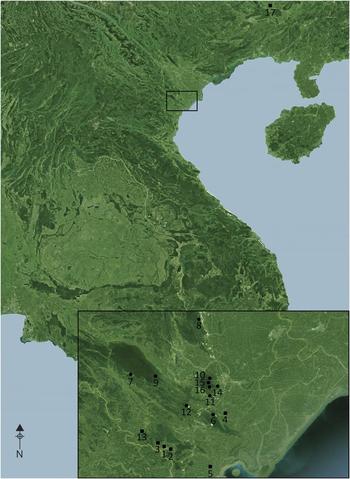
The origins of the Da But cultural complex remain uncertain, but there is clear biological continuity with earlier hunter-gatherers associated with the Hoabinhian, a culture complex characterised by small, dispersed cave sites, an absence of pottery, and distinctive lithics lacking edge grinding (Nguyen et al. Reference Nguyen, Pham and Tong2004; Matsumura et al. Reference Matsumura, Oxenham and Nguyen2015). Da But open-air and cave sites are distributed from Ha Nam Province through to Thanh Hoa (Figure 1) in northern Vietnam. CCN lies in Thanh Hoa Province, 30km from the coast and 4km east of the Ma River, on a low mound within a transitional plains-upland region that is constantly flooded during the rainy season. The site was excavated originally between 1979 and 1980 (Oxenham Reference Oxenham2016). There has been limited post-excavation analysis, except on the human remains. Our team re-excavated the site in 2013 with a 12×7m trench situated adjacent to the previous excavation.
Da But culture open-air (squares) and cave (circles) sites in northern Vietnam and the location of Dingsishan, Guangxi Province, China: 1) Ban Thuy; 2) Con Co Ngua; 3) Da But; 4) Dong Vuon; 5) Go Trung; 6) Hang Co; 7) Hang Con Moong; 8) Hang Cong; 9) Hang Day; 10) Hang Moi; 11) Hang Oc; 12) Hang Sao; 13) Lang Cong; 14) Mai da Hanh; 15) Mai da Ong Hay; 16) Mai da Vang; 17) Dingsishan. (Base map and inset sourced from: Map data: Google, Image Landsat/Copernicus Data SIO, NOAA, U.S Navy, NGA, GEBCO.)

Con Co Ngua dating and site history
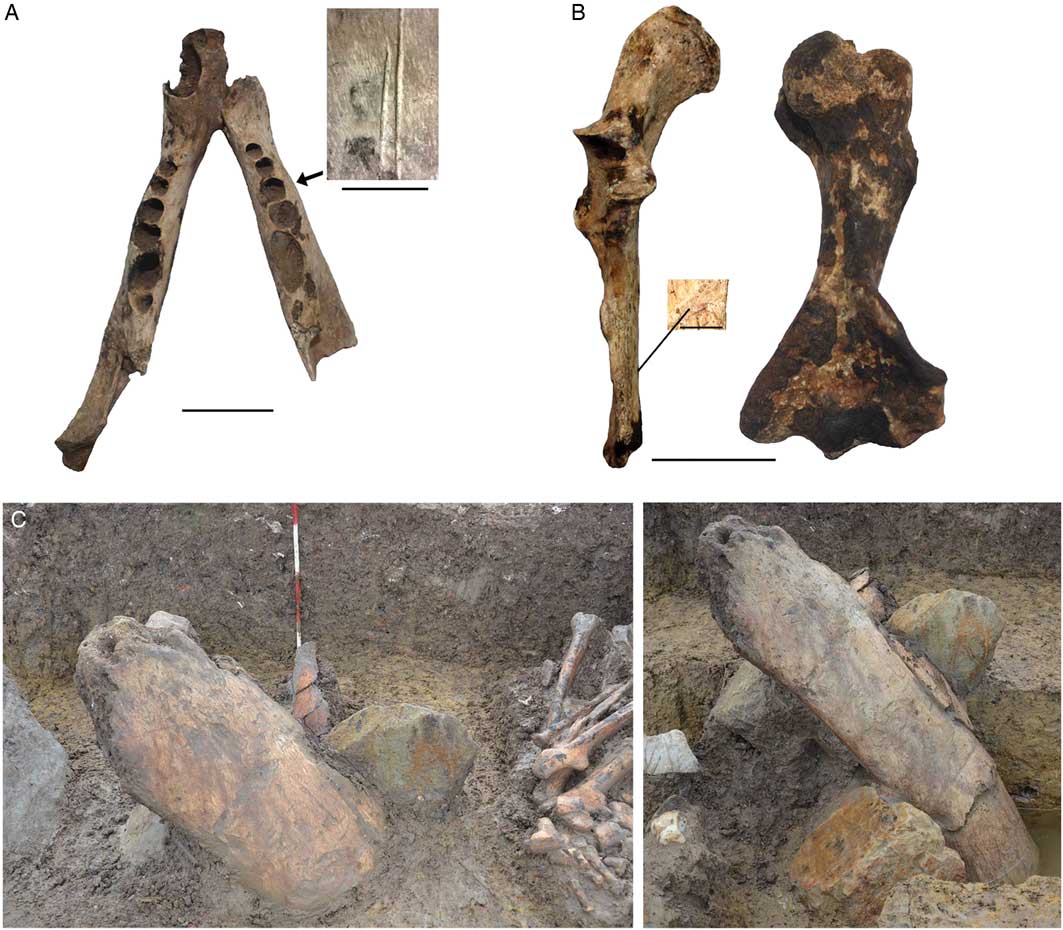
CCN is relatively simple stratigraphically, with the cultural deposit averaging 0.5m in thickness, overlaying a sterile, yellowish, clay layer. Capping the cultural deposit is a thick, homogeneous layer of grey clay, averaging 0.5m in thickness, upon which is a modern rice field. Most of the human burial pits were dug into the cultural layer, although several were dug solely into the otherwise sterile basal layer. The cultural layer contains vertebrate and invertebrate remains within a soil matrix. There was no evidence for postholes or other features suggestive of structures. A whale radius—possibly from a blue whale (Balaenoptera musculus)—measuring 0.9m long and weighing 15kg, with evidence for numerous cut marks, was, however, wedged upright into the sterile layer (see Figure 2C).
Radiocarbon dating of the human and faunal remains was exceptionally challenging due to the poor preservation of protein. Carbonate in tooth enamel was dated to obtain a minimum age for the burials and faunal remains in the cultural layer. Calcined antler was also dated to ascertain the age of an unusual and apparently structured deposit over one of the human burials (M133). Most dates fall between c. 6700–6200 cal BP (see the online supplementary material (OSM) S1). One charred Canarium seed was dated (S-ANU 54830, 5982±30 BP). This falls slightly earlier (between 6896 and 6737 cal BP 95.4% probability) than the dates from enamel. This confirms that the enamel dates are probably too young, and suggests that the cemetery is more probably early seventh millennium BP. As these are minimum ages, it is impossible to establish precisely how long the cemetery and cultural layer may have been in use.
Subsistence
All six analysed contexts were depauperate in ancient plant remains and were very similar in composition, containing only one plant of economic importance from the Burseraceae family (Canarium sp.). The Canarium fragments probably belong to a species native to southern China and Vietnam: Canarium album (Chinese white-olive), C. pimela (Chinese black-olive) or C. subulatum (eFloras 2008). These three species produce edible fruits and nuts, and the latter two are presently consumed and cultivated in Vietnam and southern China (Jansen et al. Reference Jansen, Jukema, Oyen and van Lingen1991a & Reference Jansen, Jukema, Oyen and van Lingenb).
OSM S2 summarises the complete taxonomic list of vertebrate remains recovered; the number of identifiable specimens (NISP) was 5585 (57.4 per cent of the total). Mammals dominated the assemblage (78.5 per cent NISP), followed by reptiles (11.4 per cent NISP), fish (8.5 per cent NISP), sharks and rays (1.1 per cent NISP), and birds (0.5 per cent NISP). Other taxa include pangolins (Manis spp.), showing evidence of butchering (Figure 2B). There are at least two species of large felid, including a tiger mandible with cut marks (Figure 2A). Canids are rare and probably represent the dhole (Cuon alpinus), or Asiatic wild dog.
A) Tiger (Panthera cf. tigris) mandible with two parallel transverse cut marks on the lateral aspect (40mm macro scale and 50mm microscope scale; ID CCN-339, context layer 3, spit 1); B) Pangolin (Manis spp.) ulna (left) with a single oblique cut mark on the lateral aspect, and humerus (right) (20mm macro scale and 50mm microscope scale; ID CCN-1396, context layer 2, spit 1, feature 24); C) (left) in situ whale radius partially excavated with a human burial to the right (1m scale in background), and (right) excavated down to the sterile layer, showing surrounding large rocks supporting the radius in an upright position (ID CCN-2081, context layer 3, feature 56).

A variety of aquatic species indicate nearby access to a diverse range of water resources including estuarine, coral and rocky reefs, offshore and inshore ocean, and fresh water. The occurrence of both hard-shell and soft-shell turtles indicates the exploitation of still or slow-moving shallow fresh water. Likewise, monitor lizards (Varanus spp.) and oriental small-clawed otters (Aonyx cinererus) inhabit mangroves, swamps and wetlands. Exploitation of different forested environments is implied through the presence of macaques (Macaca spp.), leaf monkeys (Trachypithecus spp.), pangolins, large felids, civet cats (Viverra spp.) and deer. While water buffalo are relatively flexible in their habitat choice, they prefer alluvial grasslands, riparian forests and woodlands, within close proximity to fresh water (Hedges et al. Reference Hedges, Sagar Baral, Timmins and Duckworth2008; Oliver & Leus Reference Oliver and Leus2008). The dominance of water buffalo remains in the assemblage indicates particular exploitation of these environments. The greater adjutant, or giant stork (Leptoptilos dubius), is frequently found in close association with human habitation (Elliott Reference Elliott1992: 464; Jones et al. Reference Jones, Meijer, Piper, Hiep, Tuan and Oxenham2016). It is known to swallow small animals whole, and may have been attracted to the site by the abundance of faunal (and human) remains.
Extensive evidence for butchery on both cranial and post-cranial faunal elements—mostly bovids and deer—indicates that all stages of carcass processing occurred near or at the CCN site. Longitudinally and transversely split phalanges and percussion marks on long bones indicate marrow extraction. The faunal composition of CCN is consistent with a society primarily relying on the hunting of animals for subsistence. Bovid and cervid molar wear suggest most individuals were culled as adults or older individuals, a strategy characteristic of wild taxa exploitation where maintaining the abundance of herds was the primary objective. As shown for caprine hunting in the Fertile Crescent, older male individuals tend to be targeted, although a few young animals may be present (Zeder & Hesse Reference Zeder and Hesse2000; Arbuckle & Atici Reference Arbuckle and Atici2013; Arbuckle Reference Arbuckle2014).
Material culture
Pottery
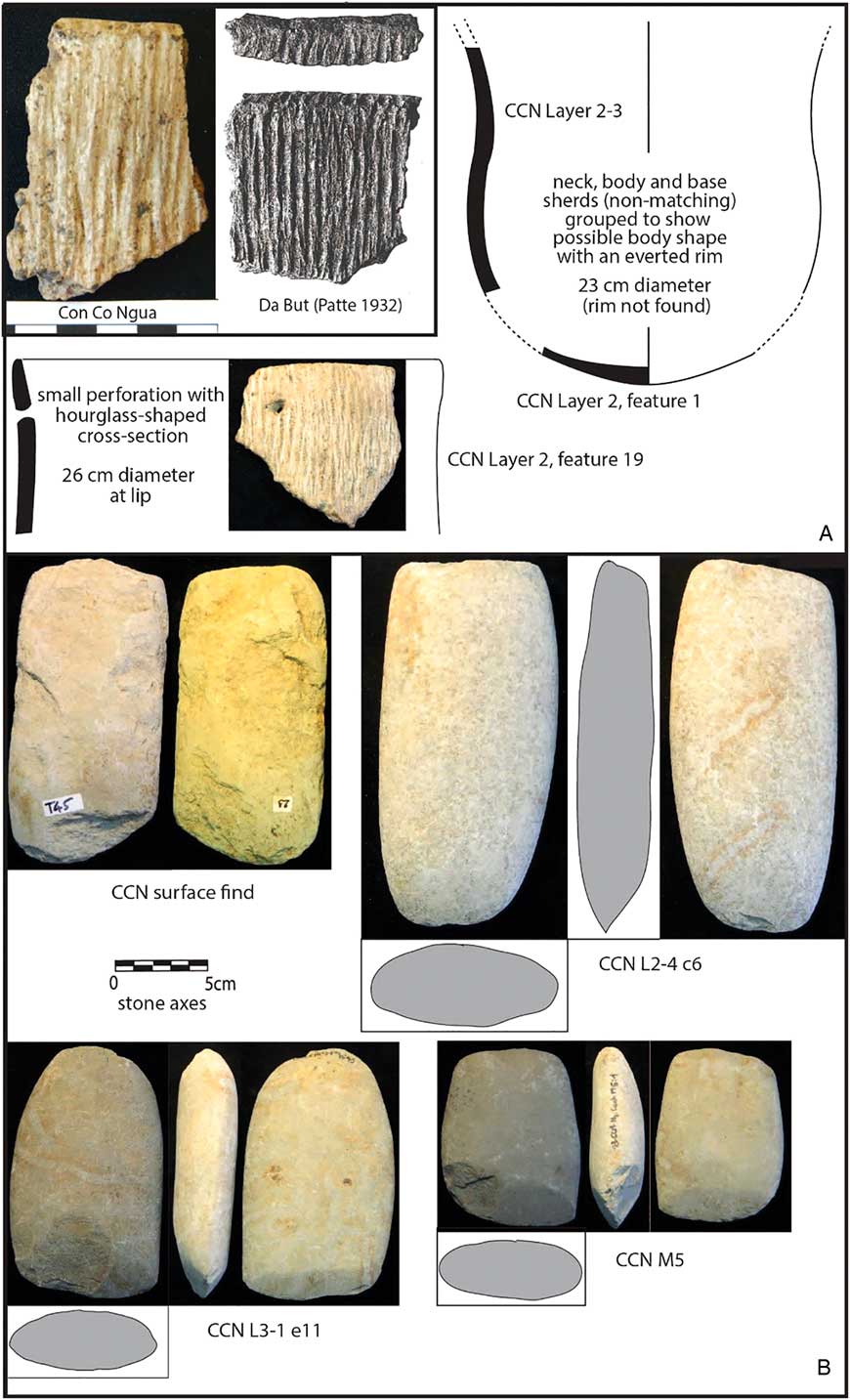
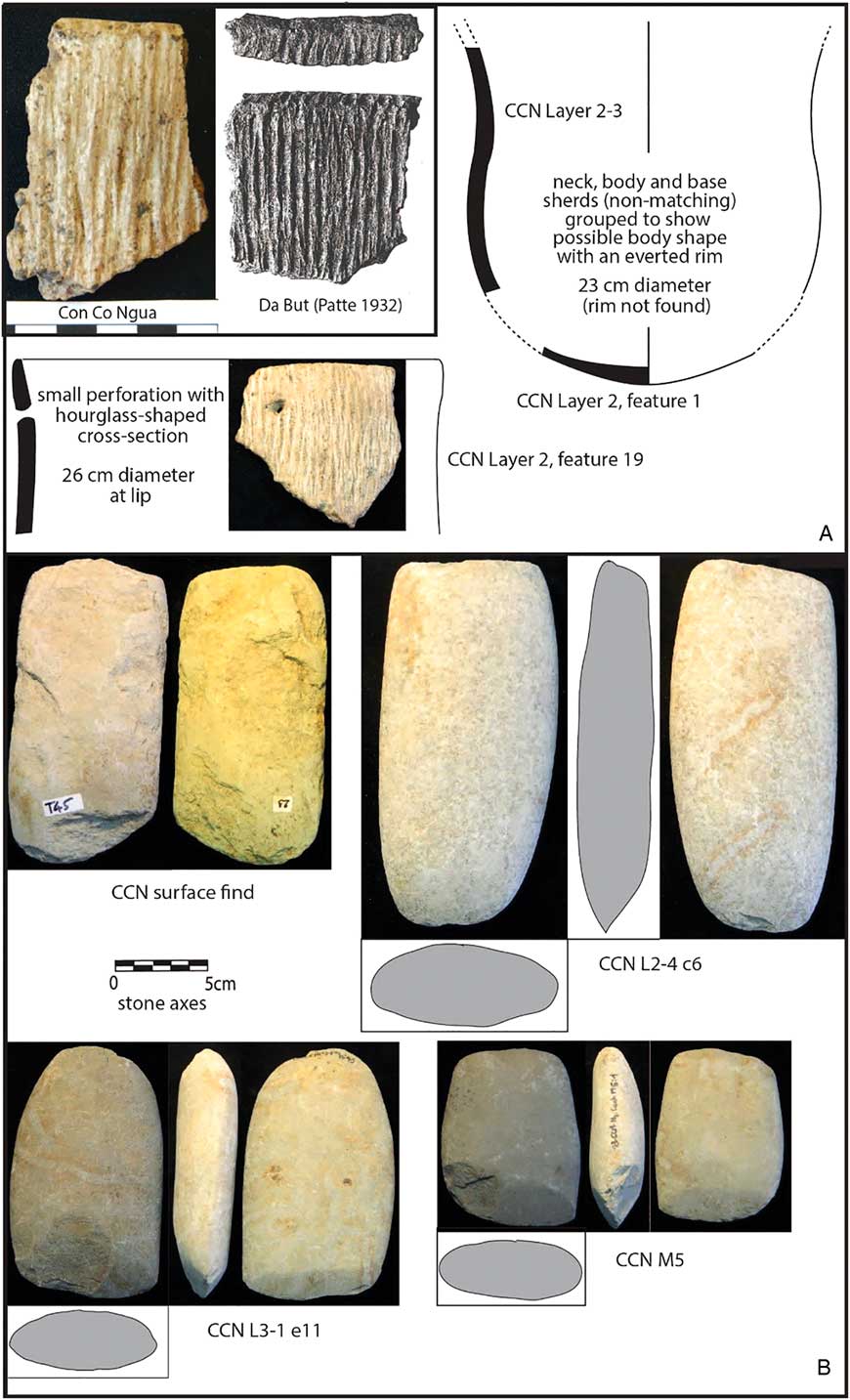
The 311kg of potsherds are coarsely (using laterite gravel) tempered, with body sherd thicknesses ranging from 4mm to a maximum of 22mm. Vessels are decorated externally, base to lip, using a rolling motion with a tubular rod (e.g. a segment of bamboo) wrapped with thin vines or split palm leaves. The resulting parallel ribs within the decoration are often vertical, sometimes sloping, and generally oriented in one direction except for crossing over at the pot base. This pottery is not paddle-impressed, and is best described as ‘ribbed’ rather than cord-marked. Simple horizontal incised lines often occur inside necks, but do not appear to be intentionally decorative. Some rims were perforated from both sides, perhaps to hold down lids made of perishable materials, such as skins or large leaves. The predominant shape consisted of a rounded body (maximum body diameters approximately 0.35m) without a pointed base, upon which was set a vertical or slightly sloping (both inwards and outwards) tall rim (Figure 3A). Sharply defined necks and shoulders are absent, and rims simply continue the upper contours of the vessel. CCN pottery is paralleled in the nearby site of Da But (Patte Reference Patte1932). The rims and body shapes show no similarity with later Neolithic assemblages, e.g. Phung Nguyen, Xom Ren, Man Bac and An Son, but are remarkably similar to those from Dingsishan (Fu Reference Fu2002; Bellwood et al. Reference Bellwood, Oxenham, Bui, Nguyen, Willis, Sarjeant, Piper, Matsumura, Tanaka, Beavan-Athfield, Higham, Nguyen, Dang, Nguyen, Vo, Van, Tran, Nguyen, Campos, Sato, Nguyen and Amano2011; Oxenham et al. Reference Oxenham, Matsumura and Nguyen2011; Li et al. Reference Li, Wang, Fu, Dobney, Li, Chen and Yu2013).
A) Vine-rolled pottery from Con Co Ngua, showing a virtually identical vine-rolled rim from Da But (Patte Reference Patte1932), a perforated rim and a partial body shape reconstruction (without rim); B) four pebble axes of varying sizes, showing extensive surface polishing.
Lithics
This assemblage is dominated by symmetrically bevelled axes (Figure 3B). The lack of unibevelled adzes makes it fundamentally different from younger Neolithic assemblages, such as those from the Man Bac and An Son sites (Bellwood et al. Reference Bellwood, Oxenham, Bui, Nguyen, Willis, Sarjeant, Piper, Matsumura, Tanaka, Beavan-Athfield, Higham, Nguyen, Dang, Nguyen, Vo, Van, Tran, Nguyen, Campos, Sato, Nguyen and Amano2011). Most of the stone tools were made from elongated river pebbles of fine-grained igneous rock, some hammer-dressed or flaked to shape, all with ground bevels. It is often difficult to determine whether the pebble body of the axe above the bevel was polished intentionally, or if the almost universally smooth surfaces were created by natural abrasion via river action. Several axes were broken transverse to the long axis, in the ‘hache court’ (truncated or short axe) fashion typical of ancestral Hoabinhian assemblages (Matthews Reference Matthews1966). Several large and heavy hammer stones were identified. Very few stone flakes were observed, suggesting that while stone axes might have been sharpened on site (grindstones were quite common), they were not made there.
Bone and shell artefacts
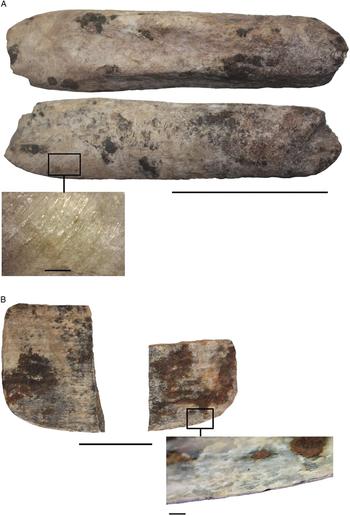
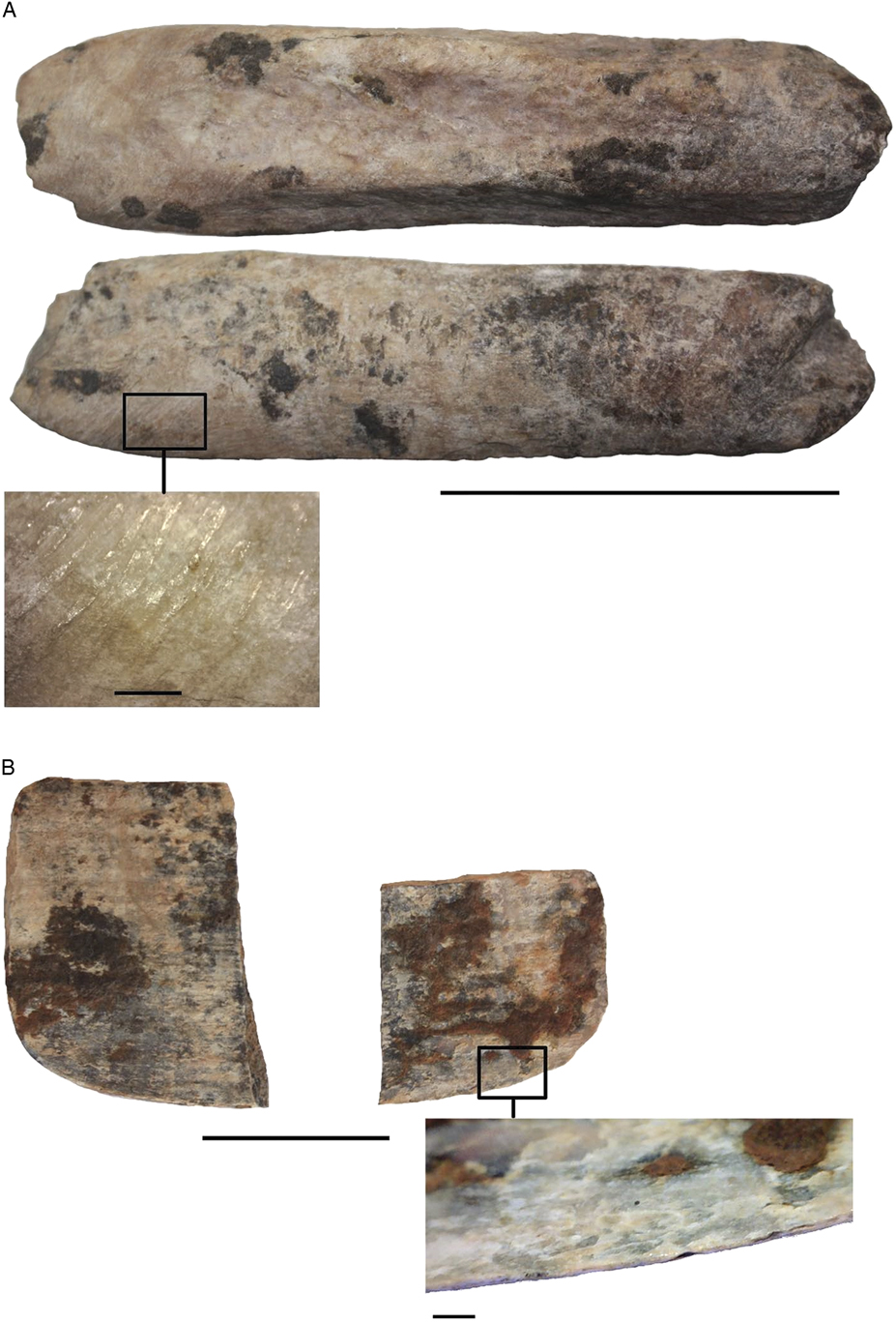
It is possible that many of the large shells of the estuarine bivalve Geloina coaxans were used as tools, but the sharp edges of these were always too chalky (friable) to assess. Bone modification is demonstrated by 14 artefacts, and by five bones showing modification potentially relating to artefact production (OSM S3). Most bone artefacts were produced from medium to large mammal long bones, especially deer metapodials. Many tools, and a type commonly encountered in Southeast Asian assemblages (Jones et al. Reference Jones, Meijer, Piper, Hiep, Tuan and Oxenham2016), are what Rabett (Reference Rabett2005: 161 & 163) classifies as edge-tools and points (Figure 4A). Other bone artefacts may be ornaments (Figure 4B).
A) Example of a typical edge-tool in the CCN assemblage, probably manufactured from a mammal long bone or metapodial by splitting the shaft longitudinally and rounding the edges (scale 50mm). The microscope image shows polish and use-wear that is particularly apparent on the worked edge (scale 20mm) (ID CCN-065, context M74); B) two pieces of bone that were probably part of the same object, shaped into a very thin and flat rectangular piece (scale 20mm). The microscope image shows the delicate and thin edge (scale 1mm) (ID CCN-2241, context M22/23).
The people
Ancestry
Cranio-metric and dental non-metric analyses of the 1979–1980 season human material are consistent with observations of the 2013 assemblage. The people are phenotypically aligned with both Late Pleistocene Southeast Asians and modern Melanesians and Australian Aboriginal populations. They contrast with the majority of Neolithic, Metal Period and modern peoples of Mainland Southeast Asia (Matsumura & Oxenham Reference Matsumura and Oxenham2014).
Demography
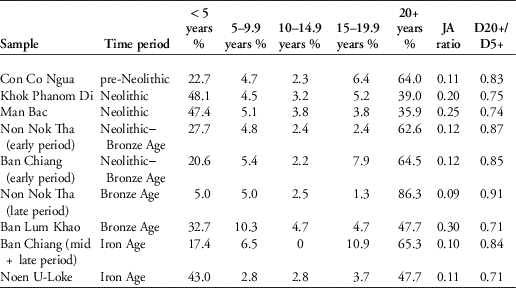
The 2013 assemblage totals 172 individuals. Age and sex estimation followed methods used for the 1979–1980 season (see Oxenham Reference Oxenham2016). There are relatively unremarkable levels of fertility (juvenile to adult and D20+/D5+ ratios—see Table 1)—certainly lower than Neolithic sites in the region, and in keeping with Southeast Asian Bronze and Iron Age communities (Domett & Oxenham Reference Domett and Oxenham2011) (Table 1). Furthermore, 29.7 per cent of the sample is below 15 years of age, which is consistent with the lower end of the range of juvenile mortality reported for modern pre-industrial populations (Weiss & Wobst Reference Weiss and Wobst1973: 49). This suggests relatively good sub-adult preservation and an unbiased series. Of the 110 adults, 47.3 per cent are sexed male, 33.6 per cent female and 19.1 per cent are of indeterminate sex. Of the sub-adults aged as neonates or younger, 29.4 per cent (5/17) were clearly pre-term, the youngest being around 30 weeks in utero.
Palaeodemographic values for Con Co Ngua (2013 season) and other prehistoric Southeast Asian communities (adapted from Domett & Oxenham Reference Domett and Oxenham2011).

Subadults <15 years; JA ratio—juvenile adult ratio; D20+/D5+—proportion of those aged over 20 years compared to those aged over 5 years.
Funerary practices
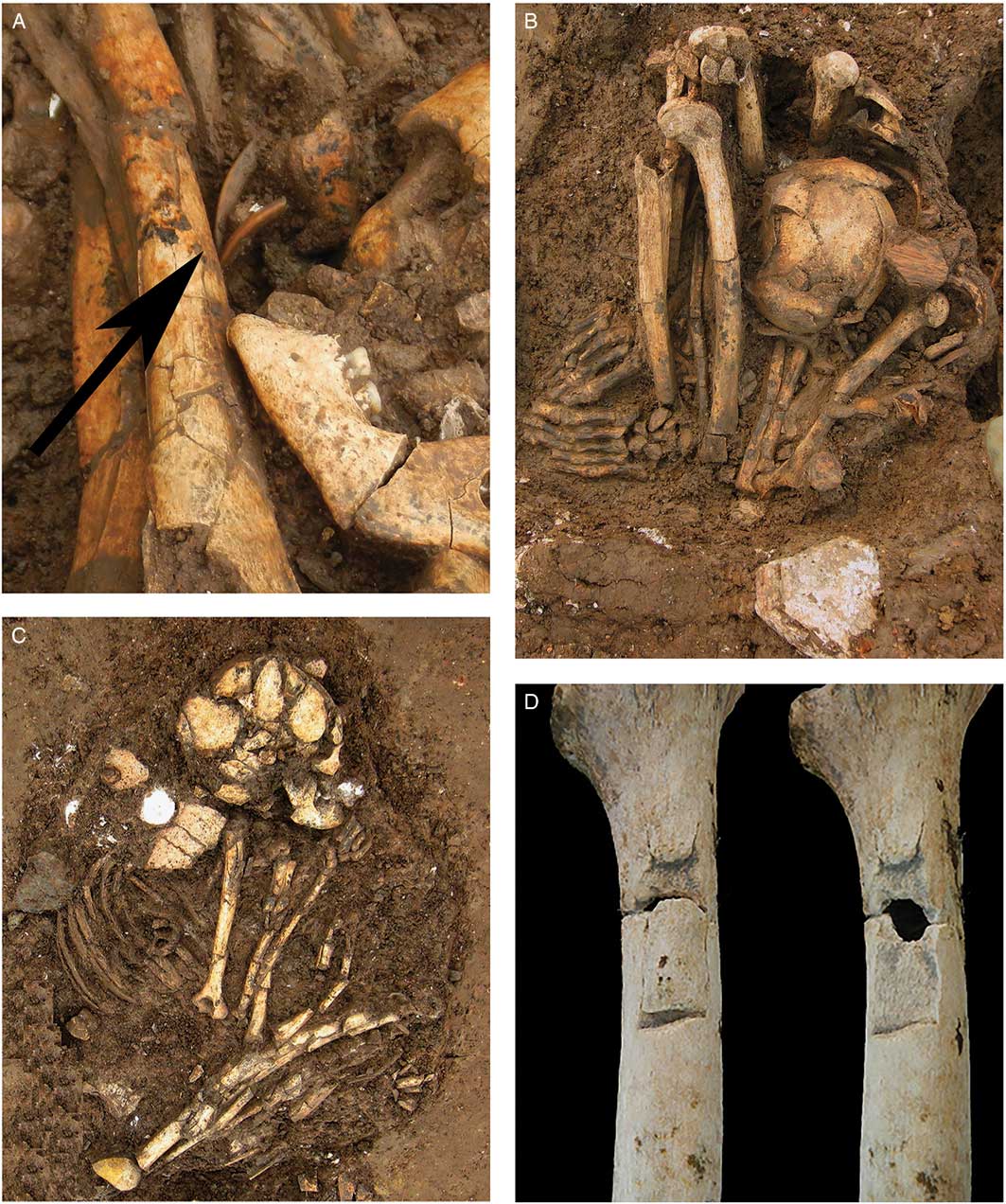
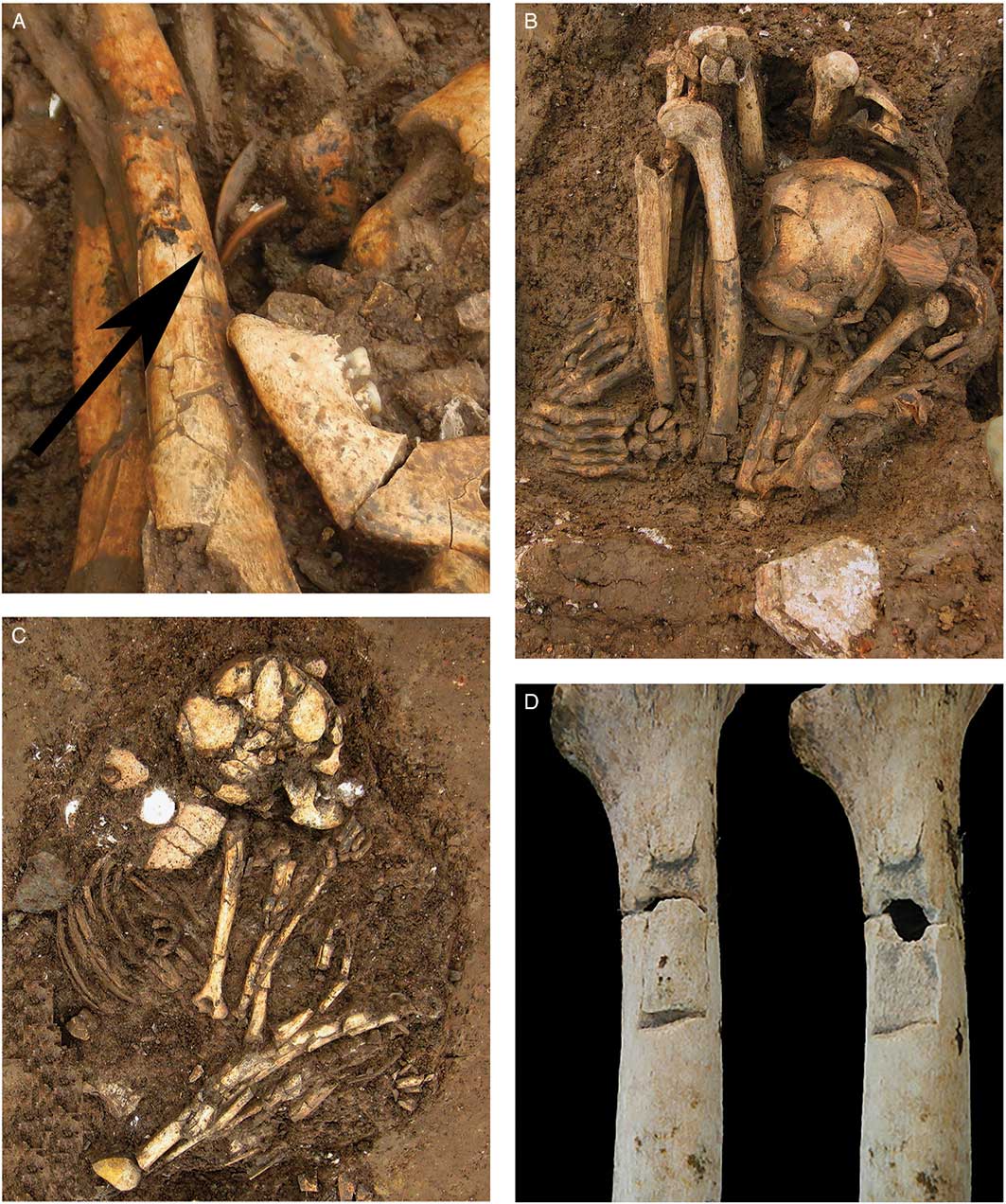
With one exception (Figure 5A), non-perishable grave goods are absent. Mortuary complexity is evident through post-mortem manipulation of the bodies and their positioning. Individuals older than five years were interred in two burial positions: squatting (77 per cent; Figure 5B), and side-flexed in a foetal position (23 per cent; Figure 5C). The inferred normative reconstructed burial ritual (see OSM S4) includes: 1) laying out the corpse; 2a) chopping the long bone shafts (e.g. Figure 5D) and clavicles, rather than the joints, using an edge-ground axe (the only tool apparently available); 2b) occasional removal and repositioning of the head; 3) positioning the body in a squatting or side-flexed position; 4) wrapping the body tightly (possibly within bark cloth); 5a) placement within an earthen pit (if squatting), with the front of the body facing in a easterly direction; or 5b) placement in a side-flexed position with no consistent orientation of the long axis of the body; 6) probable occasional placement of biodegradable material (potentially large baskets) beside the body; 7) filling of the grave cut.
A) Porcupine incisor bracelet encircling the distal radius and ulna (wrist) of M10 (elderly male); B) example of a squatting burial (M35 adult male); C) example of a side-flexed burial (M9 adult female); D) example of post-mortem trauma associated with ritual mutilation. Proximal femur with re-fitted bone flake (left), and with bone flake removed (right) (M13 adult male).
Health and disease
Details on human physiological and oral health of the remains excavated during the 1979–1980 season are summarised in Oxenham (Reference Oxenham2006). Oral health was good, with only 1.5 per cent of all teeth exhibiting carious lesions, relative to later agricultural populations with between 4.5 and 11.7 per cent carious teeth (Willis & Oxenham Reference Willis and Oxenham2013). Physiological stress in the 1979–1980 series was elevated, with 81 per cent of all individuals displaying active or remodelled cribra orbitalia, and 72 per cent of individuals having canine linear enamel hypoplasia. Oxenham et al. (Reference Oxenham, Walters, Nguyen and Nguyen2001) also noted that 7.4 per cent of individuals from the 1979–1980 season had major skeletal trauma (e.g. healed femoral and humeral fractures), while evidence for infectious disease was absent (Oxenham et al. Reference Oxenham, Nguyen and Nguyen2005). Trauma has not been fully assessed for the 2013 series, but frequencies and types are so far consistent with the earlier study. Unusual examples of trauma within the recent series include an adult male with healed fractures to both forearms and his left tibia; a crushed foot injury to an elderly female, including amputation of the fourth and fifth toes; and a depressed cranial fracture in an elderly male. The presence of metaphyseal osteolytic lesions in the upper limb (humerus) of some individuals and a calcified possible hydatid cyst (see OSM S5) associated with one individual suggest a population bearing the burden of the Echinococcus parasite, an infection usually only associated with pastoralism.
Discussion
Comparing CCN with other Da But sites in Vietnam is problematic due to the lack of detailed publications and a focus on stone tool and pottery typologies, rather than subsistence, mortuary rituals, human biology and palaeopathology. Pottery clearly pre-dates farming by thousands of years; it appears c. 20 000 ya in China and c. 8700 ya in northern Vietnam (Wu et al. Reference Wu, Zhang, Goldberg, Cohen, Pan, Arpin and Bar-Yosef2012; Nguyen Reference Nguyen2016). All pre-metal sites in China and Vietnam are termed ‘Neolithic’ in Chinese and Vietnamese site reports. In Guangxi Province alone, there are approximately 400 of these ‘Neolithic’ sites, 40 of which have been excavated (Xie Guangmao, Nanning Museum, China pers. comm.). Except for Dingsishan, however, reports on these sites are insufficiently detailed for comparative purposes. As such, we focus on CCN as offering evidence for the economy and cosmology of one population of hunter-gatherers during the Early to Middle Holocene.
Dating to at least c. 6700–6200 cal BP, CCN is the only well-dated, large, open-air hunter-gatherer site in Southeast Asia/southern China. The population is descended from the first modern humans to settle Australia, Melanesia and both Southeast and East Asia c. 65 000 ya (Oxenham & Buckley Reference Oxenham and Buckley2016a; Clarkson et al. Reference Clarkson, Jacobs, Marwick, Fullagar, Wallis, Smith, Roberts, Hayes, Lowe, Carah, Florin, McNeil, Cox, Arnold, Hua, Huntley, Brand, Manne, Fairbairn, Shulmeister, Lyle, Salinas, Page, Connell, Park, Norman, Murphy and Pardoe2017). Preliminary data suggest low fertility relative to the Neolithic period, but comparable to Bronze and Iron Age communities. This pattern is consistent with modelling of the global Neolithic Demographic Transition (Bocquet-Appel & Naji Reference Bocquet-Appel and Naji2006; Willis & Oxenham Reference Willis and Oxenham2013). Nonetheless, the large number of contemporaneous sites in southern China and northern Vietnam is consistent with Zahid et al.’s (Reference Zahid, Robinson and Kelly2016) global modelling of hunter-gatherer growth rates, comparable with Neolithic communities in general. Certainly, the size (n=272 for CCN, both seasons combined, and n=331 for Dingsishan) of these cemeteries is also consistent with large, if not rapidly growing, communities. The relatively high proportion of full term (70.6 per cent) to pre-term (29.4 per cent) perinates in the sub-adult sample is similar to that reported for Neolithic Khok Phanom Di in Thailand (Halcrow et al. Reference Halcrow, Tayles and Livingstone2008), with potential explanations including infanticide, poor preservation of pre-term remains, or differential burial practices (e.g. pre-term births disposed of elsewhere or in a different manner to full-term individuals).
A critical question concerns how hunter-gatherer communities maintained relatively large and ritually complex populations in apparently sedentary situations. Our only direct evidence for a potential carbohydrate staple at CCN is Canarium, the kernels of which are rich in fats, proteins and essential amino acids, making it an ideal source of nutrition (He & Xia Reference He and Xia2007). Canarium has also been identified in other Early to mid Holocene hunter-gatherer sites in Southeast Asia, including Vietnam (e.g. Con Moong Cave, Dong Cang Cave, Hang Doi and Mai Da Dieu), with the earliest remains in Vietnam dating to c. 11 000 BP at Hang Doi and Dong Cang (Oxenham et al. Reference Oxenham, Nguyen and Nguyen2005). Fruits, roots and tubers are key dietary components of pre-agrarian communities (Hather Reference Hather1992). Although some of the plants probably consumed during this period are archaeologically difficult to identify due to poor preservation, we can postulate that bananas, taro, sago, candlenut, Terminalia and Pandanus were some of the other plants exploited (Yang et al. Reference Yang, Barton, Wan, Li, Ma, Li, Zhang and Wei2013).
Regarding meat-based protein sources, it is clear there was a focus on large terrestrial vertebrates, particularly wild bovids. The demographic profiles of these wild taxa are more consistent with hunting, rather than selective harvesting of corralled wild animals (Zeder Reference Zeder2011). Notwithstanding, the possible presence of hydatid disease suggests a physically close relationship (see OSM S5) between CCN humans, canids and ungulates—one rarely seen outside of pastoralist settings. It should be noted that infection can also occur through sharing a common water source with the definitive and intermediate hosts (Moro & Schantz Reference Moro and Schantz2009). Similarly, the sylvatic strain of E. granulosus is maintained in wild host populations (wolves, canids, moose and reindeer) in Eurasia and North America without animal husbandry (Moro & Schantz Reference Moro and Schantz2009). The presence of bovid/cervid remains and wild canids at CCN supports the possibility of hydatids affecting the hunter-gatherer population. This has implications for the ways in which animal husbandry and pastoralism are viewed in the past, and for the evolutionary history of apparently zoonotic diseases affecting human populations during the Neolithic. Additionally, the high level of serious healed trauma is consistent with some form of wild bovid management or interaction strategy, perhaps involving herding or trapping. Eng and Zhang (Reference Eng and Zhang2013), for instance, have noted elevated long bone trauma among Late Bronze Age pastoralists in far northern China.
While pottery residue analyses have not yet been undertaken, the presence of numerous large pots—some probably secured or sealed—suggests the storage of preserved foodstuffs or liquids. Regarding task-specific tools, the broad size range (after controlling for continuous re-use) in stone axes suggests industrial-level activities through to fine/detailed working. Some large, presumably hafted axes were perhaps associated with tree felling and the manufacture of structures or water craft. The bone tools suggest a variety of additional tasks, while non-utilitarian bone artefacts—and at least one in situ porcupine incisor bracelet placed in a grave—indicate the presence of body ornamentation. This raises the issue of ritual complexity.
Both excavation seasons yielded a total of 272 individuals from CCN, most of whom were placed within circular pits dug into the cultural layer or sterile soil and positioned in either a seated or squatting position. The remaining burials were generally side-flexed. This compares with Dingsishan, where 331 graves have been recovered with seven mortuary contexts identified: supine, extended, supine-flexed, side-flexed, prone-flexed, squatting and dismembered (Li et al. Reference Li, Wang, Fu, Dobney, Li, Chen and Yu2013). While the proportion of burials in each Dingsishan mortuary context was not provided, dismemberment occurred in 21 per cent of all cases (Li et al. Reference Li, Wang, Fu, Dobney, Li, Chen and Yu2013).
Funerary ritual involving mutilation of the corpse is systematic and standardised, suggesting that a funerary specialist(s) may have been used. This is an intriguing idea so far only proposed for other regions of the world, such as Neolithic Orkney in Scotland and Neolithic Ireland (Crozier Reference Crozier2012; Geber et al. Reference Geber, Hensey, Meehan, Moore and Kadore2017). A lack of grave goods is characteristic of most pre-Neolithic cemeteries in Southeast Asia (Oxenham et al. Reference Oxenham, Willis, Nguyen and Matsumurain press), while the complexity and standardised manner of treating the dead presumably evolved over a considerable period. Dismemberment and body-part repositioning at Dingsishan, and mutilation and potential skull removal and repositioning at CCN are rare in Neolithic and post-Neolithic contexts in Mainland Southeast Asia.
Conclusions
Da But communities such as that at CCN and the contemporaneous neighbouring Dingsishan culture sites currently lack any evidence for domesticated plants or animals. The inhabitants are the cultural and biological descendants of the first AMH colonisers in the region. Unlike more northern Early Neolithic communities who continued hunting and gathering, yet also engaged in plant and animal domestication between c. 9000 and 6000 ya, Da But and Dingsishan communities were adapting to optimal hunter-gatherer conditions probably mediated by the Holocene Thermal Maximum. They lived in a climate warmer than now, which presumably favoured the growth and spread of economically valuable plants, such as Canarium, sago and root crops, in quantities that could sustain large sedentary hunter-gatherer populations. Whether some form of vege culture or wild plant management was occurring remains unknown, but we think it probable. Changes in vegetation diversity and distribution may also have favoured the development of sustainable wild bovid populations that the CCN community exploited.
Following the Holocene Thermal Maximum, lower sea levels, coastal progradation (or seaward extension of the coast) and declining temperature and rainfall presumably had a negative impact on these communities and their resources. Domesticated crops and animals were present by c. 5000 ya in southern China, and by c. 4000 ya in northern Vietnam, accompanied by a new material culture and a phenotypically and genetically different population (Matsumura et al. Reference Matsumura, Oxenham and Nguyen2015). The dual pressures of post-Holocene Thermal Maximum climate change and the immigration of farming populations from central China probably played important roles in the demise of a highly successful and sustained way of life across a vast area of southern China and northern Vietnam. The burials at the Neolithic site of Man Bac in northern Vietnam indicate that the indigenous population and the Neolithic immigrants co-habitated and exchanged both genes and life skills (Oxenham et al. Reference Oxenham, Matsumura and Nguyen2011).
Population growth, apparent sedentism and poor health were common features of both the complex hunter-gatherer communities and the succeeding farming populations (Oxenham & Tayles Reference Oxenham and Tayles2006; Pechenkina & Oxenham Reference Pechenkina and Oxenham2013; Oxenham & Buckley Reference Oxenham and Buckley2016b). Demographically, the model of Zahid et al. (Reference Zahid, Robinson and Kelly2016) fits our findings, given that there was no in situ transition from hunting and gathering into farming in southern China and northern Vietnam, but more a replacement of one life-way and its associated population with another. CCN and Dingsishan do not represent a stage in a transition to farming, but rather a specific response to the unique climatic and ecological conditions characterising the Holocene Thermal Maximum. Domestication on the one hand, and the hunter-gatherer economies seen in CCN and the Dingsishan communities on the other, can be viewed as alternative responses to optimal climatic conditions. The transition to farming provided neither relative benefit nor hardship to ancient communities in this part of the world.
Supplementary material
To view supplementary material for this article, please visit https://doi.org/10.15184/aqy.2018.69
Acknowledgements
Grant sponsors: Australian Research Council DP110101097; FT120100299; FT100100527; JSPS16H02527.