Introduction
With approximately 4750 species, parasitic plants constitute 1.6% of the angiosperms (Nickrent, Reference Nickrent2020). Parasitism, especially holoparasitism, represents the most extreme interaction between plants, with strong associations between host and parasite biogeography, ecology, and probably with diversification (Schneider and Moore, Reference Schneider and Moore2017). Orobanchaceae is the largest parasitic plant family with 102 genera and over 2100 species (Nickrent, Reference Nickrent2020). One of the most peculiar in this family is the genus Cistanche Hoffmanns. & Link, which includes approximately 25 species, and is found mainly in arid, semi-arid and halophytic habitats across Eurasia and North Africa. These magnificent, achlorophyllous species, with fleshy stems, long underground stolons and intensely coloured inflorescences grow as obligate parasite (holoparasite) on the roots of host-plant species mainly belonging to the Chenopodiaceae, Zygophyllaceae, Tamaricaceae and Plumbaginaceae (Piwowarczyk et al., Reference Piwowarczyk, Sánchez Pedraja, Moreno Moral, Fayvush, Zakaryan, Kartashyan and Aleksanyan2019). Species belonging to this genus have been widely used in traditional Chinese medicine for centuries (Li et al., Reference Li, Lin, Gu, Gao and Tzeng2016; Piwowarczyk et al., Reference Piwowarczyk, Ochmian, Lachowicz, Kapusta, Sotek and Błaszak2020a).
A particularity of parasitic plants is their production of huge numbers of seeds, which are also among the smallest of all seed plants (Eriksson and Kainulainen, Reference Eriksson and Kainulainen2011). With a length of less than 1 mm, they are often called ‘dust seeds’ (Yoneyama et al., Reference Yoneyama, Xiaonan, Sekimoto, Takeuchi, Ogasawara, Akiyama, Hayashi and Yoneyama2008; Eriksson and Kainulainen, Reference Eriksson and Kainulainen2011; Piwowarczyk, Reference Piwowarczyk2013). The seeds possess a unique simple structure, and contain only a reduced embryo, as a spherical body without a plumule, and radicle or cotyledons. The reticulated testa of these seeds with polygonal and sometimes deeply submerged walls might enhance the contact of the seed surface with water or facilitate the seed dispersal by wind. The endothelium (inner testa layer) containing mucilage and labyrinthine walls, allows rapid absorption of water, which is crucial for imbibition and subsequent germination (Piwowarczyk et al., Reference Piwowarczyk, Ruraż, Krasylenko, Kasińska and Sánchez-Pedraja2020b). The cutinized endothelium has a protective role in the underground part of the plant life cycle (Dinesh et al., Reference Dinesh, Anandaraj, Kumar, Bini, Subila and Aravind2015; Piwowarczyk et al., Reference Piwowarczyk, Sánchez Pedraja, Moreno Moral, Fayvush, Zakaryan, Kartashyan and Aleksanyan2019). Lipids are the main storage material in the seeds of Orobanchaceae (Ruraż et al., Reference Ruraż, Piwowarczyk, Gajdoš, Krasylenko and Čertík2020). For germination, Cistanche seeds need to be very nearby their preferred host. Germination depends on hormones-strigolactones exuded from the host root (Yoneyama et al., Reference Yoneyama, Xiaonan, Sekimoto, Takeuchi, Ogasawara, Akiyama, Hayashi and Yoneyama2008). Seeds of Cistanche, like related Orobanche s.l. species, seem to be resistant to harsh environmental conditions and stay viable in the soil for several decades (Joel et al., Reference Joel, Hershenhorn, Eizenberg, Aly, Ejeta, Rich, Ransom, Sauerborn, Rubiales and Janick2007). Among the wide range of plant protection mechanisms, the endophytic microbes have a specific role for improving the plant tolerance against different biotic and abiotic stresses (Shrivastava and Kumar, Reference Shrivastava and Kumar2015).
Recently, the interest in plant endophytes from ecosystems with harsh environmental conditions, especially saline soils has increased (Hrynkiewicz et al., Reference Hrynkiewicz, Patz and Ruppel2019; Manasa et al., Reference Manasa, Vasanthakumari, Nataraja and Uma Shaanker2020). Such endophytes can have the potential to mitigate the impacts of adverse conditions such as soil salinization, high concentrations of metals and climate change (Hallmann et al., Reference Hallmann, Quadt-Hallmann, Mahaffee and Kloepper1997; Truyens et al., Reference Truyens, Beckers, Thijs, Weyens, Cuypers and Vangronsveld2016; Manjunatha et al., Reference Manjunatha, Asha, Nivetha, Bandeppa, Govindasamy, Rathi and Sangeeta2017; Hemida and Reyad, Reference Hemida and Reyad2019). Most of the seed-associated bacteria are considered to have an environmental origin and to be important for the adaptation of their host to harsh environmental conditions (Frank et al., Reference Frank, Saldierna Guzmán and Shay2017). Therefore, tissues of halotolerant plants also contain halophilic bacterial communities (Etesami and Beattie, Reference Etesami and Beattie2018) and the composition of seed-associated bacterial communities should be closely related to the soil bacterial communities. Besides the obligate endophytes, plant tissues can be colonized by soil bacteria as well. This is explained by the possible migration of bacteria from the soil to the seeds (Frank et al., Reference Frank, Saldierna Guzmán and Shay2017; Johnston-Monje et al., Reference Johnston-Monje, Gutiérrez and Lopez-Lavalle2021). According to Barret et al. (Reference Barret, Guimbaud, Darrasse and Jacques2016), the endophytes reach the seeds by: internal transmission through the vascular system and floral transmission (external transmission) through the stigma, fruits or flowers. Indeed, during the early stages of seed development, the endophytes reach the seeds via the xylem and nonvascular plant tissues. Bacteria can also use the floral pathway to reach the seeds. However, the floral route has a selective function, and only endophytes with biocontrol ability and nonhost pathogens can reach the seeds. However, the seeds endophytic microbiome composition, diversity and bacterial proportions depend on plant species genotype, natural habitat of host plant, seeds dormancy and storage conditions, which was not investigated sufficiently (Jonkers et al., Reference Jonkers, Gundel, Verma and White2022).
So far, ample endophytes have been isolated from different seeds of many wild and agricultural/sylvicultural herbaceous and woody plant species (e.g. Ulrich et al., Reference Ulrich, Ulrich and Ewald2008; Truyens et al., Reference Truyens, Weyens, Cuypers and Vangronsveld2013, Reference Truyens, Jambon, Croes, Janssen, Weyens, Mench, Carleer, Cuypers and Vangronsveld2014, Reference Truyens, Beckers, Thijs, Weyens, Cuypers and Vangronsveld2016; Asaf et al., Reference Asaf, Aaqil Khan, Latif Khan, Waqas, Shahzad, Kim, Kang and Lee2017; Glassner et al., Reference Glassner, Zchori-Fein, Yaron, Sessitsch, Sauer and Compant2018; Sánchez-López et al., Reference Sánchez-López, Pintelon, Stevens, Imperato, Timmermans, González-Chávez, Carrillo-González, Van Hamme, Vangronsveld and Thijs2018; Compant et al., Reference Compant, Samad, Faist and Sessitsch2019), including some holoparasitic species (tissue and seeds) such as Phelipanche aegyptiaca, P. ramosa and Orobanche hederae (Iasur Kruh et al., Reference Iasur Kruh, Lahav, Abu-Nassar, Achdari, Salami, Freilich and Aly2017; Fitzpatrick and Schneider, Reference Fitzpatrick and Schneider2020; Huet et al., Reference Huet, Pouvreau, Delage, Delgrange, Marais, Bahut, Delavault, Simier and Poulin2020; Durlik et al., Reference Durlik, Żarnowiec, Piwowarczyk and Kaca2021). The microbiome of P. aegyptiaca in different developmental stages was investigated by Iasur Kruh et al. (Reference Iasur Kruh, Lahav, Abu-Nassar, Achdari, Salami, Freilich and Aly2017). Surface-sterilized tissues of roots, haustoria and shoots harboured bacteria belonging to the Proteobacteria (Rhizobium, Pseudomonas, Comamonadaceae, Sphingomonas and Burkholderia, Actinobacter sp., Bacillus sp.). In addition, Novosphingobium and Methylophilus were reported as specific endophytes for this plant species (Iasur Kruh et al., Reference Iasur Kruh, Lahav, Abu-Nassar, Achdari, Salami, Freilich and Aly2017). A study of the endophytic microbiome of O. hederae reported that Orobanche leaves (scales) contain Acidobacteria, Proteobacteria, Verrucomicrobia and bacteria belonging to the Enterobacteriaceae, Pseudomonadaceae and Rhizobiaceae (Fitzpatrick and Schneider, Reference Fitzpatrick and Schneider2020). The first report about seed endophytes of the holoparasitic P. ramosa reported a dominance of four bacterial phyla, i.e. Proteobacteria, Bacteroidetes, Actinobacteria, Firmicutes (Huet et al., Reference Huet, Pouvreau, Delage, Delgrange, Marais, Bahut, Delavault, Simier and Poulin2020). In another study on surface-sterilized seeds of P. ramosa, culturable Brevibacterium frigoritolerans and Bacillus simplex were isolated (Durlik et al., Reference Durlik, Żarnowiec, Piwowarczyk and Kaca2021; Table 1). Different bacterial phyla also have been isolated from plants growing in arid and semi-arid regions, like Larrea tridentata from the desert plant Salsola (Soussi et al., Reference Soussi, Ferjani, Marasco, Guesmi, Cherif, Rolli, Mapelli, Ouzari, Daffonchio and Cherif2016) and the saline wetland species Salicornia (Szymańska et al., Reference Szymańska, Borruso, Brusetti, Hulisz, Furtado and Hrynkiewicz2018). Furthermore, some authors argue that the bacterial phyla Proteobacteria, Bacteriodetes, Firmicutes, Planctomycetes, Actinobacteria and Fibrobacteres are common for halotolerant plants from arid and wetland soils (Soussi et al., Reference Soussi, Ferjani, Marasco, Guesmi, Cherif, Rolli, Mapelli, Ouzari, Daffonchio and Cherif2016; Asaf et al., Reference Asaf, Aaqil Khan, Latif Khan, Waqas, Shahzad, Kim, Kang and Lee2017; Szymańska et al., Reference Szymańska, Borruso, Brusetti, Hulisz, Furtado and Hrynkiewicz2018).
Endophytic bacterial taxa isolated from different tissues of holoparasitic plant species

Although many investigations highlight the importance of endophytes in plant health, the knowledge concerning communities of bacterial seed endophytes, especially about the microbiome of seeds of holoparasitic plant species, is still limited (Iasur Kruh et al., Reference Iasur Kruh, Lahav, Abu-Nassar, Achdari, Salami, Freilich and Aly2017; Fitzpatrick and Schneider, Reference Fitzpatrick and Schneider2020; Huet et al., Reference Huet, Pouvreau, Delage, Delgrange, Marais, Bahut, Delavault, Simier and Poulin2020; Durlik et al., Reference Durlik, Żarnowiec, Piwowarczyk and Kaca2021). Therefore, the major objective of our study was to explore the bacterial endophytes (culturable and unculturable) from seeds of the holoparasitic endemic plant Cistanche armena (K. Koch) M.V. Agab. (Orobanchaceae) from a saline and semi-desert habitat of Armenia. The other aim was to investigate the potential plant growth-promoting (PGP) traits of the culturable seed endophytes that might have a role in plant responses and tolerance to abiotic stresses.
The present study combined culture-dependent and molecular approaches. Moreover, the effectivity of the sterilization method is a crucial step to isolate just the seed endophytes. For this purpose, the micromorphology of the seeds was studied to help us to select the appropriate method of surface sterilization, due to the unique structure of the reticulated testa and the endothelium of the seed coat. Molecular techniques were used to identify the culturable bacteria and to describe the diversity of the microbial communities in seeds of the examined plant species. PGP traits such as the ability to produce Indole-3-acetic acid (IAA), ACC-deaminase, siderophores and organic acids of the culturable endophytic bacterial strains were also investigated.
To the best of our knowledge, this is the first report about bacterial seed endophytes of the holoparasitic endemic plant species C. armena.
Materials and methods
Species natural habitat and plant material
Mature seeds of Cistanche armena (Orobanchaceae) were used. C. armena (K. Koch) M.V. Agab. is an endemic, critically endangered species. It is known only from the Ararat and Armavir provinces in southern Armenia, in the Arax River valley and at the foot of Mount Ararat, NW of the village Lusarat, near the Khor Virap monastery (39°53′01″N, 44°34′49″E) at about 820–840 m above sea level (Piwowarczyk et al., Reference Piwowarczyk, Kwolek, Góralski, Denysenko, Joachimiak and Aleksanyan2017, Reference Piwowarczyk, Sánchez Pedraja, Moreno Moral, Fayvush, Zakaryan, Kartashyan and Aleksanyan2019). This locality is one of the hottest and extremely arid regions of Armenia. The mean daily air temperature ranges from a maximum of 42°C in July to a minimum of −33°C in January. The average annual rainfall is 300 mm, while the annual evaporation reaches up to 1000 mm. The area is characterized by strong salinity (total salt content of the soil 1–3%) with considerable carbonization (Panosyan et al., Reference Panosyan, Hakobyan, Birkeland and Trchounian2018). It is a semi-desert, with sandy, saline soils and a halophytic vegetation. C. armena parasitizes Alhagi maurorum (Fabaceae) and Salsola dendroides (Chenopodiaceae).
The mature seeds were collected in June 2017. Seeds from at least 10 plant individuals of the total population from the region were collected. Mature and dry seeds were collected from dry fruits and used for further experiments. The seeds were collected and identified by Renata Piwowarczyk, and herbarium materials were deposited in the Herbarium of the Jan Kochanowski University in Kielce (KTC), Poland, and Yerevan State University (ERCB), Armenia. The seeds were dried under natural conditions. Field studies, including the collection of plant and seed material complied with relevant local, institutional, national, and international guidelines, permissions and legislation.
Microscopic observation and morphometric analysis of seeds
General seed morphology was studied using an Axio Zoom.V16 Stereo Zoom system (Carl Zeiss, Germany) in bright-field illumination (objective lenses PlanApo Z 1.5×, FWD = 30 mm) and processed in ImageJ software using Fiji macros. The terminology of seed surfaces was taken from Barthlott (Reference Barthlott1981) and Piwowarczyk et al. (Reference Piwowarczyk, Ruraż, Krasylenko, Kasińska and Sánchez-Pedraja2020b). At least 30 seeds were examined, and quantitative and qualitative morphological characteristics were determined several times for each seed (Fig. 1).
ZOOM microscopy micrographs of seeds of Cistanche armena. Photo by Y. Krasylenko.

Seed surface sterilization and cultivation conditions of culturable seed endophytic bacteria
The aim of seed surface sterilization was to obtain only the endophytic bacterial communities of the seeds. For this purpose, 50 mg of seeds were transferred into 1.5 ml Eppendorf tubes, submersed in 70% ethanol for 60 s, then 1 ml of a 0.85% sterile NaCl solution was added, followed by shaking on a vortex (8000 rpm) at 21°C for 2.5 h. Subsequently, the washed seeds were kept at 4°C for 15 min. Before rinsing with sterile double distilled water, the seeds were centrifuged for 30 s at 12,000 rpm (13,400 × g). The washing process was repeated five times with a decreasing time of shaking from 2 h to 30 min (2 h, 1.5 h, 60 min, 45 min and 30 min). Each time samples were centrifuged for 30 s, rinsed with sterile double distilled water, and kept at 4°C for 15 min. The rinsing procedure was repeated three times. For proving the effectiveness of the sterilization procedure, the last rinsing water was plated on previously prepared Petri dishes with LB medium. The surface-sterilized seeds were mechanically homogenized using a sterile pellet pestle (Kimble®) in 0.5 ml, 10 mM MgSO4. Part of the homogenous seed suspension was used for DNA extraction, another part for isolation of culturable bacteria.
Total DNA extraction from seeds, library preparation and Illumina sequencing
For identification of the total (cultivable and uncultivable) bacterial community, the homogenized suspension of the surface-sterilized seeds was used. The DNA isolation was performed using the Mobio Power Plant protocol. The isolation of total bacterial DNA was conducted in four replicates.
All DNA samples were subjected to bacterial 16S rRNA gene amplicon PCR. In the first round of 16S rRNA gene PCR, an amplicon of 291 bp was generated, using primers 515F-GTGYCAGCMGCCGCGGTAA and 806R-GGACTACNVGGGTWTCTAAT (Walters et al., Reference Walters, Hyde, Berg-Lyons, Ackermann, Humphrey, Parada, Gilbert, Jansson, Caporaso, Fuhrman, Apprill and Knight2016), with an Illumina adapter overhang nucleotide sequence, resulting in the following sequences, 515F-adaptor: 5′-TCG TCG GCA GCG TCA GAT GTG TAT AAG AGA CAG-3′ and 806R-adaptor: 5′-GTC TCG TGG GCT CGG AGA TGT GTA TAA GAG ACA G-3′. For the first round of PCR the Q5 High-Fidelity DNA Polymerase system (M0491, NEB), a reaction volume of 25 μl per sample was prepared containing 1 μl of extracted DNA (final DNA-concentration per reaction 1–10 ng), 1 × Q5 Reaction Buffer with 2 mM MgCl2, 200 μM dNTP mix, 1 × Q5 High GC Enhancer (for the seed and bacterial samples), 0.25 μM forward or reverse primer, and 0.02 U μl−1 Q5 High-Fidelity DNA polymerase, and for the seed endophytic extracts, additionally 0.5 μl mitoPNA blocker (2 μM final concentration added from a 50 μM stock), 0.5 μl (seeds) plastidPNA blocker (2 μM final concentration from 50 μM stock) (Kusstatscher et al., Reference Kusstatscher, Adam, Wicaksono, Bernhart, Olimi, Müller and Berg2021) were used. The PCR program started with an initial denaturation for 3 min at 98°C, followed by a 10 s denaturation at 98°C, a 30 s annealing at 56°C for V3V4 (58°C for ITS) and a 30 s extension at 72°C; all three steps were repeated for a total of 30 cycles. The reaction was ended by a final 7 min extension at 72°C. The amplified DNA was purified using the AMPure XP beads (Beckman Coulter) and the MagMax magnetic particle processor (ThermoFisher, Leuven, Belgium). Subsequently, 5 μl of the cleaned PCR product was used for the second PCR attaching the Nextera indices (Nextera XT Index Kit v2 Set A (FC-131-2001), and D (FC-131-2004), Illumina, Belgium). For these PCR reactions, 5 μl of the purified PCR product was used in a 25 μl reaction volume and prepared following the 16S Metagenomic Sequencing Library Preparation Guide. PCR conditions were the same as described above, but the number of cycles reduced to 20, and 55°C annealing temperature. PCR products were cleaned with the Agencourt AMPure XP kit, and then quantified using the Qubit dsDNA HS assay kit (Invitrogen) and the Qubit 2.0 Fluorometer (Invitrogen). Once the molarity of the sample was determined, the samples were diluted down to 4 nM using 10 mM Tris pH 8.5 prior to sequencing on the Illumina MiSeq. Samples were sequenced using the MiSeq Reagent Kit v3 (600 cycle) (MS-102-3003) and 15% PhiX Control v3 (FC-110-3001). For quality control, a DNA-extraction blank and PCR blank were included throughout the process, and also the ZymoBIOMICS Microbial Mock Community Standard (D6300) to test efficiency of DNA extraction (Zymo Research).
Bioinformatic processing of reads
Sequences were demultiplexed using the Illumina Miseq software, and subsequently quality trimmed and primers removed using DADA2 1.10.1 (Callahan et al., Reference Callahan, McMurdie, Rosen, Han, Johnson and Holmes2016) in R version 3.5.1. Parameters for length trimming were set to keep the first 290 bases of the forward read and 200 bases of the reverse read, maxN = 0, MaxEE = (2.5) and PhiX removal. Error rates were inferred, and the filtered reads were dereplicated and denoised using the DADA2 default parameters. After merging paired reads and removal of chimeras via the removeBimeraDenovo function, an amplicon sequence variant (ASV) table was built and taxonomy assigned using the SILVA v138 training set (Quast et al., Reference Quast, Pruesse, Yilmaz, Gerken, Schweer, Yarza, Peplies and Glöckner2013; Yilmaz et al., Reference Yilmaz, Parfrey, Yarza, Gerken, Pruesse, Quast, Schweer, Peplies, Ludwig and Glöckner2014). The resulting ASVs and taxonomy tables were combined with the metadata file into a phyloseq object (Phyloseq, version 1.26.1) (McMurdie and Holmes, Reference McMurdie and Holmes2013). Contaminants were removed from the dataset using the package Decontam (version 1.2.1) applying the prevalence method with a 0.5 threshold value (Davis et al., Reference Davis, Proctor, Holmes, Relman and Callahan2018). A phylogenetic tree was constructed using a DECIPHER/Phangorn pipeline as described before (Murali et al., Reference Murali, Bhargava and Wright2018).
Data visualization and statistical analyses
The ASV table was further processed removing organelles (chloroplast, mitochondria), and prevalence filtered using a 2% inclusion threshold (unsupervised filtering) as described by Callahan et al. (Reference Callahan, McMurdie, Rosen, Han, Johnson and Holmes2016). Alpha-diversity metrics such as Chao1, Simpson's and Shannon's diversity indexes were calculated on unfiltered data using scripts from the MicrobiomeSeq package. Hypothesis testing was done using analysis of variance (ANOVA) and the Tukey Honest Significant Differences method (Tukey HSD). When assumptions of normality and homoscedasticity were not met, a Kruskal–Wallis Rank Sum test and a Wilcoxon Rank Sum test was performed. The results were summarized in boxplots. Relative abundances were calculated and visualized in bar charts using Phyloseq. All performed statistical tests were corrected for multiple testing and alpha < 0.05 was considered as statistically significant. All graphs were generated in R version 4.0.4.
Isolation of culturable endophytes
The first part of the suspension obtained after crushing the seeds (see above) was used for DNA extraction, the second part for isolation of culturable bacteria. Serial dilutions were made 106 cfu ml−1 and then 100 μl was plated onto 1/869 rich medium with composition: 0.035 g l−1 CaCl2 × 2H2O, Glucose D 0.1 g l−1, NaCl 0.5 g l−1, Trypton 1 g l−1, Yeast Extract 0.5 g l−1, Agar 15 g l−1 (Eevers et al., Reference Eevers, Gielen, Sánchez-López, Jaspers, White, Vangronsveld and Weyens2015) and incubated at 30°C for 7 d. For further experiments, single, morphological diverse colonies were picked and purified. Subsequently, they were grown in 96-well master blocks and triplicated: one block was used for DNA-extraction, the second one was used for PGP tests and the third was stored at −45°C in 15% glycerol (75 g glycerol, 4.25 g NaCl, 425 ml dH2O).
Genomic DNA extraction and taxonomic identification of the culturable endophytic bacterial strains
DNA isolation was performed using standard procedure for DNA isolation from bacterial pellets with MagMAX. DNA was quantified with a Qubit® 2.0 Fluorometer (ThermoScientific, US) and checked for purity on a Nanodrop spectrophotometer (ThermoScientific, US) with an A260/A280 ratio of 1.7–2.0. The near full-length sequences of the 16S rRNA gene were amplified with the primers 27f (5-AGAGTTTGATCMTGGCTCAG-3) and 1492r (5-GGTTACCTTGTTACGACTT-3). The products were checked on agarose gel and then shipped to Macrogen for 16S rRNA Sanger sequencing. Sequencing results were quality filtered using Geneious v4.8, were analyzed over the ribosomal database SILVA (https://www.arb-silva.de/aligner/) and NCBI GenBank databases using the program Standard Nucleotide BLAST and database RDP (https://rdp.cme.msu.edu/seqmatch/seqmatch_intro.jsp).
Plant growth-promoting (PGP) characteristics
In order to evaluate the ability of the isolated strains to induce plant growth promotion, in vitro PGP tests were performed. All tests were performed at least two times.
The tryptophanase activity was tested using the Salkowski test (Patten and Glick, Reference Patten and Glick2002). Bacteria were grown in a 1/10 869 medium containing tryptophan. 25 μl of bacterial suspension with 0.7 ml of medium with tryptophan were incubated for 4 d at 30°C and shaken at 150 rpm in the dark. Thereafter, the suspension was centrifuged for 10 min at 4000 rpm. 1 ml Salkowski reagent was added to 0.5 ml supernatant. After 20 min reaction time coloured pink means positive for IAA production.
To check for organic acid production, the method of Cunningham & Kuiack was used. The bacteria were cultivated in a Sucrose Tryptone (ST) medium with composition: sucrose 20 g l−1, tryptone 5 g l−1, 10 ml trace element solution SET (Na2MoO4⋅2H2O 20 mg l−1, H3BO3 200 mg l−1, CuSO4⋅5H2O 20 mg l−1, FeCl3 100 mg l−1, MnCl2⋅4H2O 20 mg l−1, ZnCl2 280 mg l−1). The bacterial suspension was incubated for 5 d at 30°C and 200 rpm, after which the pH-sensitive colour indicator 100 μl Alizarine Red S 0.1% was added (Cunningham and Kuiack, Reference Cunningham and Kuiack1992). The organic acid production was checked after 15 min reaction time: yellow = positive, pink = negative.
ACC-deaminase activity was tested in SMN medium with 5 mM ACC as N-source with HCl and autoclaved (Belimov et al., Reference Belimov, Hontzeas, Safronova, Demchinskaya, Piluzza, Bullitta and Glick2005). SMN medium composition: 970 ml: 0.4 g l−1 KH2PO4, 2 g l−1 K2HPO4 (pH 6.6), 10 ml MgSO4 solution, 10 ml CaCl2 solution and 10 ml micronutrient stock were added after filter sterilization. 50 ml C-mix stock with 2 g l−1 glucose, 2 g l−1 sucrose, 2 g l−1 Na-acetate, 2 g l−1 Na-citrate, 2 g l−1 Malic acid and 2 g l−1 Mannitol and 10 ml ACC-stock were added. 250 μl of the bacterial suspension added to 1.2 ml SMN medium with 5 mM ACC as N-source were incubated for 3 d at 30°C and centrifuged at 4000 rpm for 15 min. The pellet was resuspended in 100 μl 0.1 M Tris-HCl buffer (pH 8.5) and 3 μl toluene was added for cell lysis, and vortexed for 5 min. In the next step, 10 μl 0.5M ACC and 100 μl 0.1 M Tris-HCl buffer (pH 8.5), vortexed and incubated for 30 min at 30°C and 150 rpm. 690 μl 0.56N HCl and 150 μl 0.2% 2.4-dinitrophenylhydrazine in 2N HCl and 1 ml 2N NaOH were added. The obtained results were evaluated: brown = positive, yellow = negative.
Production of siderophores was studied by using the 284 medium with 0.25 μl optimal iron concentration with CAS solution (Schwyn and Neilands, Reference Schwyn and Neilands1987). Tris 6.06 g l−1, NaCl 4.68 g l−1, KCl 1.49 g l−1, NH4Cl 1.07 g l−1, Na2SO4 0.43 g l−1, MgCl2⋅6H2O 0.2 g l−1, CaCl2⋅2H2O 0.03 g l−1, Na2HPO4⋅2H2O 0.04 g l−1, S17 trace elements 1 ml, 0.25 mM Fe(III)Citrate solution, Sodium lactate (sol. 50%) 0.7 ml, D-(+)-glucose 0.52 g l−1, D-gluconic acid sodium salt 0.66 g l−1, D-(+) fructose 0.54 g l−1, Sodium succinate⋅6H2O 0.81 g l−1. The 284 medium with 0 and 3 μl were used as control. 800 μl 284 medium (0 μM, 0.25 μM and 3 μM Fe) with 20 μl of the bacterial suspension were incubated for 5 d at 30°C and 200 rpm. 100 μl Chroom-Azurol S Solution (CAS-Solution) were added. After 4 h reaction time, orange = positive, blue = negative.
Results
Seed micromorphology
C. armena seeds are dark brown, 541–1003 μm long, 347–631 μm wide with a 1.1–2.3 length-to-width ratio and 164,333–445,987 μm2 area. The shape was oblongoid to ovoid, rarely subrectangular. The seed ornamentation was constantly alveolate. The testa of the seeds had smooth, thin outer periclinal walls adjacent to the inner periclinal wall with perforated (pitted) sculpture. The seed coat surface was formed by polygonal and isodiametric cells with different sizes, 41–159 μm long and 33–96 μm wide with a 1.0–3.1 length-to-width ratio. The number of cells along the seed longitudinal axis was 7–13; in the lateral view; it varied from 34 to 79. The anticlinal walls were of slight depth with a width of 7.7–14.6 μm (Fig. 1).
Seed endophytic bacterial community composition
The number of paired raw Illumina reads after filtering low quality reads, adapters, barcodes and primers, there were about 2300 effective read for the 4 replicates of C. armena seeds. The Shannon–Wiener biodiversity index, Chao1 and Simpson indexes for the seed endophytes of C. armena were 2.82, 27, and 13.9, respectively (Supplementary Fig. S1) with P-value 0.05. A total of 75 different Operational Taxonomic Units (OTUs) on genus level was found from 10 phyla. The relative abundance of the dominant bacteria comprising the seed endophytic community at different taxonomic levels is presented in Supplementary Fig. S2.
From the surface-sterilized seeds, 10 phyla and 256 bacterial genera were identified. The taxonomy of the sequences was described primarily at the phylum level. For the C. armena seeds, we determined Proteobacteria, Firmicutes and Actinobacteriota, whereas the Bacteroidetes, Acidobacteria, Verrucomicrobia, Mixococcota, Planctomycetes, Patescibacteria and Chloroflexi were less abundant (Supplementary Fig. S2). Firmicutes were the predominating phylum in the seeds of the examined plant population, followed by Proteobacteria and Actinobacteriota. The phylum Actinobacteriota was classified only in three biological replicates. Only Bacilli, Gammaproteobacteria and Actinobacteria dominated at the class level (Table 2). Indeed, Bacilli were the most abundant class (Supplementary Fig. S2). The majority of endophytic bacterial community of seeds of C. armena belonged to the order Bacillales that at genus level was represented by Psychrobacillus, Bacillus and Domibacillus. The most abundant family of Firmicutes identified in examined seeds was Planococcaceae with Paenisporosarcina as a predominant genus.
Cumulative list of dominating endophytic bacteria in the seeds of Cistanche armena and their taxonomic information

The Gammaproteobacteria were identified as another abundant class, that at the order level was represented by Xanthomonadales, Pseudomonadales and Enterobacterales. At genus level, Pseudomonas, Stenotrophomonas and Serratia dominated (Table 2). Finally, Microbacterium and Curtobacterium were the dominating genera of the phylum Actinobacteriota. Unclassified groups were found also at different taxonomic levels. The results are presented based on the most representative and dominating OTUs (identified at genus level with a relative abundance higher than 1%).
Diversity of cultivable endophytes from surface-sterile seeds and in vitro characterization of PGP bacteria
Forty-three bacterial strains were picked up from the 1/869 medium. Using 16S rRNA gene Sanger sequencing, we found that 35 bacteria (81.4%) of the total isolates were Firmicutes and only 18.6% were Proteobacteria with Stenotrophomonas maltophilia and different strains of Pantoea. The majority of Firmicutes isolates belonged to the genera Bacillus and Paenibacillus (Table 3).
Cumulative list of cultivable endophytic bacteria in the seeds of Cistanche armena and their taxonomic information

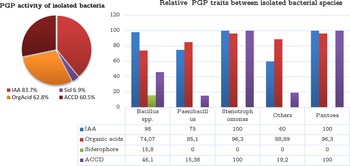
A total of 36 strains scored positive for IAA production and only 3 strains of Bacillus spp. tested positive for siderophore production. Relatively similar outcomes were obtained for production of ACC-deaminase and organic acids: 26 and 27 strains, respectively, showed positive (Fig. 2). In the in vitro tests, Pantoea spp. and Stenotrophomonas maltophilia demonstrated higher growth-promoting capacities compared to Bacillus spp. and other isolates (Fig. 2).
PGP activity of tested bacteria and relative PGP traits between isolated bacterial species (%). The left figure presents the PGP activity for all tested isolates. The figure on right shows the relative IAA (blue), ACCD (violet), siderophore (green) and organic acids (red) production ability among the isolated bacterial genera.

Discussion
The seed surfaces of holoparasitic C. armena possess an alveolate ornamentation with perforated (pitted) sculpture formed by polygonal and isodiametric cells with different sizes. The quite coarse structure of the seed coat (Fig. 1) can complicate the surface sterilization of the seeds. The preliminary results obtained by applying the generally used sterilization protocols (Watts et al., Reference Watts, de Villiers and Watts1993; Metwaly et al., Reference Metwaly, Salama and Ali2018) showed to be inadequate. We assumed that the sterilizing agents could not always sufficiently reach the deepest zones of the coarse seed surface. Due to this, not all bacteria residing on the surface of the seeds could be eliminated. Finally, the combination of 70% ethanol and 0.85% NaCl sterile solution together with intense shaking showed to be adequate to remove all bacteria from the surfaces of C. armena seeds. This allowed us to isolate only the bacteria present inside the seeds.
The aim of current work was the identification of the total endophytic bacterial community and the culturable fraction of the endophytes isolated from the seeds of C. armena. It is known that the majority of plant associated bacteria are unculturable, and it is often assumed that only 0.001–1% of the total bacterial community can be grown in laboratory conditions (Eevers et al., Reference Eevers, Gielen, Sánchez-López, Jaspers, White, Vangronsveld and Weyens2015). Consequently, in order to obtain more information about the composition of the total endophytic bacterial communities of the seeds (culturable and unculturable) of C. armena, molecular techniques were used. The Illumina MiSeq data showed that the seeds of C. armena were mainly inhabited by Gram-positive, spore forming Bacilli (36.8%) (Supplementary Fig. S2). In case of a holoparasitic plant, like C. armena, this is very plausible because these seeds, similarly to Orobanche s.l., have to stay viable in the soil for several decades (Joel et al., Reference Joel, Hershenhorn, Eizenberg, Aly, Ejeta, Rich, Ransom, Sauerborn, Rubiales and Janick2007). Plant colonization by spore forming Bacillus spp. that possess potential to mitigate environmental stress can help plants to survive in harsh environmental conditions. C. armena adapted to the arid and saline environment of specific areas in Armenia (Piwowarczyk et al., Reference Piwowarczyk, Kwolek, Góralski, Denysenko, Joachimiak and Aleksanyan2017, Reference Piwowarczyk, Sánchez Pedraja, Moreno Moral, Fayvush, Zakaryan, Kartashyan and Aleksanyan2019). We demonstrated that C. armena was colonized by halotolerant, alkalophilic, spore forming, motile Bacillus spp. strains (Petrosyan et al., Reference Petrosyan, Piwowarczyk, Ruraż, Thijs, Vangronsveld and Kaca2022). Some isolated strains were also thermophilic. They are able to produce one or more hydrolytic enzymes, especially cellulase and protease. Some strains also produced amylase and pectinase too. Production of auxins (IAA) and gibberellins (GA) and phosphate solubilization was also characteristic for the Bacillus spp. isolated from the seeds of C. armena.
Our results demonstrated that at the genus level Paenibacillus, Bacillus, Psychrobacillus, Domibacillus and Paenisporosarcina were well represented in the seeds of the investigated population of C. armena (Table 2). The dominating Paenisporosarcina have been described as gen. nov. and not sufficiently investigated (Parte, Reference Parte2018). However, some members of the family Planococcaceae were isolated from a semi-arid tropical soil from India (Raj et al., Reference Raj, Sasikala, Ramaprasad, Subhash, Busse, Schumann and Ramana2013). Thus, their presence in the examined seeds is not surprising because of the natural habitats of C. armena. From surface-sterilized seeds of C. armena, we could isolate 43 cultivable bacterial strains using culture-dependent microbiological methods.
Our results indicated that all cultivable strains isolated from the seeds of C. armena were belonging to the bacterial phyla Firmicutes and Proteobacteria (Tables 2 and 3). Thirty-five bacterial strains (81.4%) of the total isolates were Firmicutes from which different strains of Bacillus (41.86%), Paenibacillus (27.90%) and other genera of family Bacillaceae (11.82%) and only 18.6% were Proteobacteria with Stenotrophomonas maltophilia (4.47%) and different strains of Pantoea (13.95%). The majority of Firmicutes isolates belonged to the genera Bacillus and Paenibacillus (Table 3).
Forty-three isolated strains were well adapted to the growing conditions of their host plant and showed potential PGP traits (production of organic acids, ACC-deaminase, indole and siderophores). Most of the isolated strains (83.7%) were positive for indole production (Fig. 2). Endophytic bacteria can increase plant growth through their ability to produce plant growth hormones, particularly auxins. Auxin-producing PGP endophytes improve plant growth even under stress by effectively mitigating the effects of all the growth-inhibiting conditions (Grobelak et al., Reference Grobelak, Kokot, Świątek, Jaskulak and Rorat2018). Respectively 26 and 27 of the isolates produced ACC-deaminase and organic acids, and only 3 Bacillus spp. could produce siderophores (Fig. 2). All these traits have potential to improve plant growth also under stress conditions (Grobelak et al., Reference Grobelak, Kokot, Świątek, Jaskulak and Rorat2018; Shameer and Prasad, Reference Shameer and Prasad2018). Hassan and Bano (Reference Hassan and Bano2016) explored the IAA production of Stenotrophomonas maltophilia strains isolated from a halophytic herb Cenchrus ciliaris and mentioned that bacterial IAA production played a positive role in the salt tolerance of their host plant.
Compared to Bacillus spp. and Paenibacilus spp. strains that demonstrated relatively low levels of production of PGP compounds, Pantoea spp. and Stenotrophomonas maltophilia demonstrated a high production of indole (100%), ACC-deaminase (100%) and organic acids (96.3%) (Fig. 2), which is in agreement with earlier reports (Singh and Jha, Reference Singh and Jha2017; Lumactud and Fulthorpe, Reference Lumactud and Fulthorpe2018). The production of various organic acids by seed endophytic Paenibacillus sp., Pantoea sp. and Bacillus sp. inhibits the growth of pathogens and can significantly enhance plant growth and resistance against plant pathogens (Herrera et al., Reference Herrera, Grossi, Zawoznik and Groppa2016; Shahzad et al., Reference Shahzad, Khan, Bilal, Asaf and Lee2017). The high levels of IAA production among P. agglomerans and S. maltophilia strains correspond with findings of other authors (Ambawade and Pathade, Reference Ambawade and Pathade2015; Luziatelli et al., Reference Luziatelli, Ficca, Bonini, Muleo, Gatti, Meneghini, Tronati, Melini and Ruzzi2020).
Conclusion
We explored the endophytic bacterial community of the seeds of the endemic holoparasite C. armena. The sterilization procedure for the seed surface was optimized. Ten phyla and 256 bacterial genera were identified. However, also some unclassified and unexplored taxonomic groups were found in the seeds.
Our results confirm that spore forming Bacillus spp. are common and dominated endophytes from seeds of plants growing in harsh environmental conditions, especially from arid saline soils. Pantoea spp. and Stenotrophomonas spp. seem the most favourable PGP endophytes in seeds of C. armena. The PGP traits of these bacteria, such as production of indole, ACC-deaminase and organic acids seem correlated with the natural habitat of their hosts and have the potential to improve plant tolerance against abiotic stresses. To elucidate the effective benefits of these endophytic bacteria for their host plants, particularly for the seeds, seed germination and development of the seedling, more research is required.
Supplementary material
To view supplementary material for this article, please visit: https://doi.org/10.1017/S0960258522000204.
Data availability
The sequence data available in the NCBI Genbank (https://www.ncbi.nlm.nih.gov/) Sequence Read Archive with accession number PRJNA819412.
Acknowledgements
The manuscript was prepared under ‘Partnership agreement governing the joint supervision and awarding of a doctorate diploma between Jan Kochanowski University in Kielce (Poland) and Hasselt University (Belgium)’ (K.P.). We thank Dr. Yuliya Krasylenko for taking photographs under a zoom microscope. The author acknowledges financial support through the project ‘Development Accelerator of the Jan Kochanowski University of Kielce’, co-financed by the European Union under the European Social Fund (K.P., POWR.03.05.00-00-Z212/18, 2019–2023). This study was supported by grants from the Jan Kochanowski University (K.R., 666 065, 2019) and (W.K., K.P., SUPB.RN. 21.235, 2021-2022). The field research in this study in Armenia was partially financed by the National Geographic grant (R.P., GEFNE 192-16, 2017). This study was also supported by a BOF-BILA grant from Hasselt University Belgium BOF21BL12 (K.P., J.V., 2021–2022) and the Hasselt University Methusalem project (J.V., 08M03VGRJ).
Author contributions
Conceptualization, K.P; originator of the research topic, R.P.; field research, R.P.; methodology, K.P, W.K., J.V, K.R., S.T. and R.P.; Bioinformatic and statistical analysis, S.T.; resources, R.P., W.K., K.R., K.P. and J.V.; writing the original draft preparation, K.P., R.P and K.R.; writing the review and editing, R.P., W.K., J.V.; visualization, K.P., R.P, S.T. and K.R. All authors read and approved the final manuscript.
Conflicts of interest
The authors declare that the research was conducted in the absence of any commercial or financial relationships that could be construed as a potential conflict of interest.