Children starting school with limited emergent literacy skills are at risk for encountering difficulties in reading throughout school and being classified as (pseudo)dyslectic in later years (Stanovich, Reference Stanovich1986). Intervention programs to ensure timely development of key reading precursors for all at-risk children are currently the gold standard (Snow, Burns, & Griffin, Reference Snow, Burns and Griffin1998), yet compensatory educational programs that aim to improve school-entry literacy skills seem to have only modest effects on children's development (see, e.g., National Center for Family Literacy, 2008). Despite 50 years of research into preemptive measures in kindergarten, few attempts have been made to understand the moderate efficacy of programs promoting school-entry literacy skills.
Educational programs may affect some children's literacy substantially, but evaluations focused on average or across the board effects may underestimate the impact of programs on such children. For instance, the overall effect of an extensive, nationwide intervention stimulating parent–child verbal interaction in the first year after birth on language development at 15 months was small (d = 0.05), but the effect was moderately high (d = 0.46) in a subsample of temperamentally highly reactive children (van den Berg & Bus, in press). A reactive temperament proved a serious risk factor for language development but an asset when parents increased verbal parent–child interaction as stimulated by the intervention.
In our research program What Works for Whom, we seek to shed light on the hidden efficacy of kindergarten programs to enhance early literacy. Thus far, the dominating theory has been that kindergarten children with risk factors such as poor regulatory skills are less able to benefit from their less than optimal “natural” environment at home and in school (Justice, Chow, Capellini, Flanigan, & Colton, Reference Justice, Chow, Capellini, Flanigan and Colton2003). In accordance with the differential susceptibility model, we expect that specific subgroups of children, defined by their genetic makeup, may be more susceptible than their peers to the environment (Belsky, Bakermans-Kranenburg, & van IJzendoorn, Reference Belsky, Bakermans-Kranenburg and van IJzendoorn2007; Belsky & Pluess, Reference Belsky and Pluess2009, Reference Belsky and Pluess2013; Ellis, Boyce, Belsky, Bakermans-Kranenburg, & van IJzendoorn, Reference Ellis, Boyce, Belsky, Bakermans-Kranenburg and van IJzendoorn2011); van IJzendoorn et al., Reference van IJzendoorn, Bakermans-Kranenburg, Belsky, Beach, Brody and Dodge2011). Although they lag behind without additional support, they outperform their peers when they receive optimal instruction (Kegel, Bus, & van IJzendoorn, Reference Kegel, Bus and van IJzendoorn2011). In the intervention experiment reported herein, we test whether young children whom we assume to be more susceptible to the environment because of their genetic makeup respond better than their putatively less susceptible peers to early interventions promoting important precursors of literacy.
In line with a series of genetic differential susceptibility studies by Bakermans-Kranenburg and van IJzendoorn (Reference Bakermans-Kranenburg and van IJzendoorn2006, Reference Bakermans-Kranenburg and van IJzendoorn2011, in press), the focus in the current inquiry is on a dopamine-related genetic polymorphism as moderator of intervention effects. Bakermans-Kranenburg and van IJzendoorn (Reference Bakermans-Kranenburg and van IJzendoorn2006), for example, found that maternal sensitivity observed when children were 10 months of age predicted externalizing problems more than 2 years later, but only for carriers of the seven-repeat dopamine receptor D4 (DRD4) allele. DRD4 may also be a relevant moderator of effects of educational programs because it is associated with attention and motivation (Hsiung, Kaplan, Petryshen, Lu, & Field, Reference Hsiung, Kaplan, Petryshen, Lu and Field2004; Tripp & Wickens, Reference Tripp and Wickens2008). Here we present results from a randomized controlled trial examining genetic moderation of the effects of two early literacy interventions in children with delayed literacy development.
Differential Susceptibility
In developmental psychopathology, differential susceptibility studies are a major challenge to the traditional diathesis–stress model (Belsky et al., Reference Belsky, Bakermans-Kranenburg and van IJzendoorn2007; Belsky & Pluess, Reference Belsky and Pluess2009, Reference Belsky and Pluess2013; Ellis et al., Reference Ellis, Boyce, Belsky, Bakermans-Kranenburg and van IJzendoorn2011). Children susceptible to adversity not only catch up and achieve at a level similar to other children when a program compensates for their vulnerabilities but also actually outperform peers lacking the putative “vulnerable” constitution under optimized learning conditions. In general, evidence is accumulating that specific neurobiological markers of high reactivity to the environment, whether measured at the emotional, behavioral, or biological level, affect how children respond to negative and positive environments (Belsky et al., Reference Belsky, Bakermans-Kranenburg and van IJzendoorn2007; Belsky & Pluess, Reference Belsky and Pluess2009, Reference Belsky and Pluess2013; Ellis et al., Reference Ellis, Boyce, Belsky, Bakermans-Kranenburg and van IJzendoorn2011; van IJzendoorn et al., Reference van IJzendoorn, Bakermans-Kranenburg, Belsky, Beach, Brody and Dodge2011). Most of the evidence, however, originates from developmental and psychopathological studies. A first test of differential susceptibility in the educational domain was an investigation with Living Letters, a computer program to promote basic alphabetic knowledge. Narrowing gaps in phonological skills at an early stage is important considering that the risk of word-level decoding difficulties in reading is often carried by phonological deficits (Goswami & Bryant, Reference Goswami and Bryant1990; Hulme, Bowyer-Crane, Carroll, Duff, & Snowling, Reference Hulme, Bowyer-Crane, Carroll, Duff and Snowling2012).
In a group of 4-year-olds who did not yet understand the alphabetic principle (i.e., that letters relate to sounds in spoken words), we tested whether DRD4 moderated children's susceptibility for input from the learning environment. The experiment provided more support for differential susceptibility than for diathesis–stress. With Living Letters, the group expected to be most susceptible to the environment (carriers of the long variant of DRD4) performed at the lowest level without intervention and highest with intervention, thereby demonstrating their high reactivity to input from the environment. Especially notable was that the Living Letters group scored almost one standard deviation higher than a control group similar in genotypic susceptibility (Kegel et al., Reference Kegel, Bus and van IJzendoorn2011). The group that was considered less susceptible to environmental support also benefited from Living Letters, but the effect size was only modest. These findings corroborate the theory that the dopamine genotype does function as a susceptibility marker in the domain of early literacy acquisition.
Neurobiological Markers in the Cognitive Domain
There are some good reasons for including the DRD4 genotype in experiments with early literacy interventions. Transmission of electric signals, especially in the prefrontal lobe monitoring impulses from the limbic system, may be less efficient in carriers of the long variant of the DRD4 genotype, and consequently, children may be easily distracted by irrelevant elements in the learning environment, with poor achievement as a result (Robbins & Everitt, Reference Robbins and Everitt1999). Direct support for this hypothesis comes from a longitudinal study in which we assessed, apart from the dopamine-related genotype, executive attention when children were 4 years of age along with their alphabetic skills after 3 months in kindergarten and in first grade (Kegel & Bus, Reference Kegel and Bus2013). Carriers of the long variant of the DRD4 polymorphism gene benefited less from reading instruction in kindergarten and first grade than did their peers. Moreover, executive attention measured using Stroop-like tasks, digit span forward, and digit span backward, fully mediated the link between the DRD4 gene and alphabetic skills. DRD4 was a significant predictor of alphabetic skills at 4 months in first grade (β = 0.33), but not after entering executive attention in the regression model (β = 0.13). These findings clearly suggest that carriers of the risk genotype demonstrate lower levels of executive attention than their peers and may, as a result, have benefited less from instruction in kindergarten and first grade.
How can it be explained that carriers of the DRD4 gene with seven repeats (7+) have great learning potential as outcomes of the Living Letters experiment indicate (Kegel et al., Reference Kegel, Bus and van IJzendoorn2011)? There is evidence that the performance feedback to children's responses might have been an important promotive mechanism in Living Letters for the highly reactive children (Howe, Beach, & Brody, Reference Howe, Beach and Brody2010). When a program includes elements that mobilize children's attention for solving the tasks by providing intensive, closely monitored, and individualized scaffolding, it may, especially in the case of highly susceptible children, stimulate high reactivity to the problems to be solved, thereby turning the putative “risk” group into the most successful group, who actually benefit more than (and thus outperform) their peers (Belsky et al., Reference Belsky, Bakermans-Kranenburg and van IJzendoorn2007; Obradović, Bush, Stamperdahl, Adler, & Boyce, Reference Obradović, Bush, Stamperdahl, Adler and Boyce2010).
Indispensable Elements of an Optimal Early Literacy Intervention
As a direct test of this hypothesis, two versions of Living Letters, the complete and an abbreviated version, were contrasted with each other and with a control group in a randomized controlled trial. In both Living Letters versions, instruction and assignments were exactly the same, but in the cut-down version there was no computer tutor (i.e., an animated character that comments on the child's responses to the tasks) who provides intensive, closely monitored, and individualized scaffolding. For instance, finding the first letter of the name among four other letters or selecting the picture that starts with the same sound as the child's proper name were included in the complete version followed by feedback from a tutor when children made errors. In the abbreviated version, however, children did not receive feedback. With the help of technology, these small variations in a program (i.e., the presence of a computer tutor providing feedback vs. no tutor) can be implemented with high fidelity.
The experiment demonstrated that the computer tutor makes the difference between underachievement and high achievement in carriers of the susceptibility genotype. That is, DRD4 long-allele carrying 4-year-olds benefited most from Living Letters when the computer tutor continuously corrected and confirmed children's responses (Kegel & Bus, Reference Kegel and Bus2012). Apparently, not the assignments and instructions in the program but continuous performance feedback canalizes the learning capacities of these children in particular (Kegel et al., Reference Kegel, Bus and van IJzendoorn2011). The computer tutor enables them to make optimal use of their cognitive abilities while carrying out computer assignments. High reactivity to an often overstimulating learning environment leads to distraction and inefficient use of learning opportunities, whereas this same reactivity may at the same time make children highly responsive to a program that continuously stimulates, structures, and regulates their learning behavior by providing positive performance feedback. The program may thus improve children's latent potential to solve tasks and to acquire new skills.
Current Study
By failing to consider the differential susceptibility of children, educators and policymakers may easily overlook the potential impact of literacy intervention programs (e.g., van den Berg & Bus, in press). Thus, in the current study we tested whether an average effect across all participants may mask the effectiveness of early literacy intervention programs. When rather modest or absent intervention effects in the total group are juxtaposed with strong effects for a susceptible group of children, the efficacy of the program may be (strongly) underestimated. Differential susceptibility theory offers a vital heuristic in designing studies that aim at evaluating educational programs to improve school entry skills of the most susceptible children who are delayed in literacy.
We target a group of 5-year-old kindergarten children delayed in literacy skills, who score in the lowest quartile of a national standard literacy test. We aim, first, at replicating and extending earlier findings for Living Letters in an older age group. Second, we test whether genetic differential susceptibility could be found for another computerized intervention, Living Books, carried out within the same time frame and based on the same principles of immediate positive performance feedback. Similar to Living Letters, Living Books includes a tutor who coaches the learning process by providing feedback but addresses less time-constrained literacy skills than phonemic awareness, which is mostly reached within a brief period of rapid growth (Paris, Reference Paris2005). The children read digital storybooks and during each reading answer questions about story events and difficult words in the text. Story reading is a vital precursor of learning to read in first grade because in storybooks children become familiarized with complex phrasing and sophisticated vocabulary as is common in text.
Method
Participants
A total of 90 schools responded to our request to participate in the experiment. In brochures and letters sent to the schools, they were offered both a chance to provide extra guidance to pupils with literacy delays and an opportunity to experience how to implement technology-based programs in their teaching. Furthermore, participating schools would receive free access to educational computer programs for kindergarten children during 3 months after the intervention was completed (http://www.bereslim.nl). Information about the project was distributed via e-mail, mail, social media, and phone from August 2012 to October 2012. The schools willing to participate were from all parts of the Netherlands.
Eligible children were selected between October 2012 and February 2013 by the kindergarten teachers in the 90 participating schools. Teachers were asked to select six pupils lagging behind in literacy skills per kindergarten classroom. The eligible pupils should, for instance, not yet be able to write their proper name, to rhyme, to name a few letters, and to identify sounds in words. As a guideline the eligible children preferably would score in the lowest quartile (between 0 and 59) on a standardized literacy test (i.e., the Central Institute for Test development [Centraal Instituut voor Toetsontwikkeling] (Cito) Literacy Test for Kindergarten Pupils; CLT) administered at most Dutch schools (Lansink & Hemker, Reference Lansink and Hemker2012). The CLT administered in January 2013 was used to check whether the teachers had correctly selected the literacy-delayed children. Dutch was required as the participants' first language. When a parent refused consent, the teacher was asked to select another pupil from her classroom. In 40 schools the number of participants was somewhat lower than six because too few pupils were eligible for the intervention or too many parents refused consent (M = 3.18 pupils per classroom, SD = 1.74). Eight schools (with 92 children) were not included because these schools did not test their pupils with the standardized CLT test in the kindergarten year preceding the first grade. Due to incidental missing scores, 42 children were lost.
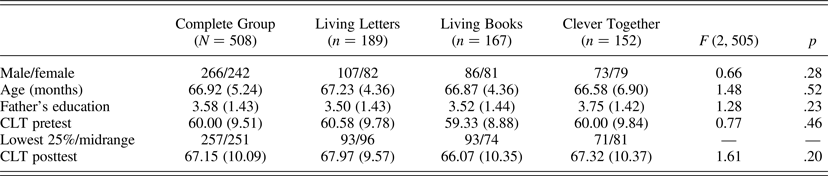
Teachers complained that parents of children who were most in need of the intervention often refused consent. As a result, only slightly more than half of the 509 selected pupils scored in the lowest CLT quartile at pretest, thus making up the delayed-literacy group (Lansink & Hemker, Reference Lansink and Hemker2012). In most schools, about half of the selected children met this criterion. The other half of the children selected by the teachers scored in the midrange of the CLT (between 60 and 64; Lansink & Hemker, Reference Lansink and Hemker2012). We included these typically developing children in the first round of analyses although our primary focus was on the efficacy of the interventions for the delayed pupils. Only the delayed group (n = 257) was included in the statistical tests of genetic differential susceptibility. Table 1 presents numbers per condition and level (children with delayed vs. typical literacy). Participants had a mean age of 66.92 months (SD = 5.24) at pretest. The mean score for father's education was 3.58 (SD = 1.43) on a scale ranging from 0 to 6, where 0 represents primary school and 6 represents university-level education.
Descriptives for the complete group and the conditions Living Letters, Living Books, and Clever Together

Procedure and design
Parents of eligible children received written information about the study explaining the scientific goals and the opportunity for their child to receive extra coaching. They also received information about genotyping to be part of the research. Moreover, a website was available for additional information about the aim and design of the research. Contact information was provided to allow parents to ask additional questions. Parents made frequent use of this opportunity. Genotyping was a main reason for parents to refuse consent for participation (about 25%).
The children were randomly assigned to one of the three conditions: Living Letters, Living Books, and a control condition consisting of playing Clever Together. At least one child in each class was assigned to an intervention condition (Living Letters or Living Books). Twice a week for 15 min per session the participants engaged a computer program on their own. Children in the Living Books condition were involved in 16 sessions, and in Clever Together and Living Letters children were involved in a variable number of sessions, averaging 15. The more errors children made, the more sessions. About halfway through the intervention period, buccal cell samples were collected by trained research team members using a sterile swab specifically designed for collecting buccal cells for DNA analysis (Omni Swabs, Whatman/GE Healthcare, UK). The samples were stored at –20 °C directly after collection. Literacy skills were tested before and after the intervention using the Cito standardized literacy test (Lansink & Hemker, Reference Lansink and Hemker2012). Children were group-wise examined by their teacher.
Intervention programs
Living Letters promotes understanding of the alphabetic principle, the notion that letters in print relate to sounds in spoken words. The program offers a framework that anchors instruction and practice in a personally motivating context of activities using children's own proper name (van der Kooy-Hofland, Bus, & Roskos, Reference van der Kooy-Hofland, Bus and Roskos2012). This approach is based on a series of studies showing that most children can name the initial letter of the own proper name earlier than other letters (Levin, Both-de Vries, Aram, & Bus, Reference Levin, Both-De Vries, Aram and Bus2005) and that the sound of this letter is the first one that children can identify in spoken words and use correctly in spelling (Both-de Vries & Bus, Reference Both-De Vries and Bus2008, 2010). The program adapted automatically to the child's proper name when it was available in the database; 240 common Dutch names were obtainable. When the name was not available in the database or irregularly spelled, the word “mama” (mommy) was used in its place, because this is a well-known name (Both-de Vries & Bus, Reference Both-De Vries and Bus2010). Dutch is rather regularly spelled, and most names can be used to highlight the alphabetic principle that letters in print relate to sounds in spoken words. In a less regularly spelled language like English, more names might not be usable to illustrate the alphabetic principle.
In the first 20 games, children practiced how their name (or “mama”) is written, followed by 10 games to train the sound of the first letter of the child's name (or “mama”), and thereafter by 10 games to identify pictures that start or end with the first letter of the target name. Each session began with animations of two preschoolers (called “Sim” and “Sanne”) who announced a new game and demonstrated how to play the games. Feedback provided by Sim's teddy bear followed up on every response of the child. When children produced one or more erratic responses to an assignment, the assignment was repeated one to three times, thus promoting additional practice when children performed poorly. After each additional error, children received more clues to solve the assignment. More specifically, after the first error, the assignment was only repeated: “Listen carefully, in which word do you hear /t/ of Tom?” After the second error, children received a clue: “How does your teacher write your name?” If the child failed to give the correct answer after the third attempt, the solution was demonstrated, together with a spoken explanation by the digital tutor. After a maximum of three trials, the game ended with a positive note, regardless of whether a correct response was given, whereupon a new game started. When children failed to give the correct answer, the assignment was repeated twice in subsequent sessions, which explains why some children had more sessions than others.
Living Books was made up of eight age-appropriate digital animated storybooks. The animated pictures, sounds, and music support the meaning of the story text and thus enable the child to understand story events and language even when the oral text is difficult for the child (Bus, Takacs, & Kegel, in press; Kamil, Intrator, & Kim, Reference Kamil, Intrator, Kim, Kamil, Mosenthal, Pearson and Barr2000). Each reading of a book was interrupted four times to ask questions about the story (e.g., “Eventually Little Mouse found a house. Whose house do you think it is?”) and about word knowledge (e.g., “Little Mouse peeked inside. On which picture do you see her peeking?”). If the child's response was incorrect, the question was repeated maximally three times and feedback was adapted to the child's response, similar to Living Letters (see above). The first error was followed up by a repetition of the question, the second by a clue (“Peeking is secretly watching. Where do you see Little Mouse peeking?”), and the third by demonstrating the correct response together with a spoken explanation (“Of course, this house is Little Mouse's own house!”). Each book was presented twice, and in each session four questions were included. During each session, the child “reads” one book for 10 min. In contrast to the more adaptive program Living Letters, assignments were not repeated in the next session when children made errors.
The Clever Together program does not target story comprehension or code-related skills. It includes 40 hide-and-seek games. For example, the child is told that one of the main characters is hidden behind a yellow object. As in Living Letters and Living Books, a tutor provides constructive, detailed feedback for every error and every correct response (“Good job, you found Sanne behind the yellow tractor.”). The first error is followed up by a repetition of the question (“Where again would Sanne hide?”), and a second error by clues. Assignments were repeated in future sessions when children made errors.
Measures
Early literacy skills
The CITO Literacy Test for Kindergarten Pupils (CLT) is a group-administered standardized literacy test for kindergarten pupils, given in January (α = 0.89) and June (α = 0.87) of each year. The 60-item CLT concerns word knowledge, critical listening, rhyming, hearing the first and last word, sound blending, writing orientation, and prediction of book content based on the book cover (Lansink & Hemker, Reference Lansink and Hemker2012). Commissie Testaangelegenheden Nederland (Committee for Tests in The Netherlands; http://www.boomtestuitgevers.nl/producten/onderwijs/cotan_documentatie) evaluated the reliability and validity of the CLT, judging it adequate. According to the CLT manual, pupils with CLT scores in the first quartile are considered delayed in their literacy development. The pretest CLT score was coded as delayed (n = 257) for children scoring in the lowest quartile according to national norms (0) or as typical literacy level for children (n = 251) scoring above this quartile (1). At posttest we used the full range of scores on CTL.
Genetic screening for DRD4 polymorphisms
DNA isolation
Buccal swabs were incubated in lysis buffer (100 mM NaCl, 10 mM EDTA, 10 mM Tris [pH 8], 0.1 mg/ml proteinase K, and 0.5% w/v sodium dodecyl sulfate) until further processing. Genomic DNA was isolated using the Chemagic buccal swab kit on a Chemagen Module I workstation (Chemagen Biopolymer-Technologie AG, Baesweiler, Germany).
PCR amplification
The region of interest of the DRD4 gene was amplified by polymerase chain reaction (PCR) using the following primers: a FAM-labeled primer 5′-GCGACTACGTGGTCTACTCG-3′ and a reverse primer 5′-AGGACCCTCATGGCCTTG-3′. Typical PCR reactions contained between 10 and 100 ng genomic DNA template, 10 pmol of forward and reverse primer. PCR was carried out in the presence of 7.5% DMSO, 5× buffer supplied with the enzyme and with 1.25 U of LongAmp Taq DNA Polymerase (NEB) in a total volume of 30 µl using the following cycling conditions: initial denaturation step of 10 min at 95 °C, followed by 27 cycles of 30 s at 95 °C, 30 s at 60 °C, 60 s at 65 °C, and a final extension step of 10 min 65 °C.
Analysis of PCR products for repeat number
One microliter of PCR product was mixed with 0.3 µl LIZ-500 size standard (Applied Biosystems) and 11.7 µl formamide (Applied Biosystems) and run on a AB 3730 genetic analyzer set up for fragment analyses with 50-cm capillaries. Results were analysed using GeneMarker software (Softgenetics). The genetic variable was coded as 0 or 1 for absence or presence, respectively, of a seven-repeat at one or both alleles. Of the 509 participants, one child could not be genotyped; 172 children (34%) were carriers of the long variant of DRD4 (the susceptible group). Three-hundred sixty-three participants (66%) belonged to the less susceptible group because they did not carry the seven repeat. The distribution of DRD4 polymorphisms was in Hardy–Weinberg equilibrium, χ2 (df = 1, N = 508) = 0.08, p = .78.
Results
Analyses proceed in two steps. We tested whether the program only proved effective for the lowest scoring 25%, as predicted, because teachers had broadened the sample by also including midrange-scoring children. Next we tested directly and explicitly specific hypotheses concerning differential susceptibility with a contemporary approach developed by Widaman et al. (Reference Widaman, Helm, Castro-Schilo, Pluess, Stallings and Belsky2012; Belsky, Pluess, & Widaman, Reference Belsky, Pluess and Widaman2013) for correlational Gene × Environment (G × E) data but applied here to experimental G × E as suggested by van IJzendoorn and Bakermans-Kranenburg (Reference van IJzendoorn and Bakermans-Kranenburg2015 [this issue]). Included in the analysis were data on child sex, age in months, father's education, child gene polymorphism (DRD4), the experimental or control condition to which the child was randomly assigned, and the child's literacy level on the standardized CLT test before and after the intervention had taken place. The percentage of putatively susceptible children (carrying the seven-repeat allele of DRD4) in the delayed and typical literacy level groups was 35% and 33%, respectively, the difference being nonsignificant, χ2 (df = 1, N = 508) = 1.11, p > .05. The number of children with a DRD4 seven repeat also did not differ significantly across the three experimental conditions: Living Letters (38.5%), Living Books (35.1%), and Clever Together (32.4%,), the latter being the control group (χ2 = 0.70). The sample was almost equally divided on sex (49.6% female).
Intervention efficacy
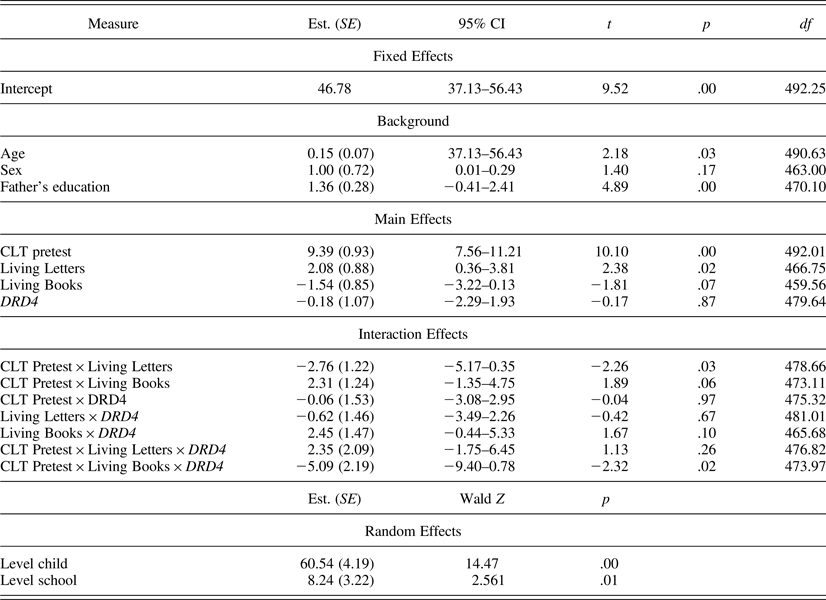
The posttest CLT was regressed on the following predictor terms: pretest CLT (delayed vs. midterm), the contrasts between control group and Living Letters and control group and Living Books, DRD4 (carrier of one or two seven-repeat alleles vs. others), and two- and three-way interactions involving pretest CLT, interventions, and DRD4. The two group interventions were effect coded by creating variables for the contrast between control group and Living Letters, and control group and Living Books (Cohen, Cohen, West, & Aiken, Reference Cohen, Cohen, West and Aiken2003). The child's sex, age (months), and father's education were entered as covariates. Because the assignment to the conditions was random, inclusion of covariates is not required to correct for any baseline differences, especially because the child's sex and age and father's education did not vary across the different groups (see Table 1). Inclusion of covariates, however, does reduce unexplained outcome variance and thereby increases power (van Breukelen & van Dijk, Reference van Breukelen and van Dijk2007). Because the intraclass correlation coefficient was substantial, we applied multilevel analysis using mixed models in SPSS in order to account for variation attributable to school-level characteristics (Luke, Reference Luke2004). The intraclass correlation of [8.24/(8.24 + 60.54)] = 0.12, demonstrated that 12% of the differences in the CLT scores was attributable to school characteristics (see random effects in Table 2).
Predicting CLT posttest from CLT pretest, Living Letters, Living Books, and DRD4 with age, sex, and father's education as covariates
Note: N = 508.
The regression analysis revealed significant main effects for pretest CLT literacy level and Living Letters, a significant two-way interaction between Living Letters and pretest CLT literacy level, and a significant three-way interaction among Living Books, pretest CLT, and DRD4 (see Table 2). There was no significant main effects of Living Books or DRD4 on posttest CLT literacy. To address Keller's (Reference Keller2014) concerns regarding covariate interaction inclusion in G × E studies, we repeated the above analysis with the inclusion of the interactions of each of the three covariates (the child's sex, age, and father's education) with each of the four main variables (CLT literacy level, Living Books, Living Letters, and DRD4). The main effects of CLT literacy level and Living Letters were no longer significant, but the two-way interaction between Living Letters and pretest CLT literacy level, and the three-way interaction among Living Books, pretest CLT, and DRD4, remained significant. Thus, we restrict reporting here to these significant interactions.
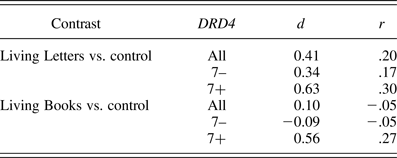
The significant Living Letters × Pretest CLT interaction indicated that Living Letters was effective in improving literacy for the delayed children but not for the typically developing pupils (see Table 2). The delayed children still scored lower at posttest, but they caught up because of Living Letters (Table 3). Regressing the posttest CLT on Living Letters revealed a nonsignificant effect in the typical group (estimate = –0.60, SE = 1.28). The delayed children in the Living Letters condition scored about 3 points (estimate = 2.98, SE = 1.22) higher than the control group on the posttest CLT, which was a significant difference. The overall Cohen d was 0.44 (see Table 4). Genotype did not seem to play a role although Cohen d values differed in the expected direction for the high- and low-susceptible groups, 0.63 and 0.34, respectively (see Table 4).
Means (standard deviations) for CLT posttest in the delayed group by condition and DRD4
Note: 7–, Low susceptible; 7+ , high susceptible.
Cohen d values and r values for two contrasts within DRD4 groups in the delayed sample
Note: Cohen d = M 1 − M 2/s pooled, where  ${s}_{\rm pooled} = \sqrt {[ \lpar s_1^2+ s_2^2\rpar /2]}$ and
 ${r}_{\rm Y1}= d/\sqrt {\lpar {d^2} + 4\rpar}$.
Gene × Intervention interaction
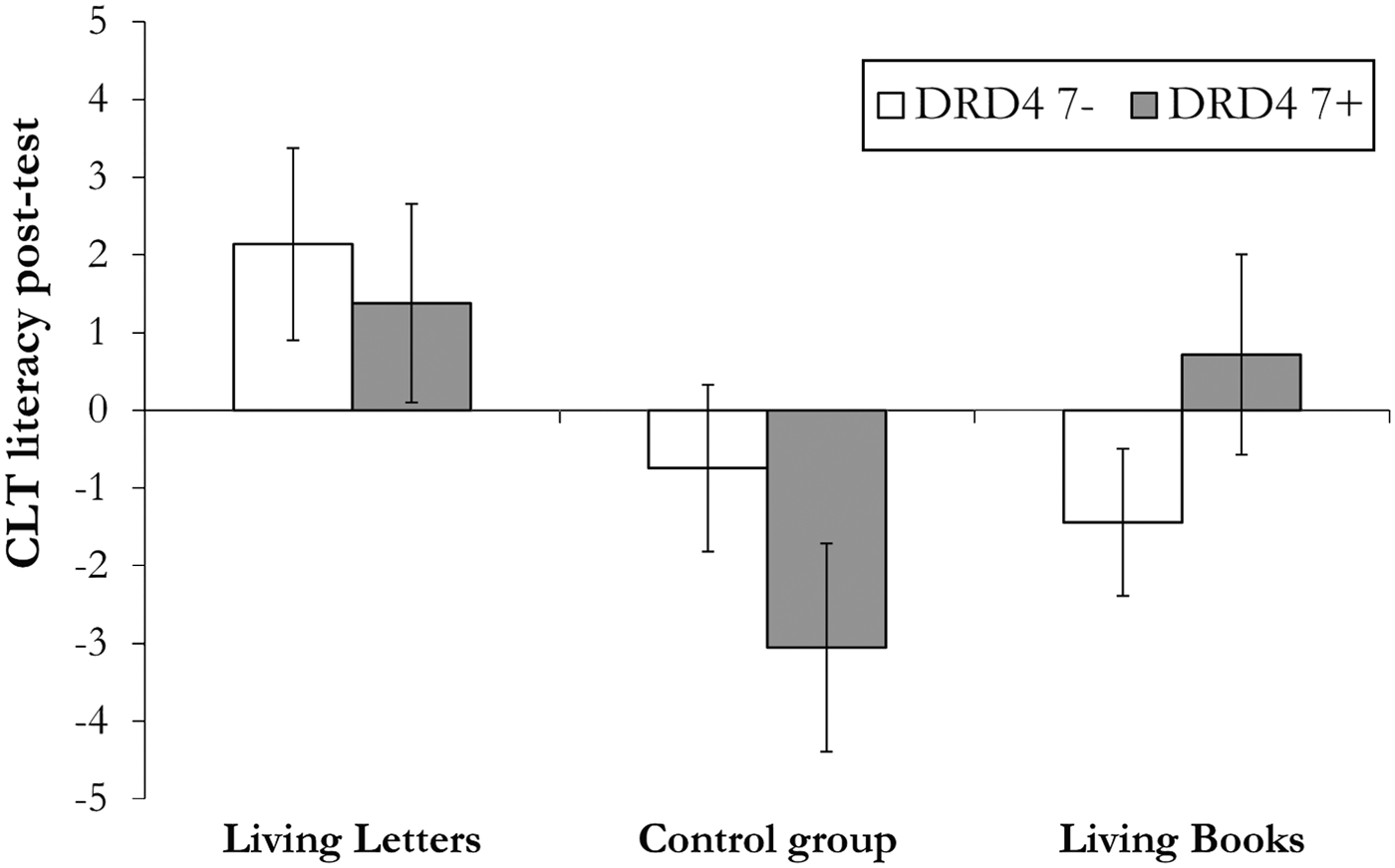
The effect of Living Books, however, depended both on pretest CLT level and DRD4, as revealed by the significant three-way interaction involving Pretest CLT × DRD4 × Living Books. The overall effects size of Living Books was low (Cohen d = 0.10; Table 4). However, for the delayed children who were also carriers of a DRD4 seven-repeat, evidence of a strong effect emerged from Living Books (Cohen d = 0.56), but this was decidedly not the case for the children who did not carry the seven-repeat allele (Cohen d = –0.09); see Table 4 and Figure 1.
Means and confidence intervals for CLT posttest corrected for age, father's education, and sex for carriers of DRD4 7− and DRD4 7+ scoring among the lowest quartile on the national CLT pretest (N = 257).
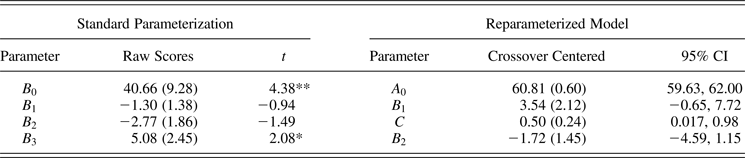
To determine whether the Living Books × DRD4 interaction in the delayed group was disordinal and met the criteria for differential susceptibility, we followed the steps outlined by Widaman et al. (Reference Widaman, Helm, Castro-Schilo, Pluess, Stallings and Belsky2012). In the delayed group, the Living Books × DRD4 interaction was significant, estimate = 5.08 (SE = 2.45), p < .04. The crossover point estimated as C = –(–2.77/5.08) = 0.55, fell within the range of the dummy variable for Living Books (1, 0). The results showed that the interaction was disordinal, with a point estimate of 0.55, close to the sample mean on the Living Books intervention (M = 0.57, SD = 0.50). Following Widaman et al. (Reference Widaman, Helm, Castro-Schilo, Pluess, Stallings and Belsky2012), we proceeded to fit a reparameterized regression model to estimate confidence intervals (CIs) shown in the right column of Table 5. The crossover point based on the nonlinear regression, Ĉ = 0.50 (SE = 0.24), 95% CI (0.017, 0.98) was near the sample mean of the Living Books intervention. We calculated standard deviation (SD) units to test whether the CI covered values within the range of the intervention. The lower limit of the CI for Ĉ fell 1.11 SD units below the sample mean of the intervention and the upper limit 0.82 SD units above the sample mean, meaning that the CI covered values in the middle of the range of Living Books. Therefore, both point and interval estimates of Ĉ confirmed the conclusion that the Living Books × DRD4 interaction was disordinal, and met the criteria for differential susceptibility.
Results for standard and reparameterized regression models for postttest CLT
*p < .05. **p < .01.
Regressing the Living Books intervention on posttest CLT in the delayed and non-7R group yielded a nonsignificant estimate of –0.84 (SE = 1.48). However, in the delayed but high-susceptibility group (i.e., carriers of the seven-repeat allele), the Living Books intervention group scored significantly higher than the control group (p < .014). The estimate of 4.12 (SE = 1.58) means that the Living Books group scored on average more than 4 points higher on the posttest CLT. Results support the differential susceptibility hypothesis that only the genetically susceptible group benefited from the Living Books intervention.
Discussion
The majority of children, by virtue of being immersed in a literate society, acquire emergent literacy concepts and skills relatively effortlessly during the course of early childhood (Ferreiro & Teberosky, Reference Ferreiro and Teberosky1982). For many children, the basis for emergent literacy is acquired within the period preceding formal literacy instruction, from birth to about 6 years of age. However, the subplot in this story is equally important: an unacceptably large number of children are, at school entry, already lacking in competencies fundamental to their school success; they lack cognitive multipliers to engage in intensive practice of literacy once they are exposed to formal instruction in first grade, and at risk of being classified as (pseudo)dyslectic in later years (Stanovich, Reference Stanovich1986).
In the current randomized controlled trial, we tested literacy interventions that may narrow gaps in school-entry skills. They are designed in a way that they can be used in addition to the regular curriculum because children can practice on the computer on their own. Both Living Letters and Living Books appeared to be effective interventions for pupils who are delayed in literacy according to a standardized Dutch test that is applied nationwide twice during the year preceding first grade. Children scoring in the midrange of the test, in contrast, did not benefit from the computer programs. This is an understandable outcome given that both programs train elementary literacy skills: basic alphabetic knowledge and simple story comprehension. Thus, these programs designed for use with delayed or at-risk pupils are not effective for typically developing children scoring above the lowest quartile of literacy skills.
The current research shows evidence of genetic differential susceptibility for Living Books. Not all delayed pupils are affected by this computer intervention to promote early literacy skills. Differential effects of interventions are generally framed in dual-risk terms or diathesis–stress. Due to genetic characteristics (i.e., so-called risk genotypes), some individuals need additional input to catch up and develop precursors for literacy, whereas other individuals without these “risk” genes are not in need of a special program. For Living Books, we found strong evidence for an alternative model to the diathesis–stress model: differential susceptibility. This model is based on the assumption that some of the children are not particularly susceptible to environmental input and hardly benefit from an intervention in addition to regular experiences with literacy. A susceptible group, in contrast, clearly responds in a positive way to the intervention: they lag behind without a special program but outperform their peers when receiving additional input that takes into account their reactive and easily distracted attention.
As the plot in Figure 1 shows, the seven-repeat polymorphism of DRD4 moderates the effects of Living Books. A high-susceptible group (carriers of the seven-repeat polymorphism of DRD4) benefits from Living Books (d = 0.56), while the low-susceptible group does not (d = –0.09). Inspection of Figure 1 further reveals not only that the high-susceptible group does better than the low susceptible group in the case of Living Books but also that the reverse is true for the control group. In other words, the high-susceptible group manifests the “for better and for worse” pattern of functioning central to differential susceptibility (Belsky et al., Reference Belsky, Bakermans-Kranenburg and van IJzendoorn2007; Belsky & Pluess, Reference Belsky and Pluess2009, Reference Belsky and Pluess2013; Ellis et al., Reference Ellis, Boyce, Belsky, Bakermans-Kranenburg and van IJzendoorn2011).
Both point and interval estimates of the crossover point support the conclusion that the DRD4 × Living Books interaction is disordinal (Widaman et al., Reference Widaman, Helm, Castro-Schilo, Pluess, Stallings and Belsky2012). Our randomized controlled trial thus provides stronger support for differential susceptibility than for diathesis–stress. In other words, about two-thirds of the delayed children do not benefit from additional book reading experiences beyond regular book readings in school and at home. The one-third susceptible children, carriers of a genetic marker of genetic differential susceptibility, learn substantially more when they receive Living Books with prompt and personalized performance feedback canalizing their attention and motivation toward the tasks at hand.
The current findings for Living Letters, in contrast, do not meet the criteria for differential susceptibility. All children lagging behind in literacy benefit from this program resulting in a Cohen d value of slightly less than 0.5 SD in the delayed group (0.41). The high-susceptible group benefits more from Living Letters than does the less-susceptible group as is indicated by the difference in effect sizes of 0.63 and 0.34, respectively. However, results of the current research do not meet the statistical criteria for genetic differential susceptibility we found in a previous study of younger children with the same program (Kegel et al., Reference Kegel, Bus and van IJzendoorn2011). Living Letters might have been less appropriate to reveal differential effects in an older group of delayed children because most children may acquire the target skills in this program within a brief period of rapid growth (Paris, Reference Paris2005). Even the most delayed 5-year-old pupil may easily reach a high level on the most difficult task in Living Letters (identifying the first letter of the proper name or mama as the last or middle sound in words) and score at ceiling on target skills after playing the games in Living Letters. Had we included more advanced phonemic skills than Living Letters we might have found more variation in effects between low- and high-susceptible children similar to findings in a younger group (Kegel et al., Reference Kegel, Bus and van IJzendoorn2011).
Current results underline the importance of identifying subsamples of genetically high-susceptible pupils in education. An emergent corpus of work has shown the value of early interventions for supporting literacy achievements in young at-risk children (e.g., Lonigan, Farver, Phillips, & Clancy-Menchetti, Reference Lonigan, Farver, Phillips and Clancy-Menchetti2011). However, these experiments have rarely taken into account genetic differences that may moderate program effects. As appears from this study and previous ones (Kegel et al., Reference Kegel, Bus and van IJzendoorn2011; van den Berg & Bus, in press), it may even happen that a program's effect may not become manifest when the focus is on the complete, undivided group of children and the crucial question about “what works for whom” is not asked. Differential susceptibility theory implies a priori that markers of differential effectiveness be tested as moderators in educational interventions.
Genetically high-susceptible children may benefit from extra computer-based instruction due to continuous feedback to their responses that teacher are not able to provide in overcrowded classrooms. From previous research comes strong evidence supporting the hypothesis that continuous feedback to children's reactions built into the literacy program is an effective mechanism especially for genetically high-susceptible children such as carriers of the DRD4 polymorphism. Feedback may help these children to stay attentive despite distractors and to avoid responding randomly, which proved to be the case in an earlier investigation in which we compared an abbreviated version of Living Letters in which feedback was omitted with the complete version of the program (Kegel et al., Reference Kegel, Bus and van IJzendoorn2011; Kegel & Bus, Reference Kegel and Bus2012). In sum, feedback as part of Living Books may explain why high-susceptible children benefit more from this program than from similar daily book reading experiences within the regular kindergarten curriculum.
Implications and future directions
The current account of variation in effects of early intervention programs challenges the traditional double-risk or diathesis–stress model in education and highlights the need for a paradigm shift toward differential susceptibility (Belsky et al., Reference Belsky, Jonassaint, Pluess, Stanton, Brummet and Williams2009; Belsky & Pluess, Reference Belsky and Pluess2009, Reference Belsky and Pluess2013). The fact that only some children proved susceptible to treatment may explain why Aptitude Treatment Interaction (ATI) failed as an explanation of differential outcomes of instruction (Cronbach & Snow, Reference Cronbach and Snow1977). The ATI model, popular in the 1970s, is based on the assumption that all children have different susceptibilities and need instruction attuned to their susceptibilities. Our findings in particular with Living Books indicate that a subgroup of children identified on an a priori basis using a specific genetic marker are especially susceptible to this program. Special literacy programs can profoundly affect some children's literacy, but average or across the board effects will often misestimate the impact of a program, underestimating it for some and overestimating it for others. Focus on genetically more susceptible subsamples is needed to demonstrate the power of early literacy programs. As we found for Living Books, effect sizes for high-susceptible children may be much higher than effects for the total group. Our findings thus contrast with the received ATI model to address the question what works best for whom in education and account for an alternative model, differential susceptibility, with a theoretical basis in evolutionary theory and neurobiology, and with more clear-cut hypotheses about relevant markers. It is therefore imperative to include markers of differential susceptibility as moderators in experimental designs to make correct estimates of the importance of intervention programs to improve early literacy. Armed with specific differential susceptibility hypotheses about neurobiological or behavioral markers as moderators of program effects, researchers can shed new light on the previously hidden efficacy of programs that were reported only moderately effective (van IJzendoorn & Bakermans-Kranenburg, Reference van IJzendoorn and Bakermans-Kranenburg2012; Bakermans-Kranenburg & van IJzendoorn, in press).
Furthermore, neurobiological markers that predict differential outcomes of early literacy programs may typically cause high reactivity to the environment, for better and for worse (Belsky et al., Reference Belsky, Bakermans-Kranenburg and van IJzendoorn2007; Belsky & Pluess, Reference Belsky and Pluess2009, Reference Belsky and Pluess2013; Ellis et al., Reference Ellis, Boyce, Belsky, Bakermans-Kranenburg and van IJzendoorn2011). Carriers of the DRD4 polymorphism may lag more behind under bad learning conditions but outperform the low-susceptible children when they receive optimal additional input. Thus, susceptibility markers are doubled-edged, serving as a risk factor for academic skills under negative learning conditions but as a potential asset and promotive factor under optimal conditions. This new and exciting idea has potentially far-reaching implications for early academic education. It should be noted that genetic measures may reach beyond traditional boundaries of behavioral measures in showing reactivity and predicting which children are likely to make good progress (Kegel & Bus, Reference Kegel and Bus2012; Kegel, van der Kooy-Hofland, & Bus, Reference Kegel, Van der Kooy-Hofland and Bus2009; Wasserman & Drucker Wasserman, Reference Wasserman and Drucker Wasserman2012). Ultimately, a thorough understanding of how genetic mechanisms regulate children's susceptibilities to environmental influences should provide a solid foundation for shaping programs to maximally benefit children. It is likely that in due course DRD4 will be shown to be a sensitive index of an underlying genetic pathway modulating dopamine production and reuptake and that more easily observed endophenotypic correlates will be found that represent this pathway.
Finally, successful literacy intervention programs that change the odds for children may not only intensify experiences with relevant tasks as Justice et al. (Reference Justice, Chow, Capellini, Flanigan and Colton2003) advocate but also provide support regarding how to approach tasks. There is evidence that an emphasis on performance feedback while solving problems is especially important. Correcting how children approach tasks (realized by continuous performance feedback to children's responses in the programs which were the focus of this report) may be especially effective for highly susceptible children but not for all learners (e.g., Bodrova & Leong, Reference Bodrova, Leong, Dickinson and Neuman2006). When children are highly susceptible to the environment, the mainstream classroom environment may be an obviously unsatisfactory, distracting, and chaotic environment; overcrowded early literacy settings are likely to challenge these students much more than their more sturdy peers. They may, however, outperform their classmates when a (computer) program succeeds in mobilizing and channeling children's high reactivity by providing intensive, closely monitored, and individualized scaffolding.
Programs such as Tools of the Mind may therefore be good candidates to support the learning of highly susceptible children (Bodrova & Leong, Reference Bodrova, Leong, Dickinson and Neuman2006). So far, research does not demonstrate strong effects for this literacy intervention for preschool and kindergarten children, and we suspect this is because relevant research informed by differential-susceptibility thinking has not yet been conducted (Barnett et al., Reference Barnett, Jung, Yarosz, Thomas, Hornbeck and Stechuk2008).
Afterword
An obvious practical implication of the current finding that children carrying the seven-repeat DRD4 allele especially benefit from Living Books may involve screening of pupils in search of an optimal fit between the program and individual characteristics. Increasing knowledge of factors that determine susceptibility for instruction may provide concrete guidance in identifying (a priori) subsets of pupils that are especially susceptible to specific instructional mechanisms. Practitioners and policymakers will thus obtain more realistic estimates of the effectiveness of preventive and curative efforts. It is therefore an important area for future investigation to further specify genetic and behavioral characteristics of children who need intensive, closely monitored, and individualized practice as in Living Books, and who can especially benefit from them.
However, as long as realistic estimates of the effectiveness of preventive or curative programs cannot be made by practitioners, it seems prudent to address school entry skills of all kindergarten children who are delayed in these skills, even though some learn as much when they are exposed to the regular curriculum with additional treatment compared to the regular curriculum only. Given the promising outcome that susceptible pupils benefit most from an additional computer program beyond formal reading instruction, it seems important to present such extra programs to all delayed 5-year-olds especially because these computerized programs are very cost effective and fun to do. It should be noted as well that there are no indications for negative effects of the intervention among children not carrying the seven-repeat allele. As yet it seems therefore most in line with the idea of No Child Left Behind to include all children with delayed early literacy development in the intervention.
An alternative implication may be blaming the susceptible children and trying to change them to better cope with adverse environments (Ellis et al., Reference Ellis, Boyce, Belsky, Bakermans-Kranenburg and van IJzendoorn2011). The differential susceptibility model does not promote blaming or making the vulnerable more durable. On the contrary, the model provides a new perspective on how to support susceptible children in need with an emphasis on a better fit between individual characteristics and environmental input.
The quite modest or even absent effects of programs in the majority of pupils is a source of concern for researchers and educators. Of course, it is possible that children who belong to the less-susceptible group are simply nonresponsive to any intervention. Until that is found to be the case, it is probably best to presume that programs that are tailored to other child characteristics of learning may speed up the acquisition of literacy skills among seemingly low-susceptible children.