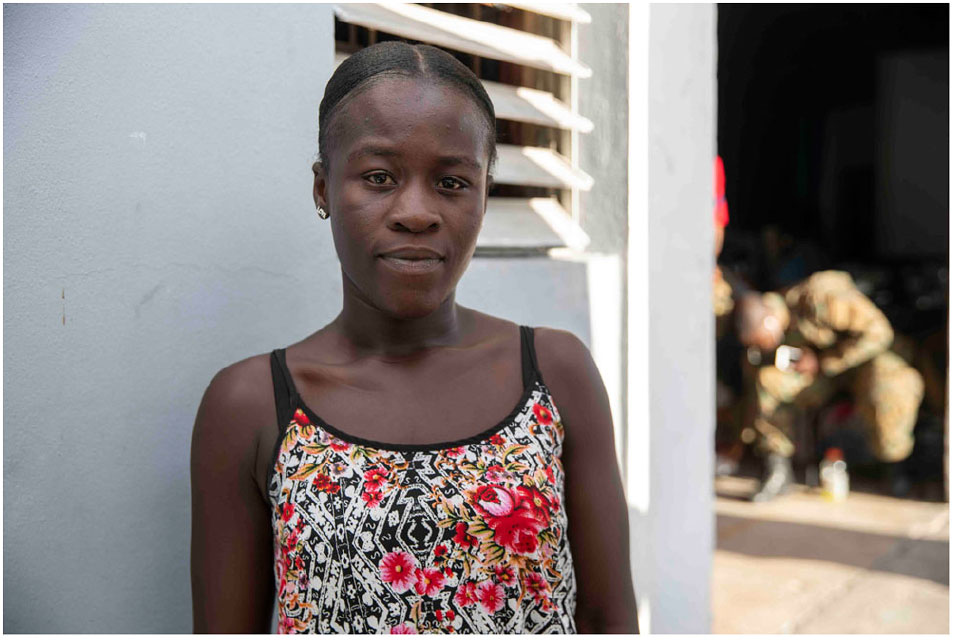
In the moments following a disaster, the most valuable currency is information. Appropriate aid can only be mobilized when there is an understanding of who needs help and what kind of help they need, especially for needs that may often be overlooked (Figure 1).
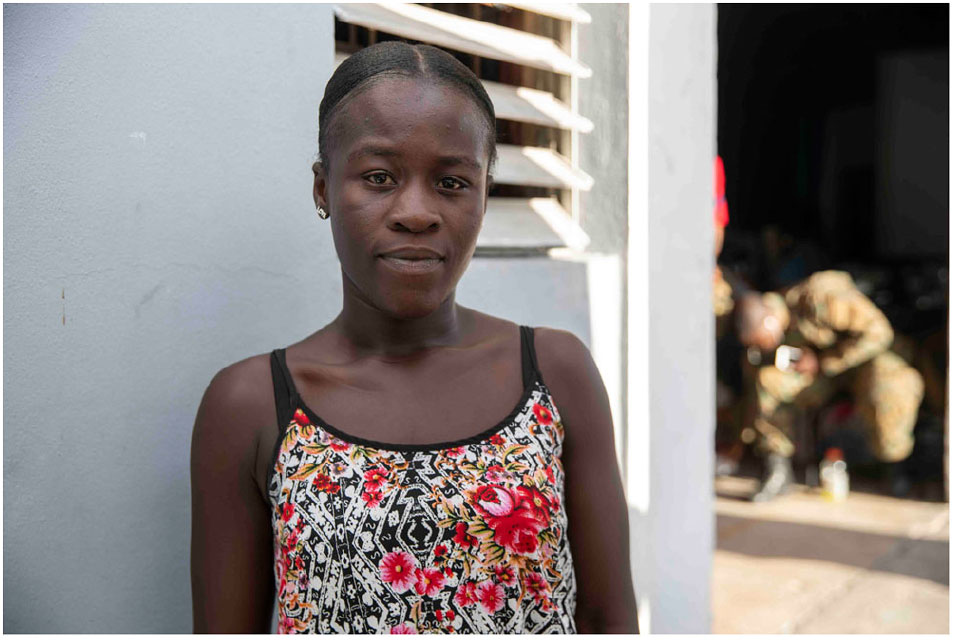
Marie Vincent, 23, evacuated from Great Abaco Island and walked through rising waters with her 3-year-old strapped to her back after Hurricane Dorian left little standing. Photo by James Buck for Project HOPE, 2019.
Project HOPE has responded to some of the world’s largest natural disasters and humanitarian and health crises for more than 60 years, providing targeted assistance to help communities and health systems recover and rebuild. Our emergency response team is ready to deploy when disaster strikes—through credentialed medical professional volunteers, as well as the provision of critical medical supplies, pharmaceuticals, WASH (water, sanitation and hygiene), and targeted public health programs. Our impact depends on the rapid assessment of needs, mobilization of appropriate aid, strong local partnerships, and long-term thinking to address needs in the affected area’s health sector.
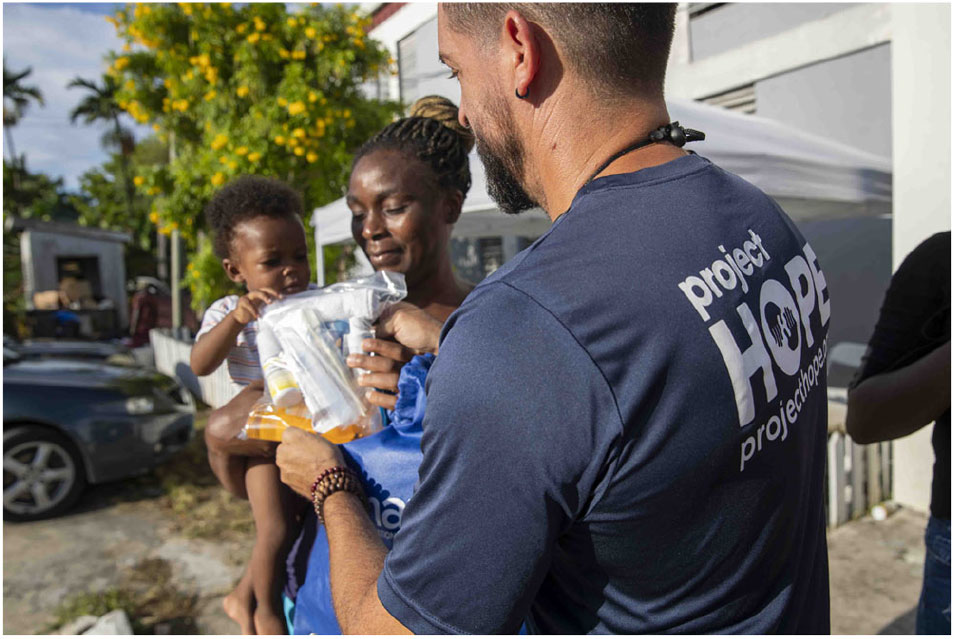
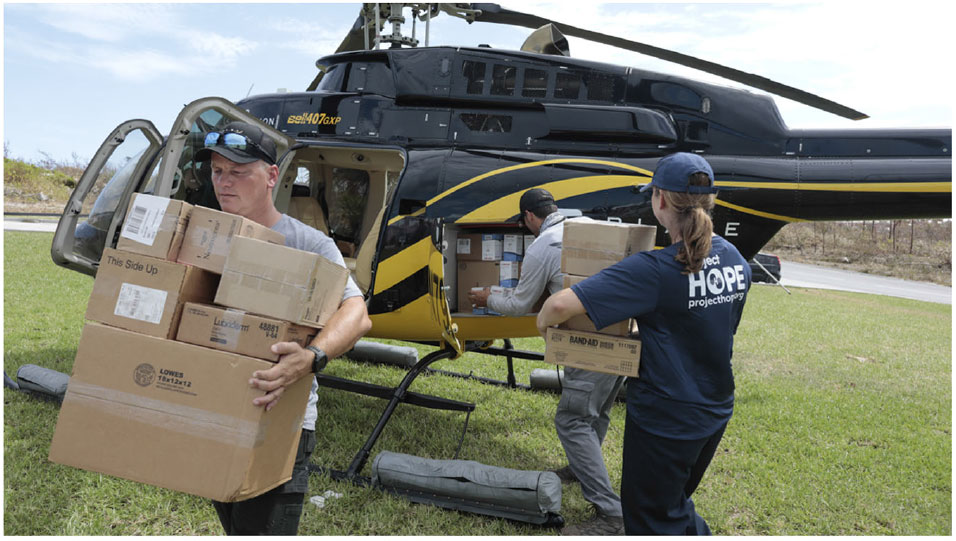
Within four days of Hurricane Dorian’s devastating landfall in the northern Bahamas, HOPE’s director of Emergency Response arrived on the heavily damaged Abaco island alongside partners from Restoration Abaco, a local organization “formed out of tragedy” by local advocates the day of the storm. Close coordination with the National Emergency Management Agency and the Ministry of Health allowed HOPE to obtain needs lists directly from the main clinic on the island, while the partnership with Restoration Abaco helped facilitate local distribution of critically needed items—including insulin needles, trauma supplies, phenobarbital, hygiene kits and cleaning supplies—just days later. This linking of critical supplies to identified needs results in immediate benefit to affected populations, delivering appropriate aid where and when it is needed most (Figure 2).
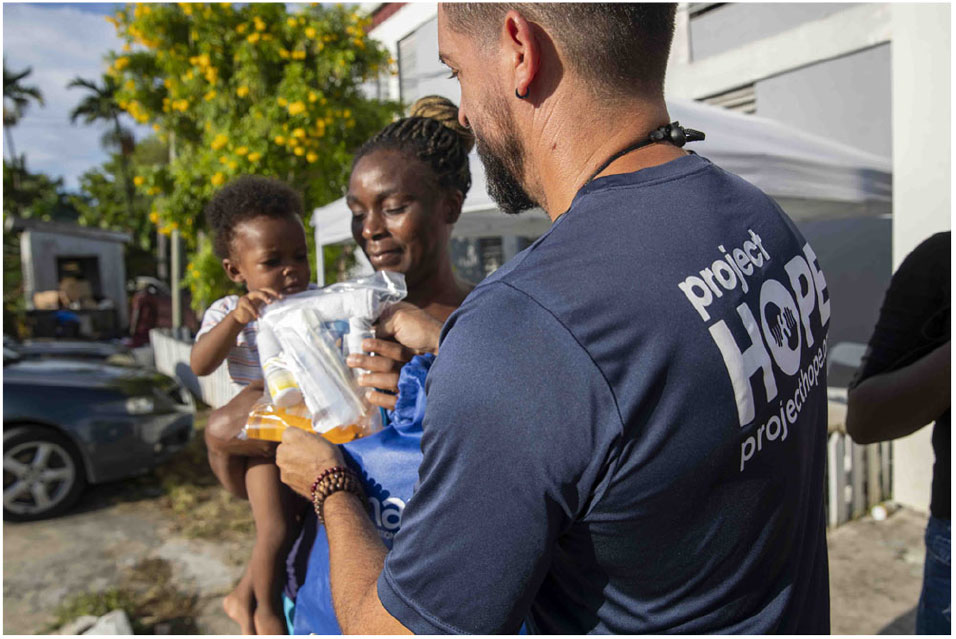
Project HOPE delivered 1,000 hygiene kits donated by MAP International to Fox Hill Community Center in Nassau. These kits include items like shampoo, soap, a toothbrush, deodorant, washcloth and a first-aid kit. Photo by James Buck for Project HOPE, 2019.
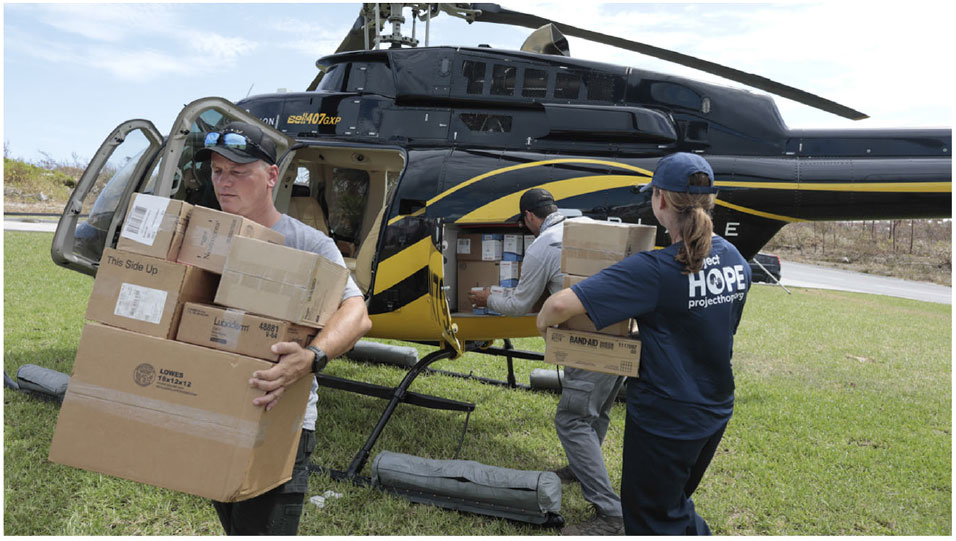
This initial approach extended over the next few weeks to the large-scale distribution of relief supplies and lifesaving medications, in addition to assisting in the provision of health care at shelters and medical facilities in Nassau, Abaco, and the Grand Bahamas, benefiting thousands of people. At the time of this writing, Project HOPE is also providing medical care in four shelters in Nassau, has shipped thousands of dollars’ worth of medicines and medical supplies, is assessing damage in the largest clinic in Abaco, and is planning first-aid trainings for evacuees. We are committed to helping position these communities for long-term recovery and continue to work with our strategic partners to mobilize additional aid (Figure 3).
Project HOPE chartered a helicopter to deliver emergency medical and hygiene supplies to a clinic on Abaco island after Hurricane Dorian. Photo by Javier Galeano for Project HOPE, 2019
Project HOPE has a long history of global health programs and emergency response in the Americas, including the 2010 earthquake in Haiti and 2017’s Hurricane Maria in Puerto Rico. Our response in Puerto Rico prepared us for the difficult logistics of responding to an emergency on an island, but it also revealed an area that often goes overlooked in emergency response: patients with chronic illnesses.
In the past, our responses have typically focused on countries with more vulnerable health systems, where morbidity trends focused around trauma and acute care needs, particularly of patients suffering from infectious diseases such as cholera and malaria. The alarming trend we see today is that, with the increased frequency and strength of natural disasters, otherwise effective health care systems also become badly compromised when directly hit by storms like Dorian.
Although less visible than traumatic injuries following a disaster the size of Dorian, we see a significant impact on populations with chronic diseases such as diabetes, hypertension, and cancer. Many things can disrupt care: loss of prescription medications, limited access to doctors, power outages leading to the failure of cold chain mechanisms to keep critical medications like insulin viable, supply chain disruptions, and food insecurity. This was particularly evident after Hurricane Maria—thousands of patients with chronic illnesses became acutely ill as they lost access to health care services such as dialysis, insulin, oxygen, and prescription medications. This is evident once again in the Bahamas.
These needs can be harder to see than initial traumatic injuries that occur in the first few days following a disaster, but we must tailor emergency response mechanisms to identify and address them. We need to engage professional medical teams to provide primary and chronic healthcare needs in a clinical setting (Figure 4). We must think about continuity of care, stocking pharmacies adequately, facilitating access to prescription drugs, strengthening cold chain mechanisms, restoring supply chains, and educating patients with chronic illnesses on emergency preparedness.
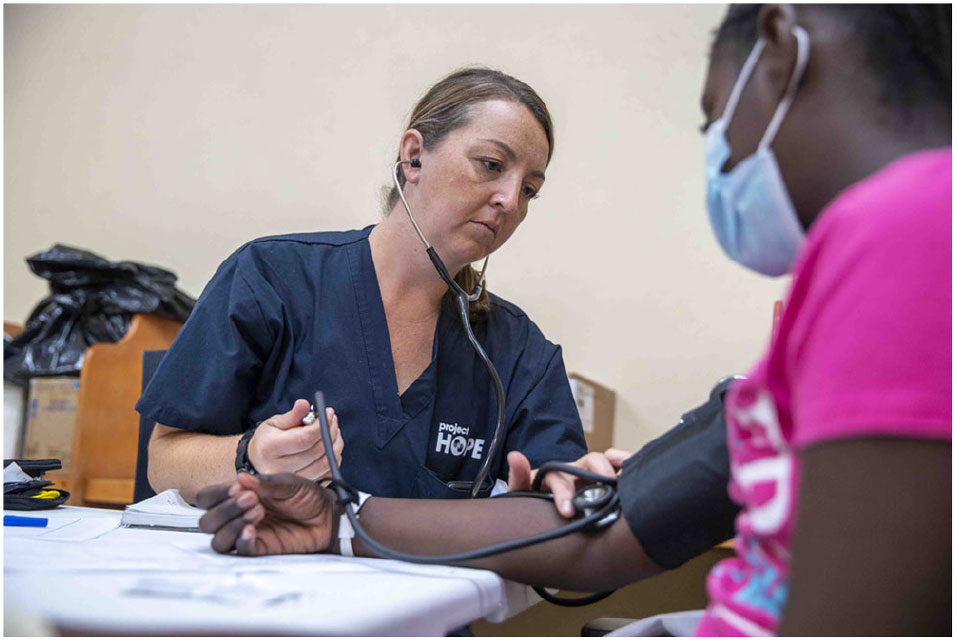
Volunteer Nurse Practitioner Nicole Merrill evaluates a patient in one of Project HOPE’s shelter clinics in Nassau. Photo by James Buck for Project HOPE, 2019.
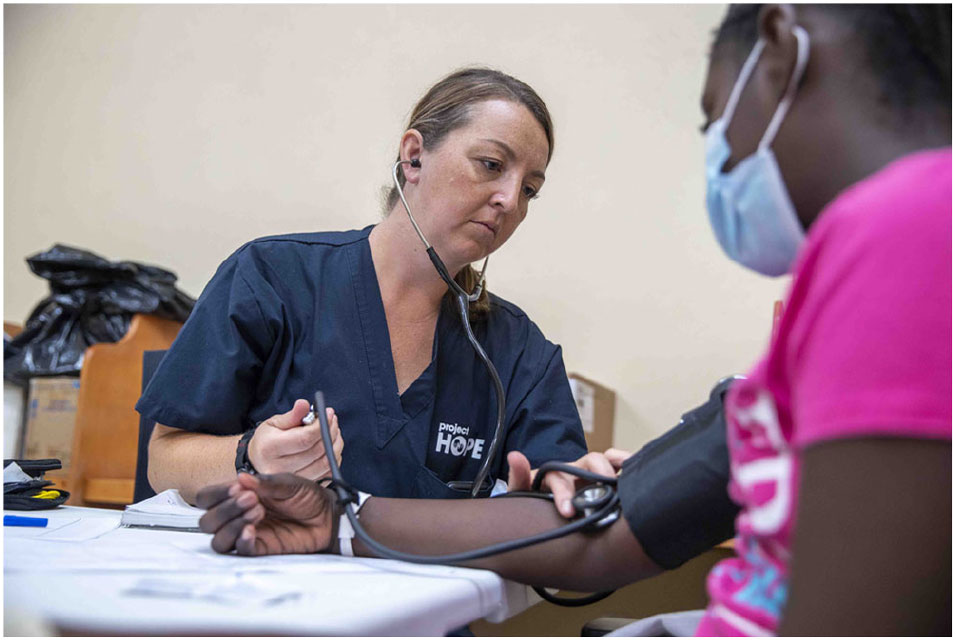
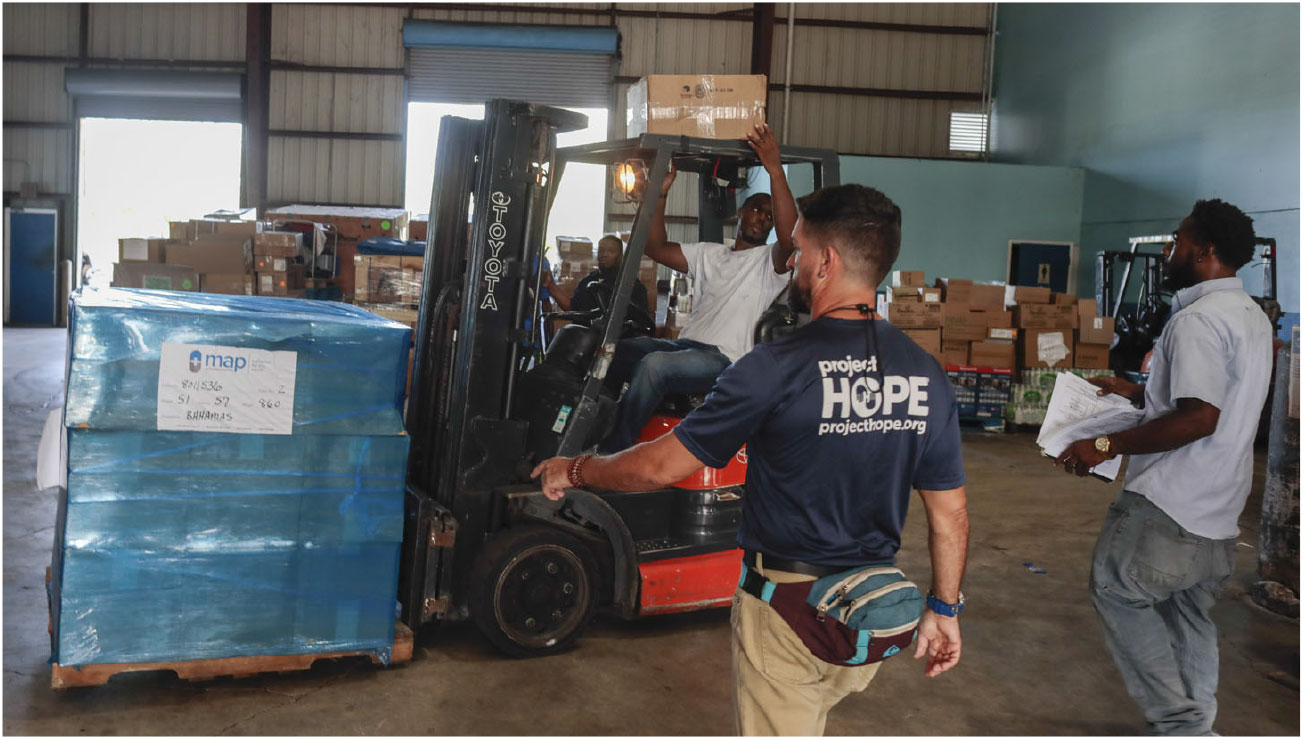
Traditional emergency medical teams are equipped to see patients for the initial two weeks following a sudden onset disaster, but not to provide adequate continuity of care for those with chronic conditions. Project HOPE designs medical teams to work alongside, rather than parallel to, existing health care infrastructure—and for longer than the initial two weeks. This allows patients to navigate the difficult period following a disaster and connects them to care services for better management of chronic diseases like diabetes. Most importantly, it lays the foundation for the long-term recovery of a health system that can support them (Figure 5).
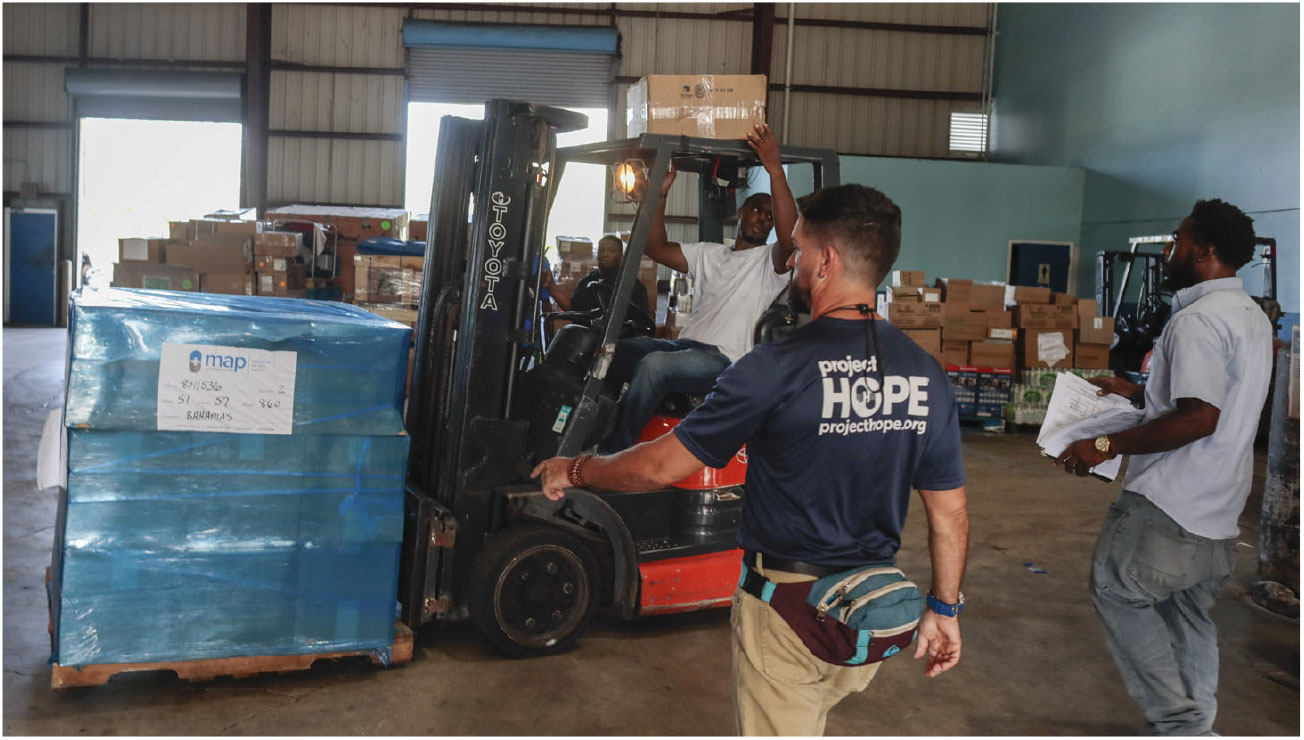
Project HOPE’s logistician Gustavo Pagan oversees delivery of a shipment of medicines and medical supplies in the Bahamas.