INTRODUCTION
Hermit crabs are common members of intertidal and subtidal benthic communities. Shell resource, food availability, temperature and salinity are the major environmental factors that determine the population structure and reproductive strategy of hermit crabs (Vance, Reference Vance1972; Abrams, Reference Abrams1980; Lancaster, Reference Lancaster1990). Strong inter- and intraspecific competition evidently occurs among species living in the same habitat (Vance, Reference Vance1972; Abrams, Reference Abrams1980; Imazu & Asakura, Reference Imazu and Asakura1994; Gherardi & Nardone, Reference Gherardi and Nardone1997). Interspecific differences in reproductive characteristics may be one of the mechanisms allowing sympatric hermit crabs to coexist (Reese, Reference Reese1968; Carlon & Ebersole, Reference Carlon and Ebersole1995; Turra & Leite, Reference Turra and Leite2000; Wada et al., Reference Wada, Mima and Ito2005).
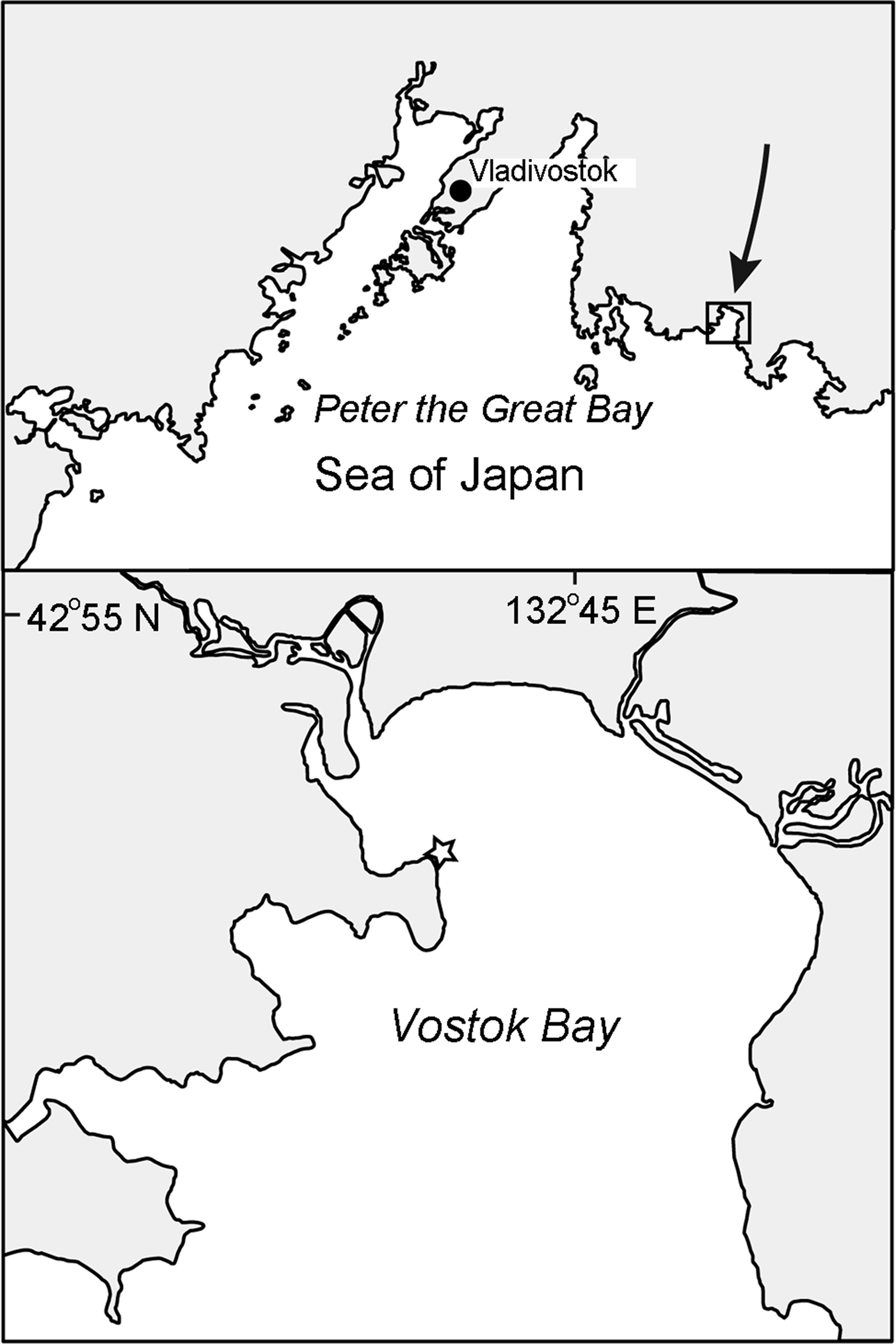
A total of 11 hermit crab species were found in Vostok Bay; Pagurus proximus, P. minutus and P. brachiomastus predominated (Selin et al., Reference Selin, Kornienko and Korn2016). Pagurus proximus was relatively recently (Komai, Reference Komai2000) separated from the P. brachiomastus (Thallwitz, 1891) species complex. The validity of this species was supported by the study of its larval development (Kornienko & Korn, Reference Kornienko and Korn2006). Pagurus proximus is found from the intertidal zone to a depth of 155 m at the coast of Japan from Hokkaido to Honshu and along the mainland coast from Korea to Peter the Great Bay (Komai et al., Reference Komai, Saito and Myorin2015). It was also encountered in Vostok Bay where the environmental conditions and the composition of inhabitants are characteristic of a large Peter the Great Bay (Figure 1). The northern distribution boundary of P. brachiomastus is known to be De Kastri Bay (mainland coast) and Aniva Bay (Sakhalin Island) (Makarov, Reference Makarov1938). Pagurus proximus may also occur in these areas; however, the reliably known northernmost habitat of this species is currently Vostok Bay (Selin et al., Reference Selin, Kornienko and Korn2016).
A map-diagram of the investigated area. Star indicates the Vostok Marine Biological Station.

To date, the population biology and reproductive characteristics of P. proximus as well as the temporal and spatial patterns of larval settlement have been investigated in Hakodate Bay (southern Hokkaido) (Wada & Mima, Reference Wada and Mima2003; Oba & Goshima, Reference Oba and Goshima2004). Vostok Bay noticeably differs from Hakodate Bay in lower winter temperatures (surface water temperature reaches −1.9°C) and the presence of ice cover in December–March. It is known that populations of the same species living at different latitudes show different types of reproductive strategy, which need detailed investigation (Reese, Reference Reese1968; Wada et al., Reference Wada, Mima and Ito2005; Mishima & Henmi, Reference Mishima and Henmi2008; Terossi et al., Reference Terossi, Torati, Miranda, Scelzo and Mantelatto2010). In this regard, in revealing the stimuli that initiate and coordinate reproduction in different populations, particular attention should be paid to the duration of ovigerous period, fecundity, and the number of egg clutches per reproductive season.
The aim of the present study is to investigate the population biology and reproductive characteristics of P. proximus in the northern part of its range and to compare them with the known characteristics of population of this species from the type locality. This will expand our knowledge on the means of adaptation among decapods under different climatic conditions and will help elucidate the mechanisms of reproductive success of species in north-western Sea of Japan.
MATERIALS AND METHODS
Investigations of individuals were performed every month from June 2014 to September 2015 (with the exception of November) in Vostok Bay at a depth of 0–12 m at a large monitoring site in a mixed biotope (see Selin et al., Reference Selin, Kornienko and Korn2016). All specimens of P. proximus were collected from a 1 m2 frame randomly placed 50–66 times within the investigated area of the bottom. The average population density and biomass for each season, and the standard error of these indices were calculated. Vertical distribution of hermit crabs in different seasons was examined by assessing their abundance at depths of 1, 3, 6, 9 and 12 m in July, September and December 2015. To this end, a counting frame 1 m2 was randomly placed on the bottom at each horizon in 25–30 replicates.
A total of 3563 males and 3112 females were collected. In all specimens, the length of the anterior calcified part of the carapace (SL, shield length) was measured with the use of a MBS-10 stereomicroscope to the nearest 0.1 mm. Based on the measurements, we plotted histograms of the size-frequency distribution and analysed the spatial and temporal variations of the size composition of the population.
Sex was determined based on the presence of 4 unpaired pleopods in females and 3 unpaired pleopods in males (Komai, Reference Komai2000; Tudge et al., Reference Tudge, Asakura, Ahyong, Schram and von Vaupel Klein2012). The presence of eggs on the pleopods of females was noted. Ovigerous females were divided into three groups according to the egg developmental stage: (1) eggs on the pleopods are completely filled with yolk; (2) eggs with developing embryos: from the beginning of formation of the embryonic disc, when a yolk-free zone is formed, to the appearance of eye pigment; (3) completion of the ovigerous period: the embryo occupies the entire space within the egg and has formed oval, well visible eyes.
Fecundity was estimated twice: in April and in July; females with eggs at early developmental stage were used in calculations. The relationship of fecundity to size of crab was approximated by a linear regression equation F = a + bSL, where F is fecundity; SL, the shield length, mm; and a and b, coefficients calculated from empirical data. Large and small diameters of 20 eggs from two different females from the group 1 were measured to the nearest 0.01 mm under the Primo Star microscope (Carl Zeiss) and mean ± standard deviation were calculated.
Specimens of hermit crabs were examined for the presence of rhizocephalan externae on the pleon and parasitic isopods on the pleon and under the carapace. The data were statistically processed using the standard methods of variation statistics. The mean sizes of females and males were compared by the Mann–Whitney test. The same test was used for analysis of spatial and temporal variations of the size composition of population by pair-wise comparison of adjacent samples. ANOVA was used to compare the relationships between fecundity and size of the hermit crabs during the first and repeated spawning. The level of significance was P < 0.05. The data on the dynamics of surface water temperature were obtained from a hydrometeorological station at the Vostok Marine Biological Station.
RESULTS
Abundance and vertical distribution
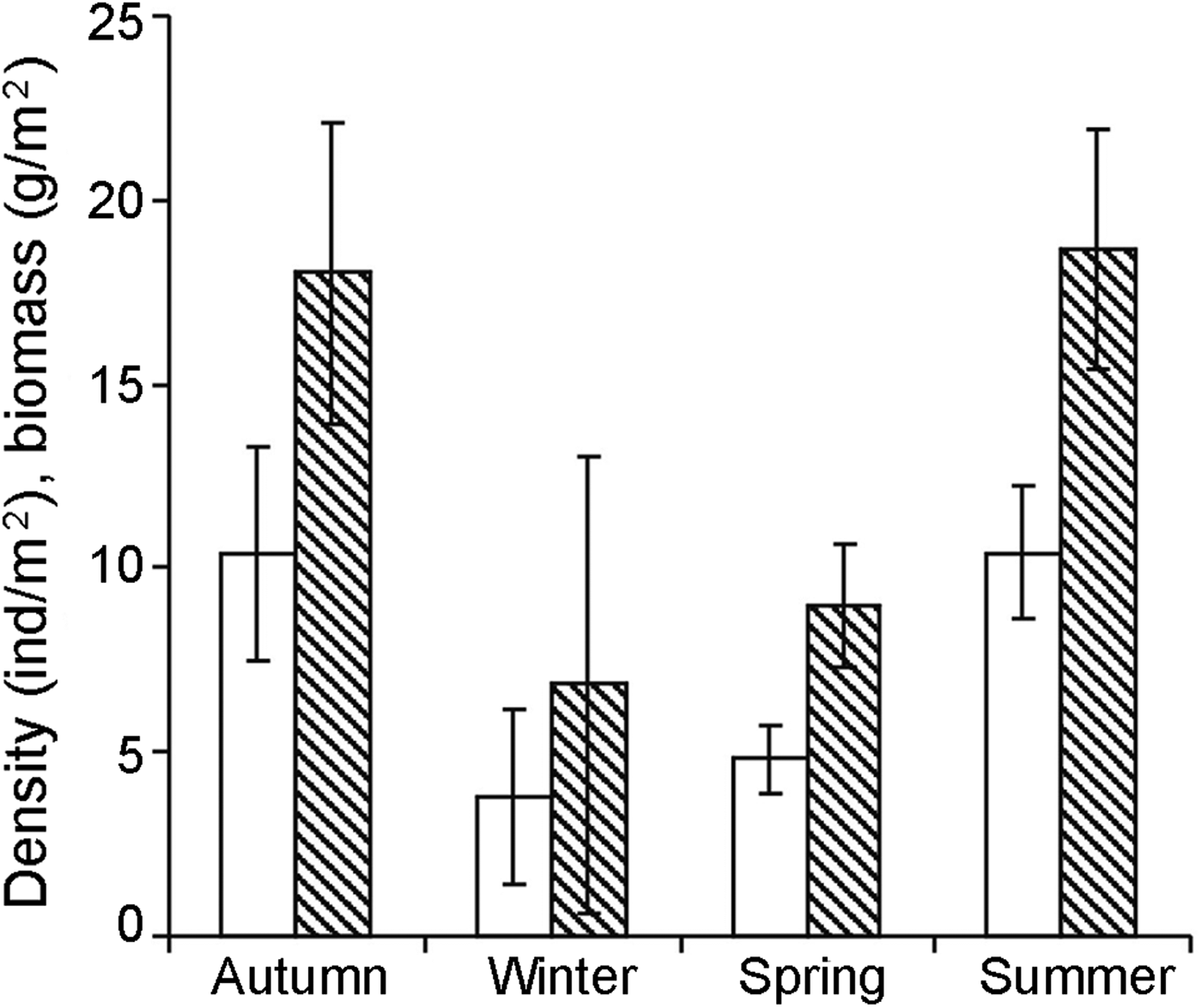
The hermit crab Pagurus proximus was fairly numerous in the investigated area. The abundance of this species changed during the year (Figure 2). The average population density and biomass of P. proximus were lower in winter (3.8 ± 3 ind m−2 and 6.85 ± 6.22 g m−2) (mean ± SE) and spring (4.8 ± 1 ind m−2 and 9.01 ± 1.67 g m−2) and were higher in summer (10.4 ± 1.8 ind m−2 and 18.64 ± 3.23 g m−2) and autumn (10.4 ± 2.9 ind m−2 and 18.02 ± 4.09 g m−2).
Seasonal variations of the density (open bars) and the biomass (solid bars) in Pagurus proximus. Vertical lines are standard errors.

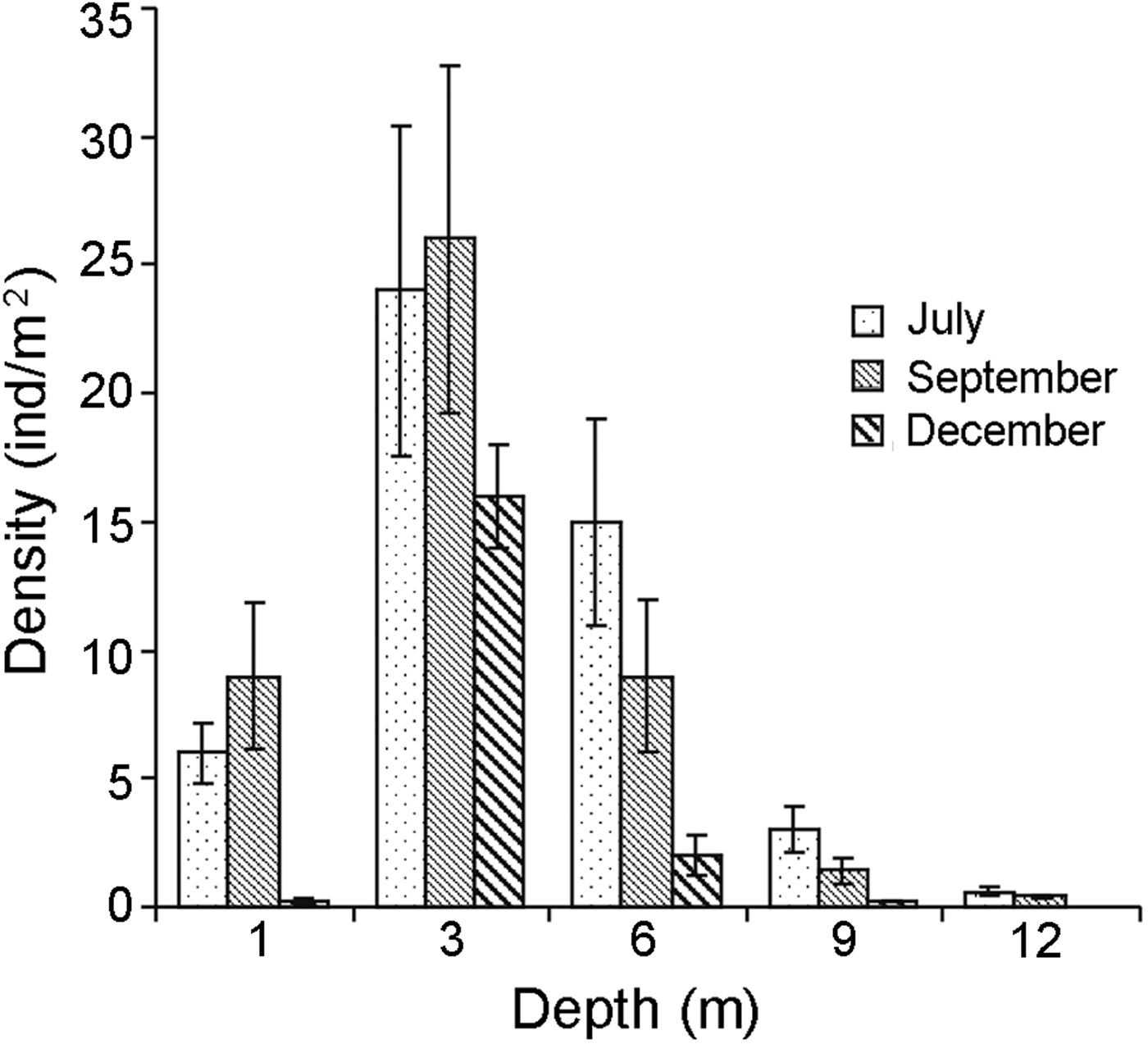
Pagurus proximus was found in the entire depth range from the water edge to 12 m depth (Figure 3). The population density of hermit crabs near the shore was an average of 6–9 ind m−2 in summer and at the beginning of autumn; very few individuals were recorded here in winter. Hermit crabs were most numerous at the 3 m depth. Here, their population density was an average of 24 ± 6 and 26 ± 7 ind m−2 in July and September, and 16 ± 2 ind m−2 in December, which comprised 56, 58 and 84% of the total value for the entire depth range. With further increase in depth, the abundance of hermit crabs decreased to trace quantities (0.03–0.6 ind m−2) at a depth of 11–12 m, irrespective of the season of the year. The vertical distribution of P. proximus during the year remained unchanged (U = 5–12, Р ≥ 0.1508), although the absolute values of abundance were different in different seasons.
The density of Pagurus proximus on different depths. Vertical lines are standard errors.

Size and sex composition
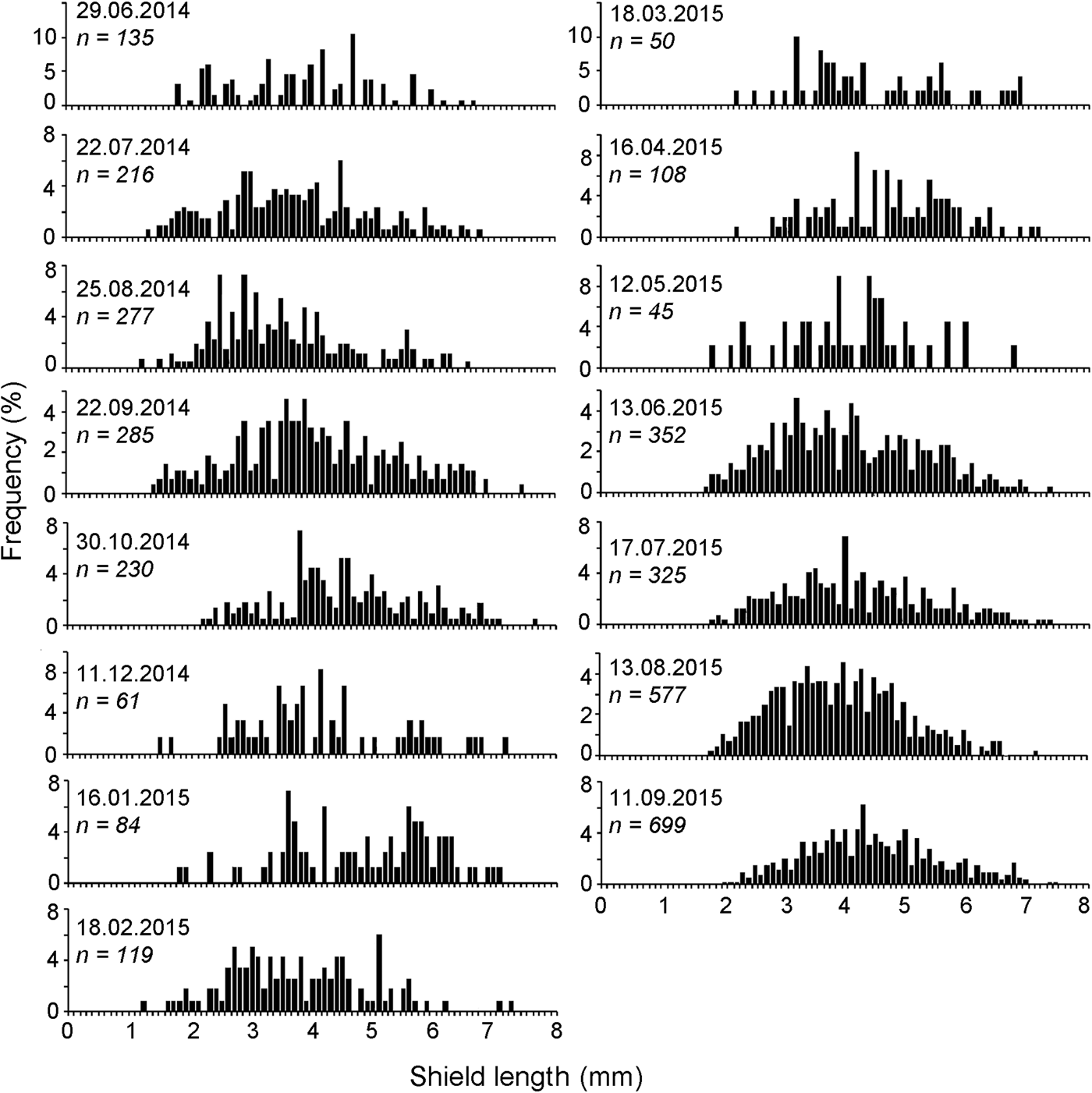
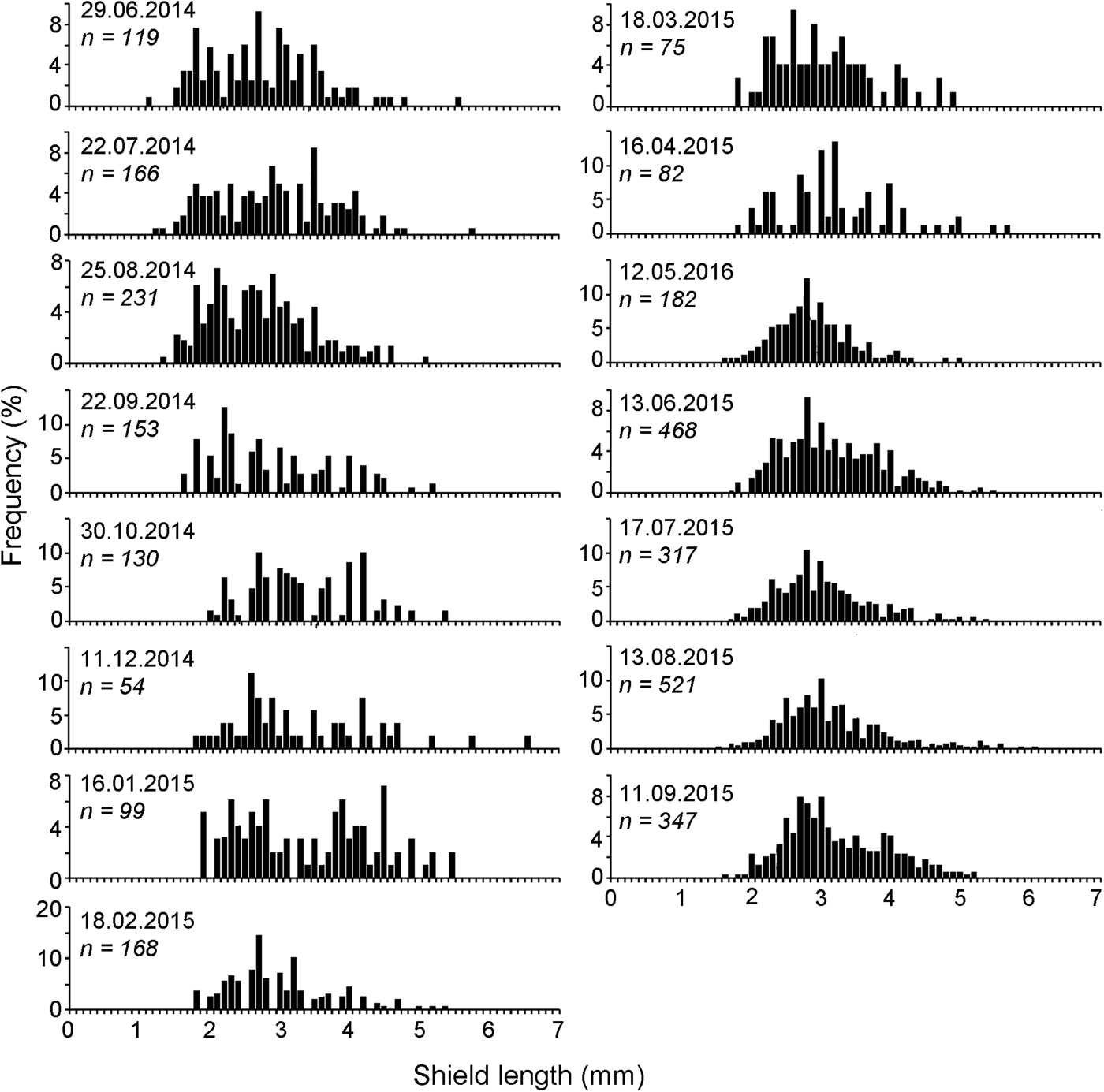
In Vostok Bay, males of P. proximus were 1.3–7.8 mm and females 1.2–6.7 mm in shield length, i.e. the females of this species are significantly smaller than the males (U = 2,485,000; Р < 0.001) (Figures 4 & 5). As a rule, the bulk of the population consisted of individuals 2.0–4.5 mm in SL (40–82% in males and 89–99% in females). Juvenile recruitment occurred from June to September; the young crabs reached a SL of 2.4–2.5 mm (females) and 2.6 mm (males) towards the end of the first season of growth and they were respectively 3–3.3 and 3.8–4.2 mm in SL in a year of life.
The size composition of males of Pagurus proximus in 2014 and 2015.

The size composition of females of Pagurus proximus in 2014 and 2015.

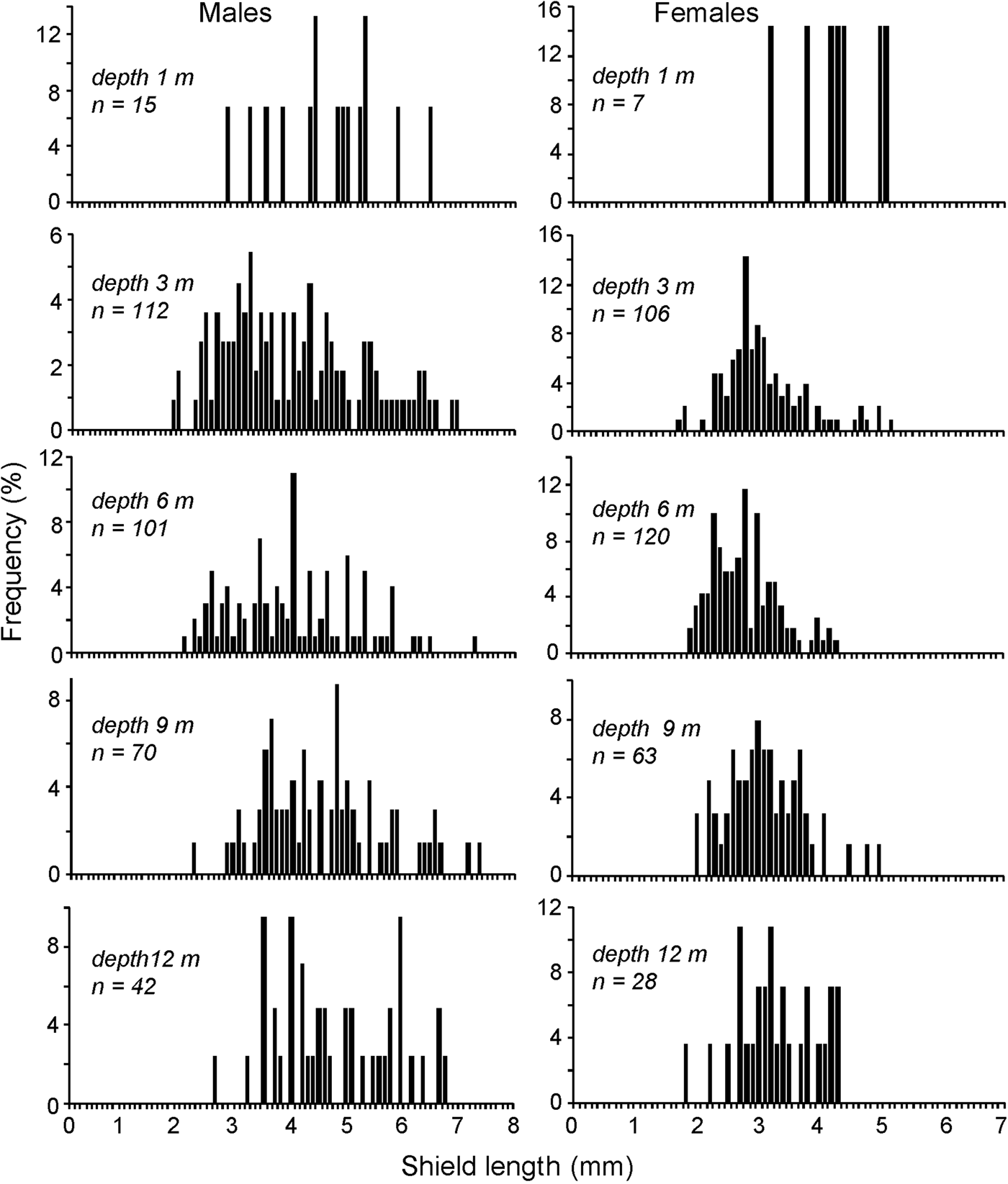
The size composition of hermit crabs varied not only during the year, but also with depth (Figure 6). However, no differences were found between size distributions of males and females at depths of 1 and 12 m (U = 290.5, 255.0; Р ≥ 0.6636) and at depths of 9 and 12 m (U = 1272.0, 788.0; P ≥ 0.2340); between size distributions of males at depths of 3 and 6 m (U = 5564.0; P = 0.83830) and females at depths of 3 and 9 m (U = 29,680; P = 0.2277). In all seasons, the young concentrated at the 3 m depth and the size range was largest in this aggregation. The sex ratio was generally close to 1. Females were 1.7 more than males among small individuals (SL ≤ 3.5 mm) and the males were 3 times more than females among large individuals (SL > 3.5 mm). Moreover, the male to female ratio changed with season, from 2 : 1 in September to 1 : 4 in May.
The size composition of males and females of Pagurus proximus on different depths in July 2015.

Fecundity
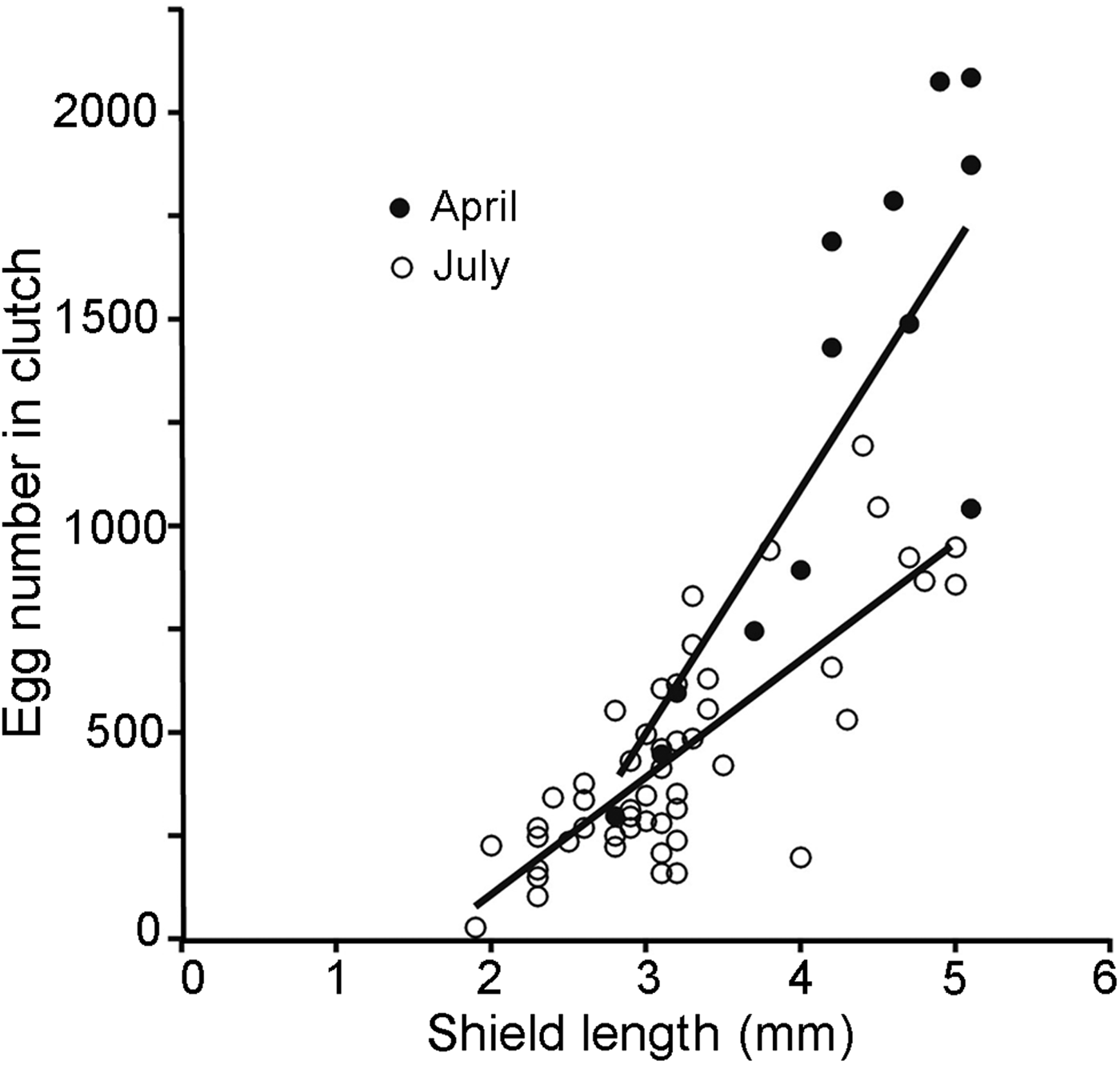
Females deposited black oval eggs 0.49 ± 0.03 mm in small diameter and 0.53 ± 0.01 mm in large diameter (mean ± SD). In April, in females with a SL of 2.8–5.1 mm, the number of eggs in a clutch varied from 298 to 2085 with an average of 1160 ± 620. At the end of June to the beginning of July (SL = 1.9 to 5.0 mm), the number of eggs in a clutch was from 28 to 1194 with an average of 451 ± 273 (Figure 7). The linear relationship between fecundity and female size in spring was F = 671.3SL − 1559.5 (SEа = 119.7; SEb = 512.0; determination coefficient r 2 = 74.1%; N = 13); in summer, F = 297.9SL − 496.1 (SEa = 96.1; SEb = 29.4; r 2 = 68.7%; N = 48). Pair-wise comparison of the regression lines describing the change in female fecundity in spring and summer indicates significant differences in the coefficient b (F-test; P < 0.01).
Regression lines of egg numbers vs shield length of females of Pagurus proximus.

Reproductive season
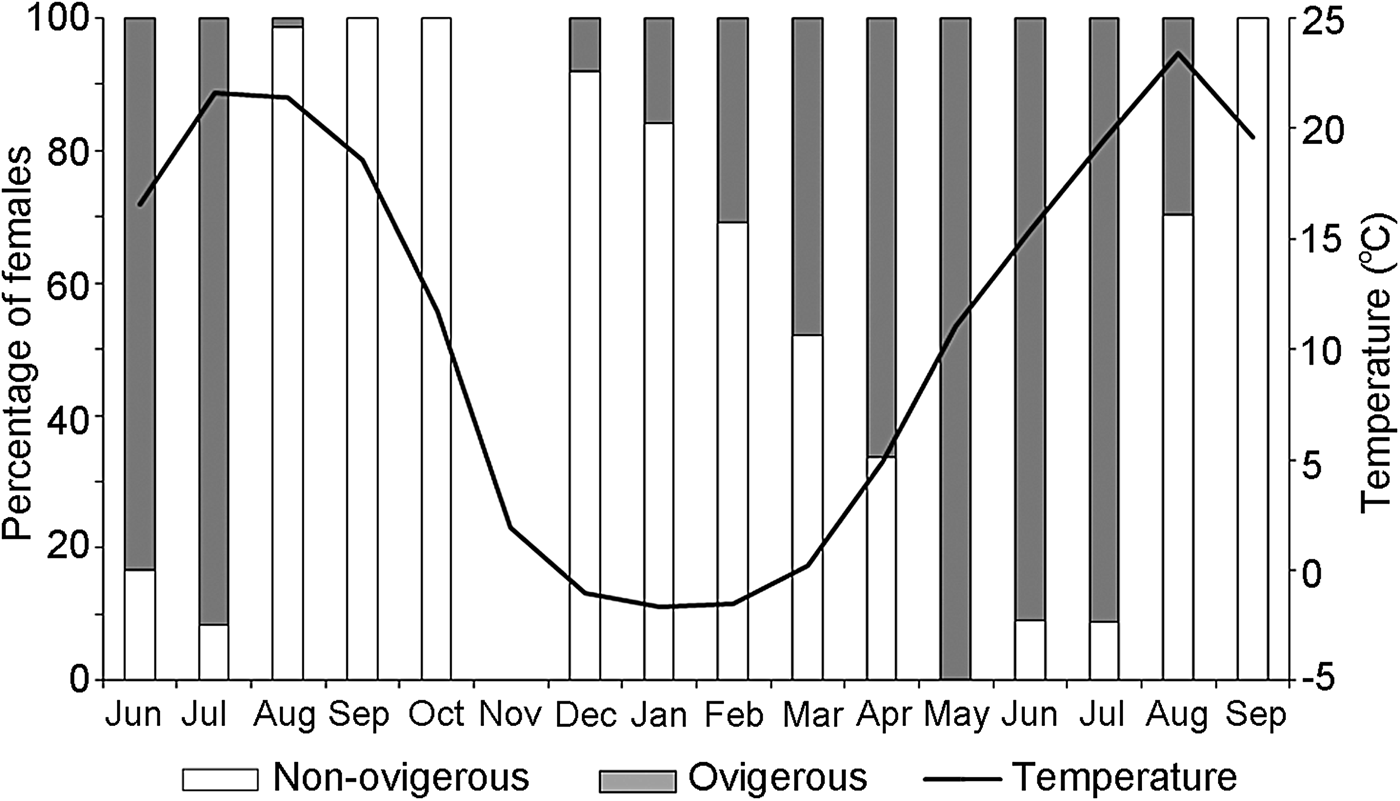
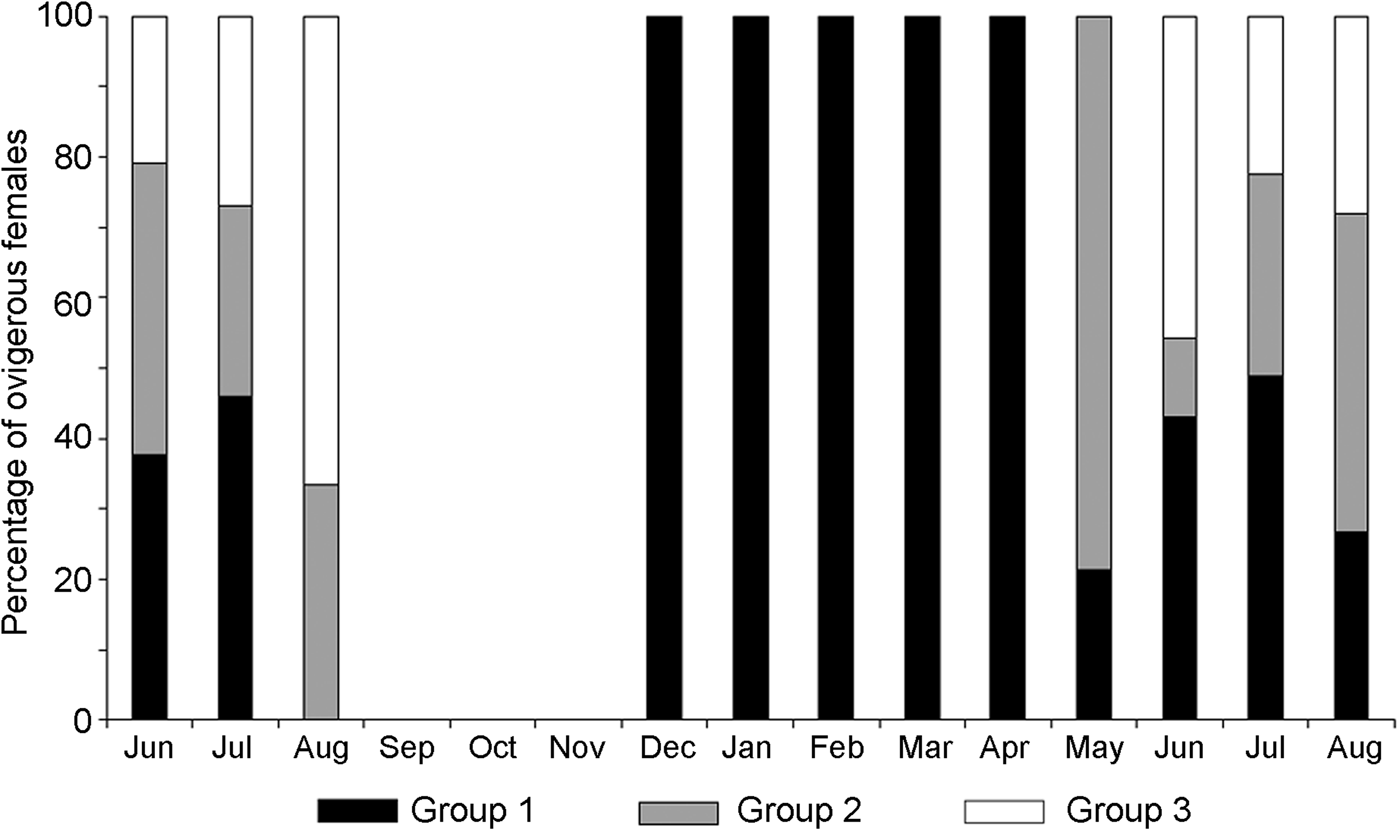
Ovigerous females were found during the greater part of the year; from December to August (Figure 8). As early as December, when the average monthly surface water temperature in the bay was −1.6°С, eggs completely filled with yolk appeared in 7% of females. In January–April, the percentage of ovigerous females gradually increased, reaching 93% by the end of April; however, the eggs remained at early developmental stage. In early May, all females (1.5–5.5 mm in SL) were ovigerous. At the beginning of May, slightly more than 20% of females can be referred to the first group and the rest to the second group according to the degree of development of the embryos. Females of the third group with embryos ready to hatch out were not observed (Figure 9). In June–July, about 10% of females had no eggs; ovigerous females of all three groups were found; the number of females of the first group increased to almost 50% in mid-July. In the first half of August, less than 30% of females (1.7–4.7 mm in SL) had eggs, about 25% of them belonged to the first group. At the end of August, only two individuals (3.2 and 4.3 mm in SL) with eggs at the last developmental stage were found. Ovigerous females of the smallest size (SL = 1.3 mm) were observed in July–August.
Ratio of ovigerous and non-ovigerous females of Pagurus proximus and the water temperature in the Vostok Bay during the year.

Ratio of three groups of ovigerous females of Pagurus proximus during the year. Group 1: eggs on the pleopods are completely filled with yolk; group 2: eggs with developing embryos from the beginning of formation of the embryonic disc to the appearance of eye pigment; group 3: completion of the ovigerous period, the embryo occupies the entire space within the egg and has formed oval, well visible eyes.

Parasites of hermit crabs
Parasitic rhizocephalan externae and parasitic isopods were not found.
DISCUSSION
Abundance and vertical distribution
Pagurus proximus is currently one of the dominant species in Vostok Bay with 47% of the total population density of hermit crabs in summer and autumn (Selin et al., Reference Selin, Kornienko and Korn2016). Because this species was separated from the P. brachiomastus species complex only in 2000, it is hardly possible to follow its dynamics over the last decades. However, in summer 1987, the proportion of P. brachiomastus (evidently, together with P. proximus) in Vostok Bay did not exceed 36% (Volvenko, Reference Volvenko1995); in 2014–2015, the total proportion of these species reached 58% (Selin et al., Reference Selin, Kornienko and Korn2016). An increase in the P. proximus population size was recently recorded in Hakodate Bay (Wada & Mima, Reference Wada and Mima2003).
Many species of hermit crabs perform seasonal vertical migrations, thus avoiding extreme high and low temperatures, wave action, low salinity in the intertidal zone, predation, or competition with sympatric species (Fotheringham, Reference Fotheringham1975; Abrams, Reference Abrams1980; Imazu & Asakura, Reference Imazu and Asakura1994; Turra et al., Reference Turra, Branco and Souto2002). The seasonal migrations of shallow-water hermit crabs in the north-western Sea of Japan are apparently determined by a decrease in water temperature to negative values in winter and a long ice-cover period. While in summer and autumn P. proximus was concentrated at depths of 1–6 m, predominately at 3 m, in winter this hermit crab was virtually not found at 1 m depth. Its population density at greater depths in winter was decreased. This shallow-water species described from depths of 0–10 m (Komai, Reference Komai2000) was recently discovered at a depth of 155 m (Komatsu & Komai, Reference Komatsu, Komai and Fujita2009). Therefore, we cannot rule out the possibility that in winter a number of the crabs migrate to depths greater than 12 m, where sampling was not conducted.
Size and sex composition
The average size of adult P. proximus from Hakodate Bay was markedly lower (males, SL = 2.22 ± 0.41 mm; females, 2.05 ± 0.26 mm) (Wada & Mima, Reference Wada and Mima2003), compared with that in Vostok Bay (males, SL = 4.21 ± 1.18, max SL = 7.8; females, 3.15 ± 0.78 mm, max SL = 6.7). However, it is known from the original description that the maximum size of male P. proximus is 10 mm and females, 7.3 mm (Komai, Reference Komai2000). During the year, the size composition of hermit crabs varied in relation to juvenile recruitment in summer, active juvenile growth, and death of the oldest individuals.
The sex ratio in the P. proximus population in Vostok Bay was generally close to 1 : 1; however, females prevailed among small and males were predominant among large individuals. The same sex ratio was noted in this species in Hakodate Bay (Wada & Mima, Reference Wada and Mima2003). The females of many intertidal hermit crabs are known to be smaller than the males (Lancaster, Reference Lancaster1990; Turra & Leite, Reference Turra and Leite2000; Mishima & Henmi, Reference Mishima and Henmi2008; Balazy et al., Reference Balazy, Kuklinski, Włodarska-Kowalczuk, Barnes, Kędra, Legeżyńska and Węsławsky2015). Reproduction is an energy-consuming process, limiting the growth of ovigerous females. Moreover, females of many species begin to reproduce at a small size in the first year of life. This is supposed to reduce intraspecific competition for shells to a certain degree (Lancaster, Reference Lancaster1990). Some change in sex ratio with season was noted in the P. proximus population in Vostok Bay. In spring, females predominated and the overwhelming majority of them were ovigerous, while in autumn the number of males was increased.
The minimum size of ovigerous females of P. proximus in populations of Vostok Bay and Hakodate Bay was 1.3 mm. It is known that the average SL of the first juvenile stage of P. proximus is 0.98 ± 0.077 mm and the maximum SL is 1.09 mm (Oba & Goshima, Reference Oba and Goshima2004). Ovigerous females with a SL of 1.3 mm recorded by us in July–August may appear as a result of the settlement of juveniles at the beginning of summer, i.e. this species attains sexual maturity in the first year of life.
Fecundity
Like other species, the number of eggs per clutch in P. proximus correlates with the size of female. In hermit crabs that produce several clutches during the reproductive season the mean number of eggs per brood can be the same during the first and subsequent spawning (Wada et al., Reference Wada, Kitaoka and Goshima2000; Mura et al., Reference Mura, Orru and Cau2006) or significantly higher in the first (main) breeding (Mura et al., Reference Mura, Orru and Cau2006). In our study, clutches of P. proximus were significantly more productive in spring than in summer: large females in April incubated about 2000 eggs. In hermit crabs that are close in size to P. proximus, the number of eggs in clutches varies from several tens to several hundreds, e.g. 75–677 in P. middendorffii (see Lysenko & Volvenko, Reference Lysenko and Volvenko1987) and 150–580 in P. nigrofascia (see Mishima & Henmi, Reference Mishima and Henmi2008).
Embryonic diapause
Delayed embryonic development of the eggs (embryonic diapause) is known in many crustaceans (Alekseev & Starobogatov, Reference Alekseev and Starobogatov1996). The eggs of these species ceased to develop at the gastrula stage, which was achieved within 3 or 4 days after spawning. This resting period can continue for several weeks to several months (Wear, Reference Wear1974). Seasonal temperature fluctuations are one of the main factors causing the diapause in aquatic invertebrates (Alekseev et al., Reference Alekseev, Hwang and Tseng2006). Embryonic diapause causes change in the duration of the incubation period and synchronizes the release of larvae by shifting it towards the period of abundant primary production and thus ensuring larval survival (Anger, Reference Anger2001).
Embryonic diapause has been detailed in commercially important cold-water crabs from the genus Chionoecetes. It is shown that the duration of the resting period is dependent on the temperature of the environment (Moriyasu & Lanteigne, Reference Moriyasu and Lanteigne1998; Webb et al., Reference Webb, Eckert, Shirley and Tamone2007). Some species may have two diapauses during the incubation period (Moriyasu & Lanteigne, Reference Moriyasu and Lanteigne1998) and the diapause duration differs between primiparous and multiparous females (Swiney, Reference Swiney2008).
The change in the embryonic diapause duration in relation to the latitude of habitat was noted in the hermit crab Pagurus nigrofascia. The incubation period in this species continues for about 9 months both in the north (Hakodate Bay, Hokkaido) and in the south of Japan (Hakata Bay, Kyushu) (Goshima et al., Reference Goshima, Wada and Ohmori1996; Mishima & Henmi, Reference Mishima and Henmi2008), but the diapause lasts about 7 months (May–November) in the northern and about 8 months (March–October) in the southern area. The development of eggs and the release of larvae in P. nigrofascia occur during the cold season, while the embryonic diapause is observed in the warm season. Spawning and the release of larvae in Hakata Bay occur about 2 months earlier and females have a higher fecundity than in Hakodate Bay (Mishima & Henmi, Reference Mishima and Henmi2008).
Ovigerous females of P. proximus in Hakodate Bay are found from January–February to June–July (Wada & Mima, Reference Wada and Mima2003) in the temperature range of 7–21°C. Females with eggs at the last developmental stage (D, embryos with well-developed oval pigmented eyes) appear already in February–March, about a month after oviposition. In the laboratory, the egg incubation in this species lasts 40.3 days at a temperature of 12°C and 30.8 days at 16°C (Wada & Mima, Reference Wada and Mima2003), i.e. the embryonic development of P. proximus at the coast of Hokkaido is continuous, without diapause. The authors note that the development of egg clutches is not synchronized and that female P. proximus can have several clutches during the reproductive season.
In the winter months, the surface water temperature in Vostok Bay decreases to negative values. The temperature begins to rise in mid-March, when the bay is free of ice. According to our observations, the eggs in clutches of female P. proximus in Vostok Bay do not develop from December to late April. The resting period is completed in May, when the water temperature reaches 10°С, and the embryonic development is activated. The mass release of larvae is observed at the beginning of June (Kornienko & Korn, Reference Kornienko and Korn2016). Since the proportion of ovigerous females increases from December to May, the length of embryonic diapause differs among individuals of P. proximus. It varies from 5 months in females that laid eggs in December to total absence of the diapause in females that begin spawning in April.
A similar reproductive strategy was also found in a deep-water hermit crab P. alatus living at the coast of Sardinia (the Mediterranean Sea) at a depth of 350–450 m. The females of this species showed an annual reproductive cycle characterized by a long egg incubation period and by a marked synchronization of their development in time. The eggs at the first stage of development were observed over 10 months from April to January. The eggs at the second stage were observed exclusively from November to January, while eggs at the third stage were seen from December to February (Mura et al., Reference Mura, Orru and Cau2006).
The increased proportion of females of the first group towards mid-July indicates that P. proximus in Vostok Bay can have more than one egg clutch, as is the case of Hakodate Bay. In May, the egg development is fairly synchronous as a result of winter and spring spawning, while during the summer spawning the synchrony is disturbed and ovigerous females of all three groups occur simultaneously. The larvae of P. proximus are found in the plankton of Vostok Bay until the beginning of September (Kornienko & Korn, Reference Kornienko and Korn2006, Reference Kornienko and Korn2016), thus confirming a multiple spawning of this species. Judging from the dynamics of the size composition of hermit crabs, juvenile recruitment occurs in June–August. The abundant release of larvae in spring ensures the massive recruitment of juveniles, and less productive spawning in summer allows the negative effects of unpredictable environmental conditions to be avoided.
Parasites of hermit crabs
Hermit crabs are known to be hosts of many species of parasitic isopods of the family Bopyridae (Markham, Reference Markham2003) and parasitic crustaceans of the superorder Rhizocephala (McDermott et al., Reference McDermott, Williams and Boykо2010; Yoshida et al., Reference Yoshida, Hirose and Hirose2014). It was previously reported that P. proximus in Vostok Bay was considerably infested with the rhizocephalan Peltogaster reticulata (2.5–20.8%) (Kashenko & Korn, Reference Kashenko and Korn2003). The species of hermit crab in previous studies performed in Vostok Bay, however, was misidentified; all data reported in the paper of Kashenko & Korn (Reference Kashenko and Korn2003) refer to Pagurus minutus (O.M. Korn, personal communication). In contrast, during a year and a half, we examined more than 7000 specimens of P. proximus but did not find either parasitic isopods or rhizocephalan externae.
CONCLUSION
Pagurus proximus is currently one of the dominant species in north-western Sea of Japan with 47% of the total population density of shallow water hermit crabs in summer and autumn. This species was most numerous at about 3 m depth with the population density of up to 26 ± 7 ind m−2. The decrease in water temperature to negative values in winter leads to the appearance of embryonic diapause during the reproductive cycle of P. proximus. The presence of the embryonic diapause, synchronizing the release of larvae at the most favourable time for their development and settlement, high fecundity, the presence of at least two egg clutches during the reproductive season, and total absence of parasites ensure the reproductive success and high abundance of this species in the northern part of the species range.
ACKNOWLEDGEMENTS
We are grateful to the staff of the Vostok Marine Biological Station of the National Scientific Center of Marine Biology for the logistic support.
FINANCIAL SUPPORT
This work was supported in part by the Far East Program of the Far East Branch of the Russian Academy of Sciences (project no. 15-I-6-059).