The main issue I am going to address in this lecture is summarised by the following quote from Larsen-Freeman & Cameron (2008a: 75): ‘The behaviour of a complex system is not completely random, but neither is it wholly predictable’. Limited predictability is one of the greatest challenges to researchers: if the behaviour of a system is unpredictable or random, we cannot research it – there is no point: ‘random’ means unsystematic, so no amount of research can uncover underlying systematic elements in the situation. If, however, the system's behaviour is predictable, then we can find systematic trends underlying its behaviour and can analyse those meaningfully. So the key question is this: When is a system's behaviour random, and when is it predictable? Some take the view that complex dynamic systems are virtually never predictable enough to become researchable (for an explicit discussion, see de Bot, Lowie & Verspoor 2007), but I would argue that some aspects of the behaviour of complex dynamic systems are quite often systematic enough to be subject to meaningful empirical research (a recent study by Mercer (in press) offers insightful observations in this respect). Consequently, the initial strategy for dynamic systems research should involve examining when and in what sense the targeted system's behaviour is sufficiently predictable so that we can then confine our investigative focus to these aspects. In many ways, a complex system is like the world around us: a lot of things happen without us having a clear understanding of the reasons, but there is also a lot happening when we can have a fair notion of why things actually took place. Thus, the main topic of this talk concerns the question of what we can do to focus research on the predictable – and therefore meaningful – areas of the social world.
1. What is a ‘complex dynamic system’?
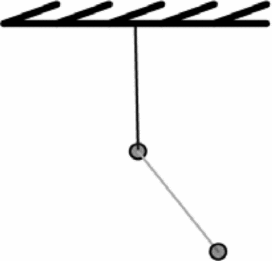
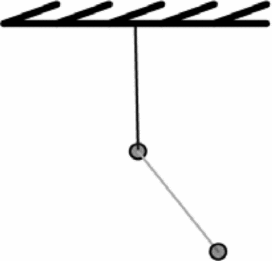
Let me start with the obvious question: What is a ‘complex dynamic system’? We can draw up a fairly straightforward definition of the concept that is made up of three key parts: A system is considered complex or dynamic – these terms are usually used as synonyms nowadays even if in the strictest sense a dynamic system can be quite simple (see below) – if (a) it has at least two or more elements that are (b) interlinked with each other but which also (c) change independently over time. These simple conditions can result in highly complex system behaviour, well illustrated by the bizarre movement of the double pendulum, which can be seen as the simplest dynamic system, consisting of only two components, the ‘upper arm’ and the ‘lower arm’ (see Figure 1). As we move the upper arm of the pendulum, the lower arm will go ‘wild’, moving all over the place, which then upsets the initially regular movement of the upper arm, which of course causes further havoc in the whole system (see the YouTube website for several good illustrations of double pendulum movement). In such systems the complex interference between the trajectories of the many system components makes the system's operation erratic: the fact that the components have ‘a life of their own’, but these relatively independent ‘lives’ still affect each other, results in seemingly chaotic system behaviour.
The double pendulum.
In the natural sciences, where the main units of analysis are molecules or objects, one can reconstruct the movement of a system such as the double pendulum by applying complex mathematical computations. However, in the social sciences, where the basic units of analysis are human beings, dynamic situations tend to be so complex – and embedded in each other in such a multi-layered manner – that mathematical modelling at the accuracy level observed in the natural sciences might be an unrealistic expectation (cf. van Gelder & Port Reference van Gelder, Port, Port and van Gelder1995). This seeming nonpredictability is normally referred to in dynamic systems theory (DST) as nonlinear change. This simply means that in dynamic systems we usually cannot find straightforward linear cause-effect relationships where increased input leads to a proportionate increase in the output (e.g. the higher the motivation, the higher the achievement). In nonlinear systems a huge input can sometimes result in very little or no impact, while at others even a tiny input can lead to what seems like a disproportionate ‘explosion’ (a phenomenon sometimes called the ‘butterfly effect’).This is because the system's behavioural outcome depends on the overall constellation of the system components – how all the relevant factors work together. In fact, this kind of operation is what we typically find in language learning: sometimes even a great deal of effort by the teacher will not produce any results, while at some other times something quite small – the right word of praise or necessary recognition of some kind – will make the student blossom; the various interlinked components of the system can moderate – both in a positive and negative way – the impact of any input.
Four interrelated theories have been formulated to study the behaviour of dynamic systems: complexity theory, dynamic systems theory, chaos theory and emergentism. These theories can be seen as strands within the same broad research family examining complex, dynamic, nonlinear systems (for some accessible overviews in L2 research, see Ellis & Larsen-Freeman Reference Ellis and Larsen-Freeman2006, 2009; de Bot et al. Reference de Bot, Lowie and Verspoor2007; de Bot Reference de Bot2008; Larsen-Freeman & Cameron Reference Larsen-Freeman and Cameron2008a; van Geert Reference van Geert2008; Dörnyei Reference Dörnyei, Ellis and Larsen-Freeman2009a, b; de Bot & Larsen-Freeman Reference de Bot, Larsen-Freeman and Verspoor2011; Verspoor, de Bot & Lowie 2011).
2. The difficulty of researching complex dynamic systems
Most of the key topics studied in SLA research involve a number of interrelated issues or variables, and this makes these topics, in effect, complex dynamic systems. This is bad news for the researcher: while looking at the social world through a dynamic lens makes a lot of intuitive sense, it is not easy to operationalise such a dynamic approach in research terms. The traditional practice in SLA research (and, more generally, research in the social sciences) has been to examine variables in relative isolation. We used to break down the second language acquisition process into various components such as learner factors, classroom variables and linguistic issues, and scholars typically specialised in some of these areas: someone like me would become an expert on individual learner differences, others would only talk about classroom interaction, while others again would consider Universal Grammar to be the only substantial issue worth investigating. This practice is clearly at odds with the holistic perspective of a dynamic systems approach.
In addition, there is also something about the human psyche which orientates us towards linear cause-effect relationships between isolated factors: we tend to seek to answer ‘why’ questions by offering straightforward explanations of the ‘this-happened-because-of-this’ kind. As one of the reviewers of this paper pointed out, this mentality may have its roots in our immediate dealings with a dangerous environment around us in order to survive: certain events require a direct and focused response – if one is attacked by a predator, one cannot start speculating about the complexity of the ecological system and the food chain. This linear form of human reasoning is not only typical of our casual thinking but has also been characteristic of scientific logic ever since the emergence of the ‘scientific method’ as part of the Enlightenment. This is why the ‘experiment’ – the isolation of a straightforward cause-effect link in a laboratory setting – has been widely seen as the ultimate or superior research method. Accordingly, most of the established quantitative data analytical procedures (e.g. correlation analysis or structural equation modelling) are based on linear relationships.
A further difficulty with dynamic systems research is that using group averages as data has only limited relevance. Aggregated scores from a sample are often meaningless when one tries to understand the intricate dynamics of a complex system. For example, if I administered a motivation survey in this lecture hall now, the average score to describe your motivation to listen to this talk might be something like 4.23 on a six-point scale. While this may be an accurate group average, it might not coincide with the actual score for any one of you and, to make things worse, your score might also change from time to time. For example, now that I have mentioned this scoring exercise, your motivation level may have risen slightly, but once I get back to the original topic of complex systems, some of you may lose some interest. So, a one-off group average – such as the typical data we obtain from questionnaire surveys – may not be meaningful at all.
This point has been very clearly made by Larsen-Freeman (Reference Larsen-Freeman2006), who studied the language development of five Chinese learners of English. First she identified a composite developmental trajectory of this group, but when she disaggregated the group data, she found unique and different developmental paths, none of which coincided with the group results. This is a good illustration of the fact that in some situations the central tendency observed in a group may not be true of any particular person in the participant sample. Yet the most prestigious research methodology in the social sciences – quantitative research – is almost entirely based on group averages and thus irons out idiosyncratic details that are at the heart of understanding development in dynamic systems. What is more, even qualitative researchers often focus on groups (e.g. in multi-participant interview studies) and highlight – perhaps incorrectly – general trends in their samples. Of course, there are cases when group averages do make perfect sense, but this cannot be taken for granted without examining each individual situation. It is for this reason that when discussing ways of identifying the interactions of variables in complex systems, Verspoor & van Dijk (2011: 88) state ‘it should be stressed, however, that analyzing interactions only makes sense in cases where there is clear theoretical or empirical motivation to do so’.
In sum, we face serious problems when we want to conduct empirical research within a dynamic systems framework. We cannot follow our established research practices in an unquestioning manner, and we are unlikely to get much help from other disciplines in the social or cognitive sciences either, because dynamic systems research is such a new and uncharted territory that there are simply no tried and tested research methodological templates available.
3. Three potential research strategies for investigating complex dynamic systems
At the moment, I can only think of three research strategies that would ensure sufficient predictability to make researching such an inherently erratic phenomenon as a complex dynamic system meaningful:
(a) Focus on identifying strong attractor-governed phenomena: A key tenet of DST is the recognition that system development often involves stable and predictable phases when the system is governed by strong attractors, resulting in settled, non-dynamic ‘attractor states’ (to use the relevant technical term in DST). For example, as you are listening to this talk, you seem to be sitting peacefully in the typical ‘lecture-audience attractors state’ looking at the person in the front. If an attractive state is powerful, the system is totally predictable; for example, I can predict with full confidence that none of you are likely to stand up suddenly and start singing an opera aria (in Italian). And should someone in a balaclava burst into this room with a submachine gun pointing at you and telling you to get on the floor, you would probably all do that straight away, without any individual deviation from the group average. This would, of course, not be a permanent state because at one point someone would inevitably challenge the attacker (or the police would turn up), but for a while the system would be in a state of steady equilibrium. In the light of these considerations, if you can convince the readers of a research paper that the system you are investigating is indeed governed by a powerful attractor (or a set of attractors), that would legitimise presenting empirical research results obtained about this system by means of traditional research methods.
(b) Focus on identifying typical attractor conglomerates: The submachine gun pointing at us is a particularly powerful attractor and it can be sufficient to govern a system by itself. However, in other cases attractors often form potent constructs or conglomerates to operate in concert – these are sometimes called ‘attractor basins’ – that will create predictable states in the system's behaviour. A good illustration of such a conglomerate from motivation research is the concept of ‘interest’ (cf. Dörnyei & Ushioda Reference Dörnyei and Ushioda2011), which is made up of a number of motivational, cognitive and affective factors, such as the motivational pull of the subject of interest, the emotional enjoyment experienced when engaging with the subject as well as the cognitive curiosity in and engagement with a specific domain. All these motivational, cognitive and affective factors come together to form a powerful amalgam that acts as a whole, and this unity of the combination of factors has been aptly recognised in everyday speech by referring to it with a single word, ‘interest’. A lot of useful research can be directed at trying to identify the optimal combination of various variables and factors within complex dynamic systems.
(c) Focus on identifying and analysing typical dynamic outcome patterns: The third research strategy I can think of – and this is what I am going to talk about in detail in the rest of this talk – concerns the system's self-organising capacity that aims to increase the orderly nature of the initially transient, fluid and nonlinear system behaviour. As a result of this self-organisation process, many – if not most – complex systems display a few well-recognisable outcomes or behavioural patterns (e.g. crystallized types, skills, schemas or achievement configurations) rather than the unlimited variation that we could, in theory, anticipate in an erratic system. The existence of these systematic outcome patterns, in turn, opens up a meaningful avenue for researching dynamic systems by means of ‘retrodictive qualitative modelling’.
4. Identifying and analysing salient dynamic outcome patterns: ‘retrodictive qualitative modelling’ (RQM)
As mentioned earlier, if a system displays unmoderated variability, we cannot research it meaningfully. However, what we often find in reality is that whenever we look at a complex domain – such as a classroom, for example – there seems to exist a fairly limited range of outcome patterns: you soon notice typical learner behaviours in class, you recognise learner types and you are also likely to find that the learners’ performance can be categorised under a limited number of typical forms of achievement. This restricted range is due to the system's self-organisational capacity – it is, in fact, the very essence of system self-organisation; as De Wolf & Holvoet (Reference De Wolf, Holvoet, Brueckner, Di Marzo Serugendo, Karageorgos and Nagpal2005) explain, self-organisation proper always leads to an increase in the order of the system behaviour. Thus, this is a process of reducing the system's ‘degrees of freedom’, that is, all the possible states that the system could occupy if each of its components could vary completely independently of all the others. Because the components are interlinked, the connectedness of each part affects the evolution of the other parts within the system and reduces the number of possible outcomes. As one of the reviewers pointed out, this issue is related to the ‘order parameter concept’ in synergetics, which concerns general qualitative dimensions along which the outcome of a dynamic system may vary, involving ‘control parameters’ which control the process of self-organization (see, for example, Haken Reference Haken2006).
The fact that systems self-organise is good news for the dynamic systems researcher: here is a form or predictability that can be utilised for research purposes. Even very complex systems tend to arrive at certain salient outcomes, and although we cannot predict in advance what these outcomes might be, when we see them we recognise them. The idea behind retrodiction is that by identifying the main emerging system prototypes we can work ‘backwards’ and pinpoint the principal factors that have led to the specific settled states. Although using retrospection to understand the operation of an organism is not a new idea, the significance of retrodiction for the purposes of research methodology in a dynamic systems vein was underlined by David Byrne (Reference Byrne2002) in his excellent book on Interpreting Quantitative Data, and the utility of the approach for SLA application was then highlighted by Larsen-Freeman & Cameron (2008a, b) and de Bot & Larsen-Freeman (Reference de Bot, Larsen-Freeman and Verspoor2011). The essence of the strategy is surprisingly simple: instead of the usual forward-pointing ‘pre-diction’ in scientific research, we reverse the order of things and pursue ‘retro-diction’: by tracing back the reasons why the system has ended up with a particular outcome option we produce a retrospective qualitative model of its evolution. It is this reversed qualitative modelling element that gave the strategy its name: ‘ retrodictive qualitative modelling’.
4.1. A classroom illustration of retrodictive qualitative modelling: A three-step research template
Let us look at the dynamic system of the language classroom and regard the various learner types observed in this classroom as the range of system outcome options. As argued before, although in a class of 30 we could, in principle, find 30 very different learner types, in reality this number is usually much smaller, rarely exceeding four to six. Once we have successfully identified the main learner types in a particular class, our subsequent research objective is to understand what kind of conglomerates of learner factors and classroom processes have ‘pushed’ a particular learner to the particular prototype he/she embodies. That is, if Jimmy is typical of an established learner type, we want to understand why he ended up being typical of this and not another type. The research process I am proposing can be summarised by a three-step research template.
Step 1: Identifying salient student types in the classroom
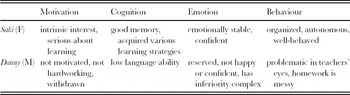
In order to identify the main learner types we need to use a range of possible sources of information about the specific class: classroom observation, interviews with teachers and students, focus group discussions with teachers and students and even questionnaires processed by cluster analysis. For example, in his Ph.D. research, Hamish Gillies (in preparation) invited all the six language teachers in the English Department of a Japanese secondary school to participate in a focus group discussion. At the meeting, he first drew five ‘stick figures’ on the whiteboard, numbering each one. Then, giving the first stick figure a random name (e.g. ‘Jane’), he invited the participants to ‘build’ a learner type for Jane, eliciting Jane's characteristics one by one. He guided the teachers’ responses so that the list of characteristics would contain cognitive, emotional and motivational components (e.g. motivated + low-proficiency + unconfident). Another graduate student, Letty Chan (in preparation), pursued a similar process and even added behavioural features to the motivation-cognition-emotion trio in the learner types produced by a focus group of English teacher in Hong Kong (Table 1 contains two examples of the emerging characters).
Example of emerging learner types in a teachers’ focus group discussion (Chan in preparation)

Step 2: Identifying students who are typical of the established prototypes and conducting interviews with them
Once the prototypes are established, our informants (teachers and/or students) are asked to identify actual students who fit each type – obviously, a prerequisite to this stage is that the teachers should know their students by name, which regrettably is often not the case. The identified students are then invited to take part in interviews that focus on factors shaping their L2 learning behaviour. What we are aiming for is a semi-structured interview (or a set of interviews) with each named student that produces a rich description of the particular language class and a detailed characterisation of the interviewee's place in it. In order to achieve this goal, Gillies, for example, conducted three interviews with each participant: (a) the first was a standard interview conducted in the L2 (English); (b) for the second interview he invited a female native-speaking co-interviewer, and the (female) participants were allowed to choose the language of the interview; (c) the third interview was conducted in the L1 (Japanese) by the co-interviewer alone. It was hoped that by varying the main conditions in this systematic manner the participants would be put at ease and encouraged to go beyond the usual level of disclosure so that no relevant and salient factor would be missed. In other words, the three-interview sequence was hoped to produce saturation (i.e. reach the point when additional data do not develop the target concepts further but simply reiterate previously revealed information) – in fact, it is quite unlikely that after such a rigorously designed interview sequence any attractor that played a powerful role in shaping the interviewee's learning process would not be mentioned at all.
Given the special interest in motivational aspects in Gillies’ study (in preparation), the target issues included factors such as:
• attitudes towards L2 learning; L2 learning habits and styles; self-appraisal of language aptitude and L2 proficiency;
• L2 learning goals and desires; vision of being future L2 speakers;
• external influences such as those of family and friends; career considerations;
• experience of learning L2 at school; various situation-specific ‘pushes’ and ‘pulls’; impact of L2 teacher(s).
Step 3: Identifying the most salient system components and the signature dynamic of each system
The third phase of the research process involves the analysis proper and can be divided into two main parts: (a) identifying the system's main components and (b) understanding the main underlying dynamic patterns – or the system's signature dynamics – that produced the observed system outcomes. With regard to the former, if we have conducted in-depth interviews (or interview sequences) with five or six well-selected members of a class, it is reasonable to believe that the data obtained offers a comprehensive overview of the particular class's functioning. Indeed, as mentioned above, it is unlikely that during such a thorough interview process any prominent components of the classroom system would not be mentioned: attractors are by definition salient – they affect system components precisely because they exert discernible influence – so it is a realistic expectation that the content analysis of the interviews should be able to generate a full list of the factors that affect the students’ learning behaviour in their class.
Once we have drawn up a list of the principal attractors within the qualitative model of the dynamics of the particular class, our final task is to describe the trajectory of learner development that culminated in their particular system outcomes. This is the phase where we create a proper model by going beyond merely identifying and listing the important learner/classroom factors: we want to establish how these factors interacted with each other in producing the unique trajectories associated with the established outcome pattern. That is, the specific signature dynamics we are after concern the essential movements and developments within the system that produced the class's unique learner types: we wish to understand why a particular student ended up in one attractor state (learner type) and not another. Accordingly, in a class where we initially establish five prevalent learner types we hope to produce five different signature dynamics, one associated with each type.
Admittedly, it may not be straightforward to elicit from retrospective learner self-reports answers to the complex question of how the overall system changed and evolved over time (particularly from the perspective of DST's decentralised causality), since a great deal of the data will most likely focus on individual components and trajectories (Mercer, personal communication, 17 June, 2011). Yet the fact that qualitative research has always involved drawing up holistic patterns and interactions from data segments and fragments offers some hope in this respect. With regard to reporting the emerging signature dynamics, I would expect that in many, if not most, cases they can be represented in a visually accessible manner by means of ‘data displays’ or ‘schematic representations’. The importance of such displays lies in the power of visual summaries; as Miles & Huberman (1994: 11) conclude, the ‘dictum “You are what you eat” might be transposed to “You know what you display”’.
4.2. Interpreting the signature dynamics
Once we have generated some meaningful signature dynamics we still have to decide how best to interpret these findings. The ultimate goal of any research – whether qualitative or quantitative – is to go beyond a merely descriptive analysis of the particular research sample or research site and offer results that have more general relevance; as Byrne (Reference Byrne, Byrne and Ragin2009: 1) rightly concludes, ‘the central project of any science is the elucidation of cases that extend beyond the unique specific instance’. In conventional scientific thinking, once we arrive at an explanation of a phenomenon, we use this explanation to make predictions in the form of testable hypotheses that are assumed to apply to other situations as well. The problem with dynamic systems research is, however, that in complex systems any expectations that are based on prior experiences have only limited predictive power. Larsen-Freeman & Cameron (2008a: 232) are right when they point out that ‘adopting a complex systems perspective brings about a separation of explanation and prediction’, and Byrne (Reference Byrne2002) also emphasises the fact that assuming in a dynamic system that what has happened in the past will happen again in the future is a ‘very chancy process if our retrodictive story is contextual and local’ (p. 25); in such cases what has happened before might not happen again because of changes to the context and in other system parameters. This is exactly why dynamic systems are called ‘dynamic’.
These abstract considerations are not unknown to practising teachers: they will have experienced on many occasions that something that works with one student or one class may not work with another, and a particular strategy may not even work with the same student or the same class on another occasion. We often hear the complaint that ‘I have successfully used this task/method with many classes in the past, but this particular class just would not respond to it’ – the reason for such comments lies in the dynamic nature of instructed SLA: depending on the constellation of all the relevant factors, what we do sometimes works and sometimes does not.
All is not bad news, though, for the dynamic systems researcher. Although in dynamic systems we cannot predict the behaviour of the system with certainty, the essence of the proposed RQM approach is that we can understand salient patterns – or essential underlying mechanisms – associated with typical system outcomes. And even though we cannot generalise such signature dynamics from one situation to another – or even from one time phase of a situation to the next – the identified patterns are fundamental enough to be useful in understanding the dynamics of a range of other situations. This is, in fact, the quintessence of qualitative research logic: although qualitative data are derived from non-representative samples and the results are therefore by definition non-generalisable, it is believed that regardless of this idiosyncratic nature, important qualitative findings will resonate in readers in an informative and helpful manner even when applied to other situations. The success of qualitative research has borne out the truth of this assumption: for example, the foundations of the whole discipline of applied linguistics were based on the results of the first wave of case studies of language learners in the 1970s and 1980s, and our current understanding of SLA has been profoundly shaped by the principles and models generated by qualitative studies over the past three decades (cf. Dörnyei Reference Dörnyei2007).
In spite of the undeniable success of qualitative research, I have always felt that the justification of the broader relevance of qualitative results in terms of some vague ‘resonance’ has been the least convincing aspect of qualitative methodology. In this respect, RQM offers an exceptionally principled approach to qualitative inquiry in that the aspects of system dynamics it seeks to grasp are so essential that they can reasonably be expected to be echoed in other situations as well. That is, RQM offers a research template for deriving essential dynamic moves from idiosyncratic situations in a systematic manner. It is an attempt to generate abstractions that help to describe how social systems work without reducing those systems to simplistic representations – it is therefore an attempt to detect and define higher-order patterns that are systematic within and across certain classes of complex systems.
Where does all this leave us with regard to interpreting our RQM findings? On the one hand, as with any qualitative results, there is no way we can claim that what we have found has definite bearings on contexts beyond the particular situation the data came from. On the other hand, we can claim that the results we have arrived at touch upon the core of the dynamic situation we examined. And as such, these results will probably be relevant, at least to some extent, to many other similar situations: the self-organisation capacity of dynamic systems would suggest that the emerging prototypes and outcome patterns – which formed the basis of RQM – are sufficiently robust to be recognisable in a variety of contexts. Indeed, as teachers, we do find similar learner types across a huge variety of learning environments, and more generally, there is wisdom in the saying that an experienced practitioner has ‘seen it all’. In many ways, retrodictive qualitative modelling utilises the basic emerging commonalities in the dynamically changing social world.
5. Conclusion
The starting point of this talk was the recognition that in complex dynamic systems change and evolution are often nonlinear, which makes the behaviour of such systems unpredictable and therefore nonresearchable. In view of the fact that most phenomena in the social world share characteristics with dynamic systems, researchers face the challenge of having to select their research targets and approaches so that their results reflect predictable aspects of system functioning. While this may appear a formidable task, I have tried to demonstrate in this presentation that there are ways of formulating research strategies that will allow for meaningful empirical research even in a dynamic systems framework. I introduced one such strategy in detail by outlining a three-step research template for an approach that I termed ‘retrodictive qualitative modelling’. This template aims to offer a systematic method of describing how the salient components within a dynamic system interact with each other to create unique development paths – or ‘signature dynamics’ – that lead to system-specific outcomes as opposed to other possible outcomes. While I do believe in the usefulness of this approach, we must exercise caution: RQM is still little more than an idea, since – as far as I know – no study following this approach has yet been published in any applied linguistics research journal. However, it is reassuring to find that a number of different scholars in the US, the UK and Holland have highlighted this approach as a promising way of making sense of the complex and dynamically changing world around us.
Acknowledgements
I would like to thank Sarah Mercer and four anonymous reviewers for their constructive comments and suggestions on how to make the discussion clearer and how to avoid inaccuracies and potential pitfalls.
Zoltán Dörnyei is Professor of Psycholinguistics at the School of English Studies, University of Nottingham. He has published widely on various aspects of second language acquisition and language learning motivation, and is the author of several books, including Research methods in applied linguistics: Quantitative, qualitative and mixed methodologies (2007, Oxford University Press), The psychology of second language acquisition (2009, Oxford University Press), Questionnaires in second language research (2nd edn, 2010, Routledge) and Teaching and researching motivation (2nd edn, with Ema Ushioda, 2011, Longman).