Research on Turner syndrome has typically focused on long-term management of the complications associated with Turner syndrome, but little work has analysed these patients in an inpatient setting. This study attempts to bridge this gap by analysing the major causes for hospitalisation in this unique population, compare the incidence of adverse outcomes to non-Turner syndrome patients, and ultimately provide hospitalists, especially cardiologists who are particularly relevant in Turner syndrome care, with more insight into the risks facing Turner syndrome patients in hospitals.
Turner syndrome is defined as a partial or complete absence of an X chromosome, also defined as monosomy X, in females; there is a wide range of genetic variation with mosaic, ring, and partial forms being common.Reference Zhong and Layman1 It has been previously reported that 3% of all pregnancies start with XO embryos, but 99% terminate spontaneously in the first trimester.Reference Urbach and Benvenisty2 One study found the fetal death rate for 45,X to be 75.0% compared to 10.5% in 46,XX/45,X mosaic embryos, indicating the high variability within Turner syndrome.Reference Hook3
Turner syndrome has a prevalence of 50 per 100,000 females and has many different clinical manifestations including congenital heart defects, infertility, failure to start puberty, short stature, certain learning disabilities, neurocognitive and behavioural/psychological features.Reference Gravholt4,Reference Stochholm, Juul, Juel, Naeraa and Højbjerg Gravholt5 More specifically, women with Turner syndrome are more likely to have congenital left-sided cardiac anomalies and develop cardiovascular abnormalities at some point during their lifetime. At least 50% of women with Turner syndrome develop hypertension, half of these by adolescence.Reference Ackermann and Bamba6 Left-sided cardiac anomalies, in addition to hypertension, increase the risk of aortic dissection and cardiac mortality.
While it is known that women with Turner syndrome experience a higher incidence of cardiac abnormalities including coarctation of the aorta, bicuspid aortic valve, hypertension, and hyperlipidaemia, to our knowledge major adverse outcomes following an inpatient hospitalisation have not been analysed in relation to Turner syndrome.Reference Mortensen, Andersen and Gravholt7,Reference Mortensen, Young and De Backer8 Current clinical Turner syndrome research is often limited by lack of sufficient sample size;Reference Cadoret, Parinaud and Bettiol9–Reference Son, Lee, Yoon and Choi11 however, epidemiological studies with hundreds and even thousands of Turner syndrome patients do exist (with data primarily from nationwide registries in Europe).Reference Viuff, Berglund, Juul, Andersen, Stochholm and Gravholt12–Reference Stochholm, Hjerrild, Mortensen, Juul, Frydenberg and Gravholt14 In the current study, we were uniquely positioned to utilise a large secondary inpatient hospitalisation dataset, thus providing a sufficient sample size to examine adverse outcomes in the population of women hospitalised with Turner syndrome.
Patients with Turner syndrome tend to have a high prevalence of multiple comorbidities, and thus require more specialised care. Specifically, these patients are more likely to experience abnormalities such as hypertension, dyslipidemia, diabetes mellitus, obesity, hyperinsulinemia, hyperuricemia.Reference Gravholt, Juul, Naeraa and Hansen15 The high-risk nature of women with Turner syndrome may be misunderstood or underappreciated in the hospital setting. The aim of this study was to compare the likelihood of adverse outcomes in patients with Turner syndrome and a similar group of matched controls. The following hypotheses were formulated: patients with Turner syndrome will have increased mortality and prolonged lengths of stay but decreased likelihood of being discharged home compared to matched controls, independent of the reason for hospitalisation. These effects will be amplified in patients with cardiac-related hospitalisation, since this tends to be the main area of concern in Turner syndrome and is true given what is previously known about mortality in the population.Reference Mortensen, Andersen and Gravholt7,Reference Mortensen, Young and De Backer8,Reference Schoemaker, Swerdlow, Higgins, Wright and Jacobs16
Methods
Study population
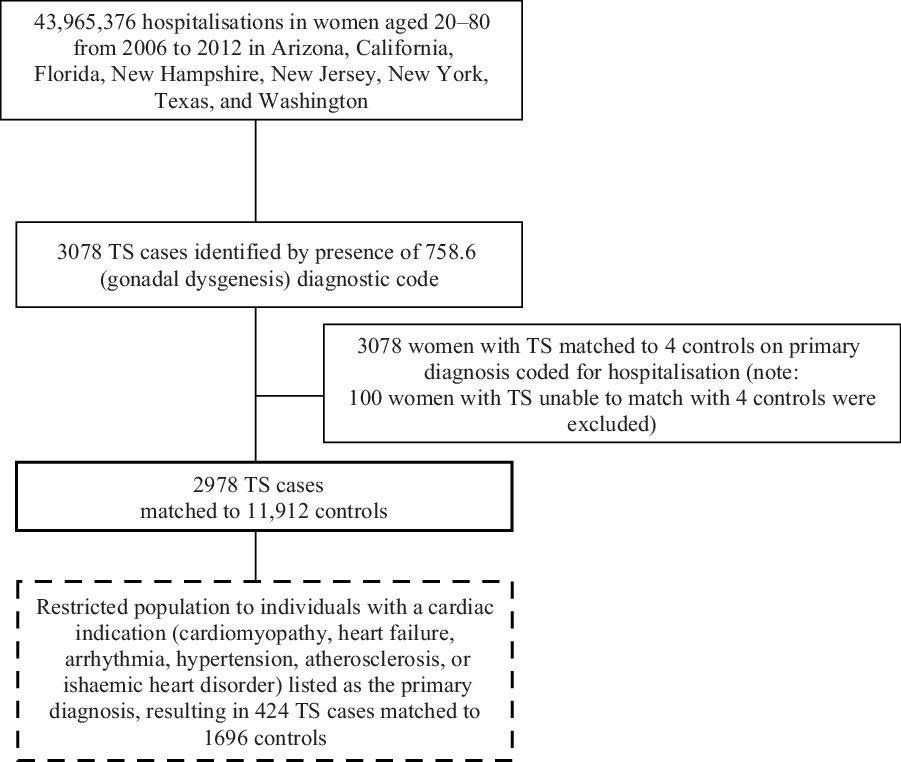
The original inpatient sample included 43,965,376 women aged 20–80 hospitalised from 2006 to 2012 in Arizona,17 California,18 Florida,17 New Hampshire,19 New Jersey,20 New York,21 Texas,22 and Washington.17 Turner syndrome patients were classified as those who had an International Classification of Diseases 9th Revision, Clinical Modification code 758.6 (gonadal dysgenesis) present in any of the first 15 diagnostic codes. After excluding hospitalisations related to the delivery of a newborn, there were 3078 women with Turner syndrome.
Each woman with Turner syndrome was matched to four controls based on the primary International Classification of Diseases 9th Revision, Clinical Modification diagnosis code. Controls were randomly selected from the pool of eligible patients in the inpatient hospitalisation dataset without replacement. Of note, 100 women from the original 3078 with Turner syndrome did not have a primary diagnosis code that matched 4 of the controls and subsequently were excluded from analyses. The final study population was comprised of 14,890 women (n = 2978 Turner syndrome, n = 11,912 non-Turner syndrome-matched controls).
A subset of the group of all Turner syndrome patients were admitted with a primary cardiac diagnosis (Turner syndrome cases n = 424; matched controls n = 1696) as a reason for hospitalisation. A primary cardiac diagnosis included an International Classification of Diseases 9th Revision, Clinical Modification code consistent with cardiomyopathy/heart failure (425, 428), arrhythmia, (426–427, 785.0–785.1, 794.3) hypertension (401–405), atherosclerosis (440), or ischaemic heart disorder (410–414).23 A flow chart of the methods used to select the study population can be found in Fig 1. The same multivariable conditional logistic regression analyses described below were completed on this subset separately to see how Turner syndrome patients with cardiac complications fare in comparison to non-Turner syndrome patients with the same complications.
Derivation of the study population of hospitalised women with and without Turner syndrome.
*Bolded box represents the main study population of women with TS and matched controls. Dashed line box represents the sub-analysis population restricted to individuals with and without TS hospitalised for a cardiac indication.

CHD/hypertension
Given the known increased prevalence of congenital heart abnormalities in Turner syndrome, it was important to consider how the presence of a congenital condition could impact outcomes. We repeated the multivariable conditional logistic regression models with the presence of a congenital heart condition as a predictor to see if this makes a difference in mortality, length of stay, or discharge to home. Codes used for CHD were selected based on published methodology with a goal to limit the population to structural CHD and exclude non-specific codes, which have been shown to be invalid.Reference Glidewell, Book and Raskind-Hood24 The codes used were 745.xx–747.xx, excluding congenital heart block (746.86), pulmonary arteriovenous malformation (747.32), absent/hypoplastic umbilical artery (747.5), other anomalies of the peripheral vascular system (747.6x), and other specified anomalies of the circulatory system (747.8x). We have included central vascular anomalies including pulmonary venous anomalies (747.41 and 747.42), anomalies of the aorta (747.1, 747.2), and anomalies of the pulmonary artery (747.3). We followed the same procedure of additional analyses for hypertension as well.
Human subjects
The Colorado Multiple Institutional Review Board granted this retrospective observational study exempt on the basis of being classified as non-human subjects research. There was no patient contact in this study and all data had been de-identified prior to our acquisition in accordance with Health Insurance Portability and Accountability Act and privacy laws.
Variable attainment
Covariates of interest (age, race/ethnicity, health insurance status, discharge disposition, total cost attributed to the hospitalisation, and length of stay) were determined using the documentation for each dataset. The Charlson comorbidity index was calculated for each individual, which assigns weights for a number of major comorbid conditions present amongst secondary diagnoses for a patient.Reference D’Hoore, Bouckaert and Tilquin25 The index score is the sum of assigned weights and represents a measure of the burden of comorbid disease.
Outcomes
The primary outcome of interest was all-cause mortality determined by discharge disposition status coded as “expired” in the inpatient hospitalisation dataset. The secondary outcomes of interest were increased length of stay and discharge to home. Patients were classified as having an increased length of stay when hospitalised for more than 4 days, the median length of stay in the study. The national average length of stay for hospitalisations in the United States of America is reported to be 4 days.Reference Weiss and Elixhauser26 As with mortality, discharge to home was determined by discharge disposition status for each individual.
Statistical analysis
Baseline characteristics of the study patients were compared by Turner syndrome status using a Student’s t-test to compare continuous variables and a χ2 test for categorical variables. Tests of normality were conducted using Kolmogorov–Smirnov and Shapiro–Wilks tests. Variables that were not normally distributed were log transformed for analyses or modelled using a non-parametric test such as the Wilcoxon Rank-Sum Test. Separate multivariable conditional logistic regression models were used to analyse the outcomes of interest (mortality, discharge disposition to home, and increased length of stay) between the Turner syndrome cases and primary diagnosis matched controls. All models were adjusted for age, race, health insurance status, and Charlson comorbidity index. The models were not adjusted for gender as the population was restricted to women. Public discharge data were harmonised and aggregated using MySQL Server version 5.6.24 (Oracle Corporation, Redwood Shores, CA, USA). Statistical analyses were performed with SAS version 9.4 (SAS Institute Inc., Cary, NC, USA).
Results
As shown in Fig 1, 3078 (non-delivery related) hospitalisations of women with Turner syndrome were initially found from the dataset including all hospitalisations of women (43,965,376). Of these, 2978 could be matched to controls based on the primary diagnosis code. Thus, (non-delivery related) Turner syndrome cases made up about 70 per million hospitalisations of women.
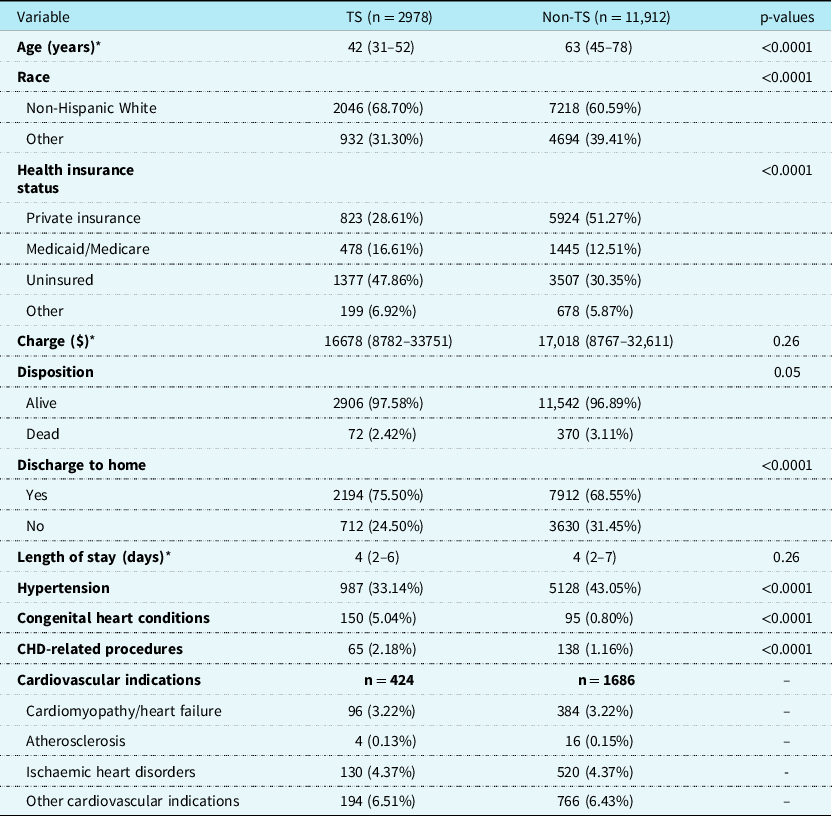
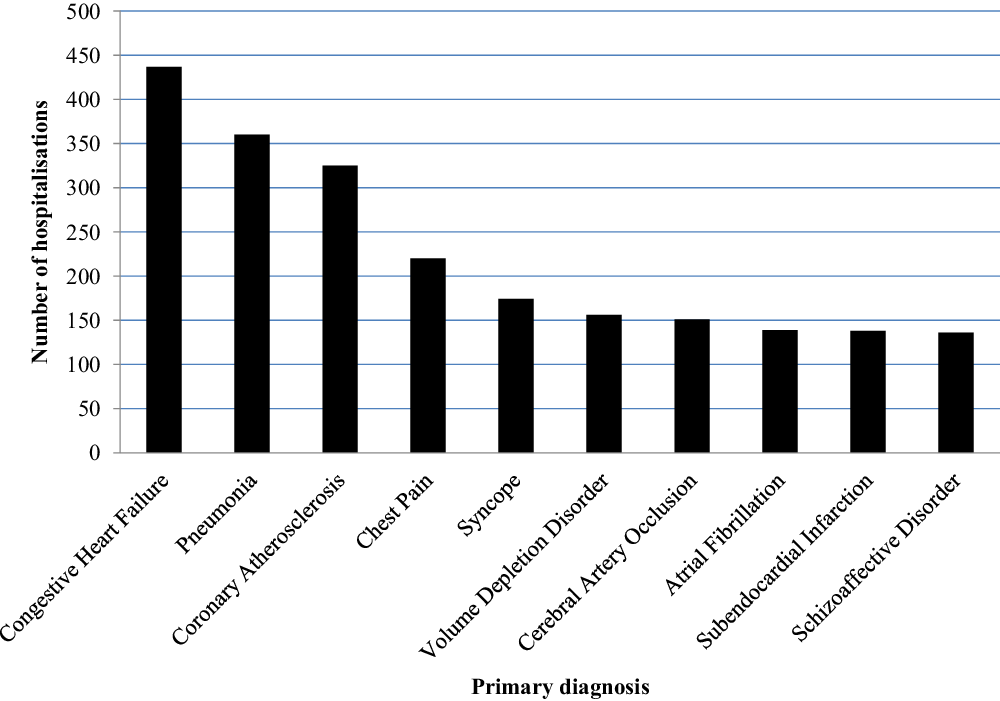
Study population characteristics are shown in Table 1. Women diagnosed with Turner syndrome were younger, more likely to be non-Hispanic White race and be uninsured or underinsured compared to non-Turner syndrome patients. Figure 2 displays the most common hospital diagnostic codes received for women with Turner syndrome. The three most prevalent diagnoses were congestive heart failure, pneumonia, and coronary atherosclerosis. Women with Turner syndrome were significantly more likely to have CHD as well as cardiac-related procedures, but less likely to have hypertension in unadjusted analyses. Overall, women with Turner syndrome were significantly more likely to be discharged to home, although there was no significant difference in absolute mortality rates. There was no difference observed in the total cost of hospitalisation and the average length of stay between the two groups.
Baseline characteristics of the study population

* Data are presented as median (interquartile range). Otherwise, data are presented as number (%).
Top 10 diagnoses reported in the population of women hospitalised with TS.

All-cause mortality
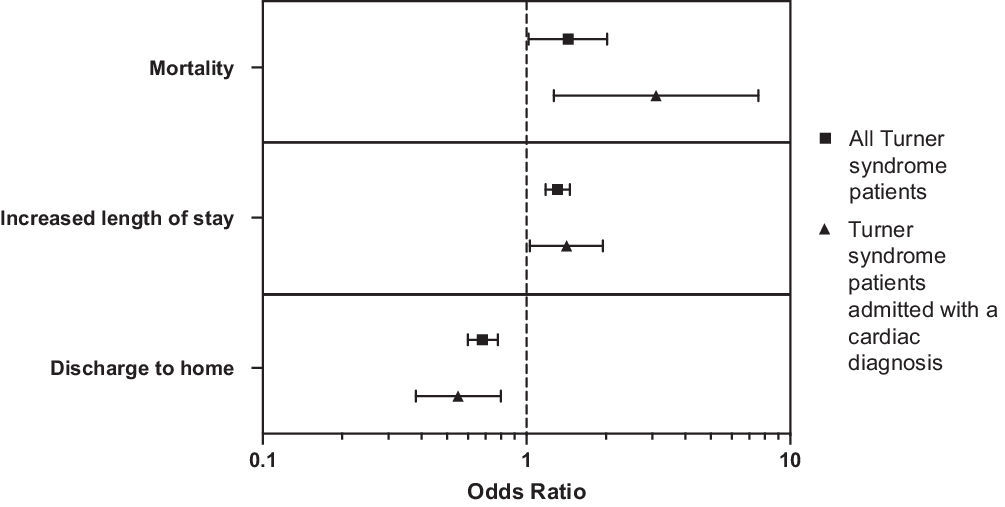
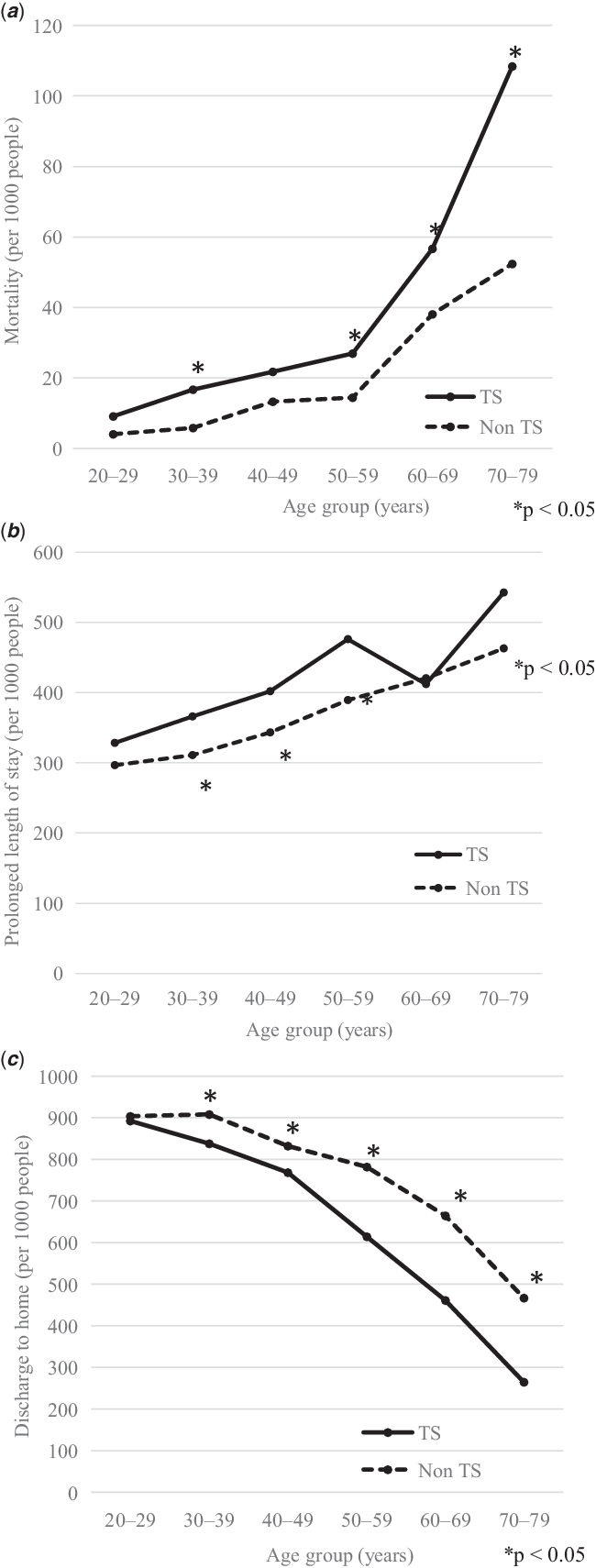
As shown in Fig 3, patients with Turner syndrome had a 44% increased risk of all-cause mortality, compared to matched controls, adjusting for age, race, health insurance group, and Charlson comorbidity index (odds ratio 1.44, 95% confidence interval 1.02–2.02, p = 0.04). This risk was amplified when subsetting the cohort to Turner syndrome patients hospitalised for a cardiovascular indication (odds ratio 3.10, 95% confidence interval 1.27–7.57, p = 0.01). Figure 4a demonstrates the relationship between age and mortality risk in women with and without Turner syndrome. In both the Turner syndrome and non-Turner syndrome patients, mortality increases with age. However, the rate of change in mortality risk increases more dramatically in Turner syndrome patients after the age of 50 years. Mortality was significantly higher in the Turner syndrome women as compared to non-Turner syndrome women in the age groups 30–39, 50–59, 60–69, and 70–79 years (p < 0.05).
Multivariable logistic regression results of all-cause mortality, prolonged length of stay, and discharge to home in patients with TS compared to non-TS-matched controls.
Odds ratios and 95% confidence interval comparing TS women to non-TS-matched controls. All models were adjusted for age, race, insurance status, and Charlson comorbidity index.

Outcomes compared in TS and non-TS women in different age groups. (a) Mortality compared in TS and non-TS women in different age groups. (b) Prolonged length of stay in TS and non-TS women in different age groups. (c) Discharge to home in TS and non-TS women in different age groups.
Asterisks indicate that the difference between the two groups (TS and non-TS) for that age group was statistically significant (p < 0.05).

Increased length of stay
At an initial glance, there does not seem to be a discrepancy in the length of stay between Turner syndrome patients and controls (Table 1). However, upon adjustment for previously discussed variables including age, race, insurance status, and Charlson comorbidity index, we find that patients with Turner syndrome had an increased likelihood of prolonged length of stay compared to non-Turner syndrome controls hospitalised with the same primary diagnosis (Fig 3). Specifically, women with Turner syndrome were 31% (odds ratio 1.31, 95% confidence interval 1.18–1.46, p = 0.03) more likely to experience an increased length of stay (>4 days) compared to their non-Turner syndrome counterparts. When limiting the study population to the cohort of Turner syndrome patients hospitalised for a cardiovascular indication, the risk of a prolonged hospital stay was 42% higher in those with Turner syndrome (odds ratio 1.42, 95% confidence interval 1.03–1.95, p = 0.03) compared to matched controls. Figure 4b shows that prolonged length of stays increased with increasing age in both women with and without Turner syndrome. On average, more patients with Turner syndrome had increased length of stays at ages 30–39, 40–49, and 50–59 years compared to non-Turner syndrome controls (p < 0.05).
Discharge disposition to home
Table 1 shows that more women with Turner syndrome were discharged to home than controls, however, multivariable logistic regression with critical adjustments revealed that women with Turner syndrome were 32% (odds ratio 0.68, 95% confidence interval 0.60–0.78, p < 0.0001) less likely to be discharged home after hospitalisation compared to non-Turner syndrome controls (Fig 3). Turner syndrome patients were significantly less likely to be discharged to home as compared to their non-Turner syndrome counterparts at all ages greater than 30 years (p < 0.05). After restricting the cohort to Turner syndrome patients hospitalised for a cardiovascular indication, women with Turner syndrome were 45% (odds ratio 0.55, 95% confidence interval 0.38–0.80, p = 0.001) less likely to be discharged home compared to their non-Turner syndrome counterparts hospitalised for the same cardiac indication. Figure 4c displays the prevalence of being discharged to home by age group for both patients with and without Turner syndrome. Overall, the occurrence of being discharged to home post-hospitalisation decreased with increasing age in both women with and without Turner syndrome.
CHD/hypertension
When repeating the models with an additional predictor indicating whether the patient had CHD, we did not find many significant differences. Risk of mortality (p = 0.83) and discharge to home (p = 0.90) did not change depending on CHD status. Patients with CHD were, however, 53% (odds ratio: 1.53, 95% CI 1.18–2.00, p = 0.002) more likely to have prolonged length of stay.
Surprisingly, we found hypertension to have a negative effect on mortality (odds ratio: 0.54, 95% CI 0.44–0.66, p < 0.001) and prolonged length of stay (odds ratio: 0.88, 95% CI 0.82–0.95, p = 0.001) while positively impacting discharge to home (odds ratio: 1.17, 95% CI 1.08–1.26, p < 0.001).
Discussion
While certain aspects of Turner syndrome care have improved over the last few years, investigations into inpatient care of women with Turner syndrome are still relatively rare.27 Description of differences in hospital outcomes between Turner syndrome and non-Turner syndrome patients is necessary to understand optimal management of this complicated cohort of patients. We found that patients with Turner syndrome have a higher likelihood of inpatient mortality, prolonged length of stay, and were less likely to be discharged home during an inpatient hospitalisation compared to patients who do not have Turner syndrome, but who were hospitalised with the same primary diagnosis. The findings reinforce previous observations that women with Turner syndrome have worse hospital outcomes than those without Turner syndrome across a range of diagnoses and ages, and they bring to attention the drastically poorer outcomes in Turner syndrome patients coming to the hospital with a cardiac diagnosis.
While generally Turner syndrome outcomes research is scarce, our work is supported by previous literature. In a prospective study of 156 female patients with Turner syndrome who had been followed up for an average of 17 years, there were 15 deaths, of which 5 were from a cohort with congenital heart anomalies. The remaining 10 deaths represented 3 times the expected mortality, calculated from the non-Turner syndrome female population.Reference Price, Clayton, Collyer, De Mey and Wilson28 Thus, our similar results found in a hospital setting are not surprising. In a study conducted in Great Britain by Schoemaker et al, mortality was significantly raised in Turner syndrome for nearly all major causes of death. This parallels our result that despite the reason for indication, Turner syndrome patients tend to have increased mortality across the board.
Schoemaker et al’s study also found that circulatory disease accounted for 41% of excess mortality in Turner syndrome while Fuchs et al reported 8% early mortality associated with cardiovascular surgery in these patients, aligning with our increased effect seen in the cardiovascular cohort.Reference Schoemaker, Swerdlow, Higgins, Wright and Jacobs16,Reference Fuchs, Attenhofer Jost and Said29 Previous studies surrounding cardiovascular surgery in Turner syndrome, however, suggest few discrepancies in length of stay and mortality compared to non-Turner syndrome patients. These studies were geared towards CHD-related procedures in children, and thus are not necessarily in contradiction to our finding of poorer outcomes in adult Turner syndrome patients with heart failure/cardiomyopathy, arrhythmia, and hypertension.Reference Madriago, Nguyen and McFerson30
When assessing non-fatal adverse outcomes, we found that women with Turner syndrome were 31% more likely to experience a length of stay greater than 4 days and 32% less likely to be discharged to home as compared to women without Turner syndrome hospitalised for the same primary diagnosis. These results speak to the importance of adjusting for age in our models, since the Turner syndrome group initially seemed to not have higher rates of these outcomes (since they were younger and less likely to experience these outcomes in the first place.) As observed with mortality, when restricting the population to patients hospitalised for a cardiovascular indication and matched controls, the differential risk between Turner syndrome and non-Turner syndrome women of both prolonged hospital stay and discharge to home was exacerbated. The trend towards comparatively worse outcomes in Turner syndrome was more pronounced with increasing age.
Turner syndrome patients were significantly younger than the non-Turner syndrome patients when hospitalised for the same underlying condition, highlighting patients with Turner syndrome are experiencing complications requiring hospitalisation prior to their non-Turner syndrome counterparts. This is in accordance with previously reported increased hospitalisation and health care utilisation in Turner syndrome.Reference Cunniff, Hassed, Hendon and Rickert31 This finding may contribute to the reduced life expectancy reported in previous studies.Reference Elsheikh, Dunger, Conway and Wass32
Turner syndrome patients were also much more likely to be underinsured or uninsured, which coincides with existing literature reports of lower income in young adulthood amongst Turner syndrome patients.Reference Stochholm, Hjerrild, Mortensen, Juul, Frydenberg and Gravholt14 Insurance status was adjusted for in the models, but the finding regarding differences in status in combination with what’s known about potentially lower income in Turner syndrome may contribute to worse outcomes in hospitalisations.
The underlying aetiology of these adverse outcomes is currently unknown. Prior research has demonstrated that women with Turner syndrome have a higher burden of cardiac risk factors including hypertension, atherosclerosis, aortic aneurysms, bicuspid aortic valve, and aortic coarctation.33,34 Turner syndrome women with serious cardiovascular events often had a delay in accessing care as a result of delayed diagnosis. It is, therefore, imperative for women with Turner syndrome and their providers to understand there is a higher risk for mortality and other negative outcomes,Reference Stochholm, Juul, Juel, Naeraa and Højbjerg Gravholt5 although it cannot be determined definitively whether these risk factors contribute to the increased risk of inpatient mortality and prolonged length of stay observed in the current study. Importantly, these risks are not necessarily significantly impacted by the presence of a congenital cardiac condition, indicating all patients with Turner syndrome should be treated with additional precaution as opposed to just those with perceived increased risk.
The study findings presented must be interpreted in light of potential limitations. The data were derived from an inpatient hospitalisation dataset without validation, and therefore subject to data errors and misclassification of disease phenotypes as defined by the presence or absence of an International Classification of Diseases 9th Revision, Clinical Modification diagnostic code. Additionally, this study was limited to women who received a Turner syndrome diagnosis code during the hospitalisation and the potential exists for Turner syndrome not to get coded on a patient admitted with an unrelated condition. Similarly, it is also possible that women with Turner syndrome, and the physicians caring for them, are not aware of their diagnosis, especially when the women present without classical features as is often true in the case of mosaicism. In this study’s total population cohort of 43.9 million hospitalisations, 3078 were women with TS. This is a prevalence of 7 per 100,000, much less than the reported birth prevalence of 50 per 100,000, suggesting underdiagnosis and/or undercoding is present although reduced life expectancy may also be impacting the TS population.
Conversely, it could also be the case that some of the women identified with Turner syndrome are misclassified as such, since we do not have karyotypic analysis for the patients. Furthermore, the International Classification of Diseases 9th Revision, Clinical Modification code used to find Turner syndrome cases (758.6) applies more broadly to gonadal dysgenesis, which includes ovarian dysgenesis as well as Turner syndrome and could lead to the inclusion of unwanted cases in this study. Finally, determining causal relationships for the observed outcomes in patients with Turner syndrome was not possible using the current dataset and the limited number of factors present in an electronic health record dataset. For example, there are a number of factors – endocrine (related to oestrogen) and cardiovascular – that could contribute to the outcomes found in this study, but they cannot all be assessed with the data analysed here.Reference Bondy, Ceniceros, Lange and Bakalov35 While socio-economic status may impact mortality in Turner syndrome, relevant data to assess its impact here was not available, and therefore it was not included as a covariate; health insurance status, however, was assessed and analysed for discrepancies.Reference Stochholm, Hjerrild, Mortensen, Juul, Frydenberg and Gravholt14
Strengths of our study include the use of a large, nationally representative (across 8 states) dataset, yielding a total sample size of 2978 patients with Turner syndrome; a rare condition. The case–control matching on primary diagnosis and adjustments for age, race, and insurance status allows us to isolate the impact of Turner syndrome in hospitalisation outcomes of patients who are otherwise similar to their non-Turner syndrome counterparts. The analysis of a large number of diverse Turner syndrome patients in a hospital setting is novel and has meaningful implications for those involved in the care of women with Turner syndrome.
Future directions
Additional research is warranted to understand the outcomes of medical care and intervention in Turner syndrome patients. Information on medication use in this sample would allow for better understanding, more specifically the impact of hormonal therapies on long-term outcomes is another area of future investigation. Earlier and more aggressive treatment of aneurysms, coarctations, hypertension, and hyperlipidaemia may also impact long-term outcomes, and we expect the implementation of comprehensive clinical practice guidelines to also influence outcomes. Furthermore, studying outcomes from procedures, specifically related to CHD, would be a beneficial application of the available data beyond the scope of this study.
The number of comorbid medical conditions that women with Turner syndrome can develop may each factor into an individual’s overall health and quality of life. Additional work is needed to assess the impact of interventions aimed at preventing the development of comorbidities in women with Turner syndrome. In this study, we did not specifically look into those patients who had a cardiac diagnosis amongst their 2nd–15th diagnostic codes, but analysing outcomes in this group could be an interesting topic for future research. A more detailed analysis of the impact of monosomy X mosaicism (genotype and phenotype) may also be of value for risk stratification in subsequent analyses.
Conclusion
Many of the comorbidities or complications associated with Turner syndrome are chronic requiring frequent medical care, and the severity of these conditions, as well as their impact on longevity, vary significantly. Therefore, it is imperative to understand major factors associated with poor outcomes in an inpatient setting amongst individuals with Turner syndrome to make the Turner syndrome community, and the broader medical community, aware of the most pressing concerns to a woman hospitalised with Turner syndrome.
Women with Turner syndrome are hospitalised younger, with more severe conditions, and with less insurance than women without Turner syndrome. Women with Turner syndrome who are hospitalised have a higher likelihood of inpatient mortality, prolonged length of stay, and a lower likelihood of being discharged home compared to women without Turner syndrome. With improved diagnosis and management of CHD and other medical conditions associated with Turner syndrome, the population of adult women with Turner syndrome is expected to grow. In order to meet the health needs of this population, it is important for the medical community, especially those most likely to encounter these patients such as cardiologists, to be aware of these potential adverse outcomes when treating women with Turner syndrome and to be prepared to provide optimal care. This study builds on the foundation of knowledge to provide this level of care.
Acknowledgements
None.
Financial support
This research received no specific grant from any funding agency, commercial, or not-for-profit sectors.
Conflicts of interest
None.
Ethical standards
The authors assert that all procedures contributing to this work comply with the ethical standards of the relevant national guidelines on human experimentation and with the Helsinki Declaration of 1975, as revised in 2008. The Colorado Multiple Institutional Review Board granted this retrospective observational study exempt on the basis of being classified as non-human subjects research. There was no patient contact in this study and all data had been de-identified prior to our acquisition in accordance with Health Insurance Portability and Accountability Act and privacy laws.
Author contributions
Isani Singh contributions included study design, data analysis, and authorship of the manuscript. Amber Khanna’s contributions included study design and review of the manuscript. Lindsey Duca analysed data and reviewed the manuscript. David Kao contributed the dataset and reviewed the manuscript. Kathryn Chatfield contributed to the manuscript with respect to the genetic and medical characteristics of Turner syndrome. Dr Amber Khanna is the guarantor of this work and, as such, had full access to all the data in the study and takes responsibility for the integrity of the data and the accuracy of the data analysis.
Access to data
Data accessed was provided by David Kao and was viewed by Singh, Duca, Khanna, and Kao.
Previous presentation
The abstract was previously presented at the American College of Cardiology’s 66th National Conference in Washington, DC, USA.