Aortic arch hypoplasia (AAH) with complex coarctation of the aorta (CoA) represents a technical challenge for cardiac surgeons necessitating intervention at early days of life. Reference Rakhra, Lee and Iyengar1,Reference Hager, Kanz, Kaemmerer, Schreiber and Hess2 Multiple operative techniques have been utilised to reconstruct the diseased aortic arch. However, the optimal surgical management is still debatable varying by the complexity of the diseased arch and presence of concomitant pathologies that needs intervention. Reference Ungerleider, Pasquali and Welke3 Nowadays, AAH reconstruction using pulmonary homograft patch with coarctation excision is the preferred technique for repair. Reference Gray, Wells, Starnes and Kumar4,Reference Lewis, Johansson Ramgren, Hallbergson, Liuba, Sjöberg and Malm5 This procedure is performed on cardiopulmonary bypass (CPB) under deep hypothermic circulatory arrest with antegrade cerebral perfusion (ACP). Reference Gray, Wells, Starnes and Kumar4,Reference Lewis, Johansson Ramgren, Hallbergson, Liuba, Sjöberg and Malm5 Recurrent aortic arch obstruction and neurological adverse events are common complications following AAH reconstruction. Reference Rakhra, Lee and Iyengar1,Reference Hager, Kanz, Kaemmerer, Schreiber and Hess2,Reference Pedersen, Munk and Andersen6
The aim of our study is to report our experience on AAH reconstruction in our institute addressing our results and the main complications after this complex procedure.
Material and methods
Study design and patient population
Retrospective data collection was performed for all patients who underwent aortic arch and coarctation repair via sternotomy from November 2015 to August 2020 at our institute with exclusion of patients with isolated coarctation without hypoplastic aortic arch, hypoplastic left heart syndrome and patients with concomitant complex congenital heart anomaly with the hypoplastic aortic arch such as transposition of great arteries (TGAs), double outlet right ventricle, Shone syndrome and complete atrioventricular septal defect (AVSD). Inclusion criteria included all the patients who had coarctation and aortic arch patch reconstruction via median sternotomy, either isolated or combined with other simple congenital cardiac procedures such as atrial septal defect (ASD), ventricular septal defect (VSD), patent ductus arteriosus (PDA), partial AVSD and partial anomalous pulmonary venous drainage (PAPVD) repair.
All continuous parameters were given as median and interquartile range (IQR). Categorical data were summarised as frequencies and percentages.
Primary outcomes were 30 days mortality, in-hospital mortality, incidence of re-intervention on the repaired aortic arch and 5 years survival. Secondary outcomes were cerebral stroke, recurrent laryngeal nerve (RLN) injury, chylothorax, need for extracorporeal membrane oxygenation (ECMO), re-intubation and sternal wound infection. Re-intervention was defined as either reoperation or intervention in catheter lab due to complications in the area of aortic arch reconstruction.
Service arrangements
Alder Hey Children’s Hospital is the major tertiary paediatric cardiac surgery unit in the NorthWest of England serving about 7.3 million people. Patients are referred from neonatal and paediatric units from the North West region of England, North Wales and Isle of Man. AAH is diagnosed using selective criteria through the echocardiogram such as 1 mm + kg body weight in neonates and Z score in infants and children. At our unit and since 2015, we have standardised our practice by performing CT scan to unveil those cases of borderline AAH patients which pose a diagnostic dilemma. If the arch stenosis is involving proximal arch and/or mid arch with Z score more than −4 or in case of neonates, if the diameter in these two segments of the arch is less than (body weight in kg + 1 mm), we tend to repair via median sternotomy with pulmonary homograft patch. All patients were discussed at the Joint Cardiology and Cardiac surgery multi-disciplinary team (MDT) meeting, which includes cardiac surgeons, cardiologists, interventional and imaging radiologists, anaesthetists and paediatric intensivists. After the decision making in the MDT, the infants are scheduled for operations according to their urgency status.
Surgical technique
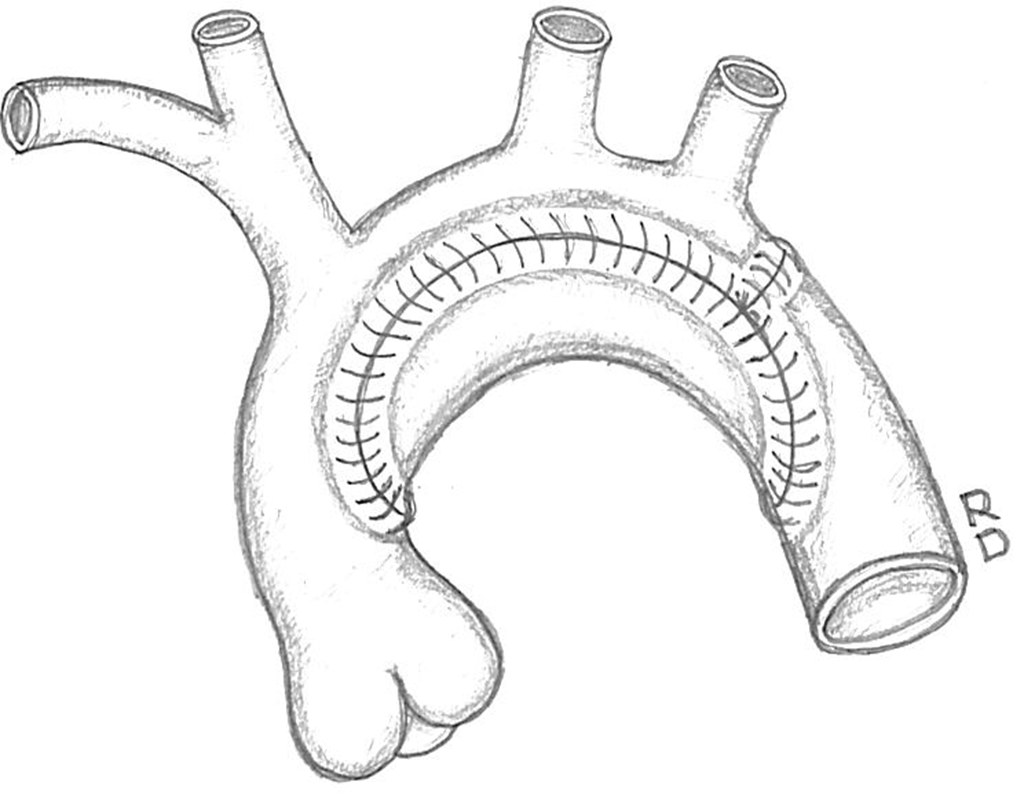
Our surgical technique includes a midline sternotomy with CPB. Bypass technique is established using single stage right atrial or bicaval venous and arterial cannulation inserted in the ascending aorta just below the origin of the innominate artery. The arch and descending aorta are mobilised distally well beyond the area of coarctation. The PDA is then ligated and divided. Moderate to deep hypothermia (20–24 °C) is initiated, cold blood cardioplegia is given and cardiac arrest is achieved. The cooling policy is surgeon’s preference and also pre-operatively complexity driven. The aortic cannula is adjusted by directing its tip into the innominate artery in order to start the RCP with tourniquets or small neuro clips applied to all the head vessels. We used polytetrafluoroethylene graft anastomosed to the innominate artery for RCP due to difficult cannulation in seven patients (9.2%). Continuous monitoring of the brain oxygenation during RCP is done by using bilateral near-infrared spectroscopy. We use pH-stat strategy on the CPB with perfusion flow about 20–30% of the calculated full flow during RCP. The flow was continuously adjusted depending on blood pressure, cerebral oxygen saturation level and lactate level. The aortic cross clamp position was below mid-ascending aorta. The PDA and the adjacent juxta ductal aorta with coarctation are completely excised. The inferior aspect of the arch is incised extending all the way into the proximal ascending aorta proximal to the origin of the innominate artery. The incision is carried down the descending aorta distal to the coarctation site by 1–1.5 cm. An end-to-end posterior anastomosis is performed between the descending aorta and the distal arch. A patch of pulmonary homograft is prepared and used for aortic arch reconstruction starting the anastomosis from the incision in the descending aorta running upwards using Prolene 6/0 or 7/0 sutures aiming to preserve the curvature of the aorta in order to avoid any residual gradient over the aortic arch in the future as shown in Figure 1. After finishing the anastomosis and checking the suture line carefully, gradual rewarming is done. It is worth mentioning that additional procedures that are done during cooling or rewarming such as VSD closure and ASD closure prolong the CPB time and cross clamp time. We also tend to the chest open policy especially in neonates and also in case of additional pulmonary artery banding (PAB) in order to tighten or relax the PAB on post-operative day 1 or 2 in ICU which prolongs the ICU stay, but prevents re-operation for re-adjustment of the PAB.
Aortic arch repair.

Statistical analysis
Data were analysed using the Statistical Package for Social Science (SPSS) version 26.0 for Windows. 7 Median and inter-quartile range were used to express quantitative data while qualitative data were presented by frequencies and percentages.
Univariable and multi-variable regression analyses were used to identify predictors of mortality among patients who underwent AAH repair. Significant variables in univariable logistic regression were entered in multi-variable backward LR logistic regression model. Survival analysis was used and the survival time in months was assessed by using Kaplan–Meier curve. The event of interest was the occurrence of mortality. Also, freedom from re-intervention curve was done and event of interest was the need for re-intervention. The level of significance was considered at p value <0.05.
Results
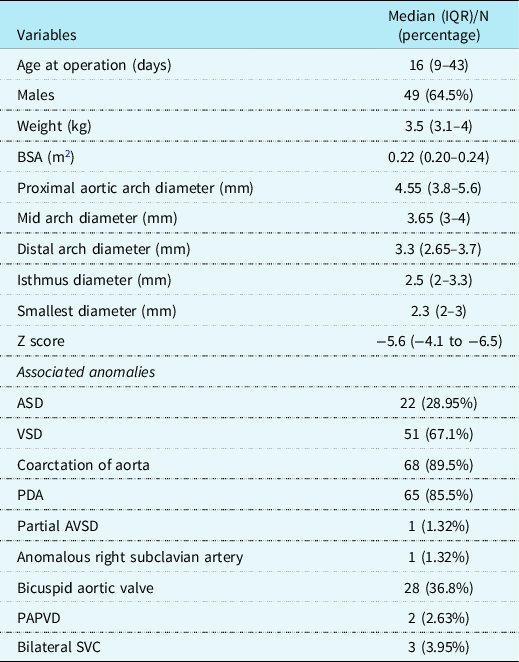
Our patient cohort included 76 patients. Antenatal diagnosis was done in 32 infants (42.1%). Forty-nine patients were males (64.5%). Median age at operation was 16 days and interquartile range (IQR 9–43.25 days). Median weight was 3.5 kg (IQR 3.10–4 kg). Pre-operative data is listed in Table 1.
Pre-operative data

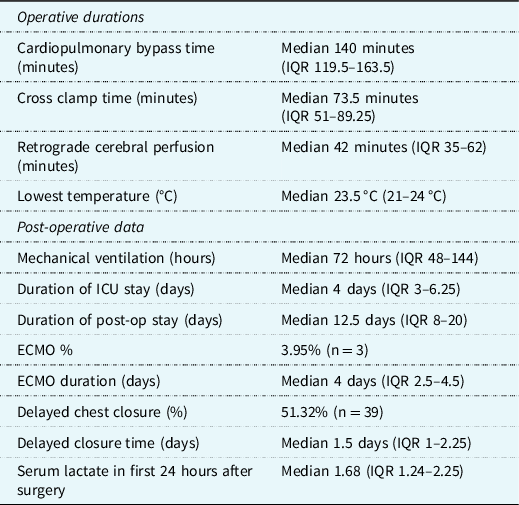
The operative data are summarised in Table 2. All patients were operated on via median sternotomy on CPB with selective antegrade cerebral perfusion with moderate to deep hypothermia. Median CPB time and cross clamp time were 140 minutes (IQR 119.5–163.5 minutes) and 73.5 minutes (IQR 51–89.25 minutes), respectively. Median RCP time was 42 minutes (IQR 35–62 minutes). Median lowest temperature on CPB was 23.5 °C (IQR 21–24 °C). Three patients (3.95%) needed ECMO in the ICU with median of 4 days on ECMO (IQR 2.5–4.5 days). Median mechanical ventilation hours were 72 hours (IQR 48–144 hours). The median lactate level in the first 24 hours after surgery was 1.69 (IQR 1.28–2.25). The median durations of ICU stay and post-operative hospital stay were 4 days (IQR 3–6.25 days) and 12.5 days (IQR 8–20 days), respectively. Delayed sternal closure was observed in 39 patients (51.3%) and chest closure of these cases was performed at a median of 1.5 days (IQR 1–2.25 days) post-operatively. Our unit policy is to keep the chest opened electively in most of the neonates after complex cardiac surgery to allow relieving of the cardiac oedema and to guarantee haemodynamic stability in the first few hours following surgery. Also, in the case of PAB in conjunction with aortic arch repair, so that the pulmonary artery band can be adjusted if necessary, in the first few days after surgery. All the identified post-operative data are summarised in Table 2.
Perioperative data

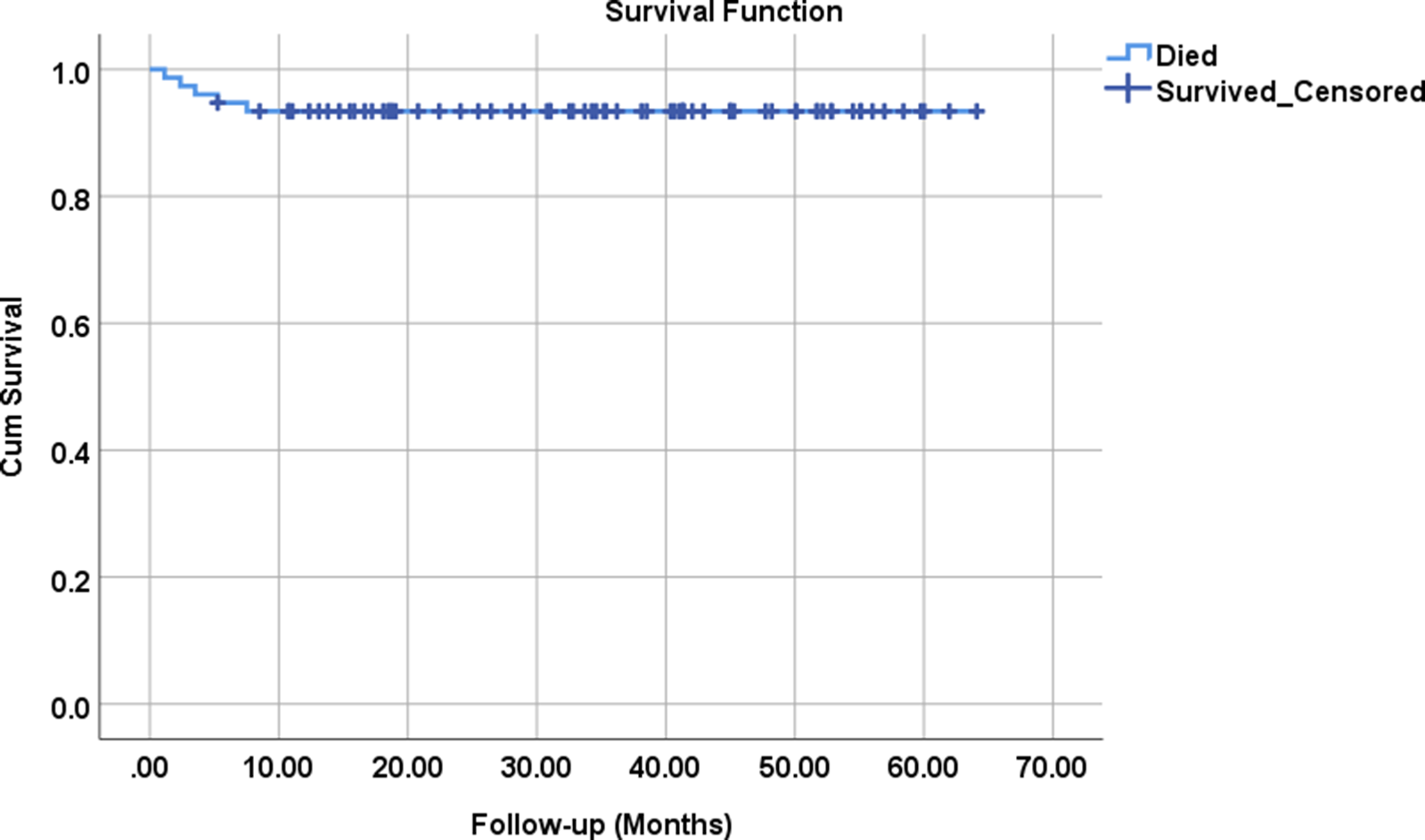
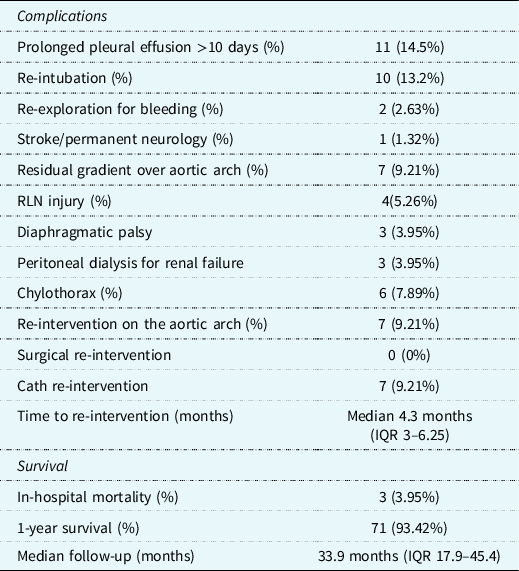
Four patients (5.26%) had RLN injury. Stroke occurred in one patient (1.32%). Three patients developed renal failure that needed peritoneal dialysis (3.95%). Significant bleeding that needed re-exploration happened in 2.63% of patients (n = 2). Eleven patients (14.5%) had prolonged pleural effusion >10 days, while chylothorax was noted in six patients (7.9%) that was conservatively treated with dietary management. Diaphragmatic plication was done in three patients (3.95%) because of diaphragmatic palsy. Regarding re-intubation, we had ten patients (13.2%) who needed re-intubation for different reasons. Six patients required urgent re-intubation in ICU because of increased work of breathing and significant respiratory distress. Two of them developed respiratory tract infection which improved later with antibiotics and chest physiotherapy, while two patients were found to have tracheo-bronchomalacia, one patient had severe stridor and one patient had diaphragmatic palsy that needed diaphragmatic plication. Four patients required elective re-intubation for chest drain insertion in two patients due to pleural effusion, while one patient required cardiac catheterisation to measure the pulmonary pressures and one patient for abdominal operation because of other abdominal comorbidities. There was no 30 days mortality. The in-hospital mortality was 3.95% (n = 3) which was after 30 days of operation. The 5-year survival rate was 93.42% (n = 71). Full list of complications and survival rates are summarised in Table 3. Figure 2 shows Kaplan–Meier curve for overall survival rate during the period of follow-up.
Kaplan–Meier curve for survival for patients undergoing aortic arch hypoplasia repair.

Complications and survival

The first in-hospital mortality was for a 5-month-old baby who had AAH repair, VSD closure, ASD closure and PDA ligation. She had multiple other comorbidities including hypoplastic left lung, tracheobronchomalacia, pulmonary hypertension, duodenal atresia, malrotation and duodenal perforation which required multiple gastrointestinal operations and passed away after 5 months of hospital stay. The second mortality was a 22-day old baby with AAH, ASD, two muscular VSDs and PDA. He had AAH repair, PDA ligation and PA banding. His hospital stay was complicated by thrombosis in iliac and femoral veins and later he developed necrotising enterocolitis which was managed conservatively and recovered. While on the ward, he had a cardiac arrest and did not respond to CPR and passed away 73 days after operation. The last mortality was for a 24-day old baby who had AAH repair, VSD repair and PDA ligation. He had a cardiac arrest the following day after surgery which required veno-arterial ECMO via central cannulation for 5 days. A CT angiogram showed discrete narrowing in the ascending aorta, for which, he had a patch enlargement. He failed three trials of ECMO weaning and developed Candida mediastinitis and passed away on day 36 post-operatively.
Regarding the other two patients who required ECMO, they were 5 days and 8 days old babies who failed to come off CPB because of low cardiac output despite being on high inotropic supports and went out of theatre on ECMO via central cannulation. Then we managed to wean the patients from ECMO after 1 and 4 days and both patients were discharged home after 20 and 27 days, respectively.
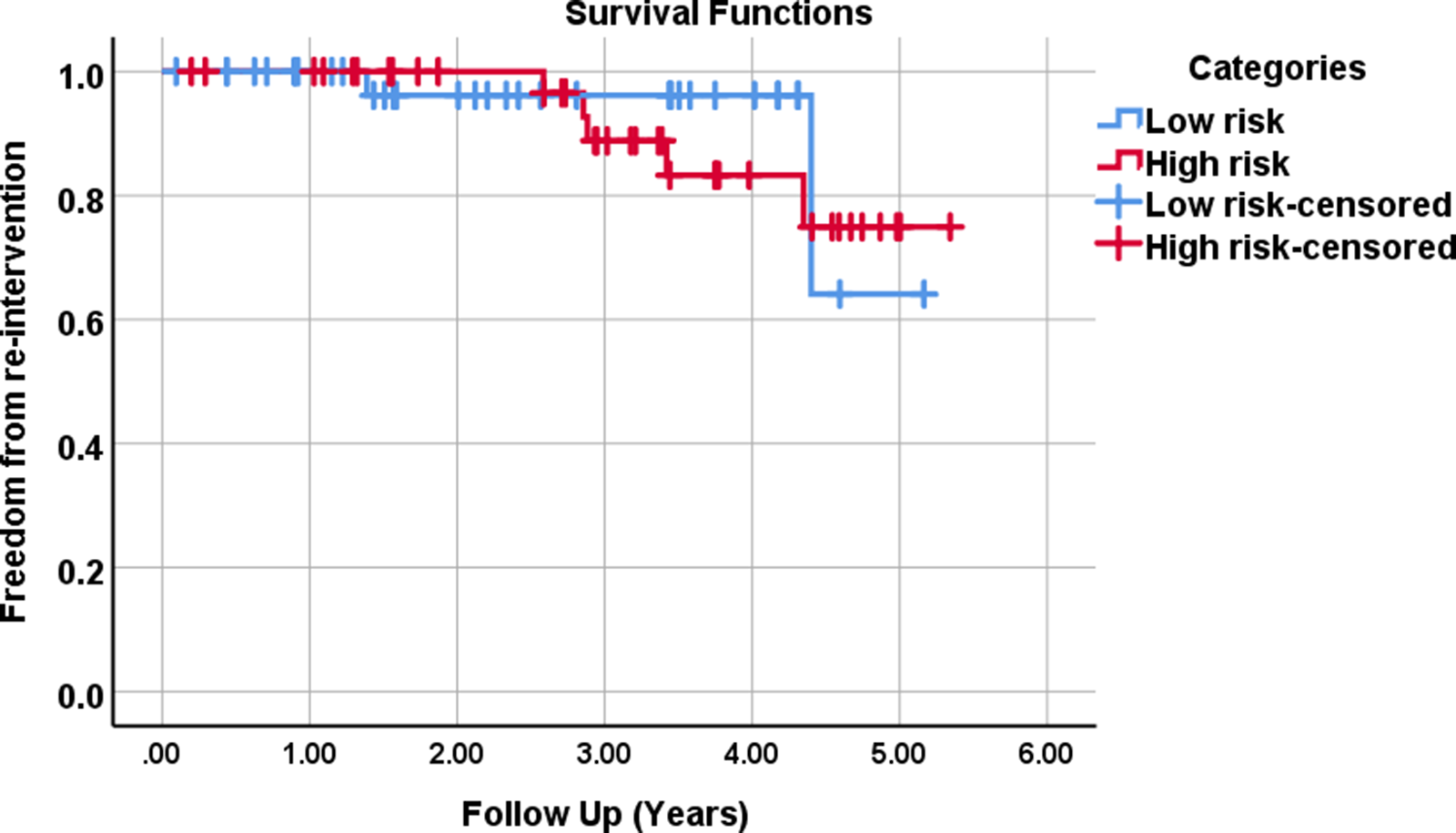
Median follow-up was 35 months (IQR 18.9–46.4 months). Significant residual gradient over the aortic arch was reported in seven patients (9.21%) who needed a catheter-based re-intervention and no surgical re-intervention was done on the aortic arch. Those seven patients required balloon dilatation of the stenotic segment of the aorta at which the median gradient dropped from 30 mmHg (IQR 24.5–41.5 mmHg) before the balloon dilatation to 11 mmHg (8–12.5 mmHg) after the dilatation. The median time to re-intervention was 4.3 months (IQR 3–6.25 months). Median follow up was 35 months (IQR 18.9–46.4 months). Overall freedom from re-intervention during the follow-up was 90.8 % as shown in Figure 3.
Freedom from re-intervention for patients undergoing aortic arch hypoplasia repair during study period.

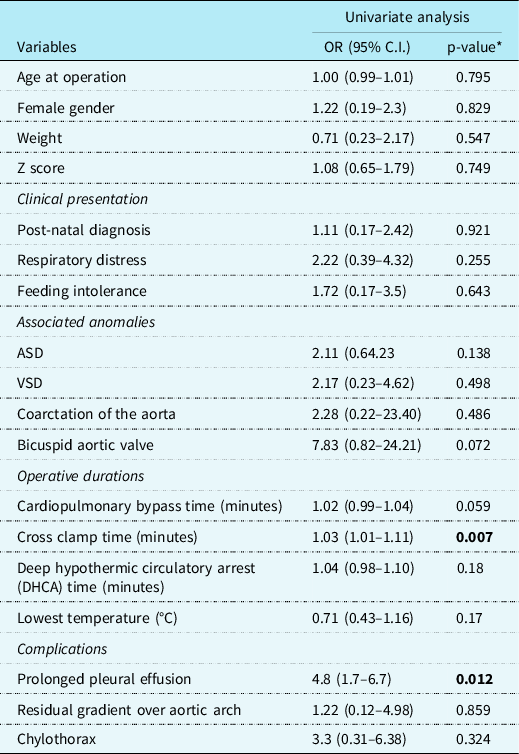
Tables 4 and 5 show the significant predictors associated mortality among patients who underwent AAH repair. In univariable logistic regression analysis, the significant variables were long cross clamp time (OR = 1.03, 95% CI = 1.01–1.11, p value = 0.007) and prolonged pleural effusions (OR = 4.8, 95% CI = 1.7–6.73, p value = 0.012).
Univariable logistic regression analysis for predictors of mortality among patients undergo aortic arch hypoplasia repair

CI=confidence interval; OR = odds ratio
The bold values show statistical significance (p < 0.05)
* In univariate regression analysis, the dependent variable is mortality of patients
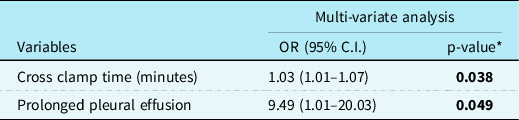
Multi-variable logistic regression analysis for predictors of mortality among patients undergo aortic arch hypoplasia repair

CI=confidence interval; OR = odds ratio
* In multi-variate regression analysis, the dependent variable is mortality of patients
The significant variables in univariate logistic regression entered in multi-variable analysis and the best model shows that the long cross clamp time (OR = 1.03, 95% CI = 1.01–1.07, p value = 0.038) and prolonged pleural effusion (OR = 9.49, 95% CI = 1.01–20.03, p value = 0.049) were the most important predictors for mortality.
Discussion
Neonates with hypoplastic aortic arch pathologies are a high-risk cohort and they need immediate attention and significant planning for intervention is required, especially if the AAH is associated with other anomalies, such as TGAs, ventricular septal defect or coarctation of aorta, which increases the mortality rates by several folds and therefore careful intervention planning is necessary. Reference Rakhra, Lee and Iyengar1
The advancement in clinical practice and the use of moderate to deep hypothermic circulatory arrest combined with adjunct brain protection in the form of selective cerebral perfusion have had significant impact on improved outcomes over the period of time. Reference Gray, Wells, Starnes and Kumar4,Reference Lewis, Johansson Ramgren, Hallbergson, Liuba, Sjöberg and Malm5 There is wide variation in practice and reported outcomes, especially early and late mortality. Reference Gray, Wells, Starnes and Kumar4,Reference Lewis, Johansson Ramgren, Hallbergson, Liuba, Sjöberg and Malm5,Reference Pedersen, Munk and Andersen6,7 Rakhra et al reported their outcomes on 305 patients that had AAH and coarctation repair with an early mortality rate of 9% and re-intervention rate was needed on eight patients prior to discharge from the hospital due to residual obstruction while late re-interventions of 66 accounts were reported in 49 (18%) patients. Reference Rakhra, Lee and Iyengar1 On the contrary, Ma et al Reference Ma, Yan and Li8 reported zero mortality rate in their cohort of 22 neonates and young children that had undergone surgical repair of AAH and aortic coarctation over the course of 6 years in their centre with a late re-intervention rate of 4% (n = 1). Their reported hospital stay was 14.5 days (range 9–25 days). Recently, Tulzer et al Reference Tulzer, Mair, Kreuzer and Tulzer9 reported their outcomes of 183 patients that were operated on for CoA and AAH between 1996 and 2013; 131 patients were operated on for isolated AAH while 52 of them were combined AAH and VSD repair. In their experience, the 30-day mortality was only 0.54% (n = 1) with no late mortality at 1 year and a 0.54% of severe neurological adverse outcomes (n = 1). Their in-hospital stay duration was 15 days (range 11–22 days). The later re-intervention was 11 accounts and 9 of them were within the first year of surgery; the overall 10-year freedom from re-intervention was reported 90%.
The latest study by Onalan et al Reference Onalan, Temur and Aydın10 of their cohort of 60 patients that underwent AAH and CoA repair, they reported in-hospital mortality of 20% (n = 12), with median hospital stay of 19 days (range 2–230 days) and median ICU stay of 11 days (range 2–228 days). In an earlier study, Poirier et al Reference Poirier, Van Arsdell and Brindle11 reported a mortality rate of 14% (n = 5) among their cohort of 37 children that underwent surgery for AAH between 1982 and 1997 with a neurological complication of 11%. When looking at those results, we can notice a significant variation in outcomes and lack of a clear benchmark of mortality and morbidities, although one would notice the improvement in the mortality and morbidity since the study by Poirier et al.
In among all these, our reported outcomes are excellent in terms of hospital stay (median 12.5 days and IQR 8–20 days) and ICU stay (median 4 days and IQR 3–6.25 days), while the in-hospital mortality remains acceptable when compared to several other centre results. Reference Tulzer, Mair, Kreuzer and Tulzer9–Reference Bernabei, Margaryan, Arcieri, Bianchi, Pak and Murzi12
In our cohort, we had seven accounts of re-interventions by balloon angioplasty within the first year of follow-up and no surgical re-intervention on the aortic arch was needed. The indication for re-intervention in our centre was the velocity over the stenotic segment of the aortic arch ≥4 m/s. These data remain within the acceptable ranges of re-intervention, yet even better than some of the most recently reported studies. Reference Rakhra, Lee and Iyengar1,Reference Tulzer, Mair, Kreuzer and Tulzer9
It is important to highlight that several centers have reported their outcomes but due to the significant difference in the reported mortality and morbidity, we cannot generalise or use any of them as a base to compare the outcomes against the rest. Therefore, there is a need to establish larger and multi-centre studies to minimise the heterogeneity in the data and understand the variation in practice and timing of surgery to optimise outcomes and generate a task force to put guidelines in place, at international level.
Finally, our study comes with many limitations such as being retrospective, observational and single centre study.
Conclusion
In our experience, hypoplastic arch augmentation with pulmonary homograft with moderate to deep hypothermia and RCP is a safe and reproducible procedure with results in line with the more recent published series.
Acknowledgements
We would like to thank Ms. Jemma Blake for helping in providing patients’ data.
Financial support
This research received no specific grant from any funding agency, commercial or not-for-profit sectors.
Conflicts of interest
None.
Ethical standards
This study has been approved by Liverpool John Moores University Ethical committee with the following UREC reference: 21/NAH/009.
Author contributions
All authors contributed and approved the final manuscript.