Menopausal age represents the endpoint of the entire reproductive cycle of women, and it is a biological marker that indicates the overall health and ageing status of women(Reference Snowdon, Kane and Beeson1). In the 1990s, approximately 25 million women worldwide underwent menopause annually. As the population ages, the number of menopausal and postmenopausal women worldwide is projected to reach 1·2 billion by 2030, with an additional 47 million women entering this phase each year(Reference Hill2). The leading cause of menopause is hormonal changes, which are detrimental to the function of certain organs in the body. Although the risk for hormone-linked cancers – specifically breast, endometrial and ovarian cancers – increases towards late menopause(Reference Gold3), the risks of type 2 diabetes, CVD, stroke, osteoporosis, depression and the all-cause mortality are lower(Reference Gold3,Reference Muka, Oliver-Williams and Kunutsor4) .
Menopausal age appears to vary due to genetic factors, and it is affected by various other factors, including environmental, socio-economic, lifestyle and reproductive factors(Reference Schoenaker, Jackson and Rowlands5). Diet is considered to be a factor that contributes to menopausal age to a certain extent; however, the evidence is not consistent(Reference Grisotto, Farago and Taneri6). The association between flavonoid intake and menopausal age has not been reported thus far.
In the vegetable kingdom, polyphenol compounds are present in the greatest quantity and are the most widespread. Flavonoids are the most common polyphenolic compounds in the daily human diet and are abundant in many plant-based foods(Reference Spencer7). Among the food sources of flavonoids, tea and onions are the leading dietary sources of flavones and flavonols(Reference Ross and Kasum8). Naringin is the main flavanone in grapefruit(Reference Felgines, Texier and Morand9). Apples that contain anthocyanidins and soyabeans that are rich in isoflavones are both sources of dietary flavonoid intake(Reference Hammerstone, Lazarus and Schmitz10). The intake of flavonoids has been identified to be associated with a decreased risk of stroke(Reference Li, Wang and Yang11) and CVD(Reference McCullough, Peterson and Patel12). Flavonoids have a common structure of diphenylpropane (C6-C3-C6)(Reference Ross and Kasum8). According to the changes in their heterocyclic ring, flavonoids are divided into six main subtypes: isoflavones, anthocyanidins, flavan-3-ol, flavanones, flavones and flavonols. We conducted a cross-sectional study using flavonoid data obtained from the USA Department of Agriculture, and the corresponding socio-demographic, questionnaire, examination and laboratory data from the National Health and Nutrition Examination Survey (NHANES) for the years ranging from 2007–2008, 2009–2010 to 2017–2018, to analyse the relationships between the intake of major categories of flavonoids and menopausal age in American women.
Materials and methods
Study population
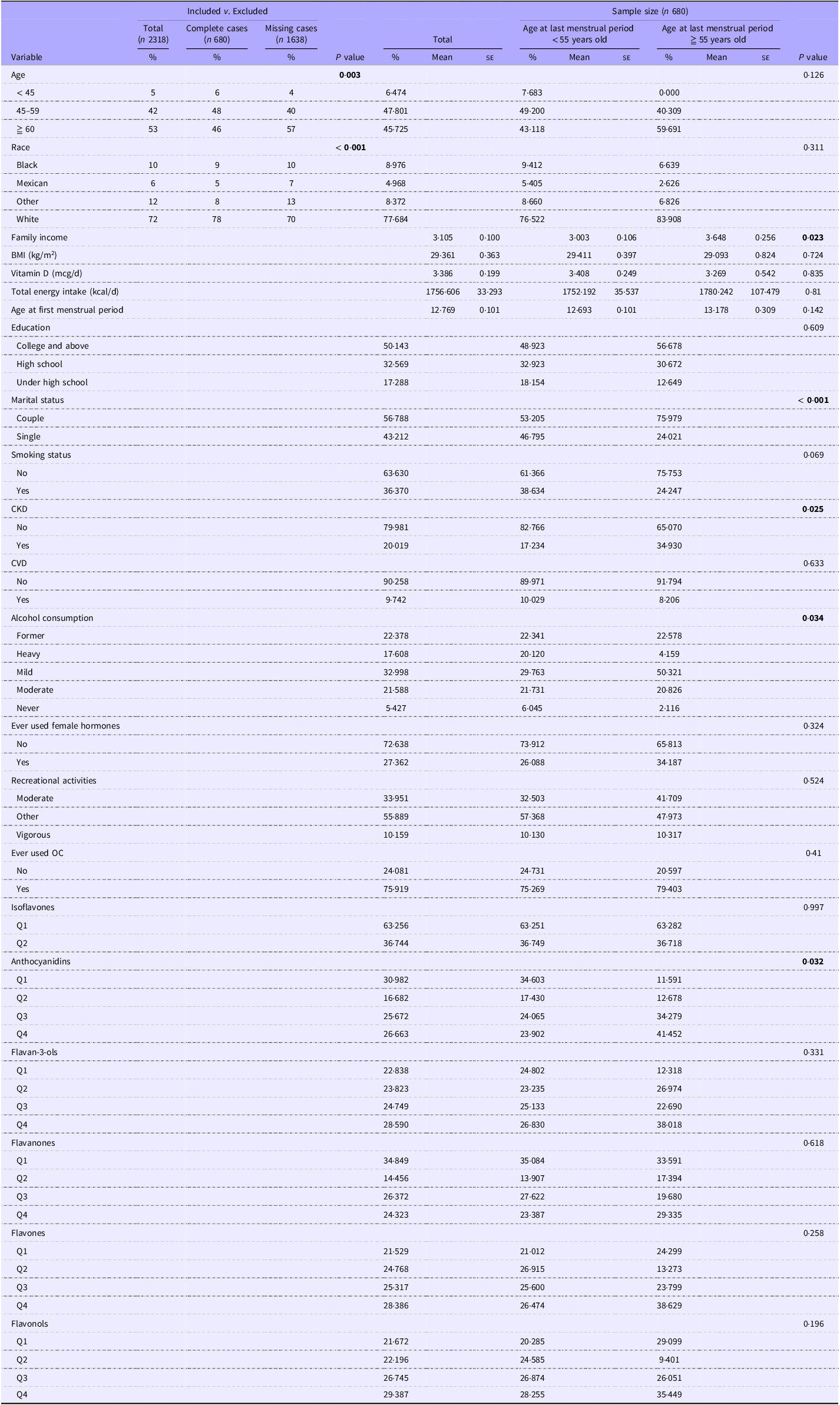
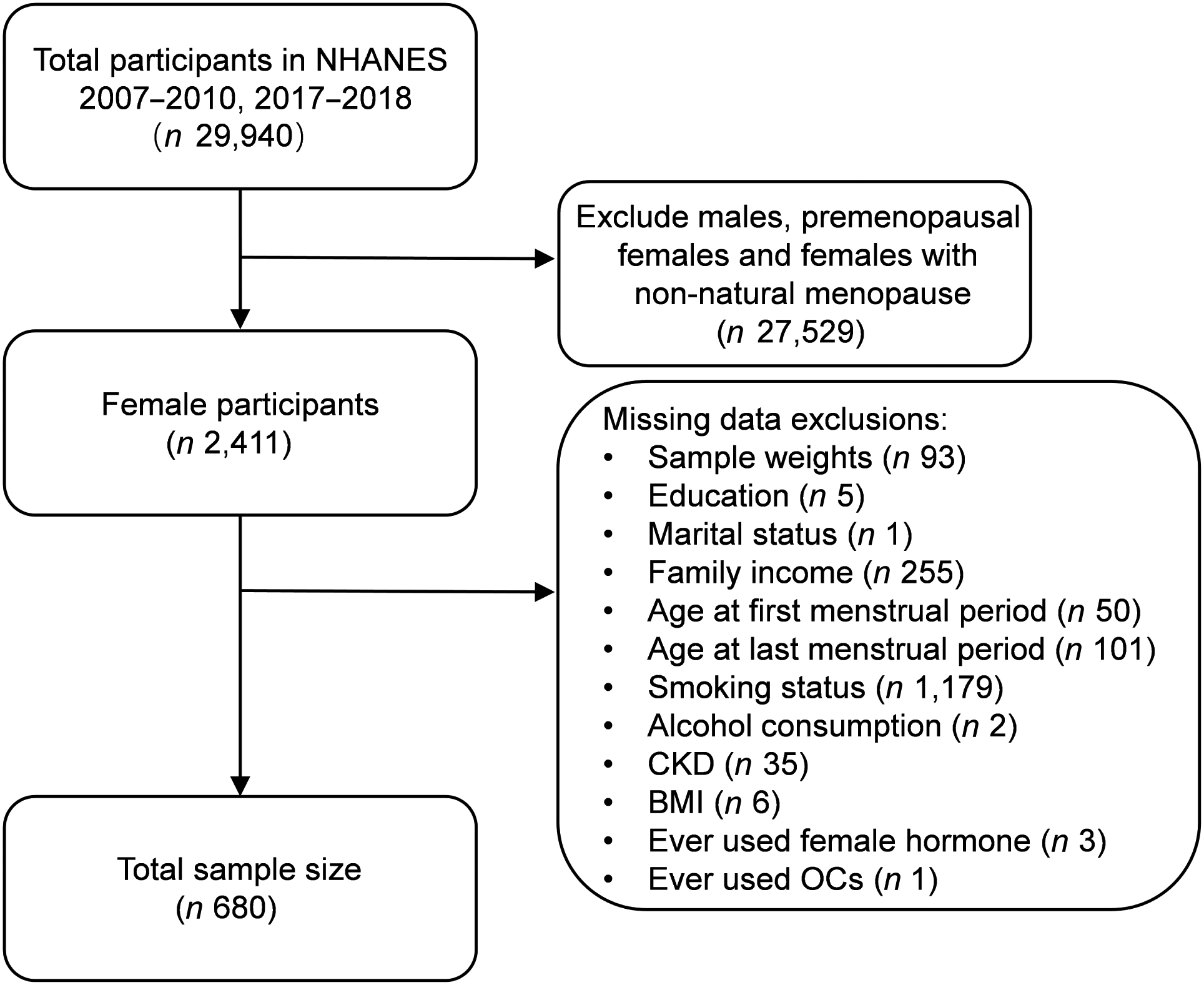
Administered by the National Center for Health Statistics, NHANES is a prominent project that aims to evaluate the health and nutritional status of adults and children in the USA. This survey is unique owing to its combination of interviews by qualified interviewers using the Computer-Assisted Personal Interview system and the physical examinations at Mobile Examination Center at home and via telephone. This survey is conducted annually on a nationally representative sample of approximately 5000 people. These people live in counties across the country, with fifteen counties being visited every year. The NHANES interviews include topics related to demographic, socio-economic, dietary and health-related issues. In this study, the data from NHANES were collected from the following three cycles: 2007–2008, 2009–2010 and 2017–2018. There were 29 940 participants in total. After the exclusion of males, premenopausal women and women with non-natural menopause, 2411 female participants were eligible. From this group, individuals were excluded for missing data on the following variables: sample weights (n 93), education level (n 5), marital status (n 1), family income (n 255), age at first menstrual period (n 50), age at last menstrual period (n 101), smoking status (n 1179), alcohol consumption (n 2), chronic kidney disease (CKD) (n 35), BMI (n 6), ever used female hormone (n 3) and ever used oral contraceptives (OC) (n 1). Of the 1638 women with missing data on variables except for sample weights, the racial/ethnic composition was 70 % non-Hispanic White, 10 % non-Hispanic Black, 7 % Mexican American and 13 % other races/ethnicities. By age group, 4 % were under 45 years, 40 % were aged 45–59 years and 57 % were 60 years or older. Statistically significant differences were observed in demographic characteristics between the excluded and included participants (Table 1). The final analytical sample consisted of 680 participants (Figure 1), representing approximately 10·2 million non-institutionalised USA residents.
Baseline of characteristics of participants in NHANES 2007–2010, 2017–2018

CKD, chronic kidney disease; OC, oral contraceptives.
Data are expressed as mean (standard error) or percentage.
Boldface values represent data with statistical significance (P < 0.05).
Flow chart of study participants.

Menopausal age
Most women experience menopause between 45 and 55 years of age; early menopause is defined as menopause that occurs before 45 years old, while late menopause refers to menopause that occurs after the age of 55(Reference Dunneram, Greenwood and Cade13). Menopausal age was analysed as a binary variable (late menopause v. non-late menopause) in this study, with the cut-off set at 55 years of age.
Assessment of dietary flavonoid intake
Data regarding flavonoid intake were obtained from FNDDS (a database that provides the nutritional value of food and beverages), which presented the ‘What We Eat in America’ report and is a component of NHANES’s dietary intake. The ‘What We Eat in America’ dietary interview component, co-developed by the USA. Department of Agriculture and the USA. Department of Health and Human Services collects detailed 24-h food and beverage intake data from all NHANES participants. This process involves two 24-h dietary recall interviews: The first dietary recall interview is completed face-to-face in the Mobile Examination Center followed by a second interview conducted 3–10 d later. The data are used to quantify consumption during 24-h period prior to the interview and to estimate the intake of energy, nutrients and other dietary components. Flavonoids include the following subclasses: isoflavones, anthocyanidins, flavan-3-ols, flavanones, flavones and flavonols. Each major subtype is further subdivided into several subcategories. Isoflavones were divided into two quartiles, and anthocyanidins, flavan-3-ols, flavanones, flavones and flavonols were divided into four quartiles for subsequent data analysis. In this study, we focused mostly on the six subclasses of flavonoids, which were collected from the first dietary recall interview.
Covariates
The following covariates that were applied in this analysis were obtained from the existing NHANES data: demographic characteristics (age, race, marital status, education and the ratio of family income to poverty), lifestyle behaviours (smoking status, alcohol consumption, age at first menstrual period, Vitamin D intake, total energy intake and physical activity) and medical characteristics (BMI, CVD, CKD, female hormones use (any forms of female hormones but do not include birth control methods or use for infertility) and ever used OC). The information above was collected via demographic, examination or questionnaire data. There were four groups of races: white, black, Mexican and other; three categories of education: less than high school, high school and college and above; two categories of marital status: single and married; two groups of the smoking status: yes (those who smoke some days or everyday) and no (those who do not smoke at all) and five groups of alcohol consumption: former, heavy (≥ 3 drinks per day or binge drinking (≥ 4 drinks on the same occasion) on 5 or more days per month for females), mild (not heavy or moderate), moderate (2 drinks per day or binge drinking for 2–4 days per month for females) and never(Reference Rattan, Penrice and Ahn14). Information on female hormones and OC use was collected via a self-reported questionnaire. Participants were asked whether they had ever used female hormones or taken birth control pills. BMI was based on the examination data called body measures. CKD was diagnosed as previously described(15). The data used to calculate glomerular filtration rate and persistent albuminuria categories were derived from laboratory data in NHANES. The definition of CVD was based on self-reported questionnaire. Participants were asked whether a doctor or other health professional had ever informed them of a diagnosis of coronary heart disease, congestive heart failure, heart attack, stroke or angina. We defined participants who answer ‘yes’ to any question as having CVD.
Statistical analysis
For categorical variables, the data are expressed as a percentage, whereas the mean is used to present continuous variables. The student t test, one-way ANOVA and χ 2 test were used to examine the differences between the groups. The dietary day-one sample weight was used from the NHANES database in this study. The sample weight indicates the number of investigators representing the entire American population. Weighted multivariate logistic regression was then used to analyse the association between the intake of the six flavonoid subclasses and late menopausal age, and four models were simultaneously created. The Crude Model was established without any covariates. Model 1 was adjusted demographic characteristics (age, race, marital status, education and the ratio of family income to poverty). Based on model 1, adjustments were made for lifestyle behaviours (smoking status, alcohol consumption, age at first menstrual period, Vitamin D intake, total energy intake and physical activity) for model 2. Based on model 2, adjustments were made for medical characteristics (BMI, CVD, CKD, female hormones use and OC use) and for model 3 OR and 95 % CI were calculated.
The nonlinear relationship between the intake of the main subclasses of flavonoids and menopausal age was further calculated using the restricted cubic splines analysis. The number and position of knots in a restricted cubic splines model determine the flexibility with which it can capture the shape of the relationship between an exposure and an outcome. During data processing, we tested scenarios with 3–7 knots. Ultimately, we selected 3–6 knots placed at predefined percentiles (e.g., 5th, 35th, 65th and 95th for 4 knots) and based on both the visual clarity of the data representation and the interpretability of how dietary flavonoids intake impact the outcome. The spline reference value used for centring was the median intake of flavonoid subclasses and significant P value for non-linearity set at < 0·05.
All the data that were included in this analysis were analysed via R 4.5.1 software, and the sample weight was obtained from the NHANES.
Results
Descriptive analysis
In this study, data from 29 940 individuals were collected from the NHANES during three cycles: 2007–2008, 2009–2010 and 2017–2018. After exclusions, a total of 680 participants were eligible for our study (Figure 1). We chose the age of 55 years at menopause onset as a sign of delayed menopause, and then, we used this age to classify the participants into two groups: those who had their last period before 55 years of age, and those who had their last period at or after 55 years of age.
The characteristics of our study participants are presented in Table 1. The participants who had their last period at or after 55 years of age had a higher ratio of family income to poverty, were married, suffered from CKD and had fewer alcohol consumption. As shown in Table 1, a higher level of anthocyanidin intake was also a factor associated with delayed menopause.
Associations between intake of the main flavonoids and late menopausal age
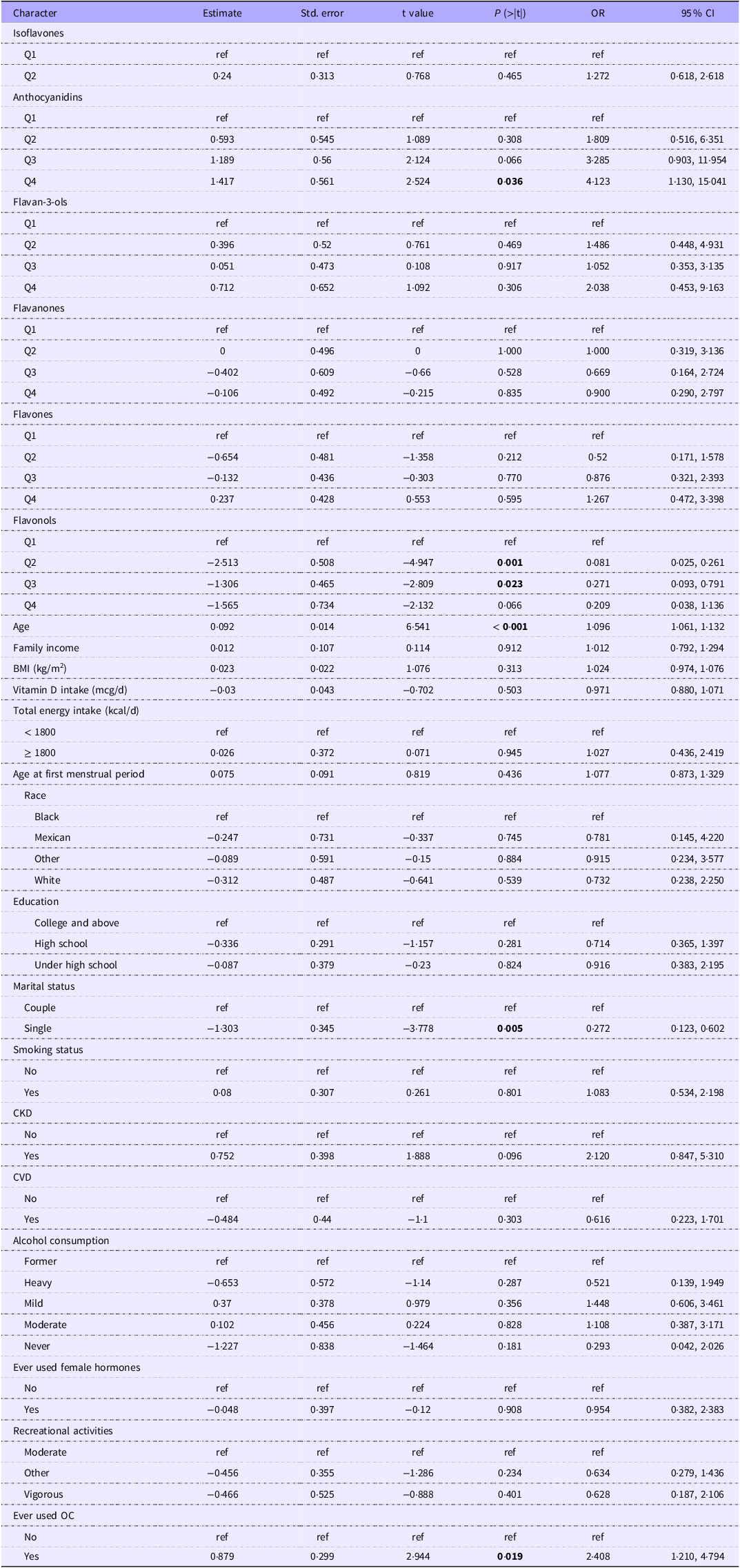
To further explore the association between flavonoid intake and delayed menopausal age, we conducted a weighted multivariate logistic regression analysis (Table 2). Interestingly, the intake of Q4 of anthocyanidins was positively associated with delayed menopause; conversely, the intake of Q2 and Q3 of flavonols was negatively associated with delayed menopause (compared with Q1). In addition, we found that age, marital status and ever used OC were statistically significant (P < 0·05) with late menopause.
Covariate adjustment
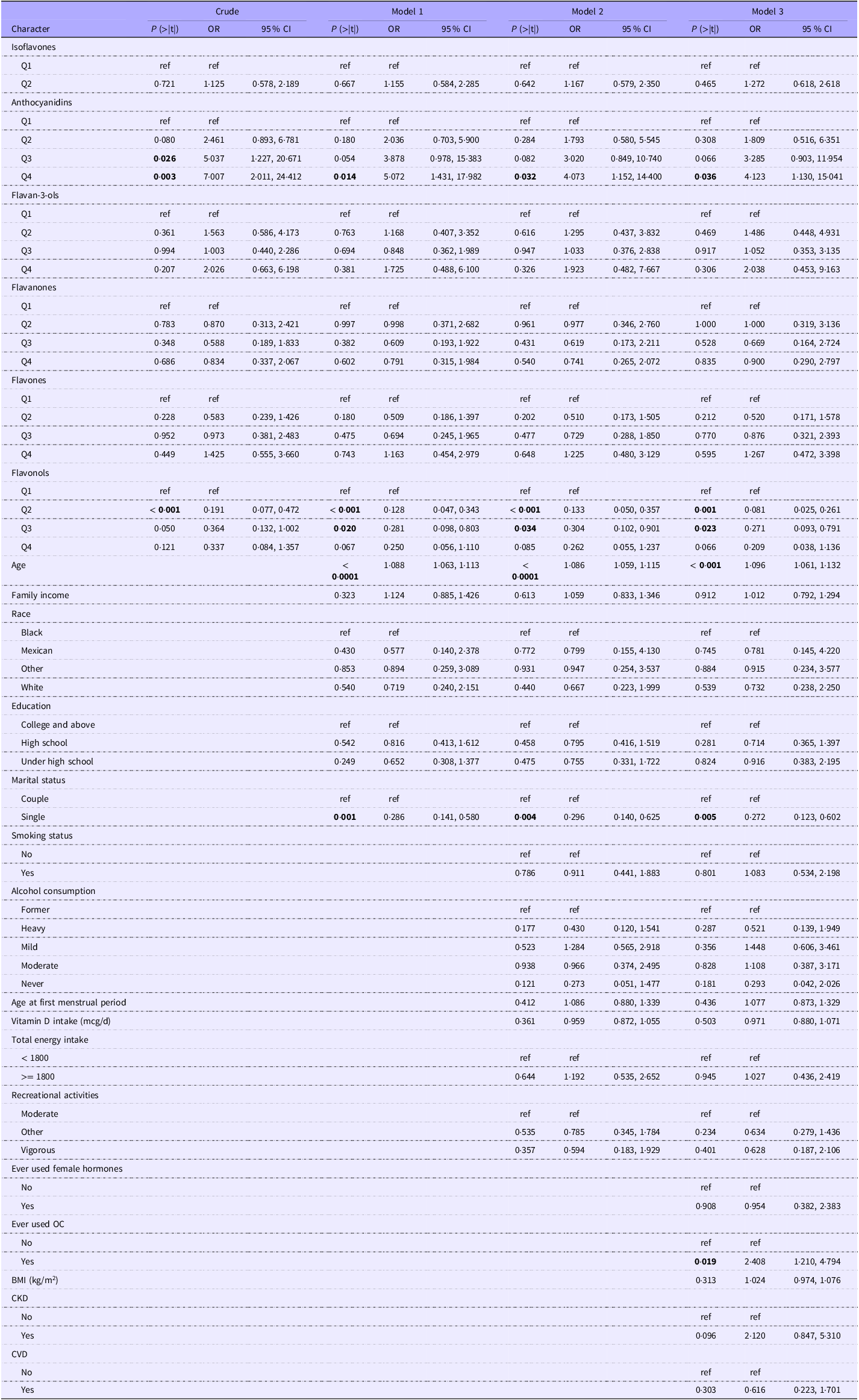
Weighted multivariate logistic regression models revealed that there were no statistically significant differences between isoflavone, flavan-3-ol, flavanone or flavones intake and late onset of menopause. Interestingly, there were significant differences between the Q3 and Q4 of anthocyanidin intake and late onset of menopause in crude model (Table 3). Top quartile of anthocyanidin intake remained positively associated with the delayed onset of menopause after adjusting for demographic characteristics, lifestyle behaviours and clinical characteristics factors (model 3: Q4 v. Q1, OR = 4·123 (95 % CI: 1·130, 15·041), P trend = 0·036). Significant differences were observed in moderate flavonol intake, which indicated a negative association with late menopausal age. In addition, covariates adjustment did not eliminate its significant differences (model 3: Q2 v. Q1, OR = 0·081 (95 % CI: 0·025, 0·261), P trend = 0·001; Q3 v. Q1, OR = 0·271 (95 % CI: 0·093, 0·791), P trend = 0·023).
Logistic regression analyses of the association between baseline characters and late menopause

CKD, chronic kidney disease; OC, oral contraceptives.
Boldface values represent data with statistical significance (P < 0.05).
Association between six subclasses of flavonoids intake and late onset of menopause

CKD, chronic kidney disease; OC, oral contraceptives.
Data are presented as OR (95 % CI).
Boldface values represent data with statistical significance (P < 0.05).
Crude model did not include any covariate.
Model 1 was adjusted for age, race/ethnicity, education level, marital status and family income.
Model 2 was adjusted for smoking status, alcohol consumption, age at first menstrual period, Vitamin D intake, total energy intake and physical activity based on model 1.
Model 3 was adjusted for BMI, CKD, CVD, female hormones use, and OC use based on model 2.
Nonlinear relationship between intake of the main subclasses of flavonoids and onset of menopause
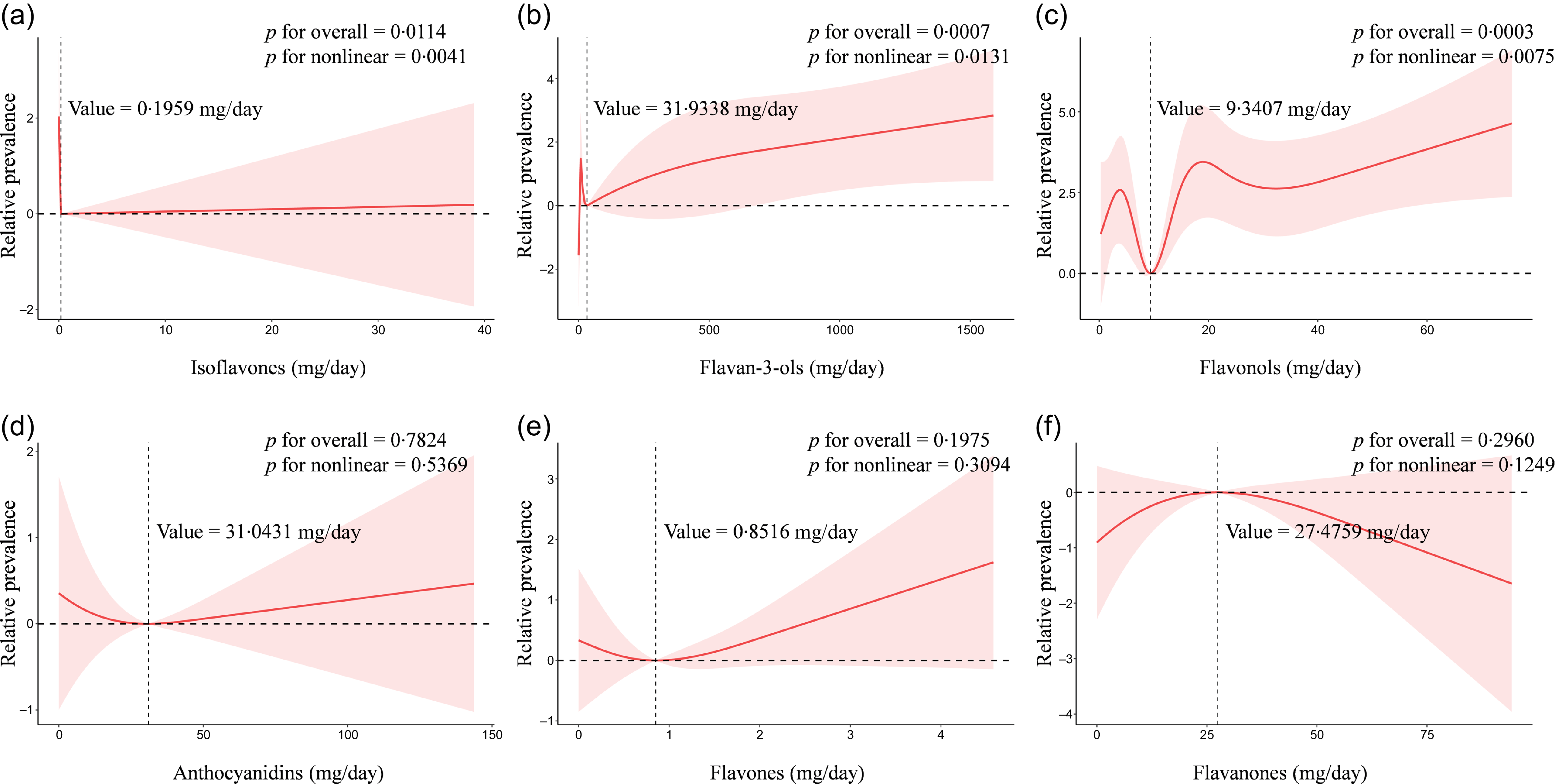
We conducted restricted cubic splines to reveal the dose–response relationships of the intake of the six subclasses of flavonoids (Figure 2). We observed statistically significant non-linear relationships for isoflavones, flavan-3-ols and flavonols and age at the onset of menopause (continuous variables) after adjusting for demographic characteristics, lifestyle behaviours and clinical characteristics (P value for non-linearity < 0·05). No significant nonlinear associations were observed in the anthocyanidin, flavanone or flavone intake. Dose–response patterns in our study suggest the existence of intake thresholds beyond which higher consumption may be associated with a later menopausal age. Figure 2(a) presents the intake of isoflavones higher than 0·1959 mg/d, the later menopause onset may occur. Similarly, Figure 2(b) depicts a positive association between flavan-3-ols intake and menopause age after the threshold of 31·9338 mg/d. As shown in Figure 2(c), consistent with our multivariate logistic regression model, the intake of flavonols less than 9·3407 mg/d might have a potentially negative effect with the prevalence of later menopause onset. Higher consumption (> 32·4 mg/d) may be positively associated with a later menopausal age.
The non-linear trend between the intake of main subclasses of flavonoids and age at onset of menopause using a restricted cubic spline. Data are presented as relative prevalence (y-axis) and level of intake of six subclasses of Flavonoids (mg/d) after adjusting for covariates. (a) Isoflavones (nonlinear P value < 0·05), (b) flavan-3-ols (nonlinear P value < 0·05), (c) flavonols (nonlinear P value < 0·05), (d) anthocyanidins (nonlinear P value > 0·05), (e) flavones (nonlinear P value > 0·05) and (f) flavanones (nonlinear P value > 0·05).

Discussion
Menopause has been considered an initiating step of a casual pathway towards organ dysfunction because of a descent of estrogen and progesterone levels(Reference Rocca, Shuster and Grossardt16). The loss of ovarian function during menopause triggers the activation of the renin-angiotensin-aldosterone system, initiating a cascade of detrimental effects including endothelial dysfunction, inflammation and immune dysregulation(Reference Zhao, Wang and Jessup17,Reference Gersh, O’Keefe and Lavie18) . These adverse effects are associated with hot flushes, obesity, diabetes, bone fractures, mood disorders, hypertension and ventricular remodelling(Reference Gold3,Reference Zhao, Wang and Jessup17) . Given that hormone replacement therapy is widely used to improve vasomotor function and quality of life in perimenopausal women, it may have an effect of delaying menopause; however, its application has been vigorously debated for decades(Reference Lobo19).
In this cross-sectional study of USA women, we observed that dietary intake of specific flavonoid subclasses was associated with the likelihood of late menopause. The associations for anthocyanidins and flavonols were attenuated upon adjustment for socio-demographic, lifestyle behaviours and clinical characteristics, indicating potential confounding by these factors. Furthermore, we observed statistically significant non-linear relationships for isoflavones, flavan-3-ols and flavonols. Consistently, previous research has been revealed a potential threshold effect that low dietary levels may be insufficient to elicit a bioactive response(Reference Cassidy, Huang and Rice20). Dose-response patterns in our study suggest the existence of intake thresholds beyond which higher consumption may be associated with a later menopausal age, implying a complex, non-linear role for flavonoids in reproductive ageing.
Previous research has primarily focused on the relationship between socio-demographic and lifestyle factors (smoking status, income, education level, etc.)(Reference Brambilla and Mckinlay21,Reference Kato, Toniolo and Akhmedkhanov22) and age at natural menopause; however, recent years have witnessed a growing research interest in the role of dietary factors(Reference Dunneram, Greenwood and Burley23). Emerging evidence has been proposed that food groups or dietary patterns may play a key role in the process of ovarian ageing(Reference Boutot, Purdue-Smithe and Whitcomb24). Dietary components with antioxidant properties, such as oily fish, fresh legumes and fresh green and yellow vegetables, may offset reactive oxygen species, potentially reducing follicular atresia and delaying the occurrence of natural menopause. Similarly, Flavonoids exhibit an extensive range of beneficial biological activities, including anti-inflammatory, antioxidant, hepatoprotective, anticarcinogenic properties(Reference Middletoon, Kandswami and Theoharides25) and vascular mechanisms(Reference Fisher, Hughes and Gerhard-Herman26). Some studies have reported that the mechanism underlying these effects of flavonoids may involve oestrogen(Reference Lin, Gao and Shen27). Prolonged estrogen exposure has also been reported to induce obesity and hypertension(Reference Morimoto and Ichihara28). Among the main classes of flavonoids, isoflavones, certain flavones, flavanones and flavan-3-ols demonstrate estrogenic or antiestrogenic activity, which may affect the female reproductive system(Reference Rossi and Vecchia29). According to a foundational study, soy-derived isoflavones suppress the proliferation of ovarian cancer cells in vitro by modulating the synthesis of cytokines(Reference Chen and Anderson30). Various flavonols such as quercetin, myricetin and kaempferol modulate cellular signalling pathways, suggesting a mechanism for their cancer risk reduction(Reference Zamora-Ros, Ferrari and Gonzalez31). Quercetin enhances follicullo- and oogenesis and oocyte quality by modulating hormonal levels and mediating key signalling pathways(Reference Sirotkin32). These beneficial effects on female reproductive processes are well-documented and supporting its potential for preventing, alleviating and treating various female reproductive system disorders. Moreover, a systematic review and meta-analysis support the effectiveness of flavonoids against prevalent menopausal symptoms(Reference Oh, Park and Park33). Its therapeutic benefits for menopausal syndrome are manifested in several aspects: reducing bone loss, alleviating hypertension and hyperglycemia, as well as mitigating vasomotor symptoms(Reference Chen and Chen34,Reference Izumi and Terauchi35) . Therefore, implementing precise dietary flavonoid interventions might be an effective approach to support female reproductive health and regulate female menopause.
To the best of our knowledge, this is the first analysis in which nationally representative samples were used to demonstrate the association between the dietary intake of major flavonoids and menopausal age in women in the USA. Previous studies have focused mostly on the biological functions of the six classes of flavonoids, such as their antioxidant, antimutagenic and antiproliferative properties(Reference Chen and Anderson30), as well as estrogenic or antiestrogenic activity(Reference Manach, Scalbert and Morand36). A number of studies investigated flavonoids in relation to female reproductive health and menopause, but most of them merely focused on a few classes of flavonoids(Reference Crisafulli, Marini and Bitto37,Reference Nagata, Takatsuka and Kawakami38) .
Regardless, there are several limitations to consider in our study. First, this cross-sectional study cannot determine a causal relationship between the intake of major subclasses of flavonoids and menopausal age. Second, the data we obtained, which were derived from the NHANES, are based on self-reports and therefore may be affected by misunderstanding or overreporting of questions, confounding the effect of the intake of the main subclasses of flavonoids on delayed onset of menopause. Third, although various covariates were adjusted for, potential unmeasured confounders may still exist. Factors such as parity, breast-feeding duration and chronic stress, which were not accounted for in our study(Reference Kato, Toniolo and Akhmedkhanov22,Reference Chen, Yang and Chen39) , could influence the onset of menopause in women. Additionally, endocrine therapies – such as tamoxifen and GnRH analogs – are known to cause side effects related to ovarian dysfunction and may affect menopausal timing(Reference Lee, Noh and Gwark40). Unfortunately, the lack of available data limited our ability to analyse the potential confounding effects of these variables. Future studies incorporating more detailed covariates and larger sample sizes may help further refine this analysis. Finally, although the missing mechanism is likely random given NHANES’s design, selection bias cannot be fully ruled out (Table 1). Additionally, while the combination of data cycles from 2007–2010 to 2017–2018 enhanced sample size and power, temporal changes in dietary patterns and menopausal age distribution may introduce unmeasured confounding. Given this, although the association between flavonoids intake in women’s diets and menopausal age demonstrates that flavonoid intake may delay women’s menopausal age, more research is needed to reveal the independent effects of flavonoids on women’s reproductive health and late menopause.
With improving socio-economic conditions, the age at which women experience menopause is shifting later(Reference Beard, Jacoby and Maher41). Female reproductive health and menopause management represent a pressing healthcare challenge that demands urgent solutions, and medical professionals as well as scientific researchers should notice the potential role that dietary interventions play in hormonal regulation in women health. Our findings support the hypothesis that precise dietary flavonoid interventions could be a viable strategy for promoting female reproductive health and modulating the menopausal transition. Anthocyanidins were mainly found in fresh berries (blackberry, blueberry, cherry, etc.), fruits (apple, peach, etc.) and some vegetables (eggplant, cabbage, red radish, etc.)(Reference Wu, Beecher and Holden42). A prospective investigation suggested four main food sources of flavonols as following: Tea (49·3 %), apples and pears (16·7 %), wine (6·3 %) and stone fruits (5·2 %)(Reference Zamora-Ros, Ferrari and Gonzalez31). Therefore, consuming foods rich in these compounds might represent a practical dietary strategy for promoting reproductive health.
Conclusion
In this cross-sectional study of USA women, we observed that dietary intake of specific flavonoid subclasses was associated with the likelihood of late menopause. Further investigation of a prospective design with decades of follow-up and a large sample size tracking of flavonoid intake and its association with menopause timing are warranted. Diet plays an important role in regulating female reproductive health, and our findings suggest a potential role for dietary flavonoids in supporting menopausal health.
Data availability
The data analysed during the current study are available in the NHANES database, https://www.cdc.gov/nchs/nhanes/
Acknowledgements
We express our deep thanks for the National Health and Nutrition Examination Survey (NHANES) for providing a large source of data for free.
The study was supported by Science and Technology Support Plan for Youth Innovation of Colleges and Universities of Shandong Province of China (Grant no. 2021KJ107), Foundation of Weifang Kite Capital Scholars (No. ydxz2023021), National Natural Science Foundation of Shandong Province (ZR2024QH019) and Graduate Student Research Grant from Shandong Second Medical University (2024YJSCX012).
R. W.: methodology, software, formal analysis and writing-original draft; L. L.: methodology, software, visualisation and validation; R. Z.: methodology, software, formal analysis and visualisation; X. Z.: methodology, data curation and visualisation; C. L.: conceptualisation, supervision, funding acquisition and writing-review and editing.
The authors declare that they have no conflicts of interest with the contents of this article.
Data collection in NHANES was approved by the National Center for Health Statistics Research Ethics Review Board (ERB), and study protocol was performed according to the ethical guidelines of the Helsinki Declaration. Written informed consent was obtained from individual or guardian participants.