Introduction
Human trampling is considered a near-ubiquitous impact of recreation on urbanized sandy beaches (Schlacher et al., Reference Schlacher, Carracher, Porch, Connolly, Olds, Gilby, Ekanayake, Maslo and Weston2016a). In addition to a direct lethality, trampling can hinder the excavation activity of macroinvertebrates due to higher sediment compaction and long-term changes in sediment properties, such as moisture, slope and micro-relief (Lim et al., Reference Lim, Yong, Tantichodok, Lim, Yong and Tantichodok2011). However, trampling impacts are usually confounded with other stressors (e.g. vehicle traffic and beach cleaning), which challenges beach ecologists to distinguish trampling effects from other broader urbanization impacts (Schlacher & Thompson, Reference Schlacher and Thompson2012). Thus, trampling effects on beach biota should be singly assessed (Lucrezi et al., Reference Lucrezi, Schlacher and Robinson2009).
Sandy beaches are dynamic ecosystems, and the experimental approaches used to study them are challenging. Worldwide, studies assessing the effects of experimental trampling on beach macrofauna are scarce (Moffett et al., Reference Moffett, McLachlan, Winter and de Ruyck1998; Schlacher et al., Reference Schlacher, Carracher, Porch, Connolly, Olds, Gilby, Ekanayake, Maslo and Weston2016a). In an attempt to determine the effects of human trampling using a snapshot experiment on an intertidal macrobenthic community, Moffett et al. (Reference Moffett, McLachlan, Winter and de Ruyck1998) noted that only morphologically delicate macroinvertebrates were crushed by the impact. Similarly, Schlacher et al. (Reference Schlacher, Carracher, Porch, Connolly, Olds, Gilby, Ekanayake, Maslo and Weston2016a) found a negative effect on surface-active sandhoppers. Nevertheless, Jaramillo et al. (Reference Jaramillo, Contreras and Quijon1996) found no significant changes in macrofauna density after isolating an area from human trampling.
Ghost crabs occur on a broad range of sandy beaches, building their burrows and maintaining territories from the upper intertidal zone to the dune vegetation (Pombo & Turra, Reference Pombo and Turra2013). Burrow counting is a non-destructive and inexpensive method to assess population abundance and evaluate the impact of humans on sandy beaches (Schlacher et al., Reference Schlacher, Lucrezi, Peterson, Rod, Olds, Althaus, Hyndes, Gilby, Leon, Weston, Lastra, Williams, Schoeman, Rod, Andrew and Glenn2016c). Although burrow counting does not always provide a reliable estimate of ghost crab abundance (Lucrezi et al., Reference Lucrezi, Schlacher and Robinson2009; Silva & Calado, Reference Silva and Calado2013), some criteria might reduce possible bias (i.e. over- or underestimation), such as identifying activity signals (e.g. presence of replaced sediment around the crab burrows), measuring the burrow depth and determining the occupation rate (Pombo & Turra, Reference Pombo and Turra2013). Thus, burrow abundance might indicate the abundance of a ghost crab population (Pombo & Turra, Reference Pombo and Turra2013; De Oliveira et al., Reference De Oliveira, Souza and Soares-Gomes2016) or other behavioural features (Costa et al., Reference Costa, Rangel and Zalmon2018) if used with caution.
As a result of studies using burrow counting on sandy beaches with distinct human pressure, the ghost crab Ocypode quadrata has been considered the main bioindicator of the human impact on Atlantic beaches, and trampling is a commonly ascribed source of disturbance (Schlacher et al., Reference Schlacher, Lucrezi, Connolly, Peterson, Gilby, Maslo, Olds, Walker, Leon, Huijbers, Weston, Turra, Hyndes, Holt and Schoeman2016b). However, only a single study assessed the short-term effects of acute trampling on ghost crabs' burrow density (Lucrezi et al., Reference Lucrezi, Schlacher and Robinson2009). It is important to note that this controlled experiment dealt with trampling impacts on an urbanized beach that was chronically exposed to several diffuse impacts (e.g. trampling, beach cleaning, vehicle traffic and others). Thus, the mechanisms responsible for burrow decline still need to be studied in more detail so effective management actions can be recommended.
We aimed to assess the effects of acute trampling on the burrow abundance and behaviour of O. quadrata. In addition to evaluating whether a decrease in burrow abundance is associated with higher human trampling and sediment compactness, we tested whether the ghost crab escapes more slowly from humans and/or delays emergence from its burrows in such impacted areas. Ghost crabs are highly motile invertebrates, covering distances up to 300 m, and can avoid trampled areas and compacted sediment (Schlacher & Lucrezi, Reference Schlacher and Lucrezi2010a). In addition, they recognize human presence and sediment vibrations, so behavioural changes are expected to occur in plots with higher human trampling (Lucrezi & Schlacher, Reference Lucrezi and Schlacher2014).
Materials and methods
Study site
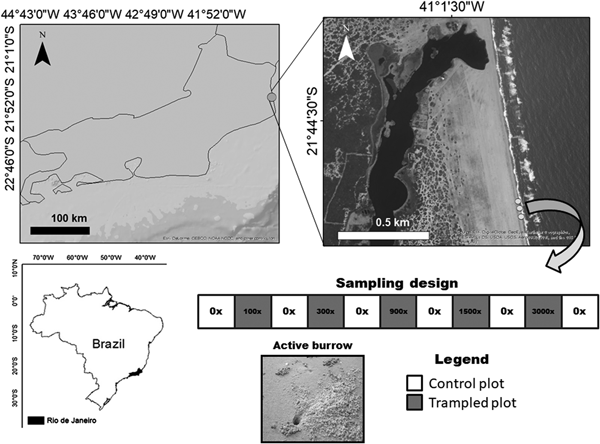
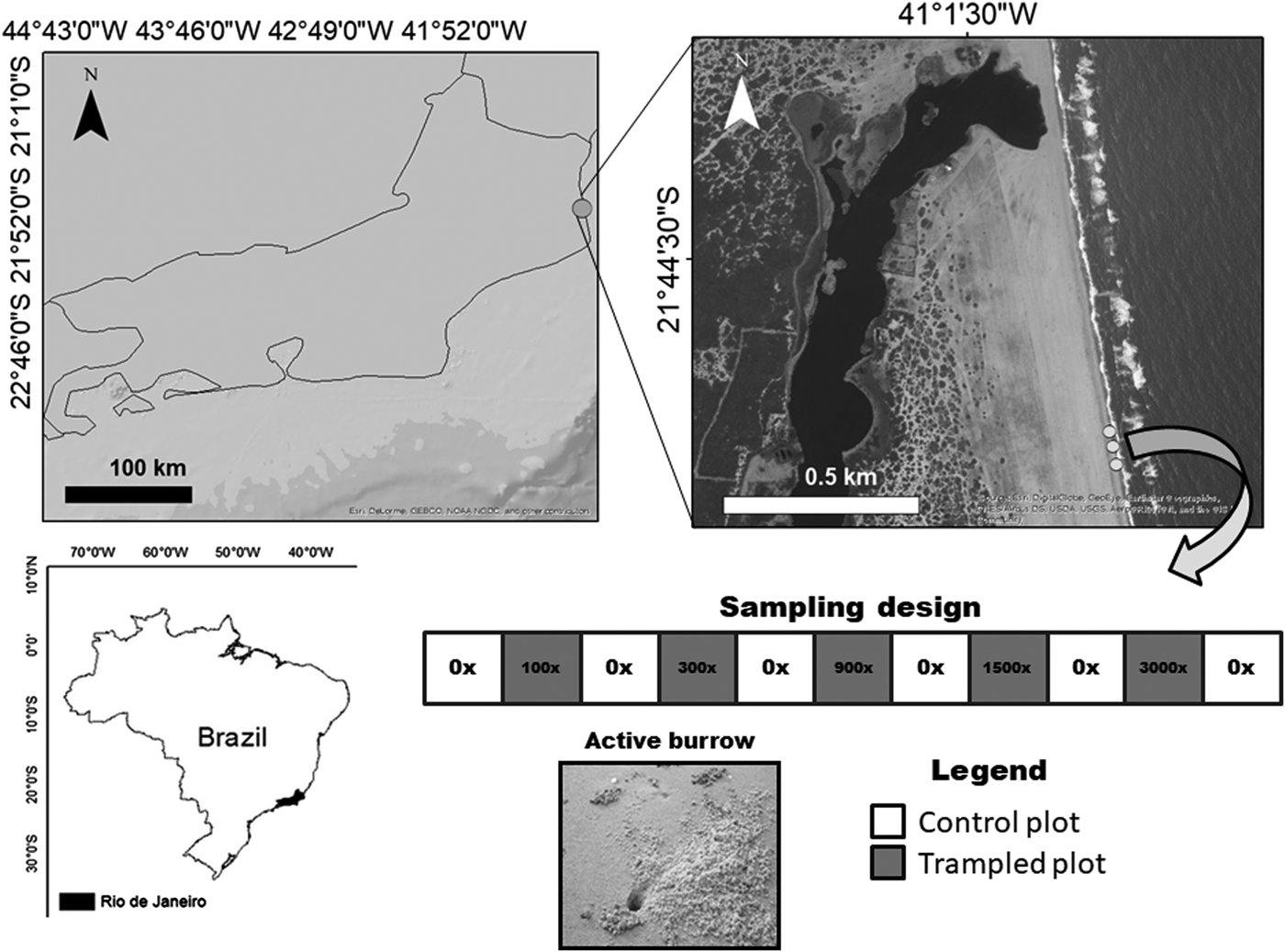
The study was performed on a microtidal intermediate sandy beach (Grussaí Beach) in south-eastern Brazil (21°44′44.21″S 41°1′18.28″W). Grussaí Beach is the main destination for local and regional visitors, especially from urbanized areas where there is easy access and good infrastructure (Suciu et al., Reference Suciu, Tavares, Costa, Silva and Zalmon2017). On the same beach arc, there are non-urbanized areas that are difficult to access and have low visitation rates (Suciu et al., Reference Suciu, Tavares, Costa, Silva and Zalmon2017). To perform a snapshot experiment, we chose the hard-to-reach and non-trampled areas of the beach to avoid the influence of other anthropogenic disturbances, such as beach cleaning, pollution and vehicle traffic. The survey plots were located 1 km, by foot, from the beach access (Figure 1).
Map of the study site and the experimental sampling design at Grussaí Beach, south-eastern Brazil. Each circle represents a pseudo-replication of the sampling design composed of five trampled plots and six control plots.
Field experiments
We placed 11 plots (6 × 6 m) parallel to the water line in the interface between the high tide mark and the dune vegetation to avoid the experiment from becoming inundated by the tide. Due to the distribution of transects in the supralittoral zone, some plots were randomly covered by vegetation. We assigned distinct trampling intensities (100, 300, 900, 1500 and 3000 steps) to each impacted plot, and a trampled plot was always followed by a non-trampled plot (Figure 1). The trampling was performed by two people who weighed ~80 kg walking barefoot inside the plots until the required number of steps was reached. We replicated this experimental layout for two other sites that were 50 m apart (Figure 1). The experimental trampling was performed on the first day, and the plots were isolated from vehicle traffic or beachgoers using flags and monitored for 24, 48 and 72 h after the impact. The experimental layout was adapted from Schlacher et al. (Reference Schlacher, Carracher, Porch, Connolly, Olds, Gilby, Ekanayake, Maslo and Weston2016a).
For all isolated plots, only the active ghost crab burrows (Pombo & Turra, Reference Pombo and Turra2013) that occurred before the impact and at 24, 48 and 72 h (sunny days) after trampling were counted. Sediment compactness was measured before trampling and during the following experimental days by dropping a graduated steel cable three times in each plot. We visually estimated the percentage of vegetation cover of the plots. Sediment surface temperature and wind speed were also measured on each survey date (at 09:00 h) before the burrows were counted. Sediment moisture was not measured because trampling is expected to exert a significant influence on burrow abundance, irrespective of the possible changes in the evaporation rates or water retention in the sediment following this acute disturbance (Lucrezi et al., Reference Lucrezi, Schlacher and Robinson2009).
Immediately after completing the experimental trampling on the first day, we performed a second experiment in the control plots and the plots with 3000 steps to assess the emergence time of the ghost crabs from their burrows by placing bait (i.e. canned fish) at the burrow entrance. We also assessed the escape distance (in metres), i.e. the distance between a crab and a human at which the crab returns to its burrow. After the bait was placed at the burrow entrance, we moved 10 m away since ghost crabs can perceive human presence up to such a distance (Lucrezi & Schlacher, Reference Lucrezi and Schlacher2014). We waited no more than 10 min for the ghost crab to emerge. Soon after a crab emerged, we carefully walked towards it until it returned to its burrow, and we then measured the distance between the observer and the crab at the time the crab retreated to its burrow. The experiment proceeded until 10 ghost crabs emerged from their burrows in each treatment (control × trampled plots).
Data analysis
The effect of experimental trampling on the abundance of ghost crab burrows was analysed according to the BACI (before-after-control-impact) design (Underwood, Reference Underwood1992). We counted the number of active burrows before and after trampling in the impacted (100, 300, 900, 1500 and 3000 steps) and control (0 steps) plots. A permutational analysis of variance (PERMANOVA) based on Euclidian distance was performed to compare burrow abundance among the following fixed factors: (1) time (24, 48 and 72 h) and (2) trampling intensity (0, 100, 300, 900, 1500 and 3000 steps). A posteriori PERMANOVA pair-wise test was used to compare the differences in burrow abundance before and after the impact of each trampling intensity (from control to 3000 steps). Because distinct burrows were used for each treatment, the independent-samples t-test was used to compare the ghost crab emergence times and escape distances between the control and trampled (3000 steps) plots. The most important variables affecting the abundance of ghost crab burrows during the experiment were assessed using Poisson Generalized Linear Models (GLMs). Initially, we applied a principal component analysis (PCA) with potential predictors to search for covariation. We did not find correlated (R > 0.4) variables. Second, we ran distinct models using all possible combinations of at least three predictors (N = 15). The model performance was evaluated using the corrected Akaike Information Criterion (AIC) based on the combined predictors (Burnham & Anderson, Reference Burnham and Anderson2002). The model with the lowest AIC score included ‘sediment penetrability’ + ‘sediment temperature’ + ‘vegetation cover’ and was considered in the GLM analysis.
Results
In general, the sediment penetrability was lower (i.e. higher compactness) in the trampled plots (~11 cm) compared with the control plots (~13 cm). After the impact, there was no significant difference in the sediment compactness among the distinct trampling intensities. The sediment temperature ranged from 25.8°C before trampling to 29.1°C on the last survey date. The wind speed ranged from 14.0 to 17.8 km h−1 during the sampling campaigns. The vegetation cover ranged from 0 to 90% in each plot.
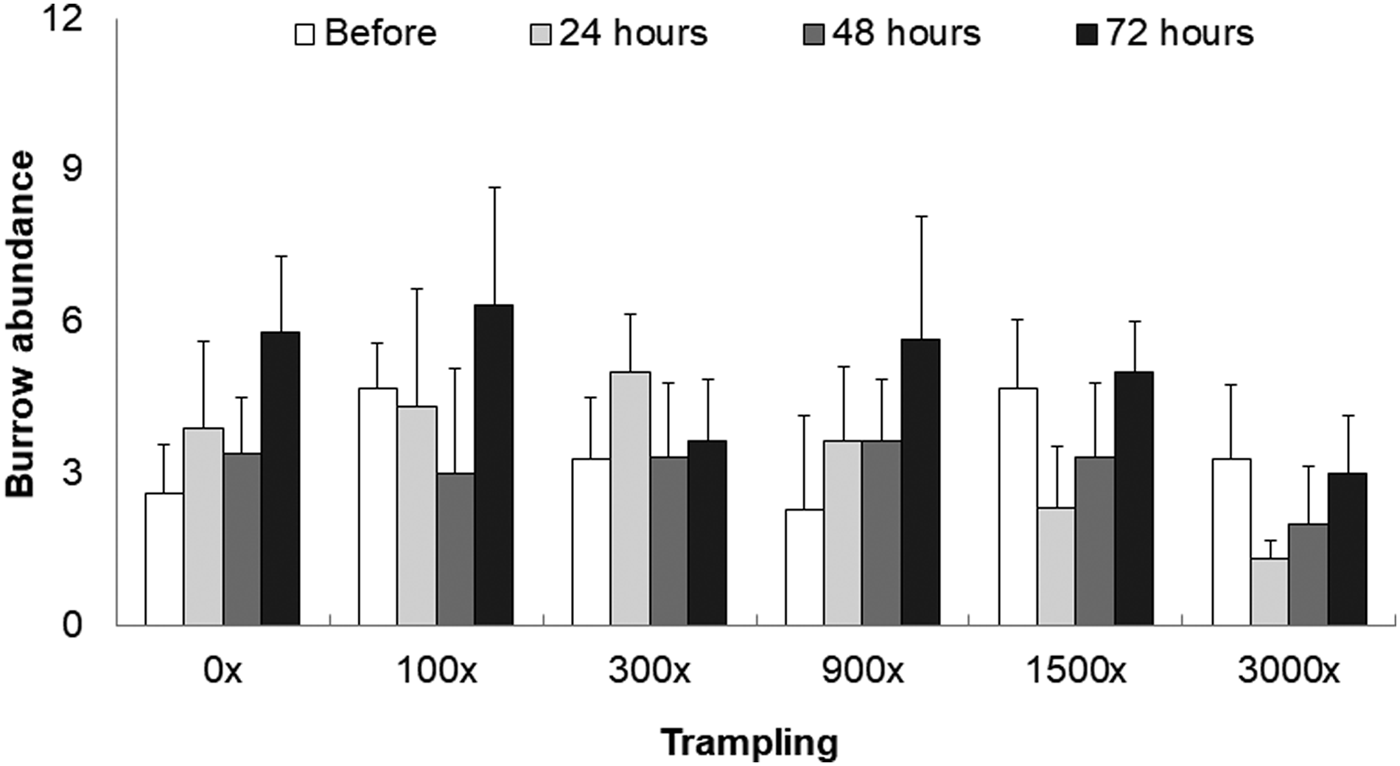
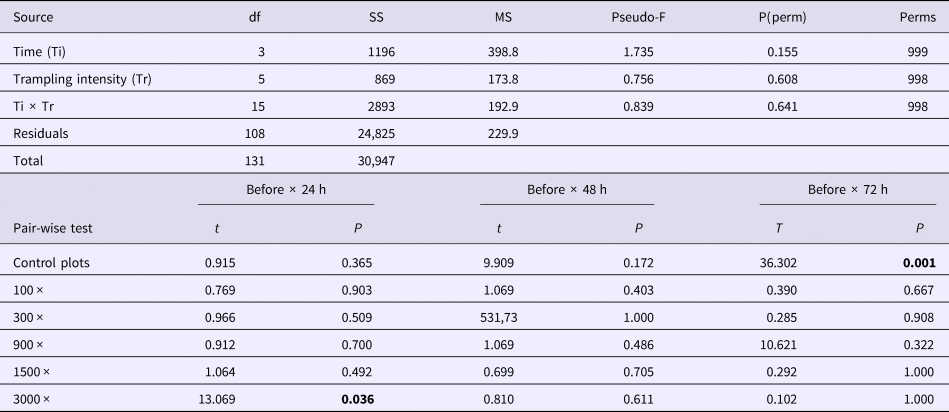
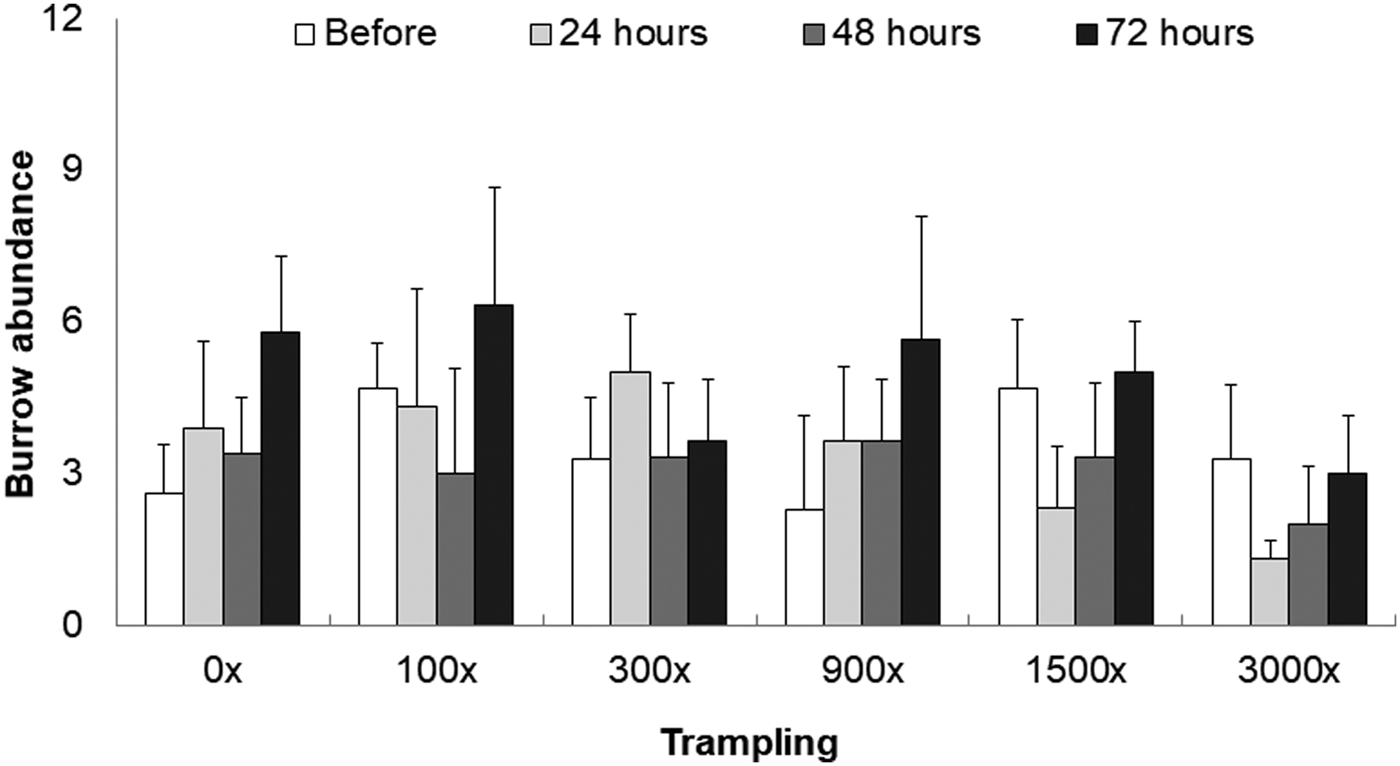
The abundance of ghost crab burrows increased in the control plots 24 h after the experimental trampling, but it was not significant (Figure 2, Table 1). Only the plot with 3000 steps had significantly fewer burrow openings 24 h after trampling, with a decline of 50% compared with the pre-impact sampling (Figure 2, Table 2). After 72 h, there was an increase in the abundance of burrows in almost all the plots up to 900 steps, with a significant difference only in the control areas (Figure 2, Table 2) (P = 0.01; t = 36.30).
Average number of burrows before and after (24, 48 and 72 h) the trampling impacts with distinct intensities (100, 300, 900, 1500 and 3000 steps).
Permutational analysis of variance (PERMANOVA) and pair-wise test comparing the abundance of ghost crab burrows among time (before and after trampling) and trampling intensities (0, 100, 300, 900, 1500 and 3000 steps)
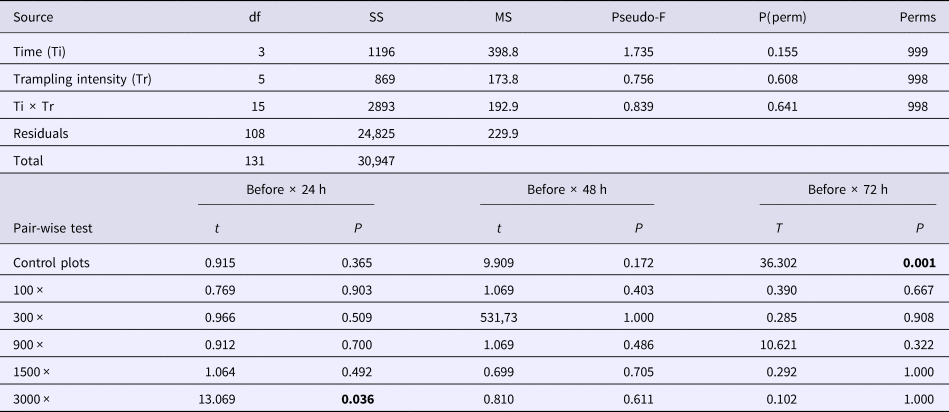
Significant values (P < 0.05) are marked in bold.
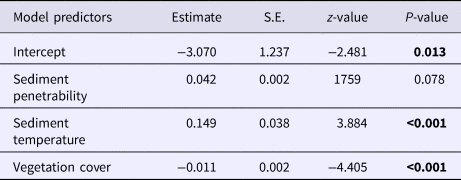
Model predictors of the Poisson generalized linear models for burrow abundance (response variable) as functions of potential predictors (sediment temperature, vegetation cover and sediment penetrability)
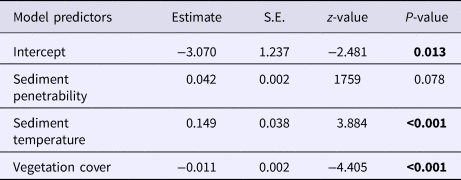
Significant values (P < 0.05) are marked in bold.
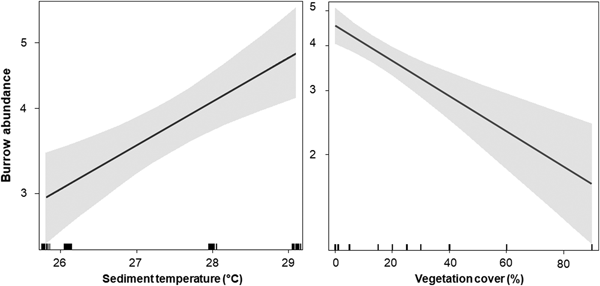
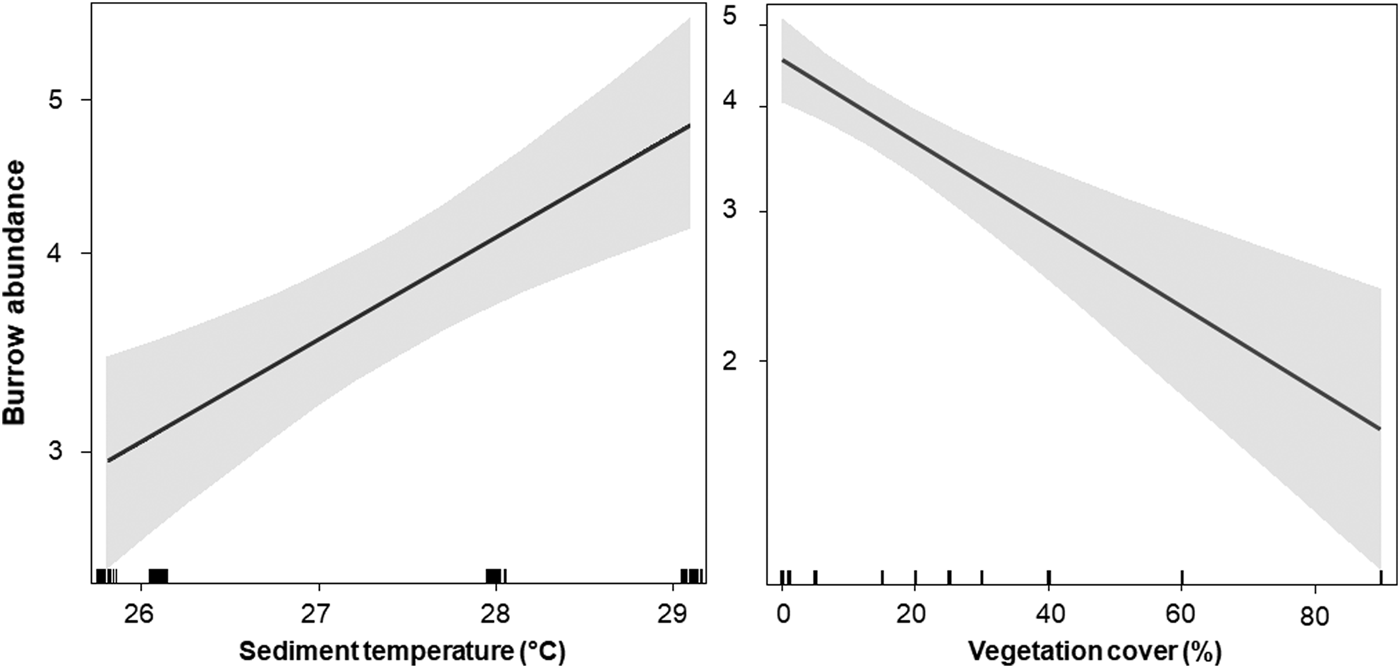
The burrow abundance was negatively associated with sediment penetrability, but such a predictor was not significant in the GLM (Table 2). In fact, only the environmental variables ‘vegetation cover’ and ‘sediment temperature’ were significantly (P < 0.01) associated with burrow abundance (Table 2). In general, the highest burrow abundance was found in the plots with the least vegetation and on the warmest days (Figure 3).
Generalized linear model predictions of burrow abundance as a function of sediment penetrability, sediment temperature, trampling intensity, vegetation cover and wind speed measured during a snapshot experiment. Shaded areas indicate 95% confidence bands. Only sediment temperature and vegetation cover were significant predictors of burrow abundance.
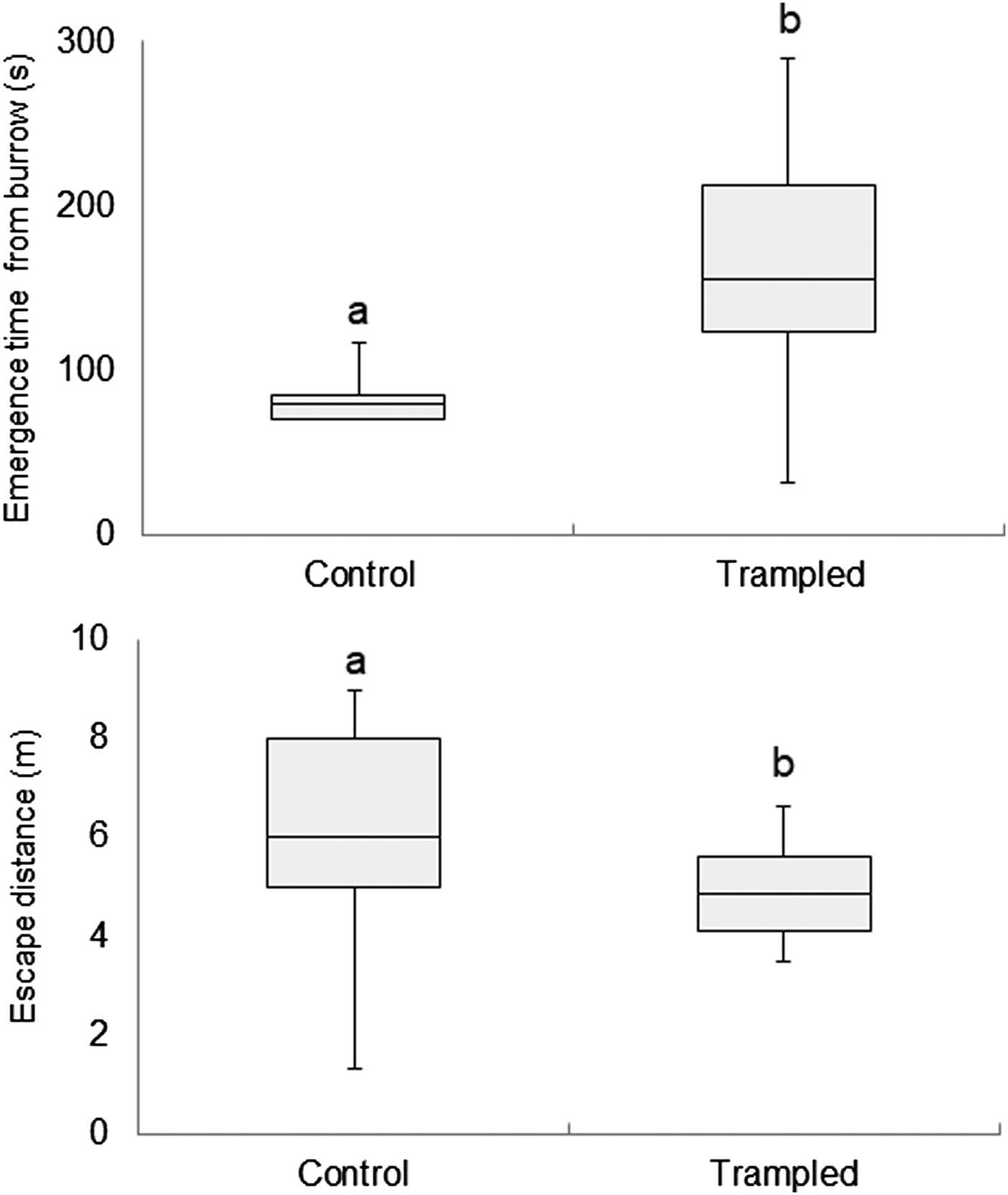
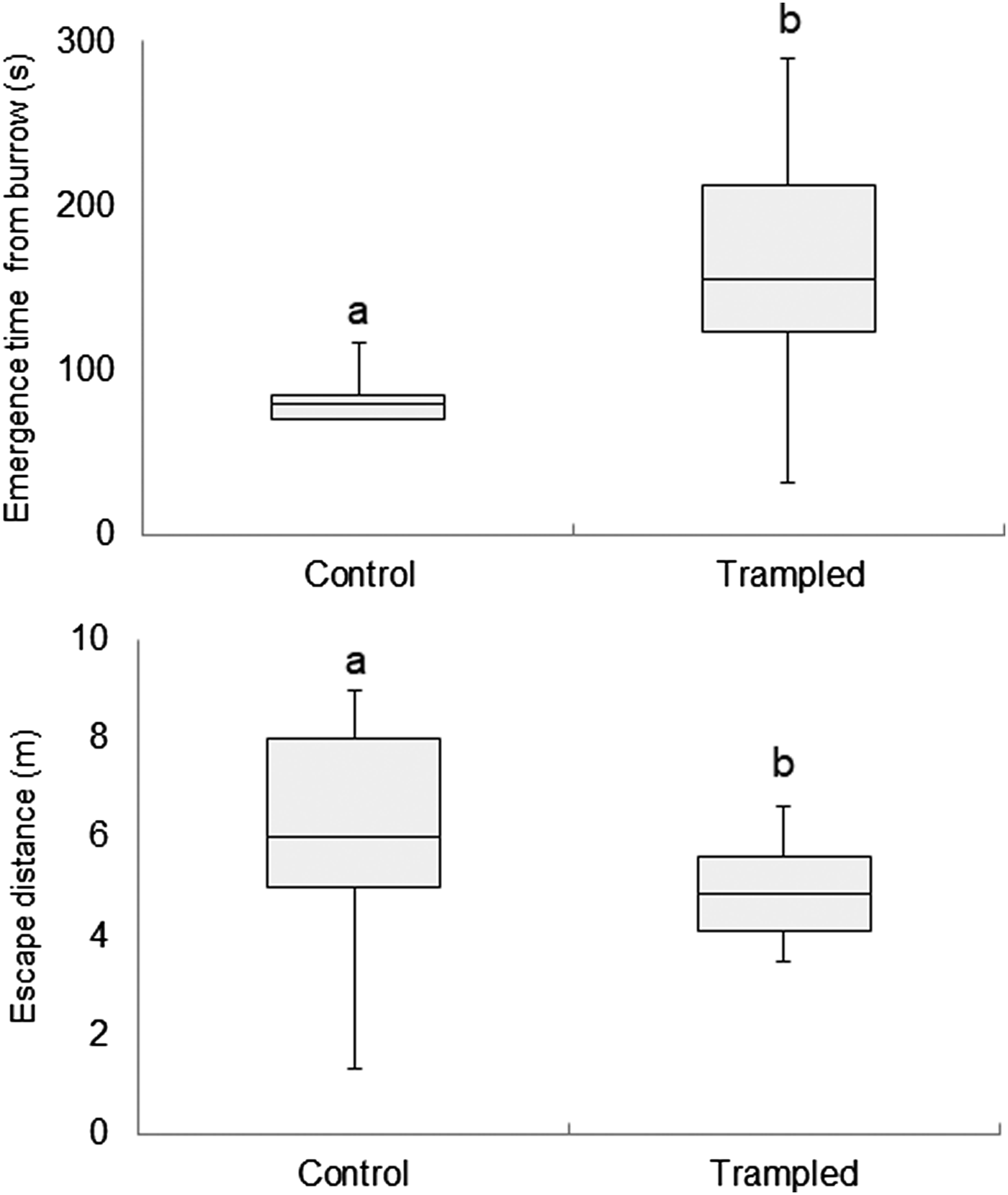
The emergence time of the ghost crab was significantly (P < 0.01) lower in the control plots compared with the trampled plots (Figure 4). The escape distance was also significantly delayed (P < 0.05) in the plots with 3000 steps compared with the non-trampled plots (Figure 4).
Boxplot of the emergence time (A) and escape distance (B) of the ghost crab O. quadrata in the control and trampled (3000 steps) plots. The black line and boxes represent the median values and interquartile range, respectively. The line bars are the highest and lowest values in the dataset (non-outliers).
Discussion
This study is one of the few attempts to experimentally understand how trampling, apart from other diffuse impacts of urbanization (e.g. beach cleaning and vehicle traffic; Schlacher et al., Reference Schlacher, Thompson and Price2007; Stelling-Wood et al., Reference Stelling-Wood, Clark and Poore2016), can affect the abundance and behaviour of ghost crabs (Lucrezi et al., Reference Lucrezi, Schlacher and Robinson2009). Most of the ‘compare and contrast’ designs attribute the decline of the ghost crab burrows on urbanized beaches to disturbances caused by intermittent human trampling, but they did not individually test the effects of this stressor (Schlacher & Thompson, Reference Schlacher and Thompson2012; Schlacher et al., Reference Schlacher, Lucrezi, Connolly, Peterson, Gilby, Maslo, Olds, Walker, Leon, Huijbers, Weston, Turra, Hyndes, Holt and Schoeman2016b). Indeed, our snapshot experiment showed that the most trampled areas (3000 steps) had significantly fewer burrow openings, but after two days, these sites were occupied again. We assume that the acute trampling performed in the present study does not reflect the reality of urbanized sandy beaches, which are impacted by chronic trampling. In such areas, ghost crabs seem to restore their burrow openings overnight (Lucrezi et al., Reference Lucrezi, Schlacher and Robinson2009). Thus, ghost crabs could be more resilient in areas with chronic urbanization impacts, unless trampling is caused by unusually large crowds during holiday periods.
The reduction in burrow abundance in the most trampled plots occurred simultaneously with an increase in this value in the control and less trampled plots (300 and 900 steps). This suggests that disturbed ghost crabs migrated to less trampled sites and/or that other crabs preferred to build their burrows on non-trampled areas. Burrow construction and maintenance requires high energy demands and metabolic costs, which are probably immediately experienced by the ghost crab following heavy and acute disturbances (Lucrezi & Schlacher, Reference Lucrezi and Schlacher2010). Heavy trampling may enhance water evaporation on the surface, decreasing sediment moisture (Lucrezi et al., Reference Lucrezi, Schlacher and Robinson2009) and affecting burrow construction and maintenance. However, if sediment moisture was crucial to burrow construction after trampling, we would not have found higher burrow abundances on the warmest days and in the low-vegetated plots because taller vegetation and mild temperatures may prevent high evaporation, providing more shade and moist areas for ghost crabs (Schlacher et al., Reference Schlacher, De Jager and Nielsen2011).
Ghost crabs are unlikely to be directly crushed by acute human trampling when compared with less mobile organisms (Moffett et al., Reference Moffett, McLachlan, Winter and de Ruyck1998) since their burrows can reach more than one metre deep, suggesting that the crabs may be partially protected (Pombo & Turra, Reference Pombo and Turra2013). As empirical evidence of burrow importance, Schlacher et al. (Reference Schlacher, Thompson and Price2007) found that burrows protect crabs against cars, but vehicles killed the shallowly buried individuals (5–30 cm). Studies have demonstrated that human disturbance influences burrow depth, creating deeper burrows being a behavioural protection mechanism of the crab (Lucrezi et al., Reference Lucrezi, Schlacher and Robinson2010; Schlacher & Lucrezi, Reference Schlacher and Lucrezi2010b). Additionally, ghost crabs can perceive sounds, vibrations and human presence at distances of up to 10 m and turn back to their burrows (Lucrezi & Schlacher, Reference Lucrezi and Schlacher2014). Even on urbanized sandy beaches, chronic trampling occurs mainly during diurnal periods, while O. quadrata is usually a nocturnal forager (Milne & Milne, Reference Milne and Milne1946; Valero-Pacheco et al., Reference Valero-Pacheco, Alvarez, Luis and Escobar2007).
The sediment compactness was higher in the trampled plots compared with the control plots, but there was no significant difference among the distinct trampling intensities over time. Thus, the reduction of the burrow abundance in the 1500× and 3000× trampled plots 24 h after the experiment may be attributed not to the hindering of excavation activity but to the recovery from a stressful situation since the longer the trampling period, the more time under stress. Indeed, we did not observe a significant relationship between sediment penetrability and burrow abundance. However, the recently trampled plots were completely disturbed. Although ghost crabs can visually detect objects or predators near them (Lucrezi & Schlacher, Reference Lucrezi and Schlacher2014), this ability is limited (Lucrezi & Schlacher, Reference Lucrezi and Schlacher2014). Thus, the irregular ground (i.e. high micro-relief) of the sediment surface probably impairs the visual detection of potential predators and humans. In fact, we found that both the crab escape response and the emergence time were delayed in the plots with 3000 steps, suggesting a possible sub-lethal effect (e.g. surface activity and predator perception reduction) of trampling and a mechanism responsible for the burrow decline in trampled beaches. If ghost crabs did not die after the experimental trampling, the occupied burrows should have been restored at night and recounted in the following days, even in the most trampled plots, as observed by Lucrezi et al. (Reference Lucrezi, Schlacher and Robinson2009). However, according to Neves & Bemvenuti (Reference Neves and Bemvenuti2006), ghost crabs may not reopen their trampled burrows to protect themselves from the impact. Additionally, we considered only active burrows in a dry region of the beach (see Methods). According to Pombo & Turra (Reference Pombo and Turra2013), signs of activity on abandoned burrows soon disappear in this beach stratum. Thus, the inactive burrows were considered unoccupied, and they were not recounted.
If ghost crabs are not crushed by trampling, what are the mechanisms responsible for the reduction in the abundance of burrows on urbanized sandy beaches? Answering this question requires a careful assessment, including other experimental approaches. In the case of chronic human trampling, the collapse of part of a burrow requires that it should be reopened and, consequently, creates a high energy cost. As a result, crabs can migrate to undisturbed areas, but when trampling is recurrent and non-trampled areas are rare, the crabs may stay in their collapsed burrows without reopening them (Neves & Bemvenuti, Reference Neves and Bemvenuti2006). We suggest that intermittent human presence on urbanized beaches causes intense stress and inhibits vital ghost crab behaviours, including diurnal surface activities, especially for juvenile crabs, nocturnal foraging and the need for moist gills; this results in a reduction in the health and growth of this species. Chronic trampling is also expected to have long-term effects, such as the removal of food from the burrow vicinity (Stelling-Wood et al., Reference Stelling-Wood, Clark and Poore2016). To reduce the speculation about these mechanisms, experimental and behavioural studies should be prioritized, since indirect and ‘compare and contrast’ studies observing the human impact on ghost crab burrows are abundant (Schlacher & Lucrezi, Reference Schlacher and Lucrezi2010a; Schlacher et al., Reference Schlacher, Lucrezi, Connolly, Peterson, Gilby, Maslo, Olds, Walker, Leon, Huijbers, Weston, Turra, Hyndes, Holt and Schoeman2016b).
We found an influence of natural predictors on ghost crab abundance in this short-term survey. Ghost crabs avoided building their burrows in the plots with the densest vegetation because the root system probably prevented proper burrowing (Schlacher et al., Reference Schlacher, Carracher, Porch, Connolly, Olds, Gilby, Ekanayake, Maslo and Weston2016a, Reference Schlacher, Lucrezi, Connolly, Peterson, Gilby, Maslo, Olds, Walker, Leon, Huijbers, Weston, Turra, Hyndes, Holt and Schoeman2016b, Reference Schlacher, Lucrezi, Peterson, Rod, Olds, Althaus, Hyndes, Gilby, Leon, Weston, Lastra, Williams, Schoeman, Rod, Andrew and Glenn2016c). In some cases, when the root system is not overly extensive, it is also possible that vegetation indirectly influences vigilance capacity and increases the predation risk for ghost crabs, as observed for shorebirds (Metcalf, Reference Metcalf1984). In addition, the predation of ghost crabs by owls, for instance, may be more intense in dune vegetation (Blankensteyn, Reference Blankensteyn2006; Branco et al., Reference Branco, Hillesheim, Fracasso, Christoffersen and Evangelista2010). Indeed, ghost crabs seem to prefer building their burrows in the unvegetated and wettest parts (e.g. upper intertidal and subterrestrial fringe) of sandy beaches (Turra et al., Reference Turra, Gonçalves and Denadai2007). An increase in the burrow abundance was also observed in all plots 72 h after the experiment, which is related to an increase in the sediment temperature. It is well accepted that temperature determines the active levels of ghost crabs, but it seems to be related to regional patterns (Valero-Pacheco et al., Reference Valero-Pacheco, Alvarez, Luis and Escobar2007; Pombo et al., Reference Pombo, Campagnoli, Castilho-Martins and Turra2017). Other studies reported that warmer days may also be the most active days for O. quadrata (Haley, Reference Haley1972; Lucrezi & Schlacher, Reference Lucrezi and Schlacher2014). It has been suggested that wind can obscure the burrow entrance on the upper shore, where there is loose sand (Lucrezi & Schlacher, Reference Lucrezi and Schlacher2009; Pombo & Turra, Reference Pombo and Turra2013), but we did not find a significant influence of wind speed. Similarly, sediment compactness seemed to influence burrow morphology and depth (Lim et al., Reference Lim, Yong, Tantichodok, Lim, Yong and Tantichodok2011), but it was not related to burrow abundance during our experimental trampling.
In conclusion, ghost crabs avoided heavily trampled plots for 24 h after the experiment, but these plots were recolonized over the following days. There was not a significant linear relationship of ghost crab abundance and trampling intensity or sediment compactness because only the 1500× and 3000× trampled plots were avoided during the first recount, probably due to the inability of the crabs to perceive potential predators. Therefore, the hypothesis that increased sediment compactness would cause avoidance of the recently trampled plots by the ghost crabs was not supported. Here, we suggest that burrow counting should not be performed immediately after events with unusual crowds, even on urbanized sandy beaches; ghost crabs can avoid building burrows in these places, so their abundance may be underestimated in such cases.
Acknowledgements
The authors thank the field volunteers Ana Angélica Santos Figueiredo Madureira and Jefferson da Silva Costa, and the Laboratory of Environmental Sciences for the logistical support.
Financial support
This work was funded by the Research Foundation of Rio de Janeiro – FAPERJ (E-26/111.395/2012) and the Brazilian Agency for Research Development – CNPq (470142/2013-8).