A civilian disaster is generally considered a situation where the acute needs of the affected population overwhelm the available resources that can be applied in a timely manner. This concept of relative mismatch between resource availability and needs during a disaster applies, in particular, to addressing health care needs, whether they be acute or chronic, until the conditions that caused the mismatch are resolved. Examples of resolution include mitigation of the initial event, external assistance, or sometimes the passing of a sufficient time interval to allow proper processing and care delivery.Reference Sztajnkrycer, Madsen and Alejandro Baez1 The mismatch forces the need to prioritize who receives whatever resources are available.
Since the early 19th century, the concept of prioritization for medical treatment of battlefield wounded, and then subsequently civilian casualties, has been evolving. The 20th century approach, applied to both pre-hospital and hospital settings, is to use ambulation, respiratory rate, pulse and perfusion, and mental status or cognition, in that sequence, to sort or triage individuals into categories. The most used system is Simple Triage and Rapid Treatment (START), where individuals are assessed and sorted into color coded categories based on the urgency of imminent death. For mass casualty events, a Secondary Assessment of Victim Endpoint (SAVE) can be used to assess injured individuals based on life expectancy, trauma statistics, and estimated resource (supplies, equipment, and personnel) use.Reference Benson, Koenig and Schultz2 Recent analysis suggests that the START methodology may not be as useful as intended due to a lack of accuracy.Reference Franc, Kirkland and Wisnesky3–Reference Arshad, Williams and Asaeda8 The underlying assumption is to do the most good for the most people with the available resources.
While the rapid assessment of acute decompensation, injuries, and death is an essential component of primary triage of a disaster response directed to immediate care, other factors such as chronic health needs, dependencies, and the overall burden of care are both critical and useful as secondary triage for addressing the needs of displaced populations beyond the first few minutes to hours. The need is even greater if members of the displaced population routinely required support for activities of daily living due to chronic conditions or disabilities.
The US Public Health Service deployed from 2006-2018 response teams to staff temporary shelters known as Federal Medical Station (FMS) to care for such displaced populations as part of a comprehensive disaster response plan. This report describes how US Public Health Service Rapid Deployment Force team PHS-1 developed, adapted, and utilized tools and methods to facilitate the evaluation and care of these populations.
Experience with an FMS During Hurricane Ike in 2008
RDF PHS-1 received a mission to respond to Hurricane Ike, a Category 4 storm with 1-minute sustained winds of ≥145 mph, that made landfall in Eastern Texas. The mission was to care for individuals and in some cases, their caretakers and families, who were primarily housed in private domiciles or assisted living facilities. Additional details for this mission are described in another publication, but in brief residents of 7 counties plus Galveston Island were transported for their protection to the Reed Arena on the Texas A&M University campus by civilian and military assets in advance of the storm peak to shelter in place.
The general patient-flow process for a Federal Medical Station involves.
-
• Transport to the facility
-
• Assessment for physical health and mental health conditions and social needs
-
• Provision of shelter, food, medication, and health care
-
• Discharge to a definitive care destination
For each of these major steps in the workflow, the team at the FMS at College Station, TX, had to identify methods and develop solutions. The following examples describe the types of challenges and solutions.
Initial Assessments of Evacuees
In anticipation of the need to process hundreds of people in a short time, the team implemented a 2-stage triage process. On initial intake arriving individuals were evaluated with a START type assessment, with a civilian Disaster Medial Assistance Team posted on a stand-by basis in an adjacent acute care treatment area. Following initial screening, new arrivals were assigned a cot position on the arena floor. After approximately 300 individuals were processed over a 10-hour period, RDF PHS-1 reassessed the situation, and, using the results from the initial screening process, shown in Table 1, developed an approach for a secondary triage.
Selected demographics of FMS residents at College Station TX, September 2008

Note: The FMS at College Station, TX in September 2008 accommodated approximately 400 total individuals with a single day peak of 302. Selected demographic characteristics are displayed. Some individuals had multiple conditions and limitations.
Second Level Assessment
With hundreds of individuals to care for, the operational challenge for the team was to identify residents who were most at risk for decompensation, those who had the greatest challenges performing activities of daily living, particularly in a shelter environment, and those likely to benefit from additional monitoring to detect a change in status. While the START system was developed for mass casualty events and designed for triage of emergent care, it did not provide a system to determine and classify the needs of chronically ill individuals. What was needed was a tool that could rapidly, objectively, and repeatedly classify individuals in a way that had meaning and translatability to other systems. The tool had to be readily learned to administer, easily completed, and provide consistent results.
The solution was to adapt the process and criteria used by both the Centers for Medicare and Medicaid Services and the State of Texas for determining the level of home care or assisted care needed for long term services and supports, sometimes referred to as the Nursing Facility Level of Care. In the US, assessment tools are selected by the states, with over 100 tools in use at the time.9 The team identified an abbreviated rating scale that was in use at the time by both the State of Texas and the federal government to assign individuals to chronic care facilities and estimate the general level of support. The assessment was used to guide appropriate assignment to a support plan or facility.
The scale had the following values:
-
Level 0. Persons able to function independently, but require transportation assistance
-
Level 1. Persons dependent on others or in need of others for routine care (eating, walking, toileting, child under 18 without adult supervision, etc.)
-
Level 2. Persons with disabilities such as blind, hearing impaired, amputation, deaf/blind
-
Level 3 – persons needing assistance with medical care administration, monitoring by a nurse, dependent on equipment, assistance with medications, mental health disorders
-
Level 4. Persons outside an institutional facility care setting who require extensive medical oversight (i.e., IV chemotherapy, ventilator, peritoneal dialysis, hemodialysis, life support equipment, hospital bed and total care, morbidly obese)
-
Level 5. Persons in institutional settings such as hospitals, long-term care facilities, assisted living facilities, state schools
The scale was reinterpreted by RDF PHS-1 to translate to the following outcomes regarding individual classification:
-
Level 1. Needs assistance with selected activities of daily living
-
Level 2. Has disabilities but may function independently for many activities of daily living
-
Level 3. Needs assistance with most or all activities of daily living
-
Level 4. Is dependent upon continuous support and observation
-
Level 5. Is dependent upon continuous support and observation and highest priority for transport to another facility
A determination of how many people in each category would then allow resource estimation for the FMS as a whole and for fair and appropriate resource allocation among the shelter residents. The overall burden of care for a facility at any given time was largely determined by how many patients were Level 3 or greater, requiring greater staffing and resources.
In addition, RDF PHS-1 used the assessment to target the type of destination, such as hospital, skilled nursing facility, general shelter, temporary housing or return to home, for more definitive care when conditions permitted. While a precise destination was generally unknown for most individuals and family units, the needs status of the individual and criteria for discharge could be established.
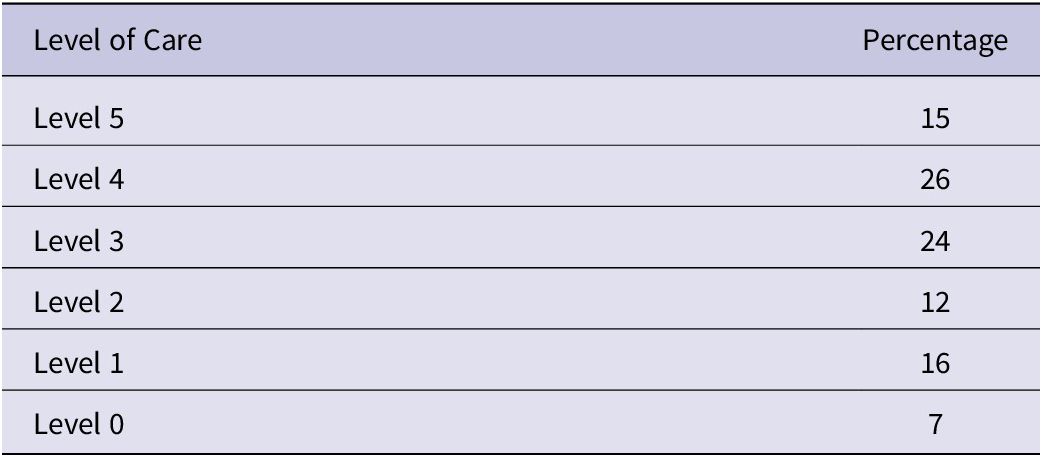
RDF PHS-1 developed a tool to perform the assessment that consisted of 3 questions. The tool is summarized in Table 2. This algorithm could be administered in less than a minute by any of the staff, after an initial 15-minute training session. The results of the initial screening are shown in Table 3. This tool enabled daily assessments of level of required care, which informed care requirements, placement within the facility regarding proximity to the central care station, and priority for discharge. The tool quantified changes over time for individuals and for the entire FMS population, using the median of all individuals.
Rapid determination of level of care

Note: Using sequential questions, a rapid determination of the Level of Care needed can guide appropriate resource allocation and discharge planning.
Initial level of care of shelter residents at College Station, TX September 2008

Note: Although most of the residents of the FMS at College Station, TX in September 2008 came from private homes and <20% came from assisted living or other facilities, the vast majority generally required support for daily living due to chronic medical conditions.
Some shelter residents came with a care provider, often a spouse, parent, or other family member. Approximately 1/3 of the accompanying caregivers developed their own medical problems following entry into the shelter and were unable to support others as they had previously. This development enlarged the scope of the assessment process beyond the initial population to include associated individuals on an as needed basis.
Additional Assessment
An Adequacy or Sufficiency of Care model aims for providing the best available care with the resources at hand, while not striving to attain what would consider the Standard of Care in a non-disaster setting.Reference Lempert and Kopp10–Reference Farmer and Carlton12 The goal is to provide interim or bridging care to support people until they can be transported to a more definitive care setting. The details of what is considered adequate care will be context-dependent, following a general principle of avoiding crises and health deterioration. A consequence of providing adequate or sufficient care is that the roles, responsibilities, resources, and support that care providers are accustomed to may not be available or appropriate. It is important for staff to remain mentally flexible, improvise, innovate, and keep adjusting as circumstances change. The conditions present while sheltering in place during a storm or other acute event will evolve when the storm passes and shift again when logistical supply and patient transport resources become available. Thus, serial assessments for each individual and for the shelter population as a whole are necessary for effective resource and staff management.
Further refined assessment and resource allocation addressed the issue of decompensation risk and rate among patients. Decompensation risk assessment estimates the likelihood of person requiring further medical intervention to treat or prevent serious illness. Decompensation risk is related to the amount of time before additional medical intervention is indicated. For example, someone who is dependent upon oxygen or ventilator support would decompensate in a matter of minutes without that support. In contrast, someone who has mild hyperglycemia could take a few hours before requiring additional medical intervention. Given the population profile in the FMS shelter, the team established the hierarchy for placement and monitoring as follows: oxygen dependency as most at risk, followed by metastable metabolic disorder such as insulin-dependent diabetes, followed by kidney failure, followed by vascular or neurological disorders. Separate assessments and monitoring were directed at mental health stability and social coping skills.
Discharge Planning and Implementation
Circumstances in Eastern Texas did not allow rapid return of residents to the point of origin and so alternate arrangements were necessary. The post-FMS definitive care destination could be another, often permanent, facility with appropriate services, such as a hospital, assisted living facility, or rented lodging, or it could be back to the individual’s home or originating facility. The determination of location depended upon the structural integrity of the home or originating facility, the operational status of the infrastructure including water and food supply, electricity, sewage disposal, and other support services, and upon the availability of emergency support services and a means to reach them, such as a functioning telephone or wireless service. Only when all these components are fully functional at the destination is it safe for displaced people to move out of the shelter.
Without specific knowledge of the range of possible options, the team had to quickly organize a discharge planning operating model. This model identified all stakeholders who might have knowledge of either shelter resident needs or local and regional care facilities including federal, state, county, local, and non-governmental representation and brought everyone together both in person and by telephone twice daily to identify options, recognize potential barriers, evaluate the current and likely short-term status of each option, and develop a plan for each shelter resident. Each entity shared their mission, resources, chain of communication and decision making, enabling consensus and coordinated follow through in understanding status, needs, and opportunities.
Shelter Population Discharge Kinetics
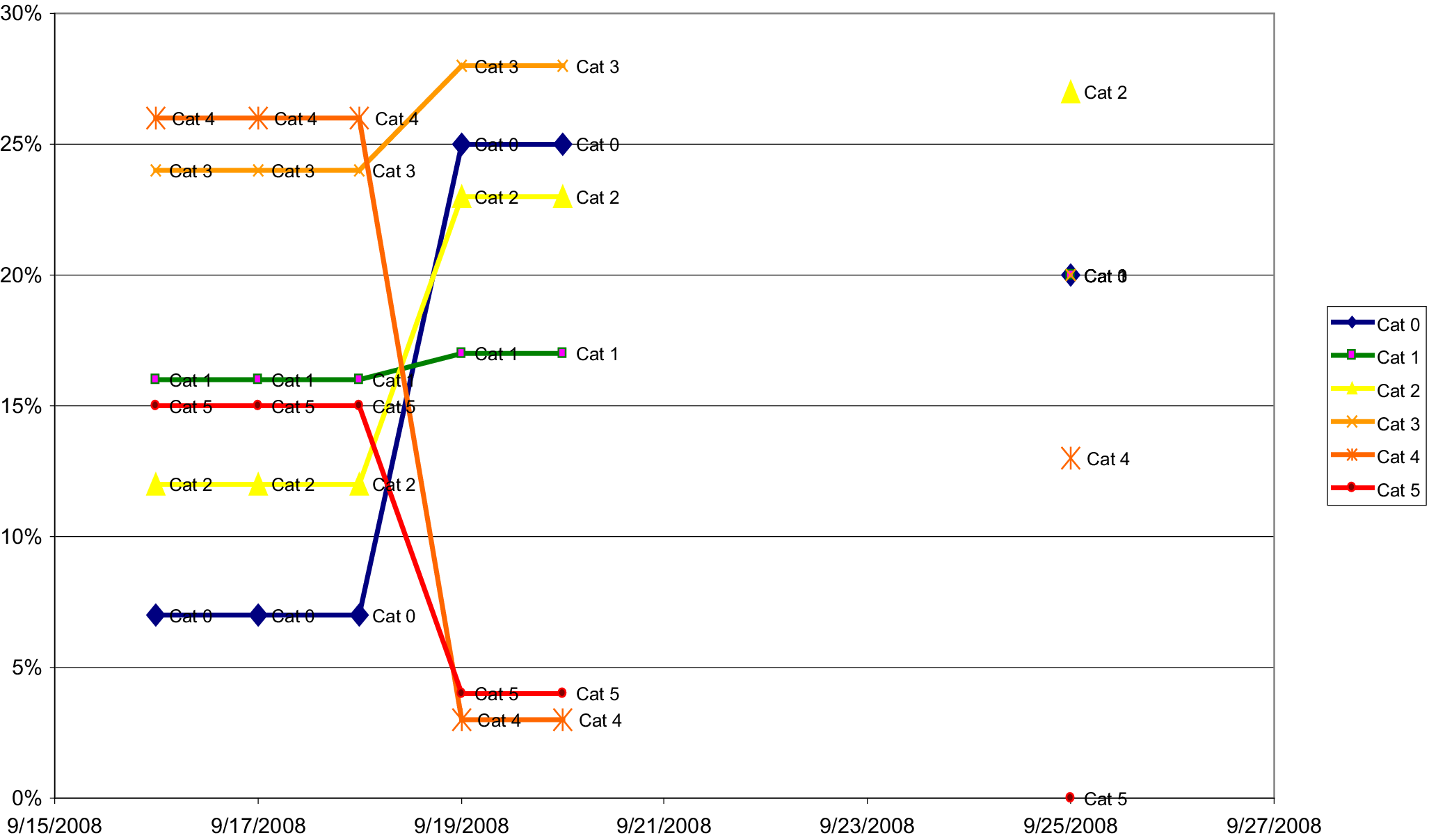
The kinetics of the shelter population numbers are shown in Figure 1, with the population rapidly filling the structure, beginning on September 11, 2008, about 2 days before Hurricane Ike made landfall. Discharges from the shelter began 4 days later, on September 14, and continued for another 10 days. The shelter population was at full capacity just above 300 persons, but due to ongoing admissions and discharges, the cumulative number of people that received care from deployed staff was closer to 400. The results of using an approach to prioritize discharge for people with the greatest care burden based on objective assessment is shown in Figure 2. Discharge kinetics were guided by the level of care assessment resulting in a relatively rapid decrease of the proportion of shelter residents in categories >Level 3 (people with the greatest care burden), and the commensurate increase over time in the proportion of Category 0 (zero), the people with the least care burden.
General shelter population kinetics at College Station, TX September 2008.
Note: The shelter residents consisted of primary patients (shown in purple) plus accompanying caregivers (lower blue line) with a total population shown by the upper dark blue line. The primary patients that had accompanying caregivers were generally more challenging to discharge and, thus, the rate of decrease of accompanying caregivers decreased more slowly than the overall decrease rate.

Discharge kinetics based on Level of Care assessment at College Station, TX September 2008.
Note: The tactical goal was to prioritize discharge of the individuals with the greatest needs and greatest care burden, Levels 4 and 5, so that the proportion of individuals with lesser care burden, Levels 0-3, would proportionately increase over time. The presence of an accompanying caregiver was independent of the level of care as some individuals with a greater level of care came from facilities that provided skilled support without an accompanying caregiver while individuals that had a lesser level of care may have come from a domicile and were accompanied by family members who routinely provided care.

Subsequent Tool Development
To capture the assessment methodology and develop individual care plans, in subsequent deployments RDF PHS-1 designed an intake document that further simplified the relevant medical history and evaluation of the care burden (Figure 3). The assessment of the burden of care level was revised to result in only 3 categories: <3, 3, or >4. Anyone not able to self-medicate was automatically at least Level 3.Anyone who was bed bound, either in a normal, bariatric, or hospital bed or was receiving intravenous chemotherapy, was automatically at least Level 4. Individuals who were on dialysis, supplemental oxygen, or needed help with feeding either by another person or through a tube, were flagged, even if they were less than Level 3.
Initial Federal Medical Station Intake and Admission Sheet developed by PHS RDF-1.
Note: Based on cumulative experience and the likelihood that an informatics-based intake system or paper office supplies would not be available when beginning a deployment, RDF PHS-1 developed a single page intake sheet that could rapidly establish the needs and priorities for immediate care and eventual discharge planning.

Using the RDF PHS-1 Intake Form, the team developed a list of variables or parameters that could be captured in a portable database constructed from off the shelf software in either a spreadsheet or relational database during a deployment. The list of 33 variables is in Table 4. Using these variables, RDF PHS-1 developed a separate onsite tracking system, which was based on standard commercially available spreadsheet and database software. This was used by command staff, providers, and pharmacy staff, to capture critical information regarding each individual under care and determining staffing assignments and needs. This system issued reports on census, care burden, discharge planning, and other critical data needed for decision making, as well as prepared discharge summaries for individual patients using a template. The system also provided both scheduled and unscheduled upstream reporting to US Health and Human Services leadership.
Variables captured during FMS Intake that were tracked and used to prepare discharge summaries

Note: 33 variables used to track shelter residents for reporting and preparation of discharge summary.
Superstorm Sandy – 2012
In October 2012 the largest Atlantic storm on record, Sandy, affected 8 countries and 24 states within US. Storm damage had a severe impact on Brooklyn, NY, where the structures were damaged by wind, flooding, and infrastructure collapse. Among the many missions the USPHS responded to was staffing an FMS located in a space that was part of the Brookdale Medical Center. Brookdale Medical Center is a combination of tertiary care, long term care, and teaching hospital serving primarily Eastern Brooklyn (King’s County) and parts of Queens County.
Displaced population
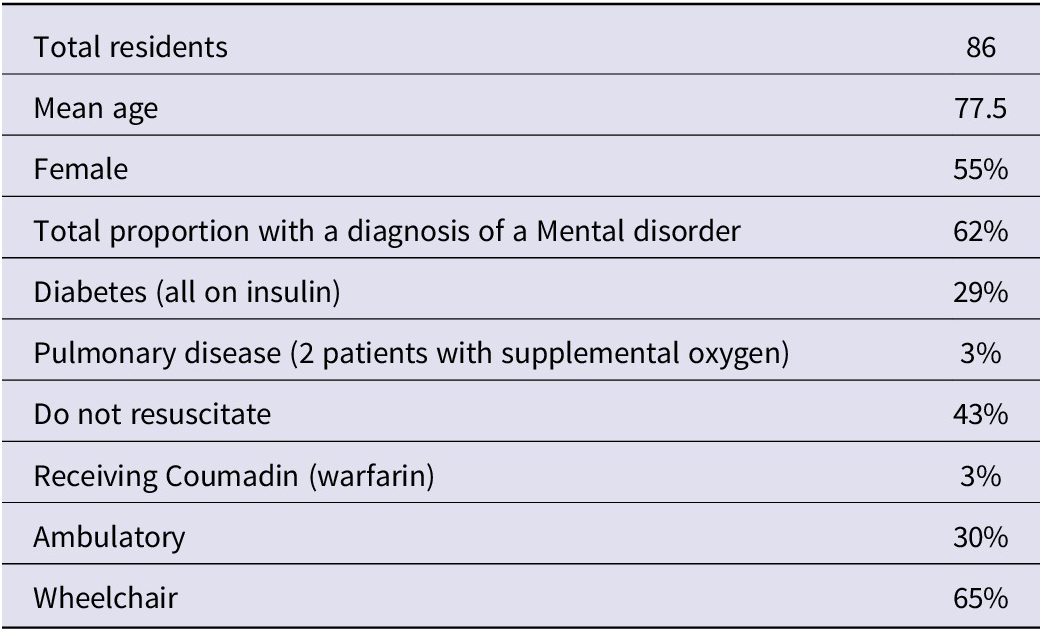
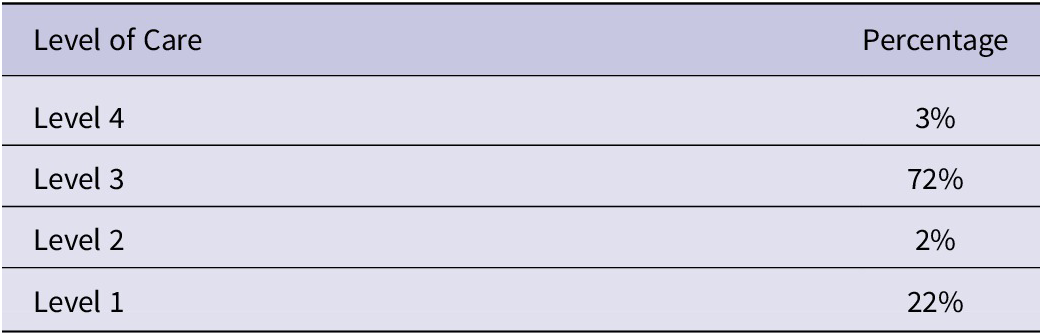
The FMS residents came from 3 extended care facilities accompanied by staff from these facilities. The accompanying professional care takers knew the facility residents well and were able to provide valuable background information as well as continuity of emotional support, while the USPHS focused on providing immediate medical care, logistical support, and preparation for eventual patient discharge. RDF PHS-2 was assigned initially assigned to the mission, with RDF PHS-1 subsequently assuming the mission. RDF PHS-2 used the burden of care assessment tool developed in prior deployments to communicate with RDF PHS-1 the population needs and level of care, as well as individual levels of care and specific needs of residents. This approach contributed to a smooth transfer of command, executed through formal ceremony, and resulted in no gap in services provided. Selected population characteristics are shown in Tables 5 and 6 and reflect that the displaced population consisted of generally elderly people with chronic medical conditions that limited their capacity to live independently. The population was characterized by a lack of mobility, the majority were receiving treatment for a mental health disorder, and almost half were under Do Not Resuscitate status.
Selected demographics of shelter residents at Brookdale Medical Center, Brooklyn, NY November 2012 to indicate care needs

Note: The elderly population in the FMS at Brookdale Medical Center, Brooklyn, NY in November 2012 was characterized by a lack of mobility, receiving treatment for a mental health disorder, and almost half were under Do Not Resuscitate status.
Initial Level of Care of shelter residents at Brookdale Medical Center, Brooklyn, NY November 2012

Note: Most of the residents came from assisted living facilities and generally required support for daily living due to chronic medical conditions.
Tracking, status updates, and discharge
Record keeping and data management were complicated by the need to use the host information facility for ordering medication and some tracking of staff, supplies, and residents. Concurrently, staff used portable laptops with an Electronic Medical Record (EMR) system provided by the federal government for formal charting and discharge preparation. The EMR was intended as the primary record keeping platform for disaster response deployments. In previous deployments, limitations of the assigned EMR system included (a) the system arriving well after the disaster response was underway, (b) requiring an on-site technician for trouble shooting and maintenance, (c) laptops and terminals to access the system were available in severely limited lumbers, and (d) the system was designed for acute care encounters rather than extended care. Regarding the last point, orders, medication records, and other data were automatically purged, and care plans could not be extended beyond a predetermined time limit of less than 2 weeks. Thus, careful attention to preserving records followed by manual data re-entry was required. Keeping a parallel record system based on the RDF PHS-1, key variables allowed the mission to proceed with timely reporting, generation of discharge summaries, and reconstruction of the primary medical record as needed.
Gulf Coast Hurricanes in 2017
Multiple sequential hurricanes hit the US Gulf Coast late in the summer of 2017.This report will focus on 2 missions at an FMS on the campus of Florida International University in Miami, FL that occurred sequentially in response to Hurricanes Irma and Maria.
Displaced Population
The mission assignment began with a group of 80 people from the Florida Keys (Table 7), consisting primarily of senior citizens with chronic medical conditions. Subsequently, another 40 people, also from the Florida Keys, were added to the mission. Applying the tools of care burden assessment and risk for decompensation, the USPHS team established a hierarchy for staff assignments and discharge planning. Following discharge of the initial population of 120 people, another 87 individuals with chronic kidney disease arrived in the FMS. The arrived directly from Puerto Rico but began their journey in the US Virgin Islands.
Population characteristics of those at the disaster response shelter at Florida International University, Miami September 2017, indicating range of level of care

Note: Shown are selected demographic and diagnostic categories of shelter residents, at Florida International University, Miami, FL September 2017.
Tracking, status updates, and discharge
Using the approach of key variables and a parallel tracking system, RDF PHS-1 was able to efficiently track, file reports, and prepare the sheltered population for discharge. An embedded 4 member Services Access Team worked during the day shift to facilitate discharge planning. As power was restored to the Florida Keys, individuals from that area could be discharged to the more proximal areas as support services became available, eventually followed by those from the more distal areas. The people with chronic kidney disease were discharged to temporary housing in hotels in the Miami area to continue their dialysis treatments.
Discussion
The assessment of each individual should take an integrated approach, addressing immediate life-threatening elements followed by an assessment of the level of care needed to provide for their needs both during the disaster period and a plan for an appropriate discharge destination. The process should be simple, rapid, and not require mathematical calculation, as that can be a source of delay and error.
An integrated approach might resemble something like the following:
-
• Immediate assessment for ability to ambulate, respirations, pulse and perfusion, respond to simple questions and commands, and signs of bleeding. Any objective findings that indicate an immediate threat to life are diverted to an acute treatment either on site, if feasible, or transport to an acute care facility, if feasible.
-
• All individuals who do not need immediate transport or life-saving treatment can and should be evaluated for level of care and decompensation risk and rate. The priorities RDF PHS-1 used for decompensation risk were oxygen dependence, metabolic instability, kidney failure, and mental health fragility.
-
• Determine initial resource allocation, proximity to care provider station in a shelter, and monitoring schedule based on level of care and decompensation risk and rate.
-
• Level of care and decompensation risk and rate are dynamic and must be continually reassessed to adjust resource allocation, discharge criteria, and overall system trends and needs.
-
• Determine expectations for discharge including a suitable destination and priority.
Level of care assessment and decompensation risk and rate can use the tools developed by RDF PHS-1, which have been validated in multiple deployments, used by other RDF teams, and are simple, rapid, and informative. These tools are part of a more comprehensive on-site tracking system to determine on an ongoing basis resource allocation and needs, staffing assignments, discharge planning, configuration, and overall population and system trends. Such a tracking system can be set up on site using a laptop computer and standard off-the-shelf software, such as spreadsheet or database applications using the Intake sheet or the list of key variables or both.
The care of displaced populations with chronic health needs in temporary shelters differs in many respects from the needs and priorities of a mass casualty event for a general population. Considering that in the US between 25-30% of all adults have multiple chronic diseases, disaster response should anticipate caring for displaced populations with relevant and appropriate tools and process.Reference Boersma, Black and Ward13 The experience and techniques of RDF PHS-1 provides guidance on the effective assessment and management of the process.