Introduction
Prospective memory (PM) is the cognitive ability that enables individuals to form, maintain in memory and carry out delayed intentions at a certain time (time-based prospective memory) or when a specific event occurs (event-based prospective memory). PM failure is a common complaint of people suffering from memory disorders (Smith, Della Sala, Logie, & Maylor, Reference Smith, Della Sala, Logie and Maylor2000) and an early indicator of age-related cognitive changes and dementia (Costa, Caltagirone, & Carlesimo, Reference Costa, Caltagirone and Carlesimo2011; Costa, Carlesimo, & Caltagirone, Reference Costa, Carlesimo and Caltagirone2012; Schmitter-Edgecombe, Greeley, & Woo, Reference Schmitter-Edgecombe, Woo and Greeley2009; Troyer & Murphy, Reference Troyer and Murphy2007).
In a prototypical PM experiment, participants are engaged in an attentionally demanding ongoing activity; then, at the occurrence of the target event (which is embedded in the ongoing activity in an event-based task) the subject has to perform the previously encoded action. This condition greatly resembles multitasking. Indeed, to accurately fulfill the delayed intention participants have to share their cognitive resources between performing the ongoing task and keeping track of the PM task (e.g., by periodically remembering the prospective intention, actively monitoring the external environment, checking the passing of time, stopping their performance of the ongoing task and starting to perform the intended action, etc.; Burgess & Shallice, Reference Burgess and Shallice1997; McDaniel & Einstein, Reference McDaniel and Einstein2011).
Various studies, using both ecological and laboratory procedures, have consistently shown PM impairment in patients with Parkinson’s disease (PD) (Costa, Peppe, Caltagirone, & Carlesimo, Reference Costa, Peppe, Caltagirone and Carlesimo2013; Foster, Rose, McDaniel, & Rendell, Reference Foster, Rose, McDaniel and Rendell2013; Kliegel, Altgassen, Hering, & Rose, Reference Kliegel, Altgassen, Hering and Rose2011). Some of these studies also evidenced a relationship between PM impairment and decreased everyday functioning and perceived quality of life (Pirogovsky, Woods, Vincent Filoteo, & Gilbert, Reference Pirogovsky, Woods, Vincent Filoteo and Gilbert2012). The hypothesis was advanced that the PM disorders of PD patients are due to a deficit of executive functioning and, particularly, set-shifting abilities (Kliegel et al., Reference Kliegel, Altgassen, Hering and Rose2011). This hypothesis fits well with the neuropsychological observation that these patients have executive disorders and that their shifting aptitude may be weakened early in the disease course (Aarsland et al., Reference Aarsland, Bronnick, Williams-Gray, Weintraub, Marder, Kulisevsky and Emre2010; Cools, Reference Cools2006; Cools & D’Esposito, Reference Cools and D’Esposito2011). Moreover, some studies demonstrated that PD patients have greater difficulty performing PM tasks in which executive functions are particularly stressed, such as time- based versus event-based tasks (Costa, Peppe, Caltagirone, & Carlesimo, Reference Costa, Peppe, Caltagirone and Carlesimo2008; Katai, Maruyama, Hashimoto, & Ikeda, Reference Katai, Maruyama, Hashimoto and Ikeda2003; Raskin et al., Reference Raskin, Woods, Poquette, McTaggart, Sethna, Williams and Tröster2011; report divergent results) and non-focal versus focal tasks (Foster, McDaniel, Repovs, & Hershey, Reference Foster, McDaniel, Repovs and Hershey2009). A significant correlation between performance on PM tasks and tests tapping shifting and planning abilities was also reported (Costa, Peppe, Caltagirone, et al., Reference Costa, Peppe, Caltagirone and Carlesimo2008; Costa, Peppe, Brusa, et al., Reference Costa, Peppe, Brusa, Caltagirone, Gatto and Carlesimo2008; Kliegel, Phillips, Lemke, & Kopp, Reference Kliegel, Phillips, Lemke and Kopp2005; Raskin et al., Reference Raskin, Woods, Poquette, McTaggart, Sethna, Williams and Tröster2011).
Clarifying the nature of the relationship between shifting abilities and PM processes in PD is not only theoretically relevant but might also provide clues for clinical management of the disease. Cognitive intervention to treat neuropsychological deficits in PD is still in the early stages (for reviews, see Calleo et al., Reference Calleo, Burrows, Levin, Marsh, Lai and York2012, and Hindle, Petrelli, Clare, & Kalbe, Reference Hindle, Petrelli, Clare and Kalbe2013) and nothing is known about rehabilitating the abilities involved in PM functioning.
In this study, we investigated whether rehabilitative training aimed at improving shifting abilities was effective in improving the PM performance of a group of PD patients who exhibited decreased executive functioning. Improved PM performance after training implementation would indicate a causal relationship between reduced executive (i.e., shifting) aptitudes and poor PM functioning. Thus, we assessed PM and shifting abilities in a sample of PD patients with Mild Cognitive Impairment (MCI) before (T0) and immediately after (T1) a rehabilitative intervention to train shifting abilities. Another PD group with MCI underwent the same assessment; in this case, however, it was made before and after execution of a placebo treatment. We predicted that the PD patients who had undergone the shifting training (but not the placebo group), would show improved performance on the PM procedure (i.e., we predicted a significant interaction between treatment-shifting training vs. placebo-and time of assessment -T0 vs. T1). Moreover, we expected that the rate of improvement on the PM task would correlate with the performance improvement on the shifting tasks.
As reduced efficiency of shifting processes has been claimed to account for PD patients’ poor performance in PM conditions with high attentional demands (Kliegel et al., Reference Kliegel, Altgassen, Hering and Rose2011), a secondary aim of the study was to evaluate whether the shifting training would primarily affect their performance on attentionally demanding PM tasks. Following McDaniel, Guynn, Einstein, and Breneiser (Reference McDaniel, Guynn, Einstein and Breneiser2004), we used two PM procedures to investigate this hypothesis: in one procedure the PM cue was in the focus of attention of the ongoing task; in the other, the PM cues were not processed in the ongoing task. In fact, non-focal PM conditions require strategically driven processes that make greater demands on the attentional system than focal PM conditions in which the subject can rely on somewhat automatic processes to retrieve the prospective intention (McDaniel & Einstein, Reference McDaniel and Einstein2000). Therefore, if shifting abilities are mainly required in PM tasks with high attentional demands, then a greater effect of shifting training should be found on performance in non-focal versus focal conditions.
Methods
We recruited 17 right-handed individuals with idiopathic PD and eight right-handed healthy controls (HC) who participated in the study after giving their written informed consent. The study was conducted in accordance with the Helsinki Declaration and was approved by the Ethics Committee of Fondazione Santa Lucia.
Idiopathic PD was defined according to the United Kingdom Parkinson's Disease Society brain bank criteria (Hughes, Daniel, Kilford, & Lees, Reference Hughes, Daniel, Kilford and Lees1992). Inclusion criteria included the presence of MCI according to Litvan et al.’s criteria (Litvan et al., Reference Litvan, Goldman, Tröster, Schmand, Weintraub, Petersen and Emre2012). In particular, we included PD patients who performed 1.5 SD below the normative population in two tests of a neuropsychological screening battery, one of which investigated executive functioning. Standard scores (adjusted for gender, age, and years of formal education) on neuropsychological tests were used. Neuropsychiatric, neuroradiological (computed tomography or magnetic resonance) and laboratory examinations were carried out to exclude major psychiatric disorders, neurological conditions other than PD, vascular brain lesions and major systemic or metabolic diseases that could affect cognitive status. The Clinical Dementia Rating Scale (Hughes, Berg, Danziger, Coben, & Martin, Reference Hughes, Berg, Danziger, Coben and Martin1982), the Activity and Instrumental Activity of Daily Living (IADL) (Lawton & Brody, Reference Lawton and Brody1969) and the Pill questionnaire (Dubois et al., Reference Dubois, Burn, Goetz, Aarsland, Brown, Broe and Emre2007) were administered to exclude significant changes in the management of routine activities. The Beck Depression Inventory (BDI; Beck, Ward, Mendelson, Mock, & Erbaugh, Reference Beck, Ward, Mendelson, Mock and Erbaugh1961; Visser, Leentjens, Marinus, Stiggelbout, & van Hilten, Reference Visser, Leentjens, Marinus, Stiggelbout and van Hilten2006) and the Apathy Evaluation Scale – Self version (AES; Leentjens et al., Reference Leentjens, Dujardin, Marsh, Martinez-Martin, Richard, Starkstein and Goetz2008; Marin, Biedrzycki, & Firinciogullari, Reference Marin, Biedrzycki and Firinciogullari1991) were also administered to exclude subjects with significant signs of depression (BDI>14) and apathy (AES>41), respectively. The Parkinson’s Disease Questionnaire (PDQ-39; Jenkinson, Fitzpatrick, Peto, Greenhall, & Hyman, Reference Jenkinson, Fitzpatrick, Peto, Greenhall and Hyman1997) was administered to examine the PD patients’ quality of life. At the time of the assessment, all PD patients were being treated with levodopa and/or dopamine agonists (ropinirole, pramipexole, and rotigotine). They had a mean duration of disease of 9.2 years and a mean duration of dopamine therapy of 7.8 years and, during the study, showed a stable clinical status and received stable dopamine therapy.
Inclusion criteria for HC included: (i) absence of current or previous neurological or psychiatric disorders, major systemic or metabolic diseases able to induce significant changes in cognition; (ii) no history of alcohol or drug abuse; (iii) absence of subjective cognitive disturbances; and (iv) MMSE score ≥26 (Measso et al., Reference Measso, Cavarzeran, Zappala, Lebowitz, Crook, Pirozzolo and Grigoletto1991).
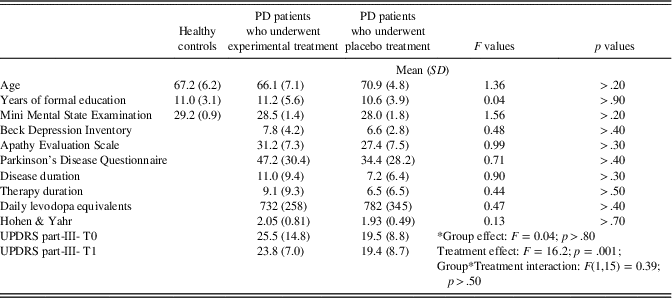
Table 1 reports clinical and sociodemographic characteristics of the samples.
Clinical and sociodemographic characteristics of the samples.

* Results of mixed ANOVA with Treatment (experimental vs. placebo) as between factor and Time of Assessment (T0 vs. T1) as within factor.
UPDRS=Unified Parkinson’s Disease Rating Scale.
Study Design and Procedure
We used a double-blind design in which PD patients were assigned to two treatment arms that were blinded to the researcher who executed pre and post training assessments and who was instructed to not inquire the subject about his kind of treatment: in one arm (experimental), we administered a 1-month 12-session treatment (3 sessions weekly) focused on training shifting abilities. In each 45-min session, paper and pencil exercises involving different stimuli (e.g., letters, numbers, and shapes) were administered. The exercises were modeled on existing paradigms that had proved sensitive to frontal-striatal activity (Macdonald & Monchi, Reference Macdonald and Monchi2011). During the exercises, participants had to alternately select between stimuli belonging to different semantic categories or with different visual and spatial features. For example, they had to alternately indicate figures representing living or non-living objects on a sheet of paper, join numbers with the corresponding letters (i.e., as in the Trail Making Test - Part B) or select stimuli on an arrow that were alternately close to or far from a target letter, etc. The exercises were grouped in four modules of increasing difficulty (e.g., the stimuli were increased and the time to complete the exercises was reduced); each module consisted of three sessions. Starting from a base module, the subsequent modules were consecutively proposed. When a subject did not reach the required accuracy level in a module (80%), it was administered again. All but one patient reached the criteria established for all sections.
In the second arm (placebo), patients were administered a treatment that had the same set characteristics (i.e., frequency, duration of each session and of the whole treatment) as the experimental session. In this case, however, participants were administered simple cognitive exercises for language abilities (dictation exercises and reordering of sentence sequences), which did not vary for difficulty across sessions, and respiratory exercises aimed at improving their phonatory abilities. In particular, half of each session was dedicated to cognitive activity and half to respiratory exercises.
To evaluate the effect of the shifting training on cognitive functioning, we considered the following outcome measures: (i) performance scores on an experimental procedure aimed at assessing event-based PM; (i) performance scores on two tests requiring the implementation of shifting abilities, namely, the Alternate Fluency and the Trail Making Test (see detailed description of these instruments below). The tests were administered to PD patients twice, that is, before treatment (T0) and within one week from the end of treatment (T1). All PD patients were assessed at T0 and T1 while taking their regular dopamine therapy. To control for any confounding effects of dopamine therapy in the two sessions, each patient was assessed at his/her best antiparkinsonian therapy response at the same time of day at T0 and T1.
Nine PD patients in the experimental arm and eight in the placebo arm completed the study. According to the above criteria, five patients in the experimental group had MCI multiple domain impairment (i.e., four had executive/attention and memory disorders and one had executive/attention and constructive praxis disorders) and four patients had MCI single domain impairment (dysexecutive/attention). In the placebo group, six had MCI multiple domain impairment (five had executive/attention and memory disorders, one had executive/attention and constructive praxis disorders) and two had MCI single domain impairment (dysexecutive/attention). A χ2 analysis did not evidence significant between groups difference in the distribution of MCI subtypes (i.e., single vs. multiple domains MCI; χ2(df=1)=0.70; p>.40). Four patients out of nine in the experimental arm were treated with levodopa and dopamine agonists whereas the remaining five were in taking only levodopa therapy. As for the patients in the placebo arm, four were treated with levodopa and dopamine agonists and four only with levodopa. The side onset of extrapiramidal symptoms was the left one for five patients in both the experimental and placebo arm. In five patients in the experimental arm and in four patients in the placebo group the disease duration and the dopamine treatment was longer than 5 years. These patients showed mild long term treatment symptoms characterized by wearing-off that did not modify daily living activities.
Table 1 reports levodopa equivalents and clinical and sociodemographic characteristics of the two PD groups. HC were administered cognitive tasks only once.
Experimental Measures
PM procedure
This experimental procedure was a revised version of the paradigm used by McDaniel et al. (Reference McDaniel, Guynn, Einstein and Breneiser2004).The material for the PM procedure consisted of 32 trisyllabic, six-letter, singular words [natural logarithm frequency CoLFIS database (Bertinetto et al., Reference Bertinetto, Burani, Laudanna, Marconi, Ratti, Rolando and Thornton2005) Mean 3.73 SD 1.75] and 24 nonwords created by replacing the first syllable with the last syllable of real words. Two sets were formed. Each one included 24 word-word pairs and 24 word-nonword pairs.
Participants were seated comfortably in a dimly lit room at a distance of approximatelly 40 cm from the screen. Stimuli were presented on a computer screen in lowercase Arial typeface using E-Prime software; each stimulus appeared 1° laterally to the central 0.5×0.5° fixation point and subtended 0.5×2°. Two experimental blocks were given. In each of the 48 trials of the experimental blocks a word pair was presented for 5 s followed by an ISI of 0.5 s. In one of the blocks, participants were instructed to perform a lexical decision task in which they had to decide whether both members of the pair were words or whether one of the two was a non-word. In the other block, the instructions were to perform a syllable matching task in which they had to decide whether the central syllable of the two strings of letters was the same or not. At the beginning of each block, written instructions indicated which of the two ongoing tasks had to be performed. Participants had to respond by pressing one of two buttons on a keyboard with their right hand. They were also instructed that in both blocks when the syllables “fa” and “go” (the PM cues) appeared at the center of one of the letter strings forming the pair, they had to press a different button on the keyboard than those used to respond in the ongoing task. They were told to complete the ongoing task first and then to respond to the PM cue. Thus, following McDaniel et al. (Reference McDaniel, Guynn, Einstein and Breneiser2004) we constructed two blocks: one with focal cues, in which the PM cue is in the focus of attention of the ongoing task (i.e., in this block both the ongoing task and the PM cue are syllabic) and one with non-focal cues, in which the PM cues are not processed in the ongoing task (i.e., in this block the ongoing task is lexical and the PM cues are syllables). PM cues appeared four times in each block for a total of eight PM events (four were in real words and four were in non-words; approximately 17% of trials). PM cues were distributed throughout the entire block using the following procedure: the block was divided into six parts, each consisting of eight trials. The target cue could appear randomly in each of the eight trials but could not appear in the first four trials of each block or in consecutive trials. Before each block run, participants performed a training (16 trials in each block). The order of administration of the two blocks was randomized across participants and across T0 and T1 assessments. Percentage of accuracy and response times were recorded.
Set-shifting tests
Word fluency test
The test consisted of three subtests (Costa et al., Reference Costa, Peppe, Caltagirone and Carlesimo2014): (i) phonemic fluency, (ii) semantic fluency and (iii) alternating phonemic/semantic fluency. As in the phonemic subtest, participants had to generate words beginning with the letters “A”, “F”, and “S” in three different trials, each lasting 60 s. In the semantic subtest, they had to say words belonging to the “colors”, “animals”, and “fruits” categories in three different trials; again, each trial lasted 60 s. The alternate phonemic/semantic task was an extra-dimensional shifting task (Downes, Sharp, Costall, Sagar, & Howe, Reference Downes, Sharp, Costall, Sagar and Howe1993; Henry & Crawford, Reference Henry and Crawford2004) in which participants had to continuously alternate words beginning with a particular letter with words belonging to a specific category, as follows: trial (1) letter “A” and “colors” ; trial (2) letter “F” and “animals”; trial (3) letter “S” and “fruits”. Three, 60-s trials were given. At the beginning of each fluency task a training trial was given to ensure that subjects understood the instructions. No proper nouns were used in any of the fluency tasks. Experimental subjects performed the phonemic fluency task first, the semantic fluency task second and the phonemic/semantic alternating test last. To evaluate subjects’ performance, the number of words correctly generated within 60 s in each trial was recorded.
Trail Making Test
The Trail Making Test (TMT; Giovagnoli et al., Reference Giovagnoli, Del Pesce, Mascheroni, Simoncelli, Laiacona and Capitani1996) consists of two parts: part A (TMT-A), in which subjects use a pencil to track lines joining numbers of increasing order displayed on a sheet of paper; part B (TMT-B), in which subjects track lines that alternately join numbers of increasing order and letters in alphabetical order. The time needed to complete the TMT-A and the TMT-B was recorded.
The PM procedure was performed on a different day than the TMT and the Word fluency test, which were administered in one session.
Statistical Analysis
To compare the accuracy of PD patients and HC in the experimental PM procedure, a mixed analysis of variance (ANOVA) with Group (PD patients vs. HC) as between factor and Task (ongoing vs. PM score) and Block (focal vs. non-focal) as within factors was executed. As in the case of response times, PM trials were not analyzed because many PD patients made too few correct responses (range: 0–8). So, in this case, a mixed ANOVA with Group (PD patients vs. HC) as between factor and Block (focal vs. non-focal) as within factor was executed on ongoing response times for correct responses.
Performances on the Trail Making Test and the Verbal Fluency tasks were also analyzed using mixed ANOVAs, with Trial (for the TMT: TMT-A vs. TMT-B; for the fluency tasks: phonemic vs. semantic vs. alternate fluency) as within factor. For PD patients we considered performance at T0.
To examine the effects of treatment on PD patients’ accuracy in performing the experimental PM procedure, a mixed ANOVA with Treatment (experimental vs. placebo) as between factor and Time of Assessment (T0 vs. T1), Task (ongoing vs. PM score) and Block (focal vs. non-focal) as within factors was executed. A mixed ANOVA with Treatment (experimental vs. placebo) as between factor and Time of Assessment (T0 vs. T1) and Block (focal vs. non-focal) as within factors was performed to determine the effect of treatment on response times of ongoing trials with accurate responses. In fact, response times for PM trials were not analyzed because many PD patients made too few correct responses.
Regarding T0 versus T1 comparisons on the Trail Making Test and the Verbal Fluency task scores, mixed ANOVAs were performed with Treatment (experimental vs. placebo) as between factor and Time of Assessment (T0 vs. T1) and Trial (for the TMT: TMT-A vs. TMT-B; for the fluency tasks: phonemic vs. semantic vs. alternate fluency) as within factors. In all cases, Tukey’s HSD test was applied to qualify the statistical significance of the main effects and interactions.
Finally, we performed Pearson’s correlation analyses to examine the relationship between performance changes on the experimental PM procedure and performance changes on the Trail Making and Verbal Fluency tests passing from T0 to T1.
Results
Comparison between PD Patients (T0 Scores) and HC
Experimental PM procedure scores
Accuracy
The effects of Group (F(2,22)=4.48; p=.023) and Task (F(1,22)=32.3; p<.001) were significant. As for the other effects, only a tendency toward statistical significance was found for the first level Group×Block interaction (F(2,22)=2.73; p=.087; all other p consistently>.10). Post hoc analyses made to qualify the effect of Group showed that HC (mean=85.5%; SD=17.2%) achieved higher performance scores than both the PD group undergoing the experimental treatment (mean=62.7%; SD=28.9%; p=.05; Cohen’s d=0.99) and the placebo group (mean=61.3%; SD=23.3%; p=.04; Cohen’s d=1.19) and that the two PD sub-groups performed comparably (p>.90). Moreover, all subjects obtained significantly higher ongoing (mean=84.1%; SD=13.7%) than PM scores (mean=55%; SD=32.5%).
Response times
Here we found no significant effects (Group: F(2,22)=2.25; p>.10; Block: F(1,22)=0.19; p>.60; Group×Block interaction: F(2,22)=0.61; p>.50). This finding documents that HC (mean=2424; SD=335), PD patients who underwent the experimental treatment (mean=2942; SD=599) and PD patients who were administered the placebo treatment (mean=2702; SD=623) showed comparable response times on the ongoing task.
Trail Making Test
The effects of Group (F(2,22)=15.9; p<.001) Trial (F(2,22)=201.0; p<.001) and the Group×Trial interaction (F(2,22)=17.7; p<.001) were significant. Post hoc analyses showed that, with respect to HC (TMT-part A: mean=42.7, SD=9.2; TMT-part B: mean=109.5, SD=32.3), PD patients in both the experimental (TMT-part A: mean=57.5, SD=19.4, Cohen’s d=0.97; TMT-part B: mean=280.0, SD=60.9, Cohen’s d=3.49) and the placebo (TMT-part A: mean=70.1, SD=23.1, Cohen’s d=1.56; TMT-part B: mean=252.2, SD=83.8, Cohen’s d=2.24) group exhibited slower response times on the TMT-part B (p<.001 in both cases) but not on the TMT-part A (p>.60 in both cases). No significant differences were found between the two PD sub-groups (in both cases p>60 in both cases; Cohen’s d for TMT-part A=0.59; Cohen’s d for TMT-part B=0.37).
Verbal Fluency Tasks
The effects of Group (F(2,22)=7.7; p=.003) and Trial (F(2,42)=23.5; p<.001) were significant but the Group×Trial interaction was not (F(2,42)=0.48; p>.60). Tukey’s HSD test showed that with respect to HC (mean=40.2; SD=7.9) PD patients in both the experimental (mean=25.8; SD=10.4; p=.003; Cohen’s d=1.56) and placebo (mean=29.6; SD=10.9; p=.041; Cohen’s d=1.11) group performed worse than controls. No significant difference was found between the two PD subgroups (p>.60; Cohen’s d=0.36).
Effect of Training on PD Patients
PM procedure
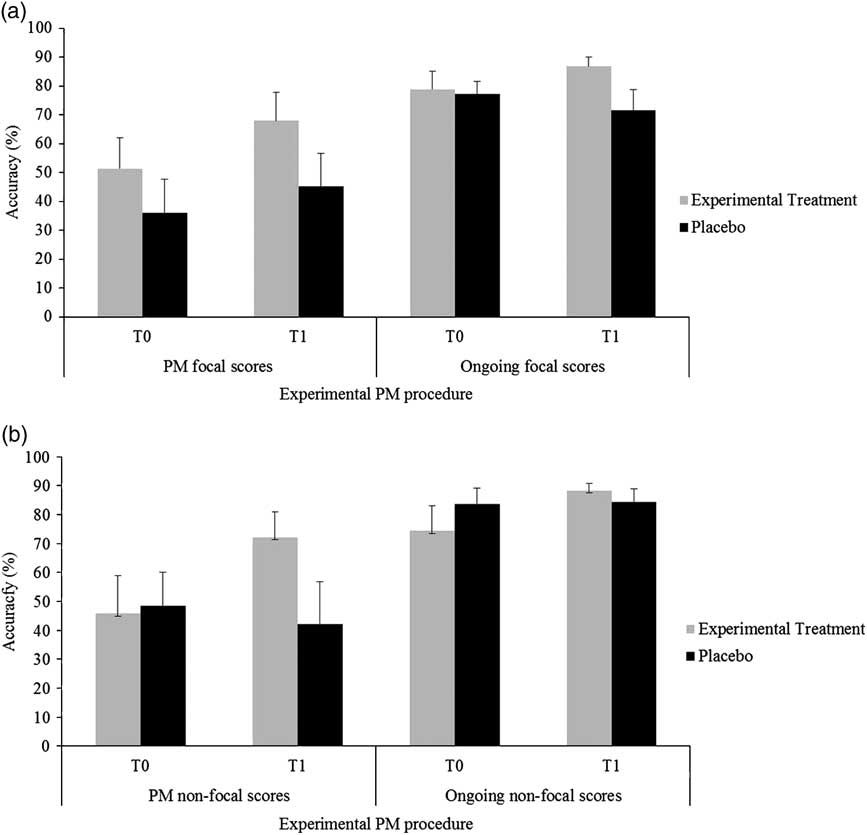
Subjects’ performance on the PM task is shown in Figure 1.
Average performance accuracy on the PM procedure of patients in the two PD groups before (T0) and after (T1) administration of the experimental shifting training and the placebo treatment. Panel “a” illustrates performance in focal conditions and panel “b” in non-focal conditions. Vertical bars represent standard errors.

Results of ANOVA on accuracy revealed a significant effect of the main factors Task (F(1,15)=27.5; p<0.001) and Time of Assessment (F(1,15)=4.78; p=.045), and of the interaction Treatment×Time of Assessment (F(1,15)=5.35; p=.035). No other effect approached statistical significance (all p consistently>.10). Tukey’s HSD post hoc tests, which were carried out to qualify the above interaction, showed that the performance of the group which underwent the experimental treatment improved significantly passing from T0 (mean=62.7%; SD=28.9) to T1 (mean=78.9%; SD=18.2; p=.023; Cohen’s d (Cohen, Reference Cohen1988)=0.68); however, this was not true for the placebo group (T0: mean=61.3%; SD=23.3%; T1: mean=60.9%; SD=26.4%; p>.90; Cohen’s d=0.02). Moreover, while no significant difference between groups was found at the T0 assessment (p>.90), the experimental group performed significantly better than the placebo group at T1 (p=.017; Cohen’s d=0.81). All subjects’ ongoing scores (mean=80.7%; SD=15.2%) were significantly higher than their PM scores (mean=51.2%; SD=33.2%) across T0 and T1.
Passing from T0 to T1, the performance of eight patients out of nine in the experimental group improved and one worsened; in the placebo group, instead, the performance of four of eight patients improved and four worsened (χ2(DF=1)=3.09; p=.079).
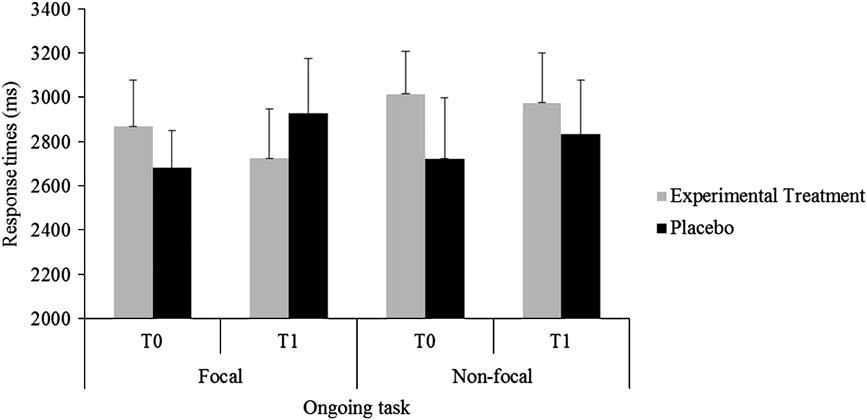
Results of the ANOVA on response times (Figure 2) of the ongoing trials with accurate responses showed no significant effects of the main factors (all p consistently>.30). Also, first and second level interactions failed to approach statistical significance (all p consistently>.10).
Average response times on the ongoing task of the experimental PM procedure shown by participants in the two PD groups before (T0) and after (T1) administration of the experimental shifting training and the placebo treatment. Vertical bars represent standard errors.

Set-shifting tasks
Fluency Tasks
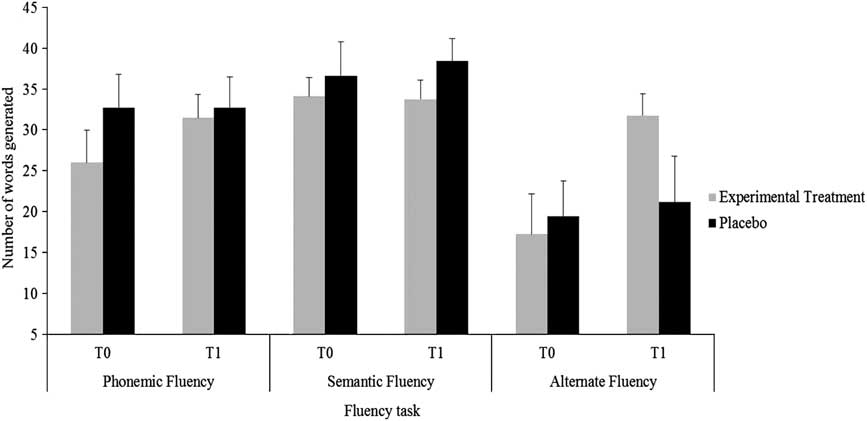
Subjects’ performances on the fluency tasks are reported in Figure 3. Results of the ANOVA showed that the main effect of Trial was significant (F(2,30)=21.3; p<.001) and the effect of Time of Assessment approached statistical significance (F(1,15)=4.47; p=.054). The Trial×Time of Assessment interaction (F(2,30)=4.51; p=.021) and the second level Treatment×Trial×Time of Assessment interaction (F(2,30)=4.39; p=.023) were also significant. Post hoc analyses showed that the experimental group’s performance improved significantly passing from T0 to T1 on the alternate fluency task (T0: mean=17.2, SD=13.7; T1: mean=31.7, SD=7.4; p<.001; Cohen’s d=1.37), but not on the phonemic (T0: mean=26, SD=11.1; T1: mean=31.5, SD=7.9; p>.50; Cohen’s d=0.58) and semantic (T0: mean=34.1, SD=6.4; T0: mean=33.7, SD=6.5; p>.90; Cohen’s d=0.06) fluency tasks; no significant effects of treatment were found in the placebo group (phonemic fluency, T0: mean=32.7, SD=10.7; T1: mean=33.7, SD=9.8; Semantic fluency, T0: mean=36.6, SD=10.8; T1: mean=38.4, SD=7.1; Alternate fluency, T0: mean=19.4, SD=11.3; T1=21.1, SD=14.5. all p>.90). Moreover, while no significant difference between groups was found at the T0 assessment (all p consistently>.10), at the T1 assessment the experimental group performed significantly better than the placebo group on the alternate fluency task (p=.017; Cohen’s d=0.97) but not the phonemic (p>.90; Cohen’s d=0.14) and semantic (p>.80; Cohen’s d=0.67) fluency tasks.
Average number of words correctly generated by the two PD groups on the three fluency tasks (i.e., phonemic, semantic and phonemic/semantic alternate tests) before (T0) and after (T1) administration of the experimental shifting training and the placebo treatment. Vertical bars represent standard errors.

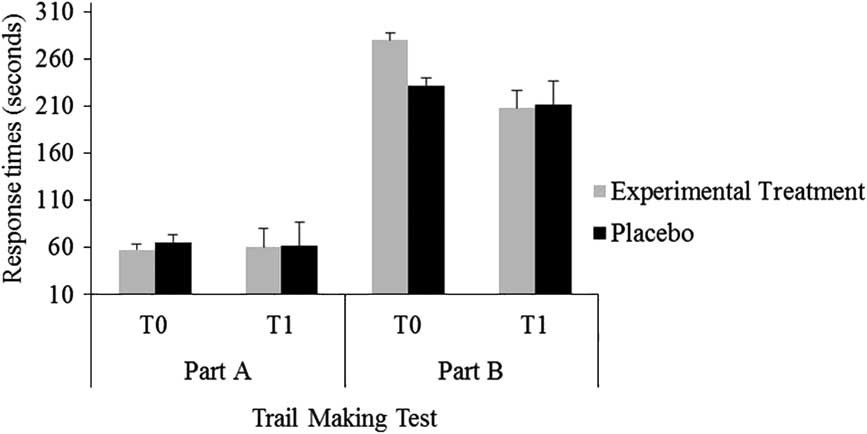
Trail Making Test
Subjects’ performances on the Trail Making Test are reported in Figure 4. Results of ANOVA revealed a significant effect of the main factors Trial (F(1,15)=218.6; p<.001) and Time of Assessment (F(1,15)=6.51; p=.023). Indeed, the time needed to execute TMT-B (mean=233.1; SD=61.9) was longer than that needed to complete TMT-A (mean=61.2; SD=20.8) and time to complete the two parts of the test was shorter at T1 than T0. Also the Trial×Time of Assessment interaction was significant (F(1,15)=11.0; p<.01), but the second level Treatment×Trial×Time of Assessment interaction only approached statistical significance (F(1,15)=4.51; p=.052). Tukey’s HSD tests showed that the performance of subjects who underwent the experimental treatment significantly improved passing from T0 to T1 in the TMT-B (T0: mean=280.0; SD=60.9; T1: mean=208.1; SD=54.8; p=.001; Cohen’s d=1.24) but not in the TMT-A (T0: mean=57.5; SD=19.4; T1: mean=60.4; SD=23.1; p>.90; Cohen’s d=0.14), whereas the performance of subjects in the placebo group did not change on either the TMT-A (T0: mean=65.4; SD=20.5; T1: mean=61.7; SD=20.2; p>.90; Cohen’s d=0.18) or the TMT-B (T0: mean=232.1; SD=66.5; T1: mean=212.0; SD=65.2; p>.80; Cohen’s d=0.30). No significant difference between groups was found at the T0 and T1 assessments on either the TMT-A or the TMT-B (all p consistently p>.05).
Trail Making Test performance of participants in the two PD groups before (T0) and after (T1) administration of the experimental shifting training and the placebo treatment. Vertical bars represent standard errors.

Relationship between performance change passing from T0 to T1 on PM procedure, fluency tasks and TMT scores
The correlational analyses between performance changes on the PM procedure (i.e., average performance difference between T1 and T0 on ongoing and PM score) and performance changes on alternate fluency (i.e., difference between T1 and T0 scores) evidenced a significant positive correlation between the two measures (r=0.75; p=.001). These findings indicate that improved accuracy on the PM procedure was significantly associated with improved performance on the alternate fluency test.
Conversely, the correlation between performance changes on the experimental PM procedures and changes in the TMT-B scores passing from T0 to T1 failed to approach statistical significance (r=0.18; p>.40).
Discussion
This study was aimed at investigating the hypothesis that in patients with PD associated with MCI poor performance on PM paradigms is due to reduced functioning of set-shifting processes. For this purpose, we executed a double-blind randomized study in which one PD group was administered a rehabilitative intervention to train shifting abilities and another PD group was given placebo treatment. Following the two treatments, we compared performance changes in the two groups in both shifting and PM procedures. Results showed a strong association between shifting and PM functioning, which was independent from the variation of attentional demands in the PM task. In fact, accuracy indices of the focal and non-focal PM procedures as well as the shifting tasks significantly improved in the experimental group passing from T0 to T1 but remained unchanged in the placebo group. Analyses performed on response times of the PM tasks revealed no significant effect of treatment, thus documenting that the accuracy improvement in the experimental group was not detrimental to processing speed. Moreover, a significant positive correlation was found between improved performance on a measure of extradimensional set-shifting (i.e., alternate fluency) and improved accuracy on the PM task.
The two groups of PD patients were comparable for sociodemographic (i.e., age and years of formal education) and clinical (i.e., disease duration, dopamine therapy duration, dopamine therapy dosage, side onset of disease, long-term treatment symptoms, and score on the Unified Parkinson’s Disease Rating Scale) variables. Moreover, all patients who completed the treatments were receiving stable dopamine therapy. Therefore, it is unlikely that the difference in performance improvement observed between the two treatment groups was due to factors other than the treatments themselves.
This is the first study that has directly evaluated the effect of training focused on the executive function of shifting on PD patients’ performance of PM tasks. Indeed, results of previous studies suggest there is a relationship between PM deficits and a weakness of the executive system in these individuals (Kliegel et al., Reference Kliegel, Altgassen, Hering and Rose2011). As previously discussed, the hypothesis of such a relationship is based on three orders of evidence. First, there are consistent reports that with respect to healthy controls PD patients are precociously impaired on tasks investigating cognitive flexibility (Cools & D’Esposito, Reference Cools and D’Esposito2011). Second, PM paradigms require the implementation of shifting abilities that allow the flexible allocation of attention to both ongoing activity and prospective planning and PD patients are reported to be more impaired on PM tasks that make high demands on the executive system (Foster et al., Reference Foster, McDaniel, Repovs and Hershey2009, Reference Foster, Rose, McDaniel and Rendell2013). Third, performance on PM tasks was found to be significantly correlated with performance on tests investigating shifting and planning abilities (Costa, Peppe, Caltagirone, et al., Reference Costa, Peppe, Caltagirone and Carlesimo2008; Costa, Peppe, Brusa, et al., Reference Costa, Peppe, Brusa, Caltagirone, Gatto and Carlesimo2008; Kliegel et al., Reference Kliegel, Phillips, Lemke and Kopp2005; Raskin et al., Reference Raskin, Woods, Poquette, McTaggart, Sethna, Williams and Tröster2011).
Here, we documented a significant ameliorative effect of the shifting training also in the experimental conditions (i.e., focal block) in which retrieval of the prospective intention was supposed to rely mainly on automatic mechanisms and make relatively lower demands on executive functions (multiprocess framework; McDaniel & Einstein, Reference McDaniel and Einstein2000). This finding suggests that in individuals with MCI associated with PD the implementation of PM operations is related to executive functioning also in focal conditions. This is consistent with the evidence that our PD sample, which presented a specific weakness in executive functioning, performed worse than HC also in the focal PM condition. Nevertheless, the observation that our PD sample had specific cognitive characteristics suggests caution in generalizing data to the entire PD population.
Limitations of the present study include the relatively small sample size and the absence of an ecological assessment of PM abilities. This prevents us from making reliable inferences on the patient's functioning in daily living. Another limitation is that we did not compare the effects of the shifting training with those of training focused on another executive sub-component (e.g., updating or inhibition). Therefore, we cannot definitively disentangle whether the PM performance improvement we observed in the PD group after cognitive training was specifically due to the improvement of shifting abilities or of executive functioning in general. But, keeping the above limitations in mind, the findings of this study could be relevant for the treatment of PM disorders in PD and in other neurological populations. In this regard, Fish, Wilson, & Manly (Reference Fish, Wilson and Manly2010) suggested that in patients with brain diseases rehabilitative approaches for PM impairments should follow two main directions. The first involves direct intervention on PM abilities by retraining the subject on various types of PM tasks. In this case, the subject is generally administered simplified versions of PM paradigms that increase in complexity across sessions (e.g., by increasing the delay between intention encoding and retrieval). The second line of intervention is aimed at improving PM by retraining/supporting the cognitive processes that are supposed to underlie PM operations (e.g., episodic retrieval, planning, working memory, shifting; Ramnani & Owen Reference Ramnani and Owen2004; Gilbert et al., Reference Gilbert, Spengler, Simons, Steele, Lawrie, Frith and Burgess2006). Here we provide supporting data that this second line of intervention could be effective in subjects with a neurodegenerative disease such as PD.
This pilot study provides evidence that cognitive training had a significant effect on the PM functioning of our PD patients. Consistent with our main prediction, the results suggest that there is a functional relationship between shifting abilities and PD patients’ ability to implement the processes required by an event-based PM task. Although these data need replication in a larger sample of PD patients, they support the hypothesis that psychological intervention may also be useful in treating the cognitive disorders of PD patients and encourage future research in this field.
Acknowledgments
No conflict of interest is present for this research.