This Special Issue of Development and Psychopathology provides yet another example of the growing interest in research on gene–environment interaction (G × E) that has emerged over the last 5 years. In October 2002, just 2 months after Avshalom Caspi, Terrie Moffitt, and colleagues reported the G × E for monoamine oxidase A activity, childhood maltreatment, and the development of antisocial behavior (Caspi et al., Reference Caspi, McClay, Moffitt, Mill, Martin and Craig2002), Dean Hamer listed the study as one of three examples marking the future direction of behavioral genetics (Hamer, Reference Hamer2002). However, the attention has not been confined to the scientific community. Legal scholars are considering what the impact of genetic testing for particular G × Es will be on the criminal justice system (Farahany & Bernet, Reference Farahany and Bernet2006). Bioethicists are considering the implications of prenatal and newborn genetic screening for particular G × Es (Moreno, Reference Moreno2003; Parens, Reference Parens2004; Wasserman, Reference Wasserman2004). Moreover, a private corporation—Neuromark—is bringing what were abstract considerations into reality (www.neuromark.com).
Readers and contributors, however, who have been following behavioral (or psychiatric) genetics for more than a decade, will know that the concept of G × E has, more often than not, been surrounded by debate. Advocates and critics have argued over what G × E precisely means. Is it simply a statistical concept, a measure of the breakdown in the additivity of main effects, or is it more appropriately conceived of as a biological concept, a reflection in some way of individual development? It is important to note that this has been more than just a debate about definition and rhetoric; opting for one conception of G × E over the other has translated into different ideas about what causes G × E, into different ideas about how to best investigate G × E, and into different expectations about how common cases of G × E are in nature.
In this essay I explore the history of research on G × E, showing that there have actually been two distinct concepts of G × E since the very origins of this research. R. A. Fisher introduced what I call the biometric concept of G × E (G × EB) in the beginning of the 20th century. For Fisher, interaction was situated within his larger biometric program devoted to partitioning genetic and environmental sources of variation. G × E posed a potential problem for this program; however, it was only a potential problem, for G × E was simply a statistical measure, which could be identified with Fisher's statistical methodologies and even eliminated with a transformation of scale. Ultimately, Fisher's single, empirical investigation of the phenomenon left him unimpressed by the complication. Fisher, however, was not the only biologist and statistician considering G × E at the time. Lancelot Hogben introduced what I call the developmental concept of G × E (G × ED). For Hogben, interaction was the result of differences in unique developmental combinations of genotype and environment, and just as development was standard in nature, so too, did Hogben believe G × E to be standard in nature, even if Fisher's statistical methodologies did not always detect the phenomenon. With G × EB and G × ED introduced, I then trace the separate legacies of these separate concepts, focusing specifically on the series of disputes that have emerged when employers of the separate concepts have argued over the appropriate way to conceptualize the phenomenon. Finally, I consider more recent attempts at distinguishing different notions of G × E. I contrast the isolationist distinction often made by behavioral geneticists between “statistical interaction” and “interactionism” with Michael Rutter's integrative distinction between statistical interaction and “the biological concept of interaction.” I argue that the history of the separate legacies of G × EB and G × ED supports Rutter's analysis of the situation.
Origin(s) of a Concept, Origin of a Dispute
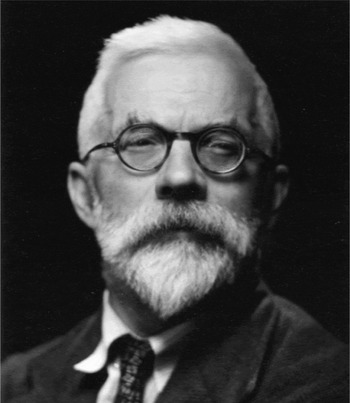
The life and work of British biologist and statistician Ronald Aylmer Fisher (1890–1962; Figure 1) has received much attention and for good reason (Box, Reference Box1978; Yates & Mather, Reference Yates and Mather1963). He, along with J. B. S. Haldane and Sewall Wright, founded the field of population genetics in the early decades of the 20th century (Provine, Reference Provine2001; Thompson, Reference Thompson1990). Along the way, Fisher introduced a series of innovative statistical methodologies designed to tease apart the contributions of nature and nurture to population variation, in large part because he was an ardent eugenicist, and the scientific questions about human variation had social implications with which he had deep concern (Kevles, Reference Kevles1995; MacKenzie, Reference MacKenzie1981; Mazumdar, Reference Mazumdar1992). Fisher's eugenics has become a thing of the past, but his statistical techniques for partitioning sources of variation persist in contemporary population genetics. Tracking down one side of the origins of the concept of G × E comes from tracing Fisher's contributions to the origins of population genetics and his need to wrestle with the complications posed by G × E to the statistical techniques he employed therein.
A photograph of R. A. Fisher. From Fisher Papers (MS0013, Series 25), by R. A. Fisher, Reference Fisher1933, Adelaide, Australia: University of Adelaide, Barr Smith Library. Copyright 1933 by University of Adelaide Library. Reprinted with permission (http://www.adelaide.edu.au/library/special/citation.html).

Perhaps the paper most often cited as marking the dawn of population genetics (and behavioral genetics as well) is Fisher's “The Correlation between Relatives on the Supposition of Mendelian Inheritance” (Fisher, Reference Fisher1918). Fisher, only 28 at the time, set out to resolve the supposed incompatibility between the biometric theory of continuous variation and the Mendelian theory of discontinuous variation, a resolution first (unsuccessfully) proposed by George Udny Yule 16 years earlier (Tabery, Reference Tabery2004; Yule, Reference Yule1902). In undertaking the task, Fisher also introduced a new statistical concept—variance (Box, Reference Box1978, p. 53). “When there are two independent causes of variability capable of producing in an otherwise uniform population distributions with standard deviations σ1 and σ2,” Fisher explained, “it is found that the distribution, when both causes act together, has a standard deviation √(σ12 + σ12). It is therefore desirable in analyzing the causes of variability to deal with the square of the standard deviation as the measure of variability. We shall term this quantity the Variance of the normal population to which it refers, and we may now ascribe to the constituent causes fractions or percentages of the total variance which they together produce” (Fisher, Reference Fisher1918, p. 399). The remainder of the paper was spent undertaking precisely this process of ascribing causal fractions, an exercise that subsequently predominated quantitative behavioral genetics. Fisher calculated the variances in height because of ancestry, segregation, and the effects of dominance, and concluded that these three sources fully accounted for the total variation, famously surmizing,“ … it is unlikely that so much as 5 per cent of the total variance is because of causes not heritable, especially as every irregularity of inheritance would, in the above analysis, appear as such a cause” (Fisher, Reference Fisher1918, p. 424).
Fisher's 1918 article inaugurated the era of population genetics. But his views evolved quite a bit over the next several decades as he developed new statistical techniques for evaluating the contributions of nature and nurture; hence, he has often been labeled a “reformed” or a “new” eugenicist (Allen, Reference Allen1986; Kevles, Reference Kevles1995; Mazumdar, Reference Mazumdar1992; Soloway, Reference Soloway1990). The most identifiable environmental factor contributing to this shift was his move the following year from Cambridge to the Rothamsted Agricultural Research Station in Harpenden, UK. In his 1918 article, Fisher treated the environment as a randomly distributed variable, but at Rothamsted he was employed to evaluate environmental causes of variation, thus forcing him to wrestle with an issue that he previously ignored (Mazumdar, Reference Mazumdar1992, p. 121). In the second installment of his “Studies in Crop Variation” series, Fisher examined the relationship between different potato varieties and different manurial treatments, and warned,“ … if important differences exist in the manurial response of varieties a great complication is introduced into both variety and manurial tests … ” (Fisher & Mackenzie, Reference Fisher and Mackenzie1923, p. 311). This “great complication” was the possible presence of interaction. “Only if such differences are nonexistent, or quite unimportant,” Fisher continued, “can variety tests conducted with a single manurial treatment give conclusive evidence as to the relative value of different varieties, or manurial tests conducted with a single variety give conclusive evidence as to the relative value of different manures” (Fisher & Mackenzie, Reference Fisher and Mackenzie1923, p. 311).
To test for the interaction, Fisher examined the response of different potato varieties exposed to different manurial treatments. With this experimental design, Fisher could then measure the mean yield of each of the potato varieties irrespective of the manurial treatment applied, and the mean yield of each of the manurial treatments irrespective of the variety grown, and then contrast these mean yields with the mean yield of the entire crop. He then calculated the variation because of manuring, variety, and what he called the “deviations from summation formula”—the measure of interaction between the manurial treatments and the varieties. Fisher noted though that the deviations from additivity were not significantly greater than would have occurred by chance, leading him to conclude, “In the present material evidently the varieties show no difference in their reaction to different manurial conditions” (Fisher & Mackenzie Reference Fisher and Mackenzie1923, p. 317). He evidently took the results to be quite definitive, because 2 years later he warned of the “interaction of causes” in the chapter on the analysis of variance in his influential Statistical Methods for Research Workers (Fisher, Reference Fisher1925). However, he quickly cited the results from his 1923 study and concluded, “There is no sign of differential response among the varieties” (Fisher, Reference Fisher1925, p. 209). Thus, although Fisher did engage the matter of environmental variation during his time at Rothamsted and develop the statistical methodologies to analyze such data, his only experimental consideration of G × E apparently left him unimpressed by the phenomenon except insofar as it presented a possible complication to his partitioning of sources of variation.
Reflecting now on Fisher's consideration of the problems posed by G × E, it is apparent that he introduced and then employed a biometric notion of G × E. For Fisher, the concept of interaction was situated within his larger biometric program devoted to measuring the relative contributions of nature and nurture to population variation, a program initiated by Fisher's mentor and eventual rival, Karl Pearson, the founder of biometry (Porter, Reference Porter2004). Such nonadditivity potentially posed a complication for his summing of variances. However, this interaction was understood to be simply a statistical measure—a deviation from the summation formula—which would be detected by Fisher's statistics if it existed. I call this notion of G × E, understood to be a statistical measure identified with the population-based statistical methodologies that test for it: G × EB.
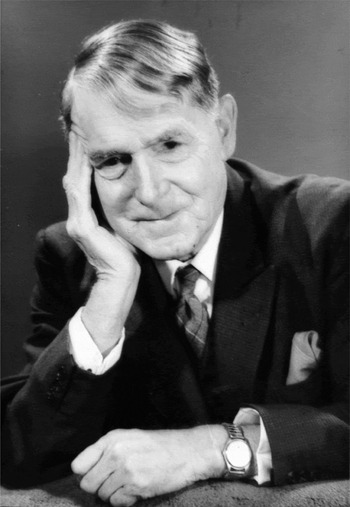
Fisher was not the only British biologist and statistician interested in the complications posed by G × E during the early decades of the 20th century. Lancelot Hogben (1895–1975; Figure 2), however, was not so quick to disregard the phenomenon. Throughout much of the 20th century, Hogben was inevitably mentioned alongside Haldane and evolutionary biologist Julian Huxley. Geneticist Cyril Darlington (Reference Darlington1976), for instance, recalled after Hogben's death, “When I was very young, Galdane, Guxley, and Gogben (as the Russians called them) seemed to be the three Magi.” The triumvirate founded (along with Frank Crews) the Journal of Experimental Biology with its accompanying Society for Experimental Biology and also criticized the British eugenics movement, which relied on Fisher's statistics. He was unique, though, from his fellow-Magi in the degree to which he attacked the eugenics movement. Hogben was not born into an elite scientific family like Haldane and Huxley; his father was a poor Methodist preacher, and Hogben essentially self-educated himself at the Stoke Newington Public Library. The work paid off in the form of a Major Entrance Scholarship to Trinity College, and this self-education and class-ascendancy engendered in Hogben an incomparable loathing for the class biases inherent in Britain's eugenics movement (Hogben, Reference Hogben1998; Wells, Reference Wells1978).Footnote 1
In 1930 Sir (later Lord) William Beveridge invited Hogben to become the first (and ultimately last) Chair of Social Biology at the London School of Economics. Hogben remained at the LSE for 8 years and made his most lasting contributions to science and society during that time. He wrote his first two, hugely successful Primers for the Age of Plenty—Mathematics for the Million (Hogben, Reference Hogben1937) and Science for the Citizen (Hogben, Reference Hogben1938)—and also unleashed a sustained attack on the eugenics movement and particularly the statistical underpinnings of that program.
A photograph of Lancelot Hogben. From Hogben Papers, by L. Hogben, Reference Hogben1976, Birmingham, AL: University of Birmingham Library, Special Collections. Copyright University of Birmingham Library. Reprinted with permission.

Hogben's first book-length dissection of the statistical underpinnings of eugenics came with his Genetic Principles in Medicine and Social Science (Hogben, Reference Hogben1932). Here, Hogben did readily recognize the importance of genetic and environmental sources of variation in populations, the first of which was so heavily emphasized by the eugenicists. However, he was also quick to criticize the “false antithesis of heredity and environment” (Hogben, Reference Hogben1932, p. 201). In particular, he stressed a third class of variability, overlooked by the eugenicists, which “arises from the combination of a particular hereditary constitution with a particular kind of environment” (Hogben, Reference Hogben1932, p. 98). The only example Hogben gave of this third class, in 1932, was from the abnormal abdomen variety of Drosophila, which was indistinguishable from the normal variety when cultured in a dry environment but grossly deformed when cultured in a humid environment.
That same year, the medical faculty at the University of Birmingham invited Hogben to deliver their William Withering Memorial Lectures, and Hogben chose medical genetics as the topic of his lectures (Hogben, Reference Hogben1998, p. 123). In preparation, Hogben wrote to Fisher in early 1933 (Fisher, Reference Fisher1933).
Dear Fisher,
I am at present engaged in preparing a course of lectures in which I shall be dealing with your own contributions to the genetic theory of correlation. There is one point in your 1918 paper which worries me very much. When you speak of the contribution of hereditable and nonhereditable causes of variance in a population, what exactly do you mean? I often use the same form of words myself and lately I have been searching for a more explicit formulation of the problem. Suppose you say that 90 per cent of the observed variance is due to heredity, do you mean that the variance would only be reduced ten percent, if the environment were uniform? Do you mean that the variance would be reduced by 90 per cent, if all genetic differences were eliminated? Perhaps you will think the question silly; but if you could suggest an alternative form of words, it might help.
Fisher (Reference Fisher1933) responded to Hogben's inquiry the following day with a discussion of the potential problems posed by genotype–environment correlation. However, it was not genotype–environment correlation that was worrying Hogben, and so he took several days to construct a lengthy reply making explicit his concern, beginning, “Dear Fisher, I don't think you quite got the difficulty which I am trying to raise. It concerns an inherent relativity in the concepts of nature and nurture … ” What followed was the first instance of a critic employing G × E to explicitly attack variance analyses and the inferences drawn from such statistics:
Let me take an example which is particularly pregnant because the character can be defined either as an all or none reaction or in metrical terms. I refer to the bar eye series in Drosophila. From Krafka's [(Reference Krafka1920)] data you will see the following values for facet number are given at 15° and 25°C.
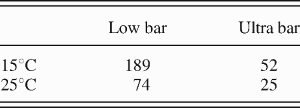
Consider the elementary population with the following structure. The genotypes are Low bar and ultra bar in equal numbers, equally distributed between two environments, namely an incubator at 15°C and one at 25°C. There is zero correlation between the distribution of environmental and genetic variables. Yet I cannot agree that the two statements “y per cent of the variance is due to environment,” and “the variance would be reduced by y per cent if all differences of environment were eliminated,” are equivalent nor that there is equivalence between the two statements “x per cent of the variance is due to heredity” and “the variance would be reduced by x per cent if there were no genetic differences.”
Hogben continued,
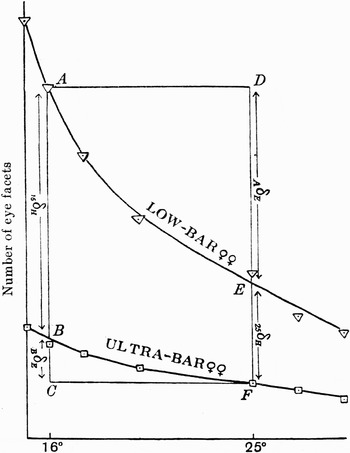
The fact is that there is a lack of singularity in the problem when it is reduced to practical form, as can be seen in arithmetical form in this instance. In the population defined the mean is 85 and the variance is 3906 to the nearest integer. Let us abolish all differences of environment. We can do this in an infinite number of ways. One would be to culture all flies at 15°C. Result: mean 120.5 and variance 4692. Another is to culture them all at 25°C. Result mean 49.5 and variance 600. Which of these two variances has priority as an estimate of the “contribution” of environment to the observed variance in the fourfold population? Again we eliminate all genetic differences by killing off all ultra bar flies. Result: mean 131.5 and variance 3306. We could alternatively kill off all low bar flies. Result: mean 38.5 and variance 182. Which of these gives the contribution of heredity to the observed variance?
Hogben made clear that his concern was not with the “correlation between the distribution of environmental and genetic variables”; his concern was with the “lack of singularity,” which followed from the variable responses of the two genotypes to the array of environments. He concluded by reemphasizing, “The point I am after is not what assumptions about the distribution of the environment and the distribution of gene differences are made in the mathematical formulation of the problem. Obviously, we can make more or less arbitrary assumptions about that. What I am worried about is a more intimate sense in which differences of genetic constitution are related to the external situation in the process of development” (emphasis added).
That same year Hogben's William Withering Lectures were published as Nature and Nurture (Hogben, Reference Hogben1933). The Krafka (Reference Krafka1920) data along with the abnormal abdomen example placed side-by-side anchored the fifth lecture on the “Interdependence of Nature and Nurture,” which was, in short, an all-out attack on Fisher's statistics and eugenics. This time, though, Hogben also provided a reaction norm graph of the data to make visually apparent the nonparallel curves signifying G × E (Figure 3). “The literature of experimental physiology,” Hogben explained, “is not wanting in examples of such divergent curves representing the measurement of a character and the strength of the environment” (Hogben, Reference Hogben1933, p. 97).
Norms of reaction for low-bar and ultra-bar Drosophila strains derived from Krafka (Reference Krafka1920). From Nature and nurture. The William Withering memorial lectures (figure 2), by L. Hogben, Reference Hogben1933, London: Allen & Unwin. Copyright 1933 by Allen & Unwin/Macmillan. Reprinted with permission.

Reflecting now on Hogben's consideration of G × E, it is apparent that he introduced and then employed a developmental notion of G × E. For Hogben, G × E was his third class of variability—a product of the combination of a particular genetic constitution and a particular kind of environment during the process of development, first hinted at in Genetic Principles and then made explicit with quantitative data in correspondence with Fisher and Nature and Nurture. Rather than investigating the phenomenon with Fisher's statistics, Hogben encouraged studying G × E with experimental embryology, such as was undertaken by Krafka (Reference Krafka1920). I call this notion of G × E, understood to be a product of differences in developmental combinations of genotype and environment: G × ED.
With such unique conceptions of G × E, it should not be surprising that Fisher and Hogben came to quite divergent conclusions about the nature and importance of G × E, along with the appropriate method for investigating the phenomenon. For Hogben, G × E was a developmental phenomenon and, just as development was standard in nature, so too should variation because of G × E be expected to be standard in nature even though statistical studies were not always identifying it. If Fisher's statistics missed such an important phenomenon, Hogben claimed, then that omission only made clear the limits of such statistical methodologies, not the absence of the phenomenon in nature.
Fisher (Reference Fisher1933), however, was less convinced and less concerned by G × E. In answer to Hogben's letter, he wrote off the worry as “academic,” for “[p]ractically it would be very difficult to find a case for which this would be of the least use, as exceptional types of interaction are best treated on their merits, and many become additive or so nearly so as to cause no trouble when you choose a more appropriate metric.” With regard to the Krafka data, for instance, Fisher suggested switching to a logarithmic scale. Fisher did concede at the end of his letter that there was no obligation to analyze variance into parts if it did not come apart easily, but this concessionary tone in correspondence with Hogben can be contrasted with another letter Fisher wrote to his colleague J. A. Fraser Roberts 2 years later after Hogben had placed so much importance on G × E in his lectures and in Nature and Nurture. Fisher (quoted in Bennett, Reference Bennett1983, p. 260) complained,“ … There is one point in which Hogben and his associates are riding for a fall, and that is in making a great song about the possible, but unproved, importance of non-linear interactions between hereditary and environmental factors. J. B. S. Haldane seems tempted to join in this.” Here, Fisher summarized his interpretation of G × E much more explicitly: it was of “possible, but unproved, importance.” “Possible” because, as Fisher recognized in “Studies in Crop Variation, II” (Fisher & Mackenzie, Reference Fisher and Mackenzie1923), the interactions would complicate the summation of variances and the inferences drawn from those studies, but also “unproved” because in the same work Fisher found no such interactions. The matter was an open empirical question, and Fisher placed the burden of proof on the “environmentalists” seeking such cases of G × E.
In sum, when we discuss the earliest considerations of G × E, we should refer to the origins of the concept, not just the origin. Fisher introduced G × EB via his creation of the statistical techniques used to partition sources of variation in a population, whereas Hogben introduced G × ED via his interest in developmental biology and the third form of variability that resulted from differences in particular developmental combinations of genotype and environment. Much of the subsequent history of G × E has largely consisted in the separate legacies of these two concepts of G × E traceable to Fisher and Hogben, along with the disputes that have arisen time and again when employers of each have argued over the appropriate way to conceptualize the concept.
The Legacies of Fisher and Hogben: G × EB and G × ED
I claimed in the last section that two quite distinct concepts of G × E emerged in the work of Fisher and Hogben in the 1920s and 1930s. Fisher introduced the biometric concept of G × E, while Hogben introduced the developmental concept of G × E. Debate ensued. If this debate had been an isolated event, then it would have been interesting in its own right, but that would have been about it. However, it was not an isolated event, and, as a result, there is more than just an interesting story here. The separate concepts have had distinct legacies of their own, and the competing conceptions have faced off on numerous (sometimes acrimonious) occasions.
Hogben's G × ED was carried into the mid-20th century most clearly in the work of developmental geneticist Conrad Hal Waddington. In The Strategy of the Gene (Waddington, Reference Waddington1957), Waddington wanted to explain to his readers what geneticists actually meant by genetic and environmental influences on the phenotype. To do so, he introduced Hogben's discussion of the Krafka data and, in fact, block-quoted two full paragraphs along with the reaction norm graph from Hogben's Nature and Nurture where Hogben discussed the case. Reinforcing the developmental nature of the phenomenon, Waddington summed up, “Such a difference of degree in environmental sensitivity to the development controlled by two genotypes is spoken of as ‘genotype–environment interaction’” (Waddington, Reference Waddington1957, p. 94). Like Hogben, Waddington emphasized both the importance of this phenomenon along with the mishandling of it by statistical tabulations of variance, arguing “… after nearly half a century's development the statistical theory still has to leave out of account the contribution of genotype–environment interactions. … Now from the point of view of the theory of evolution such special interactions between genotypes and environments are obviously by no means negligible. In fact, the whole of adaptive radiation, including the formation of local races, turns on the way in which particular genotypes fit into certain environments; that is to say, on this very factor of genotype–environment interaction” (Waddington, Reference Waddington1957, p. 100).
Waddington's emphases on the importance of a developmentally conceived G × E, however, may be contrasted with the disregard for the concept found in the work of agricultural geneticist, Jay Lush, who instead adopted Fisher's G × EB. In his seminal Animal Breeding Plans (1937), Lush brushed aside the importance of G × E in a manner reminiscent of Fisher. “It seems likely,” Lush counseled, “that in general the nonaddtive combination effects of heredity and environment are small in amount* and that many of those which do occur can be reduced to a negligible remainder by choosing a scale of measurements … which will show the effects of hereditary and environmental on that characteristic in their most nearly additive form” (Lush, Reference Lush1937, p. 64). The asterisk in Lush's statement directed his readers to a footnote at the bottom of the page where he continued, “For some extreme examples of nonadditive combination effects of heredity and environment consult chapter 5 of Hogben's Nature and Nurture.” In contrast to Waddington, then, who introduced Hogben's work as exemplifying what geneticists meant by genetic and environmental influences, Lush relegated Hogben to a footnote, as Hogben offered only “extreme examples,” and, like Fisher, Lush simply encouraged a transformation of scale to make the nuisance disappear.
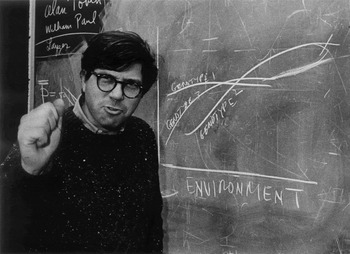
Employers of G × EB and G × ED squared off on perhaps the most infamous occasion during what came to be called the “IQ controversy” of the 1970s. Sparked by educational psychologist Arthur Jensen's appeal to genetic differences as the cause of the gap in IQ scores between Black and White populations along with the resultant failure of compensatory education to eliminate this gap (Jensen, Reference Jensen1969), debate quickly followed concerning the heritability estimates Jensen employed to come to these conclusions. The IQ controversy was a controversy over many things: the biological reality of race, the assessment of compensatory education's purported failure, the inherent biases in intelligence testing, and the validity of the data Jensen borrowed from Cyril Burt (Aby & McNamara, Reference Aby and McNamara1990; Block & Dworkin, Reference Block and Dworkin1976). But the debate was also about G × E because of the potential problems G × E posed to the heritability estimates derived from analyses of variance. The most vocal proponents of the complications G × E posed were Harvard colleagues Richard Lewontin and David Layzer. Lewontin repeatedly emphasized the importance of developmental processes, directing his readers to Waddington's work on developmental genetics; he also criticized the population geneticists, who generally neglected such processes in their statistical analyses (Lewontin, Reference Lewontin1974). Moreover, it was the developmental process that drew Lewontin to the importance of G × E, along with the limits of heritability estimates to predict what would occur in as yet untested environments (Feldman & Lewontin, Reference Feldman and Lewontin1975). Lewontin's forceful emphasis on the importance of G × E along with his scorn for those geneticists that ignored this importance was perhaps most apparent not in an article of his but instead in a photograph of him (Figure 4), which appeared in a 1973 article on the IQ controversy (Wagman, Reference Wagman1973). We can clearly see on the blackboard next to Lewontin the three hypothetical reaction norms graphed and the overlap of these across the array of environments. Genotype 1 may be the superior genotype in environments to the left, the argument went, but perhaps it will be Genotype 2 or 3 that is superior in environments to the right.
A photograph of Richard Lewontin. From “The Brains Do Battle in I.Q. Controversy,” 1973, Boston Phoenix. Copyright 1973 by Ken Kobre, photographer. Reprinted with permission.

On the blackboard behind Lewontin's head the name “Layzer” was highlighted. This is not surprising, for Lewontin's colleague David Layzer also emphasized the importance of G × E during the IQ controversy. Like Lewontin, Layzer emphasized a developmentally conceived notion of the concept. He argued with respect to IQ, “The information-processing skills assessed by mental tests result from developmental processes in which genetic and nongenetic factors interact continuously. The more relevant a given task is to an individual's specific environmental challenges, the more important are the effects of this interaction” (Layzer, Reference Layzer1972, p. 281). This point then directly led him to a discussion of G × E and the problems it posed for heritability estimates. Lewontin and Layzer, in short, carried on the tradition of G × ED, directly inheriting it from Waddington, who initially adopted it from Hogben.
Jensen, however, like Lush and Fisher before him, was less concerned about the problems posed by G × E. In fact, although Jensen was often criticized for ignoring G × E, he discussed the concept at length in his initial 1969 essay. Jensen complained, “There is considerable confusion concerning the meaning of interaction in much of the literature on heredity and intelligence” (Jensen, Reference Jensen1969, p. 39). His main complaint was with those he called “interactionists,” who he felt were simply confused about the nature of population genetics. “Those who call themselves ‘interactionists,’ with the conviction that they have thereby either solved or risen above the whole issue of the relative contributions of heredity and environment to individual differences in intelligence, are apparently unaware that the preponderance of evidence indicates that the interaction variance (V I) is the smallest component of the total phenotypic variance” (Jensen, Reference Jensen1969). Jensen, at this early time, was already anticipating criticisms of his genetic hypothesis with arguments from G × E, and he employed G × EB to deflect such arguments. “The magnitude of V I for any given characteristic in any specified population is a matter for empirical study, not philosophic debate. If VI turns out to constitute relatively small proportion of the total variance, as the evidence shows is the case for human intelligence, this is not a fault of the analysis of variance model. It is simply a fact. If the interaction variance actually exists in any significant amount, the model will reveal it” (Jensen, Reference Jensen1969, p. 41). Thus, like Lush and Fisher, Jensen adopted G × EB and argued that instances of such interaction were rare in nature; that if they did arise, Fisher's statistical techniques would identify such variance; and also that the nuisance could usually be dismissed with a transformation of scale.
The Legacy of the IQ Controversy: Interaction Versus Interactionism
As we saw with Lewontin and Layzer's emphases on the importance of G × E, Jensen's (Reference Jensen1969) attempt at dismissing G × E did not succeed in appeasing his critics, so the criticisms of heritability estimates did follow Jensen's initial essay after all. When the criticisms emerged, Jensen reiterated his replies to those arguments and also refined his attacks on those arguments that appealed to developmental biology. He argued that “‘interactionism’ has become merely a substitute for extreme environmentalism… . Thus the interactionist theory holds that although there may be significant genetic differences at the time of conception, the organism's development involves such complex interactions with the environment that the genetic blueprint, so to speak, becomes completely hidden or obscured beneath an impenetrable overlay of environmental influences” (Jensen, Reference Jensen1973, p. 49). Jensen, to explicate this confusion, continued, “This position has arisen from a failure to understand the real meaning of the term ‘interaction’ as it is used in population genetics; but even more it is the result of failure to distinguish between (a) the development of the individual organism, on the one hand, and (b) differences among individuals in the population” (Jensen, Reference Jensen1973).
The acrimonious nature of the IQ controversy left a lasting impression on behavioral genetics. Whether or not one agreed with Jensen's conclusions about the heritability of IQ, the distinction between individual development and individual differences (often couched in terms of different “levels of analysis”) paved the way for a form of isolationist pluralism between quantitative behavioral geneticists and their critics. The thought was that the debate could be defused by isolating the quantitative behavioral geneticists' focus on how much? questions about the causes of variation responsible for individual differences at the population level, from causal-mechanically minded biologists' focus on how? questions about the causal mechanisms responsible for individual development at the individual level.
With regard to G × E, the distinction between individual development and individual differences offered quantitative behavioral geneticists a means to defend themselves against the critics appealing to a developmentally conceived G × E, or what was now written off as muddle-headed “interactionism.” Behavioral geneticists Robert Plomin, John DeFries, and John Loehlin, for instance, began their assessment of G × E, in 1977, by complaining, “Unfortunately, discussions of genotype–environment interaction have often confused the population concept with that of individual development. It is important at the outset to distinguish genotype–environment interaction from what we shall call interactionism, the view that environmental and genetic threads in the fabric of behavior are so tightly interwoven that they are indistinguishable (Plomin, DeFries, & Loehlin, Reference Plomin, DeFries and Loehlin1977, p. 309). Thomas Bouchard and Nancy Segal reiterated the point: “It is common for theorists of the heredity × environment controversy to confuse the statistical concept of interaction with a viewpoint called interactionism. The problem arises because each concept applies at a different level of analysis” (Bouchard & Segal, Reference Bouchard, Segal and Wolman1985, p. 393).
The argument has now even penetrated the philosophy of science. Neven Sesardic, who has devoted himself to defending behavioral geneticists' heritability estimates, distinguished two forms of interaction in his Making Sense of Heritability (Sesardic, Reference Sesardic2005): commonsense interaction (interactionc) and statistical interaction (interactions). “Interactionc of genes and environments is always present but it generates no problems for the estimation of heritability.” Sesardic claimed, “On the other hand, the existence of strong interactions between genes and environments may really undermine the usefulness of heritability claims, yet the existence of such interaction is itself an open empirical question. Briefly, interactionc is ubiquitous but irrelevant for discussions about heritability, whereas strong interactions is potentially a problem for heritability, but the extent of its presence remains a contentious issue” (Sesardic, Reference Sesardic2005, p. 49). So in response to Layzer (Reference Layzer1972), who criticized Jensen for ignoring the complications posed by development, Sesardic countered, “Layzer's argument (defended by many other authors) that complexities of developmental processes preclude the possibility of partitioning the phenotypic variation into genetic and environmental components seems to be the result of confusing different levels of analysis” (Layzer, Reference Layzer1972, p. 73).Footnote 2
Moving Forward: Beyond Interaction Versus Interactionism
We can contrast the isolationist distinction between “statistical interaction” and “interactionism” with a more recent, integrative distinction advocated by Michael Rutter. For years, Rutter has attempted to defuse the debates between the quantitative behavioral geneticists and their critics not by dismissing a causal–mechanical concept as confused, but by distinguishing statistical interaction from “interactions in a broader sense” or the “biological concept of interaction” (Rutter & Pickles, Reference Rutter, Pickles, Plomin and Wachs1991; Rutter, Reference Rutter2006, chap. 9; see also Rothman, Greenland, & Walker, Reference Rothman, Greenland and Walker1980, and Greenland & Rothman, Reference Greenland, Rothman, Rothman and Greenland1998, on this distinction). Although these notions of interaction are distinct for Rutter, they are not isolated from each other at different levels of analysis. Rather, the identification of a statistical interaction points the way toward investigating the underlying mechanical interaction. “The statistical identification of an interaction is no more than an indicator that there is a question of process that needs to be tackled. . . . In other words, its presence alerts one to a possible mode of leverage in a course of investigations of the mechanisms involved; it is that characteristic that makes such an interaction of both theoretical and practical importance” (Rutter & Pickles, Reference Rutter, Pickles, Plomin and Wachs1991, p. 106).
The history of the separate legacies of G × EB and G × ED supports Rutter's analysis of the situation. Fisher first developed the statistical methodologies for identifying a breakdown in the additivity of main effects when sources of variation were sought in a population. G × EB is the statistical measure of the variation because of this nonadditive interaction. Now, there are certainly cases in which mentioning the process of development in a discussion of this source of variation is misplaced. G.-J. Vreeke (Reference Vreeke2000), for example, recently wrote, “An analysis of variance abstracts from (actual) interaction effects and thus cannot offer an accurate picture of development… . Behavior geneticists, then, should acknowledge that an analysis of variance is a statistical method that does not fit reality and should be judged against the background of the best material model we have of development, which is one of dynamics and interaction” (p. 44). Moving from the truism that individual development is dynamic and interactive to the conclusion that behavioral geneticists' statistical methods do not fit reality does confuse the meaning of interaction in an analysis of variance. Thus, perhaps the term “interactionism” should be reserved for this specific confusion.
However, must all invocations of development in discussions of G × E be of the muddle-headed sort? Certainly not. For Hogben introduced a quite reasonable conception of the relationship between individual development and variation because of G × E: G × E was not merely a statistical measure, magically appearing (or not appearing) from Fisher's statistics; G × E had a cause, and that cause was differences in unique combinations of genotype and environment that were interdependent during individual development.
The clearest way to explicate this idea is by looking at an example or two. Long before Lewontin attacked Jensen's employment of the analysis of variance in the IQ Controversy, going so far as to claim that the statistical method was “useless” (Lewontin, Reference Lewontin1974, p. 410), he actually wrote the chapter on the analysis of variance for the revised edition of G. G. Simpson's Quantitative Zoology (Simpson, Roe, & Lewontin, Reference Simpson, Roe and Lewontin1960, chap. 12; Hagen, Reference Hagen2003). Not yet embroiled in the heated exchange with Jensen, what Lewontin provided there was an incredibly clear and balanced treatment of what the statistical methodology can and cannot do, along with an extensive consideration of what interaction actually means. Lewontin asked his readers to consider a population of animals sampled in different localities and at different months, making locality and month the two factors under investigation. (Focused on locality and month, the example also allows us to temporarily forget about the controversial implications that follow when the two factors are genotype and environment; although the nature–nurture debate has raged for over 100 years, the locality–month debate is far less looming … and far less distracting.) When there were two factors under investigation with an analysis of variance, Lewontin explained, an interaction between the two factors must be considered in addition to the main effects (Simpson, Roe, & Lewontin, Reference Simpson, Roe and Lewontin1960, p. 261). Lewontin continued:
It is the amount added to or subtracted from the basic value, arising from the particular and unique interaction of a given month with a given locality. For example, locality 5 may on the average have longer individuals than the other localities, and individuals collected in February might be larger on the average than those in other months, but it is entirely possible that individuals collected in February from locality 5 may be smaller than the average of other members of the sample. This would presumably be due to a unique interaction of the particular locality with the particular conditions during February.
Notice that Lewontin's last sentence is virtually identical to Hogben's third class of variability: that which “arises from the combination of a particular hereditary constitution with a particular kind of environment” (Hogben, Reference Hogben1933, p. 98).
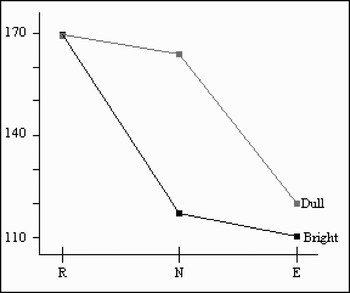
Lewontin's example, however, does not complete the job. For we must go on to ask, what is the nature of this “particular and unique interaction”? Or, more germane, what makes the particular and unique interaction developmental in nature when the two factors are genotype and environment, as Hogben suggested? To see this, another example will be needed where genotype and environment actually are the factors under investigation. Fortunately, we can use an empirical study often cited in discussions of G × E. In 1958 Roderick Cooper and John Zubek published their study of different strains of rat (“bright” and “dull”) raised in different environments (enriched, normal, and restricted) and measured for the average number of errors the rats made in the Hebb–Williams maze test (Cooper & Zubek, Reference Cooper and Zubek1958). The enriched–normal–restricted distinction was based on the cage environments to which the rats were exposed from the time of weaning (25 days) until the age of 65 days. “Enriched” cages (E) contained ramps, slides, bells, mirrors, marbles, polished balls, and so forth. The “restricted” cages (R) contained only a food box and a water pan. The “normal” environments (N) acted as the control with standard cage accoutrements. The bright and dull varieties received these names because, in the normal environment, the bright rats made far fewer errors in the maze test in comparison to the dull rats, as can be seen in Figure 5.
Norms of reaction for “bright” and “dull” rats measured for average number of errors in a maze test (y axis) across an array of environments (x axis). Data are from Cooper and Zubek (Reference Cooper and Zubek1958).

Cooper and Zubek's (Reference Cooper and Zubek1958) interest was to investigate what would happen if these same varieties were exposed to the nonnormal environments. They expected the environment to have an effect, but they also expected the bright variety to maintain its “superiority” over the dull variety across the array of environments. As Figure 5 reveals, that was not at all the case. In the restricted environment, the dull rats actually scored fewer errors on average than the bright rats (169.5 for the dull vs. 169.7 for the bright); and in the enriched environment, the dull rats scored only slightly more errors on average than the bright rats (119.7 for the dull vs. 111.2 for the bright). So it was only in the normal environment, where the bright rats actually earned their superior title, making the very concepts of bright and dull relative to the environments in which the rats were raised.
The results from Cooper and Zubek's study (Reference Cooper and Zubek1958) are often mentioned in discussions of G × E. What is rarely mentioned in these discussions, however, is Cooper and Zubek's own discussion of their results. Cooper and Zubek examined a population of rats and sought out the sources of variation in that population. They examined the individual differences that arose from rearing the different rats in the different environments. Examining sources of variation responsible for individual differences, were Cooper and Zubek thereby isolated to the population level of analysis and prohibited from considering individual development? Quite the opposite. Cooper and Zubek asked (p. 162), “What physiological mechanism or mechanisms underlie these changes in learning ability?” As Rutter suggested, the identification of the statistical interaction in the population pointed the way toward investigating the underlying mechanical interactions. The mechanism that Cooper and Zubek considered was that proposed by Donald Hebb (Reference Hebb1949), who argued that neural cell assemblies were built up over time (and especially during infancy) by varied stimulation coming through varied sensory pathways.Footnote 3 Applying this mechanism to their own study, Cooper and Zubek (Reference Cooper and Zubek1958) offered the following explanation: in the normal environment, the level of stimulation was sufficient to permit the building of cell assemblies in the brains of the bright rats, but this level of stimulation did not meet the threshold needed to build cell assemblies in the dull rats. In the restricted environment, the level of stimulation was so low that it was inadequate for cell assembly construction in the normally bright rats, and so their error scores soared, but the dull rats were not further incapacitated since the level of stimulation provided by the normal environment was already below their threshold for the construction of the cell assemblies. Finally, in the enriched environment, the level of stimulation was far above the threshold needed by the dull rats, and so they showed a marked improvement, whereas the bright rats showed little improvement because the extra stimulation was superfluous, that provided by the normal environment being adequate for the building of cell assemblies (Hebb, Reference Hebb1949, p. 163).
The neurobiological accuracy of Cooper and Zubek's (Reference Cooper and Zubek1958) explanation is not particularly relevant to our discussion, although increasing work on long-term potentiation is beginning to bear out their account. What is, however, relevant to our discussion is the fact that Cooper and Zubek's explanation of differences in learning ability was developmental in nature. The differences in genotype between the bright and dull rats did have a slight effect on total variation. The differences in environment also clearly had an effect on total variation. What differences accounted for the variation because of G × E? Cooper and Zubek attempted to answer this: a stimulating environment and the genotypically shaped construction of cell assemblies were interdependent in such a way during individual development such that, in addition to differences in the main effects of genotype and environment, there were also differences resulting from the unique combinations of genotype and environment. In Hogben's language, there were differences resulting from unique combinations of a particular genotype and a particular level of stimulation during the process of development.
In short, there is a very reasonable sense in which considerations of individual development can be related to variation because of G × E, which Hogben first introduced in the 1930s. Hogben's G × ED, along with the invocations of G × ED by the likes of Waddington, Lewontin, and Layzer, cannot be written off as instances of a confused interactionism; instead, the legacy of G × ED represents the history of developmentally minded biologists considering Rutter's biological concept of interaction. As Rutter has stressed, both the statistical and the biological concepts can coexist and, indeed, co-inform. The identification of the statistical interaction points the way toward investigating the causal–mechanical, biological interaction. In other words, the identification of G × EB (the statistical measure) points the way toward investigating G × ED (the differences in unique developmental combinations of genotype and environment). If the goal is to integrate the research of the various epidemiological and causal–mechanical scientists investigating G × E, as advocated by this Special Issue of Development and Psychopathology along with a growing number of scientists (Caspi & Moffitt, Reference Caspi and Moffitt2006; Kendler, Reference Kendler2005; Rutter, Reference Rutter2006) and philosophers of science (Mitchell, Reference Mitchell2003; Schaffner, Reference Schaffner2006), then recognizing the legitimate place of both G × EB and G × ED is both a necessary and productive step toward this integrative enterprise.