Introduction
4-Hydroxy-3-methoxyphenyl (ferulic acid; FA) is a cinnamic acid derivative, which is widely found in different plants. FA is commonly distributed in the cell walls of vegetables, fruits, wheat, cereals and barley where it acts as a preservative (Budavari et al., Reference BUDAVARI, O'NEIL, SMITH and HECKELMAN1989). Since, 1925, FA has been chemically synthesised and examined by various spectroscopic methods, which proved the presence of an unsaturated side chain within its structure (Nethaji et al., Reference NETHAJI, PATTABHI and DESIRAJU1988). FA along with dihydroferulic acid has been confirmed to be a constituent of lignocelluloses, whereby it confers stiffness to the cell wall by making crosslinks between lignin and polysaccharides. It has been found that FA is linked with carbohydrates as glycosidic conjugates, amides and different esters creating a broad range of natural components and products (Strack, Reference STRACK1990). Nowadays, this phenolic compound is obtaining by chemical processes as a synthetic form; while many attempts have also been carried out for the enzymatical release of FA from natural sources. Commercially, extraction of FA by enzymatic means is very difficult, because the large amounts of FA in plants are covalently linked with biopolymers and lignin as well (Kumar and Pruthi, Reference KUMAR and PRUTHI2014). Uraji et al. (Reference URAJI, KIMURA, INOUE, KAWAKAMI, KUMAGAI, HARAZONO and HATANAKA2013) and Ramanjaneyulu et al. (Reference RAMANJANEYULU, RAMYA, KUMARI, KUMAR and REDDY2017) recommended that the enzymes (multiple xylanases, acetyl xylan esterase, and a-L-arabinofuranosidase) from Streptomyces spp. can be used for the extraction of FA from different sources of feed ingredients such as wheat bran, raw rice bran and corncob. As reported in the study of Kumar and Pruthi (Reference KUMAR and PRUTHI2014), FA exhibited many promising biological properties including antioxidantion, anti-inflammation, hepatoprotection, antimicrobial, anti-allergic, increased sperm viability, antiviral, anticarcinogenic, antithrombotic, vasodilatory actions, modulation of enzyme activity, gene expression and signal transduction. This biological active compound can up-regulate the expression of haem-oxygenase (HO-1) and protects neurons against ROS-associated oxidative damage (Calabrese et al., Reference CALABRESE, CALAFATO, PULEO, CORNELIUS, SAPIENZA, MORGANTI and MANCUSO2008; Changxing et al., Reference CHANGXING, CHENLING, ALAGAWANY, JIANHUA, DONGFANG, GAICHAO, WENYIN, SYED, ARAIN, SAEED, HASSAN and CHAO2018; Dhama et al., Reference DHAMA, KARTHIK, KHANDIA, MUNJAL, TIWARI, RANA, KHURANA, ULLAH, KHAN, ALAGAWANY, FARAG, DADAR and JOSHI2018). In addition, it modulates HO-1 activity by regulating the expression and ERK-mediated translocation of transcription factor NFE2 and related factor (Nrf2) in the nucleus, where it binds to the antioxidant responsive element in the promoter region of the HO-1 gene (Ma et al., Reference MA, HONG, WANG, LIANG, TAN, XIAO, TANG, SHAO, ZHOU and GAO2011; Arain et al., Reference ARAIN, MEI, HASSAN, SAEED, ALAGAWANY, SHAR and RAJPUT2018).
FA, as a natural phytochemical, can exhibit antioxidant properties through lipid peroxidation and free radical scavenging, by a phenolic hydroxyl group, as reported by Srinivasan et al. (Reference SRINIVASAN, SUDHEER and MENON2007). It has been found that the ferulic acid ethyl ester (FAEE) up-regulated Hsp70 and prevented ROS mediated toxicity in different animal models, such as the rat (Joshi et al., Reference JOSHI, PERLUIGI, SULTANA, AGRIPPINO, CALABRESE and BUTTERFIELD2006). Some of the dose and time-dependent studies showed that FA helped in maintaining the levels of superoxide dismutase (SOD) and catalase (CAT) in pancreatic tissue and myocardium of streptozotocin-induced diabetic rats (Xu et al., Reference XU, XIAO, ZHAO and ZHAO2012; Roy et al., Reference ROY, METYA, SANNIGRAHI, RAHAMAN and AHMED2013). The existence of NSP (non-starch polysaccharides) in the cell wall of plants reduces the digestibility and apparent metabolisable energy (AME) as well as the performance of poultry. Ferulic acid esterase (FAE) can break the ferulate cross-linkages in the plant cell wall. Supplementation of FAE in the avian diet can improve the digestibility of high fibre diets, access of main chain degrading enzymes, AME in broilers and layers birds and body weight, whilst reducing FCR in broilers (Jayaraman et al., Reference JAYARAMAN, MUKKALIL and CHIRAKKAL2015).
The ingestion of phenolic molecules has been shown to have preventive and therapeutic activities against large numbers of metabolic diseases. Supplementation with FA may modify gut microbial colonies due to the inhibition of fermentation of dietary fibres. These activities suggested that FA displays bioactivity and bioavailability and could be used for the treatment of some diseases, like obesity and inflammatory bowel diseases (Zhang et al., Reference ZHANG, DONG, XU, TIAN, TANG and WANG2018). The scientific literature showed that, among the phenolic compounds, FA has generated interest due to its many potential benefits. These bioactive components may have greater importance in the future, as the routine use of antibiotics becomes more limited. However, there is limited published research on poultry responses to explore the effects of FA. The objective of this review is to highlight its potential for applications in animal and poultry industry to replace synthetic antibiotic growth promoters (AGPs).
Chemical structure of ferulic acid (FA)
FA (known as 4-hydroxy-3-methoxycinnamic acid) is a natural phytochemical which has a chemical structure as shown in Figure 1 (Chowdhury et al., Reference CHOWDHURY, GHOSH, RASHID and SIL2016). Kumar and Pruthi (Reference KUMAR and PRUTHI2014) theorised that a double bond exists in the side chain which is susceptible to cis-trans isomerisation. The resonance fixed phenoxy radical accounts for its beneficial antioxidant property.
Chemical structure of ferulic acid (Kumar and Pruthi, Reference KUMAR and PRUTHI2014; Zhang et al., Reference ZHANG, DONG, XU, TIAN, TANG and WANG2018).

The natural sources of FA
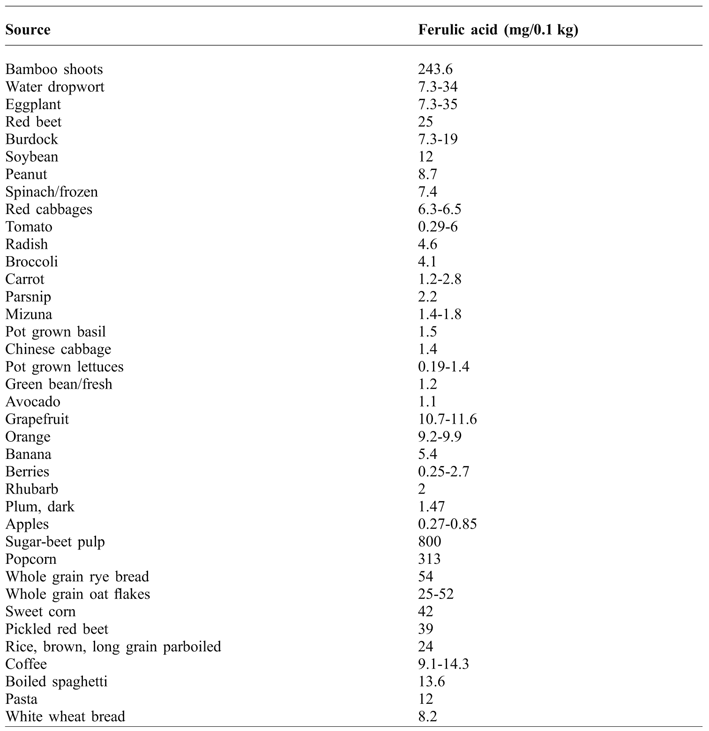
FA is best-known as a phytochemical material which always found in vegetables and fruits like corn, rice bran and tomatoes. (Paganga et al., Reference PAGANGA, MILLER and RICE-EVANS1999). In sweet corn, ferulic acid is the predominant bound form of phenolic acid, which represents 78% of total phenolic acids. It is an excellent antioxidant and is believed to protect animals from cancer, influenza, colds, muscle wasting and skin aging. This phenolic compound (FA) is usually found in various plants; wheat, rice, oats, pineapple, vegetables, grasses, flowers, fruits, seeds of coffee, grains, leaves, beans, artichoke, peanut and as nuts (Mattila and Hellström, Reference MATTILA and HELLSTRÖM2007; Srinivasan et al., Reference SRINIVASAN, SUDHEER and MENON2007; Wong et al., Reference WONG, CHAN, BATT, SARATH and LIAO2011). Various food plants like pineapple, spinach, beetroot, bananas contain 0.5-2% FA, mostly in the trans-isomeric form (Carpita, Reference CARPITA1996, Hartley and Harris, Reference HARTLEY and HARRIS1981). Table 1 summarises the level of FA in different sources.
Content of ferulic acid in different sources.

Zhao and Moghadasian (Reference ZHAO and MOGHADASIAN2008)
Pharmacokinetics of FA
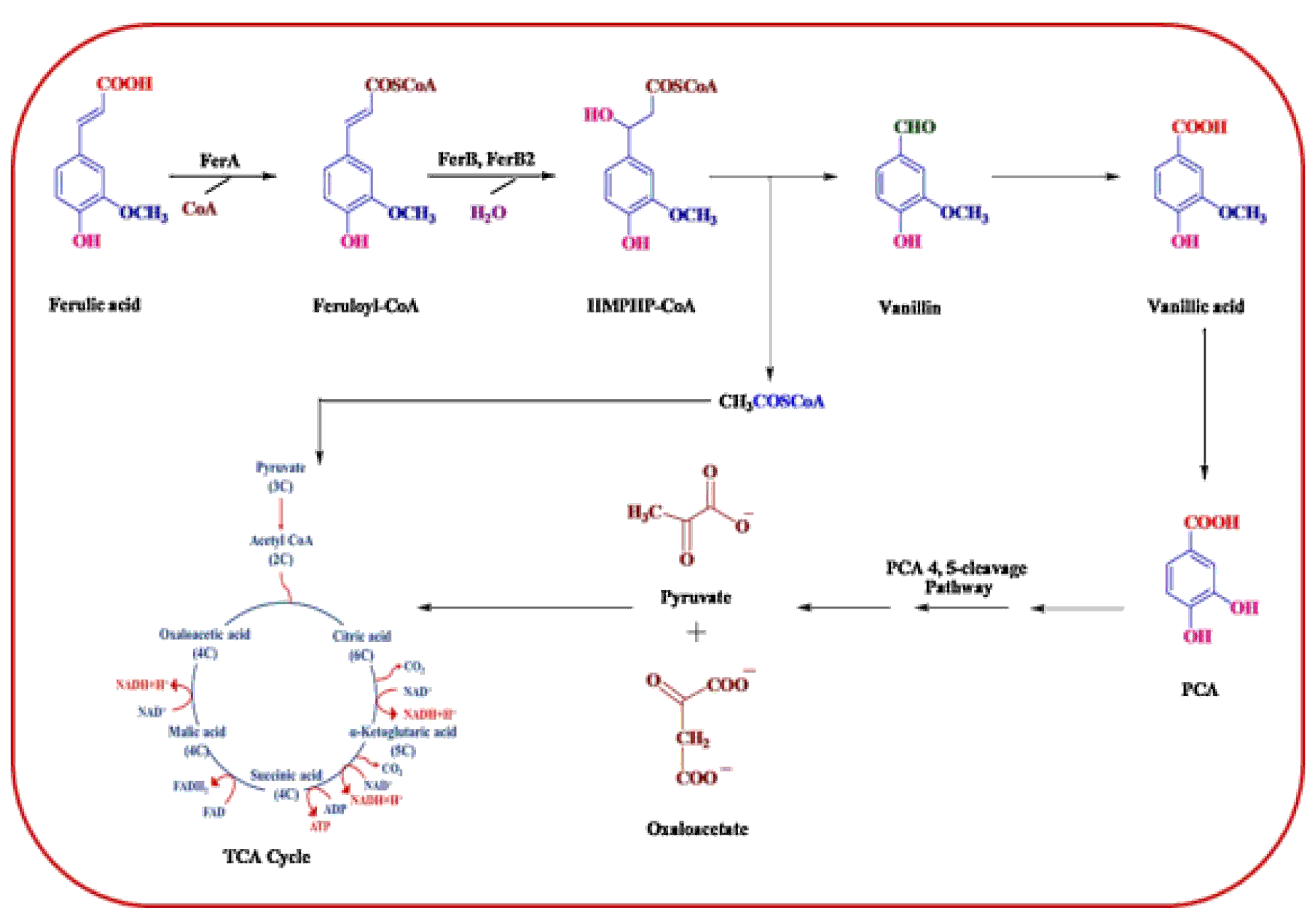
The physiological importance of FA is influenced by its bioavailability for absorption and subsequent interaction with target organs. Zhao and Moghadasian (Reference ZHAO and MOGHADASIAN2008) found that plasma levels of free FA reached maximum concentrations after 24 minutes of the oral administration. The formation of FA in plants occurs through the metabolic shikimate pathway starting with aromatic amino acids, L-tyrosine and L-phenylalanine as key entities. Initially, phenylalanine and tyrosine are converted into cinnamic and p-coumaric acid with the help of phenylalanine ammonia lyase and tyrosine ammonia lyase, respectively (Graf, Reference GRAF1992). Some in vivo studies on the metabolism of FA, suggested that it gets converted into a variety of metabolites such as ferulic acid-sulphate, ferulic acid-glucuronide, ferulic acid-sulphoglucuronide along with some major metabolites known as ferulic acid-diglucuronide, dihydroferulic acid, vanillic acid, feruloylglycine, m-hydroxyphenylpropionic acid and vanilloylglycine (Zhao et al., Reference ZHAO, EGASHIRA and SANADA2003; Zhao and Moghadasian, Reference ZHAO and MOGHADASIAN2008). A small portion of free FA may be metabolised via ß-oxidation in the liver (Chesson et al., Reference CHESSON, PROVAN, RUSSELL, SCOBBIE, RICHARDSON and STEWART1999). FA can be degraded into vanillin and other useful organic compounds through the protocatechuate 4, 5-cleavage (PCA) pathway in the bacillus Sphingomonas paucimobilis SYK-6 confirming the conversion of FA into feruloyl-CoA by feruloyl-CoA synthetase (FerA), and further into HMPMP-CoA (4-hydroxy-3-methoxyphenylb-hydroxypropionyl-coenzyme A) with the help of feruloyl-CoA hydratases/lyases (FerB and FerB2). This subsequently resulted in vanillin production with the removal of CH3COSCoA (acetyl coenzyme A), and, finally, vanillin was transformed into pyruvate and oxaloacetate through the PCA pathway (Masai et al., Reference MASAI, HARADA, PENG, KITAYAMA, KATAYAMA and FUKUDA2002). The end products of FA catabolism enter the TCA (tricarboxylic acid cycle) and produce energy in the biological system as showing in Figure 2.
The biological usages of FA became evident when the Japanese researchers discovered the antioxidant activities of steryl esters (ferulic acid) which was produced from rice oil (Yagi and Ohishi, Reference YAGI and OHISHI1979).
The pathway for ferulic acid catabolism in S. paucimobilis SYK-6 (HMPHP-CoA: 4-hydroxy-3-methoxyphenyl-b-hydroxyprpionyl CoA) (Chesson et al., Reference CHESSON, PROVAN, RUSSELL, SCOBBIE, RICHARDSON and STEWART1999; Kumar and Pruthi, Reference KUMAR and PRUTHI2014).

Use of FA in poultry diets
Ruan et al. (Reference RUAN, ZHANG and LIN2008) observed high levels of FA and catechin in Syzygium cumini confirming that phenolic acids and other phenolic molecules may be responsible for beneficial effects such as antioxidation. Syzygium cumini inclusion in layer diets at 5 and 10 g/kg improved the pigmentation of yolk by 4.9 and 16.5% and lipid stability (thiobarbituric acid reactive substances, TBARS) by 46 and 76%, respectively, but had no significant impacts on feed consumption, egg number, egg weight, egg output, feed efficiency, specific gravity, Haugh units score, percentages of albumen, yolk or egg shells and shell thickness (Freitas et al., Reference FREITAS, FERNANDES, SOUZA, DANTAS, SANTOS, OLIVEIRA, CRUZ, BRAZ, CAMARA and NASCIMENTO2017). The improvements in lipid stability and pigmentation of yolk by Syzygium cumini supplementation may be due to components like FA, metilgalatic, kaempferol, gallic acid, ellagic acid, myricetin, chlorogenic acid, quercetin, and nilocitin, mainly found in its leaves. Additionally, it was reported that FA could play an important role in inhibition of lipid peroxidative damage to sperm membranes and improve intracellular adenosine-3*, 5-cyclic monophosphate. Hence it is possible that FA can be used to combat asthenozoospermic infertility in parent broiler and layer breeder flock to obtain good fertility ratio in avian species.
In laying hens, dietary supplementation of propolis (2 and 5 g of ethanol extracted propolis/kg of diet) can alleviate heat stress-induced oxidative damage. Such improvements in productive performance and digestibility, egg weight, egg and shell thickness by propolis supplementation may be due to different flavonoids and aromatic acids, including FA (Seven, Reference SEVEN2008; Yatao et al., Reference YATAO, SAEED, KAMBOH, ARAIN, AHMAD, SUHERYANI, EL-HACK, ALAGAWANY, SHAH and CHAO2018; Saeed et al., Reference SAEED, BABAZADEH, ARAIN, NAVEED, SHAH, KAMBOH, MOSHAVERI, MODARRESI-GHAZANI, HEJAZI and CHAO2018). On the other hand, in broiler chickens, propolis was reported to have positive effects on immune functions by increasing the antibody titres against different viruses such as Newcastle disease by 150% with inclusion levels of 100 mg/kg diet, avian influenza by 196% with 1 g/kg diet and bursal disease or Gumboro by 71.42% with 100 mg/kg diet at d 42 of age in comparison with control birds (Taheri et al., Reference TAHERI, RAHMANI and POURREZA2005).
Regarding energy utilisation, several significant negative relationships between phenolic acids, polyphenols, and notably flavan-4-ols (as FA is dominant) with broiler performance indices were observed. It appears that phenolic compounds, including FA, other than condensed tannins, can negatively influence energy utilisation of starch and body weight gain of broilers offered sorghum-based diets (Truong et al., Reference TRUONG, NEILSON, MCINERNEY, KHODDAMI, ROBERTS, CADOGAN, LIU and SELLE2017).
FA is the dominant phenolic acid in sorghum and is found in maize, barley, wheat and triticale (Kandil et al., Reference KANDIL, LI, VASANTHAN and BRESSLER2012). FA has the ability to form complexes with debranched starch and these have been associated with the increases in starch resistance to digestion (Hung et al., Reference HUNG, PHAT and PHI2013). FA is the dominant phenolic acid in conjugated, bound, soluble and insoluble forms. Conjugated FA was negatively correlated with metabolisable energy (ME) to gross energy (GE) ratios (r=-0.919; P<0.015) and bound FA in combination with conjugated vanillic acid was negatively correlated with AME (r=-0.990; P=0.005). In a recent study involving six red sorghum cultivars, Khoddami et al. (Reference KHODDAMI, TRUONG, LIU, ROBERTS and SELLE2015) showed negative correlations between conjugated FA with AME (r=-0.808; P=0.052), ME:GE ratios (r=-0.831; P=0.042) and N-corrected apparent metabolisable energy (AMEn) (r=-0.769; P=0.074). The implication is that phenolic acids have detrimental effects on energy efficiency and utilisation in broiler chickens offered sorghum-based diets. Under in vitro conditions, phenolic acids in feed grains have a key role in the resistance of starch to hydrolysis (Kandil et al., Reference KANDIL, LI, VASANTHAN and BRESSLER2012). The content of free fatty acids in diets supplemented with rice bran oil, as a FA source, increased with time; however, the peroxide value (rancidity) was low during the experiment (Gallinger et al., Reference GALLINGER, SUÁREZ and IRAZUSTA2004).
FA played an important role in reducing the effects of radio- and chemotherapy and of carcinomas via improving the immune defence system (Graf, Reference GRAF1992). FA is a precursor in biosynthesis of sinapic acid, and both ferulic and sinapic acids (SA) are produced from the phenyl propanoid pathway (Tesaki et al., Reference TESAKI, TANABE, ONO, FUKUSHI, KAWABATA and WATANABE1998). A potential beneficial impact of SA (4-hydroxy-3,5-dimethoxy-cinnamic acid) (sinapic acid; SA) in broiler diets, as indicated by feed intake and growth rate at low doses of dietary SA treatment, may be associated with its antibacterial and antioxidant effects. So, both may have similar beneficial and biological impacts when consumed. Similarly, from in vitro studies, FA has been reported to have antibacterial effects against Salmonella enteritidis, Escherichia coli, and Staphylococcus aureus (Tesaki et al., Reference TESAKI, TANABE, ONO, FUKUSHI, KAWABATA and WATANABE1998; Hua et al., Reference HUA, GROSJEAN and BAKER1999).
Dietary SA (0.025%) increased feed consumption vs. an unsupplemented control diet. Levels of SA in feed (0.05, 0.10, 0.15, or 0.20%) did not affect the weights of kidney, digestive tract, liver and bursa of Fabricius. Nitrogen-corrected AME and CP digestibility were not influenced by dietary supplementation of SA, and there was a negative linear relationship between dietary level of SA and ileal digestibility of certain amino acids such as methionine, proline, threonine, serine, glycine, alanine, and phenyl alanine (Qiao et al., Reference QIAO, DAHIYA and CLASSEN2008).
FA acts as antioxidant agent against free radicals through donating one hydrogen atom from its phenolic hydroxyl group. Modulating its strong anti-inflammatory effects (Ou and Kwok, Reference OU and KWOK2004; Rosa et al., Reference ROSA, DUFOUR, LULLIEN-PELLERIN and MICARD2013). It was reported that the antioxidant capacity (AOC) of lecithin is equivalent to phenolic acid on inhibition of time-dependent peroxide values (Graf, Reference GRAF1992). The FA resonance stabilisation is essential reason to its antioxidant activity. Furthermore, FA acts as a reactive oxygen species (ROS) scavenger, which mimics SOD (Graf, Reference GRAF1992). It shows high scavenging activity for superoxide, hydroxyl and nitrogen dioxide free radicals and hydrogen peroxide.
Several phenolics in oats, palm oil and cinnamon essential oil have been shown to contain FA, p-hydroxybenzoic acid, cinnamaldehyde, caffeic acid, vanilic acid, phydroxyphenylacetic acid, p-coumaric acid, protocatechuic acid, etc. (Peterson et al., Reference PETERSON, EMMONS and HIBBS2001; Chen et al., Reference CHEN, MILBURY, KWAK, COLLINS, SAMUEL and BLUMBERG2004; Ayisi et al., Reference AYISI, ZHAO and RUPIA2017; Wu et al., Reference WU, SUN, GUO, GE and ZHANG2017). The susceptibility of meat to oxidation in broiler chickens receiving oats at 200 g/kg diet was higher compared to chickens receiving 200 ppm vitamin E (Lopez-Bote et al., Reference LOPEZ-BOTE, GRAY, GOMAA and FLEGAL1998). Feeding broiler chickens with oats improved the oxidative stability of meat by increasing polyunsaturated fatty acid levels in intramuscular fat. After six months storage of meat at -20°C, level of TBARS was lower by 6.4% in the groups fed diets containing the oats compared with a non-oat control group. The value of yellowness (b*) in chickens fed dehulled oats was significantly lower by 6.1% than in control birds (Szymczyk et al., Reference SZYMCZYK, HANCZAKOWSKI, SZCZUREK and FRYS-ZUREK2007).
Lin et al. (Reference LIN, LEE, LO, CHANG and LEE2018) found that the activities of xylanase and cellulase of Trichoderma pseudokoningii fermented enzyme powder (EP) were 487.96 U/g and 18.55 U/g, respectively. The contents of total phenolics and ferulic acid in EP were 4.79 mg GAE/g dry weight (DW) and 4.38 μM /g DW respectively. During the overall feeding period (1-35 d-old), supplementation of EP at 0.2 and 0.4% in broiler diets significantly increased the activity of SOD by 6.1% and 10.9%, respectively. In comparison with control, CAT activity was increased by 145.8% and 193.1% during period 1-21 d, 79.5% and 46.4% during 21-35 d and 116.7% and 98.4% during 1-35 days of age when birds were fed diets contained 0.2 and 0.4% EP, respectively. The population of lactic acid bacteria was increased by 10.10% in the caeca of the 21 d old chickens that received 0.2% EP. Supplementation of EP significantly lowered the population of coliform by 14.09% during the overall period (Lin et al., Reference LIN, LEE, LO, CHANG and LEE2018). From these results EP can be considered as a promising feed additive to improve performance and antioxidative status as well as gut microbiome.
Dietary supplementation with FA decreased the sarcous level of MDA and increased hepatic activity of GSH-Px (p<0.05). Similarly, including FA at 40 or 80 mg/kg in poultry diets reduced carbon tetrachloride-induced formation in the liver MDA (Kim et al., Reference KIM, PARK, LEE, LEE, KWAK, KIM and LEE2011, Srinivasan et al., Reference SRINIVASAN, RUKKUMANI, RAM SUDHEER and MENON2005).
Conclusions
Ferulic acid is one of the cinnamic acid derivatives which is commonly present in various plants including vegetables, fruits, wheat, cereals and barley. FA has an important role in preventing free radical-mediated damage by regulating the activity of the haem oxygenase/biliverdin reductase (HO/BVR) system, CAT, SOD and chaperone heat shock proteins (HSP 70). In addition, FA plays an important role in reducing the negative effects of radio- and chemotherapy and the growth of carcinomas via improving the immune defence systems. Dietary supplementation with FA decreased sarcous level of MDA and increased hepatic activity of GSH-Px. Therefore, dietary FA could partially improve antioxidant capacity and the meat quality of poultry. Similarly, supplementation of FA at 40 mg/kg or 80 mg/kg diet reduced the formation of hepatic MDA in the case of carbon tetrachloride toxicity. Further studies are needed to gain more information about the use of this compound as a natural feed additive in poultry nutrition.
Acknowledgments
This work was supported by the grants from the Major National Scientific Research Projects (2015CB943102) and the National Nature Science Foundation of China (31572365) and Key Sci-tech innovation team of Shaanxi province (2017KCT-24). The authors are also grateful to the China Postdoctoral Science Foundation.
Conflict of interests
None of the authors of this paper has a financial or personal relationship with other people or organizations that could inappropriately influence or bias the content of the paper.