Introduction
Sphaerophoraceae (Lecanorales, Lecanoromycetes) contains large, often eye-catching and frequently collected mazaediate macrolichens. The genus Bunodophoron A. Massal. was resurrected following a hypothesis on the phylogeny of the family, based on morphological and chemical characters (Wedin Reference Wedin1993). It includes the majority of the species previously classified in Sphaerophorus Pers., and differs from Sphaerophorus s. str. in ascospore shape and ontogeny. Bunodophoron has globose spores with an irregular ornamentation consisting of an amorphous material adhering to the spore wall following release from the asci, whereas Sphaerophorus has broadly ellipsoidal spores where a thick secondary spore wall is developed when the spores are still inside the asci (Tibell Reference Tibell1981, Reference Tibell1984; Wedin Reference Wedin1990, Reference Wedin.1991, Reference Wedin1992, Reference Wedin1993; Wedin & Tibell Reference Wedin and Tibell1991; Kantvilas & Wedin Reference Kantvilas and Wedin1992). Bunodophoron is further characterized (and differs from Sphaerophorus and the closely related Leifidium Wedin) by having a more or less dorsiventrally flattened thallus, subapically to ventrally exposed mazaedia and rod-shaped conidia. Species of Bunodophoron usually contain stictic or protocetraric acid (frequently together with related substances) in the medulla, whereas species of Sphaerophorus usually contain thamnolic or squamatic acid. A detailed discussion of taxonomic concepts and relevant characters can be found in Wedin (Reference Wedin1993) and Wedin (Reference Wedin1995 a). The position of the mazaediate Sphaerophoraceae was subsequently analyzed in a series of molecular phylogenies by Wedin and co-workers. Sphaerophoraceae was confirmed to be lecanoralean (Wedin et al. Reference Wedin, Tehler and Gargas1998) and to include the small non-mazaediate genera Neophyllis (F. Wilson) F. Wilson and Austropeltum Henssen et al. (Wedin & Döring Reference Wedin and Döring1999; Wedin et al. Reference Wedin, Döring and Ekman2000). This relationship was further supported by all these genera sharing an anatomically and ontogenetically similar boundary tissue between ascomatal and thalline tissues, which is presumably a synapomorphy for the family (Henssen et al. Reference Henssen, Döring and Kantvilas1992; Döring et al. Reference Döring, Henssen and Wedin1999; Döring & Wedin Reference Döring and Wedin2000). The closest relative to Sphaerophoraceae is likely to be the mazaediate Calycidiaceae (Wedin Reference Wedin2002; Prieto et al. Reference Prieto, Baloch, Tehler and Wedin2013).
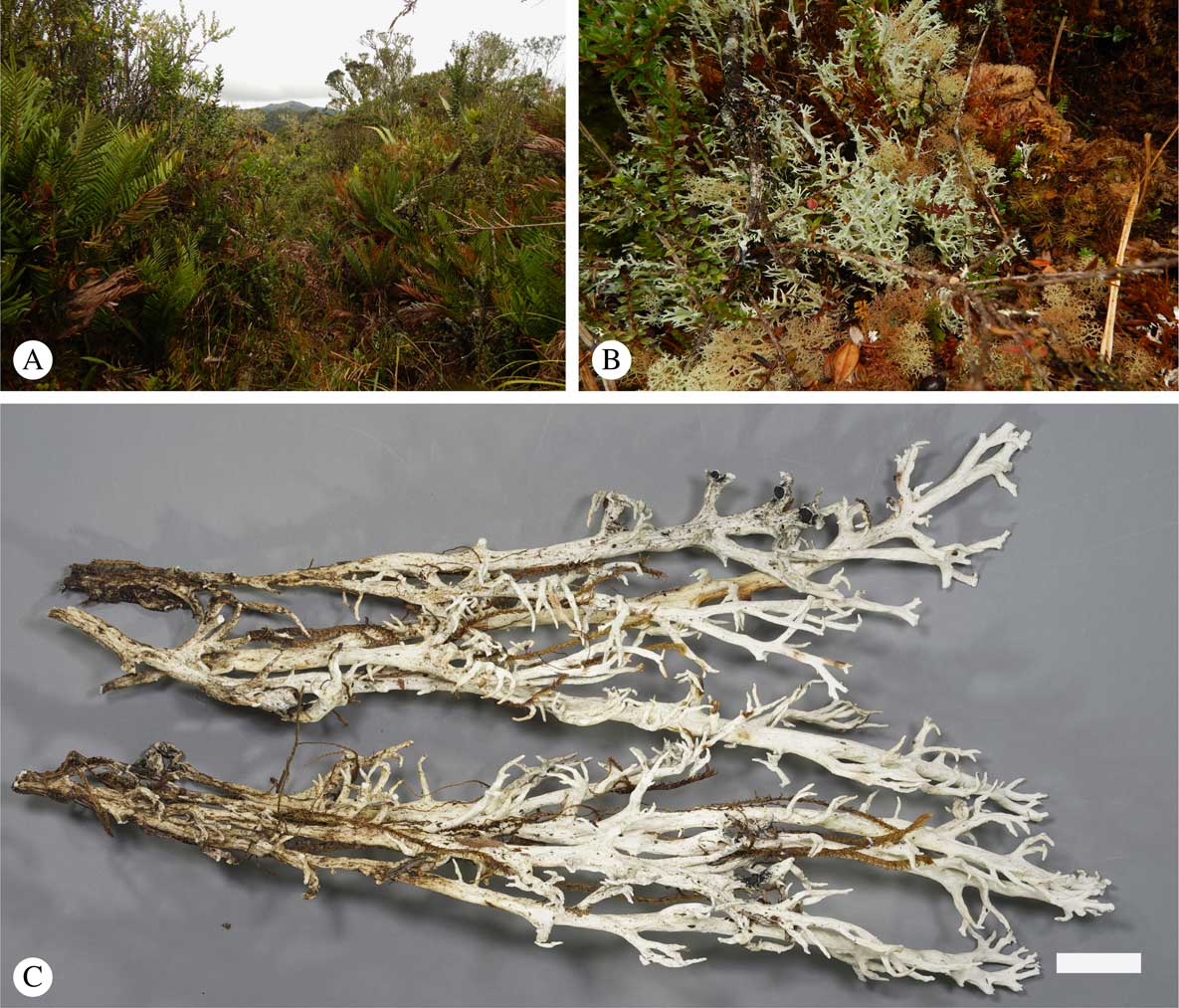
Bunodophoron is widespread in humid and temperate regions, particularly of the Southern Hemisphere, for which Wedin (Reference Wedin1995 a) revised the whole family. Currently c. 20 species are accepted in Bunodophoron worldwide (Wedin Reference Wedin1993, Reference Wedin1995 a; Lumbsch et al. Reference Lumbsch, Ahti, Altermann, Amo de Paz, Aptroot, Arup, Bárcenas Peña, Bawingan, Benatti and Betancourt2011) but there is no modern treatment for any tropical region (however, see Tibell (Reference Tibell1982, Reference Tibell1987), Wedin (Reference Wedin1992, Reference Wedin1995 a) and Lumbsch et al. (Reference Lumbsch, Ahti, Altermann, Amo de Paz, Aptroot, Arup, Bárcenas Peña, Bawingan, Benatti and Betancourt2011) for discussions on single species) and many additional species can be expected to occur in moist high-altitude areas. Most species are epiphytic but several can occur on rocks and soil. In the neotropical region, Bunodophoron species are often important and conspicuous components in the páramos (Fig. 1A). They belong to a species group within Bunodophoron with sphaerophorin, stictic and constictic acids, and with comparatively small, greyish to brownish grey spores (Wedin Reference Wedin1993, Reference Wedin1995 a). Only two species are currently accepted in the Neotropics: B. formosanum (Zahlbr.) Wedin and B. melanocarpum (Sw.) Wedin (Tibell Reference Tibell1982). These taxa are not well understood and the names are probably applied only by tradition to samples with or without isidioid outgrowths along the main branches, respectively (Wedin Reference Wedin1995 a). The application of the name Lichen melanocarpum Sw. described from Jamaica, one of the oldest names available, will be important to clarify in a future paper. The present study is an introduction to Bunodophoron in the Neotropics and deals with two large and morphologically distinct Bunodophoron species which occur predominantly in the páramo areas, one of which is described as new. The páramo is a very diverse and species-rich neotropical ecosystem above the continuous timberline, dominated by shrubby grasslands and boggy areas. The lichen vegetation is comparatively poorly studied but baseline studies are summarized by Sipman (Reference Sipman1999, Reference Sipman2002). Examples of recent ecological and systematic studies in páramo areas include González et al. (Reference González, Aragón, Benitez and Prieto2017) and Lücking et al. (Reference Lücking, Dal-Forno, Sikaroodi, Gillevet, Bungartz, Moncada, Yánez-Ayabaca, Chaves, Coca and Lawrey2014).
Bunodophoron in the Neotropics. A, typical Colombian páramo, an important habitat for Bunodophoron in the Neotropics; B, B. crespoae growing among Cladonia and bryophytes in Colombian páramo; C, B. crespoae (holotype), thallus, note apothecia in the uppermost branch. Scale: C=1 cm.

Materials and Methods
Specimens and morphology
The specimens studied were collected in areas of montane forest and páramo in Colombia and Ecuador. Additional specimens were sourced from the Universidad Distrital Francisco José Caldas (UDBC), Universidad del Valle (CUVC), Universidad de Caldas (FAUC), Swedish Museum of Natural History (S), Museum of Evolution at Uppsala University (UPS) and Herbarium des Botanischen Gartens und Botanischen Museums Berlin-Dahlem (B).
The specimens were studied using light microscopy, and a selection of samples was investigated with high performance thin-layer chromatography (HPTLC; Arup et al. Reference Arup, Ekman, Lindblom and Mattsson1993; Orange et al. Reference Orange, James and White2001) using solvent systems B and C. Morphological terms and measurements follow Wedin (Reference Wedin1995 a).
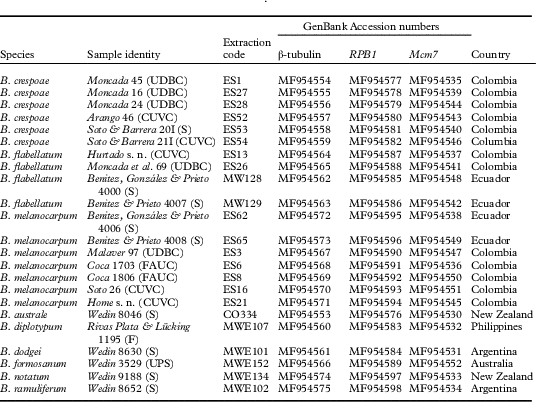
For the phylogenetic analyses, we used a subset of neotropical samples (Table 1) with an additional number of Bunodophoron species belonging to the species group with stictic acid and small grey spores, to serve as functional outgroups based on the phylogeny in Wedin (Reference Wedin1993). The resulting tree was rooted using one of these, B. ramuliferum.
Specimens used for the phylogenetic study of Bunodophoron, with GenBank Accession numbers for newly produced sequences

Molecular techniques
DNA was extracted from 23 samples (Table 1) using DNeasy Plant Mini Kit (Qiagen) according to the manufacturer’s instructions. Three protein coding genes were amplified: β-tubulin, RNA polymerase II largest subunit (RPB1) and DNA replication licensing factor (Mcm7). PCR amplifications were performed using Illustra™ Hot Start Mix RTG PCR beads (GE Healthcare, UK) in a 25 µl volume, containing 5 µl of DNA, 0·5–1·2 µM of each primer and distilled water. Amplifications were performed using the following programs: for β-tubulin, initial denaturation at 95°C for 5 min followed by 4 cycles of 95°C for 30 s, 54°C for 40 s and 72°C for 1 min, 4 cycles of 95°C for 30 s, 52°C for 30 s and 72°C for 1 min, 35 cycles of 95°C for 30 s, 50°C for 30 s and 72°C for 1 min, followed by a final extension at 72°C for 8 min; for RPB1 and Mcm7, initial denaturation at 95°C for 5 min followed by 4 cycles of 95°C for 30 s, 57°C for 40 s and 72°C for 1 min, 4 cycles of 95°C for 30 s, 55°C for 30 s and 72°C for 1 min, 35 cycles of 95°C for 30 s, 53°C for 30 s and 72°C for 1 min, followed by a final extension at 72°C for 8 min.
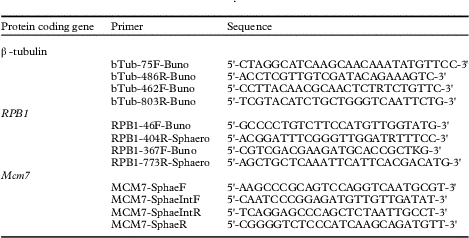
β-tubulin was amplified using the newly designed primers bTub-75F-Buno and bTub-803R-Buno or bTub-75F-Buno (Table 2) and Bt10-LM (Myllys et al. Reference Myllys, Lohtander and Tehler2001), or in some cases in two steps using the newly designed primer pairs bTub-75F-Buno and bTub-486R-Buno, and bTub-462F-Buno and bTub-803R-Buno (Table 2). The RPB1 was amplified with the primers RPB1-Af (Stiller & Hall Reference Stiller and Hall1997) and RPB1-773R-Sphaero (Table 2), or in some cases in two steps using the newly designed primer pairs RPB1-46F-Buno and RPB1-404R-Sphaero, and RPB1-367F-Buno and RPB1-773R-Sphaero (Table 2). For Mcm7 we used the newly designed primers MCM7-SphaeF and MCM7-SphaeR, or in some cases in two steps using the primer pairs MCM7-SphaeF and MCM7-SphaeIntR, and MCM7-SphaeIntF and MCM7-SphaeR (Table 2).
Sequences of newly designed primers used in the phylogenetic study of Bunodophoron

PCR products were subsequently purified using the enzymatic method Exo-sap-IT (USB Corporation, Santa Clara, California, USA) or when multiple bands were amplified, products were size-fractionated on a 1% agarose gel run in TBE buffer, stained with GelRedTM (Biotium Inc.), visualized over a UV transilluminator, excised and purified using QIAquick spin columns (Qiagen). The purified PCR products were sequenced with the BigDye Terminator Kit v.3.1 (ABI Prism, USA), using the PCR primers.
Sequences were assembled and edited using Sequencher v.4.10.1 (Genes Codes Corporation, Ann Arbor) and deposited in GenBank (Table 1). Subsequently, sequences were aligned manually using MacClade 4.01 (Maddison & Maddison Reference Maddison and Maddison2001) utilizing the amino acid translation. Introns were delimited manually by comparing with sequences already annotated in GenBank and excluded from phylogenetic analyses.
Phylogenetic analyses
Each individual gene region was analyzed using maximum likelihood-based inference (ML) as implemented in RAxML v.8.1.11 (Stamatakis Reference Stamatakis2014) with a GTRGAMMA model for tree inference. Bootstrapping was performed with a GTRCAT model and 1000 replicates. In order to check for gene-tree incongruence, we compared maximum likelihood bootstrap values (ML-BS) between the individual gene trees, considering a conflict among clades when a supported clade (bootstrap support >70%) for one marker was contradicted with significant support by another. Since no supported nodes were in conflict, the data were combined into a single concatenated data matrix. The combined maximum likelihood (ML) analyses were run with six distinct partitions (first and second codon positions of the Mcm7, β-tubulin and RPB1 and the third codon position of the Mcm7, β-tubulin and RPB1), using a GTRGAMMA model of molecular evolution and rate heterogeneity with unlinked parameters and 1000 bootstrap replicates.
To select models of nucleotide substitution, we used jModelTest 2.0 (Guindon & Gascuel Reference Guindon and Gascuel2003; Darriba et al. Reference Darriba, Taboada, Doallo and Posada2012) using the Akaike Information Criterion (AIC) for model selection. The GTR model (Rodríguez et al. Reference Rodríguez, Oliver, Marin and Medina1990) with an estimated proportion of invariable sites was selected for all partitions of the β-tubulin and RPB1, while HKY (Hasegawa et al. Reference Hasegawa, Kishino and Yano1985) with an estimated proportion of invariable sites was selected for all partitions of the Mcm7. Bayesian inference was carried out through Markov chain Monte Carlo (MCMC) sampling, as implemented in MrBayes 3.2.3 (Ronquist et al. Reference Ronquist, Teslenko, van der Mark, Ayres, Darling, Höhna, Larget, Liu, Suchard and Huelsenbeck2011). The analyses consisted of two parallel searches, each with four chains run for 10 M generations and initiated with random starting trees. The chains were sampled every 100 generations from the posterior distribution. A burn-in sample of 25000 trees was discarded for each run. The remaining 150 000 trees (pooled from both independent runs) were used to assemble a majority-rule consensus tree and to estimate branch lengths and posterior probabilities (PPs). To determine if the chains had converged, verify if mixing was appropriate and choose a suitable burn-in, we plotted the log-likelihood values against the time generation with Tracer v.1.5.0 (Rambaut & Drummond Reference Rambaut and Drummond2007). We assumed stationarity of the chains when log-likelihood values reached the same stable equilibrium value for each independent run (Huelsenbeck & Ronquist Reference Huelsenbeck and Ronquist2001) and when the average standard deviation of split frequencies across runs dropped below 0·01. We also tested convergence with the AWTY program (Wilgenbusch et al. Reference Wilgenbusch, Warren and Swofford2004; Nylander et al. Reference Nylander, Wilgenbusch, Warren and Swofford2008). Maximum likelihood, Bayesian analysis and the selection of models were run on the CIPRES Science Gateway v.3.3 (Miller et al. Reference Miller, Pfeiffer and Schwartz2010).
Species delimitation
We used the general mixed Yule coalescence (GMYC) single-threshold method to delimit species boundaries (Pons et al. Reference Pons, Barraclough, Gomez-Zurita, Cardoso, Duran, Hazell, Kamoun, Sumlin, Vogler and Hedin2006; Monaghan et al. Reference Monaghan, Wild, Elliot, Fujisawa, Balke, Inward, Lees, Ranaivosolo, Eggleton and Barraclough2009). This method is based on the differential branching patterns generated by speciation (Yule process) and intraspecific events (coalescent events) observed in an ultrametric tree. The null model assumes that all individuals belong to a single species and branching patterns indicate a coalescent process. The ultrametric tree used in this analysis was built in BEAST v.1.8 (Drummond et al. Reference Drummond, Suchard, Xie and Rambaut2012) with the combined alignment, using BEAUti v.1.8 (Drummond et al. Reference Drummond, Suchard, Xie and Rambaut2012) to prepare the input with partitions and nucleotide substitution models as used in the previous Bayesian analysis. We implemented an uncorrelated relaxed lognormal clock (Drummond et al. Reference Drummond, Ho, Phillips and Rambaut2006) and selected a Yule tree prior, with default values for remaining priors. BEAST analyses were run for 40 million generations, logging parameters and trees every 1000 generations. Convergence, mixing and effective sample sizes (ESS) of parameters were checked using Tracer v.1.5.0 (Rambaut & Drummond Reference Rambaut and Drummond2007). A burn-in of 1000 trees was removed from each analysis. The remaining trees were used to generate a maximum clade credibility tree with TreeAnnotator v.1.8.2 (Drummond et al. Reference Drummond, Suchard, Xie and Rambaut2012). The GMYC single-threshold model was implemented in the splits package (Ezard et al. Reference Ezard, Fujisawa and Barraclough2009; Fujisawa & Barraclough Reference Fujisawa and Barraclough2013) for R v.3.0.3 (R Core Team 2013) using the functions of the ape package (Paradis et al. Reference Paradis, Claude and Strimmer2004).
Results and Discussion
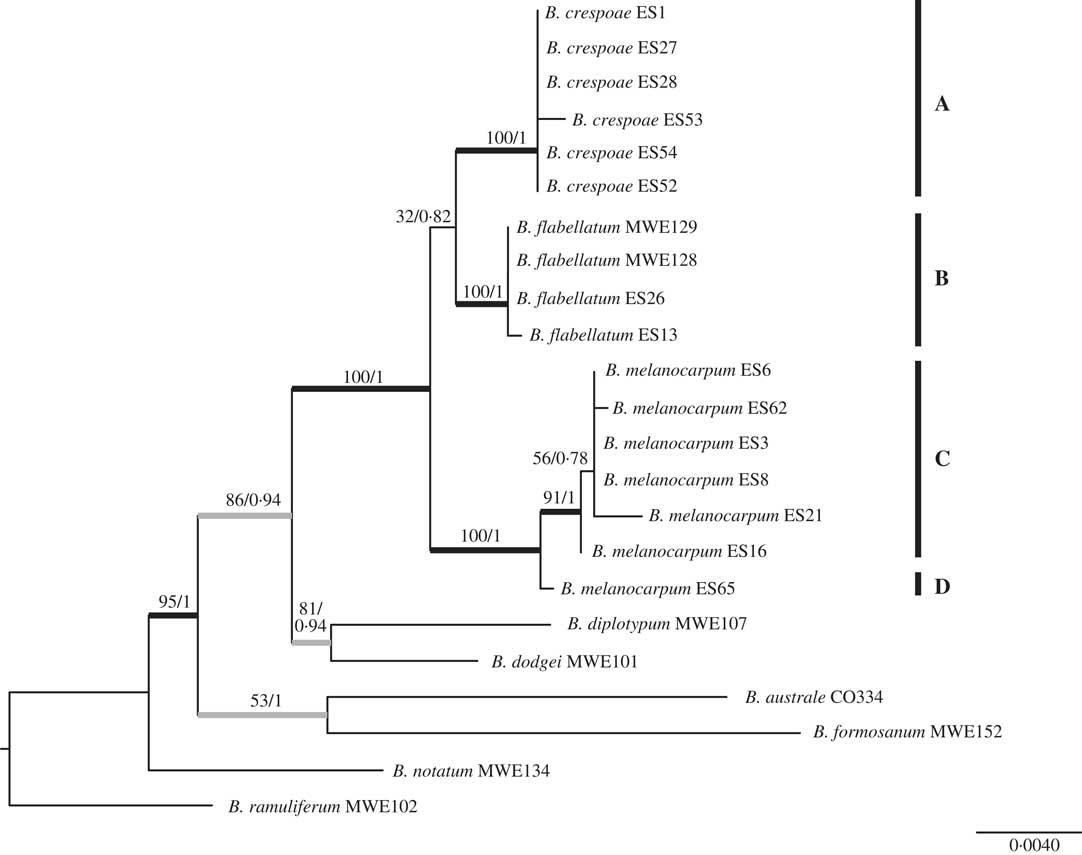
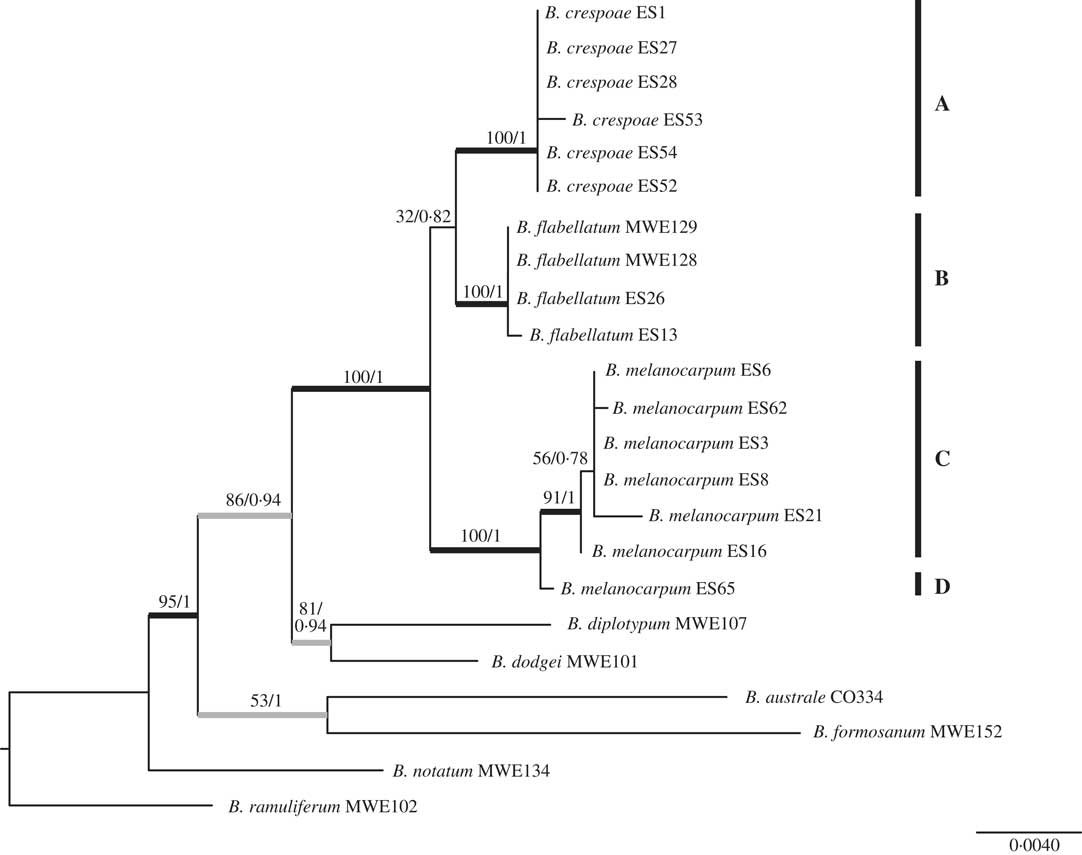
PCR and sequencing resulted in 69 sequences (Table 1). The combined data set consisted of 2025 unambiguously aligned sites, 726 for β-tubulin, 573 for Mcm7 and 726 for RPB1. The best maximum likelihood tree with bootstrap support and posterior probabilities is depicted in Fig. 2. The samples sourced from the Neotropics form three monophyletic groups. The likelihood of the GMYC model (183·8607) was significantly superior to the likelihood of the null model (178·1938), with a likelihood ratio test P value <0·05. Four putative species were supported using this method. The number of entities (represented by single sequences) was higher (4) than the number of clusters represented by at least two sequences (3). Groups corresponded to morphotype species (Fig. 2; entities A–C) except for the specimen ES65 which was listed as a different species (Fig. 2; entity D). The first two clades obtained in the phylogenetic analysis and supported by the GMYC single-threshold method are interpreted here as currently unrecognized species. For one of these we have found an existing name but the other is described here as new. The third group is here provisionally called Bunodophoron melanocarpum, based on morphological similarities with the lectotype (Wedin Reference Wedin1995 b). The GYMC analysis suggests that this third clade represents two species, which supports that what we currently include within B. melanocarpum is still an unresolved species complex where additional sampling will be required to fully address species boundaries.
Best phylogenetic tree for Bunodophoron from RAxML with bootstrap support (ML-BS) and posterior probabilities (PP) obtained in the Bayesian analysis. Branch support values are ordered as ML-BS/PP. Clades supported by both analyses (ML-BS ≥70, PP ≥0·95) are marked with thicker black branches and with thicker grey branches when the node is only supported by one of the two analyses. The GMYC entities recovered are depicted in the right side of the figure (entities A–D).
Taxonomy
Bunodophoron crespoae Soto, M. Prieto & Wedin sp. nov.
MycoBank No.: MB 821588
A large and eye-catching terrestrial species characterized by the white, c. 10–13 cm long, subterete to narrowly flattened, main branches. It differs from the otherwise similar Bunodophoron flabellatum by being distinctly subterete, more abundantly branched, and by having smaller ascospores. From B. melanocarpum it differs by being much larger, white and by growing on the ground.
Type: Colombia, Cauca, Páramo Gabriel López, 59 km along the road from Popayán to Huila, alt. c. 3200 m, on the ground among Sphagnum, 13 March 2016, E. Soto & Á. Barrera 20I (CUVC—holotype; S—isotype). GenBank Accession numbers: MF954558 (β-tubulin), MF954581 (RPB1), MF954540 (Mcm7).
Thallus elongated, forming extensive colonies on the ground. Fertile branches subterete to narrowly flattened, sparingly branched, c. (9·5–)10·5–11·6–12·7(–13·0) cm long (n=8), (2·3–)2·5–3·2–3·9(–4·3) mm wide (n=7); secondary branchlets laminal, elongate, abundantly branched, dichotomous, subterete to narrowly flattened. Upper surface creamy white, smooth to slightly wrinkled. Lower surface white, smooth to slightly wrinkled.
Ascomata sparse, terminal, 0·8–2·2 mm wide (n=3), usually on poorly differentiated supporting branches. Mazaedia subapically exposed; thalline receptacle rupturing early and soon disappearing. Ascospores (4·0–)4·5–5·4–6·3(–8·0) µm diam. (n=40), pale greyish to dark grey.
Pycnidia common, in the apices of terminal branchlets. Conidia not seen.
Secondary chemistry. Sphaerophorin (major), stictic and constictic acids (frequently as trace or in low concentrations).
Etymology. We proudly name this very distinct species after our friend and mentor Ana Crespo.
Ecology. This species is found on the ground associated with mosses (frequently Sphagnum) and species of Cladonia in the páramo, in moderately exposed sites. It is currently known only from páramo areas in the south-east of Colombia.
Characterization. This species is characterized by the large, subterete, comparatively richly branched, white thallus. Bunodophoron flabellatum has a more distinctly flattened thallus and larger spores, and B. melanocarpum is generally much smaller and more slender, and is predominantly epiphytic. It is currently difficult to state anything about its closest relatives as we lack a larger phylogeny of Bunodophoron, but it is morphologically distinct from all other currently accepted species (Wedin Reference Wedin1993, Reference Wedin1995 a).
Additional specimens examined. Colombia: Cauca: Páramo de Gabriel López, km 59 de la vía que lleva de Popayán a Huila, alt. c. 3200 m, sobre suelo entre Sphagnum, 2016, E. Soto & Á. Barrera 21I (CUVC); Páramo de Gabriel López, alt. c. 3200 m, 2012, B. Moncada 16, 24, 45 (UDBC); Páramo de Puracé, Laguna de San Gabriel, c. 3300 m, sobre suelo entre pajonales, 2016, K. Arango 46 (CUVC). Valle: Parque Nacional Natural Farallones de Cali, alt. c. 3650 m, 2017, E. Soto 25PP (CUVC).
Bunodophoron flabellatum (Hue) Soto, M. Prieto & Wedin comb. nov.
MycoBank No.: MB 821589
Dufourea flabellata Hue, Nouv. Arch. Mus. Hist. Nat. 4: 61 (1899); type: Colombia (“Bolivia”), Tolima Goudot (PC—holotype).
Epitype: Ecuador, Loja, Podocarpus National Park, Cajanuma, 4°06'59''S, 79°09'41''W, 3337 m, páramo, on soil, 29.6.2010, A. Benítez, Y. González & M. Prieto 4000 (S—epitype, designated here). GenBank Accession numbers: MF954562 (β-tubulin), MF954585 (RPB1), MF954548 (Mcm7).
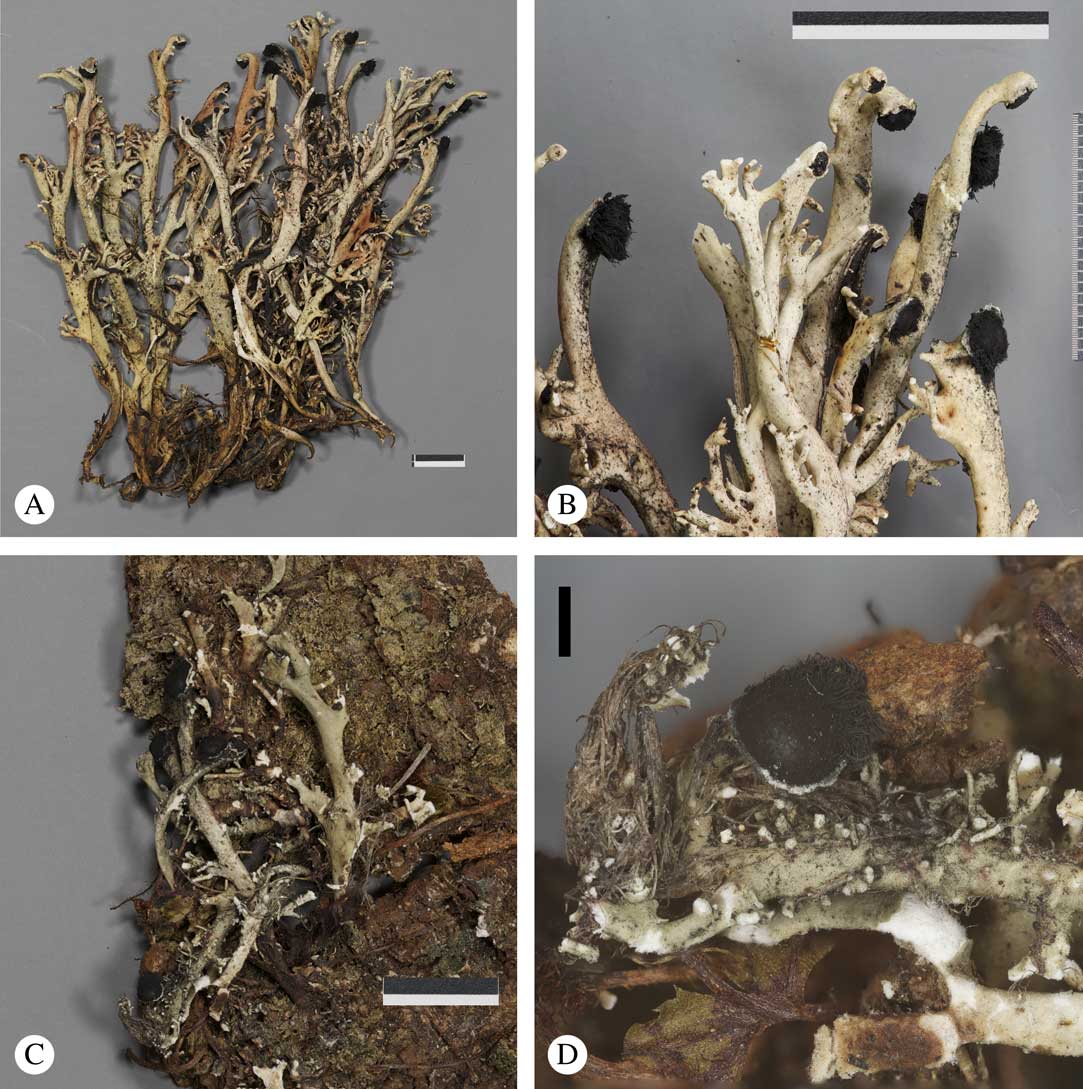
Bunodophoron in the Neotropics. A, B. flabellatum, thallus, overview (epitype); B, B. flabellatum, close-up of apothecia (epitype); C, B. melanocarpum, thallus, overview (Coca 1703, FAUC); D, B. melanocarpum, close-up of apothecium (Coca 1703, FAUC). Scales: A–C=1 cm; D=1 mm.

Thallus erect, elongated, forming extensive, compact to loose colonies to small patches over tree trunks and frequently on the ground in páramos. Fertile branches narrowly to broadly flattened, sparingly branched, c. (3·0–)3·4–5·3–7·2(–9·5) cm long (n=30), (1·9–)2·5–3·2–3·9(–4·5) mm wide (n=24); secondary branches laminal, sparsely branched, flattened. Upper surface pale greyish to white, smooth to slightly wrinkled. Lower surface white, smooth to slightly wrinkled.
Ascomata sparse, terminal, (1·2–)1·7–2·4–3·1(–4·0) mm wide (n=34), usually on poorly differentiated supporting branches that are frequently bent and ±involuted. Mazaedia subapically to ventrally exposed; thalline receptacle rupturing early and soon disappearing. Ascospores (5·0–)5·9–6·6–7·3(–9·0) µm diam. (n=125), pale greyish to dark grey.
Pycnidia common, in the apices of terminal branchlets. Conidia bacilliform, (5·0–)5·1–5·8–6·5(–7·0)×2 µm.
Secondary chemistry. Sphaerophorin (major), stictic acid and constictic acid (frequently in low concentrations).
Ecology. This species is found growing on soils in páramos or on trees in montane forests.
Characterization. Bunodophoron flabellatum is a large, flattened and sparingly branched species which frequently grows on the ground in páramos but also occurs as an epiphyte in the forests of the same areas. In the páramos, it is usually erect and the ultimate parts of the fertile branches are often then characteristically involuted. This feature is interpreted as a response to keeping the mazaedia horizontal. It differs from the otherwise similar B. crespoae by being distinctly flattened, more sparingly branched, and by having larger ascospores. From B. melanocarpum it differs by being much larger, having larger spores, and by predominantly growing on the ground. Bunodophoron flabellatum was included in the phylogeny of Wedin (Reference Wedin1993) as Bunodophoron species “A”, where it was the sister to a group formed by B. ohlssonii, B. macrocarpum, B. notatum and B. scrobiculatum. This phylogeny was, however, based on morphology and chemistry only, and these relationships have not yet been tested by molecular approaches. Only one of these species, B. notatum, was included in the current phylogeny (Fig. 2) and is clearly not closely related.
Nomenclatural note. Dufourea flabellata Hue was described based on material from Tolima, a volcano (and province) in what is today Colombia. The type is sterile, as this species often is, but the flattened, large terrestrial thallus is distinctive. We epitypify the name on sequenced material to achieve nomenclatural stability. The epitype, Prieto 4000, is a typical, but richly fertile, terrestrial sample.
Additional specimens examined. Colombia: Arauca: Sierra Nevada del Cocuy, Quebrada el Playon, Plan de San José, on soil, 3680 m, 1973, A. M. Cleff 10095 (B); 2 km ENE of Boqueron de Cusirí, Cabeceras de la Quebrada El Playón, Sierra Nevada del Cocuy, 4250 m, A. M. Cleff 9069 (B). Departamento de Cundinamarca: Parque Nacional Natural Sumapaz, 3500–3700 m, 2004, B. Moncada 2296, 2335 (UDBC). Cauca: Inzá, 2014, B. Moncada et al. 69 (UDBC). Meta: Páramo de Sumapaz, Cerro Nevado del Palacio, on soil, 3715 m, 1973, A. M. Cleff 8215 (B). Nariño: Municipio Pasto, Cordillera Centro Oriental, microcuenca las Tiendas, inicio del páramo del Bordoncillo, 1°12'N, 77°08'W, 3450–3510 m, on soil, 1997, B. R. Ramírez 10617 (B). Risaralda: Santa Rosa de Cabal, Vereda La Linda Cortaderal, c. 3100m, 2014, A. Hurtado s. n. (CUVC); Municipio Santa Rosa, alrededores de la Finca la Sierra, 3725 m, epiphyte, 1982, J. Aguirre & S. R. Gradstein 1389 (B); Parque Nacional Natural Los Farallones de Cali, on soil, 3140 m, Cardenas s. n. (CUVC).—Ecuador: Loja: Madrigal Private Reserve, secondary montane forest, epiphyte, 2700 m, 4°3'9''S, 79°9'55''W, 2010, A. Benítez & M. Prieto 4007 (S).
Bunodophoron melanocarpum (Sw.) Wedin
MycoBank No.: MB 412621
Lichen melanocarpum Sw., Nov. Gen. et Spec. Plant.: 147 (1788); type: Jamaica, Swartz (SBT—lectotype, designated by Wedin Reference Wedin1995 b; UPS—Thunberg, isolectotype).— Sphaerophorus melanocarpus (Sw.) DC. in Lam. & DC., Flora Franç., ed. 3, vol. 6: 178 (1815).
Thallus erect to prostrate, with rather scattered branches. Fertile branches sparsely branched, subterete to narrowly flattened, (2·0–)2·4–2·9–3·4(–3·5) cm long (n=11), (1·2–)1·2–1·5–1·8(–2·0) mm wide (n=10). Upper surface greenish grey, smooth to wrinkled at the base of the receptacle. Lower surface white, scrobiculate to foveolate.
Ascomata sparse to abundant, terminal, c. 1·5–2·5 mm wide. Mazaedia subapically exposed; thalline receptacle sometimes remaining around the base of the mazaedium, wrinkled. Ascospores globose, (4·0–)5·0–5·7–6·4(–8·0) µm diam. (n=102), pale greyish to dark grey.
Pycnidia common, along the sides and in the apices of terminal branchlets. Conidia not seen.
Secondary chemistry. Sphaerophorin (major), stictic acid and constictic acid (frequently in low concentrations).
Ecology. This species is found on trees in montane forests in moderately exposed sites, and on the ground in páramos.
Notes. Bunodophoron melanocarpum differs from the other two species treated here in the considerably smaller size (shorter and more slender thallus) and by being predominantly epiphytic. It further differs from B. flabellatum by the smaller spores. There has been some confusion around the name Lichen melanocarpum Sw. since it was described from Jamaica by Swartz in 1788 (Wedin Reference Wedin1993, Reference Wedin1995 b). For a long time, it was generally utilized for mazaediate macrolichens (Sphaerophorus s. lat.) with a flattened thallus and subapically oriented mazaedia. The description given here is very preliminary and we suspect that several morphologically distinct epiphytic species are included under this name. This is supported by the results obtained in the species delimitation analyses.
Specimens examined. Colombia: Boyacá: Villa de Leyva, Santuario de Fauna y Flora de Iguaque, 2800 m, epiphyte, 2002, B. Moncada & R. Dávila 1777 (UDBC). Cundinamarca: Choachí, El Verjón, 3080 m, 2007, K. Maláver et al. 97 (UDBC). Caldas: Río Sucio, 2800 m, epiphyte, J. Home s. n. (CUVC). Nariño: La Cruz, Tajumbima, Complejo Volcánico Doña Juana Cascabel, 2014, E. Soto-Medina 26n (CUVC). Risaralda: Santuario, Parque Nacional Natural Tatamá, Valle de Las Mirlas, 3564 m, epiphyte, 2011, L. Coca 1806 (FAUC); Santuario, Parque Nacional Natural Tatamá, El Mirador, 3337 m, epiphyte, 2011, L. Coca 1703 (FAUC).—Ecuador: Loja: Saraguro, Loma del Oro, 3°40'52''S, 79°14'24''W, 3300 m, páramo, on soil, 2010, A. Benítez, Y. González & M. Prieto 4006 (S); Madrigal Private Reserve, secondary montane forest, on dead tree, 2600 m, 4°2'36''S, 79°10'20''W, 2010, A. Benítez & M. Prieto 4008 (S).
This research was supported by the Swedish Research Council (grants VR 621-2012-3990 and VR 2016-03589 to MW). We are grateful for skilful laboratory assistance from the Molecular Systematics Laboratory at the Swedish Museum of Natural History, in particular from Bodil Cronholm, Jan Ohlson and Rasa Bukontaite. Several friends and colleagues generously helped with material, in particular Bibiana Moncada and Luis Coca. Kind assistance during fieldwork was provided by the Colombian Group of Lichenologists (GCOL) and Postgraduate in Science-Biology of Univalle is gratefully acknowledged for the support of the internship of Edier Soto. It is a pleasure to dedicate this paper and Bunodophoron crespoae to our kind friend and mentor, Ana Crespo.