Introduction
The genus Agonimia Zahlbr. is one of the few genera in the Verrucariaceae characterized by dark pigmented perithecia with multilayered walls, lack of an involucrellum, and colourless muriform ascospores; some species of the genus share a ± squamulose thallus and minute cortical papillae, rarely present in representatives of other genera, such as Psoroglaena Müll. Arg. (Orange Reference Orange, Smith, Aptroot, Coppins, Fletcher, Gilbert, James and Wolseley2009). Other perithecial features, diagnostic for all Verrucariaceae, include hamathecium composed only of well-developed periphyses, and thin-walled asci (e.g. Gueidan et al. Reference Gueidan, Roux and Lutzoni2007; Smith et al. Reference Smith, Aptroot, Coppins, Fletcher, Gilbert, James and Wolseley2009). Most members of the genus grow in shaded, moist places as epiphytes or epibryophytes on the base of trees, on roots, rocks and various types of soil, and some of them are found on plant debris.
The genus Agonimia comprises 13 taxa; eleven species, and two forms [Index Fungorum, 2010, except for A. papillata (see Kashiwadani Reference Kashiwadani2008; Muggia et al. Reference Muggia, Gueidan, Perlmutter, Eriksson and Grube2009)]. The currently accepted generitype, A. tristicula (Nyl.) Zahlbr., was transferred from Verrucaria at the beginning of the 20th century (Zahlbruckner Reference Zahlbruckner1909). At the same time he described another member of the genus, Agonimia latzeli Zahlbr., later reduced by Servít (Reference Servít1936) to the forma level as A. tristicula f. latzeli (Zahlbr.) Servít. The last author also described another form of A. tristicula, A. t. f. pseudopallens Servít. After these works by Servít, there were no new discoveries or taxonomic innovations within the genus until Coppins & James (Reference Coppins and James1978) described A. octospora from Ireland. The genus began to receive more attention from the 1990s when several species from other genera in the Verrucariaceae (e.g. Amphoroblastia, Flakea, Verrucaria and Polyblastia) were transferred to Agonimia (Coppins et al. Reference Coppins, James and Hawksworth1992; Aptroot et al. Reference Aptroot, Diederich, Sérusiaux and Sipman1997; Sérusiaux et. al. Reference Sérusiaux, Diederich, Brand and van den Boom1999). Also, Agonimiella pacifica Harada, reported from Japan (Harada Reference Harada1993), was newly combined by Diederich into Agonimia (Aptroot et al. Reference Aptroot, Diederich, Sérusiaux and Sipman1997). Based on the morphological similarity of the squamulose thallus, Vězda (Reference Vězda1997) even transferred Phaeophyscia opuntiella (Buschardt & Poelt) Hafellner, formerly in the Physciaceae, into the genus Agonimia, although its ascocarps are unknown. The most recent addition to the genus is another East Asian species, Agonimia koreana Kashiw. & K. H. Moon (Kashiwadani Reference Kashiwadani2008).
Recent molecular studies of the Verrucariaceae, including several species of Agonimia, showed, however, that the genus is not monophyletic and some phenetic features, so far attributed to Agonimia, may be present also in other genera (Muggia et al. Reference Muggia, Gueidan, Perlmutter, Eriksson and Grube2009, Reference Muggia, Gueidan and Grube2010). Agonimia papillata (O. E. Erikss.) Diederich & Aptroot forms its own well supported clade, not related to Agonimia s. str. and should be treated rather as a separate monotypic genus Flakea (Muggia et al. Reference Muggia, Gueidan, Perlmutter, Eriksson and Grube2009), as by Eriksson (Reference Eriksson1992). Other work of Muggia et al. (Reference Muggia, Gueidan and Grube2010), on phylogenetic placement of some members of Verrucariales, suggests that Flakea maybe related to Agonimia repleta Czarnota & Coppins, which surprisingly is separated from other Agonimia spp. analyzed. Agonimia repleta was described as an Agonimia, based on the papillate subsquamulose thallus, multi-layered melanized perithecial wall and muriform ascospores also found in the type of the genus (Czarnota & Coppins Reference Czarnota and Coppins2000), but in the light of the molecular studies mentioned above it might represent a separate genus. These studies suggest that we still need more molecular data to determine the correct placement of the species within Verrucariaceae.
The new species presented here seems to belong to the genus Agonimia based on perithecial anatomy and ecology, despite the flabellate to coralloid thallus and non-papillate cortex, not previously known from the genus. To support our taxonomic hypothesis mtSSU rDNA and ITS rDNA analyses were performed, including new sequences obtained from A. allobata, A. flabelliformis, A. repleta, A. vouauxii and Verrucaria viridigrana, and sequences of other Verrucariaceae that are available in GenBank.
The aims of the present work were: 1) description of the new species within the genus Agonimia based on phenetic and molecular evidence; 2) investigation of its phylogenetic placement within Verrucariales based on analysis of newly sequenced members of the genus, focusing mainly on its relationship to the morphologically most similar A. allobata.
Materials and Methods
Taxon sampling
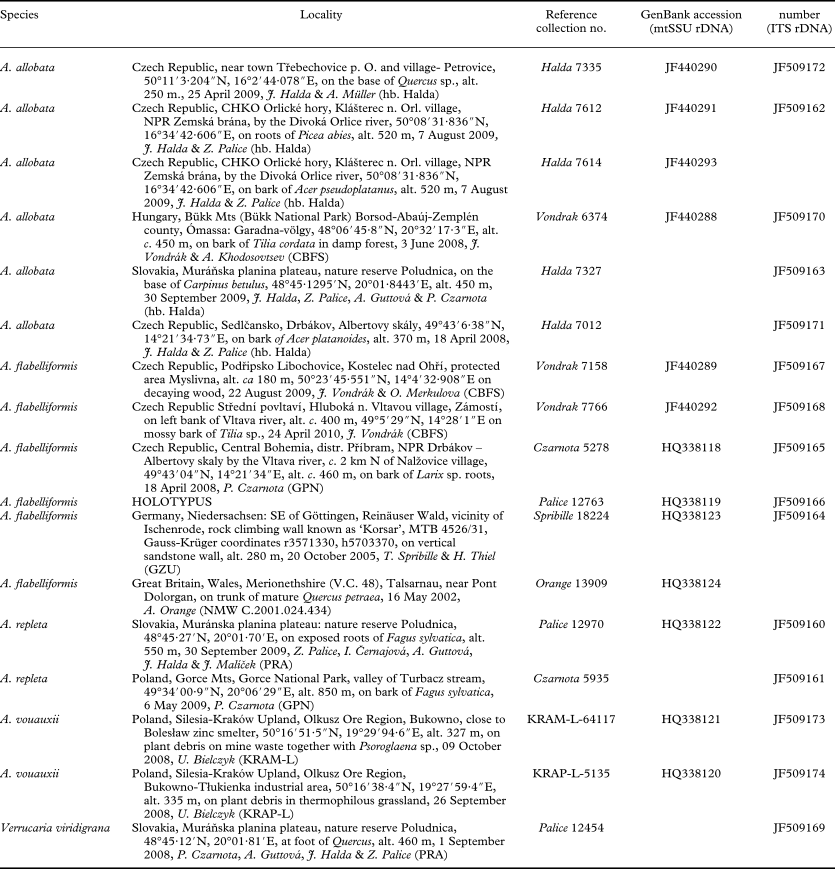
Newly generated mtSSU rDNA and nuclear ITS rDNA sequences of Agonimia spp., including six and five sequences, respectively, from A. flabelliformis, and an ITS rDNA sequence from Verrucaria viridigrana, as well as sequences of many representatives of Verrucariales obtained from GenBank, were used for the analysis. Detailed descriptions of the newly sequenced materials with their GenBank accession numbers are presented in Table 1, and GenBank accession numbers of sequences downloaded from GenBank are given in Figures 1 & 2 after the species names.
DNA extraction, PCR amplification and DNA sequencing
Fragments of perithecia were used for total genomic DNA extraction using a modified CTAB method according to Guzow-Krzemińska & Węgrzyn (Reference Guzow-Krzemińska and Węgrzyn2000). DNA was resuspended in sterile distilled water. PCR amplifications were performed using Mastercycler (Eppendorf). PCR reactions of 50 µl volume were prepared using 5 µl of 10 × Taq polymerase reaction buffer, 4 µl of MgCl2, 1 unit of Taq polymerase (Fermentas), 0·2 mM of each of the four dNTP's, 0·5 µM of each primer and 10–50 ng of DNA.
Fragments of mitochondrial SSU rDNA were amplified with mrSSU1 and mrSSU3R primers (Zoller et al. Reference Zoller, Scheidegger and Sperisen1999) and the following conditions were used for PCR: initial denaturation at 95°C for 5 min followed by 6 cycles at 95°C for 1 min, 62°C for 1 min and 72°C for 1 min 45 s, and then 30 cycles with the modified annealing step at 56°C for 1 min; followed by a final elongation step at 72°C for 10 min. ITS1, 5.8S and ITS2 regions were amplified with ITS1F (Gardes & Bruns Reference Gardes and Bruns1993) and ITS4 primers (White et al. Reference White, Bruns, Lee, Taylor, Innes, Gelfand, Sninsky and White1990). The following conditions were used for PCR: initial denaturation at 95°C for 5 min followed by 35 cycles at 95°C for 40 s, 54°C for 45 s and 72°C for 1 min; followed by a final elongation step at 72°C for 10 min. PCR products were resolved on agarose gels in order to determine DNA fragment lengths. Then the residual oligonucleotides and dNTP's were eliminated from the 20 µl of PCR products using 10 units of Exonuclease I (Fermentas) and 2 units of Shrimp Alkaline Phosphatase (Fermentas), starting with the incubation at 37°C for 35 min and followed by enzyme inactivation at 80°C for 20 min. DNA sequencing was performed using Macrogen (Korea) service (www.macrogen.com). For sequencing the same primers as for DNA amplification were employed. The newly determined sequences (Table 1) were compared to the sequences available in GenBank using a BLAST search (Altschul et al. Reference Altschul, Gish, Miller, Myers and Lipman1990) in order to confirm their identity.
List of newly sequenced specimens with location, reference collection details and GenBank accession numbers of their mtSSU rDNA and ITS rDNA sequences generated for the current study
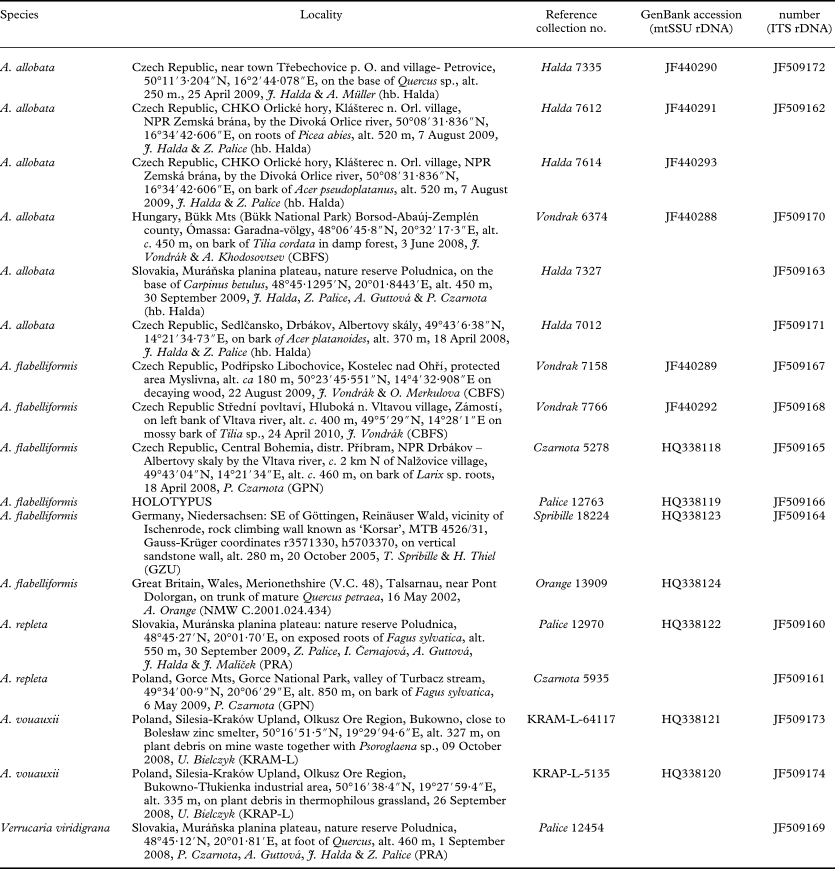
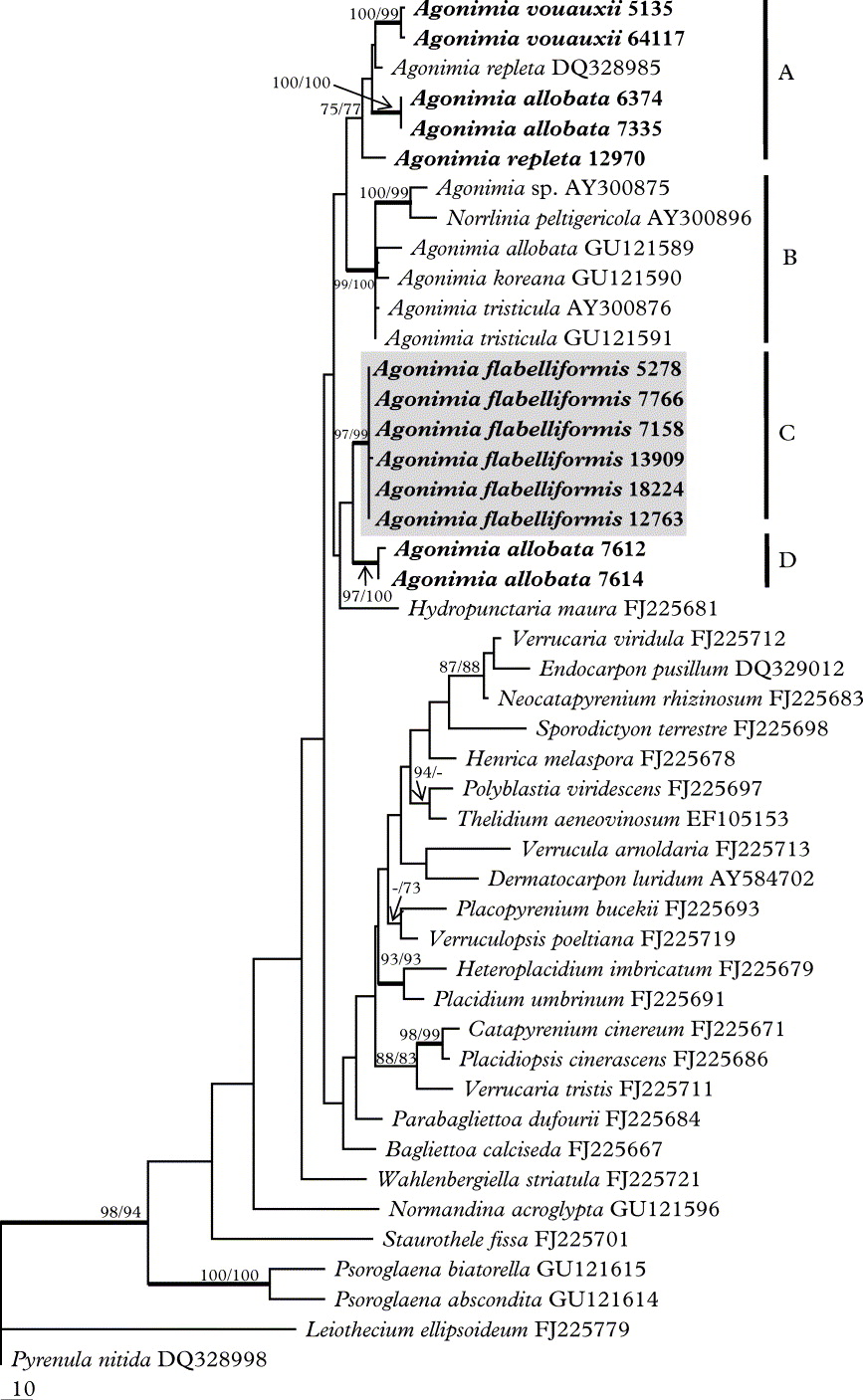
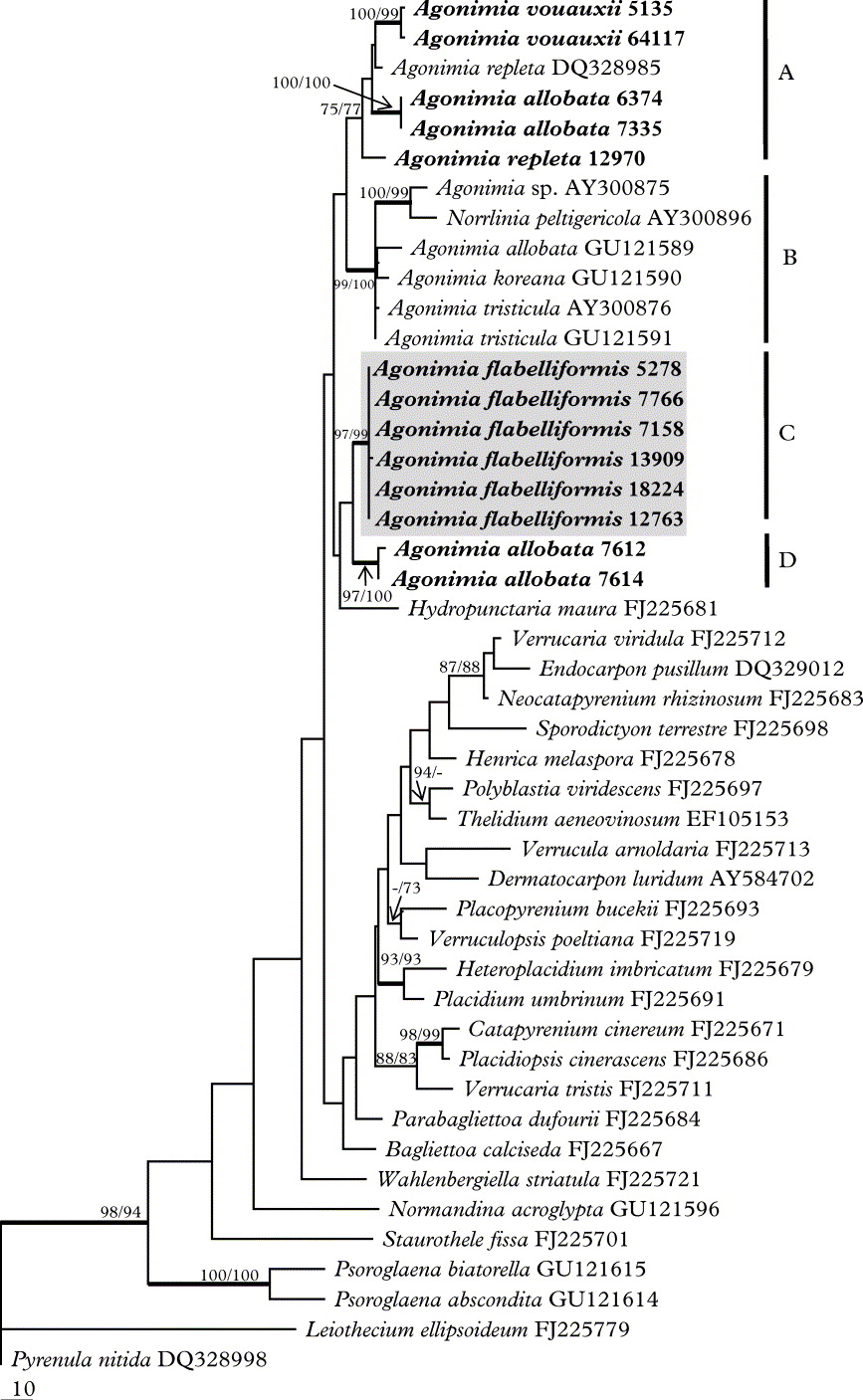
One of the most parsimonious trees based on analysis of mtSSU rDNA data generated in this study. Bootstrap support ≥70 for MP (first value) and PhyML (second value) methods is indicated above branches. Branches with both bootstrap supports ≥90 are in bold. Names of newly sequenced Agonimia species are in bold and followed with their herbarium collection numbers. Names of the other species are followed with their GenBank accession numbers. Pyrenula nitida was used as an outgroup. Agonimia flabelliformis clade is in the grey box. Clades with Agonimia species are marked as A, B, C and D on the right side of the tree.
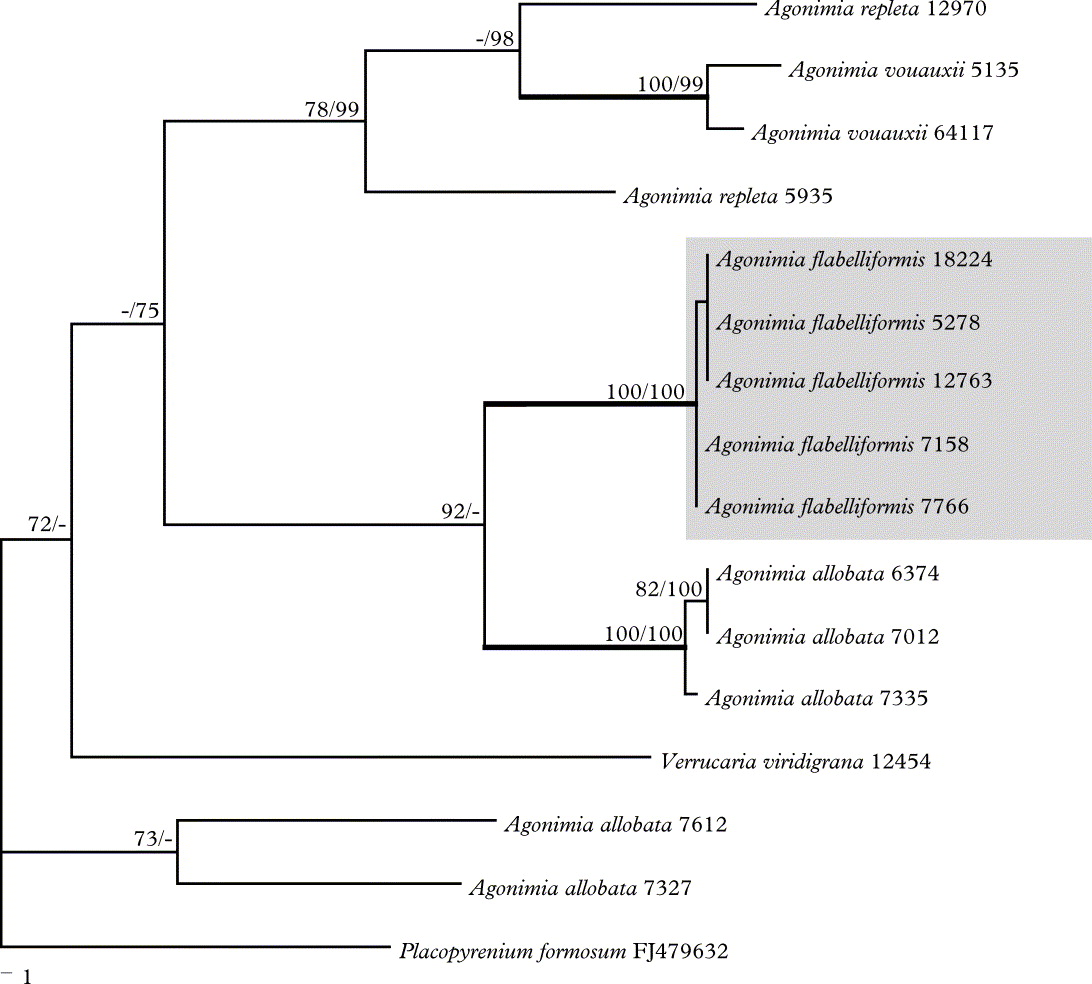
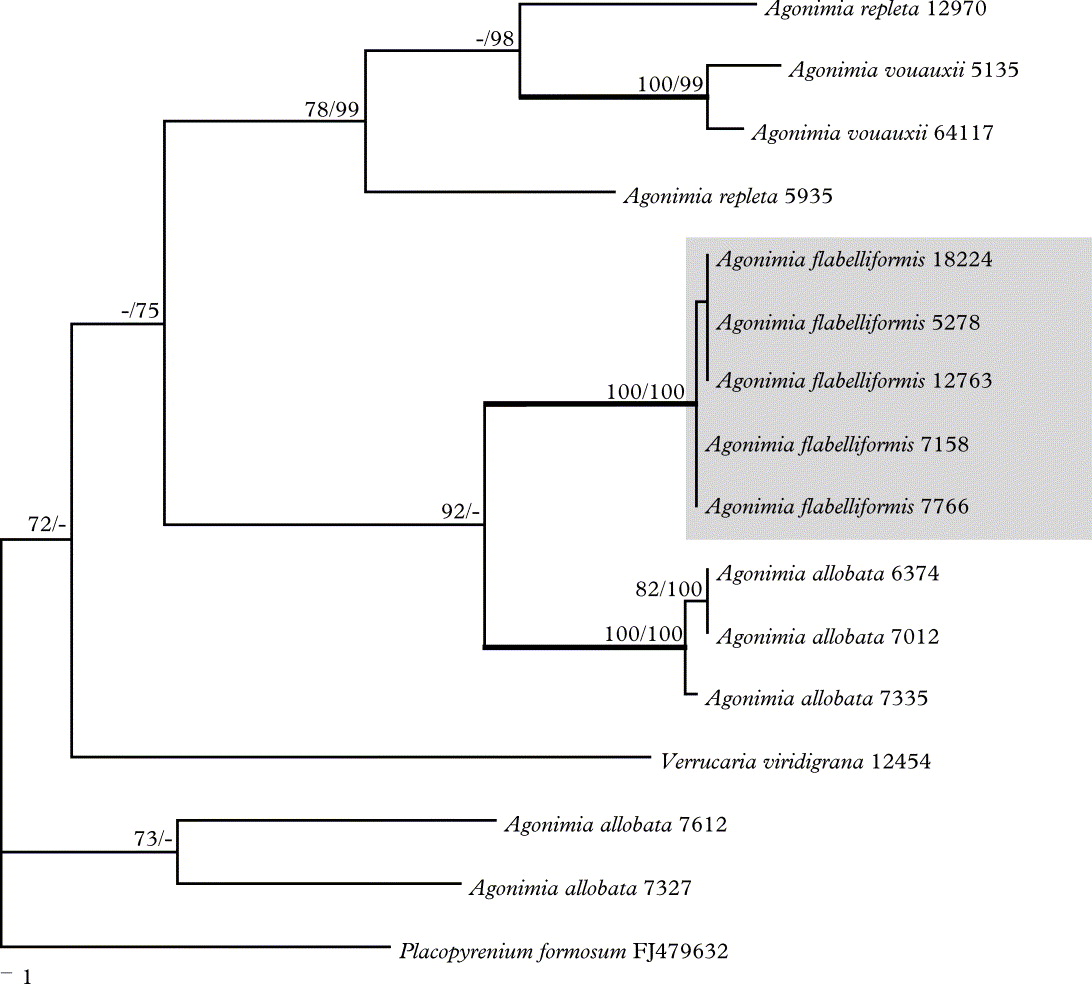
One of the most parsimonious trees generated by phylogenetic analysis of ITS1 and ITS2 regions and 5.8S gene. Bootstrap support ≥70 for MP (first value) and PhyML (second value) methods is indicated above branches. Branches with both bootstrap supports ≥90 are in bold. Names of the newly sequenced species are followed with their herbarium collection numbers. Placopyrenium formosum (FJ479632) was used as an outgroup. Agonimia flabelliformis clade is in the grey box.
Sequence alignment and phylogenetic analysis
The new sequences were aligned with sequences of selected representatives of the genus Agonimia and other taxa from Verrucariales obtained from GenBank, using ClustalX software (Thompson et al. Reference Thompson, Gibson, Plewniak, Jeanmougin and Higgins1997) (with the following parameters: gap opening = 15; gap extension = 6·66). Then the pre-alignment was manually optimized using Seaview software (Galtier et al. Reference Galtier, Gouy and Gautier1996). Portions of the alignment with ambiguous positions that might not have been homologous were eliminated from the dataset.
The phylogenetic analyses were performed using PAUP* 4.0b10 (Swofford Reference Swofford2001) with maximum parsimony (MP) method as optimality criterion. Heuristic searches were performed with 1000 random sequence additions and TBR branch swapping was used. Gaps were treated as fifth state. The support for the branches was tested with bootstrap method with 1000 replicates.
Maximum likelihood (ML) analyses were performed with the fast likelihood software PhyML 3.0 (Guindon & Gascuel Reference Guindon and Gascuel2003; Guindon et al. Reference Guindon, Lethiec, Duroux and Gascuel2005), starting with a BioNJ tree. The optimal model of evolution was based on Hierarchical Likelihood Ratio Tests and Akaike Information Criterion in Modeltest 3.8 (Posada Reference Posada2006). The parameters for the search were estimated from the data assuming GTR model for mtSSU rDNA dataset and TN93 for ITS rDNA region in PHYML 3.0 (Guindon & Gascuel Reference Guindon and Gascuel2003; Guindon et al. Reference Guindon, Lethiec, Duroux and Gascuel2005). Using the same program, non parametric bootstrap analyses were performed with 100 bootstrap replicates. The phylogenetic tree was drawn using TreeView (Page Reference Page1996). Bootstrap supports above or equal 70% were indicated near the branches. Only clades that received bootstrap support above 90% in both analyses (MP and PhyML) were considered as strongly supported and are indicated in bold.
Morphology and chemistry
Specimens were examined with light microscopes. Hand-cut perithecial and thallus sections were mounted in water and 5% KOH. Iodine was used for the hamathecial reactions, and KOH for excipular pigment reactions. TLC using solvent C was employed according to standard methods (Orange et al. Reference Orange, James and White2001).
Results
Thirteen new mtSSU rDNA sequences and fourteen ITS rDNA sequences of Agonimia spp. (Table 1) were generated, among them six and five, respectively, of the newly described A. flabelliformis, as well as two of A. vouauxii that had not previously been sequenced. Additionally, four new mtSSU rDNA and five ITS rDNA sequences of A. allobata were generated. Moreover, we also obtained sequences from A. repleta and Verrucaria viridigrana.
The newly sequenced mtSSU rDNA genes (Table 1) were aligned with 33 sequences obtained from GenBank (for list of taxa and their accession numbers see Fig. 1). In total, 46 mtSSU rDNA sequences were analyzed. After exclusion of ambiguous regions, the final alignment consisted of 555 sites, of which 236 were found to be variable. Among them, 143 characters were parsimony-informative.
A parsimony analysis using PAUP software (Swofford Reference Swofford2001) resulted in eight equally parsimonious trees (tree length = 686 steps, CI = 0·493, RI = 0·599). The maximum parsimony tree (Fig. 1) is provided because the topologies of the MP and PhyML did not show any supported conflict.
Based on analysis of the mtSSU rDNA, Agonimia spp. form a single clade within Verrucariaceae, which is, however, not well supported (Fig. 1). Within this clade, four subclades can be distinguished, most with a very high bootstrap support, except for clade A that is formed by A. vouauxii together with A. repleta and two specimens of A. allobata with bootstrap support of 75 (MP) and 77 (PhyML). The generitype A. tristicula, some A. allobata, and A. koreana together with an unknown Agonimia sp. and Norrlinia peltigericola form clade B, whereas six specimens of Agonimia flabelliformis form clade C. The closest relative of A. flabelliformis seems to be a taxon currently included within A. allobata, collected in the Czech Republic (clade D) but without any significant support.
Analysis of ITS rDNA data was focused on the genus Agonimia. A dataset of 16sequences was generated (for GenBank accession numbers see Table 1 and Fig. 2). The final alignment, after exclusion of ambiguous characters, consisted of 537 sites, of which 145 were variable; among them 85 characters were parsimony-informative. Twelve equally parsimonious trees were generated (tree length = 275 steps, CI = 0·645, RI = 0·772) using PAUP software (Swofford Reference Swofford2001). The maximum parsimony tree is provided (Fig. 2) because we did not find any supported conflict between MP and PhyML trees.
Within the Agonimia tree based on analysis of ITS region (Fig. 2), only three clades have very high support in both methods. Agonimia flabelliformis forms a monophyletic clade with bootstrap support of 100 in both analyses. This clade is closely related to three of the specimens of A. allobata, forming a single highly supported (100 in both analyses) sub-clade. Two other specimens of A. allobata form a separate clade, not related to other specimens of the species. Newly sequenced A. vouauxii is closely related to A. repleta with support of 78 (MP) and 99 (PhyML).
Discussion
The genus Agonimia is placed within Verrucariaceae (Fig. 1). In a previous multilocus study, Muggia et al. (Reference Muggia, Gueidan and Grube2010) showed that Agonimia forms two well-supported clades. Our analyses of mtSSU rDNA data suggest that the species of this genus are closely related, but the monophyly of the group is poorly supported. Norrlinia peltigericola, which is non-lichenized and lichenicolous, was found to be closely related to Agonimia spp. as shown previously by Muggia et al. (Reference Muggia, Gueidan and Grube2010). It forms a highly-supported clade with Agonimia tristicula, A. allobata and A. koreana. The closest relative to Norrlinia is an unidentified Agonimia sp. whose identity should be verified.
Muggia et al. (Reference Muggia, Gueidan and Grube2010) also showed that A. repleta is separated from other Agonimia spp. However, in both trees we generated (Figs 1 & 2), A. repleta was found to be closely related to the newly sequenced A. vouauxii. Moreover, it seems to be also related to A. allobata (specimens 6374 and 7335) based on the mtSSU rDNA dataset (Fig. 1). However, the analysis of ITS rDNA region does not confirm this relationship (Fig. 2).
Our study, based on both mtSSU rDNA and ITS rDNA region, showed that specimens named Agonimia flabelliformis collected in different European countries (i.e. Czech Republic, Germany and Great Britain) form a highly-supported monophyletic group (Figs 1 & 2) and we found that the species is molecularly well-defined. In the mtSSU all six specimens were identical, except for a single substitution in the British specimen. More variation was found in the ITS rDNA region as we determined five genotypes within A. flabelliformis. However, in total they differed in six positions only. The species is well characterized by its morphology (for species description see Taxonomy) and the molecular data presented here strongly supports its distinction (Figs 1 & 2). Despite insufficient bootstrap support for the monophyly of Agonimia, we are convinced that the new species should be described within this genus.
The ITS analysis (Fig. 2) confirmed that A. allobata, which is morphologically the most similar taxon to A. flabelliformis, is the closest relative of the species. However, A. allobata appeared to be heterogeneous; specimens were distributed between three different clades in the mtSSU rDNA tree (in Fig. 1 clades A, B and D) and two clades in the ITS phylogenetic tree (Fig. 2). In the mitochondrial tree one of these clades (clade B) comprises one specimen of A. allobata (GU121589) together with the lichenicolous fungus Norrlinia peltigericola and other Agonimia species. Sequences of both markers could not be obtained from all specimens of A. allobata, but A. allobata 6374 and 7335 grouped together in both the mtSSU and ITS trees, and in both trees A. allobata 7612 appeared in a different clade to these two. In contrast to the genetic similarity of A. flabelliformis, specimens of A. allobata were found to be more variable. We identified three genotypes of mtSSU rDNA, of which two were unique and differed from each other in two substitutions, whereas the third was considerably distinct and was identified in two different specimens of A. allobata collected in the Czech Republic (specimen no. 7335) and Hungary (specimen no. 6374). In our opinion, the genetic diversity of A. allobata should receive more attention in further studies. There are no visible phenetic differences between any of the samples of A. allobata used for this study, but the molecular results presented here show that the issue of monophyly of this taxon needs more detailed investigation; this should include anatomical, morphological, ecological and multilocus molecular data from more widely distributed samples recognized under this name. Probably it is composed of several cryptic species. It was not, however, the focus of this study and so we decided not to resolve the problem here.
In contrast to the multilocus analyses of Muggia et al. (Reference Muggia, Gueidan, Perlmutter, Eriksson and Grube2009, Reference Muggia, Gueidan and Grube2010), our studies suggest that Agonimia could be monophyletic. However, the resolution of the mtSSU rDNA tree that was generated in this study is relatively poor and further studies strictly focused on the phylogeny of Agonimia are needed to resolve this problem. Moreover, Verrucaria viridigrana was also found to be closely related to Agonimia spp. and more data should be provided to determine its position within Verrucariaceae. Additionally, we found that A. repleta is closely related to A. vouauxii, although it is the most similar species morphologically to A. tristicula. Furthermore, considering the results which show Norrlinia peltigericola (GenBank accession number AY300896) nested within Agonimia, a taxonomic revision of the specimen on which this sequence was based seems to be necessary, and more data from Norrlinia spp. are needed to resolve their phylogenetic placement within Verrucariaceae.
Taxonomy
Agonimia flabelliformis Halda, Czarnota & Guzow-Krzemińska sp. nov
MycoBank No.: MB561934
Agonimiae allobatae (Stizenb.) P. James affinis sed thallo ex goniocystis palmatis vel flabelliformibus magis adpressis differt. Lobi minusculi, viriduli, flabelliformes et parvodigitati, flabellis aggregatis ex 4–6 goniocystis compositis, 15–150 µm lati. Perithecia sessilia, pallide fusca ad cinereofusca, subglobosa ad pyriformia, 150–250 µm alta et 150–200 µm lata. Involucrellum nullum. Ostiolum dilutum, 30–50 µm latum. Excipulum triplex, strato interno prosoplectenchymatico, 15 µm lato, hyalino, cellulis anguloso-oblongis, ex hyphis periclinalibus composito; strato intermedio fuligineo, paraplectenchymatico, in parte apicali 10–15 µm lato, in parte basali 5 µm lato; strato externo decolore, paraplectenchymatico, 5 µm lato. Subhymenium planum ad concavum, decolor, ad 10 µm altum. Asci clavati, octospori, 60–90 µm alti, 15–35 µm lati, ascosporae late elipsoideae, muriformes, maturitate hyalinae, (23) 30 (35) × (11) 14 (15) µm. Periphyses simplices ad articulati, 6–12 µm longi, 2 µm crassi. Photobions ad Chlorophyta pertinens, cellulis glomeratis, 8–12 µm diametro, laete viridibus. Pycnidia ignota.
Typus: Czech Republic, Bohemia, Novohradské hory, ad marginem sylvae senectae ‘Žofínský prales’, 48° 39·90′N, 14° 42·51′E, ad ligni arboris basis Fagi, alt. 805 m, 28 October 2009, Z. Palice 12763 & J. Malíček (PRA—holotypus).
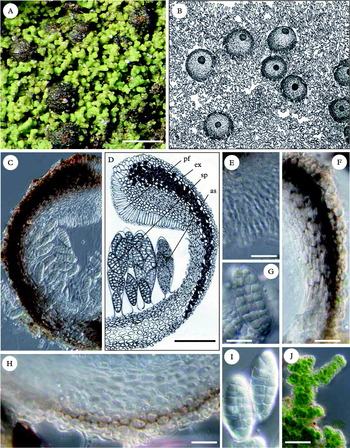
(Fig. 3)
Agonimia flabelliformis A & B, habit; C & D, perithecial section (pf – periphyses, ex – three layered excipulum, sp – ascospores, as – immature asci); E, periphyses; F, marginal section of excipulum; G & I, ascospores; H, excipular section under hymenium and subhymenium; J, aggregation of goniocysts. [A, Czarnota 5278 (GPN); B–J, Halda 7011 (Hb. J. Halda)]. Scales: A & B = 200 µm; C & D = 50 µm; E–H = 10 µm; J = 20 µm.

Thallus minutely flabelliform squamulose to coralloid, composed of aggregations of goniocysts, bright green when wet, pale brown-green when dry; elongated finger-like parts of the thallus, 15–150 µm in length, formed by groups of 4–6 goniocysts surrounded by hyaline, thin-walled, gelatinized cortical cells without papillae. Prothallus absent. Photobiont chlorococcoid, cells subspherical to globose, 8–12 µm diam.
Perithecia globose at the beginning, only sometimes ovoid to pyriform, 15–25 µm diam., superficial or partially immersed between squamules, pale brown at first, dull grey-brown when mature, surface matt and smooth. Involucrellum absent. Ostiolum pale, 30–50 µm diam.; parts around ostiolum plane. Excipulum 30–40 µm wide, 3-layered; innermost layer prosoplectenchymatous, 15 µm thick, hyaline; intermediate layer dark brown pigmented, K+ dulling, paraplectenchymatous, in upper part of ascoma 10–15 µm and towards the base 5 µm wide; external layer unpigmented, paraplectenchymatous, 5 µm thick. Subhymenium plane to concave, pale, up to 10 µm tall. Hamathecium of short periphyses, 6–12 × 2 µm, 1–3 celled (more septate close to ostiolum), rounded at the ends; hymenial gel I+ blue. Asci 8-spored, 15–35 × 60–90 µm, clavate, fissitunicate, I−. Ascospores oblong to ellipsoid, (23–)30(−35) × (11−)14(−15) µm, hyaline, muriform, fewer than 20 cells visible in optical section.
Pycnidia not seen.
Chemistry. No substances detected by TLC.
Etymology. Flabelliform: referring to the sometimes flabellate (fan-like) arrangement of the thallus branches.
Remarks. The new Agonimia mostly resembles A. allobata, from which it differs only in the presence of flabelliform aggregations of goniocysts. Verrucaria viridigrana Breuss forms a very similar thallus and requires similar ecological conditions (Breuss Reference Breuss1998), but it is distinguished by smaller and simpler ascospores. Agonimia repleta possesses black, smaller, pyriform perithecia with a neck that is roughened by vertical channels, and a thallus which is granular-verrucose or possesses minute flattened squamules, in contrast to the brown-blackish, distinctly globose ascocarps and palmate to coralloid, and protruding thallus of A. flabelliformis. Agonimia globulifera is another member of the genus bearing flattened squamules with finger-like marginal lobes, but the cortical cells are often supplied with small papillae and, in addition to perithecia, black and shiny sterile globules are frequently present (Serusiaux et al. Reference Sérusiaux, Diederich, Brand and van den Boom1999). These globules are not known elsewhere within the genus. The Asian A. koreana forms large squamules which are unlike the thallus composed of aggregated goniocysts of A. flabelliformis; they resemble more closely the squamules of A. tristicula. Other members of Agonimia produce much longer ascospores.
Distribution and habitat. To date, A. flabelliformis has been found in the Czech Republic, Germany and Great Britain. It seems to prefer humid, shaded, mossy places within deciduous forest ecosystems, where it usually grows epibryophytically over bark (at the base of trees and their roots), and on soil, rocks and plant debris. Several collections were associated with Isothecium myosuroides, suggesting that the moss may play an important role as its substratum. On the other hand, other specimens of A. flabelliformis examined grew without any contact with bryophytes. Associated lichenized fungi include Agonimia allobata, Cladonia sp., Coenogonium pineti, Normandina pulchella and Porina aenea.
Additional specimens examined (paratypes). Czech Republic: Podorlická pahorkatina: District Náchod, Olešenka valley, E of Nové Město town on Metuje River, close to Peklo village, on Fagus sylvatica in deciduous forest, alt. 350–400 m, 2001, M. Kukwa 675 (UGDA-L–12691); Central Bohemia, distr. Příbram, NPR Drbákov – Albertovy skály by the Vltava River, c. 2 km N of Nalžovice village, 49° 43′ 04″N, 14° 21′ 34″E, alt. c. 460 m, on bark of Larix sp. roots within deciduous forest, 2008, J. Halda 7011 (Hb. J. Halda).—Germany: Schleswig-Holstein: Pobüller Bauernholz, Buchen-Eichen-Wald südöstlich Rupel, 54·6107°N, 09·2564°E, MTB: 1321/4, on Fagus sylvatica, alt. 20 m, 2005, C. Dolnik 418 (hb. KIEL).—Great Britain: Wales: V. C. 48, Merionethshire, W of Penmaenpool, Coedydd Afon Gwynant RSPB Reserve, on base of Quercus petraea in woodland, 1991, A. Orange 8551 (NMW 91.31.61).
We thank U. Bielczyk, C. Dolnik, M. Kukwa, A. Orange, Z. Palice, T. Spribille and J. Vondrák for the loan of specimens, H. Sipman for checking the Latin diagnosis and A. Orange for reviewing the text and providing valuable comments. A part of this study was financially supported by the University of Gdansk task grant no. DS/140-4-0114-10. BGK also acknowledges the support of a Marie Curie European Reintegration Grant within 7th European Community Framework Programme project no. 239343.