This article explores critical directions in the study of cultural heritage and, in particular, food heritage research. Its goal is to deliver insight into perspectives produced outside mainstream heritage organizations. This article is also an attempt to do justice to the views that indigenousFootnote 1 people have about their own food cultures—views that so far have received little recognition in food heritage declarations. I have dedicated the past years to the critical study of food heritage nominations within the framework of the Convention for the Safeguarding of the Intangible Cultural Heritage (CSICH) established by the United Nations Educational, Scientific, and Cultural Organization (UNESCO).Footnote 2 The CSICH is among the most powerful international instruments through which states transform their past and present cultural specificities into resources to meet contemporary demands. Food-related heritage has become one of their most publicized and controversial outcomes. My research is motivated by a desire to enquire beyond debates on the superiority of some cuisines over othersFootnote 3 and to understand to what extent these international nominations respond to claims of their being grounded in the local management of food. The scholarly context in which I have worked is that of “critical heritage studies,” which calls for exploring the real consequences of heritage making in people’s lives and, therefore, asks for heritage to be examined beyond “the feel-good statements of UNESCO and state heritage agencies about expressing common humanity and universal values and other empty statements.”Footnote 4
The CSICH obligates nation-states to engage and involve local communities. However, it rarely achieves this due to the difficulty of forming sound “heritage communities of practice”—that is, groups of individuals and stakeholders of diverse backgrounds cooperating for the sake of heritage interests, who also seek to capitalize on a variety of other economic, political, and social opportunities made available through heritage making.Footnote 5 The fact that interests are not always aligned means that despite the redistributive ethics that heritage agencies usually grant to the notion of cultural heritage, vulnerable populations such as minorities, indigenous groups, and rural communities—the supposed “beneficiaries” of heritage projects claiming social inclusion—may suffer from marginalization after the implementation of heritage policies in their living areas.Footnote 6 Such outcomes should not come as a surprise since international organizations, and UNESCO, in particular, recognize that national governments maintain sovereign rights and control of their resources and serve as their primary and often only interlocutors. This results in “the strange policy phenomenon of states being asked to ‘apply’ ‘bottom up approaches’ that are community driven.”Footnote 7
Food heritagization has not been exempt from these situations. On the contrary, the entry of food and culinary cultures into heritage frameworks such as the CSICH has unveiled and prompted food’s potential to convey national and private interests within the fields of entrepreneurship and public diplomacy.Footnote 8 Governments’ competing enthusiasm for obtaining rewards from UNESCO—alongside the bureaucratic imperative to produce nomination files of fewer than twenty pages—encourages reductionist views of food cultures, evolving towards materiality and accumulation rather than towards immateriality and transmission. Indeed, almost every UNESCO food heritage nomination has been supported by backstage policymaking aimed at marketing valuable versions of “national” cuisines and “ethnic” food products.Footnote 9 UNESCO nominations have also provided evidence that food cultures can hardly be appraised solely in terms of “intangible heritage,” which is to efface much of their complexity. Food travels across categories that belong to the registers of tangibility and intangibility; food can be defined as a dish or a recipe, an agricultural product or a ritual object, a basic need for survival or an item of social distinction, a ticket to the future or an object of nostalgia. Governments, non-governmental organizations (NGOs), and individual actors have understood this, as they are keen to integrate cultural, “traditional,” and humanitarian values provided by heritage labels to support their own programs. However—and the treatment given by media to UNESCO nominations counts as a proof of this—the definitions of food heritage that prevail are those that resonate with a nation’s prestige and market agendas. The most common idea of food heritage is that of one “national” dish served in (fancy) restaurants.
Exploring the bureaucratic fabric of food heritage mostly confirms Julia Csergo’s perspective on intangible heritage as a global governance tour de force.Footnote 10 Yet the unfolding heritagization of food has made the food itself the site of identity and political agency, thus originating a large amount of initiatives and efforts focalized on conveying the cultural dimensions of food. For this reason, I seek to provide space in the discussion for indigenous views on preserving and marketing food cultures that are often omitted and misinterpreted throughout mainstream heritage making. My endeavor aligns with research exploring local and alternative understandings on the management of cultural resources. It adds to the body of critical research that takes the outsider perspective by exploring independent heritage-making activities driven by minority, ethnic, and other (sub)cultural groups and individualsFootnote 11 as well as to the existing literature on the ways in which culture and biological diversity intersect.Footnote 12 Furthermore, it engages with the work of globalized movements and organizations that champion food sovereignty, such as the Vía Campesina, the International Institute for the Environment and Development (IIED), and Slow Food’s Terra Madre,Footnote 13 by promoting the revitalization of traditional food cultures, local markets, and short food supply chains as alternatives to neoliberal policies that place hope in global trade to solve the world’s food problem.Footnote 14 Finally, it connects with studies exploring the way in which rural and peasant communities address claims about the definitions of traditional foods and reconfigure their agri-food systems in response to social, economic, and ecological pressures.Footnote 15
To support my point, I have conducted fieldwork in Peru among peasant communities of the Andes and the Amazon. Although the term “heritage” was never expressly mentioned by my field consultants, I could identify in their discourse and practices themes that bore a striking resemblance to those highlighted by heritage agencies; issues such as memory, tradition, transmission, self-determination, knowledge, and sustainability emerged when they reflected on food. There is therefore much to be gained from bringing into focus the divergent ways in which different organized groups work to (allegedly) similar ends and, in particular, how the initiatives of less-powerful groups may not always be given a voice.
This article focuses on the indigenous standpoints that have been neglected during the attempt to inscribe Peruvian cuisine into the UNESCO Representative List of Intangible Cultural Heritage of Humanity. Although initially based on aspirations of intercultural dialogue and inclusive development, this heritage endeavor ended up favoring market competition and the stardom of Peruvian mestizo chefs, while leaving traditional knowledge on food, culture, and biodiversity to fade into obscurity.Footnote 16 Rather than making a political statement, I wish to address two topics. The first is that global cultural actors and indigenous communities have sought to defend their own objectives and concerns regarding food within international, trans-scalar, and interconnected networks and forums to varying degrees of success despite having evolved in parallel ontologies and epistemologies. Second, we should refrain from idealizing indigenous communities as capable of managing their resources if the development sector stopped “interfering” and, instead, acknowledge that the alternative intersects and sometimes entangles with the mainstream and is affected in varying degrees by uncertainties, disagreement, and disruption.
I draw data for this article from two sources: my own ethnographic work and that of others. My research is based on a series of seven short fieldwork stays (up to one week each) between 2012 and 2016 in rural Andean and Amazon areas of Peru. They consisted of participant observation, conversations, and recorded interviews with peasant farmers as well as with members of the Andean Project of Peasant Technologies (Proyecto Andino de Tecnologías Campesinas [PRATEC]) / Waman Wasi, Urpichallay, and the Asociación para la naturaleza y el desarrollo sostenible (ANDES), all of which are intellectual activist organizations committed to promoting cultural resurgence through the valorization of traditional agricultural practices. These NGOs have criticized and adapted the language of global cultural policy to (re)articulate international objectives and norms in a fashion that serves the production of indigenous, social, political, and economic imaginaries. The following sections present an overview of the context of the increasing, yet fragile, recognition of traditional ecological knowledge (TEK), some initiatives to preserve food cultures outside the mainstream in rural Peru, and the challenges that these initiatives pose to both local organizations and communities.
INDIGENOUS APPROPRIATIONS OF GLOBAL CULTURAL AND ENVIRONMENTAL AGENDAS
Peru’s economy has been, and still is being, shaped by two historical trends: the transfer of European technology and organization and a deep-seated disdain toward indigenous populations, as exists in most settler societies with ancient civilizations, ecological diversity, and colonial pasts. This has resulted in instrumental and extractive approaches to the land that are characterized by the neglect of indigenous people’s knowledge and institutions and by the consideration of traditional ecological knowledge only if it facilitates the collection of goods for export.Footnote 17 Such approaches, although challenged by over four decades of global dissemination of the Universal Declaration of Human Rights, are still dominant or at least pervasive.Footnote 18 In this vein, Rosemary Coombe suggests that the early framing of the 1992 Convention on Biological Diversity (CBD), today recognized as one of the more holistic and “progressive” multilateral treaties, attempted to posit biological diversity as a “resource” whose conservation is better achieved by first making it accessible to others before converting it into goods and services with monetary value:
Material transfer and access and benefit-sharing agreements, community mapping exercises, TEK databases, germplasm banks, species inventories, participatory monitoring of subsistence activities, and biocultural protocols were all neoliberal “technologies” forged to render local socioecological life legible to a greater range of actors (universities, scientists, anthropologists, supportive NGOs, and their donors).Footnote 19
Although useful and critical in many regards, these technologies have stimulated market transactions as well as mechanisms of dispossession such as the corporate sequestration of traditional ecological knowledge and, thus, represent the risk of undermining the worldviews, autonomy, and sovereignty of indigenous communities.
However, since the late 1980s, CBD negotiations relating to TEK have evolved into a global platform for insisting upon alternative understandings of biodiversity rooted in basic ways of seeing, feeling, and perceiving the natural world and its inhabited ecosystems. Scientists in alliance with indigenous and peasant representatives have increasingly criticized the Western metrics used to represent biodiversity as failing to adequately grasp the differences in perception that TEK should encompass.Footnote 20 Ultimately, these actors have succeeded in incorporating bio-cultural perspectives comprising “the dynamic, interdependent complex of relationships linking human populations, ecosystems, non-human species and their environments.”Footnote 21 The term bio-cultural stresses the inseparable links between cultural and biological diversity so as to enhance livelihood opportunities and promote community-conserved areas, ethical codes for research, culturally appropriate forms of knowledge documentation, indicators for impact assessment, specific regimes drawing upon customary law, and cultural resurgence agendas.Footnote 22 Bio-cultural relationships are manifest in local and traditional food systems since they endure through a mixture of management practices that rely on the linkages between biodiversity, culture, memory, spirituality, and livelihoods and develop in relation to local environmental fluctuations throughout millennia.Footnote 23
The late 1990s saw the consolidation of what Reiner Buergin termed the “biocultural turn” in environment and development discourses; bio-cultural diversity and bio-cultural heritage became well-established conservation approaches within development policy and practice circles.Footnote 24 Since then, institutions with globally framed interests in the conservation, management, and use of natural resources, on the one hand, and local communities claiming lands, local resources, particular identities, and different ways of living, on the other hand, share stages and platforms to express, defend, and negotiate their views on conservation, development, and the control of resources.Footnote 25
The “bio-cultural turn” implies indigenous communities have to face both new opportunities and threats, as such forums may not always provide the degree of political autonomy that these groups seek. Garrett Graddy, for instance, indicates that protections such as the CBD are tools of international environmental governance that are subject to national legislation. Consequently, such mechanisms “often exclude indigenous groups such as those in Peru who have historically been and, in many places, continue to be, ideologically and politically at odds with their government.”Footnote 26 Irène Bellier points out that the participatory model within United Nations’ resolutions provides indigenous people with instruments, such as the right to consultation, and a voice in decision-making processes while transforming indigenous leaders into “convenient interlocutors,” thus restraining their potential for contestation.Footnote 27 Further criticism argues that neither the emergence of indigenous movements and networks nor that of global legal frameworks can guarantee the principle of self-determination that bestows the right of indigenous people to decide how to use and benefit from their knowledge. It suggests that indigenous people’s capacity to secure land and knowledge systems relies on their political skill at the national level and the support they are able to receive from civil society organizations, international NGOs, and local elites orientated toward the achievement of equality.Footnote 28
If most of these global governance mechanisms were originally designed to provide transparent information to support eventual market transactions, they were soon rearticulated as a means to assert local rights and responsibilities, enable reflexivity of goods, values, and norms, and express new aspirations and desires. Evidence from throughout the world suggests that the propagation of instruments for heritage protection and promotion has encouraged communities to understand both local biodiversity and their traditional agricultural knowledge as a form of bio-cultural heritage and to develop unique regulatory protocols.Footnote 29 Articulations of global governance toolkits and community self-determination combine in alternative eco-centered, sustainable, intercultural initiatives and paradigms to revitalize indigenous communities.Footnote 30
The next sections address the collective work between peasant communities and the NGOs PRATEC/Waman Wasi, Urpichallay, and ANDES. Their activities have developed in the context of neoliberal agricultureFootnote 31 and the erosion of biological and cultural diversity, with the goal of providing alternatives to the multiple pressures affecting rural populations in Peru, such as the aggressive commercialization of “improved” seeds and agrochemicals, biopiracy, and top-down strategies of technology transfer. Although they appear to work in a similar manner and share the same objectives, ideological differences exist in the way these organizations approach the transformations occurring in rural communities and in their strategies to secure the vitality and inventiveness of indigenous food cultures.
FOOD, MEMORY, AND POLITICS IN THE PERUVIAN WESTERN AMAZON
Despite comprising more than half of the country and an enormous amount of biodiversity, Amazonian foods are still struggling to become part of Peru’s cosmopolitan food imaginary. Tourists and local urbanites alike may praise renowned dishes from the country’s coastal zone, such as ceviche and lomo saltado, from the Andes, such as pachamanca, but they know much less about food from the Amazon. However, efforts to raise awareness are occurring at the very local level. During my visits to the region, I was hosted by members of the NGO Waman Wasi (“the home of the falcon” in Quechua) who took me to villages with Quechua-Lamista populations. Quechua-Lamistas form the third largest Amazonian ethno-linguistic group in Peru, comprised of around 30,000 individuals who mostly inhabit the province of Lamas. Ninety percent are peasants who produce coffee, cocoa, beans, manioc, and plantains in small plots called chacras. Their second most profitable activity is subsistence hunting.Footnote 32
Since 2002, Waman Wasi has supported the cultural affirmation of Quechua-Lamistas from Lamas with an emphasis on biodiversity, small-scale agriculture, intercultural education, and ancestral practices. The NGO is a smaller, sister organization of Lima-based PRATEC, which since 1987 has promoted decolonizing thought and radical critique of Western epistemologies.Footnote 33 Supported by progressive and culturally sensitive European and North American funding institutions as well as critical scholarly and activist networks,Footnote 34 PRATEC/Waman Wasi advocates cultural resurgence and affirmation through the accompaniment of Andean communities to simultaneously weaken “development” (seen as an external top-down imposition) and strengthen indigenous life.Footnote 35
The upper part of the Peruvian Amazon rainforest has had a hectic history wrought with pressing social issues. Due to the region having an ecosystem favorable to agricultural development, political and productive elites have long treated it as an economic colony suited to the extraction and provision of food. The area has gone through a succession of economic cycles based on extractive and predatory activities (the harvesting of rubber and wood) and monoculture agriculture (the production of barbasco, cotton, and tobacco). These cycles have proved to be profitably unsustainable, leading farmers to abandon the cultivation of food crops in the 1980s and to concentrate on coca leaf cultivation, which has brought money but also organized crime and violence. The armed groups of Sendero Luminoso and the Movimiento Revolucionario Tupac Amaru have been active in the area and involved with drug trafficking. Many local peasants enrolled in the army to fight these groups.
By the end of the 1990s, when the violence abated, international organizations such as the North American Development Agency, the United Nations Office on Drugs and Crime, and the German Technical Cooperation supported a substitution program to replace coca crops with palm, coffee, sugar cane, musk, and cacao destined for export.Footnote 36 The program has been successful in eradicating coca plantations but has failed in addressing the problems of poverty and environmental degradation. By prioritizing extensive mono-cultivation in areas not ecologically suitable for large-scale production, the peasants’ economy has become dependent on international demand and the fluctuating prices of commodities.Footnote 37 The traditional subsistence agriculture based on diversity, the reading of nature’s “signs,”Footnote 38 and intercropping (a technique that imitates the pre-existing forest structure) has diminished under the pressure of political and commercial interests and the increasing willingness of local populations to migrate to cities to achieve modern-life conditions. Quechua-Lamista communities, the poorest in the region, are particularly vulnerable; not only has their historical way of subsistence languished, but their population growth rate has also decreased in the last two decades.Footnote 39
Waman Wasi’s work puts a strong focus on crop diversification and the self-consumption of said crops as a means to recover traditional farming and achieve food security. As I was told by director Luis Romero, the main objectives are to counter the tendency of commodity-oriented agriculture to “corner” (arrinconar) the land historically farmed for subsistence and to decrease the communities “dependence on the market.”Footnote 40 One additional goal is to lessen the competitive relationships between farmers. This competitiveness is prompted by the allegedly sustainable initiatives established by the government and other NGOs, such as prizes and ecological certifications for agricultural produce. Among the actions Waman Wasi promotes to achieve these goals are food events called mikunas.
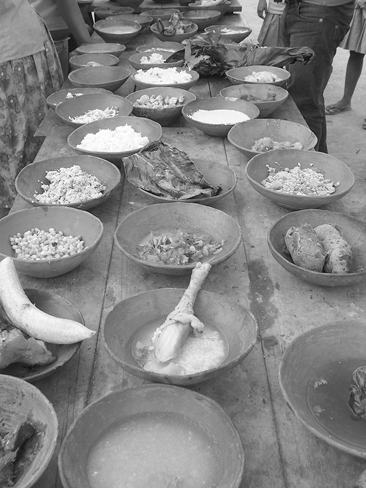
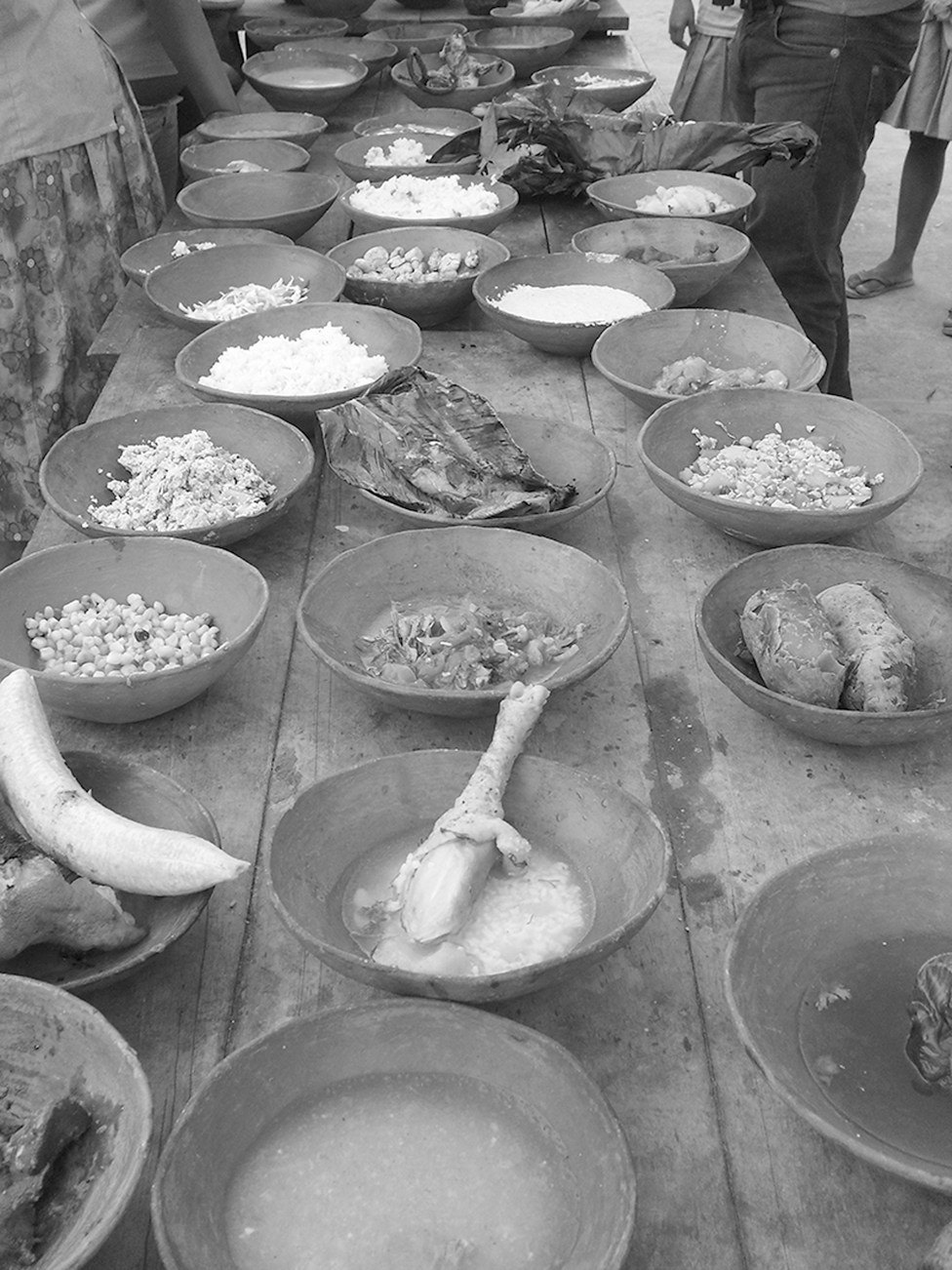
Mikunas (which simply means meals in Quechua) are exercises in food memory and transmission performed twice a year since 2005 in Quechua-Lamista communities. They are part of the Waman Wasi program Warmikuna Tarpudora (women seeders), which is aimed at bringing awareness to, and reinforcing, the central role women play in maintaining the diversity of crops and foods as well as in ensuring family health. Mikunas can be considered to belong to the realm of heritage making as they involve practices of identification and classification of food items, intergenerational transmission of culinary skills, and socio-political claims at the local level. In April 2012 and 2016, I attended mikunas in two communities (Mishky shaquillu Shupumba and Naranjal, respectively). Mikunas are similar to many culinary festivals in that participants exhibit their food and ingredients and cook their specialties in real time. Mikunas usually start at midday around the main community square. As participants arrive, women deploy large tarps on the ground and display the food items they have harvested, collected, or hunted. Among them are wild fruits, forest rodents—majaz (Cuniculus paca) and Amazon bamboo rat (Dactylomys dactylinus)—giant snails, game birds, maize, river fish—carachama (Psendorinelepis genibarbis) and cachama (Colossama macropomum)—plantains, beans, manioc, macambo (wild cacao) seeds, and local vegetables. Waman Wasi assists the communities with the event logistics and organization and offers economic support to buy food essential to the preparation of meals that cannot be produced in the chacras (for example, rice). Although I had made journeys in the Amazon region before my participation in mikunas, much of the food was unknown to me. And none of it corresponded to the sumptuous images and representations that Peruvian cuisine and heritage agents aim to promote in restaurants for global foodies.
Once all of the food is on display, the women regroup in intergenerational teams. Then each team sits on the ground, forming a circle, and starts to cook. Older women start by teaching the younger ones. The grinding of manioc appears to be the most challenging skill to transfer. Despite the considerable size of the grinding stones, old women prove to be more precise and faster; after leaving their apprentices maneuvering the stones for a moment, they regain their position to finish the task. But techniques and recipes also renew within generations; older women exchange knowledge, experiences, and opinions with each other, while young ones do the same. These observations clearly reveal that women are the guarantors of the transmission of farming and culinary knowledge.Footnote 41 Men remain apart from the fire pits; some help to manufacture the wood skewers used to hold macambo seeds and suri worms (the grubs of the beetle Rhynchophorus palmarum) over the fire.
When all of the food is ready, the participants place samples of their dishes in long lines on a table or, when no table is available, on the tarps. Then a member of Waman Wasi counts and annotates each of the samples in a notebook. The counting is fundamental as the results are discussed among the community members, allowing them to reflect on the reasons why they sometimes cook more dishes and why they cook fewer dishes at other times. It also allows them to consider, in cases of shortage, whether the causes are circumstantial (an incidental weather episode), lasting (involving transitory changes in the soils), or chronic (loss of biodiversity, substantial changes in eating patterns). The event ends with the sharing of dishes and dancing to traditional music played on drums and flutes by local musicians.
Waman Wasi’s mikunas (photograph by the author, 2012).
According to Waman Wasi’s director, mikunas contribute to establishing community-shared notions of food (in)security and cultural autonomy that build on existing historical ways of living:
The recovery of dishes based on indigenous knowledge, agricultural products and local food from forest plantations and the river is very important to us. … What we do at mikunas is to dynamise, regenerate, and remember what good eating is about; just like it has always been, because we consider that the children of the communities still eat very well. All this needs to be preserved and maintained, but always on the basis of their own agricultural knowledge.Footnote 42
The following remarks of Rosario, a woman actively involved in the mikunas of Mishky shaquillu Shupumba, suggest that these notions have been incorporated, and have become meaningful in the discourse of communities; inhabitants express their understanding of food security through the prism of health and healthy lifestyles and express their understanding of cultural autonomy in terms of conflictual relationships to the market:
The preparation of the dishes at mikunas has been taught to us by our grandparents, and also by our parents, because they have never looked at the market. Everything came from their plantations, as they have always told us. Today we are all looking at the market, yet, in their time, they never went there; they worked the forest to feed us. That’s why they lived in good health. But today, when we eat junk food we get sick all the time. Our grandparents, I remember, my grandfather died at 85 but he never got sick. As we say, “the illness only came to pick him up.” … It’s not necessary for us to be fat, but only to be in good health and not being sick all the time. … Here we all live very close to the forest; we have our lands a bit farther away and it is there that we find the food. But I think that all this is a bit complicated for you. How could you find food like these that we bring from the chacras to the pot? You first go to the market and only then you can cook.Footnote 43
Of course, such narratives cannot be taken for granted and interpreted for what has been said and told, as processes of dietary change and modernization in rural Peru have increased at full speed since the aftermath of the 1970s agrarian reform.Footnote 44 These narratives show that individuals have acknowledged the NGO’s political standpoints and that this affects the ways they choose to remember the past in light of the present. Since mikunas nurture skeptical attitudes toward food markets and development programs, and develop within a scope limited to the communities of Lamas, they can be considered a thoroughly local and radical food heritage initiative.
FOOD AND RITUALITY AS VEHICLES OF CULTURAL AFFIRMATION
The use of food to stimulate collective memory and strengthen community is also crucial to organizations working in the Peruvian Andes. Unlike PRATEC/Waman Wasi’s strong critique of market rationalities, the approach developed by the NGO Urpichallay (“small dove” in Quechua) recognizes agricultural practices—both traditional and non-traditional—and market relationships as fundamental to economic exchange and sustainable living in regions with a more limited spectrum of biodiversity. Since 1992, Urpichallay has worked with peasant communities in the region of Ancash in northern Peru and more particularly with communities in the district of Marcará. The association promotes the recovery and conservation of biodiversity, knowledge, and the environment through the respect and reinforcement of the Andean holistic cosmo-vision. Although the association is not overtly opposed to rural development policies and projects, Urpichallay members advocate for development strategies that do not favor external knowledge but, rather, incorporate indigenous knowledge, thus seeking to create a dialogue between the Andean and the Western.Footnote 45
The Ancash valleys have a long history of external development intervention as their soils provide crucial staples, namely tubers (potato, oca, mashua), quinoa, and kiwicha (amaranth). One of the best-known development initiatives occurred in Marcará, more specifically in the Vicos community. The “Cornell–Peru Project” was an applied anthropology experiment conducted by Cornell University between 1952 and 1966,Footnote 46 with the aim of challenging (post)colonial relationships of domination in the Andes by modernizing and integrating the peasantry into the supreme state.Footnote 47 Although indicators showed some improvements in nutrition, education, and material prosperity at the end of the project, the introduction of the “Green Revolution package” and the subsequent change in Vico’s power structure resulted in two major consequences: first, in the community’s upper classes receiving more benefits and, second, in trade-offs of economic relationships and agricultural practices.Footnote 48 Traditional agricultural knowledge, and, in particular, the knowledge associated with the cultivation of native potato varieties, have weakened since the implementation of corporate agriculture management and the adoption of papas mejoradas, hybrid high-yield potatoes.
Due to the spread of the Green Revolution, these transformations have impacted the entire Peruvian Andean region. The low profit obtained from the mass sale of papas mejoradas, along with the effects of globalization in Andean cultures, has led to a loss of interest in rural life among younger generations and their subsequent migration to urban centers.Footnote 49 The northern Peruvian Andes have since been facing abandonment and a negatively associated self-identity. Governmental food assistance policies have further deepened the neglect of the Andean traditional way of life. Even the School Breakfast program (desayunos escolares), which is intended to fight anemia and thereby improve educational achievement,Footnote 50 has been blamed by local organizations for going against traditional and healthier eating habits. As Urpichallay’s director Karina Costilla explained to me, the breakfast, which consists of a cup of a milk-like beverage and six small iron-fortified biscuits, has provoked, if not a dependency, at least a strong desire to eat (and buy) sweets among children.Footnote 51
With the aim of mitigating this situation, Urpichallay has undertaken actions to promote farming and the local consumption of native potato varieties and crops and raise awareness of healthy and traditional eating habits. These actions include non-monetary exchange of tubers, seeds, and grains. Barter is one of the various strategies Andean pre-Columbian societies used to obtain products from multiple ecological zones. This practice has persisted in the region alongside the monetary economy introduced by Spanish conquerors.Footnote 52 Alejandro Argumedo and Michel Pimbert suggest that barter reflects the basic economic value of the Andean cosmo-vision: solidarity, expressed as ayni or sacred reciprocity.Footnote 53 This means that when Quechua communities cannot find the goods they need, “they can resort to a variety of reciprocal arrangements with neighbours and kin based on obligation, loyalty, social and ritual debts.”Footnote 54 The yearly barter meetings organized by Urpichallay draw on this logic; they are conceived as tools for strengthening sociability, promoting indigenous markets, and enhancing food (re)distribution among the people of the villages and towns spread through the Callejón de Huaylas valley.
The Red de Docentes Interculturales (Intercultural Educators Network [IE]) supports Urpichallay in organizing these barter events. Interculturalism has emerged in the context of global agendas, highlighting the importance of providing culturally and linguistically affirming education to indigenous children and other marginalized minorities, as shown in the 1996 Universal Declaration of Linguistic Rights and the 2007 United Nations Declaration on the Rights of Indigenous Peoples.Footnote 55 The recent proliferation of policies and programs focusing on multilingual and intercultural education seems to correspond to shifting paradigms (outlined above in this article) that place diversity as vital to the contestation of the inequalities burdening societies where assimilationist ideologies have historically defined the social order. Despite its limitations, such as an implementation socially bounded within indigenous and oppressed populations,Footnote 56 interculturalism has found wide acceptance in Latin America not only as an alternative model for marginalized people but also as a new and engaged approach to development that advocates cultural diversity and finds, in respecting differences, support for a harmonious coexistence and exchange among the diverse cultures in the world.Footnote 57
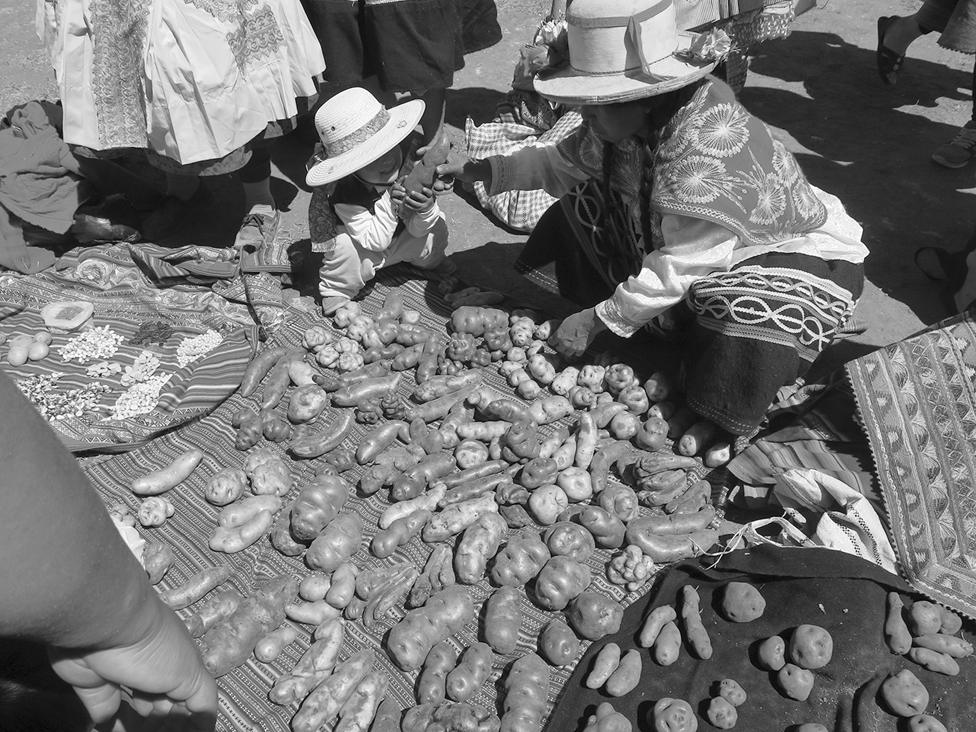
On 30 June 2015, I attended a fair in the province of Yungay, on a high altitude lacustrine plain. Urpichallay and the IE rented vans and school buses to offer free transportation to participants coming from communities of the Huaylas valley. The small barter groups were of diverse composition. Some groups were composed of family members, others of members of the same community, but most of them were under the umbrella of local public schools, which speaks clearly of the status of the IE with regard to these events. Barter fairs in Ancash are indeed institutional, although not of the same order as those studied by Olivia Angé in the Argentinean Andes, which she describes as “a means to structure civil society and affirm ethnic identities, according to the global agenda on international development.”Footnote 58 The promoters of the Ancash gatherings are, in contrast, quite distrustful of external intervention in the name of development.
The event started with the display of seeds and food items on tarps. The organizers asked the participants not to barter before the opening ceremony so that visitors and other participants could appreciate the diversity of foods. The ceremony opened with welcoming words from Urpichallay’s director. Dressed in traditional Andean costume, she recalled the importance of maintaining the bartering of seeds, which she described as “a legacy from our ancestors.” Then, wearing similar clothing, the representative of the Marcará delegation of IE elaborated on the same topic and highlighted the idea of “valuing our culture.” She then invited all attendees to form a semicircle around a ritual altar, while male educators played seashell horns. The IE delegate for the Ancash region approached the altar to give the final and main speech. In a loud, confident tone, he addressed cultural diversity as “our way of life” to be preserved through “pertinent educational programmes that are adequate to “our reality.” He also emphasized the event’s main objective: “[T]o ensure that our children, our young people, value what they have.” “Why can foreign visitors value what we have and why can we not?” he asked.
The opening ended with a re-enactment of a pago a la tierra, an offering to Mother Earth that can be done in various ways. On this occasion, it consisted of offering different kinds of ornaments and ceramics, cooking utensils, local herbs, traditional beverages such as chicha and aguardiente, a mix of real fruits and fake plastic fruits (pears, apples, grapes, oranges, avocados, and pineapples), and bread. Curiously, potatoes and local tubers were not among the items offered. Male educators wearing Inca-like costumes hosted the pago. They addressed prayers to Mother Earth and apus (the spirits of the local mountains) in Spanish and Quechua.
The bartering started right after the ritual. Those who wanted to barter moved between the different groups with handfuls of seeds to be traded, while visitors mainly observed and asked about the seeds and tubers unknown to them. The native potatoes brought by the peasants of the community of Vicos particularly attracted the attention of visitors, who overtly praised their colors and shapes. Over the years, Vicos has received strong support from associations such as Urpichallay to recover native potato landraces. This fact, coupled with the community’s fertile high-altitude soils and the visibility obtained from being the subject of Cornell University’s experiment, has given Vicos a good reputation in terms of the preservation of food biodiversity.
It is perhaps this reputation that caused an unexpected situation. Not long after the event started, visitors reported to the organizers that the comuneros of Vicos were not exchanging their potatoes and seeds but were selling them instead. I was able to confirm and observe that the farmers assigned a price of one Peruvian nuevo sol (PEN), which is about US $0.30, to the more “common” native varieties—single-coloured and of more uniform surface—and a price of two PEN to the most colored, paw-like, complicated-shaped ones. This indicated that the farmers were probably well aware of both their standing before the other communities participating at the fair and of the role they could play in the global trend of valuing “native” local food items. But to the public and the organizers, the comuneros of Vicos were lacking the moral obligation of exchanging. When questioned about their decision, the comuneros explained that their own land provided them with all of the crops made available at the event. Put simply, they were selling potatoes because they did not need seeds. The terms of participation of Vicos in the fair renegotiated and resulted in them selling the rarest native varieties at two PEN and exchanging the other varieties for quinoa, maize, and barley.
The closing of the event consisted of a massive sharing of meals and the presentation of traditional dances performed by the schoolchildren. Urpichallay and IE financially and logistically supported the purchase and transportation of the food shared. The children’s mothers offered typical Andean dishes from the region such as picante de cuy (guinea pig stew cooked in panca chili), patasca (boiled corn soup with mutton meat), llunqa cashqui (wheat soup with potatoes and vegetables), and different kinds of mazamorras (thick puddings made of corn or potatoes).
Barter fair in Yungay (photograph by the author, 2015).
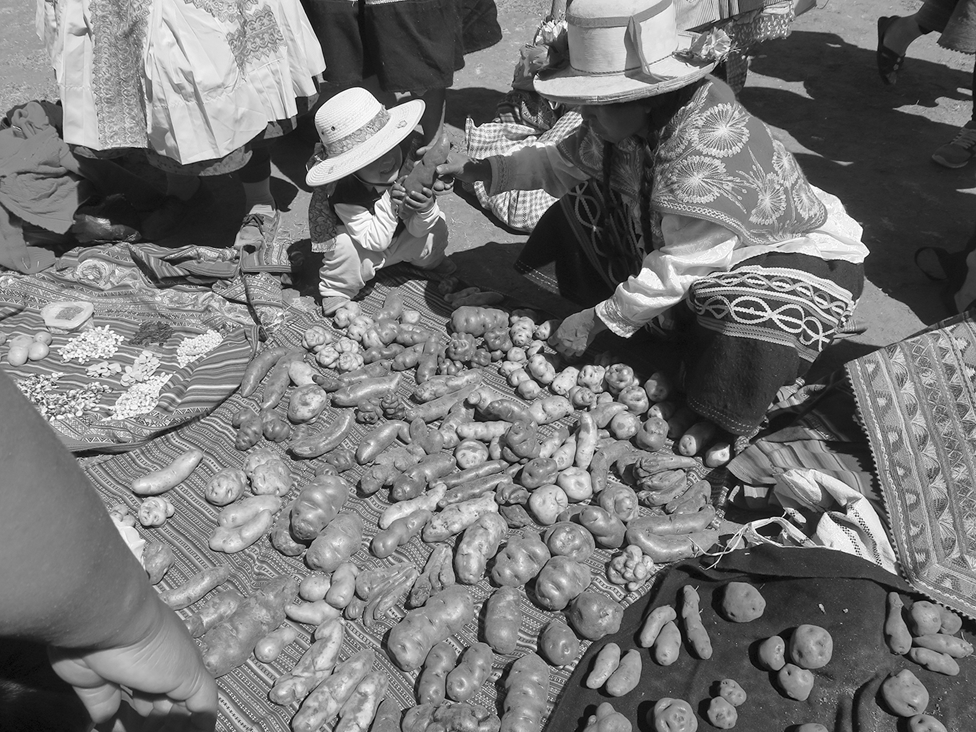
THE POTATO PARK: BETWEEN CULTURAL RE-CREATION AND MARKET REPOSITIONING
The Potato Park is located in the department of Cusco, above the Sacred Valley and the village of Pisac. It is a conglomerate of six Andean communities (Sacaca, Pampallacta, Chawaytire, Amaru, Paru Paru, and Cuyo Grande) that, since 2001, have aimed at building sustainable livelihoods by recovering and enhancing traditional knowledge and encouraging cultural self-determination. The communities merged nearly 10,000 hectares of their lands for growing, selling, and exhibiting native varieties of potatoes and other local crops. Over the years, the park has become an international reference in the fields of biodiversity management, the empowerment of indigenous people, and food sovereignty.Footnote 59 It is also considered the most successful project of this nature in Peru.
The success of the Potato Park as a biodiversity conservation area relies on the articulation of the goods produced by the comuneros and the expertise provided by its founding organization, the NGO ANDES. Created in 1995 and funded by grants from the Food and Agriculture Organization (FAO), the Treaty Benefit Fund, and international NGOs,Footnote 60 ANDES is dedicated to the protection of the environmental and cultural rights of Andean populations. The central figure behind the NGO’s consolidation and, by extension, that of the Potato Park, is its director Alejandro Argumedo. Argumedo presents himself as indigenous Quechua and possesses an agronomy degree from McGill University. He has achieved wide recognition in the international cooperation field as a specialist on indigenous rights-related topics. The close cooperation between Argumedo and the United Kingdom-based IIED has been crucial to developing the core concept of ANDES work: collective bio-cultural heritage. Collective bio-cultural heritage is defined as “(k)nowledge, innovations and practices of indigenous and local communities which are collectively held and inextricably linked to traditional resources and territories, local economies, the diversity of genes, varieties, species and ecosystems, cultural and spiritual values, and customary laws shaped within the socio-ecological context of communities.”Footnote 61 In more operational terms, indigenous knowledge must be recognized and appreciated as a powerful resource and as complementary to Western scientific knowledge.Footnote 62
ANDES draws on the notion of sumak kawsay (“good living”), based on the inherent Andean relationship of reciprocal nurturing between humans and nature, to re-establish indigenous ethics of sharing, care, and respect, which are seen as having been eroded by modernity.Footnote 63 Work on native potato conservation and production is the NGO’s benchmark. In 2004, ANDES signed an agreement with the International Potato Center (CIP) to repatriate part of the center’s native potatoes and seeds collection for in situ cultivation, reproduction, and monitoring.Footnote 64 Today, the park counts around 1,300 potato varieties. This success has opened up avenues for becoming an agro-ecotourism center and developing new indigenous markets in accordance with the notion of collective bio-cultural heritage.
The Potato Park management relies on both the principles of sustainable tourism and the obligations of reciprocity and mutualism dictated by the ayni. Tourist-orientated services are not yet fully developed, but, as shown later, efforts are being made in this direction. Individuals and small groups of visitors are welcome to the park. In June 2015, I signed up for the three-day guided tour option, which included trekking throughout the area, meetings with the inhabitants (the comuneros), sharing meals, first-hand experience of the agricultural activity, and sleeping in a local family’s house. While walking at altitudes between 3,500 and 5,000 meters, local guides provided me with an overview of the dynamics of Andean potato cultivation and consumption. I learned, for instance, that common varieties or papas mejoradas are a cash crop, that native ones are for community subsistence, and very high-altitude “bitter potatoes” are dehydrated for food stock (chuño). I had the opportunity to appreciate dozens of native varieties, each more surprisingly different than the next. I also received palatable instruction. I ate potatoes and other curious tubers three times a day: for breakfast and dinner in the company of my hosts and for lunch in the company of the park’s guides.
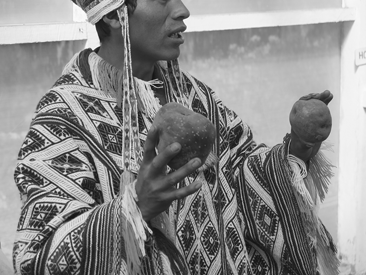
One day, Gregorio (pseudonym), one of the guides, proudly showed me two big native potatoes. Besides the slightly blue tone of their peel, they looked rather ordinary to me. Their round, almost polished form and their size made me think of them as papas mejoradas, the modern, though insipid, varieties available in supermarkets. I had expected to see Gregorio more proud of the beautifully amorphous, small, and colored potatoes that he had showed me previously. However, he presented the big and less graceful ones as the best kept secret in the Potato Park. The “improved native potato,” he explained, “is the perfect encounter between tradition and science.” He affirmed that these varieties are “clean,” which means that they are more resistant to plagues and diseases and contain the same nutritional and palatable properties as typical native potatoes.
When I asked Fausto (pseudonym), the main tour guide, about the size of the potatoes, he answered: “I don’t know exactly why, but the market always prefers big sizes of … everything.” So, unlike the smaller native potato varieties, the big ones are not products of subsistence agriculture; by all appearances, they are on their way to entering the market as not just weight, but also as produce with added value. But these potatoes are much more than this. They are the materialization of the collaborative work between the Potato Park’s peasants and genetic scientists of the CIP. That is, they are the result of an attempt to give equal credence to scientific and traditional crop management—two kinds of knowledge that have always existed but, at the same time, have ignored each other. The big potatoes are consciously conceived as hybrids, both biologically and conceptually. They should also be understood as hybrids in terms of “disruptive” and “productive” categories,Footnote 65 as they have a potential for both subversion and creation of new ways of knowing. Indeed, to my eyes, they represent the crucial issue at stake for peasant and indigenous populations: to build a better life for themselves without losing their values and traditions.
The big potatoes of the Potato Park (photograph by the author, 2015).

Next to the buildings dedicated to the conservation and reproduction of potatoes (the potato reproduction center, the seed bank, the research center, and several greenhouses), new structures have been erected, such as a traditional food restaurant (mikuna wasi) kept by the women of the Potato Park, stores for selling goods produced locally, and houses serving as eco-lodges. Some of the latter have been built as extensions to the comuneros houses, while others are independent buildings. Besides the hospitality on offer, visitors can learn about and buy traditional healing products, toiletries made of potato (potato shampoo, potato liquid soap) and of other local plants and herbs, crafts, and mystical services (participation in ritual enactments). The production of all of these goods is distributed into specialized colectivos económicos (economic working groups), each involving about a dozen members from the different communities. In addition, a job rotation system and a principle of profit distribution in harmony with the ayni ensure that all members of the colectivos económicos receive benefits.
The fact that this park functions is due to ANDES aptitude for innovating its discourse and prospects and articulating new, ideologically consistent initiatives. Indeed, the Potato Park’s productive diversification is not merely an opening up to market forces. Most importantly, it is conceived as a crucial step toward a business model committed to generating income without clashing with cultural and spiritual values or with long-established customary norms.Footnote 66 Such conceptualization is possible due to Argumedo and IIED collaborators’ extensive involvement in multilateral, activist, and scholarly spheres, in which they have contributed to the debates on the use of intellectual property rights (IPR) for the protection and promotion of indigenous knowledge.Footnote 67 The park is, in this sense, a fertile ground for experimentation. The most recent outcome is the creation of the collective trademark Parque de la Papa to commercialize the park’s new goods and services. The trademark draws on the concept of “bio-cultural heritage indication,”Footnote 68 which in turn draws extensively on geographical indications and other allegedly “soft” and “indigenous-friendly” IPR tools. In this particular context, the bio-cultural heritage indication is an instrument intended to bypass the bureaucratic constraints imposed by the Peruvian state’s intellectual property regulations (for example, the Parque de la Papa trademark is in use but is not yet formally registered, as it does not fit into any IPR category), protect the park’s novel products, protect the production processes and associated biological and cultural diversity, reinforce communities’ collective rights and local worldviews, and enable comuneros to exercise control over market development. In summary, the Potato Park, with an initial focus on potato diversity conservation, is now devoted to broader objectives that are still in accordance with its critical tenets of development.
As might be expected, and despite the solid concepts on which ANDES builds its new mission, the Potato Park’s recent evolution has prompted challenges in terms of social cohesion and governance. As the discourse and production of goods have increased and become more technical and sophisticated, so have the needs for productive skills and management (reading, mathematics, business, and Internet literacy). This has led to the strengthening of the position of decision-makers and skilled workers and, consequently, to sentiments of exclusion among the less-resourced comuneros.Footnote 69 Uncertainties related to the distribution of benefits have also arisen and created an environment conducive to the temptation to diverge from the park’s procedures. The most striking example of this occurred in 2011 when the community of Cuyo Grande decided to separate from the conglomerate and to manage, by itself, the flux of visitors coming within its borders. In this way, it was able to benefit exclusively from its proximity to the park. Since its secession, the desire to act independently has spread and become a general tendency. The following anecdote made me think of this; before leaving the park, my host handed me a colored business card. One side of the card showed images of the Potato Park’s landscapes, women doing traditional weaving, and my host’s kitchen table ready for a traditional breakfast. The other side of the card showed four contact mobile phone numbers, a list of offered services (experiential tourism, trekking, crafts, gastronomy, and horse riding), and the name of the business. My host asked me to contact her directly for my next visit so that I could enjoy the same services offered by the park, but for a lower price. She also informed me that she did not conduct the business alone but together with her cousin, who happened to be one of my trekking guides.
CONCLUSION
While nation-states increasingly draw on the notion of cultural heritage as a resource to serve their political, economic, and cultural agendas, indigenous and vulnerable groups have developed their own culturally rooted strategies to ensure some control of their lives. Indigenous groups of the Peruvian Andes and Amazon, in partnership with the intellectual-activist sphere, make sense of their food cultures and put them on display to address, discuss, and resolve issues that might keep them from living in accordance with their cultural and spiritual values. This involves a number of actors who participate in processes of identification, (re)contextualization, interpretation, and transmission of food knowledge (culinary, agricultural, and ritual). Accordingly, such initiatives may fall in the realms of cultural and food heritage. Even more, they stress similar issues to those addressed by mainstream heritage institutions. Indeed, raising awareness among younger generations of the importance of protecting their culture, biodiversity, and worldviews can rightly be seen as a common goal of very distinct entities and mechanisms such as Waman Wasi’s mikunas, Urpichallay’s and IEs’ barter fairs, the Potato Park’s recreation of ayni, UNESCO’s CSICH, and the FAO’s program for the conservation of globally important agricultural heritage systems.
The intention of this article is to highlight the centrality of food cultures in the worldviews of indigenous people from the Andes and the Amazon. Food reveals the symbiotic relation between nature and culture in these indigenous worlds and, in doing so, provides fertile ground for cultural resurgence strategies. The initiatives outlined above have developed within transnational networks of partners and interlocutors but outside of the universalist pretensions of global heritage governance, thus benefiting little from state policies. They constitute food heritage approaches that differ from that of UNESCO by addressing only pressing issues of peasant and indigenous communities. Globally nurtured, but locally implemented, these initiatives seek out and take advantage of opportunities in strategic, proactive fashions. In this regard, the big native potatoes of the Potato Park may be seen as a counter-metaphor for the “national dish” imagined as food heritage. While the latter builds on the aim of states and global cultural actors to obtain prestige and revenues, the former builds on the necessity of indigenous people to adapt their ways of living as a condition for continuing to exist.
Of course, as in any action devoted to enhancing indigenous agency and worldviews, the aforementioned cases are not devoid of conflicts and tensions nor free of hierarchical power relations and competition. In this regard, the influence of indigenous NGOs working in the field of cultural affirmation still needs to be addressed. Further research is required to better understand to what extent the NGOs’ ideological approaches may have an effect on the decisions to engage (or not) in activities and practices that members of communities can see as beneficial or detrimental. Waman Wasi’s critique of markets and trade mechanisms as well as Urpichallay’s and ANDES’s commitment to promoting traditional, but somehow idealized, views of Andean culture raise important questions on this point. Recognizing the complexities and interconnections that come into play when different worldviews converge concurs with the inventiveness and vitality of indigenous agency to secure dignified ways of living.
ACKNOWLEDGMENTS:
I gratefully acknowledge that this article is based on research that was supported at different stages by the German Federal Ministry of Education and Research in the framework of desiguALdades.net, the French National Research Agency (ANR-13-CULT- 0003-1), and the German Research Foundation in the framework of the project Food as Cultural Heritage (2014–17). I want to thank all of my field consultants as well as Regina Bendix, María Elena García, Chiara Bortolotto, and the three anonymous reviewers for their invaluable feedback on this and earlier versions of this article.