




No CrossRef data available.
Article contents
Epidemiological and molecular evidence supports the zoonotic transmission of Giardia among humans and dogs living in the same community
Published online by Cambridge University Press: 03 March 2004
Abstract
Giardia duodenalis isolates recovered from humans and dogs living in the same locality in a remote tea-growing community of northeast India were characterized at 3 different loci; the SSU-rDNA, elongation factor 1-alpha (ef1-α) and triose phosphate isomerase (tpi) gene. Phylogenetic analysis of the SSU-rDNA and ef1-α genes provided poor genetic resolution of the isolates within various assemblages, stressing the importance of using multiple loci when inferring genotypes to Giardia. Analysis of the tpi gene provided better genetic resolution and placed canine Giardia isolates within the genetic groupings of human isolates (Assemblages A and B). Further evidence for zoonotic transmission was supported by epidemiological data showing a highly significant association between the prevalence of Giardia in humans and presence of a Giardia-positive dog in the same household (odds ratio 3·01, 95% CI, 1·11, 8·39, P=0·0000).
Information
- Type
- Research Article
- Information
- Copyright
- 2004 Cambridge University Press
INTRODUCTION
Giardia duodenalis (syn G. intestinalis; G. lamblia) is a flagellated enteric protozoan parasite that is frequently encountered in a variety of mammalian hosts, including humans and dogs (Thompson, 2000). The organism is transmitted by the faecal–oral route, producing environmentally resistant cysts that are voided in the faeces and transmitted directly or via water or food, to another host. About 200 million people have symptomatic giardiasis in Asia, Africa and Latin America with some 500000 new cases reported each year (World Health Organization, 1996). Poor levels of hygiene, sanitation and overcrowding in developing countries and communities enhance transmission. In developed countries giardiasis is being increasingly recognized as a re-emerging infectious disease especially in children kept at day care centres where conditions are conducive for faecal–oral transmission (Thompson, 1994; Read et al. 2002).
The potential for zoonotic transmission of Giardia from domestic dogs to humans remains largely an unresolved issue (Ashford & Snowden, 2001). If zoonotic transmission is possible, then both domestic as well as stray dogs may constitute a potential source of infection for humans. Recent surveys of gastrointestinal parasites of dogs have demonstrated high levels (prevalence of 7·2–22·1%) of Giardia in stray as well as domestic dogs in both developing and developed countries (Bugg et al. 1999; Itoh et al. 2001; Jacobs, Forrester & Yang, 2001; Oliveira-Sequeira et al. 2002). A high level of genetic heterogeneity exists among human and animal isolates of G. duodenalis and the presence of genetically similar isolates in humans and dogs from different geographical locations worldwide has provided circumstantial evidence in support of G. duodenalis being zoonotic (Stranden, Eckert & Kohler, 1990; Baruch, Isaac-Renton & Adam, 1996; Hopkins et al. 1997; Monis et al. 1998; O'Handley et al. 2000; Graczyk et al. 2002). Giardia isolates recovered from humans have been shown to fall into one of the two major genetic groupings or assemblages (Table 1), each containing a number of genetic subgroupings. Group A I has been shown to consist of a mixture of closely related animal (including dog) and human isolates that appear to have undergone recent global dispersion (Mayrhofer et al. 1995). In contrast, Group A II has, to date, been shown to comprise entirely human isolates. Assemblage B comprises a range of genetically diverse groups, predominantly human isolates, but also some animal (including dog) isolates (Monis et al. 1996; Monis et al. 1998). A more accurate assessment of zoonotic transmission, however, would be to compare Giardia isolates collected from humans and dogs living in close association with each other, simultaneously. The only study of this kind, conducted by Hopkins et al. (1997) in an Aboriginal community in Australia, compared the SSU-rRNA gene of Giardia recovered from dogs and humans living in the same locality. DNA sequencing revealed 4 different groups of Giardia isolates. Groups 1 and 2 (corresponding to Assemblages A and B of Mayrhofer et al. 1995) were recovered from all the humans and groups 3 and 4 (corresponding to assemblages C and D of Monis et al. 1998) were recovered from dogs only. These findings (Hopkins et al. 1997; Monis et al. 1998) suggest the existence of a distinct genotype host-adapted to dogs, thus far only identified in dogs from Australia. Another major limiting factor in understanding and interpretation of the genetic heterogeneity within the G. duodenalis groups has been the refractory growth in vitro of many isolates of Giardia, including a significant portion of human as well as dog isolates (Meloni & Thompson, 1987). The recent advent of PCR-based procedures that can characterize isolates of Giardia directly from faeces has thus allowed a more comprehensive range of genotypes to be characterized from humans and animals (Hopkins et al. 1997; Monis et al. 1998; Amar et al. 2002; Read et al. 2002). We have applied PCR to amplify and sequence segments of 3 separate genes encoding the SSU-rRNA, elongation factor 1-alpha (ef1-α) and triose phosphate isomerase (tpi) from G. duodenalis, recovered from humans and dogs living in the same locality in a remote tea growing community in northeast India. All 3 loci have previously been shown to be useful for the characterization of G. duodenalis (Monis et al. 1999).

The present study forms part of an ongoing project aimed at investigating the prevalence and epidemiology of gastrointestinal parasites among humans and dogs in a tea growing community of Assam (Traub et al. 2002).
MATERIALS AND METHODS
Study area and design
The tea growing communities in Assam experience a typically tropical climate with heavy monsoon rains. Each tea estate comprises three distinct socioeconomic groups; the ‘executives’, ‘staff’ and ‘labour’. The ‘executives’ comprise less than 1% of the total population and were excluded from this study. The ‘staff’ make up approximately 5% of the total population and have higher standards of living, with most being literate and practising better standards of hygiene than the ‘labour’ community. The ‘labour’ make up the majority of the population and are predominantly tea-pickers. The tea-company, Williamson Magor & Co., provides their workers with simple brick housing attached to a latrine, in a majority of cases, however, latrine facilities are not utilized by the ‘labour’. Shared facilities such as a local hospital, school, club and a day-care centre are also provided. A majority of households keep domestic animals including cattle, goats, and poultry and share a close relationship with semi-domesticated dogs, often allowing them into their houses. Overcrowding, together with poor sanitation, illiteracy and a complete lack of veterinary attention places this community at a high risk of acquiring zoonotic infections. For further and more detailed information on study area and design, refer to Traub et al. (2002).
Collection of faecal samples
Households were initially stratified into those owning and those not owning dogs, and then randomly selected from each stratified group to ensure adequate representation of each, as described previously (Traub et al. 2002). Faecal samples were collected from a total of 328 humans and 101 dogs from 3 tea estates in Assam, over a 3-month period from July–September 2000. Specific data were collected from each household and individual human participant with regard to risk factors for parasitic infection, including socio-economic status, crowding, age, gender, defaecation practices, dog ownership and current signs of diarrhoea. Parents or guardians were asked to answer questions on behalf of children less than 10 years of age. Faecal samples were stored separately in 5% formalin and 2·5% potassium dichromate and transported to Murdoch University, Western Australia for further processing.
Parasitological techniques
Dog and human faecal samples were examined for Giardia cysts using a standard sedimentation in water technique followed by a centrifugal flotation in saturated zinc sulphate and sodium nitrate and microscopy (Faust et al. 1938). Giardia cysts were then concentrated and purified from microscopically positive human faecal samples and all 101 dog faecal samples (irrespective of microscopic results) using a saturated salt and glucose method (Meloni & Thompson, 1987).
Statistical analysis
Univariate associations between the prevalence of Giardia in humans and dogs and host, behavioural and environmental factors were initially made using Chi-square results for independence. Continuous data (age) was analysed using a two-sample t-test. Logistic multiple regression was used to quantify the association between the prevalence of Giardia and each variable after adjusting for other variables. Only variables significant at P[les ]0·25 in the univariate analyses were considered eligible for inclusion in the logistic multiple regression (Hosmer & Lemeshow, 1989; Frankena & Graat, 1997). Backward elimination was used to determine which factors could be dropped from the multivariable model. The likelihood-ratio Chi-squared statistic was calculated to determine the significance at each step of the model building. The level of significance for a factor to remain in the final model was set at 10%.
Statistical comparisons were performed using Statistix for Windows (Analytical software, Tallahassee, Florida) and Excel 97 (Microsoft).
Molecular methods
DNA extraction from Giardia cysts.
The purified Giardia cysts were diluted in 1×phosphate buffered saline and a 50 μl aliquot of this suspension was transferred into a 1·5 ml Eppendorff tube and centrifuged at 14000 rpm. Extraction of the Giardia cysts was then carried out using the method previously described (Morgan et al. 1998).
PCR amplification.
Nucleotide sequences were obtained from 3 ‘housekeeping’ genes that evolve at different rates – tpi>SSU-rDNA>ef1-α (Monis et al. 1999).
The SSU-rDNA gene.
A nested PCR was used to amplify a 130 bp region of the SSU-rDNA gene using primers RH11, RH4 and GiarF and GiarR as previously described by Hopkins et al. (1997) and Read et al. (2002). Amplification conditions were carried out as previously described by Hopkins et al. (1997). This PCR has been proven to be highly sensitive as a screening tool for Giardia directly from faeces (McGlade et al. 2003) and was used to amplify the microscopically positive Giardia samples from human faeces as well as to screen all 101 dog faecal samples. Those faecal samples from dogs that were positive for the SSU-rRNA PCR and all microscopically positive human samples were then further subjected to amplification at the ef1-α and tpi genes.
The elongation factor 1-alpha (ef1-α) gene.
Nucleotide sequences for the ef1-α gene from G. duodenalis isolates from the 6 major Assemblages A, B, C, D, E and F were obtained from GenBank (Accession numbers AF069573, AF069570, AF069569, AF069574, AF069575, AF069571 and AF069572 respectively) and their sequences aligned using Clustal W (Thompson, Higgins & Gibson, 1994). Primers that specifically amplified a 191 bp region of the ef1-α gene of Giardia duodenalis were designed from conserved regions and designated RTef1-αF (5′-GCCGAGGAGTTCGACTACATC-3′) and RTef1-αR (5′-GACGCCSGAGATCTTGTAGAC-3′). PCR amplification was performed in 25 μl volumes with the final mix containing approximately 10–50 ng DNA, 12·5 pmol of each primer, 800 μM of each dNTP, 2·5 nM MgCl2, 67 mM Tris–HCl (pH 8·8), 16·6 mM (NH4)2SO4, 0·45% Triton X-100, 0·2 mg/ml gelatin, 1 unit Tth plus (Biotech International, Perth, Australia) and H2O. Reactions were performed on a PE 2400 (Perkin Elmer, Foster City, California) thermal cycler. Samples were heated to 94 °C for 2 min, 64 °C for 1 min and 72 °C for 2 min, followed by 50 cycles of 94 °C for 30 sec, 64 °C for 30 sec and 72 °C for 30 sec and 1 cycle of 72 °C for 7 min.
The triose phosphate isomerase (tpi) gene.
Nucleotide sequences for the tpi gene of G. duodenalis isolates corresponding to Assemblages A I, A II, B I and B II were obtained from GenBank (Accession numbers AF069556, AF069557, AF069561 and AF06956 respectively) and their sequences aligned using Clustal W (Thompson, Higgins & Gibson, 1994). Degenerate primers were designed from conserved areas to amplify a 253 bp region of the tpi gene of G. duodenalis from both Assemblages A and B and designated RTTPIF (5′-ATYAAGAGCCACGTRGCGKC-3′) and RTTPIR (5′-CCATGATTCTRCGYCTTTCAG-3′). PCR amplification was performed in 25 μl volumes with the final mix containing approximately 10–50 ng DNA, 12·5 pmol of each primer, 800 μM of each dNTP, 3·0 nM MgCl2, 67 mM Tris–HCl (pH 8·8), 16·6 mM (NH4)2SO4, 0·45% Triton X-100, 0·2 mg/ml gelatin, 1 unit Tth plus (Biotech International, Perth, Australia) and H2O. Reactions were performed on a PE 2400 (Perkin Elmer, Foster City, California) thermal cycler. Samples were heated to 94 °C for 2 min, 60 °C for 1 min and 72 °C for 2 min, followed by 50 cycles of 94 °C for 30 sec, 60 °C for 30 sec and 72 °C for 30 sec and 1 cycle of 72 °C for 7 min.
Sequencing of PCR products.
All PCR-positive samples were subjected to sequencing. PCR products were purified using Qiagen spin columns (Qiagen, Hilden, Germany) and sequenced using an ABI Terminator Cycle Sequencing kit (Applied Biosystems, CA, USA) according to manufacturer's instructions except that the annealing temperature was set to the corresponding annealing temperatures of the respective PCR reactions. PCR products were sequenced in both forward and reverse directions. Sequences were analysed using SeqEd v 1.03 (Applied Biosystems) and aligned with each other as well as previously published sequences for G. duodenalis isolates using Clustal W (Thompson, Higgins & Gibson, 1994).
Molecular characterization and phylogenetic analysis.
For the SSU-rDNA gene, human and dog isolates were grouped into Assemblages A, B, C or D according to Hopkins et al. (1997). This region has been previously shown to be reliable in differentiating between major genotypes of Giardia (Hopkins et al. 1997; O'Handley et al. 2000; Read et al. 2002).
For the ef1-α and tpi genes, isolates chosen to represent each of the major genetic groupings from GenBank (ef1-α Accession numbers AF069573, AF069570, AF069569, AF069574, AF069575, AF069571 and AF069572; tpi Accession numbers AF069556, AF069557, AF069561, AF06956 and AF069563) were aligned with the sequences obtained from the new isolates.
Distance-based analyses were performed using MEGA version 2.1 (Kumar et al. 2001). Due to the large number of taxa and the short sequences it was not deemed appropriate to conduct either parsimony or maximum likelihood (ML) analyses. Distance-based analyses were conducted using Tamura-Nei distance estimates and trees were constructed using the Neighbour-Joining algorithm.
RESULTS
Survey and prevalence results
The overall prevalence of Giardia in humans was 8·8%. Both ‘staff’ and ‘labour’ communities were equally infected, with prevalence levels of 9·0% and 8·1% respectively. Amongst these, 84% of ‘staff’ and 44% of ‘labour’ reported to boiling water before consumption. Fig. 1 displays the prevalence of Giardia among different age groups in humans. The highest levels of infection with Giardia were found in children between the ages of 0 and 15 years, peaking at 21% between the ages of 6 and 9 years of age.

Fig. 1. The prevalence of Giardia duodenalis among humans of different age groups residing at the tea estates of Assam. Numbers in parentheses indicate the sample size of each age group.
Of the 29 humans positive for Giardia, H70, H206 and H315 complained of clinical signs of diarrhoea, all male children of ages 2, 6 and 8 years respectively. A stable multivariate regression model quantifying associations between the prevalence of Giardia in humans and other variables could not be generated. Univariate analyses showed a higher than expected prevalence of Giardia in younger individuals (P=0·0057). The average age of individuals positive for Giardia was 16·6 years compared to 25·6 years for unaffected individuals. Humans belonging to households owning dogs had a significantly higher prevalence of Giardia (odds ratio 2·69, 95% CI, 1·13, 6·5) than humans residing in households that did not own dogs (P[les ]0·025). Humans belonging to a household in which at least one dog was infected with Giardia were also significantly more likely to be infected with Giardia (odds ratio 3·01, 95% CI, 1·11, 8·39) than individuals that did not reside with infected dogs (P=[les ]0·025). There was no significant association between the prevalence of Giardia in humans and socioeconomic status, crowding, age or sex.
Three dogs D28, D91 and D96 were found to be microscopically positive for Giardia. By comparison, 20 dogs were found to be positive for Giardia by PCR. There was no significant association between dogs infected with Giardia and dogs that had access to human faeces.
Molecular characterization and phylogenetic analysis of Giardia isolates found in humans and dogs
Table 2 summarizes the amplification and genotyping results for the Giardia-positive human samples at the 3 loci used in this study. Of the 29 Giardia-positive human samples, the SSU-rDNA was amplified and genotypes characterized from 24 (83%) samples and the ef1-α and tpi amplified and genotypes characterized from 16 (55%) samples each. Table 3 summarizes the amplification and genotyping results of the 20 Giardia-positive dog samples amplified at the SSU-rDNA. Genotypes were characterized in 14 (70%) of these dogs. The ef1-α was successfully amplified for 16 (80%) dogs and genotypes characterized for 13 (65%). The tpi gene amplified for 10 (50%) dogs but genotypes characterized for 7 (35%) only.
Table 2. Summary of genotype results of Giardia isolates recovered from humans at three different loci (An asterix (*) indicates mixed nucleotide profiles as described in the text. A dash indicates unsuccessful PCR amplification or sequencing of the isolate.)

Table 3. Summary of genotype results of Giardia isolates recovered from dogs at three different loci (Giardia isolates recovered from humans in the same household are also included for comparison. An asterix (*) indicates mixed nucleotide profiles as described in the text. A dash indicates unsuccessful PCR amplification or sequencing of the isolate.)

Phylogenetic analysis of the SSU-rDNA data placed all of the G. duodenalis isolates into the same major cluster but was poor at resolving the relationships of the various assemblages (Fig. 2). There was good bootstrap support for the clustering of Assemblages A, F and E but the relationships of isolates within this cluster could not be resolved, which is consistent with the findings of Monis et al. (1999). The human and dog isolates that were placed within this Assemblage A/E/F cluster could not be specifically associated with any of these three assemblages. Similarly, there was moderate support for isolates clustering within Assemblage B but there was not sufficient genetic variation to allow determination of subgroupings. Some of the human isolates appeared to cluster with the Assemblages C and D type isolates. However, this placement was either poorly supported or not supported by bootstrap analysis and therefore the genotype of these isolates could not be identified with any confidence using phylogenetic analysis.

Fig. 2. Phylogeny of the Giardia isolates inferred by distance based analysis using Tamura-Nei distance estimates of aligned nucleotide sequences derived from the PCR products of the (A) SSU-rDNA gene, (B) elongation factor 1-α and (C) triose phosphate isomerase genes.
From a total of 191 bp positions on the ef1-α gene, 13 were found to be variable among the G. duodenalis sequences. Neighbour-joining analysis of the ef1-α sequences supported the SSU-rDNA placement of some of the human and dog isolates within Assemblages A and B, although the bootstrap values for this were low. The ef1-α data provided even poorer genetic resolution of the isolates compared with the SSU-rDNA data. There was no support for the placement of any human study isolates within assemblages C or D. The isolates that were placed within assemblages C or D by the SSU-rDNA analysis were placed within Assemblage B or were within the cluster containing Assemblages A, B and F. Some of the isolates that were placed with Assemblages A/E/F by the SSU-rDNA analysis, placed external to Assemblage A by the ef1-α analysis.
As would be expected based on the findings of Monis et al. (1999), the tpi sequences were found to be more variable than either the SSU-rDNA or ef1-α sequences, with 69 variable sites out of a total of 253 base pairs. Phylogenetic analysis of the tpi data confirmed the ef1-α results for the placement of all the human as well as dog isolates within either Assemblages A and B. In addition, those isolates that could not be placed within any particular assemblage by the ef1-α analysis and SSU-rDNA analyses were unambiguously placed within either Assemblage A or B by the tpi analysis. For example, H165 was clustered with Assemblage D in the SSU-rDNA analysis, was placed within the cluster containing Assemblages A, B and F by the ef1-α analysis and within Assemblage A by tpi analysis. Only the latter placement received high (100%) bootstrap support. The tpi analysis placed isolates into either the Assemblage AI or AII subgroups. However, the bootstrap support for this was poor and so these identifications can only be tentative. Similarly, some variation was detected among the Assemblage B isolates but designations into subgroups could not be clearly made. The tpi analysis confirmed the association of Assemblages A, E and F that was identified in the SSU-rDNA analysis (94% bootstrap support).
Table 3 summarizes the genotypes of Giardia recovered from dogs and compares them with humans residing in the same household. There were 11 instances in which both humans and dogs were found to harbour Giardia within the same household. In 5 out of 11 instances, characterization was unsuccessful in the dog or human and could not be compared. Of the remaining 6 cases, genotypically identical isolates of Giardia (placed within Assemblage AII by tpi analysis) were recovered from a dog (D44) and humans (H164 and H165) in the same household. Genetically similar isolates were also recovered from a dog (D96) and human (H315) in another household.
The presence of mixed automatic DNA sequencing profiles in samples H70, H117, H123, H191, H232, H246, H288, H336, D28, D35 and D37 suggested that these hosts were infected with 2 genetically different Giardia isolates. These mixed profiles were characterized by a clean sequence where nucleotide differences occurred between the two templates. In the case of a substitution, 2 bases were present in the same position and where there was an insertion or deletion, 2 overlapping sequencing profiles were observed.
DISCUSSION
The overall prevalence of Giardia of 8·8% among the human community was moderate compared to the prevalence of geohelminths such as hookworm (42%), Ascaris (36%) and Trichuris (32%) (Traub et al. 2002). However, the prevalence in humans was based on microscopy positive detection of Giardia rather than PCR detection and may be a gross underestimate (McGlade et al. 2003). It was unexpected for both socio-economic groups to have similar levels of infection with Giardia, given that the ‘staff’ had much higher standards of hygiene, boiled their water more often and lived in less crowded households. However, none of these risk factors proved significant.
Only 10% of Giardia-positive humans complained of current clinical symptoms of diarrhoea. This study reinforces the findings of Read et al. (2002) showing that Giardia infection in a population is not necessarily accompanied by diarrhoea (Read et al. 2002). Moreover, since the faeces of individuals were not screened for other pathogens, we cannot conclusively implicate Giardia as being the sole causative agent of diarrhoea in these individuals. However, it was interesting that all 3 Giardia-positive humans with diarrhoea were below the age of 10 years and if Giardia was indeed the causative agent for the symptoms, age increased immunity towards the parasite may explain this finding.
Although the prevalence of Giardia in dogs in this tea growing community is relatively high (20%), the fact that only 3% of dogs were microscopically positive could indicate that the majority of dogs were shedding low cyst numbers. However, sporadic cyst excretion may partially account for this finding and therefore dogs may still provide a significant zoonotic risk.
The genetic characterization of Giardia isolates recovered from dogs and humans provides supporting evidence for the occurrence of zoonotic transmission in this localized endemic focus. Analysis of the SSU-rDNA and ef1-α sequence data placed the canine isolates within Assemblages A and B. Phylogenetic analysis of the tpi data clearly placed dog isolates D89, D101 and D35, D37 and D44 within Assemblages A. Dog isolates D91 and D96 were the only dog isolates that clustered within Assemblage B. There was an unusual dominance of the Assemblage A in dogs which may indicate that this genotype is most significant when dealing with zoonotic potential. This finding supports a study conducted in Mexico city in which Assemblage A was recovered from 2 dogs (Ponce-Macotela et al. 2002). It is possible that a different and possibly non-zoonotic canine isolate of Giardia within Assemblage B may exist within this population but could not be amplified at a variable locus such as the tpi. However, all dog isolates that were successfully genotyped, clearly fit within the genetic groupings of human isolates analysed in this study. Further evidence for zoonotic transmission is supported by the recovery of genetically similar isolates of Giardia in dogs and humans living within the same household, although it would appear that the risk of dog–human transmission is low.
Direct zoonotic transmission of Giardia from canines to humans was further supported by epidemiological data. There was a highly significant association between the prevalence of Giardia in humans, dog ownership and the presence of a Giardia-positive dog in the same household, irrespective of genotype. The possibility of mechanical ingestion of Giardia cysts via coprophagy of human faeces (Lindsay et al. 1997; Traub et al. 2002) cannot be completely ruled out. Dogs in this community had been statistically shown to act as significant mechanical transmitters and disseminators of human parasites such as Ascaris lumbricoides and Trichuris trichiura (Traub et al. 2002). However, there was no significant association between Giardia-positive dogs and those having access to human faeces. If the Giardia cysts detected in dog faeces were merely as a result of mechanical passage, then we would have expected them to reflect that of the human population. There was a predominance of Assemblage AII genotypes among dogs and none of the dog Giardia isolates placed within Assemblages C or D as did some of the human isolates.
The results of this study differ from those obtained in Aboriginal communities in Australia, where the prevalence of Giardia infection is much higher in both humans and dogs, and where it was found that the dog genotype predominates in infected dogs (Hopkins et al. 1997). The differences between the two studies may reflect a closer association between individual dogs and their owners in the tea growing communities, and the frequency with which dogs are able to eat human faeces in these communities (Traub et al. 2002). In Aboriginal communities in Australia, such behaviour by dogs is less common and the dogs tend to stay together in packs for much of the time, enhancing possibilities for dog to dog transmission. Under such circumstances, host-adapted genotypes are likely to predominate in their respective hosts as a result of competitive exclusion (Thompson, 2000).
An important implication of this study is the danger of using a single locus to infer genotypic characteristics to isolates of Giardia. A variety of epidemiological based studies have used the method developed by Hopkins et al. (1997) based on nucleotide differences at the SSU-rDNA as the sole basis to infer genotypic characteristics for Giardia isolates recovered from humans and animals (O'Handley et al. 2000; Yong, Park, Hwang et al. 2000; Graczyk et al. 2002; Read et al. 2002). However, our study emphasizes the need to use more than one locus for genotyping Giardia as the human SSU-rDNA results presented herein were difficult to interpret compared to previous studies. These differences could be related to geographical location as no previous molecular studies on Giardia have been conducted in this remote part of India. Our study also emphasizes the need to use a conservative approach when basing genotypic characteristics on direct sequence comparisons of short fragments of a locus.
Possible explanations as to why human Giardia isolates clustered with Assemblages C and D at the SSU-rDNA locus are introgression or retention of ancestral polymorphism. Anderson (2001) explains this well using Ascaris as a case study and demonstrates that these processes can result in divergent alleles segregating in the same populations, and identical alleles occurring in genetically distinct populations or species (Anderson, 2001). In such cases analysis of a single locus can result in incorrect species identification or provide a misleading picture.
Another more likely explanation may be that more sequence data for the SSU-rDNA gene is required as the 130 bp fragment is too conserved to infer phylogenetic relationships between the major Assemblages. It is possible that if more sequence data for the SSU-rDNA gene were available for these human isolates they would show greater polymorphisms at additional positions and may be quite distinct from Assemblages C and D.
The possible preferential amplification of one genotype of the SSU-rDNA gene of Giardia in a faecal sample of mixed genotype over another is an unlikely explanation as there was no evidence to support finding Assemblage C and D genotypes at other loci. Similarly, questions may arise to whether two or more types of SSU-rDNA coexist in the genome of these Giardia isolates, similar to that described for Plasmodium (Qari et al. 1994) and Dugesia mediterranea (Carranza et al. 1996). Cloning and sequencing the purified PCR products could help determine whether mixed genotype or polymorphic alleles are present. The functional importance of rRNA may also place constraints on interpretation of sequence data for the SSU-rDNA gene (Dixon & Hillis, 1993). Ribosomal RNA forms a distinct secondary structure as part of the formation and functioning of these ribosomes (Noller, 1984). These structures are dependent on the Watson-Crick and wobble base-pairing interactions between rRNA bases. Characters from both base-pairing regions (stems) and non-base-pairing regions (loops) containing phylogenetic information may undergo compensatory mutations in order to maintain secondary structure leading to misleading phylogenetic grouping (Hillis & Dixon, 1991; Dixon & Hillis, 1993).
In conclusion, we have provided strong epidemiological and molecular evidence to show genetic similarities between the isolates of Giardia recovered from humans and dogs living in the same community, inferring the possibility of zoonotic transmission, especially among the Assemblage A genotypes. We also stress the importance of using multiple loci when inferring genotypes to Giardia isolates for epidemiological studies. Future studies using additional, more highly variable loci will provide more definitive evidence for zoonotic transmission in these and other communities.
We thank Williamson Magor & Co. for permission to conduct research at the tea estates owned by them, and the medical and managerial staff at the Phulbari, Addabari and Balipara Tea Estates for their help and co-operation during sample collection. We also thank Bayer AG, BHC Business Group Animal Health (Leverkusen, Germany) for providing Rebecca J. Traub with a post-graduate scholarship through the Veterinary Trust, Division of Veterinary and Biomedical Sciences, Murdoch University.
References
REFERENCES
AMAR, C. F.,
DEAR, P. H.,
PEDRAZA-DIAZ, S.,
LOOKER, N.,
LINNANE, E. &
McLAUCHLIN, J.
(2002).
Sensitive PCR-restriction fragment length polymorphism assay for detection and genotyping of Giardia duodenalis in human faeces.
Journal of Clinical Microbiology 40, 446–452.CrossRefGoogle Scholar
ANDERSON, T. J. C.
(2001).
The dangers of using single locus markers in parasite epidemiology: Ascaris as a case study.
Trends in Parasitology 17, 183–188.CrossRefGoogle Scholar
ANDREWS, R. H.,
ADAMS, M.,
BOREHAM, P. F.,
MAYRHOFER, G. &
MELONI, B. P.
(1989).
Giardia intestinalis: electrophoretic evidence for a species complex.
International Journal for Parasitology 19, 183–190.CrossRefGoogle Scholar
ASHFORD, R. W. &
SNOWDEN, K. S.
(2001).
Dogs and protozoan zoonoses. In
Dogs, Zoonoses and Public Health
(ed. Macpherson, C. N. L.,
Meslin, F. X. &
Wandeler, A. I.
), pp. 127–128.
CABI Publishing,
New York.
BARUCH, A. C.,
ISAAC-RENTON, J. &
ADAM, R. D.
(1996).
The molecular epidemiology of Giardia lamblia: a sequence-based approach.
Journal of Infectious Diseases 174, 233–236.CrossRefGoogle Scholar
BUGG, R. J.,
ROBERTSON, I. D.,
ELLIOT, A. D. &
THOMPSON, R. C.
(1999).
Gastrointestinal parasites of urban dogs in Perth, Western Australia.
Veterinary Journal 157, 295–301.CrossRefGoogle Scholar
CARRANZA, S. G.,
RIBERA, C., BAGUNA, J. & RIUTORT, M.
(1996).
Evidence that two types of 18S rDNA coexist in the genome of Dugesia (Schmidtea) mediterranea (Platyhelminthes, Turbellaria, Tricladida).
Molecular Biology and Evolution 13, 824–832.CrossRefGoogle Scholar
DIXON, M. T. &
HILLIS, D. M.
(1993).
Ribosomal RNA secondary structure: compensatory mutations and implications for phylogenetic analysis.
Molecular Biology and Evolution 10, 256–267.Google Scholar
EY, P. L.,
MANSOURI, M.,
KULDA, J.,
NOHYNKOVA, E.,
MONIS, P. T.,
ANDREWS, R. H. &
MAYRHOFER, G.
(1997).
Genetic analysis of Giardia from hoofed farm animals reveals artiodactyl-specific and potentially zoonotic genotypes.
Journal of Eukaryotic Microbiology 44, 626–635.CrossRefGoogle Scholar
FAUST, E. C.,
D'ANTONIO, J. S.,
ODOM, V.,
MILLER, M. J.,
PERES, C.,
SAWITZ, W.,
THOMEN, L. F.,
TOBIE, J. &
WALKER, J. H.
(1938).
A critical study of clinical laboratory techniques for the diagnosis of protozoan cysts and helminth eggs in feces.
American Journal of Tropical Medicine and Hygiene 18, 169–183.CrossRefGoogle Scholar
FRANKENA, K. &
GRAAT, E. A. M.
(1997).
Multivariate analysis: logistic regression. In
Application of Quantitative Methods in Veterinary Epidemiology
(ed. Noordhuizen, J. P. T. M.,
Frankena, K.,
Van Der Hoofd, C. M. &
Graat, E. A. M.
), pp. 137–178.
Wageningen Pers,
Wageningen.
GRACZYK, T. K.,
BOSCO-NIZEYI, J.,
SSEBIDE, B.,
THOMPSON, R. C. A.,
READ, C. &
CRANFIELD, M.
(2002).
Anthropozoonotic Giardia duodenalis Genotype (Assemblage A) infections in habitats of free-ranging human-habituated gorillas, Uganda.
Journal of Parasitology 88, 905–909.CrossRefGoogle Scholar
HILLIS, D. M. &
DIXON, M. T.
(1991).
Ribosomal DNA: molecular evolution and phylogenetic inference.
The Quarterly Review of Biology 66, 411–453.CrossRefGoogle Scholar
HOMAN, W. L.,
VAN ENCKEVORT, F. H.,
LIMPER, L.,
VAN EYS, G. J.,
SCHOONE, G. J.,
KASPRZAK, W.,
MAJEWSKA, A. C. &
VAN KNAPEN, F.
(1992).
Comparison of Giardia isolates from different laboratories by isoenzyme analysis and recombinant DNA probes.
Parasitology Research 78, 316–323.CrossRefGoogle Scholar
HOPKINS, R. M.,
MELONI, B. P.,
GROTH, D. M.,
WETHERALL, J. D.,
REYNOLDSON, J. A. &
THOMPSON, R. C.
(1997).
Ribosomal RNA sequencing reveals differences between the genotypes of Giardia isolates recovered from humans and dogs living in the same locality.
Journal of Parasitology 83, 44–51.CrossRefGoogle Scholar
HOPKINS, R. M.,
CONSTANTINE, C. C.,
GROTH, D. A.,
WETHERALL, J. D.,
REYNOLDSON, J. A. &
THOMPSON, R. C.
(1999).
PCR-based DNA fingerprinting of Giardia duodenalis isolates using the intergenic rDNA spacer.
Parasitology 118, 531–539.CrossRefGoogle Scholar
HOSMER, D. W. &
LEMESHOW, S.
(1989).
Applied Logistic Regression,
John Wiley,
New York.
ITOH, N.,
MURAOKA, N.,
AOKI, M. &
ITAGAKI, T.
(2001).
Prevalence of Giardia lamblia infection in household dogs.
Kansenshogaku Zasshi 75, 671–677.CrossRefGoogle Scholar
JACOBS, S. R.,
FORRESTER, C. P. &
YANG, J.
(2001).
A survey of the prevalence of Giardia in dogs presented to Canadian veterinary practices.
Canadian Veterinary Journal 42, 45–46.Google Scholar
KUMAR, S.,
TAMURA, K.,
JAKOBSEN, I. B. &
NEI, M.
(2001).
MEGA2: molecular evolutionary genetics analysis software.
Arizona State University,
Tempe, Arizona, USA.CrossRef
LINDSAY, D. S.,
DUBEY, J. P.,
BUTLER, J. M. &
BLAGBURN, B. L.
(1997).
Mechanical transmission of Toxoplasma gondii oocysts by dogs.
Veterinary Parasitology 73, 27–33.CrossRefGoogle Scholar
MAYRHOFER, G.,
ANDREWS, R. H.,
EY, P. L. &
CHILTON, N. B.
(1995).
Division of Giardia isolates from humans into two genetically distinct assemblages by electrophoretic analysis of enzymes encoded at 27 loci and comparison with Giardia muris.
Parasitology 111, 11–17.CrossRefGoogle Scholar
McGLADE, T. R.,
ROBERTSON, I. D.,
ELLIOT, A. D. &
THOMPSON, R. C.
(2003).
High prevalence of Giardia detected in cats by PCR.
Veterinary Parasitology 110, 197–205.CrossRefGoogle Scholar
MELONI, B. P. &
THOMPSON, R. C.
(1987).
Comparative studies on the axenic in vitro cultivation of Giardia of human and canine origin: evidence for intraspecific variation.
Transactions of the Royal Society of Tropical Medicine and Hygiene 81, 637–640.CrossRefGoogle Scholar
MONIS, P. T.,
ANDREWS, R. H.,
MAYRHOFER, G. &
EY, P. L.
(1999).
Molecular systematics of the parasitic protozoan Giardia intestinalis.
Molecular Biology and Evolution 16, 1135–1144.CrossRefGoogle Scholar
MONIS, P. T.,
MAYRHOFER, G.,
ANDREWS, R. H.,
HOMAN, W. L.,
LIMPER, L. &
EY, P. L.
(1996).
Molecular genetic analysis of Giardia intestinalis isolates at the glutamate dehydrogenase locus.
Parasitology 112, 1–12.CrossRefGoogle Scholar
MONIS, P. T.,
ANDREWS, R. H.,
MAYRHOFER, G.,
MACKRILL, J.,
KULDA, J.,
ISAAC-RENTON, J. L. &
EY, P. L.
(1998).
Novel lineages of Giardia intestinalis identified by genetic analysis of organisms isolated from dogs in Australia.
Parasitology 116, 7–19.CrossRefGoogle Scholar
MORGAN, U. M.,
PALLANT, L.,
DWYER, B. W.,
FORBES, D. A.,
RICH, G. &
THOMPSON, R. C.
(1998).
Comparison of PCR and microscopy for detection of Cryptosporidium parvum in human faecal specimens: clinical trial.
Journal of Clinical Microbiology 36, 995–998.Google Scholar
NASH, T. E. &
MOWATT, M. R.
(1992).
Identification and characterization of a Giardia lamblia group-specific gene.
Experimental Parasitology 75, 369–378.CrossRefGoogle Scholar
NOLLER, H. F.
(1984).
Structure of ribosomal RNA.
Annual Review of Biochemistry 53, 119–162.CrossRefGoogle Scholar
O'HANDLEY, R. M.,
OLSON, M. E.,
FRASER, D.,
ADAMS, P. &
THOMPSON, R. C.
(2000).
Prevalence and genotypic characterisation of Giardia in dairy calves from Western Australia and Western Canada.
Veterinary Parasitology 90, 193–200.CrossRefGoogle Scholar
OLIVEIRA-SEQUEIRA, T. C.,
AMARANTE, A. F.,
FERRARI, T. B. &
NUNES, L. C.
(2002).
Prevalence of intestinal parasites in dogs from Sao Paulo State, Brazil.
Veterinary Parasitology 103, 19–27.CrossRefGoogle Scholar
PONCE-MACOTELA, M.,
MARTINEZ-GORDILLO, M. N.,
BERMUDEZ-CRUZ, R. M.,
SALAZAR-SCHETTINO, P. M.,
ORTEGA-PIERRES, G. &
EY, P. L.
(2002).
Unusual prevalence of the Giardia intestinalis A-II subtype amongst isolates from humans and domestic animals in Mexico.
International Journal for Parasitology 32, 1201–1202.CrossRefGoogle Scholar
QARI, S. H.,
GOLDMAN, I. F.,
PIENIAZEK, N. J.,
COLLINS, W. E.
& LAL, A. A.
(1994).
Blood and sporozoite stage-specific small subunit ribosomal RNA-encoding genes of the human malaria parasite Plasmodium vivax.
Gene 150, 43–49.CrossRefGoogle Scholar
READ, C.,
WALTERS, J.,
ROBERTSON, I. D. &
THOMPSON, R. C. A.
(2002).
Correlation between genotype of Giardia duodenalis and diarrhoea.
International Journal for Parasitology 32, 229–231.CrossRefGoogle Scholar
STRANDEN, A. M.,
ECKERT, J. &
KOHLER, P.
(1990).
Electrophoretic characterization of Giardia isolated from humans, cattle, sheep, and a dog in Switzerland.
Journal of Parasitology 76, 660–668.CrossRefGoogle Scholar
THOMPSON, J. D.,
HIGGINS, D. G. &
GIBSON, T. J.
(1994).
CLUSTAL W: improving the sensitivity of progressive multiple sequence alignment through sequence weighting, position-specific group penalties and weight matrix choice.
Nucleic Acids Research 22, 4673–4680.CrossRefGoogle Scholar
THOMPSON, R. C.
(2000).
Giardiasis as a re-emerging infectious disease and its zoonotic potential.
International Journal for Parasitology 30, 1259–1267.CrossRefGoogle Scholar
THOMPSON, S. C.
(1994).
Giardia lamblia in children and the child care setting: a review of the literature.
Journal of Paediatrics and Child Health 30, 202–209.CrossRefGoogle Scholar
TRAUB, R. J.,
ROBERTSON, I. D.,
IRWIN, P.,
MENCKE, N. &
THOMPSON, R. C.
(2002).
The role of dogs in transmission of gastrointestinal parasites in a remote tea-growing community in northeastern India.
American Journal of Tropical Medicine and Hygiene 67, 539–545.CrossRefGoogle Scholar
world health organization (1996). The World Health Report 1996. Fighting Disease, Fostering Development.
WHO, Geneva.
YONG, T. S.,
PARK, S. J.,
HWANG, U. W.,
YANG, H. W.,
LEE, K. W.,
MIN, D. Y.,
RIM, H. J.,
WANG, Y. &
ZHENG, F.
(2000).
Genotyping of Giardia lamblia isolates from humans in China and Korea using ribosomal DNA sequences.
Journal of Parasitology 86, 887–891.CrossRefGoogle Scholar

Table 1. Genetic groupings and alternative nomenclature used to characterize genotypes of Giardia duodenalis
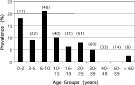
Fig. 1. The prevalence of Giardia duodenalis among humans of different age groups residing at the tea estates of Assam. Numbers in parentheses indicate the sample size of each age group.
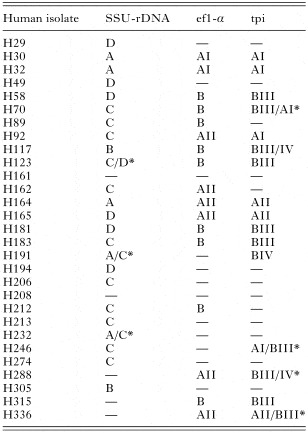
Table 2. Summary of genotype results of Giardia isolates recovered from humans at three different loci

Table 3. Summary of genotype results of Giardia isolates recovered from dogs at three different loci
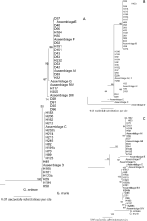
Fig. 2. Phylogeny of the Giardia isolates inferred by distance based analysis using Tamura-Nei distance estimates of aligned nucleotide sequences derived from the PCR products of the (A) SSU-rDNA gene, (B) elongation factor 1-α and (C) triose phosphate isomerase genes.
 You have
Access
- 220
- Cited by