Introduction
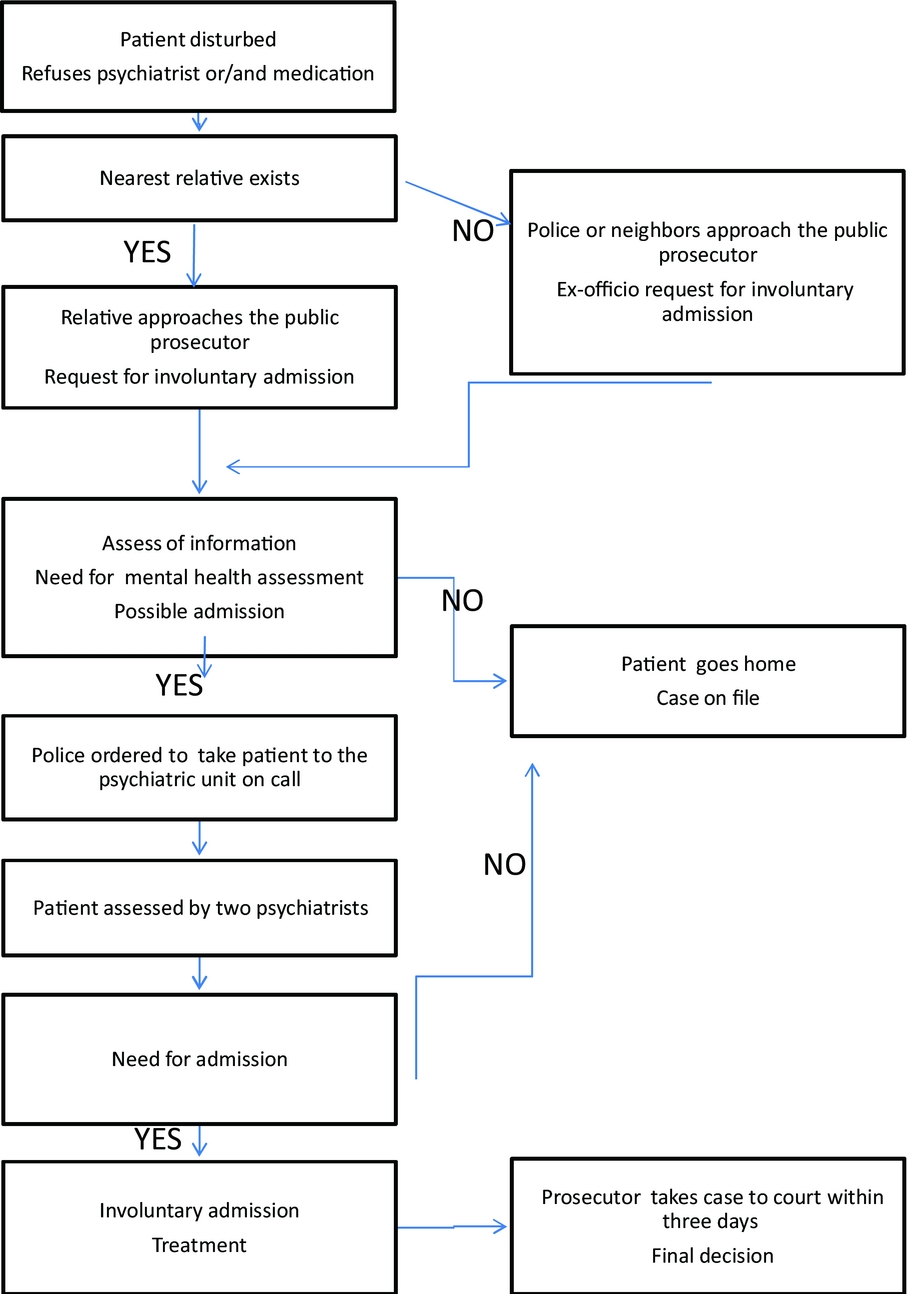
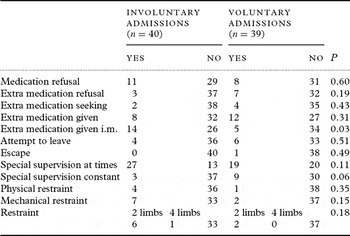
Involuntary admission for inpatient treatment of a psychiatric disorder has become a highly debated public issue. Most jurisdictions have changed their mental health acts and redefined the criteria for involuntary detention and treatment in order to protect the rights of the mentally ill, who are often unable to assert their own rights. In providing this protection, the philosophy of mental health acts has shifted away from “the need for treatment” and moved toward “dangerousness toward self or others” (Dressing and Salize, Reference Dressing and Salize2004). On a national level, in Greece, involuntary admissions are regulated by Law 2071 which became operational in 1992. The procedure is described in Figure 1: the police following an order from the public prosecutor brings the patient for psychiatric assessment by two psychiatrists and forced admission if necessary. This law brought the country in line with the European prerequisites for joining the European Union (Sailas and Fenton, Reference Sailas and Fenton2000; Quirk and Lelliott, Reference Quirk and Lelliott2001; Becker et al., Reference Becker, Magliano, Priebe and Kirch2004).
Emergency procedure for the involuntary admission under Greek mental health act.
As expected, mental health legislation concerning involuntary admission is applicable only in adults (aged 18 and older). However, involuntary admissions in the elderly are very rare and the rates of involuntary admissions decline as the age increases (Smith et al., Reference Smith, Hassett, Harrigan and Fortune2010). This can be seen as contradictory since older age is associated with an increased physical and psychiatric morbidity (Gournellis et al., Reference Gournellis, Lykouras, Fortos, Oulis, Roumbos and Christodoulou2001; Reference Gournellis, Oulis, Rizos, Chourdaki, Gouzaris and Lykouras2011).
Elderly individuals with mental disorders differ from the young ones because they present with different clinical manifestations of their disorder, have increased physical morbidity, and very often are already on some type of medication that can affect their mental state. They have different treatment needs and sometimes, applying treatments for general adult psychiatric patients can lead to exacerbation of their problems (Alexopoulos, Reference Alexopoulos2005).
For these individuals (especially the ones with chronic problems living in nursing homes, etc.), it is assumed that the mental health act does not apply “for practical reasons” or because their behavior is not attributed to a mental disorder per se but to a physical condition where mental health law does not apply (United Nations, 2009). However, there is no other legal way of safeguarding individual human rights other than applying for a court of protection order or an involuntary admission (if there is a need for treatment) in order to “force” the elderly individual to do what he/she refuses to do willingly. The court of protection order is a time-consuming procedure and for it to be applied the individual has to be shown to be suffering from permanent disability that makes him/her unable to look after himself and his affairs and this is not necessarily applicable.
The mental health act at this moment is applicable only for hospital admissions in Greece and most European countries. In Greece, few elderly individuals live in special residential accommodation, nursing homes, and geriatric wards. There are no long-term publicly funded geriatric or psychogeriatric wards and there is a paucity of community services for the elderly. In this respect, it is obvious that the burden of care lies on the family and relatives and the procedure for involuntary admission is the last resort (Mossialos et al., Reference Mossialos, Allin and Davaki2005; Economou, Reference Economou2010). It can be assumed that the elderly brought in for assessment should be very disturbed.
To our knowledge, there is no research highlighting differences between elderly voluntary and involuntary admitted psychiatric patients. This study aims first at assessing whether elderly involuntary admitted patients (IAPs) differ from voluntary admitted patients (VAPs) with regard to sociodemographic, psychopathological, and behavioral characteristics and second to assess whether elderly involuntary patients should be treated in a different (special) way.
Methods
A group of IAPs was compared to a group of VAPs with regard to sociodemographic, psychopathological, and behavioral characteristics. We have set the cut-off point for “elderly” the age of 60 years. This “cut-off” has been suggested in order to include the “young old” (Gorman, Reference Gorman, Randel, German and Ewing1999; Weinberger, personal communication, United Nations, 2001). The group of IAPs consisted of 40 consecutively admitted inpatients assessed in the psychiatric clinics of three public General Hospitals covering the greater Athens area: General Hospital “G. Gennimatas” and General Hospital “Sotiria,” both located in central-northeastern Athens area and General Hospital Nikaias, located in Piraues (southern Athens area). The group of VAPs consisted of 39 consecutively admitted inpatients assessed in Attikon University General Hospital, located in the western Athens area. In order to accumulate elderly involuntary admissions in a number that would make comparisons meaningful we had to look for more than one hospital, while voluntary admission in Attikon would make a comparison group. In order to avoid bias in the ratings of the patients’ behavior, since the nursing and psychiatric staff would not be “blind” to the patient's status, we felt voluntary admissions from Attikon hospital only should be included (In Attikon, there are not any involuntary admissions due to hospital's regulations.). By this way, the sample of the study covers a great part of elderly inpatients in Athens. All admissions, in the four hospitals, were recorded from the emergency departments for one year (1 January 2007 till 31 December 2007). No patient was excluded and there were no dropouts for any reason.
Diagnosis was made by means of the Structured Clinical Interview for DSM-IV Axis I disorders – Patients edition (SCID-IV) (First et al., Reference First, Spitzer, Gibbon and William1997), and behavioral issues were assessed by the means of the Patient–Staff Conflict Checklist – Shift Report (PSCC-SR) (Bowers et al., Reference Bowers, Brennan, Flood, Lipang and Oladapo2006) as follows: (i) psychomotor behavior at admission (i.e. calm, anxiety, psychomotor agitation, aggressiveness), (ii) aggressiveness during hospitalization (i.e. verbal, to objects, self-harm, and aggression to others), (iii) suicide attempt during the week before admission, (iv) concordance with hospital rules (i.e. liquids refusal, food refusal, personal care neglect, arise from bed refusal, examination refusal, and drug or alcohol abuse), (v) compliance to medication (i.e. regular or extra medication refusal and extra medication seeking), (vi) supervision and attempt to leave, and (vii) need for special measures to be taken (i.e. extra medication given, extra intramuscular (i.m.) antipsychotics, restraint). The nurse in charge was responsible for ensuring that the forms were completed and reported to the researchers at the end of his/her shift about any difficulties. Data were collected prospectively. Nursing staff was informed of the purpose of the study.
All patients (“ex officio” admissions included) gave informed consent upon admission to participate. In the cases where this was not possible, their nearest relative signed the informed consent form and agreed to participate. Upon discharge, patients who have not given consent because of their mental state signed the informed consent form. The nearest relative of the patient was present upon signing the informed consent form (in the cases where the patient was not alone). Ethical approval for this study was given by the hospitals’ ethics committees.
Statistical analysis was carried out using SPSS (Version 16.0) for Windows. The following tests were used for the statistical analysis of the data: the Pearson χ 2 test for comparison of percentages, t-test for comparison of means of variables presenting normal distribution, and Kruskal–Wallis non-parametric analysis of variance for variables which were not normally distributed. Bonferroni correction was applied to address the issue of multiple comparisons and a new level of significance was determined (p < 0.001).
Results
Sociodemographic characteristics
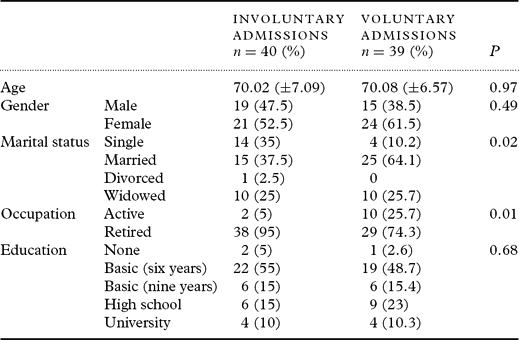
Overall, 79 inpatients were included in this study: 40 IAPs and 39 VAPs. Thirty-four were males and 45 females. The mean age of the total sample was 70.05 (SD: 6.80), range 60–87 years. Eighteen patients were single and 40 married, one divorced and 20 widowed. With regard to the years of education of the total sample, three patients were illiterate, 41 had received primary education (6 years), 12 basic (9 years), 15 had completed secondary education (high school 12 years), and 8 had received university education (15 years and over).
The differences between two groups in sociodemographic status are shown in Table 1. The two groups differed in marital and occupational status with VAPs being more likely to be married and occupationally active. Nevertheless, this difference did not stand after Bonferroni correction.
Sociodemographic characteristics
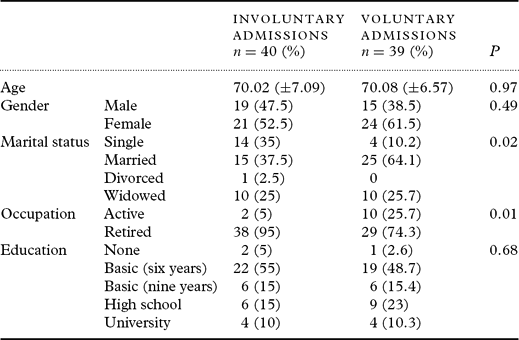
p = sig.
Psychopathological characteristics
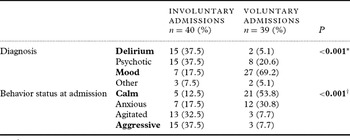
For the total sample, the psychiatric diagnoses were: delirium (due to somatic illness) 17, psychotic disorders 23, mood disorders 34, other psychiatric diagnoses 5. An important finding is that the two groups differed regarding diagnosis. IAPs were more likely to receive the diagnosis of delirium (p < 0.001) while VAPs the diagnosis of mood disorders (p < 0.001) (Table 2). Psychomotor behavior at admission was described in four categories: calm, anxiety, psychomotor agitation, aggressiveness. For the whole sample, there were 24 patients who were mainly calm, 13 anxious, 8 were mainly agitated, and 11 were aggressive for most of the time. VAPs were rather calm or anxious while IAPs were agitated or even aggressive (p < 0.001) (Table 2). These incidents of “problem behaviour” occurred mostly in the first few days of admission. Suicide attempt one week before admission was recorded: ten patients (all VAPs) had recent suicide attempt, while none of the IAP (p < 0.001). These differences survived Bonferroni correction.
Psychopathological characteristics

p = sig.
* = difference between four categories, when it was checked for each diagnostic category separately, remained significant in: “delirium vs. all others” and “mood vs. all others.”
† = difference between four categories, when it was checked for each diagnostic category separately, remained significant in: “calm vs. all others” and “aggressive vs. all others.”
Behavioral aspects during hospitalization and measures associated with coercion
These are broken down in different behaviors causing problems in the ward:
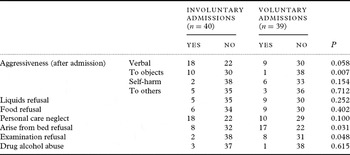
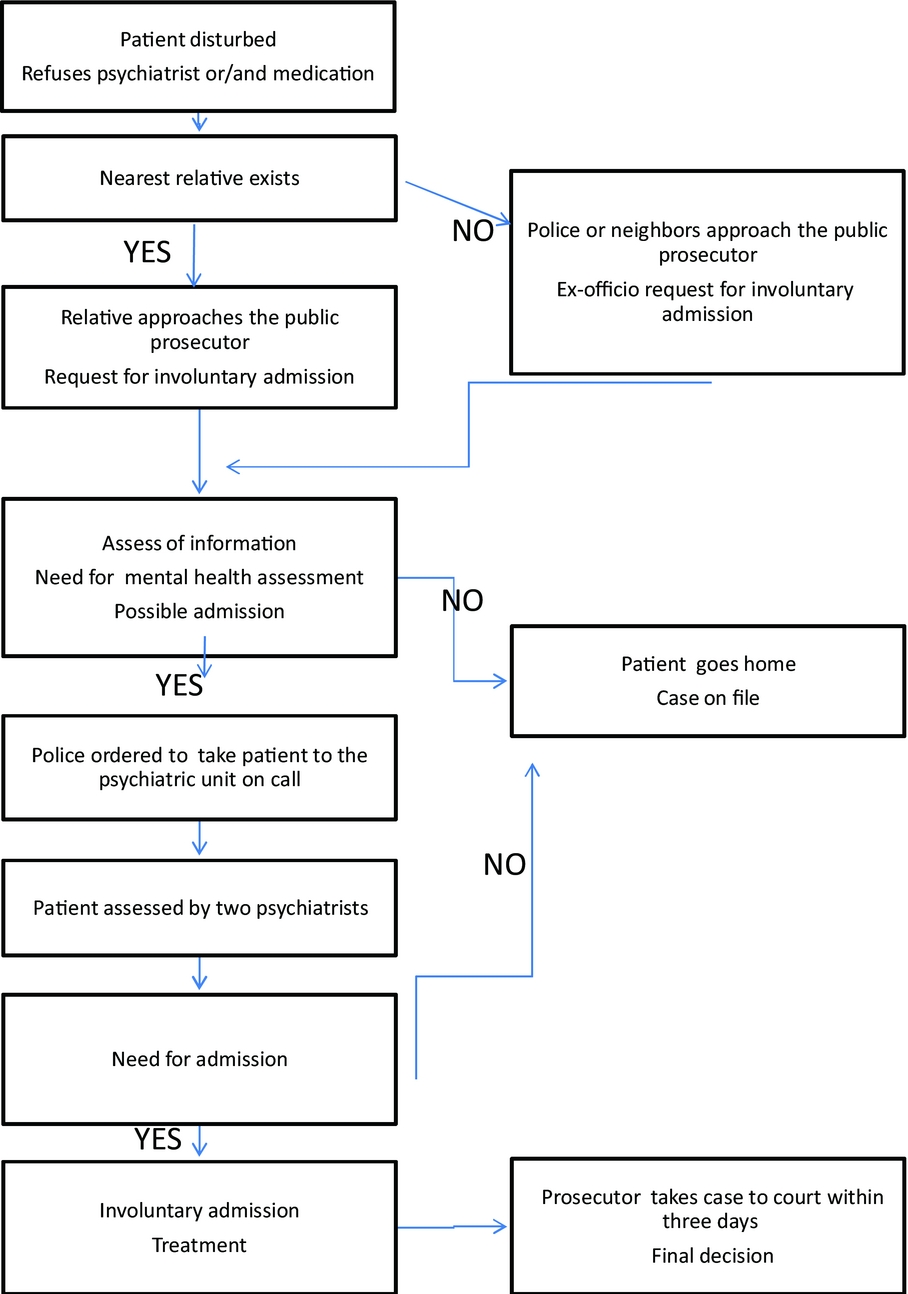
i. Aggression and non-compliance: For the whole hospitalization period aggressiveness was subdivided to four categories: verbal, to objects, self-harm, harm to others. The differences are shown in Table 3. Elderly IAPs and VAPs did not differ significantly on this item, with the exception of “aggressiveness to objects”; IAPs were more aggressive on this item, though this difference was below the level of statistical significance after Bonferroni correction (p = 0.007). Similarly, the two groups did not differ in co-operative behavior toward personnel and compliance to hospital rules, as described in Table 3 (they accepted food and liquids, looked after the personal hygiene, and co-operated with the examinations). Furthermore, medication compliance and special medication measures as antipsychotics given i.m. are described in Table 4. The differences between groups were minimal and did not reach statistical significance when Bonferroni correction was applied.
Table 3.Co-operation with nursing staff

p = sig.
ii. Absence without leave: Attempts to leave hospital against doctors’ advice or actually escaping are described in Table 4. These findings show that VAPs were more disturbed in this measure, although the difference in attempting to leave between VAPs and IAPs did not reach statistical significance.
iii. Restraint: Physical restraint as a special measure was not common (Table 4). Physical restraint in this instance comprised of bed rest with one arm tied to the bed, i.e. one point restraint, or one arm and one leg tied to the bed, i.e. two-point restraint. No three or four point restraints were used. From IAPs, one was restrained for a total period of 72 hours (although not continuously). This patient was restrained four times during his admission. A second patient had to be restrained for 24 hours (again not continuously). All the other patients were restrained for an average 30 minutes (0.5 hours) (SD: 0.962). From the sample of the VAPs, only two patients were offered physical restraint (one point restraint, lying in bed) for medical reasons. This was done with the patients as well as the nearest relative's consent, after signing the appropriate form. None of them needed prolonged restraint. The maximum time was 2 hours, with mean duration 0.1 hours (SD: 0.50). One of them was restrained three times and the other only once. Non-parametric comparison showed more restraints (p = 0.046) and more time spent under physical restraint (p = 0.005) for the involuntary admissions. On the other hand, the number of patients who needed restraint did not differ between groups and the abovementioned difference in time spent restrained was due to one specific patient from the involuntary group.
Table 4.Medication compliance, supervision, and special measures
p = sig.


Discussion
This study compared elderly consecutively IAPs to VAPs. Delirium was common in IAPs, while mood disorders were more common in the VAP group. At admission, IAPs were more anxious or agitated but less suicidal than VAPs. During their hospitalization, IAPs and VAPs presented similar behavior and they were co-operative with medical and nursing stuff at comparable degree. Both groups needed the same level of supervision, attempted to leave the ward without permission with the same frequency, and did not differ with regard to the number of patients who needed physical restrain. To the best of our knowledge, this is the first study comparing elderly patients admitted in an acute psychiatric unit with different legal status.
From the clinical point of view
We consider that the most striking findings of our study were the more prevalent delirium presented by the IAPs and the higher rates of mood disorders and suicidal attempts manifested by VAPs. Our finding of higher prevalence of delirium in the former group is in accordance with the findings of another study (Dibben et al., Reference Dibben, Saeed, Stagias, Khandaker and Rubinsztein2008). Delirium is a medical condition associated with poor prognosis and high mortality rates estimated from 4% to 65% during hospitalization (Gustafson et al., Reference Gustafson1988). In addition, delirium is considered to be an independent prognostic factor for mortality. It has been shown that patients with this condition continue to present high mortality rates many months after hospitalization (Inouye et al., Reference Inouye, Rushing, Foreman, Palmer and Pompei1998). Consequently, the high rates of delirium in IAPs should be stressed in physicians’ training because patients with delirium require a prompt and extensive clinical and workup evaluation as well as immediate management of their underlying medical condition. We also speculate that discrepancies of the Greek primary care medical services may have contributed to this finding. If primary care services were more developed and accessible, one could assume that these patients would have been assessed earlier and their medical problem dealt with. The highly prevalent lack of a spouse in the IAP group may have further contributed to the delayed access of a medical care service.
On the other hand, the VAP group received more commonly the diagnosis of a mood disorder. In the elderly, the latter is highly prevalent and usually associated with better insight and help request. In the same direction, our VAPs presented more suicide attempts committed shortly before their admission. A suicidal attempt is a powerful sign for both the patient and his supportive system as to better understand the need of a prompt admission in a psychiatric ward. Especially in old age, mood disorder – mainly depression – and suicidal behavior are strongly associated. More specifically, it is well documented that about 80% of elderly with suicidal behavior suffer from mood disorder (Conwell, Reference Conwell, Roose and Sackeim2004). Not surprisingly, in our VAP group co-existed both more recent suicide attempts and higher rates of mood disorder.
Furthermore, IAPs were more commonly diagnosed as suffering by psychosis. Psychosis is linked with involuntary hospitalization, obviously due to the poor insight and low level of compliance with medication and treatment manifested by these patients. One can argue that the absence of a spouse may have contributed to a delayed recognition of a relapse of the disorder, leading thus to an involuntary hospitalization. Additionally, we speculate that the higher rates of aggression and agitation after admission of IAP group may have been related to the more prevalent delirium and psychosis in this group. Nevertheless, this finding, though initially significant, became statistically insignificant after applying Bonferroni correction. In our study, IAPs presented more frequently with delirium.
Specialist teams organized for the treatment of elderly individuals with psychiatric disorders have been established (Dibben et al., Reference Dibben, Saeed, Stagias, Khandaker and Rubinsztein2008). Since the introduction of the crisis team in older people's mental health service, there has been an overall 31% reduction in admissions, but no reduction in involuntary admissions was observed. These findings are in keeping with studies conducted on working-age adult crisis teams (Johnson et al., Reference Johnson2005a; Reference Johnson2005b; Joy et al., Reference Joy, Adams and Rice2006). We need to repeat that Greece has not developed specialist elderly services.
Overall, our study has shown that elderly patients whether voluntarily or involuntarily admitted were not overtly behaviorally disturbed on the ward: There were no differences between the two groups in the need for special nursing measures. They did not differ in attempts to escape and in fact the only escape was from the voluntary group. Physical restraint was rather the exception than the rule in both groups. The agitation status at admission probably explains the differences in “aggressiveness to objects” (p = 0.007) and in “extra i.m. medication” (p = 0.034) for the involuntary group, although these differences did not remain statistically significant after Bonferroni correction. No other special treatment or measure was necessary for this group. Nursing time spent for both groups was almost the same. We have not managed to find studies focusing on the behavior of elderly IAPs. There are reports on involuntary admission in general: a certain finding is that involuntary admission per se is a factor that predicts violence in psychiatric wards (Soliman and Reza, Reference Soliman and Reza2001; Abderhalden et al., Reference Abderhalden, Needham, Dassen, Halfens, Fischer and Haug2007; Ketelsen et al., Reference Ketelsen, Zechert, Driessen and Schulz2007; Salerno et al., Reference Salerno, Dimitri and Talamanca2009).
Medicolegal aspects
Involuntary admission for the elderly has always been a controversial issue. The European Court on HL versus Bournewood NHS Trust in England has ruled that HL (an autistic man, with no ability to communicate consent or dissent) was being deprived of liberty and that “involuntary” status as an in-patient was inappropriate (Shah and Dickenson, Reference Shah and Dickenson1998). The Bournewood decision suggests that the current practice regarding the absence of dissent as equivalent to informed consent to treatment is legally unacceptable. This ruling if applied to elderly patients means that individuals suffering from physical and psychiatric conditions cannot be moved against their will from their home to a nursing home or to a ward.
In Greece, elderly patients cannot be moved against their will unless they are detained involuntarily or are under the court of protection. The majority of elderly individuals are supported by their relatives and with them. Only a very small minority lives in nursing homes and in this respect the “Bournewood case” rulings do not apply. This is true for both patients with a chronic mental illness and individuals who develop neurodegenerative conditions like dementia as they grow older (Douzenis et al., Reference Douzenis2010; Michopoulos et al., Reference Michopoulos2010).
The literature on elderly IAPs is scarce. This is not surprising bearing in mind that the majority of elderly patients are treated voluntarily despite concerns that their consent is not always present and/or valid (Smith et al., Reference Smith, Hassett, Harrigan and Fortune2010). However, mental health law has no special provisions or age limit for involuntary admission (Brown et al., Reference Brown, Khalil and Salib1999; Jacoby, Reference Jacoby2002), and the effectiveness of hospital admission has been questioned (Draper and Low, Reference Draper and Low2005). Elderly individuals have special needs and are often suffering from medical and psychiatric disorders that influence their mental state and behavior. Our findings, first: the two groups differed regarding diagnosis with elderly IAPs presenting with delirium, a condition requiring immediate medical assessment and intervention. Second, “problem behaviour” of elderly IAPs occurred mostly in the first few days of admission, and finally, for the whole period of hospitalization the differences in behavioral aspects between IAPs and VAPs were minimal. These findings are lending support for the argument that elderly IAPs and VAPs once admitted in a psychiatric ward exhibit behaviors that do not differ substantially. Research has shown that involuntary hospitalization is associated with violence and uncooperativeness during psychiatric admission. This does not seem to be the case in elderly IAPs. In this respect, elderly IAPs share more common behavioral characteristics with elderly VAPs than the younger IAPs. A legal framework taking this into account might be more appropriate.
Among the strengths of our study is the fact that the comparative assessment of the patients’ behavior was rated in a structured way and that the sample studied comprised of patients hospitalized in four different psychiatric departments covering the greater Athens area. Limitations involve the small sample size, the fact that nurses were not blind of the patients’ status when they rated their behavior, and the fact that mental health legislation varies from country to country making these findings difficult to generalize.
Conclusion
From the clinical point of view, the VAPs presented with more mood disorder and suicidality. However, IAPs presented with delirium. The behavioral disturbance of the IAPs was present in the first few days following admission and both groups needed the same level of nursing. These findings support the argument for a change in the legislation on elderly involuntary admissions by either setting a very limited time frame for these and/or allowing for elderly individuals to be treated against their will for acute organic conditions like delirium that affect their mental state. Sometimes it is difficult (or impossible) to decipher whether the causes of the patients’ behavior are physical or psychiatric. Bearing in mind that the dichotomy between brain and mind is not applicable and in order to protect the civil rights of elderly individuals, a different legal framework should be considered. In this respect, more research from countries with different legislations and mental health services is urgently needed.
Conflict of interest
None.
Description of authors’ roles
A. Douzenis co-designed the study and wrote the paper. I. Michopoulos co-designed the study, assisted with writing the paper, and was responsible for carrying out the statistical analysis. R. Gournellis assisted with writing the paper and was responsible for carrying out the statistical analysis. C. Christodoulou co-designed the study and supervised the data collection. E. N. Rizos collected the data and assisted with writing the paper. D. Sakkas co-designed the study and collected the data. A. Karkanias co-designed the study and collected the data. I. Rontos co-designed the study and collected the data. G. Bouras helped with the statistical analysis and collected the data. L. Lykouras co-designed the study and was the senior supervisor.