Introduction
Despite guidelines recommending abstinence of alcohol both when planning and throughout pregnancy, recent studies suggest that significant proportions of women are drinking alcohol before pregnancy recognition. Studies from both Australia and the United States report that between 50 and 60% of women are consuming alcohol around conception with a large proportion of these women decreasing intake when they become aware they are pregnant.Reference McCormack, Hutchinson and Burns 1 , Reference Pryor, Patrick, Sundermann, Wu and Hartmann 2 Alcohol intake during pregnancy, particularly at high levels, has been shown to have lasting effects on offspring brain development and function. Fetal alcohol spectrum disorders (FASD) is the term used to describe the outcome of prenatal alcohol exposure and is characterized by a raft of developmental, neurological and behavioural issues.Reference Riley, Infante and Warren 3 What is less understood, however, is how alcohol exposure only around the time of conception [the periconceptional period (PC)] can influence the subsequent behavioural outcomes of the offspring.
One facet of behaviour that has been linked to alcohol exposure during gestation is the propensity towards addictive behaviours, including alcohol addiction. In humans, if a mother consumed alcohol during early pregnancy her children were four times more likely to develop an alcohol dependence issue by age 21.Reference Alati, Al Mamun and Williams 4 Prenatal alcohol exposure has also been associated with a greater perceived pleasantness of alcohol odour in young adults.Reference Hannigan, Chiodo, Sokol, Janisse and Delaney-Black 5 Similarly, in rodents, exposure to alcohol towards the end of gestation (gestational days 17–20) resulted in an increase in operant self administration of alcohol in 5-day-old pupsReference Miranda-Morales, Nizhnikov and Spear 6 and increased preference for ingestion of alcohol in adolescence.Reference Fabio, Macchione, Nizhnikov and Pautassi 7
The increased propensity towards addictive behaviours following ethanol exposure is thought to be a result of altered gene expression within the mesolimbic reward pathway that is responsible for mediating the response to rewarding stimuli. This pathway involves the activation of dopamine signalling in limbic regions of the brain, including the ventral tegmental area (VTA) and the nucleus accumbens (NAc). In a study that compared three doses of alcohol exposure at the end of pregnancy in rats, researchers found a concentration dependent decrease in expression of the µ-opioid receptor in the NAc.Reference Bordner and Deak 8 However, in rats exposed to alcohol late in pregnancy, enhanced relative µ-opioid receptor expression in the VTA of offspring has been reported.Reference Fabio, Macchione, Nizhnikov and Pautassi 7 Pituitary levels of dopamine D2 receptor have been shown to be decreased following gestational alcohol exposure indicating the ability of the dopamine system to altered prenatally.Reference Gangisetty, Wynne, Jabbar, Nasello and Sarkar 9 In addition to alcohol, the mesolimbic reward pathway also regulates the preference for other substances, including palatable foods, raising the possibility that prenatal ethanol exposure could also influence the propensity of the offspring towards other addictive behaviours. Furthermore, exposure to a cafeteria diet in utero has previously been shown to result in decreased µ-opioid receptor expression in the VTA of both male and female rat offspringReference Gugusheff, Ong and Muhlhausler 10 which was associated with a heightened preference for fat intake in offspring from weaning to 3 months of age.Reference Ong and Muhlhausler 11 Taken together, these studies demonstrate that both food and alcohol preference can be programmed prenatally and that the mesolimbic reward pathway is implicated in both instances. However, it is not known if similar outcomes are programmed if the exposure occurs only around the time of conception.
The aims of the current study were to assess the impact of periconceptional alcohol exposure on the preference for both alcohol and a high-fat diet in adult offspring and on the expression of key genes involved in dopamine and opioid signalling in the mesolimbic reward pathway. We hypothesized that offspring exposed to alcohol during the periconceptional period would exhibit a greater preference for alcohol and a high-fat diet, and that these behaviours will be associated with alterations to the mesolimbic reward pathway.
Methods
Animal ethics approval
All work was completed at the University of Queensland. The authors assert that all procedures contributing to this work comply with the ethical standards of the Australian Code for the care and use of animals for scientific purposes and has been approved by the University of Queensland Anatomical Bioscience Animal Ethics Committee.
Animal husbandry
Outbred female Sprague–Dawley rats were given a liquid diet containing 12.5% vol/vol ethanol (EtOH; n=12) or a control diet (Control; n=13) from 4 days before mating until 4 days after mating. We have previously reported details of the components of the diet and drinking patterns. Importantly, both control and PC:EtOH exposed dams consume similar amounts of calories, thus removing undernutrition as a potential confounding factor.Reference Gardebjer, Anderson, Pantaleon, Wlodek and Moritz 12 Dams were allowed to give birth naturally and offspring were weaned at postnatal day (PN) 28. All animals were group housed under standard conditions and fed a standard rat chow (meat free rat and mouse chow; Specialty Feeds, WA) from weaning until experimentation commenced at 15 months. Tissue collection occurred at the end of all experimentation at 19 months of age.
Food preference study
Animals were randomly allocated to this protocol. At 15 months of age rats were individually housed: male Control n=13 (from 10 litters), male PC:EtOH n=13 (from 9 litters), female Control n=8 (from 8 litters) and female PC:EtOH n=8 (from 8 litters). Only 1–2 animals per sex per litter were used and where more than one animal per litter was used results for that litter were averaged before statistical analysis. After a 4-day acclimatisation period, the consumption of standard chow was measured every second day for a period of 4 days to establish baseline consumption. Offspring were then given free access to both a high-fat Western diet (HFD; 22% fat, 0.15% cholesterol semi-pure rodent diet-SF00-219; Specialty Feeds) and standard chow to assess food preference over a 4-day period. Food intake was recorded and the position of the diets in the cage was switched every 2 days. Food consumption per gram of body weight was calculated for each of the trial periods. For the purpose of analysis, the first 2 days of the food preference were designated as period 1 and the 3rd and 4th days were designated as period 2.
Alcohol preference study
At 18 months of age, ethanol preference was assessed in 16 male (Control n=8, PC:EtOH n=8) and 17 female (Control, n=9; PC:EtOH, n=8) offspring using a two-bottle choice paradigm ethanol preference testReference Blizard, Vandenbergh, Lionikas and McClearn 13 , Reference Phillips, Brown and Burkhart-Kasch 14 using 1–3 animals of each sex from any one litter. In brief, the rats were acclimatised to individual housing for 4 days before baseline measurements being recorded. Baseline consumption was measured for 4 days before the start of the ethanol preference testing, during which food and water consumption was measured daily at 3 pm. Following the habituation phase, one of the two water bottles in each cage was replaced with a bottle containing 6% vol/vol EtOH. Food and fluid consumption was measured daily for 4 days and the position of the bottles was rotated each day. At the conclusion of the study animals were returned to their home cages.
Tissue collection
At 19 months of age, animals were fasted overnight before being weighed and killed by overdose of pentobarbitone sodium (Lethobarb; 0.1 ml/100 g). Morphometric analysis of animals including abdominal girth and tibia length were undertaken. The brain was excised and the NAc and VTA isolated by dissection using methods described previously.Reference Ong and Muhlhausler 11 The NAc and VTA samples were snap frozen and stored at −80°C for subsequent analysis of gene expression. Fat pads including the subcutaneous, omental and retroperitoneal deposits were dissected and weighed. The weights of omental and retroperitoneal were summed to provide a measure of visceral fat mass.
Gene expression
RNA was extracted from both the NAc and VTA using RNeasy extraction kits (Qiagen) and cDNA was synthesised using IScript reverse transcription kit (Bio-Rad) as per the manufacturer’s instructions. The mRNA expression of key genes in the mesolimbic reward pathway, including: µ-opioid receptor (Oprm1: RN01430371_m1), dopamine active transporter (slc6a3: RN00561892_m1), dopamine receptor D1a (drd1a: RN03062203_s1), dopamine receptor D2 (Drd2: RN00561126_m1) and tyrosine hydroxylase (Th: RN00566938_m1) were determined by qRT-PCR using Taqman assays. The geometric mean of housekeepers Actb and Rn18s were used to normalize expression and results analysed using the ∆∆Ct method. Where gene expression was not normally distributed, data was transformed using the natural log (ln) before statistical analysis. There was no statistical difference between the C t value of the geometric mean of housekeepers between treatment groups.
Statistical analysis
The data for food and alcohol preference tests were analysed separately for each sex. The effect of PC:EtOH exposure on basal food consumption was assessed via Student's unpaired t-test. Two-way repeated measures analysis of variance (ANOVA), with time and treatment as factors was used to assess the effect of PC:EtOH on food and alcohol preference, with Bonferroni post-hoc analysis used to assess differences between groups/time periods as required. The impact of PC:EtOH on gene expression in the VTA and NAc, body measures and total and relative fat mass was assessed using a two-way ANOVA and Bonferroni post-hoc test with sex and treatment as factors. All data are presented as mean±s.e.m. * indicates P<0.05, ** indicates P<0.01 and *** indicates P<0.001. All statistical analyses were performed using GraphPad Prism 7.01.
Results
Body weight at both 15 months and at 18 months was not affected by PC:EtOH exposure. At both 15 and 18 months during food preference and alcohol preference tests, female rats were lighter than male rats regardless of treatment (data not shown). During baseline measurements, there was no effect of PC:EtOH on chow consumption in either males or females, but males consumed more food than females independent of treatment group (P(Sex)<0.0001; data not shown).
Food preference
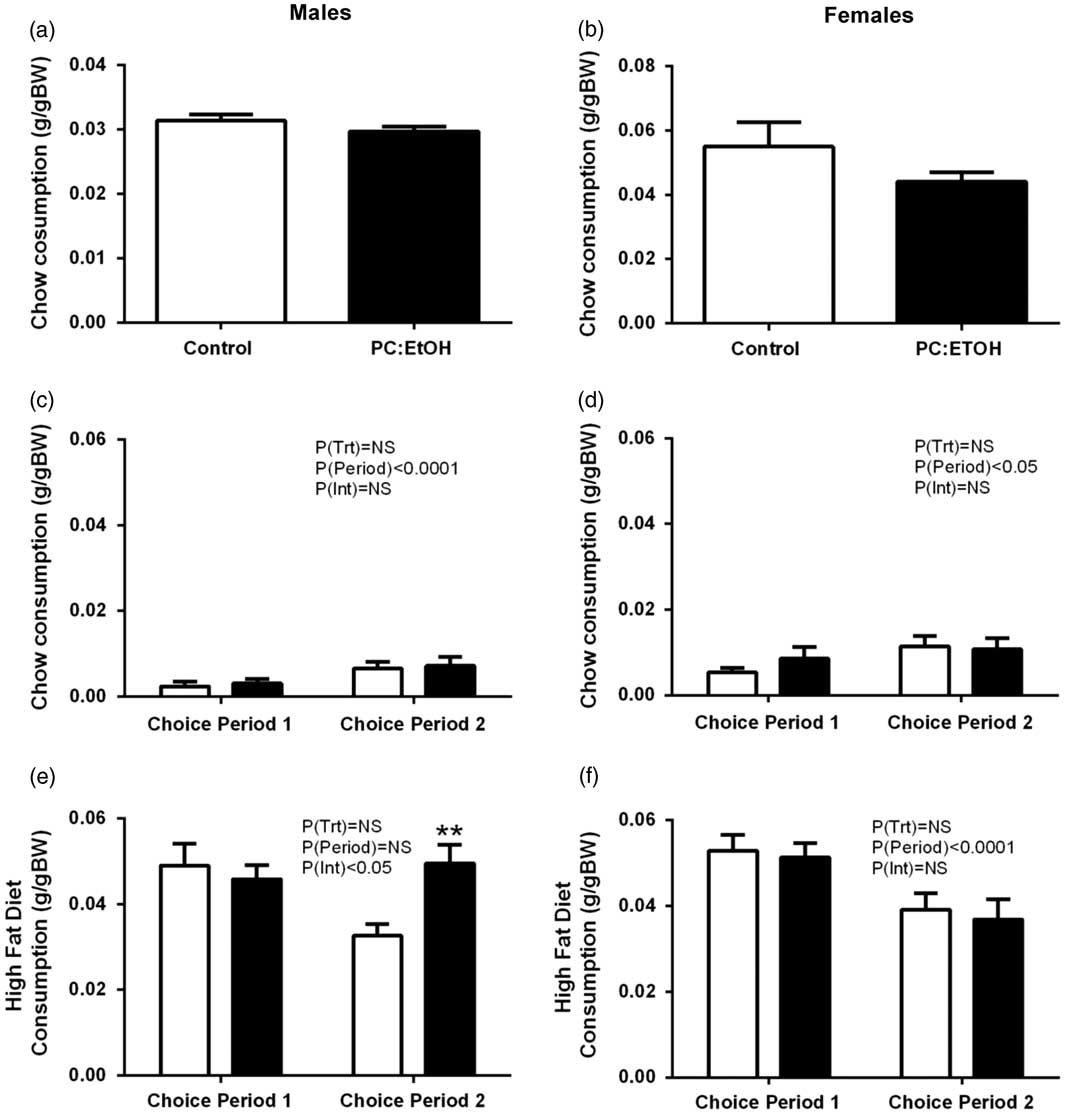
There was no difference in consumption of the standard rat chow during the baseline period between the Control and PC:EtOH groups at 15 months of age in either males or females (Fig. 1a and 1b). During period 1 (the first 2 days rats were offered both chow and HFD), all animals ate more HFD compared with chow, and consumption of both chow and HFD was similar between groups (Fig. 1c–1f). In period 2 of the food preference test, consumption of the HFD was lower compared with period 1 in female offspring independent of treatment (P(Period)<0.0001; Fig. 1f). However, in males there was a choice period×treatment interaction in the consumption of HFD (P(Int)<0.05; Fig. 1e). Control male offspring reduced HFD consumption whilst PC:EtOH male offspring consumed a similar amount of the HFD during both periods. Post-hoc analysis indicated a significant difference in HFD consumption between treatment groups in period 2 (P<0.01), despite eating a similar amount of normal chow.
Basal consumption of standard rat chow average over 4 days for male (a) and female (b) rats at 15 months of age following periconceptional alcohol (PC:EtOH; black) or control (Control; white) diet. Food consumption over 4 days of testing, over two choice periods for male consumption of chow (c) and High Fat diet (e). Female consumption of chow (d) and High Fat diet (f) at 15 months of age. Data are mean±s.e.m. n=8–10 per group with litter mates averaged. Data are analysed by t-test (a, b) and two-way repeated measures ANOVA (c–f). **P<0.01 by post-hoc analysis.

Alcohol preference studies
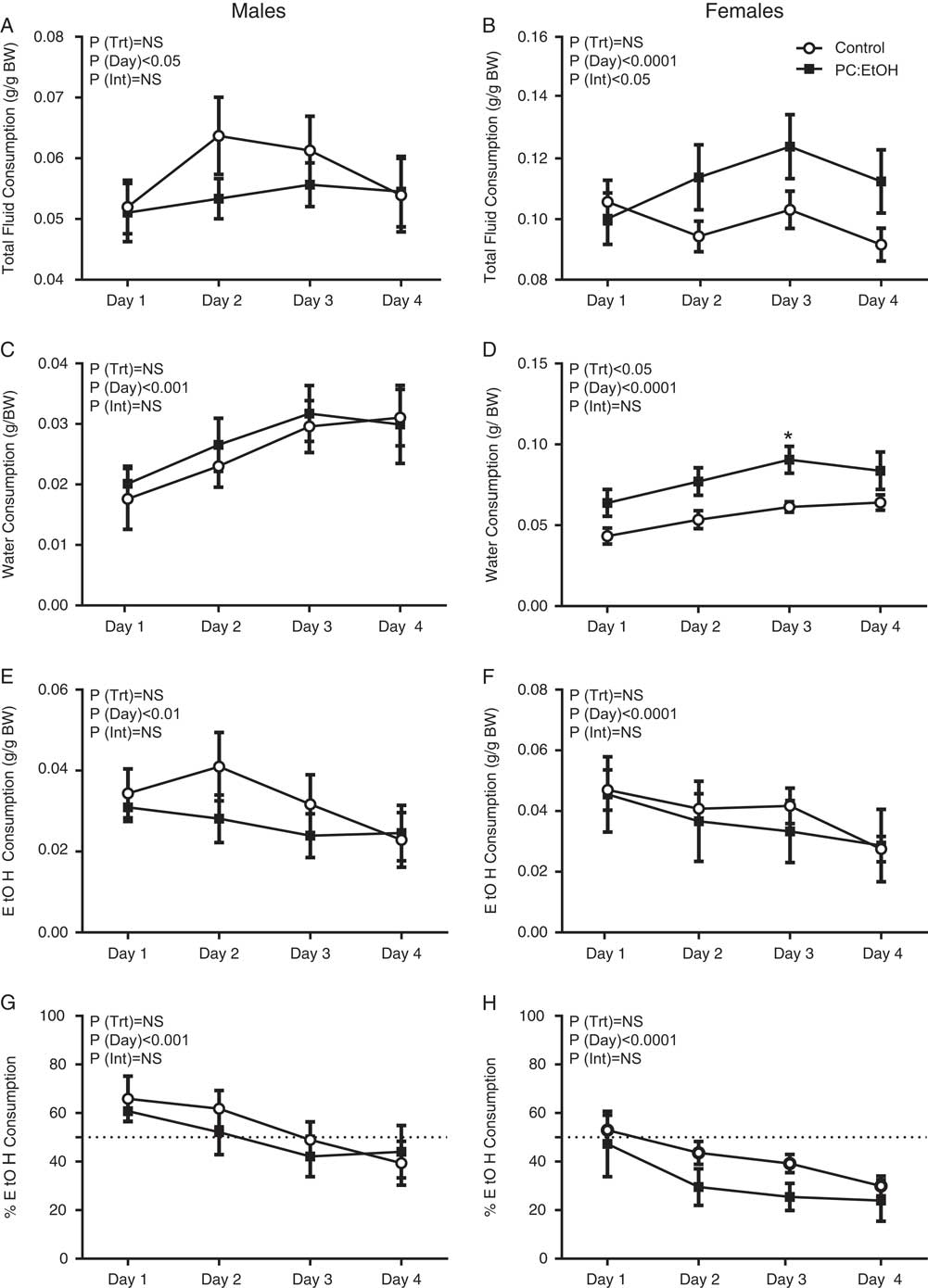
In males, there was no impact of PC:EtOH on either total fluid consumption, water consumption, EtOH consumption or %EtOH consumption at any time during the alcohol preference test period (Fig. 2a, 2c, 2e and 2g). Total fluid consumption did, however, vary across the test period in both treatment groups (P(Day)<0.05). In female offspring, water consumption increased (P(Day)<0.001) while EtOH (P(Day)<0.01) and %EtOH (P(Day)<0.001) consumption decreased across the test period. In female offspring, total fluid consumption also changed across the test period (P(Day)<0.0001), with control offspring initially decreasing intake on day 2, before increasing intake on day 3 and then decreasing on day 4. PC:EtOH offspring exhibited a different pattern; increasing their total fluid intake until day 3 before decreasing (P(Int)<0.05; Fig. 2b). PC:EtOH total fluid intake was higher on days 2–4 (though not significantly). In addition, PC:EtOH female offspring tended to consume more water over the trial period and had a significantly higher water consumption on test day 3 compared with Control females (P<0.05; Fig. 2f). Despite the increase in overall fluid consumption, there was no effect of PC:EtOH on either EtOH consumption or %EtOH consumption in females (Fig. 2h).
Total fluid consumption during a 4 day ethanol preference test in male (a) and female offspring (b) following periconceptional control (open circles) or ethanol (PC:EtOH, black squares) diet. Water consumption (c, d) and ethanol consumption (e, f) over test period for males and females, respectively. Percentage of EtOH consumption over the test period in males (g) and females (h). Data are mean±s.e.m. and analysed by two-way repeated measures ANOVA. n=8–9 per group. *P<0.05 by post-hoc analysis.

Body composition at postmortem
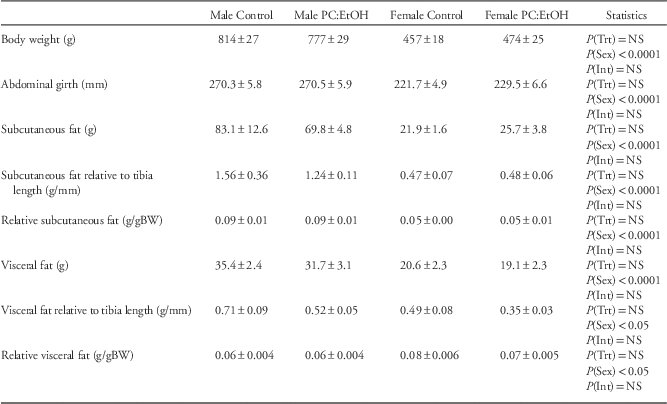
There was no effect of PC:EtOH exposure on body weight, abdominal girth or the total or relative weights of either subcutaneous, visceral fat in either sex (Table 1). There were also no differences in the mass of subcutaneous, visceral fat relative to tibia length between treatment groups. Independent of treatment group, females were lighter (P(Sex)<0.0001), had a smaller abdominal girth (P(Sex)<0.0001), less subcutaneous fat and relative subcutaneous fat (P(Sex)<0.0001) compared with males. Female offspring also had less subcutaneous, visceral fat relative to both body weight and tibia length (P(Sex)<0.001, P(Sex)<0.05 and P(Sex)<0.05, respectively) and less retroperitoneal fat (P(Sex)<0.0001, Table 1) compared with males.
Parameters measured at postmortem at 19 months of age

Fat data are dissected fat pad weights. Data are mean±s.e.m. and analysed by two-way ANOVA. n=9–11 per group.
Gene expression at 19 months of age
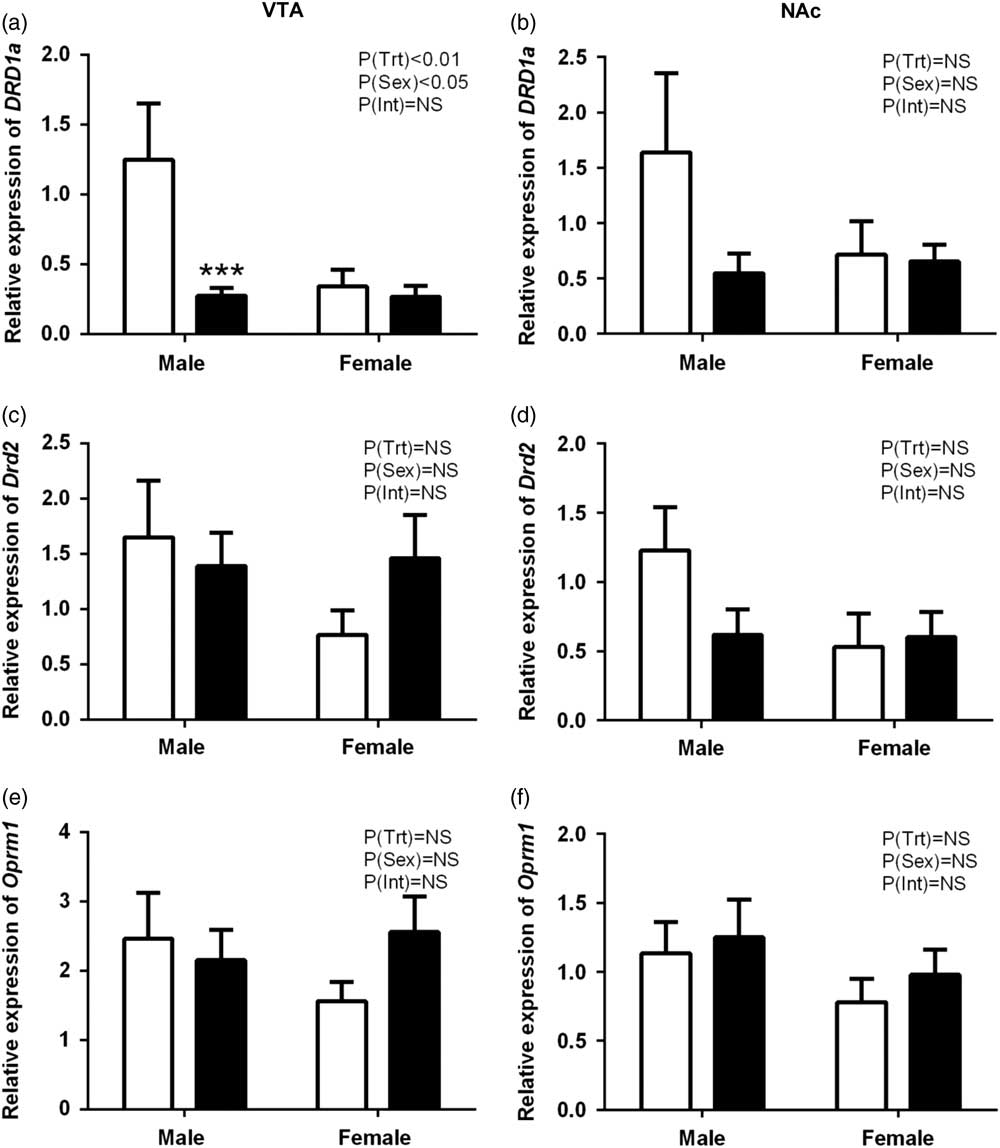
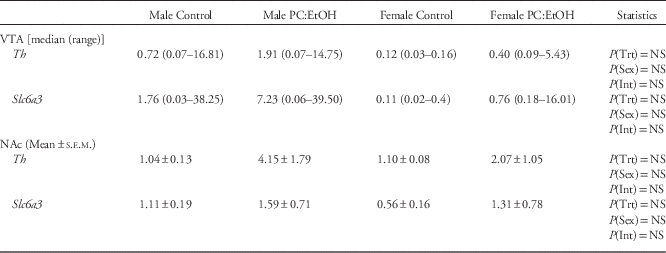
PC:EtOH decreased the expression of Drd1a in the VTA of offspring (P(Trt)<0.05; Fig. 3a), with post-hoc analysis indicating a significant decrease in male PC:EtOH offspring when compared with control males (P<0.001). The expression of Drd1a mRNA in the VTA was lower in females than in males, independent of treatment (P(Sex)<0.05). In the NAc, Drd1a mRNA expression was not affected by periconceptional alcohol exposure, however, a similar trend in expression patterns was observed as in the VTA (Fig. 3b). PC:EtOH did not affect gene expression of Drd2 or Oprm1 in either the VTA (Fig. 3c and 3e) or NAc (Fig. 3d and 3f). The relative expression of Th and Slc6a3 mRNA to housekeepers in both brain regions was variable but similar between groups in both the VTA and NAc (Table 2).
mRNA expression of dopamine receptor D1a (Drd1a) (a, b), dopamine receptor D2 (Drd2) (c, d) and µ-opioid receptor (Oprm1) (e, f) in the ventral tegmental area (VTA) (a, c, e) and nucleus accumbens (NAc) (b, d, f) of male and female offspring at 19 months of age following periconceptional control (Control; white) or ethanol (PC:EtOH; black) diet. Data are mean±s.e.m. n=6–9 per group. Where data were not normally distributed, data underwent natural log transformation before statistical analysis. Data are analysed by two-way ANOVA. ***P<0.001 by post-hoc analysis.

mRNA expression of tyrosine hydroxylase and dopamine active transporter in the ventral tegmental area (VTA) and nucleus accumbens (NAc) of offspring

Tyrosine hydroxylase (Th), dopamine active transport (Slc6a3), data for the VTA was natural log transformed before statistical analysis via two-way ANOVA, n=5–7 per treatment group.
Discussion
The major finding of this study was that exposure to PC:EtOH can influence food preference in a sex specific manner with males exposed to PC:EtOH having a sustained preference for high-fat food that was not present in Control offspring. Surprisingly, at least in the paradigm tested in this study, PC:EtOH did not affect alcohol preference in offspring which is in contrast to previous studies in which ethanol was administered throughout pregnancy. We investigated alterations to key genes in two regions of the limbic reward pathway, identifying significant changes in the VTA, suggesting that the reward pathway may be permanently affected by PC:EtOH. These findings are of significant interest given the high prevalence of alcohol consumption prior to pregnancy recognition.
To date, few studies have investigated the relationship between alcohol consumption during pregnancy, altered food preference in offspring and the mesolimbic reward system. This is despite the fact that children exposed to alcohol in utero exhibit increased snacking and reduced reporting of satiety.Reference Werts, Van Calcar, Wargowski and Smith 15 In the same study, the altered food behaviours were associated with obesity in female children and the authors suggested a link between FASD and impaired dietary self-regulation.Reference Werts, Van Calcar, Wargowski and Smith 15 Within our study, during the first choice period where animals were given access to both chow and a high-fat diet, all animals consumed a large amount of HFD, consistent with the expected response to a novel stimulus. During the second choice period however male PC:EtOH offspring maintained an increased consumption of HFD when compared with control counterparts, suggesting a sustained preference for high-fat food. This suggests these male PC:EtOH offspring may have an inability to adjust intake when offered higher calorie food. Although there is little research linking prenatal alcohol consumption and offspring food preference, prenatal alcohol exposure on days 17–19 of gestation has been shown to increase the reinforcement properties of sucrose in offspring.Reference Cullere, Spear and Molina 16 There are numerous other examples where food preferences are programmed following prenatal perturbations. For example, maternal food restriction (50%) from gestational day 10 until weaning in the rat led to a preference for highly palatable food in offspring in young adulthood.Reference Dalle Molle, Laureano and Alves 17 Similarly, offspring of dams exposed to a ‘junk food’ diet from 2 weeks before mating and throughout pregnancy demonstrate increased fat intake from weaning until at least 3 months of age when given access to both the ‘junk food’ diet and a standard rat chow.Reference Ong and Muhlhausler 11 Importantly, the altered food intake demonstrated in the male offspring during the food preference test is restricted to the HFD and baseline food consumption was not affected by PC:EtOH. These findings are of significant interest given the dose and timing of alcohol exposure used in this study reflect the drinking patterns and high prevalence of alcohol consumption by women before pregnancy recognition.Reference McCormack, Hutchinson and Burns 1 , Reference Yusuf and Leeder 18
Our finding that the altered preference for the HFD in PC:EtOH offspring was confined to males is consistent with previous studies that have also reported sex specific effects of prenatal exposures on offspring food preference. In a rodent study, exposure to a low-protein diet from conception through to day 22 of gestation in rats had different effects on food preferences in male and female offspring at 12 weeks. Thus, female low-protein offspring consumed less standard chow than control animals, but consumed 65% more high fat and less carbohydrate than control offspring during a diet trial in which they had free access to a choice of a high-protein, high-carbohydrate and high-fat chow. In contrast, male low-protein offspring did not exhibit a preference for high-fat food but consumed less of the carbohydrate diet.Reference Bellinger, Lilley and Langley-Evans 19
The mesolimbic reward pathway has been linked with alterations to preference for food following prenatal perturbations. The expression of the µ-opioid receptor was decreased in the VTA of offspring whose mothers were fed a ‘junk food’ diet through gestation.Reference Gugusheff, Bae and Rao 20 The role of the µ-opioid receptor in programming the increased preference for alcohol in offspring following prenatal alcohol exposure is further supported by the finding that the increased appetitive responses to alcohol in rats exposed prenatally to ethanol can be prevented by the simultaneous administration of naloxone, an opioid-receptor antagonist.Reference Arias and Chotro 21 Expression of the DRD2 was also reduced and expression of Th increased in offspring exposed to a 50% food restriction in utero.Reference Dalle Molle, Laureano and Alves 17 Despite the increased preference for the high-fat diet in adult male offspring in our current study, we did not find any alterations in the expression of key genes, µ-opioid receptor, Drd2 or Th in either the VTA or NAc. We did however demonstrate decreased Drd1a expression in male offspring in these regions. Although, there is a large volume of literature linking decreased expression of DRD2 in the brain and alterations to food preference following prenatal exposures, less is known about DRD1 and its influence on food preference throughout life. A recent paper has established that DRD1 in the dorsal hippocampus can mediate socially acquired food preferencesReference Matta, Tiessen and Choleris 22 but that study did not examine the VTA or NAc. Previous studies highlight the importance of the DRD1 receptors in the VTA in reward-based learning by using direct micro-injections of a DRD1a receptor antagonist. Following cocaine pairing, conditioned place preference could be abolished using the antagonist in a dose dependent manner.Reference Galaj, Manuszak, Arastehmanesh and Ranaldi 23 Sex differences in Drd1 expression have been shown in a recent study using the Fore Core Genotypes mouse model. This study identified that the expression of Drd1 was effected by sex chromosome complement, with significant interactions between gonadal sex and circulating testosterone.Reference Seney, Ekong, Ding, Tseng and Sibille 24 In light of this, it is therefore perhaps not surprising that we saw demonstrated decreased expression Drd1a in the VTA of female offspring, across both treatment groups. As we saw no other alterations in key markers of the mesolimbic reward pathways, our results may indicate programmed deficits in learning, rather than food preference directly, may be responsible for the increased fat intake in PC:EtOH male offspring.
The absence of any differences in postmortem body weights and fat mass in PC:EtOH exposed offspring suggests they do not have higher levels of body fat at this age when animals are fed a standard chow diet. This was unexpected in light of our previous finding that periconceptional alcohol exposure is associated with elevated fasted plasma glucose, impaired glucose tolerance and decreased insulin sensitivity at 6 months of age.Reference Gardebjer, Anderson, Pantaleon, Wlodek and Moritz 12 We have also previously reported that PC:EtOH causes fetal growth restrictionReference Gardebjer, Cuffe, Pantaleon, Wlodek and Moritz 25 and postnatal catch up growthReference Gardebjer, Anderson, Pantaleon, Wlodek and Moritz 12 both of which have been associated with increased fat deposition and risk of obesity in many previous studies.Reference Bellinger, Sculley and Langley-Evans 26 – Reference Gugusheff, Sim and Kheng 28 However, a gold standard measurement such as dual-energy X-ray absorptiometry would be needed to confirm these findings. As our rats were studied at quite an advanced age it is important to note that differential fat deposition could have occurred during other periods of development and adulthood that we did not investigate. As such, future studies are needed to explore metabolic parameters in animals as they age.
Contrary to expectations, and despite PC:EtOH male offspring having a preference for the HFD, neither male or female PC:EtOH offspring exhibited an increased preference for alcohol. This is in contrast to the large body of literature demonstrating that alcohol exposure at various times during gestation leads to offspring having a higher propensity toward alcohol. Indeed, alcohol and drug abuse have been identified as major secondary disabilities reported in young adults who were exposed to alcohol in utero.Reference Barr, Bookstein and O’Malley 29 – Reference Streissguth, Bookstein and Barr 31 This suggests that exposure to alcohol during the periconceptional period alone does not have the same effect on offspring reward pathways and perhaps that direct exposure to alcohol via the placenta (and then amniotic fluid) and/or milk (during lactation) is needed for taste sensitization. Despite not observing any alteration in alcohol seeking behaviour, we did find evidence of female offspring in the PC:EtOH group consuming more water throughout the testing period. This increase in water consumption could indicate alterations to the renal system rather than an alteration to reward seeking behaviours as we had hypothesized. Indeed, studies have shown that prenatal alcohol exposure in rats can be associated with increases in water consumption, urine output and altered arginine-vasopressin producing neurons in the offspring.Reference Knee, Sato, Uyehara and Claybaugh 32 As increased diuresis is implicated in cases of diabetes, further investigation of the kidneys and renal systems in this model is warranted.
In summary, periconceptional alcohol exposure induced a preference for HFD in male, but not female offspring but had no effect on alcohol preference in either sex. This alteration in food preference was associated with a decreased expression of Drd1a mRNA in the VTA of offspring but was not associated with alteration to other components of the mesolimbic reward pathway or alterations to fat distribution in offspring. This is particularly interesting as it highlights that alterations to food intake may be the result of changes in systems not directly influenced by the reward pathway and may be linked to altered learning in offspring exposed to periconceptional alcohol. In addition, following PC:EtOH, female offspring consumed more water, which indicates a programmed outcome not related to food preference. These findings support the current guidelines in many countries which advise the avoidance of alcohol when planning a pregnancy.
Acknowledgements
The authors thank Dr Emelie Gardebjer and Ms Jacinta Kalisch-Smith for assistance in treating the animals.
Financial Support
The authors acknowledge support from The National Health and Medical Research Council of Australia (NHMRC) (1046137). E.S.D., D.L. supported by Australian Postgraduate Award. B.S.M. is supported by a NHMRC Career Development Fellowship (APP1083009). K.M. is supported by a NHMRC Senior Research Fellowship (APP1078164). C.L.C. is supported by a MSRA Post-doctoral research fellowship (15-054).
Conflicts of Interest
The authors have no conflicts of interest to declare.
Ethical Standards
All work was completed at the University of Queensland. The authors assert that all procedures contributing to this work comply with the ethical standards of the Australian Code for the care and use of animals for scientific purposes and has been approved by the University of Queensland Anatomical Bioscience Animal Ethics Committee.