INTRODUCTION
The Barber's pole worm (Haemonchus contortus) is a very common gastrointestinal nematode and one of the most pathogenic parasites of ruminants (e.g., sheep and goats). The control of haemonchosis has been and still is based on the use of anthelmintics. The infection is usually treated with broad-spectrum anthelmintics, such as benzimidazoles, macrocyclic lactones and salicylanilides (Getachew et al. Reference Getachew, Dorchies and Jacquiet2007). However, the widespread and indiscriminate use of these treatments has led to the emergence of parasitic isolates with anthelmintic resistance to the main anti-parasitic drug groups. Several patterns of drug resistance have been described in helminths (i.e., Wolstenholme et al. Reference Wolstenholme, Fairweather, Prichard, von Samson-Himmelstjerna and Sangster2004; James et al. Reference James, Hudson and Davey2009). One of these is associated with biotransformation enzymes that are responsible in some cases for the faster deactivation of anthelmintics in resistant parasites (Robinson et al. Reference Robinson, Lawson, Trudgett, Hoey and Fairweather2004; Alvarez et al. Reference Alvarez, Solana, Mottier, Virkel, Fairweather and Lanusse2005; Devine et al. Reference Devine, Brennan, Lanusse, Alvarez, Trudgett, Hoey and Fairweather2010a,Reference Devine, Brennan, Lanusse, Alvarez, Trudgett, Hoey and Fairweatherb).
The biotransformation of benzimidazole anthelminthics has been studied and proven in several helminths, including Haemonchus contortus, with significant inter-species differences being observed (Solana et al. Reference Solana, Rodriguez and Lanusse2001; Mottier et al. Reference Mottier, Virkel, Solana, Alvarez, Salles and Lanusse2004; Robinson et al. Reference Robinson, Lawson, Trudgett, Hoey and Fairweather2004; Alvarez et al. Reference Alvarez, Solana, Mottier, Virkel, Fairweather and Lanusse2005; Cvilink et al. Reference Cvilink, Kubíček, Nobilis, Křížová, Szotáková, Lamka, Várady, Kuběnová, Novotná, Gavelová and Skálová2008a,Reference Cvilink, Skálová, Szotáková, Lamka, Kostiainen and Ketolab, Reference Cvilink, Lamka and Skálová2009a,Reference Cvilink, Szotáková, Křížová, Lamka and Skálováb). On the other hand, H. contortus was neither in vitro nor ex vivo able to metabolize the salicylanilide anthelmintic closantel (Rothwell and Sangster, Reference Rothwell and Sangster1997). The macrocyclic lactones (avermectins and milbemycins) are products (or chemical derivatives thereof) of soil microorganisms belonging to the genus Streptomyces. Alvinerie et al. (Reference Alvinerie, Dupuy, Eeckhoutte, Sutra and Kerboeuf2001) have reported the formation of one metabolite of moxidectin in H. contortus homogenate incubations. The metabolic pathway of ivermectin (IVE) has been studied in mammals, with members of the cytochrome P450 superfamily identified as the principal metabolizing enzymes (Miwa et al. Reference Miwa, Walsh, Van den Heuvel, Arison, Sestokas, Buhs, Rosegay, Lu, Walsh, Taub and Jacoby1982; Chiu et al. Reference Chiu, Sestokas, Taub, Smith, Arison and Lu1984; Zeng et al. Reference Zeng, Andrew, Arison, Luffer-Atlas and Wang1998). No information about IVE biotransformation in helminths has been made available so far.
The goal of the present work is to determine whether or not H. contortus is able to metabolize IVE. The metabolites of phase I and phase II IVE biotransformation formed by H. contortus were searched for in vitro as well as ex vivo. IVE biotransformation was also tested in sheep to compare the IVE metabolites formed in helminths with those formed in their hosts.
MATERIALS AND METHODS
Chemicals
Ivermectin H2B1a was purchased from Sigma–Aldrich (St Louis, MO, USA). Acetonitrile (LC/MS grade) and ammonium acetate were purchased from Sigma-Aldrich (St Louis, MO, USA). De-ionized water was prepared with the Demiwa 5-roi purification system (Watek, Ledeč nad Sázavou, Czech Republic). Liquid sterile-filtered RPMI-1640 medium, HAM F12 medium, Williams' E medium, foetal calf serum and all other chemicals (LC/MS, HPLC or analytical grade) were obtained from Sigma–Aldrich (Prague, Czech Republic).
Collection of parasite material
The susceptible isolate of Haemonchus contortus has been used in this study. The H. contortus ISE strain is an anthelminthic-susceptible inbred type of the SE strain (Roos et al. Reference Roos, Otsen, Hoekstra, Veenstra and Lenstra2004), which had been isolated from the field before benzimidazole anthelmintics were introduced to the market. Four parasite-free lambs (3–4 months old) were orally infected with 5000 L3 larvae of H. contortus. Seven weeks after infection the animals were stunned and immediately exsanguinated in agreement with Czech slaughtering rules for farm animals. Adult nematodes were removed from sheep abomasum using the agar method described by Van Wyk et al. (Reference Van Wyk, Gerber and Groeneveld1980). The isolated parasites were either used immediately for ex vivo experiments or frozen at −80 °C for preparation of subcellular fractions for in vitro studies.
Preparation of microsomes and incubation with ivermectin (IVE)
Microsomes from homogenates of H. contortus adults were prepared as described previously (Cvilink et al. Reference Cvilink, Kubíček, Nobilis, Křížová, Szotáková, Lamka, Várady, Kuběnová, Novotná, Gavelová and Skálová2008a). Microsomes from the ovine liver were prepared by the same procedure. All microsomal fractions were stored at −80 °C. No other subcellular fractions (cytosolic or mitochondrial) were used for incubations with IVE. Protein concentrations were assayed using the bicinchoninic acid method according to the Sigma protocol.
The reaction mixture (total volume of 0·3 ml) contained 100 μl of microsomes (approximately 0·4 mg of proteins), 100 μM IVE pre-dissolved in dimethyl sulfoxide (concentration of DMSO in the reaction mixture was 1%), 1 mM NADPH and 0·1 M sodium phosphate buffer (pH 7.4). Blank samples contained 100 μl of 0·1 M sodium phosphate buffer instead of microsomes or 1% DMSO instead of IVE. All incubations were carried out at 37 °C for 30 min.
At the end of the incubation, 30 μl of ammonium hydroxide solution (25% v/v) and 700 μl of ethyl acetate were added. After shaking (3 min, vortex) and centrifugation (3 min, 5000 g) of the mixture, the supernatants were removed and subsequently evaporated to dryness using vacuum concentrator. Samples were stored at −80 °C until LC/MS analysis.
Ex vivo experiment
Living nematodes were cultivated as described by Kotze and McClure (Reference Kotze and McClure2001) with a modification according to Cvilink et al. (Reference Cvilink, Skálová, Szotáková, Lamka, Kostiainen and Ketola2008b). At the beginning of incubation, 2·5 ml of medium was removed from each flask with nematodes and the same volume of fresh medium with IVE was added. IVE was pre-dissolved in DMSO; the final concentration of DMSO in medium was 0·1%. Nematodes were incubated in medium with 1 μM IVE for 24 h. In chemical blank samples, medium was incubated with 1 μM IVE but without nematodes. In biological blank samples, nematodes were incubated with DMSO instead of IVE. After the incubation, medium was placed into the plastic tubes. Nematodes were repeatedly washed with phosphate buffer and transferred into the plastic tubes. Samples were frozen and stored under −80 °C. Prior to the analysis, parasite bodies were homogenized in redistilled water at the ratio of 1:3 (w/v) using Sonopuls (Bandelin, Germany). Medium and the parasite homogenate were then extracted using solid-phase extraction. Dried extracts were stored (−80 °C) until UHPLC/MS analyses.
Isolation of hepatocytes and incubation of hepatocytes primary culture with IVE
Ovine hepatocytes were obtained from the ovine liver by a two-step collagenase method (Berry et al. Reference Berry, Edwards, Barritt, Burdow and van Knippenberg1991; Baliharová et al. Reference Baliharová, Velík, Šavlík, Szotáková, Lamka, Tahotná and Skálová2004). Three million viable (80%) cells in 3 ml of culture medium ISOM (1:1 mixture of Ham F12 and Williams' E) were placed into 60 mm plastic dishes pre-coated with collagen. The fetal calf serum was added in culture medium (5%). Cultures were maintained without substrates for 4 h at 37 °C in a humid atmosphere of air and 5% CO2. After attachment of hepatocytes, the ISOM medium was replaced with fresh serum-free medium with 10 μM IVE pre-dissolved in DMSO. The concentration of DMSO in the medium was 0·1% (v/v). Hepatocytes were incubated with IVE for 24 h at 37 °C in the humid atmosphere of air and 5% CO2. At the end of the experiment, hepatocytes were scraped off into the incubation medium and homogenized using Sonopuls (Bandelin, Germany). Samples were then extracted using solid-phase extraction. Dried extracts were stored (−80 °C) until UHPLC/MS analyses.
Solid-phase extraction and sample preparation
Samples from ex vivo experiments and hepatocyte incubations were extracted using solid-phase extraction. Two ml of the medium, parasite or hepatocyte homogenate were centrifuged at 3000 g for 5 min. The supernatant was loaded onto a Waters Oasis HLB extraction cartridge (1cc, 30 mg, 30 μm particles; Waters) previously conditioned by washing with 1 ml of acetone, 1 ml of methanol and 1 ml of redistilled water. In the next step, the cartridge was washed with 1 ml of 5% aqueous methanol (v/v). Compounds of interest were eluted with 1 ml of methanol followed by 1 ml of acetone. Eluates were evaporated to dryness using the vacuum concentrator Eppendorf 5310 (Hamburg, Germany) and stored at −80 °C until UHPLC/MS analyses.
Ultrahigh-performance liquid chromatography/tandem mass spectrometry (UHPLC/MS/MS)
Selected samples were quantitatively dissolved in 200 μl of a mixture of acetonitrile/water (1:1, v/v). UHPLC/MS/MS chromatograms of samples were measured in both positive and negative polarity modes using electrospray ionization (ESI) and hybrid quadrupole-time-of-flight (Q-TOF) Mass Analyzer microOTOF-Q (Bruker Daltonics, Bremen, Germany). UHPLC was performed on Agilent 1290 Infinity Liquid Chromatograph (Agilent Technologies, Waldbronn, Germany) using a Kinetex C18 column (150 mm × 2·1 mm, 1·7 μm, Phenomenex, Torrance, CA, USA), a temperature of 25 °C, a flow rate of 0·3 ml/min and an injection volume of 1 μl. The mobile phase consisted of acetonitrile (A) and 5 mM ammonium acetate buffer with pH 6.5 (B). The linear gradient was as follows: 0 min – 15% A, 15 min – 95% A, 17 min – 95% A; and finally washing and reconditioning of the column for 20 min. The Q-TOF mass spectrometer was used with the following setting of tuning parameters: capillary voltage 4·5 kV, drying temperature 200 °C, the flow rate and pressure of nitrogen were 7 l/min and 1 bar, respectively. The external calibration was performed with sodium formate clusters before individual measurements. ESI mass spectra were recorded in the range of m/z 50–1200 both in positive- and negative-ion modes. The isolation width Δm/z 4 and the collision energy 20 eV using argon as the collision gas were used for MS/MS experiments. Advanced software tools, Metabolite Predict and Metabolite Detect (Bruker Daltonics, Bremen, Germany), were used for the data evaluation.
RESULTS AND DISCUSSION
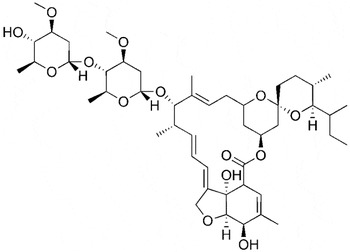
In the present project the biotransformation of IVE (Fig. 1) was studied in the Barber's pole worm (Haemonchus contortus). All in vitro and ex vivo methods applied for this purpose have been used successfully in our previous studies, leading to the identification of several new metabolites of benzimidazole anthelmintics in helminths (Cvilink et al. Reference Cvilink, Kubíček, Nobilis, Křížová, Szotáková, Lamka, Várady, Kuběnová, Novotná, Gavelová and Skálová2008a,Reference Cvilink, Skálová, Szotáková, Lamka, Kostiainen and Ketolab).
Chemical formula of ivermectin H2B1a (IVE). C48H74O14, exact mass 874·5079.

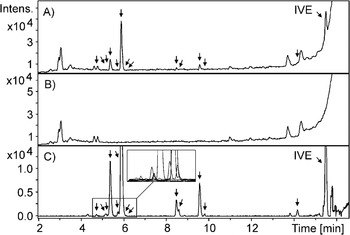
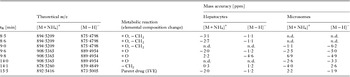
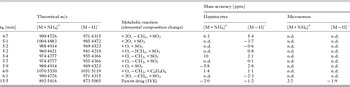
The analytical characterization of IVE biotransformation samples was performed using UHPLC/MS/MS. First, full-scan and tandem mass spectra of IVE standard were measured and interpreted both in positive-ion and negative-ion modes of ESI (see Materials and Methods). ESI was chosen as the method of choice for the subsequent analysis of metabolic samples because of the expected formation of phase II metabolites. Ammonium adducts [M + NH4]+ and adducts with alkali metal ions, such as [M + Na]+ and [M + K]+, were observed in full scan positive-ion ESI mass spectra, while de-protonated molecules [M − H]− together with acetate adducts [M + CH3COO]− were the most important ions in the negative-ion mode. Moreover, fragment ions observed mainly in positive-ion full-scan mass spectra helped to confirm the presence of IVE-related compounds. The accurate calibration of the mass scale enabled the mass accuracy, usually better than 5 ppm, to be achieved, resulting in the elemental composition determination of observed ions (Tables 1 and 2). In a few cases, mass accuracies were slightly worse than 5 ppm due to the very low abundances of these ions. The additional information was obtained using tandem mass spectra measurements in which typical neutral losses supported the identification of the metabolic reactions (Holčapek et al. Reference Holčapek, Jirásko and Lísa2010). Reconstructed ion current chromatograms and constant neutral loss chromatograms were used for a better visualization of the UHPLC/MS/MS chromatograms. The software tools Metabolite Predict and Metabolite Detect, already described in our previous paper (Jirásko et al. Reference Jirásko, Holčapek, Vrublová, Ulrichová and Šimánek2010), were applied for the prediction of metabolites and their subsequent detection. This software was set to predict 3 generations of possible IVE metabolite structures in accordance with all metabolic rules (Holčapek et al. Reference Holčapek, Kolářová and Nobilis2008). The created list of particular exact m/z values was subsequently used in the process of detection of the metabolites, including the subtraction of chromatograms of placebo experiments from the chromatograms of the biotransformation samples (Fig. 2). As a result, difference chromatograms providing information about the presence of [M + NH4]+ or [M − H]− ions of individual drug metabolites were generated.
Chromatogram subtraction of the placebo experiment from the ivermectin (IVE) biotransformation sample using Metabolite Detect software in the negative polarity mode of ESI. (A) Total ion current chromatogram of the sheep hepatocytes extract. (B) Total ion current chromatogram of the placebo sample. (C) Difference chromatogram with insert zoom of extracted ion chromatograms of individual metabolites (presented in Table 2). Arrows show detected metabolites (signal/noise ⩾5).

Phase I metabolites of ivermectin (IVE) in sheep samples detected by UHPLC/MS/MS

tR, Retention time.
Metabolic reaction, description of elemental composition change – demethylation –CH2, hydroxylation +O, sulfation +SO3, glucuronidation +C6H8O6 .
Mass accuracy, particular mass accuracies of experimental m/z of [M + NH4]+ and [M − H]−.
n.d., Not detected.
Phase II metabolites of ivermectin (IVE) in sheep samples detected by UHPLC/MS/MS

tR, Retention time.
Metabolic reaction, description of elemental composition change – demethylation –CH2, hydroxylation +O, sulfation +SO3, glucuronidation +C6H8O6.
Mass accuracy, particular mass accuracies of experimental m/z of [M + NH4]+ and [M − H]−.
n.d., Not detected.
To begin with, phase I metabolites of IVE in H. contortus were searched for in an IVE incubation of subcellular fractions of the worms. The microsome-like fraction from H. contortus was incubated with 100 μM IVE. In all samples, only ammonium adducts of the IVE molecule at m/z 892·5416 in the positive-ion mode and the deprotonated IVE molecule at m/z 873·5005 in the negative-ion mode at the retention time of 15·5 min were observed, and no phase I metabolites produced by the Barber's pole worm were detected.
Consequently, ex vivo incubations of 1 μM IVE were done with living helminths previously isolated from their hosts. Lower concentrations of IVE in the ex vivo study than in the in vitro experiments were used to avoid death of the worms and also to approximate incubation conditions to real plasmatic concentration of IVE in animals. In a medium at an IVE concentration up to 1 μM, the movement of helminths was visible during the entire incubation period and thus the helminths were alive during the whole experiment. After 24-hour incubations, medium and worm homogenates were analysed by the UHPLC/MS/MS technique and both phase I and II metabolites of IVE were searched for. In all samples, only IVE was detected without any trace of IVE metabolites.
On the other hand, when the biotransformation of benzimidazole anthelmintics was studied in H. contortus, several metabolites were found and identified in vitro as well as ex vivo (Cvilink et al. Reference Cvilink, Kubíček, Nobilis, Křížová, Szotáková, Lamka, Várady, Kuběnová, Novotná, Gavelová and Skálová2008a,Reference Cvilink, Skálová, Szotáková, Lamka, Kostiainen and Ketolab). Haemonchus contortus can metabolize albendazole via sulphoxidation and glucose conjugation, and flubendazole via the reduction of a carbonyl group and subsequent glucose conjugation (Cvilink et al. Reference Cvilink, Skálová, Szotáková, Lamka, Kostiainen and Ketola2008b). The negative results in the detection of IVE metabolites in H. contortus necessitate additional confirmation that our analytical method was well optimized and capable of the highly sensitive detection of all possible IVE metabolites in the studied samples. For this reason, we decided to study the biotransformation of IVE in sheep in vitro at both the subcellular and cellular levels. Ovine liver microsomal fractions were incubated with 100 μM IVE, and primary cultures of ovine isolated hepatocytes were incubated with 10 μM IVE. The samples obtained were analysed using UHPLC/MS/MS. In the ovine samples, numerous IVE metabolites were detected. The phase I metabolites correspond to the IVE hydroxylation (+O), demethylation (-CH2) and the combination of both processes. The conjugation with glucuronic and sulphuric acids represented the phase II of the IVE biotransformation. In total, 7 different phase I (Table 1) and 9 phase II (Table 2) metabolites were identified using UHPLC/MS/MS analyses. These results clearly demonstrate the high sensitivity of our methods, resulting in the detection of new IVE metabolites in sheep not reported so far.
Previous metabolic studies of IVE performed in rats, cattle, sheep, goats, and pigs have revealed only Phase I metabolites: 24-OH-H2B1a and 24-OH-H2B1b in cattle, sheep, and rats (Chiu et al. Reference Chiu, Sestokas, Taub, Buhs, Green, Sestokas, Vandenheuvel, Arison and Jacob1986), 3″-O-desmethyl-H2B1a and 3″-O-desmethyl-H2B1b in pigs and goats (González Canga et al. Reference González Canga, Sahagún Prieto, Diez Liébana, Martínez, Vega and Vieitez2009). No phase II metabolites have been reported so far. In our experiments, 9 different phase II metabolites of IVE were found in incubations with primary cultures of ovine hepatocytes; 8 conjugates with sulphuric acid and 1 with glucuronic acid.
The present study was designed to advance our knowledge about the metabolism of IVE in helminths and their hosts. Despite the highly sensitive UHPLC/MS/MS analyses, no IVE metabolite formed in the Barber's pole worm (H. contortus) was detected. This finding indicates that this nematode is not able to deactivate IVE through biotransformation; therefore, biotransformation does not contribute to the development of IVE-resistance in the Barber's pole worm. In sheep, the host organism of H. contortus, the UHPLC/MS/MS technique allowed us to find and identify 16 different IVE metabolites, most of which had not yet been described.
ACKNOWLEDGEMENTS
The technical assistance of Alena Pakostová is gratefully acknowledged. We thank Daniel Paul Sampey, MFA, for correction of the English language.
FINANCIAL SUPPORT
Financial support for this project was provided by the Czech Science Foundation (GACR, grant no. P502/10/0217), and by the Charles University in Prague (Project SVV 265 004).