Introduction
Habitat structure has been commonly addressed as an important environmental factor increasing species abundance and richness (MacArthur & MacArthur, Reference MacArthur and MacArthur1961; Grabowski, Reference Grabowski2004; Tews et al., Reference Tews, Brose, Grimm, Tielbörger, Wichmann, Schwager and Jeltsch2004; Grabowski et al., Reference Grabowski, Hughes and Kimbro2008). Such effect is related to an increase in niche availability, easy access to resources and shelter from predators (Bazzaz, Reference Bazzaz1975; Menge & Sutherland, Reference Menge and Sutherland1976; Vytopil & Willis, Reference Vytopil and Willis2001; Piko & Szedlmayer, Reference Piko and Szedlmayer2007).
According to Tews et al. (Reference Tews, Brose, Grimm, Tielbörger, Wichmann, Schwager and Jeltsch2004), many different terms are used to represent habitat structure, ‘habitat heterogeneity’ being the most common. Many others are related to vegetation, as the first studies were conducted in forests and agricultural systems (e.g. ‘foliage height diversity’, ‘foliage diversity’, ‘architectural complexity’, ‘vegetation complexity’, ‘habitat diversity’, ‘habitat complexity’, ‘structural diversity’, ‘structural complexity’, ‘structural heterogeneity’, ‘spatial heterogeneity’, ‘spatial complexity’ and ‘vegetation heterogeneity’). Kovalenko et al. (Reference Kovalenko, Thomaz and Warfe2012) used the term habitat complexity and also highlighted the range of terms used as synonyms (e.g. ‘substrate heterogeneity’, ‘topographical complexity’, ‘habitat architecture’) indicating a great number of terms for the same ecological process.
Even with the remarkable influence of habitat structure on communities in different ecosystems, the lack of a consensus about a robust definition is a factor that may obscure understanding of the literature. Besides the disagreement in definitions and concepts, other factors may hinder progress in this field of ecology; among these factors are the measures to quantify habitat structure, the taxonomic groups under evaluation, and the spatial scales evaluated (Downes et al., Reference Downes, Lake, Schreiber and Glaister1998; Beck, Reference Beck2000; Tews et al., Reference Tews, Brose, Grimm, Tielbörger, Wichmann, Schwager and Jeltsch2004; Kovalenko et al., Reference Kovalenko, Thomaz and Warfe2012; Nogueira et al., Reference Nogueira, Neves and Johnsson2015).
In order to reach a consensus on the definition of habitat structure, some authors propose the establishment of a unified concept based on two components: habitat complexity and habitat heterogeneity. Habitat complexity is represented by the total number of each physical structure in the environment and habitat heterogeneity is represented by the addition of different types of physical elements to the system (August, Reference August1983; Downes et al., Reference Downes, Lake, Schreiber and Glaister1998; Beck, Reference Beck2000; Nogueira et al., Reference Nogueira, Neves and Johnsson2015).
In coral reefs, invertebrates may act as a habitat for a plethora of small invertebrates and fishes. Small organisms that use corals as habitat may be classified according to Stella et al. (Reference Stella, Jones and Pratchett2010) as obligate or facultative (or opportunistic) coral dwellers. They may live associated with corals for food, shelter and/or recruitment. In this way, differences in coral host morphology may be partially responsible for variation in epifaunal abundance, species richness and composition.
Most studies evaluating factors that support or endanger biodiversity are based on the relation between reef fishes and corals, underestimating the importance of small invertebrates that compose the greatest number of species associated with corals (Stella et al., Reference Stella, Jones and Pratchett2010, Reference Stella, Pratchett, Hutchings and Jones2011). Even if some studies have evaluated the influence of invertebrates, habitat structure has been characterized qualitatively (Wee et al., Reference Wee, Sam, Sim, Ng, Taira, Afiq-Rosli, Kikuzawa, Toh and Chou2019) or simplified to only one structural variable (Vytopil & Willis, Reference Vytopil and Willis2001). Efforts to quantify multiple elements of habitat structure influencing the associated fauna on corals are scarce, except for Stella et al. (Reference Stella, Jones and Pratchett2010) and Nogueira et al. (Reference Nogueira, Neves and Johnsson2015).
According to Stella et al. (Reference Stella, Pratchett, Hutchings and Jones2011), even with very few efforts to understand the relationship of invertebrates with corals, molluscs are recognized as the second most abundant coral-associated invertebrates, just after arthropods. Their establishment on coral hosts is influenced by coral morphology. This statement is based on evidence that the recruitment of epifaunal communities on corals is more influenced by habitat structure provided by coral morphology than by the presence of coral tissue (Wee et al., Reference Wee, Sam, Sim, Ng, Taira, Afiq-Rosli, Kikuzawa, Toh and Chou2019). The framework provided by corals is a suitable habitat for a wide variety of benthic organisms that live in hard substrates, including molluscs (mainly bivalves and gastropods), which can be easily recognized living on corals and profiting in several different ways (Noseworthy et al., Reference Noseworthy, Hong, Keshavmurthy, Lee, Jeung, Ju, Kim, Jung and Choi2016).
Tews et al. (Reference Tews, Brose, Grimm, Tielbörger, Wichmann, Schwager and Jeltsch2004) indicated that some studies have shown a negative effect when habitat complexity and/or heterogeneity in species diversity is increased. These results may be related to the response of different taxonomic groups and the structural components and spatial scales addressed to compose the habitat structure, which may not be the most appropriate influence on the taxa. Based on this, Nogueira et al. (Reference Nogueira, Neves and Johnsson2015) identified the positive effects of habitat structure, indicating the most important structural variables influencing different crustacean orders, and proposed evaluations of different taxonomic groups in order to clarify such patterns. A multi-taxa evaluation is important because most studies in the literature concerning habitat structure and associated fauna deal only with crustaceans (Abele & Patton, Reference Abele and Patton1976; Edwards & Emberton, Reference Edwards and Emberton1980; Stella et al., Reference Stella, Jones and Pratchett2010; Nogueira et al., Reference Nogueira, Neves and Johnsson2015; Wee et al., Reference Wee, Sam, Sim, Ng, Taira, Afiq-Rosli, Kikuzawa, Toh and Chou2019).
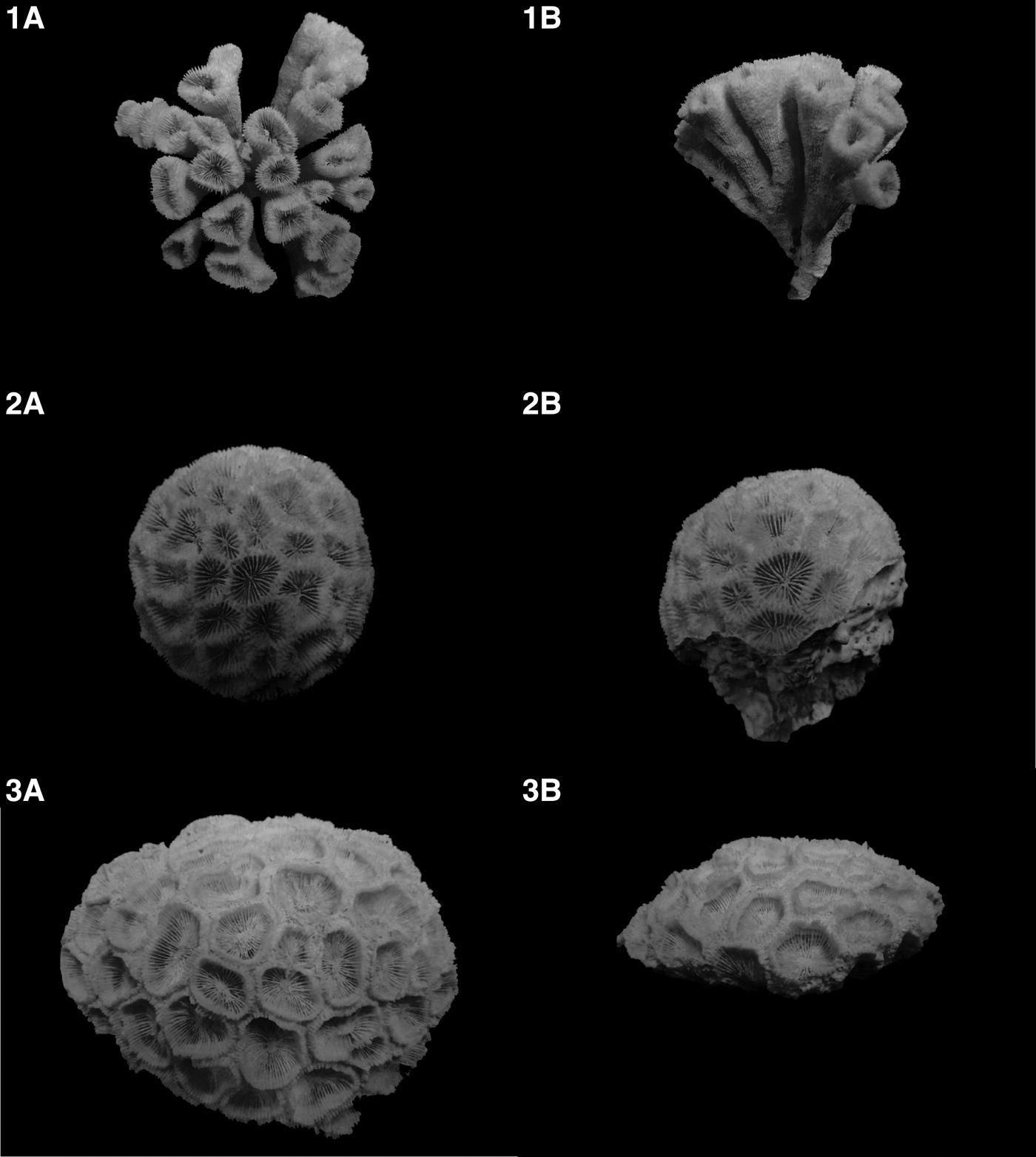
Therefore, the present study aims to evaluate whether there are significant differences in the richness and abundance (density) of mollusc assemblages living associated with Mussismila Ortmann 1980 coral colonies and verify the coral morphological characters (structural components) influencing them. Mussismilia is a genus that encompasses three archaic species that are the most common forms in many Brazilian reefs (Leão et al., Reference Leão, Kikuchi, Testa and Cortés2003). These species show different morphological patterns (Figure 1).
Morphological pattern of Mussismilia species: 1 – M. harttii; 2 – M. braziliensis; 3 – M. hispida; A – Upper view; and B – Lateral view.

Materials and methods
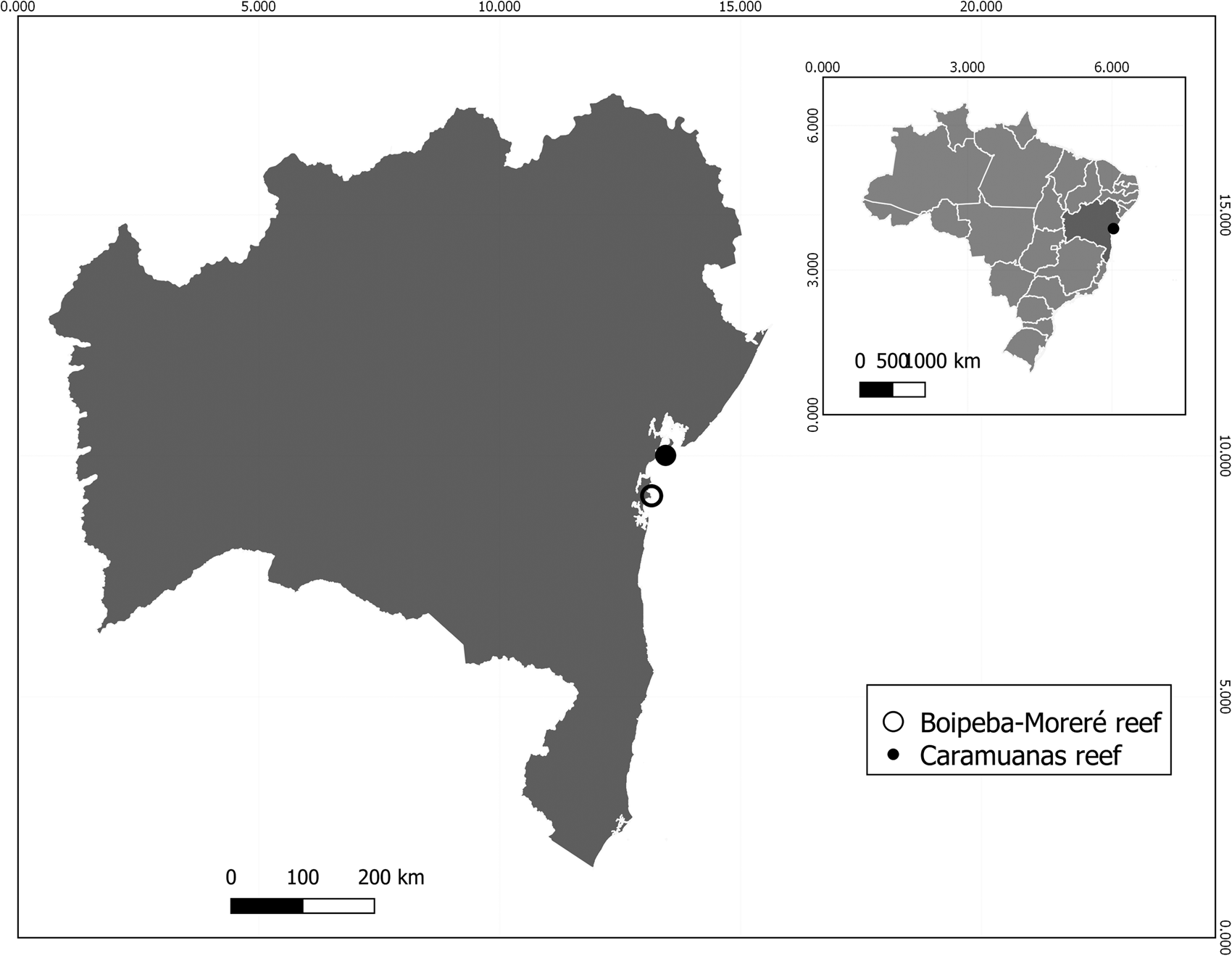
Samples were collected in February 2011 in North Caramuanas reef (13°07′S 38°43′W) and Boipeba–Moreré reef (13°28′S 39°20′W), in Bahia state, Brazil (Figure 2). The three species of Mussismilia corals co-occur at the same locality in both reefs: M. harttii (Verrill, 1868), M. braziliensis (Verrill, 1868) and M. hispida (Verrill, 1902).
Sampling site at Bahia shore.

Caramuanas is located within Todos-os-Santos Bay (BTS), encompassing an area of ~1200 km2 belonging to the ‘Todos-os-Santos Bay Environmental Protected Area’, which was established in 1999 (Cirano & Lessa, Reference Cirano and Lessa2007). Boipeba is located in the ‘Tinhare – Boipeba Environmental Protected Area’ on the south shore of Bahia. Both reefs are exposed during low tide. In both reefs, Mussismilia species are among the most abundant coral species (Cruz et al., Reference Cruz, Kikuchi and Leão2009; Loiola et al., Reference Loiola, Cruz, Leão and Kikuchia2014). Sampling was conducted in two different reefs to identify the patterns among Mussismilia species in different areas.
Mollusc assemblage was examined in colonies of three species of Mussismilia. These species were chosen because they show distinct morphological patterns, despite their close phylogenetic relationship. The difference in morphological growth patterns may provide the difference in habitat structure for the associated fauna, influencing their richness and abundance patterns (Figure 1). Mussismilia hispida has a massive growth pattern; M. braziliensis also shows a massive growth pattern, however, the basis of the corallum forms a crevice that may act as a refuge for small species; and M. harttii has a meandroid pattern, with polyps growing apart from each other, providing space among polyps for other organisms (Nogueira et al., Reference Nogueira, Neves and Johnsson2015). Since the coral species were selected due to their close phylogenetic relationships, the influence of other factors, such as chemical defences, is unlikely.
Ten coral colonies (diameter <30 cm) of each species were collected on the reef flat region of both sites. Samples were taken systematically during freediving (1–4 m deep). The same species was never collected consecutively, in stations distant 3 m within an area of 100 m2 (e.g. after sampling a colony of M. harttii, we collected a M. braziliensis, and then a M. hispida colony). In order to avoid loss of associated epifauna, colonies were enclosed in plastic bags and removed from the substratum with a hammer and chisel.
In the laboratory, the corals were rinsed, and the water filtered in a 150-μm mesh and then stored in 70% alcohol. All specimens were identified and counted using stereomicroscopes. After identification, the number of mollusc species and abundance per coral colony diameter was calculated to use density in order to avoid the effect of the coral area. Corals and molluscs are deposited in the Cnidaria and Mollusca collections of the Natural History Museum of UFBA.
The components of habitat structure provided by coral morphology were evaluated after bleaching the colonies in a solution of 2.0% sodium hypochlorite. The number of corallites (NC) was counted. Five corallites per colony were chosen to measure the mean distance among corallites (DISTMC), the mean diameter of corallites (DIMC), the mean depth of columella (PC) and the mean number of septa (NSEP), using MITUTOYO (0.01–150; 0.02 mm – error range) digital callipers. As the level of heterogeneity is related to the number of different structural components found in a habitat (August, Reference August1983; Downes et al., Reference Downes, Lake, Schreiber and Glaister1998), structural components only found in M. braziliensis (the area of the crevice at the colony basis (VSI)) and M. harttii (the mean corallites height (ALP) and the internal volume of interpolyp space (VIC)) were also recorded. For the latter measurement, the colonies were coated and the space between the polyps was filled with sieved sediment in a 150-μm mesh.
Variation in habitat structure among Mussismilia corals is strongly influenced by the different number of structural components. Mussismilia harttii shows seven components (number of corallites, mean diameter of corallites, mean depth of columella, mean distance among corallites, mean number of septa, mean corallites height and the internal volume of interpolypal space), M. braziliensis shows six components (number of corallites, mean diameter of corallites, mean depth of columella, mean distance among corallites, mean number of septa, and the area of crevice at the colony base), and M. hispida shows five components (number of corallites, mean diameter of corallites, mean depth of columella, mean distance among corallites and mean number of septa) (Nogueira et al., Reference Nogueira, Neves and Johnsson2015).
We transformed richness and density of the molluscs associated with Mussismilia species into log x + 1 (base 10) to achieve normality. A two-way ANOVA in the open-source software R was conducted, to compare the differences in the richness of associated molluscs among the Mussismilia species in both reefs and we performed the same procedure to identify differences in density of associated molluscs. Significance was set at P < 0.05.
Community-level responses to coral morphological variables were evaluated through gradient analysis techniques. According to Leps & Smilauer (Reference Leps and Smilauer1999), it is crucial to verify the length of the environmental gradient to choose between either Canonical Correspondence Analysis (CCA) or Redundancy Analysis (RDA). This evaluation can be done by performing the Detrended Canonical Correspondence Analysis (DCCA). If the result provides a number >3, it indicates that a CCA should be performed. Such analysis was conducted in CANOCO version 4.5. It achieved a length of 3.73, therefore, a CCA was performed. The results of CCA analysis were drawn on triplots with associated species; corals morphological characters were represented as vectors. Species densities were transformed to log (log x + 1), and the coral measurements were transformed to square roots. Collinearity between the coral morphological characters was evaluated (collinearity represented by values higher than 0.7), in this way, only two of them were removed to perform the analysis: mean depth of columella (PC) and the mean corallites height (ALP).
In order to investigate the relation between the mollusc assembly and the different Mussismilia species, we performed a Similarity Percentage Analysis (SIMPER), used to indicate the dissimilarities and the most distinctive species among coral species.
Results
A total of 63 mollusc taxa (distributed among 495 individuals) were collected associated with Mussismilia corals in samples from both reefs (Caramuanas and Boipeba): 54 taxa belonging to Gastropoda, four to Bivalvia, four to Polyplacophora and only one to Scaphopoda.
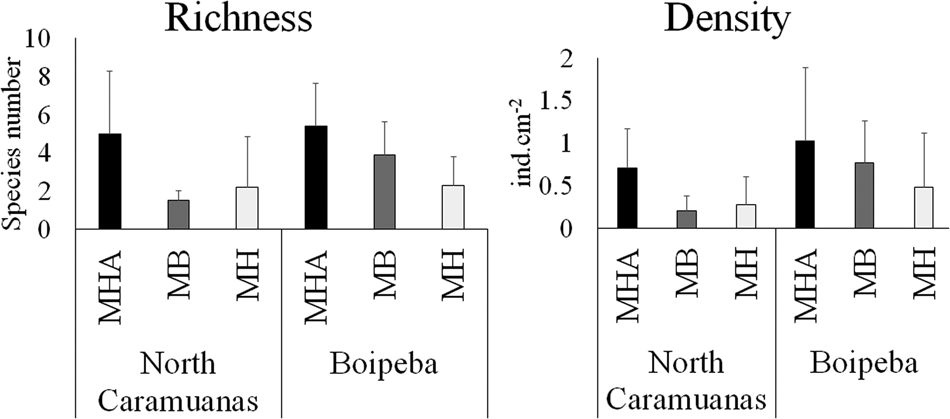
A two-way ANOVA showed that the richness and density of molluscs varied significantly among the Mussismilia species (P = 0.006 and P = 0.004, respectively) and between the reef areas (P = 0.031 for richness and P = 0007 for density), but no significant interaction effect was found (P = 0.387 for richness and P = 0.302 for density). Considering the richness of associated molluscs, a post hoc Tukey test indicated significant differences between M. harttii and M. braziliensis (P = 0.015), and for M. harttii and M. hispida (P = 0.012), while no significant differences were observed between M. braziliensis and M. hispida (P = 0.998). The same pattern was found for density: significant differences were found between M. harttii and M. braziliensis (P = 0.046), and for M. harttii and M. hispida (P = 0.004), and no significant differences were recorded between M. braziliensis and M. hispida (P = 0.619). In both reefs, M. harttii showed higher values for density and richness of the associated fauna when compared with M. braziliensis and M. hispida (Figure 3). When comparing the associated fauna between the same Mussismilia species in different reefs, all comparisons showed higher values for Boipeba reef.
Mean richness and density (ind. cm−2) of mollusc species associated with Mussismilia corals at North Caramuanas and Boipeba reefs (MHA – M. harttii; MB – M. braziliensis; MH – M. hispida).

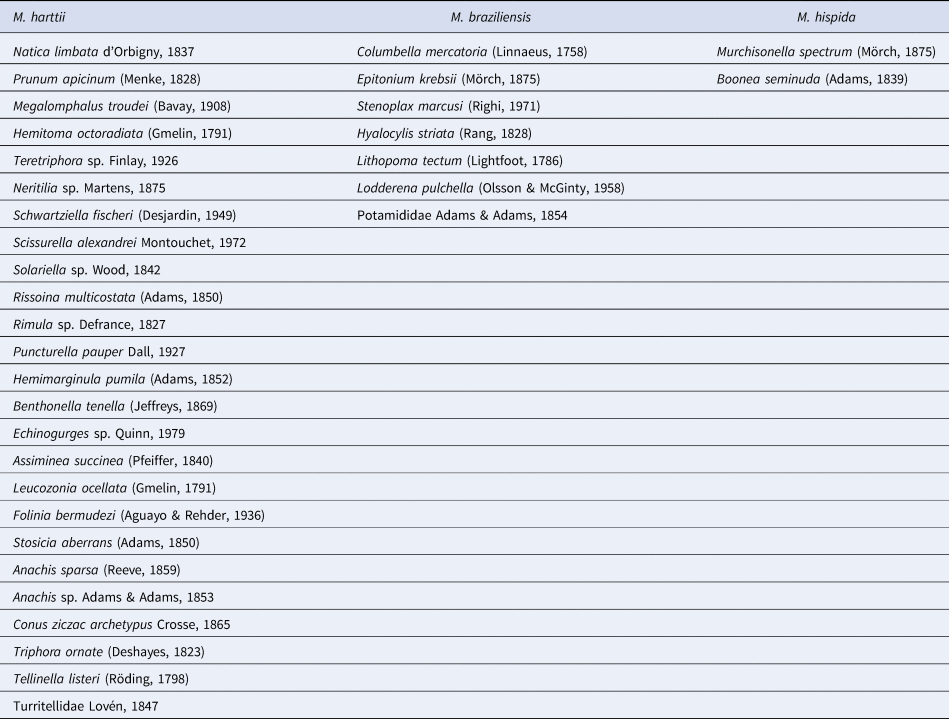
Regarding the number of species strictly reported in association with each Mussismilia coral, 25 mollusc species were recorded exclusively associated with M. harttii colonies. Seven exclusive mollusc species were recorded in M. braziliensis, and Mussismilia hispida was the species with fewer exclusive species when compared with its congeners, having only two gastropods exclusively associated with it (Table 1).
Mollusc species exclusively associated with each Mussismilia species

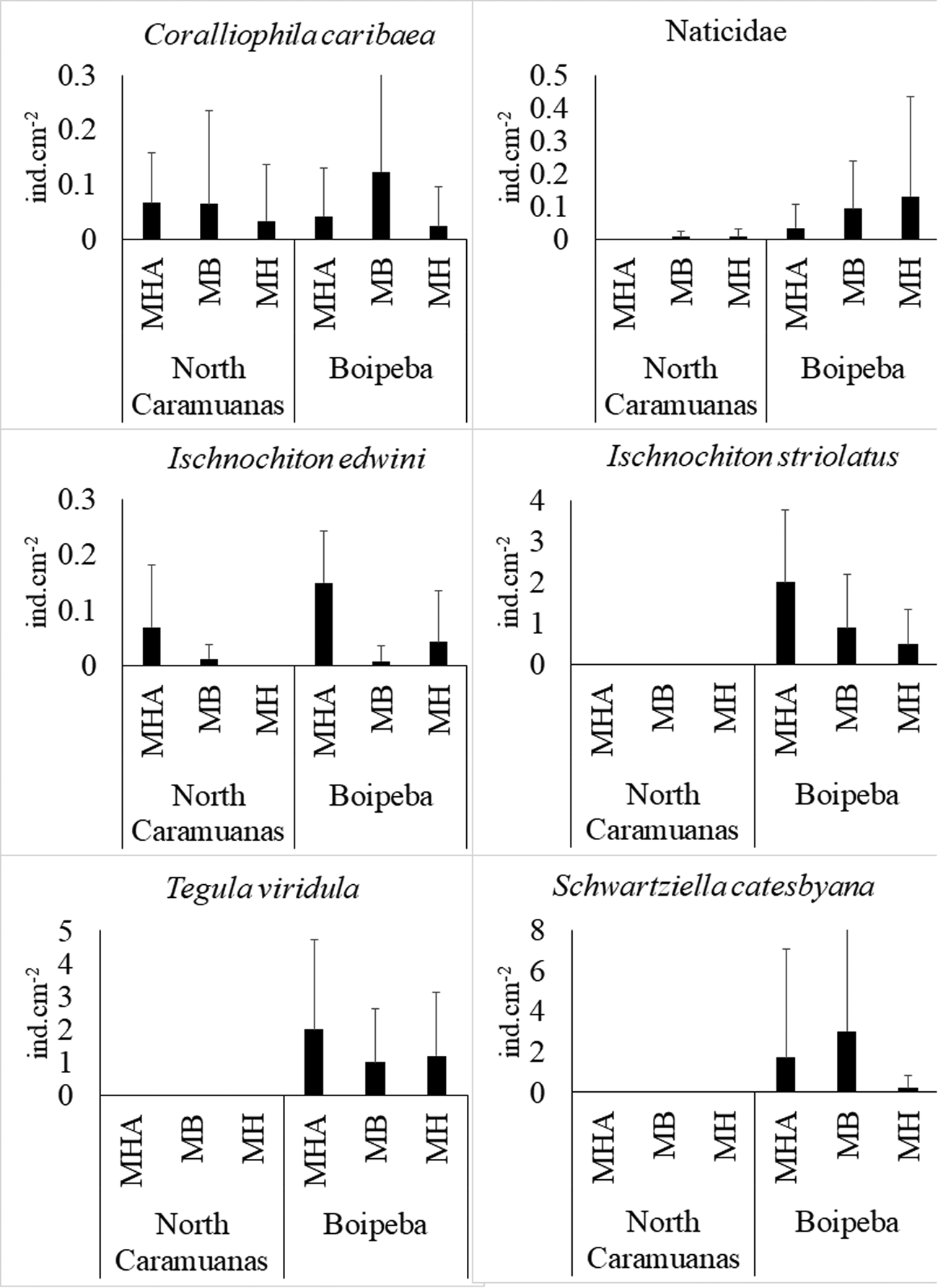
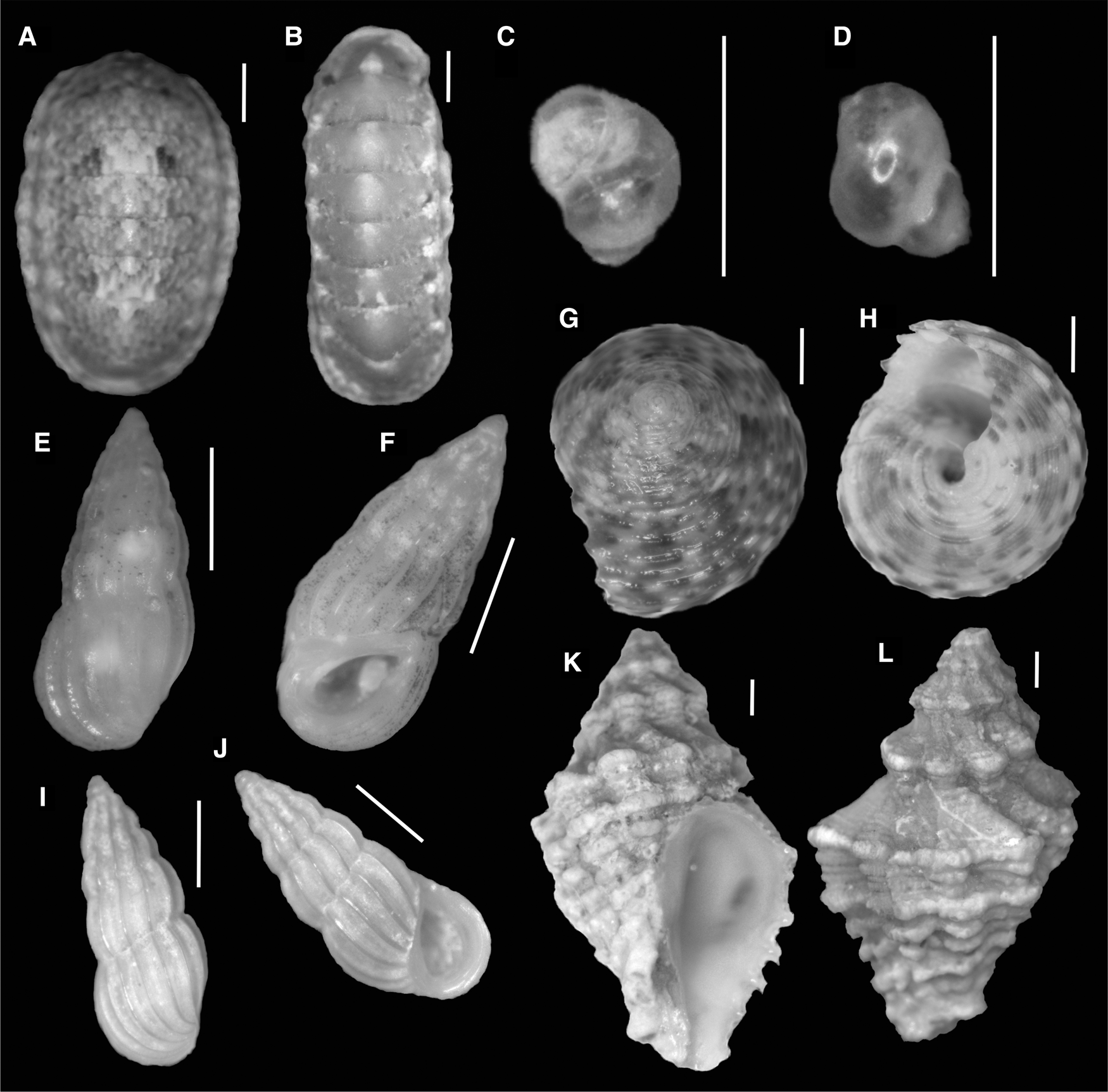
Three of the six most abundant species showed higher values of association with M. harttii than with M. braziliensis or M. hispida (Tegula viridula (Gmelin 1791), Ischnochiton striolatus (Grays, 1828) and I. edwini (Melo & Pinto, 1989)). Two of them were only recorded at the Boipeba reef (T. viridula and I. striolatus). Schwartziella catesbyana (d'Orbigny, 1842) was also recorded only in Boipeba reef, but it showed higher abundances associated with M. braziliensis colonies. Only Naticidae showed higher density associated with M. hispida (Figures 4 and 5). For these species, juvenile and adult individuals were verified.
Mean density (ind. cm−2) of the six most abundant mollusc species at North Caramuanas and Boipeba Reefs associated with Mussismilia species (MHA – M. harttii; MB – M. braziliensis; MH – M. hispida).

Most abundant mollusc species associated with Mussismilia species: A – Ischnochiton striolatus; B – Ischnochiton edwini; C and D – Naticidae; E and F – Schwartziella bryera; G and H – Tegula viridula; I and J – Schwartziella catesbyana; K and L – Coralliophila caribaea. (scale bars 1 mm).

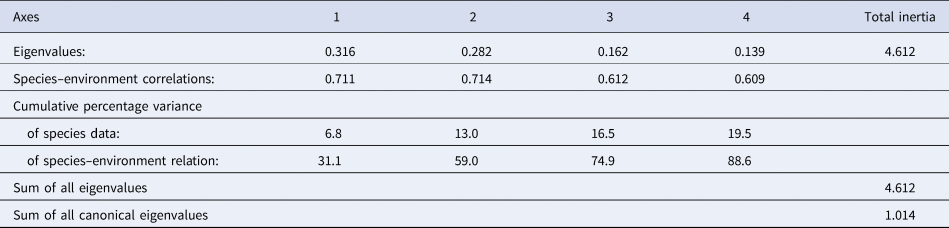
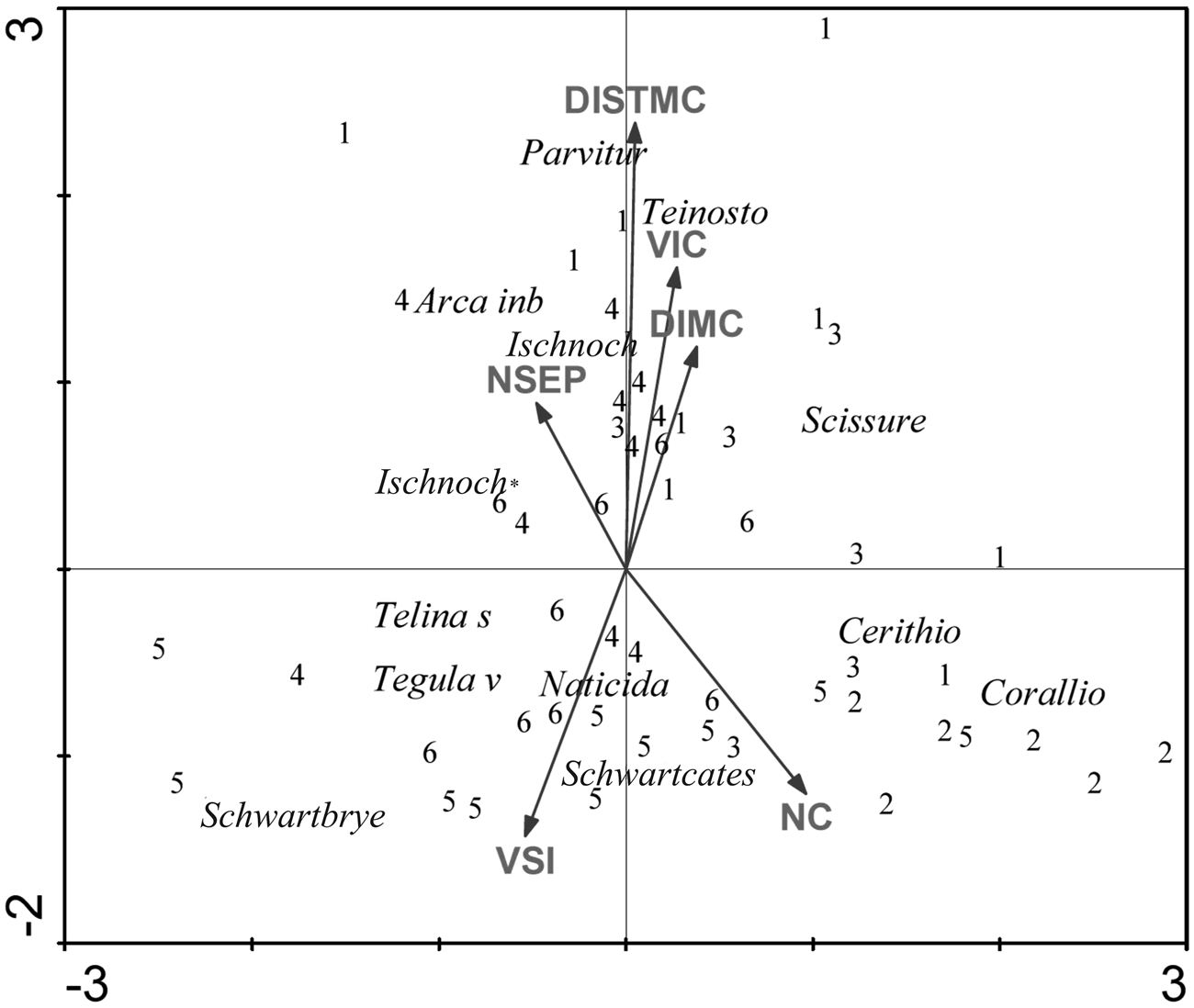
The CCA showed that coral features explained 88.6% of species variation assemblage. The first two axes together accounted for 59% of the variance. All canonical axes were also determined to be significant using the Monte Carlo permutation test (P = 0.002; F = 2.021, Table 2). On the CCA plot, samples of M. harttii from both areas (1 and 4) clustered mainly toward the positive values of Axis I. In the lowest area of the plot, samples of M. braziliensis (2 and 5) and M. hispida (3 and 6) were more dispersed and these treatments did not show significant differences as mentioned before (Figure 6). The CCA plot also indicated the strong influence of the mean distance among corallites (DISTMC) and internal volume of interpolypal space (VIC). The species more associated with M. harttii colonies were Parviturboides interruptus (Adams, 1850); Teinostoma incertum Pilsbry & McGinty, 1945; Ischnochiton striolatus (Gray, 1828); and Arca imbricata Bruguière, 1789. The CCA plot confirmed the prevalence of the association of Coralliophila caribaea (Adams, 1850), Cerithiopsis gemmulosa (Adams, 1850), Naticidae, Schwartziella catesbyana (d'Orbigny, 1842) and Schwartziella bryerea (Montagu, 1803) with colonies of M. braziliensis and M. hispida.
Results of Canonical Correspondence Analysis (CCA) for molluscs associated with Mussismilia species

CCA for molluscs associated with Mussismilia species. NSEP – mean number of septa; DIMC – mean diameter of corallites; DISTMC – mean distance among corallites; VIC – internal volume of interpolyp space; VSI – area of crevice at colony base; NC – number of corallites. Corals are represented by numbers: 1 – M. harttii at North Caramuanas and 4 at Boipeba; 2 – M. braziliensis at North Caramuanas and 5 at Boipeba; and 3 – M. hispida at North Caramuanas and 6 at Boipeba. Mollusc species are represented by: Schwartbrye – Schwartziella bryera; Schwartcates – Schwartziella catesbyana; Naticida – Naticidae; Cerithio – Cerithiopsis gemmulosa; Corallio – Coralliophila caribaea; Tegula v – Tegula viridula; Telina s – Telina sandrix; Ischnoch – Ischnochiton edwini; Ischnoch* – Ischnochiton striolatus; Arca inb – Arca imbricata; Teinosto – Teinostoma incertum; Scissure – Scissurella alexandrei; and Parvitur – Parviturboides interruptus.

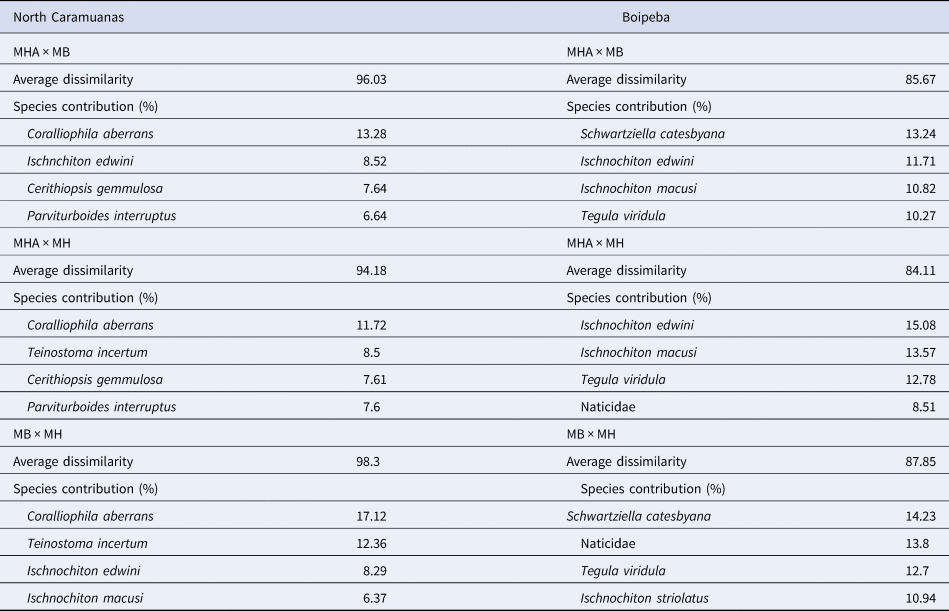
At North Caramuanas reef, SIMPER analysis showed a high degree of mollusc assemblage dissimilarity between M. harttii and M. hispida and the species that most contributed to these dissimilarities were Coralliophila caribaea and Teinostoma incertum; the comparison between M. harttii and M. braziliensis also showed high dissimilarity, with Coralliophila caribaea and Ischnchiton edwini contributing the most to the dissimilarities; the lowest dissimilarity was recorded between M. harttii and M. hispida, also more influenced by Coralliophila caribaea and Teinostoma incertum. The same pattern was reported at Boipeba reef, only switching the species that most contributed to the dissimilarities (Table 3).
Average dissimilarities between cage treatments and correlations of the most important species contributing to the dissimilarities

MHA – Mussismilia harttii, MB – M. braziliensis, MH – M. hispida.
Discussion
According to Stella et al. (Reference Stella, Jones and Pratchett2010), differences in the morphology of different coral hosts may be responsible for influencing the variation in epifaunal abundance, species richness and composition. Based on the morphological characters evaluated in the present study, the morphological growth pattern of M. harttii provided a more heterogeneous (higher number of structural components) and complex (higher values for each structural component) habitat for the associated fauna.
The richness of associated molluscs in Mussismilia corals was higher in M. harttii (meandroid growth patterns) at both reefs, but no significant difference was reported between the structure of the associated molluscs with M. braziliensis and M. hispida, both corals with massive growth patterns. Previous studies have reported M. harttii as the species hosting the highest values of richness and abundance for associated crustaceans and this may be related to the VIC among M. harttii corallites (Young, Reference Young1986; Nogueira et al., Reference Nogueira, Neves and Johnsson2015); the same was recorded for associated ophiuroids (Nogueira et al., Reference Nogueira, Neves, Queiroz and Johnsson2020). According to McCloskey (Reference McCloskey1970), corals that provide space among corallites, as in ramose growth-form, may decrease the flow of water and increase the food availability, suggesting the importance of this trait to associated fauna. Comparing the richness of associated crustaceans between M. braziliensis and M. hispida, Nogueira et al. (Reference Nogueira, Neves and Johnsson2015) found significant differences, M. braziliensis showing higher values than M. hispida. However, in the present study, significant differences among the associated mollusc species were not found and the same pattern was found by Nogueira et al. (Reference Nogueira, Neves, Queiroz and Johnsson2020) for the associated ophiuroids.
Gastropoda is the group with the largest number of species in the present study, followed by Bivalvia, in both areas (North Caramunas and Boipeba reefs). This result indicates the prevalence of gastropods among other mollusc groups in association with coral species. The same result was found by Reed & Mikkelsen (Reference Reed and Mikkelsen1987) for molluscs associated with the coral Oculina varicosa, and by Noseworthy & Kwang-Sik (Reference Noseworthy and Kwang-Sik2010), evaluating molluscs associated with rocks, seaweed and coralline algae from tide pools. However, Noseworthy et al. (Reference Noseworthy, Hong, Keshavmurthy, Lee, Jeung, Ju, Kim, Jung and Choi2016) found Bivalvia as the group showing the highest number of species associated with the coral Alveopora japonica, but most species were sessile suspension feeders and the authors suggested the existence of a facultative relationship.
Reed & Mikkelsen (Reference Reed and Mikkelsen1987) analysing the gut contents of Coralliophila sp. showed that they were mainly composed of organic matter and zooxanthellae from Oculina varicosa, indicating the predatory habit of this gastropod. This explains the predominance of the association of C. caribaea in colonies of M. braziliensis and M. hispida, since these species show a massive growth pattern that provides larger availability of live tissue to coral predators when compared with M. harttii colonies. The meandroid growing pattern of M. harttii shows more interpolypal spaces than the other coral species. However, this species lacks abundant live tissue and may not be attractive to C. caribaea.
Wee et al. (Reference Wee, Sam, Sim, Ng, Taira, Afiq-Rosli, Kikuzawa, Toh and Chou2019) evaluated the recruitment of epifaunal communities on the corals Platygyra sinensis and Echinopora lamellosa and demonstrated the importance of the morphological and structural complexity over the presence of coral living tissue. Considering most species collected associated with Mussismilia corals, the same pattern can also be verified, since a higher number of species and individuals associated with M. harttii were recorded when compared with its congeners.
Garcia et al. (Reference Garcia, Matthews-Cascon and Franklin-Junior2009) showed the existence of molluscs in 69% of Millepora alcicornis samples, and species of Polyplacophora were among the most abundant organisms, using the calcified hydroids with a branched growing pattern that may act as a shelter for associated fauna. Mussismilia harttii colonies do not have a branched growing pattern but they have spaces among the corallites that may provide refuge against predators. At North Caramuanas and Boipeba reefs, Ischnochiton edwini and I. striolatus were among the most abundant species, with the highest values in M. harttii colonies. Ischnochiton striolatus is a polyplacophoran species commonly found living under rocks in the intertidal zone, feeding on algae (Rodrigues & Absalão, Reference Rodrigues and Absalão2005). In a coral reef environment, M. harttii seems to be a beneficial habitat for I. striolatus and other polyplacophorans (I. edwini) to take cover.
Tegula viridula and S. catesbyana are other abundant species recorded only at Boipeba reef with the highest density values reported in M. harttii and M. braziliensis, respectively. However, these species may live as facultative dwellers and they have been reported in association with other hosts such as the green seaweed Caulerpa racemosa (Leite et al., Reference Leite, Tambourgi and Cunha2009). Tegula viridula is a herbivorous species, with a globose shell (23 × 19 mm), usually feeding on algae and diatoms (Rios, Reference Rios2009), therefore, the higher densities found in the space among corallites of M. harttii colonies could be related to its need for shelter. On the other hand, S. catesbyana is a small herbivore gastropod that feeds on benthic microflora (3–4 mm in length) (Moore, Reference Moore1969) and its higher densities in M. braziliensis colonies could be related to the search for protection in the area of crevice at the colony base (only in M. braziliensis), an area close to the substratum, where its food resources are also available.
In addition to the higher densities of the most abundant molluscs associated with M. harttii, the higher number of species found exclusively associated with this Mussismilia species highlights its role as an important habitat for molluscs, as was found for other invertebrates (Nogueira et al., Reference Nogueira, Neves and Johnsson2015, Reference Nogueira, Neves and Johnsson2019, Reference Nogueira, Neves, Queiroz and Johnsson2020). Despite the lower number of mollusc species found exclusively in M. braziliensis when compared with M. harttii, a variety of species were found to be strongly influenced by the crevices present at the base of the coral colony. Whereas in M. hispida colonies that have a massive growth pattern without available niches for housing high numbers of commensal species, only small species were represented, such as individuals of Naticidae (the morphotype with higher densities in M. hispida colonies) and the only two gastropod species exclusively found in this coral species.
According to Reed & Mikkelsen (Reference Reed and Mikkelsen1987), the presence of obligatory commensal decapods may be one factor influencing the occupation by molluscs of Indo-Pacific coral species. The presence of crabs with territorial behaviour living on corals causes avoidance by other organisms, which leads to a low number of mollusc species in colonies occupied by these crabs due to the competition. In the Atlantic Ocean, there are very few species of obligatory decapods (none with territorialism behaviour such as the Indo-Pacific species) and it may result in a higher number of species and abundance of other groups with corals in this area (Nogueira et al., Reference Nogueira, Menezes, Johnsson and Neves2014). In the present study, we identified 63 species of molluscs associated with the three Mussismilia species, close to the values reported by McCloskey (Reference McCloskey1970), who collected 75 mollusc species in Oculina arbuscula.
Except for VSI and NC, all other morphological characters are more related to M. harttii as shown by the direction of the vectors in the triplot of the CCA, and the DISTMC and VIC are the most important characters influencing the associated molluscs. A similar trend was seen in the analysis done by Nogueira et al. (Reference Nogueira, Neves and Johnsson2015). This suggests the strong influence of the coral traits evaluated on the patterns of occurrence of the associated fauna, the higher mollusc species number, abundance, and number of exclusive species that are recorded in M. harttii colonies when compared with M. braziliensis and M. hispida.
The spaces among corallites shown in M. harttii influence the VIC and DISTMC, consequently being important in influencing the richness and density of the associated fauna. Vytopil & Willis (Reference Vytopil and Willis2001) identified the effect of space among branches of the Acropora species on the pattern of selection of corals by crabs, suggesting that, for other groups such as molluscs, the space among corallites may be an important factor for coral occupation.
According to Kovalenko et al. (Reference Kovalenko, Thomaz and Warfe2012), habitat structure is an important trait influencing species richness and rates of recovery in impacted habitats. It is thus a key factor to be addressed regarding the performance of protected areas. The growth morphology of M. harttii shows favourable conditions for the animals living in association with it. Despite the less important contribution of M. harttii in the construction of the environment in Brazilian reefs when compared with M. braziliensis and M. hispida, it has an important role in structuring the fauna in this environment.
In summary, the present study indicates that the different coral morphologies of the endemic Mussismilia species influence the patterns of richness and abundance of associated molluscs, with M. harttii harbouring a higher number of species and individuals. It was also identified that the internal volume of interpolypal space may play an important role in the community structure of the associated fauna by providing more space for shelter in M. harttii colonies, as do the crevices at the base of the colony that provide shelter in colonies of M. braziliensis.
Acknowledgements
We are grateful to the Chico Mendes Institute for Biodiversity Conservation (ICMbio) for collecting permission (Sisbio No. 151611), and Wagner Magalhães, Amilcar Farias and Maria Luisa for suggestions and helping with figures formatting. We would like to thank the Coordenação de Aperfeiçoamento de Pessoal de Nível Superior (CAPES), Fundação de Amparo à Pesquisa no Estado da Bahia (FAPESB), The Programa de Pós-Graduação em Ecologia e Biomonitoramento and The Programa de Pós-Graduação em Diversidade Animal.
Financial support
This study is part of the project ‘Assessment and research of sun coral in Todos os Santos Bay’, a cooperation agreement between UFBA and CENPES/PETROBRAS (grant number: 5850.0107361.18.9).